Dams · DRP News Bulletin

DRP NB 1 June 2020: No escape from Dam floods as dam lobby continues to dominate

Feature image: Officials of the irrigation department visited the breached Tiware dam near Chiplun in Ratnagiri, in July 2019. (Pratham Gokhale/HT Photo)

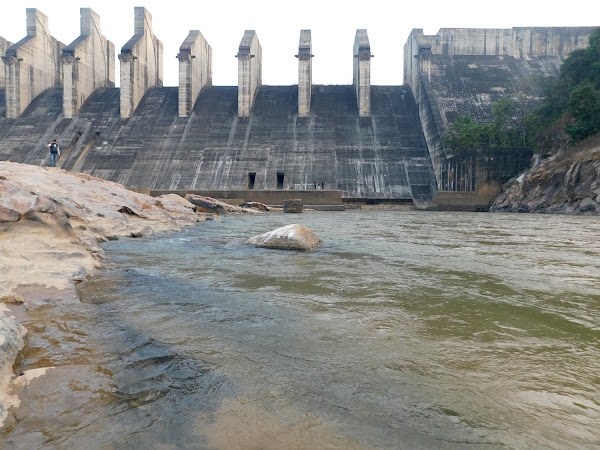
The report of the 10 member committee headed by Shri Nandkumar Vadnere, appointed by the Govt of Maharashtra in Aug 2019 was submitted on May 28, 2020. The report titled “A report on Floods 2019 (Krishna Sub-Basin): Experts Study Committee: Analysis, Causes, Remedies” from all accounts is a major let down as is apparent from the way one of the members felt so humiliated that he had to resign: he was not provided basic information to do justice to the Terms of Reference, his chapters were unilaterally removed from the draft report by the chairman, under pressure from higher ups. The report is actually an attempt to show, by hook or by crook that dams were not responsible for the Krishna basin floods of Aug 2019. Almost exactly the same way CWC came out with a shockingly unscientific, contradictory report about Aug 2018 Kerala floods to prove that dams had no role. The report did not even ask if the any of the dams followed the rule curve, though it made recommendation that rule curves should be followed! The story keeps repeating for each of the dozens of instances in recent years. The report of the Tiware dam disaster in Maharashtra in July 2019 has been submitted in Feb 2020, but is not yet in public domain. These few recent instances show how strong a strangle hold the dam lobby has over the official water institutions and governance in India. The Dam Safety bill now before the Parliament will not help as it has no provision to remove or even loosen this stranglehold, there is no place for independent oversight in the bill. Without an accountable reservoir operation policy, legal and institutional paradigm there is no possibility of freedom from dam induced floods.

Continue reading “DRP NB 1 June 2020: No escape from Dam floods as dam lobby continues to dominate”

Dams · DRP News Bulletin

DRP NB 25 May 2020: Review Environment Clearance Approval for Etalin Project

This letter from SANDRP to MoEF and ETC on Etalin Project highlights how poor has been the EIA and E-flows reports of the Etalin Project and how flawed has been the Environmental Appraisal Process by the EAC. It also shows the shoddy Dibang Basin study for Cumulative Impact Assessment cum Carrying Capacity Study, shockingly done by the same consultant that also did the Etalin EIA, showing clearly that MoEF, EAC and CWC, all of whom were involved in the process, do not understand what is conflict of interest. The E flows study done by the CIFRI (Central Inland Fisheries Research Institute) does not even provide the list of fish they found in the Etalin project area! And shockingly, the EAC approved the biggest ever hydropower project of India based on such shoddy documents. The Environment Clearance approval needs to be reviewed, the EIA, E-flows and Dibang Basin CIA needs to be rejected and fresh studies need to be commissioned. https://sandrp.in/2020/05/23/open-letter-to-moef-river-valley-eac-review-recommendation-to-grant-ec-to-etalin-hep/  (23 May 2020)

Continue reading “DRP NB 25 May 2020: Review Environment Clearance Approval for Etalin Project”

Dams · DRP News Bulletin

DRP NB 18 May 2020: Signs of Impending Dam Floods in SW Monsoon 2020?

These are rather ominous signs. As per the latest reservoir storage bulletin of Central Water Commission dated May 14, 2020, the 123 reservoirs monitored by CWC has massive, 64.6 BCM (Billion Cubic Meters) in live storage capacity, which is about 165% of the capacity on same date last year and average of last ten years, even as monsoon is just weeks away. Most dams known to create DAM INDUCED FLOODS in the past, including Bhakra dams (we wrote about it earlier this month: https://sandrp.in/2020/05/07/are-we-ready-to-use-more-water-from-snow-melt-in-indus-basin-this-year/), Narmada dams, Odisha and W Bengal dams (Cyclone AMPHAN is going to bring a lot of water here in next few days, even before the monsoon), Krishna basin dams, Cauvery basin dams, Bansagar and Gandhi Sagar Dams, and Kerala dams among others. All these dams have above average storage situation.

Continue reading “DRP NB 18 May 2020: Signs of Impending Dam Floods in SW Monsoon 2020?”

Dams · DRP News Bulletin

DRP NB 16 March 2020: Invitation to another Kedarnath floods tragedy?

This remarkable TOI report on March 14, 2020 (there was a Hindustan Times Report on March 9, 2020, we found out later: https://www.hindustantimes.com/india-news/scientist-flags-kedarnath-project-worries/story-1DoLBHLeMOmYLI3OPFOq1M.html) says that rampant redevelopments termed as “unabated unscientific work in the valley” around Kedarnath is likely to create dangerous situation leading to 2013 like catastrophe. We could not find report about such an important development in any other media.

But this detailed report, not contradicted by any of the quoted sources, seems sufficient reason to be alarmed by all concerned.

Experts of the Wildlife Institute of India, Wadia Institute of Himalayan Geology, Uttarakhand Space Application Centre (USAC) and even the Principle Science advisor to the Prime Minister K VIjay Raghavan and also the contractors, Woodstone Constructions along with other state and central govt officials were present where officials made some candid presentations. It seems there has been neither any impact assessment studies or clearances for the controversial interventions happening, including 9 km long approach road for Kedarnath on the left bank of Mandakini river, (left band has basically loose glacial sediments and hence is unstable and could get affected by avalanches and landslides) and a massive 50 ft deep and 100 m wide pit just 50 m behind Kedarnath for the Samadhi sthal. MPS Bisht, the Director of USAC in his presentation called the pit an extremely dangerous for future. He asked: “Why are we creating a situation for another disaster like the 2013 tragedy to take place again?” Scientists from the Wadia Institute are quoted saying: “The Road being built to Kedarnath is being made on the most vulnerable of Kedarnath Valley and may any day collapse under the pressure of so many glacier shoots which are directly opening on the road.” Raghavan called these revelations tipping points.

Continue reading “DRP NB 16 March 2020: Invitation to another Kedarnath floods tragedy?”

Dams · DRP News Bulletin

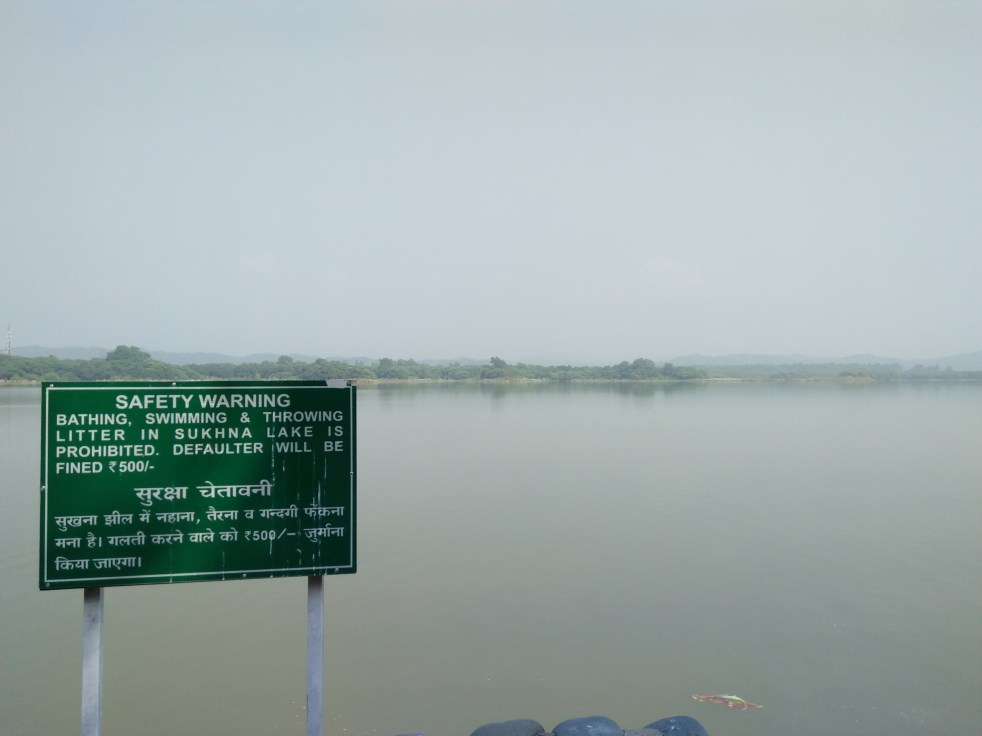
DRP NB 9 March 2020: High Court Directions for Sukhna Lake

The March 2, 2020 directions of Punjab and Haryana High Court for the sustained conservation of Sukhna wetland are welcome, though the directions are likely to be appealed against in the Supreme Court, considering the far reaching implications of the lake. One hopes the Supreme Court takes a view that helps sustain the Sukhna lake and the wetlands in a confidence inspiring way.

Punjab & Haryana HC Issued Slew Of Directions For Protection Of Sukhna Lake. https://www.livelaw.in/news-updates/punjab-haryana-hc-issues-slew-of-directions-for-protection-of-sukhna-lake-in-chandigarh-read-judgment-153386  (2 March 2020)

This is a far reaching judgement on protection of watersheds, water bodies. Any government authority which ignores the environmental damage caused by unplanned development will have to face the music. The court also declared all commercial, residential and or other structures constructed in the catchment area falling in the areas of Punjab, Haryana and Chandigarh as delineated in the map prepared by the Survey of India on 21.9.2004 were declared illegal and unauthorised and ordered to be demolished within three months. https://www.thehindu.com/news/national/hc-declares-chandigarhs-sukhna-lake-living-entity-fines-punjab-haryana-100-cr-each-for-damaging-catchment-area/article30969711.ece  (03 March 2020)

Continue reading “DRP NB 9 March 2020: High Court Directions for Sukhna Lake”

Dams · DRP News Bulletin

DRP NB 2 March 2020: Will Mumbai rise up against unwanted, destructive Gargai Dam?

Mumbai Metropolitan Region (MMR), with annual rainfall in access of 2000 mm, does not do much to harvest the rain. It does not protect its local water bodies. It does not recharge groundwater to the extent it can easily do. It does not reduce its transmission and distribution losses. It does not treat its sewage to recycle and thus reduce freshwater demand. It does no demand side management. And yet it keeps demanding more water, and for that building of more dams and thus pushing more destruction. Without any credible options assessment. It has no water policy or water vision for smart water management.

The proposed Gargain Dam that will lead to destruction of over four lakh trees in 720 ha forest mostly in Tansa Wildlife Sanctuary, is a good example of how Mumbai is fuelling such dam building and destruction. The Rs 3105 Cr project will have many other impacts, including displacement of tribals and destruction of livelihoods for thousands others. As SANDRP report showed six years ago, (https://sandrp.in/2013/12/20/dams-in-tribal-areas-of-western-ghats-for-water-supply-to-mumbai-why-are-they-unjustified/, https://sandrp.in/2013/12/18/multiple-dams-for-mumbai-region/) and as our letter to the then Maharashtra Chief Minister emphasised in 2015 (https://sandrp.in/2015/01/13/water-smart-mumbai-open-letter-to-cm-devendra-fadnavis/), MMR region does not need any of these dams.

It was good to see MID DAY news paper report and EDIT highlighting some of these issues. Will the people of Mumbai Rise up, to stop this destructive dam, being pushed in their names, the way they stood up to save the far fewer Aarey Milk Colony trees?

Continue reading “DRP NB 2 March 2020: Will Mumbai rise up against unwanted, destructive Gargai Dam?”

Dams · Wetlands

Ramsar Wetlands in crisis 2020: West India

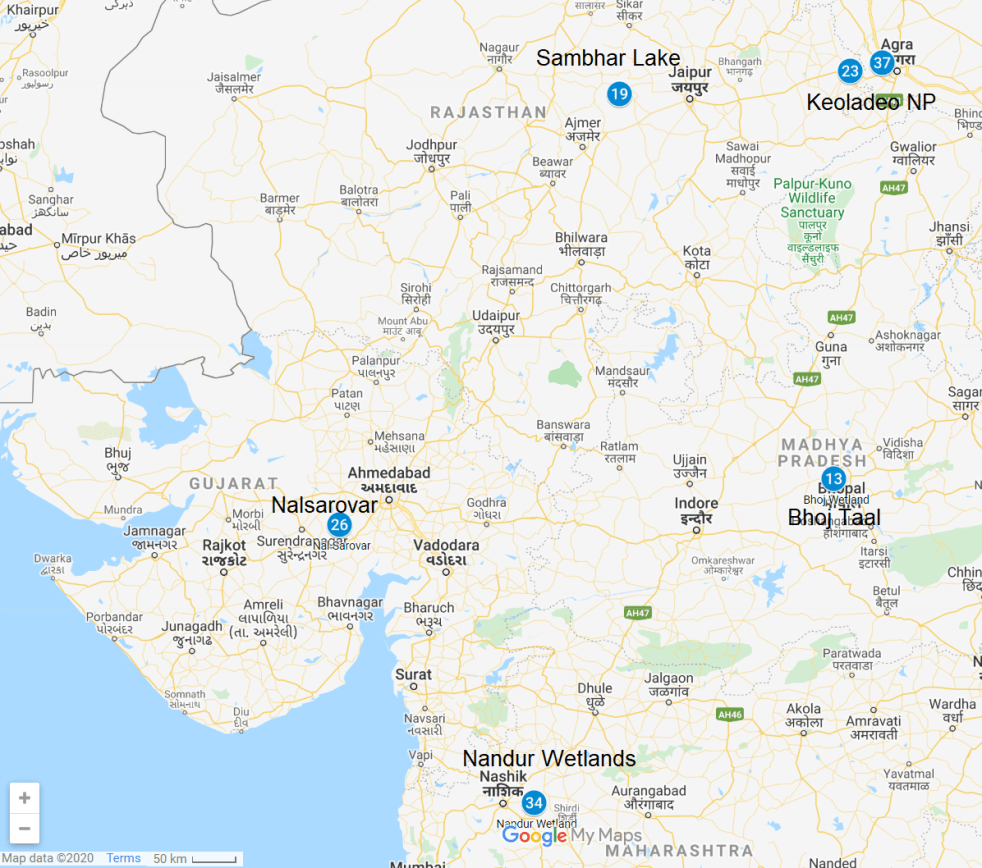
The four state of West India have only five Ramsar sites of international importance. These includes Sambhar lake and Keoladeo NP in Rajasthan, Nalsarovar in Gujarat, Bhoj Taal in Madhya Pradesh and Nandur Madhmeshwar Wetlands in Maharashtra. There is no Ramsar site in Goa state.

Continue reading “Ramsar Wetlands in crisis 2020: West India”

DRP News Bulletin

DRP NB 6 Jan 2020: When will Inland Fisheries get its due in decisions about rivers & other water bodies?

In shocking instance, the Govt of India has provided just 17 days for commenting (Submission of Comments of NPSSFW _Inland_ on the Draft NFDB Bill 2019_ with rejoinder) on Draft National Policy for Inland Fisheries (Draft_NFDB_Bill_2019). As can be seen from the comments by National Platform for Small Scale Fish Workers (Inland) on the draft policy, the draft policy has major lacunae. The most glaring one is the complete lack of any role for the Inland fisher people in the decision making about rivers and other water bodies in India. Every dam and hydropower project has adverse impact on the fishes and fisher people, but the impact assessment reports rarely if ever even mention such impacts, leave aside question of any rehabilitation for them or even compensating them for the losses.

This is in complete contrast to the situation in US and a number of other countries where fish and fisher people have a much bigger role. Even as millions of people depend on Inland fisheries in India, we do not have even reliable census of the people who depend on Inland fisheries. One had hoped that in new year, the situation would improve, but going by the Draft Policy, there is not too much hope on that front. The least the govt can do is to immediately accept the suggestions of the National Platform and circulate the draft in all major languages and provide three months for comment period and institute a confidence inspiring process of including such comments.

Continue reading “DRP NB 6 Jan 2020: When will Inland Fisheries get its due in decisions about rivers & other water bodies?”

Sand Mining

Maharashtra Riverbed Mining Overview 2019: Mining Posing Bigger Threats As Government Fails To Act

(Feature Image:In Sindhudurg, the pollution is already shrinking mangrove cover, taking away a source of shelter and food, shrinking hunting grounds and forcing marine species further outside their territories in search of fish, Sindhudurg coastline had the potential to become an International tourism destination. Pratik Chorge/HT PHOTO)

The beaches, creeks, rivers, mangroves in the state of Maharashtra all are bearing the brunt of unsustainable mining, amid several attempts by government, judiciary and civil societies to keep a tab on illegal sand mining activities. As the detailed compilation by SANDRP highlights that mining menace warrants immediate actions from government before the threats turns into a disaster.  

Continue reading “Maharashtra Riverbed Mining Overview 2019: Mining Posing Bigger Threats As Government Fails To Act”

DRP News Bulletin

DRP NB 25 Nov. 2019: Cauvery is calling, but do we understand her message?

Interrogating Cauvery Calling N Ram questions Jaggi Vasudev’s Cauvery Calling, asks why it shifts goal posts Speaking at Interrogating Cauvery Calling seminar in Chennai, N Ram said that various state governments and the central government that endorses the project should also be questioned.

 “Now a very serious issue that must cause concern is the raising of public interest and public money for this project. Truly mega, in terms of money involved – 242 crore trees, 11,000 crore rupees. That is the kind of money involved. Only 0.5% collected. There is still time to put checks on this and prevent this from going further,” he said. “What is the management of this money? Who oversees it? There is no transparency, no verifiable document, no clear management structure for huge amount targeted. It is a matter of great concern.”

– N Ram also said that various state governments and the central government that endorses the project should also be questioned. “As a political journalist, this is the question that occurs to me. Who gave the Isha Foundation the right, the jurisdiction to transgress on what should be the commons. And why are governments being subservient to this idea? Apart from the risks, probable negative outcomes and over simplification of solutions for Cauvery, this is what is worrying,” he concluded.  https://www.thenewsminute.com/article/n-ram-questions-jaggi-vasudevs-cauvery-calling-asks-why-it-shifts-goal-posts-112838  (24 Nov. 2019)

Continue reading “DRP NB 25 Nov. 2019: Cauvery is calling, but do we understand her message?”