Dams · DRP News Bulletin

DRP: 24 Oct 2016 (Big Dams Ineffective, Will Help Villagers Build Small Check Dams: CM Jharkhand)

Big Dams Ineffective & Destructive, Will Involved Villagers In Building Small Check Dams: CM Jharkhand On Oct 21 making an important statement during a meeting in Jharkhand CM Raghubar Das has said that State Government will not construct big dams and will go for smaller check dams. While addressing the Asanpahari villagers in naxal affected Kathi Kund, the CM also said that he was against big dams as they entail catastrophic and cascading impact on environment and local people. Admitting that big dams have not benefited the farmers, he criticized the former Congress Government for allowing construction of big dams.

The CM has also made another important announcement that villagers would be involved in the construction of smaller check dams to meet water need for irrigation. Announcing funding of 15 small water recharge ponds in every village, he also stated that villagers will be be financially assisted to develop their own plan for construction of check dams. He also urged villagers to produce electricity from Bio-Gas and use its by-product the sludge as manure in fields. 

Jharkhand CM here is making an interesting CLEAR statement that big dams have not helped Jharkhand  and they would prefer to go for smaller dams.

झारखंड में अब बनेगा छोटा डैम मुख्यमंत्री ने काठीकुंड के उग्रवाद प्रभावित गांव आसनपहाड़ी में विशेष ग्रामसभा में कहा कि सरकार राज्य में अब बड़े डैम नहीं , चेकडैम बनायेगी. सरकार बड़े डैमों की पक्षधर नहीं है. उन्होंने कहा कि कैसे बड़े बांध का बजट हनुमान की पूंछ की तरह बढ़ता जा रहा है. कई योजनाएं दशकों से अधर में हैं.  सीएम ने कहा की बड़े डैमों से इस राज्य के किसानों को फायदा नहीं हुआ.  कांग्रेस के राज में बड़े-बड़े डैम बने. गांव हमारा डूबा, लेकिन फायदा  बंगाल को होता रहा. अब सिंचाई की जरूरत को देखते हुए गांव के लोग फैसला  लेंगे. चैकडेम कहां बनेगा, यह गांव के ही लोग तय करेंगे. अपनी जरूरत के  हिसाब से वे योजना बनायेंगे. इंजीनियर भी रांची का नहीं, इसी इलाके का होगा. सीएम ने कहा : इस इलाके में बरसात कम नहीं होती. सारा पानी बंगाल से होकर समुद्र में चला जाता है. बोरा बांध बना कर भी गांव में पानी रोका जा सकता  है. उन्होंने हर गांव में 15-15 डोभा बनाये जाने की भी घोषणा की. कहा कि  इसका पैसा भी सरकार देगी. सीएम  ने कहा की गांवों में अब गोबर बैंक बनाये जायेंगे, जहां गांव भर से गोबर  उठाया जायेगा. गोबर गैस प्लांट में बिजली पैदा की जायेगी, जिससे स्ट्रीट  लाइट जलेगी और जो अपशिष्ट बचेगा, उससे जैविक खाद बनाया जायेगा. गोमूत्र का  भी उपयोग खाद में किया जायेगा.

HYDRO POWER

SANDRP Blog Amid repercussions, PM inaugurates 3 HEPs PM Modi, on Oct 18 has dedicated to nation 3 big hydro projects namely the 800 Mw Kol Dam, 520 Mw Parbati & 412Mw  Rampur in Himachal. All these HEPs have been involved in several controversies right from the day of inception. These projects were given clearances in questionable manner and even have not gone through proper EIAs. The resultant impact on environment, Rivers, and local communities has been catastrophic. The projects have been facing prolong, unending protests & stiff resistance from locals. Here is a brief description of all three projects along with short description of damages they caused and community driven protest they have been facing.  Also listen to a AIR discussion on hydro projects in India in view of the PM dedicating Himachal HEPs. The discussion included SANDRP coordinator and Kirtika Suneja of Economic Times. Please share your feedback and send it to others who may be interested. 

It is worth mentioning that the first-ever Disaster Analysis & Management report compiled by the Himachal govt emphasises the high vulnerability of major parts of five districts of Kangra, Chamba, Hamirpur, Kullu and Mandi to earthquakes. The projects under discussion lie in the very districts mentioned in the report. It also points out that though the state is prone to many hazards, earthquakes can pose a serious challenge. Similarly, according the latest study confirms that there is accelerated glacial melting in all the river basins of Chenab, Ravi, Beas, Sutlej. The the number of lakes has gone up in all the basins. In the Sutlej basin the number has remained stagnant at 391 in last two years, but one cannot overlook the fact that the number of lakes in the Sutlej basin rose from a mere 38 in 1994 to 390 in 2015. Raising alarm bells on unabated hydro projects in Himalaya, one more report concludes that of the 177 hydro projects located close to Himalayan glaciers over a fifth including many in India could be under flood threat caused by the outbursts of glacial lakes, European researchers have warned. Most of the sampled hydropower projects are in the Indian Himalayan states of Himachal, Uttarakhand and Sikkim, and some in Nepal and Bhutan.

Meanwhile, several Himachal NGOs under the aegis of Himdhara & Himalaya Niti Abhiyaan have sought moratorium on dams, mega hydro power projects. Urging PM to announce a green development package for Himachal instead of special industrial package being sought by everyone, the organisations said such development projects have reported high negative impact on local eco system, environment, river system, forest, triggered landslides, increased erratic weather pattern and negatively impacted agriculture and horticulture.

On the contrary, there are news reports claiming that Govt of India may override environment concerns to pursue hydro projects in Himalayan region. The report quotes a senior water ministry official saying as “It has been realized that we have lost a lot of time in developing hydropower in the northeast. We need to move fast to establish our right on water from rivers like Brahmaputra that are coming from China. There are some genuine environmental concerns but they are not more important than our country’s strategic concerns. This is the time to take hard decisions. Indeed, Himalayan rivers have also become the new flash point in the bitter India-Pakistan conflict, providing the latest diplomatic weapon in PM Modi’s push to isolate Islamabad.

Himachal  Returning Power to People The Kashang project is just one of many in Kinnaur which has led to the landscape being torn apart pieces of its hollowed mountains, sliding, cracking and quaking every other day. Little wonder that the people of the region welcomed the NGT judgment. For a people, who have paid the cost of this “development”, without ever being considered as “decision makers” in the process of planning and impact assessment, the NGT judgment validated their connection with their landscape and culture. A report by Himadhara. 

J&K Examining hydro projects economy of the State The author of this piece could have calculated the power generated by all existing hydropower projects in the state (irrespective of ownership) and asked why this power should not be made available to the people of the state?

RIVERS 

image2_turningblindeyes
(A) An image showing the Gangetic dolphin in its wild habitat (photo credit: Kadambari Deshpande), (B) a dead Gangetic dolphin calf (notice the pinhole like eyes), and (C) the calf is 1 m long, and adults measure to 2.6 m (photo credits for B & C: Sushant Dey).

SANDRP Blog Do we care for river dolphins or their habitat? Nachiket Kelkar, in a Guest blog for SANDRP discusses the statement of Union Water Resources Minister Sushri Uma Bharti about Ganga Dolphins turning blind due to pollution. 

GANGA NGT No one knows how many drains pollute Ganga The observation came after the CPCB told the NGT that there were 30 main drains which joined Ganga or its main tributaries like East Kali, Kosi and Ramganga falling in the segment from Haridwar and Unnao. However, UP Pollution Control Board claimed there were 172 drains, of which 150 directly joined Ganga and its tributaries. According to UP Jal Nigam, there were 172 drains out of which 83 terminated in the Ganga. The tribunal has asked MoEF, CPCB, UP state pollution board & Jal Nigam to clarify their stand on zero liquid discharge, online monitoring of effluents and discharge of waste in drains by industries releasing contaminants in Ganga. The Green Tribunal also has rapped UP govt for wasting crores of rupees of public money on Ganga rejuvenation & restrained it from spending on any major project except maintenance work on the stretch from Haridwar to Kanpur. UP govt had told the NGT that as per estimates, at present 1382.36 MLD sewage is generated and only 300 MLD get treated in treatment plants. The UP Pollution Control Board on Oct 20 informed the Green Tribunal that a “flood” of multi-storeyed buildings have been constructed on the floodplains of Ganga and Yamuna over the years without devising any mechanism for waste disposal. It also told that floodplains have been encroached upon in Delhi, Noida and Greater Noida to build apartments and housing societies. Local authorities take money and grant them permission to discharge all the waste into the sewer lines. The court was also informed by advocates that there were almost lakh industries between Haridwar & Kanpur segment. However, according to CPCB there are only 1072 industries. The bench also asked it to file details about the existing STP and CETP and inform whether they were functional or not and also state whether they were capable of treating various pollutants, sewage and bacteria. According to a news report, mining on Ganga River bed in Uttarakhand continues, with approval from both centre and state govt. Meanwhile, there is news that Sonipat administration will inquire into the complaints of diversion of the Yamuna waters allegedly by two mining contractors near Tikola village in the district. A case has also been registered at the Murthal police station in this regard.

Karnataka Villagers caution authorities over Malprabha pollution The releasing of sewage water to the Malaprabha river by Khanapur town panchayat authorities has been creating health related problems to the people in lower riparian villages. Irked with the problem, villagers have cautioned of locking town panchayat office if the releasing of effluent to river not stopped immediately. 

Also see Protecting 6 rivers  by S. Vishwanath Protecting the ecology and the environment of the ranges will protect the rivers and fresh water. This will also help an orderly development of the place in a sustainable fashion. Unless an institution is created and armed with powers to manage this sensitive area we will see the gradual demise of a culture centered around water and the death of six rivers. The time to act is now and that would be water wisdom.

Gujarat NHRC issues notices to govt over complaints of pollution The commission reacted to a complaint filed by Paryavaran Mitra, an NGO, pivotal in enforcing, environmental public hearing mandatory in the state. The commission has asked the state govt to file a reply within four weeks. The complaint submitted a CAG reports of 2015 and 2011 regarding Gujarat’s status of Common Effluent Treatment Plant (CETP). The reports stated that “None of the CETPs in Gujarat discharged their effluents as per the prescribed norms by the GPCB and wide variations were also noticed in the performance of CETPs.” Will NHRC do anything significant? Very doubtful, considering past examples, but helps highlight the issue.  

DROUGHT OPTIONS 

Maharashtra Solapur holds key to water-stressed Marathwada The patchy soil and water conservation efforts of the govt seem to have learnt nothing from the exemplary measures undertaken in Solapur district. Great to see this public appreciation for dynamic and innovative efforts by Tukaram Mundhe and his team in Solapur during 2015-16 drought.  

DROUGHT 2016 

Kerala Attappady in firm grip of drought This region in Palakkad has recorded 90% deficit rain in southwest monsoon. According meteorologists the area would not receive much rain even during the ensuing northwest monsoon. The perennial rivers Bhavani & Siruvani are a trickle now, much ahead of the summer months. The Kodukarampallam river has dried up. The heat wave has affected the cultivation of pulses & millets in Mulli, Kottathara, Sholayoor and Kadampara. Most tribal settlements face acute scarcity of drinking water. Most wells in eastern Attappady had turned dry. In others, the water level had depleted alarmingly. Palakkad district in Kerala, even with over 1000 mm of rainfall in monsoon, though with a deficit of huge 34%, is in grip of drought like situation with fast depleting dam stroages.

Odisha Drought manifests in 5 districts The specter of drought is looming over Deogarh, Sambalpur, Sonepur, Jharsuguda and Bolangir as these districts have received the less than average rainfall in the monsoon. In Bolangir district, paddy fields are wilting due to lack of water. A drought-like situation is already a reality in areas like Tureikela, Bangomunda, Muribahal, Saintala amongst others in Titlagarh subdivision of Bolangir district which have received less than 27% of the normal rainfall.

Andhra Worst ever drought hits AP Even though cumulative rainfall from June 1 to October 19 deviated 17 per cent from the actual rainfall, which is considered normal, the number is likely to be higher than last year’s 359 mandals. While more than 500 mandals faced a drought-like situation till September, heavy rainfall in the second and third weeks, which resulted in flooding, brought down the number to 300-310.  According to this report, Andhra is facing worst drought, worse than the last year. Some 370 mandals facing drought, but state is yet to declare drought.

DAMS 

Maharashtra Tadoba tigers under threat from Human dam project Conservationists have questioned the need for Human project after 33 years, especially when 20-22 major and minor irrigation projects like Gosikhurd, Ghodazari, Asolamendha and Nalleshwar have come up in Chandrapur district. Besides, the district has taken a lead in Jalyukt Shivar for which 41 cr have been approved.  Another unjustified DAM threatens Another Tiger Reserve, this time is Human Dam in Wainganga-Godavari basin in Chandrapur district, threatening the Tadoba Andhari Tiger Reserve, hanging for 33 years thanks to contractor driven politicians-Engineer-bureaucrat lobby. The project will again be discussed at Maharashtra State Board of Wildlife on Oct 26, but basic documents are still not available to SBWL members. 

MP Damning report on rehabilitation A massive scam involving the distribution of compensation to fake beneficiaries in MP is likely to crush the BJP’s hope of making political capital from the completion of the construction of the Sardar Sarovar Dam in Gujarat by Dec 2016. The compensation was meant for those who will be displaced when the dam’s height is raised. Gujarat’s chances of getting permission from the Supreme Court and Narmada Control Authority (NCA) to close the erected gates to store more water now appear bleak given that MP’s poor rehabilitation record has been completely exposed by a judicial inquiry. It is also strange that Gujarat minister is not bothered about the injustice to the affected people or the corruption and waste of public resources, he is only interested in getting permission to fill up the reservoir. Meanwhile Congress on Oct 19 alleged that the BJP govt in MP is in the thick of a “scam of monumental proportions” in the resettlement and rehabilitation of the oustees of the Sardar Sarovar project on the Narmada. It further said that PM Modi & the Gujarat BJP govt were compromising the interests of the people of Gujarat to save Shivraj Singh Chouhan’s BJP government in MP from the fallout of the resettlement and rehabilitation (R and R) scam there. Quoting the Justice Shravan Shankar Jha commission report, the party claimed that the funds meant for relief and rehabilitation of more than 40,000 families affected by the Sardar Sarovar project had been misappropriated.

INTER-STATE WATER DISPUTES 

Krishna Row No relook into allocation of water: Tribunal The tribunal pronounced its judgement on the litigation prompted by AP and TS arguing that Section 89 in the AP Reorganisation Act meant redistribution of Krishna water among all the four riparian States not just between them at New Delhi on Oct 19. In its verdict, the tribunal said Section 89 was not applicable to all four States but meant only for TS and AP. Further, it has asked TS and AP to come before it on December 14 with claims on sharing of water between the two out of the allocation made for combined AP by the tribunal already.

untitled-2-1

Karnataka State faces water dispute issue with six states While water shortages and the need for drinking water and widening the area under irrigation are real concerns for Karnataka, the issues have been largely politicised and have become feeding trough for political parties in the basin regions, depending on which party is ruling and which is not in the respective states and the Centre. Karnataka has just gone through over a month long crisis over sharing the Cauvery waters with Tamil Nadu and Puducherry after the south-west monsoon in the state failed this year. Goa, where the Mahadayi is known as the Mandovi and is a lifeline for the state, has opposed this demand, citing ecological damage to the river. On the Krishna front, the new stat of Telangana asked for an additional 100 thousand million cubic feet (tmcft) of water for new irrigation projects. 

INTER-LINKING OF RIVERS 

KBL Getting clearances for Ken-Betwa will not be difficult: Uma The Water Resources Minister keeps making pre-emptive statements about environment clearance to Ken Betwa link project, even talks about reconstitution of Expert Appraisal Committee, which provides a hint about what is the objective of EAC reconstitution.

FLOOD 2016 

Bihar State seeks Rs 4000 cr from Centre in flood damages  At least 88 lakh people in 31 districts across the state were affected and 254 were killed, adding that 3.65 lakh hectares of land were submerged, causing extensive damage to crops. Out of the 31 flood-affected districts, 12 districts including Patna, Begusarai and Bhagalpur felt the maximum impact of the furious Ganga. The Ganga, which rose to a record level of 50.50 metres at Patna, over topped its banks at many points. The state had demanded Rs 14,846 crore when the Kosi embankment at Kusaha in Nepal had breached in 2008, causing untold miseries in all north Bihar districts and killing over 350 people. The then UPA government at the Centre had conceded a grant of Rs 1,000 crore.

IRRIGATION

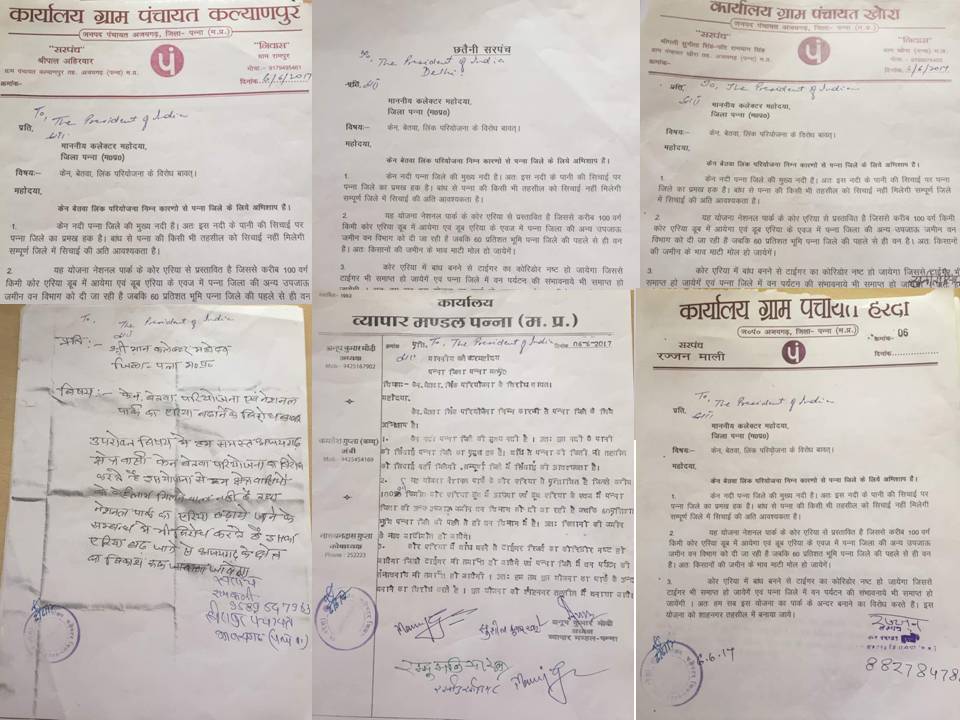
Chhattisgarh Villagers protest against irrigation project Villagers have come out in protest against the Gagar irrigation project in Chhattisgarh’s Balrampur district. The villagers said the special gram sabha convened for the project in different villages had refused the plan. Despite the protest, the district administration is allegedly planning to forcefully acquire the land for the project. Under the banner of Chhattisgarh Kisan Sabha and Adivasi Ekta Mahasabha, the villagers marched out a rally in Ambikapur, the divisional headquarters of Sarguja. A memorandum was given to the district authorities. The officials however did not comment on the development.

Centre Water ministry released ABIP first installment Union Water Ministry on Oct 21 announced to release of first installment of Rs. 1500 crore to the states as central assistance for 99 prioritized irrigation projects under Accelerated Irrigation Benefits Program (AIBP). This amount has been released for 50 projects in the states of Gujarat, Karnataka, MP, Maharashtra, Manipur, Odisha, Punjab, Rajasthan and Telangana. 

a14d3d19-77f1-4762-9608-7c03a54d3884

Massive irregularities in Jharkhand irrigation projects According to this Oct 20 news report from Prabhat Khabar there has been scams, delays and irregularities of monumental scale in several irrigation project in the State.

AGRICULTURE 

Maharashtra Drought-stricken farmers plant thirstiest crop Without govt intervention to reset the revenue balance in favour of other crops, experts warn the sustained production of sugar cane will further deplete scarce water resources and leave the region prone to droughts. This could create social unrest stemming from the widening income gap between cane growers and other farmers. Govt hopes higher subsidies for pulses and oilseeds will change farming patterns. But industry critics said the pulse and oilseed MSP only exists on paper as the government never procures them aggressively like wheat or rice. Story explains why farmers prefer growing thirstiest crop in drought affected region & its implications.

On the other hand, despite satisfactory rainfall this monsoon, farmer suicides have not gone down in the State. As many as 2307 farmers have killed themselves till now, in 2016. The number is 45 more than number of suicides reported during the corresponding period in 2015. The suicide rate this year has been much higher than that in 2012, 2013 and 2014 the years of acute water scarcity. 1473, 1296 & 1981 farmers committed suicide in these years, respectively. 2015 had witnessed highest ever suicides – 3228.

There is one big article which initially seems to give an impression of a revolution happening in agriculture marketing in Maharashtra. The changes are indeed significant and it has all the seeds of a revolution, but so far the reformed markets outside APMC cater to only about 2% of agri market share, which shows that a lot more would need to be done before that potential becomes a reality. Pune, it seems at the hub of farmer-consumer market for vegetables and fruits, may be some Pune friends can throw more light.

Meanwhile, Ministry of Agriculture and Farmers Welfare in its latest publication titled State of Indian Agriculture (2015-2016) seeks to present analysis of the recent growth and performance of the agriculture and allied sectors and also to analyze the major emerging challenges. 

SAND MINING 

Tamil Nadu Villagers protest against mining proposal in Kollidam river A group of people from two villages in Lalgudi taluk came to the district collectorate in Trichy to submitting a memorandum opposing the proposed commencement of sand quarry in Kollidam river here on Monday. They alleged that illegal mining in Kollidam river upto 40 feet has affected their cultivation owing to depleting ground water table. They cautioned that it would become a threat for the newly constructed Trichy-Thanjavur bridge across Kollidam, if the govt permitted sand mining further.

WETLANDS & WATER BODIES 

J&K Fesh algae boom threatens Dal lake The single most cause of the Dal’s deterioration over the years is the blocking of its natural drainage system as a result of the filling in of the Nallah Mar in the 1970s. The stream which passed through downtown Srinagar was fed by Dal and helped in the circulation of the lake’s water. Loss of Nallah Mar choked Dal. The process of relocating Dal dwellers has been exceedingly slow. Despite all these measures, Dal is showing fewer signs of being on the road to recovering its old glory. The resurfacing of red algae has come as a reminder that something somewhere is seriously amiss. 

RENEWABLE ENERGY 

Industry Renewable energy firms worry about back-down by power discoms No PPAs are getting signed, signed PPAs are not being honoured, renewables are asked to back down, all negative signs for solar and wind developers, this affects even big players like Tata and Adani, among others. How will the advocacy for brining big hydro help in this scene? The scene is only going to further worsen in days to come. 

REST OF THE WORLD 

Vietnam Dam made floooding worse Local officials are blaming the operators of the Ho Ho Hydroelectric Plant for making the deadly flooding in Vietnam’s Ha Tinh Province worse by suddenly releasing water held back by the dam. Flooding in Vietnam is being blamed for killing at least 25 people and destroying thousands of homes, as the country braced for even further destruction with typhoon Sarika closing in on the country. Sudden release of large quantity of water without information in the downstream area when the downstream areas were facing floods leads to avoidable destruction. Hope the investigation leads to truth. 

ENVIRONMENT

National India headed for coal power overcapacity Despite its proactive stance on climate action, India continues to invest in increasing electricity capacity fired by coal, much of which may never be used, says a new report, but some experts disagree. This article rightly says that India is heading towards unnecessary building of thermal power plants at such huge costs and impacts. On the other hand according Crisil, nearly Rs 1.34 lakh crore worth of debt on operational and under-construction power projects is at risk. Unnecessary and unproductive investments in power sector means increased NPAs (Non Performing assets), decreased credits and high risk debts. This can be easily avoided with wiser decisions, and not running after large hydro or coal power.  Also see, Turning India’s surplus power into a boon This report suggests ways to increase electricity consumption in India! However, the author seems quite well informed.

You may also like to see DRP News Bulletin 17 Oct 2016 & DRP News Bulleting 11 Oct 2016

Ganga

Turning Blind Eyes: Do we care for river dolphins or their habitat?

Above: (A) An image showing the Gangetic dolphin in its wild habitat (photo credit: Kadambari Deshpande), (B) a dead Gangetic dolphin calf (notice the pinhole like eyes), and (C) the calf is 1 m long, and adults measure to 2.6 m (photo credits for B & C: Sushant Dey).

Guest blog by Nachiket Kelkar

In 2015, The Times of India reported on the Ganges River Dolphin census exercise conducted in Uttar Pradesh, with the picture of a water buffalo to pass off as a dolphin. If you do not believe this, check out the image below[i]. Generally, most news reports on the river dolphin, some even by reputed news outlets (e.g. http://alert-conservation.org/issues-research-highlights/2016/5/30/rivers-of-destruction-the-implications-of-indias-national-waterways-bill-for-biodiversity), show the wrong species of dolphins, mostly marine species jumping acrobatically in aquariums. A forest department officer told us during their preparations for the Wildlife Week that, “if we put a beautiful dolphin’s picture, people will get more attracted to conserving the Gangetic dolphin, which is quite ugly, and the poor thing is also blind – toh achcha nahin lagta hai (it does not look good).” It does not stop here. A senior ecologist expressed concern recently in a public lecture, about the river dolphin becoming blind due to pollution. Against this background it is clear how little we know the Ganges Dolphin (our National Aquatic Animal, mind it) even today. Continue reading “Turning Blind Eyes: Do we care for river dolphins or their habitat?”

Dams · Monsoon

Welcome development: River basin wise rainfall maps from IMD!

We have noticed during just concluded South West monsoon season that IMD (India Meteorological Department) has started a new and welcome feature in rainfall data reporting[i]. The Data is available in maps, on daily, weekly and seasonal basis. We are not sure when this practice started, we noticed it only during 2016 monsoon season.

This is most welcome development, since getting rainfall data at basin level is most appropriate and useful, since basin is the hydrological unit that will experience the impact of rainfall or lack of rainfall in the basin, in form of floods or droughts. It can also be very useful for flood forecasting and preparedness, among many other uses. We hope IMD will develop and refine this further.

In each map, the actual rainfall for the given period is given for each basin, as also the normal rainfall & % departure from normal. Usual colour code is used to show the basin as blue if rainfall is more than 120% of normal rainfall, green if rainfall is 81-119 %, brown if rainfall is 60-80% of normal and yellow if rainfall is below 60% of normal rainfall.

Continue reading “Welcome development: River basin wise rainfall maps from IMD!”

Dams · DRP News Bulletin

DRP: 11 Oct 2016 (Is there any justification for DESTRUCTION of Panna Tiger Reserve?)

Is there any justification for DESTRUCTION of Panna Tiger Reserve? Can we save our Natural Heritage like the Panna Tiger Reserve (PTR) from being destroyed in the name of baseless, questionable, non transparent, undemocratic and manipulated projects like Ken Betwa inter linking ? It will facilitate export of water from Bundelkhand to OUTSIDE Bundelkhand. Whatever little benefits are claimed, some of them are already available and much more can become available at much lower costs, faster and without destroying the Forests and Tiger Reserve. The project will actually lead to destruction of Ken catchment and hence the Ken River itself. Watch this FASCINATING, AWESOME story of tigers of PTR. This BBC film where Raghu Chandawat is the story teller and Pradip Kishen is lending his voice, tells the story of Tigers of Panna till 2003, it seems. Please watch and let us all try to save it from destruction that is now writ large in terms of Ken-Betwa Link Project (KBLP). One more short film by wildlife biologist Koustubh Sharma illustrates how the Daudhan Dam under KBLP will submerge and destroy the PTR.

Meanwhile, a new analysis of rainfall data reveals that monsoon shortages are growing in river basins with surplus water and falling in those with scarcities, raising questions about India’s Rs 11 lakh crore plan to transfer water from “surplus” to “deficit” basins. According to Himanshu Thakkar of SANDRP river basin interlinking should be considered only after exhausting the local potential for harvesting rain, recharging groundwater, watershed development, introducing better cropping patterns (non water-intensive crops) and methods (such as rice intensification), improving the soil moisture-holding capacity and saving and storing water. Raising alarm over significant increase in ground water use, increasing reliance and fast declining ground water table, he warns that inter-basin links would actually reduce groundwater recharge because forests would be destroyed, the river flow stopped and the local systems neglected.

Continue reading “DRP: 11 Oct 2016 (Is there any justification for DESTRUCTION of Panna Tiger Reserve?)”
Dams · DRP News Bulletin

DRP: 3 Oct 2016 (Role of Uttarakhand Hydro Projects in Kedarnath Disaster 2013)

Book Review:  Rage of the Rivers: Role of Uttarakhand hydro projects in Kedarnath disaster 2013 by Hridayesh Joshi Rage of the River reads not unlike a gripping thriller. Thing is, it is not fiction. It is a true ‘story’ of a cataclysmic event, exacerbated by greed, and twisted notions of development manifested in blasting fragile hills, tunneling rivers, denuding forests, and encouraging illegal encroachments and mindless construction and tourism infrastructure. This is an important chronicle of one of the worst disasters of our times. Joshi has thoroughly analysed the role of endless, ill-planned hydel projects, but inexplicably fails to take into account the wreckage wrought by unrestrained tourism. Joshi points a finger at the unethical practices of construction companies, contractors and operators of hydel dam projects, even in the face of this monumental disaster. The officials of the Vishnuprayag project refused to listen to the pleas of the villagers to open the dam gates and allow the excess water to flow safely from under the barrage. The advice was ignored, either in ignorance of the gravity of the situation, or with an eye on the opportunity to generate more power. The rising waters broke the barrage flooding the valley and its villages.  

Continue reading “DRP: 3 Oct 2016 (Role of Uttarakhand Hydro Projects in Kedarnath Disaster 2013)”
Dams · DRP News Bulletin

DRP: 26 Sep 2016 (Victory to tribals protest; Jispa HEP calls back staff)

Finally, tribals struggle wins, sends Jispa HEP company packing up Facing stiff opposition from the tribal community against the construction of 300 MW Jispa Dam in Lahaul-Spiti valley has forced the Himachal Pradesh Power Corportaion Ltd (HPPCL) to suspend the project for the time being. The dam which was declared a project of national importance now has residents from 14 villages oppose it. HPPCL has invested Rs 3 crore and has stated that it would begin study work only when locals extend their support.

Since 2009, people from the Todh valley in Lahaul-Spiti district were opposing the Jispa Dam project proposed over Bhaga river, a tributarJy of Chenab at Jispa village. The government had sanctioned Rs 7,000 crore for this project but local residents did not allow officials to work in smoothly for three years now.

Confirming the development, managing director, HPPCL, D K Sharma told that some people were continuously opposing the project without realizing that construction of project could have ushered development in the area. He said constant opposition of local people had resulted into wastage of limited human resource so HPPCL board had decided to withdraw the manpower as project was only at investigation stage.

Continue reading “DRP: 26 Sep 2016 (Victory to tribals protest; Jispa HEP calls back staff)”
Dams

Celebrating our Rivers on the World Rivers Day, 2016!

Above: Parshuram Kund on River Lohit, Arunachal Pradesh

Since 2005, last Sunday of every September is celebrated as the World Rivers Day. The tradition started in 1980s in British Columbia when some river activists came together for their rivers. Its only grown since then.

All through the year we hear about water conflicts, river pollution, degrading freshwater biodiversity, damming of living rivers, mismanagment, concretisation and encroachment on Indian Rivers. As I write this, Cauvery Water Conflict and simmering, serious discontent over the Indus Water Treaty governing 6 rivers between India and Pakistan is mounting. A simple google search on Indian Rivers throws up images of filth, pollution, droughts and floods. Lest we forget, thats not the whole picture. We are still the custodians of an amazing legacy. India still holds some of the most beautiful, healthy and life giving rivers in the world. There are people and communities nurturing their rivers and protecting them. All is not lost and this is a battle worth fighting, full of positive energy. Continue reading “Celebrating our Rivers on the World Rivers Day, 2016!”

Dams · DRP News Bulletin

DRP: 19 Sep 2016

EAC Panel Visiting the site in Dec 2015

Centre EAC defers clearance to Yadadri Power project The Expert Appraisal Committee (EAC) under the Ministry of Environment has deferred its decision for granting environmental clearance for the 8,000 MW Yadadri Thermal Power Station in Telangana by TSGENCO due to a “lackadaisical” approach in preparing documentation. The EAC said the Environmental Impact Assessment (EIA) report was incomplete and there was lack of clarity on many issues raised by the Committee earlier. EAC on Thermal Power Companies has in its minutes meeting held on 29-30 2016 held the EIA consultants guilty of cut & paste jobs which can be found here.  At some places, it is mentioned that coal will be transported from two ports and in some other places, four ports are mentioned. Hence, complete and specific details regarding coal import ports and coal transportation routes were not given. Further it is also observed that two important sections of the EIA report- “risk assessment” and “disaster management plan”- are almost entirely generic and contain hardly any site or project specific aspects.

Continue reading “DRP: 19 Sep 2016”
DRP News Bulletin

DRP: 29 August 2016-WHEN DAMS CAUSE FLOODS

The dam induced flood disaster could only increase since we refuse to learn any lessons:

SANDRP Blog A tale of two dams: Is Bihar’s unprecedented flood an avoidable man-made disaster? Is the unprecedented water levels of Ganga that has flooded Bihar and UP an avoidable flood disaster? What role did the water releases from Bansagar dam in the upstream and Farakka Dam in the downstream play in this? SANDRP analysis of this developing situation. Feed back is welcome, Please help us disseminate this. Kindlyd also see the Hindi version of this blog here दो बाॅधों की कहानीः क्या बिहार की अप्रत्याशित बाढ़ एक टाली जा सकने वाली मानव जनित त्रासदी है? PRABHAT KHABAR newspaper of Ranchi carries “in-depth” articles by Parineeta Dandekar and Himanshu Thakkar of SANDRP in the context of Bihar floods and demand to decommission Farakka barrage. Flood expert Dinesh Misra explaining role of dams behind unprecedented Ganga flood. In Part I of a separate report he narrates about Bihar/ Patna floods due to Ganga and Sone.  Also see, बिना नदियों के उफान के ही पटना डूब गया BBC Hindi website has published this based on a radio discussion they carried earlier on the issue of Bihar floods and role of Bansagar and Farakka dam.  

Continue reading “DRP: 29 August 2016-WHEN DAMS CAUSE FLOODS”
Ganga

While walking upstream along the Ganga from Ganga Sagar to Gangotri: The Price of Exclusivity

 Above: Young kid from a fishing family in Kahalgaon, even the most informed communities (Ganga Mukti Andolan) are clueless about the government’s intentions (Photo by Veditum)

GUEST BLOG BY: Siddharth Agarwal 

As the Ganga rises and fills streets and alleys with it’s water all along it’s course, I spend a time out at home, partially because of personal reasons and in some parts due to the rising levels of the river hindering all sorts of movement around it. Currently on a walk along the Ganga for Veditum India Foundation’s ‘Moving Upstream’ project, I’ve been able to walk a distance of about 1000 kms alongside it’s banks from Ganga Sagar till Varanasi in 50 days’ time. Some places saw me walking right next to the river while others had me maintaining my distance since it just wasn’t possible to peruse a course anywhere in the vicinity of the flooded banks.

The rising levels of the river are no surprise, an annual occurrence with variation only in ferocity. We’re surprisingly still caught off guard, every single year, with this news about floods in cities like Patna, Allahabad and Varanasi making it to national television on an almost daily basis. But what of all the places between Patna, Allahabad and Varanasi? What of all the places that are not cities and of all the people who are not urban dwellers? The major focus as I walk along the river are the people of the river and their lives, those who inhabit this space known to all as the vastly fertile Indo-Gangetic plains but unknown as a place extremely vulnerable to the forces of nature and shaky towards those man-made.

What will happen to a river that already has no fish and is way too salty. The barrages will mean doom for even the few fish that are left (Photo Veditum)
What will happen to a river that already has no fish and is way too salty. The barrages will mean doom for even the few fish that are left (Photo by Veditum)

I had been informed in advance of the situation of our fishermen by minds already working in the field of environment and rivers in our country, often mentioning that these communities were severely under-represented and very much neglected even when it came to discussions relating to them. Non-inclusiveness of communities while making decisions is not a new theme in India, but given the extent of impact that some upcoming government decisions/policies was going to have on these people, I decided to ask them a few questions as I proceeded upstream from Ganga Sagar, starting early June 2016.

Anywhere downstream of the Farakka barrage, the mention of the word barrage has a stunning effect on the people and 1975 is a year that fisher folks remember as a year of doom. For most readers and even for me before I started upon this trip, this would makes sense if one tries to put in a little effort in imagining how a barrage or dam might affect a river. But unlike how logic would dictate, this effect doesn’t exist just downstream of the barrage and similar reactions continued even further upstream, in Jharkhand and Bihar.

In places along the feeder canal from the Farakka Barrage, an increased frequency of ships to the Thermal Power Plants has resulted in rapid soil erosion
In places along the feeder canal from the Farakka Barrage, an increased frequency of ships to the Thermal Power Plants has resulted in rapid soil erosion (Photo by Veditum)

The National Mission for Clean Ganga and The National Waterways programme have been in the limelight for making grand promises of :

1.) Cleaning and maintenance of the river
2.) Economic Development and Cheaper Transportation.

Now, this is not a commentary on the efficiency and feasibility of making such proposals, simply an attempt to understand the impact of such programmes. EIA (Environmental Impact Assessment) and SIA (Social Impact Assessment) are the terms you might be looking for, something that ideally the governing authority should be taking care of. But why is any of this important or relevant to this article? It is because whatever happens in these places between Patna, Allahabad and Varanasi is very much relevant and important to discuss. These are not uninhabited spaces, but pretty well populated areas with a lot of lives at risk.

Coming back to the point of the two government programmes, firstly, the NMCG letting the Waterways programme run through protected areas and non-protected ecologically sensitive areas goes very much against the whole agenda why this mission was set up. Secondly, the waterways programme in a bid to decrease ‘transportation’ costs and utilise our river potential recently ran tests with large vessels on the Ganga.

Small country boats near Farakka. Wonder what large waves from huge vessels will do to these (Photo by Veditum)

What is surprising (or rather not) is that these test runs were without any warnings to fishermen and boatmen in said test sections, the few who were on the waters at the time of passing of these vessels had to face high waves, enough to topple a less experienced or unaware boatman. The news of these tests were flashed all over the main stream media, but failed to make it to those for whom it mattered. Not an uncommon occurrence at all, but till when will this go un-noticed? On asking these fishermen if they have any clue why this is happening, most of them responded in the negative while a few said they’ve learnt about the government’s plans to run large vessels on the river.

As this conversation extends and questions follow, it is gradually revealed that the picture is not clear and conversations have somehow trickled down in a very muzzled form. Though most fishermen laugh off the prospect of this being a constant activity because of the extreme reduction in water level that the river has seen these past years, often mentioning how large excavators and multiple tugboats have been needed anytime a large vessel has traversed these stretches in lean seasons. There’s talk of loss of fishing nets and reduced catch, difficulty in controlling small country boats in high waves, chances of accidents when transporting villagers to small ‘diars’ for agricultural work, loss of land where there’s no embankments and so on, but this also brings us to the most important part of this article.

The dark clouds often linger over the heads of those not involved, not informed (Photo by Veditum)

The Water Highway programme on the Ganga has been proposed on a 1500 km stretch from Allahabad to Haldia, with barrages at about every 100 kms. Now, an avid news reader would have knowledge of this as a great policy step but the fisherman who directly depends on the river for his livelihood does not. This holds true for maybe 15-20 different fishing communities that i’ve had the chance to interact with in the first 50 days and even the mention of new barrages was way too shocking for those who have had to bear the burden of Farakka’s impacts. There are even places where locals have signed their wishfulness of a barrage near their villages without understanding consequences and only having been shown the shiny side like we see everyday in the papers, called ‘development’.

The ‘Moving Upstream’ project intends to understand and present a narrative of the river and it’s people, hoping this will lead to more meaningful conversation and inclusive action by the government. In a recent announcement by Sushri Uma Bharti Ji – Union Cabinet Minister of Water Resources, River Development & Ganga Rejuvenation, she said she will march down the length of the river to take stock of the status of various projects commissioned by her. I’m glad that cues are possibly being taken from the Moving Upstream project, but like every other government project, when will our habit of assessment (if at all) after execution stop and preparedness & understanding before implementation materialise? I hope she does her Ganga yatra before approving any projects, I hope for inclusiveness.

Siddharth Agarwal (siddharthagarwal.iitkgp@gmail.com)