Char Dham Highway · Dams

Char Dham Highway Project: An overview

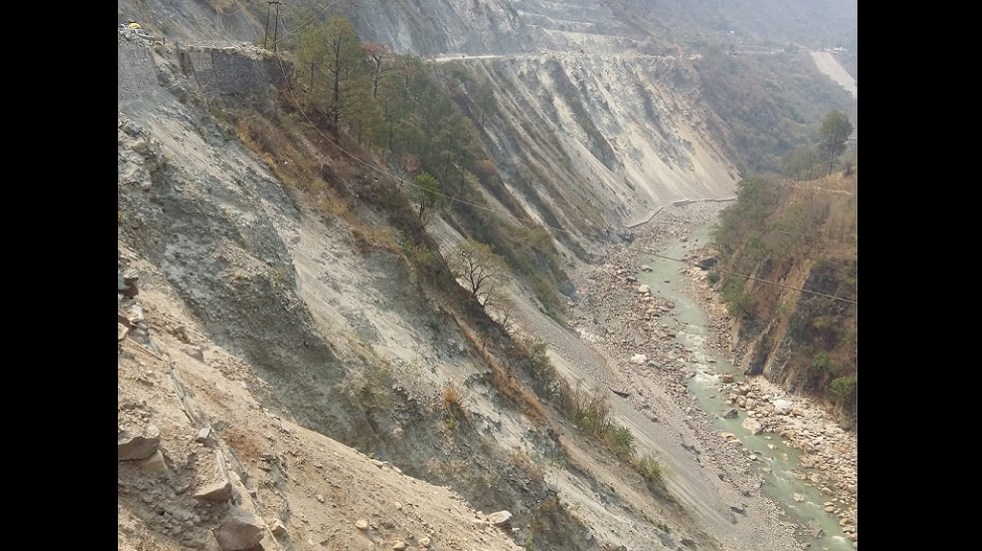
(Feature image Source Char Dham Road ProjectL Stairway to heaven or highway to hell by Siddharth Agarwal)

The Char Dham All Weather Road Project has been approved by National Green Tribunal (NGT) on September 26, 2018. The controversial project has evoked several environmental concerns right from the inception stage.

Almost more than one and half year into the unmindful implementation of the project, the risks and fears associated with the project are clearly visible throughout the construction route. In last few months, several independent reports have also raised serious concerns over the haphazard manner in which the project is being executed through sensitive hilly terrain.  Continue reading “Char Dham Highway Project: An overview”

Dams · DRP News Bulletin

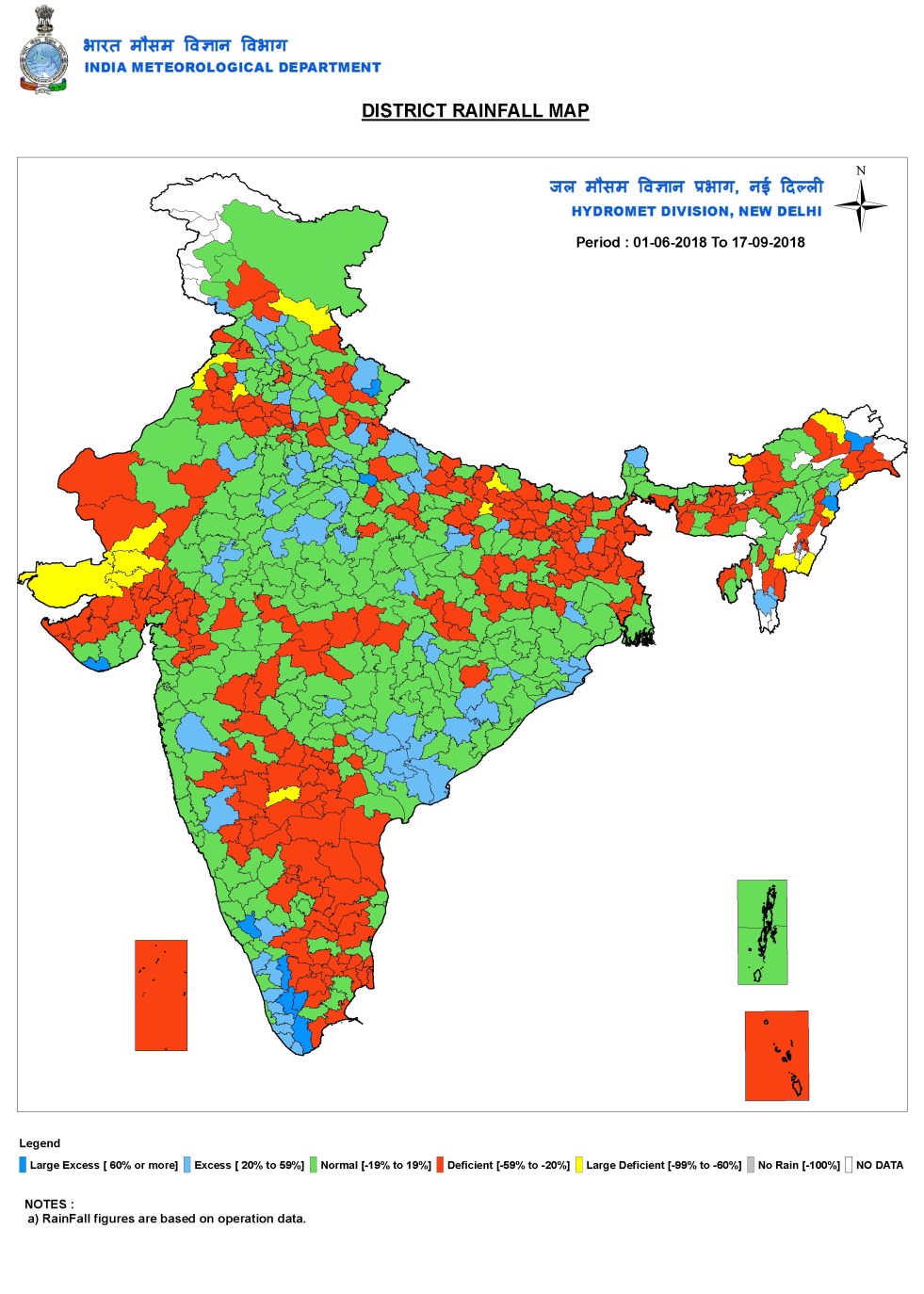
DRP: 17 September 2018: How Much of This Drought Is Man Made?

  1. Gujarat suffering due to political use of water for elections in 2017.
  2. Rajasthan given more water for elections there in 2018. Will Punjab, Haryana suffer now?
  3. Kerala drought: how much could have been reduced if dams were operated more prudently?
  4. North Interior Karnataka is suffering, but Krishna basin dams are almost full? Issue of unsustainable cropping patterns, groundwater overuse, and neglect of recharge & regulation?

Gujarat Water scarcity looms large with state receiving only 74% rainfall so far

  • Kutch and North Gujarat are likely to face severe water scarcity this year, officials said. The Kutch region has received a mere 26.51 percent of average rainfall so far, while North Gujarat has received 42.93 percent, central Gujarat 66.83 percent, Saurashtra 72.20 percent and South Gujarat the highest 94.79 percent.
  • However, the Sardar Sarovar Dam is filled up to 125.82 meters, and it can provide drinking water for the entire state till the next summer, the govt said. As per Govt. storage in Sardar Sarovar Dam on the Narmada, which will be enough to meet the state’s need for drinking water through the next summer.
  • The Narmada water will also be used to fill up empty dams in Saurashtra including Aji 1, Macchu 2, Vadod and Ankadia through the Sauni scheme, officials said.
  • “The state govt will provide 20,000 cusecs water for the next 20 days to save the crops in water-starved areas,” Deputy CM Nitin Patel told reporters in Gandhinagar said.
  • “We plan to fill up 400 big and small ponds in North Gujarat by Narmada water through canals and pipeline network of the Sujlam Suflam scheme,” he said.
  • “We also plan to fill the dams in Saurashtra region and provide water for irrigation from Narmada Dam under the SAUNI scheme,” he said. https://www.firstpost.com/india/water-scarcity-looms-large-in-gujarat-with-state-receiving-only-74-rainfall-so-far-this-monsoon-says-government-5188271.html (15 Sept. 2018)

Himachal Pradesh Rajasthan quietly given extra water by BBMB to improve BJPs Poll prospects A detailed story about how BBMB, controlled by Central Power Ministry, released excess water to BJP ruled Rajasthan this poll year, which has deepened the water availability at BBMB dams this year. This is not that the first time that the water releases have happened to achieve poll objectives. https://www.huffingtonpost.in/2018/09/16/rajasthan-quietly-given-extra-water-by-bhakra-dam-board-to-improve-bjps-poll-prospects_a_23528788/  (14 Sept. 2018)

Rajasthan Rainfall deficit in many districts As per IMD, Badmer district of Rajasthan has received rainfall 48 percent below normal till Sept. 16. Similarly rainfall deficit in Hanumangarh 58 percent so far. Jallor district is facing maximum rainfall deficit of 60 per cent less than normal. Likewise the rainfall in Pali district is 35 per cent below the normal and in Jaislmer is facing a rainfall deficit of 38 per cent. In Western Rajasthan it rained only 193 mm during entire monsoon season causing a  deficit of 24 per cent below the normal.

Continue reading “DRP: 17 September 2018: How Much of This Drought Is Man Made?”
Dams · DRP News Bulletin

DRP: 10 Sept 2018: NIDM Lecture on Role of Dams in Kerala Floods

National Institute of Disaster Management, Ministry of Home Affairs, Govt of India invited Himanshu Thakkar, Coordinator of SANDRP,  to speak on the topic at IHC on Saturday. At the packed hall with participants that included members from Central Water Commission, National Disaster Management Authority, Embassies, Media and Civil Society,  the speaker explained how unwise and  unaccountable operation of dams, violating all norms, hugely contributed to the proportions of the Kerala flood disaster. Giving the example of Idukki dam, he showed, how if the dam was operated as per rule curve,  its contribution to the floods could have been reduced by over 50%. Similar is the story of other dams in Kerala.

Continue reading “DRP: 10 Sept 2018: NIDM Lecture on Role of Dams in Kerala Floods”
Dams · DRP News Bulletin

DRP: 3 Sept 2018: CHINA HAS STARTED DECOMMISSIONING DAMS

In a mountain village in southwest China’s Sichuan province, authorities have demolished seven small dam projects this year along a river to clear illegal developments in a new nature reserve. The demolition is part of a nationwide programme to close hundreds of tiny and often ramshackle dams and turbines and bring order to China’s massive hydropower sector after years of unconstrained construction.

The dams sat on an unnamed tributary of the fierce and flood-prone Dadu river, which feeds into the Yangtze, Asia’s largest and longest river, where the government says the “irregular development” of thousands of small hydropower projects has wrecked the ecology. But green groups say the campaign will not necessarily save the environment because it will not affect big state hydropower stations, which they say have caused the most damage.

On the 48 km Zhougong, authorities have already demolished small projects built in nature reserves or encroaching upon new “ecological red lines” drawn up to shield a quarter of China’s territory from development.

The government says small dams have disrupted the habitats and breeding patterns of many rare species of fish, although green groups argue the damage wrought by bigger dams is more severe, with entire towns and ecosystems submerged in water, which they say increases the risk of earthquakes, landslides and even climate change.

Continue reading “DRP: 3 Sept 2018: CHINA HAS STARTED DECOMMISSIONING DAMS”
Dams · DRP News Bulletin

DRP: 27 Aug 2018: WRONG Management of DAMS Create FLOODS, Accept Officials and Experts

Accepting that reservoirs operation and flood management in India lack scientific supports, Madhavan Nair Rajeevan, Secretary, Ministry of Earth Sciences, in an interview has revealed that dams and water reservoirs need flood management systems that use scientific methods to understand when the time is right to open the gates.

“As per my understanding, no big reservoir has a decision support system. So we don’t know when to open them, how to open them… I am not attributing the Kerala floods to an individual. There is a common perception that in India most of the flood management systems are not supported by science… I am very sure we don’t have the decision support system and we need it.” https://indianexpress.com/article/india/not-just-kerala-no-scientific-dam-water-management-across-india-madhavan-nair-rajeevan-secy-earth-sciences-5322003/  (24 Aug. 2018)

In another interview he says that while Kerala records among the highest amounts of rainfall in the country, the State did not have a flood warning system in place. He added that while there were several sophisticated tools to anticipate extreme weather events, India still lacked a mechanism to effectively deploy them. https://www.thehindu.com/sci-tech/energy-and-environment/reservoirs-not-managed-using-a-scientific-decision-support-system-m-rajeevan/article24785253.ece  (26 Aug. 2018)

Further in a detailed interview, he pitches for ‘decision support systems’ at dams, acknowledges the challenge of climate change, warn against repercussions of ‘fast-warming’ Indian Ocean. https://indianexpress.com/article/india/kerala-floods-m-rajeevan-ministry-of-earth-sciences-met-department-5324840/  (26 Aug. 2018)

Continue reading “DRP: 27 Aug 2018: WRONG Management of DAMS Create FLOODS, Accept Officials and Experts”
Dams, Rivers & People

DRP: 20 Aug 2018: Kerala Is Recovering From Unprecedented Flood Disaster, Will It Be Cauvery Or Krishna Basin Next?

Well-known ecologist Madhav Gadgil, founder of the Centre for Ecological Sciences at the Indian Institute of Science, Bengaluru, has described the devastating floods in Kerala as a man-made disaster and a reaction to the illegal excavations and stone quarrying done over a decade. https://www.hindustantimes.com/pune-news/illegal-forest-land-acquisition-major-reason-for-floods-in-kerala-says-ecologist-madhav-gadgil-calls-it-man-made-disaster/story-vMHPKUH623GEnjyQHI09NP.html  (19 Aug. 2018)

Further speaking to various regional media, Madhav Gadgil has said that irresponsible environmental policy is to blame for the recent floods and landslides in Kerala. He also called it a “manmade calamity”. He said that the committee report had recommended to protect the resources with the cooperation of local self-govt and people, but those recommendations were rejected.

He also pointed out that quarrying is a major reason for the mudslides and landslides. Other environmentalists also point fingers at the extensive quarrying, mushrooming of high rises as part of tourism and illegal forest land acquisition by private parties as major reasons for the recent calamity. https://energy.economictimes.indiatimes.com/news/power/kerala-floods-the-ghost-of-past-environment-policy-returns/65436707  (17 Aug. 2018)

Dams should never be filled before the end of the monsoons. Because then one doesn’t have any solution but to release the water in the surrounding areas: Himanshu Thakkar, SANDRP says as one of panellist discussing role of dams in aggravating Kerala floods.

Also see, NDTV discussion on Kerala flood crisis, it included SANDRP coordinator. https://special.ndtv.com/kerala-floods-42/video-detail/kerala-floods-non-stop-special-coverage-of-the-unfolding-crisis-491815  (19 Aug. 2018)

Here is NDTV Hindi discussion on Kerala flood crisis, included SANDRP coordinator. https://khabar.ndtv.com/video/show/ndtv-special-ndtv-india/ndtv-special-coverage-on-kerala-rain-crisis-491820  (19 Aug. 2018)

Here is admission about sudden, excessive releases and not foreseeing the coming disaster. The Kerala crisis could have been contained had the state “gradually released” waters from at least 30 dams, officials said, adding that the local authorities failed to foresee the imminent danger with high rain prediction. “Such floods have probably recurred after 100 years, exposing the state’s unprofessionally run reservoir management system and unpreparedness on disaster mitigation and disaster resilience, an official pointed out. https://timesofindia.indiatimes.com/city/kochi/gradual-dam-water-release-could-have-contained-crisis/articleshow/65436339.cms  (17 Aug. 2018)

Continue reading “DRP: 20 Aug 2018: Kerala Is Recovering From Unprecedented Flood Disaster, Will It Be Cauvery Or Krishna Basin Next?”
Dams · DRP News Bulletin

DRP: 6 August 2018 (2018 is Deficient Monsoon for Lakhs of Farmers)

(Feature Image: IMD Sub-Division wise Weekly Rainfall Map 26 July – 1 Aug. 2018)

Amid news of monsoon being normal, farmers in several parts in the country have started facing irrigation water problems affecting sowing of Kharif crops. Apart from, insufficient rainfall, mismanagement of water resources is turning the situation grim for them.  

As per reports, water levels in Bhakra and Pong dams in Himachal has plunged to lowest in decades. As a result dam authority has issued advisory to lakhs of farmers in Haryana, Punjab and Rajasthan to use water judiciously. Some official also said that the beneficiary states lacks efficient water management practices which is making the situation tough for them.

The Sri Ram Sagar Project in Telangana has no irrigation water. As per state water minister, a Rs. 1100 crore work was going on to renovate the dam. Meanwhile farmers of about 24 villages have started protest demanding irrigation water form SRSP for their standing crops. Given the tense situation, the State Govt has deployed heavy police forces to control farmers agitation.

At the same time, farmers in North Gujarat farmers have lost 40% of sown crops particularly in Ahmedabad, Morbi and Surendranagar. Non availability of Narmada waters have added to the problems. It is worth to mention that mismanagement of water during past four months in Narmada dam by the authority, has worsened the plight of farmers. Meanwhile, there are reports of furious Surendranagar farmers themselves opening the dam gates going against authority.

Similarly, lack of rainfall in Beed district which is part of Marathwada in Maharashtra has affected the rural population badly. In fact, the rainfall situation in a fourth of India, including Bihar and Uttar Pradesh, was in stark contrast to the rest of the country. Overall, the southwest monsoon in 2018 was only 2 % below normal by July, 27.

The southwest monsoon in Bihar was almost 40 % below normal till July 27 and the state was set to be formally declared ‘drought-hit’. It is worth to mention that the monsoon scenario seems less than reassuring, based on Skymet latest forecast and reading between the lines of IMD Aug. 3, press release.

Continue reading “DRP: 6 August 2018 (2018 is Deficient Monsoon for Lakhs of Farmers)”
Dams · DRP News Bulletin

DRP: 23 July 2018: Landmark CAG Reports on DAM FLOODS & Ineffective; Costly Mega Irrigation Projects

In its latest report, the Comptroller and Auditor General (CAG) has questioned implementation of sixteen National Irrigation Projects. Before this, the CAG has held mismanagement in dams’ operation responsible for Chennai floods in 2015. Both these reports are available on its website now.

The CAG report on National Irrigation Projects, tabled in Parliament on July 20, has revealed that sixteen major multi-purpose water projects, taken up on an expeditious basis about a decade ago, are nowhere near completion, with no work being undertaken in as many as 11 projects despite the incumbent govt’s much-wanted focus on improving irrigation facilities in the country.

The report also mentioned that out of the 16 projects, undertaken under the Accelerated Irrigation Benefits Programme (AIBP) in Feb 2008, only five projects with estimated irrigation potential of 25.10 lakh hectares were under implementation and even these projects suffer from 8 to 99 per cent shortfall in physical progress, the CAG said. The remaining 11 projects with estimated irrigation potential of 10.48 lakh hectares are yet to commence and are at different stages of approval.

Continue reading “DRP: 23 July 2018: Landmark CAG Reports on DAM FLOODS & Ineffective; Costly Mega Irrigation Projects”
Dams · DRP News Bulletin

DRP: 16 July 2018: For Dam Safety, Can We Depend On CWC Engineers Alone?

India certainly urgently needs credible measures to achieve both structural and operational safety of dams. As the HINDUSTAN TIMES editorial emphasizes, we need much greater transparency, accountability and participation of independent, non government experts at every level of functioning of Dam Safety mechanism. Current Dam Safety Bill draft falls far short of that. This is also underscored by many of the news we bring in this July 16, 208 issue of DRP News Bulletin.

The Tamil  Nadu CAG report, as Indian Express reports, has clearly said that the Chennai floods  of Dec 2015 were majorly due to the wrong decision of dam operators to release 29000 cusecs of water for 21 hours, in violation of all safety norms, but no was punished for this wrong decision. The same has always been the case.

The Bulletin also brings the warning from, no less than Chief Minister of Assam to NEEPCO that if NEEPCO, the operator of the 405 MW Ranganadi Dam releases water from the dam without warning and when downstream areas are facing  floods, they will have to bear the losses people suffer.

Continue reading “DRP: 16 July 2018: For Dam Safety, Can We Depend On CWC Engineers Alone?”
Dams · DRP News Bulletin

DRP: 2 July 2018: Punjab Cabinet Meets To Discuss Water crisis

In a rare event, Punjab Cabinet met to discuss water crisis on June 26, 2018. The reports before the meeting seemed to give hope that may be Punjab will look at the water crisis in a fundamental, holistic way. https://indianexpress.com/article/cities/chandigarh/punjab-government-to-firm-up-water-conservation-plan-5233826/ (June 26, 2018)

But the cabinet ended up setting up a committee to assess the ground water situation in the state and submit a detailed proposal for water conservation.

– Punjab has the highest rate of groundwater exploitation and had on average withdrawn 28.2 million acre feet (MAF) water yearly during 2008-2013. However, the yearly average replenishment of water was only 18.9 MAF.

– 73% of Punjab’s irrigated area uses groundwater for irrigation, while only 27% uses surface water. The number of tubewells had gone up exponentially from 2 lakh in 1971 to 12.50 lakh in 2015-16, with 41% of these have water availability beyond the depth of 60 metres. https://timesofindia.indiatimes.com/city/chandigarh/5-member-committee-to-assess-punjab-ground-water/articleshow/64770186.cms  (28 June 2018)

Continue reading “DRP: 2 July 2018: Punjab Cabinet Meets To Discuss Water crisis”