DRP News Bulletin

DRP 090821: Doubtful validity of GOI’s July 15 notification on AP-Telangana water disputes

(Feature image: Two Telugu states, one river — why Andhra & Telangana are fighting it out over the Krishna https://theprint.in/india/two-telugu-states-one-river-why-andhra-telangana-are-fighting-it-out-over-the-krishna/696801/)

The July 15 2021 Govt of India notification on Andhra Pradesh-Telangana water disputes is of doubtful legal validity and the Supreme Court urgently needs to examine this. The 2014 AP Regorganisation Act didn’t make provision for the Centre to take over water infrastructure of the two states, which is what effectively the centre has done through the July 15 notification. The Jul 15 notification effectively dismissing powers of Andhra Pradesh and Telangana without any consultations and there is no provision in constitution for this.

There is no doubt that the long lingering water sharing disputes between Telangana and Andhra Pradesh and which was the major reason for the bifurcation of Andhra Pradesh, needs to be resolved. But the blame for not achieving any resolution of the disputes also lies with the Centre, the KRMB and GRMB are not even functioning with necessary urgency or effectiveness.

Continue reading “DRP 090821: Doubtful validity of GOI’s July 15 notification on AP-Telangana water disputes”
DRP News Bulletin

DRP 020821: Disappointing UKD HC order on Chamoli disaster: Will SC intervene please?

( Feature image:- Women members of Raini village’s gram sabha, Source: Atul Sati/ Facebook/The Quint)

The July 14, 2021 order of Uttarakhand HC, dismissing the petition of those affected by the Chamoli disaster of Feb 2021 and asking that NTPC, developer of the Tapovan Vishnugad project be accountable, is most distressing. While Indian judiciary is rightly credited with doing a lot for the cause of environment and people in general, in the unequal battle of the communities and activists against injustice and negligence of giant projects and their developers, the judiciary has more often failed to ensure that the developers are held accountable and are not allowed to bulldoze ahead using their might, supported by the state, to crush attempts to achieve just and democratic results. In the Chamoli disaster, there are many many questions that remained unanswered and one expected the HC to use the petition to seek those answers. But in stead, the HC has chose to question and fine the petitioners. One hopes the higher judiciary will correct this and stay the order and in stead seek answers from the developers of the hydro projects in such fragile, disaster prone areas and those that sanctioned such projects, including the environment ministry, the state government, the CWC, the CEA, the Geological Survey of India and also the project developers.

Continue reading “DRP 020821: Disappointing UKD HC order on Chamoli disaster: Will SC intervene please?”
DRP News Bulletin

DRP 260721: “Unprecedented rainfall” used to escape responsibility?

(Feature image source: India TV https://www.indiatvnews.com/news/india/monsoon-mayhem-maharashtra-floods-landslides-death-toll-latest-news-721924)

As Maharashtra faced the worst flood disaster of SW Monsoon 2021 in India, we see the phrases like “unprecedented rainfall”, “record breaking rainfall”, “frequent landslides” etc. with increasing frequency along with phrases like climate change floating around. While these are not entirely incorrect claims, these should not be used to escape the responsibility and accountability for failing to either accurately forecast the rainfall or to manage the proportions of disasters, including operation of dams, encroachments into water bodies and water path, not accurately marking locations vulnerable to landslides in landslide prone areas or taking up inappropriate “development” projects in vulnerable areas. All of these factors can be seen at play in disasters this monsoon in Maharashtra, Uttarakhand, Himachal Pradesh among others.

Using such phrases, there is an attempt to escape the accountability or responsibility. This is a culture increasing being propagated by Central Water Commission as they did in Kerala in 2018 and Krishna basin floods in Maharashtra in 2019 as in numerous other occasions. It is known now to everyone that climate change is going to lead to more instances of heavy rainfall that can frequently fall in unprecedented category, but that only means we need to take measures to reduce the damage in such instances, predict them accurately and manage them effectively. That is what the Action Plans for Climate Change and Disaster Management apparatus needs to work on, but we have clearly failed there so far.

Continue reading “DRP 260721: “Unprecedented rainfall” used to escape responsibility?”
DRP News Bulletin

DRP 120721: Will Bhupender Yadav improve India’s Environment Governance?

It’s rather rare when some of the most well-known environmentalists of India, including Ritwick Dutta and Manoj Misra welcome the arrival of Bhupender Yadav as India’s new Environment Minister. The state of the environment governance under the outgoing minister, Prakash Javadekar has worsened so much, both in perception and substance, that possibly any change would look better. In fact Javadekar may be front runner for the label of India’s worst ever environment minister according to some analysts.

The environment appraisals, the constitution of committees including the various Expert Appraisal Committees, the Forest Advisory Committee and the Standing committee of National Board of Wildlife, the public hearings and consultation processes, the state of pollution and rivers, biodiversity, wetlands, floodplains, sand mining, to name just a few areas, were all seen going downhill on a steep slope during the Javadeker period. The monitoring and compliance remained non existent. Some would argue that was it much different before Javadekar. The point is Javadekar had no pretentions of trying to improve the environment governance. He was out to dilute every available norm and he seemed to have succeded significantly.

Even if Yadav were to genuinely wish to improve matters, how much will he be allowed to do, by the perceived imperatives of the economic fundamentalist agenda, the well-entrenched vested interests and the bureaucracy is a question that only time will tell, but there is little doubt that a lot can and needs to be done rather urgently and none of these perceived obstacles should come in the way if there is will. The climate change is making the improvement in environmental governance rather urgent.

Continue reading “DRP 120721: Will Bhupender Yadav improve India’s Environment Governance?”
DRP News Bulletin

DRP 140621: IPCC-IPBES Scientists: Biodiversity protection & climate change action HAVE TO work together

In a remarkable new report, the 50 top scientists of Inter-Governmental Panel on Climate Change (IPCC) and Intergovernmental Science-Policy Platform on Biodiversity and Ecosystem Services (IPBES) have come together to deliver the first ever joint collaboration report with the message that Biodiversity crisis and climate change crisis are not independent of each other. The message from scientists is clear: The claimed Climate “solutions” that hurt biodiversity or their habitat are false solutions.

By protecting and restoring nature, the report said, we can safeguard biodiversity, help limit warming, improve human well being and even find protection from the consequences of climate change, like intensified flooding and storms.

Continue reading “DRP 140621: IPCC-IPBES Scientists: Biodiversity protection & climate change action HAVE TO work together”
Hydropower

2021 International Day of Action for Rivers: Opposition against HEPs, dams in India

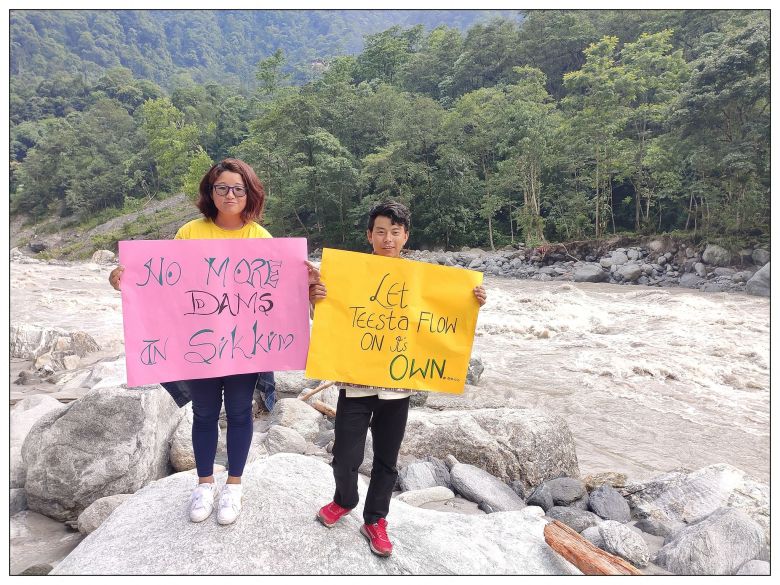
(Feature image source:-A Sikkim tribe trying to save ‘paradise’ from woes of development.)

March 14 is International Day of Action for Rivers, against destructive projects. The main objective is to ensure that the river people have their say in the decision-making processes which affect their rivers and related livelihoods sources and that the decisions are informed decisions.

Here we are bringing forth the struggles of riverine communities in India in past one year to make decision makers aware of their hardships and impacts of destructive hydro and dam projects on the riverine eco-system.     

Continue reading “2021 International Day of Action for Rivers: Opposition against HEPs, dams in India”
Dams, Rivers & People

DRP 080221: Will NITI Aayog study the costs of overturning the Radhakrishnan Judgement on Uttarakhand?

NITI Aayog, we learn, has started studies of implications of the Supreme Court and NGT orders on environment issues. In the context of the massive Chamoli disaster now unfolding in Uttarakhand, NITI needs to urgently institute an inquiry as to who all are responsible for overturning the Justice Radhakrishnan led verdict of Aug 13, 2013 about the June 2013 Uttarakhand disaster and role of hydropower projects in the disaster and the costs of overturning that verdict. In fact if the Justice Radhakrishnan verdict were to have been sincerely and honestly implemented to its logical conclusion, the proportions of the current Chamoli disaster and others would have been majorly reduced. So the costs are no doubt huge and mounting. Will NITI Aayog institute such an independent inquiry urgently?

Continue reading “DRP 080221: Will NITI Aayog study the costs of overturning the Radhakrishnan Judgement on Uttarakhand?”
DRP News Bulletin

DRP 250121: UN warns about aging Dams & Floods in changing climate

A new UN report released on January 21, 2021 UN has warned the major big dam owning counties about the aging population of fast silting up dams in changing climate and urgent need to start working on decommissioning of uneconomical large dams. Among the few countries that UN has warned includes India with its third largest number of big dams. The added problem in India is the ill maintained and ill operated large dams that UN report did not look into. Indian dams are sanctioned based on highly under estimated siltation rates, there is practically no transparency and accountability in operation of Indian dams and dam almost every year get away with creating avoidable flood disasters. This latest problem is not just related to old dams, but even the newest celebrated ones like the Sardar Sarovar Dam as happened in Gujarat in late August-early Sept 2020. No legal regime exists in India for dam safety, either structural safety or operational safety. And in changing climate, with increasing frequency of higher intensity rainfall events, such risks are already increasing multi-fold.

Continue reading “DRP 250121: UN warns about aging Dams & Floods in changing climate”
DRP News Bulletin

DRP 040121: Bangladesh declares Halda River as Fisheries Heritage

Bangladesh has declared the whole 81 km long Halda River, a tributary of Karnaphuli River in Chittagong in South East Bangladesh. The Halda river is also famous for breeding pure Indian carp. This is the only pure Indian carp breeding field of Bangladesh, perhaps in South Asia. This is a remarkable river conservation decision that has a lot of lessons for much bigger India where no river has been protected as fisheries heritage. This is great way to begin the first weekly DRP Bulletin of 2021 and we hope the Indian government, civil society and judiciary will take due note of this.

Controversy is never far away from any such river conservation efforts as is evident from the news about proposal for a Halda River based water supply project for industrial estate that has been opposed by the Fisheries ministry, water resources ministry, the River Conservation Commission, the Department of Environment and independent researchers.

Continue reading “DRP 040121: Bangladesh declares Halda River as Fisheries Heritage”
Dams · Fish, Fisheries, Fisherfolk

Dammed Fisheries of India

Far out in the estuary of Aghanashini, as Ismail Bhai spread out Indian Mackerel for drying, a carpet of silver spread out before us. “We fish in the river but the Bangde we catch in the sea also have their links to Aghanashini. We owe her everything”. Estuary of the modest, free-flowing Aghanashini supports around 5000 fisherolk. In the neighboring dammed Sharavathi, fish diversity plummets, so do dependent livelihoods. But rivers like Aghanashini are a rarity now.

Continue reading “Dammed Fisheries of India”