Environment Impact Assessment · Ganga · Nepal · Public Hearing · Uttarakhand

Letter to MoEF’s Expert Committee: Why Pancheshwar Project should not be considered for Environment Clearance

(Above: Protest outside MoEF on Oct 24, 2017 when EAC met to consider EC for Pancheshwar Project)

Oct 23, 2017

To

Chairman and Members, Expert Appraisal Committee (River Valley Projects), Union Ministry of Environment and Forests, Jor Bagh, New Delhi

Respected Chairman and Members,

The agenda of the EAC (for RVP) to be held on Oct 24, 2017, put up on the EC website only on Oct 18, 2017, just six days before the EAC meeting includes the 5040 MW Pancheshwar Multipurpose project (PMP), India’s largest proposed hydropower projects. The agenda should be available at least ten days before the meeting, and this should also be a reason for not considering the Pancheshwar project by EAC for its meeting on Oct 24. Moreover agenda mentions 5600 MW Pancheshwar project, where as the capacity as per EIA is 5040 MW. Is MoEF just callous in mentioning wrong installed capacity or has the capacity gone up? In either case, the 5040 MW Pancheshwar project should not be on EAC agenda. Continue reading “Letter to MoEF’s Expert Committee: Why Pancheshwar Project should not be considered for Environment Clearance”
Dams · Delhi · DRP News Bulletin · Floods · Ganga · Groundwater

DRP News Bulletin 16 October 2017: New Groundwater Guidelines threat to India’s Water Lifeline

GROUND WATER

New Draft Guidelines designed to privatise & destroy Groundwater The Ministry of Water Resources of the Union Government has on Oct 11, 2017 (see notice: http://www.wrmin.nic.in/forms/List.aspx?lid=1180&Id=6) put up draft guidelines on Groundwater management in India (see draft Guidelines: http://www.wrmin.nic.in/writereaddata/guideline-NOC-CGWA.pdf), with comment period of 60 days. The comments are to be sent to: Member Secretary, Central Ground Water Authority, West Block-2, Wing 3 (Ground Floor), Sector 1, RK Puram, New Delhi – 110066, e-mail: cgwa@nic.in.

New Draft Groundwater guidelines designed to destroy groundwater further and open floodgates for privatisation of common property resource? “Groundwater is a common property resource and should be used for greater good. But these guidelines are not doing that. Groundwater governance and management should happen in a transparent, participatory and accountable way but that too is not happening through guidelines,” Thakkar said.

Explaining, Thakkar said that the guidelines are “trying to make a system wherein state or district level authorities will be giving NOCs but whether those authorities have capacity to give NOCs after understanding the implications is the question.” “The draft guidelines also take out the need to recharge groundwater. Present regulations say that you if you take out groundwater you need to put in recharge capacity but now they are saying that’s not necessary and are only seeking charges. These things will definitely lead to further destruction of groundwater,” he added. http://www.livemint.com/Politics/irx1jFCWMFjGJk82Z8VZ2O/Govt-proposes-new-guidelines-on-groundwater-usage-by-industr.html, http://www.newindianexpress.com/nation/2017/oct/13/centre-proposes-water-conservation-fee-for-use-of-groundwater-1673480.html, http://www.newindianexpress.com/nation/2017/oct/14/townships-with-gym-club-must-pay-water-fee-1673790.htmlhttp://www.hindustantimes.com/environment/centre-proposes-nixing-recharge-requirement-for-industries-extracting-groundwater/story-kN3iPmO9m4MIoYkUX32n7I.html   Continue reading “DRP News Bulletin 16 October 2017: New Groundwater Guidelines threat to India’s Water Lifeline”

Rivers

Will this ‘Rally’ help the rivers?

PRESS RELEASE From India Rivers Week Organising Committee on Sept 13, 2017

We are concerned about the increasing superficial optics around saving rivers, with little or no effort to address fundamental issues which are causing their demise.

The high profile rally initiative to save India’s rivers taken up by well respected religious guru Sadguru and his followers is noteworthy, and the most recent case in point. It is striking that so many film stars, politicians, governments, and public personalities, are joining the call. Lakhs of children are expected to join in the program. While we welcome such an outpouring of good intentions and good will as a demonstration of the positive energy all around, unfortunately, we have seen no evidence either from the rally organisers, on their website[i] or their messaging, that they understand or plan to address the real threats faced by our rivers and their sorry state. Continue reading “Will this ‘Rally’ help the rivers?”

Bhagirathi · Ganga · Uttarakhand

Walking along Ganga in Uttarakhand in 2017

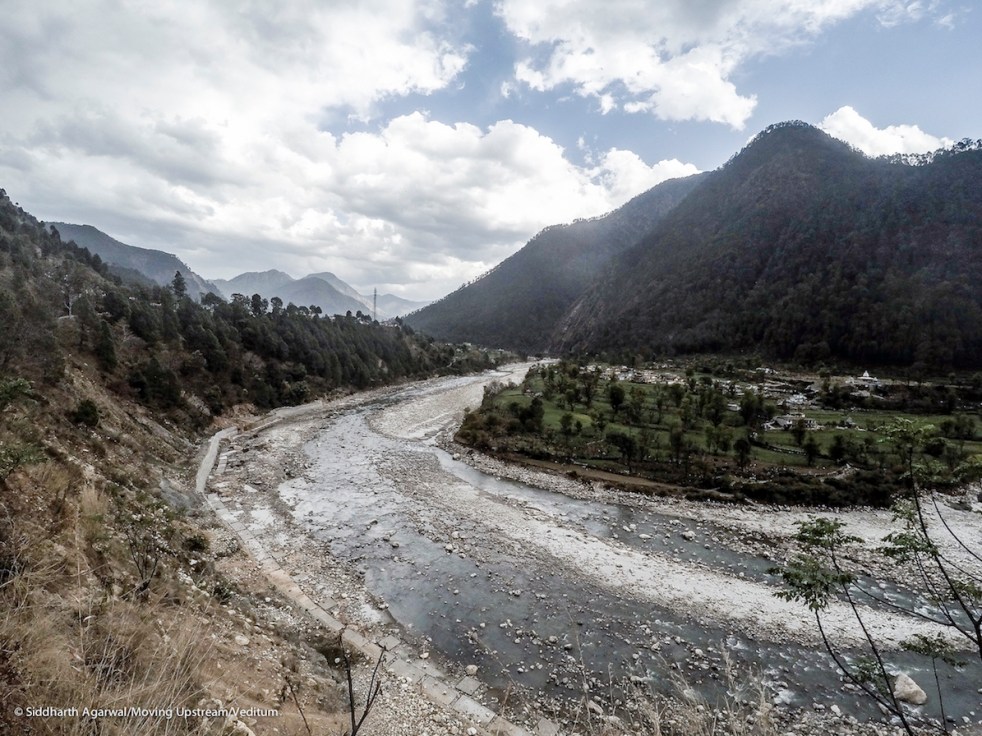
Above: The Bhagirathi valley has a lot of beautiful bends, comparable to the most popular scenic spots across the world. But we’re busy cutting down the mountain to make broader roads in these eco-sensitive areas. Image taken in March 2017. Photo credits: Siddharth Agarwal 

Guest Blog by Siddharth Agarwal

In the initial stages of planning the Moving Upstream project on the Ganga for Veditum, where we were going to walk along the whole length of the river, I had approached a lot of individuals to learn from their experiences about the river and the many connected stories around it. These learnings varied from science and activism to adventure and survival. Of all those who were approached, Himanshu Thakkar from SANDRP had been the most generous in extending knowledge resources and sharing contacts from the field. He even entertained a couple of my visits to their office and shared with me a copy of the SANDRP report prepared by Theo, called Headwater Extinctions (February 2014,  see: https://sandrp.wordpress.com/2014/12/16/new-publication-headwater-extinctions-impact-of-hydropower-projects-on-fish-and-river-ecosystems-in-upper-ganga-and-beas-basins/, it includes link to full report), along with a few other documents.

Headwater Extinctions looks at the role played by small and large hydropower projects in altering the fish biodiversity and river ecosystems in the Himalayan reaches of the Ganga and Beas basins. It also speaks about the perspective of local people and that of the authorities towards hydropower projects. Theo, who is an adventurer and ecologist, penned down the report with a scientific aptitude, while I will limit myself here in this revisit report to updated observations made on ground while walking along the Ganga in Uttarakhand (March 2017). This comparative observation will hopefully enable a conversation that requires continuity. Continue reading “Walking along Ganga in Uttarakhand in 2017”

Ganga

INTACH pilot project reduces Assi River Pollution in Varanasi by 70% in two months, at least cost, without any structures

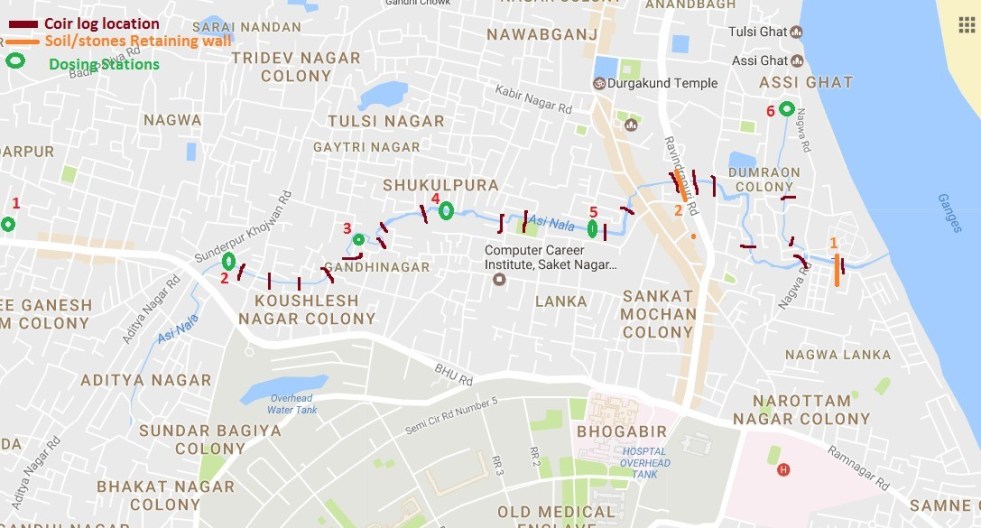
Above: Map showing interventions in Assi River in Varanasi (INTACH)

REPORT TO DIVISIONAL COMMISSIONER, VARANASI

On INTACH’s Pilot Project on Assi Nadi [24th Jan/17 – 26th Feb/17]

Guest Blog by Manu Bhatnagar, INTACH

  1. INTACH is a national non-profit organization, a registered society under Society’s Act since 1984, having the Secretaries of the GoI Ministries of Environment, Forest & Ganga Rejuvenation, Ministry of Urban Development, Ministry of Culture, DG [ASI] and DG [NM] on its Governing Council with its accounts duly audited by the Office of CAG.
  2. High pollution load in holy River Ganga at Varanasi is due to domestic wastewater flowing into the river through 33 nallahs and rivulets. Sewerage systems and treatment plants are going to take several years to be in place and effective. In the meantime the river will continue to remain polluted. Based on its experience in Delhi and Agra INTACH has initiated a one month pilot project for cleaning wastewater flow in Assi Nadi using the process of bacterial bioremediation.

Continue reading “INTACH pilot project reduces Assi River Pollution in Varanasi by 70% in two months, at least cost, without any structures”

Bihar · Floods · Ganga

Ganga basin faces unprecedented floods in Aug 2017

Ganga Basin, particularly Bihar is facing unprecedented floods, starting on Aug 12, 2017. Water levels of Major tributaries of Ganga, including Kosi, Mahananda, Rapti, Ghagra, Bagmati, Gandak and Kamlabalan are close to or above the historically highest flood levels almost simultaneously. This has rarely happened in the past. The water level of Ghagra is close to HFL at Elgine Bridge in Barabanki district in Uttar Pradesh. Most other flood forecasting sites in North Bihar and East UP were shown as pink dots on CWC flood forecasting map on Aug 13-15, signifying that water level at these sites was above the danger level. This is possibly the beginning, this wave is expected to rise as it travels down towards Bihar and then W Bengal and Bangladesh. Continue reading “Ganga basin faces unprecedented floods in Aug 2017”

brahmaputra · DRP News Bulletin · Floods · Ganga

DRP News Bulletin 14 August 2017 East & North East India face flooded Independence day

FLOODS 2017

SANDRP BLOG: Brahmaputra basin to face unprecedented floods starting Aug 12, 2017: https://sandrp.wordpress.com/2017/08/12/brahmaputra-basin-faces-unprecedented-flood-wave-in-aug-2017/

North Bengal Flood situation “Cooch Behar, North Dinajpur, Alipurduar, Jalpaiguri and Darjeeling are the five districts which have been affected by the flood. Earlier in the day, Irrigation Minister Rajib Banerjee said that the state government is tackling the flood in north Bengal on war footing.” 58,000 people had been affected in Alipurduar, Jalpaiguri and Cooch Behar districts.

MAY BE IF THEY WOKE TWO DAYS EARLIER WHEN NASA MAP CLEARLY SHOWED THE HEAVY RAINFALL HAVING ALREADY OCCURRED, THEY MAY NOT HAVE HAD TO TACKLE IT ON WAR FOOTING AND A LOT OF DAMAGE COULD HAVE BEEN AVOIDED? http://www.ndtv.com/india-news/flood-situation-worsening-in-north-bengal-says-mamata-banerjee-1736993 Continue reading “DRP News Bulletin 14 August 2017 East & North East India face flooded Independence day”

Assam · brahmaputra · Dams · Floods · West Bengal

Brahmaputra basin faces unprecedented flood wave in Aug 2017

In the morning of Aug 11, 2017, while checking my daily morning routine sites, I saw the sudden appearance of purple patch (signifying rainfall in access of 175 mm rainfall in previous 24 hours) on NASA daily rainfall accumulation map for Indian subcontinent.[i] The purpose  patch covered parts of the West Bengal, North East Indian and Bangladesh. I was taken aback, but it was not very unusual to see in the peak of monsoon. So as we usually do, I took a screenshot and put up on SANDRP FB page with a warning that this could lead to floods. I did not realize that this was the beginning of an unprecedented wave of floods for these regions that may extend to Ganga basin as I write this. Such purple patches generally disappear in 24 hours, since the rains do not last to long. However, in the case of current phase, not only the purple patch has last now for 42 hours, it has extended  to the west, all along India Nepal region along the southern boundary of Nepal.   Continue reading “Brahmaputra basin faces unprecedented flood wave in Aug 2017”

Bangladesh · brahmaputra · Sikkim · Teesta · West Bengal

Retracing Her Path 1: A Journey along the Teesta River in Bangladesh

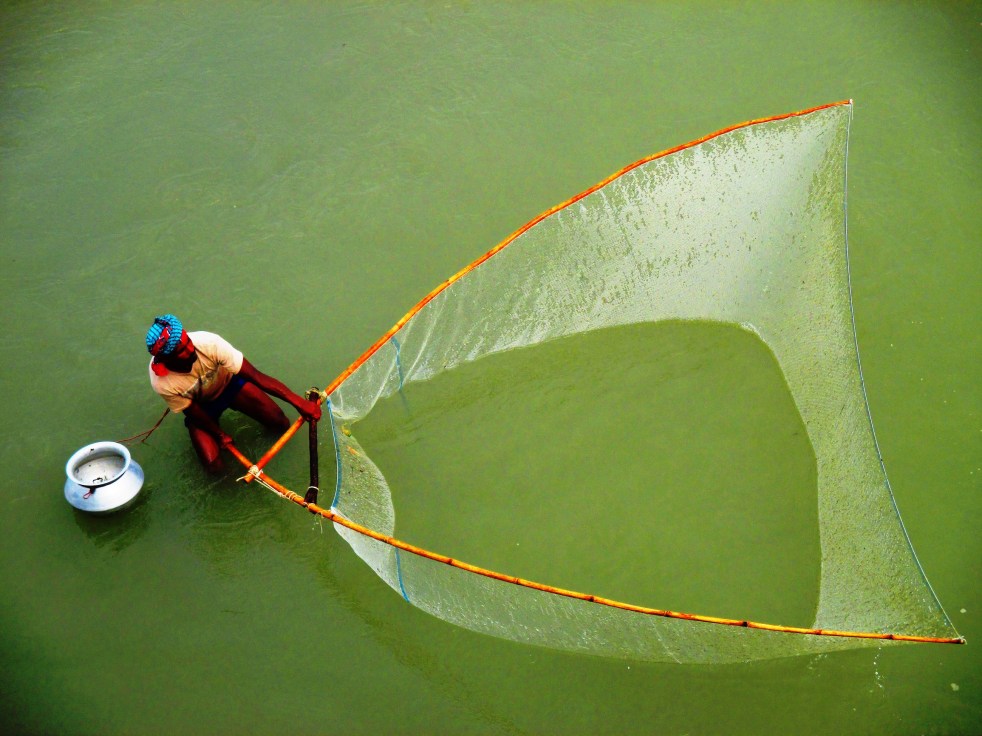
Above: A local fisherman fishing upstream of the barrage (Photo: Gauri Noolkar-Oak)

Guest Blog by Gauri Noolkar-Oak

Few journeys take us through a string of experiences that nourish the senses and the soul. A thoroughbred urban, city-lover, I nevertheless knew deep down that my journey of such nourishment would be with a river. I began researching rivers by chance, but with time, I grew to first like and then worship the entity. In early 2017, I acquired a grant from the Joke Waller-Hunter Initiative to study water conflicts in the Teesta basin, and I knew: this was going to be it.

My journey was inspired by the book “Empires of the Indus” written by Alice Albania, a brave woman who travelled the Indus river from mouth to source, and explored her history and cultures. But beyond that, I hardly had a plan; I did not know how long the journey would take, whether I would be able to see the whole river, and when I would return home.  When I landed in Dhaka at the end of April this year, all I knew was that I wanted to see the Teesta right from her confluence with the Brahmaputra River in Bangladesh all the way up to her source at Tso Lamo in Sikkim, on the Indo-China border. Continue reading “Retracing Her Path 1: A Journey along the Teesta River in Bangladesh”

Dams · Ganga

About Matri Sadan Fight Against Illegal Mining In River Ganga  

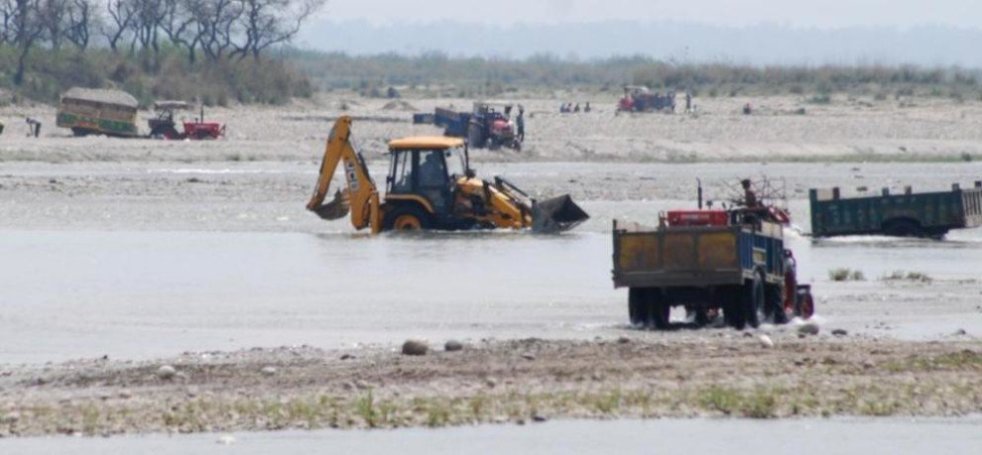
Finally on World Environment Day, Swami Shivanand has withdrawn[I] his fast unto death agitation. It was thirteenth day of his indefinite hunger strike including six days of water fast (from May 25 – 30, 2017) against illegal mining in Ganga.

The saint ended his protest around 6pm on June 05, 2017, only after receiving written assurance from the Central Government. As per information, referring to Matri Sandan repeated pleas, UP Singh Director General of National Mission for Clean Ganga has accepted that there were violations[II] of rules specially Rule No. V of Environment Protection Act during mining in Ganga. Subsequently he has asked Chairman, Central Pollution Control Board initiate criminal proceedings against the officials[III] concerned for non-compliance of the rules.

Continue reading “About Matri Sadan Fight Against Illegal Mining In River Ganga  “