
Ganga Basin, particularly Bihar is facing unprecedented floods, starting on Aug 12, 2017. Water levels of Major tributaries of Ganga, including Kosi, Mahananda, Rapti, Ghagra, Bagmati, Gandak and Kamlabalan are close to or above the historically highest flood levels almost simultaneously. This has rarely happened in the past. The water level of Ghagra is close to HFL at Elgine Bridge in Barabanki district in Uttar Pradesh. Most other flood forecasting sites in North Bihar and East UP were shown as pink dots on CWC flood forecasting map on Aug 13-15, signifying that water level at these sites was above the danger level. This is possibly the beginning, this wave is expected to rise as it travels down towards Bihar and then W Bengal and Bangladesh. Continue reading “Ganga basin faces unprecedented floods in Aug 2017”
Category: Regions
Country wise list here with different states

Brahmaputra basin faces unprecedented flood wave in Aug 2017
In the morning of Aug 11, 2017, while checking my daily morning routine sites, I saw the sudden appearance of purple patch (signifying rainfall in access of 175 mm rainfall in previous 24 hours) on NASA daily rainfall accumulation map for Indian subcontinent.[i] The purpose patch covered parts of the West Bengal, North East Indian and Bangladesh. I was taken aback, but it was not very unusual to see in the peak of monsoon. So as we usually do, I took a screenshot and put up on SANDRP FB page with a warning that this could lead to floods. I did not realize that this was the beginning of an unprecedented wave of floods for these regions that may extend to Ganga basin as I write this. Such purple patches generally disappear in 24 hours, since the rains do not last to long. However, in the case of current phase, not only the purple patch has last now for 42 hours, it has extended to the west, all along India Nepal region along the southern boundary of Nepal. Continue reading “Brahmaputra basin faces unprecedented flood wave in Aug 2017”
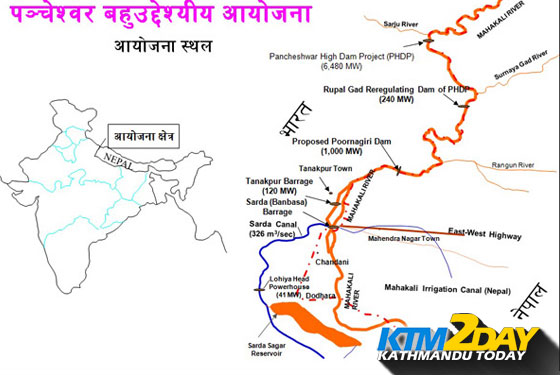
Cancel Pancheshwar Dam Public Hearings: It involves too many violations and illegalities
From: SANDRP,
50-D, AD block, Shalimar Bagh, Delhi 88
we4earth@gmail.com, https://sandrp.wordpress.com/
August 11 2017
To
1. District Magistrate,
Pithoragarh, Uttarakhand
2. Chairman/ Regional office incharge,
Uttarakhand Environment Protection and Pollution Control Board,
Dehradun, dkjoshi21@yahoo.com
COPY to: 1. IA Division (River Valley Projects) MoEF, Delhi
2. Chairman and Members of Expert Appraisal Committee on River Valley Projects
Respected Members of Public Hearing Panel for Pancheshwar Dam,
The public hearing now being conducted for the massive Pancheshwar Dam at Pithoragarh today, as part of the requirement under the EIA notification of Sept 2006 is being held in complete violation of letter and spirit of many norms of the EIA notification. Hence these public hearings should be cancelled. They should be rescheduled after appropriate conditions are achieved for the public hearing. Some of the key reasons for this are listed below, but these are not exhaustive reasons, but only a list of key indicative reasons. Continue reading “Cancel Pancheshwar Dam Public Hearings: It involves too many violations and illegalities”
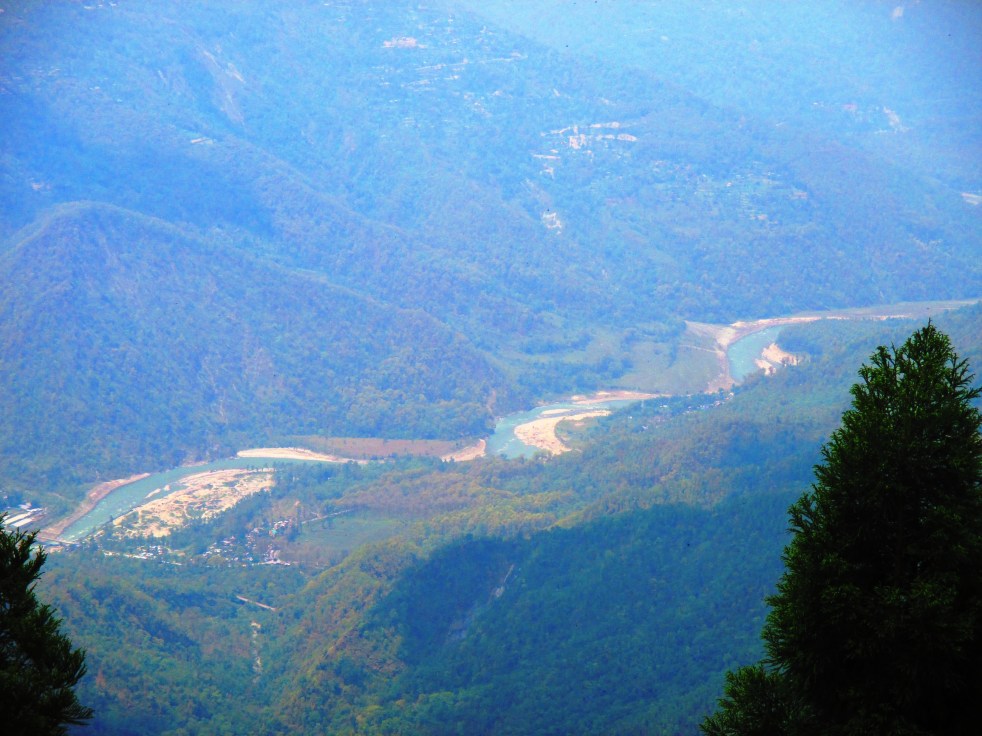
Retracing Her Path -3: A Journey along the Teesta River in Sikkim
Above: The Teesta valley (photo: Gauri Noolkar-Oak)
Guest Blog by Gauri Noolkar-Oak
A day later, I set out on the last leg of my journey – through Sikkim, to the source. The journey from Kalimpong to Singtam and further to Mangan was breathtaking. The mountains grew taller as I climbed higher, the Teesta keeping me company all the while. It rained breezily and the clouds came down, clinging to the thick cloak of green that draped the mountains. Beauty was all around me and at one point, I just had to put my camera away and take in the splendour of nature.
Continue reading “Retracing Her Path -3: A Journey along the Teesta River in Sikkim”
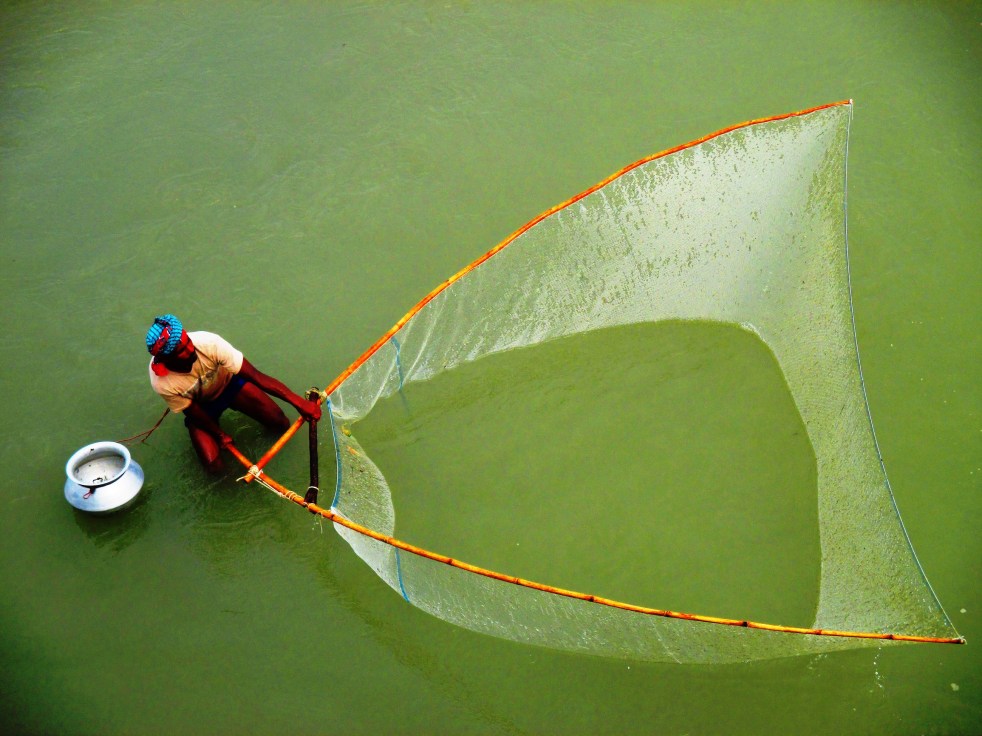
Retracing Her Path 1: A Journey along the Teesta River in Bangladesh
Above: A local fisherman fishing upstream of the barrage (Photo: Gauri Noolkar-Oak)
Guest Blog by Gauri Noolkar-Oak
Few journeys take us through a string of experiences that nourish the senses and the soul. A thoroughbred urban, city-lover, I nevertheless knew deep down that my journey of such nourishment would be with a river. I began researching rivers by chance, but with time, I grew to first like and then worship the entity. In early 2017, I acquired a grant from the Joke Waller-Hunter Initiative to study water conflicts in the Teesta basin, and I knew: this was going to be it.
My journey was inspired by the book “Empires of the Indus” written by Alice Albania, a brave woman who travelled the Indus river from mouth to source, and explored her history and cultures. But beyond that, I hardly had a plan; I did not know how long the journey would take, whether I would be able to see the whole river, and when I would return home. When I landed in Dhaka at the end of April this year, all I knew was that I wanted to see the Teesta right from her confluence with the Brahmaputra River in Bangladesh all the way up to her source at Tso Lamo in Sikkim, on the Indo-China border. Continue reading “Retracing Her Path 1: A Journey along the Teesta River in Bangladesh”
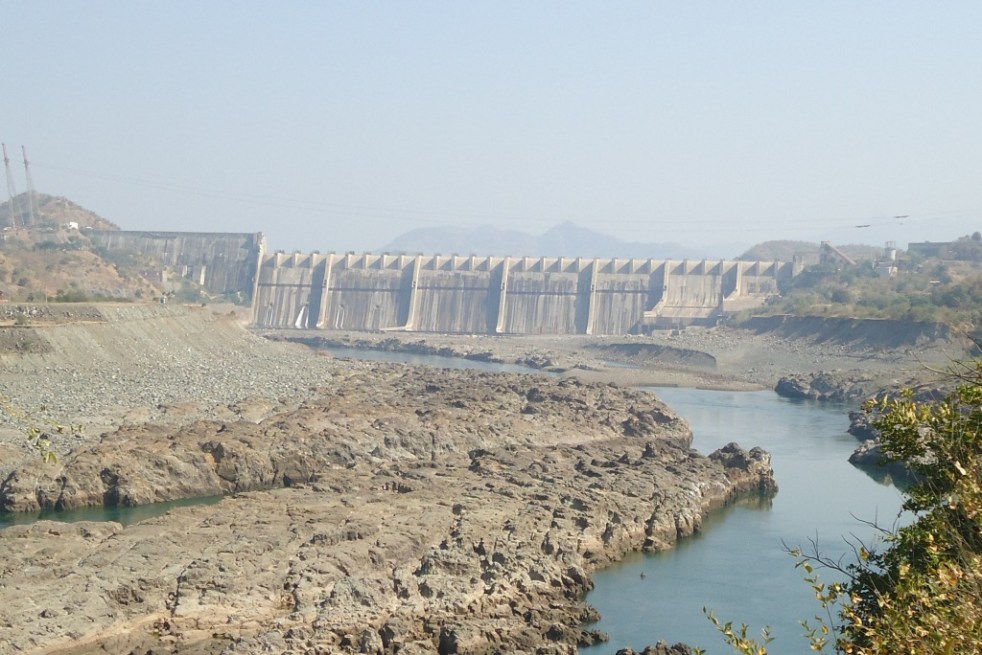
Sardar Sarovar gate closure without resettlement or justification is a inhuman, unjust decision: Will SC intervene?
On June 17, 2017, a PIB Press Release from Union Ministry of Water Resources announced, “Narmada Control Authority (NCA) has cleared the final raising of Sardar Sarovar Dam (SSD) in Gujarat by lowering of gates and impounding of water in the reservoir upto its Full Reservoir Level (FRL) of EL 138.68 mts. The NCA which met here yesterday under the Chairmanship of Dr. Amarjit Singh, Secretary (WR, RD & GR) considered all aspects of environmental and Resettlement and Rehabilitation (R&R) issues.”
The gate closure will lead to submergence and displacement of lakhs of tribals and farmers of Gujarat, Madhya Pradesh and Maharashtra, without even proper resettlement as legally required. There is also no justification for the decision as the canal infrastructure necessary to use the additional water that the dam will store with increase in height from 121.92 mts to 138.68 mts is not even ready. Continue reading “Sardar Sarovar gate closure without resettlement or justification is a inhuman, unjust decision: Will SC intervene?”
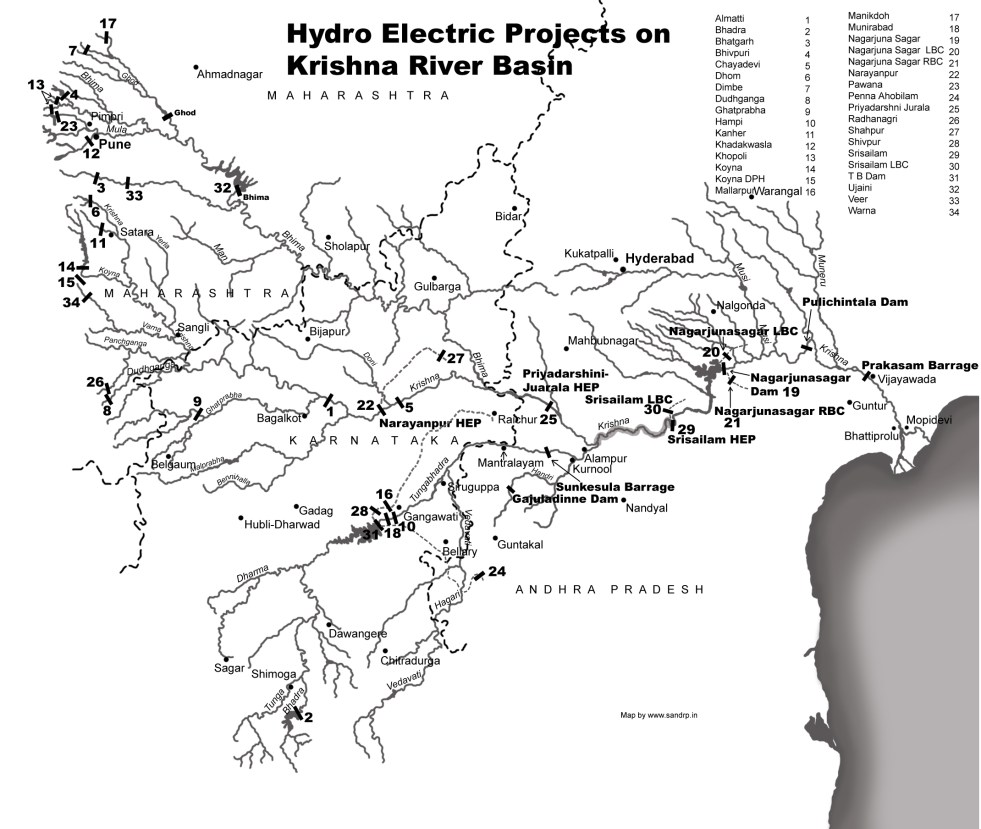
STOP DIVERSION OF WATER FROM DROUGHT HIT KRISHNA BASIN
Release water from Koyna & Tata dams to drought hit Karnataka, Telangana & Andhra Pradesh
Large parts of South India, including parts of Karnataka, Andhra Pradesh and Telangana are facing unprecedented drought and water scarcity. However, Maharashtra is sending OUT billions of liters of water FROM drought hit Krishna basin to High Rainfall Konkan region to flow to the sea. Continue reading “STOP DIVERSION OF WATER FROM DROUGHT HIT KRISHNA BASIN”
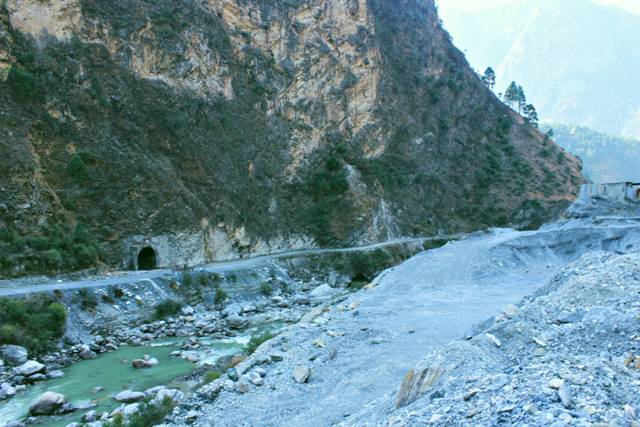
NHPC negligence leads to man-made disaster in Parbati Valley in Himachal Pradesh
(Above: illegal muck dumping by Parbati HEP along the Sainj River in Himachal Pradesh)
The people of Sainj-Parbati valley in Beas basin in Himachal Pradesh’s Kullu disrict’s Banjar Tehsil are living in constant fear of a disaster. Since six days now, the power tunnel of the NHPC’s under construction 800 MW Parbati II hydropower project is heavily leaking, but NHPC refused to stop water release into the tunnel till the leakage led to landslides and displacement of people. Ultimately on the night of April 17, 2017, huge cracks spread over 200 m appeared in the hills, leading to landslide & fall of soil and rocks, immediately threatening eight families of Rahan (Reina) village, though over 400 families of some 12 villages of Rella Panchayat (including Rella, Sharan, Jiva, Sulga, Khadoa, Rahan, Shalah, Bhebal, Bahara, Bagidhar, Khaul, etc) are facing the prospects of disaster as cracks in the hill have appeared just above the villages. People here are spending sleepless nights since several days now. They are afraid that if the leakage continues, these villages will have to be evacuated any moment, else a major catastrophe may result.[i] Continue reading “NHPC negligence leads to man-made disaster in Parbati Valley in Himachal Pradesh”
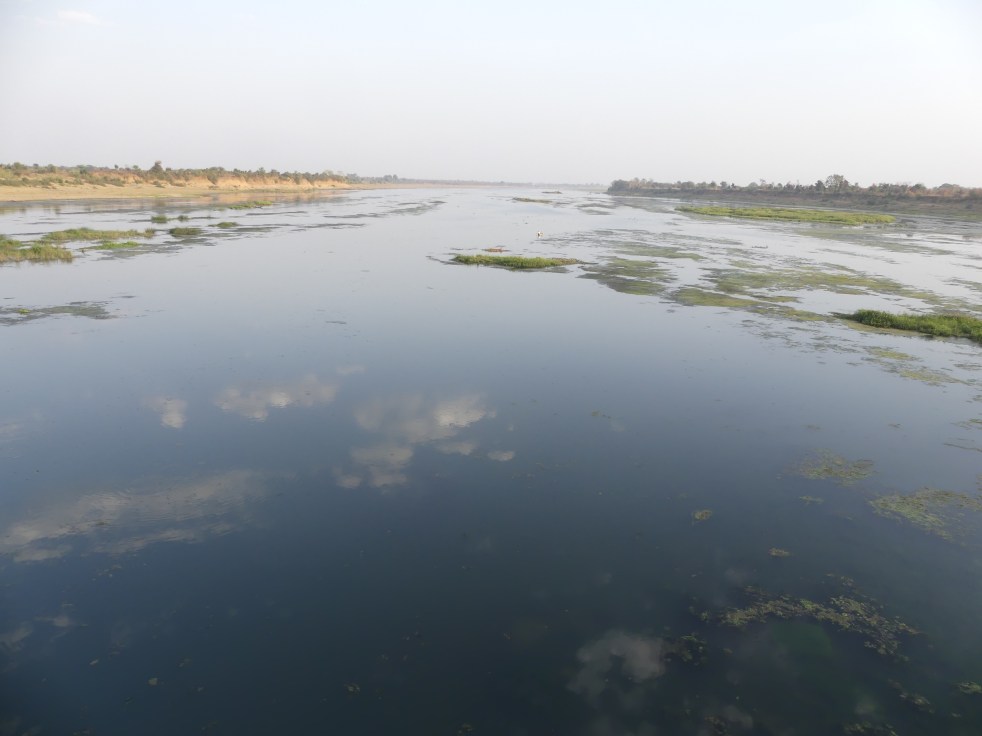
Wainganga River: Threatened lifeline of Vidarbha’s Forests
Above: Wainganga River, downstream of Gosikhurd reservoir (Photo by AJT Johnsingh on 09/03/17)
The valley of Wainganga River has served as a backdrop for Rudyard Kipling’s Jungle book. East Vidarbha region of Maharashtra hosts major part of this lush green landscape which is ecologically one of the most significant regions of India. More than 50% of forest of Maharashtra State falls in this region. Government of Maharashtra (GoM) however is doing little on its part to protect these. Perceiving them as ‘hurdles’ GoM is pushing more and more unfeasible dam projects in this region in the name of irrigation. Water for rivers, biodiversity, wildlife has taken a backseat in the growing claims on Wainganga waters. If these projects come up health of Wainganga basin will be further seriously jeopardized.
This is an attempt to put together Maharashtra specific profile of Wainganga River. Continue reading “Wainganga River: Threatened lifeline of Vidarbha’s Forests”
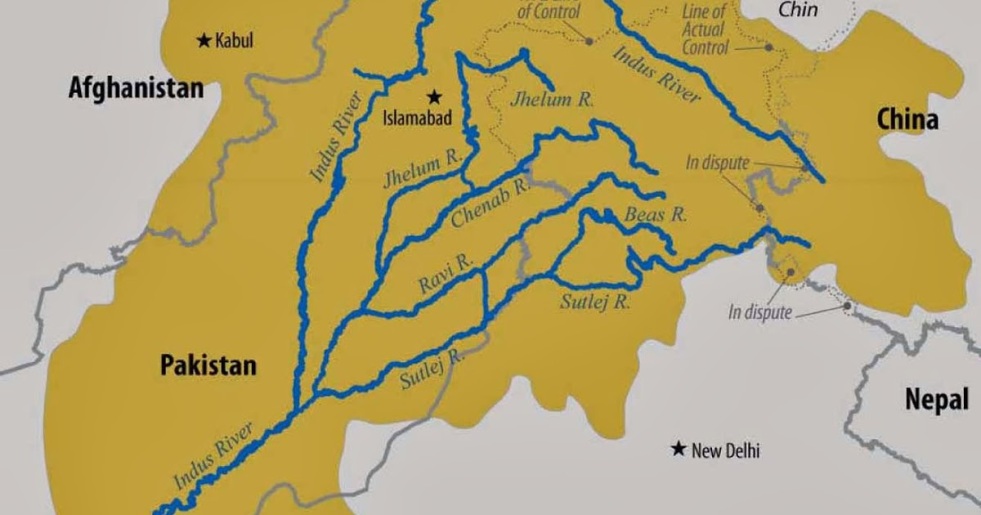
India Pakistan resume talks on Indus Treaty: Stakes are high
When on March 20-21, 2017, on the eve of World Water Day, India and Pakistan’s Permanent Indus Commission met in Islamabad for its 113rd meeting, there was a lot at stake besides the immediate issue or even the Indus Treaty.
In many ways, the Indus Treaty remains a bright spot in relations between these two neighbors and the treaty keeps bringing them back to the talking table…This is the magic of a shared river! Continue reading “India Pakistan resume talks on Indus Treaty: Stakes are high”
 SANDRP