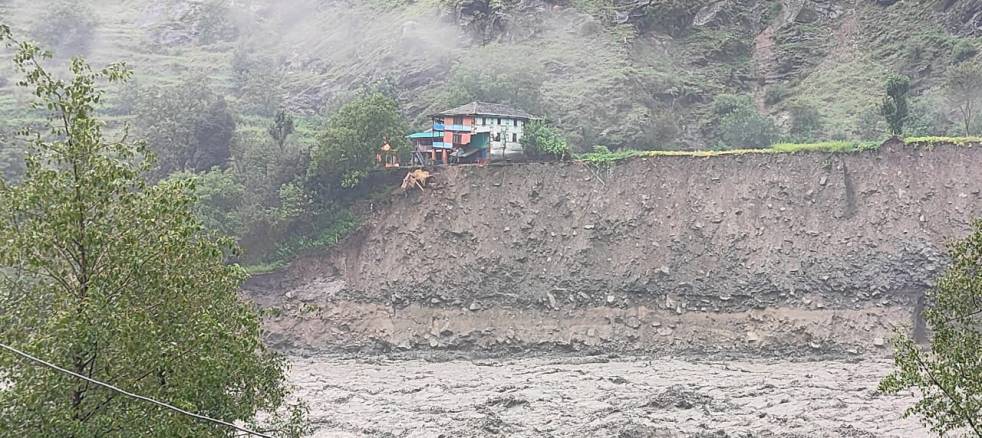
Salun village, perched roughly 50 feet above the Ravi River, had its moment of fame on the 26th August 2025 — a moment that also became its last. On the dark, rainy afternoon, the small village with homes, rajma fields, apple orchards and cattle sheds collapsed into the flooded River Ravi like a house of cards. In a matter of 30 minutes, ancestral homes with warm hearths, blankets for the coming winter, old report cards and wedding albums, adhar cards and bankbooks-entire archives of living-were erased. Villagers, who managed to escape in time stood in awe and saw their village going extinct before their eyes.
Continue reading “The Day Salun Village Fell: Impacts of Cascading Hydropower Projects in the Ravi Basin”Category: India
Himachal Pradesh: Sainj HEP Remains Out of Operation for over 4 months
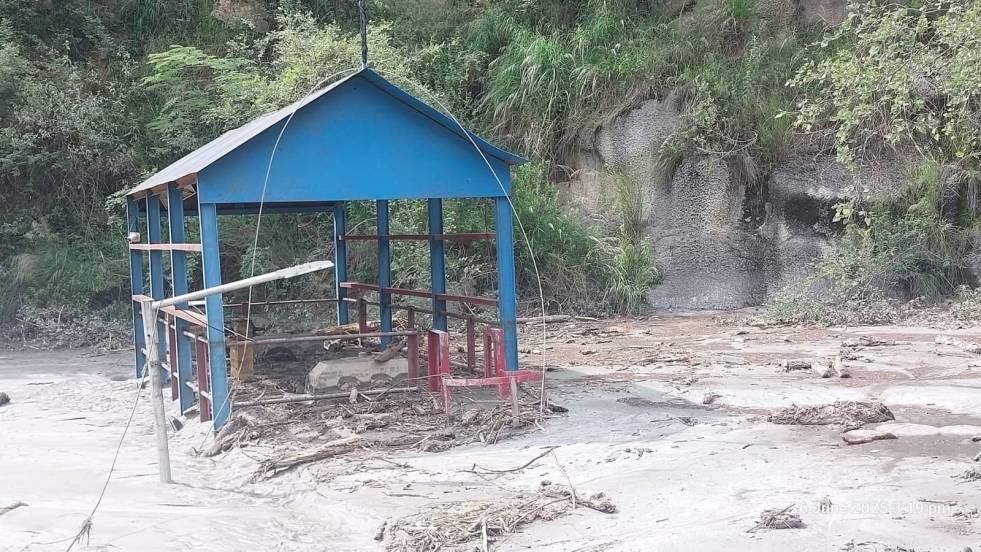
(Feature Image: Outlet of Sainj HEP powerhouse tunnel buried under silt in last week of June 2025. Source: Hariram Chaudhary, Sainj)
The Sainj Hydroelectric Project (HEP) in Kullu district of Himachal Pradesh has been out of operation for over the past four months. The 100 Mw project of the Himachal Pradesh Power Corporation Limited (HPPCL) is the fourth HEP which was severely affected by flash flood in Jiwa nullah on June 25, 2025.
Continue reading “Himachal Pradesh: Sainj HEP Remains Out of Operation for over 4 months”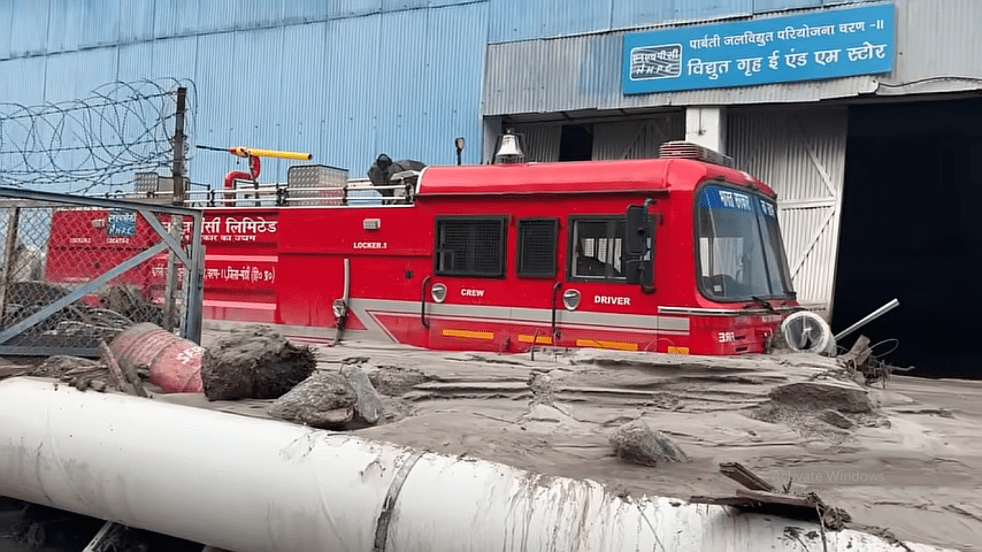
2025: Hydro Projects Accidents & Disasters in Himalaya
The accidents and disasters occurring particularly during monsoon months have affected several Hydro Electric Projects (HEP) both built and under construction in Himalayan states of India. In this overview, we put together information about such disasters to underline their increasing vulnerabilities to climatic disasters endangering the lives of workers and local people living in the vicinity of these projects.
Continue reading “2025: Hydro Projects Accidents & Disasters in Himalaya”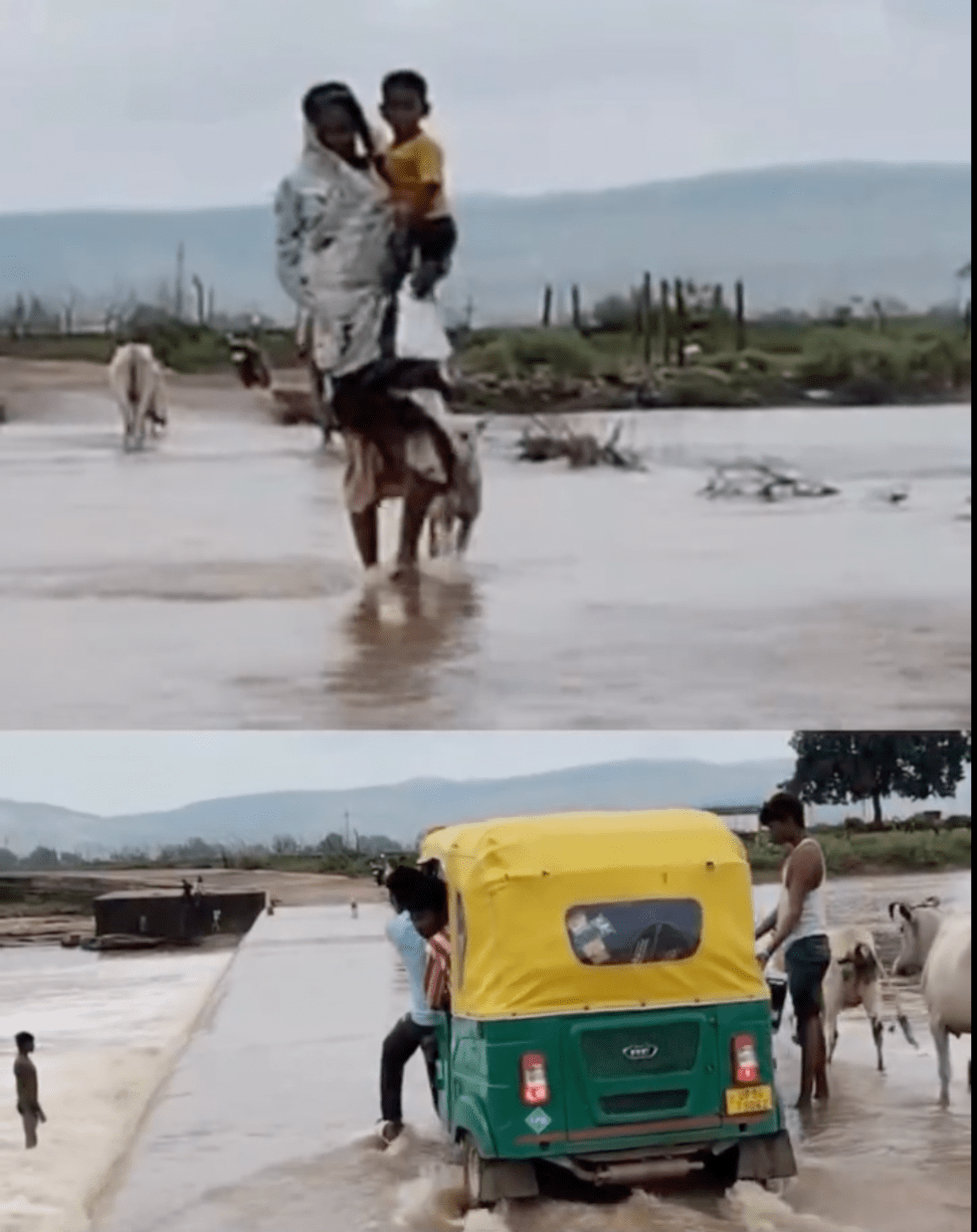
Bundelkhand: Overview of 2025 Monsoon
Bundelkhand is known as a drought prone region. It is comprised of 7 districts of Uttar Pradesh and 6 districts of Madhya Pradesh. The region is known as drought prone region in recent years. Let us see the situation of 2025 SW Monsoon rain in Bundelkhand.
Continue reading “Bundelkhand: Overview of 2025 Monsoon”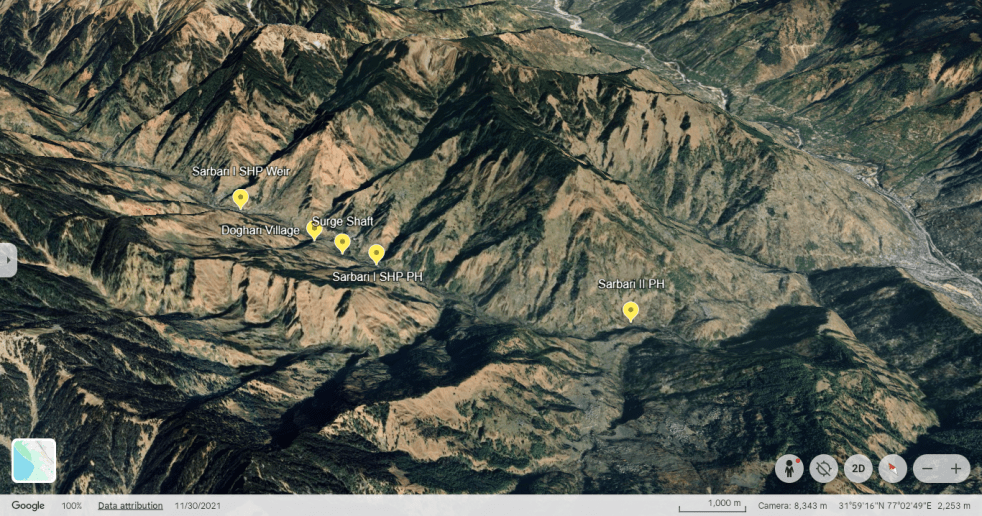
Himachal Pradesh: Kullu Villagers Demand Suspension of Sarbari-I SHEP
Blaming Sarbari I Small Hydro Power (HEP) project for causing reoccurring disasters, the villagers of Mashana panchayat in Lag Valley of Kullu district have demanded suspension of the 4.5 Mw project operation. As per the villagers the leakages in the surge shaft and head race tunnel and burst of penstock of the project in August and Sept. months this year have caused landslides and flash flood disasters impacting their land and livelihoods. They have said that due to these disasters about 80 meter Mashana link road, some houses, a water tank and over hundreds of bigha of fertile farmland have been severely damaged.
Continue reading “Himachal Pradesh: Kullu Villagers Demand Suspension of Sarbari-I SHEP”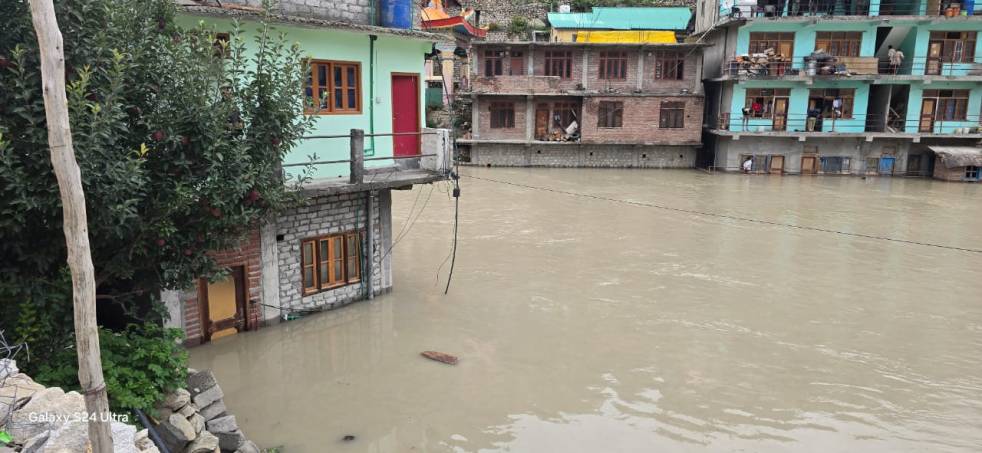
Lippa Villagers Blame Kashang HEP for Artificial Lake in Sutlej Basin
(Feature Image: Sept. 07, 2025 pics showingg houses submerged in artificial lake in Lippa village)
It has been over three weeks since an artificial lake formed in Lippa village under Pooh division of Kinnaur district in Himachal Pradesh has not been breached fully. The lake was formed after flashflood in Pajer nullah in Sutlej river basin on Sept 4, 2025 which blocked the flow of Kerang stream. Subsequently, first floors of about 5 homes were submerged in the lake water. The deluge also damaged 5 irrigation channels, 2 potable water sources & several apple plants.
Continue reading “Lippa Villagers Blame Kashang HEP for Artificial Lake in Sutlej Basin”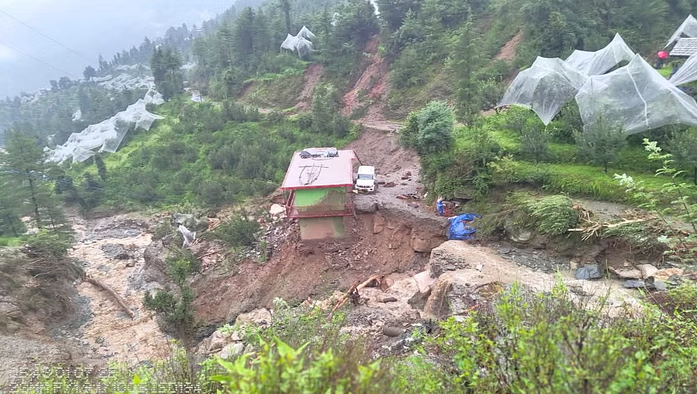
DRP 080925: Will the higher judiciary Listen?
(Feature Image: Seraj valley in Mandi district of Himachal battered by extreme weather events in July 2025)
Well known environmentalist Manshi Asher through the following article is giving a very important message that everyone, particularly Judiciary needs to listen and act upon. While higher judiciary is rightly highly respected, its track record on acting on environmental issues is far from satisfactory and leaves a lot to be desired.
Continue reading “DRP 080925: Will the higher judiciary Listen?”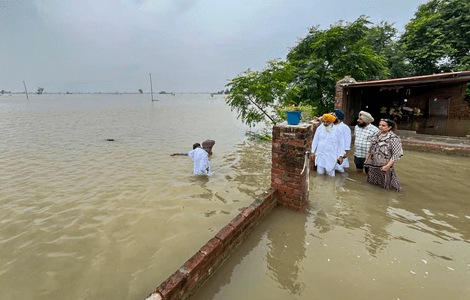
DRP 010925: Punjab floods need independent inquiry
(Feature Image: Punjab WRD minister Barinder Kumar Goyal asserted that the timely release of water by the BBMB in June could have significantly reduced the damage caused by the floods.)
It is clear from the following details that the massive floods that Punjab experienced and parts continue to experience even now has a lot to do with the way Bhakra, Pong and Ranjit Sagar dams were operated. There was sufficient actionable information that was available to take advance water release action. Had these actions been taken, the proportions of the disaster could have been reduced. The risk of further floods remains considering the IMD forecast of heavy rains in catchments of these dams during the remaining weeks of SW Monsoon 2025.
Continue reading “DRP 010925: Punjab floods need independent inquiry”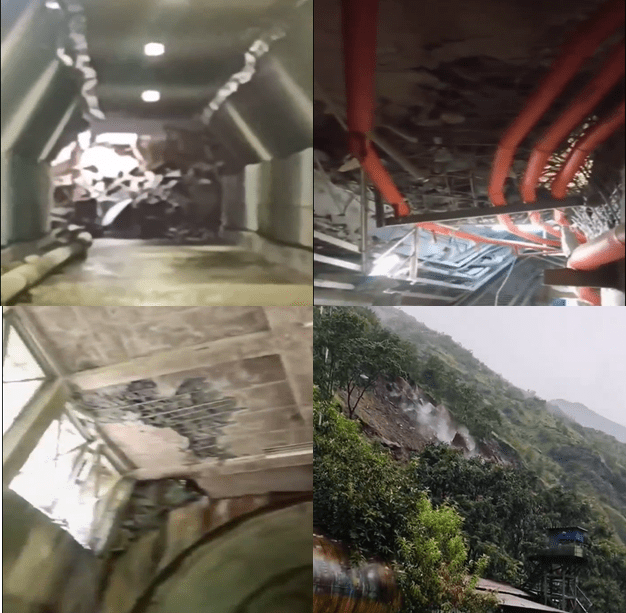
Aug 2025: Landslide Damages NHPC’s Dhauliganga HEP in Uttarakhand
A landslide incident has partially damaged the power house tunnel of NHCP’s Dhauliganga HEP in Pithoragarh district of Uttarakhand. The incident occurred in the evening of Aug 30, 2025 after heavy rainfall also blocked the mouth of underground tunnel with rocks and debris. The HEP is built on Dhauliganga river in Dharchula tehsil of the district.
Continue reading “Aug 2025: Landslide Damages NHPC’s Dhauliganga HEP in Uttarakhand”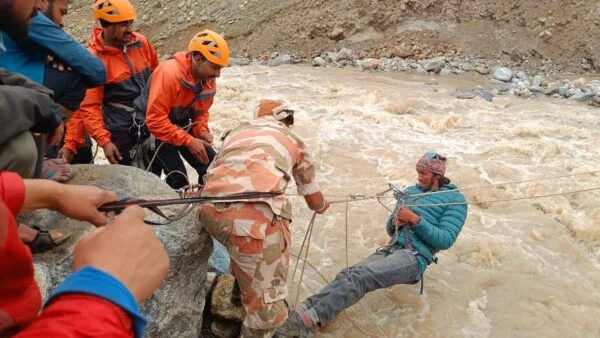
Vulnerable Nallahs in the Himalayas Need Urgent Attention
“When Jahlma Nallah starts roaring, we cannot sleep. It has been flooding for the past three years at least” said octogenarian Devi Singhji in October 2024. Jahlma Nallah, which joins the Chenab and blocks it occasionally, flooded again catastrophically in the monsoon of 2025.
Continue reading “Vulnerable Nallahs in the Himalayas Need Urgent Attention”
