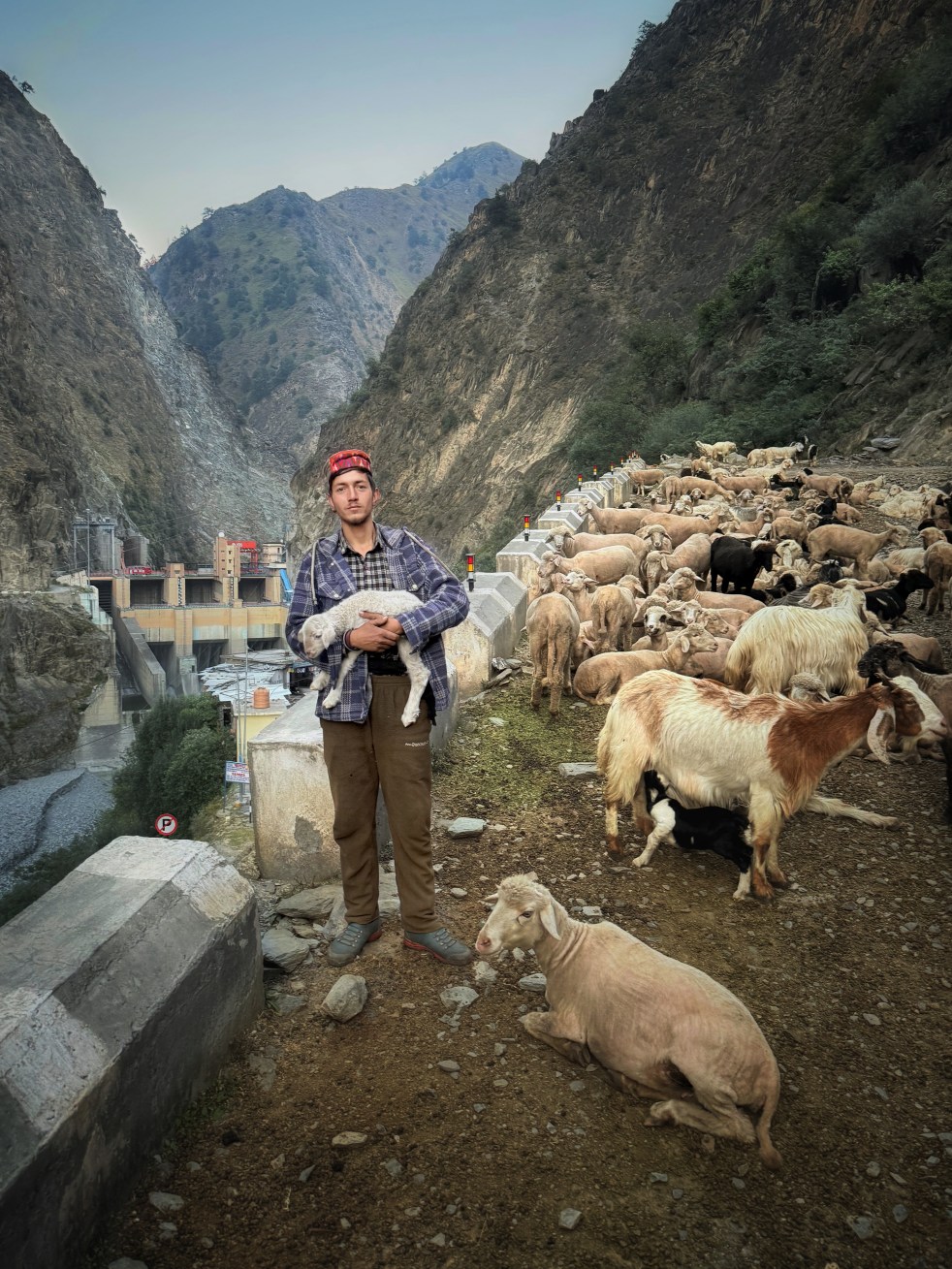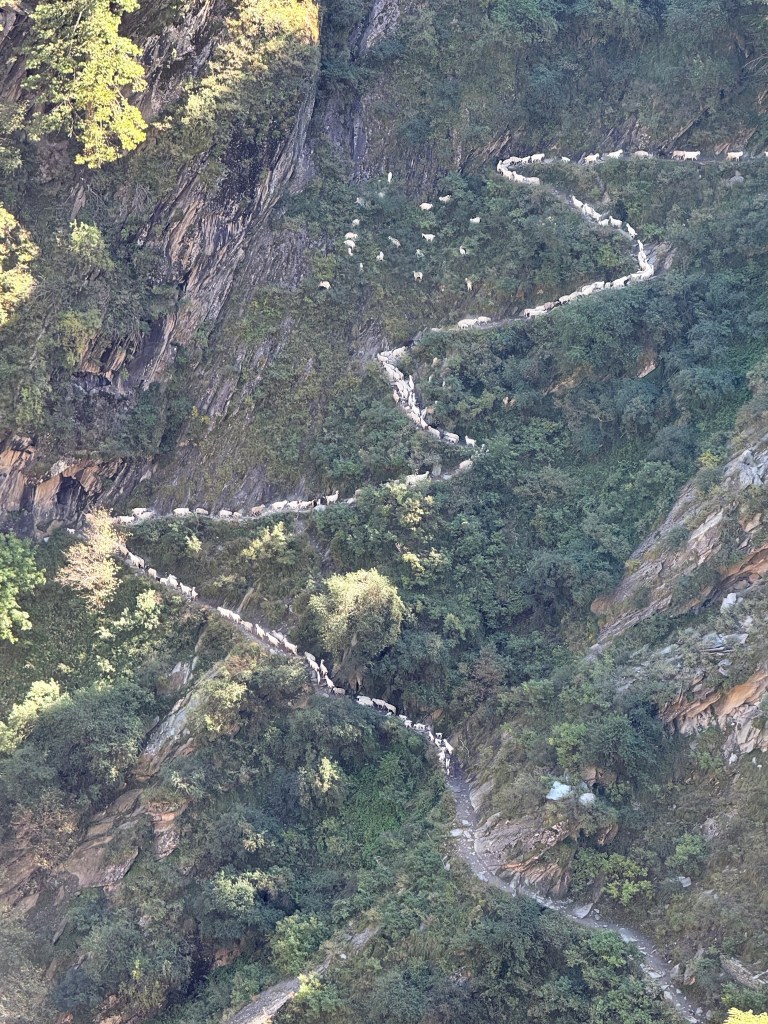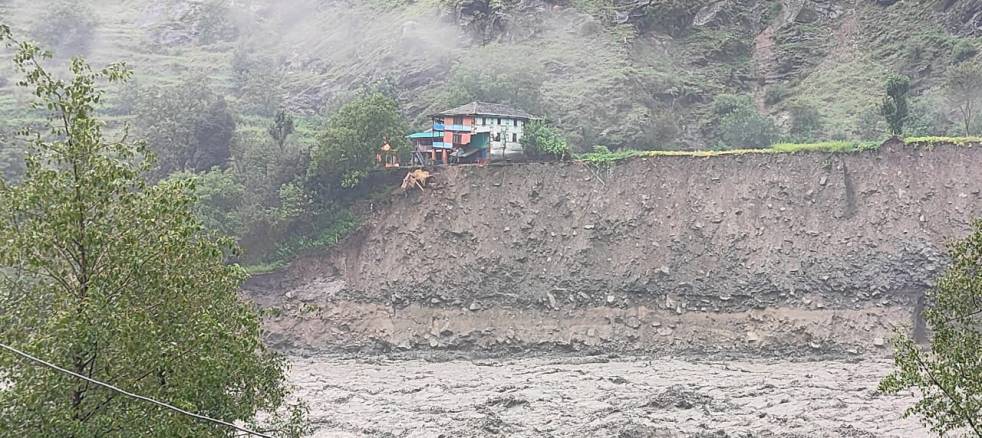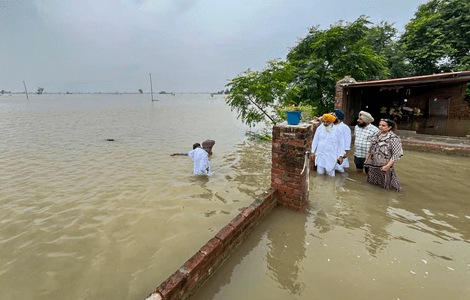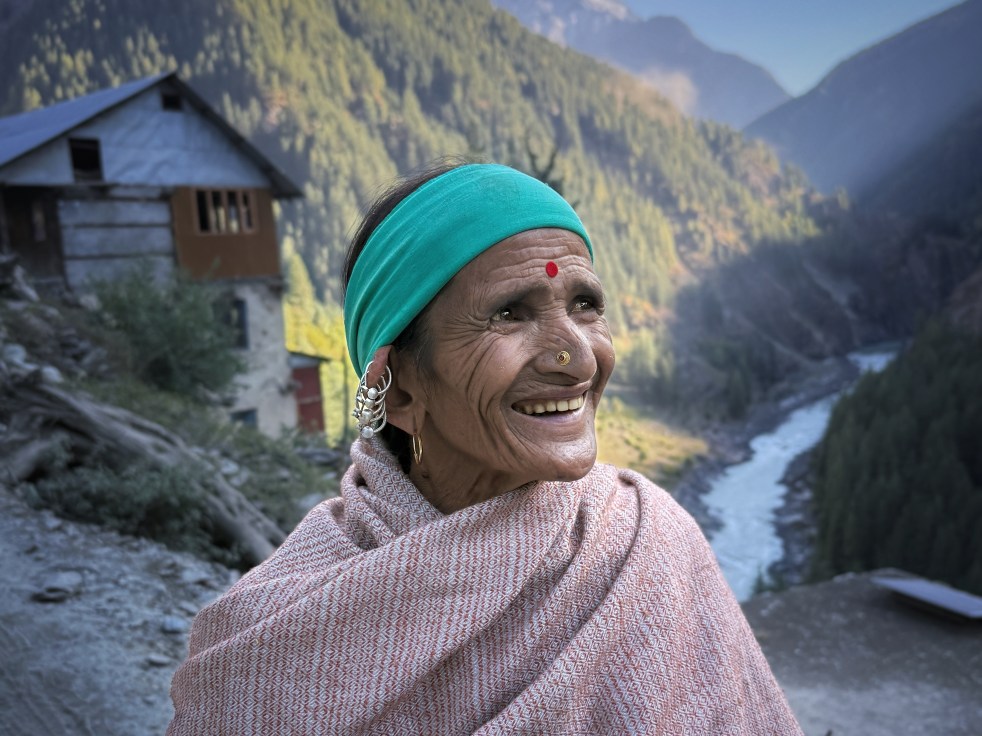
Salun village, perched roughly 50 feet above the Ravi River, had its moment of fame on the 26th August 2025 — a moment that also became its last. On the dark, rainy afternoon, the small village with homes, rajma fields, apple orchards and cattle sheds collapsed into the flooded River Ravi like a house of cards. In a matter of 30 minutes, ancestral homes with warm hearths, blankets for the coming winter, old report cards and wedding albums, adhar cards and bankbooks-entire archives of living-were erased. Villagers, who managed to escape in time stood in awe and saw their village going extinct before their eyes.
Continue reading “The Day Salun Village Fell: Impacts of Cascading Hydropower Projects in the Ravi Basin”Category: Indus
DRP 010925: Punjab floods need independent inquiry
(Feature Image: Punjab WRD minister Barinder Kumar Goyal asserted that the timely release of water by the BBMB in June could have significantly reduced the damage caused by the floods.)
It is clear from the following details that the massive floods that Punjab experienced and parts continue to experience even now has a lot to do with the way Bhakra, Pong and Ranjit Sagar dams were operated. There was sufficient actionable information that was available to take advance water release action. Had these actions been taken, the proportions of the disaster could have been reduced. The risk of further floods remains considering the IMD forecast of heavy rains in catchments of these dams during the remaining weeks of SW Monsoon 2025.
Continue reading “DRP 010925: Punjab floods need independent inquiry”Aug 2025: Ravi Flood Damages Madhopur Barrage Gates in Punjab
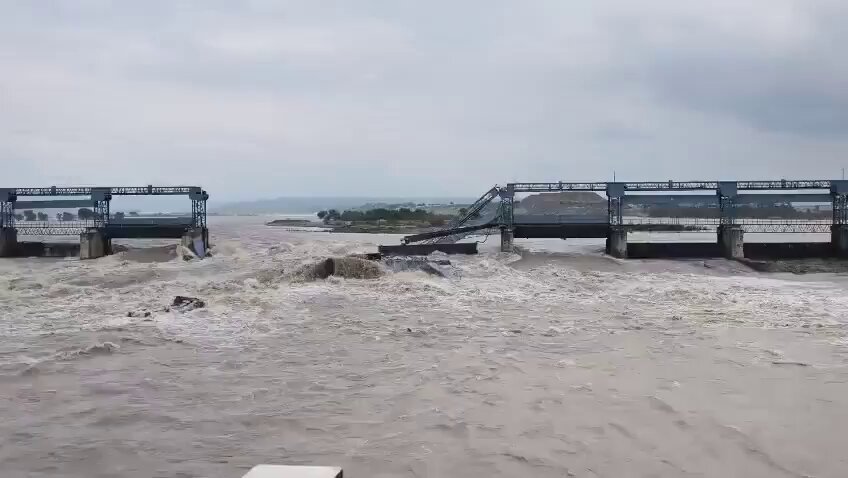
(Feature Image: 2 gates of the Madhopur Barrage washed away on Aug 27, flooding parts of Pathankot & Gurdaspur.)
A severe flood spell in Ravi river has damaged at least three flood gates of Madhopur barrage in Pathankot district of Punjab. The incident occurred in the evening of Aug 27, 2025 amid an effort to open the jammed gates of the barrage. The situation became critical after 2.12 lakh cusecs of water discharged from the upstream Ranjit Sagar Dam (RSD) dangerously increased the flood level at the barrage on Aug. 26.
Continue reading “Aug 2025: Ravi Flood Damages Madhopur Barrage Gates in Punjab”Himachal Pradesh: Why CWC’s Forecasting is Unavailable Amidst Flood Disaster?
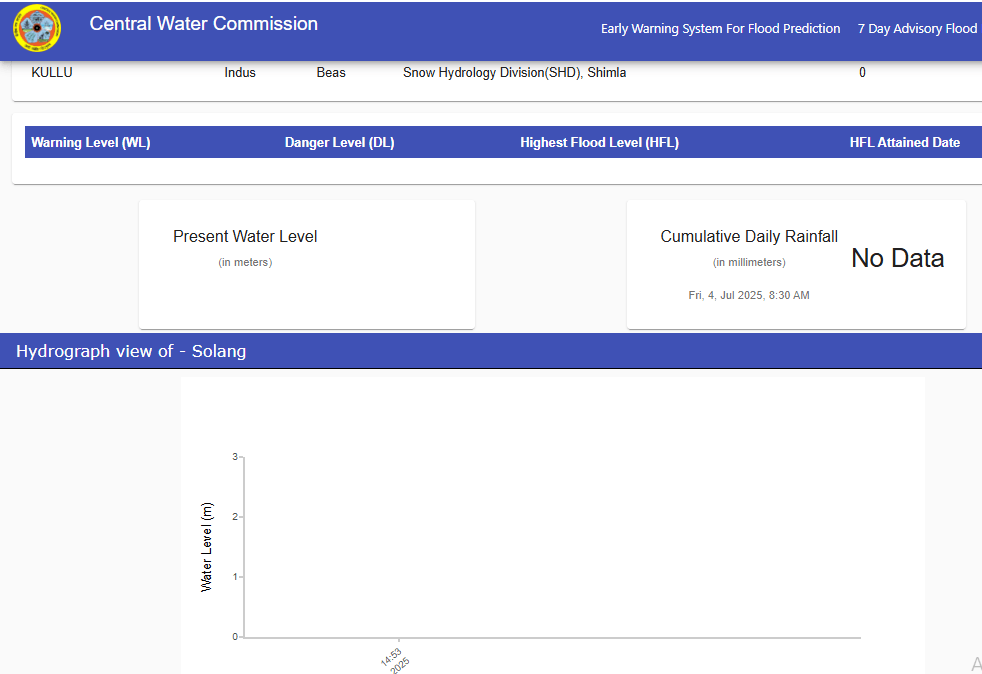
(Feature Image: Screenshot of inactive hydrograph for Solang station on Beas river in Mandi district. Source: CWC Flood Forecast website)
Despite disastrous flood events causing significant destruction to human lives and infrastructures for past three years, the state of Himachal Pradesh has not seen much required improvements in flood monitoring and forecast servicesby the Central Water Commission’s (CWC) to help minimize the destruction toll.
Continue reading “Himachal Pradesh: Why CWC’s Forecasting is Unavailable Amidst Flood Disaster?”Infrastructure Projects in Chenab Basin and Climate Change: Need to Exercise Caution
The current developments around Indus Waters Treaty are deeply troubling. Following the heinous attack on tourists in Pehelgam, India has announced that Indus Waters Treaty, the only water sharing mechanism between India and Pakistan put in place in 1960, has been put in abeyance.
Continue reading “Infrastructure Projects in Chenab Basin and Climate Change: Need to Exercise Caution”The Moon River: People’s Story of Chenab
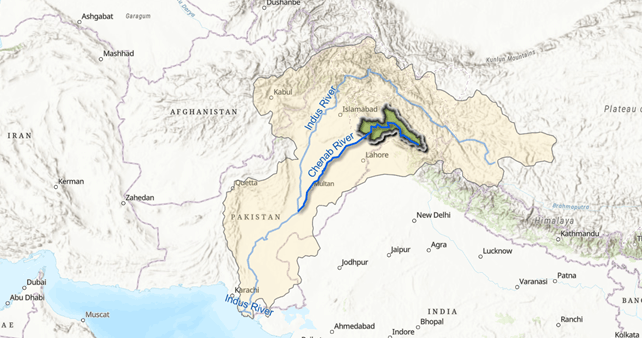
Chenab, which translates as the Moon River is the largest of the five tributaries of River Indus. It flows for about 974 kilometers from the High Himalayas of Lahaul to the forests of Jammu and Kashmir and onto the plains of Pakistan. Its main tributaries in India include Miyar, Marusudhar and Tawi. In the vast plains of Punjab in Pakistan, it is met by Jhelum, Ravi and Sutlej to form the mighty Panjnad before it meets the Indus. Its catchment, spread across 67,430 km2, is shared between the two countries.

Chenab is Chandrabhaga (Crescent Moon) in its headwaters. It was the River Asikni in Rigveda, and the Acesines for the ancient Greek. From sparse mountain settlements of Lahaul to the bustling urban centers of Sialkot, more than 10 million people live and prosper along the Chenab. Hydropower projects operational and under constructions on the river have an installed capacity of more than 5000 MW (Central Electricity Authority 2024), and its canals irrigate hundreds of thousands of acres in Pakistan and India (Shakir et al).
Continue reading “The Moon River: People’s Story of Chenab”Are we ready to use more water from snow melt in Indus basin this year?
Union Water Resources Minister Shri Gajendra Singh Shekhawat has recently said that the snow this year on Himalayan peaks is the highest in 50 years, and reservoirs like Bhakra, Pong, Ranjit Sagar, Ramganga, Tehri, etc will receive very high water inflow from snowmelt during summer and SW Monsoon.[i] This is in fact the third warning this year on this issue. Earlier on Feb 27, 2020 and then again on May 4, 2020, the Bhakra Beas Management Board (BBMB) provided the same warning to its partner states. However, neither the Union Minister & BBMB, nor the partner states seem ready or doing anything to prepare for the unprecedented situation that the dams and rivers may bring in ongoing summer and coming SW monsoon.
In fact the situation is similar to the one that happened twice at Bhakra-Pong-Ranjit Sagar Dams last year[ii]. Even then not only there were massive floods, but the water flowed away to Pakistan, totally against the declared pronouncements and policy of Indian Government leaders including the Prime Minister. Continue reading “Are we ready to use more water from snow melt in Indus basin this year?”
Rivers are Us
Above: Sindhu by Anoop Patnaik, Outlook Traveller
“To choose safe waters
is the route of imposters:
Those who love
take on the mighty river.” (Seeking the Beloved, translations of Shah Abdul Latif Bhitai’s Poems)

In the inky, starless night, beautiful Sohni plunged into the flooded River Chenab to meet her beloved Mehwal, knowing well that she will never make it to the other side. Sohni is one of the seven heroines brought to life by Shah Abdul Latif Bhitai, a remarkable 18th Century Sufi poet, mystic and reformist living on the banks of Indus. Sohni was the wife of a potter, in love with Mahiwal, a cattle herder from the banks of the Chenab. Like all poignant love stories, Sohni-Mahiwal’s tale was short-lived, but 300 years later, the legend of Sohni flows through the Chenab and lives on in the songs of peasants. In Punjab, the land of five rivers, they sing of Sohni, of the roaring, helpless river and of mad, wilful love. The narrative is so unwrinkled and dewy that till this day, silent figures sweep the modest tombs of Sohni and Mahiwal, hoping that their love will meet a better fate. Like Sur Sohni (Sohni’s poem) from Shah jo Risalo (Poetry of the Shah) prophecised:
“Hundreds were by the river drowned,
But the river was drowned by this maiden.” Continue reading “Rivers are Us”
India Pakistan resume talks on Indus Treaty: Stakes are high
When on March 20-21, 2017, on the eve of World Water Day, India and Pakistan’s Permanent Indus Commission met in Islamabad for its 113rd meeting, there was a lot at stake besides the immediate issue or even the Indus Treaty.
In many ways, the Indus Treaty remains a bright spot in relations between these two neighbors and the treaty keeps bringing them back to the talking table…This is the magic of a shared river! Continue reading “India Pakistan resume talks on Indus Treaty: Stakes are high”
Sindh People March to Protect Indus River
GUEST BLOG by Muhammad Ali Shah, Dr. Aly Ercelan & Roshan Bhatti
Sindh Peoples Caravan March 1-14, 2017 Protect Our Rivers and Delta
Across the world the greed of capitalism has created water crises. Asia in general and South Asia in particular is no exception. This region is marred with complex and multidimensional aspects of water crises. Not only the brute availability of water has declined, but also the health of water bodies has been badly affected. A deep probe into the issue reveals that water crisis has been created by weak and deliberate mal-governance. Both wrong incentives and lack of penalties have led to major ecological disasters. These include deforestation, destruction of wetlands, dumping of industrial waste into waterways, construction of dams, overexploitation of the major river systems, corporate control on water resources and unplanned urbanization due to increasing population pressure.

All these issues pose serious threats to life and health of people and water systems of South Asian River Systems, including Indus river system. Our analysis reveals that anti-human and anti-environment policies have been applied and imposed in South Asia with the same rapacity as colonial powers did to impose control over citizens. Post-independence, growth policies have become excuses for privatization and in favor of corporate monopolies rather than protection of the commons for public welfare. Among regions around the world, South Asia is the second number in the construction of large dams. Pursuing neo-colonial control over natural resources, the ecological consequences have become hazardous to life and livelihood.
Continue reading “Sindh People March to Protect Indus River”