Dams

Open letter to Tata Sustainability Group to stop westward diversion of Bhima basin water by Tata Hydro projects

From: Parineeta Dandekar (Pune) & Himanshu Thakkar (Delhi)

South Asia Network on Dams, Rivers & People (SANDRP)

parineeta.dandekar@gmail.com, ht.sandrp@gmail.com

August 20, 2015

TO:

Tata Sustainability Group

Army & Navy Building, 2nd Floor

Mahatma Gandhi Road,

Mumbai 400001, tsg@tata.com

  1. Shankar Venkateswaran

Chief – Tata Sustainability Group: svenkateswaran@tata.com

  1. Dr. Avinash Patkar

Head – Environment Services: apatkar@tata.com

  1. Sudhakar Gudipati

General Manager – Community Services: sgudipati@tata.com

  1. Alka Upadhyay

General Manager – Environment Services: aupadhyay@tata.com

  1. Ajit Chaudhuri

General Manager – Community Services: achaudhuri@tata.com

  1. Sourav Roy

Program Leader – Tata Uttarakhand Program: aroy@tata.com

  1. Abhishek Goyal

Senior Manager – Environment Services: agoyal@tata.com

  1. Zarir DeVitre

Manager – Environment Services: zdevitre@tata.com

  1. Manjula Sriram

Manager – Community Services: msriram@tata.com

  1. Lucas Saldhana

Assistant Manager – Tata Sustainability Group: lsaldhana@tata.com

Dear members of Tata Sustainability Group,

We are encouraged to write to you on this subject, thinking that considering the name, objective of the TSG and also the various statements on the TSG website, you will take prompt and necessary action on this subject.

We are writing to you in the context of Bhima basin in Maharashtra and Krishna river basin in general facing the worst monsoon deficit, crop loss and water scarcity. Millions of farmers are facing crop loss, livelihood loss and worst. Ujani dam on Bhima River is below its live storage level now and in the downstream Telangana, Nagarjunsagar is at zero live storage level and Srisailam has just 9% water in its live storage. Telangana and Andhra Pradesh have said they have no water to save farmers’ crops; they are reserving the available water for drinking water. Continue reading “Open letter to Tata Sustainability Group to stop westward diversion of Bhima basin water by Tata Hydro projects” →
Dams

Open Letter to Chief Minister of Maharashtra: Stop Westwards diversion of water from Krishna basin

OPEN LETTER TO HON. CHIEF MINISTER OF MAHARASHTRA:

Water Diversion from Krishna basin by Koyna and Tata Dams:

Maharashtra is violating Human Rights, National & State Water Policy

August 18, 2015

Dear Shri Devendra Fadnavis,

As we all know, large parts of Maharashtra, including Marathawada and Western Maharashtra (part of IMD division called Madhya Maharashtra) are in the grip of biggest monsoon deficit in the country with deficits of 48% and 33% respectively at the end of August 17, 2015 as per IMD[1]. Even beyond the state border, North Interior Karnataka has monsoon deficit of 45%, Rayalseema 36% and Telangana 23%.

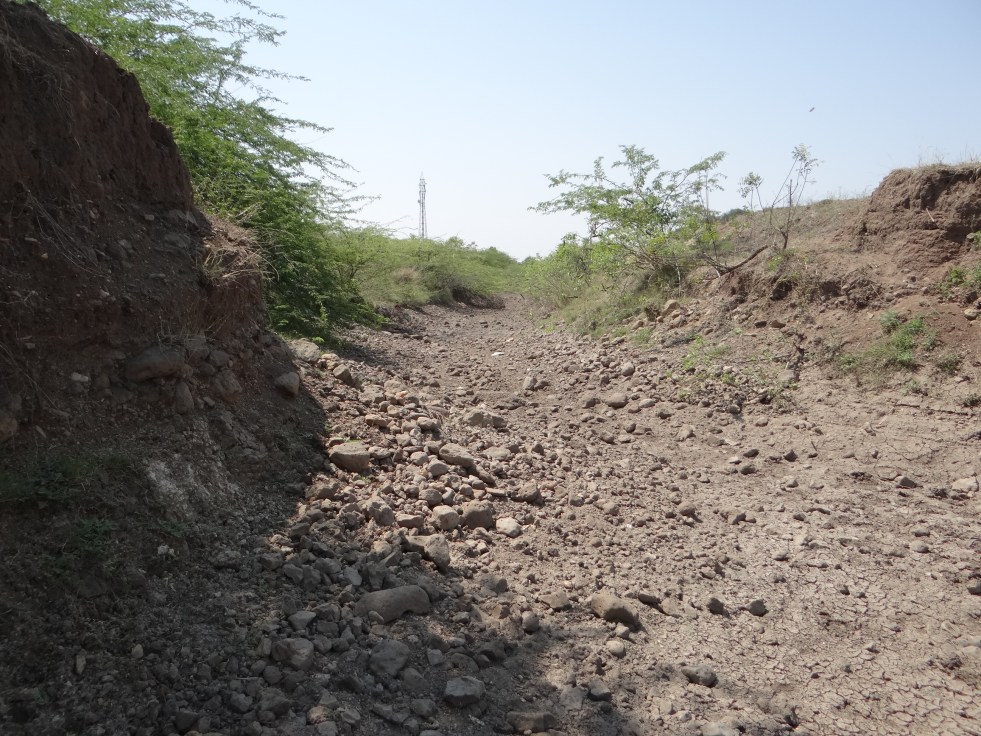
Farmers in all these regions are in distress, rainfed Kharif crop, the only crop for most of them, may have been jeopardised for almost all of them. Most of the reservoirs have paltry storages, the biggest in the Krishna basin, Ujani in Maharashtra and Nagarjunsagar in Telangana (also catering to parts of Andhra Pradesh) have zero % in live storage, Srisailam has paltry 9%[2]. Millions of farmers and people are facing the prospects of livelihood loss and severe water scarcity.

While the situation is this serious in Krishna River Basin and adjoining basins, in Maharashtra, huge amounts of water is being diverted from the Krishna basin to the water surplus Konkan region which has seen close to 1600 mm rainfall already. This westward diversion of water from the east flowing Krishna-Bhima basin ultimately takes the water to Arabian Sea, while the Krishna basin, which should have the first right over this water, remains plunged in massive water scarcity. Krishna basin is thus being deprived of its water. Continue reading “Open Letter to Chief Minister of Maharashtra: Stop Westwards diversion of water from Krishna basin” →

Dams · Maharashtra · Marathwada

Drought and Marathwada: An Oft repeated Tragedy

Marathwada, a region known more for its routine and severe droughts in the recent years, now showing the highest rainfall deficit in the country at 48%[1].

Marathwada (which coincides with Aurangabad Division of Maharashtra) consists of 8 districts in the heart of Maharashtra: Aurangabad, Beed, Latur, Osmanabad, Parbhani, Jalna, Nanded and Hingoli.

Index Map Marathwada Source: http://www.wikiwand.com/en/Marathwada

The region has a population of about 1.87 Crores and a geographical area of 64.5 Thousand sq. kms. Nearly the entire region, barring parts of Beed, Latur and Osmanabad, falls in Godavari basin. This has historically been a rain shadow region with average rainfall of about 700 mm, but in districts like Beed, it dips down to 600 mm. Apart from Godavari, no major rivers originate or flow through Marathwada except rivers like Purna, Shivna, Dudhna, Velganga, Sindhphana, Bindusara, etc. These are modest rivers, which carry little water as the harsh summer approaches. This is unlike Vidarbha (to the east of Marathwada) which has mighty rivers like Penganga, Wainganga, Wardha etc., or Khandesh and Western Maharashtra to its north and west, which have bigger rivers, denser watersheds and more rainfall.

Since the past 4 years, Marathwada has been facing exceptionally cruel weather. June-September Monsoon, which is the lifeline of most of this rainfed region, has been playing truant. Last year, the region experienced highest rainfall deficit in the past 10 years at -42%. In two districts it was much more than 40%, leading to a severe water crisis.[2] To give you an example, the JJAS (June, July, August, and September) rainfall in Parbhani in 2014 was just 346 mm, barely 4 mm more than rainfall during the horrifying 1971 drought! These two are the lowest rainfall figures for Parbhani since 1902, for more than 113 years!   Continue reading “Drought and Marathwada: An Oft repeated Tragedy” →

Dams

Dams, Rivers & People: August 17, 2015

HYDROPOWER

UTTARAKHAND: National Institute of Disaster Management asks Govt. to make disaster study must for Uttarakhand hydel projects (17 Aug. 2015) This is good to see, it uses almost the exact language some of us having using since the disaster.

SIKKIM: Lanco in talks to sell Sikkim hydro power project (11 Aug. 2015) The Lanco group confirmed that it is in talks with strategic investors to sell its 500 megawatt (MW) hydro-electric power plant in Sikkim, as part of an effort to consolidate its businesses and reduce debt.

ARUNACHAL PRADESH: Neha Sinha (BNHS) in her article titled A bird, a dam and a belief explores the ethical and environmental aspects intertwined with construction of Nyamjang Chhu dam which will destroy the habitat of the Black-necked crane at Zemithang in Arunachal Pradesh. The Save Mon Region Federation (SMRF), a group spear-headed by local Buddhist Lamas, has challenged the environmental clearance in the NGT. LIFE are the lawyers for petitioners. Sanjay Upadhyay and Raj Panjwani are lawyers for Bhilwara group.

MANIPUR:  Why Manipur is flooded (12 Aug. 2015) Interesting to see Down to Earth sees role of dams in Manipur floods: On the other hand continuing their agitation Mapithel dam affected downstream people hold protest meet (16 Aug. 2015) Joint Action Committee (JAC) for Mapithel Dam Downstream Affected People organized a protest meeting at Tumukhong Village, Imphal East District. The meeting demanded immediate rehabilitation and resettlement of Mapithel Dam affected people in the downstream areas. Also get to see a special news report on 26 years long protest of Chandog village against Mapithal Dam.

Continue reading “Dams, Rivers & People: August 17, 2015” →

Dams

Tata Power responds on the issue of Tata dams diverting water from Drought hit Bhima Krishna basin to Konkan, but it is a vacuous, insensitive response

On the 7th August 2015, SANDRP published a Press Release titled “As Krishna Bhima basin farmers in Maharashtra, Karnataka, AP & Telangana face drought, crop failure, Water scarcity, Maharashtra DIVERTED 350 MCM water from the basin & stored another 2535 MCM reserved to release, literally to sea!”[1]. On August 9, 2015[2], DNA, a leading newspaper in Mumbai published a report based on this story as their front page top story titled “Drought? Last month alone Maha govt drained 350 MCM water into sea!” Continue reading “Tata Power responds on the issue of Tata dams diverting water from Drought hit Bhima Krishna basin to Konkan, but it is a vacuous, insensitive response” →

Dams

As Krishna Bhima basin farmers in Maharashtra, Karnataka, AP & Telangana face drought, crop failure, Water scarcity, Maharashtra DIVERTED 350 MCM water from the basin & stored another 2535 MCM reserved to release, literally to sea!

(Photo above: Koyna Dam)

Large parts of Krishna basin spanning Maharashtra, Karnataka, Andhra Pradesh and Telangana are facing massive rainfall deficits, drought like conditions and crop failures. The tail-end reservoirs of Srisailam and Nagarjun Sagar are almost empty. Telangana and Andhra Pradesh are already thinking of conserving the available water for drinking water. They are not even thinking of releasing any water for saving the crops in delta farmers. In upstream Maharashtra itself, the Ujani dam has ZERO live storage and perennially dry Marathawada has the highest rainfall deficit. Shockingly, in this very period from July 1 to Aug 6, Maharashtra has diverted more than 350 Million Cubic Meters of water (at most conservative estimates) FROM this very Krishna and Bhima basins to the High Rainfall area of Konkan (it already has had 1467.1 mm rain till Aug 7, 2015) and down to the sea! If this diversion was stopped since July 1, when the signs of severe monsoon deficits in the three states were already there[1], this water would have been available to save crops in lakhs of acres in the river basin, and some of it would have also flowed to Andhra Pradesh and Telangana and water may have been available for saving some crops. Even now these Koyna and Tata dams have 2535 MCM water in live storage that is reserved for diversion to Konkan and to sea, but wont be release for the failing crops across the basin. How can we continue such wasteful use of water in a water deficit basin, at the cost of livelihoods of lakhs of farmers? Even now it is necessary to URGENTLY review this situation and consider stopping diversion of water FROM Krishna basin to sea. This may save crops and livelihoods of lakhs of farmers. Continue reading “As Krishna Bhima basin farmers in Maharashtra, Karnataka, AP & Telangana face drought, crop failure, Water scarcity, Maharashtra DIVERTED 350 MCM water from the basin & stored another 2535 MCM reserved to release, literally to sea!” →

Dams

Dams, Rivers & People: August 03, 2015

HYDROPOWER  

NORTH-EAST: ARUNACHAL PRADESH: Mapithel Dam; Social organization demand decommissioning of Mapithel dam (03 Aug. 2015) Asia Indigenous Peoples Pact (AIPP) and Naga People’s Movement for Human Rights (NPMHR) submitted memorandum to the Prime Minister of India Narendra Modi demanding a halt to the construction of Mapithel Dam and immediate decommissioning of the project. A joint statement issued by AIPP Secretary General Joan Carling and NPHRM Secretary General Neingulo Krome said the construction of Mapithel Dam under the supervision of the Government of Manipur directly affects and threatens the several scheduled tribes in the affected districts whose sources of income are land and agriculture. It may be mentioned that when it is commissioned the dam would affect over 8,000 people in 22 villages. http://e-pao.net/GP.asp?src=28..030815.aug15

UTTARAKHAND: Expert Body recommends modification of Uttarakhand hydro projects prevent 2013-like disaster (31 July 2015) An expert body appointed by the Centre to analyze the adverse ecological and environmental impact of hydroelectric power projects (HEPs) in Uttarakahand has told the Supreme Court that comprehensive modification of the projects is required to prevent a repeat of 2013 disaster in the state. In an affidavit filed in the Supreme Court, the Centre said the expert body (EB) had suggested promoters of the six projects– National Thermal Power Corporation (NTPC), National Hydroelectric Power Corporation (NHPC), Tehri Hydro Development Coporation (THDC), GMR and Super Hydro Pvt Ltd—to incorporate a number of safeguards in view of the 2013 disaster. The government said the projects would not be allowed to operate till the companies modify their projects. http://timesofindia.indiatimes.com/india/Uttarakhand-hydro-projects-need-to-be-modified-to-prevent-2013-like-disaster-SC-told/articleshow/48290097.cms

Chief Minister asks industry to invest in small hydroelectric projects (27 July 2015) Chief Minister Harish Rawat today sought help from the PHD Chamber of Commerce and Industry Uttarakhand for investment in small and micro hydel projects in the state. He sought support for 2 MW to 5 MW hydel projects under the policy formulated by the state government. The state is still not realizing how small hydro projects are equally disastrous for sensitive mountains.  In June 2015 SANDRP visit in Yamuna valley highlights how Gangani and Hanuman Ganga small hydro projects have caused irreversible losses to local environment and community people as well.http://www.tribuneindia.com/news/uttarakhand/cm-asks-industry-to-invest-in-small-hydroelectric-projects/110988.html

Continue reading “Dams, Rivers & People: August 03, 2015” →

Dams

Dams, Rivers & People: July 27, 2015

HYDROPOWER

Thermal, Hydro Power projects on the blink despite clearances by government (23 July 2015) Power sector is now bereft of capital flow. While thermal power projects might see some respite, hydropower projects continue to fester even after getting all the clearances. This puts a question mark on the claims of the hydro lobby that environment ministry and environment clearances are responsible for delaying the projects. Of the 80 stalled power projects, around 25 are hydro-based. Due to delays, the cost of the project, in almost all cases, has increased manifold thereby inviting regulatory tiff over tariff. NHPC’s Subhansari Power Project remains stalled due to the agitation in Assam. NHPC officials need to be held accountable as to how did they start the work without addresing the downstream impacts issues. Due to their callousness, the cos has doubled and work is stlled for over 3.5 years. http://www.business-standard.com/article/economy-policy/power-projects-on-the-blink-despite-clearances-by-government-115072200024_1.html

JAMMU & KASHMIR:  Baglihar Hydro Electric Power project threatens Doda, Kishtwar (27 July 2015) Baglihar HEP is making life difficult with landslides, floods and additional submergence: “Before construction of dam, rocks were visible on both banks of the river. But when water level increased and became stagnant, rocks are nowhere in sight and water has entered loose soil. The root cause of frequent landslides and sinking of area in Doda districts on both side sides of the dam is stagnant water.”GM Bhat, Geological expert. http://www.tribuneindia.com/…/baglihar-power-pr…/111641.html

Continue reading “Dams, Rivers & People: July 27, 2015” →

Climate Change · Dams · Maharashtra

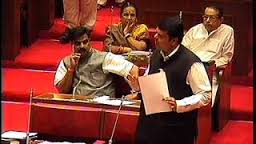
We pushed large dams, not irrigation, this has to change: CM Fadnavis’ Assembly Speech

“Maharashtra has the country’s 40% large dams, but 82% area of the state is rain fed. We have moved away from our vision of watershed and conservation…We did not think about hydrology, geology and topography of a region before pushing large dams everywhere. But this has to change”

These are not the words of an activist or water researcher. This was said by Maharashtra’s Chief Minister Devendra Fadnavis, during Monsoon Assembly Session of Maharashtra on 21st July 2015. Continue reading “We pushed large dams, not irrigation, this has to change: CM Fadnavis’ Assembly Speech” →

Dams

Maletha; Battle won but war remains to be fought

Chronicle of an emphatic victory against crushers continued from May 2015 onwards

After hosting two days long workshop on Sustainable Mountain Development (02-03 May 2015) Maletha continued its agitation against stone crushers. The event popularised the villagers’ strength and struggle on wider platform.

On 8th of May 2015, villagers issued warnings of resuming indefinite hunger strike if the govt. failed to take a stand on the issue of stone crushers. A protest march was organized on 15th of May 2015 and two villagers Vimla Devi, head of Mahila Sangrash Samiti and Dev Singh Negi started observing fast on alternate days. Setting 25th May 2015 as deadline for State Govt. to act, villagers again demanded closing down of all illegal stone crushers running in Kirti Nagar block.

Meanwhile referring to High Court Nainital (HCN) April 2015 order, State Govt communicated that firm action will be taken against crusher units violating the stipulated norms. Following that, Commissioner Garhwal (GC) CS Napalchyal visited Maletha. Despite finding one stone crusher belonging to Satyam Shivam Sundaram Company violating environmental norms, he ordered a magisterial probe in the matter. Feeling disappointed by state machinery, Hemanti Negi a village woman sat on indefinite hunger strike on 25th May 2015.

Continue reading “Maletha; Battle won but war remains to be fought” →