Dam Induced Flood Disaster · Kerala

Response of Sudheer et al to the Comments by Mr. J. Harsha on the article, “Role of dams in the floods of Aug 2018 in Periyar River Basin, Kerala”

Sudheer, K P1,2,*, S. Murty Bhallamudi1,3, Balaji Narasimhan1,3, Jobin Thomas1, Bindhu, V M1, Vamsikrishna Vema1,4, Cicily Kurian1,
1Department of civil Engineering, Indian Institute of Technology Madras, Chennai – 600036,
2Department of Agricultural and Biological Engineering, Purdue University, West Lafayette, IN, USA.
3Indo German Centre for Sustainability, Indian Institute of Technology Madras, Chennai – 600036
*Corresponding Author: sudheer@iitm.ac.in

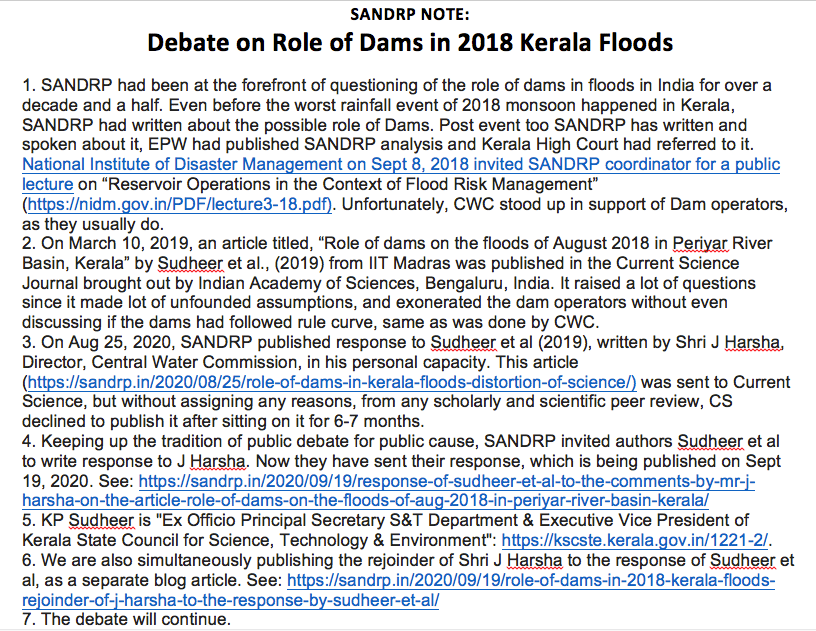
The authors of Sudheer et al. (2019) – hereinafter referred to as ‘authors’ – appreciate Mr. J. Harsha (hereinafter referred to as ‘commenter’) for his judgmental assessment (in his blog appeared on SANDRP website- “https://sandrp.in” on August 25, 2020, see: https://sandrp.in/2020/08/25/role-of-dams-in-kerala-floods-distortion-of-science/) of the authors’ work “Role of dams on the floods of August 2018 in Periyar River Basin, Kerala” (published in the Current Science in 2019: [DOI: 10.18520/cs/v116/i5/780-794]). As mentioned in Sudheer et al. (2019), the primary objective of the article was to examine whether the early release of the water stored in the reservoirs would have attenuated the flood peaks, and if so, what would have been the extent of the attenuation, in the context of debates and discussions in the social, political, as well as scientific domains based on non-sequitur speculations. Accordingly, the authors designed a scientific exercise using a widely used hydrological model (HEC-HMS) to understand the role of the dams in the Periyar River Basin (PRB) in the 2018 flooding situation.

Continue reading “Response of Sudheer et al to the Comments by Mr. J. Harsha on the article, “Role of dams in the floods of Aug 2018 in Periyar River Basin, Kerala””
CWC - Central Water Commission

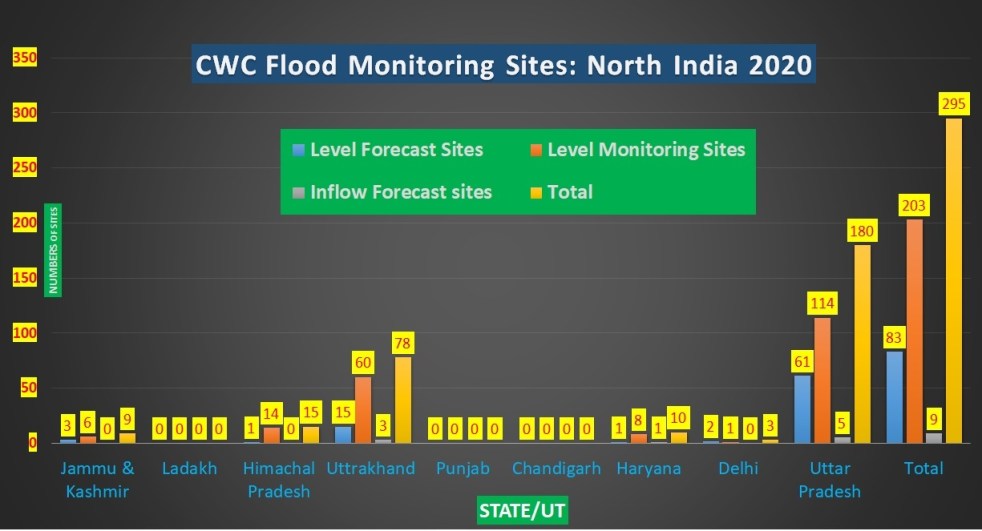
North India; CWC Flood Forecasting Sites 2020; New Website Old Problems

Flood forecasting is an important activity during monsoon, considering the huge and increasing flood prone area, flood frequency, intensity and flood damages. Accurate and timely flood forecasting can hugely help reduce the damages due to floods. Central Water Commission (CWC) is the only agency responsible for flood forecasting in India. To understand the CWC’s flood forecasting better, we have compiled the list of the various flood, inflow forecasting sites and flood monitoring sites in India.

In this compilation, we have given state wise list of CWC’s level forecasting, flood monitoring and inflow forecasting sites in North India, comprising of Union Territories Jammu & Kashmir, Ladakh, Chandigarh, Delhi and states of Himachal Pradesh, Uttarakhand, Punjab, Haryana  and Uttar Pradesh. It includes available details like name of river, sub basin, Warning level (WL), Danger Level (DL), High Flood Level (HFL), Full Reservoir Level (FRL), Maximum Water Level (MWL), as applicable. As we see below, there are many gaps in this basic information for the sites that are part of CWC’s list. A similar zonewise overview of CWC’s sites was compiled in 2018 and 2019, which can be seen here: Overview of CWC Flood Forecasting Sites 2018: North India; Overview of CWC Flood Forecasting Sites 2019: North India. We have brought this updated compilation for 2020 as there are large number of changes.

Continue reading “North India; CWC Flood Forecasting Sites 2020; New Website Old Problems”
Delhi · Rivers · Urban Rivers

NAJAFGARH JHEEL – SAGA OF A FORGOTTEN RIVER

Guest Article by: Ritu Rao

A short drive on the Golf Course Road in Dwarka followed by a turn towards Goyla Dairy and subsequently a sharp left just short of Goyla Dairy brings us to the famous Inspection Road /Embankment Road. Flanked by Najafgarh Drain on one side and the arable lands of Delhi on the other, the embankment road was constructed after the 1964 floods of Delhi. The thick mud embankments are covered with trees and shrubs which provide the much-needed habitat for the local flora and fauna to thrive. This thicket starts clearing off after Jhatikara crossing (say after about a half an hour drive on this road) and the Najafgarh drain suddenly transforms into a vast expanse of water known as the Najafgarh jheel. This spectacular sight continues for a good 5-6 kms before it once again narrows down into a stream. The road meets the now extinct Sahibi Nadi and Outfall from Drain No.8 at Dhansa, 5 km upstream of the jheel. The Sahibi Nadi which originates in Jaipur district and drains parts of Rajasthan, Haryana and Delhi, now has diminished flow and disappears in the arid soil near Dharuhera after the Masani Barrage in Haryana. Once fed by the Sahibi nadi and storm water runoff from the surrounding areas, the Najafgarh jheel is now fed primarily by the waste water from the Badshahpur Drain and the Outfall Drain No.8 and the rain water in monsoons.

Continue reading “NAJAFGARH JHEEL – SAGA OF A FORGOTTEN RIVER”
Dams · DRP News Bulletin

DRP: 14 Sep 2020: How should we define a Normal Monsoon?

IMD is happy to declare a monsoon as normal as long as total quantum of rainfall at national scale is within 4% of what is defined as normal monsoon rainfall during June 1 to Sept 30. Even if this means there is spatially or temporally or both spatially & temporally, the total rainfall or its distribution is abnormal in large parts of the country. It was good to see a national newspaper, asking question if the monsoon is normal even though it’s not temporally normal as was the case in large parts of the country this year.

The IMD normal only assures meteorological normal of national monsoon rainfall within given period. It does not assure hydrologic normal nationally or in different parts of the country, nor agricultural normal rainfall nationally or in different parts: sub divisions, states, river basins, districts, talukas/ tehsils or villages and wards. We clearly need much more realistic and nuanced definition of even meteorological Normal monsoon rainfall, which IMD needs to work on. But as far hydrological or agricultural normal rainfall is concerned, both temporally and spatially, those concerned outside IMD will need to work on.

Continue reading “DRP: 14 Sep 2020: How should we define a Normal Monsoon?”
Hindi Blogs · Madhya Pradesh · Urban Water Sector

बाढ़, शहर और नियोजन !

Guest Article by: अभिलाष खांडेकर

कईं वर्ष पूर्व अमेरिका दूसरी बार जाना हुआ। किंतु उस यात्रा में उन पूराने शहर जहाँ मैं पहले जा चुका था, जाना नहीं था, इसलिए मैं ख़ुश था। नए-नए शहर देखना, उनकी बसाहट और इतिहास जानना व उस शहर के किसी भी संग्रहालय को भेंट देना मेरा शौक़ रहा हैं। तो शिकागो शहर जाना हुआ।  शहर का इतिहास जाना तो पता लगा की कैसे एक बार उस शहर का काफ़ी बड़ा हिस्सा जल जाने के बाद नगर नियोजको (अर्बन प्लानर) ने शहर वासियों की मदत से फिर से शिकागो को बनाया। शिकागो नदी के किनारे के इस शहर को नए सिरे से बसाने में नगर-नियोजक डैनीअल बर्नहम की महती भूमिका रही। उन्होंने ही १९०९ में जो विकास योजना बनाईं उसे नगर-नियोजन के वैश्विक इतिहास में स्वर्णाक्षरों में लिखा गया हैं। ‘द प्लान ऑफ़ शिकागो’ नाम से एक सुंदर पुस्तक कॉर्ल स्मिथ नामक लेखक ने उस योजना के लागू होने व शिकागो शहर ने अच्छी नगर-नियोजन प्रणालियों के चलते प्रगति और नाम हांसिल करने के लगभग १०० वर्ष बाद लिखी। उक्त पुस्तक पढ़ने के बाद मेरी दिलचस्पी नगर-नियोजन विषय मैं और अधिक बढ़ी। इंदौर का रहने वाला होने से मैंने स्कॉटिश नगर-नियोजक सर पैट्रिक गेडेज़ के बारे में काफ़ी पढ़-सुन रखा था। गेडेज़ साहब ने ही होलकर महाराज के निमंत्रण पर इंदौर का पहला प्लान १९१४-१९१६ के मध्य बनाया था। गेडेज़ ने इंदौर के अलावा देश के ५०-५५ शहरों की विकास योजनाए बनाईं थीं, जो एक दुर्लभ कीर्तिमान हैं। किंतु यह दुर्भाग्य ही है की उन्हें आज की पीढ़ी कम ही जानती हैं। इंदौर का वह प्लान भी अपने ज़माने का शहरी नियोजन का उमदा दस्तावेज़ हैं जिसमें नदियों का महत्व १०० साल पहले उन विदेशी नियोजक ने रेखांकित किया था।

ख़ैर, मैंने यह छोटी भूमिका इसलिए लिखी जिससे नगर नियोजन के महत्व पर अलग से प्रकाश डाला जा सकें।

जिस महान, प्राचीन भारत में नगरीय सभ्यता व नियोजन की सुंदरता के संदर्भ में मोहनजोदडो व हड़प्पा संस्कृति को चरमोत्कर्ष के रूप में जाना-पहचाना जाता हैं उसी देश में अब नगर नियोजन के समकालीन विज्ञान और कला के साथ-साथ वहाँ के नगरनियोजनकर्ताओं की क्षमताओं पर गम्भीर प्रश्नचिन्ह लगातार खड़े हो रहें हैं। ये इसीलिए की अलग अलग योजनाओं के बावजूद भी तमाम शहरों के हालात चिंतनीय बने हुए हैं।

Continue reading “बाढ़, शहर और नियोजन !”
Dam Induced Flood Disaster · Gujarat · Narmada

How SSNNL violated its own Flood Memorandum 2020 during recent SSD induced floods

During the recent Sardar Sarovar Dam (SSD) induced flood disaster in areas downstream of the dam in Gujarat, the dam operator, SSNNL (Sardar Sarovar Narmada Nigam Limited) violated its own Flood Memorandum (FM) 2020[i] in multiple ways.

The FM-2020 titled “Disaster Management Plan – 2020” provides detailed information about how the dam operation is to be done during South West Monsoon 2020, that is from June 1, 2020 to Oct 15, 2020, or whenever the monsoon has withdrawn. It is published by SSNNL’s Flood Control Cell and carries the names of six highest functionaries of SSNNL on second page: Chairman, Managing Director, Jt MD, Director (CAD), Director (Canal) and Director (Civil). It says Officer in charge of Flood Control Cell of SSNNL is Executive Engineer (Narmada Project Main Canal Division-2) and the FM-2020 is compiled by Superintending Engineer, Narmada Project Design Circle.

An earlier version of the Flood Memorandum for 2018[ii] is also available, which is useful as it has some additional information.

Continue reading “How SSNNL violated its own Flood Memorandum 2020 during recent SSD induced floods”
Floods · Urban Water Sector

Janta Parliament discussion on the state of water in India

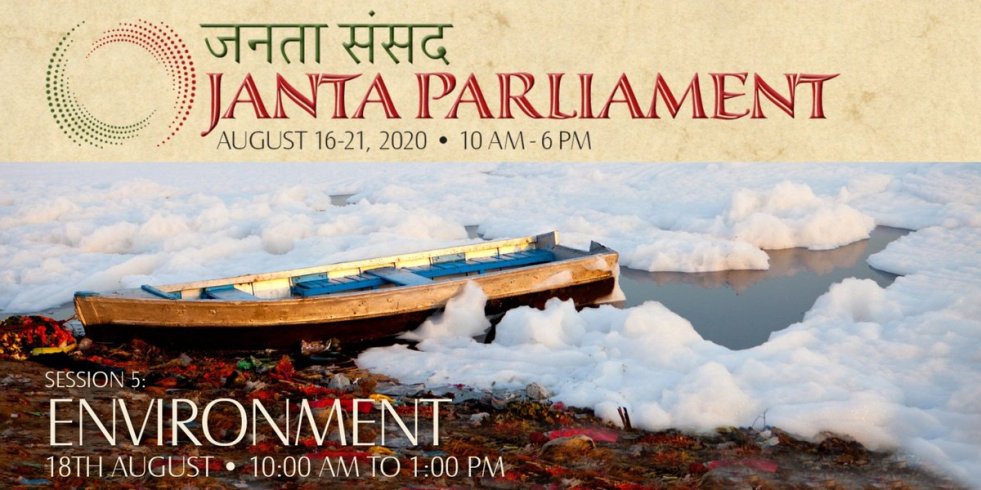
While Indian Parliament has not met since March 2020 (it is now slated to meet from Sept 14, 2020, though without a number of key features including absence of question hour), Civil Society Groups came together and held a Janta (people’s) Parliament from Aug 16 to 21 Aug 2020, where citizens from across the country from all walks of life enthusiastically participated. On Aug 18 there was a three-hour session on Environment issues[i] (such a session is a rarity in Indian Parliament), as part of which, there was a presentation on Water related issues where SANDRP coordinator was invited to speak. Two water related resolutions were passed among others, by the Janta Parliament, one on Flood Management and another on Urban Water Management. See below for details.

Continue reading “Janta Parliament discussion on the state of water in India”
Bihar · Ganga · Rivers

River Stories, Walking Across India – II

Guest Blog by Siddharth Agarwal

In the years 2018 and 2019, I spent months walking East across India with Paul Salopek on the Out of Eden Walk[i]. His trail started in the Great Rift Valley of Ethiopia in East Africa, roughly following the path of the early human migration out of Africa and across the globe.

The India trail of the Out of Eden Walk started from the India-Pakistan border at Wagah, Punjab. It then moved East through the Indus Basin, followed by the basins of West flowing rivers like Luni, then a large chunk through the southern Gangetic plains in Central India before crossing over to the Brahmaputra basin close to Siliguri in West Bengal. The crossover to Myanmar happened at Moreh in Manipur, also incidentally very close to the basin boundary of Brahmaputra and Irrawady. He entered India in March 2018, and crossed over to Myanmar in July 2019.

The Out of Eden Walk trail in India was ~4000kms, of which I was present for about 1500kms in different sections. These stretches were spread across Rajasthan, Madhya Pradesh, Uttar Pradesh, Bihar, West Bengal, and bit of Assam & Manipur.

Continue reading “River Stories, Walking Across India – II”
River Health

Demystifying River Health-2

Guest Blog by Manoj Misra

This article is in two parts. Part I was about a new name and Part II suggests a way forward. It is more in nature of loud thinking and is an expression of a personal discomfort with a ‘missing’ terminology with respect to ‘streams’ against few parallels including that with humans and the latter’s unscientific propensity to view a stream as being little more than a carrier of utilizable water.

This is primarily to stir ‘thinking’ and ‘debate’. Comments are most welcome. Terms ‘river’ and ‘stream’ have been used here interchangeably.

Continue reading “Demystifying River Health-2”
River Health · Rivers

Demystifying River Health-1

Guest Blog by Manoj Misra

We humans know it when we are unwell, but when and how would we know that a river is ‘unwell’?

This article is in two parts. Part I attempts a new name and Part II suggests a way forward. It is more in nature of loud thinking and is an expression of a personal discomfort with a ‘missing’ terminology with respect to ‘streams’ against few parallels including that with humans and the latter’s unscientific propensity to view a stream as being little more than a carrier of utilizable water.

This is primarily to stir ‘thinking’ and ‘debate’. Comments are most welcome. Terms ‘river’ and ‘stream’ have been used here interchangeably.

Continue reading “Demystifying River Health-1”