Wetlands

Maharashtra Wetlands Overview 2020

[The feature photo of Flamingos at NRI colony in Navi Mumbai above is by Vidyasagar Hariharan, from The Guardian Dated March 26, 2019.]

In 2020, Maharashtra has seen some interesting developments around wetlands, driven by initiatives by activists like D Stalin among many others, and at times supported by judiciary. After an example of some individuals’ courage to save an 80 ha of wetland, we look at state level wetlands issue, followed by some interesting developments around some specific wetlands like Dhamapur Lake (Sindhudurg dist) and Lonar (Buldana dist). Maharashtra govt claimed in High Court that in three districts of Nandurbar, Nagpur and Parbhani, there are no wetlands at all. The flip flops here is tragic as the ISRO report had shown over 2000 wetlands in these districts. Next is the Mumbai wetlands, Uran wetlands, Panje wetland and two other wetlands where CIDCO has been pushing real estate projects. The overview ends with some Supreme Court petitions. There is lot of action, but no very optimistic trends in spite of some individual actions and positive developments at some individual wetlands.

Continue reading “Maharashtra Wetlands Overview 2020”
DRP News Bulletin

DRP 040121: Bangladesh declares Halda River as Fisheries Heritage

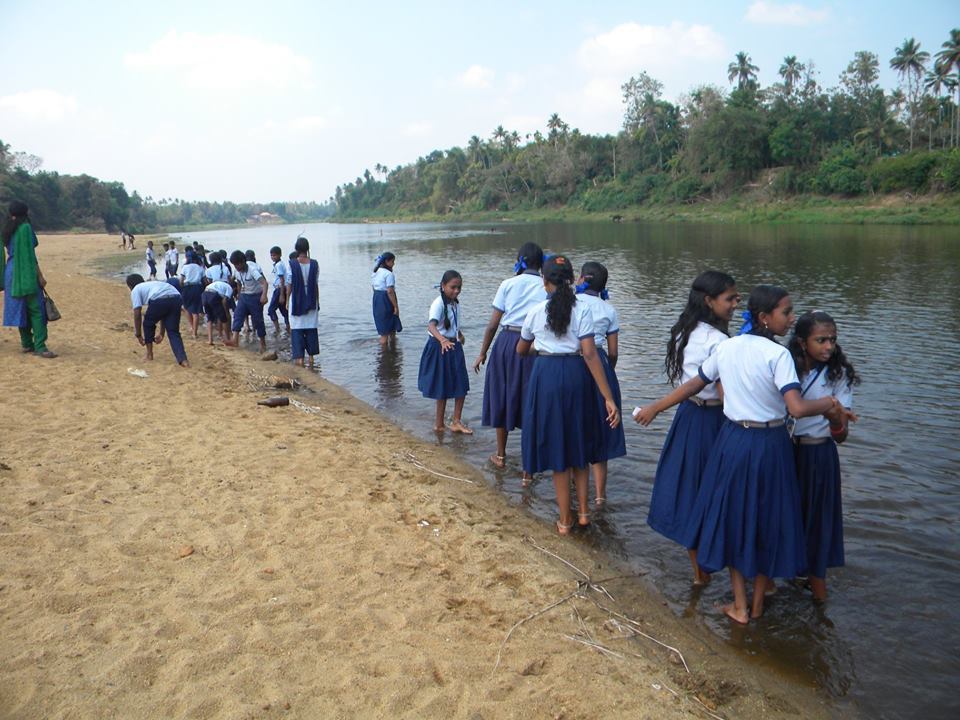
Bangladesh has declared the whole 81 km long Halda River, a tributary of Karnaphuli River in Chittagong in South East Bangladesh. The Halda river is also famous for breeding pure Indian carp. This is the only pure Indian carp breeding field of Bangladesh, perhaps in South Asia. This is a remarkable river conservation decision that has a lot of lessons for much bigger India where no river has been protected as fisheries heritage. This is great way to begin the first weekly DRP Bulletin of 2021 and we hope the Indian government, civil society and judiciary will take due note of this.

Controversy is never far away from any such river conservation efforts as is evident from the news about proposal for a Halda River based water supply project for industrial estate that has been opposed by the Fisheries ministry, water resources ministry, the River Conservation Commission, the Department of Environment and independent researchers.

Continue reading “DRP 040121: Bangladesh declares Halda River as Fisheries Heritage”
Fish, Fisheries, Fisherfolk

Inland Fish, Fisheries, Fisher-folks: 2020 Overview

Inland fisheries support millions of people and remains a major source of nutrition for a very large number of poorest people. This includes riverine fisheries, reservoir fisheries, wetland and local water body fisheries. Here we try to provide an overview of developments in this sector during the year 2020.

The overview has following sections: Policy & Governance in Centre, followed by in States, some positive developments, Covid-19 & Fishing Community, Fisher folks’ struggles, New Fish Species, Invasive fish, Fish Deaths & Pollution, Over fishing & Extinction, Studies related to inland fisheries.

Continue reading “Inland Fish, Fisheries, Fisher-folks: 2020 Overview”
Rainfall

Post Monsoon 2020: State wise Rainfall

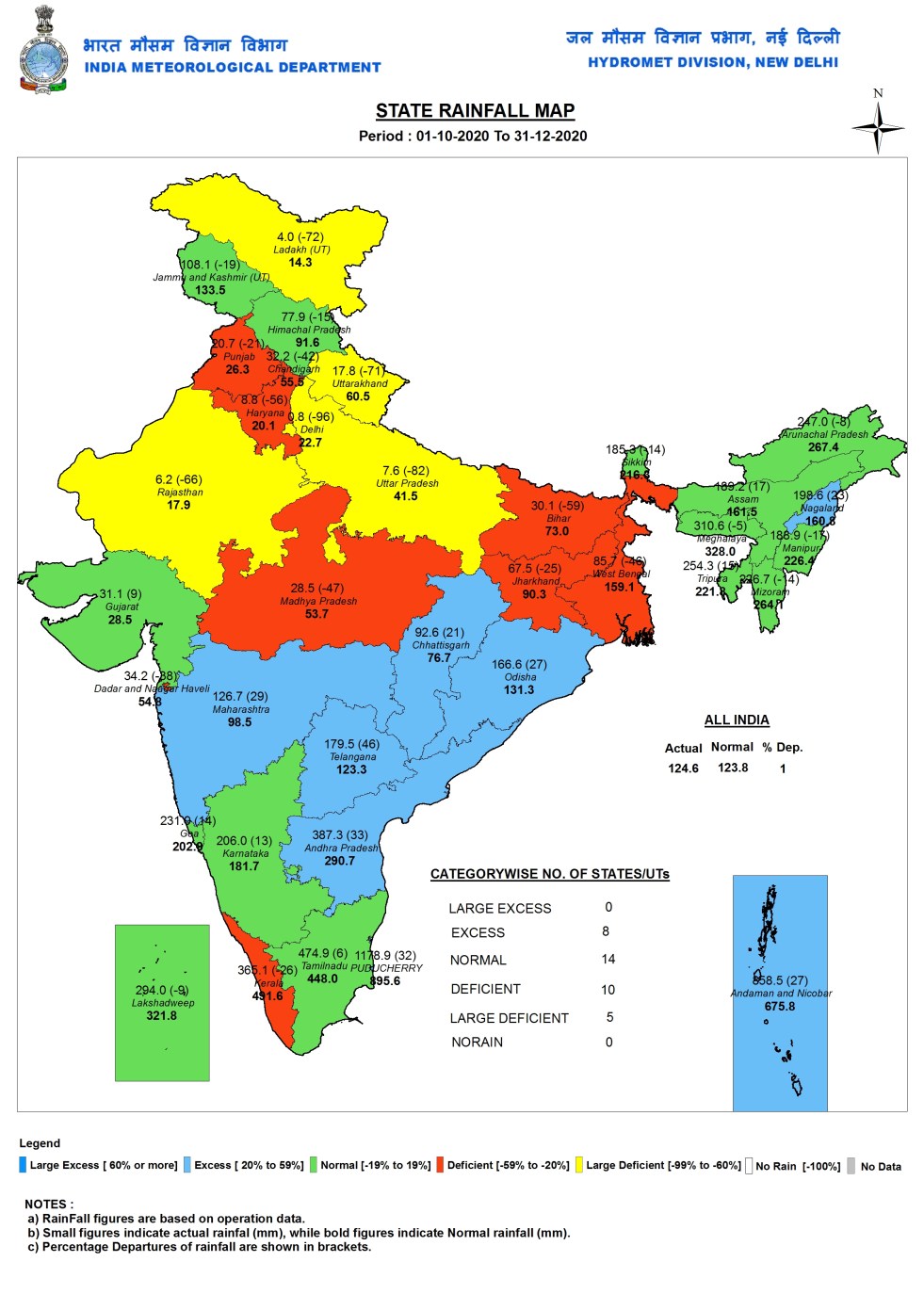
According to India Meteorological Department (IMD), during the just concluded Post Monsoon Rainfall for 2020, that included rainfall during Oct-Dec months, India received 124.6 mm rainfall, 0.64% above the normal rainfall of 123.8 mm during the period. As per IMD[i] definition, the rainfall was thus normal.

This three-month period from Oct 1, to Dec 31 includes the North East Monsoon that mainly affects parts of South India including Tamil Nadu, Puducherry, Rayalseema, parts of Karnataka and Kerala. IMD declared on Jan 1, 2021 that the of NE Monsoon ended on Dec 31, 2020 with normal overall rainfall: TN had 6% above normal, Karnatak 13% above normal, Puducherry 32% above normal, Andhra Pradesh 33% above normal. However, Lakshadweep had 9% below normal and Kerala 26% below normal. This monsoon provides 48% of the annual rainfall of TN so it is most imp for that state.

The rainfall revived only towards the end of November, mainly due to two consecutive cyclones — Nivar and Burevi — both of which developed in the Bay of Bengal. While Cyclone Nivar crossed the coast close to Karaikal near Puducherry and brought heavy showers for the east and coastal districts of Tamil Nadu, Cyclone Burevi weakened before it reached land.

Continue reading “Post Monsoon 2020: State wise Rainfall”
Dams, Rivers & People · Nepal

Dams, Rivers & People overview of Nepal 2020

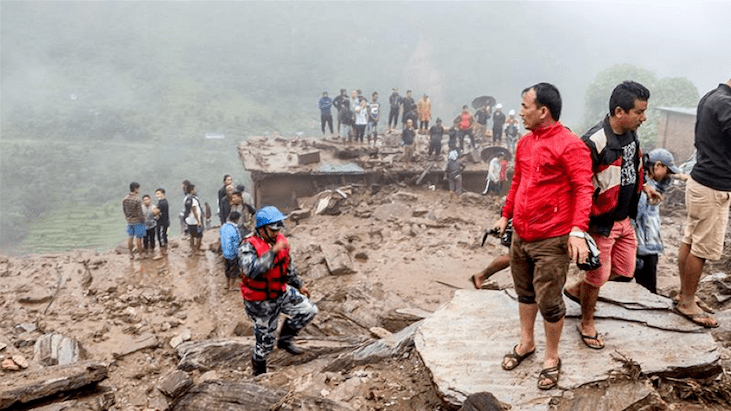
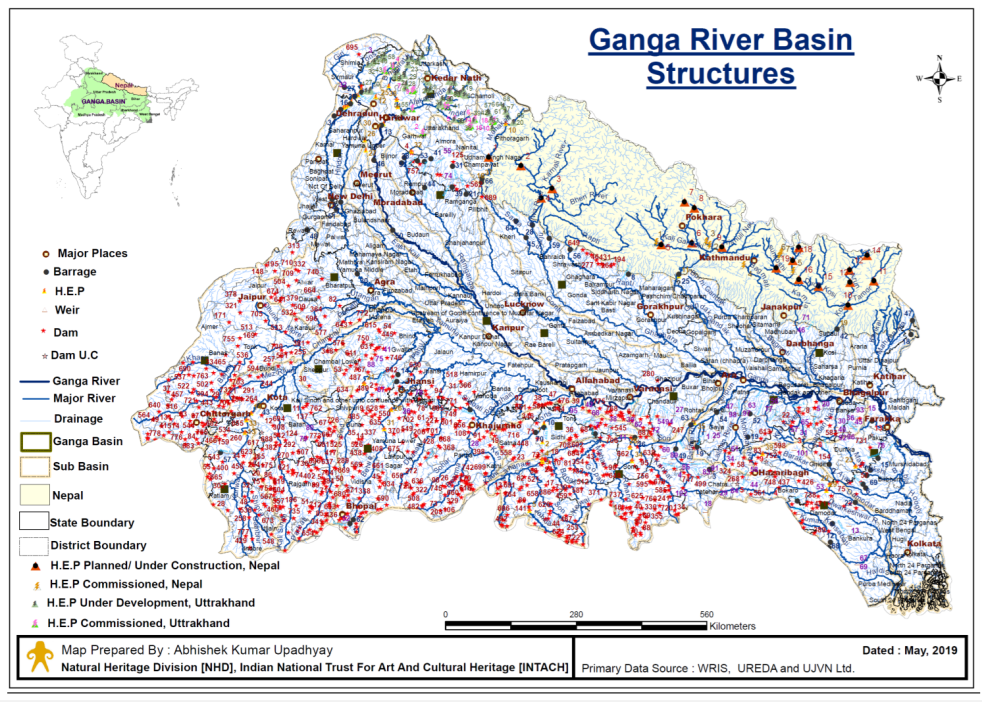
This report provides and overview of key developments in Nepal about Dams, Rivers, Environment and people in 2020, we had provided similar overview in 2019[i] too. We have divided the overview into these sections: Hydropower projects, Power Trade, Governance, River Sand Mining, Monsoon 2020 dominated by Landslide news, Climate Change, India-Nepal issues dominated by Pancheshwar and border dispute issues, Nepal China issues.

Continue reading “Dams, Rivers & People overview of Nepal 2020”
Dams

Why are we still building Large Dams?

Analysis of official information shows that Big dams are not longer necessary or viable or optimal in India. Most (over 95% of India’s 5701 large dams (5264 completed and 437 under construction as per CWC’s National Register of Large Dams[i]) are built for irrigation, but most of our irrigation now comes from groundwater. In fact, about 90% of additional irrigation in last four decades has come from groundwater.

Continue reading “Why are we still building Large Dams?”
Dams · Fish, Fisheries, Fisherfolk

Dammed Fisheries of India

Far out in the estuary of Aghanashini, as Ismail Bhai spread out Indian Mackerel for drying, a carpet of silver spread out before us. “We fish in the river but the Bangde we catch in the sea also have their links to Aghanashini. We owe her everything”. Estuary of the modest, free-flowing Aghanashini supports around 5000 fisherolk. In the neighboring dammed Sharavathi, fish diversity plummets, so do dependent livelihoods. But rivers like Aghanashini are a rarity now.

Continue reading “Dammed Fisheries of India”
Dams, Rivers & People

Dams, Rivers & People 2020 through the DRP LEAD STORIES

In SANDRP’s weekly News Bulletins, we select lead story each week. Here we try to look back and take stock of major happenings of 2020 through a compilation of DRP lead stories to recapitulate major happenings related Dams, Rivers, Water and Environment. While doing this we are aware that this may not completely capture all the key happenings in this sector, since not all the major developments are captured by the media and their headlines. However, it does provide some idea about what were the major developments in this sector in the just outgoing year 2020. We have divided the lead stories under several key classifications like River Management, Environment Governance, Dams, Hydropower projects, Flood management, groundwater management etc.

Continue reading “Dams, Rivers & People 2020 through the DRP LEAD STORIES”
Dams, Rivers & People

Dams, Rivers & People 2020 through the eyes of the Cartoons

A good cartoon can say a lot more than words and possibly more effectively. As in 2019[i], we are sharing the key events on the issues that we focus on namely Dams, Rivers, Environment and People using cartoons. As you can see, we have sourced them from the various internet sources during the just concluding year 2020.

Continue reading “Dams, Rivers & People 2020 through the eyes of the Cartoons”
DRP News Bulletin

DRP: 28 Dec. 2020: Five Positives of outgoing Corona year

The outgoing year 2020 is likely to be remembered as Corona year as Covid 19 pandemic has been the most influential aspect of the year. However, there have been many positives of the outgoing year. We identify five biggest positives as we see them.

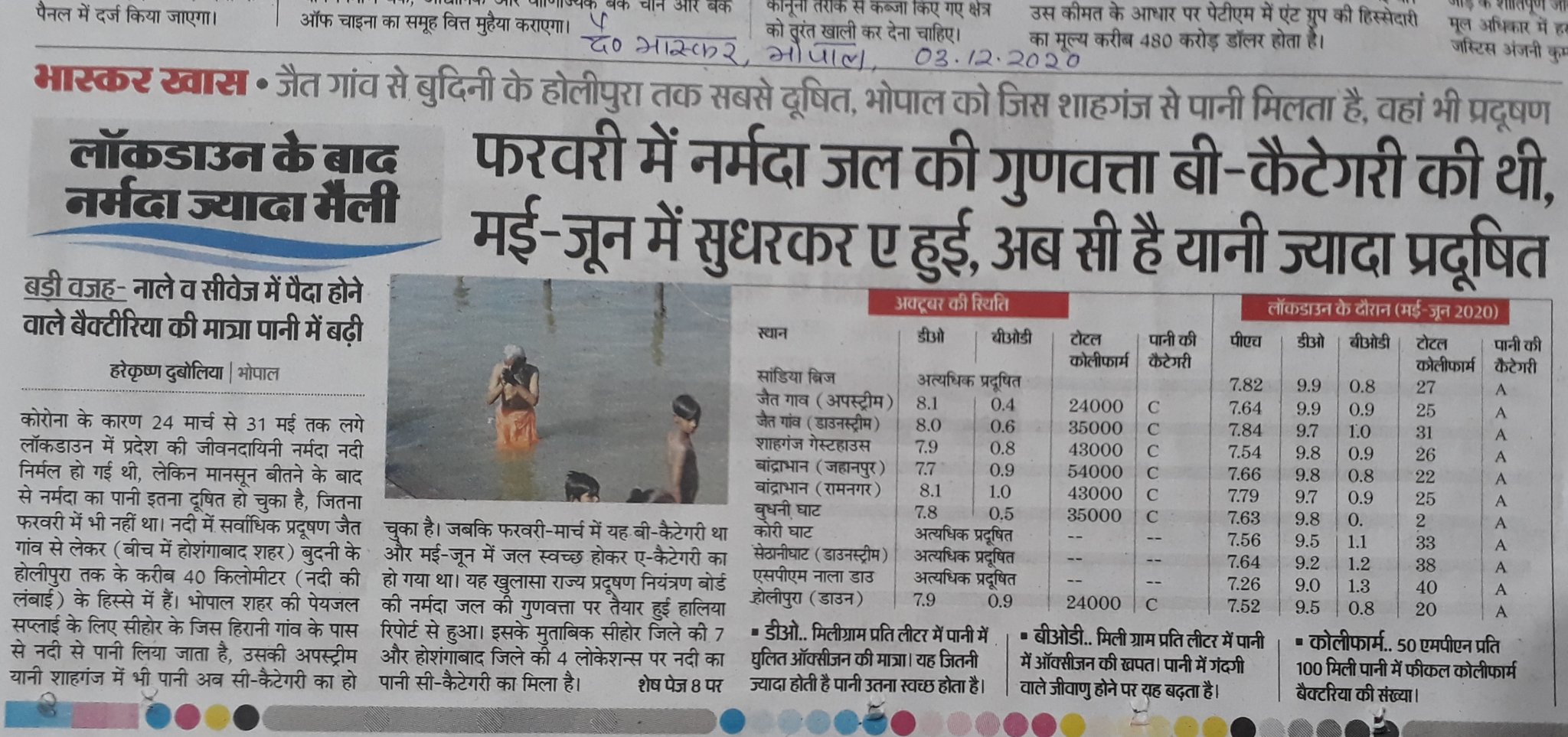
Firstly, the complete lockdown that we experienced during March-April 2020, to slow down the spread of the Covid 19 infection showed, among many other things that it is indeed possible to clean up our rivers and also indicated the way forward: tackle industrial pollution. Unfortunately, those clear lessons have not been learnt by the government, its been busy in ease of doing business, not even understanding that in changing climate, clean rivers are going to be a major resource that will help people adapt.

The second notable positive was the major across the country protests, particularly from the younger generation against the government’s attempt to bulldoze the completely anti- environment amendment to the EIA notification. The protests along with the judicial orders have so far stopped the amendment from getting implementation. The government will do well to abandon any attempt to push them.

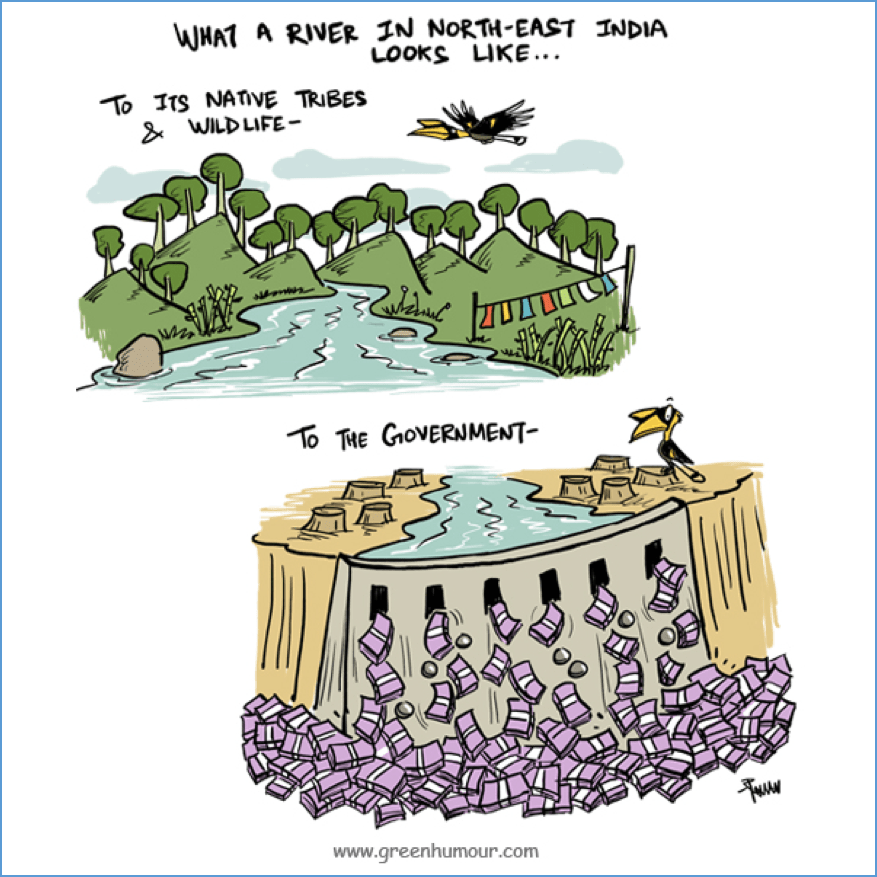
Similar to the protests against amendments to EIA notification were the protests against trying to bulldoze the massive Etalin Hydropower project in Dibang Valley in Arunachal Pradesh, at the cost of lakhs of trees and biodiversity rich forest and river and against the wishes of the people of Arunachal Pradesh and North East India. Here again it was good to see that the campaign has so far been successful.

India Rivers Week 2020 organised Zonal and National dialogues on river sand mining in India, in which large number of groups and stakeholders from across the country participated and has created a new wave of awareness and energy on this very important but so far largely ignored issue. We are hopeful that this energy will lead to change in governance of river sand mining in India.

Continue reading “DRP: 28 Dec. 2020: Five Positives of outgoing Corona year”