POSITIVE YAMUNA REPORTS
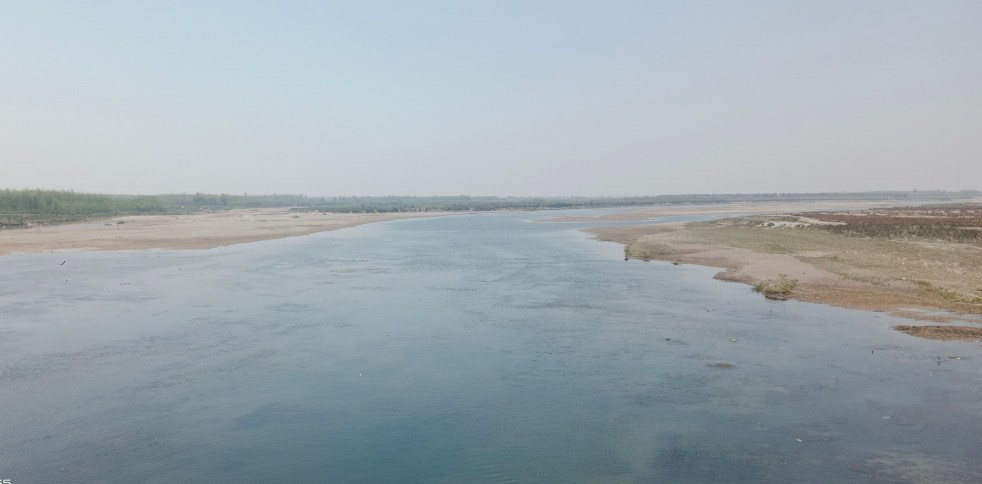
Uttar Pradesh’s Noon river runs again Jalaun farmers in Bundelkhand will not have to toil too much this season to get water for crops. They have almost revived an 81km-long local river that had dried up completely. Community members have restored the drainage basin over a 14km course of Noon river to create a funnel through which water has again entered it. The river had dried up to encroachments and poor rainfall. The revival commenced in 2021 and reached the final stage only recently, with voluntary labour contributions from thousands of local men and women. Officials said the water would start flowing through the entire course of the river in a fortnight. The river is expected to help more than 15,350 farmers.
Rajasthan Women turn water warriors to fight drought The wave of water conservation works undertaken by the wives of ex dacoits of Chambal in Karauli has transformed Serni, once a seasonal river, into a perennial one. Just a decade ago, the river would run dry after Diwali, leaving people desperate for water. “Now, it holds water even at the peak of summer, thanks to around 150 water harvesting structures constructed along its entire length and breadth. The groundwater level has risen to just 5 to 10 feet below the surface,” said TBS’ Ranveer Singh. Now, on a scorching May afternoon, water shimmers in Karauli’s ponds and pokhars. Serni river flows gently, with children splashing and cattle grazing along its banks. “A decade ago, no one would have imagined this. But our women made this possible!” said Ranveer.
Delhi Yamuna Cleaners Every week, Pankaj Kumar and his team take up Yamuna cleaning activities near Okhla barrage. The rehabilitated wetlands in DDA’s Yamuna Biodiversity Park have emerged as breeding sites for turtles, including the softshell species. Restoration work on Rajon ki Baoli, a 16th century stepwell in Mehrauli Archaeological Park, which began in July 2024, is now completed. It had been handed back to the ASI on May 16. Surrounded on three sides by high walls and open to the north, the stepwell remains partially filled with natural groundwater.
Noida Citizens cleaning river Dozens of young volunteers, civic officials, and environmental groups joined hands for a cleanup and awareness drive on June 05 on the banks of Yamuna river located in Sector 94, Noida, showcasing their shared sense of environmental responsibility. The campaign collected over 100kg of waste across nearly 500 metres along the Yamuna bank, including single-use plastic, idols, clothes, shoes, slippers, school bags, and jute baskets. These were loaded onto a tractor and disposed of at Authority-designated dumpsites.
DAMS & HEPs IN YAMUNA BASIN
Himachal Pradesh Renuka dam given final forest clearance The proposal of 148-meter-high rock fill Renuka dam project on Giri river in Sirmaur district has been granted the final stage II forest clearance for diversion of 909-hectare forest land on June 04 by the forest appraisal committee of MoEF&CC. The project will affect 7000 people in 41 villagers and render 346 families homeless. A total of 1,508 hectares of land, including 1,231 hectares of agricultural land spread across 32 villages, 909 hectares of reserved forestland and 49 hectares of the Renuka wildlife sanctuary, would be submerged by the project.
A 24-km tunnel would be constructed for the project. The project would supply 23 cumecs water to Delhi and 40 Mw electricity to Himachal Pradesh. The cost of the project has gone up from Rs 3,572.19 crore to Rs 6,947 crore over the past several years and is likely to increase further to Rs. 10,000 crore by the time the project is completed by 2030.
Uttarakhand Lakhwar dam affected held meeting with DM The Lakhwar dam affected people in a meeting with DM Mayur Dixit on May 23 placed several demands including increase in compensation amount, survey of villagers land and employment in the project.
Before this in March 2025, another committee of local people submitted a memorandum to the Forest Minister claiming that the amount of Rs. 90 crores provided to the forest department by UJVNL under the CAT Plan meant for plantation work in the dam affected area is being spent on non-plantation activities. As per them, the Lakhwar village has been affected by the landslides for about the last 50 years and construction of the dam has further increased the landslide vulnerability of the village.
Rajasthan Concerns over Shahbad PSP Shahbad forest in Baran district is vital to the lives of tribal families like his, is now under threat as 408 hectares of it are proposed to be diverted for 1,800-Mw pumped storage project being built by Greenko Energies Private Limited. More than 1.19 lakh trees are to be felled. The Moondiyar villagers recently called a meeting to oppose the project. Losing the forest means losing food, income and identity. Even the EIA report says the project will fragment the landscape, disturb biodiversity & likely increase conflict between animals and humans.
INTERLINKING OF YAMUNA RIVERS
Ken Betwa Link Impact on PTR, Wildlife Wildlife experts and forest officials have flagged concerns over the construction work for the linking project going on in the Panna Tiger Reserve citing a severe impact on the wildlife population inside the reserve. In March 2025, work began with the construction of a road to the dam site at Daudhan village, in PTR’s core Chandra Nagar range, for which trees in 15 hectares of forest land were felled. As a result, animals have started migrating to other areas of the reserve, officials aware of the matter said.
PKC Linking A crucial aspect of the newly launched ‘Vande Ganga Water Conservation Campaign’ is to link the Eastern Rajasthan Canal Project (ERCP) with the Ramgarh Dam. Due to encroachments and neglect over the years, the dam has been reduced to a mere name in government records. Around 14 feet of silt has accumulated in the dam bed, destroying its original structure.
YAMUNA WATER SHARING DISPUTES
Haryana- Punjab CM Mann claims rights over Yamuna water At the 10th Governing Council meeting of the NITI Aayog on May 24, the Punjab CM said Yamuna river, like the Ravi and Beas, owed through the erstwhile Punjab state but while apportioning the river waters between Punjab and Haryana, it was not considered while waters of Ravi and Beas were taken into account. “If Haryana has a claim over the waters of Ravi and Beas rivers, Punjab should also have an equal claim on the Yamuna waters. These requests have been ignored adding that due to non-construction of storage structure on Yamuna River, water is going to waste,” he said.
Haryana-Rajasthan Yamuna water to reach Sikar, Churu, Jhunjhunu The second joint meeting of the task force set up by the Rajasthan and Haryana governments to implement the Yamuna Water Agreement was held on April 25, following the first on April 7. A consultant will soon be appointed to prepare a DPR for the underground pipeline to carry Yamuna water to Rajasthan.
INLAND WATERWAYS IN YAMUNA BASIN
Delhi Yamuna taxi may start from Dec 2025 The Inland Waterways Authority of India (IWAI) is learnt to have awarded the work to build two jetties each with a capacity of 50 passengers at Sonia Vihar. DTTCL has selected the operator to run the cruise facility on a 4km stretch between Sonia Vihar and Jagatpur. The boats are likely to be procured in the next 3-4 months. A MoU is being drafted to outline the terms of operating the cruise boats and the revenue-sharing arrangement. Instead of permanent concrete construction, nearly 20 containers will be used for the jetties’ construction.
YAMUNA FLOODPLAIN
Delhi Objections against recruiting fresher architectsThe walk-in interview advertisement for floodplain restoration project by DDA has triggered a flurry of concern and conversation within Delhi’s architecture community. Their concern is corroborated by the history of such landscaping projects along Yamuna floodplains. In 2023, a devastating flood took Yamuna floodplains back by years after wiping out the work of 10 projects taken up by DDA on 1,000 hectares along the river. Reports suggested around 90 per cent of 90,000 saplings and riverine grass were damaged due to the floods in 2023. It was when the DDA had begun work on seven projects. Of these, at least three projects were nearing completion. The projects had witnessed investments of Rs 13.3 crore, Rs 13 crore, and Rs 14.3 crore, respectively.
“The problem is that the DDA doesn’t have an overarching vision,” said KT Ravindran, retired professor and Head of Urban Design at the School of Planning and Architecture. “Flood management is a crucial component of Yamuna floodplain restoration. Those without experience are unfit for executing such complex work on the ground. The only logical explanation I can see is that they are hiring junior people to provide assistance.”
Govt to link all floodplain projects by June 2026 In the last two months, both PM Narendra Modi and HM Amit Shah have held separate meetings regarding cleaning the river. PWD Minister Parvesh Sahib Singh had discussed linking all floodplain projects in a meeting with DDA officials in May. The cycle link proposal, which is planned to link all existing floodplain projects, will be 21 km long on the western bank and 30 km long on the eastern bank. Officials said the cycle track will be developed as a green mobility corridor on both sides of the river. The cycle track is likely to be made out of jute carpeting.
Govt plans ropeway along Yamuna The point of origin to destination, number of intermediate stations, and location of towers has yet to be decided. As per officials it is being planned on a Design, Build, Finance, Operate and Transfer (DBFOT) basis under Public-Private Partnership (PPP) mode. DDA is in the process of hiring a contractor to carry out a detailed feasibility study and technical surveys for developing the ropeway system. Once the projects starts, 18 months will be allowed for construction, officials said.
DDA invites bids to auction commercial spots The sites include a concept-based bus kitchen cafe at the Yamuna Vatika in central Delhi’s Old Rajinder Nagar, Garden Cafe and Container Cafe inside the Asita Park in ITO, and a temporary market in Baansera near Birsa Munda Chowk. These are specifically tailored for food and beverage ventures or lifestyle retail segments along the Delhi-Meerut Expressway. For eco-conscious retailers and organic producers, the temporary bazaar at Baansera is designed as a curated market for products like organic food, sustainable fashion, handloom and handicrafts. The DDA has also planned to construct STPs to generate treated water under a comprehensive irrigation project for its 750 green spaces, officials said on May 19.
Noida Polling booth on demolished farmhouse District administration demolished a farmhouse and swimming pool constructed on panchayat land in Dalelpur village to reclaim 2,000 sqm worth around Rs 2.2 crore on June 12. Officials said a panchayat office will now be built on the land, which will also serve as a permanent polling booth during elections which is a longstanding demand of villagers.
Separately, the Noida Authority has decided to issue fresh notices to nearly 250 farmhouse owners for permanent construction in the Yamuna floodplains, where only farming is allowed. The Authority has demolished around 200 such farmhouses since May 2022. However, many owners went to Allahabad high court and managed to get stay orders, which stalled the action temporarily.
Mathura Govt to spend ₹50 cr walkway project The govt on June 17 has planned to build a 2 meter wide and 17 km long nature walk pathway project from Vrindavan to Gokul along the Yamuna River. It will be executed by the Braj Teerth Vikas Parishad in collaboration with the Forest Department. Indigenous plant species would be planted on both sides of the walkway. The route will be equipped with fencing, lighting, and toilet facilities. The project is part of the Mathura Vision 2030, which includes 195 projects worth Rs 30,080 crore, of which 23 projects totaling Rs 2,300 crore have been approved.
Prayagraj Admin to develop green belt along Ganga-Yamuna According to the secretary, Prayagraj Development Authority (PDA), Ajeet Singh, the green belt would be developed on both sides of the twin rivers in both rural as well as urban areas of the district. In accordance with Master Plan 2031, he further said that guidelines have been issued for restraining any construction activity in the green belt area on the banks of the twin rivers. The entire construction proposal will have to be approved by Jal Nigam, Jal Sansthan or Prayagraj Development Authority besides approval of the government was also mandatory.
YAMUNA FLOWS
Delhi Govt planning diversion of Ganga water for flushing Yamuna Experts say the proposal is flawed and lacks long-term vision. The Ganga itself is under serious ecological stress, with declining water quality and increasing pollution. Diverting more water will only worsen Ganga’s health. The current lean-season flow in the Yamuna is only 0.49 million cubic metres (MCM) per day—far below the required ecological flow of 0.86 MCM.
The UP govt has not accepted the plan and not the central govt is reportedly engaging with state officials through bureaucratic channels regarding this matter. According to sources, Rajeev Kumar Mital, the DG, NMCG, is currently drafting a proposal to convince the UP government that sharing a certain amount of water with Delhi will not impact the state’s riparian rights. Additionally, the Centre also has offered to assist UP in covering any extra costs or providing infrastructural support needed for the water sharing.
The plan involves redirecting nearly 380 million gallons per day (MGD) of water from the Upper Ganga Canal (UGC) through existing infrastructure to the Yamuna via the Eastern Yamuna Canal in Uttar Pradesh. This strategy, discussed in high-level meetings chaired by PM Modi and Union Home Minister Amit Shah, is being positioned as a temporary solution until Delhi upgrades its sewage treatment systems by 2026.
Treated Water to Increase Flows: The Delhi govt is also planning to utilise the treated wastewater from the 574 MLD Okhla STP to boost the e-flow by 5.69 cumecs. The installation of pipelines is underway, with completion expected by February next year. Currently, the treated water is being discharged into the Old Agra Canal. The project had been delayed for months due to pending permissions from the UP Irrigation Department, which controls the Yamuna downstream. The clearance was finally granted on March 1 this year, and the remaining work is expected to be completed by the end of 2025. Officials expect to begin releasing the additional e-flow by February 2026.
Besides this, the DJB has chalked out a 3 year long project costing ₹10,087 crore to clean Yamuna and revamp the city’s water infrastructure. Officials said the plan has been presented to home minister Amit Shah and Delhi water minister Parvesh Verma for approval on June 08. To be sure, the central government has a separate, long-term plan to clean the Yamuna, and DJB’s plan is not connected to that.
As per officials, the treated water from Coronation Pillar (454 MLD), Yamuna Vihar STPs will be released downstream Wazirabad barrage by September 2026 to help revive the Yamuna.
DJB supplies around 990 MLD potable water against the demand of 1250 MLD leaving a gap of 260 MLD. Nearly half of the DJB supply is lost to leaks, theft, and outdated metering, as per officials. DJP is expecting 435 MLD water supply from Lakhwar, Renuka and Kishau dams. As per officials DJB has released ₹214 crore to HPPCL for Renukaji, and smaller amounts for the other two projects.
Expenditure from the DJB ₹10,087 cr plan includes Rs 1,400 crore for drain management, Rs 120 crore for solid waste management, Rs 600 crore for septage and dairy waste management, Rs 3,515 crore for sewerage management, Rs 2,000 crore for additional sewage treatment capacity of 500 MLD, Rs 1,000 crore for strengthening e-flow and drinking water supply, Rs 1,100 crore for floodplain conservation and riverfront development, Rs 225 crore for public outreach and Rs 127 crore for miscellaneous expenses.
Meanwhile, the water levels in the river pond at Wazirabad Water Works have drastically declined, currently measuring 668.70 feet against the normal level of 674.50 feet causing potable water crisis in the national capital.
As per CSE report at present, between 10 per cent and 14 per cent of the treated wastewater is reused. Each STP needs a plan not only for treatment but also for discharging its treated wastewater.
YAMUNA POLLUTION
Delhi The river is now exhibiting dangerous levels of pollution, threatening the city’s water security and exposing deep failures in urban ecological governance. A new 30-point inter-agency action plan was recently launched by the Centre and Delhi govt after a high-level meeting chaired by PM Modi. The plan sets deadlines from June 2025 to March 2029.
The high pollution levels, untreated sewage, and industrial waste threaten city’s water supply and health, pushing experts to demand urgent reforms in drainage, treatment, and ecological flow restoration.
Days after the DJB released a detailed action plan to curb the discharge of untreated sewage into the Yamuna, environmentalists have criticized the proposal saying that installing STPs at the mouths of major drains would render existing STPs irrelevant and contravene environmental guidelines.
The DJB has also made poor progress in upgrading its STPs, which has subsequently affected the clean-up of the Yamuna river, according to an April progress report of the DJB. Deadlines for 7 STPs were pushed to December 2026, from missed deadlines in 2023 and 2024.
Amid this, the DPCC monthly analysis for May month shows that the river was more polluted at its exit from the city at Asgarpur and it also entered the city at Palla with substantial pollution levels. The samples of the river were collected on May 1, a day before the city recorded heavy rains. The pollution load in major drains also increased in May. As per the May month report, the water quality has shown a sharp decline in the last two years, with BOD levels soaring to over 42 times the acceptable standard in January 2025.
DPCC’s monthly analysis for April 2025 also pointed out a spike in pollution at Palla, the entry point of the Yamuna in Delhi. Experts said the spike is likely due to a combination of low environmental flow in the river and no change in the existing sewage and effluent treatment plants in the city.
It was also found that 16 out of 37 STPs failed to meet standards in April 2025. The DPCC report shows that despite claims of the river being cleaned, the level of effluents and Yamuna’s health markers remain way worse than what was expected as this year unfolded.
The monthly reports comply with a NGT order, based on readings from 8 points of the Yamuna in the Capital. Citing a report by the CPCB, the NGT in its recent order said that 17 STPs are not complying with the norms in reference to the faecal coliform and are possibly discharging the treated water with high faecal coliform in river Yamuna or in some other natural water body or stream.”
Panipat The drain number 2 has been severely polluting the Yamuna and affecting aquatic life in river and potable water supply of Delhi. Similarly, at several points along the Badshapur stormwater channel in Gurugram are industrial units that routinely release untreated wastewater into the drain, which eventually flows into Yamuna river. The same problem was also reported in August 2024 and SPCB in April 2025 informed the NGT that it has issued closure notices to 10 dyeing units that were found to be operating illegally in residential areas of the city.
Noida As the city continues to grow, it faces challenges in ensuring safe drinking water for its residents due to increasing pollution in Hindon and Yamuna rivers. The need for effective pollution control and sewage treatment is more critical than ever, as environmentalists advocate for a sustainable approach to restore these vital water sources.
Govt Cleaning Plan & Efforts: Delhi Union Home Minister Amit Shah on May 22 has directed the Ministry of Jal Shakti to develop a Standard Operating Procedure (SoP) for all STPs to ensure consistency in their quality, maintenance, and discharge. He also said that these standards should be shared with all States for broader adoption. He emphasised that all planning related to the Yamuna, drinking water, and drainage must be done with a 20-year horizon. The Home Minister underlined the need to boost water distribution efficiency, reduce pipeline leakages, and use world-class technology for desilting drains.
On May 16, the Union Jal Shakti Minister CR Patil stated that it is hard to call Yamuna a river in Delhi and govt will clean it enough for bathing standard within the next 1.5 years, with the water projected to become drinkable in another 1.5 years thereafter. Patil said in 45 days the government will complete the task of assessment of the entire 48 km stretch of the river in Delhi using artificial intelligence (AI).
The Expenditure Finance Committee in May month has approved the DJB’s proposal for the construction of 40 decentralised STPs and extension of sewer lines in Outer Delhi at an estimated cost of Rs 3,104.57 crore. Of the total amount, the Centre will provide financial assistance of Rs 804.58 crore to Delhi under the AMRUT 2.0 scheme. The rest of the funds will be arranged by the UT from their funds.
The government is planning to reach out to the CPCB to assess the output of wastewater being released from all STPs in the future. Officials said the DJB has asked to prepare a plan and hire an agency to identify gaps and disconnected drains and sewers and assess the sewerage zones. As per officials, 9 out of 22 drains that flow directly into the river have been trapped. 2 drains have been partially trapped. Full trapping of drains is set to be completed by December 2027.
In another proposal, the DJB has invited private companies to sponsor the modular STPs to be installed along the major open drains having an outfall into the river. The DJB is inviting sponsorship for STPs management in four broad areas — installation of modular STPs, deployment of plug-and-play STP units, adoption of in-situ sewage treatment technologies, or support for innovative eco-friendly treatment methods. Under the scheme, private firms or individuals will pay the equipment suppliers directly, choosing vendors whose products meet the CPCB standards. DJB’s role will be to supervise the installation, assist in technical approvals, and oversee long-term operations.
The DJB is also working on developing 12 new STPs to reduce untreated sewage being dumped from the Najafgarh drain into the Yamuna river, officials said. The DJB has started work on a 49.5 MLD capacity STP in southwest Delhi’s Chhawla along with 11 units of smaller de-centralised STPs and pumping stations. The agency will be expected to take 15 months for the development, another one month for commissioning and two months for carrying out trial runs of the DSTPs, officials said.
Similarly, the govt on May 15 planned to install 32 water quality monitoring stations at the Yamuna and city’s drains for obtaining real-time data for quick intervention on ground. The DPCC will award a tender worth ₹22 crore for installing 18 stations in major drains, and the remaining at various points of the Yamuna. The project is likely to be completed towards the end of 2025. The DPCC announced the same project in August 2024.
Haryana After meeting Delhi CM, the Haryana CM Nayab Singh Saini on May 23 said that the Haryana govt will fully support the central govt’s mission to clean Yamuna river by diverting treated sewage for agricultural and horticultural purposes, reducing the dependency on fresh drinking water supplies.
YAMUNA RIVERS
Noida NGT adjourns Hindon pollution hearing The UP govt on May 05 has sought more time from the NGT to file a revised affidavit—despite being pulled up by the tribunal earlier this year for key gaps in its submissions. The tribunal has now adjourned the matter, originally sparked by a 2022 petition over untreated sewage and industrial waste contaminating the river system. The Hindon basin houses 366 industries, of which 123 were reportedly found non-compliant with pollution norms. While closure orders were issued against some units, the previous affidavit failed to provide clarity on enforcement and the recovery of environmental compensation. The tribunal had also flagged that 52 of 55 drains still discharged untreated sewage into the river and that poor household connectivity to STPs was hampering their optimal use.
Delhi 60km road along Najafgarh drain A road development project worth Rs 600 crore has been planned under which, nearly 60.77km of new roads will be constructed along the Najafgarh drain. The project envisions a two-lane road on the left bank from Jhatikra Bridge to Chhawla Bridge, covering a length of 5.94km. -Additionally, a two-lane road will be built on both banks of the drain between Chhawla Bridge and Basaidarapur Bridge, adding another 54.83 kms to the corridor. Later, a riverfront project will be developed along the Sahibi river, also known as the Najafgarh Drain.
YAMUNA RIVERS BIODIVERSITY
Delhi Leopard sighting A leopard was spotted in the dense urban landscape of Jagatpur village in north Delhi, in a field adjacent to the Yamuna Biodiversity Park, on June 15 night. Leopards have also been seen in the area in 2024 and in 2016. Similarly, a possible sighting of the Indian grey wolf has been reported on May 15 along the Yamuna floodplains near Palla, where the river enters the city. The report shows rich aquatic eco-system found along Chambal but its wrongly suggests that it’s a undammed river. There are at least four existing big dams built on the river.
YAMUNA FISH, FISHERFOLKS
Delhi Like last year, mass fish death again reported around Burari areas along river Yamuna in Delhi due to discharge of untreated chemical in river through drain number 8.
MINING IN YAMUNA RIVERS
Haryana: Yamuna Nagar Illegal embankment in Kalesar National Park The Central Empowered Committee (CEC) on May 28 has recommended action against Irrigation Department officials of the Haryana Government and contractor for constructing an embankment and a cement stein wall across the Yamuna River Corridor, part of which falls in the Kalesar National Park, without taking the approval of the authorities concerned. The CEC visited the park in Yamunanagar on May 19 and found that the embankment across the river was intact. It then submitted its report to the top court on May 26. The report also said that 1,800 metres from the embankment, nine concrete studs and a 450m cement wall were being built without ESZ committee’s clearance. The Supreme Court will take up the petition in July next.
Before this the SC had directed the CEC to investigate claims of an embankment was built to enable mining activities. The matter was heard by court on April 29, following concerns that the river’s flow was being diverted from Haryana to Uttar Pradesh. Advocate Gaurav Kumar Bansal, representing the applicant, presented the case before the court, asserting that the embankment was built to facilitate rampant mining operations near the wildlife sanctuary.
The petitioner has also stressed that illegal mining activities abound in Kalesar Wildlife Sanctuary, which is located in the eastern part of Yamuna Nagar. Last year, Bansal had also challenged the construction four dams Chikan, Kansli, Khillanwala and Ambawali within the sanctuary on the ground that it will have a negative impact on the flora and the fauna in the area.
Sonipat Illegal mining alters river’s course Unregulated sand mining – in violation of environmental laws and NGT directives – has changed the course of the Yamuna river in Asadpur village of Sonipat, according to May 22 report of the irrigation department. The report has flagged widespread illegal mining activity. The team revealed that licensed operators were excavating far beyond permitted zones while using heavy machinery directly in the active river stream. Despite multiple complaints by villagers and department officials, enforcement agencies, including the SPCB, and local police, have allegedly failed to take action. Acting on the findings, the department issued a show-cause notice to the company and recommended immediate cessation of all mining activities at the site.
Hearing the matter the NGT has ordered a nationwide study for the govt to come up with standard guidelines on construction of temporary bridges across rivers for sand mining.
Panipat: Drowning Death in Sand Pits: At least three children have died after downing in deep pits created by sand mining activities in Yamuna river in Sanauli area bordering Kairana tehsil of UP. Report claims about 24 such death took place in past one year in the area.
Faridabad Illegal miners creating bridges across river Temporary bridges have been built on the Yamuna around Palwal so that sand miners can get even closer to the riverbed, leaving residents irate and environmentalists fuming. The “illegal” bridges, which have reportedly come up without official approval or environment clearance, are being used by illegal miners to carry equipment deep into the river to excavate sand and transport it. Contracts for sand mining have been awarded in Palwal, but local sarpanches and environmentalists say none of the contractors has allegedly obtained environmental clearance.
BJP’s Yamuna pledge drowned in sand “The contradiction is stark: The BJP government that claims to champion green causes with projects like the “Green Wall of Aravallis” simultaneously presides of ecological ruin. The ruin of a river amounts to the destruction of entire village ecosystems. The party’s political rhetoric on saving the Yamuna rings hollow against this backdrop of environmental pillage. The situation demands swift and transparent action: immediate dismantling of illegal infrastructure, a judicial probe into the issuance of mining contracts and holding accountable those in the administration who turned a blind eye.” (Edit)
Uttar Pradesh Unregulated sand mining disrupts riverine ecosystems: SC The Supreme Court on May 8 upheld an NGT decision quashing an e-auction notice of UP govt for sand mining and said there should be “zero tolerance” for such unregulated activities as it disrupted “riverine ecosystems”. The top court further directed before granting an environmental clearance for sand mining, preparation of a district survey report (DSR) was mandatory.
Banda A 12-year child died after drowning in deep sand pit in Yamuna River near Charka village under Marka police station area of the district on June 09. On May 17, Banda activist Usha Nishad arrested and jailed by police for protesting against illegal and unsustainable sand mining in Ken river. Before this, the villagers had staged Jal Satyagrah opposing excessive mechanized sand mining in river which they felt would result in large scale water scarcity in the area.
Rajasthan Illegal mining in Ranthambore: The Supreme Court on May 26 warned the government of contempt proceedings, taking “serious” note of illegal mining activities inside the core area of Ranthambore tiger reserve (RTR). The court also sought a response from the state within 24 hours on an application seeking deployment of central paramilitary forces to guard the wildlife reserve. The bench posted the matter for hearing on May 27. The CEC testified that the allegations of illegal mining and vehicular movements were true.
Sikar Women protest against mining Women from 18 villages in Neem Ka Thana tehsil of Sikar district have been leading a sustained, rotational protest against illegal soapstone mining that endangers the Girjan river—a crucial rain-fed lifeline supported by traditional anicuts in each village. To uplift spirits and strengthen solidarity, they composed local songs and choreographed traditional dance steps, turning protests into powerful cultural expressions of resistance.
The villagers have also alleged that businessmen are getting mining leases in the river basin on the basis of wrong facts damaging the water sources of the Girjan, Kansavati, Sota and Katli rivers which in turn is affecting the livelihood of the local.
Tonk Deaths by drowning due to indiscriminate sand mining Eight young people were submerged in Banas river near old bridge in Tonk on June 10. Reports suggest that this is due to the deep pits created by indiscriminate sand mining. Despite this, the mining activities have not stopped.
Chittorgarh A 33-year-old man was shot dead on June 01 by a group of armed men at a hotel in Chittorgarh, with police suspecting that an old dispute over sand mining to be the motive behind the attack.
Madhya Pradesh The Supreme Court has granted interim protection from arrest to two Madhya Pradesh-based journalists who allege they were assaulted by Bhind police officials over their reporting on illegal sand mining in the Chambal region.
YAMUNA WETLANDS, LAKES, WATER BODIES
Ajmer The Supreme Court has approved govt proposal for developing two new wetlands, spanning a total area of 22 hectares, near Ajmer. The decision came on May 16 as part of the ongoing Ashok Malik case, which addresses environmental concerns surrounding the Ana Sagar Lake.
Udaipur MoEF has announced that Khichan in Phalodi and Menar in Udaipur have been designated as Ramsar sites. In 2023, the State Wetland Authority recommended Khichan and Menar, along with three other sites, for Ramsar designation. However, the move has evoked mixed reactions from the locals. While residents are happy with the recognition to their collective conservation efforts running into generations, their primary concern stems from the apprehension whether such legal protection would restrict their rights to graze livestock or extract fertile soil from wetlands.
Bhopal Taking suo motu cognizance of media reports about dumping of solid waste in the Full Tank Level (FTL) area to facilitate illegal and unauthorised encroachments on the Kaliyasot reservoir land in Bhopal, the NGT has constituted a joint committee which will visit the site and submit an action taken report. The joint committee has to submit the report within six weeks.
Najafgarh Lake The NGT has directed the National Wetland Authority to ascertain the exact area of Najafgarh lake on the Haryana side and submit its report by August last week.
Gurugram The NGT has issued notices to Haryana govt, MCG, HSVP and the state’s pond and water management authority to respond to allegations that at least four water bodies in the city have been built over or encroached upon. The NGT order on May 30 raises questions about compliance of environmental norms and degradation of natural resources. The tribunal will take up the case next on Oct 10.
Noida For years, birders and activists have demanded that Dhanauri be officially notified as a wetland under Indian law—something that, astonishingly, still hasn’t happened. They also want it to declare a Ramsar site under the international convention that provides legal protection to wetlands critical to biodiversity. But caught in bureaucratic limbo, Dhanauri’s status remains unclear.
An affidavit submitted by the DM to the NGT on March 17 showed that of the 1,018 waterbodies in the district, nearly 10% are encroached. Some of them by govt agencies for the construction of roads and banquet halls. The NGT is to hear the matter next on July 17.
Delhi From grand announcements and crores in public funding to broken promises and green scum, the story of Delhi’s lakes is one of ambition undermined by indifference. A tale of vanishing marshlands
GROUNDWATER IN YAMUNA BASIN
Study Surface-groundwater interactions and recharge sources in the upper Yamuna River basin: Insights from stable isotopic signatures and hydrogeochemical processes Abstract: The multivariate analyses confirm strong river water-groundwater interactions, particularly in the lower catchment. This study highlights catchment-specific RW-GW interactions and recharge sources in the water-scarce UYRB, providing critical insights for regional climate-resilient water resource management.
Haryana The state has witnessed an average decline of 5.41 meters in its ground water table in 10 years from 2014 to 2024, the most in Ambala, the state government informed the Assembly on March 19. The govt on May 20 announced its latest Integrated Water Resources Action Plan, under which it aims to save around 6 billion litres of water, just over half of the state’s projected deficit of 12 billion litres by 2027. It needs to study if the boom in the fisheries sector in the state is happening at a cost of groundwater depletion.
Delhi All the district magistrates in Delhi have sealed a total of 15,962 illegal borewells under their jurisdiction. However, 4,033 illegal borewells, the list of which was shared by Delhi Jal Board, were not identified on the ground, Delhi govt informed NNGT in a report dated May 23.
YAMUNA URBAN WATER
Delhi Low water levels in the Yamuna have impacted water supply in parts of north, central and west Delhi, the Delhi Jal Board said in an advisory on June 16. DJB said that the water level at the barrage has reduced to 668.70 feet (from sea level) against the normal of 674.50 feet.
Noida Authority has informed the NGT that it aims to increase reuse of treated sewage water to nearly 48% by 2026 from current 30% to reduce dependency on groundwater for horticulture, construction, and other non-potable needs. In its report, the authority stated that it currently treats around 260 MLD of municipal sewage, of which about 78 MLD (30%) is being reused. Meanwhile, several sectors reported water shortages on June 10 following the shutdown of the Ganga water supply for pipeline repairs till June 13.
Sirsa Defunct RWH systems Despite repeated promises made by the local municipal council to solve the problem of waterlogging and raise the groundwater the problem persists in the city.
Gurugram Municipal Corporation of Gurugram (MCG) has revealed that around 367,000 out of 552,000 households have illegally connected their sewer lines to municipal pipelines, prompting CM Nayab Singh Saini to order urgent regularization and infrastructure upgrades.
MONSOON IN YAMUNA BASIN
Above normal monsoon in Delhi; Haryana According to IMD, the subdivision of Delhi, Chandigarh and Haryana will see above normal monsoon – 114% of the LPA in the months of June to September. The normal monsoon mark for the Delhi-Chandigarh and Haryana sub-division is 431 mm, IMD DG Mrutyunjay Mohapatra said. Delhi has already logged 186.4mm in monthly rainfall, making it the wettest May ever for Delhi on record. The long period average for rainfall in June is 74.1mm. However, Delhi logged 243.4mm in June last year. This was largely down to a single day spell of 228mm, which left the city inundated on June 28.
Delhi’s Wettest May With this latest spell of rain on May 25, -81.2 mm recorded till 5:30 am, Delhi has already received 186.2 mm of rainfall in May month, making it the wettest May on record. The previous record stood at 165 mm in May 2008, according to IMD data. On May 2, Delhi recorded 77 mm of rain in a single day — the second-highest May rainfall on record. Till 8.30 am on May 25, Delhi recorded 81.4mm rainfall in 24 hours, making May 25 the city-state’s second wettest 24-hour rain spell ever in May. The highest is 119.3mm in 24 hours on May 20, 2021.
FLOOD IN YAMUNA BASIN
Haryana Flood prevention work in Karnal Assembly Speaker Harvinder Kalyan said the flood prevention work is underway at 6 locations identified last year in the district to safeguard against the flood of the Yamuna, and all works are expected to be completed by June 30. An estimated cost of Rs 17–18 crore will be spent on these projects. Last year alone, approximately Rs 13 crore was spent to strengthen the Yamuna embankment near Lalupura village. In Indri, a breach in the Yamuna embankment caused severe damage. There were three locations where the river was on the verge of breaching its banks
Delhi Plan to stem flooding Delhi will soon see 12 gates near the Yamuna and big drains to prevent flooding on roads during the monsoon.
RELEVANT REPORTS
Opinion Legal personhood for rivers may one day be a meaningful concept in Indian law. But only if it rests on a foundation more robust than religion, more inclusive than symbolism, and more practical than sentiment. Until then, the judgment remains a poetic gesture—beautiful, perhaps, but legally fragile. (Amrita Pankaj Satija)
India needs to urgently rehaul STPs Indian cities and towns produce about 72,368 MLD sewage but has the operational capacity to treat only 37% of it and actually treats only 28%. According to NITI Aayog, less than 1,000 MLD of treated wastewater is currently being reused in India. This accounts for just 3% of the total treated wastewater and only about 1% of the total wastewater generated in the country.
SC sets Sept 30 deadline for filling DPCC vacancies The Supreme Court on May 19 ordered Delhi govt to fill all 204 vacancies -of a sanctioned strength of 344- to be filled by September 30, 2025. The SC initiated proceedings on May 8 by summoning the Delhi chief secretary after being informed that 55% posts in DPCC lay vacant. The court extended the September deadline to all state boards and directed the CPCB itself to achieve full strength by the end of August 2025.
46% vacant posts in SPCBs: NGT April 30 deadline missed A CPCB report to NGT revealed that 5,401 posts (or 46.53%) of the 11,606 posts sanctioned in 26 states and eight UTs continue to be vacant. It was in September last year that the NGT ordered states outside the Delhi-NCR region to fill vacant SPCB and PCC posts by April 30. The Supreme Court, in an order on August 27, had already ordered filling of vacant posts across SPCBs in Delhi-NCR.
Delhi: 83 DPCC vacancies filled In an affidavit submitted to the NGT on May 20, the Delhi govt said that since July 2024 till date, the DPCC has filled 83 vacancies and the number of filled up posts is now 223. It added that appointment letters have also been issued to 10 more candidates for various posts, who are expected to join in June 2025.
CPCBhas spent just 0.2 per cent of the environmental compensation (EC), it collected from 2018 to 2024 on protecting the environment, according to official data accessed through RTI. The CPCB collected ₹45.81 crore in fines and penalties under EC during this period but spent only ₹9 lakh, less than one-fiftieth of the total amount. There is no record of EC spending in most years. The only exception is 2024-25, when ₹9 lakh was finally utilised.
Haryana Just 1/4 of EC recovered in 6 years The SPCB has informed the NGT that it imposed EC amounting to Rs 499 crore on 462 industrial units operating without mandatory clearances between April 2019 and Mar 2025. Of this, Rs 132 crore was recovered as EC, but the remaining – Rs 367 crore – was pending. HSPCB said that it runs into several obstructions in recovering EC. A key problem is that small-scale industrial units evade paying compensation by abandoning rented or illegally occupied premises after they are issued closure orders. An HSPCB official said the tribunal may consider policy interventions or legal reforms to address this enforcement gap in EC. The bench will take up the petition next on Sept 8.
SANDRP

 SANDRP