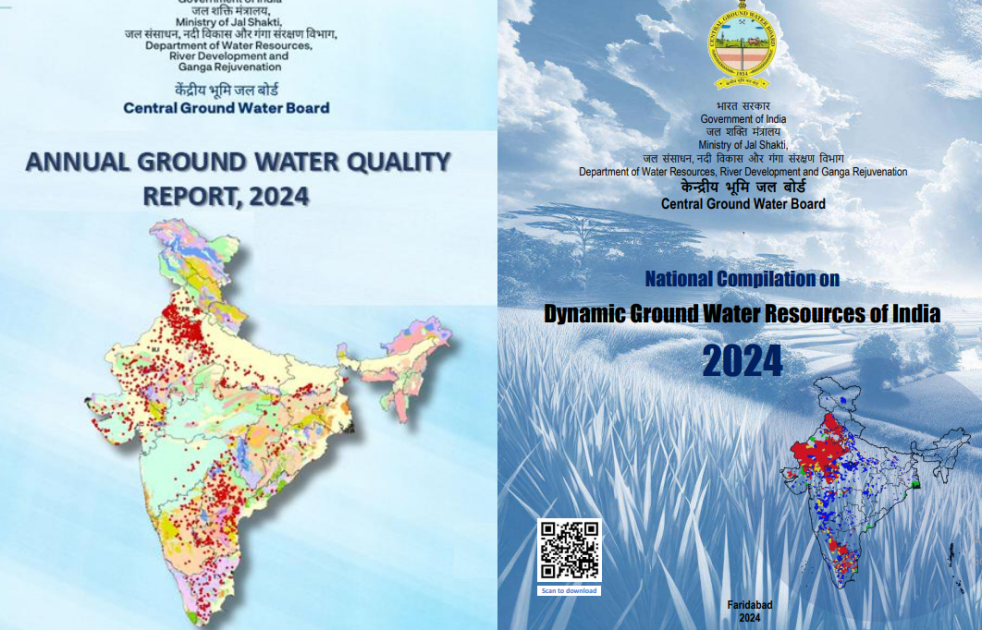
The Central Ground Water Board (CGWB) released two important reports last week. While the Annual Ground Water Quality Report 2024 reveals rise in nitrate fluoride, arsenic and uranium contimination of groundwater resource in India, the Dynamic Groundwater Resource Assessment Report 2024 claims substantial rise in annual groundwater recharge and decline in extraction of the resource.
As per the first report, the number of districts affected by high nitrate levels in groundwater has gone up to 440 (near 56% of all 779 districts in country) from 359 found in 2017 assessment which means in 7 years 81 more districts have been found having excessive nitrate levels in groundwater. This should concern us from a number of points of view.
The concentration of fluoride levels has exceeded permissible levels in samples tested from Rajasthan, Haryana, Karnataka, Andhra Pradesh and Telangana. Even the monsoon effect has been found unhelpful in reducing fluoride concentration in Telangana. The arsenic contamination has increased in floodplains of the Ganga and Brahmaputra rivers. Similarly, 42% of samples have been found exceeding permissible limits for uranium contamination particularly in over-exploited, critical and semi-critical groundwater stress zones.
However, the CGWB in its second report has claimed that total annual groundwater recharge has increased (15 billion cubic meters or BCM) substantially, and extraction has declined (3 BCM) in 2024 from the 2017 assessment. The report has assessed the total annual groundwater recharge at 446.90 BCM and the annual extractable groundwater resource at 406.19 BCM. As per the report, the annual groundwater extraction for all uses is 245.64 BCM. Interestingly, overall, the country’s degree of groundwater extraction is 60.4%, or roughly the same as it has been since 2009.
Broadly the reports have raised both concerns over rising contamination and questions over groundwater recharge improvement claims of CGWB. In fact, the findings of the first report on the increase in contamination seem contradicted by the improvement claimed in the second report. As SANDRP has raised the issue earlier, in the face of increasing groundwater use, depleting levels, worsening quality of groundwater and our increasing over dependence on groundwater, the claims of improvement are counter intuitive and misleading.
Secondly, the report on quality shows the failure of govt’s to arrest the deterioration. The concerns over increasing deterioration of groundwater quality should be of greater concern as once the quality deteriorates, it is very difficult, if not impossible to reverse it even in short and medium terms. It is particularly noteworthy that this news comes in the golden jubilee year of Water Pollution Act in India, showing how badly the Act and institutions set up in its aftermath have failed.
CGWB GW quality report for 2024 The Union Minister of Jal Shakti, Shri CR Patil has released the Annual Ground Water Quality Report for the entire country for the year 2024 on 31.12.2024. The ground water quality assessment was carried out by Central Ground Water Board (CGWB), which can be used for taking suitable remedial measures and further planning by various stake-holders. This report is the first to adopt a Standard Operating Procedure (SOP) for groundwater quality monitoring, ensuring uniformity in data collection, analysis and interpretation. The use of internationally recognized methods further enhances the credibility and technical rigor of the findings.
This report provides a comprehensive analysis of groundwater quality of India through background monitoring, trend analysis and hotspot identification. With a robust dataset derived from over 15,200 monitoring locations and focused assessments at 4,982 trend stations, the report delivers critical insights into groundwater quality variations across spatial and temporal scales.
This report serves as a critical scientific baseline for policymakers, researchers and stakeholders engaged in groundwater management. The data-driven approach and evidence-based findings provide a foundation for informed decision-making aimed at enhancing groundwater sustainability, mitigating contamination risks and promoting adaptive water use practices. https://pib.gov.in/PressReleasePage.aspx?PRID=2089040 (31 Dec. 2024)
High nitrate levels in gw threaten public health in 440 districts High nitrate levels have been found in groundwater of 440 districts across India, with 20 per cent of the samples collected exceeding the permissible nitrate concentration, find the “Annual Groundwater Quality Report – 2024. A total of 15,259 monitoring locations were chosen nationwide to check groundwater quality in May 2023. Of these, 25 percent of wells (the most at risk per BIS 10500) were studied in detail. Groundwater was sampled at 4,982 trend stations before and after the monsoon to see how recharge affects quality.
Rajasthan, Karnataka, and Tamil Nadu had over 40 per cent of samples above the limit while there was high contamination in samples from — Maharashtra at 35.74 per cent, Telangana at 27.48 per cent, Andhra Pradesh at 23.5 per cent and Madhya Pradesh at 22.58 per cent. In states like Rajasthan, Madhya Pradesh, and Gujarat, nitrate levels have remained stable since 2015. However, Uttar Pradesh, Tamil Nadu, Andhra Pradesh and Haryana showed increasing contamination from 2017 to 2023, the CGWB said.
Fifteen districts in India have been identified as the most affected by high nitrate levels in groundwater including Barmer and Jodhpur in Rajasthan; Wardha, Buldhana, Amravati, Nanded, Beed, Jalgaon, and Yavatmal in Maharashtra; Rangareddy, Adilabad and Siddipet in Telangana; Villupuram in Tamil Nadu; Palnadu in Andhra Pradesh; and Bathinda in Punjab. The report further said fluoride concentrations exceeding the permissible limit are a major concern in Rajasthan, Haryana, Karnataka, Andhra Pradesh, and Telangana. Elevated arsenic levels (more than 10 parts per billion) were found in several states, particularly in the floodplains of the Ganga and Brahmaputra rivers.
A major concern in the groundwater quality report was also the elevated levels of uranium in several regions. 42% of samples with uranium concentrations exceeding 100 ppb (parts per billion) came from Rajasthan, and 30% from Punjab, indicating regional hotspots of uranium contamination, the report said. The report said that groundwater samples with uranium concentrations above 30 ppb were clustered in areas identified as over-exploited, critical and semi-critical groundwater stress zones, such as Rajasthan, Gujarat, Haryana, Punjab, Tamil Nadu, Andhra Pradesh and Karnataka.
Rajasthan, Delhi, Gujarat, Haryana, Punjab, Telangana, Andhra Pradesh and Karnataka are the most severely affected by high electrical conductivity values in groundwater. https://www.telegraphindia.com/india/high-nitrate-levels-threaten-public-health-in-440-districts-reports-central-ground-water-board/cid/2074907 (02 Jan. 2025)
Districts with excess nitrates in GW at 7-year high There are 440 districts with excessive nitrates in their groundwater as of 2023, an increase from 359 such districts in 2017, according to a report by the CGWB on Wednesday (Jan 1). The data suggests that about 56% of India’s districts have excessive nitrates — defined as more than 45 mg per litre — in their groundwater, largely due to the use of subsidised, nitrogenous, synthetic fertilizer, a key input for farming. https://www.thehindu.com/sci-tech/energy-and-environment/districts-with-excess-nitrates-in-groundwater-at-seven-year-high/article69050971.ece (01 Jan. 2025)
Fluoride contamination major cause of concern in 5 states According to the Annual Ground Water Quality Report — 2024, fluoride concentration exceeding the permissible limit in water is a major concern in five states, including Telangana. Although the monsoon season led to some improvement in these states, the overall contamination levels remain alarmingly high, it added. The upper limit of fluoride in drinking water is 1.5 mg/L. As per the report prepared by the CGWB, the number of samples analysed in Telangana is 1,150. Of these, fluoride in 171 samples exceeded the permissible limit, which is 14.87 per cent. In 28 out of 33 districts in the state, fluoride content in groundwater was detected at one or more location. The effect of monsoon recharge in reducing fluoride concentration was not much in Telangana. https://www.newindianexpress.com/states/telangana/2025/Jan/01/fluoride-contamination-alarmingly-high-in-telangana-jal-shakti-report (01 Jan. 2025)
EDIT Need to deal with rising levels of nitrate in groundwater An annual assessment by the CGWB on the state of groundwater, and its quality, has some worrying portents. First, the number of districts with excessive nitrate in their groundwater has risen from 359 in 2017 to 440 in 2023. This translates to a little more than half of India’s 779 districts having excessive nitrate, or more than 45 mg/L (milligram per litre). There are two major concerns with excess nitrate content: first, methemoglobinemia, or a reduced ability of red blood cells to carry oxygen. This sometimes causes ‘Blue Baby Syndrome,’ in infants. The bigger problem is environmental: once nitrates in groundwater rise to the surface and become part of lakes and ponds, algal blooms throttle the health of aquatic ecosystems.
The report drew attention to the fact that States with over-exploited groundwater blocks — where extraction is more than replenishment — were more likely to have excessive chemical contaminants. Overall, the country’s degree of groundwater extraction is 60.4%, or roughly the same as it has been since 2009. About 73% of the blocks analysed for groundwater levels are in the ‘safe’ zone, meaning that they are replenished enough to compensate for the water drawn out. While it is a good sign that India now has a robust, scientific system of assessment to monitor the health of groundwater blocks annually, efforts are lacking in getting States to act on these findings. There needs to be more concerted awareness programmes led by the highest levels of leadership to contain the crisis. https://www.thehindu.com/opinion/editorial/%E2%80%8Bwater-woes-on-the-state-of-indias-groundwater/article69058025.ece (04 Jan. 2025)
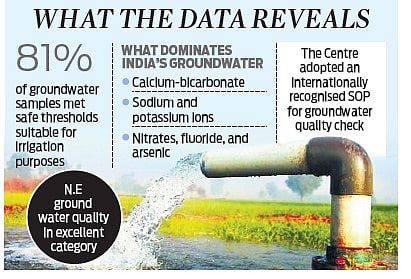
Another report d, ‘Dynamic Groundwater Resource Assessment Report’ for 2024, shows that total annual groundwater recharge has increased (15 Billion Cubic Metres) substantially, and extraction has declined (3 BCM) in 2024 from the 2017 assessment. The total annual groundwater recharge has been assessed at 446.90 BCM. Keeping an allocation for natural discharge, the annual extractable groundwater resource has been assessed at 406.19 BCM. The annual groundwater extraction for all uses is 245.64 BCM. https://www.newindianexpress.com/nation/2025/Jan/01/81-of-groundwater-safe-for-irrigation (01 Jan. 2025) The assessment attributes the increase in groundwater recharge primarily to enhanced contributions from water bodies, tanks, and conservation structures. Improvement in groundwater conditions was observed in 128 assessment units compared to 2023 data. The overall percentage of over-exploited, critical, and semi-critical units has decreased. https://www.thestatesman.com/india/groundwater-recharge-increases-extraction-declines-2024-report-highlights-positive-trends-1503381524.html (31 Dec. 2024) https://affairscloud.com/mojs-released-dynamic-ground-water-resource-assessment-report-of-the-country-for-the-year-2024/ (03 Jan. 2025)
HYDRO POWER PROJECTS
SANDRP Overview 2024: Corruption in dam, hydro projects in India This annual overview focusses on important reports highlighting the corruption issues related to the hydro and dam projects in India in 2024. The electoral bond case has revealed the deep nexus among political parties, contractors and financers as dominant force working behind the projects overlooking the evident disaster risks and undermining the democratic process. As a result, the people, rivers and environment are made to bear the burden and burnt. https://sandrp.in/2025/01/04/2024-corruption-in-hydro-dams-in-india/ (04 Jan. 2025)
Arunachal Pradesh Dam construction needs to be considered carefully Take the 405 mw Ranganadi Hydro Electric Project Stage I as an example. The project was put into operation in 2002. Villagers in Upper Cher village (Papum Pare district), downstream of RHEP said, “After the completion of the dam, water flows in the river have gone down drastically. Our fish are totally gone. Earlier even outsiders used to come here to fish; now there is no fish even for us. Our fields are also affected badly as the channels we had made to take water to the fields have become dry. Horticulture, which is a very important source of livelihood for our village and includes banana, oranges, pineapple and spices like black pepper and cardamom, has almost finished along the river banks.”
-Arunachal is preparing to develop 13 hydropower projects. Once construction of these projects begin, the livelihoods of the villages downstream of the projects will be severely affected, while thousands of hectares of land and forests will be encroached. https://arunachaltimes.in/index.php/2024/12/31/dam-construction-needs-to-be-considered-carefully/ (31 Dec. 2024)
SUMP to mitigate flood risks posed by China: CM CM is clearly misleading, or does not understand what is a river or both here. Siang does not need a dam to maintain natural flow and what flows after the dam is not natural, either upstream of the dam nor downstream of the dam. He says it is for both hydropower generation and flood control. But these are contradictory objectives. Optimum hydropower generation requires as full a dam as possible, optimum flood control objective requires as empty a dam as possible. https://www.thehindu.com/news/national/arunachal-pradesh/siang-project-not-just-for-generating-power-but-mitigating-flood-risks-posed-by-china-arunachal-cm/article69039448.ece (29 Dec. 2024)
Assam CM says Bhutan approved use of its water resources CM Himanta Biswa Sarma, on Wednesday (Jan. 01), announced that Assam has received the green light to utilise Bhutan’s water resources for electricity generation and irrigation projects. “His Majesty has assured me that Assam can undertake any water supply projects, including irrigation and electricity generation, using Bhutan’s water. I see immense potential for partnership between Bhutan and Assam in the days ahead,” he said. https://assamtribune.com/assam/assam-eyes-big-gains-as-bhutan-green-lights-use-of-its-water-resources-1563036 (01 Jan. 2025)
Tripura NHPC team conducts study of Dumbur HEP The northeastern state’s lone hydroelectric project commissioned in 1984 suffered serious damage due to the unprecedented flood in September this year. “As part of the revival plan, a six-member expert team of NHPCL visited the Dumbur hydroelectric project recently. During the three-day visit, the team carried out a study on the pros and cons of the state’s lone hydroelectric project”, managing director of Tripura State Electricity Corporation (TSECL), Bishwajit Bose said. “We are waiting for the Detailed Project Report (DPR) from the NHPC on the revival plan of the hydroelectric project. Once the DPR is received, the government will take the final decision on how to revive the power plant with increased power generation capacity”, he said. He said the per unit cost of electricity stands at Rs 3.86 at Dumbur hydroelectric project while it is around Rs 5.90 per unit in any gas-based power project in the northeastern state. https://indianexpress.com/article/north-east-india/tripura/nhpc-team-study-dumbur-hydroelectric-plant-tripura-9751084/ (30 Dec. 2024) The Dumboor HEP had played a significant role in meeting the state’s electricity demand until the 1990s, earning Tripura a unique identity in the country. Launched in 1972, the project led to the eviction of a large number of tribal inhabitants. However, the project has faced considerable setbacks in recent years. https://timesofindia.indiatimes.com/city/guwahati/nhpc-team-evaluates-dumboor-project-for-enhanced-power-generation/articleshow/116832509.cms (31 Dec. 2024)
Himachal Pradesh Govt to allocate 22 new HEPs of 828 Mw capacity The projects, ranging from 6.5 MW to 400 MW, are located across the districts of Kullu, Chamba, Kinnaur, Lahaul-Spiti, and Shimla. The CM said the largest allocation comprising nine projects with a total capacity of 595 MW is planned for the Chenab river basin. Additionally, eight projects totalling 169 MW are earmarked for the Sutlej river basin, four projects with a combined capacity of 55 MW for the Ravi basin and one project with a capacity of 9 MW for the Beas basin.
-He said for the first time, the state government would allot these projects to other states, union territories and central and state undertakings. “The projects would be assigned on a 40-year lease with an upfront premium of Rs 10 lakh per megawatt,” said the CM. https://www.business-standard.com/economy/news/himachal-to-allocate-22-new-hydropower-projects-of-828-mw-capacity-sukhu-125010200587_1.html (02 Jan. 2025)
Uttarakhand Govt plans study to prevent GLOF disaster USDMA official Manish Bhagat, who is also part of the survey team, said the first step of the survey is to ascertain the length, width, terrain, and depth of the glacial lake as well as how heavy the flow downstream is. “Then comes instrumentation, where we deploy technology. When we monitor these glacial lakes in real-time, we can develop early warning systems to mitigate risks,” he said.
-Joint Chief Executive Officer Obaidullah Ansari said, “The glaciers are divided based on their vulnerability into Categories A, B, and C. A survey of one of the lakes has been carried out and the remaining will begin soon. The NDMA will fund the initiative. Rs 150 crore has been allocated for the study across the country, and Uttarakhand has been given Rs 30 crore for it.” https://indianexpress.com/article/india/uttarakhand-plans-comprehensive-study-of-glacial-lakes-to-get-early-warnings-of-disaster-risk-9758943/ (04 Jan. 2025)
ED Assets worth Rs 47 lakh of NHPC’s ex-CGM attached The Enforcement Directorate (ED) has attached assets worth Rs 47 lakh belonging to Harjeet Singh Puri, former chief general manager of National Hydroelectric Power Corporation (NHPC), in a disproportionate assets case. Puri, who misused his power and position to acquire assets beyond his known sources of income, had his four immovable properties in Faridabad and Ludhiana districts of Punjab and Haryana attached under the Prevention of Money Laundering Act (PMLA). “The total value of the disproportionate asset is estimated to be around Rs 1.04 crore,” the official said, adding that further investigation is under progress. https://www.tribuneindia.com/news/india/ed-attaches-assets-worth-rs-47-lakh-of-nhpcs-ex-cgm/ (03 Jan. 2025)
Bihar SJVN signs MoU for ₹5,663 cr Hathidah Durgawati PSP SJVN Ltd on Tuesday (Dec 31) said it has signed a MoU with the government of Bihar to develop the 1,000 MW Hathidah Durgawati Pumped Storage Project (PSP). The project is estimated to cost ₹5,663 crore and will have a levelized tariff of ₹9.39 per kWh, based on February 2024 price levels, assuming a pumping energy rate of ₹3 per kWh. Proposed on river Durgawati in the Kaimur District of Bihar, the Hathidah Durgawati PSP, with an installed capacity of 1000 MW (4×250 MW), is designed to generate a daily peak energy of 6.325 Million Units (MU) and an annual peak energy of 2308.65 MU. https://www.cnbctv18.com/market/stocks/sjvn-share-price-signs-mou-with-bihar-government-for-rs-5663-crore-hathidah-durgawati-pumped-storage-project-19532589.htm (31 Dec. 2024)
Punjab Power com grappled with pending subsidy, rising thefts The rising power demand, which crossed 16,000 MW this paddy season, has been a cause for concern. This surge has been attributed to changing weather patterns, accelerating economic activity and rising agri-sector demand. In the recent paddy season, the state faced a shortage of 900 MW, resulting in unscheduled rotational power cuts across the state. https://www.tribuneindia.com/news/punjab/power-com-grappled-with-pending-subsidy-rising-thefts/ (29 Dec. 2024)
DAMS
SANDRP Overview 2024: Has NDSA made our dam safety any safer? Reports in this 2024 annual overview show, large number of questions arise about functioning of NDSA. The questions include some of generic nature including the need to include under construction dams, operational aspects besides the structural aspects, ensuring complete and prompt transparency, among others. Questions also arise how the specific dam related safety issues were dealt with including those related to Kaleshwaram, Polavaram, Mullaperiyar, Teesta 3, Lower Subansiri, Sardar Sarovar, Tungabhadra, among others. https://sandrp.in/2025/01/05/2024-has-ndsa-made-our-dams-any-safer/ (05 Jan. 2025)
2024: Dam induced floods in India The IMD, CWC, dam managers and civic bodies have also faced questions and criticism for failing to improve flood management services in terms of forecast, coordination and communication. The annual review underscores that given rise in excessive rainfall events, there is urgent need for prudent dam management and upgradation in forecasting services. Amid this, the launching of community driven flood forecast system in Chalakudy and Periyar basins in Kerala is indeed offering a hope for better flood management. https://sandrp.in/2025/01/02/2024-dam-induced-floods-in-india/ (02 Jan. 2025)
2024: Dam induced floods in urban India While the cities of Pune, Nasik, Nagpur, Vadodara and Bharuch were affected by dam induced floods, the high discharges from Prakasam barrage and multiple breaches in Budameru river deluged the Vijayawada city. Interestingly, these urban flood episodes coincided with heavy rainfall events giving a reality check to dam and city managers.
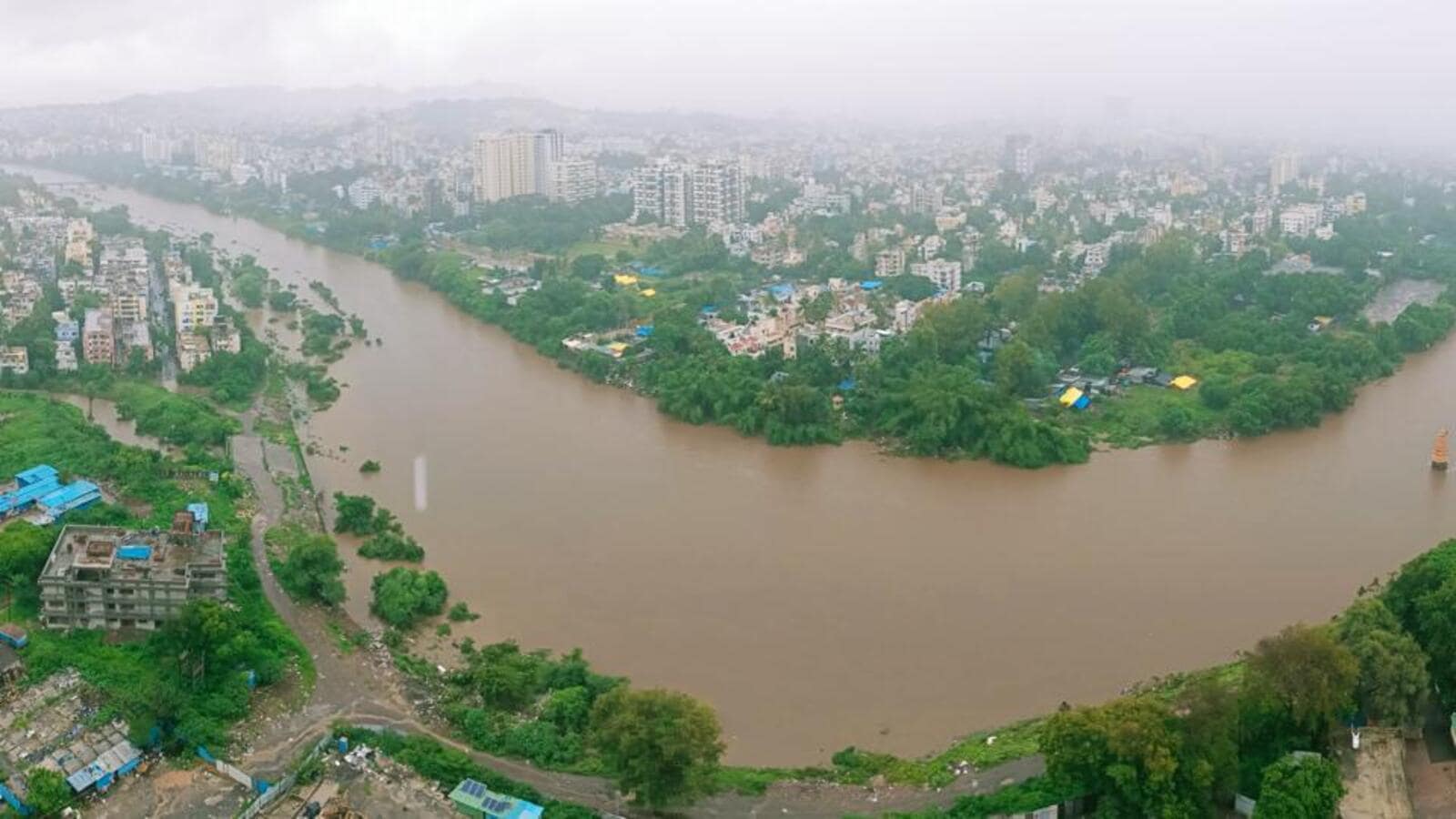
In addition to failure in dam management, the deluge in Pune, Vadodara and Vijayawada city were particularly worsened by river front development projects and encroachment on river floodplains putting question marks on the urban planning and development works in these cities. Similarly, the breach in embankment of Munak canal in Delhi flooded several homes Bawana area during the monsoon season. https://sandrp.in/2025/01/03/2024-dam-induced-floods-in-urban-india/ (03 Jan. 2025)
2024: Do embankments save from floods or worsens the disaster In Bihar, though the state has received deficit rainfalls, the overspilling of barrages and breaching of several embankments created widescale flood damages. Number of reports have again highlighted the ineffective and adverse role being played by flood protection structures in worsening the deluge impacts. https://sandrp.in/2025/01/03/2024-do-embankments-save-from-floods-or-worsen-the-disasters/ (03 Jan. 2025)
Polavaram Project CM orders IIT-H study on project impact Telangana CM A Revanth Reddy has directed the state’s irrigation department to commission a comprehensive study by the Indian Institute of Technology, Hyderabad (IIT-H) on the potential impact of the Polavaram project on Telangana. The report, which is to be submitted within a month, will assess the effects of the ongoing construction in Andhra Pradesh, particularly concerning water levels, submergence risks, and environmental concerns. The CM called for a detailed analysis of the threat the Polavaram project poses to the Bhadrachalam temple in Bhadradri Kothagudem district, which was submerged during a flood of 27 lakh cusecs of water in 2022. https://timesofindia.indiatimes.com/city/hyderabad/cm-orders-iit-h-study-on-impact-of-polavaram-project/articleshowprint/116950811.cms (05 Jan. 2025)
Kaleshwaram Project NDSA under fire for failing to meet deadline The National Dam Safety Authority (NDSA) is under fire for the prolonged delays and procedural complications in its investigation into the Kaleshwaram Lift Irrigation Scheme (KLIS) barrages, particularly the Medigadda barrage. Despite multiple extensions, the NDSA has failed to accomplish the task assigned to it, further adding to the growing frustration of the farming community in Telangana over the lack of progress and transparency. The NDSA was expected to submit its final report on the structural issues and rehabilitation of the Medigadda, Annaram, and Sundilla barrages by December 31. However, the report is still pending, with no official confirmation on when it will be made available. This delay is raising concerns about the future of the project. https://telanganatoday.com/kaleshwaram-investigation-ndsa-under-fire-for-failing-to-meet-deadline (31 Dec. 2024)
CWC Team inspects Nagarjuna Sagar, Srisailam projects A team of senior engineers from the Central Water Commission (CWC) visited the Nagarjuna Sagar Project on Saturday (Jan. 04) as part of their ongoing inspections. The visit followed their assessment of the structural issues at the Srisailam Project on Friday (Jan. 03). Both the Srisailam and Nagarjuna Sagar projects are due for rehabilitation works. The Andhra Pradesh government has proposed repairs costing Rs 800 crore for the Srisailam Project, which is urgently in need of attention. The CWC team thoroughly examined the project’s condition and reviewed the operations conducted by the AP government.
The Telangana government had previously undertaken rehabilitation works costing over Rs 100 crore during the BRS regime. However, since the Congress party assumed power in the State, maintenance of the NSP project has been neglected. The team highlighted several dam surveillance issues, including the demolition of security posts along the dam during a face-off between security forces from Andhra Pradesh and Telangana on October 28, 2023. https://telanganatoday.com/central-team-visits-nagarjuna-sagar-dam-for-safety-inspection (04 Jan. 2025)
Telangana Nagarjunasagar at risk: Experts warn of immediate danger Experts who recently inspected Nagarjuna Sagar said that out of the 26 blocks in the dam, holes ranging from 1 to 6 meters deep have formed in each block. Holes had formed in the spillway. They expressed concern that this had happened less than two years after it was repaired for Rs. 16.54 crore. These repair works will have to be done from the AP side. First, the area where the potholes have occurred should be cleaned with an air-water jet. Then grouting, drilling, and fixing the rods should be done. Experts suggested that the work should be carried out under the supervision of the Dam Safety Review Panel and the Central Water Commission. https://indtoday.com/nagarjuna-sagar-at-risk-experts-warn-of-immediate-danger/ (02 Jan. 2025)
Nagarjunasagar Project faces structural issues with potholes on spillway A critical concern for the project authorities is the formation of potholes on the project spillway. For the last six months, the project has been continuously releasing floodwaters after retaining as much as possible to maintain its gross storage levels. This has had a considerable impact on the spillways. These potholes, varying in depth from 1 to 6 meters, may threaten the structural integrity of the dam. If not promptly and properly repaired, they could worsen over time, potentially compromising the dam’s capacity to manage water flow efficiently.
– Experts have emphasized the need for immediate repairs, including air water jet cleaning, grouting, drilling, and chemical treatment of concrete structures to enhance their soundness. Proper execution of these procedures is crucial to ensure long-lasting results and prevent further damage. However, the availability of funds remains a critical issue. https://telanganatoday.com/nagarjuna-sagar-project-faces-structural-issues-with-potholes-on-spillway (02 Jan. 2025)
Leakage in cooling system at Srisailam Left Bank power house triggers concerns The Srisailam left bank powerhouse, a crucial component of Telangana’s energy infrastructure, faced an unexpected crisis. Over the past few days, a minor leakage has been detected in the cooling system, causing concern among the engineers and staff. The leakage, originating from a small crack in one of the draft tubes, had led to water seeping out and pooling around the turbine. This was dismissed initially as just a minor inconvenience; but it posed a serious threat to the operations of the plant. The continuous flow of water around the turbine could lead to corrosion and, eventually, operational issues if not addressed promptly. The plant authorities, realising the gravity of the situation, have initiated measures to address the issues. However, due to a lack of proper coordination among the officials, the efforts to contain and repair the leak were delayed. The situation was further complicated by the fact that the plant was operating at full capacity, making it difficult to shut down the system for repairs. https://telanganatoday.com/leakage-in-cooling-system-at-srisailam-left-bank-power-house-triggers-concerns (02 Jan. 2025)
Odisha NHRC sends notice to Keonjhar, Sambalpur DMs over dam safety The National Human Rights Commission (NHRC) has directed the District Magistrates (DMs) of Keonjhar and Sambalpur to take immediate steps to ensure the safety of people living near the Hadagarh and Hirakud dams. The notice follows a complaint filed by senior lawyer and human rights activist Radhakant Tripathi in December.
– The apex rights body has asked the authorities to take appropriate action within eight weeks. Tripathi highlighted that the Hadagarh dam, built on the Salandi River in Keonjhar district, serves residents in both Keonjhar and Bhadrak districts. He noted that an embankment was constructed to protect the local population from rising river waters, but the dam has weakened over time, requiring urgent repairs and restoration. Tripathi also raised concerns over the safety of the Hirakud dam, alleging that it too is in dire need of repairs, restoration, and sediment recovery. Tripathi claimed that dam safety audits are not being conducted properly in a timely manner. Despite the existence of the Dam Safety Act 2021 and the National Dam Safety Authority, many dams across India are operating without adequate safety measures, which he argues puts people’s lives at risk. https://www.orissapost.com/nhrc-sends-notice-to-keonjhar-sambalpur-dms-over-dam-safety/ (03 Jan. 2025)
Kerala Govt issues NoC guidelines for construction near dams The state government has issued guidelines to issue NoC for constructions in the vicinity of dams under the Water Resources Department. The executive engineer of the department concerned shall be the authority to issue a NoC for fresh construction. The order issued by the Water Resources Department has called for an amendment in Kerala panchayat building rules, 2019, to regulate construction activities within 100 m of the buffer zone near the reservoir of a dam. There shall be two categories for the issuance of NoC.
Category 1 includes the buffer zone where no fresh constructions, regardless of type or nature, will be permitted. All lands between the rim of the reservoir at Maximum water level up to 20 metres towards the land shall be the buffer zone. All lands beyond Category 1 up to 100 m shall be designated as Category 2. The existing rules shall apply to all fresh construction activities under this zone. The Executive Engineers of the department/agency have been directed to take immediate steps to demarcate the Category II zone at the earliest. https://www.onmanorama.com/news/kerala/2025/01/04/construction-near-dam-20-meter-buffer-zone-noc.html (04 Jan. 2025)
KSEB to desilt two dams in Idukki According to KSEB dam safety officials, the board has received administrative sanction for a proposal to desilt the Kallarkutty and Vellathooval dams. A recent survey found that nearly 48% of the Kallarkutty dam and 75% of the Vellathooval dam had been accumulated with soil and sand. “The KSEB submitted the desiltation proposal for these dams as a pilot project in Idukki. The Kerala Irrigation Infrastructure Development Corporation, a public sector entity under the Water Resources department, will conduct the process on a revenue sharing model,” an official said.
“Cutter-suction dredgers will pump the soil and sand out of the dam. The machine will also separate water from waste and sand. Recently, the KSEB conducted a survey to determine the amount of sand and soil accumulated in major hydel dams and found that silt deposits have affected the storage capacity of these two dams. In the case of the Idukki dam, the siltation was found to be less than 20%, which may not impact its storage,” he said.
Recently, the KSEB emptied the Kallarkutty dam in Idukki after a leakage was detected on the sluice valve and to replace the old trash racks. It was found that sand and soil have accumulated in the dam, reducing its storage to less than half of its capacity. https://www.thehindu.com/news/national/kerala/kseb-to-desilt-two-dams-in-idukki/article69054400.ece (04 Jan. 2025)
Tamil Nadu Karuppanadhi dam gets best maintenance award The WRD on Friday (Jan. 03) declared the Karuppanadhi dam in Tenkasi district as the State’s best maintained reservoir for the year 2021-2022. The executive engineer, assistant executive engineer, assistant engineer, and junior engineers from these reservoirs received a cash prize of Rs 10,000 each from the minister as a token of appreciation for their efforts in maintaining the reservoirs. The Best Maintained Dam Award has been distributed annually since 2011-2012 to motivate engineers to maintain the reservoirs, offering cash prizes and recognition. A team of officials, headed by the chief engineer, selects the best dams from among the 90 reservoirs in the state.
The Stanley reservoir in Mettur, the State’s largest one, was awarded for 2020-2021.The Perunchani dam in Kanniyakumari, Bhavanisagar dam in Erode, Vaniyar dam in Dharmapuri, and Pechiparai dam in Kanniyakumari were recognised as the best-maintained dams for the years 2016- 2017, 2017-2018, 2018-2019, and 2019-2020, respectively. https://www.dtnext.in/news/tamilnadu/little-known-karuppanadhi-dam-in-tenkasi-gets-best-maintenance-award-817901 (04 Jan. 2025)
Himachal Pradesh CWC inspects Renukaji Dam site The CWC inspection team CWC has conducted a detailed site inspection of the Renukaji Dam project and will prepare a detailed report outlining their findings and recommendations to the central government. The report aims to resolve construction challenges and streamline progress. Acting as the principal consultant for Himachal Pradesh Power Corporation Limited (HPPCL), the CWC is instrumental in ensuring the dam’s timely completion. The initial phase involves building three 1.5-km diversion tunnels to redirect the Giri River temporarily, paving the way for the dam’s foundation work. The project is expected to become operational by 2030. https://www.tribuneindia.com/news/himachal/cwc-inspects-renukaji-dam-site-set-to-expedite-work/ (05 Jan. 2025)
Water level low in dams, BBMB sounds warning The water level at the Bhakra dam at present is 43 per cent of its total capacity as compared to the 10-year average of 61 per cent at this time of the year, while at the Pong dam, it is 30 per cent as compared to the 10-year average of 57 per cent, according to data released by the CWC.
-“During our meeting with member states, including Himachal Pradesh, Punjab, Haryana and Rajasthan, we had appraised them of the low availability of water and asked them to formulate their demands accordingly,” a BBMB functionary said.
-In its long-range forecast for the winter season from January to March, the IMD has said the rainfall over north India was most likely to be below normal by 86 per cent of the long period average. https://www.tribuneindia.com/news/punjab/water-level-low-in-dams-bbmb-sounds-warning/ (04 Jan. 2025) The CWC’s Reservoir Storage Bulletin, dated January 2, reveals that the northern region, which includes Himachal Pradesh, Punjab, and Rajasthan, has 11 reservoirs under its monitoring. These reservoirs have a combined total live storage capacity of 19.836 billion cubic meters (BCM). The current total live storage is 8.775 BCM, or 44% of the total capacity, compared to 57% during the same period last year and a normal average of 58%. The report underscores that current storage is not only lower than last year’s corresponding period but also below the normal average for this time. https://www.newindianexpress.com/thesundaystandard/2025/Jan/04/water-level-low-in-dams-bbmb-sounds-caution-to-member-states (05 Jan. 2025)
Maharashtra Consider drought & siltation for equal distribution of Godavari water A team of researchers from the Maharashtra Engineering and Research Institute (MERI) has proposed a new approach to equitable water distribution for the Jayakwadi dam on the Godavari river. They suggest incorporating drought conditions and considering actual dam capacities, including the impact of silt accumulation, while determining water allocation between regions upstream and downstream of the dam.
– Nashik and Ahilyanagar district residents had opposed the Maharashtra Water Resources Regulatory Authority (MWRRA) norm of releasing water from upstream when the Jayakwadi storage remains below 65% at the end of monsoon period (Oct 15) every year. The Bombay High Court then had instructed the team to analyse MWRRA guidelines and the Mendhegiri Committee’s Terms of Reference (TOR), which established water-sharing principles between North Maharashtra and Marathwada. https://timesofindia.indiatimes.com/city/nashik/consider-drought-siltation-for-equal-distribution-of-godavari-water-experts/articleshowprint/116863367.cms (02 Jan. 2025)
MP inspects cracks in Dudhganga dam Lok Sabha MP Shahu Chhatrapati visited the Dudhganga (Kalammawadi) Dam on Monday (Dec. 30) to inspect cracks in the dam wall. The dam, with a capacity of nearly 26 TMC, is losing 277 liters of water per second due to leakage from these cracks. MP instructed the irrigation dept to begin repairs immediately. He said, “The irrigation department has confirmed through a technical expert committee that there is no danger to the dam. The repair work will start in the next fifteen days and could take up to two years. The leakage will be reduced by 99%.” Smita Mane, executive engineer for Kolhapur district (North), said, “To prevent leakage, storage was restricted to 21.89 TMC during the rainy season of 2024. On Dec 12, 2024, the water storage stood at 20.43 TMC, with a leakage rate of 277 liters per second. Last year, the leakage rate at the same level was 272 liters per second. The dam is safe, and citizens should not panic.” https://timesofindia.indiatimes.com/city/kolhapur/mp-shahu-chhatrapati-inspects-cracks-in-dudhganga-dam/articleshowprint/116809371.cms (31 Dec. 2024)
Madhya Pradesh मोरांड-गंजाल बांध के खिलाफ आदिवासियों का विरोध नर्मदा घाटी में प्रस्तावित मोरांड-गंजाल बांध के खिलाफ आदिवासी समुदाय ने एकजुट होकर विरोध दर्ज कराया है। “जिंदगी बचाओ अभियान” के तहत ग्राम लही में आयोजित सम्मेलन में भारी बारिश के बावजूद सैकड़ों ग्रामीण शामिल हुए और बांध निर्माण का पुरजोर विरोध किया।
सामरधा पंचायत के सरपंच अशोक परते ने कहा कि आदिवासी किसानों ने पिछले एक दशक में अपने खेतों को सिंचित बनाया है और अब तीन फसलें उगा रहे हैं। उन्होंने आरोप लगाया कि सरकार उनकी जमीन डुबोकर आदिवासियों को मजदूर बनाने की साजिश रच रही है। उन्होंने कहा, “हमारे पूर्वजों ने दूसरों के खेतों में मजदूरी कर हमें पाला, लेकिन अब हम अपनी मेहनत से आत्मनिर्भर हुए हैं। यह बांध हमारी मेहनत और भविष्य को बर्बाद कर देगा।” https://www.deshgaon.com/voices/morand-ganjal-dam-protest/ (30 Dec. 2024)
INTERLINKING OF RIVERS
Interlinking Rivers: The story from scratch Interlinking Rivers: The story from scratch (by S G Vombatkere) https://countercurrents.org/2024/12/interlinking-rivers-the-story-from-scratch/ (31 Dec. 2024)
Ken-Betwa River Lining केन बेतवा जोड़ के गणित में घाटे का नतीजा केन-बेतवा जोड़ परियोजना से झांसी के राजघाट व माताटीला बांध पर खर्च अरबों रूपए व्यर्थ हो जाएंगे। यहां बन रही बिजली से भी हाथ धोना पड़ेगा। उल्लेखनीय है कि राजघाट परियोजना का काम जापान सरकार से प्राप्त कर्जे से अभी भी चल रहा है, इसके बांध की लागत 330 करेाड से अधिक तथा बिजली घर की लागत लगभग 140 करोड़ है। राजघाट से इस समय 953 लाख यूनिट बिजली भी मिल रही है। भारत सरकार स्वीकार कर रही है कि नदियों के जोड़ने पर यह पांच सौ करोड बेकार हो जाएगा। इसके साथ ही ललितपुर के दक्षिणी व झांसी जिले के वर्तमान में संचालित बेहतरीन सिंचित खेतों का पानी इस परियोजना के कारण बंद होना तय है।
जरूरी है कि वैश्विक मौसमी बदलाव के कुप्रभावों के नजरिए से नदियों को जोड़ने की योजना का मूल्यांकन हो। केन-बेतवा जोड़ परियोजना की लागात के एक चौथाई से भी कम धन खर्च कर समूचे बुंदेलखंड के पारंपरिक तालाब, बावड़ी कुओं और जोहड़ों की मरम्म्त की जा सकती है। सिकुड़ गई छोटी नदियों को उनके मूल स्वरूप में लाने के लिए काम हो सकता है। समूचे बुंदेलखंड में एक हजार साल पुराने हजारों चंदेलकालीन तालाब, लाख उपेक्षा व रखरखाव के अभाव के बावजूद आज भी लेागों के गले व खेत तर कर रहे हैं। बुंदेलखंड की किस्मत बदलने को छोटी परियोजनाएं कम व्यय में बगैर पुनर्वास या जंगल कटाई के ज्यादा कारगर होंगी, जिनकी योजना भी स्थानीय स्तर पर बने। (पंकज चतुर्वेदी) https://indiaclimatechange.com/result-of-deficit-in-mathematics-of-ken-betwa-addition/ (31 Dec. 2024)
Tribals opposing KBL Project -For the tribals whose lands are being submerged, it is a stark reminder of the cost of progress. Their fight is not just against the loss of their homes but against a system that they feel has ignored their rights for far too long. As these tribal communities continue to voice their demands — adequate compensation, proper rehabilitation, and respect for their rights — one question looms large: Will their voices be heard before the waters rise, or will the cost of development drown the hopes of these vulnerable communities? https://twocircles.net/2025jan02/451057.html (02 Jan. 2025)
Interlinking of rivers to hit agri output Punjab Assembly Speaker Kultar Singh Sandhwan on Jan 2 called for a comprehensive review of the Centre’s river interlinking initiative, saying it has the potential to adversely impact agriculture productivity. Referring to the Ken-Betwa river project, he said scientific research indicates such interventions could significantly alter natural hydrological systems. “Such large-scale hydrological modifications may disrupt established monsoon patterns, potentially endangering agricultural sustainability and affecting multiple sectors nationwide,” he added. https://www.tribuneindia.com/news/punjab/interlinking-of-rivers-to-hit-agri-output-says-speaker/ (04 Jan. 2025)
UP CM absent on KBL launching This report raises the question we raised on Dec 25 itself, about absence of UP CM at the Ken Betwa project inaugural. But provides no answers. https://theprint.in/pre-truth/no-yogi-at-ken-betwa-river-link-project-launch-was-never-even-on-pmos-guest-list/2428123/ (03 Jan. 2025)
EDIT Linking of rivers calls for extreme caution A river is not just the water that it carries. It supports a whole world around an above itself. Changing an ecosystem that has evolved through millennia can have serious consequences. The Ken-Betwa linking project has been challenged on many grounds. It will submerge about 10% of the Panna Tiger Reserve and affect the entire biodiversity of the area. About 23 lakh trees will be felled. There are questions about the availability of surplus water to be transferred. Some experts have said that linking will make both the Ken and the Betwa basins water-deficient, and affect rainfall, sedimentation, soil fertility, and natural water storage capacity. It is also pointed out that there are alternatives, and the government has gone ahead with the project, ignoring the recommendations of an empowered committee. Extreme caution is needed in executing projects that seek to change nature, because the damage they cause is often irreversible. https://www.deccanherald.com/opinion/editorial/linking-of-rivers-calls-for-extreme-caution-3335669 (30 Dec. 2024)
Godavari-Penna-Krishna River Linking Govt plans river linking project to end water woes The state govt is planning to launch an intra-linking of rivers project by bringing the Godavari to Banakacherla head regulator and link it with the Penna through Krishna river. CM N Chandrababu Naidu said a DPR is in the making and tenders will be called soon. The project, estimated to cost around 80,112 crore, would be taken up in a ‘hybrid’ model, under which part funding will be provided by Union and state govts, while the rest will be borne by a private player who will execute the project. The govt will repay the amount to the private player under a long-term debt repayment model.
The CM said the project is envisaged to bring water from Polavaram right main canal to Krishna river. “The water will be channeled to Nagarjuna Sagar right main canal. A 150 TMC capacity reservoir can be built at Bollapalli initially, and the capacity can be increased to 400 TMC. From Bollapalli, the water will be taken to Banakacharla head regulator, from where it can be diverted to various projects on the Penna and other rivers. Water can be supplied to Veligonda in Prakasam, to Nellore through Somashila and Kandaleru, and can further be taken as far as Kuppam in Rayalaseema, which can stabilise the entire state with assured irrigation water. The water can also be used for industrial purposes, which will multiply the economy,” Naidu explained.
The CM said the benefits of the project are not quantifiable, but the cost will increase by 40% every five years if it is not taken up now. “The govt is exploring all options to raise funds for this project. Though a similar project was done in Rajasthan, no state has undertaken a project of this magnitude before,” he said. https://timesofindia.indiatimes.com/city/vijayawada/ap-plans-river-linking-proj-to-end-water-woes/articleshow/116806593.cms (30 Dec. 2024)
Govt plans to take Polavaram project water to Rayalaseema Addressing the media at the Secretariat at Velagapudi on December 30, Monday (Dec. 30), CM N. Chandrababu Naidu said that the govt was contemplating taking up the Godavari-Banakacherla project in three segments. The first segment involves diverting water from Polavaram project to the Krishna River. In the second segment, the government proposes to construct the Bollapalli reservoir and transfer water. In the third segment, water will be diverted from Bollapalli to Banakacharla.
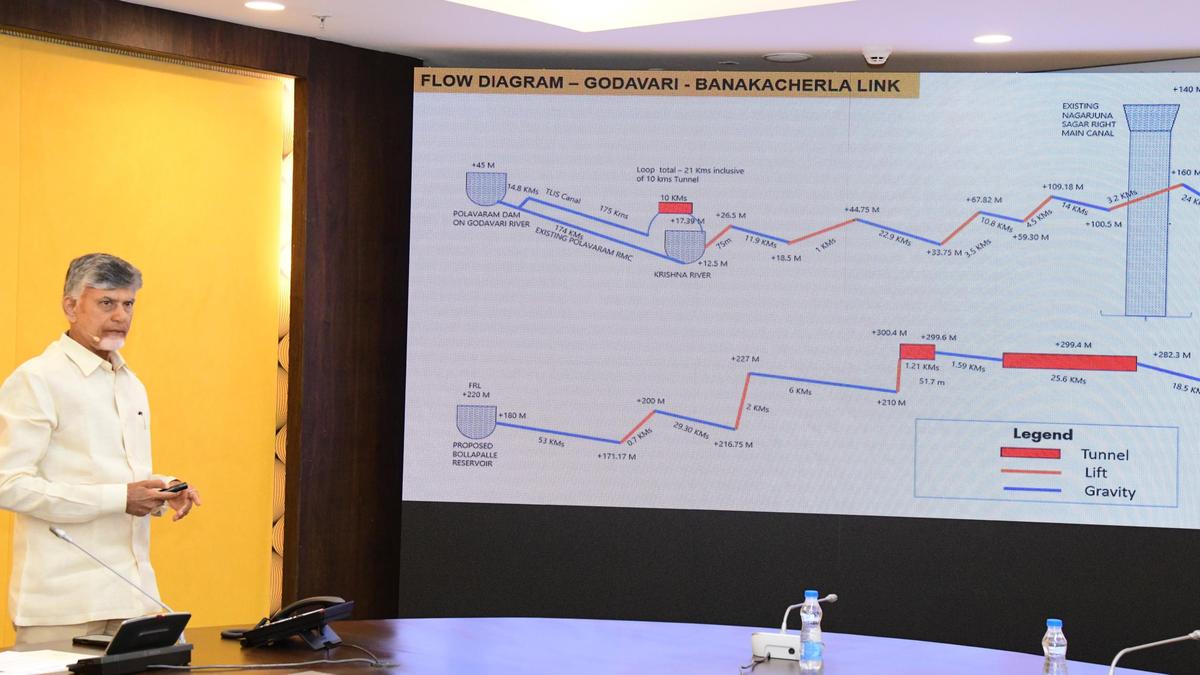
“Banakacharla will be the gateway to Rayalaseema. This project will benefit not only the Rayalaseema districts but Nellore and Prakasam. While segment-1 is estimated to cost ₹13,511 crore, segment-II would cost ₹28,560 crore. In the third segment, the govt will spend ₹38,041 crore. The total cost of the project would be around ₹80,112 crore,” the CM said. “If funds are available, we can complete the Godavari-Banakacharla project in three years. This would be the largest irrigation infrastructure project in the country. We are sending the project report to PM Narendra Modi. The govt has already discussed the project with Union Finance Minister Nirmala Sitharaman. The DPR will be completed, and tenders will be invited in three months,” Mr. Naidu said.
Based on water availability, Mr. Naidu said, steps would be taken to ensure that the Banakacharla regulator in Kurnool district will carry at least 2 tmc feet of water daily. The project needs the acquisition of 48,000 acres of land, the CM said, adding that the project will ensure that future generations will not face water scarcity. “If private companies are involved, the government can adopt the payment model used in Rajasthan. Similar to roads, the construction and operation of the projects would be carried out by private companies. The government will ensure the viability gap fund,” he added. https://www.thehindu.com/news/national/andhra-pradesh/ap-govt-plans-to-take-polavaram-project-water-to-rayalaseema-at-estimated-cost-of-80112-crore/article69044107.ece (30 Dec. 2024)
Naidu said that North Andhra was facing water scarcity despite experiencing heavy rainfall, while farming was seriously hit in the Rayalaseema, Prakasam, and Nellore districts due to drought. Expressing concern over more than 3,000 tmcft of Godavari water owing into the sea every year for the past 50 years, Naidu said it could be saved now as rainwater was being pumped into reservoirs on time. If rivers were interlinked and reservoirs built wherever necessary, the state would never face any water scarcity, he said. https://www.deccanherald.com/india/andhra-pradesh/andhra-pradesh-to-interlink-rivers-with-godavari-banakacherla-project-3336852 (31 Dec. 2024) He expressed concerns that “large-scale hydrological modifications could disrupt established monsoon patterns, potentially endangering agricultural sustainability and affecting multiple sectors nationwide”. Mr. Sandhwan advocated prioritisation of water conservation and recycling initiatives, asserting the critical need for implementing advanced water treatment and purification programmes. https://www.thehindu.com/news/national/punjab/centres-river-interlinking-initiative-needs-reconsideration-punjab-assembly-speaker/article69057379.ece (03 Jan. 2024)
Himachal Pradesh Displaced 45 years ago, 5 families yet to get ownership of alternative land Those displaced by the Beas Sutlej Link project 45 years ago has still not received title of the rehab lands. Five families from Malhanu village in Balh tehsil of Mandi district filed petitions with the Chairman of the Legislative Assembly Petition Committee in Shimla yesterday (Dec. 31) seeking ownership rights over the land that was promised to them in 1979. The families, displaced by the Beas Sutlej Link Project, have been waiting for nearly half a century to receive formal ownership of the land granted to them in exchange for their acquired land. The five petitioners — Shankar, Parma Nand, Atma Ram, Balak Ram, and Mani Ram — were among the many displaced by the construction of a canal for the Beas-Sutlej Link Project.
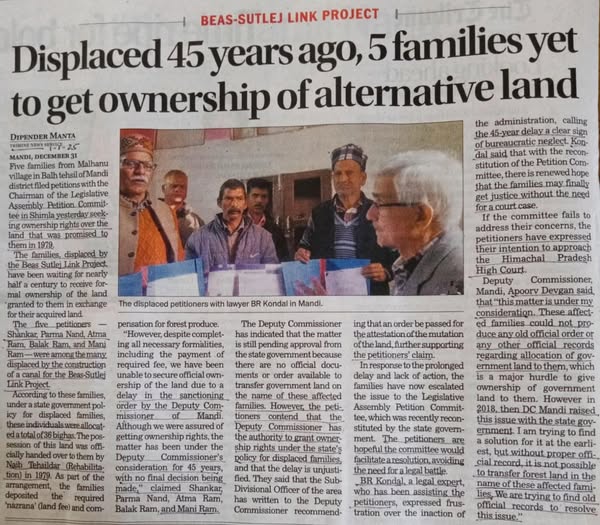
According to these families, under a state government policy for displaced families, these individuals were allocated a total of 36 bighas. The possession of this land was officially handed over to them by Naib Tehsildar (Rehabilitation) in 1979. As part of the arrangement, the families deposited the required ‘nazrana’ (land fee) and compensation for forest produce. “However, despite completing all necessary formalities, including the payment of required fee, we have been unable to secure official ownership of the land due to a delay in the sanctioning order by the Deputy Commissioner of Mandi. https://www.tribuneindia.com/news/himachal/displaced-45-years-ago-5-families-yet-to-get-ownership-of-alternative-land/ (01 Jan. 2025)
INTERSTATE WATER DISPUTES
Kerala-Tamil Nadu TN govt oppose check dam on Silanthi river Opposing the Kerala govt’s bid to construct a check dam across Silanthi River, a tributary of Amaravathi River, the Tamil Nadu forest department warned that the move will impact the ecology and biodiversity of Anamalai Tiger Reserve (ATR) by changing the hydrology of the landscape. Earlier, the Kerala govt informed the NGT that it is constructing a weir dam across the Silanthi River, and not a check dam, under Jal Jeevan Mission to draw 3 MLD to supply drinking water to a nearby rural local body.
In a report to the southern bench of the NGT which hears a suo motu case on the construction of the check dam, Tamil Nadu head of forest force (HoFF) Srinivas R Reddy pointed out that Amaravathi Dam is located within the ATR and is primarily fed by the Amaravati River, which ows for several kilometres within the reserve. “A reduction in water availability may severely impact the biodiversity of the reserve,” the HoFF explained. https://www.dtnext.in/news/tamilnadu/check-dam-on-silanthi-will-harm-anamalai-tiger-reserve-govt-817938 (04 Jan. 2025)
URBAN RIVERS
Indrayani; Pune: Nagar Parishad claims river polluted before reaching Alandi For years, the holy Indrayani River, which passes through the pilgrimage sites of Dehu and Alandi, has been plagued by pollution. Over the past few days, foam has once again been observed on the river, particularly after it passes through the embankment in Alandi. In such circumstances, blame is often directed at the Alandi Nagar Parishad and Pimpri Chinchwad Municipal Corporation (PCMC). However, the PCMC administration has denied any involvement in the water’s foamy condition, while Alandi Nagar Parishad claims the Indrayani arrives polluted in their jurisdiction.
The focus has now shifted to the Chakan Nagar Parishad, which is being blamed for ignoring the treatment of wastewater from its industrial belt before it enters the river. Additionally, environmentalists have raised concerns about the Alandi Municipal Council’s apparent lack of attention to the issue and have demanded an explanation for the recurring foam problem. https://www.punekarnews.in/pune-nagar-parishad-claims-indrayani-river-polluted-before-reaching-alandi-pcmc-says-not-us/ (03 Jan. 2025)
Yagamso; Itanagar River cleared of over 12 tonnes of garbage At least 12.96 tonnes of garbage were removed from Yagamso river on Saturday (Jan. 04) during a clean-up drive organized by Youth Mission for Clean River (YMCR), in collaboration with Capital Police, under the citizen-centric policing initiative, ‘Police Ajin’. The drive was conducted at C-2 sector and witnessed enthusiastic participation from the local community, including members of the colony welfare committee, corporator of ward No. 10, ward members and a large contingent of women police officers.

Supported by Itanagar Smart City Development Corporation Limited and Abralow Memorial Multipurpose Society (AMMS), the drive saw over 200 volunteers, including police personnel, YMCR volunteers and colony residents take part, a release said. https://timesofindia.indiatimes.com/city/guwahati/yagamso-cleared-of-over-12-tonnes-of-garbage/articleshow/116946768.cms (04 Jan. 2025)
Exploding unattended garbage problem in ICR In addition to Model Village, another area heavily impacted by waste accumulation is the Pachin-Pare bridge on the Bage Tinali-Doimukh road, located by the side of the Pachin river. Garbage is often seen near bridges and along the riverbanks, with no apparent effort to clear the trash in such areas. The waste left in these areas flows into the river, further polluting the environment and causing serious harm to the ecosystem.
These reporters also noticed many citizens in the capital region loosening their garbage bags or coming with large trash bags in their vehicles and dumping them in the river from over the bridge, particularly when they pass by a road in the late evening or night. Earlier, in February this year, ICR Deputy Commissioner Talo Potom had announced that the administration would issue show cause notices to the residents and business owners who consider rivers convenient waste disposal sites. https://arunachaltimes.in/index.php/2024/12/31/exploding-unattended-garbage-problem-in-icr/ (31 Dec. 2024)
RIVERS
Study Underwater Krishna-Godavari basin landslide can trigger tsunami: Scientists A recently discovered landslide in Krishna-Godavari basin, reaching between 950m and 1.1km below the ocean surface, could pose a serious risk to underwater structures, Goa-based National Institute of Oceanography (NIO) said. “The huge landslide can displace a large amount of water and bottom sediments, potentially causing a tsunami,” NIO director Sunil Kumar Singh said. NIO scientists said the landslide in Bay of Bengal could have occurred anytime between 2009 and 2015. “It poses a significant risk to underwater communication cables and oil rigs, as well as to people living on the coast,” NIO said.
– The scientists believe that when the landslide occurred, it caused a massive section of the seabed to collapse, moving around 11 cubic km of sediments. At some places, the landslide deposits are up to 60m thick. This giant underwater landslide, known as a mass transport deposit (MTD), has created a large fan-shaped deposit on the ocean floor, they said. The area the MTD covers is about 70sqkm. The landslide was uncovered using special equipment that tracks changes in the ocean floor over time and was one of the largest underwater slope failures ever found in this part of the ocean. The scientists believe several factors might have caused the landslide. One important factor could be Cyclone Helen, a category-1 storm that hit the region in Nov 2013. Other possible causes include extreme flooding events in 2010 and 2013, and a powerful 6 magnitude earthquake that shook Bay of Bengal in May 2014. Scientists are urging more research on this. https://timesofindia.indiatimes.com/india/underwater-krishna-godavari-basin-landslide-can-trigger-tsunami-scientists/articleshow/116774892.cms (29 Dec. 2024)
Kerala Requiem for a river This article originally appeared in the pages of Folio Earthscapes, a special issue with Sunday Magazine, from the publishers of The Hindu on July 1, 2001. When the bridge across the River Bharatapuzha was completed in 1954, the late Edasseri who had blazed literary trails with his poetic force, looked at it with wonder and later wrote the poem “Kuttipuram Bridge”. The poem concluded on an apprehensive note: “Oh Mother Perar, will you also change Into a miserable gutter eventually?”
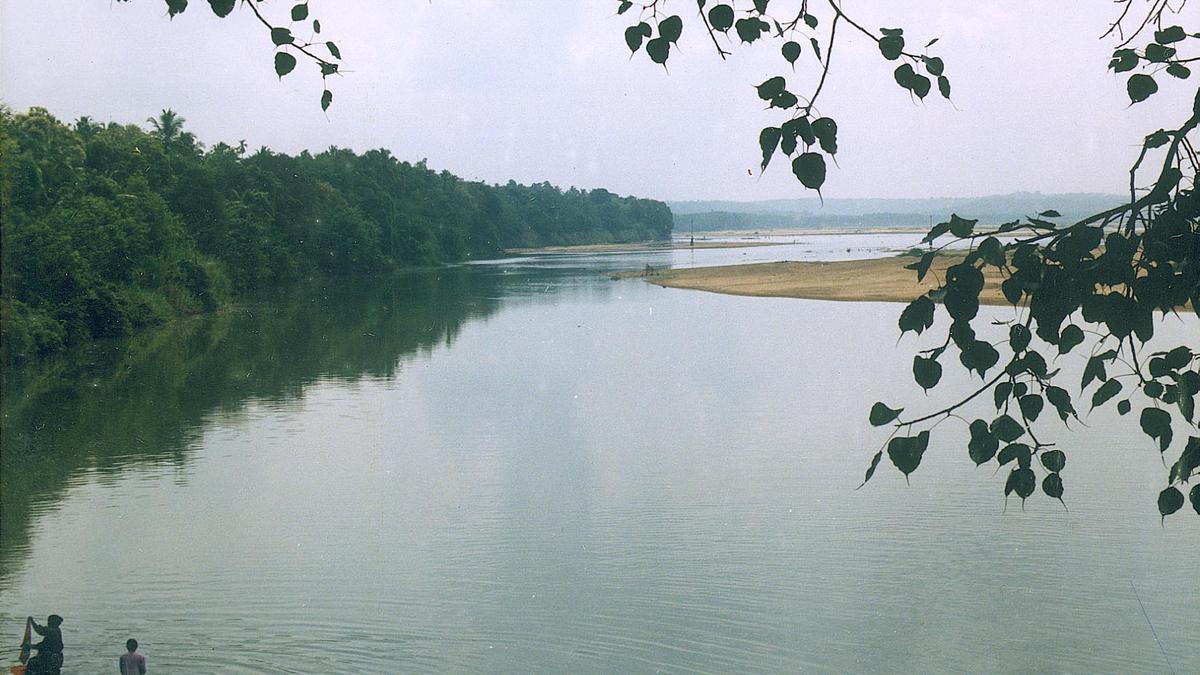
Perar or Nila (pet names of Bharatapuzha) did not turn into a gutter. The poet never foresaw the calamity of sand-mining and he could not imagine it as the desert strip which it is now. Huge thickets grow on the small mounds in the sand bed in several places. One can even see a large casuarina grove right in the middle of the river between Kuttipuram and Tirunavaya. They are partially hidden only during the few days of heavy monsoon.
The river Bharatapuzha set the stage for many battles and historical spectacles like Mamankam in the past. Noisy scenes are enacted even now on the riverbed over territorial rights of mining and loading and validity of official licenses. Long rows of heavy lorries block every access to the river. You can no longer get a panoramic view of the river. Instead, it is a vast scattering of mining pits. (M.T. Vasudevan Nair is a winner of the Jnanpith award and is a Malayalam film-maker and writer.) https://www.thehindu.com/books/books-authors/requiem-for-a-river/article69029344.ece (26 Dec. 2024)
Karnataka Polluted river list, Central panel suggests joint survey The Central Monitoring Committee under the Union Ministry of Jal Shakti, in its recent meeting, discussed Karnataka’s claim. “According to the state, only 10 river stretches are polluted, therefore a joint inspection is proposed in January to ascertain the number of polluted river stretches. Further, it was highlighted that the Thenpennai river is in Tamil Nadu and not in Karnataka. CPCB may take note of it,” the committee noted.
-A senior ofcial in the Central Pollution Control Board said the inspection can happen after Karnataka submits the necessary documents. “Any state that seeks dropping of a river from the polluted river stretches needs to show rst, water quality reports of 24 consecutive months meeting the standard criteria. If the water quality fails to meet the standards even for one month, the river will remain in the list of polluted stretches,” he said.
-KSPCB Member Secretary H C Balachandra said the correction in the list will help focus resources on the remaining stretches of polluted rivers. “We have sought joint inspection by the CPCB. We have the required data to show that the river quality has improved. The data has also been submitted to the committee,” he said. https://www.deccanherald.com/india/karnataka/karnataka-disputes-polluted-river-list-central-panel-suggests-joint-survey-3337785 (01 Jan. 2025)
YAMUNA Manthan River dying by design or default As central and state governments are at the helm of all the issues adversely impacting the river eco-system all along its course, it is beyond doubt that the river degradation is by design. However, the year 2025 offers an opportunity to positively address the critical issue of environmental flows in the upper segment during review of 1994’s Yamuna water sharing agreement. This will also show whether or not the revival of river is governments’ priority at all. https://sandrp.in/2025/01/02/yamuna-manthan-020125-river-dying-by-design-or-default/ (02 Jan. 2025)
Delhi Okhla STP is unlikely to help fight river crisis To reduce the pollution load in the river, the design of most of the STPs is such that the treated water generated is released back into the Yamuna directly or through large drains. “While the Okhla and Kondli STPs will be fulfilling the obligation of treating the untreated sewage in the city, they are designed in a way that the river stretch (in Delhi) will not get the benefit of the treated water,” Ankit Srivastava, a water expert, said.
The Okhla STP will be able to treat 140 MGD of sewage once it is fully operational. Srivastava explained that the facility, touted as Asia’s biggest STP, will discharge its treated water outside the boundary of Delhi into the Agra Canal (UP). This raises the question of whether the initial planners considered this factor. The Okhla STP project is a joint venture between NMCG and DJB, started in 2017. It is now nearing completion. According to sources, the estimated cost of the project is Rs 665 crore. While almost 85% of the funds were from central govt, the remaining was given by Delhi govt. https://timesofindia.indiatimes.com/city/delhi/why-delhis-largest-stp-in-okhla-is-unlikely-to-help-fight-yamuna-crisis/articleshow/116774632.cms (30 Dec. 2024)
LG asks DDA to start survey process cable cars across river LG VK Saxena on Wednesday (Jan. 01) directed DDA to start the process of surveying and selecting sites for the installation of a ropeway or cableway that would carry passengers in cable cars across the river. The cable cars will operate during fixed hours from morning to night and will have a capacity of about 50 passengers each. DDA will select the sites in the vicinity of metro stations on either side of the river to install the system without any encroachment or concretisation of the floodplain, the LG office said. Saxena has instructed DDA to submit the preliminary report within a month. https://timesofindia.indiatimes.com/city/delhi/cable-cars-across-yamuna-soon-delhi-lg-asks-dda-to-start-survey-process/articleshow/116871348.cms (02 Jan. 2025)
Ex-PM’s ashes immersed in river The ashes of former PM Manmohan Singh were collected from the Nigambodh Ghat on Sunday (Dec. 29) morning by Singh’s family members and later taken to the ‘Asth Ghat’ on the Yamuna river bank near the gurdwara. Read more at: https://www.deccanherald.com/india/delhi/ex-pm-manmohan-singhs-ashes-immersed-in-yamuna-river-3335404 (29 Dec. 2024)
Madhya Pradesh HC moved to stop transport to Pithampur While govt prepares on a war footing to transfer Union Carbide waste from Bhopal to a disposal facility in Dhar’s Pithampur, a petition was filed before the Indore bench of high court on Monday (Dec. 30), seeking to halt the transportation. The petitioners seek formation of a judicial committee to check impact of the disposal on people who live in the vicinity of the plant. The petition (WP/41965/2024) fears disposal of the waste left over from the 1984 tragedy will have a ‘grave impact’ on Pithampur and Indore.
The waste disposal plant in Pithampur is situated close to Gambhir river, a source of water supply to Yeshwant Sagar reservoir — which supplies water to 40% of Indore. “There is a possibility that this dam may be polluted because of hazardous waste, therefore such a huge risk cannot be taken by the administration,” the petition said. The petition also seeks directions to establish a temporary hospital capable of dealing with any aftermath related to the disposal of Union carbide waste. They want an evacuation plan and SOP for local residents and a rehabilitation and resettlement plan in case of a mishap. https://timesofindia.indiatimes.com/city/indore/hc-moved-to-stop-transport-to-pithampur/articleshow/116806343.cms (31 Dec. 2024)
CM says no action on Carbide waste till court order Amid rising opposition to the incineration of Bhopal gas tragedy waste in Pithampur, CM Mohan Yadav said on Saturday (Jan. 04) the state govt will take the people’s concerns to court, and no action will be carried out until further court orders. Protests by Pithampur citizens continued for the second day Saturday (Jan. 04) . At least 80 industries were forced to shut operations as workers, apprehensive about their safety amid escalating unrest in the industrial township, did not report for duty. This resulted in significant production losses in the state’s largest industrial hub. https://timesofindia.indiatimes.com/india/amid-protests-mp-cm-mohan-yadav-says-no-action-on-carbide-waste-till-court-order/articleshow/116951925.cms (05 Jan. 2025) जहरीले कचरे से ज्यादा ‘रामकी’ को लेकर गुस्सा:लोग बोले- जब से फैक्ट्री आई, पानी प्रदूषित हो गया। आखिर पीथमपुर में भोपाल के यूनियन कार्बाइड के जहरीले कचरे को लेकर इतना गुस्सा क्यों है? इसके जवाब में लोग रामकी एनवायरो इंडस्ट्रीज के आसपास के चार गांवों की मिट्टी और पानी दिखाने लगते हैं। पानी अपना रंग बदल चुका है और मिट्टी ऐसी हो गई है कि घास भी न उगती। https://www.bhaskar.com/local/mp/news/water-from-pithampur-ramki-industry-is-poisonous-134245645.html (06 Jan. 2025)
RIVERS BIODIVERSITY
Rajasthan Rare caracals seen at Ramgarh Vishdhari TR Photographic evidence of two enigmatic caracals, poised to become India’s second wild cat species at risk of extinction after the cheetah, was recorded in the newly notified Ramgarh Vishdhari Tiger Reserve in Bundi district. The presence of these medium-sized wild cats was captured by camera traps on Dec 19 in Ramgarh Valley and Dec 25 in Mehrupura Hills. Sanjeev Sharma, divisional forest officer (DFO), said, “There were no records of caracals in this region over the past two decades. The presence of these two rare cats, listed as a threatened species on the IUCN Red List, is a promising sign for conservation efforts.”
A forest official said, “A recent report published in the international Journal of Threatened Taxa highlighted 24 caracal sightings (protected under Schedule I of the Indian Wildlife Protection Act) in Rajasthan since 2001, the highest in the country. However, the current population in the state could not be determined.” These elusive wild cats are predominantly found in dry deciduous forests with water bodies and severely eroded riverbanks adjacent to ravine habitats. They also inhabit dry, arid regions and moist woodlands. https://timesofindia.indiatimes.com/city/jaipur/rare-caracals-seen-at-bundis-ramgarh-vishdhari-tiger-reserve/articleshow/116950270.cms (05 Jan. 2025)
FISH, FISHERIES, FISHERFOLKS
Pune Dead fish found again at Ram-Mula confluence Pune witnessed yet another environmental tragedy as thousands of dead fish were found floating in the Ramnadi stretch near the Mula confluence in Baner on Friday (Jan. 03). This marks the second such incident within ten days, raising serious concerns about the health of urban river systems. A team from the Pune River Revival Group discovered thousands of dead fish.
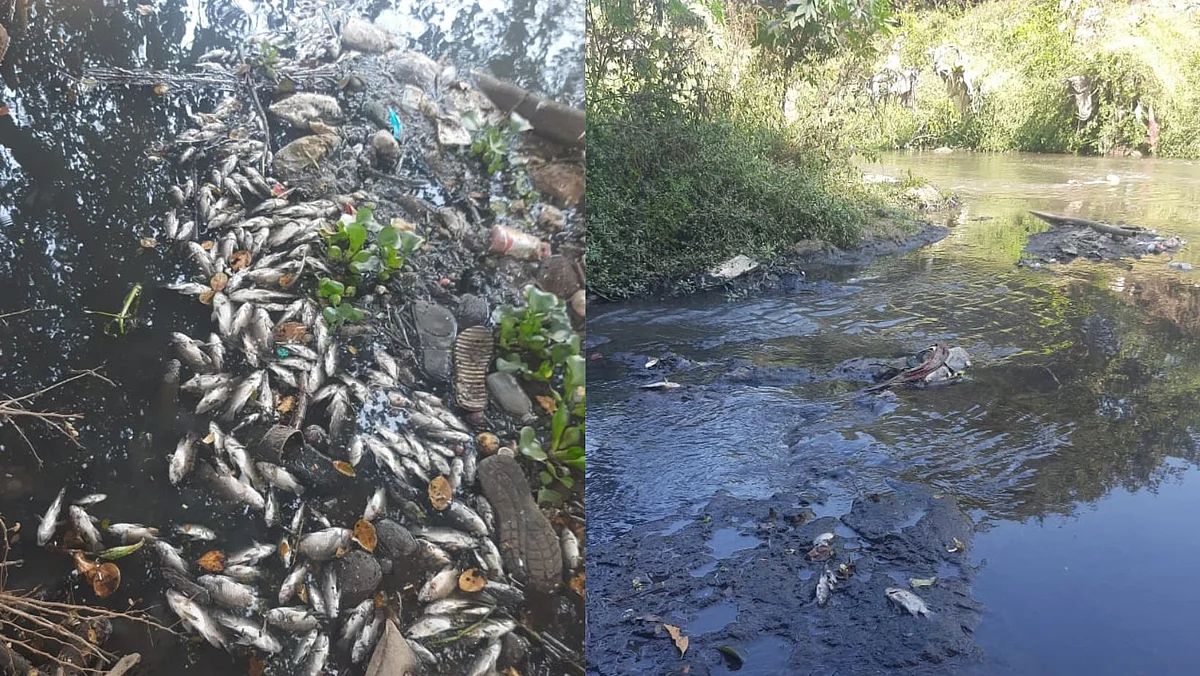
The volunteers of the group expressed deep concern, pointing out that the combination of dead fish and the destruction of riverbanks in the name of beautification is a stark warning signal. “Such events indicate that the larger aspect of riverine ecology is at stake. PMC is going to spend around ₹4,700 crore on the RFD project. We as citizens appeal to PMC to use the money to clean the river, take care of riparian zones, our wetlands, springs, and streams, instead of concretising the riverbanks,” added Amit Raj, another volunteer for the Pune River Revival group. https://www.freepressjournal.in/pune/pune-dead-fish-found-again-at-ram-mula-confluence-second-incident-in-10-days-video-photos (03 Jan. 2025)
Untreated ewage, industrial effluents blamed for mass fish deaths Thousands of dead fish were found floating in the Mula-Mutha river near Naik Bet, Bund Garden, on December 22, with many environmental experts and activists suspecting that untreated sewage, industrial effluents, and poor planning were responsible for the deaths. “Toxic untreated water and chemicals have turned our rivers into death traps for aquatic life,” said Gulab Khedekar, director of the Centre for Coastal and Marine Biodiversity. “The reasons for this disaster are clear: untreated domestic waste, high microbial load increasing oxygen demand, and biological oxygen depletion, leaving no dissolved oxygen for aquatic organisms to survive.” Sarang Yadwalkar criticised the civic authorities for their inaction. “The Pune Municipal Corporation, the Pimpri-Chinchwad Municipal Corporation, water resources department, Maharashtra Pollution Control Board and the Central Pollution Control Board are not at all doing their jobs properly. Instead of cleaning, they are focused on decorating the rivers. This is a very shameful situation,” he said. https://indianexpress.com/article/cities/pune/untreated-sewage-industrial-effluents-mass-fish-deaths-mula-mutha-river-9752069/lite/ (30 Dec. 2024)
Effluents killing fresh water fish species in rivers High pollution levels in river bodies has led to a 93% decline in native fish species in the Mula-Mutha river over the past two decades, according to SS Kharat, ichthyologist and principal of Modern College. In 1942 during a survey, around 120 fish species were found in the Mula-Mutha river, but now there are only eight fish species present in both the rivers.
Rivers in Pune are fast becoming poisonous and inhabitable for a number of fish species. Fresh water catch has declined by 93 per cent during the past two decades, most prominent among them is Mahseer (Tor tor), which was found only in the Pune river basin, and has now become extinct. The decline is mainly because of discharge of untreated industrial effluents into the rivers, added Kharat. https://www.hindustantimes.com/pune-news/how-fresh-water-fish-species-in-pune-rivers-are-being-murdered-by-effluents/story-9k4W78AoDpOSU82VFgAznK.html (27 June 2018)
SAND MINING
Jammu & Kashmir Finally NGT’s enquiry team visits Sukhnag! Author Dr Raja Muzaffar Bhatexplains the tricks used by illegal miners in Budgam distrrict. The team constituted by NGT finally visited Sukhnag on December 26th 2024. The company involved in the criminal act had directed its workers and machine operators to stop the work and all the machines were hidden in different corners of Sail and Kangripora villages of Beerwah Budgam. The villagers came to know that riverbed mining that was being done in the Sukhnag river was illegal and urged upon the senior officials to prepare a factual report so that this illegal work is stopped and people involved in the heinous act get punished. The team of officers assured the locals that justice would be done with them as per law and they would submit a report to the NGT based on facts before the next date of hearing. The matter is listed for another hearing on January 14th 2025. https://www.greaterkashmir.com/opinion/finally-ngts-enquiry-team-visits-sukhnag/ (03 Jan. 2025)
Uttar Pradesh यमुना किनारे अवैध रेत खनन से जल स्तर में गिरावट प्रयागराज जिले में एक तरफ महाकुंभ की तैयारी चल रही है दूसरी तरफ जिले में यमुना नदी के किनारे अवैध रेत खनन जारी है। एनजीटी में सीपीसीबी ने एक मामले में जारी अपनी रिपोर्ट में यह स्पष्ट किया है कि खनन के कारण यमुना नदी के जलस्तर में गिरावट हो रही है। एनजीटी में जस्टिस प्रकाश श्रीवास्तव की अध्यक्षता वाली पीठ ने रेत खनन मामले को स्वतः संज्ञान लेकर सुनवाई कर रही है। मामले की सुनवाई 23 दिसंबर को गई। एनजीटी ने पाया कि प्रयागराज में यमुना नदी के जल स्तर में गिरावट के कारण इन्टेक वेल और जल शोधन संयंत्रों में पानी की आपूर्ति प्रभावित हो रही है। वहीं, एनजीटी में जिला मजिस्ट्रेट प्रयागराज की रिपोर्ट के मुताबिक जल स्तर को स्थिर करने और समस्या के समाधान के लिए समिति की ओर से कई सुझाव दिए गए हैं। https://hindi.downtoearth.org.in/river/water-level-falling-due-to-illegal-sand-mining-along-yamuna-river-in-prayagraj-cpcb-report-in-ngt (03 Jan. 2025)
Haryana SC slams ED for ‘inhuman’ 15-hour interrogation in illegal mining case A bench comprising Justices Abhay S Oka and Augustine George Masih expressed strong disapproval of the ED’s investigative practices, describing the situation as a “shocking state of affairs” and accusing the agency of coercing an individual into making a statement. The court upheld the Punjab and Haryana High Court’s decision to quash the arrest of former Haryana Congress MLA Surender Panwar in a money laundering case related to illegal mining. Panwar had been arrested by the central agency in July at 1.40 am after undergoing nearly 15 hours of questioning, according to a report by The Times of India. https://www.business-standard.com/india-news/supreme-court-criticism-ed-interrogation-punjab-haryana-high-court-decision-125010300632_1.html (03 Jan. 2025)
Rajasthan Court tries to reverse destruction of Sota river At a September hearing, the sub-divisional officers (SDOs) of Kotputli and Behror tehsils and the deputy conservator of forests (DCF) for Kotputli-Behror denied allegations of illegal mining. Also present at the hearing were the SDO of Paota, another tehsil in Kotputli-Behror district and an executive engineer of the state’s WRD.
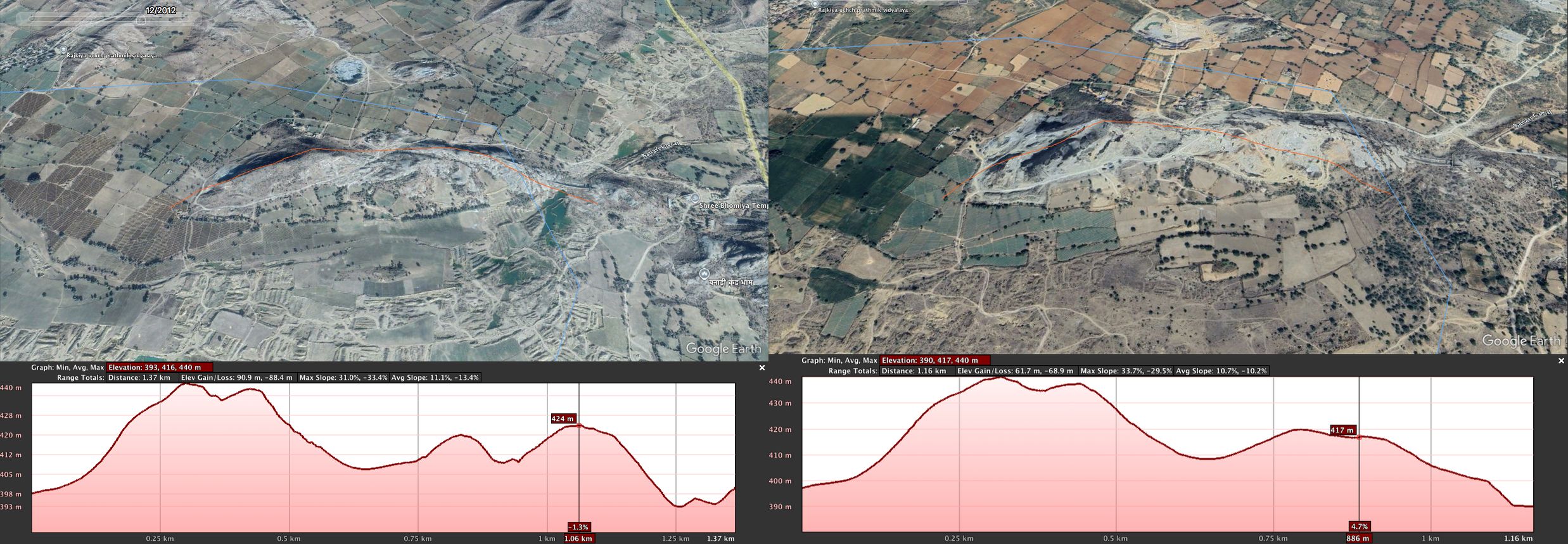
The Sota river originates in Paota before running through Kotputli and Behror. For almost a decade, local residents and activists have protested against stone quarrying in the Sota. However, satellite imagery accessed by Land Conflict Watch shows widespread destruction of the Sota river over the years, traces of acute land degradation, and flattened hills, caused by sand mining and stone blasting. https://article-14.com/post/as-a-satellite-confirms-what-rajasthan-officials-deny-a-court-tries-to-reverse-destruction-of-a-life-giving-river-6771bb88389cc (30 Dec. 2024)
Odisha Kaptipada IIC injured in attack by sand mafia The inspector-in-charge (IIC) of Kaptipada police station sustained injuries after being attacked by the sand mafia at Dahisahi area here on Wednesday (Dec. 18) morning. The injured police officer has been identified as Prakash Rath. As per sources, acting on a tip-off about illegal sand mining in Dahisahi area, Rath along with a police team reached the spot to conduct a raid. Rath sustained injuries on his neck and back and was rushed to the Kaptipada sub-divisional hospital for treatment. Police said a case has been registered in this connection and further investigation is underway.
In a similar incident on June 30, sand mafia had allegedly attacked two mining officers who had imposed fine on them for illegal transportation of sand from Sono river within Kaptipada police limits. Though the two officers narrowly escaped the attack, a group of local residents protested against the mafia and urged the officers to take stringent action to curb illegal sand transportation that causes revenue loss to the government every year. https://www.newindianexpress.com/states/odisha/2024/Dec/19/kaptipada-iic-injured-in-attack-by-sand-mafia (19 Dec. 2024)
Tamil Nadu Beach sand mining: HC begins final hearing A special bench of the Madras high court has commenced the final hearing of the decade-old suo motu PIL on multi-crore illegal beach sand mining. A division bench of Justice S M Subramaniam and Justice M Jothiraman commenced the hearing on Friday (Jan. 03). Representing the state, senior advocate Aravind Datar informed the court that the state accepted the report filed by amicus curiae V Suresh and his recommendations on royalty to be paid by the mining companies to the state. Based on the report, the state issued recovery notices to recover 5,035 crore royalty from the companies, he said. Recording the submissions, the bench adjourned the hearing to Monday (Jan. 06) for the amicus to place his arguments. https://timesofindia.indiatimes.com/city/chennai/beach-sand-mining-hc-begins-final-hearing/articleshow/116925942.cms (04 Jan. 2025)
Sand mining rule simplified CM M K Stalin announced the simplification of minor minerals extraction rules to facilitate farmers and potters take sand, alluvial soil and clay from the water bodies in their villages or adjoining villages. Now, those who wanted to extract the sand, soil and clay from the water bodies maintained by the PWD and the Rural Development Department could apply online for permission and obtain it from the local tahsildar. https://www.deccanchronicle.com/news/tamil-nadu-sand-mining-rule-simplified-898637 (12 June 2024)
GROUNDWATER
Rajasthan Water jet bursting from Earth; Machine swept away While excavating the tubewell in the Mohangarh Canal area of Jaisalmer, Rajasthan in India, workers breached a clay layer at a depth of approximately 850 feet, resulting in a continuous water flow for about 50 hours. The ground sank, causing a truck weighing about 22 tons and the digging machinery to sink into an 850-foot deep pit, with only part of the truck visible. After about 50 hrs, water stopped flowing on its own.
– Environmental and groundwater expert Himanshu Thakkar (SANDRP) commented that this could be due to the presence of artesian wells in the area. “Where artesian wells are present, there is water under a lot of pressure. If a hole is made there, the water comes out with very high pressure. As long as the pressure remains, the water keeps flowing, and as soon as the pressure decreases, the water stops,” he said in an interview with DW. “Today there may be sand here, but finding water sources is not impossible because the area has not always been a desert,” he added. https://www.jpost.com/omg/viral-news-from-the-web/article-835648 (01 Jan. 2024)
Water eruption stops suddenly in Mohangarh The three-day water eruption from a collapsed tube well in Mohangarh stopped naturally early Monday (Dec. 30) morning, bringing relief to district officials, particularly as the associated gas leakage also halted. A delegation comprising experts from the Central Ground Water Board, IIT-Jodhpur, and the State Ground Water Board, led by Dr. Narayan Inkhia and Jaisalmer district collector Pratap Singh Nathawat, assessed the situation on Monday (Dec. 30). The administration requested ONGC’s technical support to recover submerged equipment and prevent water recurrence. The incident began on Dec 28 around 10am, when water erupted during borewell drilling in BJP city unit president Vikram Singh’s field near Chak-27 BD. The drilling, which reached 850 feet, triggered a forceful water discharge that continued until its natural cessation. https://timesofindia.indiatimes.com/city/jaipur/water-eruption-stops-suddenly-in-mohangarh-locals-relieved/articleshow/116809180.cms (31 Dec. 2024)
The event has further sparked debate because it occurred in an area that was linked to the ancient Saraswati River. https://timesofindia.indiatimes.com/life-style/travel/destinations/lost-saraswati-river-suddenly-resurfaces-in-rajasthan/articleshow/116805601.cms (30 Dec. 2024)
High-pressure jet of water causes panic The leakage of gas and water during a tubewell drilling operation in the Mohangarh canal area of Jaisalmer has stopped, officials said on Monday (Dec. 31). The drilling operation that began on December 28 caused the ground to collapse upon reaching a depth of 850 feet releasing a stream that shot up four feet into the air under immense pressure. Mohangarh sub-tehsildar Lalit Charan said the leakage stopped on its own around 10 pm on Sunday (Dec. 29). Charan on Sunday (Dec. 29) said ONGC officials had inspected the spot and added that the gas was found to be neither poisonous nor flammable.
Speculation regarding the water’s connection to the ancient Saraswati River was refuted by Dr Inakhiya, who noted that it may have origins tracing back to pre-Vedic times and could be millions of years old. The sandy landscape absorbed much of the water, which helped prevent extensive flooding or damage. Mohangarh sub-tehsildar Lalit Charan said permission to bring out the equipment stuck in the pit would be denied until experts could weigh in on the issue. https://indianexpress.com/article/india/high-pressure-jet-of-water-causes-panic-triggers-evacuations-amid-drilling-operation-in-jaisalmer-9752237/ (31 Dec. 2024)
The event has further sparked debate because it occurred in an area that was linked to the ancient Saraswati River. Groundwater scientist Dr. Narayan Das explained to ETV Bharat that it’s an “avalanche condition,” a rare event that could last for several days. He also said the incident happened because of an artesian condition, where water trapped under thick layers of sandstone and clay exploded. https://timesofindia.indiatimes.com/life-style/travel/destinations/lost-saraswati-river-suddenly-resurfaces-in-rajasthan/articleshow/116805601.cms (30 Dec. 2024)
“This water seemingly does not have any connection to the Saraswati River. Officials said water sometimes gushes out from an “artesian well” in deserts, such as Jaisalmer, where water usually remains confined and encased within a geological sandstone layer. “The drilling work was going on for the tubewell. During drilling, it seems that there was a breach of the sandstone barrier above the water, causing the water to rush out with such force,” an official from the Rajasthan government said. Independent experts agreed that that is the only plausible explanation. Virendra M. Tiwari, director at CSIR NEIST (North East Institute of Science and Technology), said the borewell being dug must have “punctured the confined aquifer mapped by heliborne surveys in Jaisalmer, leading to a gust of fresh water”. https://theprint.in/science/what-is-an-artesian-well-how-it-might-have-caused-water-eruption-in-jaisalmer-desert/2427149/ (01 Jan. 2025)
Child trapped in borewell died A three-year-old girl, who fell into a 150-foot-deep borewell in Kotputli-Behror district, was brought out in an unconscious state on Wednesday (Jan. 01) after a 10-day rescue operation carried out by NDRF and SDRF teams and rushed to hospital, officials said. However, the girl, Chetna, was declared dead by doctors at the hospital, they said. NDRF team in-charge Yogesh Meena said that when the girl was taken out, there was no movement in her body.
The child had fallen into the borewell on December 23 while playing in the agriculture farm of her father in Badiyali Dhani under the Sarund police station area. Till Monday (Dec. 30), the rescue teams of NDRF and SDRF were hopeful of completing the operation and reaching the girl, but they could not succeed in saving the child as layers of sedimentary rock compounded the drilling work, the officials said. “Digging eight feet of soil is not a big deal. But we cannot effect a blast if there is a stone. Due to the hard rock, we are facing difficulty in drilling,” Meena had said on Tuesday (Jan. 01).
Around two weeks back, a five-year-old boy fell into a borewell in Dausa district where the rescue operation lasted for more than 55 hours. However, the boy lost the battle for life by the time he was taken out. https://www.telegraphindia.com/india/three-year-old-girl-pulled-out-of-rajasthan-borewell-after-10-day-rescue-operation-dies/cid/2074785 (01 Jan. 2025) During the operation, special types of instruments have been ordered due to the hard nature of stones in the area. The mining rescue team was also invited to assist in the rescue operations. The authorities are hopeful of completing the work by Monday, NDRF officials said. https://timesofindia.indiatimes.com/india/tragic-end-3-year-old-girl-found-dead-after-10-day-rescue-from-borewell-in-rajasthan/articleshow/116860705.cms (01 Jan. 2024)
URBAN LAKES, WETLANDS
Hyderabad HYDRAA clears encroachments in two lakes The Hyderabad Disaster Response and Asset Protection Agency (HYDRAA) carried out a demolition drive on Tuesday to free two tanks in Serilingampally from encroachments. The two lakes were Bhagirathamma Cheruvu also known popularly as Khajaguda Lake, and Thoutani Kunta, located on either side of the Khajaguda-Nanakramguda main road. Acting on complaints from the local residents, HYDRAA Commissioner A.V. Ranganath inspected both the water bodies a week ago and ascertained that the full tank level and buffer zones of the lakes had been occupied. On Tuesday (Dec. 30), up to 10 temporary structures including tin roof sheds and tin sheet compound walls were pulled down using earth movers, reclaiming 10 acres of government land. The demolitions were done after issuing notices, a statement informed. https://www.thehindu.com/news/national/telangana/hydraa-clears-encroachments-in-two-lakes-reclaims-10-acres-of-land/article69047509.ece (31 Dec. 2024)
Mumbai CM asks forest secretary to act as DPS Flamingo Lake turns filthy Responding to greens’ complaint against the blocking of water flow to the 30-acre DPS Flamingo Lake rendering it filthy with stagnant water, CM Fadnavis has directed the Forest department to take action. A high-level committee headed by Forest Secretary Venugopal Reddy has earlier decided to recommend the protection of the DPS Lake as a conservation reserve and asked CIDCO ensure uninterrupted water flow to in and out of the wetland.
Yet, the lake, which has been attracting hundreds of flamingos, is now full of moss and muck as the water flow has been blocked for a few months, NatConnect Foundation complained to the CM and top officials. “We are happy that Devendra Fadnavis acted promptly and asked Reddy to take appropriate action,” said NatConnect director B N Kumar and expressed the hope that the wetland would again be flamingo-fit. https://www.freepressjournal.in/mumbai/navi-mumbai-maharashtra-chief-minister-devendra-fadnavis-asks-forest-secretary-to-act-as-dps-flamingo-lake-turns-filthy (30 Dec. 2024)
Navi Mumbai Land parcel in Nerul & TS Chanakya belt confirmed as wetlands The 35.55-hectare open land parcel in the Nerul NRI and TS Chanakya belt has been confirmed as wetlands by the Thane nayab tehsildar. The verification followed an onsite inspection conducted by the tehsil office alongside officials from the mangroves, forest, police, and revenue departments. As per the findings, the land includes wetlands and a kaccha road reportedly existing for the past 15 years. The inspection, conducted on December 23, was prompted by a complaint about debris dumping in the mangroves’ buffer zone. https://www.freepressjournal.in/mumbai/navi-mumbai-3555-hectare-land-parcel-in-nerul-nri-ts-chanakya-belt-confirmed-as-wetlands-by-thane-nayab-tehsildar (31 Dec. 2024)
URBAN WATER
Bengaluru Drinking water contamination: A recurring nightmare Three hundred residents of the city’s BTM Layout faced serious health risks in November, in the latest episode of sewage inflow into Cauvery water lines. Two months earlier, the entire HBR Layout was perched dangerously close to a similar health disaster. No lessons were learnt from April of the same year, when water contamination triggered a big, 40% spike in cholera cases across the city.
Is there no end to this recurring nightmare? As lakhs of Bengalureans cry out for an enduring solution that ensures supply of clean, safe drinking water, huge structural and systemic gaps remain unaddressed. Chaotic underground pipeline networks exasperated by a lack of coordination by multiple civic agencies, big gaps in ferrying sewage and treatment, absence of a prompt contamination alert system have all left the citizens precariously exposed.
In most cases, the contamination is detected only after the foul stench hits the residents. But by then, the damage would be done. Recurring contamination can only be addressed through a scientific water safety plan, says independent water and wastewater consultant Thippeswamy M.N. In many slums within the core city areas, SWDs, Cauvery and sewer lines are laid too close since the lanes are narrow. While microbial contamination gets the spotlight after coloration and stench, chemical pollutants often escape the radar.
To find an enduring solution to the problem, water conservationist S. Vishwanath suggests a thorough audit of every contamination spot to pinpoint the cause. Testing could be democratised by equipping apartments and even individual houses with devices now available at highly affordable rates. These could easily ascertain the extent of TDS, residual chlorine and other pollutants. https://www.thehindu.com/news/cities/bangalore/drinking-water-contamination-a-recurring-nightmare-in-bengaluru/article69050642.ece (02 Jan. 2025)
Treatment of 3,000 million litres leachate to cost ₹553 cr A report of the Bangalore Solid Waste Management Limited (BSWML) has estimated that a total of 3,074 million litres (ML) leachate has accumulated in Mittaganahalli and Kannur landfill sites, and it will take nearly four years and around ₹553 crore to treat it. These empty stone quarry pits have been used as landfills where garbage has been dumped for over 10 years. Residents of villages around these landfills often complain of leachate polluting the underground water table in these areas. Leachate can be treated, like sewage, to reduce this pollution.
The quantification was done by RITES Limited, a public sector enterprise operating under the Ministry of Railways, to issue tenders to set up two leachate treatment plants. Based on the area of the empty quarry pit, amount of waste dumped every day and hydrological parameters, RITES has estimated that the total leachate collected in these pits is about 3,074.8 ML. However, the quantum is estimated to increase by 230.60 ML. This is due to the probable nine-month gap between estimated date and commencement of processing, due to the time it may take for the tenders to be processed and work to begin.
The report proposes two leachate treatment plants of 2 MLD processing capacity, at a cost of ₹1.68 per litre, adding up to ₹553 crore to treat the entire backlog of leachate accumulated in these quarry pits. Harish Kumar, CEO, BSWML, said that estimation of ₹1.68 per litre is lesser than the prevailing market rate, which is about ₹4 to ₹6. However, an activist is of the opinion that the estimated cost is too high. Besides, the activist added, the report only talks about primary treatment, but not of secondary and tertiary treatments. Considering these two, the cost will go up further. https://www.thehindu.com/news/cities/bangalore/bswml-report-estimates-that-over-3000-million-litres-of-leachate-has-accumulated-in-two-landfills-processing-to-cost-553-crore-over-four-years/article69056722.ece (03 Jan. 2025)
No plan B, but city busy squeezing earth dry There’s no clarity on laws governing groundwater usage or tools to enforce such rules: Activists call for urgent groundwater management plans for city. https://bangaloremirror.indiatimes.com/bangalore/others/no-plan-b-but-city-busy-squeezing-earth-dry/articleshow/116862507.cms (02 Jan. 2025)
Ranchi RMC tightens regulations for WTPs to save GW Ranchi Municipal Corporation (RMC) has implemented strict guidelines for operating and renewing licences of over 400 RO (reverse osmosis) water treatment plants under the Jharkhand Municipal Act, 2011, aiming to control groundwater extraction and promote sustainable water management. Plant operators must now submit comprehensive applications including Aadhaar cards, firm registration certificates, current electricity bills, holding tax receipts, and a no-objection certificate from the Central Ground Water Authority. Additionally, rainwater harvesting plans are mandatory.
The city has been categorized into four zones based on groundwater exploitation levels: safe, semi-critical, critical, and over-exploited. Some zones are completely restricted from groundwater extraction to protect depleting reserves. The new framework requires operators to pay an initial licence fee of Rs5,000 and an annual fee of Rs20,000. Annual renewal is mandatory, with penalties for non-compliance. The deadline for applications is April 2 after which erring plants may face closure. “Operators must install water meters before applying for a licence,” RMC commissioner Sandeep Singh explained. “The process includes water quality verification and assessment of extraction permissibility in the area.” https://timesofindia.indiatimes.com/city/ranchi/rmc-tightens-regulations-for-water-treatment-plants-to-protect-groundwater-resources/articleshow/116924920.cms (04 Jan. 2025)
Ghaziabad 5 RO plants extracting GW illegally to be sealed The district groundwater committee will seal five unauthorised RO plants in Loni and impose Rs 2 lakh fine on each unit. The decision was taken during a meeting chaired by the district magistrate, where officials reviewed complaints against groundwater violators on Friday (Jan. 03). “The committee received complaints against five illegal RO plants operating in Loni in Dec. These units extract groundwater illegally for RO plants and then bottle this water for local supply,” said Srishhti Jaiswal, nodal officer, district groundwater committee. “Once we receive a complaint, our team inspects the respective establishments and sends a notice, giving them 15 days to shut down the illegal activity and submit an affidavit. If they do not comply, the establishments are sealed and fined,” she added.
The district has been grappling with rapid depletion of groundwater levels, which, according to the latest reports, dropped by nearly 7 metres between the pre and post-monsoon periods. Earlier in Dec, notices were issued to over 61 residential societies for operating unauthorised borewells, demanding a comprehensive status report within 30 days. During the meeting, the committee processed 32 applications under the Uttar Pradesh Ground Water (Management and Regulation) Act. “These included requests for registration of wells, NOC renewals for domestic, agricultural, industrial and commercial use, as well as registrations of drilling agencies. Of these, 23 applications were approved, while nine were rejected,” said Jaiswal.
District magistrate Indra Vikram Singh directed officials to allocate funds for water harvesting and Jal Shakti Center projects through the rural engineering department. “Apart from this, we will inspect district ponds to assess their role in groundwater recharge. The external beautification of ponds should be secondary, while their role in groundwater recharge is of more importance,” the DM said during the meeting. https://timesofindia.indiatimes.com/city/noida/5-ro-plants-found-extracting-groundwater-illegally-to-be-sealed/articleshow/116946769.cms (04 Jan. 2024)
Delhi Water-starved village gets notice for extracting GW Shikarpur, one of the capital’s few agricultural villages, situated close to the Najafgarh drain and Delhi-Haryana border, has for years struggled with the problem of scarcity amidst plenty. Thirty to 40 per cent of its farmland – 450 acres – remains submerged in water that overflows from the Najafgarh drain which is the old Sahibi river, now carrying polluted water. This water has to be pumped out and diverted. It’s water from borewells and tubewells that irrigates their fields.
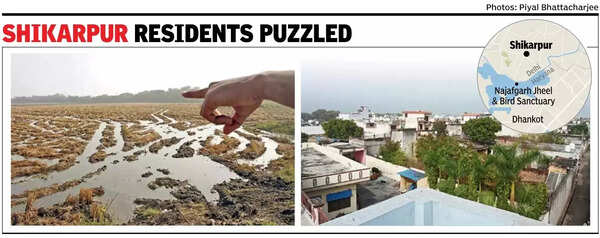
-So, a notice from the district administration dated Dec 16, asking the entire village to appear before the tehsildar for illegally extracting groundwater has put the villagers in a quandary. It is not just their fields that they are worried about. Despite Delhi govt’s lip service to improve life in villages for many years, the village has extreme shortage of potable water since it is located at the tailend of the Delhi Jal Board supply line. Besides, many pipelines taking the water to houses in this village are in a decrepit state. Threat of legal action, a hefty penalty of Rs 1 lakh and even imprisonment has got the villagers worried. https://timesofindia.indiatimes.com/city/delhi/water-starved-delhi-village-gets-a-notice-it-wasnt-meant-to-for-extracting-groundwater/articleshowprint/116868054.cms (02 Jan. 2025)
Gurugram ‘Lapses in landfill management’: NGT wants agencies fined The NGT has directed SPCB to impose environmental compensation (EC) for fire incidents at landfill sites. These fires, often resulting from lapses in effective landfill management, cause significant environmental damage. The member secretary of HSPCB was tasked with thoroughly investigating this matter and reaching a conclusion within three months. This direction came during Dec. 16 hearing when the tribunal was reviewing affidavits from CPCB, HSPCB and MCG on fires that broke out at Bandhwari landfill site. https://timesofindia.indiatimes.com/city/gurgaon/lapses-in-landfill-management-ngt-wants-agencies-fined-in-haryanas/articleshow/116808373.cms (31 Dec. 2024)
Report How 1.4bn Indians are adapting to climate change The most sophisticated cities will probably adapt most quickly. In Bangalore people tend to pay their water bills; in poorer places they often don’t, making it hard to run a rational water system. Water management is improving in most Indian states, but an official survey in 2021 found that 22 out of 54 cities with more than 1m inhabitants were doing nothing at all to recycle the precious liquid. Caste prejudice does not help: some Indians recoil from using recycled water because human waste is associated with ritual pollution. Still, Sunita Narain of CSE offers a note of optimism. As climate change worsens and the need to adapt becomes obvious, innovation will speed up. https://www.economist.com/asia/2025/01/02/how-14bn-indians-are-adapting-to-climate-change (02 Jan. 2025)
JJM/ RURAL WATER SUPPLY
MoJS Year End Review Funds Allocation for Jal Jeevan Mission: -The estimated outlay of Jal Jeevan Mission under ‘Har Ghar Jal’ program is Rs. 3.6 Lakh Crore for the period of five years from 2019-2024. The 15th Finance Commission has identified water supply and sanitation as a national priority and allocated funds of Rs. 2.36 lakh Crore to Rural Local Bodies/Panchayat Raj Institutions (RLBs/PRIs) for the period 2021-22 to 2025-26. Accordingly, 60% of the fund, i.e., Rs. 1.42 lakh crore provided as Tied Grants meant to be utilized exclusively for the drinking water, rainwater harvesting and sanitation & maintenance of open-defecation free (ODF) village. In 2024-25, so far, the Government of India has released Rs. 21,825.23 Crore to 25 eligible States for the implementation of `Jal Jeevan Mission in the financial year 2024-25.
-As on 26th December 2024, 101 districts, 869 blocks, 78,291 panchayats, and 1,50,190 villages are ‘Har Ghar Jal’ certified i.e., all the households have access to tap water connection.
-Expenditure for implementatioin of Swachh Bharat Mission – Grameen (SBM-G)- Rs in Crore Year 2014-2015 to 2022-2023 UTILISED: -₹25391.83 Year 2023-2024, UTILISED ₹9726.01 https://pib.gov.in/PressReleaseIframePage.aspx (01 Jan. 2025)
JJM misses 2024 target The latest government data shows that only 15.4 crore (79.5 per cent) of rural households have been covered so far, out of the total 19.36 crore. The coverage is lowest in four states — West Bengal (54 per cent), Kerala (54.1 per cent), Jharkhand (54.6 per cent) and Rajasthan (54.9 per cent).
-Madhya Pradesh (67 per cent) and Andhra Pradesh (73.7 per cent) are also among the six states where the pace of implementation has been slow. Some states including Rajasthan and Karnataka have now sought extensions to complete the work by March 2026.
-As of January 3, 11 states and Union Territories, including north-eastern states of Mizoram and Arunachal Pradesh, and hill states of Himachal Pradesh, have completed 100 per cent work under the scheme. Punjab, Haryana, Gujarat, Telangana, and Goa are among other states with full coverage under the scheme. https://www.news18.com/india/har-ghar-jal-misses-2024-target-46-households-in-4-states-still-await-connections-9176817.html (04 Jan. 2025)
WATER
Himachal Pradesh Water security in Kangra 2024 has been particularly bad in terms of rain in Kangra valley and snow on the Dhauladhar range. Kangra valley and Dhauladhar received no rain or snow from October to December 25. This caused a dry spell that severely affected the sowing of wheat crop in the region. Out of 600 water schemes of the Jal Shakti Department in Kangra and Chamba, about 140 schemes have been facing water shortage in the past three months. For the past few years, the department has been facing challenges in meeting the water demand in the region due to reduced inflows in rivers and streams originating from the Dhauladhar.
Deepak Garg, Chief Engineer, Jal Shakti Department, Dharamsala, said that they were taking steps to tackle the problem of lower discharge in rivers and streams. Plans are being executed to base many water schemes on perennial water sources and the Beas river. Efforts are also being made to interlink water schemes so that in case of water shortage in one scheme, supply could be replenished from another scheme, he said. According to experts from Agriculture University of Palampur, rain-harvesting could provide an answer to erratic rain in the region. University experts had also created models for rain-harvesting at a local scale in villages which could provide irrigation in rain-deficient months. However, without government support, the models have not been adopted in the region. https://www.tribuneindia.com/news/himachal-calling/climate-change-less-precipitation-threaten-water-security-in-kangra/ (30 Dec. 2024)
Tamil Nadu In Madurai, mining for tungsten and trouble There have been sustained protests in Madurai district ever since the Union government announced in November 2024 that it had granted tungsten mining rights in eight blocks to Hindustan Zinc, a subsidiary of Vedanta. The residents of the region, particularly Melur taluk, which has the Arittapatti biodiversity heritage site, worry about their land, lives, and livelihoods,
A. Kalpana, who has never participated in a protest, says, “Our art, religion, food, culture, and tradition are interlinked with this landscape. Without our land, we will become nothing.” The kummi protest is part of the weekly agitations that have been organised by activists and the residents of panchayats in Melur taluk since November 7, 2024. C. Jeeva, a resident of Kesampatti and an organiser of the protest, says, “Though we have organised similar protests and rallies against granite quarrying in the Melur region in the past, we know that the struggle this time is against the Union Ministry and one of the biggest conglomerates in the world. It is going to be a tiring and prolonged battle, but we will persist.” https://www.thehindu.com/sci-tech/energy-and-environment/in-madurai-mining-for-tungsten-and-trouble/article69058863.ece (04 Jan. 2025)
MONSOON 2024
Tamil Nadu Extreme weather becoming a major challenge On October 25, Madurai received a massive 9.5 cm of rainfall in a single day. 4.5 cm poured within 15 minutes between 3 pm and 3.15 pm. It triggered severe flooding, water inundation, and power disruption. On November 20, Cloudburst, categorised as an ‘extreme weather event,’ triggered over 28 cm of rainfall in Pamban in the Ramanathapuram district. Pamban weather station recorded 10 cm of rainfall in just an hour and close to 19 cm of rainfall within a short span of three hours.
An unprecedented 164 cm of rain lashed all pockets of the Ramanathapuram district in a single day (November 20). It is said that this is the first time in many decades that the region has recorded such an amount of rainfall. In general, Ramanathapuram is a drought-prone district known for its hot, dry weather conditions for most part of the year. Drinking water scarcity is still a pertinent issue in the district.
On December 1, incessant and heavy rains due to Cyclone Fenegal triggered a massive landslide in Annamalaiyar Hills in Thiruvannamalai district, killing seven of a family, including five children. However, Tiruvannamalai district does not fall under a landslide-prone zone.
Pradeep John, a weather forecasting enthusiast and blogger, popularly known as the ‘weatherman of Tamil Nadu’ shared his views on the extreme events scenario. “Of all events, the Pamban cloudburst is a very rare and strange one. It was neither due to a cyclone nor due to a low-pressure system. It was purely the upper air circulation dumping rains,” he noted. He added that for the past four years, it was only the slow-moving pressure systems that brought much rain to the state. https://www.newindianexpress.com/states/tamil-nadu/2025/Jan/02/is-extreme-weather-becoming-major-challenge-to-tamil-nadu (02 Jan. 2025)
ENVIRONMENT GOVERNANCE
NGT Union govt gets notice on disposal of damaged solar panels The Tribunal order underlined the issues raised by Chandel such as limited scrap value, environmental hazard of landfills and no disposal infrastructure.
-Users who bought solar panels over a decade ago or got under the government scheme Kusum Yojana have no clue about where to dispose of the hazardous solar panel waste after the end of its life or damage. The absence of proper disposal infrastructure leads to burying of these panels in the agricultural field or sending them to landfills which adversely affects the soil quality.
-Further, PV panels contain heavy metals like lead and cadmium, which could leach into soil and water causing long-term environmental damage.
-The Tribunal directed the respondent to file their reply a week of the hearing on 10 February 2025. The Tribunal also pointed out that a similar issue related to E-waste management is pending before the court.
-Ajay Mathur, Director General of International Solar Alliance told this newspaper in an interview that globally, there is a lack of standards for making solar panels from recycled solar waste. https://www.newindianexpress.com/nation/2024/Dec/28/ngt-questions-union-government-on-disposal-of-damaged-solar-panels (28 Dec. 2024)
EDIT Forest loss: Numbers can’t cover it The description of plantations as forests is controversial because they lack deadwood and biomass development, and the diversity of real forests. So all forests that figure in the report are not forests and all claimed increases in cover are not real gains. The extent of forest area is being exaggerated, perhaps, to claim that India is meeting its commitment under the Paris climate agreement on creation of additional carbon sinks. But what do these overstated numbers serve in a fight against climate change? https://www.deccanherald.com/opinion/editorial/forest-loss-numbers-can-t-cover-it-3333180 (27 Dec. 2024)
Home Ministry Chartered accountants asked to report FCRA violations by NGOs In a December 31, 2024 notification, the Union Home Ministry said that CAs will have to mention the name, email address, registration number of the auditor while issuing the audit certificate and specify if the NGO has “violated the provisions of FCRA, 2010 or rules made thereunder or notifications issued thereunder,” with the details of the violations.
The Union Home Ministry on Wednesday (Jan. 01) notified that chartered accountants filing audit returns on behalf of NGOs need to specify if the association violated provisions of the Foreign Contribution (Regulation) Act, 2010 (FCRA) or not. The Act requires a CA to certify if an association or NGO has utilised foreign contribution received for the purposes it was registered for and the annual statements are to be uploaded on the FCRA portal. https://www.thehindu.com/news/national/chartered-accountants-asked-to-report-fcra-violations-by-ngos/article69051293.ece (02 Jan. 2025)
Book Review Speaking with nature Ramachandra Guha studies Indian environmentalism through ten individuals. Most of them were resolutely against the development model India followed – especially after independence – which was based on the Western model. https://scroll.in/article/1077458/speaking-with-nature-ramachandra-guha-studies-indian-environmentalism-through-ten-individuals (05 Jan. 2025)
Interview Ecological restoration is more than just planting trees Pradip Krishen, the filmmaker and environmentalist talks about his journey from making movies to ecological restoration work to writing books. https://scroll.in/article/1077515/pradip-krishen-interview-ecological-restoration-is-more-than-just-planting-trees (05 Jan. 2025)
CLIMATE CHANGE
IMD 2024 becomes warmest year in India since 1901 India recorded its highest temperatures since 1901 in 2024, with the average minimum temperature rising 0.90 degrees Celsius above the long-period average, according to the IMD on Wednesday (Jan. 01). The annual mean temperature reached 25.75 degrees Celsius, exceeding the long-period average by 0.65 degrees. Surpassing previous record from 2016, when the mean land surface air temperature was 0.54 degrees Celsius above normal, making it the warmest year in records dating back to 1901.
-The European climate agency Copernicus said that 2024 was likely the warmest year in recorded history, marking the first instance where global average temperatures rose 1.5 degrees Celsius above pre-industrial levels, news agency PTI reported. According to an annual review report by two climate research organisations, World Weather Attribution and Climate Central, the world experienced an average of 41 additional days of dangerous heat levels in 2024.
-Specialists indicate that global temperatures will now consistently exceed this threshold. Global average temperatures have increased by 1.3 degrees Celsius compared to the 1850-1900 baseline, resulting from increased atmospheric greenhouse gases like carbon dioxide and methane. https://timesofindia.indiatimes.com/articleshowprint/116856749.cms (01 Jan. 2025)
Report Four UN environmental summits fell short in 2024 The United Nations’ efforts to address critical environmental challenges hit multiple roadblocks this year, with four key summits — in Colombia on biodiversity, Azerbaijan on climate, Saudi Arabia on land degradation, and South Korea on plastics — failing to deliver meaningful outcomes. In fact, this is the fourth time UN discussions designed to push countries toward significant progress in addressing biodiversity loss, climate change, and plastic pollution have either ended without consensus or yielded unsatisfactory outcomes. At the heart of the talks’ breakdown lies a stark and growing divergence in national priorities. Developing nations, grappling with developmental challenges, economic constraints, and the consequences of climate change, have repeatedly demanded more technology transfers and financial support from developed countries. https://www.thehindu.com/sci-tech/energy-and-environment/four-un-environmental-summits-fell-short-in-2024-what-happened/article69049058.ece (02 Jan. 2024)
Indian glaciers retreating at a faster pace, UN told The Biennial Update Report to the UN Framework Convention on Climate Change provides a comprehensive assessment of how climate change is impacting India, particularly its agriculture sector and monsoon patterns. The report highlights that while landslides are common in the Himalayan region, scientists face challenges in measuring ice thickness due to the difficult terrain. This has resulted in limited data availability, particularly when attempting to use radar and other field methods in the rugged landscape. https://www.hindustantimes.com/environment/indian-glaciers-retreating-at-a-faster-pace-un-told-101736130617387.html (06 Jan. 2025)
SOUTH ASIA
India-China Dialogue can help sidestep disputes over mega dam To alleviate these concerns and reduce tensions, greater transparency and consistent data-sharing are essential. First, China should release hydrological data and detailed plans for its new hydropower dam project. Without this information, India is left in the dark about the dam’s impact, fuelling mistrust. India should also address its concerns by formally requesting specific details so as to mitigate any adverse effects and better understand China’s water management goals. This would allow Beijing to directly address India’s concerns, rather than simply denying any ill intent.
– Second, China could build on bilateral agreements by providing real-time, year-round hydrological data. Past incidents, such as China not sharing data during the 72-day Doklam stand-off in 2017, despite an agreement in place, underscore the importance of consistency. Transparency and consistent data sharing would show goodwill, support India’s planning and management of shared river resources, and help alleviate any suspicion of Chinese manipulation of water flows.
– Third, diplomacy should be encouraged to foster trust and cooperation between India and China. This could involve research and dialogues between scientists and researchers, as well as Track 1.5 dialogues and high-level discussions to build understanding and reduce tensions. As the upper riparian state, China has a key responsibility in managing the shared water resources responsibly. But India, as the downstream country, also has a duty to engage constructively in the process. https://www.scmp.com/opinion/china-opinion/article/3292784/dialogue-can-help-china-india-sidestep-disputes-over-mega-dam (02 Jan. 2025)
Chinese mega dam sparks disaster fears for Assam & Arunachal The proposed Chinese mega dam to generate 60,000 MW of power on the Yarlung Tsangpo canyon of river Brahmaputra in Eastern Tibet can have disastrous consequences in Assam and Arunachal Pradesh as it is located at a dizzy height of 2 km above the Assam plains and in a highly seismic zone with pronounced geological instability. For sake of risk assessment with related disaster issues as the lower riparian nation, the Government of India should request China for a comprehensive dam break analysis involving both India and Bangladesh. Presently India does not have a water sharing treaty with China. However, as per international practice followed in other transboundary rivers, it is very much in order for India to demand a comprehensive dam break analysis to ensure safety of lives and property of the citizens in the event of the dam failure. The element of dam failure in such a vulnerable terrain cannot be brushed aside under any pretext. The bed gradient of the river in the area where the dam is proposed is extremely steep and maximum discharge of water in that area could reach around 30,000 CUMEC with the average flow ranging from 10 to 15 thousand CUMEC. The area is highly seismic and several major earthquakes took place in that area in recent times. https://assamtribune.com/north-east/chinese-mega-dam-on-brahmaputra-sparks-disaster-fears-for-assam-and-arunachal-pradesh-expert-1562886 (31 Dec. 2024)
Need for water sharing treaty Mirza Zulfikar Rahman independent expert on trans-boundary rivers, however, says that the race by China and India to build dams on Yarlung Tsangpo in Tibet and Siang and other tributaries in Arunachal Pradesh is going to have disastrous consequences for the overall eastern Himalayas and the many communities living along it. Instead of imitating China, India, being a middle riparian state in the Brahmaputra river basin, can take a more responsible approach. “India must not build another mega-dam in response to a mega-dam by China. Such a response will only deteriorate the sensitive ecology of the Himalayas”.
– “India should try for a diplomatic solution with China, instead of using its paramilitary forces on its own people to make them stop protesting against the construction of a dam just to counter another dam,” says Bhanu Tatak, opposing the Upper Siang Multipurpose dams with the local communities. (Sumir Karmakar, Anirban Bhaumik) https://www.deccanherald.com/india/damning-the-brahmaputra-india-china-and-a-looming-water-row-3341170 (04 Jan. 2025)
India must seek a water treaty with China While exercising the riparian right to use water in its territory, the States are under an obligation not to cause significant harm as pronounced by the International Court of Justice in the Gabcikovo case (1997) and the Pulp Mill case (2010). As a precautionary step, China is under a threshold obligation to conduct a transboundary environment impact assessment before beginning the negotiations. India cannot invoke the adjudicatory process directly. The compulsory adjudication is still alien to international law. If the States consent, the world court may adjudicate as happened in the Gabcikovo case (1997). However, a treaty is the preferred approach in water conflicts rather than adjudication by applying hard and fast rules (Mohan V Katarki) https://www.deccanherald.com/india/india-must-seek-a-water-treaty-with-china-brace-for-hard-bargain-3341172 (04 Jan. 2025)
Chinese dams to be discussed in India visit of U.S. NSA U.S. national security adviser Jake Sullivan’s visit to New Delhi from Jan. 5-6 is expected to include discussions with Indian counterparts about the impact of Chinese dams, a senior U.S. official said late on Friday (Jan. 03). “We’ve certainly seen in many places in the Indo-Pacific that upstream dams that the Chinese have created, including in the Mekong region, can have really potentially damaging environmental but also climate impacts on downstream countries,” a senior U.S. official said ahead of Sullivan’s visit. The official added that Washington will discuss New Delhi’s concerns in the visit. The Indian government says it has conveyed its concerns to Beijing about China’s plan to build a hydropower dam in Tibet on the Yarlung Zangbo River which flows into India. https://www.cnbc.com/2025/01/04/chinese-dams-to-be-discussed-in-india-visit-of-us-national-security-adviser.html (03 Jan. 2025)
Mirza Zulfiqur Rahman: -Do all riparian countries have major water infrastructure projects planned in the river basin of the Brahmaputra? What are China’s and India’s plans and how will they affect communities living alongside the river basin? How important are Tibet’s river systems to the Himalayan bioregion? https://www.thehindu.com/news/international/the-implications-of-chinas-mega-dam-project-explained/article69064553.ece (06 Jan. 2025)
India-Bhutan Ties in 2024 and beyond India’s Ambassador to Bhutan Sudhakar Dalela talks to Kuensel Reporter Thukten Zangpo about India-Bhutan relations: -Bhutan and India have enjoyed a long-standing collaboration in the hydropower sector. On the National Day of Bhutan, two units of the 1,020 MW Punatsangchhu-II project were successfully synchronized with the grid. The project team is working diligently towards completion of different packages and for the Project’s full commissioning. As for the Punatsangchhu-I project, a way forward for construction of the dam is being deliberated by technical experts. India is committed to completing the project in a technically safe manner. https://kuenselonline.com/india-bhutan-ties-in-2024-and-beyond/ (31 Dec. 2024)
Bangladesh Investigation shows govt claims on dredging don’t add up A large part of Bangladesh, the country with the highest number of rivers, is a delta formed by sediments carried down by rivers from the Himalayan region. The population’s most significant livelihoods — agriculture, navigation and inland fisheries — depend on these waters.

– These rivers carry about 2.4 billion tons of sediment annually, including sand, clay and silt, a large portion of which needs to be cleared by dredging for navigability.
– As per a 2017 notice by Bangladesh’s water transport authority, the country restored around 547 kms of waterways between 2009 and 2017 to the county’s river system. The authority’s 2022-23 annual report says that between 2010 and 2023, the volume of 3,700 km (2,300 mi) of waterways increased.
– However, the authority’s claims of restoring waterways on this large scale is only on papers, as many of the rivers that are recorded as dredged are still not navigable. https://news.mongabay.com/2024/12/river-dredging-in-bangladesh-investigation-shows-government-claims-dont-add-up/ (24 Dec. 2024)
CHINA
Study Cascade dams altered bacterioplankton community Dams are increasingly disrupting natural river systems, yet studies investigating their impact on microbial communities at regional scale are limited. Given the indispensable role of bacterioplankton in aquatic ecosystems, 16S rRNA gene sequencing was performed to explore how these communities respond to dam-influenced environmental changes at the regional scale in the Shaying River Basin. Our findings revealed that cascade dams create distinct environments, shaping bacterioplankton communities near the dams differently from those in natural rivers.
In the upstream of the cascade dams, water quality was superior, while bacterioplankton community structure was simple with weak community interactions. In the midstream, nutrient and heavy metal content were increased, making bacterioplankton structures more susceptible to environmental changes. In the downstream of the cascade dams, water quality had a significant impact on the community and the bacterioplankton structures were highly complex. Additionally, environmental variables significantly influenced bacterioplankton functional groups. However, the response to these factors, as well as the interplay between functional and taxonomic diversity, varied markedly depending on the specific region of the cascade dams. We here delved into the effects of cascade dams on the taxonomic diversity and functional groups of bacterioplankton to provide a theoretical basis for segmentally regulating these dams. https://www.frontiersin.org/journals/microbiology/articles/10.3389/fmicb.2023.1291464/full (25 Oct. 2023)
THE REST OF THE WORLD
USA Intense drought dries rivers, reservoirs Just a decade ago, the small, resource-rich nation of Ecuador was embarking on a bold transition to hydroelectric power. It was one of many South American countries betting that their abundant rivers, harnessed by dams, could satisfy growing energy needs — and help drive economic expansion, lifting millions from poverty and leading the way into a new era of prosperity. Today, those grand designs are colliding with a warming climate.
– An extraordinary drought has drained Ecuador’s rivers and reservoirs, leading to power outages of up to 14 hours. Some fear this is the beginning of a larger global crisis.
– But Ecuador is not alone. In recent years, abnormally dry weather in places around the globe has sent rivers to extreme lows, draining hydropower resources in places like Norway, Canada, Turkey, Zambia and even lush Costa Rica. In China too it is a growing concern.
– As the climate warms and extreme weather events like drought become more common — and more severe — many scientists expect hydropower to become a less reliable energy source. More than a quarter of all hydroelectric dams are in places with a medium to extreme risk for water scarcity by 2050, according to a 2022 study in the journal Water. Ecuador is, in many ways, a bellwether for what other nations may face. https://www.nytimes.com/2024/12/30/world/americas/ecuador-hydropower-drought.html (30 Dec. 2024)
Tiny fish’s mistaken identity halted a dam’s construction For such a tiny fish, the snail darter has haunted Tennessee. It was the endangered species that swam its way to the Supreme Court in a vitriolic battle during the 1970s that temporarily blocked the construction of a dam. On Friday (Jan. 03), a team of researchers argued that the fish was a phantom all along. “There is, technically, no snail darter,” said Thomas Near, curator of ichthyology at the Yale Peabody Museum. https://www.nytimes.com/2025/01/03/science/snail-darter-fish-tellico-dam.html (03 Jan. 2025)
SANDRP
Also see: DRP 30 Dec. 2024 & DRP 23 Dec. 2024
Follow us on: www.facebook.com/sandrp.in; https://twitter.com/Indian_Rivers

 SANDRP