
(Feature Image: People stand in a queue with water cans to get drinking water at Jnana Jyothi Nagar, in Bengaluru. Image Source: PTI/Live Mint, 10 March 2024)
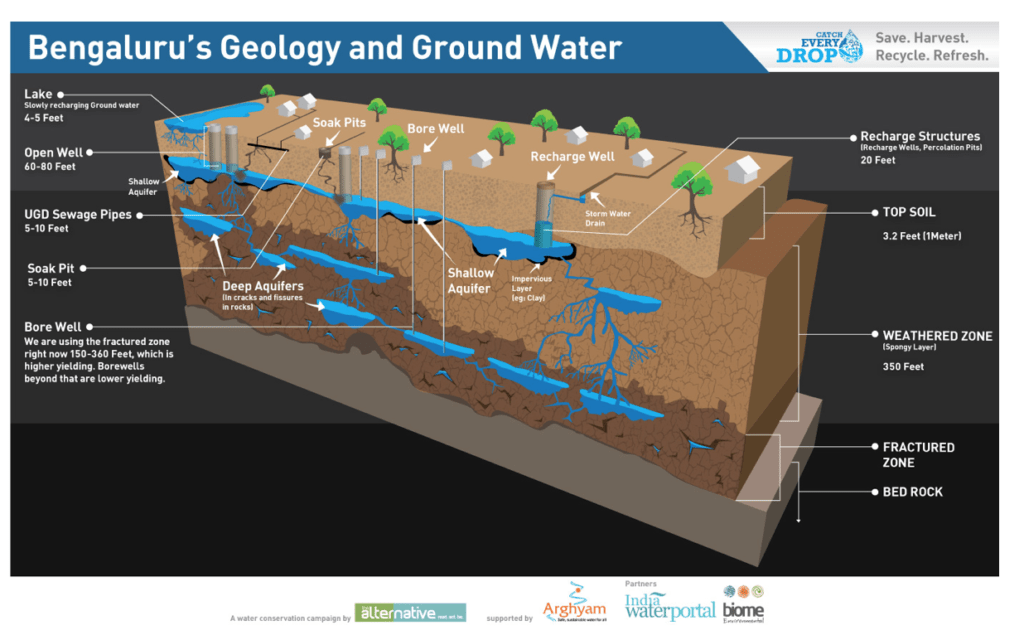
One central lesson of the ongoing Bangalore water crisis is essentially that ignore groundwater sustainability at your own peril. The surface water availability in Bangalore has not decreased, it is the groundwater depletion that is leading to crisis. There is of course the expansion of the city both horizontally and vertically that is increasing demands, but simple arithmetic tells us that if groundwater levels are sustained, it can take care of these increased demands.
The Groundwater sustainability includes sustaining the groundwater recharge and ensuring that extraction does not go past the recharge. Sustaining the groundwater recharge means first understanding the groundwater recharge mechanisms, zones and protecting them. BDA has been sitting for four years on desilting of two lakes: Bellandur and Varthur, which has caused huge impact on groundwater depletion. It also means increasing the groundwater recharge through rainwater harvesting (Bangalore’s failure here is apparent from the fact that government is collecting crores of rupees as fines from those not following the mandatory rainwater harvesting requirements), groundwater recharge wells and diverting tertiary treated sewage, available in Bangalore of upto 300 Million Liters per Day, to lakes and other such recharge zones.
Ensuring supply demand balance in groundwater use also means ensuring that groundwater extraction does not go past the annual recharge through credible regulation of new borewells. Some of the pressure on groundwater can be reduced by ensuring that recycled water is used for a number of non-potable uses. Failure here is apparent from the fact the BWSSB has only now (on Sunday, March 10, and seems more like a knee jerk reaction) come out with requirements for getting online permission from BWSSB for any new borewell.
Unfortunately, the governments, managers and concerned organizations have all been ignoring these groundwater sustainability requirements even though we know for over 4 decades that groundwater is India’s lifeline: across the country, for all regions and sectors. More we ignore this reality in our policies, programs, practices and regulations, more perilous will be our water access in present and future.
Borewells dry as 2 lakes were denied water for 4 years Bellandur and Varthur lakes are empty since 4 years as both are under rejuvenation work including desilting. Due to these dry lakes, the groundwater in surrounding areas has gone down. Vishwanath Srikantaiah says these dry lakes are majorly responsible for groundwater depletion in Bangalore. BDA officials say Bellandur lake work may take another year. Varthur lake could be filled available for filling by Dec. https://www.deccanherald.com/india/karnataka/bengaluru/borewells-dry-as-these-two-bengaluru-lakes-were-denied-water-for-4-years-2927361 (07 March 2024)
From Mar 15, get nod for digging borewell: BWSSP Bangalore Water Supply and Sewerage Board (BWSSB) March 10 2024, Sunday, issued an order reiterating prohibition of digging of new borewells in the city limits without obtaining prior permission from March 15. Violators will face stern consequences, including immediate termination of permission and legal action, as per an order issued by BWSSB chairman V Ram Prasath Manohar. Approvals will be granted based on the necessity and availability of water in an area, as determined by geological reports. The crackdown on unauthorised borewell digging comes amid growing concerns over Bengaluru’s rapidly depleting groundwater reserves, exacerbated by unchecked extraction and urbanisation. https://timesofindia.indiatimes.com/city/bengaluru/from-march-15-get-nod-for-digging-borewells-or-face-legal-action-bwssb/articleshow/108377894.cms (11 March 2024)
Water tanker prices soar due to depleting gw Citizen activists have constantly spoken of the need for making Bengaluru’s tanks and lakes capable of collecting rain water and devising other methods of rain water harvesting. According to them, with effective rain water harvesting measures and recycling of sewage water, the city’s water woes can be eradicated.
“We receive good rainfall every year and Bengaluru requires only 20 TMC of water. If we put our efforts into harvesting this rainwater and not let it drain, we can become a water sufficient city. Unfortunately, due to lakes being dried up intentionally and connecting channels being encroached, the lakes are unable to catch the rainwater efficiently,” Varthur Rising’s Jagadish Reddy added. https://www.thenewsminute.com/karnataka/water-tanker-prices-soar-due-to-depleting-groundwater-residents-say-bbmp-failed-them (05 March 2024)
Over 2,50,000 gw recharge wells built Over 2.5 lakh groundwater recharge wells have been built in Bangalore. The movement for this has been led by Vishwanath Srikantiah over the last decade. Raghuram CG of Vidyaranyapura says he faces no groundwater scarcity since he built recharge well in 2018. The recharge well construction is also giving employment to hundreds of people. https://www.deccanherald.com/india/karnataka/bengaluru/more-than-250000-groundwater-recharge-wells-have-been-built-in-bengaluru-2929887 (09 March 2024)
3,000 borewells dried up -The water scarcity in the IT city has proved to be a blessing for private water tankers, which are charging anywhere between ₹500 and ₹2,000 per tanker. https://www.hindustantimes.com/india-news/bengaluru-water-crisis-grim-as-3-000-borewells-dried-up-tankers-prices-skyrocket-10-points-101709649731491.html (05 March 2024)
Masterclass on water scarcity Vishwanath Srikanthaiah speaking on Bangalore water issue, showing the reality of the crisis and way ahead.
https://www.youtube.com/watch?v=Qc6TTbJWvW8 (09 March 2024)
Drowning in problems, thirsting for solutions An overview of the ongoing water crisis in Bengaluru and the efforts by both the government and citizens to address it. https://citizenmatters.in/water-crisis-bengaluru-water-tankers-dk-shivakumar-bbmp-bwssb/ (07 March 2024)
Activists concerned about borewell drilling near lakes With incidents of rampant drilling of borewells near lakes and BBMP officials turning a blind eye to the drilling of commercial borewells in lake buffer zones, lake activists are concerned about the water bodies potentially drying up. Medahalli residents highlighted the alleged drilling of borewells at Yele Mallapa Shetty Lake and asked officials to look into it. Similarly, activists have alleged that a person, identified as Srinivas, is allegedly extracting water from the Vibhutipura Lake buffer zone, without any permission and ward engineers have deliberately not filed any case against him. https://www.newindianexpress.com/states/karnataka/2024/Feb/29/activists-concerned-about-borewell-drilling-near-lakes (28 Feb. 2024)
‘Drilling borewells not a solution’ Dr. TV Ramachandra said, can be sustainable provided the government focuses on two solutions. “The city receives 700 to 850 mm of rainfall per year. That is an average of 15 TMC. Bengaluru requires about 18 TMC of water and rainwater alone provides 70 per cent of that requirement. The best solution is to harvest the rainwater. We have to catch the rain. This will give us additional water for 4-5 months. We can do it using the lakes, too. It helps in recharging,” the professor said.
The second solution, he said, is to develop mini-forests of two hectares of native species in as many places as possible. “Bengaluru recorded about 35 degrees Centigrade temperature. We need heat sinks such as waterbodies and vegetation in the city,” he said. Ramachandra termed the government’s recent plan to allocate funds for drilling borewells as an “ad hoc” measure. “When there is no water even after drilling 1,800 feet deep, what is the point in pumping more funds? There should be a limit to irresponsible decision-making. https://www.deccanherald.com/india/karnataka/bengaluru/bengaluru-as-bad-as-cape-town-drilling-borewells-not-a-solution-iisc-professor-2928800 (08 March 2024)
Govt to allow apartments to sell treated water “Big apartment complexes in Bangalore have excess treated water which can be used for non potable purposes. The govt will issue guidelines and norms within a week for safe treated water”, said Karnataka Forest Ecology and Environment Minister.
– The apartment complexes are awaiting the details of logistics, costs and quality norms and safety norms. Bangalore Apartments Federation has been urging. the govt to mandate STPs for apartments with 100 or more units. For areas outside BBMP limits, the govt. has made it mandatory STP for apartments with 20 or more units. A circular will soon be issued for this. Apartments can supply estimated 250-300 MLD treated water.
– Bangaloreans have been reluctant to harvest rainfwater. At the end of last month, 39291 residential units were paying penalty of Rs 194 Lakh every month for not installing rainwater havesting units. Bengaluru water requirement has crossed 2600 MLD of which only 1460 mld is met by the water pumped from Cauvery river. Officials estimate that about 1392 mld water is drawn from borewells. https://www.deccanherald.com/india/karnataka/bengaluru/as-crisis-looms-karnataka-government-to-allow-apartments-to-sell-treated-water-2924618 (06 March 2024)
BWSSB to soon launch web portal to sell treated water Research shows that efficient use of treated water could help meet nearly 40% of the city’s water demand. According to an analysis by WELL Labs, the city produces close to 2,000 MLD of wastewater, and only close to 655 MLD, a mere 32%, is being reused. Of the 2,000 MLD, the Bangalore Water Supply and Sewerage Board (BWSSB) treats close to 1,240 MLD. https://www.deccanherald.com/india/karnataka/bengaluru/bwssb-to-soon-launch-web-portal-to-sell-treated-water-2929889 (09 March 2024)
BWSSB has decided to tap into the city’s groundwater resources by filling the drying lakes with 1,300 MLD of treated water. This initiative has been taken up in association with IISc. https://www.thehindu.com/news/national/karnataka/bwssb-to-tap-into-groundwater-resources-in-bengaluru/article67932941.ece (09 March 2024)
HYDRO POWER PROJECTS
Declaration Climate disasters result of governance failures Over 50 social and environmental organisations have jointly declared that climate disasters are systemic and policy-induced, resulting from governance failures at various levels. This declaration, part of the ‘People for Himalaya’ campaign, involves signatories from Assam, Arunachal Pradesh, Manipur, Sikkim, Uttarakhand, Himachal Pradesh, and Jammu and Kashmir. The declaration underscores that those who are the least responsible for these disasters, such as marginal farmers, Dalits, forest dwellers, adivasis, women, migrant workers, minorities, persons with disabilities, and those in conflict zones, are the worst impacted and further marginalised. It criticised mindless infrastructure like mega dams, highways, railway projects, and commercial tourism, and blamed decades of development-driven greed for unprecedented land use changes for damaging rivers, forests, grasslands, and mountains. https://theprint.in/india/over-50-himalayan-organisations-declare-climate-disasters-result-of-governance-failures/1992396/ (07 March 2024)
People for Himalaya declaration -The declaration criticised mindless infrastructure like mega dams, highways, railway projects, and commercial tourism, and blamed decades of development-driven greed for unprecedented land use changes for damaging rivers, forests, grasslands, and mountains. The document argued that top-down, market-dependent solutions and poorly designed climate finance projects have replaced local resilience with detrimental consequences for Himalayan societies.
-It noted that the post-disaster support from the Centre has been insufficient and focuses on relief without adequate attention to prevention and rehabilitation. Despite requests from Sikkim and Himachal Pradesh in 2023, these disasters were not officially declared “national disasters”, the declaration stated. A joint statement said that while media attention fades, questions about the systemic causes of these disasters persist in the Himalayan region. https://indianexpress.com/article/india/himalayan-organisations-declare-climate-disasters-result-of-governance-failures-9201836/ (07 March 2024)
The declaration comes at a time when several states across the mountain range have witnessed numerous disasters in recent times (including, glacial lake outburst floods GLOF such as that of South Lhonak Lake in Sikkim in October last year), which have claimed peoples’ lives and caused much ecological and environmental destruction. Investigations into some of these incidents have revealed that authorities did not follow existing rules for developmental activities in the areas or ignored the fears and concerns raised by experts and local communities. https://m.thewire.in/article/environment/over-50-organisations-sign-declaration-to-draw-attention-to-climate-disasters-in-himalayas/amp ; https://arunachaltimes.in/index.php/2024/03/08/over-50-himalayan-orgs-declare-climate-disasters-result-of-governance-failures/ (08 March 2024)
The coalition, comprising groups from diverse Himalayan states including Assam, Arunachal Pradesh, and Uttarakhand, has voiced concerns over the tragic land subsidence in Joshimath and the devastating floods along the Teesta river, among other incidents in 2023. These events have brought to light the vulnerability of the region and the dire consequences of environmental neglect. https://groundreport.in/50-himalayan-groups-link-climate-disasters-to-governance-failures/ (08 March 2024)
The campaign also raises the issue of dilution and non-implementation of environmental laws and protective policies. The ‘People for Himalaya’ campaign will work in solidarity for the wellbeing and sustenance of our Himalayan natural heritage and will release a detailed demand charter in the coming days. https://www.indiatodayne.in/environment/story/people-for-himalaya-over-50-entities-unite-in-himachal-pradesh-for-sustainable-equitable-future-922422-2024-03-07 (07 March 2024)
The campaign will release a detailed demand charter in the coming days. A complete list of People for Himalaya Campaign signatories can be seen here. https://hillpost.in/2024/03/people-for-himalaya-campaign-for-securing-mountains-futures-calls-for-democratic-and-decentralized-governance-and-policy-shift-in-the-himalaya-based-on-sustainability-equity-and-climate-ju/123841/ (07 March 2024)
आपदा मुक्त हिमालय के लिये चलाएंगे ‘पीपुल फॉर हिमालय’ अभियान -घोषणा पत्र के अनुसार यह जलवायु आपदाएं प्राकृतिक नहीं हैं, बल्कि प्रणालीगत व नीति जनित विफलताओं का नतीजा हैं। वैश्विक और राष्ट्रीय स्तर से लेकर स्थानीय स्तर तक संसाधनों के शोषण और दोहन के चलते आज हिमालय आपदा ग्रस्त क्षेत्र बन गया है, इसलिए यह केवल पर्यावरणीय संकट नहीं बल्कि राजनीतिक, आर्थिक और सामाजिक व्यवस्था का संकट है। आज विकास के नाम पर पूंजीवादी लालच ने हिमालय में संसाधनों की लूट को और गति दी है। बड़े बांध और चार लेन वाले राजमार्ग, रेलवे जैसी अंधाधुंध निर्माण परियोजनाओं, अनियंत्रित शहरीकरण और वाणिज्यिक अनियोजित पर्यटन के कारण भूमि-उपयोग में अभूतपूर्व परिवर्तन से हिमालय की नदियों, जंगलों, घास के मैदानों और भूगर्भीय स्थिति बर्बाद हुई है जिसने आपदाओं को आमंत्रित किया। https://www.downtoearth.org.in/hindistory/development/sustainable-development/people-s-organizations-of-hilly-areas-will-run-people-for-himalaya-campaign-for-disaster-free-himalaya-94852 (06 March 2024)
Call for global action against mega dams The Indigenous Peoples Movement for Self Determination and Liberation (IPMSDL), a global network, has called upon civil society and mass organisations across the to “expose the role of multinational and transnational mega-corporations, big banks, and credit agencies in the destruction of our rivers” by holding demonstrations on March 14, which happens to be the International Day of Action for Rivers.
– In a concept note distributed to civil society leaders, IPMSDL stressed on the need to foster “international solidarity among communities plagued by the encroachment megadam builders”, claiming, “Huge dams were built and funded by international financial institutions, credit and lending agencies, multinational and transnational corporations backed by powerful states, with strong military forces to exploit natural resources and inundate forests, mountains, and rivers at the expense of people’s rights and welfare.” https://www.counterview.net/2024/03/save-rivers-call-for-global-action.html (05 March 2024)
Arunachal Pradesh NHPC safety cliams unconvincing NHPC claims about safety of the Dams clearly are not convincing and are also not based on facts. By using terms like “most of” and “far off” they have tried to hide the real vulnerabilities. They should have also stated that Teesta V, under construction Teesta VI were also damaged and the Teesta Low Dam III even farther away, remained non operable for many months. They have not mentioned any of this. https://nenow.in/environment/nhpc-assures-safety-of-arunachal-hydropower-projects-following-teesta-river-flood.html (04 March 2024)
Human rights group urges halt to mega dam projects Expressing grave concerns over the safety of mega dams, the North East Human Rights (NEHR) has called upon the state government to reconsider and halt all upcoming projects and the 12 Memoranda of Agreements (MoAs) signed in August last year for dam projects in Arunachal Pradesh. In their appeal to the Chief Minister, the NEHR urged for a thorough review of environmental impact assessments, safety measures, and community consultations related to these dam projects. They emphasized the importance of engaging with local communities, experts, and activists to ensure transparency and address all concerns adequately. “We must avoid repeating past mistakes and prioritize the long-term well-being of our state and its inhabitants,” the NEHR concluded in their appeal. https://www.indiatodayne.in/arunachal-pradesh/story/arunachal-human-rights-group-urges-halt-to-mega-dam-projects-in-state-902212-2024-02-29 (29 Feb. 2024)
The Siang Indigenous Farmer’s Forum has opposed the allocation for Corporate Social Responsibility funds by NHPC for work in dam affected villages in Siang basin on a number of counts through a Press Release on March 6 2024.

SIFF opposes NHPC’s CSR Schemes The attendees expressed concerns that the affected villages were not consulted prior to the allocation of CSR funds, and were unaware of the related notification until 1st March 2024. Discussions were held on the legal understanding of CSR as per the Companies Act, 2013, questioning the allocation of the CSR scheme in Siang by NHPC. The house unanimously rejected the CSR fund allocation of 16.61 crores, stating that it would encourage corrupt practices and irresponsible district administration. The house also demanded transparency from the departments involved in the CSR scheme. Additionally, a book honouring the Anti Dam Siang movement will be published to commemorate the sacrifices and celebrate the true Adi leaders’ leadership. https://www.indiatodayne.in/arunachal-pradesh/story/arunachal-siang-indigenous-farmers-forum-opposes-nhpcs-corporate-social-responsibility-schemes-921121-2024-03-06 (06 March 2024)
Adi farmers say NHPC planned CSR sans public consultation Opposing the proposed 11 GW Siang Multipurpose Project, the Siang Indigenous Farmers’ Forum (SIFF), an umbrella organisation representing various Adi farming communities have questioned the Corporate Social Responsibility (CSR) schemes which are being implemented by the dam developer, NHPC. After a coordination meeting held on March 5 at Parong Dere of East Siang District, the members alleged that dam-affected villages were not consulted before implementing CSR schemes. https://www.eastmojo.com/arunachal-pradesh/2024/03/07/arunachal-adi-farmers-say-nhpc-planned-csr-sans-public-consultation/ 07 March 2024)
PM lays foundation stone for 2,880 Mw Dibang HEP The PM laid the foundation stone of 2,880 MW Dibang Multipurpose Hydropower Project of NHPC Limited in Lower Dibang Valley district, at a Program in Itanagar on March 9, 2024. To be built near Munli village at a cost of more than Rs. 31,875 crores, the Dibang project will be 278 m high, the highest concrete gravity dam structure in the country and the highest RCC Dam of the world. It is scheduled to be commissioned in Feb 2032. https://pib.gov.in/PressReleaseIframePage.aspx?PRID=2013022 (09 March 2024)
NEEPCO issues warning for water release due to turbine issue -The North Eastern Electric Power Corporation (NEEPCO) has proposed to release the water of the Panyor River in its Panyor Lower Hydro Power dam at Yazali in Keyi Panyor district. In a circular, the NEEPCO authorities informed that the need for releasing water arose due to some emergency problem in turbines in the powerhouse at Hoj in Papum Pare district.
-“During the proposed emergency release of water from the dam, only the natural flow of the river would be allowed to flow, which is less than 25 cumec at present. The tentative date of the said water release will be from 06/03/2024 to 12/03/2024 and in case of any change in the schedule, it would be intimated to the concerned stakeholders via WhatsApp message, mobile call or text messages, etc,” the NEEPCO informed. The NEEPCO authorities did not exactly specify what emergency had arisen at Hoj. https://arunachaltimes.in/index.php/2024/03/07/neepco-issues-warning-as-it-prepares-to-release-water-due-to-turbine-issue/ (06 March 2024)
Water mills to solve power crisis Villages in the hilly state of Arunachal Pradesh are experiencing an increased demand for power supply with increase in the tourism industry. According to the Central Electricity Authority (CEA), electricity consumption rose from 405 GWh in 2021 to 518 GWh in 2022 while the state’s electricity generation only marginally increased from 2.10 GWh in the previous fiscal year to 2.13 GWh in 2021-22, with the remaining demand being met through the regional grid. Experts suggest that the overlooked indigenous practice of traditional watermills locally called as chhoskor could be a promising solution to alleviate the state’s power crisis. https://www.indiawaterportal.org/articles/traditional-water-mills-solve-arunachals-growing-power-crisis (04 March 2024)
Sikkim Greenko acquires GI Hydro’s project Greenko, backed by GIC Holdings Pte Ltd, Abu Dhabi Investment Authority, and Japan’s ORIX Corp, has completed the acquisition of the 110-megawatt (MW) Chuzachen hydro-electric project in east Sikkim from GI Hydro. The deal, valued at an enterprise value of ₹1,000 crore, includes an equity value of ₹300 crore. The Hyderabad-based company already operates the 96 MW Dikchu hydro-electric project in Sikkim, a greenfield project on the Dikchu river.
– GI Hydro, formerly Gati Infrastructure Pvt Ltd. (GIPL), was set up by M K Agarwal & associates, along with Amrit Jal Ventures P Ltd. (AJVPL), to undertake the 110 MW run-of-the-river projects in Sikkim, granted under a 35-year implementation agreement with the government of Sikkim and Sikkim Power Development Company. The company has been struggling financially, having defualted on loan repayments in 2016. https://www.livemint.com/companies/news/greenko-acquires-gi-hydros-sikkim-project-for-enterprise-value-of-rs-1-000-crore-11709644470288.html (05 March 2024)
Himachal Pradesh HC strikes down govt’s water cess on power generation The HC observed that it was evident from the notification that the state has calibrated the cess keeping in view potentiality of the water, i.e. the greater the height from which the water falls on turbine, the more the power generation. “Therefore, it is not essentially the quantum of water but rather it is the head-height, which has been taken into consideration by the State while fixing the rate of levy,” the judgment reads.
“In other words, the power to tax is on generation of electricity, and user of water is only incidental. The ‘user of water’ is not being taxed and it is only the ‘user of water for generation of electricity’, who is being taxed. Therefore, it is a tax on generation of electricity. If it was the quantum of water used, then the height from which the water would fall as a measure to determine the rate of cess would be wholly irrelevant.” https://theprint.in/judiciary/unconstitutional-himachal-high-court-strikes-down-sukhu-govts-water-cess-on-power-generation/1990025/ (6 March 2024)
HC sets aside water cess on hydel generation The High Court on March 04 set aside the imposition of water cess on hydropower generation, terming the legislation unconstitutional and beyond the legislative competence of the state government. A Division Bench of the High Court headed by Justice Tarlok Singh Chauhan and Justice Satyen Vaidya wrote a 100-page judgment in the case. “The provisions of the Himachal Pradesh Water Cess on Hydropower Electricity Generation Act, 2023, are declared to be beyond the legislative competence of the state government in terms of Articles 246 and 265 of the Constitution of India and, thus, rendered ultra vires,” reads the judgment. https://www.tribuneindia.com/news/himachal/hp-court-sets-aside-water-cess-on-hydel-generation-597557 (05 March 2024)
Uttarakhand Fast-growing glacial lake raises worries The Bhilangana Lake has grown to about 0.38 sq km area in the last 47 years, said Dr Kalachand Sain, Director of the Wadia Institute of Himalayan Geology (WIHG). According to scientists, the rapid expansion of the glacial lake situated in the Bhagirathi catchment area is unsettling, as it can pose threat to people downstream, especially under the impact of rising temperatures.
-“The lake is situated at a very high altitude and the slope downstream is large – more than 25 degrees. We are continuously monitoring it, and have also reported about its expansion to the Uttarakhand State Disaster Management Authority. So, if something like the Chorabari Glacier Lake outburst happens as we witnessed during the Kedarnath disaster in 2013, then we should be able to save the lives of people downstream,” Dr Sain told News18. https://www.news18.com/india/after-sikkim-floods-another-fast-growing-glacial-lake-in-uttarakhand-himalayas-raises-worries-say-scientists-8805401.html#google_vignette (7 Mar 2024)
Report ‘To continue to add coal-based power till RE storage sufficient’ In this interview Union Power Minister R K Singh says that coal based capacity should peak only when sufficient RE storage capacity is in place. When the cost of storage per kWh comes down to Rs 4 or less, we will stop adding more coal-based capacity. For sure, we aren’t going to compromise on the availability of power (for climate goals). India is already the lowest emitter in the world, with legacy CO2 load share of just 4%. The country’s per capita power consumption needs to go up 4 times, so massive capacity addition is required.
He also says that we have given up on gas-based capacity, as it is prohibitively costly. Who will buy electricity at Rs 15/unit from such units? So, only if gas prices indeed come down, we will work on that front. But we have opened a window on the power exchanges for gas-based power and round-the-clock RE, using storage which will cost over Rs 10 per unit. Whoever can afford may buy it to meet exigent demand. https://www.financialexpress.com/business/industry-to-continue-to-add-coal-based-powernbsptill-re-storage-is-sufficient-3419739/ (09 March 2024)
MoEF Decisions from Minutes of EAC meeting on River Valley Projects held on Feb 28 2024 – Kandhaura Closed Loop Pumped Storage Project (1680 MW) in 756.89 Ha at Village Sashnai, Markuri & Cherue, Taluka Obra and Robertsganj, Dist Sonbhadra, Uttar Pradesh by M/s JSW Energy PSP Six Limited: TOR: Approved. https://parivesh.nic.in/utildoc/51324003_1709552958097.pdf (28 Feb. 2024)
DAMS
Kaleshwaram Project Information furnished to NDSA team termed partial The expert committee of the National Dam Safety Authority (NDSA) has termed the information furnished by the irrigation department as partial and inadequate. The team insisted on comprehensive information on as many as 20 aspects pertaining to the designs and construction of the barrages, according to senior officials.
– The Irrigation Department was also asked the drain the Annaram and Sundilla barrages completely to keep the piers fully exposed for the physical inspection. The team has been interacting with all the officials involved in the designing and construction. As part of the preliminary exercise, the team wants to familiarise itself with who is who of the barrage construction. There would be at least three such inspections in the next 2 months. The team members have started analyzing every aspect of the barrages including the DPRs. https://telanganatoday.com/kaleshwaram-info-furnished-to-ndsa-team-termed-partial (9 Mar 2024)
NDSA Team Begins Visit to Stricken Barrages On Mar 6 an expert team from the NDSA arriving in Telangana for a four-day visit to inspect the barrages. The NDSA team is in the state at the invitation of the state government, which wants to explore every possibility for rehabilitating the damaged Medigadda barrage, as well as the Annaram and Sundilla barrages, which are also facing serious structural stability threats. The NDSA team was requested to provide an interim report at the earliest to suggest ways to save the barrages so that necessary steps can be taken before the monsoon. “The government is committed to do all it can to ensure the barrages get back to working condition. We are ready to take up the required repairs. Once the NDSA tells us how to go about it, we will take up work as per its suggestions. If we can bring the barrages back into action, that will be good for the state. And if it can be done before the rains begin, that will be even better,” Telangana Irrigation Minister Uttam said. He said there will be progress soon on the issue of launching a judicial inquiry into the sinking of the Medigadda barrage, and the damages to the Annaram and Sundilla barrages. https://www.deccanchronicle.com/nation/current-affairs/ndsa-team-begins-visit-to-stricken-barrages-884421 (06 March 2024)
KLIS officials’ failure to give correct info irks NDSA The six-member expert committee on March 9 first met Telangana Irrigation Secretary Rahul Bojja and later had a one-on-one meeting with engineers-in-chief. They sought information pertaining to the Kaleshwaram project. During the meeting, Iyer expressed anger at the lack of clarity among some officials in explaining the details of the project. He is reported to have expressed dissatisfaction with the information provided by the state authorities. The state officials are learnt to have come up with excuses for not being able to provide information on the project and they had no answers to the questions raised by the NDSA committee. In spite of the state government’s directive to all the engineers involved in the construction of the Kaleswaram project to attend the important meeting, former ENC Muralidhar Rao skipped it. https://www.newindianexpress.com/states/telangana/2024/Mar/10/klis-officials-failure-to-give-correct-info-irks-ndsa (10 March 2024)
No works on Medigadda sans nod, says NDSA The team of experts deputed by the NDSA that completed the preliminary round of investigation into the structural issues of the Medigadda barrage of the Kaleshwaram Lift Irrigation Project, has asked the State not to take up any repairs or rehabilitation work without its concurrence, according to officials here. The team wanted the heads and representatives of various agencies involved in the implementation of the project to make themselves available in Delhi for further interaction and questioning. But the State officials suggested that it would be easier for the team to come down once again to Hyderabad instead of asking the project officials to visit Delhi. https://telanganatoday.com/no-works-on-medigadda-sans-nod-says-ndsa (10 March 2024)
After L&T, Afcons denies responsibility for Annaram faults Afcons, in its letter, said, “As the risk has been arrived due to the design deficiency and essential operational pattern of the barrage, Afcons-Vijeta-PES JV shall not be held responsible for any damage in the barrage.” Previously, L&T also attributed the sinking of Medigadda piers to the construction design and stated it could not be held liable for the damages as its damage liability period ended before the cracks and sinking of the piers. https://www.deccanchronicle.com/nation/current-affairs/after-lt-and-medigadda-afcons-denies-responsibility-for-annaram-faults-884491 (07 March 2024)
HC postpones hearing to july The Telangana HC observed that it would await for the report of NDSA committee after its 4 month appraisal. The court accordingly posted the matter after 4 months to July. https://www.deccanchronicle.com/nation/telangana-high-court-takes-note-of-kaleshwaram-irrigation-scheme-developments-postpones-hearing-to-july-884215 (4 Mar 2024)
What stopped PM ordering probe into KLIS: Uttam Irrigation minister N Uttam Kumar Reddy wondered what was the BJP govt at the Centre doing despite being well aware of a scam in the mega project. Uttam said it was surprising that Modi criticised the Congress govt for not ordering a probe into the Kaleshwaram project scam and asked why Modi and Centre did not order an enquiry into the alleged scam when BRS was at the helm. He said the Centre even arranged Rs 1 lakh crore loans from various banks and financial institutions. https://timesofindia.indiatimes.com/city/hyderabad/what-stopped-modi-from-ordering-klis-probe-uttam/articleshow/108280222.cms (07 March 2024)
Polavaram Project AP awaits Centre’s nod for release of Rs 16K cr for Polavaram Polavaram project superintending engineer Narasimha Murthy said, “We are expecting the central Cabinet nod for release of nearly Rs 16,000 crore to expedite the Polavaram project works.” AP is also awaiting green signal for Diaphram Wall and Main dam work and the various designs. https://www.deccanchronicle.com/nation/politics/ap-awaits-centres-nod-for-release-of-rs-16000-cr-for-polavaram-884413 (06 March 2024)
Karnataka Trial blasts at KRS dam: Scientists leave without inspection In January this year, the Karnataka High Court imposed a ban on all forms of mining and quarrying activities within a 20-km radius of the historic Dam. The Court said that the ban will remain in force until the completion of a comprehensive study conducted by experts, in accordance with the provisions outlined in the Dam Safety Act of 2021. The Court instructed authorities to conduct the study without imposing a strict deadline, allowing for flexibility based on the progress and feasibility of the study. Following the Court’s directive, a team of four scientists from CSIR-CIMFR arrived in Bengaluru around 5.30 pm yesterday (March 04) and were accommodated at the Royal Orchid Brindavan Garden Hotel.
Amid staunch opposition from various organisations, the scientists team convened a meeting with the Mandya Deputy Commissioner and officials from Cauvery Niravari Nigam Limited (CNNL) at the office of the CNNL Executive Engineer this morning. MLA Darshan Puttannaiah, present to oppose the trial blasts, was also invited to participate in the meeting. However, the decision to only invite Darshan Puttannaiah and other KRRS leaders to the meeting didn’t sit well with BJP leaders and activists on-site. Led by Mandya BJP President Indresh, BJP activists demanded their inclusion in the discussions.
They protested against the State Government, Police and officials for excluding them from the meeting, alleging possible collusion between KRRS and officials to proceed with the trial blasts. The meeting continued until 1 pm and according to sources and farmers present, the CSIR-CIMFR team will return to Jharkhand without any inspection. https://starofmysore.com/proposed-trial-blasts-at-krs-dam-scientist-team-from-jharkhand-to-return-without-inspection/ (5 Mar 2024)
Madhya Pradesh मंडला/डिंडोरी :- प्रस्तावित बसनिया बांध मामले में आदिवासी महिला का पत्रकार को दो टूक जवाब! जमीन हमारी है,शहीद होने को भी तैयार है https://www.youtube.com/shorts/FW0shfQeDLo
Sardar Sarovar Project Irrigation projects worth ₹15k can save Narmada share Narmada Tribunal Award of Dec 1979 is likely to open for review after Dec 2024. NWDT gave 18.25 MAF of water to MP. MP has been using 13.14 MAF till 2019. This report says it needs 15000 Cr more to increase the water use, but this is clearly wrong claim. In 2019, a cost of Rs 70,000 crore was estimated to utilise the 5.11 MAF water in the remaining five years till 2024. https://timesofindia.indiatimes.com/city/bhopal/irrigation-projects-worth-15k-can-save-mps-narmada-share/articleshow/108280390.cms (07 March 2024)
River water for stadium: BCA to spend lakhs Baroda Cricket Association will take 2 lakh litres of water per day to keep the cricket ground green. The water will be taken from the Narmada Canal, but there has been no provision in the Narmada project for diversion of Narmada waters for such uses. https://timesofindia.indiatimes.com/city/vadodara/narmada-water-pipeline-bca-spends-lakhs-to-keep-cricket-stadium-green/articleshow/108250756.cms (06 March 2024)
Maharashtra No takers for NMC’s plan to survey Gangapur dam The Nashik Municipal Corporation (NMC) has faced a setback in its efforts to use the dead stock of the Gangapur dam. The bids invited for conducting a survey of the dam did not receive good response as no agency came forward showing interest for the exercise. Now, the civic administration has granted a seven-day extension for bids — until March 12.
– This development comes after the water resources department (WRD) reduced the NMC’s water quota from 6.1 TMC to 5.3 TMC. The reduction was the result of water being discharged from the Gangapur, Darna, and Makane dams into the Jayakwadi dam located in Marathwada. After reduction of the quota, the city will get water till July 15 and will face shortage in supply if there is no adequate rainfall by August-end.
– To address this issue, the WRD has permitted the NMC to utilize the dead stock in the Gangapur dam, which amounts to around 0.5 TMC. By utilizing this dead stock, the city can receive water for an additional month. An NMC official said there is rock and silt near the jack-well in the dam. “As a result, the deadstock cannot reach the jack-well. To overcome this, we plan to employ dredging technology, to remove the silt and rock from the dam,” the official said. https://timesofindia.indiatimes.com/city/nashik/no-takers-for-nmcs-plan-to-survey-gangapur-dam/articleshow/108377149.cms (11 March 2024)
INTERLINKING OF RIVERS
SANDRP Blog Yamuna Manthan: Linking Plans Threatening rivers The Parbati-Kalisindh-Chambal (PKC) river interlinking project has potential to deprive these rivers and ultimately Yamuna of essential environmental flows in lower segment in addition to increasing disaster potential and profound adverse impacts on riverine eco-system as suggested in a latest study below. The study mentions that the alteration and reduction in flow patterns would cause many problems in these rivers from destruction of aquatic lives to increase in river water temperature, pollution accumulation and erosion to changes in sediment transportation to impact on river morphology. As a solution the study suggest mandatory incorporation of e-flows as basic component in water management strategies of the project.

It is far better to exhaust all local alternatives and ensure that adversely affected riverine communities and others are able to take democratic and informed decision before embarking on massive project which in the long run would prove detrimental to still living and flowing Yamuna basin rivers in lower segments. https://sandrp.in/2024/03/06/yamuna-manthan-060324-linking-plans-threatening-yamuna/ (06 March 2024)
INTERSTATE WATER DISPUTES
Tamil Nadu- Andhra Pradesh Yet another water sharing dispute erupts -If the new check dam was constructed, reportedly at Shantipuram in Kuppam constituency at a cost of Rs 215 crore, it would be the 23rd check dam across River Palar and would turn the area irrigated by the inter-state river in Tamil Nadu into a desert, farmers claim. Even now, due to the raising of the height of existing check dams in Andhra Pradesh, water flow into Tamil Nadu happened only when River Palar was in spate during floods, pointed out the farmers, adding that the new dam would only spell disaster for the farmers depending on Palar water for irrigation. https://www.deccanchronicle.com/nation/current-affairs/yet-another-river-water-sharing-dispute-erupts-between-tn-ap-883573 (27 Feb. 2024)
Farmers protest move to build dam on Palar Members of Tamizhaga Vivasayigal Sangam in Tirupattur district staged demonstration in Pulur on the Andhra Pradesh-Tamil Nadu border on Tuesday (March 05), condemning AP’s announcement on constructing a check dam across the Palar. A similar protest was held recently in Tirupattur by the Joint Movement for Protection of Palar and the Federation of All Farmers’ Associations.

-The protesters said the river flows across Tamil Nadu to a distance of 222 km, which is significantly more than its presence in Karnataka or Andhra Pradesh. Building another check dam might severely affect agriculture in Tamil Nadu. The areas likely to be affected include Tirupattur, Vellore, Ranipet, Kancheepuram, Tiruvallur and Chengalpattu. Andhra Pradesh has already constructed 22 check dams along 33km of the river. https://www.newindianexpress.com/states/tamil-nadu/2024/Mar/06/farmers-protest-ap-move-to-build-dam-on-palar (05 March 2024)
URBAN RIVERS
Cooum; Chennai Chalking a case for Cooum Amid the chaos of environmental degradation, Eromitha Ramesh, a 23-yr-old architecture student with a vision has emerged as a beacon of hope, leading the charge to save the Cooum River through her project titled ‘The Cooum Conundrum’. It is an idea, an experiment into understanding how we build ecologically sensitive areas in rapidly urbanising cities like Chennai, & it aims to establish the river Cooum back in the memory of the collective. https://www.newindianexpress.com/cities/chennai/2024/Mar/05/chalking-a-case-for-cooum (4 Mar 2024)
NHAI drills riverbed for corridor project Two weeks ago, the NHAI began levelling the riverbed opposite VR Mall with debris to a length of about 100 metres to create an approach road for their piling rig machine to enter the heart of the river. Now, workers are carrying out soil work inside the river, and tents too have been set up. NHAI project director S Janakumaran said out of the 20.9km stretch, 15.5 kilometres will be on the river. “Foundation work such as setting up pile cap and the work beneath the river will be completed by 2025 June,” he said. Out of the planned 650 pillars, 525 will come up on the river, he added.
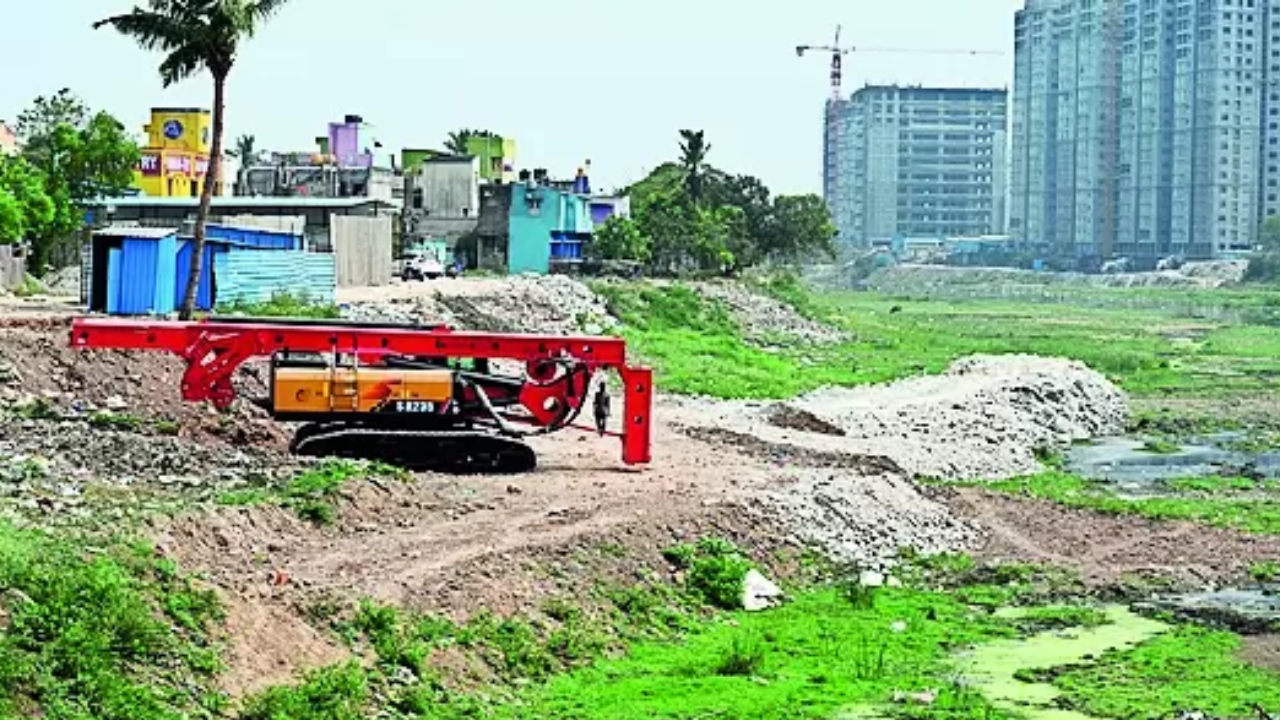
– The water resources department has taken a written undertaking from NHAI that all the approach lanes created inside the river would be removed before monsoon. “We will be doing a velocity study on the pile and pillar on the river. If water does not deviate much, it won’t be an issue. In some places, it can deviate into the adjoining localities. Here, we will have strong flood abetment walls. We are expediting the court cases to get encroachments removed so we have more buffer,” said WRD executive engineer, Radhakrishnan. An MoU was signed for the ₹5,885-crore project in 2022 for the project that was initiated in 2009. https://timesofindia.indiatimes.com/city/chennai/nhai-drills-cooum-river-bed-for-corridor-project/amp_articleshow/108312309.cms (08 March 2024)
Pune A water warrior with a vision Shailaja Deshpande, Founder, Director Jeevitnadi has been a strong voice leading the citizen movement in Pune city and raising awareness of the masses to the plight of the river Mula Mutha, addressing threats posed to the river due to release of untreated sewage in the river and aggressive projects such as the River Front development. Her vision is clear, to push forward for the demand to legalise the right of the river to flow, unbound, clean, bubbling with life. The pressure has gradually built and forced administrators and experts alike to look up and take notice of the issues raised by citizens about their river. https://www.indiawaterportal.org/articles/water-warrior-vision (06 March 2024)
RIVERS
Study River water quality shaped by land–river connectivity -This Review particularly focuses on the influential role of land–river connectivity in regulating water quality amid gradually changing climate and episodic climate extremes. Existing models and theories serve as strong foundations for gauging water quality responses to gradual climatic shifts but will nevertheless need further enhancements under unprecedented climate regimes. For climate extremes, forecasting water quality will necessitate fundamental paradigm shifts in process understanding and formulation of new theories and models that build upon innovative data collection technologies and strategies. https://www.nature.com/articles/s41558-023-01923-x.epdf (08 May 2022)
Report Rivers, nostalgia: Poet Jayanta Mahapatra’s essential art at 94 -Historicity, a strong component of Mahapatra’s thematic core, flows as a parallel space alongside his rivers of life. While his observations abound regarding the real rivers, the mythical river Chandrabhaga reiterates in his imagines and real spaces – including the name of his home and the title of the eminent journal – Chandrabhaga – he edits and publishes. One is reminded of the imagined flow another poet has mused about in his epical verses:
“Where Alph, the sacred river, ran; Through caverns measureless to man
Down to a sunless sea.” — From ‘Kubla Khan’ by Samuel Taylor Coleridge
-For the Kubla Khan of the “Silver City” Cuttack, the rivers are the lifelines of Mahapatra’s emotions, his ruminations, and his petitions that seek answers of identity, peace, and reconnecting back to a benevolent world – aspects that one find thinning in the thoughtless, dislocated, and disconnected anthropocene era. https://scroll.in/article/1049421/rivers-nostalgia-and-solitude-poet-jayanta-mahapatras-essential-art-at-94 (20 May 2023)
Odisha 4th Odisha River Conference will be organised at Angul on 21-22 March, World Water Day 2024.

Water Initiatives, Odisha (WIO), has invited nominations from individuals and communities for the 4th batch of Odisha Water Honours. The Odisha Water Honours, the only of its kind in the state, are meant to recognise dedicated individuals and communities for their pioneering contributions in the field of water/river/ecology conservation and restoration through various actions such as conservation, awareness, education, advocacy, and grassroots initiatives. https://pragativadi.com/nominations-invited-for-fourth-odisha-water-honours-first-youth4water-water-climate-impact-awards/ (08 March 2024)
Tamil Nadu Open defecation in rivers poses arisk: Conservationists The surge in devotees to multiple temple festivals in the buffer zone of the Mudumalai Tiger Reserve (MTR), is raising concerns about the possibility of river contamination due to open defecation. The MTR buffer zones hosts temple festivals in Bokkapuram, Siriyur, Chokkanalli, and Anaikatty each summer, when rivers flowing through the landscape have very little water in them. https://www.thehindu.com/news/cities/Coimbatore/open-defecation-in-mudumalais-rivers-during-temple-festivals-poses-a-risk-to-wildlife-conservationists/article67920193.ece (6 Mar 2024)
CAUVERY Karnataka ‘Save Coorg’ calls trend As the state battles the aftermath of a failed monsoon season in 2023, residents of Kodagu district, where the River Cauvery originates, have stepped up calls to save the district’s ecology, which has a direct bearing on the vital river apart from the ecologically sensitive Western Ghats. Through ‘Save Coorg,’ an online petition, residents and people belonging to Kodagu are hoping to draw the attention of the government to long pending problems of the district, including over tourism, mass conversions of wetlands and the rapid concretisation taking place in the district. https://www.thehindu.com/news/cities/bangalore/save-coorg-calls-trend-as-water-crisis-takes-centre-stage-in-karnataka/article67917084.ece (05 March 2024)
GANGA E-launch of ‘A narrative of the Ganga (a citizen’s report)’ book which is an outcome of the India Rivers Week 2018 conference. It is edited by Dr. Ravi Chopra, Shri Manoj Misra & Shri Manu Bhatnagar.

https://indiariversforum.org/wp-content/uploads/2024/03/ganga-citizens-report-final.pdf
Varanasi Iconic ghats face dangers of land subsidence The land along Varanasi’s iconic riverfront is sinking under the impact of relentless groundwater depletion and the unique geology that drives the Ganga’s flow along the city. Scientists at the Banaras Hindu University and Chapman University in the US, who combined data from satellites with groundwater and rainfall measurements, have calculated land subsidence rates ranging from 2mm per year to 8mm per year along the riverfront.Their study found cumulative subsidence levels ranging from 2cm to 2.5cm at the Manikarnika ghat (near the Kashi Vishwanath temple), Harishchandra ghat and the Ravidas ghat between February 2017 and August 2023. The subsidence levels ranged from 3cm to 5cm at the Chousatti, Prahlag and Samne ghats.
“Our findings highlight the need for systematic measurements of subsidence along the ghats,” Ashwani Raju, an assistant professor of geology at the BHU who led the study, told The Telegraph. Raju and his collaborators have published their findings in the peer-reviewed journal, Science of the Total Environment. The scientists have called for subsidence rates to be taken into account in future water management and groundwater use strategies for Varanasi, which has experienced steady groundwater depletion alongside population growth, rapid urbanisation and intensive cultivation on nearby farmland. https://www.telegraphindia.com/india/varanasis-iconic-ghats-faces-river-ganga-threat-scientists-flag-dangers-of-land-subsidence/cid/2005851 (10 March 2024)
The study involves 12 Ghats – all showing subsistence trends – and four other areas that too are sinking at a rate of 3-5 mm every year along the Ganga riverfront, primarily due to the impact of relentless groundwater depletion coupled with erosion caused by a meandering river. “The recharge of the aquifers by the monsoon is low as the rate of extraction is more than the rate of recharge,” said Raju, who along with other BHU colleagues and scientists from Chapman University, USA, examined the problem in detail using extensive satellite data. The monsoon rainfall is on a declining trend for the last 21 years between 1998 and 2018.
According to the CGWB, the city has nine administrative areas, out of which in three the ground water level is in “over-exploited” condition where in five the level is “semi-critical”. But even then, the most groundwater loss happens in the over-exploited zone. With subsistence being also reported from other Indo-Gangetic plain cities like Delhi, Lucknow and Kolkata, the BHU scientists said the results of the study should be included in framing water management strategies as climate change would seriously impact water resources in the future. The study has been published recently in the journal Science of the Total Environment. https://www.deccanherald.com/india/uttar-pradesh/varanasi-ghats-sinking-due-to-over-exploitation-of-groundwater-reveals-bhu-study-2929912 (10 March 2024)
Uttar Pradesh Former MP, aide get 7 years’ jail On May 11, 2020, Abhinav Singhal of Muzaffarnagar, working as Namami Gange project manager in Jaunpur, had filed a complaint against Dhananjay Singh and Santosh Vikram Singh. Singhal alleged that Santosh Vikram, along with two accomplices had kidnapped and taken him to the residence of the former MP. He also alleged that Dhananjay Singh came with a pistol, abused him and mounted pressure on him to supply substandard material. On refusal, he allegedly threatened him and demanded extortion, Singhal alleged. Based on the complaint, the police had registered the FIR against the former MP and his aide. Thereafter, both were arrested and later released on bail. https://www.hindustantimes.com/cities/lucknow-news/kidnapping-case-former-mp-dhananjay-singh-aide-get-seven-years-jail-poll-aspirations-jolted-101709735782105.html (06 March 2024)
YAMUNA Delhi Tale of parallel drains Bhim Singh Rawat, a Yamuna activist and member of the South Asia Network on Dams, Rivers and People (SANDRP) said DJB’s findings were fairly accurate, and claimed to have documented the same problem multiple times since 2010. “Both of these are supposed to be stormwater drains, but drain 6 carries toxic effluents and there is no permanent barrier between the two drains. During rains and even when flow is strong, drain 6 overflows into drain number 8. We have also seen sandbags placed in between at places to separate the two, which will clearly never work,” he added, stating the only solution in the long run is to prevent waste and effluents from entering drain 6 too. https://www.hindustantimes.com/india-news/tale-of-parallel-drains-djb-says-haryana-channel-impacting-delhi-s-water-supply-101709748272356.html (07 March 2024)
RIVERS BIODIVERSITY
Bihar 1st Dolphin Research Centre opened Forests and Chief Wildlife Warden PK Gupta told this reporter that the National Dolphin Research Centre (NDRC) is now operational and aims to assist scientists and researchers in studying Gangetic dolphins comprehensively. “The research will delve into various aspects such as changing behaviour, survival skills, food habits, causes of death, and more. The objective is to establish the NDRC as a centre of excellence,” he said. Gupta added the centre will also provide training to fishermen on how to conserve and protect dolphins during fishing. https://www.downtoearth.org.in/news/wildlife-biodiversity/india-s-first-national-dolphin-research-centre-finally-a-reality-94790 (04 March 2024)
FISH, FISHERIES, FISHERFOLKS
North East Scientists to study 3 fish species for climate vulnerability The move to conduct the study by the fisheries scientists from Assam, Manipur, Meghalaya and Nagaland came after the recently concluded 3-day GIZ, a German development agency sponsored workshop on ‘Climate Vulnerability Assessment of the Selected Fish Species in Northeast India’, at the Assam Don Bosco University campus in Sonapur on the outskirts of Guwahati.
-The three fish species are – Snow trout (Schizothorax richardsonii), Tor mahseer (Tor tor) and Tire track eel (Mastacembelus armatus). The findings of the study will help in developing a protocol for climate vulnerability assessment particularly for northeast India.
-The river systems in India’s northeast, including Brahmaputra, Barak-Surma-Meghna and Chindwin, which have a vast catchment area, are home to 435 fish species (as per IUCN 2010 reports), including 427 indigenous species. https://www.hindustantimes.com/cities/others/scientists-to-study-3-fish-species-for-climate-vulnerability-assessment-in-northeast-101709701504823.html (06 March 2024)
West Bengal Mafia turning arable land into ‘Bheris’ Naba Dutta, a well-known environmentalist and secretary of Sabuj Bachao Manch ( Save Green Forum ) told Newsclick that this was the situation not only in Sandeshkhali, but everywhere in South Bengal’s North and South 24 Parganas districts. Acres and acres of land is submerged in saline water, suitable for Vannamei cultivation, in major areas of the state, such as Sandeshkhali 1 and 2, Bhangore, Shashon, Haroa, Minakha, Bashirhaat and Sonarpur. As a result, the top soil is getting eroded, which takes at least 50 years for its formation.
NewsClick also spoke to leading science activist Sourav Chakraborty, assistant general secretary of the Paschim Banga Vigyan Manch (PBVM). He said his organisation had studied the root of this problem. “This is a man-made ecological disaster, with the entire ecology and humans deeply affected,” he said. “We have been able to interfere in some cases, but many cases remain unsolved. We are also starting an awareness campaign in the affected blocks of North and South 24 Parganas, asking people not to give away arable land for making bheris. We have also arranged meetings between those affected after forming of bheris and those who were contemplating to give up their land to make bheris,” he added.
Debasish Barman of Sundarbans fishermen community and president of All India Fishers and Fisheries Workers’ Federation, told NewsClick that the problem was recreation of topsoil in areas where the bheris had been forcibly made, creating a grave ecological problem. “Our organisation is against usurping arable land and turning those into bheris resulting in crop and vegetation loss in the area. As a resident of Hingalgunj, where, too, thousands of acres have been converted to bheris, the ramification of this is known to me,” he added.
Barman said: “Tillers are at first becoming fishery workers in their own land and then, when they are not gaining income from the operations, they are migrating to other states in search of work.” He further said that “signs of an ecological disaster can be seen everywhere. The toxic water of shrimp cultivation is contaminating the ground water resources of the area, tubewells are not working, and those that do, the water does not pass the quality tests”. It may be recalled that Prabhat Mishra, secretary, department of agriculture, West Bengal, had flagged concerns over increasing salinity levels in the Sundarbans due to heavy siltation, which was obstructing the flow of fresh water and disrupting the salinity balance. https://www.newsclick.in/bengal-local-mafia-turning-arable-land-bheris-creating-ecological-disaster-sandeshkhali-area (08 March 2024)
Flood drowned farming and fishing opportunities A flood originating in Sikkim in October 2023, covered farms along the Teesta riverbanks in the neighbouring state of West Bengal, with sand and silt, altering the agricultural landscape in the region. The affected farmers and fishers are facing difficulties in accessing government aid because of property rights and land ownership issues. The local people highlight the urgent need for an embankment to prevent future flooding impacts. A makeshift dam that was shielding homes from the Teesta river’s flooding has been impacted by the October flood.

The floods, that occur once every five to ten years, used to bring silt that revitalised lands, enhancing yield and soil quality, according to Manoranjan Biswas, deputy head of Chapandanga gram panchayat. The toll of the floods extends to the fishing communities that rely on the Teesta river for sustenance. Kankan Lahiri elaborated on their plight, “The water remains contaminated, with fish stocks depleted. Many have turned to migrant work or resorted to purchasing fish from elsewhere, with only a slight resurgence this January after a complete lull in November and December.” The farmers have not received any assistance from the government following the flood, they say. One of the reasons is that around 60% of these lands are khas lands, officially owned by the government, with no property rights granted to individuals, says Manoranjan Biswas of Chapandanga gram panchayat.
There was a makeshift dam, ‘bashta’r bandh’ made with cement bags right next to the barrage, shielding the fields and houses of the people in the area from floods in Teesta river, local people say. It was constructed some five years ago under the Mahatma Gandhi National Rural Employment Guarantee Scheme (MNREGS) by the local villagers, according to their claims. The flood affected this structure as the sand and silt covered it. The villagers now demand a dam to be constructed along that area, separate from the barrage, to protect the downstream region from further floods. https://india.mongabay.com/2024/03/sikkim-flood-drowned-farming-and-fishing-in-west-bengal/ (01 March 2024)
Karnataka Drought shrinks inland fisheries output by over 30% The severe drought this year has hit inland fisheries hard across the State as tanks and lakes are drying up. Officials in the Directorate of Fisheries say both production and sowing of inland fish have reduced by around 30% this year. Across the districts, fish production target reached only 65% and fingerling sowing has not crossed 70% of the target. https://www.thehindu.com/news/national/karnataka/drought-shrinks-inland-fisheries-output-by-over-30/article67834775.ece (01 March 2024)
Himachal Pradesh Pong fisheries body wants insurance policy expanded The Pong Dam Reservoir Fisheries Societies’ Association convened a meeting, presided over by association’s president Jaswant Singh, at Jawali today (Feb. 28). At the meeting, the association appealed to the state government to formulate an effective pro-fishermen policy as thousands of fishermen were facing problems in earning their livelihood. The association demanded relaxation in the existing life insurance cover (Rs 5 lakh) being provided by the state government to the fishermen by including all deaths. https://www.tribuneindia.com/news/himachal/pong-fisheries-body-wants-insurance-policy-expanded-595981 (29 Feb. 2024)
Kerala Century-old Jhankar offers a fascinating glimpse into the past In the vicinity of the Mullaperiyar dam, a time-worn Jhankar, which is believed to have played a pivotal role during the dam’s construction, offers people a fascinating glimpse into the past. According to experts, the normal lifespan of such vessels is 30 to 35 years. But this one is over 100 years old and has no significant damage.
“The Jhankar may have been constructed at the dam site during the dam’s construction period from 1886 to 1892. It was an open Jhankar, and had a hatch to enter it. Large stone pieces were used for the dam’s construction. It is believed that the Jhankar was used to ferry the stones and accessories,” Former Head of the Department of Cochin University of Science and Technology’s Ship Technology department K. Sivaprasad added.
“The Jhankar survived for over a century due to its mechanically strong joining technology,” he said. Also the high quality of steel used in its construction, likely considering that repairing and replacing the steel plates of the vessel would be difficult as it was to be used in a remote forest area, helped in minimising damage. The Mullaperiyar dam, located in Idukki district of Kerala, is 126 years old and is owned, operated, and maintained by Tamil Nadu. https://www.thehindu.com/news/national/kerala/over-a-century-old-jhankar-at-mullaperiyar-offers-a-fascinating-glimpse-into-the-past/article67932425.ece (10 March 2024)
SAND MINING
Haryana Firms misuse permits, issue fake eRawanas in Yamunanagar Three short-term permits (STPs) were illegally generated on the Haryana Mines and Geology Information System (HMGIS), a portal of the Mines and Geology Department, Yamunanagar, in the name of two firms, reportedly associated with construction work. This was allegedly done to issue fake eRawanas to the screening plants and stone crushers to carry out the business of illegal mining.
When the matter came to the notice of the Mining Department, they informed the higher authorities of the department and got an FIR lodged in connection with a case of misuse of STPs and HMGIS portal. https://www.tribuneindia.com/news/haryana/firms-misuse-permits-issue-fake-erawanas-in-yamunanagar-district-598018 (06 March 2024)
Uttar Pradesh NGT issues notice over illegal mining The NGT has formed a panel to investigate the matter thoroughly and tasked the committee with providing insights into the range of illegal mining operations and identifying those accountable for it. The tribunal was hearing a case in which it had taken suo motu cognisance of a media report alleging that some contractors were mining sand illegally in Nanglarai village, PTI reported. According to the report, unlicensed mining caused trenches that were around thirty feet deep. It also claimed that fields had been affected by overloaded sand-transporting vehicles, which also demolished a check dam built to stop floods. Next hearing on April 24. https://news.abplive.com/states/up-uk/uttar-pradesh-illegal-sand-mining-muzaffarnagar-ngt-issue-notices-cpcb-uppcb-1665058 (16 Feb. 2024)
बालू खनन से गंडक निगल गई पांच जिंदगियां अवैध बालू खनन के कारण छोटी गंडक नदियों में गहरे गड्ढे बन जा रहे हैं। जिसका अंदाज स्नान करने वालों को नहीं लग पा रहा है। उनकी नजर घाट से कुछ दूरी पर नदी में पानी कम होना लगता है, लेकिन बालू निकल जाने के कारण अचानक वह गहरे गड्ढे में चले जा रहे हैं। इससे गंडक में डूबने की घटना बढ़ी है। रतनपुरा गांव के पास गंडक नदी में पांच की डूबने से मौत का कारण यह भी हो सकता है। यहां बालू खनन का काम बेरोकटोक चलता है। https://www.amarujala.com/uttar-pradesh/deoria/gandak-river-became-well-of-death-due-to-sand-mining-swallowed-five-lives-deoria-news-c-7-gkp1010-209501-2023-06-16 (16 Jun. 2023)
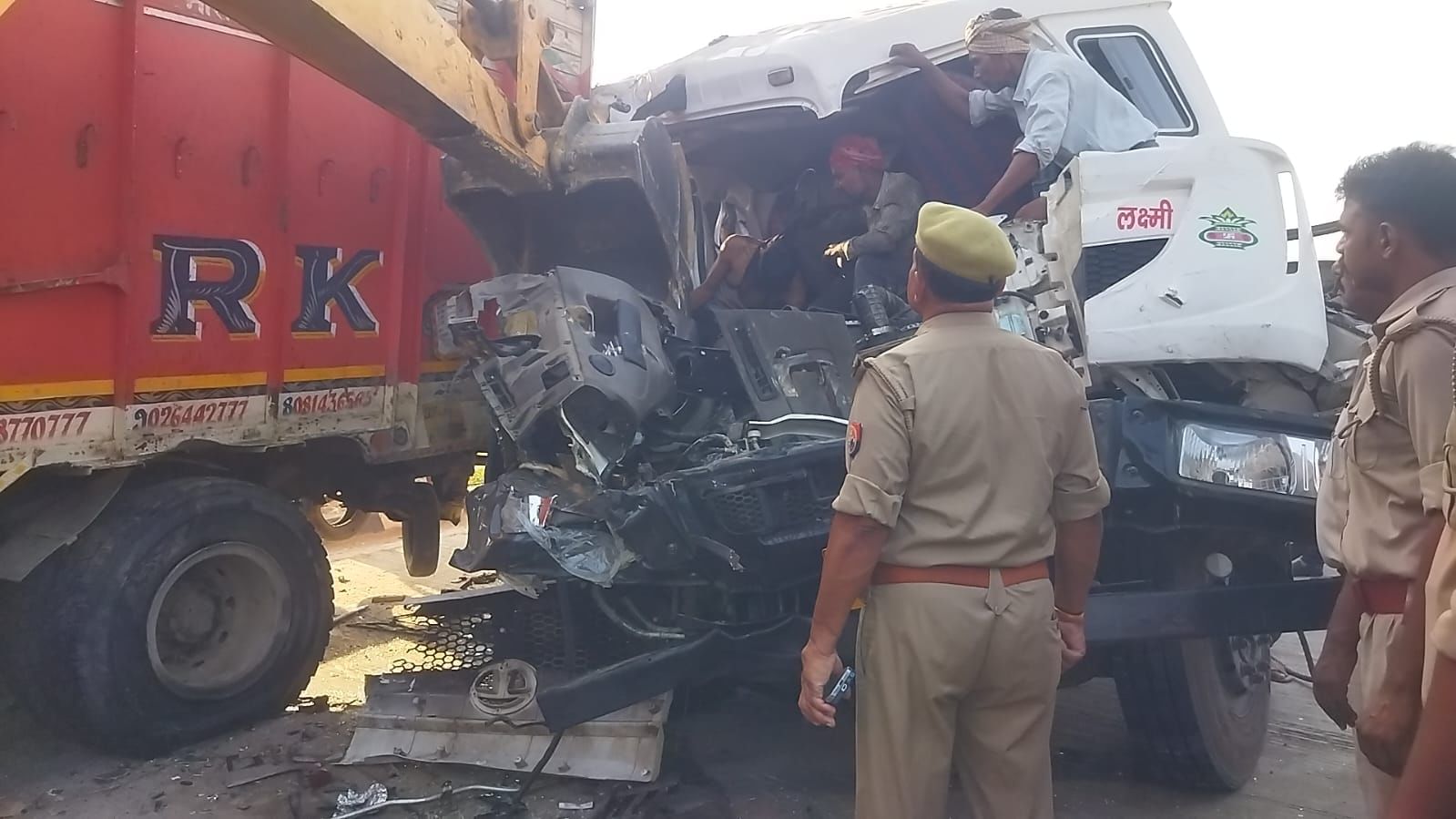
सिद्धार्थ नगर जिले के मदनपुर निवासी मुकेश त्रिपाठी (41) पुत्र प्रेमनारायण वाराणसी से ट्रेलर पर बालू लाद कर गोरखपुर के लिए निकला था। रविवार (Jan. 04) की भोर करीब चार बजे वह घोसी कोतवाली क्षेत्र के घोसी-नदवासराय स्थित फोरलेन के पास बने अंडरपास ब्रिज के पास पहुंचा था कि झपकी आने के चलते और तेज रफ्तार होने के चलते चालक ट्रेलर पर नियंत्रण नहीं रख सका और सामने खड़ी ट्रक से टकरा गया। https://www.amarujala.com/uttar-pradesh/mau/mau-accident-uncontrollable-trailer-full-of-sand-collided-with-a-standing-truck-driver-died-2023-06-04 (04 Jan. 2024)
Bihar RJD leader arrested in sand mining case Senior Rashtriya Janata Dal (RJD) leader Subhas Yadav, considered a close aide of Lalu Yadav, was arrested by the Enforcement Directorate (ED) on Sunday (March 10) linked to an illegal sand mining case. Ahead of the arrest, the ED conducted 14-hour raid conducted by the ED at eight locations.
The move comes after a probe under the Prevention of Money Laundering Act (PMLA) was started against him based on 20 FIRs were lodged against M/s Broadsons Commodities Pvt Ltd (BCPL), a firm headed by Yadav. “The FIRs accused BCPL of engaging in illegal sand mining and sale without using e-challans, raising serious concerns about environmental regulations and revenue losses,” NDTV report stated. The probe showed that ₹161 crore profit was garnered by the firm through the illegal sale of sand.
Last year, the ED had arrested Bihar MLC and JD(U) leader Radha Charan Sah, his son Kanhaiya Prasad and directors of Broadsons Commodities Mithilesh Kumar Singh, Baban Singh and Surendra Kumar Jindal in the case and they are currently lodged in jail under judicial custody. The agency had filed a charge sheet against them before a Patna special PMLA court in November 2023. https://www.livemint.com/politics/news/lalu-yadavs-close-aide-subhas-yadav-arrested-in-sand-mining-case-11710044103133.html (10 March 2024)
बालू माफियाओं ने किया जानलेवा हमला पीड़ित सड़क निर्माण कंपनी के कर्मियों का कहना है कि बिक्रमगंज में सड़क निर्माण कार्य जारी है। लेकिन निर्माण स्थल पर भारी वाहनों के प्रवेश की पाबंदी होने के बाद भी बालू माफिया बलपूर्वक निर्माणाधीन सड़क से बालू के पानी टपकते हुए ओवरलोड हाइवा पार कर रहे हैं, जिससे निमार्णाधीन सड़क खराब हो रही है।
-इसकी शिकायत पुलिस से करने के बाद भी कार्रवाई नहीं की जा रही है। इसी बीच निर्माणधीन सड़क से बालू से पानी टपकता ओवरलोड वाहन पार करने लगा तो उसकी तस्वीर खींचने पर आक्रोशित बालू माफियाओं सह लाइनरों ने सड़क निर्माण कंपनी की कर्मियों की जमकर पिटाई कर दी, जिससे तीन-चार की संख्या में कर्मी घायल हो गए। बिक्रमगंज थाने में शिकायत करने के बाद भी इसकी नोटिस नहीं लिया गया। अंततः मजबूरन कर्मियों ने सड़क जाम कर किया।
-सबसे बड़ी बात है कि थाने से महज थोड़ी दूरी पर दो घंटे की सड़क जाम की जानकारी ब्रिक्रमगंज थानाध्यक्ष को नहीं होना कई सवाल खड़ा कर रहा है। ज्ञात हो कि बिक्रमगंज इलाके में अवैध ओवरलोड बालू का कारोबार जारी है। आए दिन सड़क दुर्घटना भी घट रही है। सड़क निर्माण कार्य भी बाधित है। फिर भी बिक्रमगंज थाने की पुलिस का इस ओर ध्यान नहीं है, जिससे बिक्रमगंज पुलिस पर सवाल खड़ा हो रहा है। https://www.amarujala.com/amp/bihar/bihar-sand-mafia-carried-out-deadly-attack-on-road-construction-company-workers-in-rohtas-2024-03-08 (08 March 2024)
बालू लदा ट्रक पलटने से खलासी की मौत बक्सर में बालू लदा ट्रक पलटने से खलासी की मौत हो गई और चालक गंभीर रूप से घायल हो गया। चालक ट्रक के अंदर फंस गया था, काफी मशक्कत के बाद उसे निकाला गया। मृतक की पहचान चंद्रप्रकाश पांडेय का बेटा 16 वर्षीय संगम पांडेय के रूप में की गई। https://www.bhaskar.com/local/bihar/buxar/news/helper-dies-driver-injured-after-sand-laden-truck-overturns-132500917.html (Feb. 2024)
बालू खनन से मोरहर नदी में बने 30 फीट गहरे गड्ढे में डूबने से छात्र की मौत https://www.dailymotion.com/video/x8orkrs (Nov. 2023)
Madhya Pradesh दो थानों की पुलिस पर हमला कर छुड़ा ले गए बालू का ट्रैक्टर शहडोल जिले में बीते साल नवंबर महीने में खनन माफियाओं द्वारा ट्रैक्टर से कुचलकर पटवारी प्रसन्न सिंह को मौत के घाट उतारा गया था। बावजूद इसके खनन माफियाओं के हौसले इस कदर बुलंद है कि अब वो पुलिस पर भी हमला करने से गुरेज नही कर रहे है।
दरअसल खैरहा थाना क्षेत्र के मझियार गांव स्तिथ सरफा नदी में रेत का खनन और परिवहन रोकने गए कांस्टेबल और थाना प्रभारी पर रेत माफियाओ ने जानलेवा हमला कर दिया। जानकारी अनुसार खैरहा पुलिस को खबर मिली थी कि सरफा नदी में रेत का अवैध खनन हो रहा है। जिस पर थाना प्रभारी दिलीप सिंह और आरक्षक सतीश चौरसिया मौके पर पहुंचकर ट्रैक्टर को रोककर थाना ले जाने लगे। तभी कुछ लोग बाइक से वहां पहुच गए और पुलिस कर्मी से मारपीट कर ट्रैक्टर ट्राली छुड़ाकर ले गए। https://hindi.oneindia.com/amphtml/news/shahdol/shahdol-sand-mafia-attacks-police-and-takes-away-sand-tractor-madhya-pradesh-869299.html (07 Jan. 2024)
Maharashtra Speeding sand truck rams several vehicles; one killed A sand-laden truck ran into several vehicles at the busy Water and Land Management Institute (WALMI) Naka on Paithan road on Friday ( Jan. 19) evening, killing at least one woman and injuring more than 10 commuters. After struggling for a couple of hours, all the injured people were pulled out and rushed to the government medical college and hospital.
According to the eyewitnesses, the speeding truck was heading towards Dhule from Solapur highway, when the driver lost control and rammed into the vehicles that were moving at a snail’s speed on the busy road. However, since all the vehicles were stuck together, it took a long time to separate them. The accident resulted in the piling up of crushed vehicles, including bikes and pieces of glass spread all over the road. The commuters, along with the police, had to struggle to remove some drivers stuck in these vehicles.
-Waluj police inspector Dilip Gangurde said the vehicles were moving slowly due to ongoing road repair work at WALMI Naka. At around 7.30pm, a speeding truck, coming from Solapur Dhule highway rammed into stationary vehicles. The speed of the truck was so fierce that it blew away a four-wheeler, two tempos, cargo and five two-wheelers.” The officer said it is being claimed that the truck’s brakes failed. But it will be clear only after inspection. https://timesofindia.indiatimes.com/city/aurangabad/sand-truck-rams-several-vehicles-one-killed-in-chhatrapati-sambhajinagar/articleshow/107003155.cms (20 Jan 2024)
Nagaland Eight die in tragic vehicle collision In an unfortunate incident, 8 passengers died when the vehicle (Sumo) they were travelling in reportedly collided with a sand laden truck at Kandinu Area, situated between Tseminyu and Wokha, this morning. The Sumo was bound to Mokokchung en route from Kohima. The Additional S.P. Wokha has informed that the Wokha Police received information about the incident around 7:40 am. Upon receiving the report, the police along with the Traffic IC and a recovery van was dispatched to the scene for the rescue operation. Download Nagaland Tribune app on Google Play It has been reported that there were eight passengers in the ill-fated Sumo, consisting of six females and two males including the driver. Official sources informed that seven of them were pronounced dead on the spot, while one female succumbed on the way to the hospital. https://nagalandtribune.in/eight-die-in-tragic-vehicle-collision-in-kandinu-area-in-tseminyu/ (20 Sept. 2023)
Andhra Pradesh NGT refers illegal mining case to SC The NGT on Wednesday (Feb. 21) referred the illegal sand mining case to Supreme Court as Andhra Pradesh govt has challenged its earlier orders imposing Rs 18 crore penalty for each of the Environmental Clearances (EC) issued. While issuing orders cancelling 110 ECs, the NGT also directed MoEF to constitute a joint committee to assess the environmental compensation for mining carried out by the project proponents. Following the orders of the NGT, the MoEF team conducted inspections in Krishna and Guntur districts and noted several violations including illegal sand mining without any environmental clearence. The NGT had red flagged the use of of heavy machinery. https://timesofindia.indiatimes.com/city/vijayawada/ngt-refers-illegal-sand-mining-case-to-supreme-court/articleshow/107898420.cms (22 Feb. 2024)
Illegal mining going on: Panel -The High Court has directed the District Collector of Krishna to prevent illegal sand mining in Krishna river at Nadikuduru and Nimmagadda villages in Challapalli mandal. The court directed the Collector to submit a report on the steps taken to stop illegal sand mining in the river. The court gave these orders while hearing a public interest litigation filed by social activist T Leela Krishna alleging illegal sand mining in the two villages. The petitioner’s counsel informed the court that the local tahsildar and police were turning a blind eye to the blatant illegal sand mining in the river and demanded action. https://www.newindianexpress.com/states/andhra-pradesh/2024/Feb/22/illegal-sand-mining-going-on-in-andhra-pradesh-joint-committee-report (21 Feb. 2024)
Tamil Nadu ED probes money trail The ED investigators are verifying huge money transfers involving certain individuals, contractors and prime suspects, in the ₹4,730 crore scam involving the illegal sale of river sand. https://www.thehindu.com/news/national/tamil-nadu/sand-mining-in-tn-enforcement-directorate-probes-money-trail-involving-contractors-individuals/article67931517.ece (09 March 2024)
WETLANDS, LAKES, WATER BODIES
MoEF Panel to study impact of construction on Ramsar site in Delhi-NCR -Concerned about the potential impact of several housing and infrastructure projects in areas surrounding the Sultanpur National Park in Haryana, the National Board for Wildlife has ordered the setting up of a committee to study their cumulative impact on the internationally important wetland. Discussing a proposal for the use of land within the eco-sensitive zone of the Sultanpur National Park for the construction of a low-cost housing project, the standing committee of the National Board for Wildlife (NBWL) noted that the construction of such projects in the area is impacting the national park, which is also a Ramsar site, according to the minutes of a meeting dated February 28. https://www.theweek.in/wire-updates/national/2024/03/04/del124-env-haryana-wetland.html (04 March 2024)
WATER OPTIONS
Rajasthan Excellent story of how women of resort dominated villages of Jaisalmer saved their water.

https://www.magzter.com/de/stories/newspaper/Dainik-Bhaskar-Mumbai/1709874899251 (08 March 2024)
URBAN WETLANDS, LAKES, WATER BODIES
Bhopal SC upholds ban on cruise, motorboats on Upper Lake A division bench of Supreme Court on Monday (March 04) dismissed an appeal by MP Tourism Development Corporation (MPTDC) against a NGT order banning cruise and motor boats on Bhopal’s Upper Lake. A copy of the order was yet to be uploaded on the SC website, but petitioner in the case before NGT, Subhash C Pandey, said that the apex court expressed surprise at MPTDC, a public sector undertaking, challenging an NGT order.

-The bench of Justice Abhay S Oka and Justice Ujjal Bhuyan pointed out that NGT has made an effort to save lakes in Madhya Pradesh, and said SC fails to understand how the state’s tourism development corporation can be aggrieved with such a green order. Pandey, a Bhopal-based environmentalist, had moved NGT seeking a ban on motorised boats on Upper Lake and the construction of a proposed restaurant on the lake by MPTDC. He said the cruise was polluting Upper Lake, which is part of Bhoj wetlands, a Ramsar site. He also pointed out that a large section of Bhopal’s population is supplied drinking water from the lake.
-The NGT restrained the authorities from operating cruise boats and other motor boats in Upper Lake and other designated wetlands and ordered demolition of ‘any permanent construction’ (restaurant). https://timesofindia.indiatimes.com/city/bhopal/sc-upholds-ban-on-cruise-motorboats-on-upper-lake/articleshow/108251749.cms (06 March 2024)
Haryana Najafgarh wetlands to get conservation cover Haryana has sought six-week time to designate the water body as a transboundary wetland. Lying on the border of Haryana and Delhi, the wetlands were accepted as a designated water body by the state in 2017, but it never notified it. The fact was brought to the fore in a petition filed with the NGT by INTACH (Indian National Trust for Art and Cultural Heritage). Taking cognisance of the same, the tribunal directed the state to update the same and it has sought six-week time to do so.
-The lake is also mentioned in the Haryana state wetland atlas as a depression, which makes it a fit case for protection and conservation. The matter of the jheel’s conservation is now before the National Green Tribunal after being dragged to the Supreme Court once. In January 2022, while seeking legal protection for the jheel, the NGT had directed the Union Environment Ministry to prepare an integrated Environmental Management Plan (EMP) to conserve the transboundary wetland. https://www.tribuneindia.com/news/haryana/finally-najafgarh-wetlands-to-get-conservation-cover-597720 (05 March 2024)
Najafgarh Jheel still awaits a wetland tag from govt NGT has sought a timeline from Haryana govt after it failed to declare Najafgarh Jheel as a wetland despite an order seven years ago. The bench of NGT chairperson Prakash Shrivastava, judicial magistrate Sudhir Agarwal and expert members A Senthil Vel and Afroz Ahmad asked the govt to submit in six weeks a report outlining what steps it would take to restore the waterbody after declaring it as a wetland. “State of Haryana seeks six weeks’ time to file the further affidavit disclosing the time schedule within which the process of notification of Najafgarh Jheel as a transboundary wetland will be completed at the end of State of Haryana,” the tribunal said on Feb 16. The order, however, was uploaded on Monday (March 04). It scheduled the next hearing for April 25. https://timesofindia.indiatimes.com/city/gurgaon/7-years-counting-najafgarh-jheel-still-awaits-a-wetland-tag-from-govt/articleshow/108219826.cms (05 March 2024)
Cuttack Odisha HC seeks status report on water bodies The Orissa high court on Monday (Feb. 05) expressed displeasure over the “negligence” of Cuttack Municipal Corporation (CMC) towards preservation of water bodies and sought a detailed status report on the 231 private tanks claimed to be existing in the city 14 years ago. The HC gave the direction after perusing an affidavit filed by CMC in pursuance of an order passed on September 21, 2023, on a PIL seeking intervention for conservation of water bodies in Cuttack. https://timesofindia.indiatimes.com/city/cuttack/hc-seeks-status-report-on-cuttack-water-bodies/articleshow/107475068.cms (07 Feb. 2024)
URBAN WATER
Coimbatore No end to manual scavenging The inhuman and dangerous manual sewer cleaning is still on even though the Supreme Court has directed the Centre and states to eliminate it in a phased manner. The Coimbatore City Municipal Corporation (CCMC), which is the second largest in Tamil Nadu in terms of area under its jurisdiction as well as revenue generation, still deploys manual labour to clear blockages in sewers and stormwater channels in the city.
Activists have slammed the civic body for deploying humans instead of machines to clean the city’s drains. Labourers can be often seen clearing drains with bare hands. The majority of the roads in the city lack proper stormwater drains. Some of the existing drains were built by the civic body several decades ago. Most of the existing stormwater drains in the city have been turned into sewer channels, carrying black water and other garbage. Due to this, the drains frequently get clogged and foul odour starts spreading in the city. https://www.newindianexpress.com/states/tamil-nadu/2024/Mar/10/no-end-to-manual-scavenging-in-coimbatore-city (10 March 2024)
Gautam Budh Nagar 6 housing societies asked to fix dysfunctional RWH system At least six housing societies in Gautam Budh Nagar have been asked to fix their dysfunctional rainwater harvesting system following an inspection, officials said on Saturday (March 09), adding that two others, who didn’t even have the water harvesting system in place, have been issued notices. The development came as the district ground water department is carrying out inspections to check illegal extraction of groundwater by various establishments across the district in the light of Gautam Budh Nagar administration’s directions given earlier this week for the same.
There are around 600-650 establishments across Gautam Budh Nagar, including industrial, commercial, residential, government buildings, among others, that have acquired NOCs for groundwater extraction, as of February 2024. The department levies a penalty ranging from ₹2 to 5 lakh on erring establishments on the first offence, on all types of buildings. The fine is doubled in case of repetition of offence, according to officials. In November 2023, a fine of ₹23 lakh was imposed on various entities including housing societies for illegally extracting groundwater while a case was also registered against one of the housing societies in Greater Noida (West). https://www.hindustantimes.com/cities/noida-news/six-housing-societies-asked-to-fix-dysfunctional-rain-harvesting-system-101710007595781.html (10 March 2024)
MONSOON 2024
WMO 2024 will see extreme weather events In its latest update, the World Meteorological Organisation (WMO) said there is about a 60 per cent chance of El Nino persisting during March-May and an 80 per cent likelihood of neutral conditions (neither El Nino nor La Nina) during April to June.There is a chance of La Nina developing later in the year but those odds are currently uncertain, it said. Scientists closely tracking the development in India have said La Nina conditions setting in by June-August could mean monsoon rains would be better this year than in 2023. https://timesofindia.indiatimes.com/india/why-2024-will-see-extreme-weather-events/articleshow/108253767.cms (06 March 2024)
El Niño and the summer, monsoon -As the country awaits the Long Range Forecast (LRF) for the upcoming southwest monsoon, expected to be released by the IMD by mid-April, the prediction about the development of ENSO neutral conditions would suggest that the southwest monsoon may not be directly impacted by the ongoing El Niño episode. There are chances of normal monsoon rainfall — provided other ocean-atmosphere parameters, wind conditions, formation of low pressure systems, etc remain favourable — this year. https://indianexpress.com/article/explained/explained-climate/el-nino-and-the-summer-monsoon-what-is-in-store-this-year-9201948/ (08 March 2024)
Uttarakhand गोविंद बल्लभ पंत कृषि एवं प्रौद्योगिकी विश्वविद्यालय के वैज्ञानिकों द्वारा किए अध्ययन से पता चला है कि पिछले चार दशकों के दौरान उत्तराखंड के तराई क्षेत्र में होने वाली बारिश में उल्लेखनीय कमी आई है। इसी तरह 1981 से 2020 के बीच इस क्षेत्र में धूप के घंटे और वाष्पीकरण में भी गिरावट दर्ज की गई है। वहीं दूसरी तरफ वैज्ञानिकों ने इस क्षेत्र में तापमान के पैटर्न में भी उल्लेखनीय बदलाव दर्ज किए हैं, जो क्षेत्र में फसलों की पैदावार को बुरी तरह प्रभावित कर सकता है। https://www.downtoearth.org.in/hindistory/climate-change/climate-crisis/changing-temperatures-and-decreasing-rainfall-and-sunshine-threaten-agriculture-in-uttarakhand-s-tarai-region-94841 (06 March 2024)
ENVIRONMENT GOVERNANCE
Uttarakhand SC sets up panel to look into tiger safaris, ecological damage at Corbett The Supreme Court Wednesday (March 6) ordered the setting up of a committee that would suggest ways to repair the ecological damage in the Jim Corbett National Park caused by illegal construction and tree felling. The committee will also look into concerns around tiger safaris in the buffer areas of national parks, and issue requisite guidelines. Specifically, on the Pakhrau Tiger Safari in Uttarakhand’s Kalagarh division, the SC came down heavily on the state government, citing a Central Empowered Committee report on the illegal felling of over 6,053 trees for the safari. https://indianexpress.com/article/explained/sc-panel-tiger-safaris-jim-corbett-what-was-the-case-9199887/ (08 March 2024)
Collusion minister, officer led to damage: SC Justice BR Gavai, heading the bench, termed it a “classic case” of neglecting public trust doctrine, stating, “This case illustrates how collusion between a politician and a forest officer resulted in significant environmental damage for political and commercial gain.” The judgment noted, “The aesthetic use of natural resources cannot be eroded for private or commercial interests unless courts deem it necessary for public good.” The court said Rawat and Chand “considered themselves above the law,” felling nearly 6,000 trees despite clearance for only 163 to construct buildings under the pretext of promoting tourism. https://www.hindustantimes.com/india-news/collusion-between-u-khand-minister-officer-led-to-damage-apex-court-101709749594149.html (07 March 2024)
-The SC has allowed the tiger safari project since it is ‘80% complete’. In its order, it also stipulates which animals can be displayed and where, Zoologists and animal conservation experts, however, remain sceptical about the idea of a tiger safari, believing it could harm wildlife habitats. https://theprint.in/environment/conservationists-call-sc-order-allowing-corbett-tiger-safari-ill-advised-could-alter-areas-ecology/1991488/ (07 March 2024)
Karnataka Workshop discusses environmental issues A three-day environment workshop was held last week for environment conservation enthusiasts in Kankumbi near Khanapur of Belagavi district. Organiser Nyla Coelho said the idea was to draw the attention of the State’s polity, citizens and environmentalists to environmental concerns of this region of the Western Ghats and of North Karnataka.
Anjaneya Reddy of Chikballapura and Nirmala Gowda of Paani Earth Foundation spoke on the need to save water resources. They gave examples of some such successful attempts, including interventions that have saved some rivers from industrial pollution in Bengaluru. Issues such as the proposed river diversion projects on the Mahadayi and its tributaries, Kalasa and Banduri, and implications of changes in land use patterns in Bhimgad sanctuary were discussed. https://www.thehindu.com/news/national/karnataka/workshop-discusses-environmental-issues-of-the-western-ghats-in-the-belagavi-region/article67929773.ece (08 March 2024)
Report Environmental & livelihood toll of decade-long infrastructure drive In the past decade, NDA’s approach to development through relentless pursuit of infrastructure has come at a steep cost. To say the least, it has been both uncooperative and myopic in nature. The article is the eighth in a series co-curated by The Wire and Centre for Financial Accountability. https://thewire.in/government/concrete-ambitions-the-environmental-and-livelihood-toll-of-bjps-decade-long-infrastructure-drive (10 March 2024)
CLIMATE CHANGE
Amitav Ghosh wins Erasmus Prize Eminent writer Amitav Ghosh has been awarded the prestigious Erasmus Prize 2024. “He receives the prize for his passionate contribution to the theme ‘imagining the unthinkable’, in which an unprecedented global crisis, climate change, takes shape through the written word,” Utrecht-based Praemium Erasmianum Foundation said. https://timesofindia.indiatimes.com/india/amitav-ghosh-wins-erasmus-prize-for-writings-on-climate-change/articleshow/108311854.cms (08 March 2024)
SOUTH ASIA
India-Pakistan Shahpurkandi Dam: Experts advocate cooperation for water security Erum Sattar from Pakistan and Uttam Kumar Sinha from India discuss the Shahpurkandi dam’s implications, stressing the importance of collaboration under the Indus Waters Treaty.
– Erum Sattar, Water law expert with a doctorate from Harvard Law School: But just because the treaty allows maximum utilisation by the two countries of ‘their’ respective rivers does not mean that the countries should not reach agreement and make provisions for environmental flows – even if that means making addendums to the IWT. Pakistan should put together a proposal under Article 7 of the treaty that creates the basis for future cooperation along the Indus River system. It should share its best-use ideas with India and the world immediately. Given its dependence on judicious and forward-thinking management of the rivers of the Indus, this is the need of the hour.
– Uttam Kumar Sinha, senior expert on transboundary rivers, author of Indus Basin Uninterrupted: It is important to seriously look at what can be done within the framework of the IWT to foster cooperation given the changing Indus basin dynamics. https://www.thethirdpole.net/en/regional-cooperation/shahpurkandi-dam-india-pakistan-experts-advocate-cooperation-for-water-security/ (09 March 2024)
India-Bangladesh Farakka Committee urges to renew Ganges treaty, sign new treaty on Teesta The International Farakka Committee on March 9 urged Dhaka and Delhi to renew the Ganges Water Sharing Treaty and sign a treaty on the Teesta with guarantee and arbitration clauses. Announcing a joint statement at the National Press Club, Dhaka, Prof Jasim Uddin Ahmed, president of the International Farakka Committee, Bangladesh said that the 54 common rivers shared among the countries could be sustainably developed only on the basis of a basinwide agreement. A 30-year treaty was signed in 1996 for the sharing of Ganges water. The treaty will expire in 2026. The current treaty does not have guarantee and arbitration clauses. This weakness of the treaty must be overcome at the time of renewal. https://www.tbsnews.net/bangladesh/int%27l-farakka-committee-urges-dhaka-delhi-renew-ganges-treaty-sign-new-treaty-teesta (09 March 2024)
CHINA
Protests erupt over controversial dam construction Central to the discord is China’s relentless exploitation of Tibet’s abundant natural resources, epitomized by the construction of colossal infrastructure projects like the 13-story, 13900 MW Kamtok (Kham Dige) Dam on the Drichu (Yangtse) river. Local Tibetans fear not only displacement but also the imminent threat of flooding to cherished landmarks, including the 13th-century Wonto Monastery, revered for its profound historical and religious significance. https://www.financialexpress.com/business/defence-tibetan-resistance-resurfaces-protests-erupt-over-controversial-dam-construction-3420507/ (10 March 2024)
ASIA
Iraq Rampant water pollution threatens shrinking rivers Stricken by drought and depleted by upstream dams, Iraq’s once mighty rivers the Tigris and Euphrates are suffocating under pollutants from sewage to medical waste. In a country where half the population lacks access to safe drinking water, according to UN figures, state institutions are to blame for a man-made disaster which is turning rivers into waste dumps. https://timesofindia.indiatimes.com/home/environment/rampant-water-pollution-threatens-iraqs-shrinking-rivers/articleshow/107868779.cms (21 Feb. 2024)
EUROPE
Dismantling dams The decommissioning of the three Finnish dams is not an isolated case, however. Across Europe, many dams are either approaching the end of their operational life, or the costs of their maintenance are outweighing the benefits they provide. Similarly, in the United States, many are due to be re-licensed, sparking discussions about whether they are still fit to yield services. And it is not just big dams: millions of small barriers block European rivers. Until recently, a comprehensive assessment of the extent of river fragmentation in Europe was lacking. But now it exists, the case for dam removal has been building.
-While Europe and the US are showing that barrier removal can be a viable option to restore river connectivity, there is still a long way to go however. Researchers are worried about the prospect of new dams planned along major rivers such as the Amazon, the Congo and the Mekong basin. Similar worries concern also the Balkans, where there are plans to build numerous small hydropower plants that research suggests will generate less power than a larger equivalent.
-Removing barriers in Europe won’t make sense if small, minimally effective hydropower dams are built elsewhere in the world, says Garcia de Leaniz. “We need to look at the big picture: [small dams] are not going to produce a lot of electricity, and they are still going to cause a lot of damage,” he says. “We should get rid of those barriers that are obsolete: it’s not about removing all barriers, but removing the barriers that cause more damage than good.” https://www.bbc.com/future/article/20240229-why-europe-is-removing-its-dams (05 March 2024)
THE REST OF THE WORLD
USA Judge orders breach of dam at HEP -A federal judge ordered Electron Hydro to breach its dam on the Puyallup River because it violates the Endangered Species Act. In summer 2020, the company used artificial turf during construction at the dam. The river tore through the turf and washed toxic bits of ground-up tires downstream, leading to criminal charges and millions of dollars in fines and settlements.
-Shortly after the spill, and because it could not complete its original plans, the company installed a rock-and-sheet-pile section of the dam, and it has remained in place since. The Puyallup Tribe sued the company over that newer portion of the dam, arguing that it harmed fish protected under federal law. The river is home to protected Chinook salmon, steelhead and bull trout.
-After visiting Electron Hydro’s facilities on the river Thursday (Feb. 15), Judge John Coughenour issued a written order Friday (Feb. 16) for the company to apply for permits to begin removing the bulk of the dam before adult salmon return to spawn, with work to not extend beyond Sept. 15. https://www.seattletimes.com/seattle-news/environment/judge-orders-breach-of-dam-at-hydroelectric-project-on-puyallup-river/ (16 Feb. 2024)
DEEP asks lawmakers for greater powers to fix failing private dams The Connecticut state Department of Energy and Environmental Protection (DEEP) has proposed a dam safety bill for the Connecticut General Assembly to consider that would make it illegal for any entity to maintain a dam in condition “that might endanger life or property.” The proposed legislation would also empower the DEEP commissioner to order private owners of dams around the state to fix any safety issue in a timely manner. According to DEEP officials, there are about 4,800 dams in Connecticut, many of which are privately owned by businesses, land trusts, or even municipalities. “It does clarify our authority to go in and, potentially, take action to put a privately owned dam into safe condition,” said Emma Cimino deputy commissioner of the DEEP Environmental Quality Branch, which oversees the Dam Safety Office. The bill makes it explicit that DEEP would be allowed to seek cost recovery from the owner for any money it spends to address imminent, substantial threats to public safety.
– Environmental groups urged the state to make it explicit in the proposed law that DEEP would have the authority to remove old dams, rather than just restore them. They pointed to successful dam removal and remediation projects, like the Lilly Pond Dam in New Haven, that improved river health and mitigated flooding. https://www.ctinsider.com/politics/article/ct-deep-dams-failing-aging-flooding-18707209.php (09 March 2024)
Thousands of salmon dead from ‘gas bubble disease’ Last week, the California department of fish and wildlife (CDFW) released 830,000 hatchery-raised fall-run Chinook, only to discover days later that they were dying downstream of the 173ft Iron Gate dam, which is scheduled to be demolished soon. A tunnel at the dam’s base had been opened to allow the river to pass freely across it for the first time in a century, a step before the structure could be fully removed.
-Many of the young fish, which were only 1-2in long, appear to have died passing through that tunnel, because the water pressure inside was too great for them. Officials do not know exactly how many of the fry have died, but expect a “very high mortality rate”, according to Jordan Traverso, deputy director of communications for the CDFW. https://www.theguardian.com/environment/2024/mar/05/salmon-klamath-river-dam-removal-project (05 March 2024)
Report Scientists seek to understand impacts of historic lack of Great Lakes ice -As climate change accelerates, scientists are scrambling to understand how iceless winters could affect the world’s largest freshwater system. Most of the effects are still theoretical since the lakes are generally too treacherous for data-gathering expeditions during the coldest months and biologists have long thought that little ecological activity takes place under the ice anyway. But they say the changes could have serious environmental, economic and cultural impacts, including by harming certain fish species, eroding beaches, fueling algae blooms and clogging shipping channels. https://www.hindustantimes.com/world-news/us-news/fewer-fish-and-more-algae-scientists-seek-to-understand-impacts-of-historic-lack-of-great-lakes-ice-101709788313653.html (07 March 2024)
Geologists reject the Anthropocene as Earth’s new epoch -One emerging argument is to define the Anthropocene as an ‘event’ in geological history — similar to the rise of atmospheric oxygen just over 2 billion years ago, known as the Great Oxidation Event — but not as a formal epoch2. This would make more sense because geological events unfold as transformations over time — such as humans industrializing and polluting the planet — rather than an abrupt shift from one state to another, says Erle Ellis, an ecologist at the University of Maryland Baltimore County in Baltimore, Maryland. “We need to think about this as a broader process, not as a distinct break in time,” says Ellis, who resigned from the Anthropocene working group last year because he felt it was looking at the question too narrowly. https://www.nature.com/articles/d41586-024-00675-8 (06 March 2024)
SANDRP
Also see: DRP 04 March 2024 & DRP 26 Feb. 2024
Follow us on: www.facebook.com/sandrp.in; https://twitter.com/Indian_Rivers

 SANDRP