
(Feature Image: PKC link index map. Source: Feasibility Report of Parbati Kalisindh Chambal Link Project. NWDA)
Yamuna the largest tributary of National River Ganga has already been succumbing on account of dams, hydro projects, unsustainable riverbed mining and ever-increasing pollution load in Himalayan, upper and middle segments. Despite this, the river has managed to be in better shape and size in its lower segment mainly due to its tributaries network including Chambal, Sind, Kali Sindh, Betwa, Ken etc. However, now there are river interlinking plans threatening the remaining relatively flowing and living stretch of the river in this very lower segment.
The push for country’s so called first river interlinking plan namely Ken-Betwa River interlinking is going on ignoring the norms, clearances and better viable alternatives. Now, the state governments of Madhya Pradesh and Rajasthan have signed agreement to prepare DPR for Parbati-Kalisindh-Chambal (PKC) river interlinking under modified Eastern Rajasthan Canal Project (ERCP).
The central government has termed the project of national importance and would share the 90 precent of it cost. The entire project is estimated to cost Rs. 72,000 crore and claimed to be built in 5 years. The project proposes interlinking of 6 Chambal rivers namely Parbati, Kalisindh, Kshipra, Kuno, Lakhunder, Mej, Kyul by at least 17 big and small dams and barrages.
Under the project 7 dams of 403 MCM capacity are planned in upper basin of Chambal river alone including 5 upstream Gandhi Sagar dam and 1 each on Kshipra and Gambhir rivers apart from small dams in Ujjain, Indore and Dhar districts. Similarly, 4 dams and 2 barrages are proposed on Kuno river in Sheopur, Shivpuri and Guna districts apart from 2 new dams each on Lakhunder and Kalisindh rivers.
The project has potential to deprive these rivers and ultimately Yamuna of essential environmental flows in lower segment in addition to increasing disaster potential and profound adverse impacts on riverine eco-system as suggested in a latest study below. The study mentions that the alteration and reduction in flow patterns would cause many problems in these rivers from destruction of aquatic lives to increase in river water temperature, pollution accumulation and erosion to changes in sediment transportation to impact on river morphology. As a solution the study suggest mandatory incorporation of e-flows as basic component in water management strategies of the project.
It is far better to exhaust all local alternatives and ensure that adversely affected riverine communities and others are able to take democratic and informed decision before embarking on massive project which in the long run would prove detrimental to still living and flowing Yamuna basin rivers in lower segments.
INTERLINKING OF YAMUNA RIVERS
Parbati-Kalisindh-Chambal Linking Hydrological dynamics of PKC Link: An integrated analysis in the context of ERCP Abstract: This study conducts a comprehensive analysis of hydrological patterns in the Kalisindh and Parbati Rivers. Employing an array of data sources, this research utilizes Polynomial Regression and neural network forecasting to dissect flow patterns, identifying significant virgin flow peaks in the mid-1980s and early 2000s for the Kalisindh River, and a notable peak in 2006–2007 for the Parbati River. Analysis reveals that the specific discharge rate of the Parbati River is diminishing at twice the rate of the Kalisindh River, with annual decreases of approximately 0.0038 cumecs/km2 for Parbati, compared to 0.0019 cumecs/km2 for Kalisindh. Furthermore, runoff volumes indicate that the Parbati River, specifically at the Khatoli Gauge & Discharge (G&D) site, experiences significantly higher runoff—28,137.912 million cubic meters (MCM)—in contrast to 15,795.094 MCM for the Kalisindh River at the Barod G&D site. The findings accentuate the necessity for science-based water management strategies to effectively combat water scarcity and climate change impacts.
-The Eastern Rajasthan Canal Project (ERCP), by diverting surplus waters from rivers such as the Kalisindh and Parbati, presents both opportunities and challenges for the regional ecology. On one hand, the project has the potential to significantly improve water availability for agricultural, domestic, and industrial use, thereby supporting socio-economic development in Eastern Rajasthan. On the other hand, alterations in river flow patterns might have profound impacts on riverine ecosystems, affecting biodiversity, water quality, and the overall health of aquatic habitats. Changes in flow regimes may disrupt the life cycles of native aquatic species, including fish and macroinvertebrates, by affecting spawning cues, nursery habitats, and food availability. Additionally, reduced flow volumes can concentrate pollutants, elevate temperatures, and decrease oxygen levels, further stressing aquatic life. The potential for increased erosion and sediment transport, as a result of altered flow dynamics, also poses a threat to river morphology and habitat stability. To mitigate these ecological impacts, it is imperative that water management strategies incorporate environmental flow requirements as a fundamental component. https://www.sciencedirect.com/science/article/pii/S2590123024002135 (03 March 2024)
The detailed project report (DPR) for ERCP under the Modified PKC (Parbati-Kalisindh-Chambal)-ERCP Link Project is likely to be prepared in a fortnight. https://timesofindia.indiatimes.com/city/jaipur/dpr-of-pkc-ercp-link-project-likely-within-next-15-days-eastern-rajasthan-canal-project/articleshow/107837399.cms (20 Feb. 2024)
Some details of PKC link MOU given in Dainik Bhaskar, Hindi report. (03 March 2024)

Ken-Betwa Linking नाहक का नदी जोड़ विकास के नाम पर की जाने वाली विनाश की ताजी जिद का नया कारनामा अब नदी-जोड़ है। इससे बुंदेलखंड से प्रवाहित केन नदी को बेतवा से जोड़ने के मंसूबे बांधे जाने लगे हैं, भले ही उससे आर्थिक, सामाजिक, पर्यावरण आदि के गहरे संकट क्यों ना खड़े हो जाएं। क्या है, नदी-जोड़ का यह तमाशा? https://www.spsmedia.in/land-forest-and-water/ken-betwa-link-project-river-linking-of-nahak/ (08 Feb. 2024)
Sharda-Yamuna-Sabarmati Link नहर के निर्माण के लिए खादर क्षेत्र में ड्रोन से किया सर्वे नदी जोड़ो योजना के अंतर्गत 380 किलोमीटर लंबी शारदा-यमुना-साबरमती लिंक नहर परियोजना का निर्माण किया जाना है। इसके लिए उत्तराखंड के टनकपुर से बिजनौर, हरिद्वार, मुजफ्फरनगर, शामली जनपद के कई गांवों से होकर कैराना में यमुना नदी तक शारदा नहर का निर्माण होना है। नहर का निर्माण होने के बाद इसमें 12,000 मिलियन क्यूसेक पानी छोड़े जाने का प्रस्ताव है।
नेशनल वाटर डेवलपमेंट एजेंसी नहर निर्माण के लिए बनाए नक्शे के आधार पर सर्वे कर रही है। एजेंसी के एक्जीक्यूटिव इंजीनियर राजीव कन्नौजिया ने बताया कि टनकपुर से शामली के कैराना यमुना नदी तक भूमि चयन के लिए सर्वे जारी है। अधिकारियों ने शनिवार (Feb. 24) को नहर निर्माण के लिए नांगल के गंगा खादर में ड्रोन से भूमि का सर्वे किया। करीब 80 मीटर चौड़ी नहर बनाई जाएगी, जिसके लिए बिजनौर, हरिद्वार, मुजफ्फरनगर और शामली जनपद तक 600 मीटर चौड़ी भूमि का सर्वे किया जा रहा है। https://www.amarujala.com/uttar-pradesh/bijnor/survey-done-with-drone-in-khadar-area-for-the-construction-of-sharda-yamuna-sabarmati-link-canal-bijnor-news-c-41-1-smrt1043-106829-2024-02-25 (25 Feb. 2024)
YAMUNA WATER SHARING DISPUTES
Haryana-Rajasthan MoU for utilizing surplus Yamuna water signed The MoU was signed after a meeting between CM Manohar Lal Khattar and Rajasthan CM Bhajan Lal Sharma Feb. 17. The meeting was chaired by Union Jal Shakti Minister Gajendra Singh Shekhawat. After deliberations, a consensus was arrived for the joint preparation of DPR for the transfer of water through underground pipelines.
The state governments will finalise the DPR for the transfer of water through underground pipelines during July-October for drinking water supply and other requirements for Churu, Sikar, Jhunjhunu and other districts of Rajasthan after utilisation of full capacity (24,000 cusecs) of the Western Yamuna Canal by Haryana, including Delhi’s share, at Hathnikund under Phase 1 of the project. Both states shall extend full cooperation in preparation of the DPR within four months, as per the MoU.
According to an official, one of the key decisions arising from the meeting was the agreement to create facilities for the optimal utilisation of the Yamuna waters by Rajasthan and Haryana as per their allocations specified in the MoU of 1994. This issue has been a point of contention for over two decades since the signing of the MoU on May 12, 1994, allocating water shares among co-basin states. After construction of three identified storages in Upper Yamuna Basin, namely Renukaji, Lakhwar and Kishau, the corresponding share of Rajasthan at Hathnikund during the rest of the period shall be conveyed through the same system for drinking water and irrigation purpose to the extent possible. https://www.tribuneindia.com/news/haryana/state-agrees-to-give-excess-monsoon-water-to-rajasthan-591901 (18 Feb. 2024)
Haryana CM ML Khattar said that during the monsoon season, a significant amount of rainwater flowing through the Yamuna river gets wasted as it empties into the sea. Recognizing the need for sustainable water management and flood control measures, both states have committed to developing a comprehensive strategy by preparing a detailed project report. Under this MoU, the surplus water used in the water deficit areas of Haryana will also be provided to Rajasthan, an official spokesperson said. This water can be used in the areas of Haryana’s border districts of Bhiwani, Charkhi Dadri, and Hisar.

The CM said that apart from the districts situated on the state’s border, the entire Haryana will receive more water from the increased capacity of the western Jamuna Canal (WJC), and Rajasthan will also get water. As per the agreement, four pipelines will be laid, three of which, with a capacity of 2500 cusecs, will be for Rajasthan, and the fourth pipeline will fulfil the water needs in the water-scarce areas of three districts of Haryana bordering Rajasthan – Bhiwani, Charkhi Dadri, and Hisar, the spokesperson said. https://www.hindustantimes.com/cities/chandigarh-news/haryana-rajasthan-sign-agreement-for-utilising-surplus-yamuna-water-101708195853962.html (18 Feb. 2024)
According to the agreement, the two states will prepare a detailed project report in four months for laying pipelines from Western Yamuna Canal of Hathnikund barrage. Three pipes would be meant for Sikar, Jhunjhunu and Churu districts, while an additional pipe will be laid to take water towards southern Haryana through Dadri district. The pact will not affect Haryana’s share of the share of Delhi. https://timesofindia.indiatimes.com/city/chandigarh/haryana-and-rajasthan-sign-pact-to-share-yamuna-water-latest-news/articleshow/107789403.cms (18 Feb. 2024)
The state governments will prepare and finalise the DPR for transfer of water through underground pipelines during July-October up to 577 MCM for drinking water supply and other requirements for Churu, Sikar, Jhunjhunu and other districts of Rajasthan after utilisation of full capacity (24,000 cusec) of the Western Yamuna Canal by Haryana including Delhi share at Hathnikund under Phase-1 of the project. https://www.business-standard.com/india-news/haryana-raj-sign-mou-on-yamuna-water-sharing-via-underground-pipelines-124021700475_1.html (17 Feb. 2024)
हरियाणा और राजस्थान ने 17 फरवरी 2024 को भूमिगत पाइपलाइनों के माध्यम से हरियाणा के हथिनीकुंड से राजस्थान के हिस्से के यमुना जल के हस्तांतरण तथा झुंझुनू एवं चुरू जैसे क्षेत्रों में इसके उपयोग के लिये संयुक्त रूप से एक विस्तृत परियोजना रिपोर्ट तैयार करने हेतु एक समझौते पर हस्ताक्षर किये। 12 मई, 1994 को सह-बेसिन राज्यों के बीच जल हिस्सेदारी आवंटित करने वाले MOU पर हस्ताक्षर होने के बाद से जल बँटवारे का मुद्दा दो दशकों से अधिक समय से विवाद का विषय रहा है। https://www.drishtiias.com/hindi/state-pcs-current-affairs/rajasthan-to-get-its-share-of-yamuna-water (17 Feb. 2024)
Water sharing pact due for revision in 2025 According to the Union Jal Shakti Ministry, the water sharing agreement of 1994 among the riparian states of Uttarakhand, Himachal Pradesh, UP, Haryana, Rajasthan and Delhi is due for revision only in 2025. https://theprint.in/india/nih-recommended-e-flow-of-23-cumecs-inadequate-to-make-yamuna-fit-for-bathing-dpcc/1966128/ (14 Feb. 2024)
YAMUNA FLOODPLAIN
Parliamentary Committee July 2023 Flood: Report raises more questions The Parliamentary Committee report has raised more questions than revealing the causes responsible behind unusual flood spell in Delhi in July 2023. Without providing convincing reasons, the Haryana government and CWC have ruled out role of ITO barrage closed gates in Delhi’s flood situation. Both have made confusing and contradictory statements which has also escaped the scrutiny of Parliamentary Committee. The issue requires urgent credible scientific assessment including of Wazirabad and Okhla barrages.
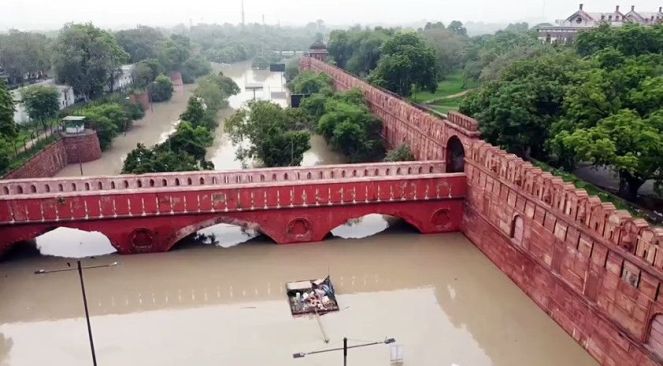
The dispute between Haryana and Delhi governments regarding ownership and operations of ITO barrage seems reaching no conclusion. The CWC, UYRB have also appeared non-serious on the issue. Yamuna is already starved of flows during lean season and plan of utilization of ITO barrage to divert available water in future is unviable and unjustified. In larger context of revival of river Yamuna and flood management all concerned stakeholders must initiate plan to decommission the barrage which is standing on the river without any purpose for the past 9 years in unmaintained condition, creating a lot of safety issues, among others. https://sandrp.in/2024/02/20/delhi-july-2023-floods-parliamentary-committee-report-raises-more-questions/ (20 Feb. 2024)
Quotes from SANDRP Blog An analysis of this report by SANDRP an organization dedicated to rivers and dams, has raised more questions than it has answered regarding the causes behind the unusual flood spell in Delhi in July 2023. SANDRP has suggested that a thorough assessment of the July 2023 flood event in Delhi is necessary to understand and address the exact reasons, including discrepancies in water discharge figures, encroachment of floodplains, and siltation of the riverbed.
According to SANDRP, the current release of 10 cumecs of water is inadequate, as most of it evaporates or percolates soon after being released. A SANDRP member stated, “The committee has asked the Union Jal Shakti Minister to take urgent steps in this direction. In fact, the committee should have provided a time limit for this.”
“A careful reading of the chapter has only compounded the flood mystery and raised questions about the operation and management of the Wazirabad and ITO barrages. The report has also revealed some contradictory and confusing statements by the Central Water Commission (CWC), Upper Yamuna River Board (UYRB), and the Haryana Govt,” added one of the members. https://www.newindianexpress.com/cities/delhi/2024/Feb/21/23-floods-parliamentary-report-raises-more-queries (21 Feb. 2024)
No end to ITO barrage dispute Bhim Singh Rawat of SANDRP quoted based on SANDRP blog: The dispute between the Haryana and Delhi governments regarding the ownership and operations of the ITO barrage seems to be reaching no conclusion. The CWC and UYRB have also appeared non-serious on the issue. The Yamuna is already starved of flows during the lean season, and the plan for the utilization of the ITO barrage to divert available water in the future is unviable and unjustified. https://www.newindianexpress.com/cities/delhi/2024/Feb/21/no-end-to-drainage-dispute-between-haryana-and-delhi (21 Feb. 2024)
‘Resolve the ITO barrage issue at the earliest’ The flooding in Delhi last year had exposed the lack of coordination between the state governments in managing the discharge from the three barrages. It also highlighted the issue of lack of maintenance of the ITO barrage due to the tussle between the Delhi and Haryana governments. Built by the Punjab government in the 1960s — when Haryana was still part of Punjab — the barrage is meant to provide water to two thermal units of Indraprastha Power Generation Company. While the barrage is located in Delhi, its maintenance is still with the Haryana government. The flooding last year was caused by the jamming of five sluice gates, which were jammed due to the lack of maintenance. At that time, the Haryana government had reportedly cited the “failure of IPGCL authorities to provide maintenance and operation cost apart from capital investment as per requirement”. https://theprint.in/india/governance/house-panel-urges-centre-to-ensure-synchronised-flow-from-3-yamuna-barrages-to-prevent-floods-in-delhi/1957365/ (07 Feb. 2024)
HLC to define floodplain by April 18 The high-level committee for Yamuna’s rejuvenation has set a target of April 18 for the floodplain’s demarcation. The ground verification by revenue teams led by DDA and MCD is likely to be completed by March 18. NGT had constituted a committee headed by the Delhi chief secretary to identify, demarcate and notify the Yamuna floodplain as per the River Ganga (Rejuvenation, Protection and Management) Authorities Order, 2016. https://timesofindia.indiatimes.com/city/delhi/committee-plans-to-define-river-floodplain-by-april-18/articleshow/107956713.cms (24 Feb. 2024)
YAMUNA FLOWS
Parliamentary Committee wants 23 cumecs water in river In a welcome move, the Parliamentary Committee report on Yamuna River has suggested at least 23 cumecs (Cubic Meters for Second) water needs to be released from Hathnikund barrage at least in nine non monsoon months from Oct to June as per the recommendation of the National Institute of Hydrology, a govt of India body. The report has said that almost no water is being released for the river from the Wazirabad barrage in Delhi. The 10 cumecs water now being released (how regularly even this is being released is also a question) is inadequate as most of it evaporates or percolates soon after it is released. The committee has asked the Union Jal Shakti Minister to take urgent steps in this direction. In fact, the committee should have given a time limit for this. We hope these urgent steps will be taken soon. https://sandrp.in/2024/02/12/drp-nb-120224-report-of-parl-com-on-yamuna-wants-23-cumecs-water-in-the-river/ (12 Feb. 2024)

गौरतलब है कि संसदीय समिति की रिपोर्ट में चर्चा किए गए अधिकांश मुद्दे सालों से सरकारों के संज्ञान में है फिर भी अब तक इनके समाधान के लिए कोई उल्लेखनीय कदम नहीं उठाए गए हैं। ऐसे में यह देखना होगा कि इस रिपोर्ट की सिफारिशों पर सम्बंधित सरकारें एवं विभाग कितनी सजगता और गंभीरता से कार्य करते हैं। https://shorturl.at/yDFJ4 (07 Feb. 2024)
YAMUNA POLLUTION
Lok Sabha Over 400 MLD effluents falling in Ganga & Yamuna About 402.67 MLD of industrial effluents by 3,186 grossly polluting industries (GPI) are discharged into rivers Ganga and Yamuna, Ashwini Kumar Choubey, minister of state for the MoEF, told the Lok Sabha. About 249.31 MLD is discharged into the Ganga and 153.36 MLD into the Yamuna.
An assessment of GPIs in seven states found 1,229 such industries in Ganga and 1,957 in Yamuna. These GPIs located in Uttar Pradesh, Uttarakhand, Bihar, Jharkhand, West Bengal, Delhi and Haryana have the potential to discharge into the two rivers and their tributaries.
Further, about 3,558.5 MLD of sewage is generated from 105 Ganga front towns located in five states — Uttarakhand, Uttar Pradesh, Bihar, Jharkhand and West Bengal. STPs with a capacity of 2,561.7 MLD, or about 72 per cent of the generation, have been set up, the minister said. https://www.downtoearth.org.in/news/governance/as-told-to-parliament-february-5-2024-over-400-mld-industrial-effluents-discharged-into-ganga-and-yamuna-daily-94296 (06 Feb. 2024)
Delhi Dying Yamuna stays invisible in budget CM Arvind Kejriwal had announced in Nov 2021 that he would rejuvenate the Yamuna and take a dip in the river in Feb 2025. However, the budget for 2024-25 makes no mention of the Yamuna. In fact, the issue related to the environment — air and water pollution and forests — found no reference in finance minister Atishi’s budget on Monday (March 04). The budget allocated for forests and environment for 2024-25 is Rs 295 crore, while the amount in the last financial year was Rs 263 crore. The allocation might have been less last year, but the Yamuna had got a special mention when then finance minister Kailash Gehlot committed to clean the river through a six-point action plan though he placed no deadlines for this. The plan included trapping major drains, stopping discharge of sewage into the river and 100% sewage treatment, among others.
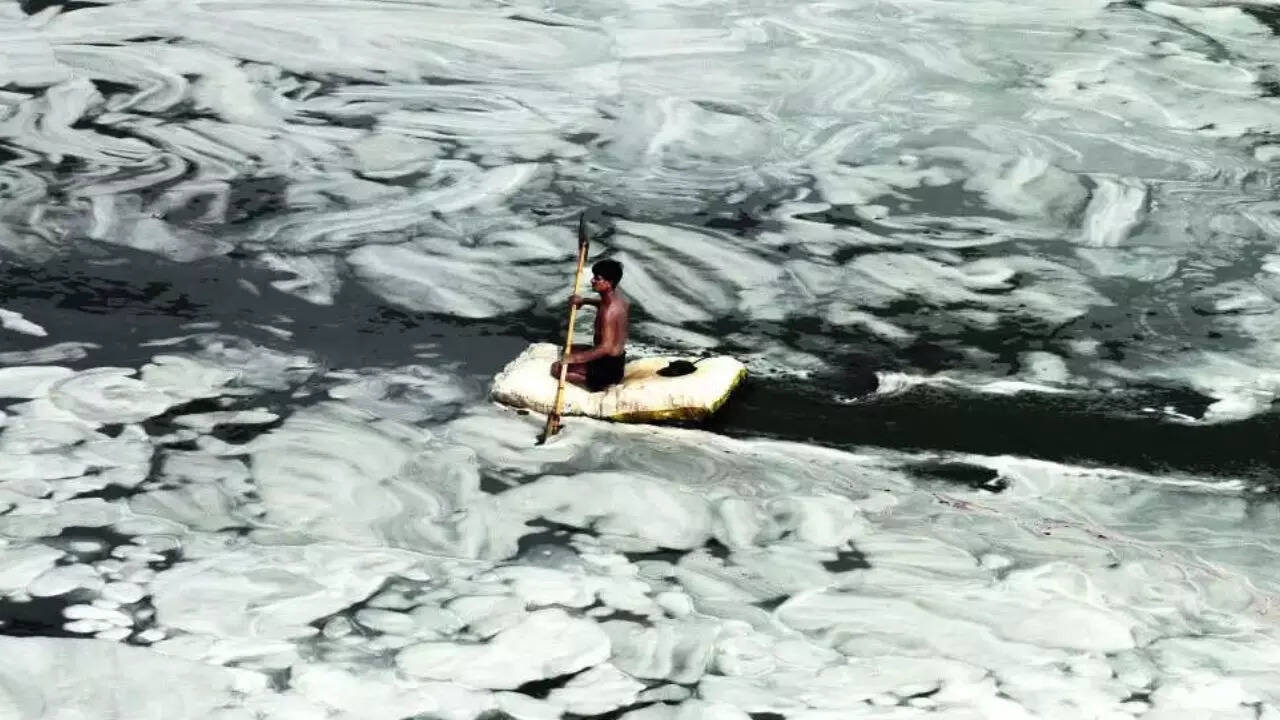
Even earlier, in the 2022-23 budget speech, then finance minister Manish Sisodia had assured that the Yamuna “will be completely clean in two years”. These claims have remained far from reality and around 29% of the total sewage remains untreated. Even the portion being treated by the sewage treatment plants does not meet the expected standards. The river continues to be polluted and its water has tested terribly high for faecal coliform and has no dissolved oxygen, indicating that the river is virtually dead. https://timesofindia.indiatimes.com/city/delhi/choking-in-dirty-froth-a-dying-yamuna-stays-invisible-in-budget/articleshow/108214764.cms (5 March 2024)
Economic survey: Yamuna stays polluted The Delhi government in the latest Economic Survey has revealed that the Yamuna’s water quality continues to remain poor, meeting the primary water quality criteria for outdoor bathing only at Palla and Wazirabad, the survey said. It said this was largely down to over 200 MGD of sewage still entering the river, for which STPs were being upgraded in the Capital. The latest sewage treatment data shared showed that Delhi was generating 792 MGD of sewage at present, but it was only able to treat 565 MGD at the 37 existing STPs, leaving a gap of 227 MGD.
“The DO is nil at four locations — downstream of Wazirabad and at five locations namely ISBT, ITO, Nizamuddin, Okhla and Asagarpur, the water quality did not meet BOD and faecal coliform norms. The reasons for deterioration of water quality of Yamuna downstream of Wazirabad is due to non-availability of fresh water and discharge of partially treated wastewater from the drains out falling into river Yamuna,” said the survey, adding that 10 cumecs of water is released by Haryana by Hathanikund during the lean season, but most of it evaporates or percolates before reaching Wazirabad. https://www.hindustantimes.com/cities/delhi-news/delhi-economic-survey-no-of-better-air-quality-days-go-up-but-yamuna-stays-polluted-101709319256450.html (2 March 2024)
₹6,856 cr spent in 5 years on river cleaning Nearly ₹6,856.91 crore was spent over five years, from 2017-21, to clean the Delhi stretch of river Yamuna, the Environment Department said in response (dated March 22) to a question raised in the Assembly. However, as per reports of the Delhi Pollution Control Committee (DPCC), most of this stretch remains polluted for nearly the entire year and is not even fit for bathing.
Manoj Misra, convener of the Yamuna Jiye Abhiyaan, a civil society initiative for the river’s rejuvenation, said the rejuvenation of the Yamuna depends on three things. “One, a single agency should be responsible for the rejuvenation to ensure accountability. Second, increasing the natural flow of the river has to be prioritised. Third, the floodplains should be protected. No developmental work should be allowed on them and they should be restored in an ecological manner,” he said. https://www.thehindu.com/news/cities/Delhi/over-6800-crore-spent-in-5-years-on-cleaning-yamuna/article66692782.ece/amp/ (03 April 2023)
The national capital generates 792 MGD of sewage. The 37 STPs in the city have a cumulative treatment capacity of 667 MGD. Presently, these STPs utilise only 71 per cent of their installed capacity, treating only 565 MGD of the 792 MGD sewage, with the rest flowing into the Yamuna river untreated. Only 237 MGD of the treated wastewater meets the prescribed standards which require that BOD and TSS in the treated wastewater should be less than 10 milligrams per litre. https://theprint.in/india/nih-recommended-e-flow-of-23-cumecs-inadequate-to-make-yamuna-fit-for-bathing-dpcc/1966128/ (14 Feb. 2024)
NGT imposes ₹10K penalty on MS, DPCC The NGT has imposed a penalty of Rs 10,000 on member secretary, Delhi Pollution Control Committee, for not submitting an action taken report of a joint committee related to encroachment on Yamuna floodplains. Activist Gauri Maulekhi, in a 2023 plea, alleged that about 60 dairy farms, with approximately 1,000 cattle, operating illegally on Yamuna floodplains in Delhi were causing environmental pollution. https://timesofindia.indiatimes.com/city/delhi/ngt-imposes-10k-penalty-on-dpcc-member-secy/articleshow/107866564.cms (21 Feb. 2024) एनजीटी के अध्यक्ष जस्टिस प्रकाश श्रीवास्तव की बेंच ने आदेश में कहा, हमारे पास डीपीसीसी के मेंबर सेक्रेटरी पर 10 हजार रुपये का जुर्माना लगाने के सिवा और कोई विकल्प नहीं बचा है। सेक्रेटरी दो हफ्तों के भीतर रकम एनजीटी के रजिस्ट्रार जनरल के पास जमा करा दें। यह निर्देश भी दिया गया कि 24 अगस्त 2023 को जो आदेश दिया गया, उसके मुताबिक संयुक्त समिति अपनी रिपोर्ट छह हफ्तों के भीतर पेश करे। अगली सुनवाई अब 19 अप्रैल को होगी। एनजीटी ने वास्तविक स्थिति जानने और स्थिति में सुधार के रास्ते सुझाने के लिए एक संयुक्त समिति बनाई थी, जिसने स्टेटस रिपोर्ट के लिए दो बार वक्त मिलने के बावजूद ऐसा नहीं किया। जो रिपोर्ट आई, वो किसी सब कमिटी के नाम से थी। https://navbharattimes.indiatimes.com/metro/delhi/other-news/illegal-dairies-on-the-banks-of-yamuna-fine-imposed-on-dpcc/articleshow/107928345.cms (23 Feb. 2024)
Another railway bridge to link Delhi, Gzb A railway bridge commonly called Loha Pul, will be built near Pragati Power Station to facilitate train operations between Delhi and Ghaziabad via Anand Vihar. When completed, this would be the fourth railway bridge across the Yamuna. The length of the new bridge will be about 600 metres. Work has been allotted, Prem Shankar Jha, executive adviser to the divisional railway manager, said, “Construction work will start soon”. The target is to finish the bridge in the next one year. The construction will cost approximately Rs 218 crore. There is work going on to finish another bridge parallel to the Loha Pul. This bridge has missed several deadlines and is now in its last leg of construction work.
There are 25 bridges either operational or under construction in the 22 km stretch of the Yamuna in Delhi. Metro has four operational bridges and one under-construction structure. The RRTS has one bridge under construction. The railway has two operational structures and one under-construction bridge. Apart from this, there are 16 road bridges. The Old Yamuna Bridge on the Delhi-Shahdara section was constructed in 1867. The bridge has outlived its lifespan and the plan to construct a new bridge was approved in 1997-98 and the work was started in 2003. https://timesofindia.indiatimes.com/city/delhi/another-railway-bridge-to-link-delhi-gzb/articleshow/107473119.cms (07 Feb. 2024)
Haryana NGT forms panel to check discharge of untreated sewage The NGT on Wednesday (Feb. 21) formed a three-member committee to check alleged discharge of untreated sewage in open or in a drain emerging in Yamuna by two private residential societies in Panipat and submit report within six weeks. The bench of Justice Prakash Shrivastava, chairperson and expert members A Senthil Vel and Afroz Ahmad were hearing an application filed by activist Varun Gulati. The case will be heard again on May 1. https://www.hindustantimes.com/cities/chandigarh-news/ngt-forms-panel-to-check-discharge-of-untreated-sewage-in-yamuna-101708629939979.html (23 Feb. 2024)
Prayagraj कुम्भनगरी बसाने के लिए गंगा–यमुना के बहाव पर होगा अध्ययन वर्ष 2025 में महाकुम्भ के लिए 45 दिनों तक संगम की रेती पर तंबुओं की नगरी को सुरक्षित बसाने के लिए मेला प्राधिकरण ने भारतीय सूचना प्रौद्योगिकी संस्थान (ट्रिपलआईटी) के विशेषज्ञों को अध्ययन का जिम्मा सौंपा है। जिसके तहत सैटेलाइट मैपिंग की मदद से संस्थान के विशेषज्ञ पिछले एक दशक में गंगा और यमुना में हुए कटान का अध्ययन कर यह पता लगाएंगे कि संगम तट पर कहां और कितनी बड़ी तंबुओं की नगरी बसाई जाए। क्योंकि कटान का सही अंदाजा न होने के कारण बाढ़ या बारिश के कारण अक्सर संगम तट पर मेला बसानेकी तैयारी पिछड़ जाती है। https://www.livehindustan.com/uttar-pradesh/prayagraj/story-study-will-be-done-on-the-flow-of-ganga-yamuna-to-establish-kumbhanagari-9457085.html (04 March 2024)
Mathura यमुना प्रदूषण के स्थायी समाधान के लिए बनेगी रणनीति विश्व धर्म रक्षक दल के विजय चतुर्वेदी ने आगामी अभियान के बारे में बताया कि आज तक 40 लाख करोड़ रुपये नालों की सफाई पर खर्च कर यमुना प्रदूषण के नाम से हड़प किए जा चुके हैं। यमुना जल तो अमृत के समान हैं, उसे शुद्ध या ट्रीटमेंट करने की कोई आवश्यकता नहीं है। प्रशासन के पास गंदे नालों के जल को अन्यत्र ले जाने के लिए कोई ठोस योजना नहीं है। विश्वधर्म रक्षक दल के विजय चतुर्वेदी ने बताया कि 3 मार्च को बंगाली घाट पर सर्वदलीय एक बैठक बुलाई गई है, जिसमें सभी संस्था के सदस्य आगामी रणनीति बना कर प्रशासन को घेरेंगे। https://www.amarujala.com/uttar-pradesh/mathura/strategy-will-be-made-for-permanent-solution-to-yamuna-pollution-mathura-news-c-369-1-sagr1009-109471-2024-03-01 (01 March 2024)
Agra यमुना से प्रदूषण मिटाने के लिए अनोखा प्रदर्शन यमुना की दुर्दशा देख गाजीपुर के ब्रजभूषण दुबे परेशान हैं। गले में तख्ती टांग फरियाद कर रहे हैं कि यमुना को बचा लो। तख्ती पर लिखा है कि यमुना मैया को मार डाला आगरा में। इसके लिए वे नगर निगम को दोषी बता रहे हैं। कहते हैं कि मुझे यमुना मैया ने बुलाया है कि मैं उन्हें बचा लूं। https://www.bhaskar.com/local/uttar-pradesh/agra/news/yamuna-maiya-killed-in-agra-132669183.html (03 March 2024)
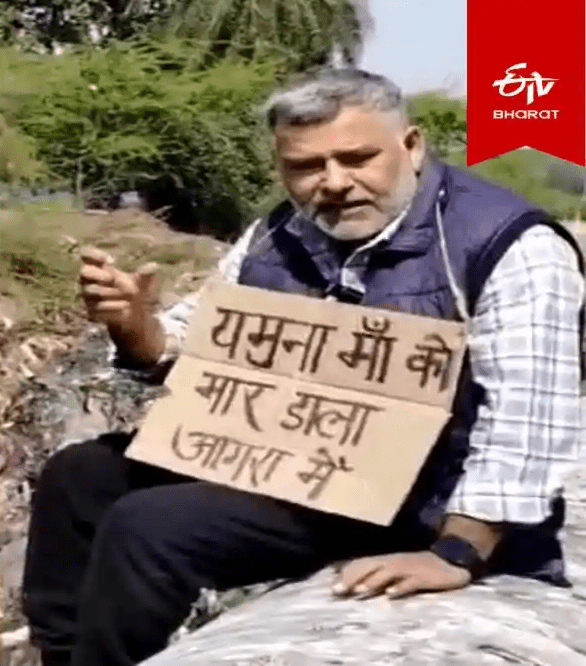
बृजभूषण ने प्रशासनिक अधिकारियों के साथ सांसदों, मंत्रियों और नेताओं को कठघरे में खड़ा किया है. बृजभूषण का कहना है कि यमुना की स्थिति सुधारने के लिए राज्यसभा सांसद नवीन जैन को जिम्मेदारी उठानी चाहिए. https://www.etvbharat.com/hi/!state/agra-news-social-worker-did-a-unique-protest-to-improve-condition-of-yamuna-ups24030400745 (04 March 2024)
YAMUNA RIVERS BIODIVERSITY
Film Amunay: A river story FASCINATING story of River Amunay, an imaginary tale, but so close to reality. https://www.youtube.com/watch?v=z7PWrbl4jfI (09 Feb. 2024)
Madhya Pradesh PM says drones have been used to monitor ghariyals in Ken Ghariyal Sanctuary along Ken River. https://timesofindia.indiatimes.com/india/pm-modi-cites-crocodiles-in-ken-river-to-hail-tech-use-in-saving-wildlife/articleshow/107991163.cms (26 Feb. 2024)
YAMUNA FISH, FISHERFOLKS
PRC Role and Resilience of Divers Vibhuthi Bhardwaj, Abstract This essay explores the lives of Delhi’s traditional divers – Gotakhors, who navigate the depths of the Yamuna to construct an urban identity of rescuer. Through an in-depth interview with the community at ITO Chhat Ghat, the study delves into their perspectives on recognition within society, the politicization and religious dependence of their livelihoods, and their survival next to the river. Despite risking their lives daily to rescue drowning victims and perform vital rituals, they remain unseen and unheard. This is an attempt to amplify their voices and challenge the narratives that relegate them to the margins. https://drive.google.com/file/d/1Im-uwTU_RX5aH0LYz5_fBeoEAVcSJNXU/view; https://prcindia.in/resources/urban-kaleidoscope-water-and-city-volume-2-february-2024/
Uttarkashi यमुना घाटी अपनी खूबसूरती के लिए जानी जाती है, लेकिन इसके साथ ही यहां की काष्ठ कला बेजोड़ है। दशकों पुराने लकड़ी के घर आज भी वैसे ही मजबूती से खड़े हैं। https://www.gaonconnection.com/gaon-connection-tvvideos/traditional-wooden-house-of-uttarakahnd-46414 (09 Oct. 2019)
MINING IN YAMUNA RIVERS
Himachal Pradesh नदी में फंसे खनन करने गए ट्रक और ट्रक्टर पांवटा साहिब के रामपुर घाट क्षेत्र में यमुना और गिरी नदी के संगम पर लगभग एक दर्जन ट्रक बाढ़ के पानी में फंस गए. शनिवार (March 02) को पूरा दिन और रातभर हुई मूसलाधार बारिश की वजह से यमुना और गिरी नदियां उफान पर आ गई हैं. नदियों में बाढ़ जैसी स्थिति बन गई है. ऐसे में यहां अवैध तौर पर नदी में खनन करने घुसे ट्रक फंस गए. ट्रकों के साथ लगभग 12 लोग भी यहां फंसे गए थे, जिनका प्रशासन ने रेस्क्यू कर लिया है. जानकारी यह भी मिली है कि यहां नदियों के उफान में और भी कई ट्रक और ट्रक्टर फंसे थे, लेकिन किनारों पर कम बहाव होने की वजह से बाकी ट्रक और ट्रक्टर यहां से सुरक्षित निकलकर भाग गए.
नदी में फंसे इन ट्रकों ने यहां हो रहे अवैध खनन और नदी के बीचों-बीच अवैध ट्रांसपोर्टेशन की भी पोल खोल कर रख दी है. दरअसल नदी के इन हिस्सों में ना तो खनन की इजाजत है और ना ही यहां से ट्रकों और ट्रक्टरों के आवागमन की इजाजत है, लेकिन यहां खनन माफिया के हौसले इतने बुलंद हैं कि वह हर स्थिति में नदी में अवैध खनन भी करता है और अवैध रूप से ट्रांसपोर्टेशन भी किया जाता है. अब देखना यह होगा कि अवैध रूप से नदी में घुसे इन ट्रकों पर प्रशासन कोई कार्यवाही करता है या इन्हें ऐसे ही छोड़ दिया जाता है. https://zeenews.india.com/hindi/zeephh/himachal-pradesh/himachal-pradesh-weather-update-mining-trucks-and-tractors-stuck-in-yamuna-river/2139213 (03 March 2024)
Haryana यमुना नदी को निगलता माइनिंग माफिया संसदीय स्थायी समिति ने अपनी रिपोर्ट में हरियाणा के उन पांच जिलों में, जहां से होकर यमुना बहती है, पांच वर्षों में अवैध खनन के कुल 3,792 मामलों का चौंका देने वाला खुलासा किया गया है. यमुनानगर जिला, जिसमें नदी का लगभग 100 किमी का क्षेत्र है, चौंकाने वाले 2,599 मामलों के साथ सूची में पहले नंबर पर है, इसके बाद पांच वर्षों में पलवल में 559, सोनीपत में 281, करनाल में 202 और पानीपत में 151 मामले सामने आए हैं. जुर्माना लगाए जाने और वसूलने के आंकड़े से भी इस समस्या की गंभीरता स्पष्ट होती है. अकेले यमुनानगर में 21.22 करोड़ रुपये की सबसे अधिक वसूली हुई है. https://www.gaonsavera.com/yamuna-river-parliamentary-committee-illegal-mining-a-big-threat-to-yamuna/ (08 Feb. 2024)
Despite ban, illegal mining continues on Yamuna There has been a rise in the practice of illegal mining on the Yamuna riverbed here despite a ban imposed in many parts of the district. According to sources in the district administration, the prevalent unauthorised mining could be attributed to the alleged weak surveillance and monitoring system ensured by the department concerned. With several incidents being reported each month, a majority of these go unnoticed due to a poor vigil or the connections of the sand mafia, it is alleged.
Last year, the police had registered a total of 11 cases and arrested seven persons, while this year as many as four cases have been registered since January 1. However, sources claim that the actual number of cases of illegal mining in the past one year here could be at least 100, as only a few cases have been reported or registered. Besides, people involved in such unauthorised practices also often indulge in violent ways of resistance. Last week, two cops were attacked by a mob after a police team had attempted to impound a tractor trailer carrying illegally mined sand near Bamnikhera village. https://www.tribuneindia.com/news/haryana/despite-ban-illegal-mining-continues-on-yamuna-riverbed-589778 (12 Feb. 2024)
Delhi खनन से मंडराया खतरा, हाईकोर्ट ने मांगा जवाब उत्तरी दिल्ली के वजीराबाद व बुराड़ी थाना अंतर्गत यमुना नदी किनारे पिछले कई वर्षों से लगातार रेत खनन व पानी दोहन माफिया सक्रिय हैं. रेत खनन और पानी दोहन के चलते यमुना पुस्ते पर लगातार भारी वाहन, ट्रक, ट्रैक्टर, ट्राली,JCB और आधुनिक मशीनों की आवाजाही से यमुना बांध कई जगहों से कमजोर हो चुका है. वहीं अब यमुना नदी के साथ-साथ यमुना पुस्ते पर भी लगातार हादसों में मरने वाले लोगों के आकड़ो में बढ़ोतरी होते जा रही है.
एक शिकायतकर्ता ने इन मामलों को लेकर हाईकोर्ट में याचिका दायर की है. इस याचिका पर हाई कोर्ट ने संज्ञान लेते हुए दिल्ली पुलिस के उच्च अधिकारी समेत रेवेन्यू डिपार्टमेंट के डीएम एसडीएम व एमसीडी के कई बड़े अधिकारियों से यमुना नदी में हो रहे अवैध रेत खनन और पानी दोहन को लेकर जवाब मांगा है. उन्हें आने वाले तीन हफ्ते के अंदर स्टेटस रिपोर्ट दाखिल करनी होगी. रिपोर्ट में अवैध रेत खनन को रोकने के लिए दिल्ली पुलिस , राजस्व सरकार और नगर निगम द्वारा उठाए गए कदमों का उल्लेख होना चाहिए. जिसको लेकर सभी प्रशासनिक अधिकारियों में अब हड़कंप मच गया है. https://zeenews.india.com/hindi/india/delhi-ncr-haryana/delhi-hc-reprimands-police-and-revenue-department-over-sand-mining-in-yamuna/2139151 (03 March 2024)
Fatehpur दो ट्रक आपस में टकराए, यमुना नदी की रेलिंग तोड़कर लटके यमुना नदी पुल पर भीषण सड़क हादसा हो गया। आपस में टकराये दो ट्रक दोनों पुल की रेलिंग तोड़कर लटक गए। एक ट्रक को जिला प्रशासन ने सुरक्षित निकाला, एक ट्रक देर रात तक नही निकाला जा सका। ललौली थाना क्षेत्र के दतौली यमुना पुल पर शनिवार (March 02) देर रात करीब 10 बजे के आस पास पुल के ऊपर दो ट्रकों की आपस में टक्कर हो गई। हादसे के बाद दोनों ट्रक चालक कूदकर अपनी जान बचाई। लेकिन दोनों ट्रक पुल की रेलिंग तोड़कर पुल पर लटक गए। समय रहते कुछ ट्रक चालकों ने एक ट्रक को रस्सा की मदद से खींचकर निकाल लिया। https://www.balliatak.com/uttar-pradesh/fatehpur/fatehpur-news-two-trucks-collided-with-each-other-breaking-the/article-10234 (03 March 2024) https://www.bhaskar.com/local/uttar-pradesh/fatehpur/news/road-accident-on-yamuna-river-bridge-in-fatehpur-132667573.html (03 March 2024)
Banda बांदा में कुछ दिन पहले यमुना नदी का पुल चालू हुआ था और कल ट्रक को ओवरटेक करते समय डंपर रेलिंग तोड़कर नदी के लटक गया। हादसा देख पुल पर वाहन चालकों और ग्रामीणों की भीड़ लग गई और लोगों की मदद से डंपर में फंसे चालक को बाहर निकाला गया। पूरा मामला बांदा जनपद के तिंदवारी थाना क्षेत्र अंतर्गत https://www.bhaskar.com/local/uttar-pradesh/banda/news/dumper-hanging-after-breaking-the-railing-of-yamuna-bridge-132672560.html (04 March 2024)
YAMUNA WETLANDS, LAKES, WATER BODIES
Delhi-Haryana Najafgarh lake waiting for wetlands tag for 7 years NGT has sought a timeline from Haryana govt after it failed to declare Najafgarh Jheel as a wetland despite an order seven years ago. The bench of NGT chairperson Prakash Shrivastava, judicial magistrate Sudhir Agarwal and expert members A Senthil Vel and Afroz Ahmad asked the govt to submit in six weeks a report outlining what steps it would take to restore the waterbody after declaring it as a wetland. “State of Haryana seeks six weeks’ time to file the further affidavit disclosing the time schedule within which the process of notification of Najafgarh Jheel as a transboundary wetland will be completed at the end of State of Haryana,” the tribunal said on Feb 16. The order, however, was uploaded on Monday (March 04). It scheduled the next hearing for April 25. https://timesofindia.indiatimes.com/city/gurgaon/7-years-counting-najafgarh-jheel-still-awaits-a-wetland-tag-from-govt/articleshow/108219826.cms (05 March 2024)
-Haryana has sought six-week time to designate the water body as a transboundary wetland. Lying on the border of Haryana and Delhi, the wetlands were accepted as a designated water body by the state in 2017, but it never notified it. The fact was brought to the fore in a petition filed with the NGT by INTACH (Indian National Trust for Art and Cultural Heritage). Taking cognisance of the same, the tribunal directed the state to update the same and it has sought six-week time to do so.
-The lake is also mentioned in the Haryana state wetland atlas as a depression, which makes it a fit case for protection and conservation. The matter of the jheel’s conservation is now before the National Green Tribunal after being dragged to the Supreme Court once. In January 2022, while seeking legal protection for the jheel, the NGT had directed the Union Environment Ministry to prepare an integrated Environmental Management Plan (EMP) to conserve the transboundary wetland. https://www.tribuneindia.com/news/haryana/finally-najafgarh-wetlands-to-get-conservation-cover-597720 (06 March 2024)
Noida 15 km from Jewar airport, a wetland awaits protection Even as the Noida International Airport in Jewar is set to become operational by September, the eco-sensitive Dhanauri wetland site, located 15 km away, is yet to be granted protection. While granting environmental clearance to the proposed airport, the MoEF had laid down a specific condition that a “conservation plan for birds and fauna, in consultation with the WII, shall be submitted within six months from the grant of clearance and be implemented in letter and spirit”. However, the UP govt has yet to make a decision in this regard. In its affidavit submitted to the NGT on January 20, the Ministry said: “The respondent (MoEF) has not received any proposal along with requisite documents from the State Government of UP/UP State Wetland Authority for designating Dhanauri wetland as a Ramsar site till date.” The affidavit further said emails were sent to the state government on August 30, 2022, and October 17, 2023, to submit the documents.
In its report submitted to the NGT on January 19, the DFO of Gautam Buddha Nagar said it has written to YEIDA, the land-owning agency, to get the wetland area revised to 97.97 hectares as recorded in the inventory. The DFO also said acting on its letter, the SWA has written to the UP Ministry of Environment to clarify the position of the proponent department for declaring Dhanauri Wetland as a Ramsar site. When contacted, Dr Arun Vir Singh, YEIDA CEO, said, “When the master plan was made, the DFO was contacted at that time. They said there is about 55 hectares of wetland area. Now they are saying it is around 98 hectares. Plots have been allotted to people, how can they be returned? The authority will superimpose the map and will see the actual position on the ground.”
Incidentally, the NGT, in its November 20, 2023, order, had noted that the wetland area demarcated in the master plan appears to be lesser as compared to that in the wetlands inventory. Meanwhile, bird-watcher Anand Arya, who had filed a petition in the NGT seeking a stay on the construction till the wetland is granted protection, said: “It is complete bureaucratic apathy… You cannot change the wetland, it enjoys protection granted under a 2017 Supreme Court order…” https://indianexpress.com/article/cities/delhi/15-km-from-jewar-airport-a-wetland-awaits-protection-9144286/ (05 Feb. 2024)
Drying trees in Surajpur wetlands: UPPCB gives clean chit to bike company The UPPCB has given a clean chit to Yamaha Motor as it prime facie did not find evidence that the company’s Surajpur unit, near the eastern arm in Kasba village, was discharging untreated effluents into the wetland. In Jan, the company was served a notice by the pollution department after over a dozen trees died allegedly due to the chemicals flowing into the wetland. The pollution department, meanwhile, has blamed the nearby villages which do not have STPs were polluting the wetland. Officials said they will tap the drains coming through these villages to stop the dirty water flowing into the wetland within a month.
Environmentalist Vikrant Tongad, who recently wrote to the Centre about the destruction of trees at Surajpur, said, “The pollution department is clearly protecting the industry. While their samples failed last year, this time the joint committee gave them a clean chit saying it is within their norms. This is an eyewash. Now, we will go and collect the samples from the industry pipeline and get it done from some private lab.” Tongad said they have seen the frothy water from the pipeline of the industry enter the wetland. https://timesofindia.indiatimes.com/city/noida/clean-chit-to-yamaha-motor-as-up-pollution-control-board-finds-no-evidence-of-waterlogging-causing-tree-deaths-in-wetland/articleshow/107705674.cms (15 Feb. 2024)
Nod to plant 30k saplings around ponds Greater Noida The water bodies that have been identified where plantation exercise will be carried out, are located in Sadullapur, Khedi, Vaidpura, Sheorajpur, Kailashpur and Sunpura, in Greater Noida. “We are looking forward to planting around 30,000 saplings of different species including Arjun, Ashoka, Jamun, Pilkhan, among others, around these water bodies, and have already received around 10,000 saplings. The cost of all the work being done to preserve these ponds is being borne by us,” local environment activist and treasurer, Society for Protection of Environment & Biodiversity, Pradeep Dahalyia added. https://www.hindustantimes.com/cities/noida-news/gnidas-nod-to-planting-30k-saplings-around-ponds-101709317639933.html (2 March 2024)
YAMUNA URBAN WATER
Delhi DJB audit: CAG report ‘flags irregularities’ -The CAG report yet to be tabled in the Legislative Assembly, is learnt to have pointed out instances of the utility understating its expenditure, hence losses. One instance of this was the discrepancy noticed between the data given by the revenue section, and the accounts in the outstanding dues against bulk and retail water. The report, it is learnt, states that while the revenue section listed the dues as around Rs 9,000 crore, this figure was around Rs 2,800 crore in accounts — a gap of over Rs 6,000 crore.
-Officials said that the report also talks about the current accounts, and mentions that there was a difference of over Rs 1,000 crore between the balance as per the bank records and the financial statement. “Both these figures are in overdraft. The report states that this discrepancy could be pointing to fraud or misappropriation of funds,” the official added.
-Delhi’s flagship scheme of providing free water up to 20 kilolitres to each household per month also finds mention in the report, sources said. “While DJB received compensation grants of around Rs 425 crore, for subsidy, records state that an amount to Rs 400 crore was provided but this does not reflect in the Income and Expenditure Account. The reasons for this have also not been disclosed,” said an official.
-Another alleged irregularity in accounts flagged in the report, it is learnt, is regarding expenditure on advertisements. “While the expenditure under this head is stated to be around Rs 12 crore, the report states that files or records related to this expenditure were available only for around Rs 3 crore. Even out of this amount, around half was for between 2015 and 2016,” the official stated. https://indianexpress.com/article/cities/delhi/irregularities-in-djb-flagged-in-cag-report-9162258/ (15 Feb. 2024)
Water supply to be affected as pollution impact treatment plant There has been an alarming rise in the level of pollutants in the Yamuna at the Wazirabad pond, with ammonia concentration exceeding the permissible limit of 4.7 parts per million (ppm). This has resulted in the disruption of water production of the Water Treatment Plant (WTP) at Wazirabad, compromising its efficiency by approximately 30 per cent. Residents in the impacted areas have to brace for a period of low-pressure water supply until the situation improves. https://www.indiatoday.in/cities/delhi/story/water-crisis-looms-as-pollution-levels-in-yamuna-impact-wazirabad-treatment-plant-2498079-2024-02-06 (06 Feb. 2024)
Gurugram Most micro-STPs installed at parks out of order Sad news that 49 micro STPs set up in Gurugram to provide treated water for irrigating the parks between 2015 and 2020 are not working properly and yet all payments have been approved about them. No one held accountable so far. https://www.tribuneindia.com/news/haryana/most-micro-stps-installed-at-gurugram-parks-out-of-order-590294 (13 Feb. 2024)
7 of 13 water samples near landfill site fail Seven out of 13 water samples collected from the vicinity of the Bandhwari garbage landfill have been found unfit for consumption. The Gurugram health authorities, following directives from the NGT, collected these samples earlier this month. They have now sent a letter to the Municipal Corporation of Gurugram (MCG), requesting a chemical examination of these samples to identify the exact nature of pollutants. An advisory has also been issued to residents nearby, urging them to refrain from using groundwater, especially for drinking purposes. https://www.tribuneindia.com/news/haryana/seven-of-13-water-samples-near-landfill-site-unfit-for-consumption-592883 (21 Feb.2024)
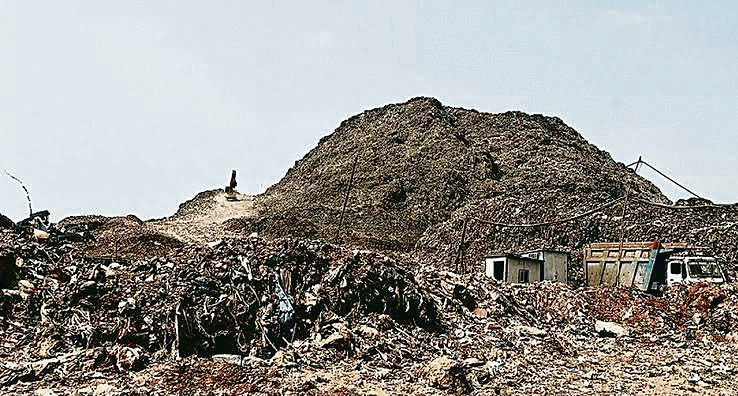
Ahead of an NGT hearing on Thursday (Feb. 22), MCG has in an affidavit claimed that all parameters of groundwater samples tested from five villages around the Bandhwari landfill are within the permissible limits and there is no damage to groundwater due to leachate. The civic body has attributed these claims to an HSPCB report published last month. Interestingly, a report on the same issue submitted by the health department stated that samples taken from these villages were ‘unfit’ for drinking. https://timesofindia.indiatimes.com/city/gurgaon/same-water-two-reports-one-says-unfit-for-drinking-another-all-good/articleshow/107897466.cms (23 Feb 2024)
FLOOD
Saharanpur जलस्तर घटतेही नावों का संचालन शुरू चिलकाना क्षेत्र में बारिश बंद होते ही सोमवार (March 04) को यमुना का जलस्तर घटने से नदी में नावों का संचालन शुरू हो गया है। नदी किनारे बसे गांव आल्हनपुर, मंझार, टोडरपुर, भूखड़ी, ग्याजुद्दीनपुर, सौंधेबांस, शाहपुरा दाऊद आदि के ग्रामीणों ने अस्थाई पुल बह जाने के बाद नाव का संचालन शुरु होने से राहत की सांस ली है ग्रामीणों ने बताया कि वह यमुना नदी पार करके हरियाणा की सीमा में प्रवेश करने के लिए जाते है। यमुना नदी में राहगीरो को नाव का ही सहारा लेना पडता हैं। नदी में तेज बहाव के कारण नावों का संचालन भी बंद कर दिया जाता है। नावो का संचालन शुरू होने से ग्रामीणों एवं स्कूली बच्चों ने राहत की सांस ली है। https://www.livehindustan.com/uttar-pradesh/saharanpur/story-boats-started-operating-as-soon-as-the-water-level-of-yamuna-decreased-there-was-a-crowd-of-passengers-9461832.html (04 March 2024)
URBAN FLOODS
Delhi River, floodplain reason behind leakages in Pragati Maidan tunnel Due to constant water leakage from the walls, roofs and joints in the tunnel, problems like potholes and cracks have emerged on the surface. Recognising this as a major issue, the Public Works Department has sent a legal notice on these lacunae to L&T, the private firm responsible for the construction and maintenance of the road infrastructure.

Bhim Singh Rawat, a Yamuna activist and associate coordinator of South Asia Network on Dams, Rivers and People (SANDRP), pointed out, “The area where the Pragati Maidan tunnel is situated was originally the Yamuna floodplain. Over the years, infrastructural interventions both up and downstream greatly compromised the meandering function of the river. Otherwise, a free flowing Yamuna could easily reach the current tunnel site, the aerial distance from the riverbank to the tunnel being less than 200 metres.”
Other experts reiterated that a proper hydrogeological analysis should have been carried out before the tunnel was built. AK Gosain, professor emeritus, IIT-Delhi, noted, “A huge area around the Yamuna forms the river’s floodplain. However, the creation of embankments over the years have reduced the area of the floodplain. The Pragati Maidan tunnel is built on this very land and whenever the water level in the Yamuna rises, the water table in the adjacent area also goes up due to seepage from the river. This situation has also been observed in the Commonwealth Village which is also built on the floodplain.”
Activist Rawat, however, claimed that when the tunnel project was announced, some river watchers had expressed concerns about water seepage. “The stormwater drain running close to the tunnel site seems to be aggravating the leakage problem,” said Rawat. “Dredging the river alone will not be of much help. The planners and developers must undertake credible geo-hydrological assessment before starting such projects.”
But prima facie, there are flaws in the construction of the tunnel, felt professor Shashank Shekhar of the department of geology, Delhi University. “Historically, groundwater flows downgradient from Rashtrapati Bhawan to India Gate and past Pragati Maidan to the Yamuna river,” he explained. “Since the groundwater is likely to be shallow in the tunnel area and the basement is also shallow, saturated aquifers through which the tunnel is passing will force groundwater by leakage in the tunnel. Perhaps, proper hydrogeological investigations were not carried out before the construction of the tunnel began.” https://timesofindia.indiatimes.com/city/delhi/pragati-maidan-tunnel-from-inspiration-to-grief/articleshow/107737131.cms (16 Feb. 2024)
PWD notice to L&T over “design flaws” in Pragati Maidan tunnel The notice was issued on February 3, asking the company to respond within 15 days. The notice alleged that the project with time revealed “glaring infirmities that were not only technical in nature but were also design flaws”. “The most glaring as well as alarming issue was the accumulation of water across various locations in the tunnel/underpass. https://www.ndtv.com/india-news/delhi-pwd-issues-notice-to-l-t-over-design-flaws-in-pragati-maidan-tunnel-5013899 (07 Feb. 2024) The official said the tunnel is not safe for commuters at present and added it cannot be repaired without a major revamp. The Pragati Maidan tunnel was completed for ₹777 crore and was inaugurated by PM Modi in June 2022. In 2023, the tunnel witnessed multiple closures due to waterlogging. The tunnel was flooded whenever the city received moderate to high rainfall, said another officialhttps://www.livemint.com/news/india/delhi-news-pragati-maidan-tunnel-unrepairable-needs-total-overhaul-says-pwd-11707304331470.html (07 Feb. 2024) Experts now believe that a proper multi-team safety audit is required before any possible overhaul. Continuous water seepage can pose a catastrophic danger to any structure made of concrete and TMT bars, whether it’s a high-rise, flyover, or underpass. https://www.indiatoday.in/cities/delhi/story/pragati-maidan-tunnel-seepage-serious-design-flaws-delhi-pwd-notice-larsen-toubro-2498978-2024-02-07 (07 Feb. 2024)
RELEVANT REPORTS
Weak Water Act further diluted by latest amendments: Experts The Water (Prevention and Control of Pollution) Act, 1974 was a failure and needed a revamp, but the latest changes introduced to the Act by the central government are exactly the opposite of what was required, according to environment experts. “Since the Act is 50 years old, there is no doubt that significant changes were required to its provisions. But the changes we have received are the opposite of what we needed,” said water expert Himanshu Thakkar. “We need decentralisation and stricter laws, but we are getting the opposite — more centralisation and diluted provisions.”
Environment lawyer Ritwick Dutta also claimed the environment laws in the country, including the Water Act, have largely failed to deliver so far. “As per the National Crime Records Bureau’s 2022 reports, only 78 criminal cases were recorded under Water Act and Air (Prevention and Control of Pollution) Act, 1981. Most states did not register even a single case,” he said, pointing to the need for stronger penal actions. “The latest bill is designed to dilute the Water Act, which was already ineffective,” said KJ Joy, a senior fellow of Society for Promoting Participative Ecosystem Management from Pune. The latest amendments, proposed in the name of ease of doing business, would instead provide a licence to pollute rather than be a deterrent. https://www.downtoearth.org.in/news/environment/centralisation-of-powers-diluted-laws-weak-water-act-further-diluted-by-latest-amendments-say-experts-94487 (17 Feb. 2024)
जल अधिनियम में संशोधन: विशेषज्ञों ने उठाए सवाल जल विशेषज्ञ हिमांशु ठक्कर ने कहा कि पिछले 50 वर्षों में जल अधिनियम के तहत सफलता की कुछ ही कहानियां सामने आई हैं और इसके प्रावधानों में महत्वपूर्ण बदलाव निस्संदेह आवश्यक थे, लेकिन जो परिवर्तन किए गए हैं, वे आवश्यकता के विपरीत हैं। हमें विकेंद्रीकरण और सख्त कानूनों की आवश्यकता है, लेकिन हमें इसके विपरीत मिल रहा है। केंद्रीकरण को बढ़ाया जा रहा है और प्रावधान कमजोर किए जा रहे हैं। https://www.downtoearth.org.in/hindistory/pollution/water-pollution/water-act-is-being-amended-to-benefit-whom-experts-raised-questions-94498 (16 Feb. 2024)
In regressive step, the amended Water Act exempts certain industries from effluent release norms. https://www.deccanherald.com/opinion/act-that-affects-water-resources-2900032 (19 Feb. 2024)
Amendments to Water Act is a greenwashing attempt What is required to improve water bodies in the country is a focus on improving the enforcement and monitoring capabilities of the board. As stated by a legal policy scholar, “If systemic weaknesses associated with the governance structure are not addressed, there is not going to be any benefit from any amendments. Because if they are not going to be implemented, what are the points of these amendments?”. India needs a robust monitoring and enforcement system that can detect and arrest pollution at the source. So rather than creating inscrutable new black boxes and watered-down legislations, amendments must ensure strong, transparent, and accountable mechanisms that strengthen the policy and help it achieve its objectives. https://www.downtoearth.org.in/blog/governance/pollution-control-amendments-to-water-act-is-a-greenwashing-attempt-88249 (15 March 2023)
HP, Rajasthan & UTs first to decriminalise small offences The Water (Prevention and Control of Pollution) Amendment Act, 2024, recently revised, is set to be enforced initially in Himachal Pradesh, Rajasthan, and Union Territories. This is according to a Ministry of Law and Justice notification published on Friday (FEB 16). Other states have the option to adopt it through resolutions. https://www.business-standard.com/india-news/water-act-2024-hp-rajasthan-and-uts-first-to-decriminalise-small-offences-124021901131_1.html (19 Feb. 2024)
Study Sewage will be biggest polluter of rivers A recent study, published on February 6, 2024 in Nature Communications highlighted that an additional 40 million sqkm of river basin area and three billion more people may face water scarcity in 2050 than previously estimated. A significant factor contributing to this crisis is nitrogen pollution in rivers, a concern that emerged in 2010 and is anticipated to persist until 2050, the findings showed. The global impact of future nitrogen pollution is alarming, with the number of sub-basins experiencing water scarcity expected to triple. https://www.downtoearth.org.in/news/water/clean-water-crisis-nitrogen-pollution-to-triple-scarcity-in-river-sub-basins-worldwide-94356 (8 Feb 2024) This study predicts that sewage will become the dominant source of nitrogen pollution in rivers due to urbanisation and insufficient wastewater treatment technologies and infrastructure in worst case scenario projections in countries such as India. A recent study titled ‘A triple increase in global river basins with water scarcity due to future pollution’ published in Nature Communications aimed at assessing future global clean-water scarcity in 2050 under climate change scenarios and socio-economic changes.. https://www.indiawaterportal.org/articles/sewage-will-overtake-agriculture-biggest-polluter-river-sub-basins-india (21 Feb. 2024)
Report Plastic waste choking Himalayan rivers Microplastic deposition and accumulation has been found in the Himalayan mountains, rivers, lakes and streams. These microplastics can be trapped in glaciers for a long time and released into rivers during snow melting. The Indian Himalayan Region is a critical source of water in the subcontinent, feeding a number of major rivers of India that include the Indus, Ganges and Brahmaputra river systems. Unscientific plastic disposal is causing soil and water pollution in the Indian Himalayan Region and impacting its biodiversity, which is having an adverse impact on the fresh water sources that communities downstream depend on. https://www.thehindu.com/opinion/lead/mountains-of-plastic-are-choking-the-himalayan-states/article67910881.ece (04 March 2024)
Compiled by Bhim Singh Rawat (bhim.sandrp@gmail.com)
Note: Carrying forward the legacy of Yamuna conservation work done by Late Manoj Mishra, Convenor of Yamuna Jiye Abhiyan, SANDRP is publishing a compilation of news reports and other relevant information on contemporary issues related to Yamuna River from February 2024. This is the second such monthly report in the series and we will try to release same updates on the first Wednesday of every month. The main purpose of the exercise is to monitor, document and research all the issues affecting the Yamuna rivers and riverine people so that all concerned may get updated information on ground realities of the river and its people. All of you are requested to read, share and give suggestions to improve it.
Also see: Yamuna Manthan 07 Feb. 2024
Follow us on: www.facebook.com/sandrp.in; https://twitter.com/Indian_Rivers

 SANDRP