
In the month of July 2023, the second month of India’s South West 2022 monsoon, India received 318.4 mm (327.7 mm in July 2022[i]) rainfall, 13.5 % above (16.8% above normal in July 2022) the normal July rainfall of 280.5 mm as per India Meteorological department. In July 2021, the rainfall was 266.1 mm[ii], about 6.7% below normal and in July 2020, the rainfall was 257.1 mm[iii], or about 9.9% below normal.
Continue reading “June July 2023: District wise rainfall in in India’s SW Monsoon”Tag: Rainfall
DRP 310723: Disastrous SHORT TERMISM in Urban India
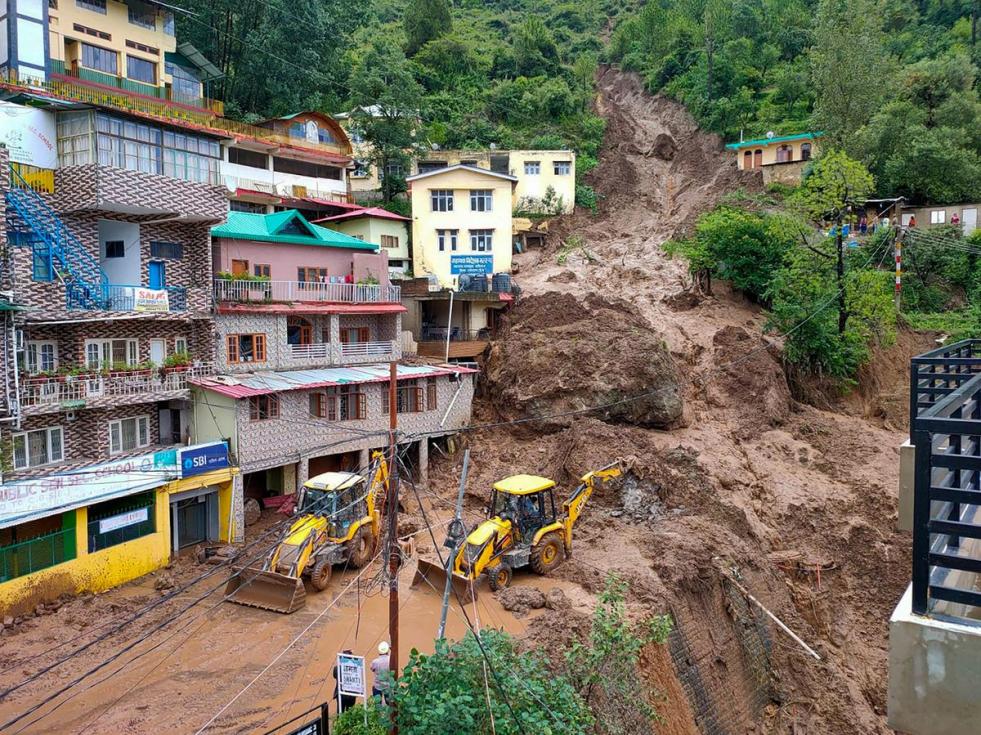
(Feature Image: Earthmovers on restoration work as massive landslide damaged buildings at Shamti after heavy monsoon rainfall, in Solan district, on July 11, 2023 | Photo Credit: PTI/The Hindu)
The Supreme Court’s notice on Shimla development plan that lacks balance between development and environment is welcome and one hopes the apex court takes the issue to its logical conclusion. The consequences of unplanned and ill planned urban developments are a clear invitation to major disasters, including floods, landslides, traffic congestions, air and water pollution, health hazards and also water shortages. The Shimla Master plan also violates the NGT directions with complete impunity.
This is exactly what the EDIT in the Times of India on Mussoorie misery, dangerous short termism that pervades across sectors in Urban India with no policy to guide Urban Water sector or for that matter any other sector.
Continue reading “DRP 310723: Disastrous SHORT TERMISM in Urban India”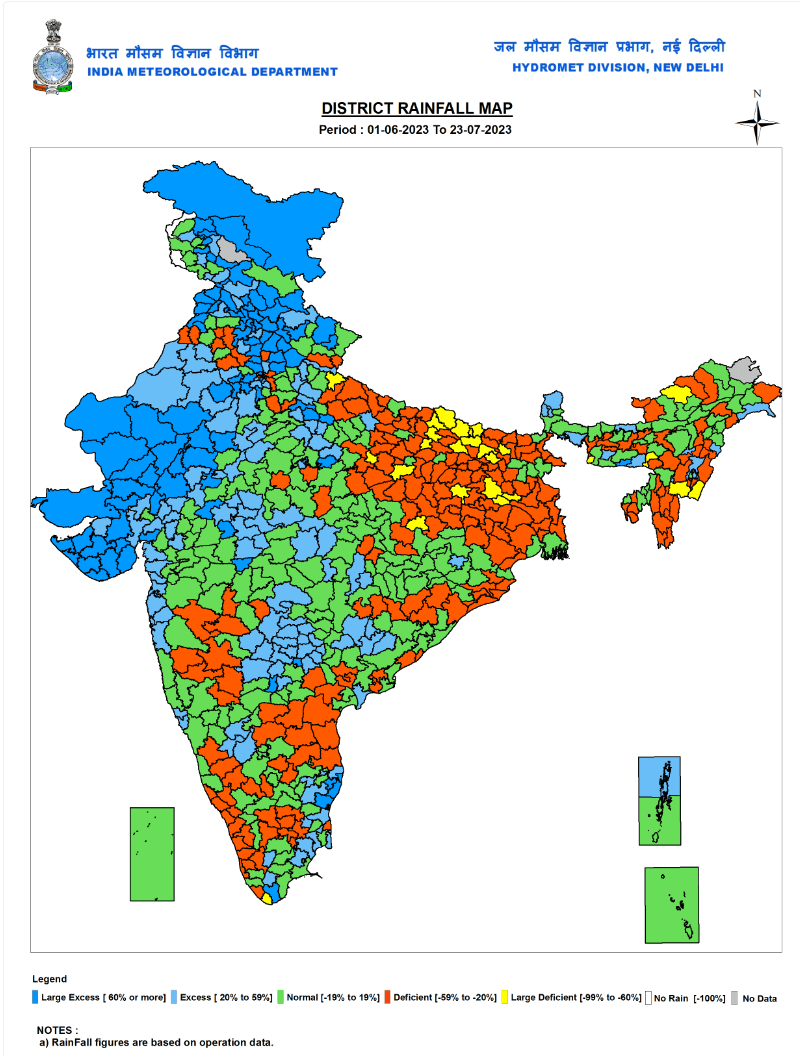
DRP 240723: Urgently need parameters that will truly reflect rainfall pattern
(Feature Image: – IMD’s District Wise Cumulative Rainfall Map for 01 June to 23 July 2023)
India received 389.2 mm rainfall till 0830 hrs on July 23, 2023 in SW monsoon. This being 5% above the normal rainfall till this date of 370.9 mm, India Meteorological Department and with it, the whole nation calls it Normal Monsoon. But anyone who is familiar with the rainfall pattern across India will not call it Normal.
We must urgently develop new parameters for describing the monsoon that also take into account spatial (across states, districts, Tehsils, blocks) and temporal variability. These parameters should take into account the departure from normal for each unit of space for each day and combine such departures to arrive at a figure that will better describe the monsoon for each unit of space. It can also take into consideration the high intensity rainfall events as also the longer dryer patches. This will help us understand not only the nature of monsoon rainfall, but also alert the farmers and everyone else but also help us understand how this pattern is changing over the years. This should not be so difficult for IMD to initiate and accomplish quickly. When aggregated at river basin level, this will also help us understand the actual rainfall pattern in each river basin but also how it is changing. Is this too much to ask?
Continue reading “DRP 240723: Urgently need parameters that will truly reflect rainfall pattern”
DRP 190623: Ten years of Uttarakhand Flood disaster
(Feature Image: Thousands of people have been rescued but the inability of rescue teams to navigate disaster-struck areas has left over 60,000 people stranded in Uttarakhand. The Hindu, 19 June 2013)
This week marks ten years since the Uttarakhand flood disaster of June 2013, the worst recorded disaster in the state. The deaths and destruction in the disaster were unprecedented. Large parts of the deaths and destruction were due to man-made causes. Climate Change played its anthropogenic role too as the unprecedented rainfall happened even before the monsoon was set in. Even the Supreme Court took suo motu cognizance of the disaster and ordered halt to all hydropower projects and independent review of them. One of the major human causes that worsened the disaster was the lack of credible disaster prevention and management systems.
One expected that we and particularly our all powerful governments in the state and the Centre would learn lessons from such an unprecedented, such a massive destructive disaster. The first step to that would have been credible reporting of what exactly happened during the disaster, which agencies played what role and how the destruction could have been reduced. That such a report does not exist even today says a lot.
Continue reading “DRP 190623: Ten years of Uttarakhand Flood disaster”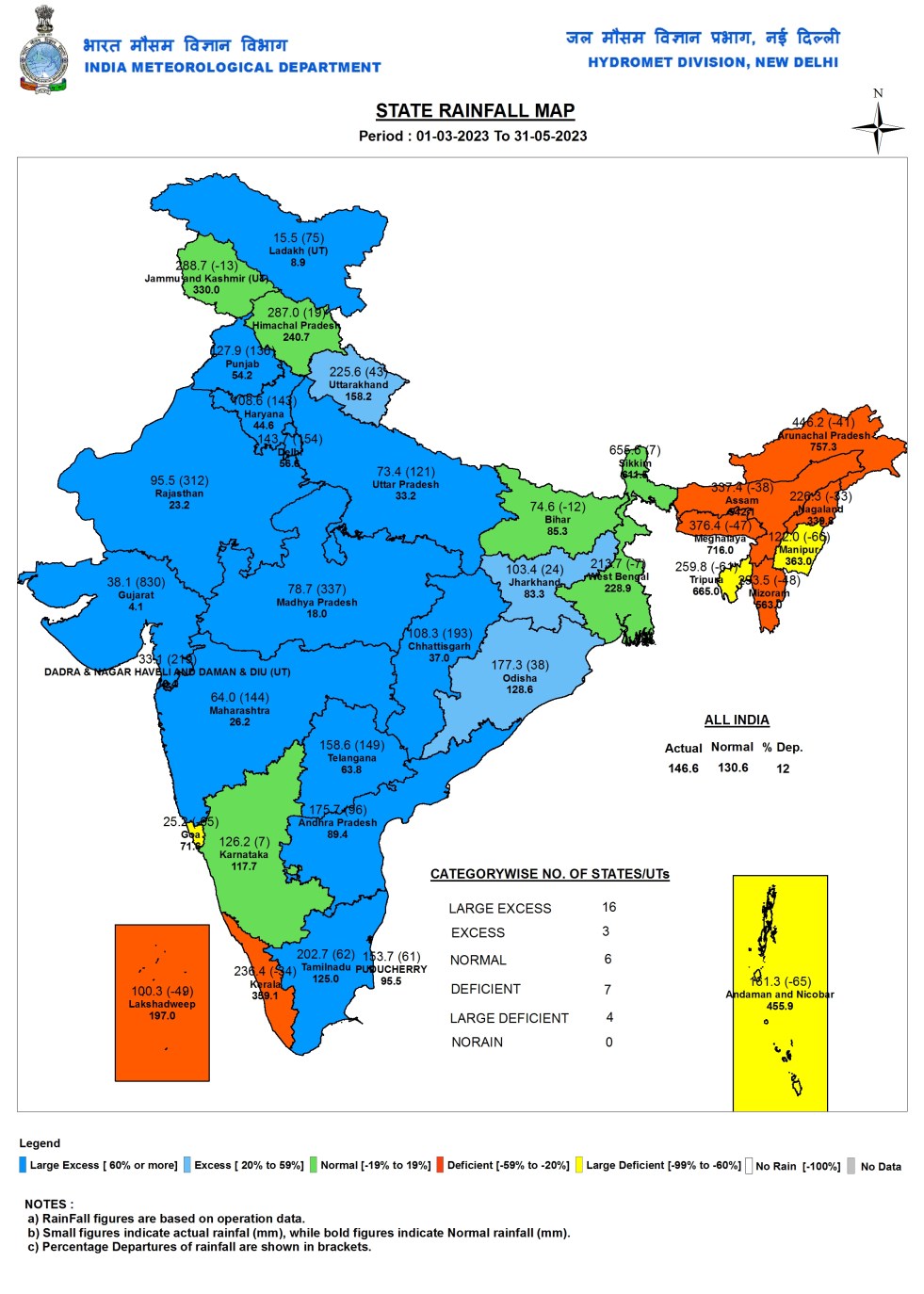
Pre Monsoon 2023: District Wise Rainfall in India
In the just concluded three month pre monsoon season (March 1 to May 31, 2023) India received 146.6 mm rainfall, 12% above the normal rainfall of 130.6 mm as per the India Meteorological Department (IMD). In 2020[i] , 2021[ii] and 2022[iii] India received 158.5 mm, 155.2 mm and 130.6 or 20% above normal, 18% above normal and 1% below rainfall respectively. So this year, India has received much higher pre monsoon season rainfall in 2023 compared to that in 2022, but lower than that in 2021 and 2020.
Continue reading “Pre Monsoon 2023: District Wise Rainfall in India”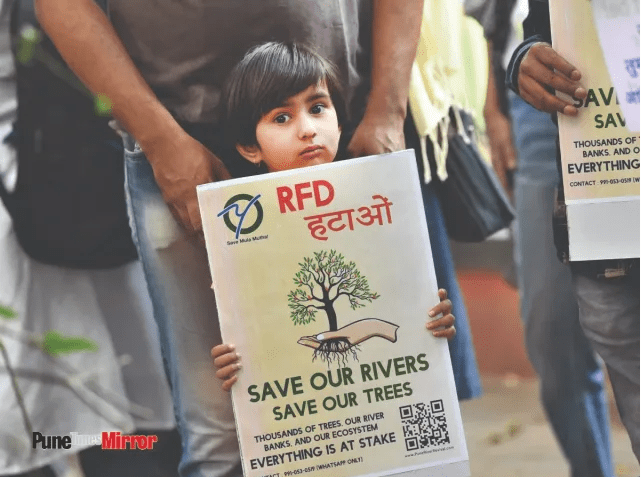
DRP 080523: Pune citizens Oppose River Front Development Project
(Feature Image: On April 29, thousands of Pune citizens join Chipko Andolan against the planned cutting of over 7,000 trees for the Mula Mutha Riverfront Development (RFD) project. Image Credit: Rahul Deshmukh, Source: Pune Mirror.)
It is heartening to see thousands of Pune citizens out on the streets over the last two weeks protesting against felling of thousands of trees for the destructive Mula Mutha River Front Development Project. The project will destroy the best biodiversity habitat along the rivers in Pune, fell thousands of trees, encroach on riverbeds and floodplains, destroy bird migration corridor, and create fresh flood hazards for the city, which will further worsen in changing climate.
We hope this protests continue and intensify till the Pune Municipal Corporation and the Maharashtra government wakes up and scraps the project and instead, uses the scarce available resources for protecting and rejuvenating the water bodies and biodiversity in Pune in collaboration with the people of Pune.
Continue reading “DRP 080523: Pune citizens Oppose River Front Development Project”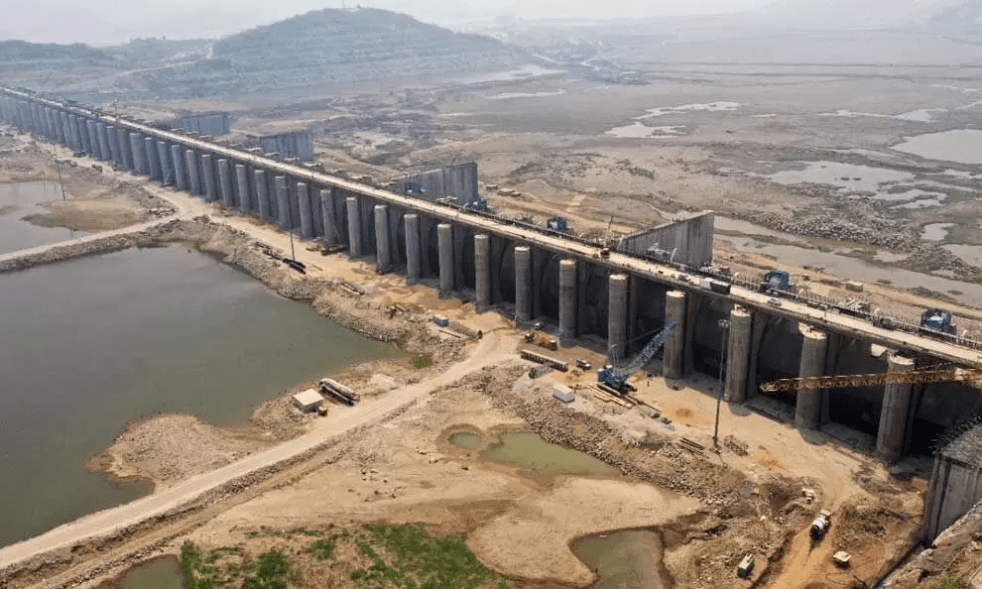
DRP 240423: The world is moving away from Big Dams: Are we?
(Feature Image: Construction works going on at Polavaram Dam site. Source: The Hans Media, May 2021)
This well substantiated report from Yale School of Environment this week shows that the end of the big dam era is approaching. The well argued report from Jacques Leslie uses the reports from UN University, International Renewable Energy Agency, Oxford University, Inclusive Development International, China, among others to show how the pace of construction of dams and hydropower projects and also pace of financing such projects have hugely reduced in recent years and decades.
Even the International Hydropower Association, sensing the change, is now advocating pump storage hydro rather than conventional hydro and that too off stream version, to complement the power from solar and wind. Emerging economics with rising cost of hydropower projects and rising cost of power from such projects compared to solar, wind (onshore and offshore) are a major reason for the massively slowing pace of new hydropower projects.
Continue reading “DRP 240423: The world is moving away from Big Dams: Are we?”
DRP 170423:Forecast of Indian SW Monsoon & definition of normal monsoon
The India Meteorological Department (IMD) has on April 11, 2023 forecast that rainfall at national level in four months of June-Sept 2023 Southwest Monsoon will be 96% of Long Period Average (LPA). IMD considers Indian Monsoon rainfall as normal based on just one parameter of total rainfall in these four months at national level is between 96% and 104% of LPA, with model error of +/- 5%. This raises large number of questions as media has rightly raised post the IMD announcement.
Firstly, in a strange turn of events, on April 12, an update jointly by US weather agencies under the National Oceanic & Atmospheric Administration (NOAA), contradicted a number of assumptions of IMD the previous day, including the period when El Nino will become active and probability of it being a strong event, both of which have a strong bearing on the Indian Monsoon in an adverse way. So the first question that arises is, did the IMD not have the benefit of the observations on April 11 based on which NOAA made the forecast very next day? Or was it an attempt at providing an unjustified feel good monsoon forecast? This question arises as in the past too questions have been raised about such attempts by IMD. This question also becomes important as only a day or two before IMD’s forecast, private forecaster had predicted that monsoon rainfall is likely to be deficient and not normal.
Continue reading “DRP 170423:Forecast of Indian SW Monsoon & definition of normal monsoon”
DRP 160123: Top Court appeals for EIAs for Urban Development: Welcome, but…
The Supreme Court of India, while disposing of a petition related Chandigarh, in its order on January 10, 2023 has said: “Before we part with this judgement, we observe that it is high time that the legislature, executive, and the policymakers at the centre and state levels take note of the damages to the environment on account of haphazard development and take a call to take necessary measures to ensure that the development does not damage the environment… We therefore appeal to the Legislature, the Executive and the Policy Makers at the Centre as well as at the State levels to make necessary provisions for carrying out Environmental Impact Assessment studies before permitting urban development.”
This is most welcome. And urgently required. That India’s urban development is happening at the cost of life sustaining environment resources including rivers, water bodies, forests, wetlands among others is well known. That the government sees all requirements of environmental scrutiny as road blocks is also well known. The consequences of this are clear for all concerned, not only in case of Bangalore as cited by the Supreme Court Bench, but also in case of Ahmedabad, Bhopal, Chennai, Delhi, Ernakulam, Faridabad, Gurugram, Hyderabad, Indore, Joshimath, Kolkata, Lucknow, Mumbai and so on. So is there a good chance that the apex court suggestion will be followed either in letter or in spirit? Unlikely. So what is clearly required is that the apex court emphatically directs the centre and states in this regard and follows it up with ensuring its implementation.
Continue reading “DRP 160123: Top Court appeals for EIAs for Urban Development: Welcome, but…”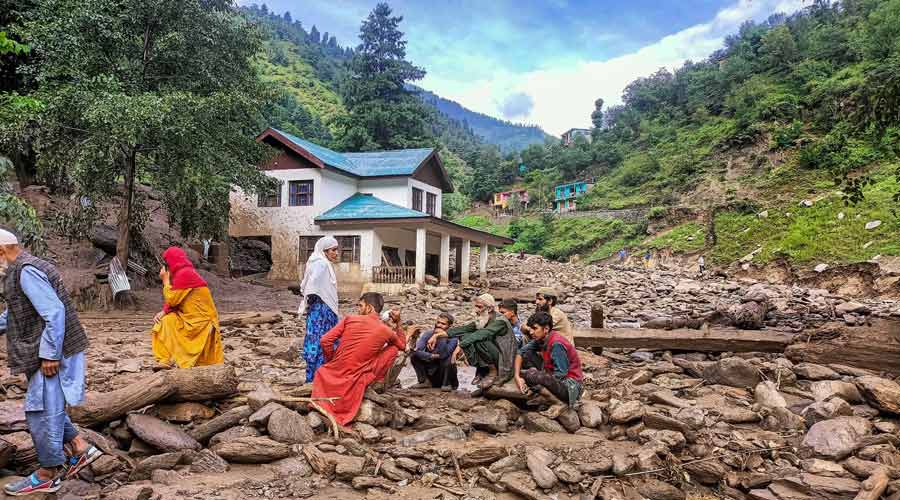
J&K & Ladakh Cloud Bursts 2022: Missing Monitoring & Mitigation
(Feature Image: Cloudburst triggers flashfloods; 13 structures washed away, 20 damaged in Doda. Photo PTI/The Telegraph, 20.07.2022)
Tracking cloud burst incidents occurring before and during South West Monsoon season 2022 in North West Himalayan region, this report covers the Union Territories of Jammu & Kashmir (J&K) and Ladakh. Kindly see the links for SANDRP’s reports covering the Uttarakhand (31 cloud burst incidents) and Himachal Pradesh (39 cloud burst incidents) in 2022. Our previous reports for J&K and Ladakh region can be seen here 2021, 2020, 2019.
Continue reading “J&K & Ladakh Cloud Bursts 2022: Missing Monitoring & Mitigation” SANDRP