Sand Mining

Punjab Sand Mining 2018 Overview: SAD SAGA OF STATE FAILURE

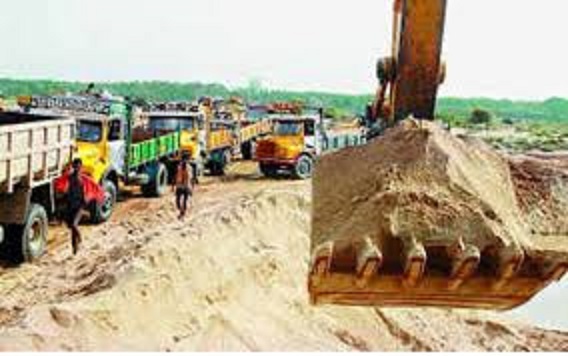
SANDRP has been preparing and presenting the annual overview of sand mining sector for past three years. The issue of illegal sand mining is growing significantly adversely impacting the rivers and dependent communities. The respective governments are also under pressure to regulate the riverbed mining. There is noticeable increase in court cases and judicial interventions.

This year, we are presenting the overview in a state wise format for some key states where the issues are more intense. We start with Punjab state.

Continue reading “Punjab Sand Mining 2018 Overview: SAD SAGA OF STATE FAILURE”

Dams · DRP News Bulletin

DRP News Bulletin 29 October 2018: Better Paddy Options Exist For Punjab

A try-out of the technique to grow paddy without puddling at village Chehlan of Ludhiana has resulted in higher yield in comparison to puddled fields, while saving water in the process. The crop was ready for harvest days before expected time, saving irrigation water otherwise to be used for another fourteen days. This trial was funded and supervised by ATMA, a central govt.  scheme under the Union Ministry of Agriculture.

Puddling is a traditional method of flooding paddy fields with running water, whereas in non-puddling technique, ‘ridges and furrows’ are formed in soil to let water store in spaces and let it stay, thus reducing irrigation frequency.

“Not paddy but puddling is the enemy of waters of Punjab. It is wastage of water to puddle fields as most of it just evaporates. We have saved 45-50 per cent of water in non-puddled fields. Our yield has been almost 30 per cent more from fields where crop was not puddled. Also, non-puddled crop matured very early, saving at least ten days of irrigation water,” says Rupinder Singh Chahal (43) who along with his brothers Jasvir Singh (48) and Kulwinder Singh (52) experimented with ‘non-puddling’ technique on four acres this year.

Continue reading “DRP News Bulletin 29 October 2018: Better Paddy Options Exist For Punjab”

Dams · Floods

Overview of CWC Flood Monitoring Sites 2018: INDIA

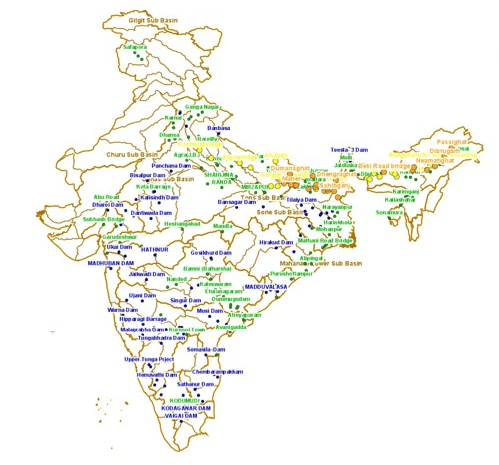
Central Water Commission is the only agency doing flood forecasting in India. As per CWC’s Flood Forecasting website[i] the Data Flow Map has information about 226 Flood Forecast Sites in the country comprising of 166 Level Forecast Sites and 60 Inflow Forecast Sites. It also monitors 700 Flood sites, information made available through List Based Exploration and Hydrograph View, but no flood forecasting is done for these sites.

In order to better understand the CWC’s flood monitoring and forecasting work, SANDRP has published report of CWC’s Level Forecast, Inflow Forecast and level monitoring sites in 5 zones of North India[ii], North East India[iii], East India[iv], South India[v] and West India[vi].  Through this report, we have presented all the data at one place with links to separate zone wise reports with detailed description.

Continue reading “Overview of CWC Flood Monitoring Sites 2018: INDIA”

Dams · Floods

Overview of CWC Flood Forecasting Sites 2018: North India

Flood forecasting is an important activity during monsoon, considering the huge and increasing flood prone area, flood frequency, extent and flood damages. Accurate and timely flood forecasting can hugely help reduce the damages due to floods. Central Water Commission (CWC) is the only agency responsible for flood forecasting in India. To understand the CWC’s flood forecasting better, we have compiled the list of the various flood, inflow forecasting sites and flood monitoring sites in India.

In this compilation, we have given state wise list of CWC’s flood forecasting, flood monitoring and inflow forecasting sites, along with available details like rivers, sub basin, river basin, Warning level, Danger Level, High Flood Level, Full Reservoir Level, Maximum Water Level. As we see below, there are many gaps in this basic information for the sites that are part of CWC’s list.

Continue reading “Overview of CWC Flood Forecasting Sites 2018: North India”

Beas · Fish · Fish Sanctuaries

Beas Dolphins: A Flash Of Fin, A Glimmer Of Hope

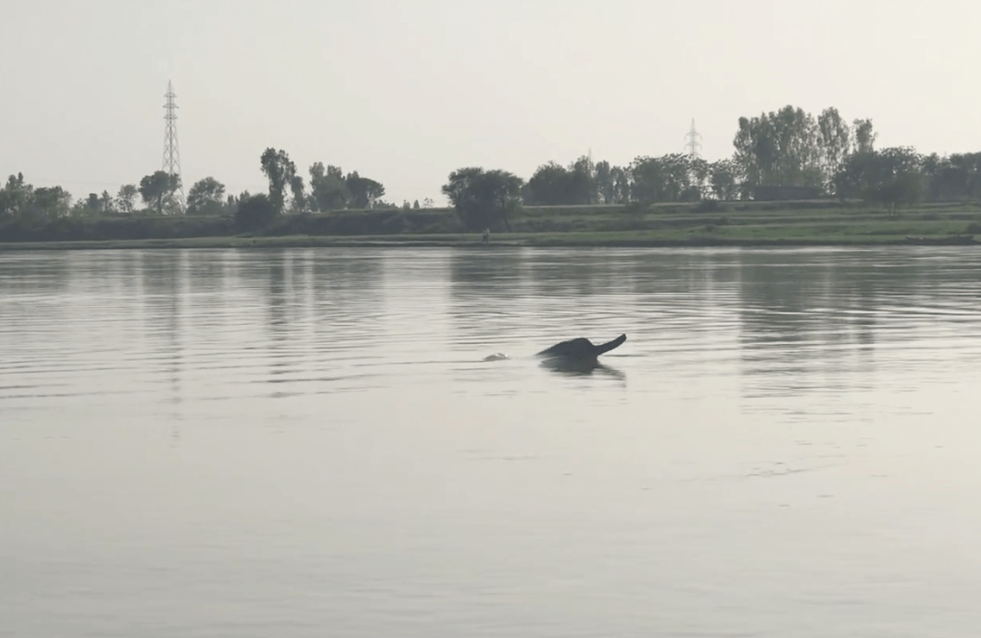
Above: A female Platanista gangetica minor breaks the surface of the Beas (Photo by Arati Kumar Rao)

India’s few remaining Indus river dolphins are confined to one short, beautiful stretch of the Beas. They have a fighting chance at survival only if we ensure a healthy river

Guest Blog by Arati Kumar Rao

A dark shape cleaves the Beas river, leaving a long wake in its trail. From the way it moves, it is neither a human, nor fish, nor even a river dolphin. The shape swims strongly, shrugging off the strong current. It holds its line and makes straight for a sandbar, hauling itself up on a buff-coloured spit.

A black dog, probably feral. It shakes itself free of water and, running across the sand, begins tugging at the beached carcass of a cow. Another bigger dog appears out of nowhere, and the two begin to snarl and gorge, yanking and tearing flesh off the arcing ribs.

River sandbars contain multitudes. I was upstream of Harike, the largest wetland in north India. The critically endangered gharial (Gavialis gangeticus), the fish-eating, long-snouted crocodilian, of which no more than a few hundred survive in the world, bask and nest on these sandbars. Freshwater turtles like the red-crowned roofed turtle (Batagur kachuga) and the Indian narrow-headed soft-shell turtle (Chitra indica), among the most endangered of freshwater species, use sand islands extensively to breed and to bask. Hundreds of thousands of birds — some transient visitors from China and Siberia and Central Asia wintering here, some resident — forage, nest, breed, raise chicks. Many of these creatures have this in common – they are all threatened, to greater or lesser degree.

The sight of predatory, feral dogs in this delicate ecosystem comes with chilling implications. Continue reading “Beas Dolphins: A Flash Of Fin, A Glimmer Of Hope”

Dams · DRP News Bulletin

DRP News Bulletin 18 June 2018 (Why this Onslaught of Big Dam Advocacy by CWC Ideologues?)

In a recent article Ashwin B Pandya, Former, Chairman Central Water Commission (CWC) refuses to acknowledge either the adverse impacts of dams or the better option of using groundwater aquifer for storing water. And thus making unscientific arguments against dam decommissioning and for dams. No one is talking of removal ALL dams as the author seems to postulate and then dismiss it as impossible and irresponsible.

Continue reading “DRP News Bulletin 18 June 2018 (Why this Onslaught of Big Dam Advocacy by CWC Ideologues?)”

Dams · DRP News Bulletin

DRP News Bulletin 19 March 2018 (PM Abandons Inauguration of Mapithel Dam in Manipur Following Protests)

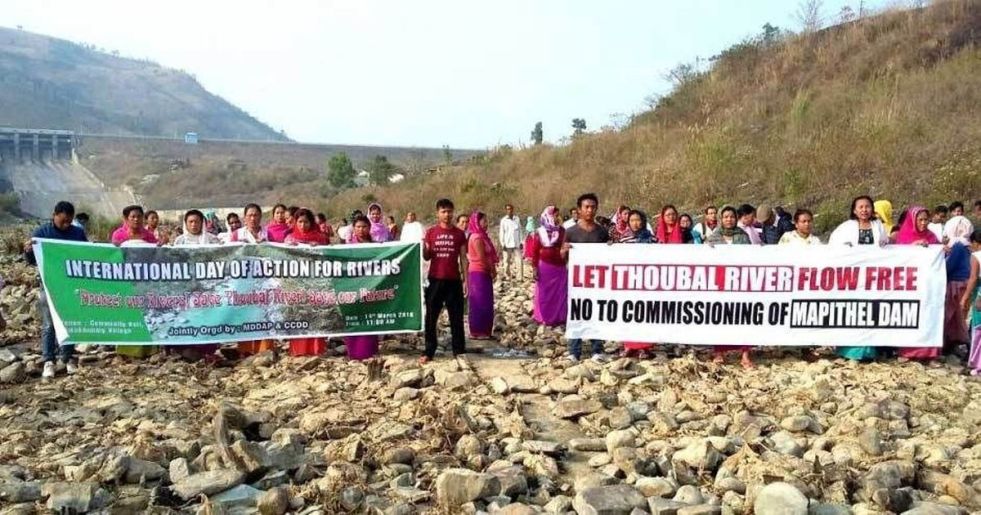
In an important development in Manipur this week, PM Narendra Modi could not commission the controversial Mapithel dam due to local protest. As per, the official statement notifying The PM was  was supposed to launch is the Mapithel dam, part of the Thoubal Multipurpose Project.

As per CRA Manipur blog report, the forum of Mapithel dam affected “Joint Action Committee Against Forced Inauguration of Mapithel Dam had threatened a 48-hour shutdown to coincide with the dam’s scheduled inauguration by Modi. The committee withdrew its call late on March 14, reportedly after the Manipur government agreed to shelve the inauguration.

The action committee is primarily demanding compensation for the people displaced by the project as mandated by the Right to Fair Compensation and Transparency in Land Acquisition, Rehabilitation and Resettlement Act, 2013.

Apart from complaints of inadequate compensation, opposition to the commissioning of the dam itself has grown louder over the years. Local communities claim the project violates the Forest Conservation Act of 1980 and its new avatar, the Forest Rights Act of 2006.  https://cramanipur.wordpress.com/2018/03/16/as-local-communities-protest-manipur-government-cancels-plan-of-modi-inaugurating-mapithel-dam/

Continue reading “DRP News Bulletin 19 March 2018 (PM Abandons Inauguration of Mapithel Dam in Manipur Following Protests)”

Dams · Sand Mining

River Sand Mining in India in 2016

For past many years, incidents of illegal river sand mining across the country are on the rise. Given its resultant and adverse impact on river system and dependent communities, various state and central governments continue to go through the motions of devising a mechanism for judicious excavation of this minor mineral. But there seems no will to achieve compliance. At the same the time, people and concerned groups affected by illegitimate riverbed mining practices are approaching judiciary seeking legal intervention to curb the unsustainable mining of the natural resource.   

In this backdrop, continuing[1] tracking of this issue (like in 2015) SANDRP is providing an overview of various aspects related abstraction of the finite grit material from the rivers through a three part blog series. The first part of the series presents description of the most of the illegal riverbed sand mining incidents that have taken place in different Indian States through the year 2016. The second part of the blog gives account of the measures taken by governments at States and Central level to check the pilferage of this natural resource. The third part will highlight on the legal interventions by respective courts including Honorable Supreme Court (SC) and National Green Tribunal (NGT) to regulate unscientific quarrying of riverbeds.

Continue reading “River Sand Mining in India in 2016”

Dams

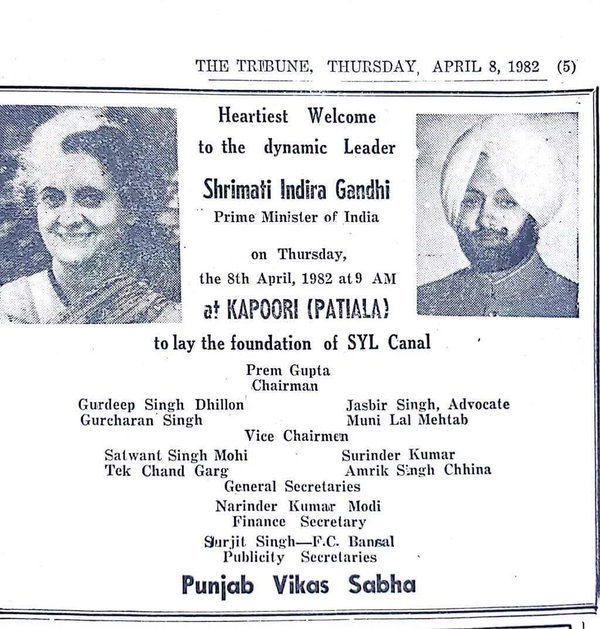
Sutlej Yamuna Link Row:  Chronology of Events

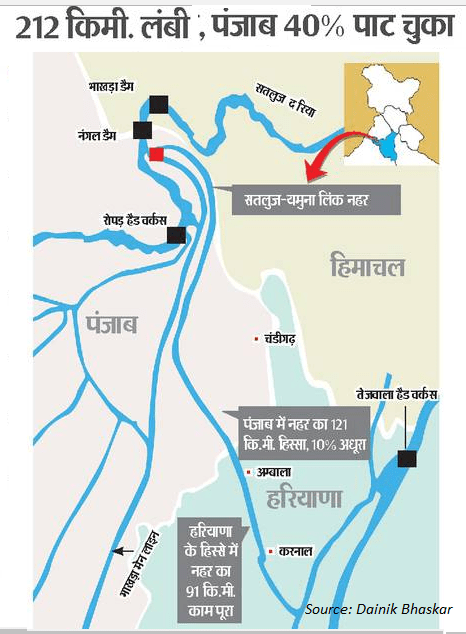
The SYL Row has been going on inconclusively for over last about 50 years. The matter also has been languishing in SC for last 40 years without any resolution. The seemingly unending disputes have been raising questions in the mind of many as to why the issue remains undecided and for how long the controversy will go on. To have better understanding of the issue we have put together a chronology of the events around the SYL dispute.

On November 10, 2016, Honorable Supreme Court (SC) of India has pronounced its judgment on Sutlej Yamuna Link Canal (SYL). In the decision, the apex court has termed the Punjab Termination of Agreements Act 2004 invalid and ruled that Punjab is bound to share Ravi-Beas river waters with Haryana and Himachal Pradesh, Rajasthan, Jammu and Kashmir and Delhi. The court has also ordered Punjab to comply with its two judgments for completion of the SYL canal.

Continue reading “Sutlej Yamuna Link Row:  Chronology of Events”

Dams

एसवाइएल विवाद:  जल संरक्षण में पिछडे़  पंजाब ओर हरियाणा

Guest Blog by Manoj Thakur 

सतलुज यमुना नहर (एसवाइएल ) पर हरियाणा के पक्ष में निर्णय आते ही पंजाब ओर हरियाणा में राजनीति तेज हो गई। पंजाब का कहना है वें अपनी जान दे देंगे लेकिन पानी नहीं देंगे। इधर हरियाणा का कहना है कि उन्हें पानी चाहिए क्यांकि यह पानी उनका हक है। अब सवाल यह उठ रहा है कि दोनों राज्यों में से कोई एक राज्य तो गलत बोल रहा है। लेकिन हकीकत यह है कि एसवाइएल पर दोना ही राज्य झूठ बोल रहे हैं।

Continue reading “एसवाइएल विवाद:  जल संरक्षण में पिछडे़  पंजाब ओर हरियाणा”