The National Green Tribunal, NGT marked its 4th Foundation Day on 18 October 2014, with an impressive fanfare. A full day function was organized at the Plenary hall of the capital’s iconic Vigyan Bhawan. NGT in this short span has acquired a formidable reputation as a unique, vibrant, active institute with independent & unbiased mind and forthright, quick redressal of petitions that come to it.
The function in two separate sessions, one in the forenoon and the other in the afternoon (a Seminar) was attended by large number of government officials, judicial officers, advocates, law school students, NGT petitioners and office bearers and members of the NGT Bar association.
NGT Foundation Function on Oct 18, 2014 (Source: FB page of Information and Broadcasting Ministry)
Invited dignitaries included Mr Justice Ranjan Gogoi (Judge, Supreme Court), Prakash Javadekar (Union Minister of State for Environment, Forests and Climate Change) and Ashok Lavasa (Secretary, MoEF&CC) in the forenoon session and Mr Justice Sudhanshu Jyoti Mukhopadhaya (Judge, Supreme Court) and Piyush Goyal (Union Minister of state for Power, Coal and new and renewable energy). Mr Justice Swatanter Kumar, the Chairperson of the NGT, Mr Justice Dr. P. Jyothimani, Judicial Member, Principal Bench, NGT, Prof. R. Nagendra, and Dr. D.K. Agarwal, Expert Members at the NGT also spoke and graced the dais.
The function included, in addition to the addresses by the invited dignitaries, the release of 2nd issue of NGT International Journal; the launch of new NGT Website (in the first session) and address by invitee experts (in the second session).
In the first session Mr Javadekar informed the gathering about his political beginnings from a water pollution struggle activist against factory pollution and Mr Lavasa categorically stated that the NGT is playing an extremely crucial role and that there is no move to dilute its powers in any manner. It was in the second session that very controversially one Mr M.K. Pandit was invited to speak as an invited expert.
The Minister of State for Environment, Forests and Climate Change (I/C), Shri Prakash Javadekar lighting the lamp at the 4th Foundation Day function of the National Green Tribunal, in New Delhi on October 18, 2014. The Secretary, Environment, Forests and Climate Change, Shri Ashok Lavasa and the Judge, Supreme Court of India, Mr. Justice Ranjan Gogoi are also seen (Source: FB page of I&B Ministry)
Mr Pandit began with highlighting how recent and how fragile the Himalayas were and that a 8+ richter scale earthquake in central Himalayas was round the corner that could flatten Dehradun. Very soon in his almost 25 minute speech changed track as if on a cue to how great the hydropower dam projects in the Himalayas were for the power security of the country. The Union Power Minister had by then just joined the function to nod in full agreement with all that the Mr Pandit was narrating. The audience on the other hand was left perplexed as to what was happening?
An invited speaker was eulogizing the great merits of high dams receiving approving glances from the power minister on an NGT seminar whose topic was “Natural Disasters, Environment & Role of NGT with special reference to Uttarakhand, J&K, Assam & Himachal Pradesh”. Clearly something was amiss, somewhere?
Secondly, Mr Pandit is not a neutral expert, but an interested party. As leader of scores of pro hydro Environmental Impact Assessments that he has led as part of the CISMHE[1] team (Center for Inter-disciplinary studies of Mountain and Hill Environment) has earned them millions as they also continue to mint more money. Typical of Indian EIAs, no EIA done by CISMHE has ever raised any difficult questions for the developers. It has also never concluded that any of the projects is unviable. CISMHE EIAs are as shoddy, incomplete and inadequate as any other[2]. For example on Luhri HEP, the CISMHE EIA was so problematic that even the Ministry of Environment, Forests and Climate Change’s Expert Appraisal Committee on River Valley Projects and the World Bank found it inadequate and unreliable.
Interestingly, CISMHE website says: “Ministry of Power, Government of India established CISMHE as an R&D Centre in power studies in environment in recognition of its excellent past performance”. This means that there is also conflict of interest here in CISMHE doing EIAs, since it has been set up as an R&D Centre by Ministry of Power, that is itself a promoter and developer of hydropower projects. No wonder, Mr Pandit said what the Power Minister wanted to hear and Power Minister made no efforts to hide his approval of what Mr Pandit was saying.
Very strangely, Mr Piyush Goyal claimed that Tehri dam was an example of good project in the Himalayas that saved Uttarakhand in the floods of June 2013. Mr Goyal should know that this claim had absolutely no basis and even an Expert Body appointed by the Supreme Court of India has shown, after listening to THDC, CWC and others that such a claim has no scientific foundation. Mr Pandit did try to support the unfounded contention of Mr Goyal, but the minister asked him to keep quite.
It became clearer, when a pointed question asked by Shri Manoj Misra of Yamuna Jiye Abhiyaan about what would have been the Tehri dam scenario if the Uttarakhand high rainfall event had occurred in the peak monsoon months of July, August or September and not on 16 June 2013 (as in fact happened in Sept 2010, when Tehri created a havoc in the downstream, damaging its own Koteshwar project[3]), when the dam was almost empty and only beginning to get filled, elicited an evasive response first by the Union Minister (we cannot have structures planned for every 365 days in a year). And later when Pandit ji tried to answer, he was asked to shut without him being able to even respond to the other two questions relating to how does he reconcile to the fact of a high intensity earthquake visiting a region where he had been advocating the dams; why was USA (as also some other countries), the mecca of large Dams bringing many of its dams down?
In any case, Mr Maharaj Pandit was contradicting himself, because he said something totally different in his article in The Hindu soon after the Uttarakhand disaster of June 2013: “Most downstream damage in otherwise flood-free areas is caused by dams and barrages, which release large volumes of water to safeguard engineering structures. Dam operators often release more water during rains than the carrying capacity of downstream areas, causing floods… Hydropower policy must consider building fewer dams and prioritise those that have the least environmental and social costs. Independent and serious monitoring of the catchment area treatment plans proposed by Forest Departments with funds from hydropower companies needs to be carried out and reported to the Green Tribunal.” In fact then in June 2013, he was on TV channels almost every night, talking about how Himalayas have the highest dam density in the world and that is such a big invitation to disaster! But he seems ready to change his stand to please the minister or the hydro project developers.
It seems as if Mr Pandit had been invited to justify the building of dams in the Himalayas in front of a large gathering of impressionable judicial officials and young student minds. It is possible that it was also intended to influence the minds of NGT members (judicial and experts) and other persons from judiciary in the face of a number of proposed dams being challenged before the various NGT benches and courts.
If a proper seminar was indeed planned on such an important matter, then there should have been several speakers on wide range of perspectives and topics and not just one speaker with conflict of interest and a clear agenda? The only other technical speaker, Dr R. Nagendran, an expert member with NGT southern bench spoke sensibly on how unscientific management of sanitary projects in hilly regions lead to parallel “Faeco-microbial disaster” which is difficult to tackle.
Mr Ritwick Dutta, secretary of NGT bar association said that the information about Mr Pandit speaking from NGT platform was not available in public domain and it is not clear how he was selected as a speaker.
Such blatant pro hydro bias in an NGT foundation day meeting is certainly unwarranted and out of place for an NGT function. An NGT platform should not have been allowed to be used for such biased presentation. We hope the bias apparent in this aberration is just that, an aberration and does not run deeper, considering that some hydropower professionals have been appointed on NGT benches.
We hope that at least in future the NGT, a statutory judicial body, otherwise doing a great job for the protection of environment, would be more careful in not letting its platform get used by the vested interests. The formidable reputation that NGT has acquired with a lot of remarkable orders should not be allowed to be affected by this one incident. NGT indeed needs to be strengthened in every way and not weakened in any manner.
It would also help if the NGT were to distance itself from this biased episode.
Pushp Jain, EIA Research and Response Centre (http://www.ercindia.org/, Pushp Jain pushp@ercindia.org) & SANDRP (based on interviews with those who were present at the NGT foundation day meeting)
Even as the government is set to review 6 of the foundational environmental laws of India, the Union Ministry of Environment, Forests and Climate Change (MoEFCC, formerly MoEF) has been issuing a slew of orders, circulars and Office Memorandums (OM)[1] lately for “streamlining” Environmental and Forest Clearance process.
Having said that, there is no doubt that the system of Environment and Forest clearance needs to be made stronger, accountable, transparent, democratic and informed. Ironically, the only way the government has sought to do this is to make the system more industry-friendly. A vast majority of orders passed lately by MoEFCC are pro-industry and anti-environment. Drop by drop, such orders and circulars are making it impossible to rely on the original Environment acts and Notifications as the orders have interpreted Acts in convenient ways. At the same time, the misleading, non-compliance, hiding of information, willfully providing wrong information is rampant from project proponent side, with MoEF taking no firm action. We have illustrated this with very few examples below.
When this is a known case, accelerating clearance process, ignoring necessary studies and bypassing checks and balances is only accelerating our fall to the bottom.
Take an example of OM issued on the 7th October, 2014 titled “Seeking additional studies by EACs/ SEACs during appraisal of project beyond the Terms of Reference (ToRs) prescribed under EIA[2] Notification 2006”(No. 22-A3/ 2O14-IA-III).[3]
In a nutshell, this OM states that “It has been brought to its notice” that Expert Appraisal Committees (EAC for short. EAC is at the center, considering Environmental Clearances for bigger projects) and State Expert Appraisal Committees ( SEAC for short. SEAC is at State level, considering smaller projects for Environmental clearance) have been asking for “additional studies which do not form a part of TOR” and this “delays the whole process and is against the spirit of EIA Notification (2006)” It further says that EAC/ SEAC should address all issues at the primary scoping clearance stage [4]itself, based on Form I submitted by the proponent and meeting of proponent with EAC and should ensure that “no fresh issues are raised later” and that additional information/ additional studies should be asked only if it is proved to be “inevitable”.
This OM clearly seems to be brought out due to pressure from project-related ministries state and industry lobby. We need to understand that EACs and SEACs were asking for Additional Studies in very rare cases. EACs like the one on River valley and Hydropower projects have a clearance record of 100% and rarely asks for additional studies. So what was the need for this specific OM?
This OM does not serve any purpose other than discouraging the committees from asking additional information or studies post TOR stage and is a regressive step.
In reality, the very need for asking such additional studies or information is due to severely compromised information provided by the proponents themselves at the Scoping Clearance stage.
Looking at the EC process it seems hiding information, providing false information, misleading the EAC and even committing blatant violations has become the norm rather than an exception. In very rare cases, when this is exposed before EAC, they have asked for additional studies (instead of taking any strong action, for example rejecting the application or postponing decision till the studies are done, as per the Law and prudent decision making norms). The OM is effectively stating that EACs should process applications based on any shoddy information they receive and should close their eyes even when critical issues surface later in the process. This is like accelerating a flawed process, in a race to the bottom.
Rather than passing such OMs, the Ministry needs to ensure that all the steps of EC process are complied with. That’s not the case today and that’s a more pressing problem than the additional studies. It is this non-compliance that is damaging the “Spirit of EIA Notification 2006” about which the MoEF seems to be least concerned. There is no need for any additional OMs to fix these issues, only real concern for spirit of EIA Notification and other related laws.
Below we give a few examples which indicate the gaping holes in the current system is and how “not asking for fresh information or additional studies” will result in severely flawed environmental decision making.
Basic Project Information (Form I & PFR) has been incorrect, false or incomplete on many occasions:
The OM states that the EACs/ SEACs should base their TORs on basic project information (in the form of Form I & Pre-feasibility Reports – PFR) submitted by the proponent and a brief meeting with the proponent. (Note here that there is no role for any external agency and the Ministry is fully relying of the proponent for project information submitted at this stage.) Form I asks limited questions and a number of times, the answers provided by the proponent are incorrect, incomplete or misleading. Seems to be a sure way to make wrong decisions, doesnt it?
For example:
Sonthi Lift Irrigation Scheme in Karnataka, the Form I took the MoEF for a royal ride. The project was already significantly finished, in violation of the EIA notification and EPA (1986) when the officials approached MoEF for “Scoping” Clearance! And even after pointing out all the blatant violations, the MoEF accepted the project, with no action taken again the violators (Karnataka Neeravari Nigam Limited). We had pointed this out at many stages, see SANDRP’s submissions and notes: https://sandrp.in/Sonthi_Lift_Irrigation_Nov_2013.pdf
In case of 1750 MW Lower Demwe Project in Arunchal, which is part of a string of projects in Lohit Basin with huge cumulative impacts and downstream impacts on Assam, the Form I says “No cumulative impacts”.
In case of 72 MW Rolep project in Sikkim, Form I does not clarify that the project falls is a high landslide and flashflood zone, when landslides and flash floods have occurred at the site itself.
In case of Shirapur Lift Irrigation Scheme in Maharashtra, the Form I was a joke as the half-finished project with canals has been sitting idle for many years in Solapur, blatantly violating EPA,1986. Not only does the Form I hide that the project is nearly finished, is also states that the project “does not affect important ecological areas” or “areas for sensitive species”, when the canal of the project will take 92 hectares from Great Indian Bustard Sanctuary. Incidentally, the MoEF has a special plan for protection of the Great Indian Bustard! (See SANDRP’s submission at TOR Stage https://sandrp.in/irrigation/ShirapurLIS_SANDRP_Sbmsn_to_EAC_Jan2013.pdf)
These are only a few indicative examples and the violations are on a huge scale. We and others have pointed this out to the EAC and MoEFCC over the years, but no action was taken, thus encouraging the developers. We have not heard of a single instance when the MoEFCC has rejected the proposal based on problems with Form I/ PFR and as per the Clause 8 (vi) of EIA Notification 2006, which is reiterated in the present OM.
And now the Ministry wants EAC to take action only based on such information, and without any further studies!
No action is taken when EIA is prepared violating granted Terms of Reference (TOR):
The Ministry is saying that asking for additional information is against the spirit of EIA Notification 2006. The same Ministry does not bat an eyelid when projects are recommended EC (Environment Clearance) by EACs even when they violate the TORs based on which the project received first stage clearance! Is that not against the spirit of EIA Notification?
Here too, SANDRP has pointed this out a large number of times, but this has not been acknowledged in most cases. Some examples:
TORs issued for Sach Khas Project in Himachal Pradesh had specifically asked for study of impact of sudden release of huge quantities of water for generating hydropower (Peaking) on biology of the river. This was not done by WAOCOS, but the EAC and hence the MoEF did not consider this point, even after SANDRP made a specific submission on it. See SANDRPs note: https://sandrp.wordpress.com/2014/08/19/sach-khas-hydro-project-in-chenab-basin-another-example-of-wapcoss-shoddy-eia/
Again this is just an indicative list, showing the extent of real problems.
No action was taken when EIA was plagiarized
There have been multiple occasions when EIA is exceedingly shoddy and even plagiarized! In these cases too, although it has been brought to the notice of EAC/ MoEF, no action has been taken.
For example: In case of Mohanpura Irrigation Project in Madhya Pradesh, plagiarising in WAPCOS EIA was pointed out to the EAC by SANDRP and individual researchers (see : https://sandrp.wordpress.com/2013/11/15/mohanpura-dam-in-madhya-pradesh/) but the MoEF took no action against the agency.
No action was taken when EIA provided misleading information
There are several such examples but the most recent example, is 3000 MW Dibang Project in Arunachal. The EIA agency and Project Proponent has issued misleading information about the impact of the project on the downstream Dibru Saikhowa National Park in Assam. The report states that the water level rise or fall at Dibru Saikhowa due to sudden water release from all projects in the upstream Arunachal Pradesh will be less than one meter, when a different study also considered by EAC shows that this fluctuation when all upstream projects hold back and release water will be 7-8 feet (more two meters)! SANDRP had pointed this discrepancy, but the EAC did not even take a note of this in the meeting and actually recommended clearance to this project! (https://sandrp.wordpress.com/2014/10/06/manipulating-environment-forest-clearances-for-dibang-project-deja-vu-lshp-history-repeated-will-it-be-tragedy-or-comedy/)
To reiterate, the above is a brief, indicative list. SANDRP and other organizations routinely look at the EC process, and we are overwhelmed at the level of non-compliance happening at the proponent end as well as EAC and MoEF level.
The affected communities see how their submissions are either misrepresented in the EIAs, or just not considered by the EAC even when objections are loud and clear in Public hearing reports (like in case of Dibang EIA).
MoEFCC further denigrates the Public Consultation Process
By ordering that no additional information should be sought after TOR stage, the MoEF is deriding the importance of Public Hearing which take places as a part of the Environment Impact Assessment Study, after TORs have been granted. Like in the case of Dibang, major issues raised by affected people have not been raised either in Form I or in TORs or in the EIA and need additional studies.
Now by discouraging additional studies, the MoEFCC is suggesting that even public consultations are immaterial. No more studies, after TOR please! This is an insult of the public consultation process which should form the heart of appraisal and assessment process.
For the same reason, in many countries public hearing is conducted before granting Terms of Reference. In the absence of any such provision, simply stating that additional studies should not be recommended after TOR stage is a seriously regressive step.
Project application documents not availalble in public domain
For basic transparency in Environment appraisal process it is necessary that all the documents (Form 1 and PFR at TOR stage & EIA-EMP and Public consultation documents at EC stage) that accompany the application for environmental clearance are put out in public domain well in advance ( at least ten days) before the projects are discussed by EAC.
Ironically, MoEFCC does not have any legal requirement in this regard and it was Central Information Commission that in 2012 directed the MoEFCC to ensure that. But this is not happening. In fact the projects that are on the EAC agenda are many times not even listed on the relevant environment clearance website (http://environmentclearance.nic.in/).
When this was brought to the attention of the MoEFCC’s concerned officials and EAC, they have taken no action in most cases. The situation has particularly worsened since June 2014, after the new BJP-led government came to power at the centre. It is on areas like these that we need MoEFCC to be pro-active. ( Pass some OMs here!)
In the end The system of Environmental Appraisal and Clearance today lacks accountability, transparency, democratic norms and compliance. Some of the major reasons for asking for additional studies is when the Form I, PFR and EIA do not adequately address issues.
In order to bring in speed and accountability in the appraisal process, there is a need to:
Blacklist and debar EIA consultants which provide plagiarized, misleading or false data in EIA reports
Reject applications based on false or misleading Form I – PFR
Reject applications which do not conform with TORs granted
Consider submissions received from civil society and affected groups at the time of TORs and EC process carefully and consider these as inputs and help for a holistic appraisal, not as adversaries. Invite organisations/ individuals in the EAC meetings when those specific projects are discussed.
MoEFCC needs to ask EAC to show application of mind while appraising projects, submissions, public hearing processes and considering proponent’s response. This serious consideration by the part of EAC should be reflected unambiguously in the minutes of the EAC meetings.
MoEFCC needs to appoint as members and chairpersons of EAC only such persons with a track record indicating knowledge, experience and independence on environment issues. A recent NGT order asked MoEFCC to do exactly, this, but MoEFCC has yet to implement this order.
MoEFCC needs to ensure that all the relevant documents for projects on EAC agenda are put in public domain at least ten days in advance of the EAC meeting, as directed by the Central Information Commission. In absence of such documents in public domain, the EAC should not be considering the projects. (MoEFCC should in fact come out with a notification on this!)
Reject projects which have violated EPA (1986) and EIA Notification (2006). Here too, the MoEFCC regularizes blatant violations by passing OMs.
Most of the above is enshrined in the EIA Notification (2006) and the Environment Protection Act (2006) and there is no need for passing any OM for this, but such steps will automatically make the EC process not only efficient and swift, but also responsive, pro-environment and pro-people.
And this should be the main concern of Ministry of Environment, Forests and Climate Change.
[4] Scoping clearance stage is first stage of Environmental Appraisal Process when the EAC grants Terms of Reference (TOR) to the project based on which Environment Impact Assessment is carried out later
The state of Himachal Pradesh has a hydropower potential of almost 23,000 MW, which is about one-sixth of the country’s total potential[1]. In a bid to harness it, the state authorities seem to have gone all out without really even assessing the costs and impacts it will have on the local ecology and people. It has already developed about 8432.47 MW till now and is racing towards increasing that and in its way, displacing people, destroying forests and biodiversity, drying the rivers, disrupting lives and cultures in upstream and downstream, and flooding cultivable and forest land. The target of the State government for 2013-14 is to commissioning 2000 MW[2] capacity projects. The state and central governments are pushing for more and more projects, playing havoc with the lives of the locals and thus facing continuous agitations. This update tries to provide some glimpses in hydropower sector in Himachal Pradesh over the last one year.
The Ravi, Sutlej, Chenab, Beas & Yamuna, which form the major river basins of Himachal have been heavily dammed. These projects submerge and bypass the rivers, change the course, the flow and the silt carried by the rivers. The 27 proposed projects in the Chenab basin endanger the fragile ecosystem of the Lahaul-Spiti Valley. In the Sutlej, the nine major hydel projects of 7623 MW which are already running along the 320 km stretch include: 633 MW Khab (proposed), 960 MW Jangi Thopan & Thopan Pawari (re-bidding), 402 MW Shongtong Karcham (under execution), 1,000 MW Karcham Wangtoo (commissioned), 1,500 MW Nathpa Jhakari (commissioned), 412 MW Rampur (under execution), 588 MW Luhri (allotted)[3]. There are about 21 more proposed projects. The same is the case with the Ravi where about 30 projects are proposed to be built or are already functional.
From 1981-2012, more than 10,000 ha of forest land on which people had user rights, have been diverted for hydropower, mining, roads and other projects[4]. This does not include the thousands of hectares of forest land diverted towards projects like the Bhakra Dam before 1980.
On the one hand, the Ministry of Environment and Forests (MoEF) treats the locals like hindrances, saying that they cause damage to the environment by using the forests inefficiently, on the other hand, it approves big projects which cause hundred times more damage to the environment. There is no recognition of the ecological fragility of the landscape, and clearance from the MoEF seems like just a formality. Clearly, the MoEF and the state government are not interested in doing something for the people of the area, but in pushing project constructions to achieve targets at whatever cost it may require. This is also evident in the way the MoEF, without proper consultation, approved the state’s request for making the procurement of no-objection certificates (NOCs) from the Gram Sabhas a non requirement. MoEF itself had passed a circular in 2009, making it mandatory for project proponents to obtain NOCs of the affected Gram Sabhas and compliance to the Forest Rights Act 2006 before the diversion of forest land to non forest purposes. However, in 2012, the MoEF issued a letter which stated that there are no compliance issues with regard to FRA in Himachal Pradesh since the rights of the forest dwellers have already been settled under the Forest Settlement Process in the 1970s[5]. This is clearly wrong and not supported by facts or ground realities.
Taking away the rights of people on land without giving them adequate compensation has been a governmental trend. It is not enough to just grant monetary compensation to them. The land which could be put to various uses by the local is no longer his. The Gaddis, a shepherding community, rely a great deal on their rights over land as they need it for grazing. With the Forest Dept. making some areas inaccessible for them, their land has anyways decreased. In addition to this, projects like the Bajoli-Holi and the proposed dam at Bada Bhangal, which is sanctuary area now, and traditionally a grazing area for the Gaddis, will further take away from the available land.
But it is not only the loss of forest and private land which is the problem here. Another major issue is that of water. With the state giving increased priority to run-of –the –river projects, more and more water from the river is being diverted for longer stretches.
In the controversial Luhri project on the river Sutlej, the diversion of water into a 38 km long tunnel would mean the absence of free flowing river in stretch of almost 50 kms. The agreed amount of water to be left flowing in the river is 25% for the lean season and 30% in monsoon[6]. The project was initially supposed to be of 775 MW installed capacity and was to have two tunnels. This was challenged because higher environmental discharge was to be maintained in the downstream river. The capacity has been reduced to 600 MW and there will be only one tunnel[7].
But even this diversion would mean that villages falling within 50 km downstream of the project will not have access to its water like they used to. It will also lead to the warming up of the valley as the cool waters will be diverted into the tunnel. The environmental impact assessments (EIAs) have failed to address the effects of this. The EIA has also done no assessment of the impact of the tunnels on the land and people over ground. Locals have been agitating under the banner of Sutlej Bachao Jan Sangharsh Samiti, but the project is still on[8].
Another major drawback of the tunneling process is the danger it poses to the residing population and their groundwater sources. The Karcham Wangtoo project (1000 MW) in Kinnaur, which is the country’s largest hydropower project in the private sector (owned by the Jaiprakash Associates) was closed briefly in the December of 2012, due to leakage from the surge shaft and the water-conducting system, raising concerns about the safety of such projects and the absence of a monitoring body[9]. Because of the massive dam, the leakage was between 5-9 cumecs (cubic meters per second) or 5000-9000 liters per second, which is large enough to trigger massive landslides in the area. The company involved in the project will always try to get away saying that such things are unforeseen and it will take time for the project to stabilize. But in the meanwhile, who should be held accountable for the losses to life, livelihoods, habitats and environment due to this?
The same project involves a 17 km long tunnel passing under 6 villages The tunnell has affected water aquifers causing natural springs to dry up. This claim by the villagers was verified by the state’s Irrigation and Public Health department in a response to an RTI application. The official data showed that 110 water sources have been affected by this project. This information has come out only due to the proactive-ness of local people, but these issues are not even part of the impact assessments.
The concerns expressed by locals in the case of the 180 MW Holi-Bajoli project are quire serious. This project on the Ravi River has been given clearances under suspicious circumstances. It is being opposed by the local communities on issues of environment, violation of rights, and impacts on local livelihoods. People have also taken offense at the apathy shown to them by the state government. The tunnel for the project was supposed to be constructed on the right bank of the river, which is relatively devoid of habitation, but the powerhouse and headrace tunnel sites were later shifted to the left bank, on which rest most of the villages of the area. This decision was seen as flawed according to a report by the state-run Himachal Pradesh State Electricity Board Ltd (HPSEBL), which pointed out that it could have negative effects on the environment and the locals. The reason being cited for this is that construction on the right bank would take longer to be completed. GMR’s contention was that the right bank was weak and unsuitable, whereas the opposite has been confirmed by a Geological Survey of India report according to Rahul Saxena of the NGO Himdhara Environment Research Collective[10].
The protests which have been going on for four years now have been due to legitimate concerns raised by the locals of deforestation, loss of land and infrastructure and the loss of peace which would accompany the project. Earlier this year, women of four panchayats set up camp at the proposed site of the power house at Kee Nallah near Holi village to stage their protests. 31 of these women were arrested for protesting against the illegal felling of trees and the road construction of the project. They were taken to Chamba town which is almost 70 kms away from Holi and were detained for more than 24 hours despite appeals for their immediate release. Though they were released on bail the next day, they say that a lot of false charges have been filed against them. The district administration has taken no steps to resolve these issues[11]. In a letter to the Chief Secretary, the people have demanded that all charges be dropped against these women and justice be done about their demands. Despite continuous protests by the people the MoEF has given clearance to this project which requires the diversion of 78 ha of rich forest land and the felling of 4995 treesx.
The locals also say that change in the MoEF policy of NOCs enabled the Deputy Commissioner to issue a false certificate under FRA saying that no rights have to be settled on the land diverted for the project as it has already been done under the settlement process of 1970s.
Management glitches:
In the Chamera II and III projects on Ravi River, there has been much debate about the distance between the two being only 1.5 km without any water source in the middle. The operation of the Chamera II power station is completely dependent on the release by upstream Chamera III project. If the generation schedules of both are very different, there will be danger to the downstream areas. Last year it was observed that the schedules given by the Regional load Dispatch center were not coordinated, resulting in a dis-balance in the generation in both dams. In another instance, leakage was noted in the head race tunnel of Chamera III HEP.[12]
In a letter to the Chief Minister last year, environmental activists sought to know why there has been no committee set up by the State government for the control and monitoring of safety and water flows as is required by the Hydropower Policy 2006 of Himachal.
In another case of delay and mismanagement among many others, the Kol Dam on Sutlej River, the foundation for which was laid by former prime minister Atal Bihari Vajpayee in the year 2000, was due to be completed in 2008 but is not yet functional. The Majathal Wildlife Sanctuary area falls in the submergence area for the project and clearance was required from the National Board for Wildlife as the project would endanger 50,000 trees and the habitat of the ‘cheer pheasant’[13]. The project was finally granted approval by the Supreme Court in December 2013, given permission to drown the proposed parts of the sanctuary. The whole episode smacks of a scam when the project authorities say they forgot to get the clearance for submergence of the sanctuary and the forest & wildlife departments are ready to look away.
But due to continuous delays trigged by shoddy work and project management, the NTPC Dam project has still not been made functional. The delay is expected to be for at least another year, which would mean an additional loss of Rs. 150 crore. For about a year now the NTPC has been claiming that the filling of the reservoir would start, but they had to abandon that twice due to heavy leakages. There are also problems with the gates fitted inside the diversion tunnel and also additional repairs are needed in the tunnel.[14]
The Comptroller and Auditor General of India (CAG) has found that the hydro power projects are not adhering to the compensatory afforestation that was promised. Out of the projects it studied, it found that 58% of them have carried out no afforestation activities at all. According to the results of an audit, it was seen that only 12 companies had deposited compensation money out of which no work was done at all in seven of the projects. Even out of the 12, full afforestation was achieved on paper only in 2 of them[15].
Another major problem is that tunnelling and road construction generate huge amounts of muck and debris. These are not disposed off in the right manner. For example, in the Koldam, the net volume of muck generated is 2.27 crore cubic metres. If this was to be dumped in the Sutlej, it would lead to a raise in the level of the Sutlej by 2.20 metres along a length of 100 kms[16]. The project authorities, including the World Bank funded projects like Rampur and Nathpa Jakhri, find it easier to dump the muck into the river rather than transport and dump it properly. The MoEF, state government and all concerned are happy to not take any action against any of the projects for such blatant violations that everyone knows about and even when evidence of such violations are presented to them.
Small Hydel Projects (SHPs):
The view of the government regarding the non requirement of clearances for small projects is clearly unfounded, unscientific and unacceptable. If the authorities think that these projects cause no or little harm to the environment and the people, they are wrong. The fact is that a lot of the hydro power potential of Himachal Pradesh is envisioned to be realized through these small projects which are being indiscriminately built on even small tributaries of the major rivers, sometimes even the ones listed as negative (from fisheries perspective) for HEPs.
In a recent case, the 4.8 MW Aleo II project located on the Aleo nallah, a tributary of the Beas River, in Kullu district, made news due to the collapse of its reservoir wall in a trial run[17]. The Aleo II project was supposed to become functional in January 2014, but as the management started to fill the 12,000 cubic meter capacity reservoir, its wall collapsed when it was only 75% full. The water from the reservoir went straight into the Beas River, causing sudden rise in its levels till about 50 kms downstream. The management had not informed the panchayat or the public of Prini village which is situated next to the dam site before attempting to fill the reservoir, causing unforeseen danger to them and others downstream.
These small projects[18] also seem to be working without proper lease of land. In a report earlier this year, it was found that out of the 55 projects examined below the 5 MW capacity in Himachal Pradesh, about 47 of them are operating without proper lease of the forest land that they are using. It was found after an RTI was filed regarding this that about 35.973 ha of land in the Chamba district was being used without lease by 13 HEPs. The case was similar in Kangra with about 43.5035 ha being used without lease. This just goes to show that the State regulations regarding hydro projects are not strict and definitely faulty. The land is being ruthlessly exploited by private and public sector companies which have a bullying attitude towards the local population[19].
Excessive electricity? Reports suggest that the state requires about 1200 MW of power, but it is producing so much more that it has no buyers. It is not surprising to see that projects like the 1000 MW Karcham Wangtoo in Kinnaur are facing lack of buyers for electricity. The JPHL has not been able to sign long term Power Purchase Agreements (PPAs) with any power distribution company (discoms). As a result, it is selling electricity through short term agreements or at lower prices. This is the situation with a lot of other plants in the state, both private and public. Even the state is facing difficulties selling its surplus power and as a result has to sell it at lower prices. According to a 2012 report of the CAG, the revenue earned from selling surplus power in Himachal has dropped significantly over the past years. The reason given for this is mostly the increased cost of production which has made power more expensive and the discoms, which are already in debt are thus unable to buy it.[20] Even after facing such losses, why is it that the Himachal government is pushing for more and more projects, destroying the rivers, forests, biodiversity, livelihoods and environment?
To add to the worries of the local people and environmentalists, in a recent announcement, the Chief Minister has announced that there is no NOC required from the fisheries dept, IPH, PWD and the revenue dept for small projects[21] Also, to make things easier for the project developers, it was announced that the small projects below 2 MW installed cpacity, were now liable to give the government only 3% of free power for a period of 12 years, as opposed to the earlier 7%xvi.
In an interesting development of the first ever Cumulative Environmental Impact Assessment (CEIA) in the state, a study of 38 hydro electric power projects in the Sutlej basin, the recommendation has been to designate the “fish-rich khuds, mid-Sutlej, eco-sensitive Spiti, Upper Kinnaur area and 10 other protection areas as a no-go zone for hydro projects”[22]. The CEIA is incomplete, inadequate and makes a lot of unwarranted assumptions and uscientific assertions. Even if this recommendation implemented, several projects in the Sutlej basin are still under way and the government seems to be doing nothing to stop them. There is also an Environmental Master Plan (EMP) prepared by the Department of Environment and Scientific Technology, and approved by the government which claims to have identified the vulnerable areas of the State[23]. This EMP is being adopted by the State for its developmental planning for the next 30 years. But the impact of this is yet to be seen, assuming that it does not turn out to be one of those plans which are never implemented.
River Netravathi in the upper reaches Photo: Parineeta Dandekar, SANDRP
Like a many-headed serpent, Yettinahole (Netravathi) Diversion Project refuses to die. Every time one of its head is cut, it grows a new head.
Following criticism of the Project Report [i](based on which Karnataka Government had already made budget provisions in 2013), a new DPR of the project has been prepared in December 2013 by EIT RIP JV [ii] which tries to amend blatantly illegal stands taken earlier. However, after scratching the surface, it is clear that the DPR is just as illegal and dangerous as the interim Project Report was.
Yettinahole, or rightly the Netravathi Diversion Project has always been a political project, visualized to earn political mileage and brownie points. Veerappa Moily originally from Dakshin Kannada, moved to Chikkaballpur constituency in 2009, from when he started pushing the project strongly. As the Environment Minister, Moily also laid the foundation stone of the project in Chikkaballapur, just before the Loksabaha Elections in March 2014 [iii]. Strategically, the stone was laid in Chikkaballapur and not in Hassan, from where the water actually be diverted. No political party has opposed the project consistently.
Even before a complete DPR, Karnataka 12-14 Budget of the Congress Government allocated nearly 2800 crores for this scheme. The current govt lost no time and directly awarded contracts worth nearly 1000 Crores to Hindustan Construction Company, in a joint venture with GVPRL, without any clearances or any public consultations[iv].
Before the laying of the foundation stone of the project, SANDRP had presented a detailed analyses if the Project Report proving how the project is violating Environmental Protection Act by evading Environmental Clearance.[v] A number of eminent personalities from Karnataka had jointly written to the MoEF to appraise the Project for EC. In response to this, the MoEF had written to the Karnataka Govt and Karnataka Neeravari Nigam Limited (KNNL), seeking clarifications on the nature of the project. Although this move was triggered due to the submission made by SANDRP and other groups, we never saw KNNL’s response despite specifically asking for it. We only saw MoEF’s lame justification, bailing out KNNL and Karnataka Government and turning a blind eye to the huge impacts of the project.
Students protesting against Yettinahole Project Photo: DaijiWolrd
When Karnataka CM Siddramaiah was about to lay the foundation stone along with Mr. Moily, SANDRP wrote an open letter to him[vi], as the Environment Minister, asking a direct question as to how can he himself formally initiate a scheme which is blatantly violating laws governed by his own Ministry. Following this, the ceremony was cancelled[vii], only to be held surreptitiously later.
During all this, there was huge and unprecedented opposition to the project from Dakshin Kannada and Mangalore. Farmers, students, workers, women groups all came together, united in their opposition against a project that would divert their Netravathi. People stopped trains, organized hundreds of dharnas, boycotted voting, organised signature drives, etc. Leaders in all hues came together in a rare show of discontent. On the day of foundation stone laying, people in Dakshin Kannada voluntarily observed a strict Bandh. Funnily enough, even the beneficiary district of Chikkaballpur opposed the project as the 2.82 TMC water that it would be getting after so much of fanfare was too meager, in the face of the grand promises of lush fields and no worries.
More Protests against the Project Photo: The HinduProtest in Hassan against Yettinahole Photo: The HinduProtesters stopping a train Photo: News Karnataka
Despite these unprecedented protests and in the face of 2014 Loksabha Elections, foundation stone was laid on a dais in Chikkaballapur. The dais was burgeoning under the weight of several political strongmen.
This event stands out as an example of undemocratic behavior for an elected government.
Foundation Stone laying Ceremony Photo: The Hindu
The Government of Karnataka did not hold a single public meeting in Dakshin Kannada, trying to understand and address people’s apprehensions. When eminent personalities from Dakshin Kannada planned to hold a National Consultation on Yettinahole Diversion in NIT Suratkhal in August 2013, the meeting was cancelled at the last minute due to political pressure on the organizers.
As things stand now, the project does not have Environmental Clearance, Forest Clearance, Wildlife Clearance, has not started rehabilitation and resettlement of over 10 villages that it will submerge, but its work can start at any moment.
SANDRP accessed the Detailed Project Report (DPR) of the Project from local activists, who obtained it under RTI. Analysis of the DPR reveals a number of issues. KNNL has drastically changed the initial Project Report, avoiding mention of contentious issues we had raised like hydropower generation, irrigation component, etc., thus strongly vindicating the objections raised. However, going further, it is clear that these changes are cosmetic. Deeper problems and severe unstudied impacts of the scheme remain.
SANDRP analyzed 4 volumes of the DPR and Annexures of the Project. What follows is some myth busting about the Yettinahole Detailed Project Report.
1. What is the Current Project? Is it different from the last Project Report?
While the Project Report of June 2012 was titled: ‘Scheme for diversion of flood water from Sakleshpura (West) to Kolar/ Chikkaballapura Districts (East)’, the DPR dated December 2013 has taken out all the random stuff on Kolar and Chikkaballapura and simple calls it as “Yettinahole Project”.
Current Project as per the DPR, is divided in Two Phases.
Phase I: 8 weirs will be built in the Western Ghats, on the streams Yettinahole, Kerihole, Kadumanehole and Hongadahalla. It also includes several pump houses next to weirs, raising mains that run for several kilometers are nearly 5 kms wide, 3 Delivery Chambers (DC) and a gravity canal taking waters from Weirs 3, 4 and 5 to Doddanagara (DC 3) in the Western Ghats forests.
From the weirs, 85 cumecs (Cubic Meters per second) water will be drawn 24*7 in the six months of June-November.
This will be delivered through 4 Delivery Chambers with the last DC: DC 4 at Haravanahalli.
Phase II: From DC 4, water will be diverted to a canal running 274 kilometers, cutting across the ridge line dividing Cauvery and Krishna Basins and culminating at a Balancing Reservoir at Byragondlu and Thumbadi, in Koratgere Taluk. Thumbadi Reservoir will store about 3 TMC water and will submerge nearly 700 hectares of land and three villages[viii] while Balancing Reservoir at Byragondlu will store 5.7 TMC water and will submerge 7 villages [ix]and an area of about 2000 hectares. The Reservoir at Devaranyadurga, which was proposed in the Project Report has been replaced by these two.
It includes construction of several storage tanks and reservoirs for en route water supply. It will also delivery water to T.G. Halli and Hesarghatta Reservoirs, which supply water to Bangalore. It also plans to supply water to Devanhalli Industrial Area.
The project envisages constructing 7 additional storage reservoirs and 10 major canals. Water will also be used to fill morethan 500 Minor Irrigation (MI) Tanks in many districts and taluks.
It is amazing how the project envisages filling MI Tanks to 50% capacity: The DPR says that water will be pumped and released to the highest point and an additional sluice gate will be made to all MI tanks to let water flow into the cascading MI tank. This sounds highly impractical.
The project also includes constructing over 100 bridges in villages and nearly 100 road brides on major roads.
So although details have changed, the basic of the project remain the same. There is no change in Western Ghats, except for the fact that not 24 TMC, but 47 TMC water will be pumped now!
Survey markings in Sakaleshpur on peoples homes. People had no idea why the survey was carried out and no information was given. Photo: Parineeta Dandekar
2. What is the cost of this current Project? Can the cost be borne easily by KNNL or Karnataka Government?
The cost of the Project as per DPR stands at nearly 13000 Crores as per 12-13 price line. This exceeds the entire 13-14 years’ budget of the Karnataka Water Resources Department, which stands at 8007 Crores and is nearly five times the annual budget of KNNL, the implementing agency.[x] This is a colossal amount of money to spend to convey approximately 7 TMC water to Kolar and Chikkaballapur and other nonspecific projects.
3. Who are the Main Beneficiaries? Will Kolar and Chikkaballpur really get 24 TMC water as promised?
The supposed beneficiaries of the project are several towns, villages, cities and industrial areas[xi] and No, Kolar and Chikkaballapur again lose out and get only about 7 TMC water.
4. Then who will be getting this water?
The DPR puts out a diffuse list of beneficiaries ( see Annex below) including Bangalore urban area through TG Halli and Hesarghatta Reservoir and the Devanhalli Industrial Hub. There are no population projections or future need calculations for this region like all other regions and at no place does the DPR say that water will go to Bangalore. However, TG Halli and Hesaraghtaa reservoirs are both used by the Bangalore Water Supply and Sanitation Board [xii]for Bangalore City and in the last Budget, the government had itself stated that water will be used for Bangalore Urban Area’s needs.
How Bangalore treats its local water bodies Photo: The Alternative
A review of beneficiaries:
Bangalore gets 3 TMC water: The DPR says that about 3 TMC water will be released to TG Halli and Hesargahtta Reservoirs and for the Devanhalli Area.
Minor Irrigation Tanks and hence irrigation gets maximum water at 9 TMC: Nearly 9 TMC water will be used for filling more than 500 MI tanks upto 50% of their live storage capacity. This water will be supposedly used for “groundwater recharge”. There are several participatory, cheap and sustainable ways for recharging groundwater, which seem to have been rejected in favor of long distance transfer. In any case, this groundwater recharge will be used for agriculture, as most of the agriculture there depends on groundwater and hence, the project qualifies for Environmental Clearance.
The project is being pushed for the drought affected taluks in Kolar Chikkaballapur and Tumkur and even a brief glance at the calculation shows that even in 2023-24, the drinking water demand of these places cumulatively will be just 12 TMC! Then why are we diverting 24 TMC water, double of the ten years’ estimate?
5. What is the basis for diverting 24.01 TMC?
The report provides no justification about why 24 TMC is supposed to be diverted. In fact, after population calculations and making provisions for drinking water supply for the beneficiary districts and villages, the DPR simply states : “This has resulted in a balance availability of 8.9 TMC” . This is a strange statement to make. What is meant by “balance availability”? Is there compulsion for diverting 24 TMC by hook or by crook from the Western Ghats?
6. 24 TMC Diversion? No 47 TMC Diversion!
The project envisages diverting 85 cumecs (Cubic Metres per second) water[xiii], purportedly for six months of June-November. The DPR states that pumps will function 24*7 during this period. Even a simple, back-of-the-envelope calculation indicates that 85 cumecs diversion leads to nearly 47 TMC diverted over six months and not 24 TMC, as is claimed.
7. Was there a detailed hydrological study to arrive at 24 TMC diversion?
The proponents have no flow data from individual streams. The 13,000 Crores project is to be based on shoddy hydrology data.
They have used gauge data from Bantwal across Netrvathi, which is approximately 60-70 kilometers downstream and in a completely different eco-region from the hills. This gauge data is simply extrapolated based on catchment area of each stream. This is highly unscientific.
The earlier Project Report used an entirely different method for calculating this yield, based in rainfall in individual catchments. Interesting to see that although to different methods were used by two different reports, divertible yield is exactly the same to the last decimal point of 24.01 TMC!
The fact of the matter is that there have been no scientific studies to find out the level of safe diversion. The DPR makes a fantastic statement in conclusion to the effect that:
“According to the revised computations, the divertible yield has been assessed as 22.14.TMC. However, Prof.Rama Prasad , who has conducted the Hydrology studies has opined that the yield of 22.14 TMC at 50% dependability is very much on a conservative side and 24.01 TMC of divertible yield is available across the streams. This has been taken note off and for the present proposal, 24.01 TMC of water has been considered as the divertible yield from the selected streams to proceed further regarding finalization of the scheme in total.”
This just shows the random way in which divertible yield has been fixed!
8. How about the downstream Impacts of this diversion, which was the main reason for protests in Dakshin Kannada and Mangalore? Were the impacts studied?
There has been NO assessment of downstream water needs or impacts of this diversion on the downstream people or ecosystems. The DPR just ‘assumes’ that there will not be any impact on downstream users of ecology!
This is evidently misleading. One example of the problem in such assumption is that the flow data of Hongadahalla maintained by KPCL (given in Annex) indicates that flow in streams like Hongadhalla in August near the gauging point, has not exceeded even 20 cumecs. However, the according to the DPR[xiv], arrangement has been made to divert a whopping 30 cumecs from Hongadhalla from Weir 7 during June-November. This means that in the downstream, the rivulet will be rendered dry.
9. Was Impact Assessment for Western Ghats conducted?
The project proponent has not even clarified as to what will be forest land required for diversion. The section on Impact Assessment in the EMP deals largely with the beneficiary region without dealing with impacts on Wesetrn Ghats at all. There has been no study on eflows as per the HLWG (High Level Working Group on Western Ghats/ Kasturirangan Committee Report)report, no study of estuarine fisheries, no study of drinking water needs.
Cornered Wildlife in Sakaleshpur, leading to crisis Photo: News 24 7
10. Will there be profound impacts in the downstream region?
Yes. Yettinahole Project will “divert” water out of the basin and unlike most other irrigation or hydropower projects, the water will be permanently lost from the basin. The ecosystem and livelihoods in the downstream are closely linked to the hydrology of the Netravathi. In fact even in June, which is supposed to be a “peak season” for diversion, Mangalore and other parts of Dakshin Kannada have been facing water shortages[xv]. In addition, there are several estuarine and riverine fishermen dependent on the Netravathi for their livelihoods. There are many industrial areas, SEZs coming up in Mangalore which will be needing more water. While there has been a prospective study of the population and water demand growth of the beneficiary region in the DPR, there has been not even a mention of Mangalore and its increasing needs in the future in the DPR, highlighting the bias of the proponents.
There are several functioning mini hydel projects on the individual streams as well as tributaries which depend on the assured flow from upstream. They have not even been consulted before this decision was taken.
Drying Thumbe Dam which supplies water from Netravthi to Mangalore town Photo: The Hindu
11. Will there be a severe impact on Ecology and Wildlife?
The project falls within 10 kms boundary of the Pushpagiri Sanctuary, one of the specific World Heritage Sites in the Western Ghats[xvi]. The entire region has exceptional biodiversity. The project also affects the Mysore Elephant Reserve.
The region has exceptional fish biodiversity, with several new species [xvii]being discovered from the region. There have been efforts to declare this area as a specific fish sanctuary.[xviii]Despite this, the Environmental Management Plan of the DPR states that the fish diversity in most streams is “Poor”. This is a very irresponsible and misleading statement.
Man Animal Conflicts in Sakaleshpura are on a rise. Mega infrastructural activities envisaged in Yettinahole Project will worsen the situation further. There has been no mention of this.
Canara Pearlspot, an endangered fish of many such species found in Netravathi Photo: Arkive.org
12. Considering the impacts and the strong opposition from Dakshin Kannada, were any public consultations held?
No. there has not been a single open public consultation held by the proponents or the Karnataka Government in the affected region. This indicates lack of respect for democratic values and transparency. Shockingly to the question: “ Have-public debates about utility of projects been held and the response thereof outlined in the Report?” has been answered as “Yes” in the DPR.
In fact there has been no such report in the DPR.
The DPR also states: 1.14: “Many public meetings have been held by the Govt. to make the people aware of the importance of the scheme both in the initial reaches and the end reaches of the project.”
More protest Marches in Mangalore Photo: Daiji World
This is entirely false as no such meeting has been held on Dakshin Kannada where informed discussions can be held.
To conclude:
Yettinahole diversion or Netravathi Diversion Project is an extremely costly ( 13000 Crores +) project of the Karnataka Government. It has been based on weak hydrology, nonexistent impact assessment of the downstream region, no Forest Clearance, no Wildlife Clearance and no public consultations. It is violating Environment (Protection) Act 1986, Forest (Conservation) Act 1980 and Wildlife (Protection)Act 1972. As has been proved by SANDRP, Karnataka has violated Environmental Laws in the recent past[xix].
The project provides no justification for diverting 24 TMC, plans to divert more volume than that, most of which is meant for urban areas and irrigation, without options assessment of cheaper and more sustainable options.
The project has illegally awarded tenders worth Rs 1000 crores without clearances.
In the interest of ecology, downstream population of Dakshin Kannada, public resources, wildlife, World Heritage sites and even future generations, at least until we have basis for informed decisions including a credible EIA, SIA, Options assessment and participatory decision making process, Projects like Yettinahole need to be shelved. Already multiple PILs against the project have been filed in the High Court and routed to the NGT. We hope NGT will also take a strong view on the serious issues involved here.
Severe downstream impacts and drying up of streams due to Yettinahole project reminds one of the tale of Sage Durvasa, meditating on the banks of the Tunga, not very far from Dakshin Kannada. Durvasa loved the river and was known for his short temper. As Bheema dammed the flowing River, Durvasa was agitated to see dried up river bed in the downstream. Yudhishthira saw this and advised Bheema to break the dam himself, to avoid the wrath of Sage Durvasa. Bheema relented and broke the dam, to allow the free flow of the river once more. (One of India’s first decommissioned dams?)
Let us hope that Netravathi flows unhindered and continues to support human and non-humans alike like she has been doing for centuries. Even for the areas claimed to be benefiting from the project, there are cheaper, sustainable and credible options available than this mega project.
Tumkur district comprising of areas in Palar and Pennar basins including Chiknayakanahalli and Sira Taluks along with selected villages in Tiptur and Gubbi Taluks.
Hassan district comprising of villages in Arasikere taluk
Chikamagalore district comprising of selected villages in Kadur taluk
Ramanagara district
Bangalore Rural district comprising of Nelamangala, Doddaballapura, Devanahalli and Hoskote Taluks
Augmenting the water to T.G.Halli reservoir
Augmenting water to Hesaraghatta reservoir
Drinking water supply to Devanahalli Industrial area and surrounding areas
Providing water for tank filling purposes to fill selected M I Tanks to their 50 % capacity (average) in the M I tanks falling under Palar and Pennar basins and Arasikere taluk
During Sept 4-6, 2014 Jammu and Kashmir in North India is facing one of the worst floods. NDTV[1] has reported that these are the worst floods in 60 years (The Times of India reported that this was worst flood of the state since independence based on number of casualties.). More than 160 people have died and some 2500 villages are affected (1615 in the valley, rest in Jammu), out of which 450 are completely submerged (390 in valley)[2]. Over 10 000 people are stranded across the state. The flood has affected almost all 10 districts in the Jammu region. J&K Chief Minister admitted that the rescuers have yet to reach the worst affected South Kashmir region. Jammu Srinagar Highway has remained blocked for over three days. Several rivers have been flowing above the danger mark and most parts of south Kashmir, including Pulwama, Anantnag and Kulgam districts have been submerged. Jhelum was flowing at 30.7 ft in South Kashmir, 7 ft above the danger mark. Chenab river was also flowing above the danger mark at several places.
Authorities have declared the bridge over the Chenab in Akhnoor unsafe for traffic. Source: Vinay Saraf’s facebook post
Unprecedented floods Landslides triggered by heavy rainfall have damaged roads, dozens of bridges, buildings and crops. As many as 40 people went missing after a landslide in Thanamandi area of Rajouri district in Jammu region. Heavy rain in the catchment areas of Jhelum river has so far submerged more than 100 villages in the south Kashmir districts of Anantnag, Kulgam, Shopian, Pulwama, where the river was still rising, as well as the north Kashmir districts of Ganderbal, Srinagar and Badgam[3]. The flood has surpassed the 1992 memories and revived the 1959 flood memories[4].
Flood Forecast map of CWC has no sites to forecast floods in J & K
Vehicular traffic has been stopped on the Jammu-Pathankot highway due to incessant rain. Jammu is on red alert and Tawi bridge is also in danger.
Flood image from Vinay Saraf’s Facebook post
State Finance Minister Abdul Rahim Rather said Chenab was flowing at 38 ft at Akhnoor which is four ft above the danger mark cumulatively discharging 2.75 lakh cusecs, a quantum of discharge which equals all other rivers of the state.
The situation is very grim indeed: “According to the Army, the situation in the state is as grim as it was in Uttarakhand last year.” Union Home Minister has visited the state and the prime minister has expressed grief.
VERY HEAVY Rainfall during Sept 3-6 The state received massive 250 mm of rainfall in just three days between Sept 3-4, out of its seasonal monsoon rainfall of 568 mm till Sept 6, 2014. Rainfall just on Sept 6 was 106 mm, which is unbelievable 3116% of the normal rainfall for that date for J&K.
Rainfall Map from IMD showing that J&K received 558 mm rainfall till Sept 6, progressing to excess rainfall category in three days from deficit category on Sept 3, see the next map below
It can be seen from the season rainfall map see above of India Meteorology Department as on Sept 6, 2014 that J&K had received 558 mm rainfall till that date, progressing to Excess Rainfall category (blue colour code) from Deficit season rainfall of 308 mm as on Sept 3, 2014 (see IMD map below), in just three days.
IMD Map of Sept 3, 2014, showing J&K in deficit rainfall category (brown colour) with seasonal rainfall of 308 mm
CWC has no flood forecasts for J&K However, shockingly, India’s premier water resources body, Central Water Commission, responsible for flood forecasting and providing advisory to the states for tackling floods, has no flood forecast for any place in the state. The CWC’s flood forecast list[5] on Sept 6, 2014 has 18 level forecasts and 8 inflow forecasts, but NONE from J&K. CWC’s Flood forecast site has another option[6] that provides hydrographs for various rivers and location. Again for J&K it provides NO hydrographs. The options on CWC’s Flood Forecast site for list based selection[7] and map based selection[8] again has no information about Jammu & Kashmir.
J&K Flood Control Chief Engineer called the situation Alarming. Photo Source – NNIS
This seems like shocking omission on the part of CWC, which functions under Union Ministry of Water Resources and reminds one that CWC completely failed to provide any flood forecast when Uttarakhand faced its worst floods in June 2013[9]. We hope CWC will urgently include the flood vulnerable sites of J&K in its flood forecasting and also explain to the people of J&K and rest of the country why these sites were not included so far.
Akhnoor flood image from Vinay Saraf’s Facebook post
Mismanaged hydro projects increase the damage In this context, media has reported[10] that Dulhasti Hydropower project on Chenab river decided to open its flood gates DURING the worst flood period, which lead to further increase in flood levels in the downstream areas: “Release of water by NHPC dam is expected to increase the levels of the Chenab massively between Kishtwar and Ramban. Surged level can lead to submergence of the highway.” Such additional floods could have been avoided if the gates were kept opened in anticipation of floods. Such opening of gates during the floods can lead to catastrophic consequences for the downstream areas as happened in case of Srinagar Hydropower project in Uttarakhand in June 2013.
Kids crossing flooded bridge in flood hit J&K Photo Sources – NNIS
MoEF’s wrong decisions The Union Ministry of Environment and Forests have been clearing hydropower projects in the Chenab basin even without proper social and environment impact assessment as was evident in case of Sach Khas project most recently. As SANDRP pointed out in a submission to the Expert Appraisal Committee[11], the EIA and public hearing process of the Sach Khas HEP has been fundamentally inadequate and flawed and yet without even acknowledging the issues raised in this submission the EAC has recommended approval of the project. This is bound to be legally untenable decision. Such decisions by the EAC and MoEF are likely to add to the disaster potential in Chanab and other basins in J&K. There is also no cumulative impact assessment of such massive number of big hydropower projects any basins of J&K.
It is well known, as witnessed in case of Uttarakhand in 2013, that hydropower projects hugely add to the disaster potential of the vulnerable areas. We hope the J&K and central governments make this assessment on urgent basis and we hope the apex court does not have to intervene for such assessment as the Supreme Court had to do through its order of Aug 13, 2013 in case of Uttarakhand.
SANDRP
POST SCRIPT: This is one possible fall out of this, also flashed by several newspaper and following CWC questioned by media: http://www.cwc.nic.in/main/webpages/Flood%20Forecasting%20in%20uncovered%20Himalayan%20and%20interstate%20inflow%20forecasting%2011092014.pdf
Stumbled upon this on January 14, 2015. Hope the government will be now implementing this.
Prime Minister of India and Chairperson, National Board for Wildlife
Shri. Prakash Javadekar,
Minister of State of Environment, Forests and Climate Change (IC) and
Chairperson, Standing Committee, National Board for Wildlife
Shri. V. Rajagopalan,
Secretary, Ministry of Environment, Forests and Climate Change
Shri. S. S. Garbyal,
Director General of Forests and Special Secretary,
Ministry of Environment, Forests and Climate Change
Subject: Request to urgently amend the flawed constitution of the National Board for Wildlife (NBWL) as indicated in Notification issued by MoEF dated 22 July 2014 & not hold any meetings based on this flawed notification.
Respected Prime Minister, Hon. Minister and Sirs,
It is with great concern that we write to you about the constitution of the new NBWL as indicated in the Government Notification dated 22ndJuly 2014.
The term of the previous NBWL and its standing committee ended in Sept 2013, as was noted by the then chairperson of the standing committee and recorded in the minutes of the latest (Sept 2013) meeting of the standing committee (see: http://www.moef.nic.in/sites/default/files/MOM-30-NBWL-04.09.2013.pdf): “At the outset, Hon’ble Chairperson while welcoming all participants to the 30th Meeting of Standing Committee of NBWL expressed deep appreciation of the contribution of the non-official members in the meetings of the Standing Committee of NBWL and their selfless dedication for the cause of conservation. She added that the present term of NBWL was coming to an end on 5th September 2013 and that the discussions and deliberations made by the present members during the Standing Committee of NBWL meetings had helped the Chair in taking judicious decisions.” (Emphasis added.)
So country was without NBWL and standing committee for more than the ast ten months and the country expected that the government would constitute a proper NBWL honouring the letter and spirit of the Wildlife Protection Act and the need to protect wildlife and biodiversity in protected areas. The concerned people of the country stand disappointed by the July 22, 2014 notification.
At the outset, the Notification dated 22 July 2014 is ambiguous about the constitution of the NBWL and its Standing Committee. It is not even available on MoEF website. The notification seems to be in violation of the Wildlife Protection Act in letter and spirit and is not in the interest of the wildlife, biodiversity or protected areas in the country. A comparative reading of Sept 2003, May 2007 and Sept 2010 notifications of the MoEF about constituting NBWL further strengthen this view.
The notification only mentions a small subset of the NBWL members as listed in the Wildlife (Protection) Amendment Act, 2002. The limited list is in violation of the Wildlife (Protection) Act, 1972 and its subsequent amendment in 2002 by way of the Wildlife (Protection) Amendment Act, 2002. The Director General of Forests is on record having said that this is the entire NBWL. (Please see:http://www.thehindu.com/todays-paper/tp-national/tp-otherstates/new-national-wildlife-board-flouted-wlpa-guidelines/article6261988.ece) This confirms the illegality of the notification.
We would respectfully like to submit that a notification issued by the government cannot override or violate an Act passed by the Parliament, with the ascent of the Hon. President of the Union of India.
Main points of divergence between Wildlife (Protection)Amendment Act, 2002 and the Notification issued on 22nd July, 2014 are as follows:
Clause (e) of the Wildlife Protection Amendment Act, 2002 states:
“(e) five persons to represent non-governmental organisations to be nominated by the Central Government”
However, the Notification dated 22 July 2014 does not nominate any NGO. The only name notification gives for NGO member, namely GEER is not an NGO.
The nominated “Gujarat Ecological Education and Research (GEER) Foundation, Gandhinagar, Gujarat” is a Gujarat Government organisation and not an NGO. Its website is http://www.geerfoundation.gujarat.gov.in, says, it has been “set up in 1982 by the Forests & Environment Department, Government of Gujarat” and the Chairperson of its board is Chief Minister of Gujarat while majority board members too are from Gujarat Government. Thus GEER stands disqualified from being nominated as an NGO.
Clause (f) of the Wildlife (Protection) Amendment Act, 2002 states:
“(f) ten persons to be nominated by the Central Government from amongst eminent conservationists, ecologists and environmentalists”
However, the notification dated 22 July 2014 replaces this by just two people.
“(i) Prof. Raman Sukumar,
(ii) Dr. H.S. Singh.”
Clause (v) of the Wildlife (Protection) Amendment Act, 2002 states:
“v) one representative each from ten States and Union territories by rotation, to be nominated by the Central Government”
However, the notification dated 22 July 2014 replaces this with just five states.
In view of the above, the notification dated 22 July 2014 violates Wildlife (Protection) Amendment Act 2002 and should be urgently taken back. Any meetings or any decisions taken by this board will not stand legal scrutiny.
Apart from the legal issue, it is important for a board like NBWL to have a broader regional representation of independent experts, NGOs and members and this was one of the the objectives behind nominating these members on the NBWL and its standing committee. We hope that the government will appreciate this issue. Indian Wildlife, biodiversity and its habitat like the protected areas, forests, rivers, wetlands, etc., are under tremendous pressure and we hope the new government is committed to conserve our rich wildlife heritage.
We therefore look forward to urgent action on the points mentioned above by immediately taking back the 22nd July 2014 Notification and replacing it with a notification that spells out constitution of NBWL respecting the WLPA in letter and spirit and also respecting India’s wildlife and its dwindling habitat. We hope that no meetings of the NBWL happen before a correct constitution of the board.
Looking forward to your response on the points raised above.
Yours sincerely,
No.
Name/ Organisation
Location
1.
Kalpavriksh Environment Action Group
Pune
2.
Dr. Bhaskar Acharya, Researcher, Bangalore
Bangalore
3.
Dr. Sunil K. Choudhary
University Dept. of BotanyT.M.Bhagalpur UniversityBhagalpur-812007, India
4.
Dr. Rajeev Raghavan South Asia Co-Chair, IUCN SSC/WI Freshwater Fish Specialist GroupMember, IUCN SSC Red List CommitteeMember, IUCN WCPA/SSC Joint Task Force on Biodiversity and Protected Areas
5.
Shripad Dharmadhikary
Pune
6.
Himanshu Thakkar, SANDRP 86-D, AD block, Shalimar Bagh, Delhi, 09968242798
Delhi
7.
Lyla Bavadam
8.
Ranjana Pal
9.
Dr. Latha Anantha, River Research Centre,
Kerala
10.
Cara Tejpal, Conservationist
Delhi
11.
Girish A. Punjabi, Researcher,
Pune
12.
Nachiket Kelkar, Ecologist
Bangalore
13.
Shardul Bajikar, Ecologist, Mumbai
Mumbai
14.
Adv. Indavi Tulpule
Murbad, Thane
15.
Anand Arya
Delhi
16.
Vijay Diwan, Aurangabad Social Forum
Aurangabad
17.
Manshi Asher, Himdhara,
Himachal Pradesh,
18.
Jitn Yumnam, Citizens Concern for Dams and Development, Committee on the Protection of Natural Resources in Manipur, Centre for Research and Advocacy
Imphal, Manipur
19.
Samir Mehta, River Basin Friends
Mumbai
20.
Bharat Seth, International Rivers
Delhi
21.
Joy KJ, SOPPECOM
Pune
22.
Deepali Nandwani
23.
Ravi, Namita and Medha Potluri.
24.
Jagdeep Chhokar
25.
Nitu.S
26.
Munish Kaushik
27.
Ramanathan Sriram
28.
Soma Jha
29.
Dr. V K Gupta
30.
Sabyasachi Patra
31.
Manoj Gupta
32.
Sarita Kumar
33.
Dipu Karuthedathu,Member BNHS, Co-Moderator of keralabirder egroups
301, Jaya Emerald, Maruthinagar, Bangalore
34.
Aditya Panda Naturalist | Wildlife Conservationist | Photographer
The one day Ganga Manthan[1] organized by the National Mission for Clean Ganga on July 7, 2014 was described by Union Minister[2] Sushri Uma Bharti & Union Minister[3] Shri Nitin Gadkari as “Historical”. The Union Environment Minister, who has one of the most crucial role in achieving a rejuvenated Ganga, was supposed to be there, but could not come at any stage.
I attended the full day meeting with a lingering question: Will this help the river? Even some of the ardent skeptics said that Uma ji has emotional, spiritual and religious attachment with the cause of Ganga.
At the conclave attended by close to a thousand people, the story of how Ms. Bharti came back to the BJP party about a year back to work for the cause of Ganga, and how she was promised a year back that if their party came to power, Ganga will get a separate ministry and she its charge was narrated repeatedly by both Ms Bharti and Mr Gadkari at least twice. It was also stated that the government has the commitment, the will & all the money to make the Ganga clean (Nirmal) and perennial (aviral). There were also repeated statements by both ministers about the officials being so committed to the cause of Ganga. These, in essence, were the basic positive assets of this government to achieve Ganga Rejuvenation.
While it was good to see large gathering involving various sections of the society, including many independent non government voices, missing were some key stakeholders: Ganga basin state governments, farmers groups, Ministry of Urban Development, fisher-folk groups, boats-people representatives. Another key constituency missing was Ministry of Agriculture, since agriculture is major user of water & irrigation and responsible for water diversion and at the same time major non point source polluter through use of chemicals and fertilizers.
Rejuvenation does not mean just nirmal and aviral But if the task is Rejuvenation of River Ganga, are these assets sufficient? What exactly does Rejuvenation of River Ganga mean? There were no answers to this question at the meeting. The government did not even seem bothered about these questions. Are Nirmal and Aviral Ganga sufficient objectives to achieve Rejuvenation of Ganga? The answer is clearly no, for, even a pipleline or canal carrying perennial flow of water can claim that distinction. A rejuvenated river will need much more than that, but the government has nothing else to offer for a rejuvenated river.
Even for Aviral Ganga, the government had absolutely nothing to offer. In the information package shared with the participants, the only thing relevant to Aviral Ganga was the extended summary of draft “Ganga River Basin Management Plan” being prepared by consortium of seven IITs in collaboration with some 11 other organisations. This is led by Dr Vinod Tare of IIT Kanpur. While standing with Dr Tare and Rajendra Singh of Tarun Bharat Sangh at the lunch, I said, the problem with Ganga is not of technology[4], but of governance. Despite being a proud IITian myself, I have no hesitation in saying that IITs do not have expertise in governance issues, so how can the IIT Consortium help in fix a governance problem? Having read the full Draft Plan of the IIT consortium, it only further strengthens the view that it was wrong decision of Jairam Ramesh to give this task to IIT Consortium.
Agenda for further destruction As a matter of fact, while this government has yet to take a step that will truly help rejuvenation of Ganga, they have declared their agenda that will possibly further destroy the river. This was clear on June 6, 2014, within ten days of new government taking over when a PIB press release[5] announced, “Shri Gadkari said it is proposed to conduct dredging to provide a width of 45 meters and for a three (3) meters draft (depth) to enable transport of passengers and goods between Varanasi and Hoogly on river Ganga in the first stage of its development and eleven terminals are proposed to be constructed along the banks. He said barrages are proposed to be constructed at every 100 Kms.” This was a shocking and arrogant announcement. There is nothing in public domain about this Rs 6000 crores plan, no details as to what exactly is planned, where the barrages are planned, why are they needed, what are their environmental impacts, what are the social impacts, what are the riverine impacts, what is the cost and benefits, who will pay the costs and who will reap the benefits, where is public consultation….there is absolutely nothing in public domain and here is a nine day old government declaring such massive plan! By July 7, 2014, the PIB Press Release declared that the depth will now by 5 meters and not three announced earlier. The PIB PR now said, “He (Mr Gadkari) said barrages are proposed to be constructed at every 100 Kms on the river. Shri Gadkari said his Ministry has sent a proposal in this regard to World Bank for the development of Allahabad- Haldia corridor.”
The minister possibly does not know that there is just one barrage on the Allahabad-Haldia 1500 km long stretch, namely the Farakka barrage and Bangladesh had threatened India to take the matter about building this barrage to the UN! Moreover, that barrage, everyone accepts, has not even achieved the basic objective it was supposed to achieve, namely navigability of Kolkata port, but has had many other severe impacts.
At Ganga Manthan, Mr Gadkari dropped a bombshell[6] when he said this plan is already in advanced stage of appraisal with the World Bank! He said the government hopes to get Rs 4000 crores from the World Bank!! The World Bank has zero track record in achieving any clean river anywhere in the world, after spending billions of dollars every year. In India itself it stands guilty of destroying many rivers. A more inauspicious start to the Ganga Manthan possibly could not have been possible. At the Ganga Manthan itself, there was opposition to this plan, as The Hindu[7] has reported.But Ms Uma Bharti finds nothing amiss about this as was clear by her answers at the press conference. But what about at least some semblance of participatory democracy?
Business as usual at NMCG and NGBRA will not help In reality, this is not all. While this Manthan for Ganga Rejuvenation is happening, the NMCG and NGBRA[8] (National Ganga River Basin Authority) go on with their work in business as usual fashion. So in Varanasi, the Uttar Pradesh Jal Nigam is going about its task of floating and examining the bids for five-part sewer laying and Sewage Treatment Plants with the help of JICA money. In Kanpur, the effort to divert several streams to Pandu is going on. In Allahabad, “the draft final ESAMP sewerage works for sewerage districts” A & C could be found on the NGBRA website. In Patna, the World Bank is funding the sewerage projects of Pahari in Patna & river front development and the draft social and environmental impact assessments could be found on NGBRA website. All of this (except the Varanasi packages, which are funded by Japanese aid agency) is going on under USD 1 Billion World Bank Funded NBGRA project.
So the business as usual that is going on for 40 years is now going to help rejuvenate Ganga!
The NMCG announced that the Manthan, a “National Dialogue on Ganga”, was supposed “to facilitate interaction with various stakeholders”, “to discuss the issues & solutions to the task of Ganga Rejuvenation”, “to prepare road map for preparation of a comprehensive plan”. The website said the Ganga is “holiest of Rivers”, “purifier of mortal beings” & “living godess”, but now “seriously polluted” and in “extreme environmental stress”.
Where is the dialogue? However, the way the meeting was organized, there was essentially no dialogue. After the inaugural plenary session, the participants were divided among four groups: 1. spiritual leaders, 2. environmentalists, NGOs, water conservationists, 3. scientists, academicians and technocrats, and administrators; 4. public representatives.
I went to the second group and there, when someone pointedly asked, if there is any representative of the government present, there was no response! In fact it was positively shocking that the first panel member that spoke in this group was Dr Arun Kumar of AHEC (Alternate Hydro Energy Centre) whose work on Ganga basin cumulative impact assessment is so discredited that even the official agencies like the Expert Appraisal Committee of MoEF, the Inter-ministerial Group on Ganga, the Expert Body appointed by the Supreme Court after the June 2013 flood disaster and the Supreme Court itself has criticized it or found it unreliable. NMCG has discredited itself by appointing such a person to give an overview of achievement of Ganga Action Plans.
Ms Bharti apologized in the beginning for hurriedly-called meeting. But the least she could have ensured was a credible process that will ensure that the officials have to show application of mind to the various suggestions received and conduct of the meeting in credible and confidence inspiring way. But the meeting did not inspire confidence that there will be any credible process that will ensure that there is application of mind to the various inputs given. Many of the participants did not have any opportunity to speak.
Recommendations for the government on Ganga
1. Make an honest effort to learn from the past. Why have the efforts of last 40 years since the passage of Water Pollution Act 1974 not helped Ganga? Similarly why did the GAP I, NRCP, GAP II, NGBRA not helped make the Ganga clean (nirmal) or perennial (aviral)?
2. Understand & recognise that Ganga is a river and what are the essential characteristics of a Ganga that it needs to rejuvenate it as a river. At Ganga Manthan, in post lunch session in the room where the fourth group for public representatives was sitting, I was sitting next to an official of Ministry of Water Resources and I casually asked him does the ministry of water resources understand what is a river? He first said yes, but when I said you are only dealing with water and nowhere in your work have we seen any value for rivers, he said ok, but we can do it in collaboration with MoEF. The trouble is, even MoEF does not understand rivers. [It was also strange to see in this session Mr Madhav Chitale (former Water Resources Secretary) describing Tennessee Valley Authority of 1933 as an effort to clean the river! Such misrepresentation going unchallenged was shocking.] It should be remembered that it is this ministry of water resources through which Sushri Uma Bharti has to achieve a rejuvenated Ganga!
3. Ganga is not 2525 km long river: We kept hearing this sentence that Ganga is 2525 km length of river and Mr Bhurelal in fact said we need to limit ourselves to discussing how to make this stretch clean. The trouble is, if the tributaries are not healthy rivers, how can the main stem of Ganga be rejuvenated? As Manoj Misra of Yamuna Jiye Abhiyaan said, Ganga is not 2525 km, but much more than 25000 km including all the tributaries, as Yamuna is not 1400 km long but 13470 km long including all the tributaries.
4. Ganga in Mountains: Learn the lessons from Uttarakhand disaster, that affected the headwaters of the Ganga river. The Expert body constituted by the MoEF under Dr Ravi Chopra has a lot to say there. Revisit all the existing, under construction and planned projects in the whole basin.
5. Farakka barrage: It is well known that the barrage did not serve the basic purpose it was created for, namely making the Kolkata port navigable. But it has created such havoc in upstream and downstream for millions of people that some of the Bihar MPs of previous Lok Sabhas talked about decommissioning of the barrage in the debate on Ganga. But this government wants to make many more barrages! First do a post facto assessment of the Farakka barrage and its current costs, benefits and risks.
6. Formulate an Urban Water Policy: The footprint of the urban areas on the rivers is increasing in multiple ways, but we have no urban water policy. Some key elements that such a policy will include: Reducing transmission & Distribution losses, water audit from RWA upwards, Rainwater harvesting, decentralised and eco-friendly ways of sewage treatment and recycle, groundwater recharge and bottom up management, demand side management, protection of local water bodies, protection of riverbeds, floodplains and forest areas & democratisation of the Urban water utilities. As the working report for the 12th Five Year Plan on Urban water said, no Urban areas should be allowed to have external water till they exhaust their local potential, including recycling of the treated sewage and other demand side and supply side options. The footprint of the urban areas will increase exponentially if we do not urgently on this front.
7. Agriculture is the biggest user of water and our government encourages use of chemicals and pesticides in agriculture. Most of these chemicals end up in water bodies including rivers. If we do not want our rivers to be dumping grounds for these chemicals, the government should encourage organic farming. Similarly, in stead of encouraging water intensive cropping patterns and methods, government needs to encourage low water use crops and methods like System of Rice Intensification (SRI). SRI is applicable for many crops and can reduce water need by upto 50% and yet increase yields and incomes of farmers. But the government has shown no interest in encouraging SRI. Such methods can free up a lot of water for the river. Similarly, under the influence of powerful sugar lobby, we are producing more sugarcane and sugar than we need and than we are exporting the same at subsidized rates! So essentially we are exporting water at huge subsidized rates, that too from Ganga, but we have no water for the river!
8. Irrigation is the biggest user of water. At Bhimgoda, Bijnor and Narora barrages, we are diverting almost all the water in the river for irrigation. But we have no water for the river. If we change our water resources development and agriculture policies, it is possible to restrict these diversions to 50% and release the rest for the river. We need to review all this.
9. The IIT consortium report is seriously flawed and is not likely to help the river.
10. We need to define the path of the riverbed or right of way for the river, based on its need to carry 100 year flood and silt. In absence of such a defined space for the river, there are a lot of encroachments. There is also no river regulation law to regulate this riverways land. This is urgently required.
11. Our Pollution Control Boards and related mechanism is not known to have achieved a single clean river or nala in 40 years of their existence, anywhere in the country. This is because of the completely non transparent, unaccountable, non participatory and exclusive bodies, where people whose lives are affected by the pollution have no role. A complete revamp of this is required to make its management inclusive from block level upwards, and answerable to the local people through clearly defined management system.
12. One of the major reason for the failure of the GAP, NRCP and NGBRA is that their functioning is top down, with absolutely no clearly defined norms for transparency, accountability, participation and inclusive management. Unless we completely change this, no amount of money, no amount of technology, no amount of infrastructure or institutions is going to help the Ganga. We need management system for every STP, every freshwater plant, every city and town, every 3-5 km of the river, every tributary and so on. At least 50% members of the management committees for each of them should be from outside the government, including community members. The people whose lives and livelihoods depend on river including fisherfolk, boatspeople, river bed cultivators, local sand miners, communities depending on river for different water needs have to be represented in such management system. That will also create an ownership in river rejuvenation effort. This is also applicable to urban areas and all the tributaries.
13. This is also true for our environmental governance of dams, hydropower projects, flood control projects, water supply projects, and so on. Today there is no credible environmental management at planning, appraisal, construction, operation or decommissioning stage.
14. River of course needs water. Urgently. Chart out a road map to achieve 50% of freshwater releases from all dams and barrages in two years. Also no sewage water or effluents entering the river in two years.
In the concluding plenary, after listening to the reports from four groups (there were a lot of positive and useful suggestions there), Ms Uma Bharti and Mr Gadkari said that they won’t make any announcement today but they will ensure that the good suggestions that have come will be given to the decision-makers who will create a road map. This is very vague and unconvincing process with no credible transparency. The least the ministers could have assured is a confidence-inspiring process that would transparently ensure that the decision makers have applied their minds to the suggestions. But even that was not promised.
Despite this seemingly gloomy outcome, considering that the NMCG has invited[9] suggestions even after the meeting, I am going to send this blog link to them and wait for their response! Ganga definitely needs a lot of sewa from all of us if the river is to have any better future.
[2] Union Minister of Water Resources, River Development and Ganga Rejuvenation
[3] Union Minister of Road Transport & Highways, Shipping, Rural Development, Panchayati Raj, Drinking Water & Sanitation
[4] It’s worth noting here that Mr Gadkari seems to have abiding faith in technology, he said that this is an age of technology and there are technological solutions for all problems! This possibly shows where we are heading!
[5] Title: “Development of River Ganga for Tourism, Transport and to make it Environment Friendly”
Full page advertisements in most National newspapers in the national capital and possibly in Jammu & Kashmir announced on July 4, 2014 that India’s Prime Minister Narendra Modi will dedicate to the nation the 240 MW URI II hydropower project on Jhelum River near Salamabad village of Uri Tehsil in Baramulla district in J&K, about 18 km upstream from the LOC. The project was aptly described by energylineindia.com in its update on May 27, 2013: “NHPC’s controversial child, Uri has always made the news for all the wrong reasons. Earlier, various natural calamities, law and order problems, frequent bandhs and blockades, and agitation by local residents demanding employment with NHPC” have plagued the project.
The Prime Minister’s dedication of the project to nation has led to a controversy since according to Jammu& Kashmir state government’s minister for health and medical education Taj Mohiuddin, NHPC is operating the project illegally since it does not have consent to operate, which is required as per law. Taj said, “NHPC was supposed to obtain the license under Jammu and Kashmir Water Resources Act but they have not completed the formalities. NHPC authorities have no respect for the local laws.” When asked that what action the state government will take if the NHPC has violated the state laws, Taj said: “The government can close the project.” He added that people of Uri will now approach the High Court through a Public Interest Litigation (PIL) against the NHPC very soon.
Broad Features of the project: (Source: CEA)
Concrete Gravity Dam – 52 m High (43.7 m above riverbed), 172 m long,
Head Race Tunnel – 8.4m diameter; 4.27 km long;
Power House – Underground; 4×60 = 240 MW; net heat 118 m; annual generation 1123 MU in 90% year
Turbine – V. Francis
Tail Race Tunnel (TRT) – 8.4 m dia, 3.78 km Long;
Cost Overrun: Original: 1724.79 Crores; Next: 2081.00 Crores (Rs 8.68 cr per MW, likely to cross Rs 10 Cr per MW); Latest: 2290 as per PIB Press Release on July 4, 2014 after PM dedicated the project to the nation.
Time Overrun: Original commissioning date: 2009-10; actually commissioned: 2014-15.
Layout of the URI II project as given by NHPC website
HCC demands mean cost could go up further The energylineindia.com reported on July 6, 2014: “NHPC involved in Rs 608.99 crore arbitration case with HCC: Civil works contractors HCC has made a claim of an additional Rs 608.99 crore from NHPC over execution of civil works in the Uri-II hydroelectric project in Jammu & Kashmir.
–The demand made by HCC pertains to two claims of Rs 379.30 crore and Rs 229.69 crore.
–The claim for Rs 379.30 crore is sought as compensation for additional time & various costs being incurred on account of various disruptions and deviation from the original contract. For this case, the Arbitral Tribunal has scheduled a series of hearings in August, 2014.
–The second claim made by the contractor is for payment of compensation for un-recovered elements of costs due to reduction in scope of work. The hearing on the case was conducted in May, 2014, however, the final order is yet be given by the Tribunal.”
Alstom Hydro provided turbines for the project claimed[1], this much delayed project that also suffered from serious flaws in construction and social unrest, “this project is certainly amongst major references for Alstom Hydro in India”!
Major Social unrest The project affects 521 families including 173 displaced families and 348 partially affected families, as per the Sept 2012 six monthly compliance report. Strangely, the project was allowed to acquire 124 ha of private land when EIA had stated need for 83 ha of private land. The project had such severe impacts and local people were so agitated by the non responsible attitude of the developer NHPC that they actually stopped work on the project for months. CEA has reported:
Works stopped on all fronts for 105 days from 19.03.2012 to 30.6.12 due to local unrest for demanding jobs in NHPC. Strike called off by local residents on 30.06.2012.
Major construction problems The project saw major construction problems, some of them, as reported by Government of India’s premier power sector technical body, Central Electricity Authority in their various reports are list below. Very few projects would have suffered so many problems. This also shows how poor were the site selection, appraisal, assessments, management and performance of developer (NHPC), government and contractor:
21.09.2005: Civil works awarded to HCC
8.10.2005: Earthquake
March 2007: Flash floods: Coffer dam washed away after river diversion in Jan ‘07
Jan 2008: Massive landslide on right side of dam
Nov 2008: Under construction bridge on Jhelum collapses. HCC and JC Gupta were required to pay a cumulative sum of Rs 4.39 crore against the damage reimbursable from the Contractor All Risk (CAR) policy and the collapse of the Bandi bridge, respectively, but four years later, the NHPC was yet to recover the money from them.
May 2010: Flash floods
17.04.11: Dam overtopped in April due to heavy rains and snowfall!
Sept 2011: Flooding of Tail Race Tunnel due to flash flood, cloud burst on 16.09.2011
Aug 21, 2012: Calling it “civil contractor`s inefficacy”, energylineindia.com blamed HCC for not starting work for 37 days after the agitation against the project was resolved.
Sept 2012: Slush was deposited in D/s portion of Power House and TRT area due to flash flood on Sept. 17, 2012 in Golta Nallah located at the tail race tunnel (TRT) site. This led to excessive flooding of the TRT with water levels reaching up to EL 1,112m. The dewatering pumps, deployed at the TRT outlet, Adit IV and the downstream surge gallery, got submerged in water. The access road to the TRT outlet also got damaged. All this also shows the mismanagement at the project site. This occurrence impacted the completion of the balance invert work in the downstream surge valley and cleaning and finishing work in TRT.
Oct 10, 2012: Energylineindia.com holds “shoddy performance of the involved contractual agencies – HCC and Alstom” for the serious technical flaws in the construction work of the project.
Nov 2012: Contractor HCC claims financial crunch, asks for assistance
April-May-June 2013: Water seepage of 500 litres per minute was observed during filling of Upstream Water Conductor System and Mechanical spinning of units. Seepage was also observed in Power House area: Alstom, the E&M contractor, blamed the civil contractor (HCC) for the seepage in the water conductor system.
July 2013: Cracks in Power Channel have been observed
Sept 2013: After refilling of the water conductor system, high flood occurred in River Jhelum which started erosion of left bank of dam and some cracks were also observed along left bank hill slope downstream of dam.
Dec 2013: Seepage from water conductor system in Power House, Surge shaft area.
Wrong Claims: The industry website energylineindia.com reported on May 14, 2014 that the project achieved “finishing just before the finish line”, when the project was delayed by close to five years! The site was actually contradicted its own repeated earlier updates quoted above.
Environmental noncompliance The project was given environmental clearance on Aug 13, 2004. As per the EIA notification, the project was supposed to submit compliance report to Union Ministry of Environment and Forests every six months. A look at the MoEF website in this regard shows that the latest compliance report available is for Sept 2012[2], clearly violating the EIA notification. The NHPC website though has the six monthly compliance report of March 2014.
Interestingly, the project has seen an unprecedented five monitoring visits by the regional office of MoEF, that is in April 2007, May 2008, July 2009 and June 2011 (all in summer months, not a bad time to visit Kashmir!) & Dec 10, 2013. However, NONE of these monitoring reports are available on MoEF website, another violation of EIA notification.
The project do not seem to be required to release any environment flows, which will dry the river for long stretch & kill all the biodiversity. The Jhelum basin has about existing, under construction or approved projects, but has no cumulative impact assessment. The project has neither done downstream impact assessment, nor have they done any downstream mitigation plans. The upstream 480 MW URI hydropower project, also of NHPC, and funded by SIDA (Swedish International Development Agency), has a fish ladder on 30 m high dam, but was found to be non functional during site visit. Even if that were to function, now with Uri II in the downstream without any fish ladder or downstream management plan, there is little possibility of the fish in Jhelum or Uri to survive. Local people will also suffer in the process, but there is no possibility of any compensation for their losses.
HCC also has full page Advertisement From all the available accounts, the performance of the civil contractor for the project was far from satisfactory, enegylineindia.com called it shoddy. And yet in a full page advertisement in The Times of India of July 4, 2014, HCC amazingly claimed: “HCC has adhered to its commitment of creating responsible and sustainable infrastructure.”
Facts narrated above, all from official reports and industry websites, speak for themselves, how responsible and sustainable is this infrastructure. It is not for nothing that the project is called NHPC’s controversial child.
Very pertinently, the Kashmir Chamber of Commerce and Industry has appealed to the Prime Minister to dedicate the Uri II project to the people of J&K and also start the process of handing over the Salal, Uri and Dul Hasti hydropower projects, all of NHPC, to J&K so that the people of state can get the benefit from the projects as NHPC has already earned huge revenues from these projects. Going by the PIB press release of July 4, 2014 following dedication of the Uri II project to the nation, the Prime Minister did not agree to the KCCI appeal.
The PIB Press Release of July 4, 2014 (from PMO) also said: “Our objective is to tap maximum hydropower potential, the Prime Minister added… Giving the example of Bhutan, he said the economy of that country was now being built around hydropower. The Prime Minister said sufficient emphasis had not been given to power transmission lines network, and his Government will take this task forward through the PPP model… He said this project was conceived during the Government of Shri Atal Bihari Vajpayee, and we have fulfilled that vision.” These are noteworthy words!
Another PIB Press Release on July 5, 2014 (from Power Ministry) described NHPC as “a premier organization in the country in the field of development of hydroelectric projects” & “The technical capabilities of NHPC in executing hydroelectric projects are unmatched in the country.” One wishes Power ministry would have looked at the performance of NHPC in this and other projects before giving that certificate.
Post Script: 1. According to Rising Kashmir, two people were washed out due to sudden release of water from the project in Oct 2014, local blamed the power project for the deaths.
2. Nov 20, 2014 Fire engulfed the project early in the morning at around 4. No deaths reported, but huge damages.
Why this hurry to submerge tribals and farmers under
Narmada waters?
In a shocking decision[1] on June 12, 2014, the Narmada Control Authority (NCA), headed by the secretary, Union Ministry of Water Resources (MWR), & which includes secretary of Ministry of Environment and Forests (MEF) and senior officials of four states of Gujarat, Maharashtra, Madhya Pradesh & Rajasthan, have sanctioned, in what The Hindu called “emergency meeting” (http://www.thehindu.com/news/national/narmada-dam-to-be-higher-by-17-m/article6108571.ece) installation of 17 m high gates on the Sardar Sarovar Dam on Narmada River in Gujarat, taking the effective current height of the dam from 121.92 m to 138.68 m. This has been done after the Rehabilitation sub group (RSG) of the Narmada Control Authority, chaired by secretary, Union Ministry of Social Justice and Empowerment (MSJE) has also cleared this decision. This decision implies submergence of thousands of ha of land and displacement of lakhs of tribals and farmers in three states of Gujarat, Madhya Pradesh and Maharashtra, when their rehabilitation, as legally required, has not been done.
Strangely, the government that talks about transparency, had nothing to report on its website (either PIB website or MWR website till 12 noon on June 6, 2014) about this decision, who will be affected, reason for such emergency decision or basis for the decision.
More importantly, Gujarat & Rajasthan can get their share of water from Narmada river without this height increase and are not able to use even 20% of the water already available to them at the current height. This is clearly unnecessary, unjust and unwarranted decision that is not likely to have even legal sanction. Only additional benefit that increase in height can provide is additional water storage, which will imply about 10-20% additional power generation, in which Gujarat’s share is only 16%: 57% share goes to MP and 27% share goes to Maharashtra.
There is some misinformation that this height increase is required to take the water to Kutch, Saurashtra and North Gujarat. This is completely wrong. The Full Supply Level of Narmada Main Canal is 110 m and once water enters this level in the dam, water can be taken to the canals. Once water enters the main canal, it can be taken to the Kutch, Saurashtra and N Gujarat. Based on information we have obtained from SSNNL under RTI, we have seen that Gujarat can get its full share of 9 Million Acre Feet of water at current height and no height increase is necessary. Had Gujarat built the necessary canal distribution system with branch canals, distributary canals, minors, sub minors and field canals to fields in Kutch, Saurashtra and N Gujarat, it could have taken Narmada water to these regions even eight years ago. To suggest that height increase will achieve this is clearly spreading misinformation. Similarly, as far as providing drinking water to the drought prone areas is concerned, height increase is not required to complete that.
Gujarat, in the meantime have increased the share of drinking water (1 MAF) and industrial Water (0.22 MAF) from 0.87 MAF for these combined sectors, at the cost of irrigation, without any participatory or transparent process. (see new share in this report in The Hindu on June 12, 2014: http://www.thehindu.com/todays-paper/tp-national/a-long-wait-ends-for-gujarat/article6109547.ece).
It is shocking that all the officials of the central and state governments and all the concerned ministers (including Water Resources Minister Ms Uma Bharti, Environment Minister Mr Prakash Javdekar, Social Justice Minister Mr Thaawar Chand Gehlot, Maharashtra Chief Minister Prithviraj Chavan in addition to Gujarat and MP Chief Ministers) have towed the line dictated by Prime Minister Mr Modi and Gujarat Government in this regard, within two weeks of new government taking over. No additional rehabilitation could have been accomplished in these two weeks, which seems to indicate that a political decision has been taken, without considering the ground realities, merits or justification of the decision or necessity of the decision. This does not bode good for the functioning of the new government.
It should be noted here that the installation of gates will take three years, and in any case, for closing the gates, the project will need clearance from Environment Sub Group, RSG and NCA again. Secondly, the gates have been lying in the yard of Sardar Sarovar Narmada Nigam Limited (SSNNL) for many years and a question mark was raised about the safety of the gates in a recent meeting of the Sardar Sarovar Construction Advisory Committee. Now, as The Times of India reported on June 13, 2014 (http://timesofindia.indiatimes.com/city/ahmedabad/Use-of-30-year-old-gates-worries-experts/articleshow/36453333.cms), even former Gujarat Government officials are raising the issue of old technology of 30 year old gates when new technology gates would be also be safer. In view of all this, it may have been better, as Narmada Bachao Andolan has suggested, for the government to first take proper stock of the situation rather than rush into this “emergency” decision on the eve of the monsoon, when no work is in any case possible in monsoon.
It is also shocking that even before the RSG and NCA were to take the decision; Gujarat Government was already busy preparing for celebratory meeting at the Dam site. This shows that the functioning of the statutory bodies has been taken for granted and their decision was pre-determined, as directed by higher authorities.
Gujarat can get its water share without increase in height The new government wants to take the SSP Dam from its current height of 121.92 m to its final design height of 138.68 m. Firstly, there are serious doubts if this height increase is required since it can be shown that Gujarat and Rajasthan can get their share of water from Narmada without this increase in height. Secondly, Gujarat is not even in a position to use more than 20% of the water it already gets from the river at current height of the dam for the purposes for which the project was designed: providing water for the drought affected regions in Kutch, Saurashtra & North Gujarat. On the other hand, urban centres, industrials areas, SEZs, cosmetic river beautification schemes have appropriated a large chunk of SSP waters without legal, democratic sanction or justification. Gujarat really does not have a case for increasing the height of SSP Dam.
Moreover, this will also entail such massive additional submergence, displacement and disruption of lives of tribals and farmers that it is sure to create huge opposition. Narmada Bachao Andolan estimates that an additional 2.5 lakh people will face unjust submergence in three states of Gujarat, Madhya Pradesh and Maharashtra. The just rehabilitation of already affected people is far from complete, in fact, most of the affected population has not been given minimum 2 ha of land required under the Narmada Tribunal award and subsequent accepted policies.
Mr Modi during his tenure of 13 years as Chief Minister of Gujarat failed to complete the canal network of SSP in the drought prone areas in whose name the project has always been justified. It needs to be noted that the agitation against SSP did not stop Gujarat government from going ahead with construction of canal network. It was not for lack of finances that SSP could not complete the canal network. SSP has been getting largest quantum of money from the Government of India’s Accelerated Irrigation Benefits Programme ever since the AIBP scheme started in 1996. This support to SSP from AIBP was clearly wrong since SSP was never the last mile project for which AIBP was meant, but the big dam lobby in Union Water Resources ministry and Gujarat government were hand in glove in this misallocation of AIBP money for SSP. In fact, Mr Modi arm-twisted the Planning Commission in 2011-12 to sanction the escalated costs for SSP even when the issues raised by Planning Commission officers remained unanswered.
It is the ineptitude of Gujarat Government under Mr Modi that is on show as to why it could not complete the canal network on drought prone areas in Gujarat. Mr Modi would do well to remember the reasons for that failure before he considers the mega projects agenda as Prime Minister.
Moreover, on SSP, the issues of completing repairs of the damages the Sardar Sarovar dam structure suffered four years ago & related issue of safety of the dam are yet to be resolved[2] and Gujarat has embarked on building another Garudeshwar Dam in immediate downstream without any impact assessments, participatory democratic process or required sanctions[3]. The legality of the Garudeshwar Dam work stands challenged in the National Green Tribunal by the affected tribals.
Conclusion This unnecessary, unwarranted and unjust decision is not going to go down well with any right thinking person. The new government at the center is clearly treading a path that is bound to raise huge uproar and make the common person on street question: for whom and for what purpose is this government working. It would be in best interest of everyone if the government was so confident, to get this debated in the Parliament.
It is close to a year after the worst ever Himalayan flood disaster that Uttarakhand or possibly the entire Indian Himalayas experienced in June 2013[1]. While there is no doubt that the trigger for this disaster was the untimely and unseasonal rain, the way in which this rain translated into a massive disaster had a lot to do with how we have been treating the Himalayas in recent years and today. It’s a pity that we still do not have a comprehensive report of this biggest tragedy to tell us what happened during this period, who played what role and what lessons we can learn from this experience.
Floods in Uttarakhand Courtesy: Times of India
One of the relatively positive steps in the aftermath of the disaster came from the Supreme Court of India, when on Aug 13, 2013, a bench of the apex court directed Union Ministry of Environment and Forests (MoEF)[2] to set up a committee to investigate into the role of under-construction and completed hydropower projects. One would have expected our regulatory system to automatically initiate such investigations, which alas is not the case. Knowing this, some us wrote to MoEF on July 20, 2013[3], to exactly do such an investigation, but again MoEF played deaf and blind to such letters.
5 MW Motigad Project in Pithorgarh District destroyed by the floods. Photo: Emmanuel Theophilus, Himal Prakriti
The committee report, signed by 11 members[5], makes it clear that construction and operation of hydropower projects played a significant role in the disaster. The committee has made detailed recommendations, which includes recommendation to drop at least 23 hydropower projects, to change parameters of some others. The committee also recommended how the post disaster rehabilitation should happen, today we have no policy or regulation about it. While the Supreme Court of India is looking into the recommendations of the committee, the MoEF, instead of setting up a credible body to ensure timely and proper implementation of recommendations of the committee has asked the Court to appoint another committee on the flimsy ground that CWC-CEA have submitted a separate report advocating more hydropower projects! The functioning of the MoEF continues to strengthen the impression that it is working like a lobby for projects rather than an independent environmental regulator. We hope the apex court see through this.
Boulders devouring the Vishnuprayag Project. 26th June 2013 Photo: Matu jan Sangathan
Let us turn our attention to hydropower projects in Himalayas[6]. Indian Himalayas (Himachal Pradesh, Uttarakhand[7], Jammu & Kashmir, Sikkim, Arunachal Pradesh and rest of North East) already has operating large hydropower capacity of 17561 MW. This capacity has leaped by 68% in last decade, the growth rate of National Hydro capacity was much lower at 40%. If you look at Central Electricity Authority’s (CEA is Government of India’s premier technical organisation in power sector) list of under construction hydropower projects in India, you will find that 90% of projects and 95% of under construction capacity is from the Himalayan region. Already 14210 MW hydropower capacity is under construction. In fact CEA has now planned to add unbelievable 65000 MW capacity in 10 years (2017 to 2027) between 13th and 14th Five Year Plans.
Meanwhile, the Expert Appraisal Committee of Union Ministry of Environment and Forests on River Valley Projects has been clearing projects at a break-neck speed with almost zero rejection rate. Between April 2007 and Dec 2013[8], this committee recommended final environment clearance to 18030.5 MW capacity, most of which has not entered the implementation stage. Moreover, this committee has recommended 1st stage Environment clearance (what is technically called Terms of Reference Clearance) for a capacity of unimaginable 57702 MW in the same period. This is indicative of the onslaught of hydropower projects which we are likely to see in the coming years. Here again an overwhelming majority of these cleared projects are in Himalayan region.
Agitation Against Lower Subansiri Dam in Assam Source: SANDRP
What does all this mean for the Himalayas, the people, the rivers, the forests, the biodiversity rich area? We have not even fully studied the biodiversity of the area. The Himalayas is also very landslide prone, flood prone, geologically fragile and seismically active area. It is also the water tower of much of India (& Asia). We could be putting that water security also at risk, increasing the flood risks for the plains. The Uttarakhand disaster and changing climate have added new unknowns to this equation.
We all know how poor are our project-specific and river basin-wise cumulative social and environmental impact assessments. We know how compromised and flawed our appraisals and regulations are. We know how non-existent is our compliance system. The increasing judicial interventions are indicators of these failures. But court orders cannot replace institutions or make our governance more democratic or accountable. The polity needs to fundamentally change, and we are still far away from that change.
Peoples protests against Large dams on Ganga. Photo: Matu Jansangathan
The government that is likely to take over post 2014 parliamentary elections has an opportunity to start afresh, but available indicators do not provide such hope. While UPA’s failure is visible in what happened before, during and after the Uttarakhand disaster, the main political opposition that is predicted to take over has not shown any different approach. In fact NDA’s prime ministerial candidate has said that North East India is the heaven for hydropower development. He seems to have no idea about the brewing anger over such projects in Assam and other North Eastern states. That anger is manifest most clearly in the fact that India’s largest capacity under-construction hydropower project, namely the 2000 MW Lower Subansiri HEP has remained stalled for the last 29 months after spending over Rs 5000 crores. The NDA’s PM candidate also has Inter Linking of Rivers (ILR) on agenda. Perhaps we have forgotten as to why the NDA lost the 2004 Parliamentary elections. The arrogant and mindless pursuit of projects like ILR and launching of 50 000 MW hydropower campaign by the then NDA government had played a role in sowing the seeds of people’s anger with that government.
In this context we also need to understand what benefits these hydropower projects are actually providing, as against what the promises and propaganda are telling us. In fact our analysis shows that the benefits are far below the claims and impacts and costs are far higher than the projections. The disaster shows that hydropower projects are also at huge risk in these regions. Due to the June 2013 flood disaster large no of hydropower projects were damaged and generation from the large hydro projects alone dropped by 3730 million units. In monetary terms this would mean just the generation loss at Rs 1119 crores assuming conservative tariff of Rs 3 per unit. The loss in subsequent year and from small hydro would be additional.
It is nobody’s case that no hydropower projects be built in Himalayas or that no roads, townships, tourism and other infrastructure be built in the Himalayan states. But we need to study the impact of these massive interventions (along with all other available options in a participatory way) in what is already a hugely vulnerable area, made worse by what we have done so far in these regions and what climate change is threatening to unleash. In such a situation, such onslaught of hydropower projects on Himalayas is likely to be an invitation to even greater disasters across the Himalayas. Himalayas cannot sustain this onslaught.
It is in this context, that the ongoing Supreme Court case on Uttarakhand provides a glimmer of hope. It is not just hydropower projects or other infrastructure projects in Uttarakhand, or for that matter in other Himalayan states that will need to take guidance from the outcome of this case, but it could provide guidance for all kinds of interventions all across Indian Himalayas. Our Himalayan neighbors can also learn from this process. Let us end on that hopeful note here!
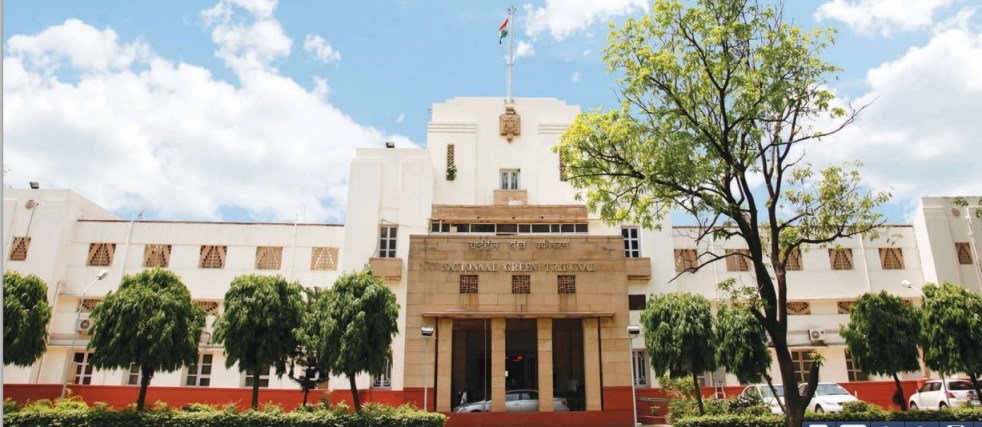
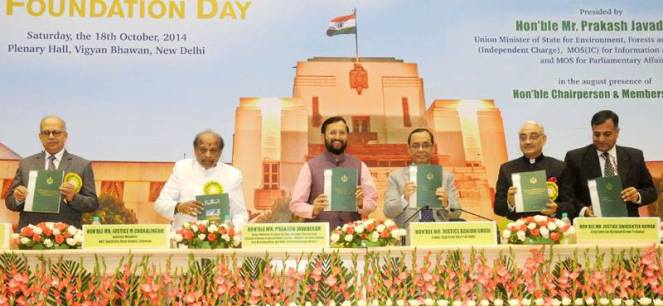

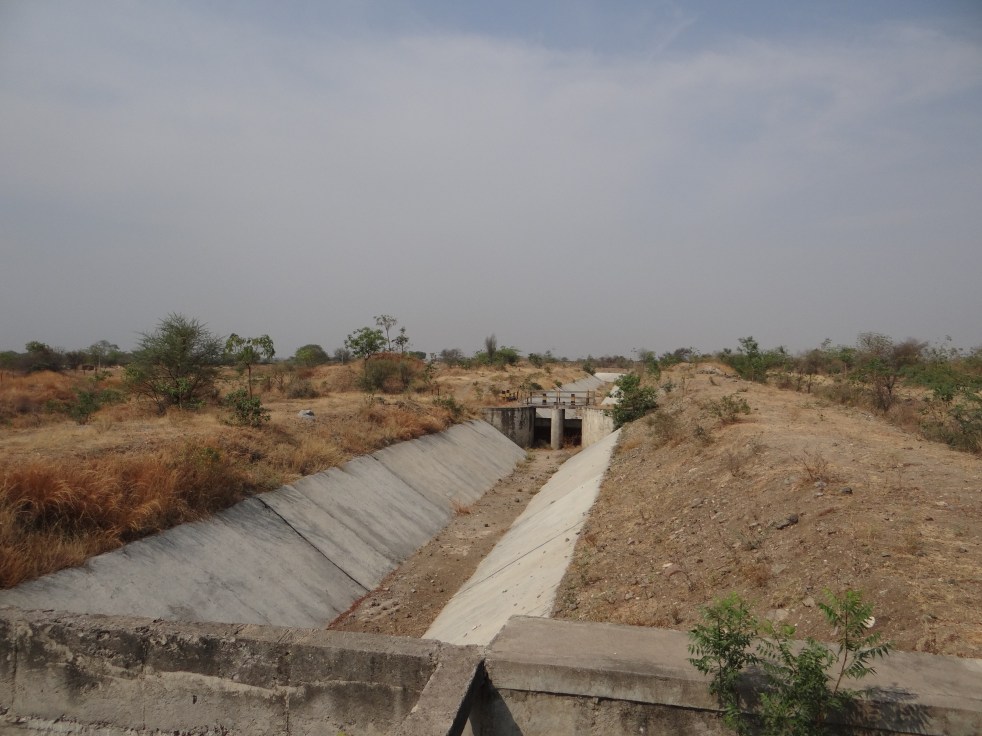

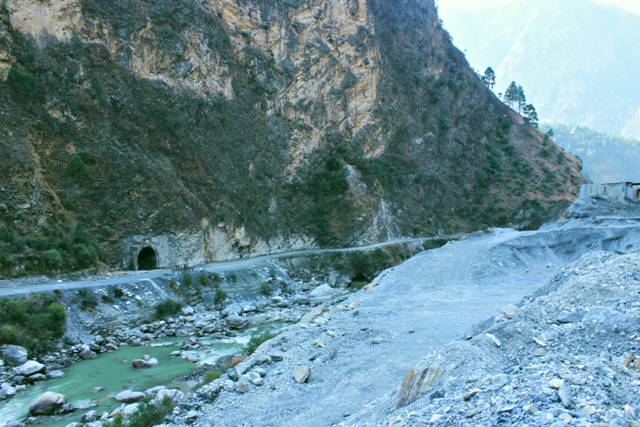
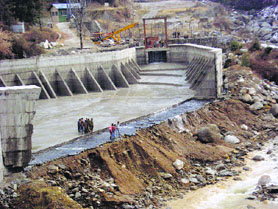
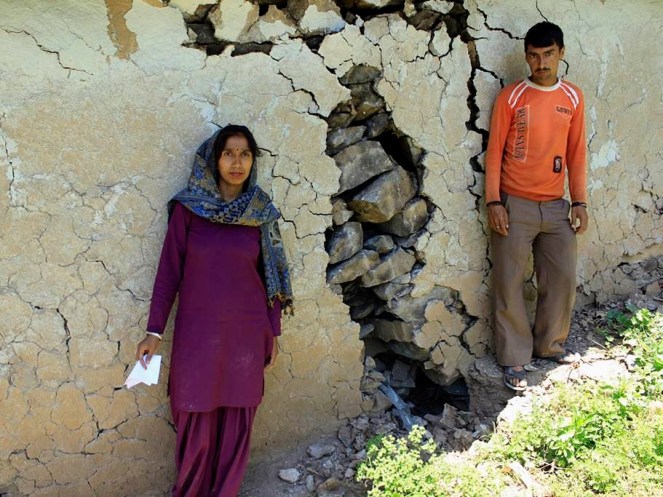
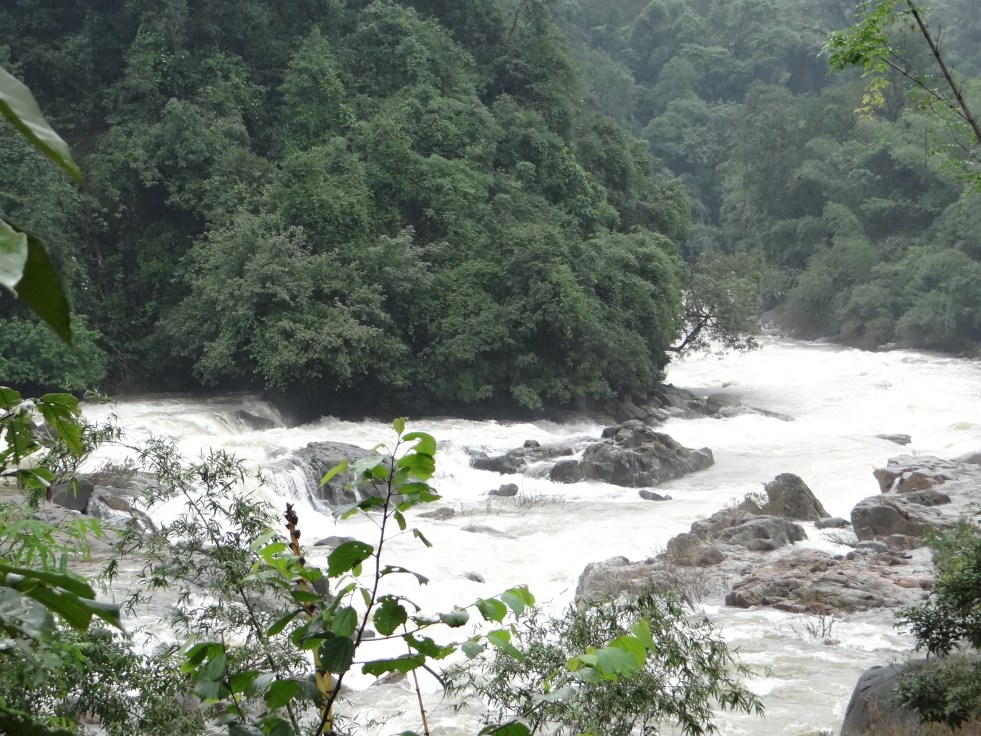

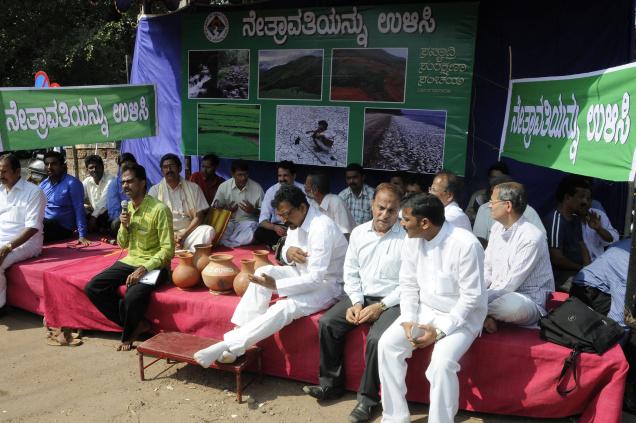
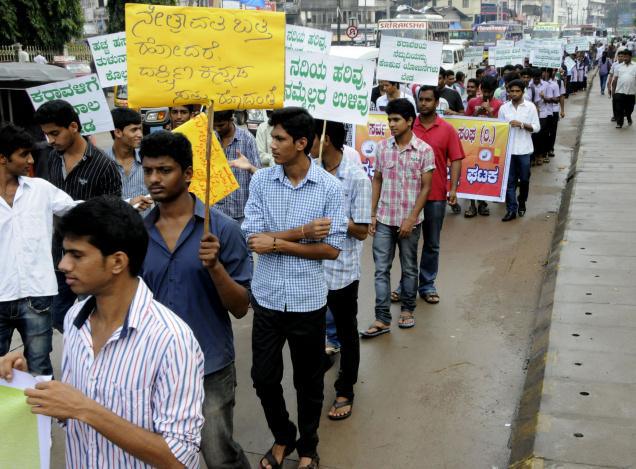

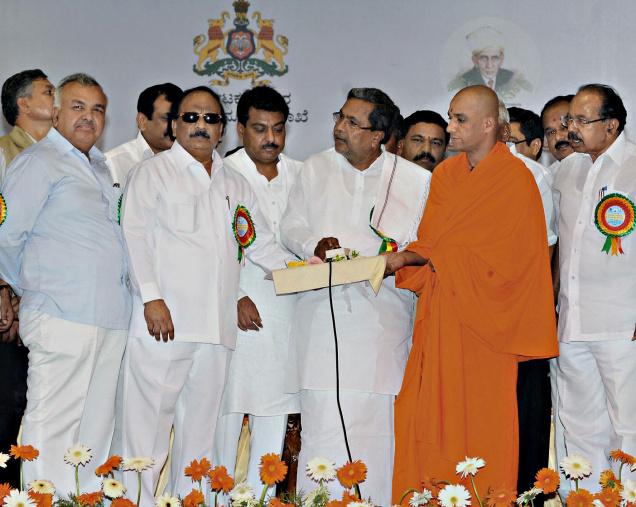




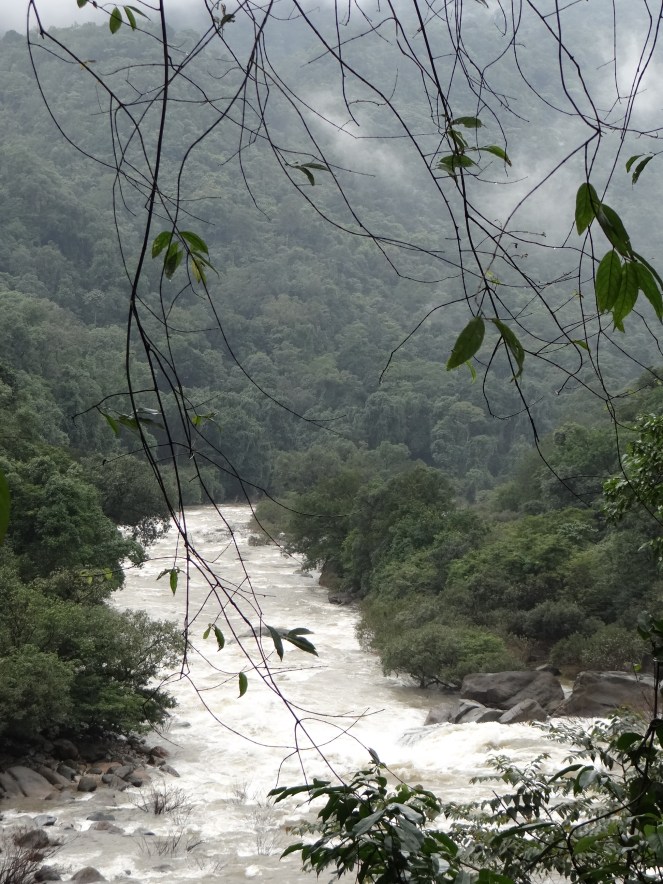
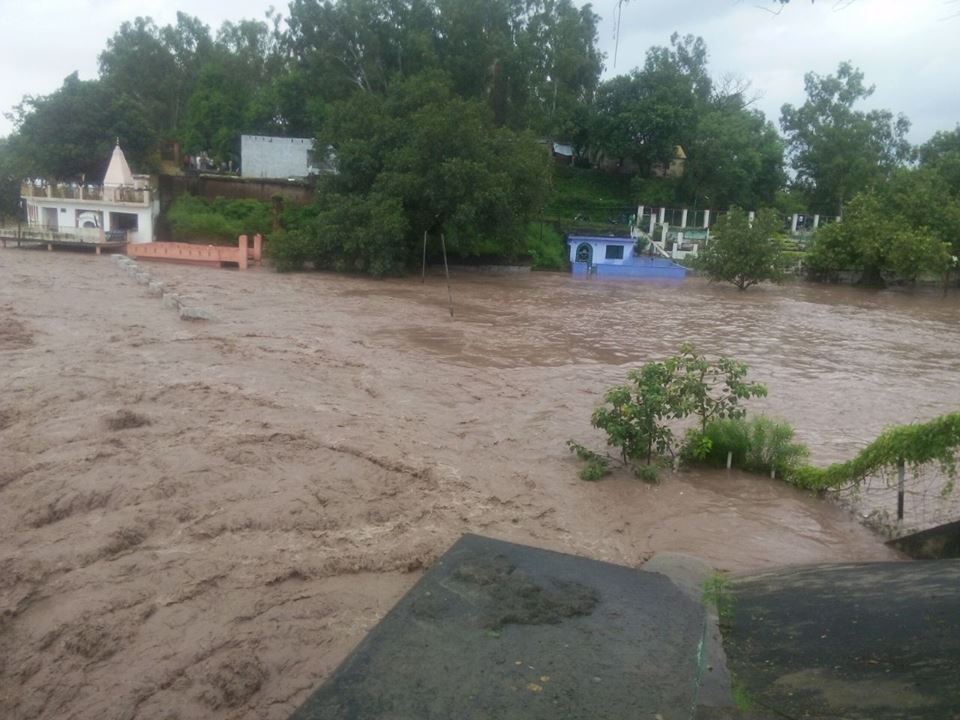
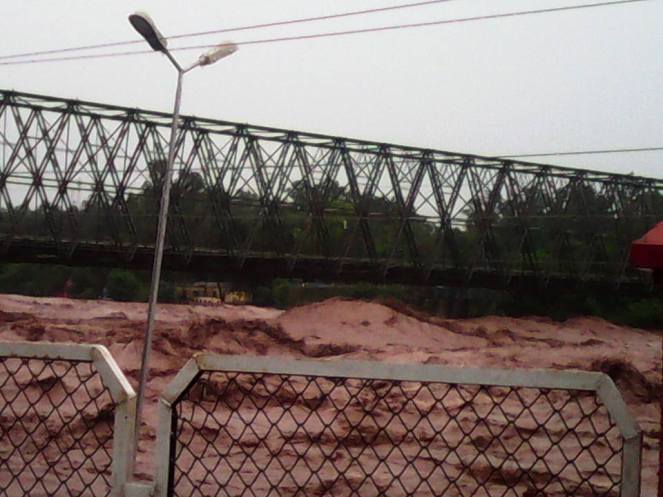

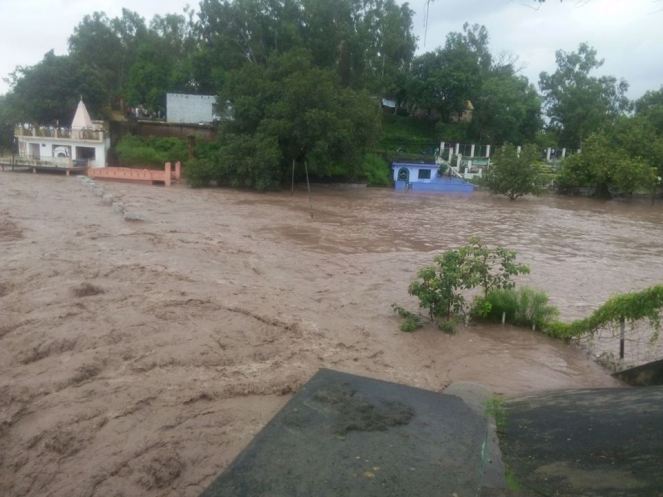
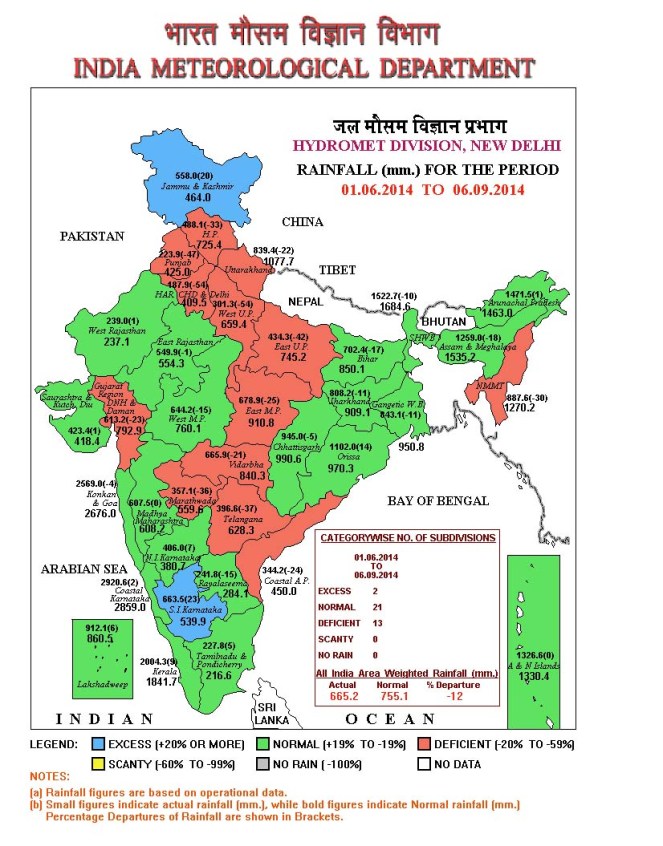
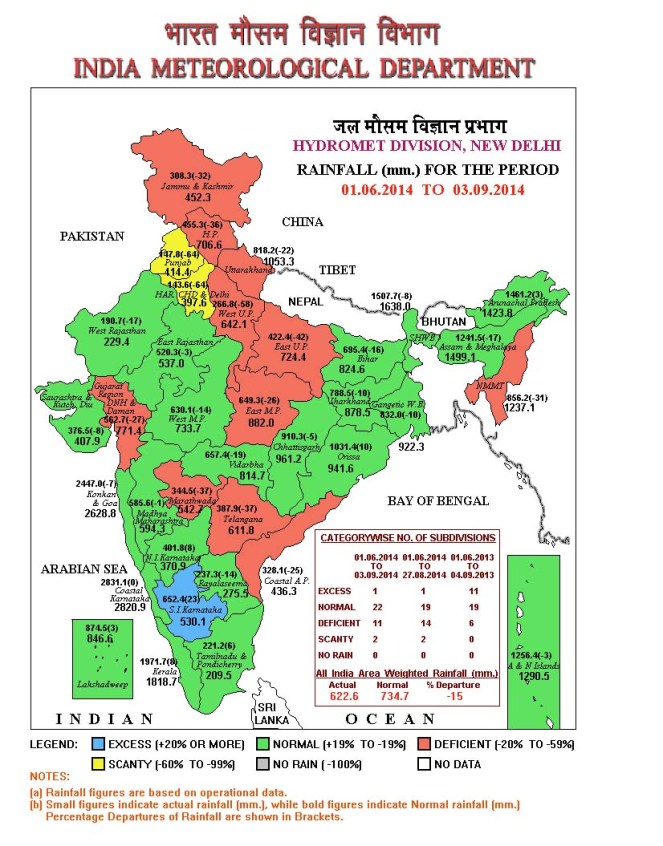
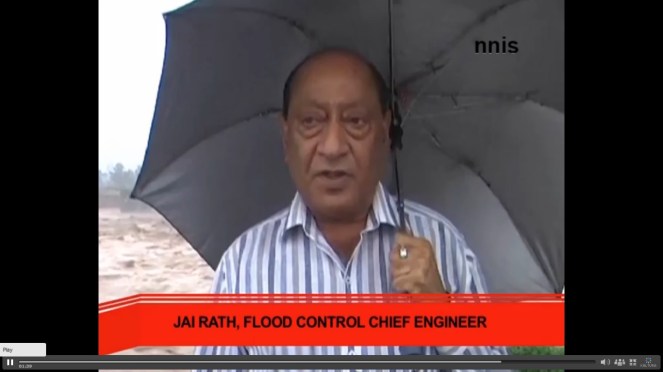
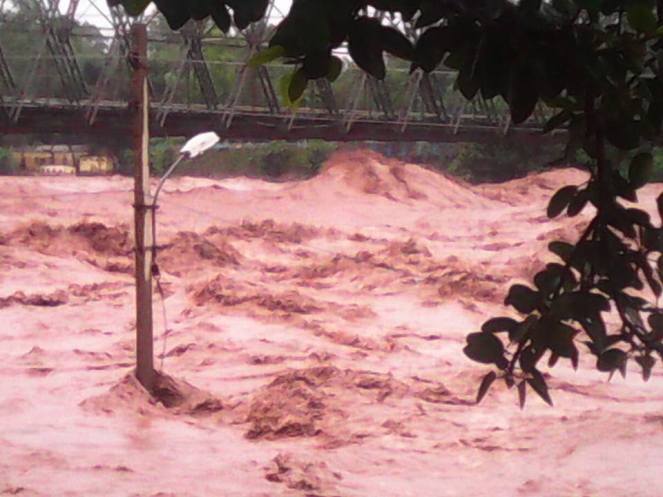
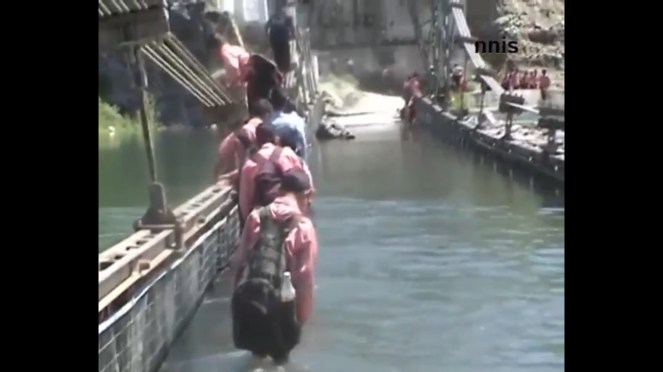


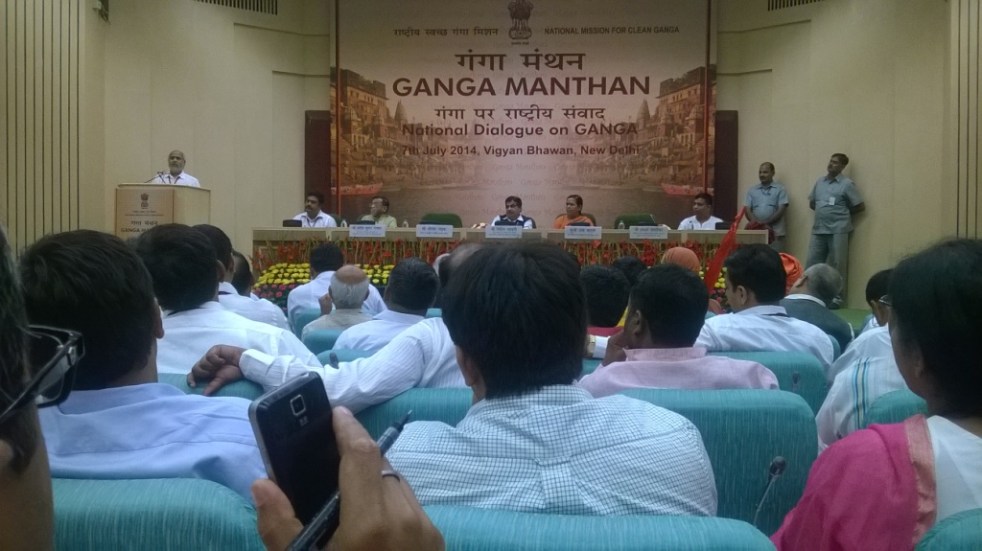


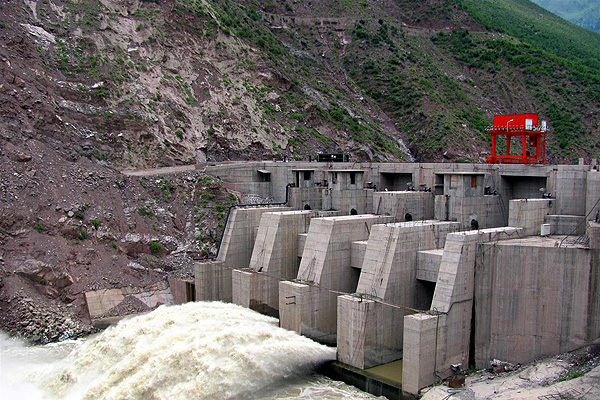


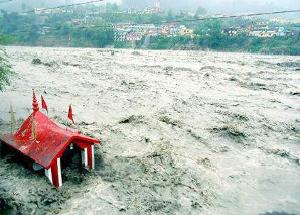

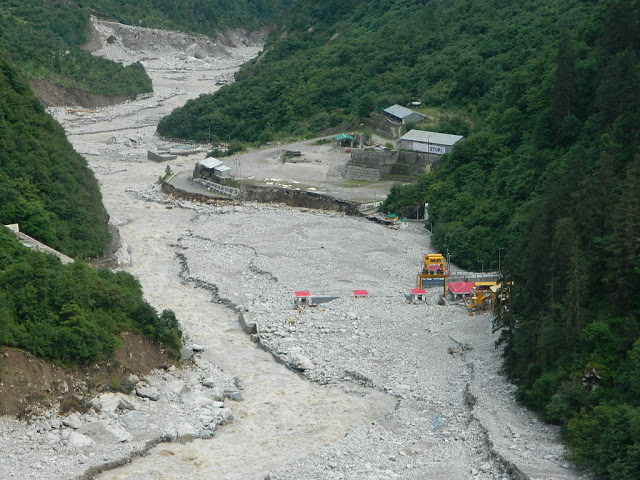

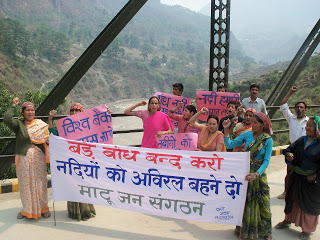
 SANDRP