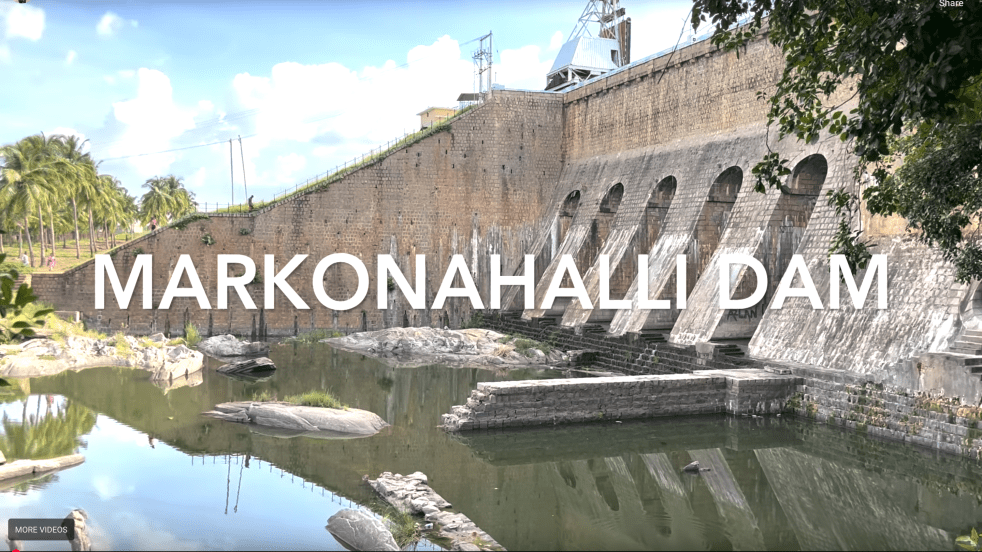
In a dam induced tragedy, six people died, of them four bodies have been found and two more are being searched for. This happened after gates of the Markonahalli dam across Shimsha river (a 221 km long tributary of Cauvery River) in Mandya district in Karnataka suddenly opened on Oct 7 at around 3.30 pm. The tragedy occurred in a village near Yadiyur in Kunigal taluk of Tumakuru district on the border of Tumakuru and Mandya districts, about 100 km from Bengaluru. The Hindu reported earlier in Oct 2000 that the dam gates are poorly maintained.
Continue reading “Six die in Markonahalli Dam disaster in Karnataka in Oct 2025”Tag: Karnataka
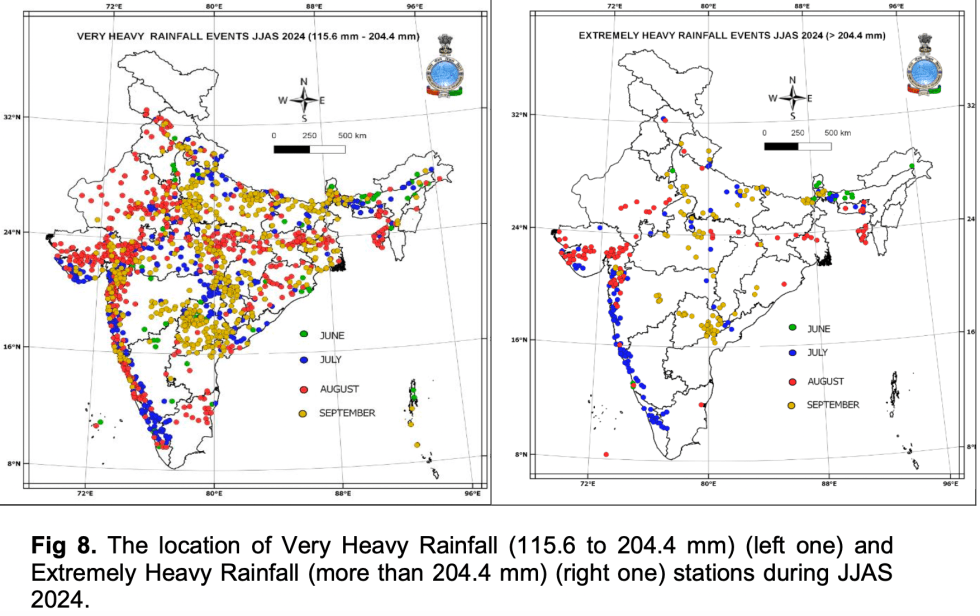
High Rainfall days in India’s districts in SW Monsoon 2024
An analysis of the daily district wise rainfall data from India Meteorological Department (IMD) for India’s South West Monsoon 2023 shows that there were 2176 instances when a district rainfall of a day was above 50 mm. Such high rainfall instances included 1759 instances when rainfall was 50-100 mm, 329 instances when it was 100-150 mm, 64 times it was 150-200 mm and 24 times above 200 mm. Out of 717 districts of India, 531 districts or, about 74% of the districts experienced such high rainfall days during SW monsoon 2023.
Continue reading “High Rainfall days in India’s districts in SW Monsoon 2024”
June Aug 2024: District wise rainfall in India’s SW Monsoon
In the just concluded month of Aug 2024, India received just 295.2 mm (162.7 mm or 36.2% below normal in Aug 2023[i], 263.8 mm in Aug 2022, 3.5% above the normal[ii]) or 15.8% above normal rainfall of 254.9 mm as per India Meteorological department (IMD). In Aug 2021, the rainfall was 195.9 mm[iii], about 24.13% below normal and in Aug 2020, the rainfall was 327 mm[iv], or about 26.6% above normal.
Continue reading “June Aug 2024: District wise rainfall in India’s SW Monsoon”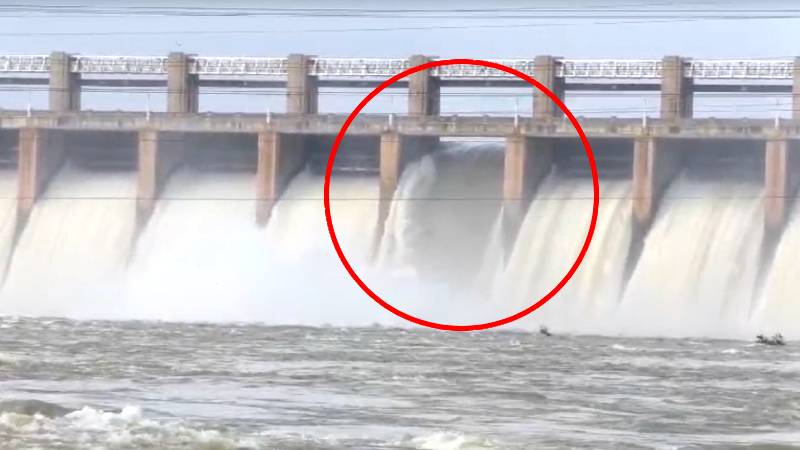
Tungabhadra Dam: A Crest Gate washed away in August 2024
In a major dam related disaster at around 10.50 pm on Aug 10, 2024[i], one of the crest gates at the Tungabhadra dam has broken[ii] near Hospete in Vijayanagara district in Karnataka, causing the release of 70,000 to 100,000 cusecs of stored water. The chain on the 19th (of total 33 gates) gate of Tungabhadra dam on Tungabhadra river, part of Krishna River Basin, got cut, snapped and was washed away about 100 m from the dam on Saturday. The chain that was used to operate the gate snapped as the welding gave way. The Tungabhadra gates only have chain and not chain and rope as in some other dams. The force of the water in the dam swept the 60-foot-by-20-foot gate, weighing around 20 tonnes, some 500 ft away, J Purushottham, president of the Tungabhadra Farmers’Association, said. This possibly happened due to heavy flows, but also due to wear and tear of over 70 years of operation of the dam. A temporary stop log gate is now being planned, as permanent crest gate will take time.
The disaster raises a number of questions about the operation and maintenance of the dam.
Continue reading “Tungabhadra Dam: A Crest Gate washed away in August 2024”
Lessons for Other River Basins from the Cauvery Dispute
Guest Article by Prof Bhakti Devi
Numerous articles have cropped up explaining the reason behind the Cauvery water inter-state dispute. A remarkable thing to note in these explanations is that every one of the articles focuses on the volumetric allocation of water. Even the documents relating to legal agreements between the two states on how the water of the Cauvery River will be shared focus on the volumetric distribution. Which, on the surface, appears completely logical but seems illogical when you understand the science of how a river gets its water which is the elephant in the room.
Continue reading “Lessons for Other River Basins from the Cauvery Dispute”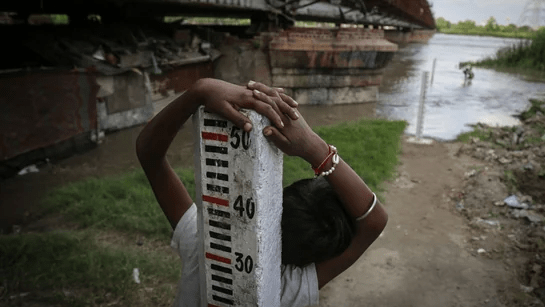
Monsoon 2022: CWC Changing HFLs in Ad-hock Manner
(Feature Image: Pillar with flood level marked on the bank of Yamuna river at Old Railway Bridge level forecast site in Delhi. Source:- Sanchit Khanna/HT Photos)
During monsoon season, Centre Water Commission’s (CWC) carries flood monitoring and forecast work through a network of 332 stations[i] covering 20 major river basins. The stations are comprised of Level Forecast (LF), Level Monitoring (LM) and Inflow Forecast (IF) sites. The LF sites have Warning Level (WL), Danger Level (DL), Highest Flood Level (HFL), date of HFL information while LM sites maintain HFL and HFL date records. At IF sites flood level for respective dams/ barrages with inflow, out flow figures are measured and forecast is issued accordingly.
However, there are plenty of concerns plaguing CWC’s flood forecast and monitoring work across country for years. In this 2022 SW monsoon season, the agency has exhibited one more problematic tendency which exhibits not only its careless approach vis-a-vis keeping accurate information of HFL breach events, but it also seems strange that it realises it has giving wrong HFL level and date information mostly only after crossing the HFL now.
Continue reading “Monsoon 2022: CWC Changing HFLs in Ad-hock Manner“
June July 2022: District wise rainfall in India’s SW Monsoon
In the just concluded month of July 2022, the second month of India’s South West 2022 monsoon, India received 327.7 mm rainfall, 16.8% above the normal July rainfall of 280.5 mm as per India Meteorological department. In July 2021, the rainfall was 266.1 mm[i], about 6.7% below normal and in July 2020, the rainfall was 257.1 mm[ii], or about 9.9% below normal.
Continue reading “June July 2022: District wise rainfall in India’s SW Monsoon”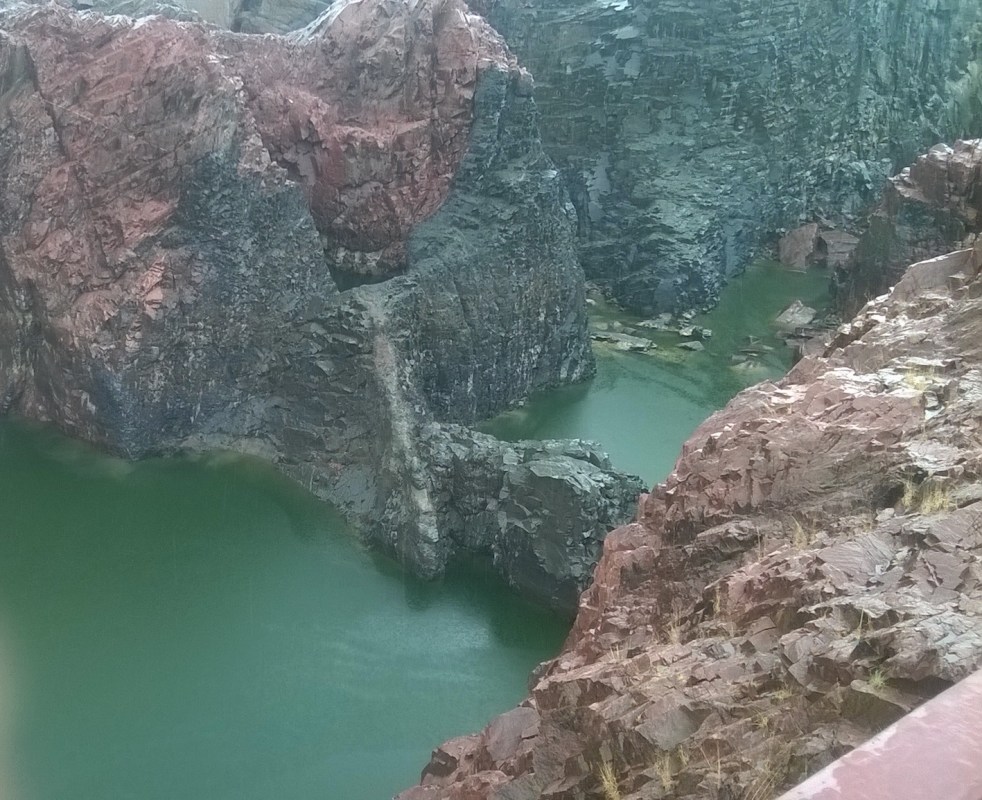
Ken Betwa Project shows why River Linking is non starter
A series of moves by the current Central Government, along with some of the state governments since March 2021 have tried to orchestra a push for the Interlinking of Rivers (ILR) in a manner somewhat similar to what happened in 2002 under the previous BJP government led by Shri AB Vajpayee. The 2002 effort did not achieve much on ground and the initiatives two decade later are unlikely to achieve any progress either.
Continue reading “Ken Betwa Project shows why River Linking is non starter”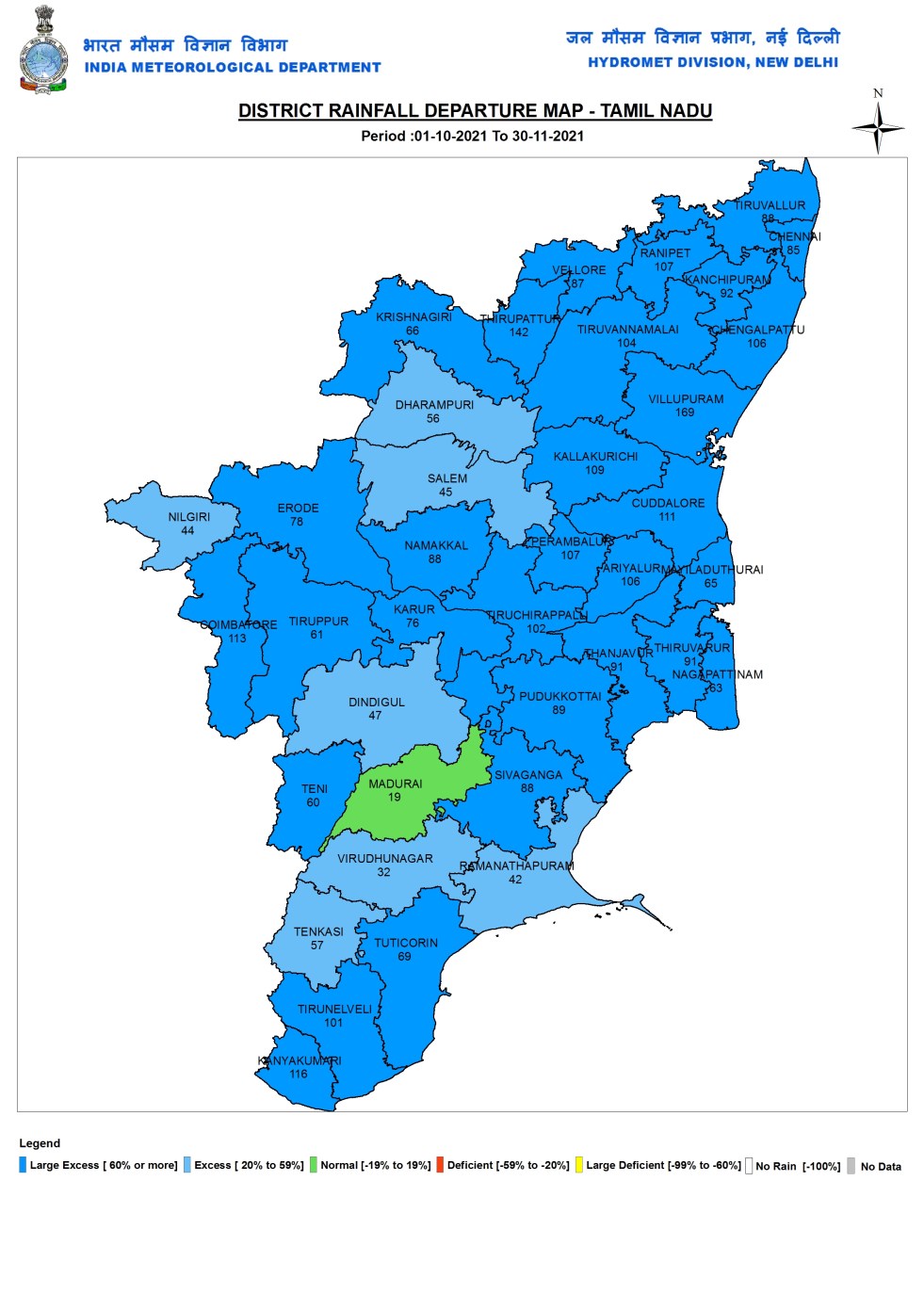
Heavy Rainfall in India in Oct-Nov 2021
India has seen rather heavy rainfall in October and November 2021, with October All India Rainfall being 33% above normal and November rainfall being record breaking 86% above normal. The combined Oct + Nov Rainfall was 48% above normal, and by Dec 7, as we write this, it is already 53% above normal for the period from Oct 1 to Dec 7, 2021.
While lingering South West Monsoon brought large part of the excess rainfall in first half of October, the unusually active North East Monsoon with continuous supply of moisture from Bay of Bengal has been the main reason for the high rainfall since late October. The onset of La Nina has also contributed to this and with La Nina forecast to remain in place till March 2022, we are in for continued wet spell in South India, it seems. IMD has already forecast above normal rainfall in South Karnataka during Dec 2021 to Feb 2022.
Continue reading “Heavy Rainfall in India in Oct-Nov 2021”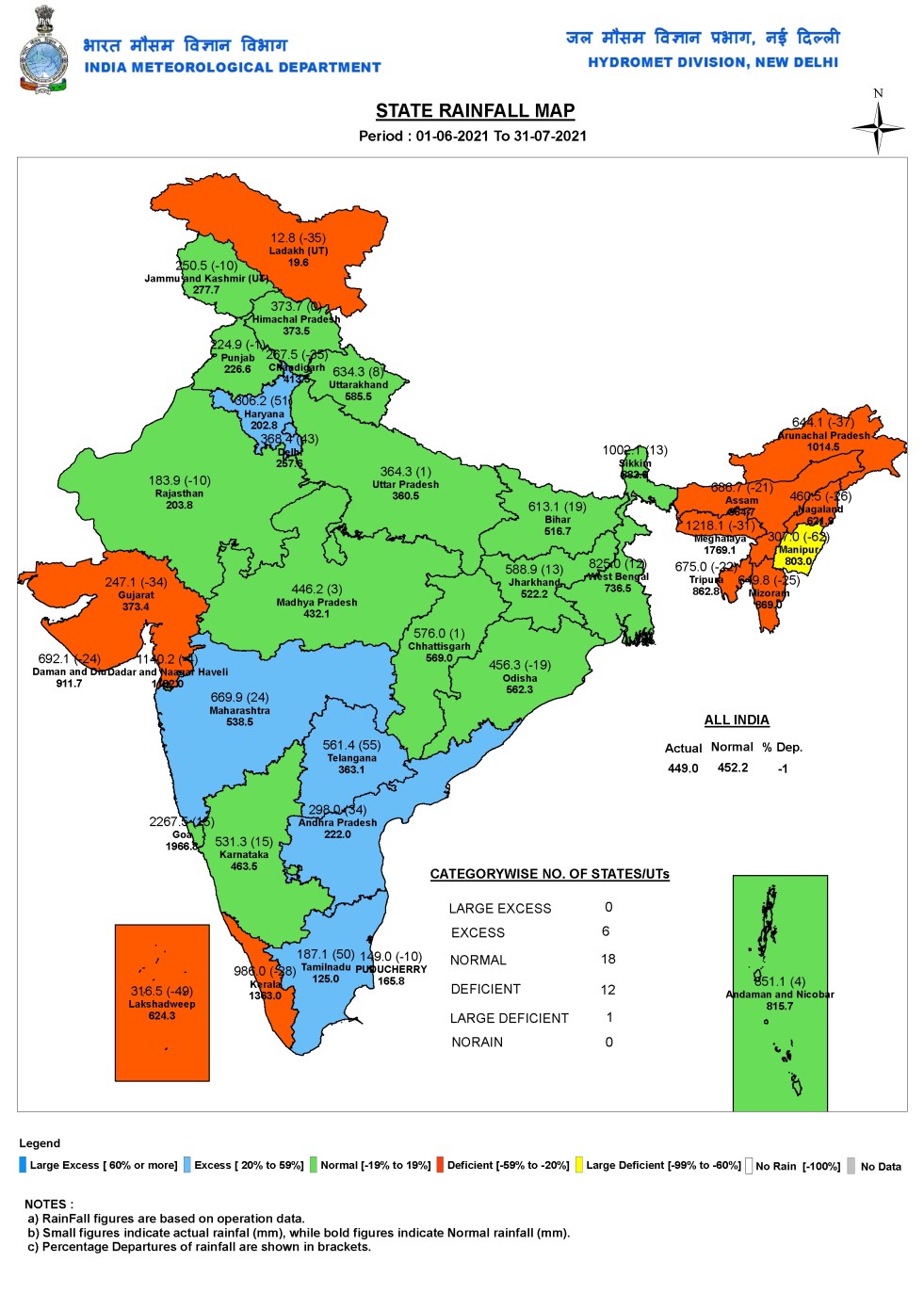
June July 2021 District Wise SW Monsoon Rainfall in India
In the just concluded month of July 2021, India received 266.1 mm rainfall, that is 6.73% below normal July rainfall of 285.3 mm, as per India Meteorological Department (IMD). This is in contrast with June 2021 rainfall, that was almost 11% surplus over Normal rainfall. Not only that surplus has been wiped out by the July 2021 deficit, the overall June July 2021 rainfall now is 449 mm, or about 0.7% below normal rainfall of 452.2 mm, as per IMD.
Continue reading “June July 2021 District Wise SW Monsoon Rainfall in India” SANDRP