Water Options

World Water Day 2021: Positive Water Stories-2

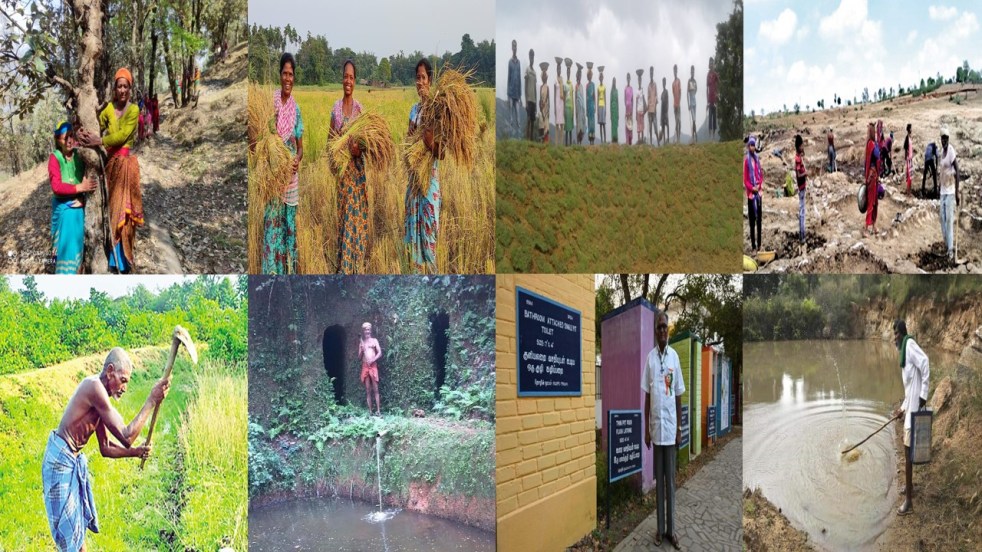
The second part of positive water developments of India on WWD 2021 highlight water conservation efforts by villagers, farmers, citizens, state governments. The first part with ten most remarkable stories can be seen here.  

This compilation has four sections. The first one covers zone wise the efforts by communities, organizations. The second section has Inspiring Individual Initiatives. Third part has stories related to efforts of returned migrants during lockdown, under the MNAREGA. The Fourth Section has some steps taken by state governments in exploring local alternatives to meet potable and irrigation water demands. Some additional water reports in the same context are given at the end.

Continue reading “World Water Day 2021: Positive Water Stories-2”
Water Options

World Water Day 2021: Ten Positive Water Stories from India

The annual World Water Day (WWD) event has been taking place since 1993 on March 22. The theme for 2021 WWD is Valuing Water. The limited fresh water sources and associated eco-system are increasingly being exploited and threatened on the planet.

While big, centralized projects have been failing in every respect including meeting the growing demand apart from causing bigger ecological crisis, there are small but significant and successful efforts by communities and individuals making a difference by restoring, conserving, efficiently utilizing the available water sources thus valuing the water in true sense. This compilation presents the ten such remarkable stories from India to celebrate the WWD2021.

Continue reading “World Water Day 2021: Ten Positive Water Stories from India”
DRP News Bulletin

DRP NB 15 March 2021: MoEFCC & NMCG join March 14 celebrations on the Day of Action for Rivers

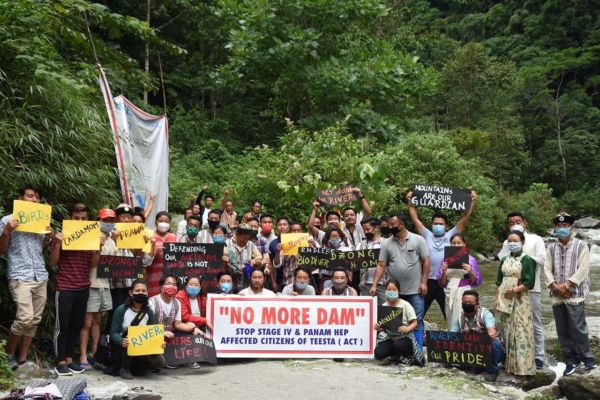
The International Day of Action Against Dams and For Rivers, Water and Life,  or in short, “International Day of Action for Rivers” as used now, was adopted by the participants of some 20 countrties, at the first International Meeting of People Affected by Dams in March 1997 in Curitiba Brazil. Representatives from 20 countries including India, USA, Brazil & other countries from Asia, Americas, Europe, Africa decided that the International Day of Action would take place on March 14. Thus, the celebration started from 1997. The aim on this International Day of Action for Rivers is to raise voices against destructive water development projects, reclaim the health of our watersheds, and demand the equitable and sustainable management of our rivers.

This year, among many other events happening on this day in South Asia, we have reported in this weekly bulletin, besides the blog from SANDRP highlighting the resistence against destructive hydro and dam projects in India in last one year, the online discussion by the Endangered Himalayas on “Extinct Rivers or free flowing rivers: The future of Himalayan Rivers”, Official launch of Right of Rivers South Asia Alliance and Pakistan Fisherfolk Forum’s 14-days long campaign Rights of the River and personhood rights to Indus River and Indus delta.

Continue reading “DRP NB 15 March 2021: MoEFCC & NMCG join March 14 celebrations on the Day of Action for Rivers”
DRP News Bulletin

DRP NB 25 Jan. 2021: UN warns about aging Dams & Floods in changing climate

A new UN report released on January 21, 2021 UN has warned the major big dam owning counties about the aging population of fast silting up dams in changing climate and urgent need to start working on decommissioning of uneconomical large dams. Among the few countries that UN has warned includes India with its third largest number of big dams. The added problem in India is the ill maintained and ill operated large dams that UN report did not look into. Indian dams are sanctioned based on highly under estimated siltation rates, there is practically no transparency and accountability in operation of Indian dams and dam almost every year get away with creating avoidable flood disasters. This latest problem is not just related to old dams, but even the newest celebrated ones like the Sardar Sarovar Dam as happened in Gujarat in late August-early Sept 2020. No legal regime exists in India for dam safety, either structural safety or operational safety. And in changing climate, with increasing frequency of higher intensity rainfall events, such risks are already increasing multi-fold.

Continue reading “DRP NB 25 Jan. 2021: UN warns about aging Dams & Floods in changing climate”
Dams

Why are we still building Large Dams?

Analysis of official information shows that Big dams are not longer necessary or viable or optimal in India. Most (over 95% of India’s 5701 large dams (5264 completed and 437 under construction as per CWC’s National Register of Large Dams[i]) are built for irrigation, but most of our irrigation now comes from groundwater. In fact, about 90% of additional irrigation in last four decades has come from groundwater.

Continue reading “Why are we still building Large Dams?”
Agriculture

Agriculture Reform Rhetoric or Unbridled Capitalist Accumulation?

Guest Article by Rahul Banerjee

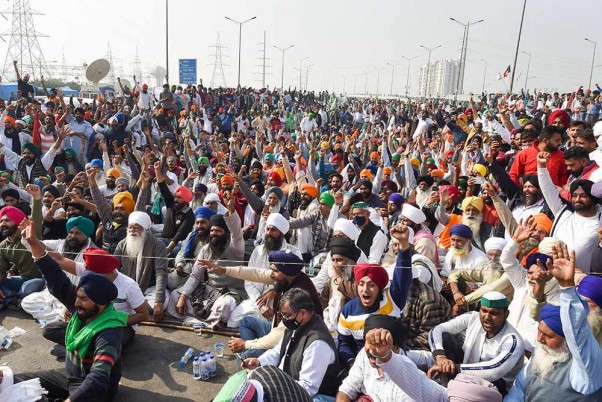
The agricultural scientist MS Swaminathan is not liked by many of the conservationists, but it may be useful to quote him since he has also great acceptability among the official circles. He had warned about the various implications of energy, capital and chemical intensive monoculture agriculture. We did not address them then and we are not addressing them now even as the debate is raging on the agriculture reforms with farmers justifiably on the doorsteps of the National capital.

Continue reading “Agriculture Reform Rhetoric or Unbridled Capitalist Accumulation?”
Dams · Sand Mining

Bihar Sand Mining 2020: Ruining rivers; aggravating floods

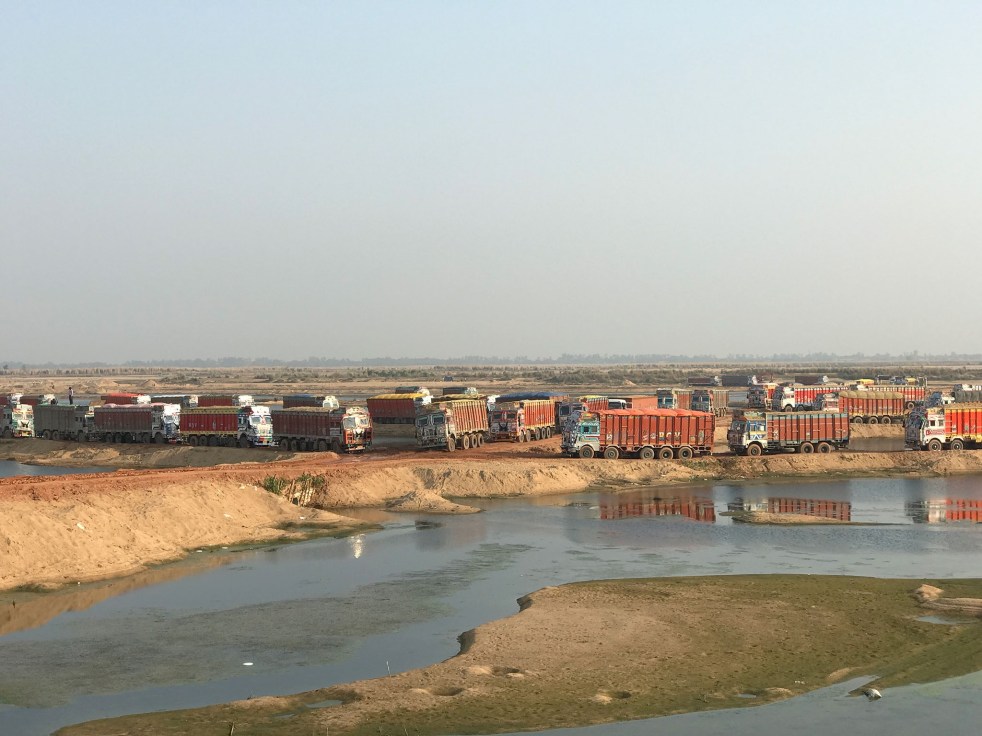
{Feature image: Up to 300 trucks a day take their fill of sand at a mine on the Sone River in Bihar state. India’s construction boom is stripping large volumes of sand, a vital ingredient in concrete, from its rivers. Environmentalists say the extraction is unsustainable, harming local hydrology and wildlife. Paul Salopek}

The 2018 review of sand mining[i] for Bihar highlighted how mismanagement by govt and then National Green Tribunal (NGT) ban on sand mining in Ganga river, Son rivers particularly during monsoon months resulted in sand scarcity and soaring prices affected public and livelihoods of mining laborers.

The video report featuring local people revealed that illegal mining was causing floods in West Champaran by damaging embankments. Similarly, the report on Gaya mentioned sand mining among reasons behind increasing air pollution. The death of four kids by drowning into sand mine pits was shocking. This compilation presents the situation after 2018 so far.

Continue reading “Bihar Sand Mining 2020: Ruining rivers; aggravating floods”

Dams · DRP News Bulletin

DRP NB 20 July 2020: Will the Supreme Court stop destruction of Ganga & Himalayas in the name of WIDER Char Dham Road?

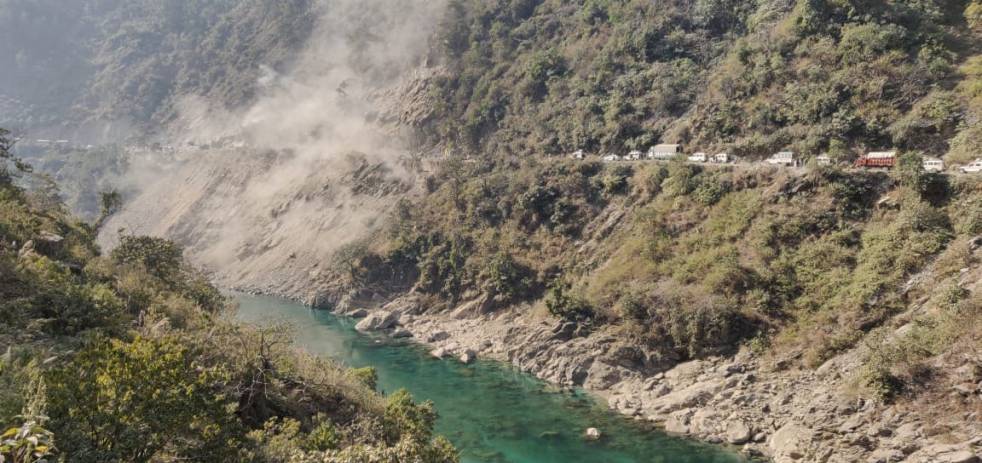
Feature Image: Pithoragarh-Tanakpur Road widening work going and muck being dumped in Saryu river under Chardham project. (Manoj Matwal, April 2019) 

The Supreme Court appointed Ravi Chopra committee has submitted the report on Char Dham Road. It has not said NO to the all weather road which is the slogan of Gadkari and rest of the Union Government. It has in fact, going by the Union Ministry of Road Transport’s’ circular, as late as 2018, suggested that the road be of 5.5 m width with necessary precautions. It has provided elaborate justifications and reasons why it took this decision. And yet twelve govt members of the committee, claiming in the name of religion (as per interview by one of these twelve members in media today) has insisted that the road should be of 10 m width. Not bothering that religion was not part of their mandate, not bothering what impact such a road will have on the Ganga (and the impact will be massive, we will know the full extent only if the impacts are scientifically assessed), on Himalayas (again starting from deforestation, landslides, flash floods and so on will be unbelievably huge) and on people and future generations. One only hopes the Supreme Court will see through the mindlessness of the economic fundamentalism being pushed in the name of religion and not allow the proposal to go ahead.

The Union Environment Ministry is clearly out to destroy even the Bhagirathi Eco-Sensitive Zone by sanctioning the Zonal Master Plan without due process and in complete violation of the letter and spirit of the Bhagirathi notification. This will further open the flood gates for destruction of remaining stretch of Bhagirathi, considered original Ganga stream as it flows from Gangotri. Again one hopes the judiciary will strike this down.

One wonders what is the NMCG, National Mission for Clean Ganga, whose mandate is Ganga rejuvenation, is doing amidst all this? Why is it silent?

Continue reading “DRP NB 20 July 2020: Will the Supreme Court stop destruction of Ganga & Himalayas in the name of WIDER Char Dham Road?”

Dams · Rivers

Travelling through Ramganga and Nayaar Rivers Basin

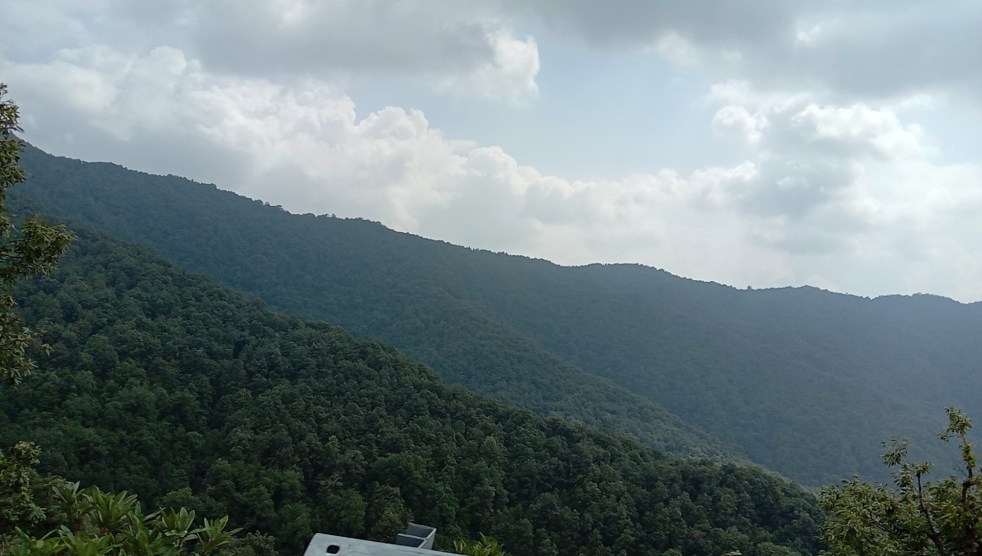
Fed by Dudhatoli forest range, the Ramganga West and Nayaar East and West in Uttarakhand are perennial rivers of immense scenic beauty amid emerging and looming threats. This photo blogs highlights some of the charms and concerns of these non-glacial rivers of the Ganga Basin.

Continue reading “Travelling through Ramganga and Nayaar Rivers Basin”

Dams · DRP News Bulletin

DRP NB 15 June 2020: Athirapally, Bodhghat, Cauvery, Dibang, Etalin: New growth alphabets from the PMO?

A for Athirapally, B for Bodhghat, C for Cauvery, D for Dibang, E for Etalin, seems to be the new growth alphabets from the Prime Minister’s Office. With the economic growth in negative territory, depression in the corner, the old and trusted Big Dams as major infrastructure to push up expenditure and hope for the growth was a formula used even in 1930s by US president Franklin D Roosevelt to bring the US economy out of the Great depression of 1929. It started with the Tennessee Valley Authority Act of May 1933, which then was pushed as growth model to other countries. In India it came in the form of Damodar Valley Corporation (DVC) Act of 1948.

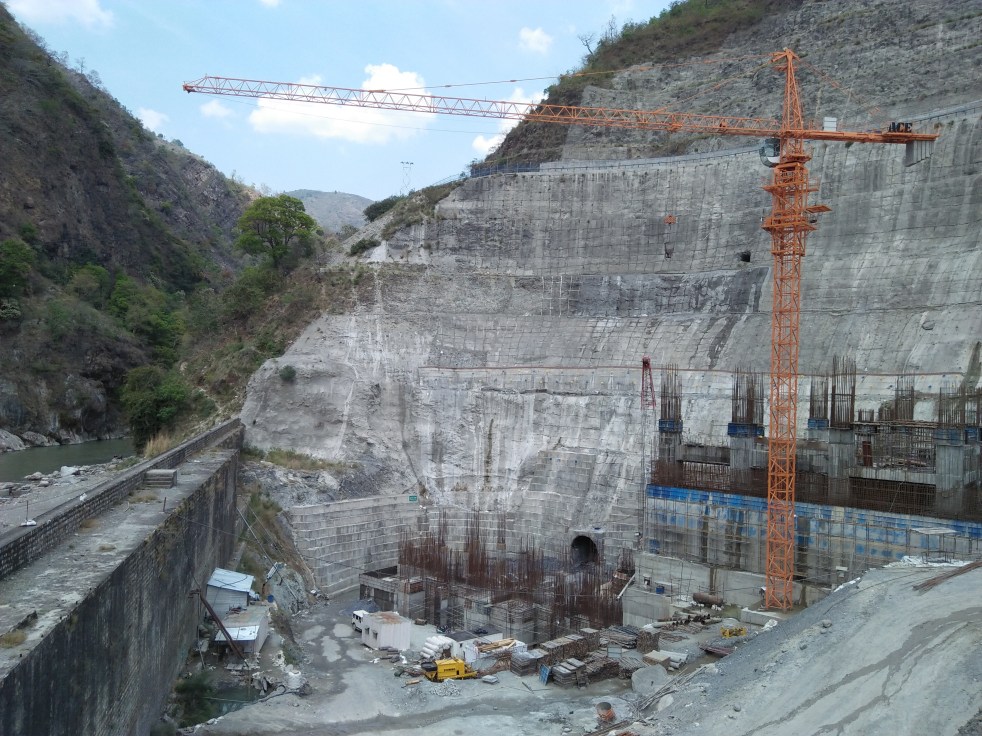
However that 20th century model was a failure even then, as the first CEO of the DVC, Sudhir Sen wrote. That model is no longer relevant in 21st century except possibly as an easy route to corruption and kickbacks. These dams and hydropower projects are no longer even economically viable and better options are now available for irrigation and power. In the changing climate scene they are even less relevant places of worship (temples). Dams and hydropower projects are seeing slow down across the globe, not just in India.

Continue reading “DRP NB 15 June 2020: Athirapally, Bodhghat, Cauvery, Dibang, Etalin: New growth alphabets from the PMO?”