Dams · Monsoon

Welcome development: River basin wise rainfall maps from IMD!

We have noticed during just concluded South West monsoon season that IMD (India Meteorological Department) has started a new and welcome feature in rainfall data reporting[i]. The Data is available in maps, on daily, weekly and seasonal basis. We are not sure when this practice started, we noticed it only during 2016 monsoon season.

This is most welcome development, since getting rainfall data at basin level is most appropriate and useful, since basin is the hydrological unit that will experience the impact of rainfall or lack of rainfall in the basin, in form of floods or droughts. It can also be very useful for flood forecasting and preparedness, among many other uses. We hope IMD will develop and refine this further.

In each map, the actual rainfall for the given period is given for each basin, as also the normal rainfall & % departure from normal. Usual colour code is used to show the basin as blue if rainfall is more than 120% of normal rainfall, green if rainfall is 81-119 %, brown if rainfall is 60-80% of normal and yellow if rainfall is below 60% of normal rainfall.

Continue reading “Welcome development: River basin wise rainfall maps from IMD!”
Inter State Water Disputes

Inter state River Water Disputes in India: History and status

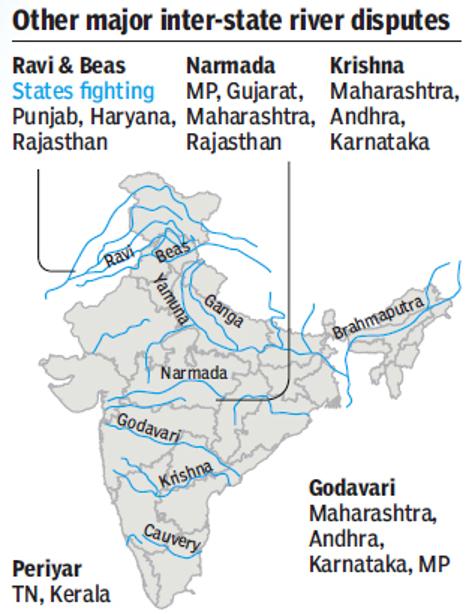
Water sharing disputes across the country (and even beyond) are only going to escalate with increasing demands, and also with increasing pollution & losses reducing the available water. Climate change is likely to worsen the situation as monsoon patterns change, water demands going up with increasing temperatures, glaciers melt and sea levels rise. The government’s agenda of interlinking of rivers would further complicate the matters.

The ongoing Cauvery Water Dispute [iv] has once again brought the focus on interstate river water sharing disputes in India and what has been our experience so far. There is no solution of Cauvery water dispute in sight and the engineer-dominated Cauvery Management Board that the Cauvery Water Dispute Tribunal Award has recommended is unlikely to help matters. Continue reading “Inter state River Water Disputes in India: History and status”

CAG Report · Cumulative Impact Assessment · Environment Impact Assessment · Expert Appraisal Committee · Maharashtra · Ministry of Water Resources

महाराष्ट्र-तेलंगण आंतरराज्यीय करार: जनतेच्या मुलभूत हक्कांचे व देशाच्या पर्यावरणीय कायद्यांचे उल्लंघन

काल दि. २३ ऑगस्ट २०१६ रोजी महाराष्ट्र-तेलंगण आंतरराज्य मंडळाच्या आज झालेल्या पहिल्याच बैठकीत तुमडीहेटी, मेडिगट्टा आणि चनाखा-कोर्टा बॅरेज या तीन बॅरेजचे काम सुरू करण्यासाठी दोन्ही राज्यांदरम्यान करार करण्यात आले. कमालीची गोपनीयता पाळत केल्या गेलेल्या या कराराबद्दलची अत्यंत मोघम टिप्पणी प्रसार माध्यमांना  पाठविण्यात आली. तुमडीहेटी, मेडिगट्टा आणि चनाखा-कोर्टा बॅरेजमुळे महाराष्ट्र राज्यातील यवतमाळ, चंद्रपूर आणि गडचिरोली जिल्ह्यातील 30 हजार हेक्टर जमीन सिंचनाखाली येणार असून उपसा सिंचन योजनांना बारमाही शाश्वत पाण्याचा स्त्रोत उपलब्ध होणार आहे असे या टिप्पणीत नमूद केले आहे. तसेच या प्रकल्पामुळे महाराष्ट्रातील एकही गाव, गावठाण बुडणार नाही, नदीकाठच्या गावांना पुराचा धोका नाही व हे प्रकल्प दोन्ही राज्यासाठी फायदेशीर ठरणारे असून उपसा सिंचन योजनांना बाराही महिने पाणी मिळणार आहे असा दावा करत या भागातील नागरीकांनी या प्रकल्पांना विरोध करु नये असे आवाहनही महाराष्ट्राच्या मुख्यमंत्र्यांनी त्यांनी केले. Continue reading “महाराष्ट्र-तेलंगण आंतरराज्यीय करार: जनतेच्या मुलभूत हक्कांचे व देशाच्या पर्यावरणीय कायद्यांचे उल्लंघन”

Dams · Godavari

Borewell water in a concretized Ramkund: Has religion helped Rivers at all?

A couple of years ago, we were travelling from Dehradun to Delhi and on my left was the massive Bhimgouda barrage which diverted the Ganga through Upper Ganga Canal at Haridwar. The barrage diverted the entire river, so that the downstream of the barrage, Ganga River was bone dry. Even for an agnostic like me, it was disturbing to see the mighty Ganga dried out like this so close to her origin. But just a couple of hundred meters ahead on the right were Har ki Pauri Ghats where Pilgrims were religiously performing Ganga Arati. There was a highly colored cement statue of Ganga precariously balancing on her gharial, in the middle of the canal. Continue reading “Borewell water in a concretized Ramkund: Has religion helped Rivers at all?”

Marathwada

Sugar Industry Lifts (read steals) drinking water released for Maharashtra’s Drought-hit places

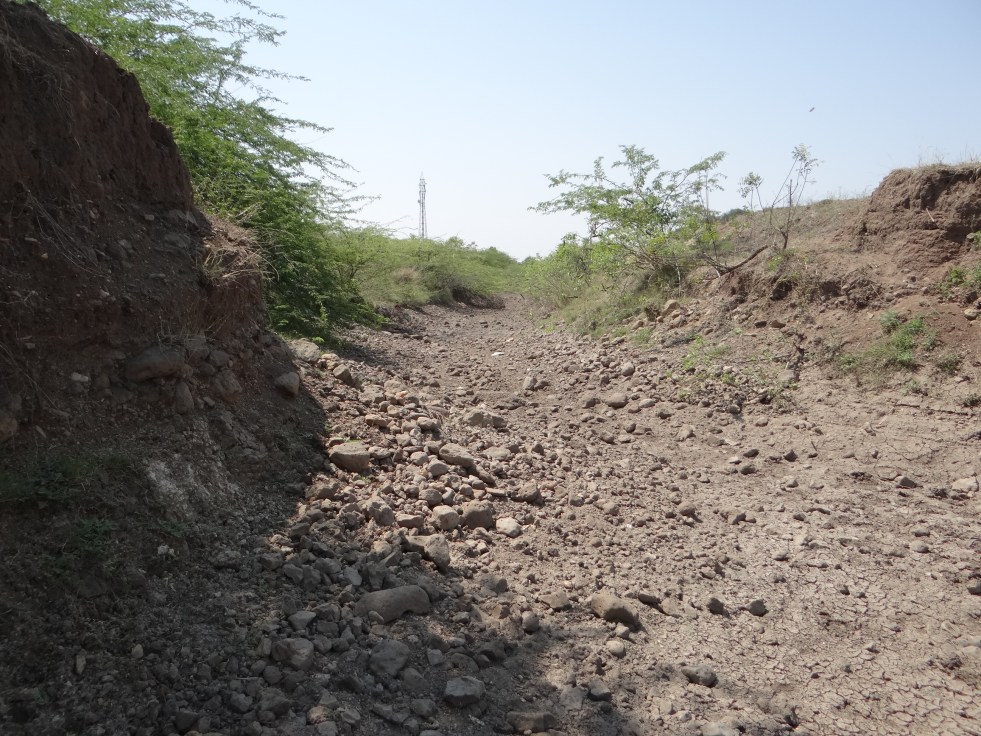
Above: Dry Pravara River Bed, with sugarcane on one side and frantic well drilling in the riverbed on the other (Photo: Parineeta Dandekar)

Large parts of Maharashtra are facing possibly the worst droughts in the past 100 years, the third drought in the last 4 years. There are multiple components to this: poor rainfall in 2015 monsoon on the back of failed 2014 monsoon, relative dry winter, loss of four back to back crops, dangerously depleting groundwater levels and no restriction on water intensive crops, water use by urban areas and industry. Currently, the situation is unprecedented even for drinking water. Section 144 has been clamped in Latur, possibly first time in the history for safeguarding water sources, protect tanker water supply and avoid unrest. Continue reading “Sugar Industry Lifts (read steals) drinking water released for Maharashtra’s Drought-hit places”

Dams

Godavari Krishna River Linking: Are we celebrating an illegal, unnecessary & misconceived water transfer project?

The national media seems to be celebrating linking of Godavari and Krishna River in Andhra Pradesh on September 16, 2015 as the first major step towards Inter Linking of Rivers in India. An emotional Andhra Pradesh Chief Minister Shri N Chandrababu Naidu called it historic and Pavitra Sangam (Holy Confluence)[1].

What is the reality? Continue reading “Godavari Krishna River Linking: Are we celebrating an illegal, unnecessary & misconceived water transfer project?”

Dams · Maharashtra · Marathwada

Drought and Marathwada: An Oft repeated Tragedy

Marathwada, a region known more for its routine and severe droughts in the recent years, now showing the highest rainfall deficit in the country at 48%[1].

Marathwada (which coincides with Aurangabad Division of Maharashtra) consists of 8 districts in the heart of Maharashtra: Aurangabad, Beed, Latur, Osmanabad, Parbhani, Jalna, Nanded and Hingoli.

Index Map Marathwada Source: http://www.wikiwand.com/en/Marathwada

The region has a population of about 1.87 Crores and a geographical area of 64.5 Thousand sq. kms. Nearly the entire region, barring parts of Beed, Latur and Osmanabad, falls in Godavari basin. This has historically been a rain shadow region with average rainfall of about 700 mm, but in districts like Beed, it dips down to 600 mm. Apart from Godavari, no major rivers originate or flow through Marathwada except rivers like Purna, Shivna, Dudhna, Velganga, Sindhphana, Bindusara, etc. These are modest rivers, which carry little water as the harsh summer approaches. This is unlike Vidarbha (to the east of Marathwada) which has mighty rivers like Penganga, Wainganga, Wardha etc., or Khandesh and Western Maharashtra to its north and west, which have bigger rivers, denser watersheds and more rainfall.

Since the past 4 years, Marathwada has been facing exceptionally cruel weather. June-September Monsoon, which is the lifeline of most of this rainfed region, has been playing truant. Last year, the region experienced highest rainfall deficit in the past 10 years at -42%. In two districts it was much more than 40%, leading to a severe water crisis.[2] To give you an example, the JJAS (June, July, August, and September) rainfall in Parbhani in 2014 was just 346 mm, barely 4 mm more than rainfall during the horrifying 1971 drought! These two are the lowest rainfall figures for Parbhani since 1902, for more than 113 years!   Continue reading “Drought and Marathwada: An Oft repeated Tragedy”

Godavari

गोदावरी ध्वजारोहण : Hoisting Godavari’s Flag this Kumbh

How a citizens’ initiative is protecting the Godavari in Nashik

14th July was the first day of the Simhastha Kumbh Mela in Nashik (Maharashtra), on the banks of Godavari[1] River, the largest river basin of Peninsular India (Godavari’s Story: https://sandrp.wordpress.com/2014/11/24/an-introduction-to-godavari-basin/).  For perhaps more than a thousand years, people have been congregating on the banks of Godavari every twelve years on the occasion of Simhasta Kumbh, making the ghats come alive. Kumbh has a distinction of being the largest peaceful gathering of humans in the world (Peaceful is subjective term. In Nashik Kumbh 2003, 39 people were trampled to death in a stampede and bloody fights between the sects are not uncommon). Continue reading “गोदावरी ध्वजारोहण : Hoisting Godavari’s Flag this Kumbh”

Dams

Ekti Nadir Naam: Ramblings through the etymology of River names in India

Above: Dry Chandrabhaga from Maharashtra. We have at least 5 Chandrabhagas in India! Photo: Parineeta Dandekar

~~

“I’m going to buy vegetables from the banks of Ganga. Coming?” (“गंगेवर चालले आहे भाजी आणायला. येणार?”). This was my Grandmother’s Sunday morning ritual. I always jumped at the opportunity: it meant going to the local market skirting Ganga and staring at colorful heaps of vegetables, patting dewlaps of humongous cows settled in islands, stealing guilty glances at sadhus who sold fascinating stuff: owl claws, deer musk pods, Giant Entada seeds..but most of all, it meant observing the filthy and beautiful river from the Ghats. I lived in Nashik, on the banks of Godavari and Godavari was our Ganga. Continue reading “Ekti Nadir Naam: Ramblings through the etymology of River names in India”