Respected Sirs, Oct 26, 2025
1. Shri Pravesh Sahib Singh,
Hon’ble Water Minister,
Delhi Government.
pss-pwd.minister@delhi.gov.in; dspwddelhi@gmail.com
Continue reading “Open Letter Regarding Water Polluting Activities Around WYC in Bawana, Delhi”South Asia Network on Dams, Rivers and People
Respected Sirs, Oct 26, 2025
1. Shri Pravesh Sahib Singh,
Hon’ble Water Minister,
Delhi Government.
pss-pwd.minister@delhi.gov.in; dspwddelhi@gmail.com
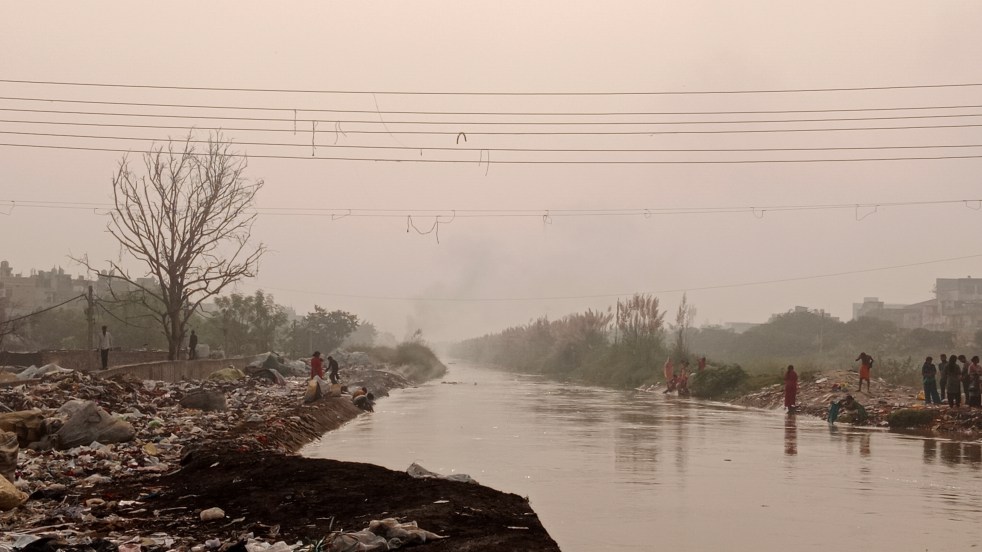
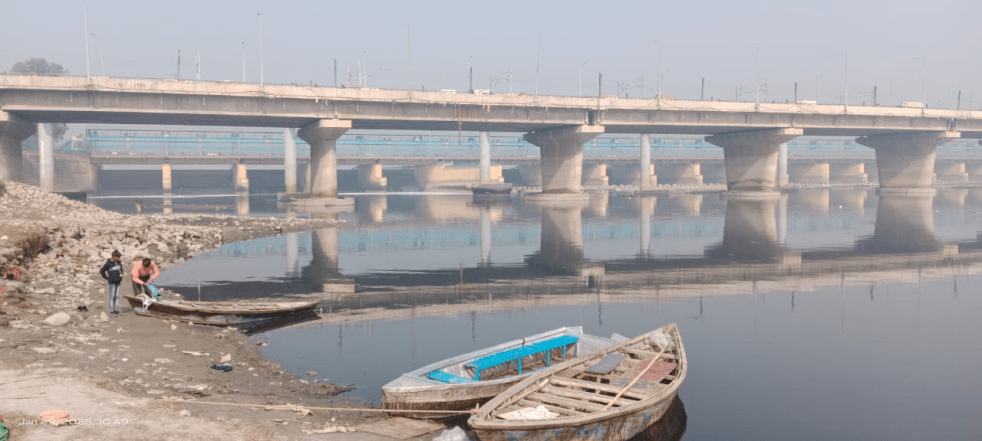
Continue reading “Open Letter Regarding Water Polluting Activities Around WYC in Bawana, Delhi”(Feature Image: Yamuna river downstream Okhla barrage in Delhi on Jan 29, 2025. Bhim Singh Rawat/SANDRP)
Political blame games surrounding the Delhi assembly election have brought Yamuna in focus for about past one month. Disappointingly, the central and all state govts in basin are responsible for continual degradation of river and none of the parties have offered practical solutions to improve the condition of the river in the national capital.
It’s a fact that the pollution from Haryana drains, namely Dhanaura Escape in Karnal, Drain No 2 in Panipat and Drain No. 6 and 8 in Sonipat have been bringing untreated effluents in increasing amounts in the river upstream of Delhi, ultimately severely crippling the Wazirabad barrage based potable water supply in the city. In addition to diversion of river waters for industrial, irrigational and potable demands from Hathni Kund Barrage, increasing unsustainable mechanized mining for about past eight years have been ruining lean season flows in the river in upper segment. The concerned central govt departments and Haryana government are required to address these issues effectively as part of a solution to improve the health of river in Delhi.
Continue reading “Yamuna Manthan 050225: River Needs Attention beyond Politics & Elections”(Feature Image: DN 8 full of untreated effluents near GTK road on May 13, 2023. Bhim Singh Rawat)
In the past, the Storm Water Drains (SWD) used to be seasonal streams feeding Yamuna river in upper segment of Haryana. After introduction of canal based irrigation system, most of the SWDs dissected by Western Yamuna Canal (WYC) networks have been converted into flood escape channels.
In recent decades, many of these SWDs have been degraded into waste water disposal drains. The Dhanaura escape in Karnal, Drain Number (DN) 2 in Panipat and DN 6 in Sonepat districts of Haryana state are glaring example of the deliberate abuse.
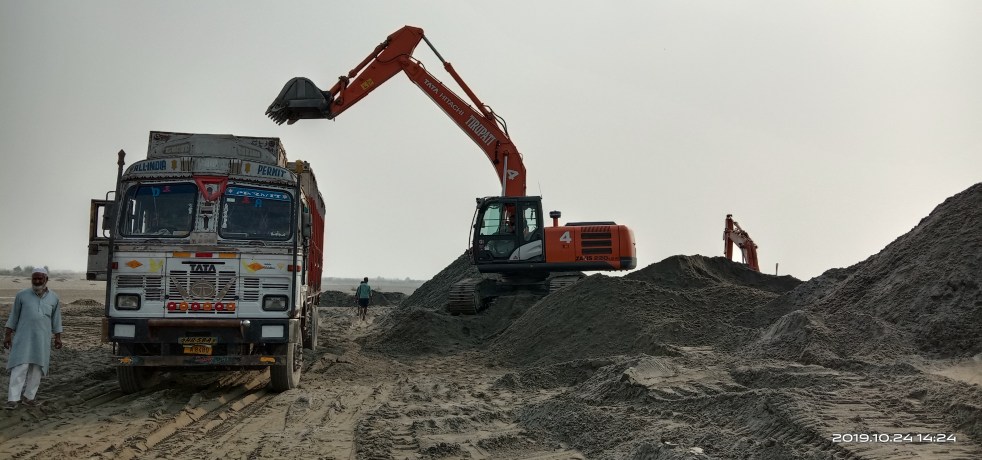
Continue reading “Yamuna Basin Storm Water Drain No 8 now Effluents Disposal Drain”For past two years, large scale mechanized and illegal mining is happening in Yamuna River in Haryana state. The miners have created deep pits across the riverbed in Yamuna Nagar, Karnal, Panipat and Sonipat districts. Year 2019 has been a deficit monsoon year in Yamuna basin and the river had started shrinking unusually during October month. The rampant riverbed excavation has further robbed it of lean season flows. This detailed overview of river sand mining in Haryana in 2019 shows the severe impact of unsustainable and illegal mining practices on the river and villagers due to insensitive government and inefficient administration.
Continue reading “Haryana Riverbed Mining 2019: Yamuna Robbed of Minerals, Flows”
River carrying capacity is such a crucial factor in deciding if certain areas will be flooded and with what severity. This capacity is constantly changing, more so in tropical climate and high silt carrying rivers of South Asia, as new research shows. However, most models that are used in India, including by CWC, assume steady state situation. Nor are there constant and credible efforts to assess the river cross sections and river conveyance capacities and put them in public domain. The study shows how important it is that we wake up to this reality and ensure credible, consistent monitoring and assessments by credible independent agencies at the earliest. This has become even more urgent, the study underlines, since in changing climate, the rainfall patterns are changing fast.
Continue reading “DRP: 18 Nov. 2019: River capacities are changing, but who is monitoring?”Accepting that reservoirs operation and flood management in India lack scientific supports, Madhavan Nair Rajeevan, Secretary, Ministry of Earth Sciences, in an interview has revealed that dams and water reservoirs need flood management systems that use scientific methods to understand when the time is right to open the gates.
“As per my understanding, no big reservoir has a decision support system. So we don’t know when to open them, how to open them… I am not attributing the Kerala floods to an individual. There is a common perception that in India most of the flood management systems are not supported by science… I am very sure we don’t have the decision support system and we need it.” https://indianexpress.com/article/india/not-just-kerala-no-scientific-dam-water-management-across-india-madhavan-nair-rajeevan-secy-earth-sciences-5322003/ (24 Aug. 2018)
In another interview he says that while Kerala records among the highest amounts of rainfall in the country, the State did not have a flood warning system in place. He added that while there were several sophisticated tools to anticipate extreme weather events, India still lacked a mechanism to effectively deploy them. https://www.thehindu.com/sci-tech/energy-and-environment/reservoirs-not-managed-using-a-scientific-decision-support-system-m-rajeevan/article24785253.ece (26 Aug. 2018)
Further in a detailed interview, he pitches for ‘decision support systems’ at dams, acknowledges the challenge of climate change, warn against repercussions of ‘fast-warming’ Indian Ocean. https://indianexpress.com/article/india/kerala-floods-m-rajeevan-ministry-of-earth-sciences-met-department-5324840/ (26 Aug. 2018)
Continue reading “DRP: 27 Aug 2018: WRONG Management of DAMS Create FLOODS, Accept Officials and Experts”Aquifers in 16 States in the country are contaminated by uranium, whose presence in drinking water has been linked to chronic kidney disease by several studies, a recent study has shown. More importantly, uranium doesn’t figure on the list of contaminants monitored under the Bureau of Indian Standards’ drinking water specifications. The main source of this contamination is natural, but groundwater depletion by extensive withdrawal of water for irrigation and nitrite pollution due to the excessive use of nitrogenous fertilisers may be exacerbating the problem, said the study.
– The study was carried out by a team of researchers led by Avner Vengosh, professor of geochemistry and water quality at the Nicholas School of the Environment at Duke University in the US. The team, which also included experts from the Central Ground Water Board, the Rajasthan government’s Ground Water Department and Gujarat Water Resources Development Corporation, analysed groundwater samples from 226 locations in Rajasthan and 98 in Gujarat.
Continue reading “DRP: 11 June 2018 (Groundwater Pollution: The Hidden Killer Menace Lurking All Over)”This week there are exemplary and encouraging wetlands revival stories from three metro cities of Chennai, Hyderabad and Delhi. In the first example from Hyderabad, meticulously chosen plant species such as tulsi, aswagandha, citronella and hibiscus have been used to create an artificial island to clean Neknampur Lake. The treatment islands are composed of four layers of which the bamboo base keeps the entire structure afloat. Based on soil-less hydroponics, these floating treatment wetlands absorb excess nitrates, thereby reducing the chemical content of the lake water. Microorganisms present in the wetland break down organic matter while the root systems filter out pollutants and sediments. https://www.thenewsminute.com/article/3500-saplings-floating-islands-help-rejuvenate-hyd-neknampur-lake-75819 (The News Minute, 3 Feb. 2018)
Similarly, Chennai-based Care Earth Trust along with the public works department (PWD) and the civic body has managed to restore three urban lakes. While many of the smaller wetlands have vanished over time, many mid-sized wetlands seem to have shrunk by almost 65 percent. Thanks to their joint effort, invasive hyacinth was removed from the Narayanapuram Lake in Pallikaranai, while sewer lines, which emptied into the Perungalathur Lake, have now been plugged. A detailed restoration proposal has been forwarded to the PWD regarding the Korattur-Madhavaram-Ambattur lakes. https://timesofindia.indiatimes.com/city/chennai/hyacinth-out-sewer-line-plugged-three-water-bodies-restored/articleshow/62748110.cms (The Times of India, 2 Feb. 2018)
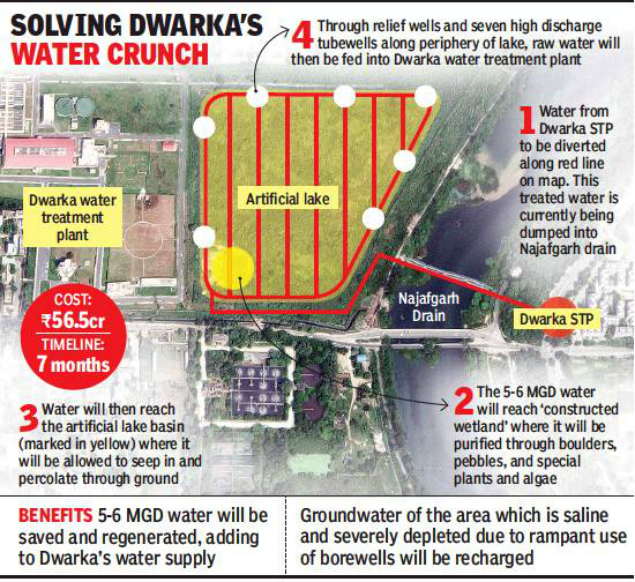
Meanwhile, Delhi Jal Board (DJB) has taken up interesting new project of creating an artificial lake in Dwarka. The project will supply water in sub-city and improve ground water level too. DJB has approved Rs. 56 crore for the project which will be completed in next seven months. This would the first model project wherein a lake will be used to augment water supply. The special lake is being created next to the Dwarka water treatment plant (WTP) will have a sand bed to allow maximum percolation of water into the ground. It will have a capacity of 10 million gallons (MGD). The project is expected to add supply of 5-6 million gallons water to Dwarka every day.
Continue reading “DRP: 12 Feb 2018 (With Innovative Ideas Hyderabad, Chennai & Delhi Are Reviving Its Wetlands)”Guest blog by Kelly D. Alley and Nutan Maurya
The territory under the jurisdiction of the New Delhi Municipal Council, or Lutyen’s Delhi, is lush with beautiful gardens. The New Delhi Municipal Council maintains around 8,000 parks and uses about 80 million gallons of water a day for grass, plants, shrubbery and trees. The Delhi Jal Board estimates that the total water treated at its sewage treatment plants is about 455 million gallons a day (mgd) of which they provide 142 mgd for horticulture and irrigation in the Delhi metropolitan region. With groundwater levels depleting to over 300 feet in some sections of Delhi, there has been increasing focus on curtailing use of groundwater for horticulture and other non-essential services. In this context, the National Green Tribunal has directed all urban municipalities to use treated wastewater for horticulture. Continue reading “Decentralized STPs in the Delhi Capital Region”

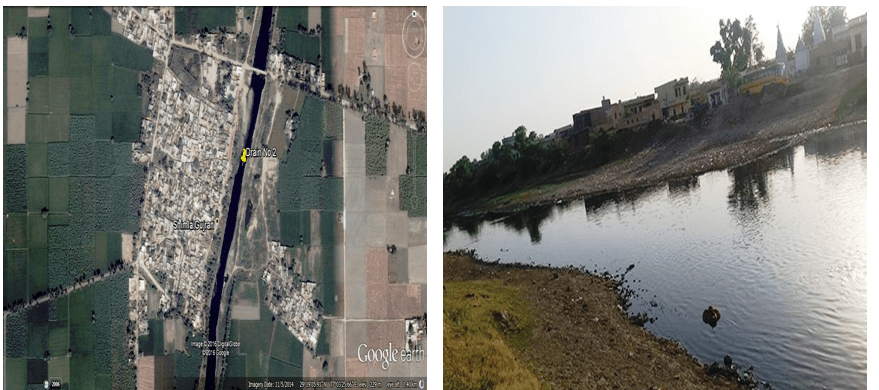
Shimla Gujran village on the other side of DN-2 (Photo by Vikas Sharma, village doctor who had to fix an air tight aluminimum framed glass door at his clinic to avoid to deadly stench)
The news of ammonia laden pollution entering Delhi’s water supply via Yamuna River has become more of a routine. The periodical nuisance forces closure of Delhi Jal Board (DJB) water treatment plants for few days, leading in disruption of water supply to lakhs of people. But as usual, within couple of days things fall back to normalcy until the cycle strike back.
The source of pollution remains undisclosed with only hint that the origin presumably a drain carrying pollutants from Haryana sneaks into river somewhere upstream of Delhi. Much is not talked or heard about the mystic drain and the problem largely remains unfixed. Haunted time and again Delhi Government has now installed one Ammonia-Neutralizers and planning to buy more as a remedial measures.



 SANDRP