Since May 2017, several flood related incidents have taken place in the North East showing how our shortsightedness in understanding the rivers, how our thoughtless construction along the rivers in the name of flood control and how our careless operation of dams have converted floods into a disaster.
At the same time, there have been incidents raising suspicion over quality of construction of built and ongoing dams. Then the news of NHPC being accused of forging Gram Panchayats signs to build 520 MW Teesta IV dam is shocking revelation in itself. Contribution of such factors in worsening the floods is always underplayed.
The countless landslides and Cyclone Mora (http://www.hindustantimes.com/india-news/cyclone-mora-reaches-northeast-many-houses-damaged-in-mizoram/story-UzcDuPOge0drAklftXW38L.html) have already left the region crippling, despite this there is no regular monitoring of flood situation and no timely warning being issued by States or Central Agencies about the rainfall and floods. All this is enough to prove that the ongoing flood devastation in North East has very much to do with the way we are destroying rivers with hydro projects, dams and embankments and disturbing the fragile environment of North East. These incidents also put question mark before govt agencies which are first pushing the destruction in the sensitive region and then lagging way behind in monitoring and issuing timely precautionary warnings.
In a remarkable trend emerging in hydro sector in Himachal Pradesh, many leading private companies have started surrendering hydro power projects allotted to them by State Govt. As per the news report, Tata Group, Reliance, Jindal and Larsen & Toubro have either surrendered or are in process of surrendering numbers of hydro projects given to them over past one and half decade. These companies are now increasingly terming the projects as non-viable and unprofitable.
In the last week of June, 2017, Tata group reportedly has written to Directorate Energy, expressing its desire to surrender the 450 MW Duggar power project in Pangi area of Chamba district. The project had been allotted to them in 2007-08 and post feasibility study done by its consultants the group has found the unviable. http://www.tribuneindia.com/news/himachal/tatas-give-up-chamba-power-project/428456.html
Before this the Reliance group had declined to set up 300 Mw Purty and 130 Mw Sumte Kothan hydro projects in Spiti. Following this, the State Cabinet on June 24, 2017 meeting agreed to return Rs 85 crore paid as upfront money by Reliance group.
In the latest incident, anticipating problems in evacuating power, with the market being very grim as far as buyers and power rates are concerned, Larsen and Toubro (L&T) is reported to have urged the state govt to enter into a power-purchase agreement (PPA) with it for two of its hydel projects — Reoli Dugli (Lahaul-Spiti) and Sach Khas (Pangi), located in the arduous Chenab basin.
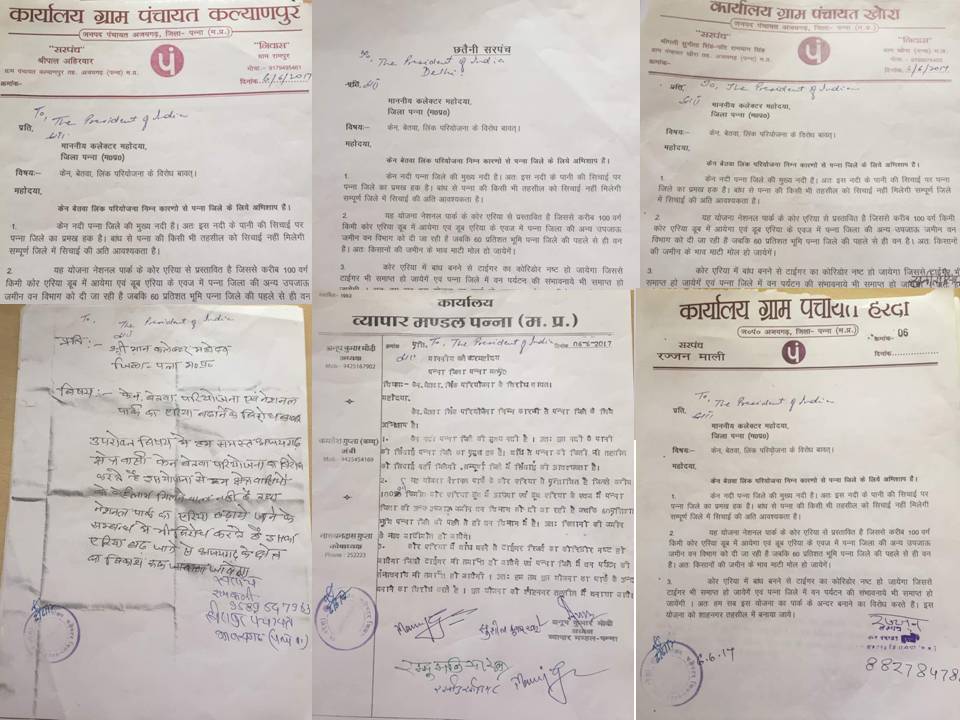
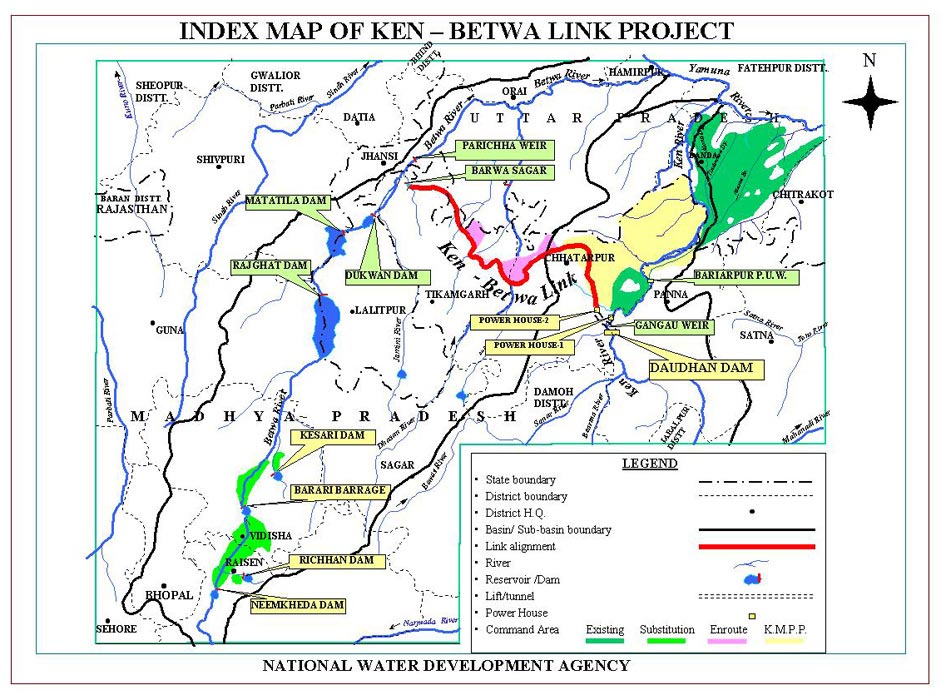
In the month of June 2017 several villages in Panna district Madhya Pradesh have opposed the controversial Ken-Betwa interlinking project. According to locals the project will destroy the Ken River which is the life line of area. Numbers of Village Panchayats have sent their memorandums to District Collector citing negative impact of the project on Panna Tiger Reserve. Many individuals and social groups including trader’s body have also criticized the project. As per locals, Panna district lacks irrigation facilities but the project proposes to transfer Ken river water to other areas. Local political parties have also supported the villagers opposition.
Similarly worried over the scale of destruction, a group of concerned people in Panna have recently organized a meeting on the issue. Discussing the side effects of the project, the group fears that Ken Betwa interlinking project will make the Ken River dry and as a result ground water level in the area will also go down. The people revealed that there is no surplus water in the river on the basis of which the project was planned. They also cited several shortcomings in the planning of the project and stated that downstream impacts of the project has not been studied at all. The group has collectively decided to take up necessary actions to convey their opposition to the project.
A recent IMD study has found that rain-bearing clouds have been thinning out across the country over the last 50 years. The study, published in the IMD journal Mausam, shows that between 1960 and 2010, annual mean low cloud cover (responsible for the bulk of the rainfall) over India has been decreasing by 0.45% per decade on an average.
According to the study, the number of rainy days is also declining during the monsoon season at an average rate of 0.23 days for every decade. This means that the country has lost approximately one rainy day over the last five decades. The study found that while the number of rainy days is decreasing, there is not much change in the total amount of rainfall. This shows a trend towards shorter, heavier bursts of rain.
That is bad news, because heavier raindrops can dislodge wheat and rice grains from their stalks while on the farm. It also means rainwater flows down a slope that much faster instead of percolating underground.
Meanwhile, a new NASA study has warned the amount of rainfall in the Earth’s tropical regions will significantly increase as the planet continues to warm. As per study rainfall is not related just to the clouds that are available to make rain but also to Earth’s “energy budget” — incoming energy from the Sun compared to outgoing heat energy. High-altitude tropical clouds trap heat in the atmosphere. If there are fewer of these clouds in the future, the tropical atmosphere will cool.
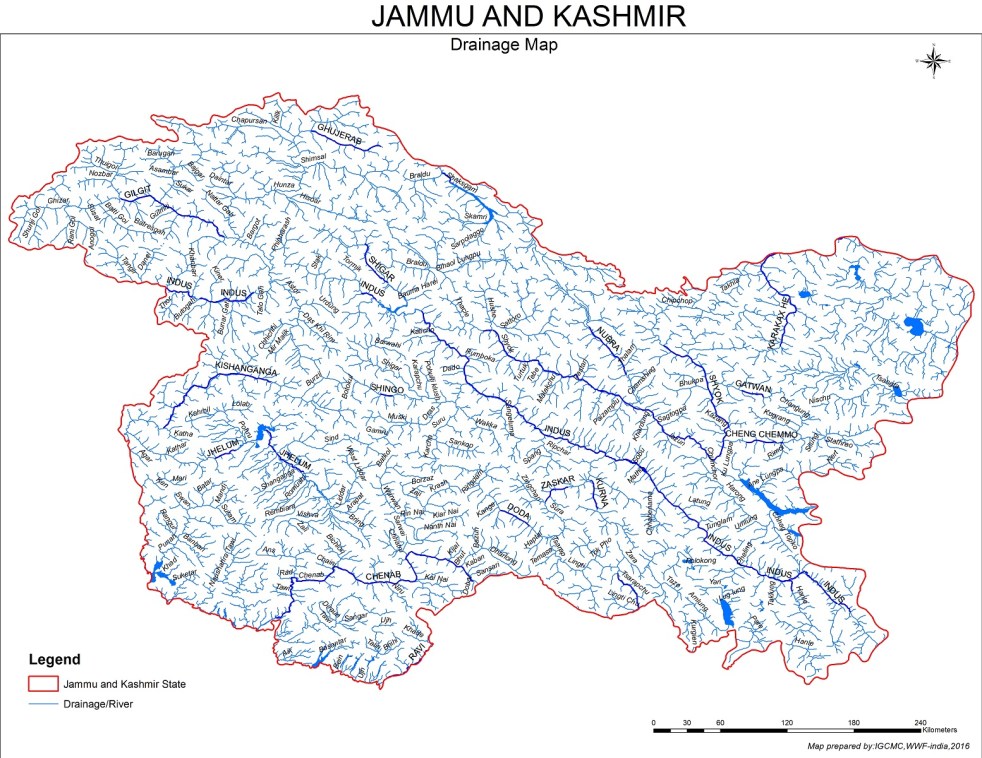
This report discusses a few of the significant issues in the Jhelum and Chenab basin two of the main tributaries of the Indus and provides the readers a snapshot of the issues confronting the water resources development in the basins. On the basis of these factors, the health and status of the Jhelum and Chenab basins is determined using an assessment matrix providing qualitative weights to each of the indicators and influencing factors to arrive at the overall score of the river categorizing a riverscape as healthy, sick and dying.
Today is 13th day of the Swami Shivanand fast unto death to protect Ganga River from illegal mining. The health of 70 years old Marti Sadan head is turning critical with each passing hour. If no intervention is done immediately, the Saint’s life will be in danger.
Matri Sadan resumed its fight against rampant mining in Ganga on May 13th, 2017 after State Government opened Ganga riverbed mining which the Ashram is strongly opposing for last many years.
For first eleven days two disciples of the Ashram observed hunger strike. But seeing no response from Govt, Swami Shivanand himself sat on fast unto death on May 24, 2017 against indiscriminate mining of national river. Still the Govt went ahead with Ganga mining activities stating that it was necessary to protect the city from flood.
In response the Saint shunned even taking water. But instead of communication with the protesters, the State Govt reportedly on May 28, 2017 triedto force feed the saint to fail the agitation for which the Govt was criticized greatly.
After mounting pressure the CM of Uttarakhand is learnt requesting to stop hunger strike. Following this mining was stopped in Ganga and the saint started taking water after six days but decided to continue fast as long as Government imposes complete ban on mining in writing.
On June 02, 2017, accusing the State Govt of blatant apathy towards Swami Shivanand’s hunger strike against illegal mining on the Ganga riverbed in the Kumbh Mela area, a group of scientists, activists and followers have written to the PM Modirequesting the PM to intervene without delay to stop unscientific mining of the Ganga.
The state of Madhya Pradesh (MP) was bifurcated in the year 2000. The total area of MP state is 3,08,245 sq. km. The state has been divided into 50 districts and 342 sub districts. The total human population of the state is 725.97 million. (2011 census) with a decadal growth rate of 20.3%. Key centres of growth are around the urban centres of Gwalior, Indore, Bhopal and Jabalpur.
Climate
It has a subtropical climate. Hot dry summer extends from April to June followed by monsoon from July to September and winter months (November to February) are cool and relatively dry. The average rainfall is about 1,370 mm and it decreases from east to west. Summer mean maximum temperature rises to about 42.5 deg C in northern parts and the average temperature during winters is as low as 10 Deg C again in the north while it varies from 10 – 15 deg C in the south. (Source: Gosain et al in Climate Change in Madhya Pradesh: A Compendium of Expert Views – II)
Union Minister of State of Environment, Forests and Climate Change (Independent Charge)
Paryavaran Bhawan, Jor Bagh, Delhi 110 003
dr.harshvardhan@sansad.nic.in, ps2mefcc@gov.in (PS to MoEF Minister)
Respected Sir,
We have just learnt that Prof Sharad Jain of NIH, Roorkee, and chairman of Expert Appraisal Committee (EAC) on River Valley and Hydropower Projects (RVP), is also holding additional charge of DG of NWDA, see: http://www.nwda.gov.in/writereaddata/linkimages/6419983647.pdf. His office just told one of us that he has been holding this charge since about three months already.
This is a clear case of conflict of interest. As you know, a number of NWDA projects come to EAC for approval at various stages. One such project that came before the EAC headed by Dr. Jain was the Ken Betwa project, which the committee headed by Dr. Jain promptly cleared in very first meeting of the reconstituted EAC in Dec 2016, weeks before Dr. Jain took over as Director General of NWDA, over ruling the issues that earlier four meetings of the EAC had raised about this project. How can one expect that the EAC chairman would be able to objectively, independently and scientifically appraise a project of the organisation (NWDA in this case) of which he is the Director General?
Under the circumstances, we believe there is no option, except that you must ask Dr. Jain to resign from his post as chairman of EAC, as his holding additional charge of NWDA DG, and already in conflict of interest. We also request you to ask the EAC to review their decision about Ken Betwa Project (and any other NWDA project) that the current EAC may have appraised, after appointing a new chairman of EAC.
We would like to bring to your attention that there is already a precedent in this context when in 2009, the then chairman of the EAC (RVP), Dr P Abraham was asked to resign since he was also director of hydropower companies whose projects came before EAC headed by him.
We hope you will act promptly on this issue. There is some urgency of this since the next meeting of EAC (RVP) is on May 31, 2017, that is tomorrow.
Thanking you,
Yours Sincerely,
1. Prof Brij Gopal (Retired Prof from JNU, Delhi), Centre for Inland Waters in South Asia, Jaipur, brij44@gmail.com
2. Dr E A S Sarma, former Secretary, Govt of India, Vishakhapatnam, eassarma@gmail.com
3. Dr Bharat Jhunjhunwala (Formerly with IIM Bangalore), Uttarakhand, bharatjj@gmail.com
4. Vimal Bhai, MATU jan Sangathan, Uttarakhand, bhaivimal@gmail.com
21. Prof Sunil Kumar Choudhary,Prof. & Head, University Dept. of Botany, T. M. Bhagalpur University, Bhagalpur, sunil_vikramshila@yahoo.co.in, 09431875861
Copy to: 1. EAC (River Valley Projects) members
2. Prime Minister’s office
MEDIA COVERAGE:
June 1, 2017: http://timesofindia.indiatimes.com/india/chief-of-eac-on-rivers-faces-conflict-of-interest-charge/articleshow/58937121.cms
June 1, 2017: https://www.nationalheraldindia.com/environment/2017/05/31/ken-betwa-river-linking-project-a-clear-case-of-conflict-of-interest
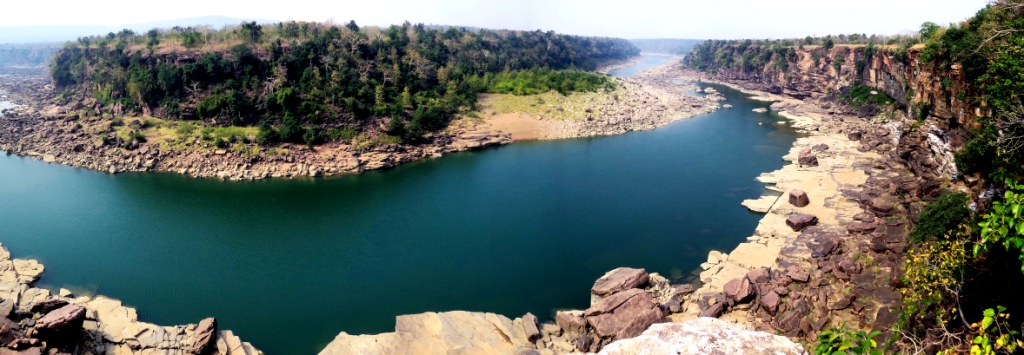
A fabulous view of Ken river. Nesting sites of Long-billed vultures are to the right. All will go under water if Ken-Betwa linkup is carried out,AJT Johnsingh
RajasthanLessons from a reborn river The district of Alwar in Rajasthan is water-stressed, receiving less than 650 mm of rainfall in a year, most of which falls during the Southwest monsoon. But Alwar exists in a stable equilibrium, where even if there is a drought, the Johad’s and the forests make it possible for water to be stored underground. Because of strong communal interdependencies, all villagers stuck to sensible crops for the region, and maintaines the Johads. The community, the Forests, the Johads, the choice of crops, all worked together and reinforces one another. Equilibriums are maintained by such reinforcing activities that fortify status quo. FASCINATING account of how Arvari community rejuvenated their rivers and what are the lessons.
Bihar Chief Minister Nitish Kumar again has urged the central govt to remove the Farakka barrage in West Bengal and make a countrywide policy on silt management for letting river Ganga to flow freely.
Speaking on the occasion, Swami Avimukteshwara Anand criticised Union Water Resources Minister Uma Bharati for doing absolutely nothing for the cause of the river Ganga and said she seems more interested in her chair rather than the river. He also criticised Prime Minister Modi for claiming that he is son of Ganga, but doing nothing positive for the river. Swami ji said Nitin Gadkari seems bent on further destroying the river in the name of National Waterway.
Addressingthe seminar Nitish Kukar said that Bihar’s demand for the framing of national policy on desiltation of the Ganga and clearance of silt in the state is not a political issue, as the matter is related to larger environmental and biodiversity issues facing the people.
He added, “Concrete steps have to be taken to ensure incessant flow of the Ganga. Otherwise, cleanliness of the river is not possible.” Referring to the need to protect biodiversity, he said conservation of the Ganga dolphins is dependent on the cleanliness of its water. He added the Farakka barrage constructed across the river in West Bengal has led to slow flow of water between Buxar to Bhagalpur, and consequent annual flood and waterlogging during the monsoon.
Nitish recalled the devastating flood that the state had witnessed in the Ganga basin last year and said Bihar had spent Rs 1,058 crore over the last five years to prevent soil erosion. He appealed to the Centre to frame a sound policy on silt management, stressing that it should be prepared by making on the spot survey and assessment of the prevailing situation. Nitish said even the report of the committee headed by Madhav Chitale had accepted the problem of siltation facing the Ganga.







 SANDRP