Dams · DRP News Bulletin

DRP: 2 July 2018: Punjab Cabinet Meets To Discuss Water crisis

In a rare event, Punjab Cabinet met to discuss water crisis on June 26, 2018. The reports before the meeting seemed to give hope that may be Punjab will look at the water crisis in a fundamental, holistic way. https://indianexpress.com/article/cities/chandigarh/punjab-government-to-firm-up-water-conservation-plan-5233826/ (June 26, 2018)

But the cabinet ended up setting up a committee to assess the ground water situation in the state and submit a detailed proposal for water conservation.

– Punjab has the highest rate of groundwater exploitation and had on average withdrawn 28.2 million acre feet (MAF) water yearly during 2008-2013. However, the yearly average replenishment of water was only 18.9 MAF.

– 73% of Punjab’s irrigated area uses groundwater for irrigation, while only 27% uses surface water. The number of tubewells had gone up exponentially from 2 lakh in 1971 to 12.50 lakh in 2015-16, with 41% of these have water availability beyond the depth of 60 metres. https://timesofindia.indiatimes.com/city/chandigarh/5-member-committee-to-assess-punjab-ground-water/articleshow/64770186.cms  (28 June 2018)

Continue reading “DRP: 2 July 2018: Punjab Cabinet Meets To Discuss Water crisis”
Assam · Floods

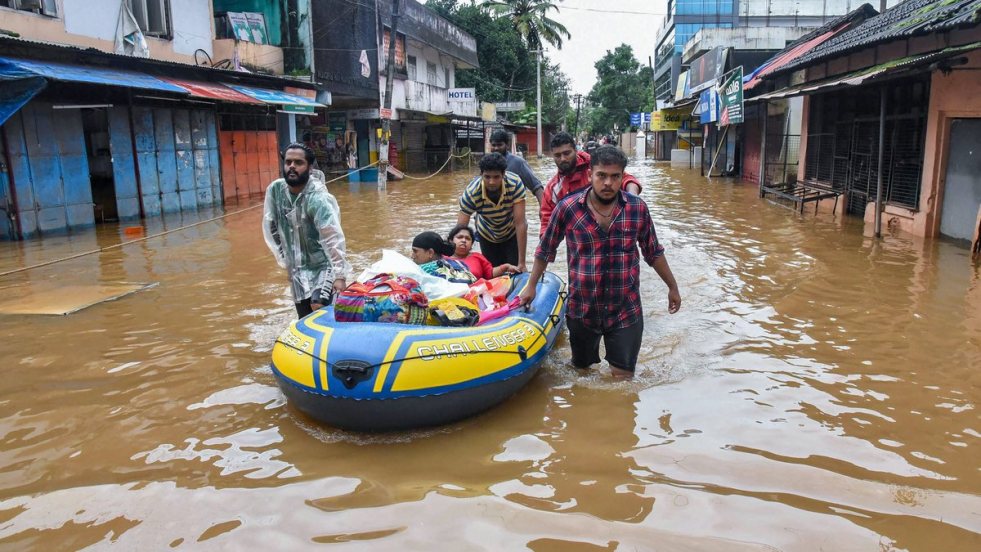
Floods in Tripura, Mizoram, Barak Valley in June 2018

The second wave of floods (first wave came in around May 20-24) this year inA North East India is affecting Tripura, Mizoram and mainly Barak Valley in Assam. Worryingly, while CWC flood forecast site shows water level reaching unprecedented levels in Manu river at Kailashahar in North Tripura District, CWC seems to have NO flood forecasting site in Mizoram. At Matizuri site in Hailakandi district in Barak Valley in Assam, the Katakhal river also approaching its highest ever flood level. In Bangladesh too sites like Amalshid have crossed the HFL.  Continue reading “Floods in Tripura, Mizoram, Barak Valley in June 2018”

Disasters · Floods

CWC’s Weekly Reservoir Bulletin: Closer look warns of impending disaster

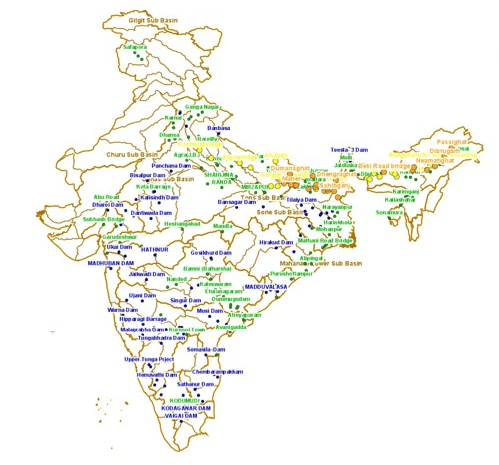
One of the key source of information about India’s water availability that the government provides and media and everyone else quotes is Central Water Commission’s weekly (updated every Thursday) “Reservoir Storage Bulletin”[i]. The Reservoir Storage Bulletin (RSB) currently tells about water storage position of 91 storage dams across India with total live storage capacity of 161.993 BCM (Billion Cubic Meters), spread over 18 states and 12 river basins. CWC uploads it with a disclaimer: “The Data contained in this Bulletin is as received from the State Government/Project Authorities.” Continue reading “CWC’s Weekly Reservoir Bulletin: Closer look warns of impending disaster”

Dams

South India Rivers Review 2017: More Water for Cities from Drying Rivers

This fourth rivers review presents developments related to rivers in States of South India including Telangana, Andhra Pradesh, Karnataka. 

Telangana Rivers 2017

Manair River Garbage polluting Manair river The shores are being polluted by the Municipal Corp of Karimnagar (MCK), which is dumping garbage generated from the town. Other private agencies such as chicken centres, hotels, private hospitals, mechanical shops and others too are also dumping garbage generated at their places into the river Manair. The State Govt had decided to develop the Manair front on the lines of Sabarmati river front development, which would spell further disaster for the river.  http://www.thehindu.com/news/national/telangana/Garbage-polluting-Manair-river/article17113713.ece (The Hindu, 30 Jan. 2017)

Continue reading “South India Rivers Review 2017: More Water for Cities from Drying Rivers”

Dams · Sand Mining

Riverbed Mining 2017 -II- States Look To Centre, Centre Dilutes Norms

In the first part we see, how under business as usual scenario, incidences of illegal riverbed mining going on unabated across the country. Reports suggest that Uttar Pardesh, Uttarakhand, Punjab, Madhya Pradesh, Maharashtra, Tamil Nadu, Karnataka, Andhra Pradesh, Telangana and Goa have emerged leading states affected by illegal sand mining.

In 2017, countless reports have exposed politicians-officials-mafia nexus responsible behind mindless plundering of scarce natural resource in open violations of norms. Similarly, throughout the year, there have been several violent attacks on villagers, activists, government officials by sand mafia. In a whole more than 26 people are killed in incidences involving illegal extraction of sand.

In this detailed second part, SANDRP presents account of various measures taken by different State Governments and Central Government to check the unsustainable riverbed mining practices. The third and concluding part would cover legal interventions initiated by respective Judicial bodies to reign in the unsustainable, unlawful sand mining activities across India.

Continue reading “Riverbed Mining 2017 -II- States Look To Centre, Centre Dilutes Norms”

Dams · DRP News Bulletin

DRP: 18 Dec 2017 (Also Needed To Mention This About Turial HEP)

The Prime Minister, on Dec 16, 2017, while dedicating to nation the 60 MW Turial HEP, should have also mentioned:

– PUBLIC PROTESTS: The project faced strong protests from local people, so much so that work had to be stopped for over 7 years from 2004 to 2011. Even a day before PM dedicated the project, people took out a protest march.

– NO PUBLIC CONSULTATION:  One of the reasons people protested was that the project did not have any proper public consultation.

– NO PROPER IMPACT ASSESSMENT: Another reason for people’s anger was no proper environment or social impact assessment, or proper compensation and rehabilitation.

– HIGH COST: The project cost was Rs 368.72 Crores, but now already has gone above Rs 1441 crores officially, likely to go up further. That means per MW cost is already above Rs 24 crores, one of the highest in the country. WHO WILL PAY THE HIGH COST OF ELECTRICITY FROM THE PROJECT?

– HUGE COST ESCALATION from Rs 369 crores to over Rs 1440 crores

– HUGE TIME OVER RUN: The project was supposed to be completed many decades back but  has seen huge time over run, not only because of protests, but also because of inadequate mobilisation by the contractor, poor approach road, power house slope failure, among many other reasons.

This latest project once again shows that big hydro is no longer viable, one wishes, the Prime Minister would also highlight these realities in his speeches.

Continue reading “DRP: 18 Dec 2017 (Also Needed To Mention This About Turial HEP)”
Dams

Krishnagiri Dam Breach Is Wake Call For Dam Safety In Tamil Nadu And Elsewhere

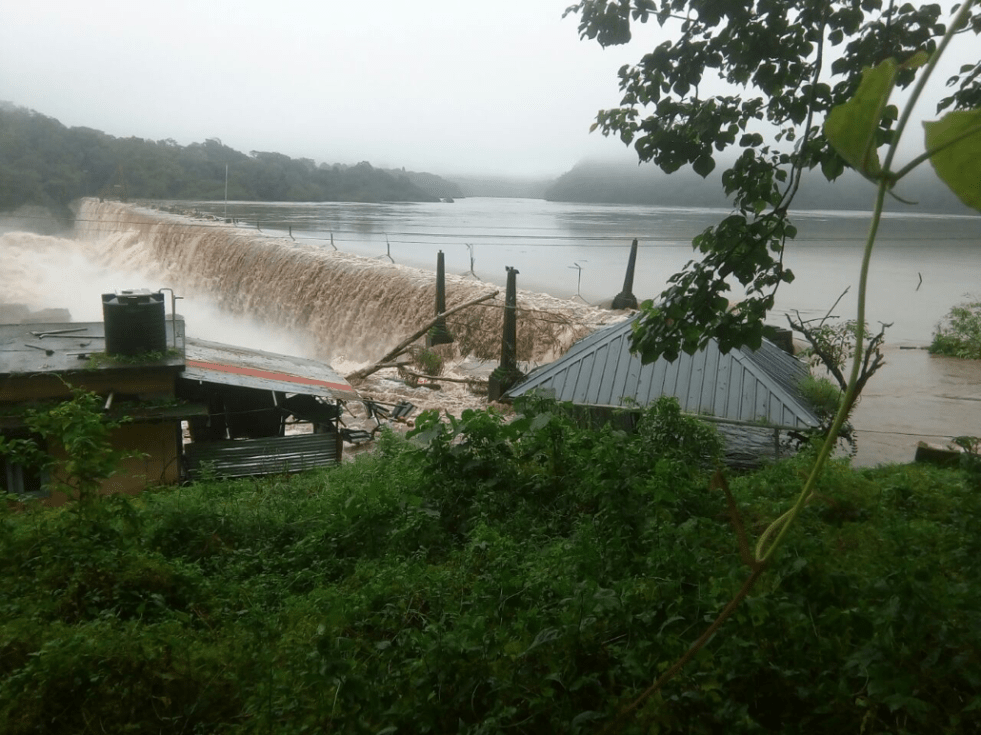
On the evening of November 29, 2017, a shutter of Krishnagiri Reservoir Project[I] (KRP) dam in Krishnagiri district, Tamil Nadu has breached sounding flash flood alarm in downstream areas. The Collector C. Kathiravan has also put five districts of Krishnagiri, Tiruvannamalai, Dharmapuri, Vellore, and Villupuram on high alert following the sudden breach. The disaster management and rescue department have been called in to assess the situation. Leading a high level expert team Murugu Subramaniam Chief Engineer (CE) Public Works Department (PWD) responsible for operation and maintenance of the dam has also inspected the site which was followed by M Thambidurai. Deputy Speaker of the Lok Sabha.

Krishnagiri KRP Dam First Door Damage Viral Video

Interestingly KRP dam project is listed in the Central Water Commission’s national registry of large dams. It is also covered under Dam Rehabilitation and Improvement Project (DRIP) and there was an Emergency Action Plan (EAP) workshop at the dam site only in 2016. Surprisingly, the incident has occurred just a year after all the 8 shutters were repaired at a cost of ₹1.10 crore reports The Hindu.[II]

The flash flood would impact the downstream villagers particularly riverbed farmers. As the dam was storing water for rabi crops, the breach is also bound to affect dependent farmers. Worsening the situation further, India Meteorological Department (IMD) has warned of heavy rains in the state due to ongoing cyclone Ockhi.

In fact, the KRP dam breach has raised many questions and issues which need to be answered and addressed immediately.

Continue reading “Krishnagiri Dam Breach Is Wake Call For Dam Safety In Tamil Nadu And Elsewhere”

DRP News Bulletin

DRP: 23 Oct 2017: Goa activists unite against destruction of rivers

Goa Activists to launch mass agitation against coal transportation & nationalisation of rivers GREAT! Goa activists unite to oppose rivers nationalisation and coal transportation along rivers. https://www.heraldgoa.in/Goa/Goa/Activists-to-launch-mass-agitation-against-coal-transportation-and-nationalisation-of-rivers/121112.html

Continue reading “DRP: 23 Oct 2017: Goa activists unite against destruction of rivers”
Dams

India’s National Register of Large Dams: Shows how little we know about our dams

The Central Water Commission (CWC) of India’s Union Ministry of Water Resources periodically updates India’s National Register of Large Dams (NRLD), the latest edition seems to have been put up recently[i]. Significantly, this latest edition reports huge jump in number of large dams in India, compared to the previous editions from 2009 that SANDRP has been monitoring. The 2009 edition of NRLD had 5100 large dams and the editions from 2012 to 2016 had listed 5190 to 5170 large dams, but the 2017 edition suddenly reports that now India has 5701 large dams, a jump of over 510 from the editions in last five years. This shows that neither states had been reporting correct figures of number of large dams in India, nor was CWC bothered to collect correct basic information about large dams. Continue reading “India’s National Register of Large Dams: Shows how little we know about our dams”

brahmaputra · DRP News Bulletin · Floods · Ganga

DRP: 14 August 2017 East & North East India face flooded Independence day

FLOODS 2017

SANDRP BLOG: Brahmaputra basin to face unprecedented floods starting Aug 12, 2017: https://sandrp.wordpress.com/2017/08/12/brahmaputra-basin-faces-unprecedented-flood-wave-in-aug-2017/

North Bengal Flood situation “Cooch Behar, North Dinajpur, Alipurduar, Jalpaiguri and Darjeeling are the five districts which have been affected by the flood. Earlier in the day, Irrigation Minister Rajib Banerjee said that the state government is tackling the flood in north Bengal on war footing.” 58,000 people had been affected in Alipurduar, Jalpaiguri and Cooch Behar districts.

MAY BE IF THEY WOKE TWO DAYS EARLIER WHEN NASA MAP CLEARLY SHOWED THE HEAVY RAINFALL HAVING ALREADY OCCURRED, THEY MAY NOT HAVE HAD TO TACKLE IT ON WAR FOOTING AND A LOT OF DAMAGE COULD HAVE BEEN AVOIDED? http://www.ndtv.com/india-news/flood-situation-worsening-in-north-bengal-says-mamata-banerjee-1736993

Continue reading “DRP: 14 August 2017 East & North East India face flooded Independence day”