Dam Induced Flood Disaster · Gujarat · Narmada

How SSNNL violated its own Flood Memorandum 2020 during recent SSD induced floods

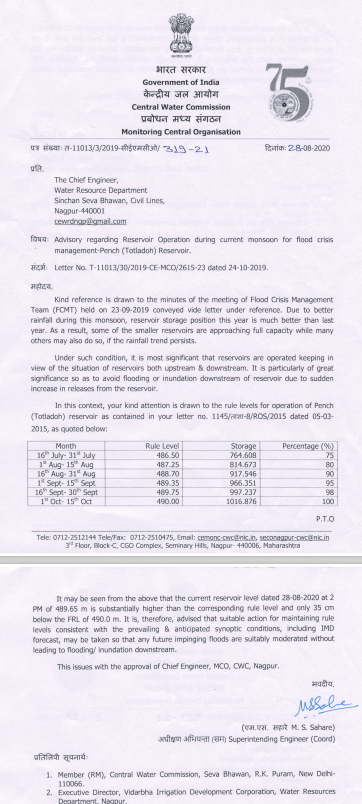
During the recent Sardar Sarovar Dam (SSD) induced flood disaster in areas downstream of the dam in Gujarat, the dam operator, SSNNL (Sardar Sarovar Narmada Nigam Limited) violated its own Flood Memorandum (FM) 2020[i] in multiple ways.

The FM-2020 titled “Disaster Management Plan – 2020” provides detailed information about how the dam operation is to be done during South West Monsoon 2020, that is from June 1, 2020 to Oct 15, 2020, or whenever the monsoon has withdrawn. It is published by SSNNL’s Flood Control Cell and carries the names of six highest functionaries of SSNNL on second page: Chairman, Managing Director, Jt MD, Director (CAD), Director (Canal) and Director (Civil). It says Officer in charge of Flood Control Cell of SSNNL is Executive Engineer (Narmada Project Main Canal Division-2) and the FM-2020 is compiled by Superintending Engineer, Narmada Project Design Circle.

An earlier version of the Flood Memorandum for 2018[ii] is also available, which is useful as it has some additional information.

Continue reading “How SSNNL violated its own Flood Memorandum 2020 during recent SSD induced floods”
Dam Induced Flood Disaster · Narmada

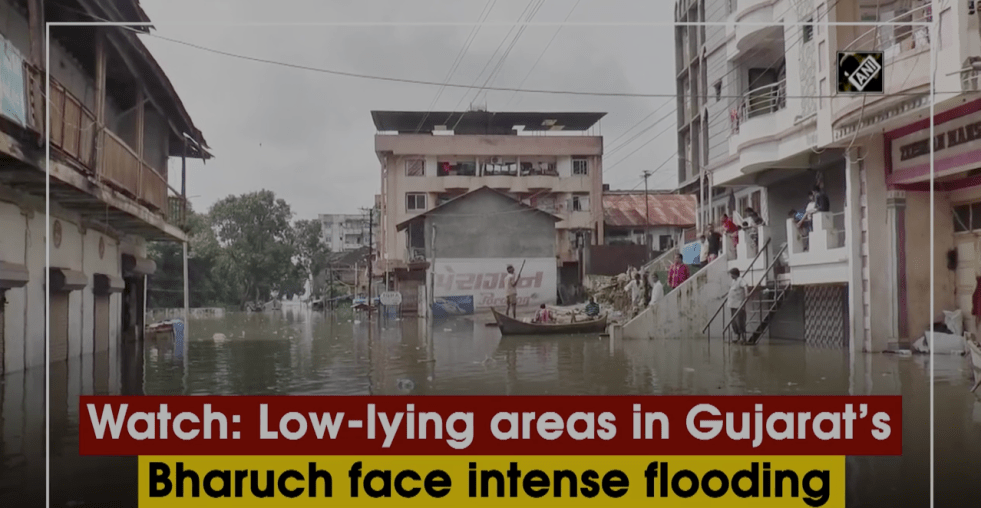
Sardar Sarovar Creates avoidable flood disaster in Bharuch

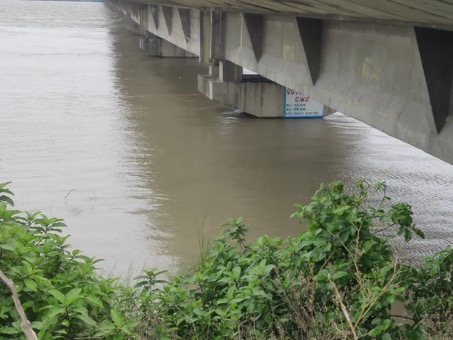
Sardar Sarovar Dam (SSD) operators are operating the dam callously, almost cruelly, without consideration of the impact of the operation in the downstream area. Till Saturday-Aug 29, 2020 early hours, they were not releasing any water from the spillway gates of the dam, in spite of sufficient actionably information at least since Aug 26 that rainfall is hugely increasing in upstream Narmada basin. They were not even operating powerhouses even though the dam was close to 70% full. Suddenly, by Aug 29 night they started releasing upto ten lakh cusecs – Cubic Feet Per Second (28320 cumecs or Cubic Meters per second) of water[i]. Three days later, in the evening of Tuesday, Sept 1, they closed most of the spillway gates, thus reducing releases from spillway to less than a tenth of the earlier figure. During these 3-4 days (Aug 29-Sept 1), massive quantities were released, upto 30 000 cumecs through spillways, and almost nothing before or after! It created massive flood disaster all along the downstream from Gaudeshwar to Chandod to Bharuch, but the Sardar Sarovar Project (SSP) authorities or the Gujarat government seem least bothered. It is high time people of Gujarat wake up and hold the SSP operators accountable for this man made disaster.

Continue reading “Sardar Sarovar Creates avoidable flood disaster in Bharuch”
CWC - Central Water Commission · Dam floods · Floods

Central India downpour brings unprecedented flows in Brahmani, Chambal, Godavari, Mahanadi, Narmada, Suvarnarekha

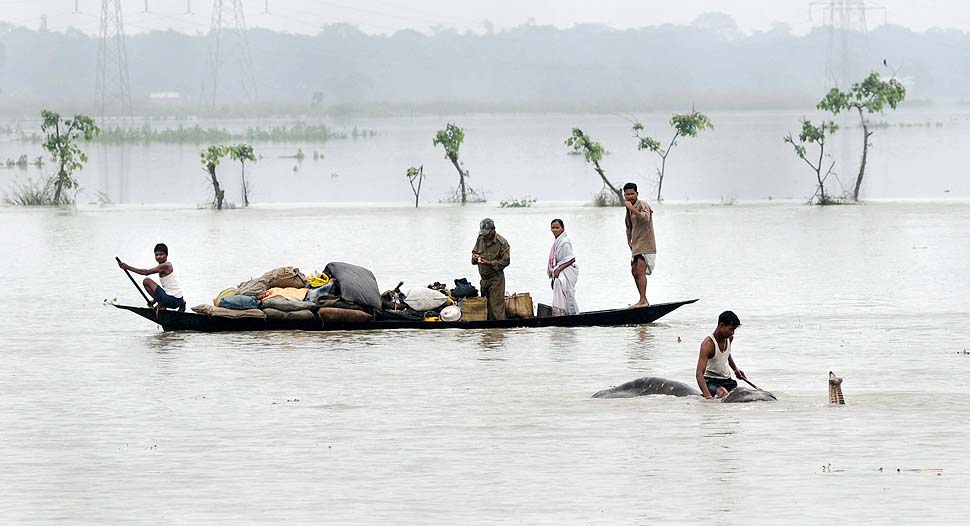
A massive wave of flood is flowing down the rivers originating in Central India states from Odisha in East to Gujarat-Rajasthan in the west. At least fourteen river sites have seen breach of Highest Flood Levels (HFL) in last four days, a record by itself: 7 in Mahanadi, 5 in Godavari, 2 in JNarmada and one each in Suvarnarekha and Chambal. In at least four of these cases, the earlier HFL had survived for 26 years and has now been broken.

The flood wave that is traveling down is above above 35500 cumecs (12.54 lakh cusecs) in Narmada (at Indira Sagar Dam), above 25000 cumecs (8.83 lakh cusecs), in case of Mahanadi (at Hirakud Dam) and Godavari (at Gosikhurd Dam) rivers & over 15000 cumecs (5.3 lakh cusecs) in Chambal (at Gandhi Sagar Dam) River. Continue reading “Central India downpour brings unprecedented flows in Brahmani, Chambal, Godavari, Mahanadi, Narmada, Suvarnarekha”

Bihar · Floods

Making sense of 2020 Gandak floods

While Bihar is again facing one of the worse floods this monsoon, one basin in Bihar that has possibly faced the maximum floods is Gandak, as a number of reports[i] have described. The floods in Gandak basin were pretty serious, as embankments along Gandak breached at multiple locations, first on western side (Gopalganj district) starting on July 23-24 night and then on Eastern side (Purbi Champaran district).  The flood lead to breaking of three year old HFL (Highest Flood Level) record at Dumariaghat, 19 year old HFL record at Lalganj and most shockingly, 34 year old HFL record at Rewaghat. Continue reading “Making sense of 2020 Gandak floods”

CWC - Central Water Commission · Floods

CWC flood forecasting: Inadequate, non transparent, inconsistent

As over 4 million people in the flood prone areas of North East go through second wave of floods and Ganga basin enters the long flood season, nation’s focus should be on one particular agency, Central Water Commission which is not only the only flood forecasting agency, but is also answerable in multiple other ways for the recurring flood disaster. But the flood forecasting of CWC[i] is grossly inadequate, inconsistent and non transparent.

To illustrate, let us look at the available information about CWC’s flood forecasting and compare it with happened in 2019 flood season. Out of 29 sites[ii] (7 level monitoring sites and 22 Lavel forecasting sites) where rivers crossed the previous Highest Flood Level as per CWC’s own hydrographs of last year, CWC has not updated HFL for at least 8 sites so far this year. In case Salavad in Jhalawar district in Rajasthan, on Kali Sindh river, in stead of updating the new HFL, CWC suddenly discovered this year that that the site had higher HFL achieved 35 years ago in 1985, though till last year, it listed 1996 HFL! Continue reading “CWC flood forecasting: Inadequate, non transparent, inconsistent”

Dam floods

Ireland Supreme Court holds dam operator responsible for 2009 floods

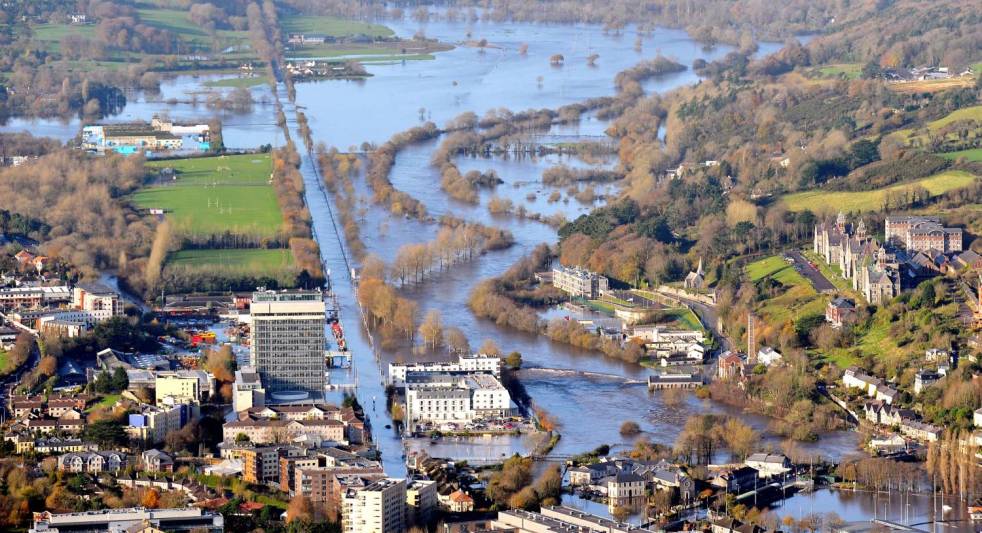
In a landmark, trend setting judgement, the Ireland Supreme Court delivered an important ruling[i]  on July 8, 2020 that the dam operator ESB (Electricity Supply Board, https://www.esb.ie/) was guilty of negligence concerning extensive flood damage to buildings on the campus of UCC.

UCC’s action over the damage is among about 400 sets of proceedings initiated against the ESB arising from the flooding. The finding of negligence by four of the five judges has implications for those cases, and wider implications for the ESB’s liability arising from its management of hydroelectric dams in the State. Aviva, UCC’s insurer sought €20m damages for losses at UCC, plus another €14m for losses suffered by other property owners. The Supreme Court had decided it should first determine whether the ESB had a liability.[ii] Continue reading “Ireland Supreme Court holds dam operator responsible for 2009 floods”

Bhakra Dams · Dam floods · Indus

Are we ready to use more water from snow melt in Indus basin this year?

Union Water Resources Minister Shri Gajendra Singh Shekhawat has recently said that the snow this year on Himalayan peaks is the highest in 50 years, and reservoirs like Bhakra, Pong, Ranjit Sagar, Ramganga, Tehri, etc will receive very high water inflow from snowmelt during summer and SW Monsoon.[i] This is in fact the third warning this year on this issue. Earlier on Feb 27, 2020 and then again on May 4, 2020, the Bhakra Beas Management Board (BBMB) provided the same warning to its partner states. However, neither the Union Minister & BBMB, nor the partner states seem ready or doing anything to prepare for the unprecedented situation that the dams and rivers may bring in ongoing summer and coming SW monsoon.

In fact the situation is similar to the one that happened twice at Bhakra-Pong-Ranjit Sagar Dams last year[ii]. Even then not only there were massive floods, but the water flowed away to Pakistan, totally against the declared pronouncements and policy of Indian Government leaders including the Prime Minister. Continue reading “Are we ready to use more water from snow melt in Indus basin this year?”

Environmental Flow · Ganga

Implementation of NMCG’s Ganga River E flows in 2019: All projects violating even tokenistic norms

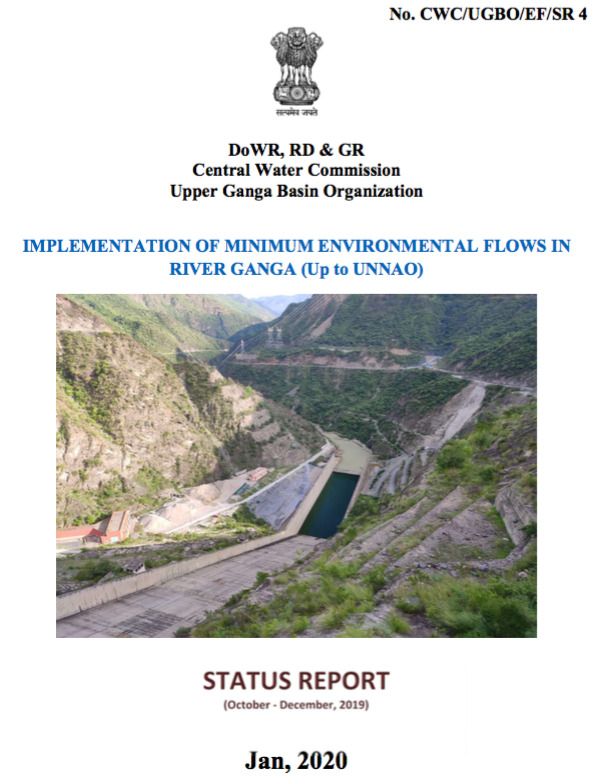
A review of the Central Water Commission (CWC) monitoring reports of all four quarters of 2019 reveals that all the eleven projects that were being monitored in Ganga basin have violated the mandatory Environment flows notification in each of the four quarters of 2019 at some time or the other. The reports are of poor quality with CWC forgetting which states are in Ganga basin and even relative location of the projects. The CWC also seems to have no clue as to what constitutes Environment flows. No punitive action is initiated in any of the cases of violations even after the e flows notification implementation becomes legally mandatory from December 15, 2019 as per the NMCG notification of Sept 14, 2019. Continue reading “Implementation of NMCG’s Ganga River E flows in 2019: All projects violating even tokenistic norms”

DRP News Bulletin

DRP: 3 Feb 2020: Some welcome news on Pinjal & other dams

A number of welcome developments around dams appear in this week’s DRP News Bulletin from SANDRP. The prominent is the Brihanmumbai Municipal Corporation declaring that it may not need Pinjal Dam, which SANDRP had said in its report way back in 2012-13 and the then BMC commissioner had agreed to in an interview to NDTV. This should also lead to cancellation of the Damanganga Pinjal River Link proposal. The Maharashtra govt decision to review the need for Human dam is also welcome. The Kerala State Information Commissioner’s decision to direct that the Dam Break Analysis should be in public domain is also a useful precedent that all states and CWC need to follow immediately and also amend the proposed Dam Safety Act to include a provision that all Dam Safety related information, including meeting minutes, agenda, decisions, status reports etc will be in public domain.

Continue reading “DRP: 3 Feb 2020: Some welcome news on Pinjal & other dams”
DRP News Bulletin

DRP: 18 Nov. 2019: River capacities are changing, but who is monitoring?

River carrying capacity is such a crucial factor in deciding if certain areas will be flooded and with what severity. This capacity is constantly changing, more so in tropical climate and high silt carrying rivers of South Asia, as new research shows. However, most models that are used in India, including by CWC, assume steady state situation. Nor are there constant and credible efforts to assess the river cross sections and river conveyance capacities and put them in public domain. The study shows how important it is that we wake up to this reality and ensure credible, consistent monitoring and assessments by credible independent agencies at the earliest. This has become even more urgent, the study underlines, since in changing climate, the rainfall patterns are changing fast. 

Continue reading “DRP: 18 Nov. 2019: River capacities are changing, but who is monitoring?”