Dam Disaster

Andhra Pradesh: Dam Induced Flood Disaster in November 2021

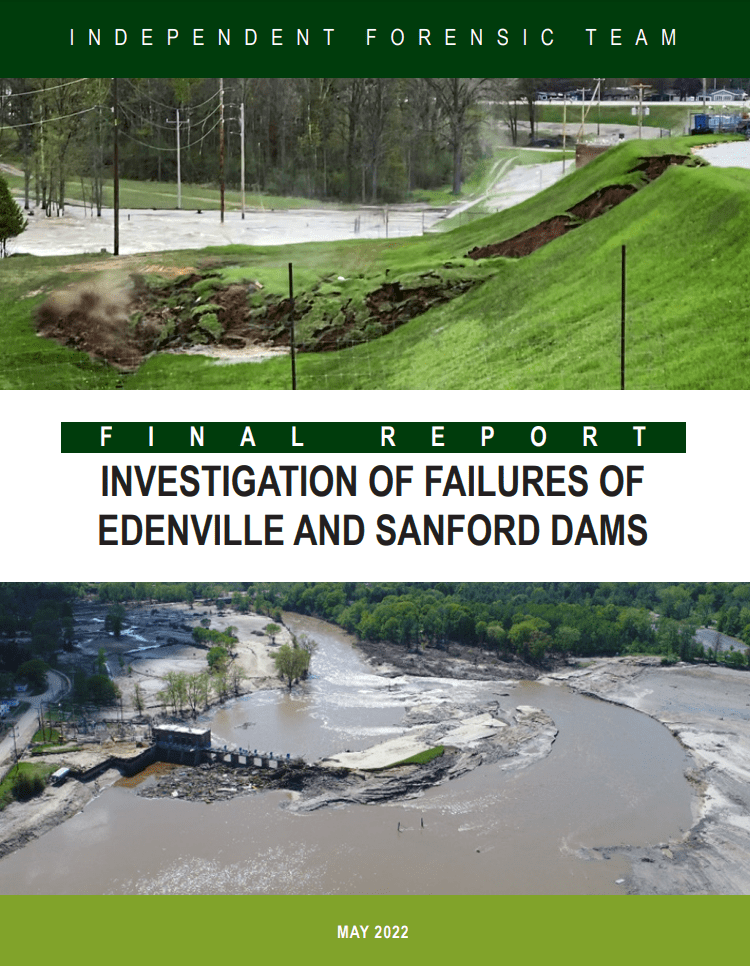
Feature image:- Damaged Annamayya dam on Cheyyeru river in Kadapa (Source:NaveenReddy@navin_ankampali)

After Pulichintala dam gate disaster[i] of August 05, 2021, the state of Andhra Pradesh has witnessed another dam induced flood disaster in 2021. This started with, part of Annamayya dam in Pennar (also called Penna) river basin[ii] getting washed away resulting in widespread destruction in downstream areas on November 19.

Around same time, there were more incidents of damages to dams and dam induced flooding in Kadapa, Chittoor, Anantapur districts of Rayalaseema and adjoining Nellore district. Firstly, the collapse of Pincha project ring bund contributed to Annamayya flood disaster. Then, one of metal bund of Mylavaram project was washed away.

Fourthly, the sudden releases from Veligallu and Buggavanka dams in Kadapa and Kalyani dam in Tirupati resulted in flash flood destruction in downstream areas. Apart from this, the leakages in Rayalacheruvu tank bund in Chittoor district could have turned into a big disaster.

Continue reading “Andhra Pradesh: Dam Induced Flood Disaster in November 2021”
Fish, Fisheries, Fisherfolk

WFD 2021: Of looming & existing threats on fish & fisherfolks

The fish species, fisheries sector and fisherfolk communities in India and South Asia have been undergoing a whole range of anthropogenic threats, sustainability challenges amid turbulent climatic factors casting a complex and uncertain impacts on the overall wellbeing of their future and survival. As part of World Fisheries Day (WFD) 2021, SANDRP has been tracking the critical issues. In first two parts of three part series we have already put together incidents of mass fish death and positive developments taking place in past one year.

This third and final part of the 2021 series focuses on remarkable ongoing resistance by fisher-folks showing constant struggle and firm determination. The report also covers relevant studies underlining adverse impacts of dams, hydro projects and climate change on freshwater fish and dependent fisherfolks. It has briefs on how impacts of pollution and encroachment of water bodies, mining, coastal zone development, invasive fish, aquaculture is gradually going up along with concerns and efforts to address them. Some of the pro and anti-fish, fisherfolks decisions by central and state govts are also compiled here.  

Continue reading “WFD 2021: Of looming & existing threats on fish & fisherfolks”
DRP News Bulletin

DRP 291121: Pathetic State of Sabarmati River Front in Ahmedabad

This photo from the Gujarat Samachar newspaper of Ahmadabad on Nov 25, 2021 depicts the reality of Sabarmati River Front Development. It shows that the growth of weed water hyacinth spread all over the stagnant, polluted river channel that is no longer a river. It says the boat service (running into losses) and AC Cruise services have stopped. There is no place for sea planes to land due to the growth of the water hyacinth, but the government has asked for permission to run two sea planes! There is the big issue of pollutants from industries and Ahmedabad flowing into the river that the Gujarat High Court is dealing with (see below).

Similar photos also appeared on the same date in two more Ahmedabad based two newspaper: Dainik Bhaskar and Nav Gujarat Samay, reinforcing the pathetic state of Sabarmati River Front.

Is there any doubt that all River Front Development projects are likely to face similar or worse fate than this? The situation could worsen in near future as both Sardar Sarovar Dam on Narmada and Dharoi dam on Sabarmati in the upstream of Ahmedabad have insufficient storage. In a related development, Rajasthan is threatening to stop flow of 45 TMC water to Mahi Dam, it is pertinent to note that Sabarmati also flows from Rajasthan to Gujarat.

Continue reading “DRP 291121: Pathetic State of Sabarmati River Front in Ahmedabad”
DRP News Bulletin

DRP 221121: Dangerous competitive populism in Karnataka in the name of Mekedatu Dam

(Feature Image:- Explainer: What is the Mekedatu dispute between Tamil Nadu & Karnataka? The News Minute)

A very dangerous competitive populism in Karnataka is going on in the name of Mekedatu dam on Cauvery River in the name providing drinking water to Bangalore and other surrounding areas. BJP, the party in power as well as the opposition parties like Congress and JD (U) are indulging in activities to outdo each other in showing their support for the project. Unfortunately, we see very little informed debate on the need, optimality, justification or possible alternatives to the project or the hydrologic, legal, environmental justification or any discussion if such a project is at all appropriate in the context of changing climate. Unfortunately, even media has not painted itself in glory on this issue. The following article is like a whiff of fresh air in such a situation. Hope the civil society friends will take up an informed debate on this issue.   

Continue reading “DRP 221121: Dangerous competitive populism in Karnataka in the name of Mekedatu Dam”
DRP News Bulletin

DRP 151121: District Level Vulnerability Assessment in India

This is the kind of study that was long overdue. In fact such a study should have been done before formulating India’s National Action Plan on Climate Change (NAPCC) as SANDRP has been saying since 2009 (see SANDRP critique of NAPCC published under the title “THERE IS NO HOPE HERE) when NAPCC was made public by a dozen wise individuals sitting in a room without any participatory or transparent exercise. One hopes that India will restart the exercise of fresh formulation of NAPCC after doing such a study on an urgent basis, on the lines of the study described below. In any case one hopes the union and state governments will wake up and take up District level vulnerability assessment in India in an independent way on urgent basis.

“This study undertakes a first-of-its-kind district-level vulnerability assessment of India, which maps exposure, sensitivity, and adaptive capacity using spatio-temporal analysis. To do this, we developed a climate vulnerability index (CVI) of Indian states and Union Territories (UTs). Instead of looking at climate extremes in isolation, we map the combined risk of hydro-met disasters and their compounded impacts on vulnerability. By doing so, we aim to inform policy goals in the resource-constrained context of India.

Continue reading “DRP 151121: District Level Vulnerability Assessment in India”
DRP News Bulletin

DRP 081121: Is heavy rain ALONE to be blamed for flooding in Chennai?

In past couple of days heavy rains have caused significant flooding in several areas of Chennai. While weather bloggers claim the rains were unusual and combination of several atmospheric factors, however the same can not be blamed for flooding in several residential areas, roads and other public spaces. Like common problem afflicting several urban centers across the country, Chennai is no exception to gradual encroachments of water bodies, wetlands, drainage channels and common lands.

Apart from lack of synchronization of hydrological factors in infrastructural projects, the urban water governance system is still missing despite the devastating 2015 flood event. Moreover the systematic and ongoing destruction of Ennore Creek which includes floodplain and wetlands of Adyar and Koshthiyar rivers has made lakhs of river, wetlands dependent people victims of such avoidable disasters.

Continue reading “DRP 081121: Is heavy rain ALONE to be blamed for flooding in Chennai?”
DRP News Bulletin

DRP 011121: Why is Ganga not ENTHU about Ganga Utsav?

The Government of India, through the National Mission for Clean Ganga (NMCG) under the Union Ministry of Jal Shakti has announced the celebration of Ganga Utsav this year from Nov 1-3, 2021. The Ganga Utsav is supposed to mark the anniversary of announcement of River Ganga as the ‘National River’ i.e. 4th November, 2008. It is supposed to be celebrated not only in Ganga basin, but across the country as River Festival. There is little enthusiasm or even knowledge about this across the country or even in Ganga basin, though.

Ganga River itself continues to face the onslaughts all across the basin in the name of development, some noteworthy aspect of these include: pushing unviable hydropower project in the upstream; pushing disastrous projects like the Lakhwar Dam project and the Ken Betwa River Link project in the Ganga basin; construction of Char Dham and other highways without any assessment of impacts of the project on the river; construction of huge infrastructure along the river in the name of Ganga waterway, further impacting the river and its biodiversity, again without any impact assessment or participatory decision making; continuously increasing water extraction, diversion, use, pollution and dumping of solid wastes along the river; increasing and indiscriminate sand and boulder mining and quarrying from the river bed and floodplain, without any credible impact assessment; increasing encroachments into the river bed in the name of solid waste dumping, river front development, channelisation etc, in absence of any policy, rules or regulation about the space belonging to the river, to name a few. No wonder, the rivers in the Ganga basin has shown no enthusiasm for the Ganga Utsav!

Continue reading “DRP 011121: Why is Ganga not ENTHU about Ganga Utsav?”
Agriculture · Climate Change · Kerala

Paddy farming in times of climate change – field notes – A sequel

Guest Article by Dr. Sreeja KG and Dr. Madhusoodhanan CG

Climate change and its impacts in the tropics are changing the once familiar landscapes, once certain weather patterns, once secure living spaces beyond recognition. The disasters that can be as local as a tidal surge to national level episodes of cyclones, wildfires and massive floods are being managed in the same administrative mode as has been the practice during the more forgiving past: without training, without relevant real time information, without involvement of the communities and often merely with the strong will and dedication of the field staff and local volunteers. With events far in between, episodic and with time to recoup, we have been spared total and irrevocable breakdown of the system and society. But for how long?

Continue reading “Paddy farming in times of climate change – field notes – A sequel”
Disasters · Floods

Kerala and Uttarakhand floods in Oct 2021: Did the forewarnings help?

The October 2021 flood disasters in two ends of India, in Kerala and Uttarakhand have a lot common. Both happened after the end of normal dates of South West Monsoon 2021. In both cases it is repeat of earlier such disasters in respective states. In both cases, there were reports by expert reports warning about the disasters. In both cases the rainfall events were broadly along the lines warned by the climate scientists, but in both cases the state was ill prepared to cope with it. In both cases, inappropriate human interventions have worsened the disasters in major ways. And in both cases disaster management seems to be absent from ground. In both cases, more precise forecasts about the rainfall quantum and location would have helped. (Feature Image above is from The Hindustan Times, Oct 23, 2021)

Continue reading “Kerala and Uttarakhand floods in Oct 2021: Did the forewarnings help?”
DRP News Bulletin

DRP 251021: J&K HC concerned about Sindh River

(Feature image: Sindh river seen from Duderhama bridge. Source Wikipedia.)

In a noteworthy development this week, on Oct 21, 2021, the Jammu & Kashmir High Court bench of Chief Justice Pankaj Mithal and Jutice Sanjay Dhar has sought reports about the Sindh River from Secretaty Revenue and Seccretary Irrigation & flood control by Nov 15, and both officers have been directed to be present in the court. The HC has been following up on this issue through earlier orders on Sept 18, Aug 12. The High Court has been asking for demarcation of Sindh River in Ganderbal district of J&K and removal of encroachments.

The River originates in the Machoi Glacier at an elevation of 4800m east of the Amarnath temple and south of the Zoji La and passes through the alpine hill station Sonmarg. The river is facing the worst kind of pollution through constructions- hotels, tourist hut, resorts etc – being undertaken at various places on the river beds and floodplains. The River is the natural habitat of trout, and other fish, the most famous among them are: brown trout, rainbow trout, snow trout, Shuddgurn and Anyour. The River also suffers from mechanised mining and pollution.

Continue reading “DRP 251021: J&K HC concerned about Sindh River”