DRP News Bulletin

DRP 071122: Increasing focus on Urban Rivers; they continue to face destruction

(Feature Image Source: Question of cities)

It is good to see that focus on Urban Rivers is increasing not only in media, but also by the government. The focus of the latest edition of “Question of Cities” is on Urban Rivers, carrying articles on, beside the lead article by SANDRP coordinator, Article “Rivers & Cities”, Sabarmati (Ahmedabad), Mula-Mutha (Pune), on River Centric Urban Planning Guidelines from Union Ministry of Housing and Urban Planning. In addition, this SANDRP DRP update also carries articles on Dravyawati River of Jaipur, Godavari river in Nasik and a report on Mandakini river in Badrinath.

All this increased focus is welcome, but will be worthwhile only when we see an effective impact of this on rejuvenated Urban rivers. We have yet to see that. In fact, if at all, the movement is hugely in opposite direction, with increasing destruction of Urban Rivers.

Continue reading DRP 071122: Increasing focus on Urban Rivers; they continue to face destruction
CWC - Central Water Commission

India’s Rivers Crossing Highest Flood Level in Oct 2022

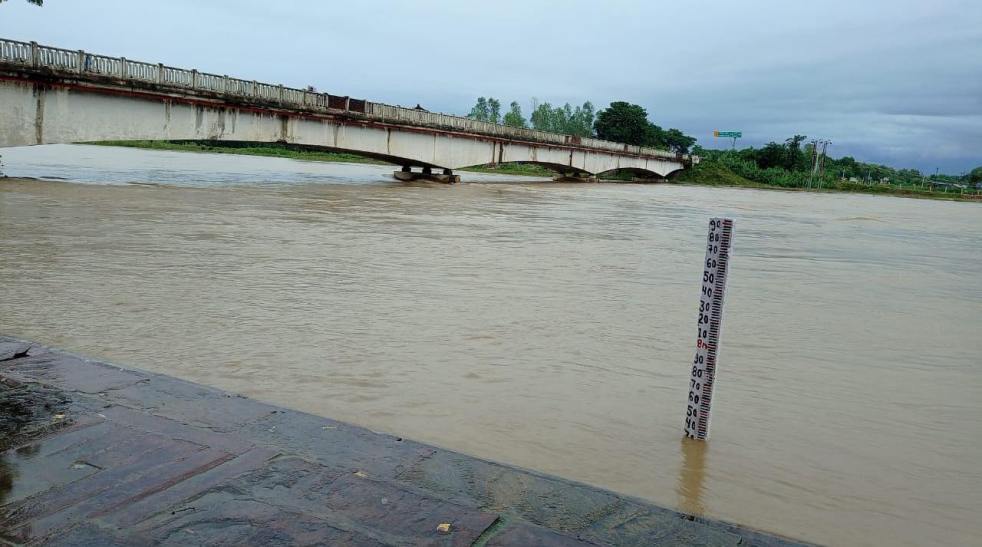
(Feature Image: River Rapti flowing in severe flood situation at Balrampur level forecast site in Balrampur district, Uttar Pradesh on Oct. 07, 2022. Image Source: CWC)

The retreating South West monsoon 2022 witnessed unusual rainfall spells in the first ten days of October eventually resulting in breach of Highest Flood Levels (HFL) at least at 26 stations in the country. In 2021, in entire October, there were just nine instances across India when HFL was breached, compared to 26 already this year. Rainfall across India as on Oct 26 morning as per IMD, is 109.2 mm, already 60% above normal rainfall of 68.3 mm.

26 HFL crossing sites in Oct 2022 comprised of 09 Level Forecast (LF) and 17 Level Monitoring (LM) crossing HFLs. 21 are in Ganga basin, 1 in Narmada basin, 3 in Cauvery basin and 1 is part of East Flowing Rivers (EFR) between Pennar to Kanyakumari basin. Of total sites breaching the HFLs in Ganga basin 13 are in Uttar Pradesh, 3 each in Uttarakhand and Madhya Pradesh and 2 in Bihar.

Continue reading India’s Rivers Crossing Highest Flood Level in Oct 2022
CWC - Central Water Commission · Dams

India’s Rivers Breaching High Flood Levels in SW Monsoon 2022

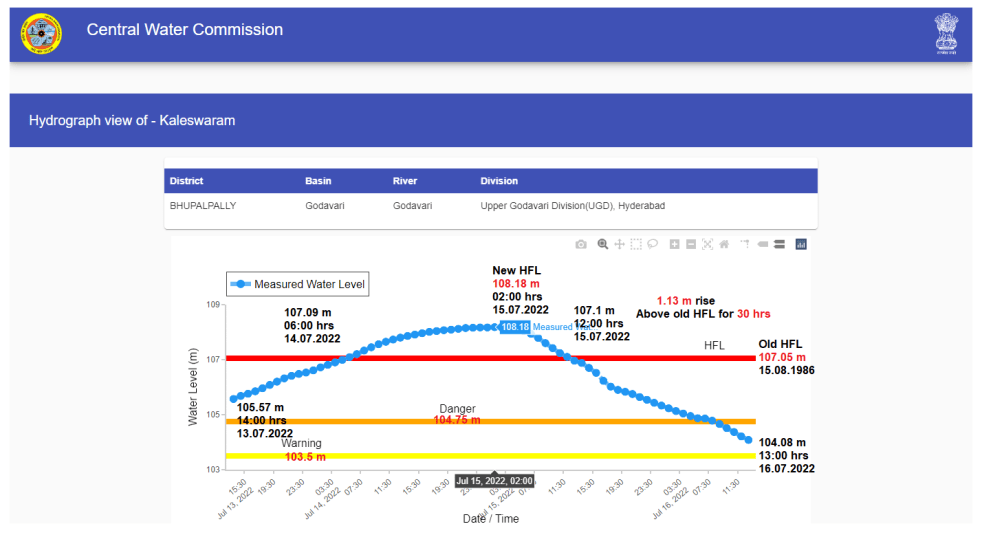
(Feature Image: Hydrograph of River Godavari in extreme flood situation at Kaleswaram level forecast station in Bhupalpally district, Telangana on July 15, 2022. Source: CWC)

Highest Flood Level (HFL) breach incidents are important indicator of flood cycle and could also help in understanding the changing rainfall pattern. Though, with 925 mm rainfall[i], the south west monsoon season 2022 falls in normal category, its distribution both temporally and spatially has seen huge variations. This is also reflected by at least 57 HFL breach incidents in 8 river basin across the country during the SW Monsoon months of July-Sept 2022.

For past four years, SANDRP has been tracking the HFL breach incidents during pre-monsoon and monsoon months. The analysis of such HFL breaches in 2018[ii], 2019[iii] and 2020[iv], May-Sept 2021[v], Oct.-Nov 2021[vi] can be seen on our website. The pre-monsoon months of May and June 2022[vii] have also seen 5 HFL breach incidents. This report tracks the other HFL breach incidents taking place between July and September months.

Continue reading India’s Rivers Breaching High Flood Levels in SW Monsoon 2022
DRP News Bulletin

DRP 190922: Dams bringing unprecedented changes to the World’s Rivers

A new study published this week once again highlights not so well known impact of large dams on the rivers: role of rivers in building, supplying sediment, nutrients to floodplains, deltas, coastlines, estuaries, oceans and supporting so much biodiversity and how large dams are majorly adversely impacting this role of rivers. The study by scientists at Dartmouth using images from the NASA-US Geological Survey for 414 of the world’s largest rivers show the unprecedented changes the dams are bringing to World’s rivers, the impacts that in many cases are outweighing the impacts of climate change. This is particularly true of the northern hemisphere that includes India, World’s third largest dam builder.

Unfortunately in India, there is very little appreciation or acknowledgement of this role of rivers and how dams are affecting it. The least one can expect is that the Government of India should urgently initiate a study to document and understand this phenomena and also highlight what needs to be done about it. The study should be done by an independent team of multidisciplinary experts.

Continue reading DRP 190922: Dams bringing unprecedented changes to the World’s Rivers
CWC - Central Water Commission

Monsoon 2022: CWC Changing HFLs in Ad-hock Manner

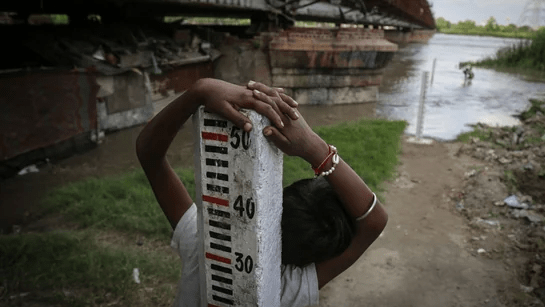
(Feature Image: Pillar with flood level marked on the bank of Yamuna river at Old Railway Bridge level forecast site in Delhi. Source:- Sanchit Khanna/HT Photos)

During monsoon season, Centre Water Commission’s (CWC) carries flood monitoring and forecast work through a network of 332 stations[i] covering 20 major river basins. The stations are comprised of Level Forecast (LF), Level Monitoring (LM) and Inflow Forecast (IF) sites. The LF sites have Warning Level (WL), Danger Level (DL), Highest Flood Level (HFL), date of HFL information while LM sites maintain HFL and HFL date records. At IF sites flood level for respective dams/ barrages with inflow, out flow figures are measured and forecast is issued accordingly.

However, there are plenty of concerns plaguing CWC’s flood forecast and monitoring work across country for years. In this 2022 SW monsoon season, the agency has exhibited one more problematic tendency which exhibits not only its careless approach vis-a-vis keeping accurate information of HFL breach events, but it also seems strange that it realises it has giving wrong HFL level and date information mostly only after crossing the HFL now. 

Continue reading Monsoon 2022: CWC Changing HFLs in Ad-hock Manner
DRP News Bulletin

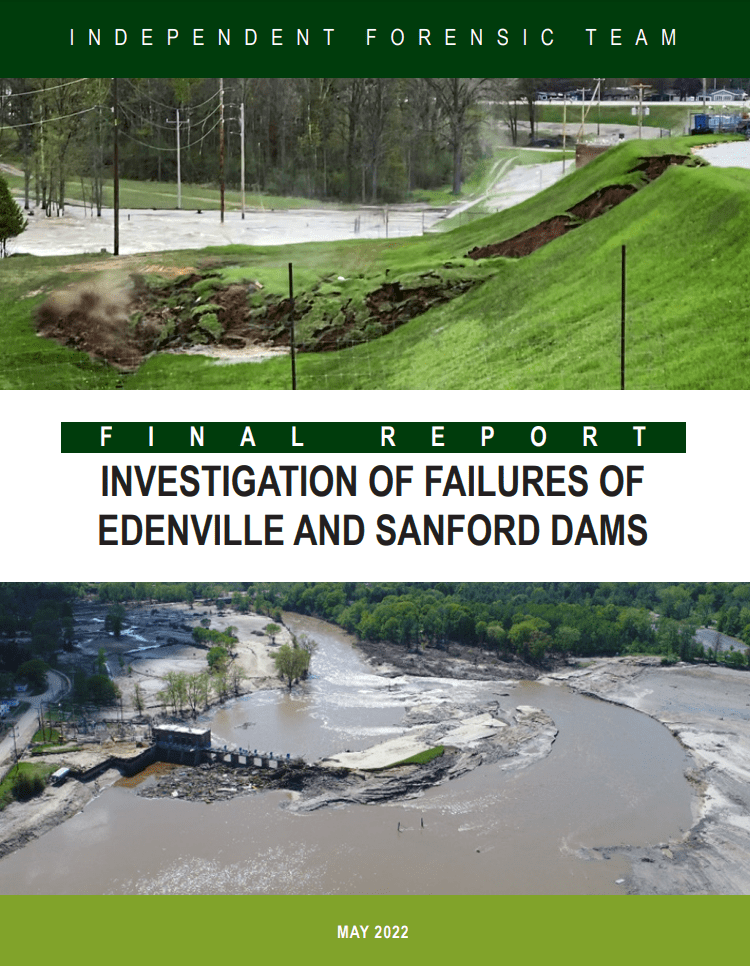
DRP 09 May 2022: Forensic Team report: Michigan 2020 Dams failures were preventable

A Forensic engineering Team appointed by the USA’s Federal Energy Regulatory Commission post the May 19, 2020 failure of Edinville and Sanford Dams in Michigan state of USA has published a 502 page comprehensive report on the dam failure within less than two years of the disaster. The full report published on May 4, 2022 is in public domain and has concluded that the dam failures were foreseeable and preventable.

There are a number of things we can learn from this. Firstly that there are such credible independent assessment of dam failures, we have none in India even after multiple dam failures each year. Secondly, such assessments are promptly in public domain. Thirdly, the reports are completed in less then two years. We have none of these. Even the Dam Safety Act passed by the parliament does not have provisions for any of these.

There are a lot of implications for India here. It means for example that we will never know the real reasons for the dam related disasters. Secondly, we won’t be able to learn any lessons. Thirdly we will never be able to improve the governance of our dams and rivers. Fourthly, we won’t be able to fix accountability.

There is so much at stake related to governance of our dams, but we seem completely unconcerned about it. There is a lot we can learn from others here.

Continue reading “DRP 09 May 2022: Forensic Team report: Michigan 2020 Dams failures were preventable”
DRP News Bulletin

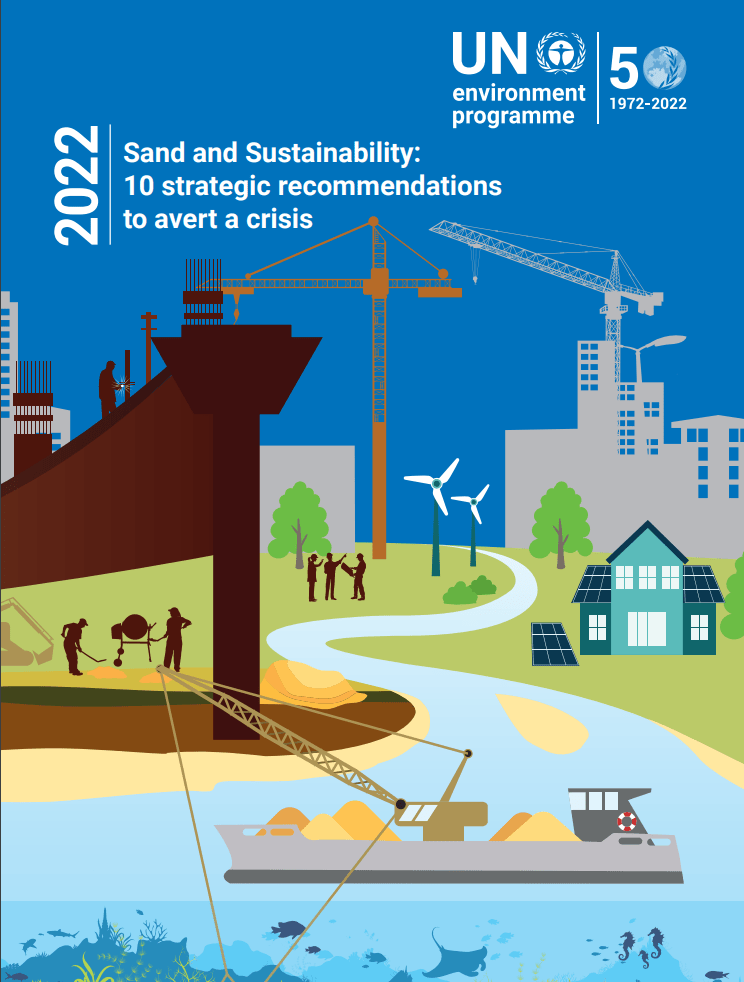
DRP 02 May 2022: Sand a strategic resource like water, rethink its exploitation: UN

A United Nations report released this week on Apr 26, 2022 has recommended that river sand needs to be considered by the governments as a strategic resource like water for its multiple roles in the environment and its extraction and use needs to be rethought. The UNEP report says sand is the second most exploited resource. And yet there are no credible governance guidelines or policies for the exploitation and use of this report, nor assessment of impact of unsustainable exploitation.

The report says: “Extracting sand where it plays an active role, such as rivers, and coastal or marine ecosystems, can lead to erosion, salination of aquifers, loss of protection against storm surges and impacts on biodiversity, which pose a threat to livelihoods through, among other things, water supply, food production, fisheries, or to the tourism industry.”

Continue reading “DRP 02 May 2022: Sand a strategic resource like water, rethink its exploitation: UN”
DRP News Bulletin

DRP 18 April 2022: Clean Hydro does not make much sense in India: Experts

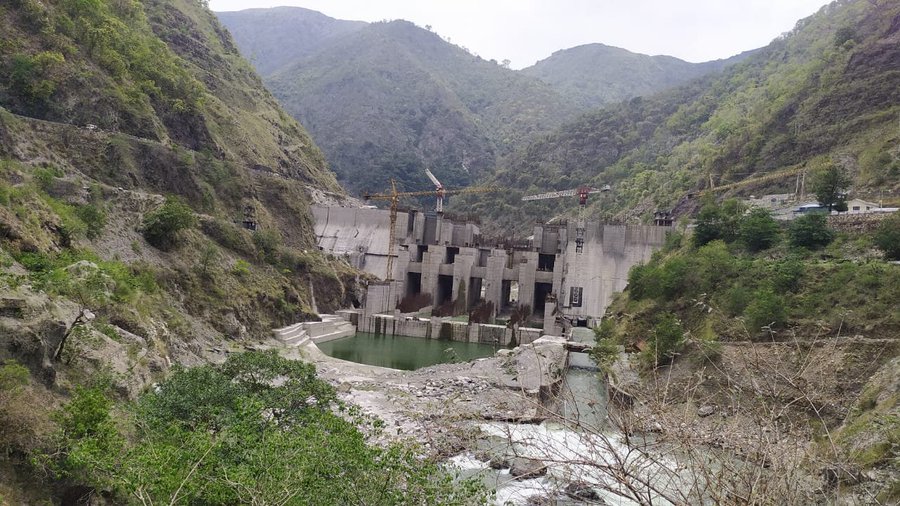
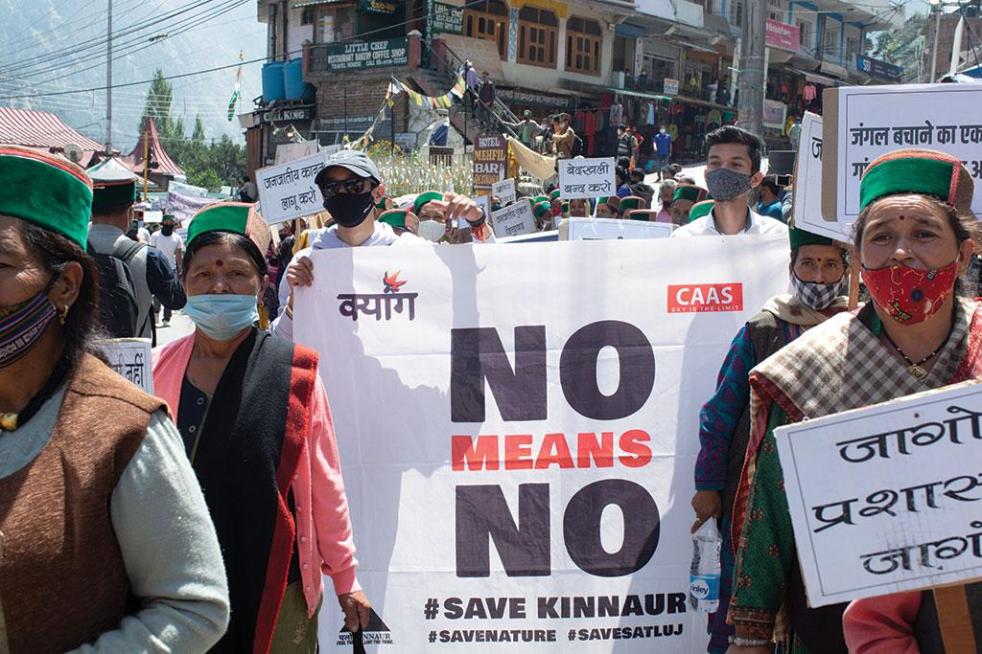
(Feature image:- Following massive landslides in Kinnaur, Himachal Pradesh sees growing protests against hydropower projects. DTE)

As the following report from Energy Monitor this week says, according to international experts, the idea that hydro is clean does not make sense. They say that for a number of reasons including for the social risks, environmental risks and the increased emissions of methane due to rotting of organic matter flowing in the river and settling in the reservoirs. In spite of some apparent inherent misconceptions, this part of the report is sound and should be a wakeup call for the supporters of big hydro in India. As the report suggests this is particularly true in the context of climate change. Indeed, this has been our own experience in India with increasing disasters related to hydro projects and the increasing unviability of the hydro projects in India.

Continue reading “DRP 18 April 2022: Clean Hydro does not make much sense in India: Experts”
DRP News Bulletin

DRP 11 April 2022: Ken Betwa Affected people protest land acquisition

The residents of about 15 villages affected by the Ken Betwa link project are opposing the land acquisition process being initiated in violation of all norms have opposed the move. The notices have not been pasted in the affected villages, gram sabhas have not been conducted and the information promised in the notice is not available at the designated places. When question, the Madhya Pradesh officials have responded arrogantly. The history of manipulations and violations that has been the norm every step of the way in Ken Betwa Project continues. In fact the project does not have final forest clearance, its wildlife clearance has been questioned by the Supreme Court appointed Central Empowered Committee and its Environment clearance is under challenge before the National Green Tribunal. In absence of the clearances, the land acquisition should not even be started if there is any place for prudent norms in such projects. It would be best if the government stops the process and starts it only if and when it gets all the clearances and after taking all the concerned into confidence through a prudent confidence inspiring process.

Continue reading “DRP 11 April 2022: Ken Betwa Affected people protest land acquisition”
DRP News Bulletin

DRP 14 March 2022: 25th Anniversary of International Day of Action for Rivers!

14th March is celebrated as International Day of Action for Rivers since 1997 after the resolution at the 1st International meeting of People Affected by Dams in Curitiba, Brazil. At this meeting of Dam affected people from 20 countries (including India) it was decided to celebrate this day as the International Day of Action Against Dams and For Rivers, Water and Life. It is thrilling to see the celebration continuing and spreading on 25th anniversary of that meeting. The focus this years is on Rivers for Biodiversity. To illustrate how the celebration of this day has spread, in 2021, even during pandemic, the day was celebrated with over 120 events in 32 countries. For details, see: https://www.internationalrivers.org/take-action/international-day-of-action-for-rivers/.

Continue reading “DRP 14 March 2022: 25th Anniversary of International Day of Action for Rivers!”