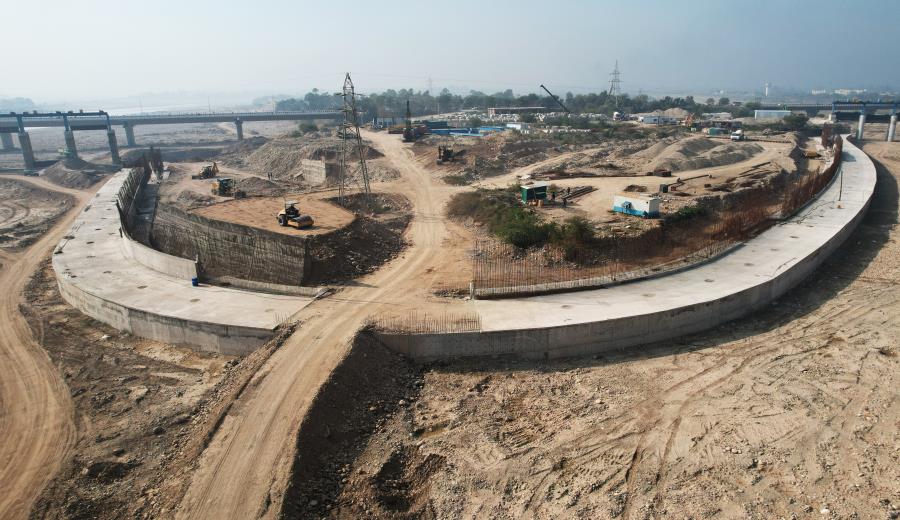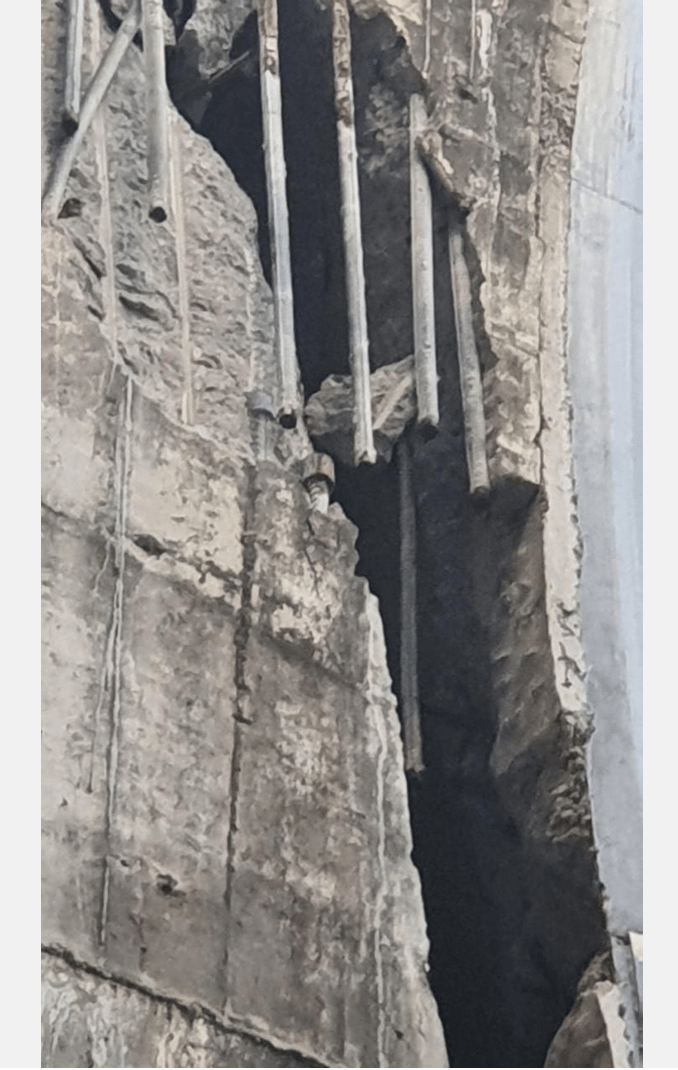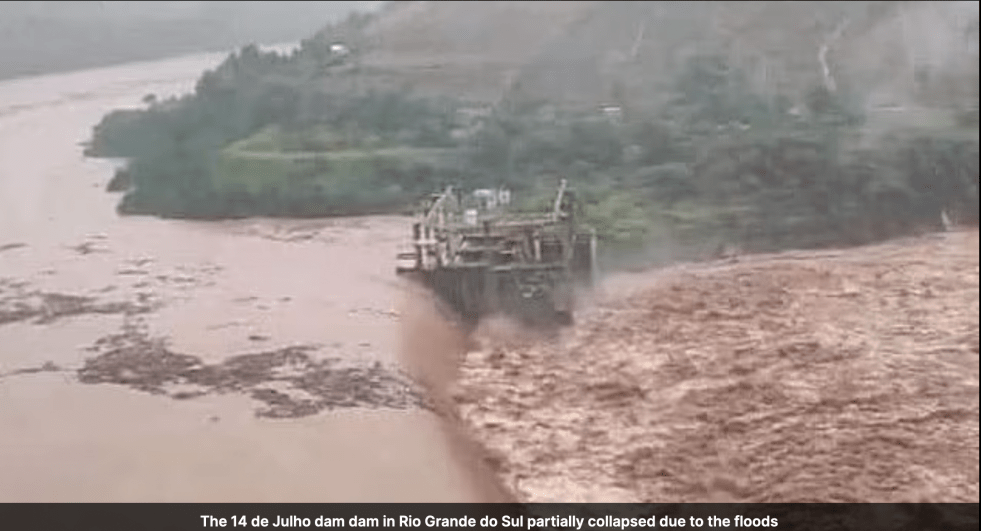
India’s Dams and decommissioning As per the Parliamentary Committee for Ministry of Jal Shakti, in its 20th report dated March 2023[i], the committee had asked the Department of Water Resources, River Development & Ganga Rejuvenation under the Ministry of Jal Shakti about the mechanism put in place in India to assess the viable lifespan and performance of dams and projects, which has a direct bearing upon the consideration for dam decommissioning. The Department had replied: “There is no mechanism to assess the viable lifespan and performance of dams… However, no information/recommendation from the dam owners has been submitted for de-commissioning of any of their dams.”
Continue reading “Why India needs Dam Decommissioning policy and program”2023: People’s Protests Against Hydro & Dam Projects in India
(Feature Image: Joshimath locals take part in a protest rally against the NTPC project in landslide-hit Joshimath town of Chamoli district, Uttarakhand. PTI Photo/Source: Financial Express)
This yearend overview compiles the ten remarkable reports on community led protests against dam and hydro power projects in India in 2023. The report also covers some important judicial and government decisions regarding dams related issues during the year. It further compiles some relevant reports which significantly highlight bleak future of hydro and dam projects due to persistent decline in power generation, rise in construction cost and corruption issues. The first part of the overview detailing on dams and hydro projects related disasters in 2023 can be seen here.
Continue reading “2023: People’s Protests Against Hydro & Dam Projects in India”Book Review: An odyssey through waterbodies
Guest Article by: Abhilash Khandekar
Book Review : “Shades of Blue—Connecting The Drops In Cities” by Harini Nagendra & Seema Mundoli, Penguin/Viking, Pages: 334, Price: Rs 499/-
The scarcity of water, how we use and misuse it and thus the very importance of this very precious resource is yet to dawn upon most Indians. Not that different awareness campaigns in various parts of the country are not held regularly. The media stories about deep water crisis, the plight of most of our rivers and lakes is all known yet criminal neglect of the water sector continues. Be it drinking water in our homes or hotels and other uses like factories, agriculture–all come from the very limited fresh water available to the mankind—0.5%. Over 96% water lies in seas and oceans and is salty; of the 3% of fresh water available, much is locked up in ice, snow and glaciers. So, the humankind have to rely only on the 0.5% water for survival. Authors Harini Nagendra and Seema Mundoli teach sustainability at the Azim Premji University, Bengaluru. They have already published highly readable book—Cities and Canopies which talk about a select important species of trees mostly found in urban areas.
Continue reading “Book Review: An odyssey through waterbodies”Dams Decommissioning going up globally
All large dams have finite life. What happens to the dams once the useful life of a dam is over? It would need to be decommissioned. Decommissioning of a dam generally refers to[i] complete removal of the dam and its associated structures. This is a very relevant question for India as the third largest dam builder of the world. It becomes even more important as large dams are no longer required or are no longer viable and importance of a flowing river is increasingly appreciated. It needs to be kept in mind that a dam cannot be allowed to remain on the river, without proper maintenance, as such a dam would remain a huge safety hazard for society and economy downstream from the dam.
Continue reading “Dams Decommissioning going up globally”2023: Accidents & Damages to Hydro, Dam Projects in India
(Feature Image: The damaged Chungthang dam on Teesta river in North Sikkim. Source: The Telegraph)
This annual overview compiles the incidents of accidents and disasters that have caused significant damages to the hydro power and dam projects and around them in India during 2023. The report also highlights the incidents of violations of environmental norms at some under construction project sites which could result in manmade disaster in future.
Continue reading “2023: Accidents & Damages to Hydro, Dam Projects in India”DRP 111223: NMCG failure: Wither Ganga Rejuvenation?
(Feature Image: Najafgarh drain at Wazirabad barrage Delhi in June 2023. Bhim Singh Rawat/SANDRP)
A careful reading of the PIB release on the statement of Minister of State for Jal Shakti, Shri Bishweswar Tudu in Rajya Sabha on Dec. 04 regarding Namami Gange Program shows that the NMCG has actually failed to make any significant improvement in cleaning of River Ganga so far. Firstly, the program has been extended upto March 2026 without any course correction during its first 7 years of implementation between June 2014 and March 2021.
Secondly, the program since beginning has primarily been focusing on creation and upgradation of sewage treatment capacity and river bank infrastructures without even looking into the root causes including ineffective and undemocratic governance affecting the ecosystem of Ganga rivers let alone the questions of addressing them.
Continue reading “DRP 111223: NMCG failure: Wither Ganga Rejuvenation?”DRP 041223: Groundwater recharge increased in India?
(Feature Image: Cover photo of the National Compilation of Dynamic Ground Water Resource Assessment Report by CGWB)
There are at least two headline numbers of Government of India’s Dynamic Groundwater Resource Assessment Report 2023 released by Union Minister on Dec 2 2023, that seem counter intuitive and misleading. These are exactly the issues we also raised about the 2022 report too. Firstly, the PIB Press Release that accompanied the report release says India’s annual groundwater recharge in 2023 has increased by 11.48 BCM compared to the same in 2022.
Secondly, it says the groundwater situation has improved in at least 226 of the 6553 assessment Units across the country. Both seem counter intuitive and possibly misleading in the face of increasing groundwater use, depleting levels, worsening quality of groundwater and our increasing over dependence on groundwater.
Continue reading “DRP 041223: Groundwater recharge increased in India?”Lessons for Other River Basins from the Cauvery Dispute
Guest Article by Prof Bhakti Devi
Numerous articles have cropped up explaining the reason behind the Cauvery water inter-state dispute. A remarkable thing to note in these explanations is that every one of the articles focuses on the volumetric allocation of water. Even the documents relating to legal agreements between the two states on how the water of the Cauvery River will be shared focus on the volumetric distribution. Which, on the surface, appears completely logical but seems illogical when you understand the science of how a river gets its water which is the elephant in the room.
Continue reading “Lessons for Other River Basins from the Cauvery Dispute”Preserve the Ecological Integrity of Rivers – statement on Pune River Front development by India River Week 2023
India Rivers Forum (IRF) is a vibrant and active network of organizations and individuals that is committed to the conservation and safeguarding of our rivers against needless and detrimental development. Every year IRF organizes the India Rivers Week (IRW) to raise awareness regarding these issues. This year IRW, organized in Pune, brought together more than 100 practitioners, including representatives from academia and civil society movements, to discuss River Front Development (RFD) unfolding in different parts of the country.
Continue reading “Preserve the Ecological Integrity of Rivers – statement on Pune River Front development by India River Week 2023”DRP 271123: India Rivers Week 2023
(IRW 2023 organizers, participants visiting Pun RFD project on Nov. 26, 2023. Image Source: India Rivers Forum)
The Tenth India River Week function was organized at BAIF, Pune on Nov 25-26, 2023, with participation of over a hundred people. The focus of the event was on Pune River Front Development (RFD), being pushed by Pune Municipal Corporation, and RFD in other cities around India, and it was strongly critiqued and opposed at the meeting, including by Bhagirath Prayas Samman winners Sarang Yadwadkar and Jeevit Nadi. A field visit of the participants was also organized to the proposed site of the work of the project. (Also see: https://timesofindia.indiatimes.com/city/pune/greens-criticize-approval-rfd-project-pune/articleshow/105523479.cms)
Continue reading “DRP 271123: India Rivers Week 2023”