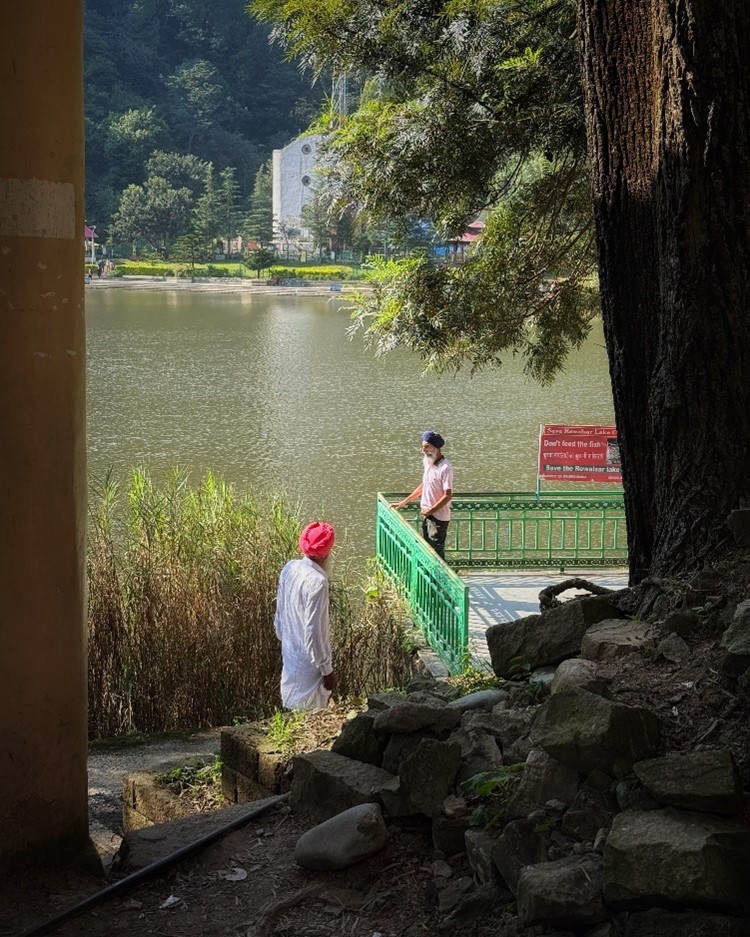
Rivers and lakes of the Indus basin have been at the crossroads of civilizations, trade routes, and ecosystems for centuries. They are surrounded by stories and songs from many religions, languages and tribes. One such river is Beas, celebrated as Vipash[1] or the ‘breaker of chains’ in the Rigveda, circa 1500 BC. Beas originates at 4361 meters near Rohtang Pass[2] and flows through the Himalayan state of Himachal Pradesh before meeting River Sutlej in the plains of Punjab, literally “the land of five rivers’. Beas flows for about 470 kms to water some of the most fertile valleys in the world.
Continue reading “Rewalsar Lake: Where Faiths, Ecosystems and Communities Meet”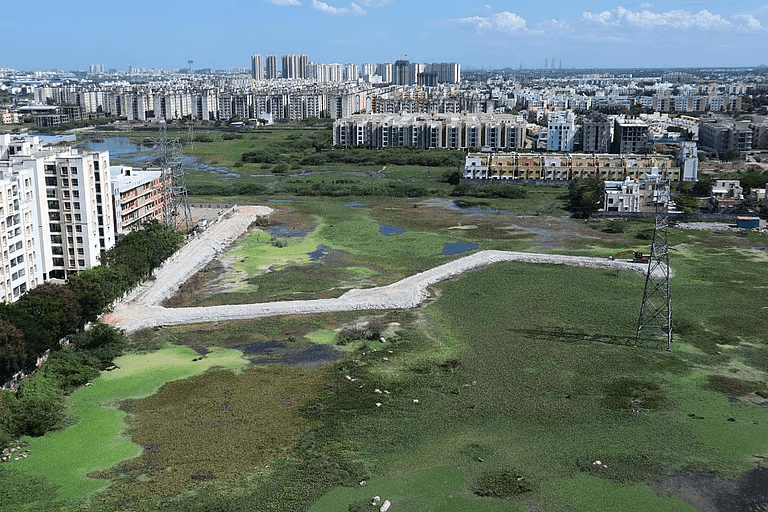
World Wetlands Day 2025: Govts Projects, Apathy Damaging Ramsar Wetlands
(Feature Image: A road is being laid allegedly by a private realtor inside the Perumbakkam marshland. Photo Credit: TNIE, June 2023)
‘Protecting Wetlands for Our Common Future’ is the theme for World Wetlands Day 2025. Wetlands are ecosystems, in which water is the primary factor controlling the environment and the associated plant and animal life.
Indian government seems focusing more on increasing Ramsar wetlands number than ensuring the protection and conservation the existing Ramsar sites in country. Over the past one decade the numbers of Ramsar wetlands in India have sharply gone up from 26 in 2014 to 89 as of January 2025. Amid the thrust to increase the number, several existing or even recently declared Ramsar wetlands across the country have been facing multiple threats mainly due to governmental projects and constant negligence from the concerned authorities as can be seen from the reports from 2024 in this annual overview.
Continue reading “World Wetlands Day 2025: Govts Projects, Apathy Damaging Ramsar Wetlands”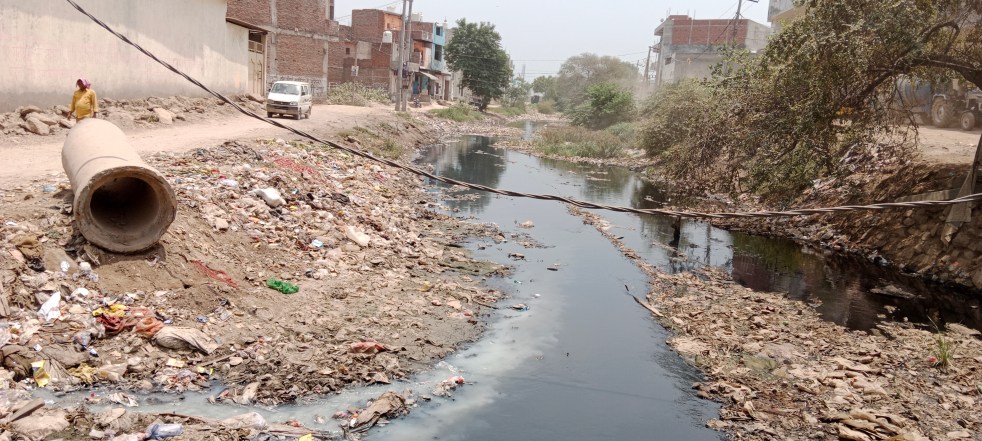
Groundwater 2024: Increasing Contamination: Tip of a Toxic-berg?
(Feature Image: Drain No 6 in Kundli, Sonipat filled with industrial effluents. BS Rawat/ SANDRP/ May 2023)
This annual overview compiles the top ten reports showing the rising contamination of groundwater resources in India during 2024. It includes some shocking facts from Punjab, Himachal Pradesh, Haryana, Gujarat, Telangana, Kerala, Ladakh, Assam, Chhattisgarh, Karnataka and W Bengal, in addition to reports from CGWB (Central Ground Water Board) a Parliamentary Committee. The contaminants reported in groundwater include nitrates, fluorides, arsenic, uranium, heavy metals (Chromium, cadmium, nickel, manganese, selenium, among others), Iron, salinity, among others. Since most people consume groundwater assuming it to be safe, what is reported here is only a tip of the proverbial toxic-berg. The easiest way forward, besides more regular monitoring and improved governance is rainwater harvesting on war footing. However, the government, busy pushing more big dams and interlinking projects, has little real priority for that.
Continue reading “Groundwater 2024: Increasing Contamination: Tip of a Toxic-berg?”
Groundwater 2024: Increasing Impacts of Climate Change
Several studies and reports published during 2024 have underlined the rising adverse impacts of changing climate on groundwater resources in India and globally in multiple ways which will continue to accelerate in future. While the groundwater greatly contributes to river baseflows during lean period, its role in flooding is miniscule comparatively with surface flows in Peninsular India. In North India the drying northwest monsoon and warmer winters have been found driving groundwater depletion by raising demand for irrigation water.
The groundwater is getting warmer, also impacting subterranean aquatic ecosystems. Besides, the rising temperatures are causing more evaporation losses and leading to pumping of more groundwater to compensate for the losses. The extreme rainfall events might speed up fertilizers seeping into groundwater table contaminating it. Similarly, the rising sea level is found fueling erosion in coastal areas and facilitating seawater intrusion of the coastal aquifers. At the same time the decline in low and medium intensity rainfall and warmer weather patterns are reducing groundwater recharge, increasing seawater ingress.
Continue reading “Groundwater 2024: Increasing Impacts of Climate Change”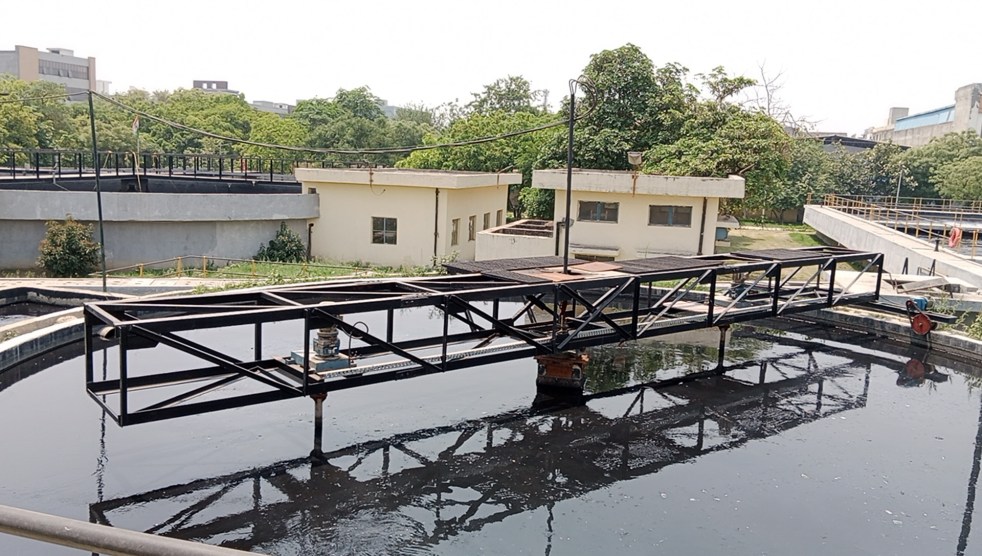
DRP 270125: India’s non-functional Sewage Treatment Plants
(Feature Image: 10 MLD Kundli CETP in Sonipat. BS Rawat/SANDRP/May 2023)
A detailed report in this week’s DRP News Bulletin below shows how India’s Sewage Treatment Plants (STPs), Govt’s main weapon against pollution of rivers in Urban areas, have been a failure for decades. It is pertinent to note that this is the golden jubilee year of Water Pollution Control Act of 1974, that led to the formation of Central, state Pollution Control Boards, and the whole water pollution control bureaucracy, institutions and legal architecture. There should be little doubt that whole architecture has abysmally failed in achieving basic objective for which it was created, including ensuring proper treatment of urban sewage.
India has spent thousands of crores of rupees on these STPs, mostly, mega, centralized projects. But there has been little effort to address governance of the STPs, to ensure that they function as required and provide the results that they have been set up for. Whether they function or not, qualitatively or quantitatively, year after year and decades after decades, there are no consequences! In fact, if treated properly, sewage can become a asset rather than nuisance that it now is. The Judiciary too, right up to the apex court, have badly failed in achieving any improvement in this eminently justiciable issue.
Continue reading “DRP 270125: India’s non-functional Sewage Treatment Plants”
2024 Dam Safety
(Feature Image: Coimbatore Corporation Commissioner M. Sivaguru Prabakaran inspecting the Siruvani dam on January 8, 2025. Photo, Text Source: The Hindu)
This annual overview complies the remaining relevant reports from 2024 concerning safety of dam structures in India. As per a report, the incident of damage to Tungabhadra dam gate in August 2024, raised alarm for other aging dams in Karnataka. In fact, the Bhadra dam also witnessed jamming of a gate due to rust in June 2024. Similarly, the Kabini reservoir has been dealing with a leakage for the past three years. The report further highlights negligence in dams’ monitoring and inadequate expertise and corruption often impacting the quality of maintenance works of dams in the state. As per another report taking sou moto action, the Karnataka High Court in January 2024, banned mining and blasting activities within a 20 km radius of the Krishna Raja Sagara dam in the state.
Continue reading “2024 Dam Safety”
DRP 200125: Whither Env Clearance Rejection rate from Expert Appraisal Committee or MoEF?
A detailed review of functioning of Union Ministry of Environment and Forests’ (MoEF) Expert Appraisal Committee (EAC) on River Valley Projects (RVP) for 2024 by SANDRP shows that the committee or for that matter MoEF has almost non-existent rejection rate. Even when a project is not cleared, when it applies again, it gets clearance, whether the application if for stage I (Terms of Reference) or Stage II (Environment Clearance- EC) clearance. Even in some cases like Pump Storage Projects (PSP) in Western Ghats or the Hydropower projects in disaster prone Himalayas, including the disaster-stricken projects like the 1200 MW Teesta III projects in Sikkim, the scrutiny including field visits by the EAC Sub committees is minimal, not worthy calling even scrutiny.
Continue reading “DRP 200125: Whither Env Clearance Rejection rate from Expert Appraisal Committee or MoEF?”
EAC & FAC Decisions on Dams, Hydro, Irrigation Projects in 2024
This annual overview tracks the minutes of meetings held by Expert Appraisal Committee (EAC) for River Valley and Hydropower Projects between 20 December 2023 and 31 December 2024 for consideration of Dams, Hydroelectric Power (HEP), Pumped Storage Hydro Projects (PSP) and Irrigation related proposals seeking Terms of Reference (TOR) and Environment Clearance (EC) approvals. The analysis also covers various water projects related proposals considered by the Forest Appraisal Committee (FAC) between 15 December 2023 and 26 December 2024 for Forest Clearances (FC).
Continue reading “EAC & FAC Decisions on Dams, Hydro, Irrigation Projects in 2024”
2024: Siltation, Safety & Sustainability of Hydro, Dams in India
(Feature Image: Pune: Pavana, Mulshi, Panshet, and Khadakwasla Dams Release Water Due to Heavy Rain in Catchment Areas. Source: Pune Now News, Sept 2024)
This annual overview focusses on how siltation, muck dumping related issues are affecting the safety and sustainability of Hydropower projects and dams in India. Some of the key dams facing crisis in this regard include Bhakra, Ratle, Gangasagar, Hathnur among others. Some of the states where this issue is acute include HP, J&K, Maharashtra, Telangana, Kerala, Karnataka & Punjab.
Continue reading “2024: Siltation, Safety & Sustainability of Hydro, Dams in India”
DRP 130125: Will Judiciary take these matters to logical conclusion?
There are at least four cases in this past week where the judiciary has used strong words or taken up crucial issues in water, dams, hydropower projects, wetlands and riverbed mining related issues. In the case related to the safety of Mullaperiyar dam on Kerala-TN border, the Supreme Court has prodded the Centre to wake up from the slumber to ensure that National Dam Safety Authority quickly forms a panel to examine the project. This case has wide ranging repercussions not only about this project, but also functioning of NDSA and other bodies under the Dam Safety Act 2021. Indeed, there is huge question mark as to what extent NDSA and DSA has made our dams any safer.
Continue reading “DRP 130125: Will Judiciary take these matters to logical conclusion?” SANDRP