Godavari

गोदावरी ध्वजारोहण : Hoisting Godavari’s Flag this Kumbh

How a citizens’ initiative is protecting the Godavari in Nashik

14th July was the first day of the Simhastha Kumbh Mela in Nashik (Maharashtra), on the banks of Godavari[1] River, the largest river basin of Peninsular India (Godavari’s Story: https://sandrp.wordpress.com/2014/11/24/an-introduction-to-godavari-basin/).  For perhaps more than a thousand years, people have been congregating on the banks of Godavari every twelve years on the occasion of Simhasta Kumbh, making the ghats come alive. Kumbh has a distinction of being the largest peaceful gathering of humans in the world (Peaceful is subjective term. In Nashik Kumbh 2003, 39 people were trampled to death in a stampede and bloody fights between the sects are not uncommon). Continue reading “गोदावरी ध्वजारोहण : Hoisting Godavari’s Flag this Kumbh”

Environment Impact Assessment · Godavari · Maharashtra

Lower Penganga Project: Two decades after inception, the struggle continues…

Lower Penganga, an interstate Maharashtra-Telangana project, proposes to build a dam across River Penganga (a tributary of Godavari river) near Tadsaoli Village in Ghatanji Tehsil of Yavatmal District, Maharashtra to irrigate a massive 2,18,129 ha. It has failed to take off even after two decades of its inception. It is a Vidarbha Irrigation Development Corporation (VIDC) which has been in limelight for corruption and controversies due to over seven fold increase in project cost in just 10 years. In this project contractors with political backing were favored so much so that even the Environmental Impact Assessment of the project was carried out by one of the contractors! The project floated tenders for securing Forest Clearance! The construction was started illegally violating the environmental laws. It is set to submerge around 1000 ha of forest land and affect some 11,000 tribals dependent on it. There has been a decade long struggle of the affected people to protect their rights. Anti Corruption Bureau (ACB) was asked to probe into massive corruption in the project. Continue reading “Lower Penganga Project: Two decades after inception, the struggle continues…”

Alaknanda · Bhagirathi · Floods · Ganga · Mandakini · Ministry of Environment and Forests · Uttarakhand

Two years of Uttarakhand Flood Disaster of June 2013: Why is state & centre gambling with the Himalayas, the Ganga & lives of millions?

Its two years since Uttarakhand faced its worst ever flood disaster during June 15-17, 2013. We remember such tragedies to ensure that we learn the necessary lessons. So that in future such tragedies are not repeated or their dimensions are reduced. One of the enduring debates since that the Uttarakhand tragedy has been about the role of existing and under construction hydropower projects in increasing the proportions of the disaster.

A lot of water has flown down the Ganga in these two years, so let us revisit the important milestones of that debate. Within two months of the disaster, a bench led by Justice Radhakrishnan gave an order on Aug 13, 2013[1], asking the Union Ministry of Environment, Forests & Climate Change (MoEF&CC) to appoint an independent panel to assess the role played by existing and under construction hydropower projects in the disaster. Continue reading “Two years of Uttarakhand Flood Disaster of June 2013: Why is state & centre gambling with the Himalayas, the Ganga & lives of millions?”

Ganga

Book Review: Why call Ganga a Machine?

Guest Blog by Ramya Swayamprakash (ramya.swayamprakash@gmail.com)

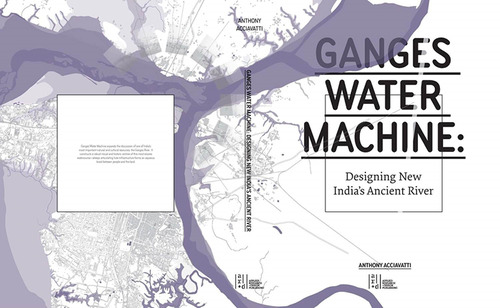
BOOK REVIEW: Ganges Water Machine: Designing New India’s Ancient River. Anthony Acciavatti; Applied Research + Design Publishing, 402 pp, March 15, 2015. ISBN: 9780982622612

I stumbled upon The Ganges Water Machine while looking for literature on urbanization and rivers in India. Written by architectural historian Anthony Acciavatti, the book is the result of a decade long journey through the Ganges basin, “an atlas — a dynamic atlas — of the Ganges Machine: a collection of transects that expose the juxtaposing layers of infrastructure and adjoining landforms” (P8). At a time, when the Ganges is seeing a surge of talk (and perhaps activity) about cleaning the river, this book is a timely inquiry in to how the Ganges river basin came to be the vast agrarian landscape that it is. This is perhaps the first time, the spatial dimensions of the multifarious historical and material processes at play in the Ganges basin with regards to irrigation have been explored. Continue reading “Book Review: Why call Ganga a Machine?”

Climate Change · Dams · Environment · Ganga · Narmada · Rivers · Sand Mining

Dams, Rivers & People: June 15, 2015

HYDROPOWER

Nothing covert about it: We think of northeast India only as a frontier (12 June 2015) BRILLIANT and yet VERY THOUGHT PROVOKING piece from Nitin Sethi: “Take the case of dams in Himalayas. The religious value of Ganga for us in the mainland forces governments to at least pretend to save the river and the people around it from the contract and concrete driven madness. But the same governments do not think twice about displacing entire cultures that flourish in the Brahmaputra basin building the same bumper to bumper dams on the Brahmaputra basin, bending rules regulations and policies for ‘strategic interests’. The irony is lost on us when we cordon leftover lands of these cultures in ‘compensation’ for the loss of ‘India’s’ wildlife and forests to the inundation that follows… We govern their homelands like a frontier – sending out-of-favour governors and officials on punishment postings.” http://www.business-standard.com/article/opinion/nothing-covert-about-it-we-think-of-northeast-india-only-as-a-frontier-115061200799_1.html

Hydropower: Down to a trickle (10 June 2013) Uttarakhand flashflood put a fresh spanner in the works amid concerns over climate change and its impact on rainfall and on river flow and its patterns, which in turn may have an impact on plans for hydropower generation. Most of India’s hydropower potential falls in seismic zone 5, a region classified as highly vulnerable to high-intensity quakes. Even among green projects, hydro takes top billing. In March, during the first half of the Budget session, power, coal and renewables minister Piyush Goyal admitted in the Lok Sabha that uncertainties in the hydropower sector were keeping investors away. http://indianexpress.com/article/india/india-others/hydropower-down-to-a-trickle/#sthash.72LEpqvn.dpuf

NORTH-EAST:  Activists in  Arunachal Pradesh  oppose Centre’s plans  to build dams on Siang river  (12 June 2015) Very apt: “”on the one hand you are diligently busy in Clean Ganga and Save Ganga and on the other hand you are planning a disaster on Siang sitting at Delhi.  ” The forum’s general secretary     Oyar Gao also raised the issue of the river’s sanctity saying that the Siang is referred to as Aane (mother) in the same manner as Ganga Maiya.” http://economictimes.indiatimes.com/articleshow/47642482.cms?utm_source=contentofinterest&utm_medium=text&utm_campaign=cppst

Continue reading “Dams, Rivers & People: June 15, 2015”

Alaknanda · Hydropower

श्रीनगर जलविद्युत परियोजना पर 2013 की तबाही के दो सालों बाद की रिपोर्ट मई 2015

Guest Blog by विमलभाई (bhaivimal@gmail.com)

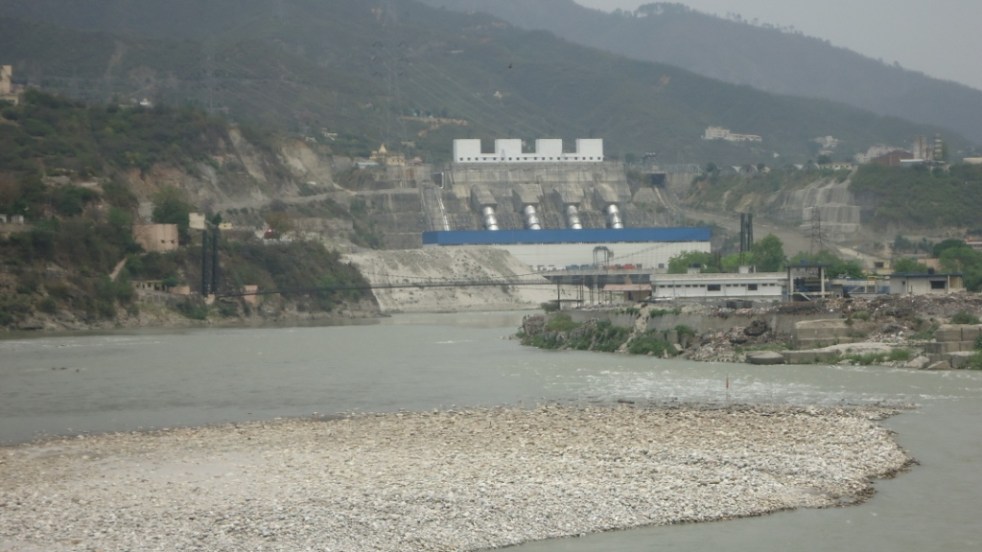
उत्तराखंड में अलकनंदा नदी पर 330 मेगावाट की श्रीनगर जलविद्युत परियोजना बनाने वाली जी0वी0के0 बांध कम्पनी द्वारा लापरवाही से श्रीनगर बांध की मिट्टी डंप नहीं कि गई होती तो जून 2013 में नदी का पानी केवल घरों एंव अन्य जगहों पर आता किन्तु मलबा नहीं आता। लोग अभी तक दो सालों के बाद भी मानसिक, शारीरिक एवं आर्थिक रूप से परेशान एवं अस्त-व्यस्त ना होते।

वैसे श्रीनगर बांध निर्माण में पूर्व से ही काफी कमियां रही हैं तथा इसके पर्यावरणीय पहलुओं पर लोग इलेक्ट्रोनिक व प्रिंट मीडिया के माध्यम से कहते रहे हैं। जी0वी0के0 कम्पनी पर मुकदमें भी हुये, जिनमें से कुछ अभी भी चल रहे हैं। जी0वी0के0 कम्पनी की लापरवाही मीडिया व कई व्यक्तियों द्वारा प्रश्न उठाये गये जो लगातार सच साबित हुये हैं। आज स्थिति यह है कि बांध के खिलाफ केस भी चालू है और बांध कंपनी ने विद्युत उत्पादन भी करना आरंभ कर दिया है।

Continue reading “श्रीनगर जलविद्युत परियोजना पर 2013 की तबाही के दो सालों बाद की रिपोर्ट मई 2015”

Godavari · Interlinking of RIvers · Krishna River · Telangana

Pranahita-Chevella Project: Gargantuan Project with Gargantuan Violations

Can you imagine a project-not any project, perhaps India’s largest irrigation project till date- going on for years without most statutory clearances? Can you imagine a project on which Rs 7000 Crores[1] have been spent already but its Dam height (FRL – Full Reservoir Level) is yet undecided? Can you imagine a project whose canal works are ongoing in full swing, without having any idea of the submergence? Can you imagine a Public Hearing where the Project Engineer says that the meeting is only about compensation not about environmental impacts or fundamental questions? Can you imagine a state which is set to lose thousands of hectares of rich forests, protected areas, villages for a project of a different state, but is happy to oblige? Can you imagine a Ministry which turns a stony Nelson’s Eye to a project continuing right under its nose without Environmental Clearance, Wildlife Clearance or Forest Clearance?

Continue reading “Pranahita-Chevella Project: Gargantuan Project with Gargantuan Violations”

Ganga

Is there any hope for Ganga from IIT Consorium Plan?

Guest Blog by: Chicu Lokgariwar (chicu.l@gmail.com)

Prime Minister Modi on Ganga Banks at Varanasi (NDTV photo)

We have a Prime Minister who, his colleagues claim, is the new Bhagirath. And possibly for the first time, Prime Minister himself called a meeting of ministers and officials on Ganga on January 6, 2015[1]. That possibly seems to indicate that Ganga is government priority. However, their dependence on IIT Consortium to deliver a plan for this does seem to hold much hope for the River.

Continue reading “Is there any hope for Ganga from IIT Consorium Plan?”

Arunachal Pradesh · Assam · brahmaputra

Is government at all serious in addressing the issues raised by Movement against the Lower Subansiri Hydropower Project?

Minutes of Government of India meeting on Lower Subansiri HEP in Dec 2014 rejected by movement:

Shoddy Cumulative impact assessments, lack of public consultations won’t help

Map of Subansiri RIver Basin  Source: https://sandrp.in/basin_maps/Subansiri_River_Basin.pdf
Map of Subansiri RIver Basin
Source: https://sandrp.in/basin_maps/Subansiri_River_Basin.pdf

Continue reading “Is government at all serious in addressing the issues raised by Movement against the Lower Subansiri Hydropower Project?”