Beas · Himachal Pradesh

NHPC negligence leads to man-made disaster in Parbati Valley in Himachal Pradesh

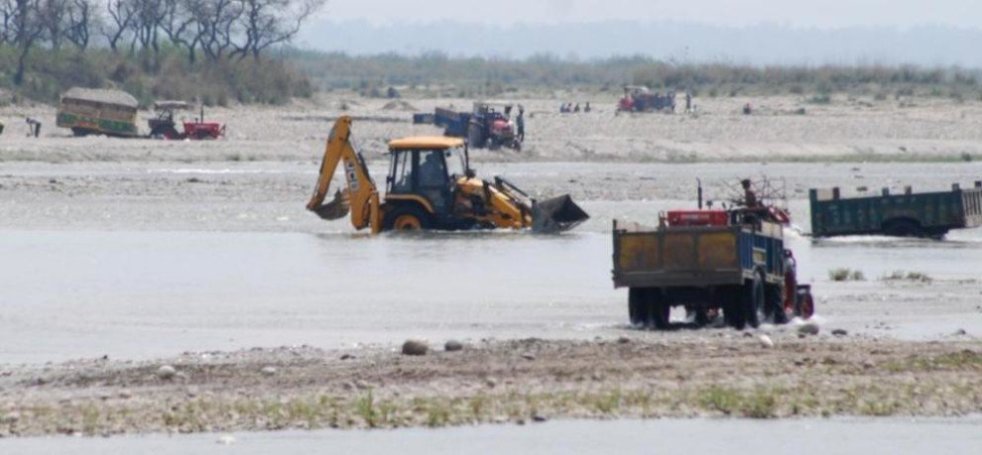
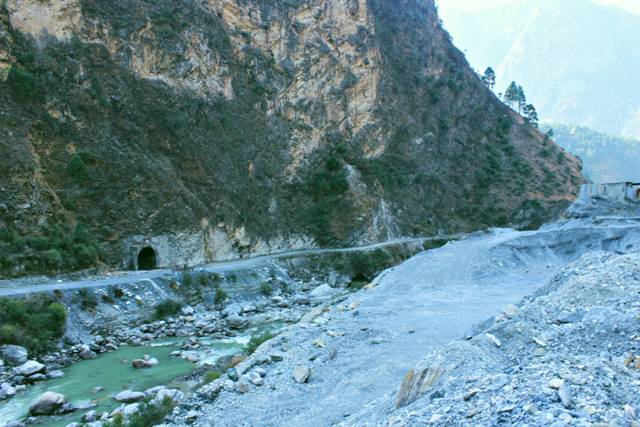
(Above: illegal muck dumping by Parbati HEP along the Sainj River in Himachal Pradesh)

The people of Sainj-Parbati valley in Beas basin in Himachal Pradesh’s Kullu disrict’s Banjar Tehsil are living in constant fear of a disaster. Since six days now, the power tunnel of the NHPC’s under construction 800 MW Parbati II hydropower project is heavily leaking, but NHPC refused to stop water release into the tunnel till the leakage led to landslides and displacement of people. Ultimately on the night of April 17, 2017, huge cracks spread over 200 m appeared in the hills, leading to landslide & fall of soil and rocks, immediately threatening eight families of Rahan (Reina) village, though over 400 families of some 12 villages of Rella Panchayat (including Rella, Sharan, Jiva, Sulga, Khadoa, Rahan, Shalah, Bhebal, Bahara, Bagidhar, Khaul, etc) are facing the prospects of disaster as cracks in the hill have appeared just above the villages. People here are spending sleepless nights since several days now. They are afraid that if the leakage continues, these villages will have to be evacuated any moment, else a major catastrophe may result.[i] Continue reading “NHPC negligence leads to man-made disaster in Parbati Valley in Himachal Pradesh”

Dams · Ganga

The Sad State Of These Persons Called Ganga & Yamuna – Can State Protect Them?

Guest Blog by: Chicu Lokgariwar

It’s a girl! And another girl!

On March 20 2017, the High Court of Uttarakhand in an unforeseen move, bestowed ‘legal personhood’ on the Ganga and the Yamuna. Ten days later, as people were still trying to understand the implications of this order, the Court declared  the glaciers, lakes, and wetlands of these basins as legal persons. What does this mean exactly?

The decree: As per an order passed on 20th March 2017, while ruling on a public interest litigation filed by Mohammed Salim against the State of Uttarakhand, the High Court has declared the entire length of the Ganga and the Yamuna, including their tributaries to be juristic persons.

The order states, ‘..the Rivers Ganga and Yamuna, all their tributaries, streams, every natural water flowing with flow continuously or intermittently of these rivers, are declared as juristic/legal persons/living entities having the status of a legal person with all corresponding rights, duties and liabilities of a living person in order to preserve and conserve river Ganga and Yamuna.’

Continue reading “The Sad State Of These Persons Called Ganga & Yamuna – Can State Protect Them?”

Dams · Ganga

Varanasi, God’s Own Land

Guest Blog by Nandini Oza

My recent visit to Varanasi in March 2017 was with a lot of expectations for more than one reason. Varanasi is situated on the majestic Ganga and located between the two rivers Varuna and Asi with Gomti – Ganga sangam (confluence) not far away. Naturally Varanasi would be of interest to any person interested in rivers and water. The Government has also announced the ambitious Namami Gange program which is essentially a national mission for cleaning of the river Ganga. The Government has also declared building of waterways through more than hundred rivers across the country and all the three rivers of Varanasi, the Ganga, Varuna and Asi are a part of this project. Besides, Varanasi being Prime Minister Mr. Narendra Modi’s constituency for three years now, he takes personal interest in its development through several programmes like Swatch Bharat Abhiyan, Namami Gange and so on.  This visit was therefore to familiarise myself with the ground situation, issues and recent developments and I share my impressions here. I also share some of the discussions I had with local groups and individuals of the holy city of Banaras.

Continue reading “Varanasi, God’s Own Land”

Dams · Rivers

Rivers of Stories

Above: Sohni in Chenab, painitng by Manjit Bawa

To say that rivers hold great cultural significance for South Asia is stating the obvious. Also obvious is that the cultural legacy of rivers overpowers the religious narrative… which too, is not tied only to Vedic Hinduism. All faiths in the subcontinent have a deep connection with rivers which manifests in stories, lore, songs and poetry. While Suktas in Rigveda eulogizing rivers are known, actually breathtaking is the lyrical beauty of the verses which describe Sindhu or Indus as a “wild, magnificent white stallion, roaring and galloping through the Himalayas into the plains” or sometimes as a “loving mother cow, its calves following her from the steep mountain paths”. Continue reading “Rivers of Stories”

Chenab · Indus · Pakistan

India Pakistan resume talks on Indus Treaty: Stakes are high

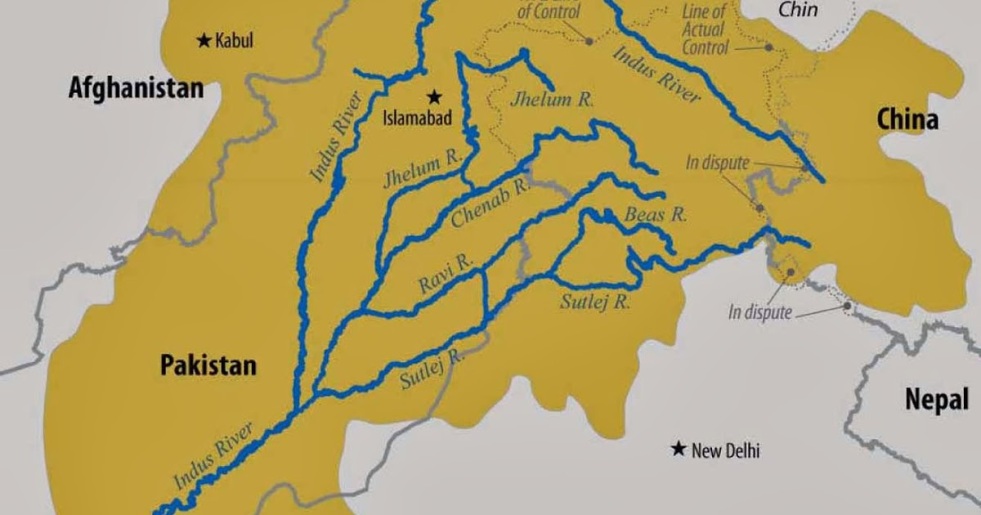
When on March 20-21, 2017, on the eve of World Water Day, India and Pakistan’s Permanent Indus Commission met in Islamabad for its 113rd meeting, there was a lot at stake besides the immediate issue or even the Indus Treaty.

In many ways, the Indus Treaty remains a bright spot in relations between these two neighbors and the treaty keeps bringing them back to the talking table…This is the magic of a shared river! Continue reading “India Pakistan resume talks on Indus Treaty: Stakes are high”

Hydropeaking · Rivers

River bank failure due to sudden water flow changes

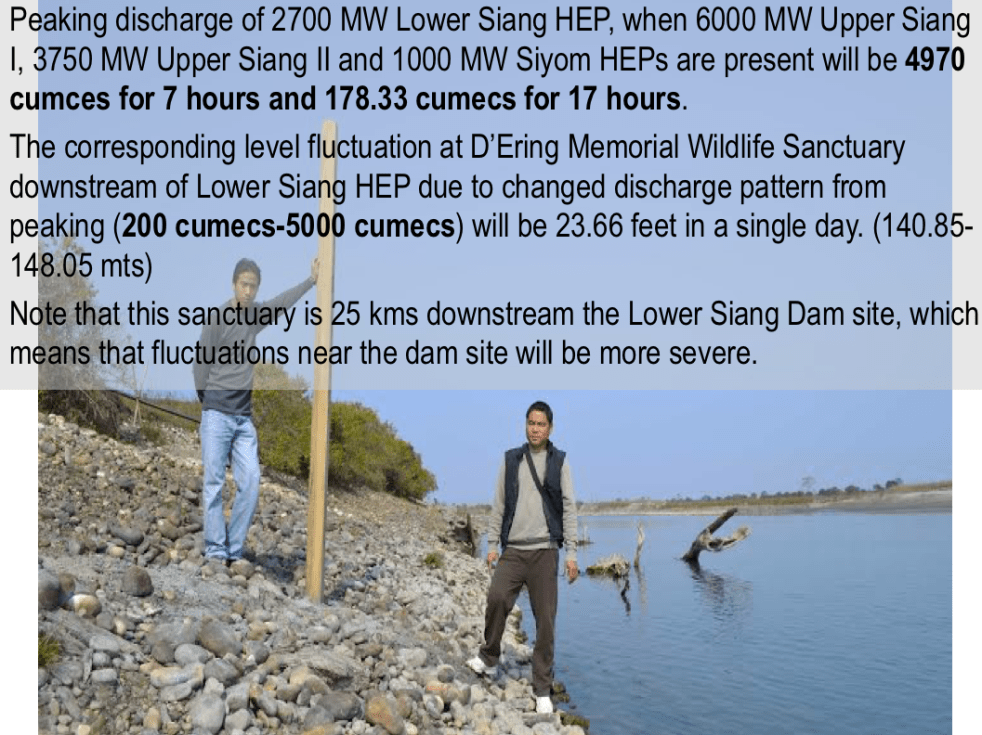
Can land, trees, structures, farms, pipes, poles, pumps etc, along a river bank several kilometers downstream collapse if water flow in the river is suddenly reduced or stopped? Yes, reduced/ stopped, not increased? This kind of river bank slump or collapse or failure is not easily understood, but it does happen. Let us see how. Continue reading “River bank failure due to sudden water flow changes”

Dams · Godavari

Godavari Basin in Maharashtra: A Profile

The river Godavari is the largest of the peninsular rivers of India. Maharashtra is home for its early flows and Godavari for Maharashtra is no less than Ganga. Referred to as Dakshin Ganga the river holds immense spiritual and cultural significance. Several places at its origin are said to be abode of Rama during the exile. These places are worshipped even today.

One of the unique aspects of this river is that it drains nearly entire East to West length of Maharashtra. And while running ceaselessly towards the Bay of Bengal the river encompasses nearly all the geographically diverse regions of the state. Originating in Western Ghats this river later traverses through the arid and dry region of Marathwada and then emerges in high rainfall region of Vidarbha. While the Upper Godavari sub basin is a part of prosperous sugar cane growing belt of Western Maharashtra; its tributaries like Manjara and Wardha-Wainganga flow through the region where there is still significant potential of local water systems.

Continue reading “Godavari Basin in Maharashtra: A Profile”

Bihar · Ganga · West Bengal

Landmark Ganga Conference in Patna: What Bihar needs to urgently do

DURING FEB 25-26, 2017, A LANDMARK MEETING HAPPENED IN PATNA, ORGANISED BY BIHAR GOVERNMENT, UNDER THE LEADERSHIP OF CHIEF MINISTER SHRI NITISH KUMAR. THE MEETING WAS ON INCESSANT GANGA WITH SUBTITLE “CAN WE ACHIEVE CLEAN GANGA WITHOUT INCESSANT GANGA?”. THIS NATIONAL-INTERNATIONAL CONFERENCE WAS LANDMARK MEETING FOR A NUMBER OF REASONS, BUT MOST IMPORTANTLY, SINCE A STATE GOVERNMENT WAS TAKING THE LEADERSHIP FOR THE CAUSE OF THE RIVER GANGA. WHILE THE CONFERENCE WAS FOCUSSED ON ACHIEVING A REJUVENATED GANGA, I WAS TO SPEAK ON THE WAY FORWARD ABOUT THE FARAKKA BARRAGE, A KEY OBSTACLE IN THE PATH OF REJUVENATED GANGA. FOLLOWING IS MY LETTER TO BIHAR CHIEF MINISTER, FOLLOWING THE CONFERENCE, WHICH CONTAINS MY RECOMMENDATIONS TO THE BIHAR GOVERNMENT. THESE RECOMMENDATIONS WERE APPARENTLY ACCEPTED IN THE FINAL SESSION. 

March 2, 21017

To

Shri Nitish Kumar,

Chief Minister of Bihar,

Patna, Bihar

Respected Sir,

Firstly, I would like to thank you and Water Resources Department of Bihar for inviting me to the Patna Conference on Incessant Ganga on Feb 25-26, 2017. This shows great vision and foresight on your behalf, to raise such crucial issues that is not only necessary for the Ganga, people of Bihar, environment of Bihar and future of Bihar, but also for the whole nation. We hope you will continue to lead the nation on this issue, and I am sure you will get huge support, including from me. Continue reading “Landmark Ganga Conference in Patna: What Bihar needs to urgently do”

Dams · Maharashtra · Rivers

Maharashtra Urban water sector in 2016: Big cities eyeing big dams

Above: Pipelines which supply water to Pune City from Khadakwasla Dam (Photo: Amruta Pradhan, SANDRP)

Urban narrative of Maharashtra revolves predominantly around cities of Mumbai (along with the Mumbai Metropolitan Region i.e. MMR), Pune, Nagpur and Nashik. Dominance of these large urban centres or the big cities over raw water sources is apparent. These cities have per capita water supply much more than the prescribed norms and continue to seek more water allocations. As Maharashtra gears up to fund more and more dams tapping finances from different sources, big cities with growing footprint of water consumption are all set to claim more water from these dams. Continue reading “Maharashtra Urban water sector in 2016: Big cities eyeing big dams”

Krishna River · Maharashtra · Rivers · Western Ghats

Bhima River in Maharashtra: A profile

Above: Pandhapur wari, the yearly pilgrimage on Bhima banks (Source: pandharpurwari.com)

Bhima River, the largest tributary of Krishna River holds a special significance for the state of Maharashtra. The river is closely woven with the spiritual fabric of the state. The river is also referred to as Chandrabhaga River, especially at Pandharpur- the famous pilgrimage city, as it resembles the shape of the Moon. Bhima basin occupies nearly 70% area of the Krishna Basin falling in Maharashtra. Though the river originates in Maharashtra, it merges with Krishna river in Karnataka state, thus can be viewed as an independent basin.

In recent years Bhima basin has been subjected to excessive pressure of anthropogenic activities such as religious festivals attracting millions of pilgrims through the year, growing pollution by urban centres, growing sugarcane cultivation and over extraction of the river water to feed the water guzzling crop. These activities are taking toll in the river’s health and its water availability. Maharashtra state’s haste of building more and more dams in Krishna basin is most prominently visible in Bhima basin.

In this sense this sub-basin of Krishna River Basin, is its perfect miniature.

We try to present a short profile of this basin. This article is in continuum with profile of Krishna River within Maharashtra published by SANDRP a few weeks back[1]. Continue reading “Bhima River in Maharashtra: A profile”