Art, Literature, Culture · Bangladesh · Dams · Fish, Fisheries, Fisherfolk · West Bengal

Titash Ekti Nadir Naam: Swan Song of a River

Part 1

 “Titash is a river’s name. Those living beside the river hardly know the etymological source of its name. They never tried to find out, they never felt any need to. There are rivers with significant names like Madhumati, Brahmaputra, Padma, Saraswati, Jamuna. And this one is called Titash!

No one will find its meaning in the dictionary. But is there any proof that the river might have been dearer to its people if it had a more literate, meaningful name? If a girl named Kajal-Lata is grandly renamed Baidurya Malini, her playmates will not be happy.”

“All the paths from the yards of Malo homes take them to the water of Titash. These are short paths. So short that a baby’s cry at one end can be heard by its mother at the other end. The pitter-patter of adolescent girl’s heart can be heard by the youth in their boats in the river. The only long road for them lies in the river’s midstream and it carries only boats.”

~ Titash Ekti Nadir Naam, Adwaita Mallabarman, 1956[i] Continue reading “Titash Ekti Nadir Naam: Swan Song of a River”
Art, Literature, Culture · Bangladesh · Climate Change · Environment · Fish, Fisheries, Fisherfolk

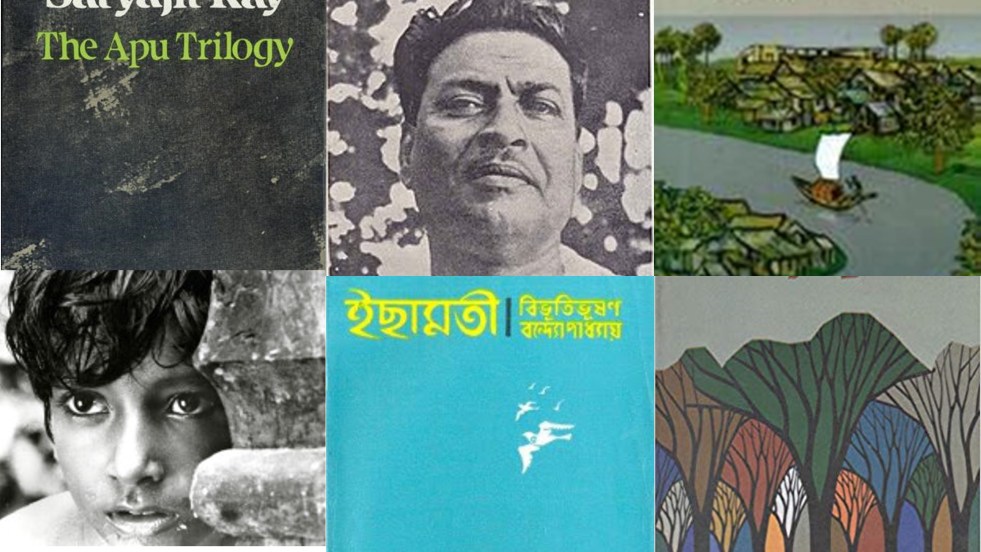
Bibhutibhushan Bandyopadhyay’s Ichhamati: River of Epiphanies

“The banks of my pleasant Ichhamati are dotted with tiny villages, wild flowers, green trees and bird nests. In the past five hundred years, so many fishermen have cast their nets in the river, so many houses have been built, so many babies came in the arms of their mothers to take a dip in the river and then in the old age found their last bed near the cool waters of the river. I can visualise the countless who have approached this peaceful river bank through centuries. I shall write a story of about all this. This story shall be called Ichhamati.”

~ Diaries of Bibhutibhushan Bandyopadhyay, Circa 1940s Continue reading “Bibhutibhushan Bandyopadhyay’s Ichhamati: River of Epiphanies”

Gujarat · Madhya Pradesh · Narmada

Gujarat has so much Narmada water this year: Why not share with drought hit & thirsty?

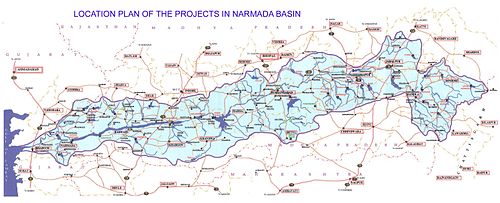
It’s a strange situation in Gujarat. While everyone is talking about unprecedented drought and the drought hit are suffering due to lack of water for irrigation and even water supply, the Sardar Sarovar Dam today (April 16) is at 119.14 m, and has 1095 Million Cubic Meters (MCM) in Live storage, in addition to about 3700 MCM of water in what is called dead storage. The Dam has received much more water this year compared to last year. SSP Water level on April 16, 2019 is up from 115.55 m, the lowest level it reached this water year[i] on March 3, 2019, since 2018 monsoon.

In fact, it was astonishing to find that the water level at SSP kept rising from March 3 (115.55 m) to April 8, 2019 (119.37 m), it has only marginally dropped since then. This was happening bang in the middle of summer! Continue reading “Gujarat has so much Narmada water this year: Why not share with drought hit & thirsty?”

Disasters · Floods · Japan

Western Japan floods 2018: Hiroshima and the Summer of the Deluge

Guest blog by Aparna Datar

Hiroshima Hiroshima’s moral grip on our consciousness extends, beyond the Hiroshima Peace Dome, straight to the heart of India’s most urgent problem. The problem of balancing urbanization, growth, floods, and droughts in the face of climate change.

In the summer of 2018 devastating floods and landslides (blamed upon climate change) ravaged western Japan. With an unusually high death toll, for a nation that is used to counting the collateral damage more in terms of economic loss, than in terms of human lives, this one left a tragic number of people dead. Floods washed away large parts of Hiroshima, Kyoto, Okayama and Ehime. I joined Prof. Moe Nakazora, an anthropologist with the University of Hiroshima on a study tour of two of the worst affected villages in the eastern part of Hiroshima. These were the villages of Hachihonmatsu and Kouchi. Both the villages are located in Higashihiroshima which had more than 2000 landslides.[i] Continue reading “Western Japan floods 2018: Hiroshima and the Summer of the Deluge”

Pump Storage Project · W Bengal

DEVASTATING DEVELOPMENTS IN AYODHYA HILLS

Guest article by Kaushik Mukherjee and Sourav Prokritibadi 

Kotto jongol chhnirbek! Sohoje ee jongol chnirte lairbek’ [‘How many trees are they going to cut down? These forests can never be destroyed so easily’]- comment by a tribal lady, Marang Buru hills, Ajodhya, Purulia.

The hilly area of Ayodhya is located within the dry deciduous forest belonging to a sub-region of the north-eastern part of Chhotonagpur plateau, included within a distinctive agro-ecological zone of West Bengal—the undulating red and laterite zone. Some of the prominent and well known hills of this area are Mathaburu, Gorgaburu, Pakhipahar, Ayodhya. The distinctive geological-hydrological backdrop and its characteristic floral and faunal diversity support a local human population—who, as official documents testify, are dependent on the forest for their life and livelihood. Moreover, the topography, forest wealth and wildlife attract tourists, wildlife researchers and naturalists in considerable numbers. Apart from being a popular tourist destination, Ayodhya hill range is significantly important for the entire Santhal population of all over India. The area is located precariously close to excavation sites that have yielded a rich outcrop of microliths—pushing the prehistory of Bengal back to 42,000 years BP[i] and promoting the area to the status of one of the most sensitive archaeological locales in West Bengal[ii]. Continue reading “DEVASTATING DEVELOPMENTS IN AYODHYA HILLS”

Arunachal Pradesh · Dams · Manipur · Sikkim

Fighting Destructive Dams: Lessons from the masters

Guest Article by Chicu Lokgariwar

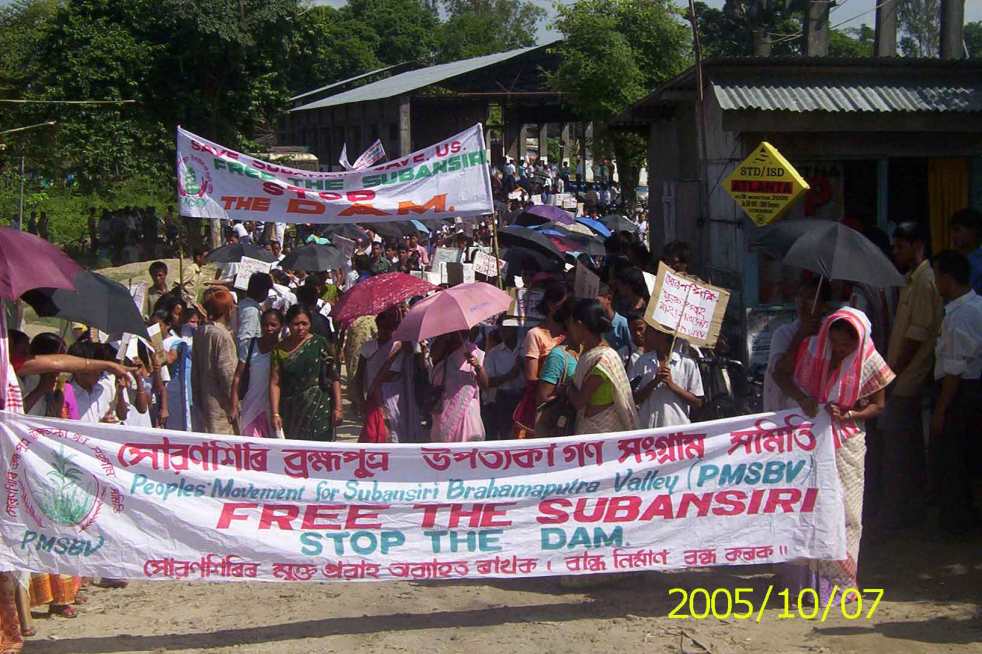
“Everybody loves us Lepchas” said Tseten. He went on to explain that this affection was important to the Affected Citizens of Teesta and was a major reason that the group decided never to add violence[i] to their arsenal of techniques in their fight to save the Teesta.

The idea of non-violence being a strategic decision rather than a (purely) moral one intrigued me. I was at a meeting where several anti-dam activists from the North-Eastern states were present. As I listened to their stories, it was clear that these veterans had several lessons for those of us worried about the death of their rivers today. Each of the groups that had been compelled to fight for their rights had evolved strategies and developed tools to help them.

Sadly, the struggle against ‘development’ projects that adversely impact the lives and livelihoods of people, as well as cause irretrievable harm to the environment, continues in many places across the world. Rather than reinventing the wheel, it will be useful for young activist groups to have access to the lessons learnt by those who have preceded them. Continue reading “Fighting Destructive Dams: Lessons from the masters”

Kerala · Rivers

Ozhukanam Puzhakal: UNTO HER WE SHALL RETURN…

Guest Blog by Dr Manju Vasudevan

Two artists are engrossed in some meaningful graffiti work at a public bus stand, on an otherwise laid back, colourless Sunday morning. A closer look and their strokes in fact seem to be urging the passerby to pay attention to rivers and water resources. There seems to be a message to all the drawings.  It is not often that one comes across a sight like this in small town Chalakudy in Kerala. The artists have teamed up with the Chalakudy River Protection Forum under the umbrella of a State-wide campaign titled ‘Ozhukanam Puzhakal’ or ‘The Rivers Must Flow’. Continue reading “Ozhukanam Puzhakal: UNTO HER WE SHALL RETURN…”

Kerala · Rivers

Ithikkara River in Kerala: Tampering with Nature – a recipe for negative NPV

Guest Blog by Jacob Chandy Varghese (jacob.c.varghese@gmail.com)

An Old Story: I read an account about Netherlands in the journal, Annals of Botany (2010)[i] . This story dates from the 11th century. Many centuries ago, the coastal plain of the Netherlands consisted of a dynamic landscape of meandering river channels, extensive floodplains and large complexes of fens and bogs. Sediment deposition and peat formation kept pace with the gradually rising sea level, so that the level of the land remained well above the water for most of the time. Since 11th century, inhabitants of the low-countries started to modify the hydrology of their surroundings to create protection from flooding for their dwellings and agricultural fields. They built dikes and started to manipulate the water level. Continue reading “Ithikkara River in Kerala: Tampering with Nature – a recipe for negative NPV”

Dams · Groundwater · USA

Sacred Origins: Spring Lake and San Marcos River of Texas

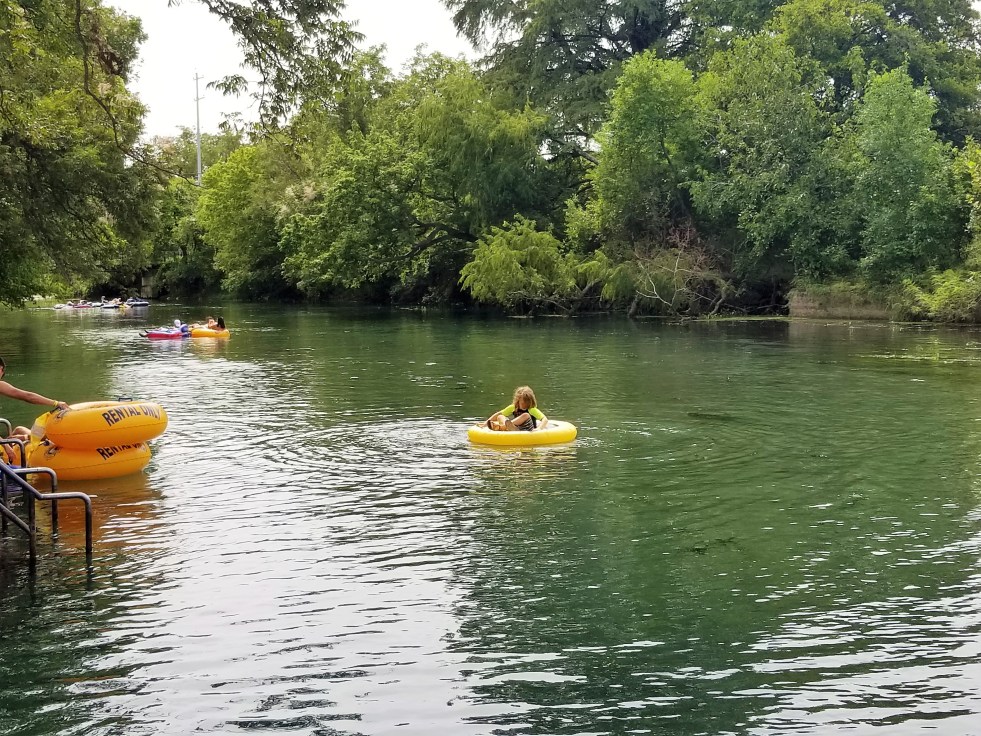
It was a freak accident. But it meant that I had to travel every week from Austin to Brooke Army Medical Center, some 75 miles away. These were not enjoyable trips and one of the solace was a sign on the highway:  “San Marcos River Recreational Areas: Turn Right”. I used to wonder what will happen if we actually turn right someday. A river with parks around it maybe? Or trails along a flowing river? The thought always made the journey slightly more palatable. Continue reading “Sacred Origins: Spring Lake and San Marcos River of Texas”