Himachal Pradesh · Hydropower

Hydropower in Himachal: Do we even know the costs?

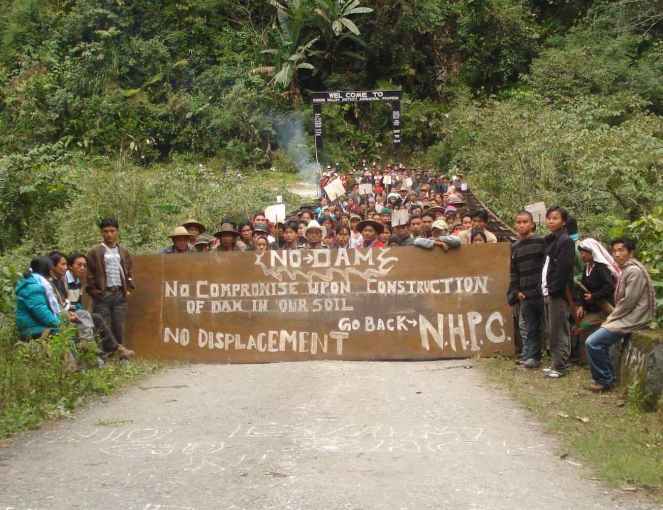
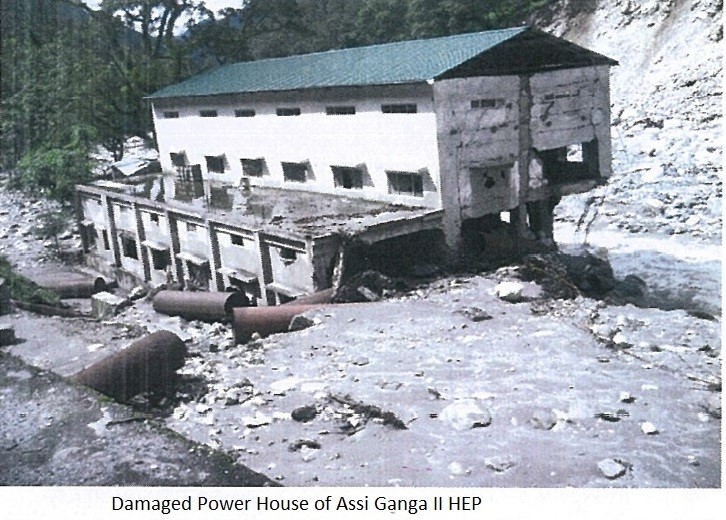
The state of Himachal Pradesh has a hydropower potential of almost 23,000 MW, which is about one-sixth of the country’s total potential[1]. In a bid to harness it, the state authorities seem to have gone all out without really even assessing the costs and impacts it will have on the local ecology and people. It has already developed about 8432.47 MW till now and is racing towards increasing that and in its way, displacing people, destroying forests and biodiversity, drying the rivers, disrupting lives and cultures in upstream and downstream, and flooding cultivable and forest land. The target of the State government for 2013-14 is to commissioning 2000 MW[2] capacity projects. The state and central governments are pushing for more and more projects, playing havoc with the lives of the locals and thus facing continuous agitations. This update tries to provide some glimpses in hydropower sector in Himachal Pradesh over the last one year.

The Ravi, Sutlej, Chenab, Beas & Yamuna, which form the major river basins of Himachal have been heavily dammed. These projects submerge and bypass the rivers, change the course, the flow and the silt carried by the rivers. The 27 proposed projects in the Chenab basin endanger the fragile ecosystem of the Lahaul-Spiti Valley. In the Sutlej, the nine major hydel projects of 7623 MW which are already  running along the 320 km stretch include: 633 MW Khab (proposed), 960 MW Jangi Thopan & Thopan Pawari (re-bidding), 402 MW Shongtong Karcham (under execution), 1,000 MW Karcham Wangtoo (commissioned), 1,500 MW Nathpa Jhakari (commissioned), 412 MW Rampur (under execution), 588 MW Luhri (allotted)[3]. There are about 21 more proposed projects. The same is the case with the Ravi where about 30 projects are proposed to be built or are already functional.

From 1981-2012, more than 10,000 ha of forest land on which people had user rights, have been diverted for hydropower, mining, roads and other projects[4]. This does not include the thousands of hectares of forest land diverted towards projects like the Bhakra Dam before 1980.

On the one hand, the Ministry of Environment and Forests (MoEF) treats the locals like hindrances, saying that they cause damage to the environment by using the forests inefficiently, on the other hand, it approves big projects which cause hundred times more damage to the environment. There is no recognition of the ecological fragility of the landscape, and clearance from the MoEF seems like just a formality. Clearly, the MoEF and the state government are not interested in doing something for the people of the area, but in pushing project constructions to achieve targets at whatever cost it may require. This is also evident in the way the MoEF, without proper consultation, approved the state’s request for making the procurement of no-objection certificates (NOCs) from the Gram Sabhas a non requirement. MoEF itself had passed a circular in 2009, making it mandatory for project proponents to obtain NOCs of the affected Gram Sabhas and compliance to the Forest Rights Act 2006 before the diversion of forest land to non forest purposes. However, in 2012, the MoEF issued a letter which stated that there are no compliance issues with regard to FRA in Himachal Pradesh since the rights of the forest dwellers have already been settled under the Forest Settlement Process in the 1970s[5]. This is clearly wrong and not supported by facts or ground realities.

Taking away the rights of people on land without giving them adequate compensation has been a governmental trend. It is not enough to just grant monetary compensation to them. The land which could be put to various uses by the local is no longer his. The Gaddis, a shepherding community, rely a great deal on their rights over land as they need it for grazing. With the Forest Dept. making some areas inaccessible for them, their land has anyways decreased. In addition to this, projects like the Bajoli-Holi and the proposed dam at Bada Bhangal, which is sanctuary area now, and traditionally a grazing area for the Gaddis, will further take away from the available land.

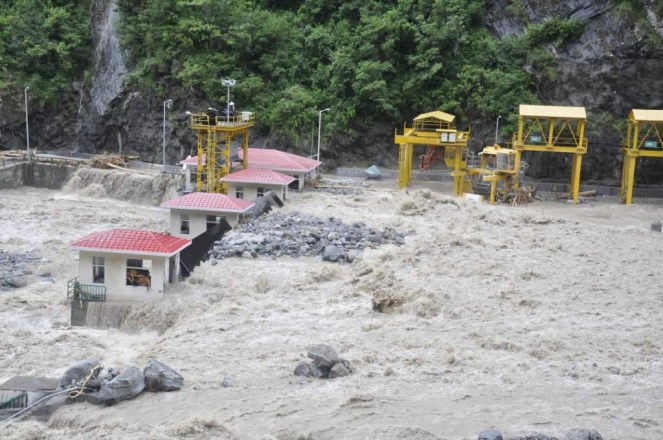
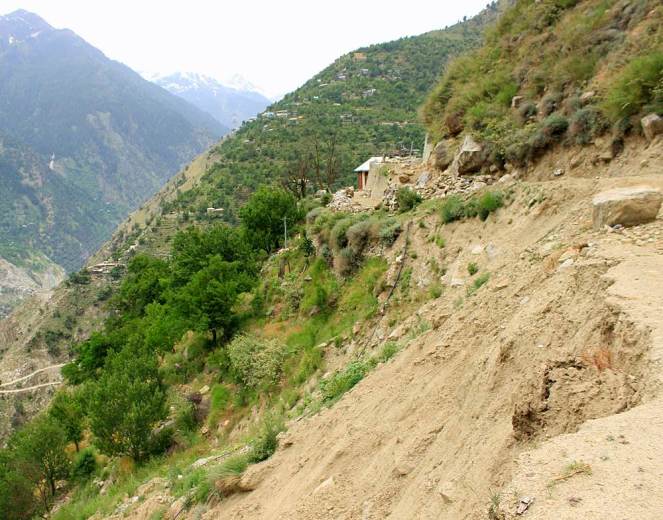
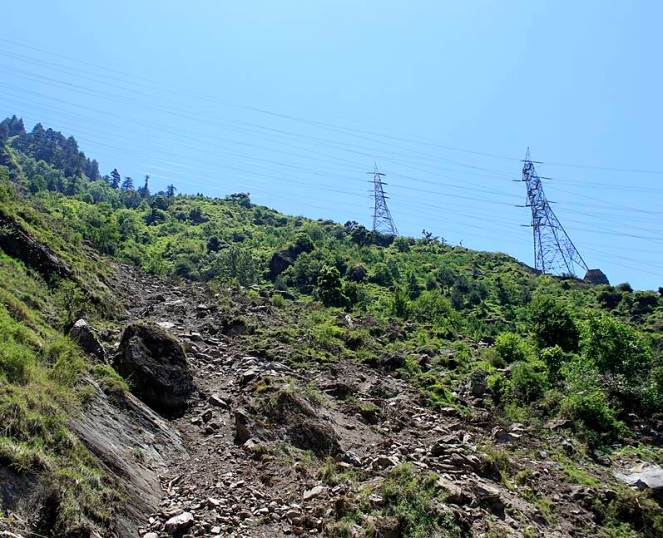
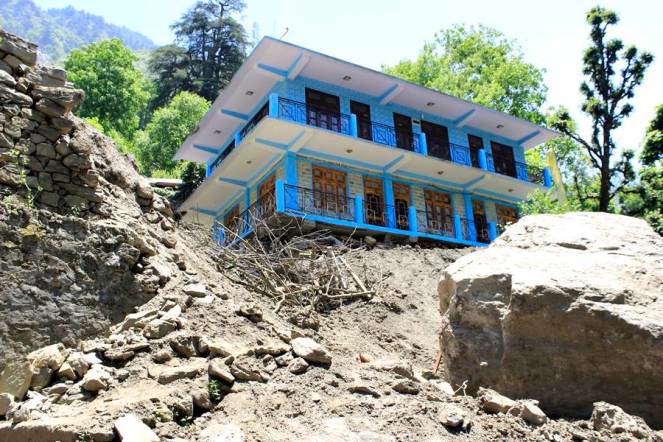
Sangla Valley bore the brunt of massive landslides due to the sudden downpour in June 2013. Source: http://www.indiawaterportal.org/articles/drilling-hills-devastation

Run-of-the –river projects:

But it is not only the loss of forest and private land which is the problem here. Another major issue is that of water. With the state giving increased priority to run-of –the –river projects, more and more water from the river is being diverted for longer stretches.

In the controversial Luhri project on the river Sutlej, the diversion of water into a 38 km long tunnel would mean the absence of free flowing river in stretch of almost 50 kms. The agreed amount of water to be left flowing in the river is 25% for the lean season and 30% in monsoon[6]. The project was initially supposed to be of 775 MW installed capacity and was to have two tunnels. This was challenged because higher environmental discharge was to be maintained in the downstream river. The capacity has been reduced to 600 MW and there will be only one tunnel[7].

But even this diversion would mean that villages falling within 50 km downstream of the project will not have access to its water like they used to. It will also lead to the warming up of the valley as the cool waters will be diverted into the tunnel. The environmental impact assessments (EIAs) have failed to address the effects of this. The EIA has also done no assessment of the impact of the tunnels on the land and people over ground. Locals have been agitating under the banner of Sutlej Bachao Jan Sangharsh Samiti, but the project is still on[8].

Another major drawback of the tunneling process is the danger it poses to the residing population and their groundwater sources. The Karcham Wangtoo project (1000 MW) in Kinnaur, which is the country’s largest hydropower project in the private sector (owned by the Jaiprakash Associates) was closed briefly in the December of 2012, due to leakage from the surge shaft and the water-conducting system, raising concerns about the safety of such projects and the absence of a monitoring body[9]. Because of the massive dam, the leakage was between 5-9 cumecs (cubic meters per second) or 5000-9000 liters per second, which is large enough to trigger massive landslides in the area. The company involved in the project will always try to get away saying that such things are unforeseen and it will take time for the project to stabilize. But in the meanwhile, who should be held accountable for the losses to life, livelihoods, habitats and environment due to this?

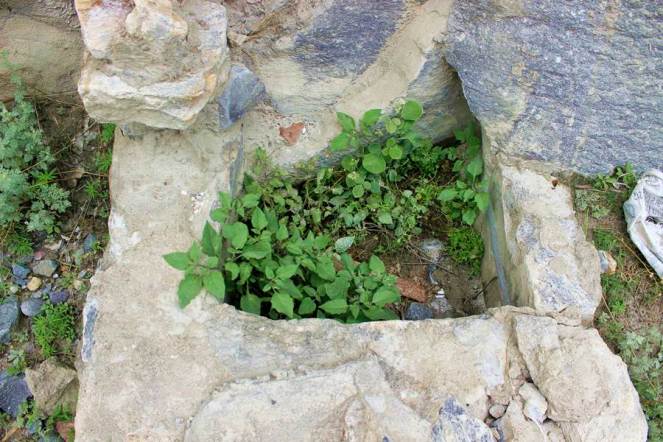
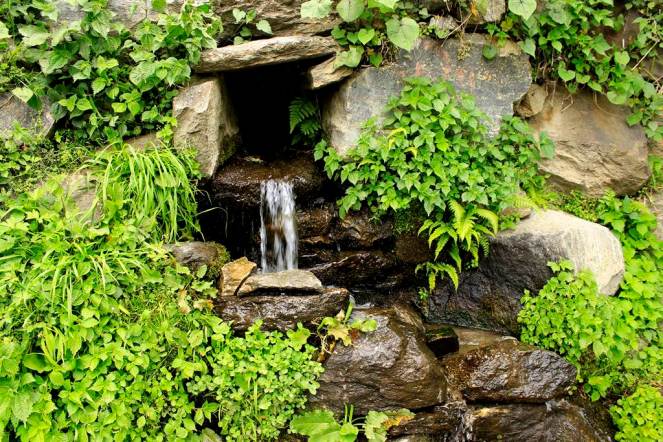
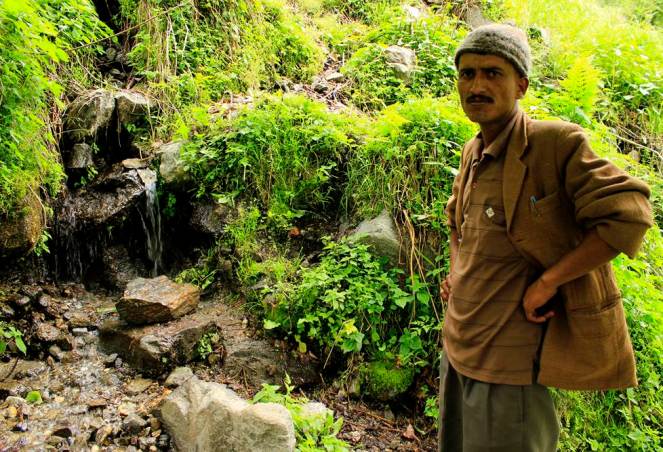
The same project involves a 17 km long tunnel passing under 6 villages The tunnell has affected water aquifers causing natural springs to dry up. This claim by the villagers was verified by the state’s Irrigation and Public Health department in a response to an RTI application. The official data showed that 110 water sources have been affected by this project. This information has come out only due to the proactive-ness of local people, but these issues are not even part of the impact assessments.

The concerns expressed by locals in the case of the 180 MW Holi-Bajoli project are quire serious. This project on the Ravi River has been given clearances under suspicious circumstances. It is being opposed by the local communities on issues of environment, violation of rights, and impacts on local livelihoods. People have also taken offense at the apathy shown to them by the state government.  The tunnel for the project was supposed to be constructed on the right bank of the river, which is relatively devoid of habitation, but the powerhouse and headrace tunnel sites were later shifted to the left bank, on which rest most of the villages of the area. This decision was seen as flawed according to a report by the state-run Himachal Pradesh State Electricity Board Ltd (HPSEBL), which pointed out that it could have negative effects on the environment and the locals. The reason being cited for this is that construction on the right bank would take longer to be completed. GMR’s contention was that the right bank was weak and unsuitable, whereas the opposite has been confirmed by a Geological Survey of India report according to Rahul Saxena of the NGO Himdhara Environment Research Collective[10].

The protests which have been going on for four years now have been due to legitimate concerns raised by the locals of deforestation, loss of land and infrastructure and the loss of peace which would accompany the project. Earlier this year, women of four panchayats set up camp at the proposed site of the power house at Kee Nallah near Holi village to stage their protests. 31 of these women were arrested for protesting against the illegal felling of trees and the road construction of the project. They were taken to Chamba town which is almost 70 kms away from Holi and were detained for more than 24 hours despite appeals for their immediate release. Though they were released on bail the next day, they say that a lot of false charges have been filed against them. The district administration has taken no steps to resolve these issues[11]. In a letter to the Chief Secretary, the people have demanded that all charges be dropped against these women and justice be done about their demands. Despite continuous protests by the people the MoEF has given clearance to this project which requires the diversion of 78 ha of rich forest land and the felling of 4995 treesx.

The locals also say that change in the MoEF policy of NOCs enabled the Deputy Commissioner to issue a false certificate under FRA saying that no rights have to be settled on the land diverted for the project as it has already been done under the settlement process of 1970s.

Management glitches:

In the Chamera II and III projects on Ravi River, there has been much debate about the distance between the two being only 1.5 km without any water source in the middle. The operation of the Chamera II power station is completely dependent on the release by upstream Chamera III project. If the generation schedules of both are very different, there will be danger to the downstream areas. Last year it was observed that the schedules given by the Regional load Dispatch center were not coordinated, resulting in a dis-balance in the generation in both dams. In another instance, leakage was noted in the head race tunnel of Chamera III HEP.[12]

In a letter to the Chief Minister last year, environmental activists sought to know why there has been no committee set up by the State government for the control and monitoring of safety and water flows as is required by the Hydropower Policy 2006 of Himachal.

In another case of delay and mismanagement among many others, the Kol Dam on Sutlej River, the foundation for which was laid by former prime minister Atal Bihari Vajpayee in the year 2000, was due to be completed in 2008 but is not yet functional. The Majathal Wildlife Sanctuary area falls in the submergence area for the project and clearance was required from the National Board for Wildlife as the project would endanger 50,000 trees and the habitat of the ‘cheer pheasant’[13]. The project was finally granted approval by the Supreme Court in December 2013, given permission to drown the proposed parts of the sanctuary. The whole episode smacks of a scam when the project authorities say they forgot to get the clearance for submergence of the sanctuary and the forest & wildlife departments are ready to look away.

But due to continuous delays trigged by shoddy work and project management, the NTPC Dam project has still not been made functional. The delay is expected to be for at least another year, which would mean an additional loss of Rs. 150 crore. For about a year now the NTPC has been claiming that the filling of the reservoir would start, but they had to abandon that twice due to heavy leakages. There are also problems with the gates fitted inside the diversion tunnel and also additional repairs are needed in the tunnel.[14]

Muck dumping along the Sainj river by Parbati Hydropower Projects. (http://hillpost.in/2014/04/beas-a-dying-free-flow-himalayan-river-photo-essay/98678/)

No State responsibility for environment:

The Comptroller and Auditor General of India (CAG) has found that the hydro power projects are not adhering to the compensatory afforestation that was promised. Out of the projects it studied, it found that 58% of them have carried out no afforestation activities at all. According to the results of an audit, it was seen that only 12 companies had deposited compensation money out of which no work was done at all in seven of the projects. Even out of the 12, full afforestation was achieved on paper only in 2 of them[15].

Another major problem is that tunnelling and road construction generate huge amounts of muck and debris. These are not disposed off in the right manner. For example, in the Koldam, the net volume of muck generated is 2.27 crore cubic metres. If this was to be dumped in the Sutlej, it would lead to a raise in the level of the Sutlej by 2.20 metres along a length of 100 kms[16]. The project authorities, including the World Bank funded projects like Rampur and Nathpa Jakhri, find it easier to dump the muck into the river rather than transport and dump it properly. The MoEF, state government and all concerned are happy to not take any action against any of the projects for such blatant violations that everyone knows about and even when evidence of such violations are presented to them.

Small Hydel Projects (SHPs):

The view of the government regarding the non requirement of clearances for small projects is clearly unfounded, unscientific and unacceptable. If the authorities think that these projects cause no or little harm to the environment and the people, they are wrong. The fact is that a lot of the hydro power potential of Himachal Pradesh is envisioned to be realized through these small projects which are being indiscriminately built on even small tributaries of the major rivers, sometimes even the ones listed as negative (from fisheries perspective) for HEPs.

The damaged reservoir of Aleo Manali Hydropower Project. (http://www.tribuneindia.com/2014/20140113/himachal.htm)

In a recent case, the 4.8 MW Aleo II project located on the Aleo nallah, a tributary of the Beas River, in Kullu district, made news due to the collapse of its reservoir wall in a trial run[17]. The Aleo II project was supposed to become functional in January 2014, but as the management started to fill the 12,000 cubic meter capacity reservoir, its wall collapsed when it was only 75% full. The water from the reservoir went straight into the Beas River, causing sudden rise in its levels till about 50 kms downstream. The management had not informed the panchayat or the public of Prini village which is situated next to the dam site before attempting to fill the reservoir, causing unforeseen danger to them and others downstream.

These small projects[18] also seem to be working without proper lease of land. In a report earlier this year, it was found that out of the 55 projects examined below the 5 MW capacity in Himachal Pradesh, about 47 of them are operating without proper lease of the forest land that they are using. It was found after an RTI was filed regarding this that about 35.973 ha of land in the Chamba district was being used without lease by 13 HEPs. The case was similar in Kangra with about 43.5035 ha being used without lease. This just goes to show that the State regulations regarding hydro projects are not strict and definitely faulty. The land is being ruthlessly exploited by private and public sector companies which have a bullying attitude towards the local population[19].

Excessive electricity? Reports suggest that the state requires about  1200 MW of power, but it is producing so  much more that it has no buyers. It is not surprising to see that projects like the 1000 MW Karcham Wangtoo in Kinnaur are facing lack of buyers for electricity. The JPHL has not been able to sign long term Power Purchase Agreements (PPAs) with any power distribution company (discoms). As a result, it is selling electricity through short term agreements or at lower prices. This is the situation with a lot of other plants in the state, both private and public. Even the state is facing difficulties selling its surplus power and as a result has to sell it at lower prices. According to a 2012 report of the CAG, the revenue earned from selling surplus power in Himachal has dropped significantly over the past years. The reason given for this is mostly the increased cost of production which has made power more expensive and the discoms, which are already in debt are thus unable to buy it.[20] Even after facing such losses, why is it that the Himachal government is pushing for more and more projects, destroying the rivers, forests, biodiversity, livelihoods and environment?

To add to the worries of the local people and environmentalists, in a recent announcement, the Chief Minister has announced that there is no NOC required from the fisheries dept, IPH, PWD and the revenue dept for small projects[21] Also, to make things easier for the project developers, it was announced that the small projects below 2 MW installed cpacity, were now liable to give the government only 3% of free power for a period of 12 years, as opposed to the earlier 7%xvi.

In an interesting development of the first ever Cumulative Environmental Impact Assessment (CEIA) in the state, a study of 38 hydro electric power projects in the Sutlej basin, the recommendation has been to designate the “fish-rich khuds, mid-Sutlej, eco-sensitive Spiti, Upper Kinnaur area and 10 other protection areas as a no-go zone for hydro projects”[22]. The CEIA is incomplete, inadequate and makes a lot of unwarranted assumptions and uscientific assertions. Even if this recommendation implemented, several projects in the Sutlej basin are still under way and the government seems to be doing nothing to stop them. There is also an Environmental Master Plan (EMP) prepared by the Department of Environment and Scientific Technology, and approved by the government which claims to have identified the vulnerable areas of the State[23]. This EMP is being adopted by the State for its developmental planning for the next 30 years. But the impact of this is yet to be seen, assuming that it does not turn out to be one of those plans which are never implemented.

Padmakshi Badoni, SANDRP, padmakshi.b@gmail.com

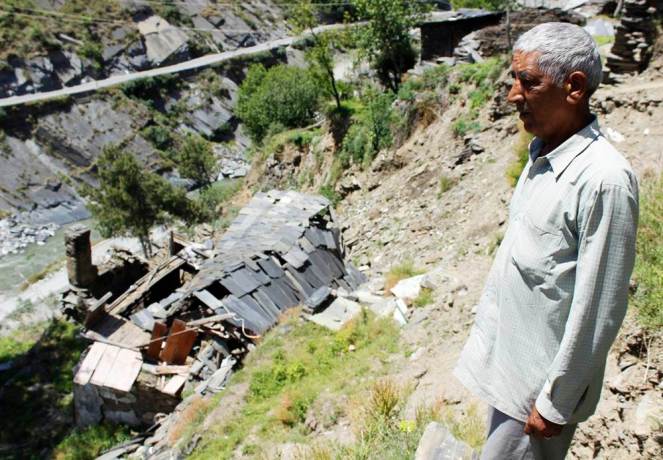
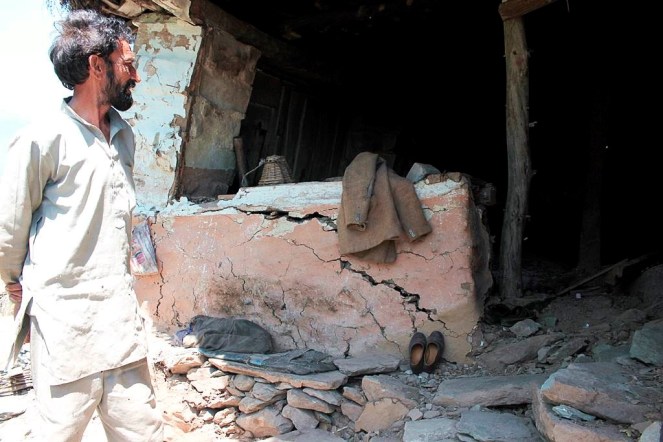
People of Dhalanjan village show their destroyed and dilapidated structures (https://sandrp.wordpress.com/2014/10/01/photo-essay-on-the-impacts-of-blasting-and-tunneling-for-hydropower-projects-in-chamba-district-in-himachal-pradesh-1/)

END NOTES:

[1] http://www.downtoearth.org.in/content/drowned-power

[2] http://indiaeducationdiary.in/Shownews.asp?newsid=24595

[3] http://www.hindustantimes.com/India-news/HimachalPradesh/Review-hydropower-projects-on-Sutlej-Kinnaur-residents/Article1-1101869.aspx

[4] http://tehelka.com/himachal-pradesh-government-flunks-forest-rights-subject/

[5] http://www.himdhara.org/wp-content/uploads/2013/05/Press-Note-20th-Jan-2013.pdf

[6] http://articles.timesofindia.indiatimes.com/2013-02-24/chandigarh/37269688_1_luhri-project-mw-luhri-river-project

[7] www.energylineindia.com February 24, 2013.

[8] http://www.tribuneindia.com/2013/20130222/himachal.htm

[9] http://www.tribuneindia.com/2013/20130128/himachal.htm#7

[10] http://www.newstrackindia.com/newsdetails/2013/08/18/229–Hydro-project-site-shift-disastrous-Himachal-government-.html

[11] http://www.himdhara.org/2014/04/17/press-release-all-womens-independent-fact-finding-team-visits-holi-expresses-solidarity-with-local-struggle/

[12] www.energylineindia.com may 16, 2013.

[13] www.enrgylineindia.com January 24, 2013
[14] http://www.tribuneindia.com/2014/20140417/himachal.htm#11

[15] http://zeenews.india.com/world-environment-day-2013/world-environment-day-hydro-projects-causing-degeneration-of-hill-ecology_853017.html

[16]  http://hillpost.in/2013/07/the-uttarkhand-apocalypse-is-himachal-next/93449/

[17] http://www.himdhara.org/2014/03/24/run-into-the-river/

[18] For details of impacts of small HEPs in Himachal Pradesh, see: https://sandrp.wordpress.com/2014/06/08/the-socio-ecological-effects-of-small-hydropower-development-in-himachal-pradesh/ and https://sandrp.wordpress.com/2014/06/11/the-socio-ecological-impacts-of-small-hydropower-projects-in-himachal-pradesh-part-2/

[19]  http://timesofindia.indiatimes.com/india/Majority-of-small-hydel-projects-in-Himachal-Pradesh-operate-sans-land-lease/articleshow/28696581.cms

[20] . http://www.downtoearth.org.in/content/drowned-power

[21] http://timesofindia.indiatimes.com/india/Budget-sops-to-make-investments-in-hydro-power-attractive/articleshow/30079948.cms

[22] http://www.tribuneindia.com/2014/20140704/himachal.htm#15

[23] http://www.tribuneindia.com/2013/20131208/himachal.htm

Himachal Pradesh · Himalayas · Hydropower

Photo Essay on the impacts of blasting and tunneling for hydropower projects in Kinnaur district in Himachal Pradesh – 2

Guest Blog by: Sumit Mahar (sumitmahar.12@gmail.com), Him Dhara Environment Research and Action Collective, Himachal Pradesh [1]

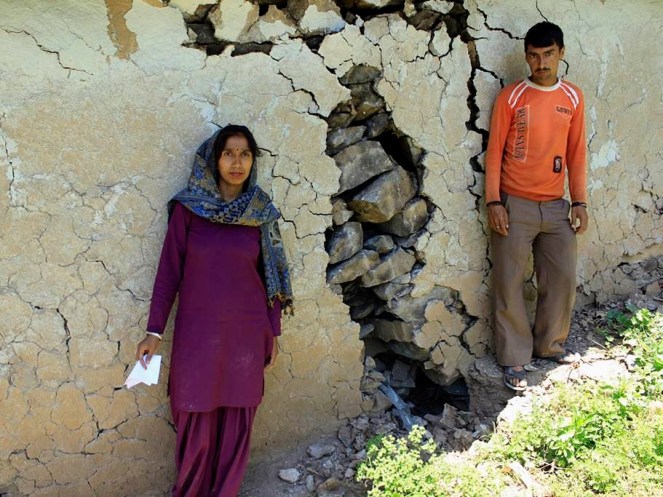
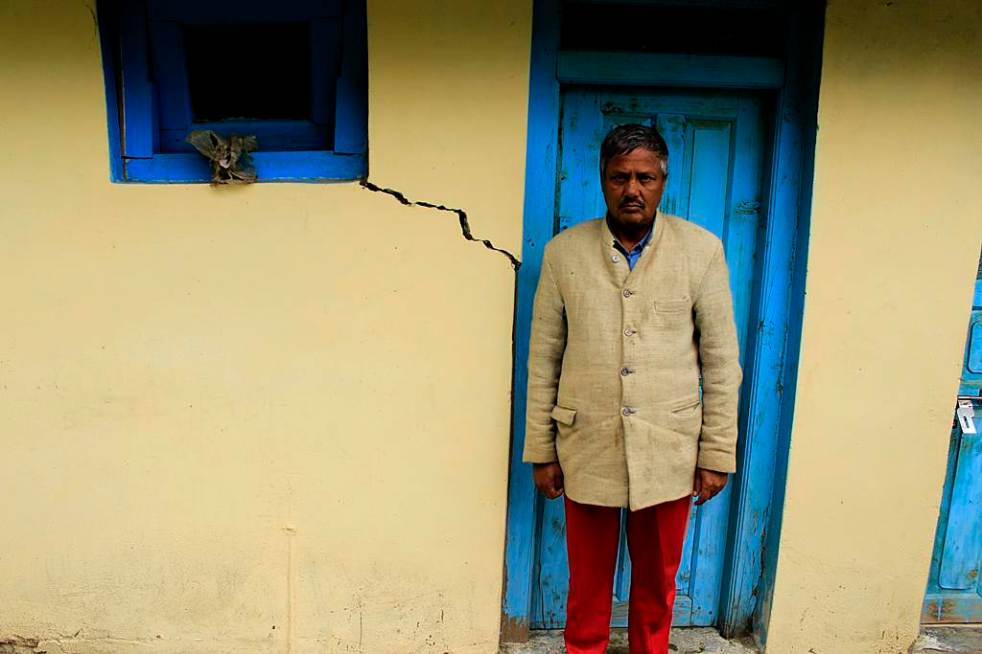
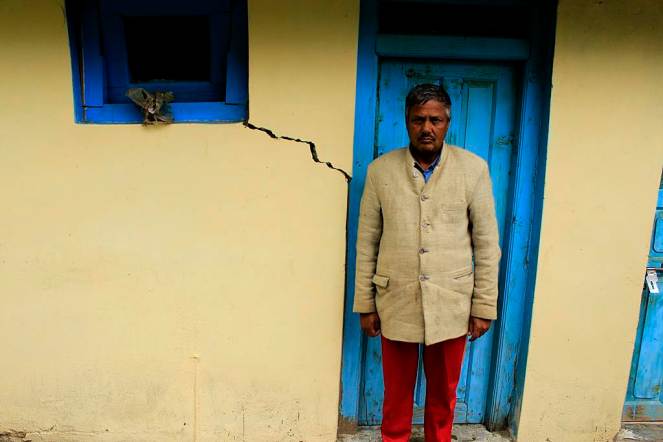
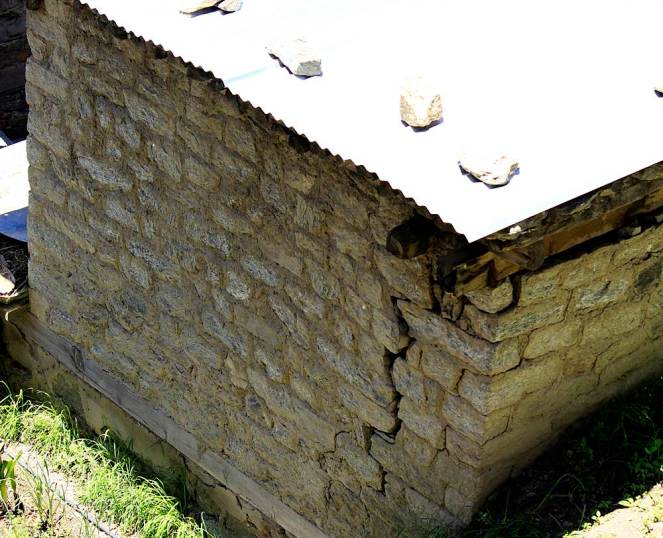
Tunneling for hydropower project using the blasting technique can have massive impacts. It has a series of direct and indirect impacts which have already been documented. Among the most serious impacts is drying up of the natural drinking water springs and the reduction in sub-soil moisture. This directly impacts the drinking water availability for the local villagers as well as agriculture and horticultural productivity, which is critically dependent upon the presence of sub-soil moisture. Blasting for tunnels and other underground components of hydroelectricity projects creates vibrations that have resulted in cracks in houses situated near these components.

Importance of impacts of tunneling and blasting becomes very important since all run of the river (ROR) projects involve tunneling and blasting. Proponents claim that ROR hydropower projects are environment friendly, but most people do not know that the tunneling and blasting adds an additional dimension to the impacts due to ROR hydropower projects and these can be very serious. Most environmental and social impact assessments or cumulative impact assessments do not even assess these impacts. Many times the proponent get away claiming that the impacts are not due to the projects, when in reality all evidence shows that these are very much caused by the tunneling and blasting being done as part of the construction of these projects.

This photo essay documents the impacts of tunneling and blasting for hydropower projects mainly in Kinnaur (part 1 of photo essay does the same for projects in Chamba district) of Himachal Pradesh. In Kinnaur the photo essay includes such impacts of 1000 MW Karcham Wangtoo and 1500 MW Nathpa Jakhri hydropower projects.[2] It is noteworthy that impacts are not only limited to large hydropower projects, but also to what is defined as small hydropower projects (projects below 25 MW installed capacity). This should also help puncture the misconceived notion that small hydropower projects are environmental benign and they do not need environmental and social impact assessment, public consultations, appraisal, monitoring or compliance.

These photo essays are indicative of the kind of impacts tunneling and blasting can have in the process of building hydropower projects in the Himalayas. What they indicate is relevant not only for Himachal Pradesh, but entire Himalayas and all projects that involve such tunneling and blasting. We hope these photo essays open the eyes of state governments, Union Ministry of Environment, Forests & Climate Change, Union Ministry of Power, Union Ministry of Water Resources, Central Electricity Authority, state environment departments, hydropower developers, EIA consultants, chairman and members of Expert  Appraisal Committee on River Valley Projects, media, judiciary, civil society and all others concerned.

 Karcham Wangtoo Hydro Power Project, Kinnaur

Project Jaypee Karcham Wangtoo HEP
Capacity (MW) 1000
Basin Satluj
District Kinnaur
Villages Choling, Yulla, Urni, Runnag, Meeru, Chugaun
Pictures taken on 25 May to 2 June 2014
Murim-I, is a local stream that dried up due to the 17 km long 1000MW Karcham Wangtoo project’s tunnel in Kinnaur district. The stream is surrounded by grazing lands
Murim-II next to Murim I shared a common source which led to drying up of both streams
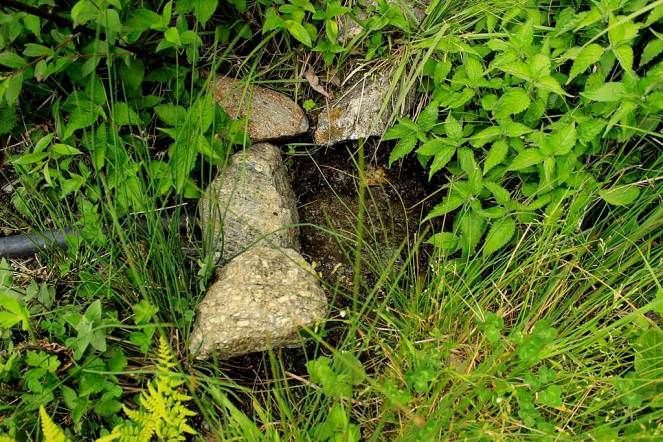
Nang Choling water source or chashma near the highway. The water was used for drinking not just by the people in Choling but also by passers by. This source has totally dried up now due to the Karcham Wangtoo tunnel construction
Peokeh-I is a water source in the Yulla village. The discharge of this source has reduced by 50% since the construction of the tunnel for Karcham Wangtoo HEP
Yet another source of water - Peokeh-II, Yulla village whose discharge has reduced by 30 to 40%
Yet another source of water – Peokeh-II, Yulla village whose discharge has reduced by 30 to 40%
Jyoti Prakash’s house in Yulla village suffered from cracks because of the tunnel construction of Karcham Wangtoo HEP
Jagat Singh’s fields had this water source and used this for drinking and irrigation. Due to the reduction in the discharge after tunnel construction there is just enough water to use for drinking
Kakhiyo water source was used for drinking by 10 families in Yulla and the source is now totally dry
Lang Chuldhing water source in Yulla the discharge has reduced due to the tunnel. 4 -5 families in the vicitnity depend on this source
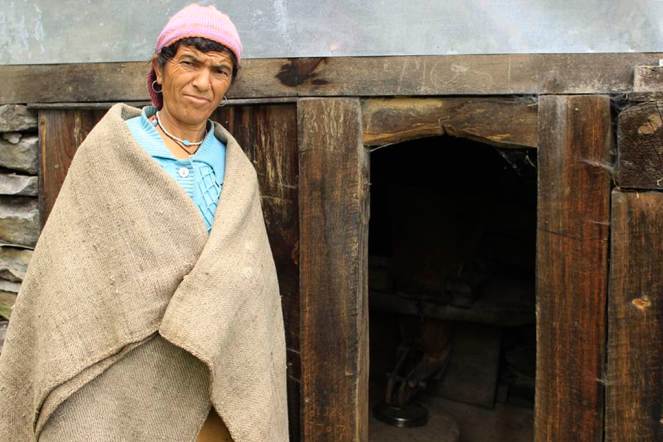
Ram Devi’s gharat in Yulla has been rendered useless along with another 4 above her’s. All due to the drying up of a water source – Yang baro
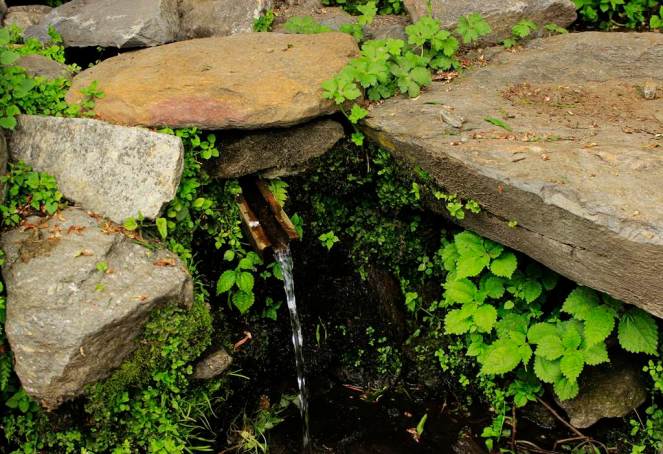
Yang Baro water source was feeding the watermills as well as irrigation channels. Now there is hardly any water for these
Ramanand Negi showed this water source in Urni village which emerged suddenly in 2005. This has come out in a location where there is a landslide getting active
This is the Urni steep slope where the landslide is active
Ramanand’s House in Urni village which has developed cracks and crevices due to the blasting and construction of tunnel for Karcham Wangtoo Project
Runnag Chashma is used by the Runnag village for washing and drinking. The water discharge has reduced substantially
Munni Lal’s apple orchard which was impacted by a landslide last year when the June 2013 monsoon rains occurred
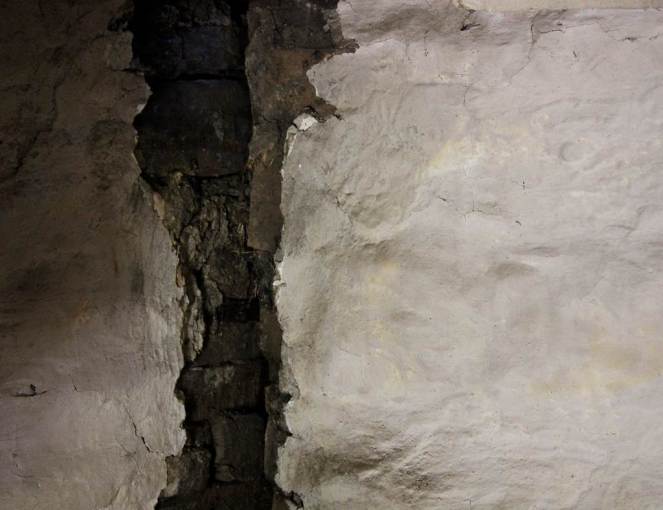
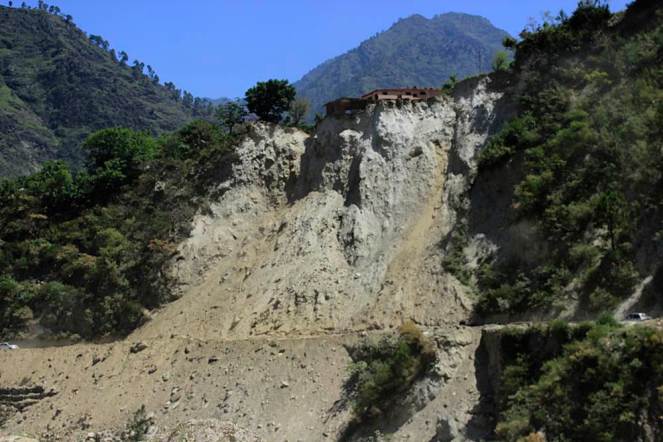
Landslide just above the tunnel of Karcham Wangtoo project at Rangle. This was also activated lst year during the monsoons
Ryabi Khaldam (Disturbed Source), the water source has relocated naturally after the construction of the tunnel began
Land slide at Meeru village activated last year and the main path of the village disturbed
Buthkas, IPH Source fully dried now as a result of tunnel. Almost the entire Meeru panchayat was dependent on this water for drinking
Jagdish Chand Negi’s house in Chugaun was impacted because of the construction of Karcham Wangtoo Tunnel
Cow shed developed cracks in Chugaun affected by Karcham Wangtoo Project’s tunnel construction

Nathpa Jhakari Hydro Power Project

Project Nathpa Jhakari HEP
Capacity (MW) 1500
Basin Satluj
District Kinnaur
Villages Nigulseri & Jhakari
Pictures taken on 29/05/2014 & 03/06/2014
On 25th May 2014 this landslide occurred in Nigulseri village. Locals claim that the tunnel of 1500 MW Nathpa Jhakri Project had already disturbed the area which was further disturbed because of the transmission tower construction for Baspa II and Karchham Wangtoo HEPs
Geeta Ram’s house affected by the landslide at Nigulseri
Shamsher Singh’s house cracks at Nigulseri in May 2014. A total of 13 houses have suffered such damages
This landslide has occurred near powerhouse of the Nathpa Jhakri project in Jhakri

For Part 1 of the photo essay related to tunneling impacts of hydropower projects in Chamba district, see: https://sandrp.wordpress.com/2014/10/01/photo-essay-on-the-impacts-of-blasting-and-tunneling-for-hydropower-projects-in-chamba-district-in-himachal-pradesh-1/

END NOTES:

[1] The photo blog also appears here: http://www.himdhara.org/2014/08/06/photo-essay-when-mountains-are-hollowed/

[2] For a detailed article on this issue, Seeping through the cracks, see: http://www.epw.in/web-exclusives/seeping-through-cracks.html

Environment Impact Assessment · Expert Appraisal Committee · Himachal Pradesh · Hydropower

Photo Essay on the impacts of blasting and tunneling for hydropower projects in Chamba district in Himachal Pradesh – 1

Guest Blog by: Sumit Mahar (sumitmahar.12@gmail.com), Him Dhara Environment Research and Action Collective, Himachal Pradesh [1]

Tunneling for hydropower project using the blasting technique can have massive impacts. It has a series of direct and indirect impacts which have already been documented. Among the most serious impacts is drying up of the natural drinking water springs and the reduction in sub-soil moisture. This directly impacts the drinking water availability for the local villagers as well as agriculture and horticultural productivity, which is critically dependent upon the presence of sub-soil moisture. Blasting for tunnels and other underground components of hydroelectricity projects creates vibrations that have resulted in cracks in houses situated near these components.

Importance of impacts of tunneling and blasting becomes very important since all run of the river (ROR) projects involve tunneling and blasting. Proponents claim that ROR hydropower projects are environment friendly, but most people do not know that the tunneling and blasting adds an additional dimension to the impacts due to ROR hydropower projects and these can be very serious. Most environmental and social impact assessments or cumulative impact assessments do not even assess these impacts. Many times the proponent get away claiming that the impacts are not due to the projects, when in reality all evidence shows that these are very much caused by the tunneling and blasting being done as part of the construction of these projects.

This photo essay documents the impacts of tunneling and blasting for hydropower projects mainly in Chamba (part II of photo essay does the same for projects in Kinnaur district) of Himachal Pradesh. In Chamba, the photo essay includes such impacts of Chamera III, Chanju, Ginni, A.T. hydropower projects.[2] It is noteworthy that impacts are not only limited to large hydropower projects, but also to what is defined as small hydropower projects (projects below 25 MW installed capacity). This should also help puncture the misconceived notion that small hydropower projects are environmental benign and they do not need environmental and social impact assessment, public consultations, appraisal, monitoring or compliance.

These photo essays are indicative of the kind of impacts tunneling and blasting can have in the process of building hydropower projects in the Himalayas. What they indicate is relevant not only for Himachal Pradesh, but entire Himalayas and all projects that involve such tunneling and blasting. We hope these photo essays open the eyes of state governments, Union Ministry of Environment, Forests & Climate Change, Union Ministry of Power, Union Ministry of Water Resources, Central Electricity Authority, state environment departments, hydropower developers, EIA consultants, chairman and members of Expert  Appraisal Committee on River Valley Projects, media, judiciary, civil society and all others concerned.

Chamera III Hydro Electric Project, Chamba

Project Chamera III
Capacity (MW) 231
Basin Ravi
District Chamba
Village Mokhr
Pictures taken on 29/04/2014
In April 2012 there was a massive leakage in the 16km HRT of the 231 MW, Chamera III project just above the Mokhar village in Chamba district leading to severe threat to the village downhill so much so that the 40 families residing there had to be evacuated. This picture is of the Adit 6 of the tunnel. The leakage occurred during testing of the generating units.
2.Leakages in the surge shaft of the 231 MW Chamera III tunnel just above the Mokhar village in Chamba
Leakages in the surge shaft of the 231 MW Chamera III tunnel just above the Mokhar village in Chamba
Vidya Devi’s house in Mokhar  was completely damaged by the landslide caused due to the seepage from the surge shaft in April 2012
Vidya Devi’s house in Mokhar was completely damaged by the landslide caused due to the seepage from the surge shaft in April 2012
Shri Jagdish Sharma standing in front of the debris of his leftover house after the leakage tragedy
The pastures of the village buried under the landslide caused by the seepages in Mokhar village
Damages caused by the leakage in the HRT to houses in Mokhar village

New Links :  http://www.jagran.com/news/state-10802084.html

http://www.jagran.com/news/state-10802084.html

http://www.tribuneindia.com/2012/20120418/himplus.htm#2

 Chanju Hydro Electric Project, Chamba

Project Chanju HEP
Capacity (MW) 36
Basin Ravi (Chanju Nallah)
District Chamba
Village Dhalanjan
Pictures was taken on 30/04/2014
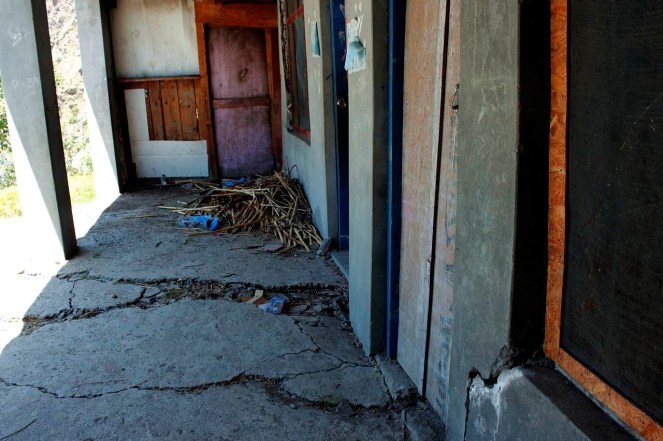
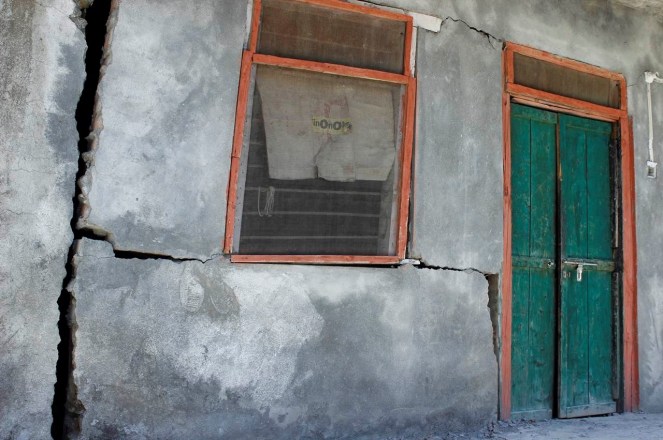
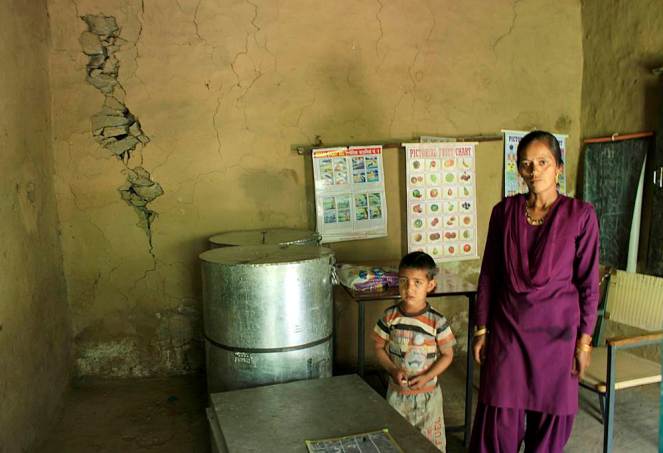
Cracks on the walls of Aaganbhadi Kendra of Dhalanjan village due to the tunnel construction of 36 MW, Chanju HEP in Chamba on Ravi basin’s Chanju nallah
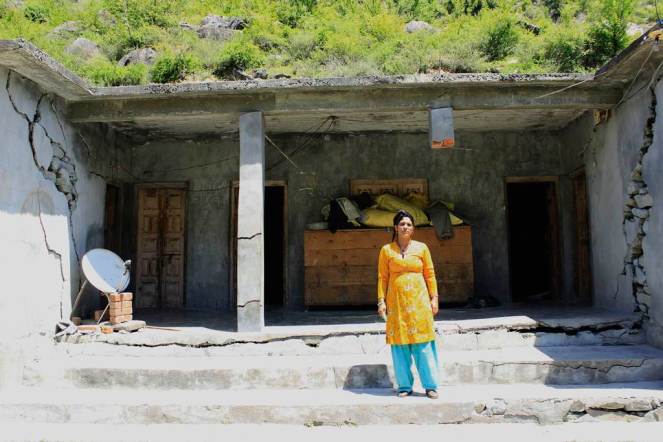
Lilo Devi’s house was located just above the HRT of the Chanju project. 12 houses were completely damaged by the tunnel construction in this village in December 2013
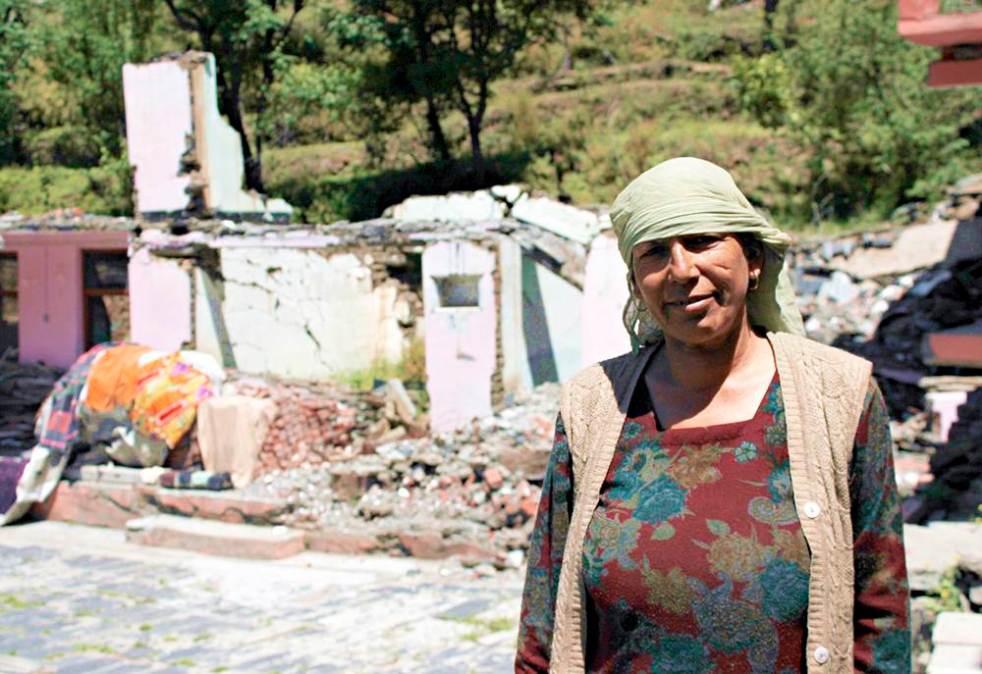
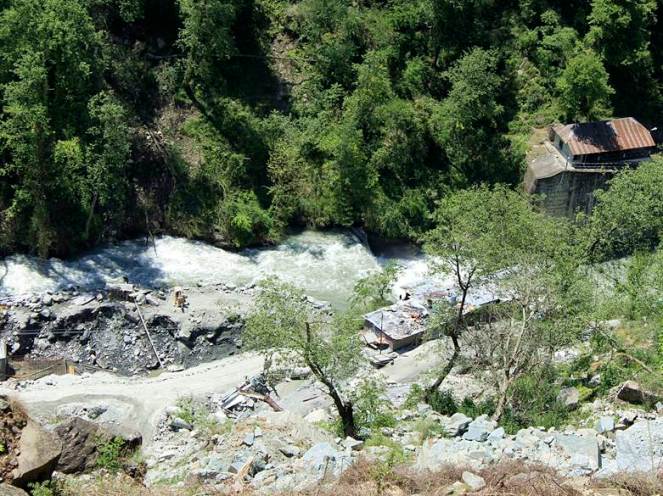
Power house site of Chanju HEP, where 1000s of trees were damaged by the blasting for the tunnel construction due to activation of a landslide

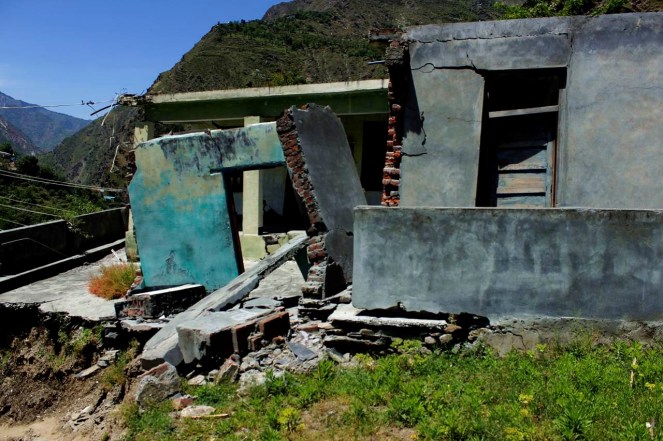
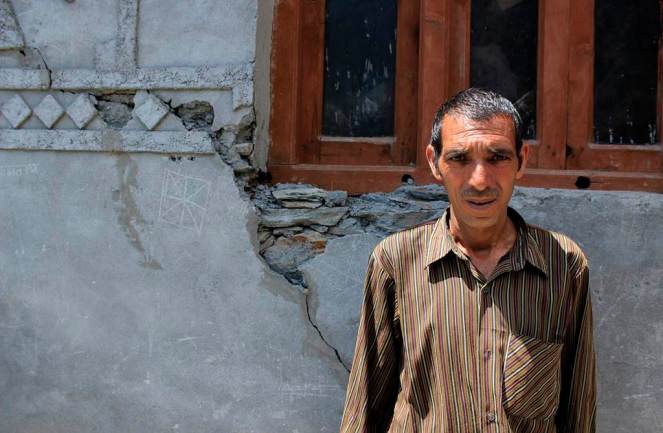
People of Dhalanjan village show their destroyed and dilapidated structures

People of Dhalanjan village show their destroyed and dilapidated structures

People of Dhalanjan village show their destroyed and dilapidated structures
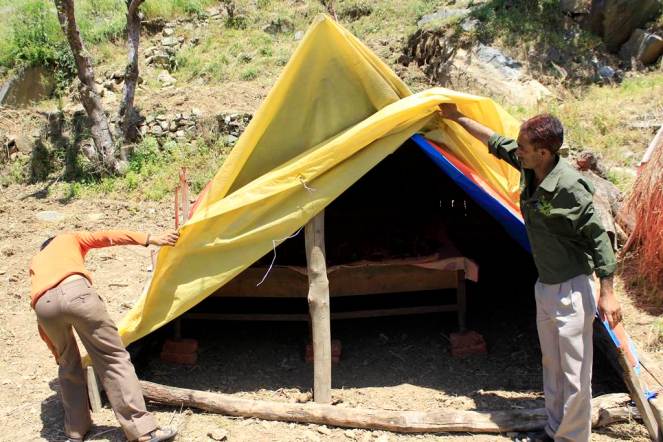
People of Dhalanjan village are now residing in temporary shelters

A.T. Hydro Power Project, Chamba

Project A.T. Hydro
Capacity (MW) 5
Basin Ravi (Tarela Nallah)
District Chamba
Village Alwas
Pictures taken on 01/05/2014
Landslide at Alwas due to road and channel construction for 5 MW Tarela project in Chamba
Cracks in the house of Shri Baija Ram due to Tarela Project in Alwas village
Lanslide close to Alwas village due to Tarela project

Ginni Hydro Power Project, Chamba

Project Ginni Hydro
Capacity (MW) 5
Basin Ravi (Tarela Nallah)
District Chamba
Villages Tarela, Junas
Picture was taken on 01/05/2014
Watermill rendered dysfunctional due to landslide cause by construction work for the 5MW Ginni Project in Tarela village in Chamba. The Project also diverted the water that was being used by the village for the watermill. Almost 15-20 watermills in this village have dried up due to the project’s construction activities
The location of the landslide which dried up the watermill

Landslide due to the construction activities and then subsequent destruction of the penstock of the Ginni project further led to soil erosion. The village above the slides, Junas has 20 houses and now stand threatened

Landslide due to the construction activities and then subsequent destruction of the penstock of the Ginni project further led to soil erosion. The village above the slides, Junas has 20 houses and now stand threatened

For Part 2 of the photo essay related to tunneling impacts of hydropower projects in Kinnaur district, see: https://sandrp.wordpress.com/2014/10/02/photo-essay-on-the-impacts-of-blasting-and-tunneling-for-hydropower-projects-in-kinnaur-district-in-himachal-pradesh-2/

END NOTES:

[1] The photo blog also appears here: http://www.himdhara.org/2014/08/06/photo-essay-when-mountains-are-hollowed/

[2] For a detailed article on this issue, Seeping through the cracks, see: http://www.epw.in/web-exclusives/seeping-through-cracks.html

Climate Change · Floods · Hydropower

Climate Change & Himalayan Glaciers: A News Round up

This year has witnessed erratic rainfall, increased snowfall, rising sea levels and other extreme weather conditions and the situation is not likely to improve in the coming months. Recent assessments have declared that this is the result of climate change, which we so conveniently blame for every untoward weather condition without properly addressing our own role in bringing it about or perhaps minimizing its effects. The climate is changing and the urgency to address this now is more than ever. Climate change acts as a catalyst and multiplies the threat we already face from certain environmental circumstances. The effects of climate change are being felt worldwide and global urgency is being expressed through various seminars and assessments being carried out by different international bodies like the IPCC (Intergovernmental Panel on Climate Change). Scientists have warned that extreme weather events will increase in intensity if climate change goes unchecked. Unchecked climatic change is also responsible for loss of life and property. According to the World Bank Report ‘Building Resilience: Integrating Climate and Disaster Risk into Development’, “from 1980 to 2012, disaster-related losses amounted to US$3,800 billion worldwide. Some 87% of these reported disasters (18,200 events), 74% of losses (US$2,800 billion) and 61% of lives lost (1.4 million in total) were caused by weather extremes (Munich Re 2013)[i].”

1

Image showing the retreat of the Gangotri glacier (http://glacierchange.files.wordpress.com/2010/01/gangotri-2006.jpg)

These weather extremes can cause and are in turn caused by changes in various water resources such as seas, lakes, rivers and glaciers. The Himalayas, spreading across over 2500 kms are the source of various life giving rivers in India and other parts of South Asia. The Ganga, Brahmaputra and the Indus, among the most important rivers for the South Asian region, originate in the Himalayan glaciers. The Himalayas have the highest concentration of glaciers outside the polar caps. These glaciers are natural stores and regulators of water in these rivers, which in turn support needs and livelihoods of millions of people, provide water for irrigation, domestic consumption and energy generation. Climate change is likely to result in smaller glaciers and less melt water. For rivers like the Indus, which gets almost half of its water from the melting of glaciers, this can lead to the endangering of the livelihood of millions of people living in low lying areas.

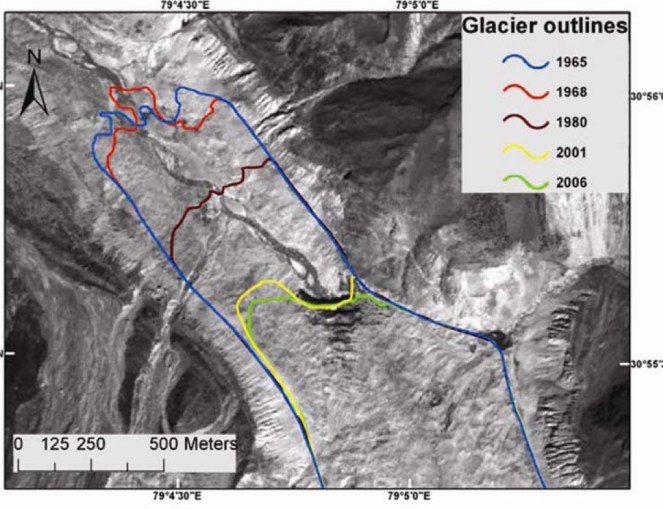
Rapid retreat of Himalayan Glaciers as compared to global averages Courtesy ICIMOD

Even though such fears are being expressed by various groups of people, studies done by the ICIMOD in collaboration with Netherlands’ Utrecht University and research organization FutureWater, observe that the water levels in the Indus, Ganga and the Brahmaputra are likely to increase at least until 2050[ii]. This, they say, is due to an increase in melt-water in the Indus and an increase in precipitation in the Ganges and the Brahmaputra. But these projections, as even the scientists acknowledge, do not say anything about the future of these rivers. With retreating glaciers, what will the fate of rivers like the Indus be, which depend largely on melt-water, is still to be ascertained.

Soaring temperatures, melting glaciers A study prepared by the Uttarakhand government has predicted that the mean annual temperature (MAT) in the Himalayan region is likely to rise by up to 2 degree centigrade by 2030. It has also predicted a rise of 5-13% in rainfall in the next 2 decades. This was disclosed in the Rajya Sabha on 5th of August, 2013 by the then Science and Technology minister, S Jaipal Reddy[iii].
According to a report presented in the Second India Water Forum in 2013, melting of glaciers will lead to a reduction in the critical water supplies for the people of the Himalayas. The International Centre for Integrated Mountain Development (ICIMOD) predicted that Himalayan water flow from the glaciers to the basin would reduce by about 25-50% by the end of this century[iv]. The significant effects of this will be seen in the upper reaches. Taking the case of Ganga, it is seen that though its snow and ice melts contributes only about 1-5% of the water in the Ganga and its tributaries, this is only an annual averageiv. The percentage of melt water becomes higher in the months of March, April and May. This then becomes a very crucial amount of water in the rivers in those summer months where it cannot be recharged through rain.

This is also very important for the hydro projects downstream. Seasonal melt-water serves as the main source of power for an increasing number of hydroelectric dams on the rivers served by the glaciers. The amount of electricity generated depends on the amount of water flow in the river. Thus with changing river patterns in South Asia, the hydropower production will be disrupted. A 1% reduction in stream flow can reduce electricity output by roughly 3%[v]. The unreliable and potentially decreasing flow of water implies that whole hydropower development plans need a comprehensive rethink, also considering the increaed threat of flashfloods and related disasters in changing climate.

Another report by the ICIMOD has found that glacier runoff contributes majorly to river flow for about 2-4 months, mainly from early/mid-summer, till late summer/early fall and reaches its maximum in the Northern hemisphere in July-August. The total mass of the glaciers is much more than what is recharged every year, thus leading to smooth inter-annual flow variability and thus reducing risks of the late summer droughts in hot and dry summers. Climate Change, however, may lead to consistent mass loss in glaciers, hence reducing their inter-annual storage capacity[vi].

The report further reads:

The withdrawal of glaciers and seasonal snow covers as the transient storages for precipitation in certain areas implies first and foremost the loss of flow regulation capacity in basin’s headwaters… Combined effect of the reduction of glacier area and seasonal snow extent on the seasonality of flow from the alpine catchments will be characterized by an increase of the magnitude of the short-term flow variability, in particular, an increase of autumn and winter flow, shift of late spring-early summer peak to earlier dates and possible decrease of mid-late summer flow (assuming no changes in precipitation). Hydrological regimes will be gradually changing from glacio-nival to fluvial, i.e., dependent primarily on rainfall… The glacier runoff simulation results suggest that relative shares of renewable and nonrenewable components in total glacier runoff have undergone a remarkable change: the nonrenewable component increased from 16-30% of total glacier runoff in 1961-1990 to 26-46% in 2001-2010 in all the study basins. However, the increase of non-renewable runoff in none of the basins has been large enough to overweigh the decrease of the renewable component of glacier runoff due to overall reduction of the glacier-covered area.[vii]

According to another study co-authored by Anil Kulkarni, visiting scientist at the Divecha Centre for Climatic Change, entitled, The state and fate of Himalayan glaciers, the rate of loss of glacial mass in the Himalayan and Karakoram (H-K) region, has increased after roughly 1995. Rough estimates suggest that glaciers in the Indian Himalaya are losing mass at the rate of 16 Billion T per year[viii]. The loss in mass for many small glaciers located in low altitude range could be larger than the average suggests, being as high as 1 m per year. This is substantial loss considering mean depth of small glaciers could be between 30 and 50 mviii.  These small glaciers and ice fields are important source of water for many mountain communities. This source of water is and could be significantly influenced in near future and could affect sustainability of many mountain communities. There is today neither a mapping of such vulnerable communities, nor any plans to compensate them for the losses they are suffering and will suffer for no fault of theirs.

This loss of mass, especially if it comprises of non-renewable runoff, can also lead to further complications. According to geophysicist and seismologist, Geological Survey of India, Mr. O.P. Mishra, melting of glaciers due to increasing temperatures and high rainfall also add to the already existing complex of factors influencing earthquake activity in the Himalayan region[ix]. According to him, the ice sheet melting leads to the loosening of the litho static pressure (vertical pressure on the underlying crust)ix. As a glacier retreats and its weight eases, the earth could show a tendency to bounce back up in the form of a moderate or even a strong earthquake. According to him, there is a strong correlation between the retreat of ice sheets and increased seismic activityix. This increase in seismic activity can also lead to further melting of glaciers and a change in their behavior as it has the capacity to alter the axis of rotation, which can then lead to changes in surrounding areas.

According to a study conducted by the Chinese Academy of Sciences (CAS), the glaciers in the Tibetan plateau, which form the source of vital rivers such as the Brahmaputra, have shrunk by about 15%, which would mean about 8,000 square kms since 1980[x].

Retreating glaciers in Tibet Photo: ecns.cn

They also found that the perennial frozen earth in the plateau had decreased by 16% over the past 30 yearsviii. This does not present a favourable scenario for water security in the region and downstream areas of the Brahmaputra. According to scientists, this glacial retreat has accelerated since the 1990s and is making the plateau more vulnerable to the effects of climate change. This again means the plans for hydropower projects in North East India will need a review, but unfortunately, the Environmental and Social Impact Assessments of these projects are not even considering these factors and the MoEFCC’s (Ministry of Environment and Forests and Climate Change) Expert Appraisal Committee on River Valley Projects is not even taking these into consideration while appraising these projects in spite of repeated submissions on this by SANDRP.

2

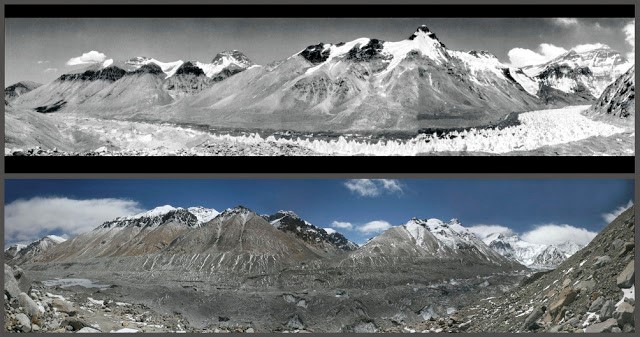
Above: The scale of glacial melting on the west Rongbuk Glacier located in Southern Tibet,between 1921 and 2008. Photo by: RGS and David Breashears. (http://tibet-edd.blogspot.in/2012/03/glacial-meltdown-and-glacial-lake.html)

The situation is similar in the case of the Gangotri glacier. Scientists at the GB Pant University of Himalayan Environment and Development have observed that the gangotri glacier is reducing in volume and size. The glacier is 30.2 km long and is the origin of the Bhagirathi, one of the main tributaries of the Ganga. This has retreated more than 1500 metres in the last 70 years. According to researchers, from the year 2000 onwards, the average rate of retreat of the glacier per year has been about 12-13 metres[xi].

Even while this is happening, there have not been any efforts to sensitize the scores of pilgrims who flock to Gangotri every year towards the condition the glacier is in, and how they can help in not letting it deteriorate further or at least in slowing down the process. They need to be made aware of the danger that the environment is faced with and should be encouraged to take steps towards its conservation. The state and union government also needs to ensure that local projects do not lead to worsening the situation. It is also the responsibility of the local people of the area to conserve what is important for them. They have to come out and take responsible action to ensure that they have a say in the plans made for their area.

Pilgrims at Gomukh, snout of Gangotri Glacier Photo from : http://savegangotri.org/scenes-of-ecological-degradation-and-destruction/

The impact of glacier melting is felt in the upper reaches of the river and also in low-lying areas. For example, the Tawi river in Jammu has become shallow over time so much so that one does not need a boat to cross it anymore at certain locations and certain times. According to the retired director of operations M.M. Munshi, Geological Survey of India, “the glaciers and barrier lakes in the Jujdhar and Seojdhar ranges, which contribute a larger share of water to Tawi, have almost disappeared… water flow in all the rivers is declining… the perpetual snow line in Jammu and Kashmir has gone up to 16,000 feet from 13,000 feet in the last hundred years”[xii]. Such changes affect those who mainly rely on water for their livelihoods, i.e., farmers as also ground water recharge. It is not only the unavailability of water, but also the floods caused due to untimely or heavy rains. In such situations, which are recorded to be increasingly occurring in this region, people have to suffer the loss of land, livestock and thus even livelihood.

Such floods in the upper reaches by the headwaters can also be caused due to the flooding/breaking of glacial lakes. These glacial lakes can either already exist or even get formed in case the precipitation and/or glaciers melt increases. Global warming is seen as one of the key causal factors in their formation. According to recent reports, melting of glaciers is leading to the formation of small lakes in the high reaches of Himachal Pradesh. These lakes pose danger to the villages downstream. Out of the 249 glacial lakes in Himachal, 11 have been identified as having high potential for breach. Glaciers and ice-bodies cover a total of 2472.49 sq km (4.44%) of the total area of 55673 sq km in the state[xiii]. This is made worse by the uncertainty of rainfall and increasing frequency of higher intensity rainfall.

These kind of glacial lakes are forming in many areas in the Himalayas. Such lakes can also have loose moraines with them, which pose a greater threat to downstream areas as there could be a sudden breach of the moraine dams leading to flooding. One of the ways to prevent excessive harm to the people is if the rate of glacier melting can be studied with some degree of attentiveness, then alarm systems can be installed in areas downstream to warn the people in case of a Glacial Lake Outburst Flood (GLOF).

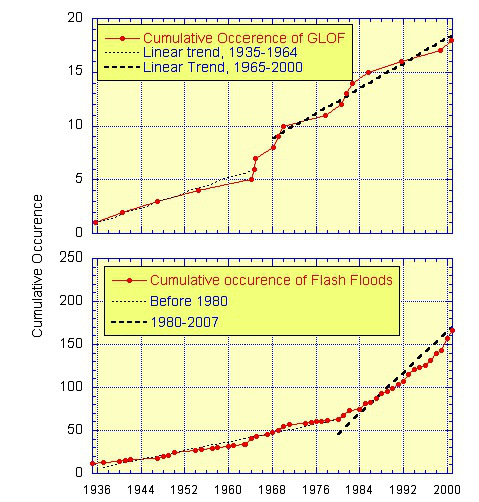
Rapidly increasing frequency of flash floods and GLOFs in Hindukush Himalayas Courtesy: ICIMOD


.3

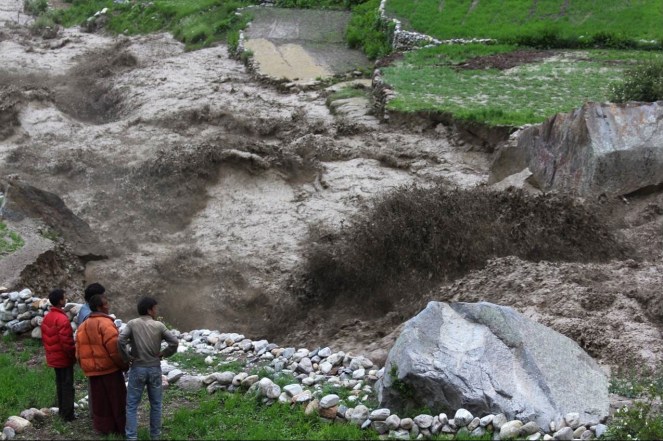
Above: People in Halji Village, NW Nepal, watch as a GLOF destroys their fields. (http://www.asianart.com/articles/halji2/index.html)

The monsoon is likely to become even more unpredictable in the coming years. Thus the threat to our environment from climate change is on the rise and it increases every day that we choose to ignore it. The government had set up the National Action Plan on Climate Change (NAPCC) in 2008 which was intended to serve as a road map on how India plans to combat climate change. There are various missions under the NAPCC amongst which are the National Water Mission and the National Mission for Sustaining the Himalayan Ecosystem, which has been constituted primarily to understand to what extent the glaciers are retreating and how the problem can be addressed. The government plans to review all the missions in 2017. However, as SANDRP publication “Review of NAPCC: There is little Hope here” showed, both content and process of formulation of the NAPCC had nothing to be hoped for particularly as far as vulnerable communities were concerned. A more detailed review of the National Water Mission in SANDRP’s 2012 publication “Water Sector Options for India in a Changing Climate” showed, the process, content and implementation of the National Water Mission is not going to bring any help to sustainable water resources development or to the vulnerable sections.

We have seen various so-called natural disasters happen since 2008, a very significant one of which was the Uttarakhand flood disaster of June 2013. The Uttarakhand government, at the end of last year, proposed a Rs 9,000 crore action plan to minimize the effects of climate change. Under this plan, it had allocated Rs 108 crore to be spent on water resources, like the treatment of catchment areas and flood control, etc. These measures just show the desperation of the government to show that something is being done in the namesake, even though it is not based on any scientific studies or participatory process. It seems to be the same way in which the Disaster Management cell was set up in Uttarakhand to try and manage any disaster that might strike the region, the campus of which was affected in the 2013 floods. The affected people have still not received sufficient help from the government. Even the basic minimum facility like the road that leads into Uttarkashi has not been constructed. The local people have to cross tracts of dusty and congested roads to reach from one place to the other when it has been over a year since disaster struck the town.

What we need is for the community to be involved at every stage from planning, impact assessments, decision making, implementation, operation and maintenance process and awareness creation in the areas which are most vulnerable. The current top-down approach that pushes business as usual situation will clearly not help.

Padmakshi Badoni, SANDRP, padmakshi.b@gmail.com

Standing Proud: Chewang Norphel from Ladkah who has been constructing small check dams and helping form artificial glaciers. Photo: climateheroes.oeg
Standing Proud: Chewang Norphel from Ladkah who has been constructing small check dams and helping form artificial glaciers. Photo: climateheroes.org


END NOTES:

[i] http://www-wds.worldbank.org/external/default/WDSContentServer/WDSP/IB/2013/11/14/000456286_20131114153130/Rendered/PDF/826480WP0v10Bu0130Box37986200OUO090.pdf

[ii] http://timesofindia.indiatimes.com/Home/Environment/Global-Warming/Water-supply-in-Ganga-Brahmaputra-will-increase-Study/articleshow/35955391.cms

[iii] http://economictimes.indiatimes.com/environment/global-warming/mean-annual-temperature-in-himalayan-region-to-rise-by-2-degrees-by-2030/articleshow/21625356.cms

[iv] http://www.thethirdpole.net/glacier-melt-will-reduce-crucial-water-supplies-for-people-living-in-the-himalayas/?utm_source=third+pole+newsletter&utm_campaign=8590241a4e-thethirdpole+June+newsletter+2013&utm_medium=email&utm_term=0_43686cf8d5-8590241a4e-46415029

[v] http://www.nature.com/news/climate-change-melting-glaciers-bring-energy-uncertainty-1.14031

[vi] http://www.iwmi.cgiar.org/Publications/IWMI_Research_Reports/PDF/PUB150/RR150.pdf)

[vii] http://www.iwmi.cgiar.org/Publications/IWMI_Research_Reports/PDF/PUB150/RR150.pdf

[viii] http://www.iisc.ernet.in/resehig_himalayan_glaciers.html

[ix] http://www.thethirdpole.net/in-the-jigsaw-of-himalayan-risk-climate-change-and-earthquakes-are-linked/?utm_source=third+pole+newsletter&utm_campaign=f192aa85b1-thethirdpole+June+newsletter+2013&utm_medium=email&utm_term=0_43686cf8d5-f192aa85b1-46415029

[x] http://www.thehindu.com/sci-tech/energy-and-environment/tibetan-plateau-glaciers-have-shrunk-by-15-per-cent/article6130865.ece

[xi] http://www.thehindu.com/sci-tech/energy-and-environment/gangotri-glacier-is-retreating-report/article5549905.ece

[xii] http://www.trust.org/item/20140225155301-lt9p4/?source=hpeditorial

[xiii] http://timesofindia.indiatimes.com/home/environment/global-warming/Melting-glaciers-giving-rise-to-new-lakes-in-Himachal-Pradesh/articleshow/38889169.cms

Chenab · Cumulative Impact Assessment · Environment Impact Assessment · Expert Appraisal Committee · Himachal Pradesh · Hydropeaking · Hydropower · Ministry of Environment and Forests

Sach Khas Hydro project in Chenab Basin: Another example of WAPCOS’s shoddy EIA

Even after multiple appeals by various experts, organizations and local people, Expert Appraisal Committee (EAC) set up by Ministry of Environment & Forest (MoEF) has once again chosen to ignore alarms of changing climate such as disaster of Uttarakhand in 2013 and has continued to consider Hydro Power Projects on Chenab Basin for Environmental Clearance (EC) before the Cumulative Impact Assessment of Chenab Basin has been accepted by MoEF. While on one hand the State Government of Himachal Pradesh has promptly appointed a committee headed by Chief Secretary to supervise and monitor all the progress and to “sort out” problems of getting various clearances “without delay in single window system”[i], on the other hand overall transparency of the Environmental Clearance Process has been steadily decreasing.

Sach Khas HEP (260 + 7 MW) (located in Chamba District of Himachal Pradesh) was considered by EAC in its 76th meeting held on August 11, 2014. Even though the project was considered for EC, no documents were uploaded on the website. Website does not even list the project under “Awaiting EC” category. This is in clear violation with MoEF norms, basic norms of transparency and Central Information Commission (CIC) orders. There are no fixed guidelines for documents to the uploaded, the time by when they should be uploaded and rules that project cannot be considered if the documents are not uploaded.

SANDRP recently sent a detailed submission to EAC pointing out several irregularities of the project. The comments were based on reading of the Environmental Impact Assessment (EIA) report available on the HP Pollution Control Board Website (which cannot be substitute for putting up the documents on EAC website). Environmental Management Plan (EMP) of the project is not accessible at all! Non availability of EMP on the HP Pollution Control Board website too is a violation of EIA notification 2006.

The EIA report which is prepared by WAPCOS is another example of a poorly conducted EIA with generic impact prediction and no detailed assessment or quantification of the impacts. Moreover since EMP is not available in the public domain, there is no way to assess how effectively the impacts have been translated into mitigation measures. Violations of Terms of Reference (TOR) issued by EAC at the time of scoping clearance is a serious concern.

Project Profile

Sach Khas HEP is a Dam-toe powerhouse scheme. The project has a Concrete Dam & Spillway with Gross storage of 25.24 MCM, Live Storage of 8.69 MCM and Reservoir Stretch at FRL of 8.2 km (approx.) Three intakes each leading to 5.8m diameter penstocks are planned to be located on three of the right bank non-overflow blocks. Three penstocks offtaking from the intakes are proposed to direct the flows to an underground powerhouse on the right bank of the Chenab river housing 3 units of 86.67 MW turbines with a total installed capacity of 260 MW. The project also proposes to construct 2 units of 7 MW each to be installed to utilize the mandatory environmental releases. The EIA mentions (p 2.19) that the HP government has allocated 3.5 MW Hydropower project on Chhou Nala in the project area to the project authority, so this is integral part of the project.

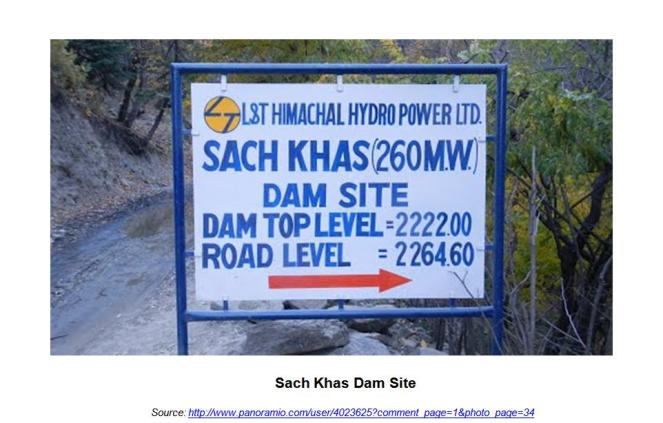
Sach Khas Dam Site

Sach Khas Hydro Electric Project was considered before completion of Cumulative Impact Assessment of Chenab Basin

Chenab basin may have one of the highest concentrations of hydropower projects among all basins in India[i]. The basin has over 60 HEPs under various stages of planning, construction and commissioning in states of Himachal Pradesh (HP) and Jammu and Kashmir (J&K). 49 of these projects are planned or under construction in Chenab in HP and of which 28 projects of combined generation capacity of 5,800 MW are at an advanced stage of obtaining (Environment Ministry) clearances[ii]. MoEF sanctioned TORs for Cumulative Impact Assessment (CIA) of the HEPs on Chenab in HP in February 2012 however the project specific ECs were delinked from the CIAs[iii].

MoEFs Office Memorandum dated May 28 2013 states, “While, first project in a basin could come up without insisting on cumulative impact study, for all subsequent hydro-power projects in the basin, it should be incumbent on the developer of second/ other project(s) to incorporate all possible and potential impacts of the other project (s) in the basin to get a cumulative impact assessment done.”
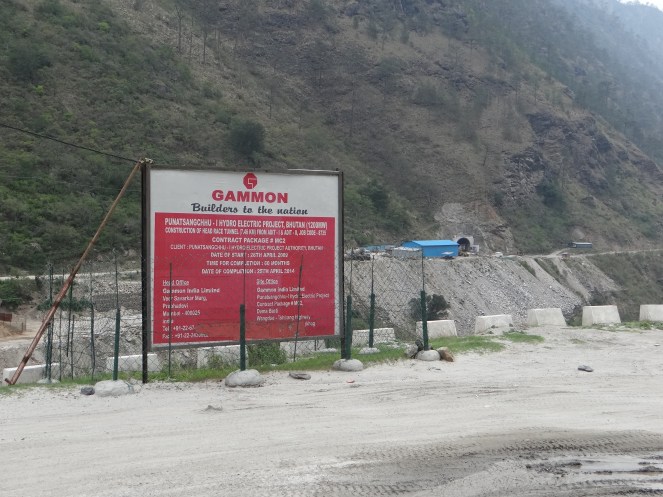
We had pointed out in our submission against Kiru & Kwar projects in Jammu & Kashmir that CIA of all the proposed, under construction and operational projects and carrying capacity assessment (CCA) of the Chenab River basin to see if it can support the massive number of HEPs in safe and sustainable way is one of the first steps before considering clearances to HEPs in this region. Looking at the fragility of the Himalayan ecosystem, considering any hydropower project in the basin without these studies will be an invitation to disaster[iv]. This fact has been repeatedly highlighted by multiple organizations and experts including SANDRP.

Sach Khas EIA Study: Gross violation of TOR

The EIA violates several stipulations of TOR issued on Feb 22, 2013, which also included the stipulations of EAC in Sept 2012 and Nov 2012 meetings where the project TOR was considered and also Annexure attached with the TOR. This has severely affected the overall quality of the EIA report.

About assessing the impacts of the project on wild life the TOR said: “Reaching conclusion about the absence of such (Rare, Endangered & Threatened) species in the study area, based on such (conventional sampling) methodology is misleading” as such “species are usually secretive in behavior”, “species specific methodologies should be adopted to ascertain their presence in the study area”, “If the need be, modern methods like camera trapping can be resorted to”. None of this is shown to be done in any credible way in EIA.

TOR also recommends intense study of available fish species in the river particularly during summer (lean) months with help of experimental fishing with the help of different types of cast and grill nets. There is no evidence in EIA of any such intensive efforts detailed here. In fact the field survey in summer moths was done in May June 2010, years before the EAC stipulation.

TOR (EAC minutes of Sept 2012) state “Chenab river in this stretch has good fish species diversity & their sustenance has to be studied by a reputed institute.” This is entirely missing. TOR (EAC minutes of Sept 2012) states “During the day, the adequacy of this discharge (12 cumecs) from aquatic biodiversity consideration needs to be substantiated”. This again is missing. TOR said 10 MW secondary station may be a more desirable option. This is not even assessed. TOR said Impacts of abrupt peaking need to be assessed. This is also not done. Site specific E-Flow studies and peaking studies stipulated by TOR are missing. TOR states that Public Hearing / consultations should be addressed & incorporated in the EIA-EMP. However there is no evidence of this in the report.

TOR also required following to be included in EIA, but many of them found to be missing: L section of ALL upstream, downstream projects; Project layout showing all components with A-3 scale of clarity and 1: 50000 scale; drainage pattern map of river upto project; critically degraded areas delineated; Demarcation of snowfed/ rainfed areas; different riverine habitats like rapids, pools, side pools, variations, etc;

Contradictions in basic project parameters

The EIA report provides contradictions in even in basic parameters of the project components: So section 2.1 on page 2.1 says, “The envisaged tail water level upstream of the Saichu Nala confluence is 2150 m.” This i s when the TWL is supposed to 2149 m as per diagram on next page from the EIA. Section 2.3 says: “River bed elevation at the proposed dam axis is 2145m.” At the same time, the tail water level is 2149 m. How can Tail water level of hydropower project be higher than the river bed level at the dam site? This means that the project is occupying the river elevation beyond what HPPCL has allocated to it. Page 23 of EIA says: “…the centerline of the machines in the powerhouse is proposed at 2138.00m…” So the Centre line o the power house is full 11 m BELOW the tail water level of 2149 m? How will the water from power house CLIMB 11 m to reach TWL level?

EIA report unacceptable on many fronts

Dam ht of 70 m was stated in TOR, however the report states it to be 74 from river bed. The submergence area, consequently has gone up from 70 ha at TOR stage to 82.16 ha, as mentioned in Table 2.2 of EIA. Total land requirement which was 102.48 ha as per TOR ha has now increased to 125.62 ha, with forest land requirement going up to 118.22 ha. This is a significant departure from TOR that should be requiring fresh scoping clearance. Part of the field study has been done for the project more than four years ago and rest too more than three years ago. There are not details as to exactly what was done in field study. EAC had noted in their meeting in Sept 2012, while considering fresh scoping clearance for the project, “EIA and EMP should be carried out afresh keeping in view the drastic changes in the features due to increase in installed capacity of the power house.” (Emphasis added.) The EIA report is thus unacceptable on multiple fronts.

No cognizance of Cumulative Impacts

CIA of the entire Chenab basin including HP and J&K is not being considered, which itself is violating MoEFs Office Memorandum dated May 28 2013. The OM states that all states were to initiate carrying capacity studies within three months from the date of the OM No. J-11013/I/2013-IA-I. Since this has not happened in case of Chanab basin in J&K, considering any more projects in the basin for Environmental clearance will be in violation of the MoEF OM.

On Cumulative Impact Assessment, the OM said, “While, first project in a basin could come up without insisting on cumulative impact study, for all subsequent hydro-power projects in the basin, it should be incumbent on the developer of second/ other project(s) to incorporate all possible and potential impacts of the other project (s) in the basin to get a cumulative impact assessment done.” The EIA of both the projects does not include the cumulative impacts.

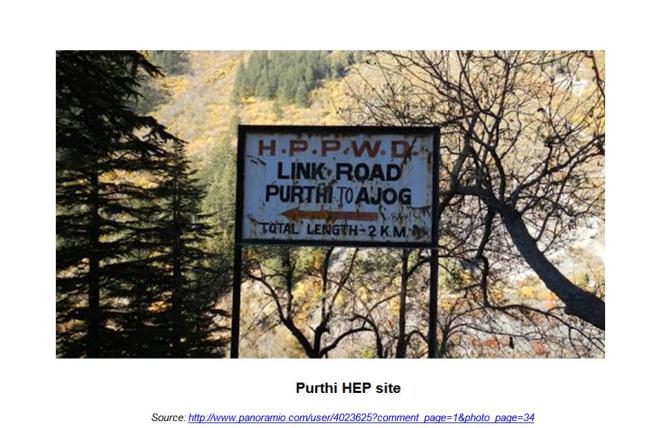
The project is located between Purthi HEP upstream and Duggar HEP downstream. Elevation difference between TWL of Purthi (2220m) and FRL of Sach Khas (2219m) is barely 1 m. The horizontal distance between them is as less as 117m. This is clearly unacceptable and in violation of the minimalist EAC-MoEF norms.

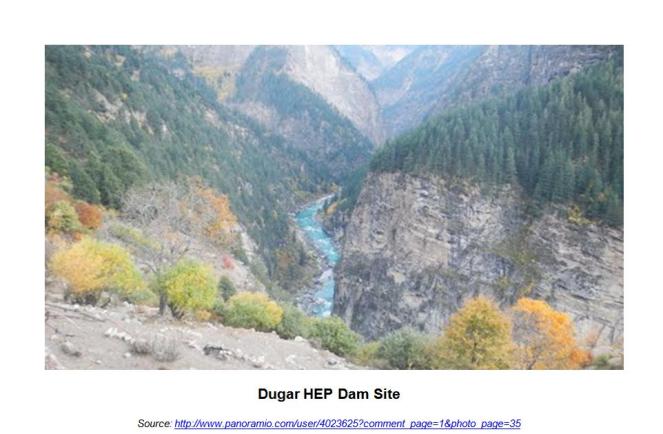
Elevation difference between TWL of Sach Khas (2149m) and the FRL of Duggar (2105 m) is 44 m and the horizontal distance is 6 km. This is thus a cascade of three among many other projects in the basin.

Cascade of three projects

Purthi HEP Site

Dugar HEP Site

Even so the report does not even mention the other two projects. EIA study is project specific and no cumulative impacts are assessed along with the other two projects. The EIA does not provide a list of all the HEP projects taken up in the Chenab basin in HP state[i]. The MoEF sanctioned TORs for conducting Cumulative Impact Assessment (CIA) of Chenab In February 2012. EAC considering any further project in Chenab basin before completion of the CIA study of the basin by a credible agency (not WAPCOS) and finalised in a participatory way will be in violation of the MoEF order of May 2013.

EIA report completely misses out on the detailed analysis of cumulative impacts in terms of disaster potential of the area and how the project will increase that; impacts on flora, fauna, carrying capacity, livelihoods; cumulative downstream impact, cumulative impact of hydro peaking. impacts on springs and drainage pattern; impacts of forest diversion on environment, hydrology and society and implementation of the Forest Rights Act; changing silt flow pattern in different phases, impacts of mining, tunneling, blasting etc. Impact of reduction in adaptive capacity of the people and area to disasters in normal circumstance AND with climate change has not been assessed. Project makes no assessment of impact of climate change on the project even when over 60% of the catchment area of the project is snow-fed and glacier fed. Options assessment in terms of non dam options as required under EIA manual and National Water Policy are missing.

Generic impact prediction

Impact prediction is too generic with no detailed assessment, which is what EIA is supposed to do. Impacts have not been quantified at all. The EIA report merely states the likely impacts in 2 or 3 sentences. Several important impacts have gone missing. None of the serious impacts have been quantified. For an informed decision making and effective mitigation and EMP quantification of impacts is essentially a pre requisite. Following are some such incidences:

Impacts of blasting & tunneling: TOR for the impacts on “Socio-economic aspects” says, “Impacts of Blasting activity during project construction which generally destabilize the land mass and leads to landslides, damage to properties and drying up of natural springs and cause noise pollution will be studied.”(p.196 of EIA Report). The total area required for Underground Works is 2.44 Ha. The project proposes underground power house with an installed capacity of (260+7). There are three TRTs proposed of length 99.75m, 113.13m, and 132.35m. Even so the impacts of blasting for such huge construction are simply disregarded in the EIA report by stating that “The overall impact due to blasting operations will be restricted well below the surface and no major impacts are envisaged at the ground level.” (p.165). While assessing the impacts of blasting on wild life the report states that direct sighting of the animals has not been found in the study area and the possible reason could be habitation of few villages. No attempt has been made to assess impacts of blasting like damage to properties, drying up of springs etc. This is a clear violation of TOR.

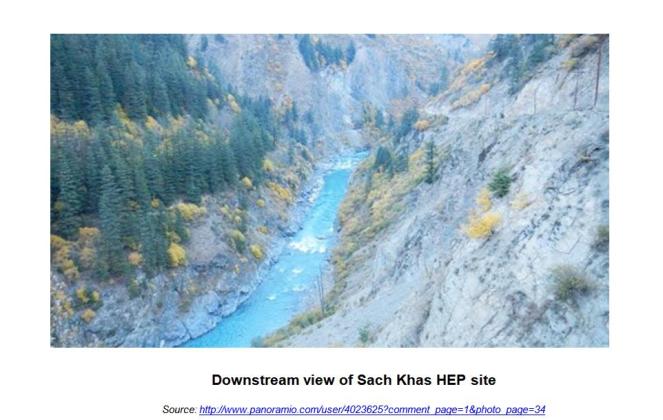
Impacts of Peaking & diurnal flow fluctuation: In the lean season during peaking power generation the reservoir will be filled up to FRL. As stated in report, this will result in drying of river stretch downstream of dam site of Sach Khas hydroelectric project for a stretch of 6.0 km, i.e. upto tail end of reservoir of Dugar hydroelectric project. The drying of river stretch to fill the reservoir upto FRL for peaking power will last even upto 23.5 hours, after which there will continuous flow equivalent to rated discharge of 428.1 cumec for 0.5 to 2 hours. Such significant diurnal fluctuation with no free flowing river stretch will have serious impacts on river eco system. There is no assessment of these impacts. Instead the report projects this as a positive impact stating “In such a scenario, significant re-aeration from natural atmosphere takes place, which maintains Dissolved Oxygen in the water body.” This is absurd, not substantiated and unscientific.

International experts have clearly concluded that: “If it is peaking it is not ROR”[ii]. In this case the EIA says the project will be peaking and yet ROR project, which is clear contradiction in terms.

Impacts on wild life: EIA report lists 18 faunal species found in the study area. Out of them 8 species are Schedule I species and 8 Schedule II species. Even so while assessing the impacts of increased accessibility, Chapter 9.6.2 b(I) of the report mentions “Since significant wildlife population is not found in the region, adverse impacts of such interferences are likely to be marginal.” If the project has so many schedule I and II species, the impact of the project on them must be assessed in the EIA. Moreover, massive construction activities, the impacts of long reservoir with fluctuating levels on daily basis, high diurnal fluctuation and dry river stretch of 6km on wild life could be serious. But the report fails to attempt any assessment of the same.

Impacts on geophysical environment are missing: The project involves Underground Works of 2.44 Ha. This involves construction of underground powerhouse, three headrace tunnels and several other structures. This will have serious impacts on the geophysical environment of the region and may activate old and new landslides in the vicinity of the project. The report makes no detailed assessment of this. Generic comments like “Removal of trees on slopes and re-working of the slopes in the immediate vicinity of roads can encourage landslides, erosion gullies, etc.” (p.176) have been made throughout the report. Such generic statements can be found in every WAPCOS report. Such statements render the whole EIA exercise as a farce. Project specific, site specific impact assessment has to be done by the EIA. Considering that the project is situated between Purthi HEP upstream and Duggar HEP downstream, a detailed assessment of the geophysical environment and impact of all the project activities is necessary. Further since the EMP is not at all available in public domain, it is difficult to assess what measures are suggested and how effective measures to arrest possible landslides have been suggested.

Downstream view of Sach Khas

Right Bank Drift at Sach Khas

No assessment for Environmental Flow Releases

TOR states that the minimum environmental flow shall be 20% of the flow of four consecutive lean months of 90% dependable year, 30% of the average monsoon flow. The flow for remaining months shall be in between 20-30%, depending on the site specific requirements (p.192). Further the TOR specifically states that a site specific study shall be carried out by an expert organization (p.193).

The TOR also mandated, “A site specific study shall be carried out by an expert organisation.” However completely violating the TOR, the EIA report makes no attempt for the site specific study to establish environmental flows. Instead it proposes to construct 2 units of 7 MW each to be installed to utilize the mandatory environmental releases. This completely defeats the basic purpose of the environmental flow releases. Such flows will help neither the riverine biodiversity, nor fish migration nor provide upstream downstream connectivity.

Socio-economic profile of the study area and Rehabilitation & Resettlement Plan are missing

TOR specifies a detailed assessment of socio-economic profile within 10 km of the study area including demographic profile, economic structure, developmental profile, agricultural practices, ethnographic structure etc. It also specifies documentation sensitive habitats (in terms of historical, cultural, religious and economic importance) of dependence of the local people on minor forest produce and their cattle grazing rights in the forest land. As per the TOR the EIA report is required to list details of all the project affected families.

Report however excludes assessment of socio economic impact of the study area. The total land required for the project is 125.62 ha, of which about 118.22 ha is forest land and the balance land 7.4 ha is private land. There are cursory mentions of habitations in the study area. Chapter 8.7 ‘Economically Important plant species’ states that in study area the local people are dependent on the forest produce such as fruits, timber, fuel wood, dyes and fodder for their livelihood. However the EIA report does not even estimate the population displaced due to land acquisition and impact of the various components of the project on livelihood of the people. Further detailed study is then out of question. This is again gross violation of TOR.

Indus Water Treaty

Chenab basin is international basin as per the Indus Water Treaty. A recent order of the international court has debarred India from operating any projects below MDDL and has disallowed provision for facility to achieve drawdown below MDDL in any future project[i] (for details, see: https://sandrp.wordpress.com/2013/12/23/international-court-asks-india-to-release-more-water-and-rejects-plea-to-re-interpret-february-verdict-on-kishanganga/). The EIA described gate opening in this project for silt removal, which stands debarred by international court. The EIA thus is in violation of the verdict of international Court.

The EIA says (p. 21 bottom), “Five low level sluices with crest at 2167m of size 7.5m width and 12.3m height are proposed for flood passage. Drawdown flushing of the reservoir shall be carried out through these sluices for flushing out of the sediment entrapped in the reservoir. Detailed studies on sedimentation and reservoir flushing can be taken up at detailed planning stage.” The MDDL of the project is 2209.3 m as mentioned in the same para. This means the project envisages sediment flushing by drawdown to 2167 m (sluice crest level, the sluice bottom level wll be 12.3 m below that), about 42.3 m below the MDDL. This is clearly not allowed under PCA order cited above on Indus Treaty.

Impact of 3.5 MW Chhou Nala HEP to be constructed for the project not assessed

The EIA mentions (p 2.19) that the HP government has allocated 3.5 MW Hydropower project on Chhou Nala in the project area to the project authority, so this is integral part of the project. But the EIA does not contain any impacts of the SHP. The stream on which this is planned is extremely important for the people as drinking water schemes, irrigation Kuhls and gharats of Rai, Chhou and Thandal villages are located on this stream in the proposed project area. Thus the project will have huge impacts, but there is no assessment of these impacts. This is another glaring omission of EIA. It was shocking to read that the resident commissioner said at the public hearing that this question is not part of Environmental Public hearing, when it is very much part of it.

Public hearing report

At several places either no information is given or misleading information has been presented. For example the project representatives mis-informed the people at PH that 15-20% water will be released, when minimum water they need to release is above 20%. DFO said that soil will be spread over the muck disposal site for tree planting over it, but there is no provision of this in EIA-EMP. Many questions were provided with vague answers or no answers at all. No clear answer was given when asked if the muck dumping sites have been decided in consultation with the local people, implied answer is clearly that local people have NOT be consulted. When asked about agreements to ensure that the company implements EMP and Social Management Plan as required, there was no promise that such an agreement will be signed with the village gram sabhas. The affected people raised the issue of erosion impact of diversion tunnel, but no specific response was provided in response to this issue. When a resident of Chhou village raised the issue of vulnerability of the village to the landslides, no clear answer was given by the project developer. When the same person asked that our cremation ground is going under submergence, what is the company planning about it, the project developer replied that IF the cremation ground goes under submergence, we will think about this. This only shows that the project developer and EIA consultant have not even done an assessment of such basic aspects. The PH report accepts that close to 100 workers are already working without even basic sanitation facilities, this is clear violation of EIA notification further the EIA Agency fails to mention this.

EIA is full of cut and paste, generic statements, no actual assessments

Out of nine chapters of EIA, only the last chapter is about impacts assessments! So out of 170 pages of nine chapters, only 31 pages of chapter 9 is supposedly about impact assessment and there too mostly there is no real impact assessment, mostly only generic statements that can be included in any EIA. There are several unnecessary sections in the EIA like chapter 3 on “Construction Methodology” which is unnecessary in EIA. In most other sections too, the information is just cut and paste from DPR. By way of impact prediction, the EIA report is only listing them doing absolutely NO ASSESSMENT and no quantification of impacts is attempted. Further since the EMP is not available in the public domain, it is impossible to assess if the measures provided in the EMP are effective. Such EIA is definitely not acceptable.

No proper referencing The EIA does not provide references to the specific information, without this it is difficult to cross check which information is from which secondary sources and how credible it is and which information is from primary survey.

Conclusion

This is another most shoddy piece of EIA by WAPCOS.

Moreover, as we can see the EIA has not done several impact assessments, has violated large no of TORs on several counts, the EIA-EMP are not available on EAC website, the project parameters have undergone changes necessitating fresh scoping clearance as mentioned in TOR but that has not happened, baseline study is 3-4 years old, EAC stipulation of fresh EIA-EMP has been violated, Project is using larger riverine stretch than given by HP govt, there is no proper referencing, hydrology is weak, EMP is not available on HPPCB website in violation of EIA notification, among several other issues listed above. Every conceivable serious problem can be found in this EIA of WAPCOS.

It is full of generic statements that can be pasted in any EIA without any attempt at project specific impact assessment. SANDRP has been pointing to EAC and MoEF about such unacceptable EIA by WAPCOS for several years, but neither EAC, nor MoEF has taken any action in this regard. SANDRP has once again urged to EAC and MoEF to reject this EIA and recommend blacklisting of WAPCOS and to issue fresh scoping clearance for the project as mentioned in the TOR since the project parameters (dam height, submergence area, land requirement, etc) have gone through significant changes.

We sincerely hope the EAC will not only take serious cognition of these and not recommend clearance to the project, but also direct the project proponent and EIA consultant to implement other recommendations made above.

 Amruta Pradhan (amrutapradhan@gmail.com), Himanshu Thakkar (ht.sandrp@gmail.com)

[i] https://sandrp.wordpress.com/2013/12/23/international-court-asks-india-to-release-more-water-and-rejects-plea-to-re-interpret-february-verdict-on-kishanganga/

[ii] See for example https://sandrp.in/basin_maps/Hydro_%20Electric_Projects_in_Chenab_River_Basin.pdf

[iii] https://sandrp.wordpress.com/2014/07/01/if-its-peaking-its-not-an-ror-interview-with-dr-thomas-hardy-iahr-and-texas-state-university/

[iv] https://sandrp.wordpress.com/2013/07/01/pm-kick-starts-850-mw-ratle-project-in-jk-without-full-impact-assessment-invitation-to-another-disaster-in-chenab-basin/

[v] https://sandrp.in/hydropower/Dams_on_Chenab_How_many_are_too_many_Dec2012.pdf

[vii] https://sandrp.wordpress.com/2013/07/01/pm-kick-starts-850-mw-ratle-project-in-jk-without-full-impact-assessment-invitation-to-another-disaster-in-chenab-basin/

[viii] Refer to SANDRP studies on Chenab

– https://sandrp.wordpress.com/2013/07/01/pm-kick-starts-850-mw-ratle-project-in-jk-without-full-impact-assessment-invitation-to-another-disaster-in-chenab-basin/

– https://sandrp.in/hydropower/Dams_on_Chenab_How_many_are_too_many_Dec2012.pdf

– https://sandrp.wordpress.com/2014/05/06/massive-hydropower-capacity-being-developed-by-india-himalayas-cannot-take-this-onslought/

[ix] http://northgazette.com/news/2013/04/25/special-committee-to-monitor-hydro-projects-in-hp-cm/

Bhutan · Himalayas · Hydropower

Flow for Worship, Flow for Money: Water Wheels and Hydropower in Bhutan

Countries like Bhutan, Nepal, parts of Tibet and parts of India like Sikkim have some lovely Buddhist traditions linked to the nature. On the edges of forests, overlooking valleys and atop majestic mountains flutter tiny colorful prayer flags. Inside Dzongs, fixed prayer wheels spin by the tug of a pious hand. While spinning and fluttering, the prayers are supposed to be disseminated in the universe, reaching every sentinel being.

But there is a third kind of fascinating prayer wheel. It worships not only the creator, but also flowing water. Today, as naturally flowing waters become rarer, it is strangely reassuring to see these wheels spinning away, as the stream pushes the small wooden turbines round and round. These wheels are more fascinating for their symbolic significance: In these regions where water wheels worship the flow, the same flow is being harnessed for generating money and power: Hydropower. In Bhutan, the 10,000 MW + hydropower initiative supported by India and financial institutions like ADB & other foreign players will dam almost all of the big river systems in the country.

In fact, institutions like ADB are so over-enthusiastic in pushing hydropower in Bhutan ( ADB is ‘administering‘ Hydropower grants to Bhutan from countries like Norway and Japan)  that they see Bhutan’s strong environmental conservation practices as ‘hurdles’ in this development. ADB says: “Bhutan’s strong environmental conservation policies have affected the pace of implementing power projects because of the time required to complete procedures such as environmental impact assessments, public consultations, forestry clearances, and road planning.”

What follows is a short photo feature on Water Wheels in Bhutan as well as the hydropower development in the Punatsangchu Basin, through the 1200 MW Punatsangchu I HEP. Just a few kilometers downstream is the proposed intake and dam of Punatsangchu II which is also underway.

Bhutan is the only country in the world which measures its development not only in terms of GDP, but through Gross National Happiness (GNH), which is an aggregate of a number of things, including environmental conservation and preservation of culture.

Let us hope that this dense hydropower development does not affect the Bhutanese tenets of happiness…

A majestic three tiered prayer wheel in Paro, on way to Tigers Nest Monastery Photo: SANDRP
Majestic three- tiered prayer wheels in Paro, on way to Tiger’s Nest Monastery Photo: SANDRP
A tiny water wheel in agricultural fields of Paro Photo: SANDRP
One more water wheel on way to Taktsang Monastery Photo: SANDRP
A water prayer wheel in a village near Paro Photo: SANDRP
A water wheel on a flowing stream in a dense forest, on way to Phobjikha Valley Photo: SANDRP
The wooden wheel blades
The wooden wheel blades Photo: SANDRP
A roadside Prayer wheel with steel blades Photo: SANDRP
A roadside water wheel on way to Thimpu Photo: SANDRP
On way to Thimpu Photo: SANDRP
On way to Taktsang Monastery Photo: SANDRP
Cascade of three water wheels in Phobjikha Valley Photo: SANDRP
Different ways of using the flow: A storehouse for Apples and other seasonal fruits, built on the top of a stream, which acts like a natural AC Photo: SANDRP
Fresh fruits, preserved in a storehouse on the stream! Photo: SANDRP

HYDROPOWER IN BHUTAN

At the same time, huge, unprecedented hydropower developing is also challenging the tiny nation. Much of it is pushed by India.

Planned, underconstruction and commissioned hydropower projects may cover all the river systems in Bhutan. Photo: Down to Earth from CEA

Bhutan was in news as it was the first foreign country to which the new Prime Minister Narendra Modi paid a visit in June 2014. While he laid the foundation stone of the the 600 MW Khonglongchu Project, protests erupted in downstream Assam, India. Assam had suffered flood losses mainly in 2004 when the 60 MW Kurichhu Project, built by NHPC, released flood waters which reached Indian territory. Same fears are now expressed for Mangdechu and Konglongchu Projects. On July 9, 2014, The Times of India reported that Assam state BJP unit (BJP is in power at the centre), “They (BJP state leaders) also told Pandey (BJP all-India chief for morchas and cells Mahendra Pandey) that even Modi’s foundation laying for a 600-MW power station in Bhutan last month was not taken with enthusiasm by the people in Lower Assam districts because they were already affected by the impact of existing power projects in the Himalayan country.”

In 2006, India and Bhutan signed an agreement to “facilitate and promote development and construction of hydropower projects and associated transmission systems as well as trade in electricity, through both public and private sector engagements”. Under this agreement, India has agreed to minimum imports of 5,000 MW of hydropower capacity by 2020. The agreement will be valid for a period of 60 years and can be extended. In addition to this agreement, a protocol between India and Bhutan was signed in 2009 through which India will develop 10,000 MWs of hydropower in Bhutan for export of surplus power to India by 2020. This has been going on through a mix of soft loans and grants. This also means services for Indian engineering and design consultants like WAPCOS and Indian developers & contractors like L and T, NHPC, Gammon India, JP Associates, BHEL, SJVN, THDC, Tatas, HCC, Jindal, etc.[1] Indian companies like NHPC, WAPCOS are also involved in Detailed Project Reports, while other Indian companies are bagging the construction and equipment contracts.[2]

Already, three hydro projects funded and built by India are operating in Bhutan which include 336 MW Chukha, 60 MW Kurichu and 1020 MW Tala HEP.  Under-construction projects funded mainly by India include 1200 MW Punatsangchhu HE Project Stage-I, 1020 MW Punatsangchu Stage II and 720 MW Mangdechu HEP. News reports indicate that Bhutan and Indian government have together identified 10 HEPs with a total capacity of 11,576 MW by 2020 for development. In addition the country has about 16 operating HEPs[3].

Punatsangchu I Project, 130 mts high dam, envisages submergence of 673 acres of Reserve forest land, 78 acres of private land (involving 116 land owners) and 6 acres of Institutional Land (2 institutions) till the end of April 2013 for the project construction. Punatsangchu II project with 80 mts high dam, involves 479 acres of reserve forest land, 14 acres of private land (involving 17 land owners) and 5 acres of Institutional Land (3 institutions) till the end of April 2013 for the project construction.

In 2014, India and Bhutan also signed an agreement for 2120 MW hydropower capacity through four projects which include 600 MW Kholongchu project, 180 MW Bunakha project (with 230 MW downstream benefits from Tala, Chukha and Wangchu HEPs), 570 MW Wangchu project, and 770 MW Chamkarchu-I project.[4]

SANDRP visited the site of Punatsangchu I Project which has witnessed serious geological issues, which include severe sinking of the right bank, throwing the project off schedule and also increasing its cost. Similar geological surprises are also feared at Punatsangchu II Site. 

Following are some pictures from Punatsangchu I Site.

DSC08051
Riparian farming on a tributary of Punatsangchu Photo: SANDRP


Coffer dam and diversion of PSHP I Project Photo: SANRP
Coffer dam and diversion of PSHP I Project Photo: SANDRP
Dam Axis of PSHP I Photo: SANDRP

DSC08097

Diverted River, dry and without flows Photo: SANDRP
Huge muck disposal next to the river bank near the intake chambers Photo: SANDRP
L and T India is the main contractor for Dam Wall
L and T India is the contractor for construction of Diversion Tunnel, Dam, intake and Desilting Chambers Dam Wall Photo: SANDRP
Gammon India is contractor for 7.48 kms Head Race Tunnel. Bharat Heavy Electricals and HCC are also contractors in PSHP I Photo: SANDRP
Stretch of Punatsangchu River that will be diverted through the tunnel when the dam is commissioned Photo: SANDRP
Baso Chhu River, entirely dried as it is diverted for the 66 MW BasoChhu Power Project of Druk Green  Photo: SANDRP
Baso Chhu River, entirely dried as it is diverted for the 66 MW BasoChhu Power Project of Druk Green Photo: SANDRP
The concept of Six Longevities celebrated in the Bhutan: They include Man, Animals, Birds ( black Necked Cranes!), Montains, Trees and Rivers! Let us hope all these components are indeed conserved for long Photo: At Punakha Monastery, SANDRP
The Six symbols of Longevity celebrated in Bhutan ( also Tibet). Photo: At Punakha Monastery, SANDRP

DSC07549

In almost all Dzongs, as well as hotels and homes rests a picture of Six Symbols of Longevity ( see picture above), all of them are interlinked, hold symbolic significance and are supposed to be auspicious.

They include Man, Animals, Birds ( The Black Necked Cranes, incidentally threatened by an Indian Dam: 780 MW Nyamjangchu, close to Bhutanese border), Mountains, Trees and Rivers!

Let us hope this synergy is long-lived in Bhutan!

-Parineeta Dandekar, SANDRP (parineeta.dandekar@gmail.com)

( All pictures by author)

~~~~~~~~~~~~

END NOTES and References:

[1] http://www.projectsmonitor.com/daily-wire/india-and-bhutan-sign-for-hydropower-projects/

[2] http://www.adb.org/Documents/RRPs/BHU/37399-BHU-RRP.pdf

[3] http://www.lntecc.com/homepage/common/p58.htm

[4] http://www.kuenselonline.com/two-indian-companies-win-supply-contracts/#.U4hkWvmSz6c

[5] Samir Mehta’s blog on Hydropower Challenges in Bhutan: http://www.internationalrivers.org/blogs/257/bhutan-s-picture-of-gross-national-happiness-blurs

[6] Emmanuel Theophilus’s article on Fish Ladder in Kurichhu Dam in Bhutan published on SANDRP Blog:https://sandrp.wordpress.com/2014/02/02/fish-ladder-at-kurichhu-hydropower-project-bhutan-some-thoughts/

[7] Sector Study of Bhutan’s Hydropower by World Bank: http://documents.worldbank.org/curated/en/2007/12/9425448/bhutan-hydropower-sector-study-opportunities-strategic-options

[8] ADB pushing for Hydropower in Bhutan, also for storage projects, which have huge impacts! http://www.adb.org/features/bhutan-s-hydropower-sector-12-things-know?ref=countries/bhutan/features

[9] http://timesofindia.indiatimes.com/city/guwahati/Consult-us-before-decisions-on-Assam-state-BJP-to-Centre/articleshow/38014748.cms


Ganga · Hydropower

What do Rivers have to do with Silt??

Rivers are again in the news, though so far only for symptomatic reasons. The new government at the centre has renamed the charge of water resources minister to Minister of Water Resources, River Development and Ganga Rejuvenation. There is fundamental contradiction within this name plate and we have in fact yet to see this nameplate.

There is also a lot of discussion about rejuvenation of Ganga, with the Prime Minister promising the people of Varanasi Parliamentary constituency that he will rejuvenate Ganga.  There is no clarity about how he plans to go about in achieving that. His claim during elections that Gujarat Government’s Sabarmati Riverfront Development provides a model for this is clearly a non-starter. Sabarmati has water only in 10.4 km of the river stretch that flows through Ahmedabad. If you go upstream of this stretch, you will find a dry river in most non-monsoon months and if you go downstream, you will find a river more polluted than Yamuna in Delhi. And even the water that one sees in this 10.4 km stretch is not the water from Sabarmati river basin, but is taken from Narmada River via Sardar Sarovar Canal! Pertinently, Ahmedabad or Sabaramati has no right over that water: the Sardar Sarovar Project has been built and justified in the name of Gujarat’s drought-prone areas like Kutch and Saurashtra.

The nameplate-changing business also extended to Union Ministry of Environment and Forests, its name changed to Union Ministry of Environment, Forests and Climate Change, though here again the new nameplate is yet to be seen. Unfortunately, all the noises that we have heard so far from this front seem to give primacy to growth rather than environment or forests or climate change! The new environment minister has yet to say anything about river protection, but he is already talking about river linking!

So is there a hope for rivers in this new establishment, going beyond the symbolic name changes? Here one is reminded of a meeting, where one of us (HT) was invited a few months before the elections, to discuss the state and fate of Yamuna River in Delhi. When HT started speaking, he started by asking what is a river? Is it just a source of water as engineers see it? Following a sudden change in program, Sushri Uma Bharati was the chief speaker at the meeting and when it was her turn to speak , she actually tried to understand that question and tried to find an answer to it: what is a river? Her becoming the Union Water Resources Minister also raises hopes since she had been campaigning for Aviral Dhara (Continuous flow) of the Ganga and against building of dams and hydropower projects in Uttarakhand. We hope that she will realize that impact of dams and hydropower projects on rivers is similar, if not same everywhere.

Ms Bharati is also minister of river development and Ganga Rejuvenation. The question, What is a river? becomes even more relevant in that context. A river is possibly the most complex ecological entity and we still do not understand fully how to define a river. But here we would like to highlight that river is a lifeblood of the ecology and carries so much more than water. One of the key elements that river carries is silt or sediment (although there is a slight difference between the two, we will use it interchangeably here).

The rivers carry silt from various points in their journey from the hills, to the deltas where most major rivers meet the sea. In this journey, the type, quantity, movement of silt varies with place and time. The silt comes in various forms, from suspended matter to fine silt to coarser sand. It is the transfer of silt from upper catchments to the plains that helps build fertile and alluvial flood plains like the Indo Gangetic plains.

Ganga-Brahmaputra Delta during Monsoons. Pcture from : http://sebix.github.io/gallery/2012/ganges-delta-during-the-wet-season/

The flow of sediment through rivers to the delta also protects the deltas, which are very highly productive & biodiversity rich ecosystems, population centers and agriculturally fertile areas. Deltas are constantly facing the threat of erosion by sea. In this fight against erosion by sea, the sediment brought by the rivers helps the deltas in a major way. Sediment flow to delta becomes even more important when sea levels are rising in changing climate.

However, when we build dams, hydropower projects and diversion structures on the rivers, we completely change the silt flow pattern in the river. The dams arrest the silt and hydropower projects and release silt free water in the downstream. The erosion capacity of the silt free water is greater, and the additional erosion they cause in the immediate downstream may not compensate for the silt trapped in the dams. The run of the river hydropower projects may release silt annually or more frequently and also on daily basis from desilting chambers, but the pattern of transport of the silt again completely changes. Moreover the dams and diversions completely change the character of flood-flow in the downstream area, when it is established that floods are the most important sediment-transporting events. All these changes have huge impacts in the riverbeds, in the floodplains and in the deltas. And most worryingly, we do not understand these impacts completely as yet.

REbuilding a flood barrier in Bangladesh Delta, destroyed due to Cyclone Aila from : http://www.nature.com/news/floods-holding-back-the-tide-1.15013
Rebuilding a flood barrier in Bangladesh Delta, destroyed due to Cyclone Aila from : http://www.nature.com/news/floods-holding-back-the-tide-1.15013

It is only recently that scientists have started work that provides a glimpse of impacts this changing silt flow is causing. For example, our deltas are literally shrinking and sinking, and several independent scientific studies are telling us that dams must take major, about three-fourths of the blame. About 80% of the sediment that rivers bring can be trapped by the dams and this means that dams are annually trapping about 40 billion cubic meter of sediment globally. That is more than five Sardar Sarovar Dams every year! In India, our estimate earlier showed that large dams are trapping at least 2 BCM of silt every year, this figure is likely to have gone up now.

Not all the sediment trapped in the dams would reach the deltas, a significant part would have been left on the floodplains and in the river channels. And sediment trapped by dams is one of the many reasons behind sinking of deltas. However, scientists are estimating that already deltas have been deprived of at least 73 BCM of sediment by the dams. In South Asia, during the past century, Indus delta sediments have been reduced by 94 percent, Ganga-Brahmaputra delta sediments by 30 percent, and Narmada delta sediments by 95 percent.

The Ganga Brahmaputra Delta, formed of rich sediment From: EO Snap.com

In 2007-08, the Ganges, Mekong, Irrawaddy and many other rivers flooded with more than 100,000 lives lost and more than a million displaced. Most of the deltas that were flooded did not receive a significant input of sediment. These major flood events lead to sediment trapping behind mega dams.

The direct impacts of delta subsidence and effective seas level rise include inundation of coastal areas, saltwater intrusion into coastal aquifers, increased rates of coastal erosion, an increased exposure to storm surges, in addition to the threats to food security, livelihood security, water security for millions and a huge loss of biodiversity. These threats impact hundreds of millions of people who inhabit the delta regions as well as the ecologically sensitive and important coastal wetland and mangrove forests.

Sundarban Forests constitute parts of Ganga-Brahmaputra Delta from: Wikimedia Commons

As Prof. James P Syvitski, the Chair of the International Geosphere-Biosphere Programme, told SANDRP, “We must learn to do better.” However, decisions surrounding dams in most regions of the world are not even assessing the impacts on deltas. Ignoring sediments when building and operating dams comes at a huge price. Someone else is paying that price right now and this price is steeply increasing. For full SANDRP report on this issue, write to us or see https://sandrp.in/Shrinking_and_sinking_delta_major_role_of_Dams_May_2014.pdf

This article provides a glimpse of the role that rivers play in sediment transport. It goes to show how little we know about the role played by rivers in our lives. We hope we have much richer debate around the role of rivers in our lives in days to come.

Himanshu Thakkar (ht.sandrp@gmail.com), Parineeta Dandekar (parineeta.dandekar@gmail.com)

For a response to this blog by Dr D K Mishra, see: https://sandrp.wordpress.com/2014/07/05/response-to-sandrp-blog-on-sediments-rivers/

Satellite image of Brahmaputra River From: Wikimedia Commons

( An edited version of this piece appeared in the Civil Society Magazine: http://www.civilsocietyonline.com/pages/Details.aspx?563)


Free flowing rivers · Hydropeaking · Hydropower

“If its peaking, its not an ROR!” Interview with Dr. Thomas Hardy, IAHR and Texas State University

At the 10th International Symposium on Ecohydraulics in Trondheim, Norway in June 2014, SANDRP talked with Dr. Thomas Hardy, Past President of the Ecohydraulics Section of the International Association for Hydro-Environment Engineering and Research (IAHR), and The Meadows Center for Water and the Environment Endowed Professor in Environmental Flows at Texas State University.

Dr. Hardy holds advanced degrees (MS and PhD) in both aquatic ecology and civil engineer and has been at the forefront globally, for linking issues related to hydraulics and hydropower with ecosystems. Here he talks about issues like state-of-art mitigation measures being put to use across the world for mitigating impacts of hydropower, evolution of Ecohydraulics and the dangers of “Putting dams at the wrong place”

We see some significant mitigation measures, some of which include decommissioning, for addressing impacts of hydropower coming from over the world. How did this system evolve? What was the role of various actors and did this happen suo motto from the companies?

Since the last two decades, we have recognized the environmental consequences of hydropower. The cost benefits analyses of many projects is getting skewed, we have been witnessing the ecological costs of many of such projects are exceeding their economic benefits. For example, in the 5 dams in a cascade on the Klamath River, the economic value of the salmon fisheries being destroyed was more than the hydropower benefits from the dams. A lot of mitigation measures have come from countries like Norway and countries like US have also seen them, and we are always keeping our eyes open for better solutions.

Fish Ladder at John Day Dam (from : http://blog.oregonlive.com/)

While it’s accepted that there will be impacts of any intervention, we need to be honest about the scale of the impacts and who pays the price for these impacts.

About the suo motto role of companies, unfortunately, I have not seen very many companies adopting better environmental standards by themselves without consistent pressures and constant monitoring from people and the government. A lot of credit to increased performance of hydropower mitigation measures goes to NGOs, civil society groups, indigenous communities and the citizens themselves for raising these issues with the companies as well as governments to adopt better standards for their rivers. The advent of social media continues to help a lot to this end.

In the US, a lot of changes were also driven by aboriginal communities who protected their fishing rights or riverine ecosystems. For example in the Klamath River, the aboriginal tribes upheld their traditional fishing rights of salmon which were affected by the dams. This led to not only changes in dam operation, but a spurt of work on fish ladders, passes, eflows and decommissioning. Having said that, we have also committed some massive mistakes, the cost of which have been great. The mitigation measures we are trying to put in now are very costly. Making wise decisions about siting dams and including mitigation measures at the level of designing itself is not only effective, but its also comparatively cheaper. In that sense, it is encouraging to see China being more concerned about the impacts of its hydropower on the environment.

From: http://stopwintufraud.blogspot.in/

It is claimed that Run of the River projects are environmentally better than storage type HEPs. There are some such projects which undertake massive peaking. How can the impacts of massive scale of hydro-peaking be mitigated?

Firstly, if its peaking, its not an ROR. [1]An ROR by definition cannot store water and cannot change the hydrographs of a river on a timescale. If it’s doing that, it’s not an ROR and should not be labelled as such. Period. If anyone is doing that, I would question their motives in being less than truthful. It’s also a matter of wrong green labels to these projects. So we need to remember that RORs do not change the downstream hydrograph and hence cannot peak.

How about the contention that ramping up and down reduces peaking capabilities of the project?

Well, there is no free lunch. There is a cost to doing business, cost of doing good business, and only this will keep it running in the long term. No one would deny that all developmental activities entail environmental costs, but we to understand the range of environmental and social costs, put them on table and then take a wise decision, taking everyone on board.

As for ramping rates affecting peaking operations, power demands do not fluctuate hugely from established patterns on a daily, weekly, or seasonal basis and the companies have a pretty good forecast idea of the range of demand. Based on this, if the peaking is supposedly for 3 hours, up ramping can be started an hour earlier, so that we get the benefits of 3 hours peaking. Same goes for down ramping, you need to coordinate it that way. Of course this will mean some change of efficiency, but like I said, there is no free lunch and surely government and companies are concerned about safety of their people downstream these projects.

Safety concerns of peaking opeartions, apart from the ecological concerns, are very important to consider. In case of  the Milner Dam on the Snake River in the US, I actually had a group of students and fishermen stand and then wade in a river and we then worked on the releases from the dam which gave sufficient time for these people to get out of the river. There is no option to safety measures. They are of paramount importance.

When we develop rivers in a cascade, would it help if we maintain free flowing stretches between projects?

Well it’s a relative question, which is all about siting your projects. In the first place, don’t put a dam in the wrong place! That’s most important. After that, placing of other dams will be specific to the ecological uniqueness of that river. But we need guidelines which say at least some percentage of the upper watershed should be conserved and not exposed to impacts like peaking. It may be better to entirely protect the tributaries of a heavily dammed basin, rather than adopting a cut and stitch approach. FERC (Federal Energy Regulatory Commission) is now routinely including impacts of hydropeaking on fish and other organisms like benthic macroinvertebrates while relicensing and also licensing.[2]

Decommissioning of the Glines canyon Dam on the Elwha River From USGS.gov

How is the monitoring mechanism around mitigation measures developed in the US? Do communities have a role to play here?

Monitoring is well developed and an important part of the licensing process. The company can do annual monitoring themselves, or they can outsource this to an external entity.  Monitoring advisory Committees are mandatory for projects and this committee includes representatives from the company, wildlife groups, aboriginal groups, regulators, etc. The membership to this committee is pretty flexible. If a group has significant reasons and wants to be a part of the monitoring committee, it can do so. This committee monitors environmental management plans and also guides the company in this process.The issue is about making the companies and government accountable to the society.

There has been a flood of eflows methodologies, Which one would you describe as the state of art methodology at this moment?

ELOHA is robust and well developed for this moment, but there is no one size fits all method, the assessment method depends on the data, time and resources available. The main point is that even eflows entail consensus generation and equitable sharing of resources and here too, the community should be playing a main role.

When the dam building pressures are too high, there is little point in hurrying through studies. In extreme cases, it is wise to put a moratorium on on-going development, try and fathom what we have lost and will be losing, look at the environmental and social consequences of this loss and then decide on the way forward. These things cannot be hurried into.

At places like Columbia River systems, we realize that we have changed the entire river basin, but the mitigation measures have been developed, put in place and are working. So, that’s good. But in other places, we realize that the social, ecological and even economic costs we are paying for developing dams are just not worth the costs. In those cases, we need to bring them down. This has happened too.

Interviewed by Parineeta Dandekar, SANDRP

(The trip was possible due to generous support from Both ENDS)

~~~~~~~~~~~~~~~~~~

[1] Text book definition of ROR: ““Run-of-river” refers to a mode of operation in which the hydro plant uses only the water that is available in the natural flow of the river, “Run-of-river” implies that there is no water storage and that power fluctuates with the stream flow.”

NOTE: Contrast this with the Indian Bureau of Standards definition of ROR, which allows pondage for even weekly fluctuations of demands and then claiming that this “does not alter the river course materially”. This is a blunder as that sort of pondage and resultant peaking hydrograph changes the downstream character of the river completely. even weekly storage and then peaking as ROR!

[2] http://www.northfieldrelicensing.com/NorthfieldRelicensing/Lists/Documents/Attachments/47/20130228-5329(28100604).pdf: The Turners Falls Project is currently operated with a minimum flow release that was not based on biological criteria or field study. Further, the project generates power in a peaking mode resulting in significant with-in day flow fluctuations between the minimum and project capacity on hourly or daily basis. The large and rapid changes in flow releases from hydropower dams are known to cause adverse effects on habitat and biota downstream of the project. Effects on spawning behavior could include suspension of spawning activity, poor fertilization, flushing of eggs into unsuitable habitat due to higher peaking discharges, eggs dropping out into unsuitable substrate and being covered by sediment deposition and/or eggs becoming stranded on de-watered shoal areas as peak flows subside.

Dam Induced Flood Disaster · Himachal Pradesh · Himalayas · Hydropower · Uttarakhand

Uttarakhand flood disaster of June 2013: Lest we forget the experience and its lessons

June 16, 2014 This is a sad day, reminding us of the Uttarakhand disaster that began on this day a year ago. The disaster was triggered by unseasonal and heavy rainfall in which indicates a clear footprint of climate change. At the same time, the role played by massive infrastructure interventions, including an onslaught of hydropower projects and dams in Uttarakhand’s fragile ecosystem, in magnifying the proportions of this disaster manifold is also undeniable[1]. It is a sign of callousness of our system that till date we do not have a comprehensive report about this disaster that throws light on what all actually happened, which institutes played what role, which institutes failed or succeeded in their assigned role, what were the rehabilitation and resettlement provisions, processes, plans and policies, and what lessons we can learn from this experience.

The lessons from this experience hold significance for the entire Himalayan region.

Uttarakhand and the union government declined to even investigate the role of hydropower projects in the disaster. It was left to the Supreme Court of India, through its order of Aug 13, 2013, to ask the government to set up a committee to assess the role of existing and under construction hydropower projects in the disaster.[2] The apex court also asked governments to stop clearances to all such projects in the state in the meantime. The reluctant Union Ministry of Environment and Forests (MEF) took two more months to set up the committee which was headed by Dr Ravi Chopra.[3]The committee submitted the report in mid April, 2014, but two months later the MEF is yet to put up the report in public domain. Or make it available to the people of Uttarakhand in their language or invite their views. SANDRP had written in detail about the recommendations of the EB, the committee certainly said that the hydropower projects played a significant role in the disaster[4]. Eminent geologist Prof K S Valdiya has also written in Current Science in May 2014 (Vol. 106, p 1-13) that most projects are being built in landslide prone, seismically active area and should not be built there.

It was again left to the Supreme Court on May 7, 2014 to order stoppage of work on the 24 hydropower projects. The Expert Body recommended cancellation for 23 of these projects and change of parameters for one project. There is immense hope in further proceedings in the apex court in coming months, since the results will provide a guide for the whole Himalayan region in Uttarakhand, in other states in India and even for the Himalayan region beyond the border.

At the same time, it is unfortunate to see that the MEF, the Union government and Uttarakhand government seem to have learnt no lessons from the disaster. These bodies have been trying all sorts of manipulations to push massive projects like Lakhwar and Vyasi in Yamuna basin even without Environment Impact Assessment, Cumulative Impact Assessment or public consultations.

Now a new government has taken over at the centre. It is possible sign of things to come that India’s new Prime Minister Shri Narendra Modi has chosen this anniversary day to lay foundation stone for a huge hydropower project in the Himalayan region, read his own statement dated June 14, 2014[1], about his impending trip to Bhutan on June 15-16, 2014: “During the visit, we will lay the Foundation Stone of the 600 MW Kholongchu Hydropower Project[5].” This possibly indicates the thinking of new government on this issue.

Picture1

The memory and lessons of this unprecedented disaster seem to be fading already. While going through the articles on this disaster in a number of newspapers like Indian Express, Hindu, Tribune, Business Standard, among others, I could find just one article in Business Standard[2] that mentioned the role of hydropower projects in Uttarakhand disaster.

gangani1

It is very important, in this context to remember the issue. We are here presenting here some photos of the damaged hydropower projects of Uttarakhand in that context. The photos are mostly taken from official sources, namely 582 page annexures to the Ravi Chopra Committee report. Most of the photos have not been in public domain to the best of our information.

Assi Ganga I (4.5 MW in Uttarkashi district): Letter from Regional office of MoEF to Uttarakhand Forest secretary dated 30 March, 2014 says:“The project was heavily damaged in 2013 devastation.” It also says that the project is in Ganga Eco Sensitive Zone and in the zone only projects below 2 MW capacity and serving the needs for the local population are allowed. Hence it says, “…the project should not start without obtaining fresh forest clearance and permission from the Central Govt.”

Assi Ganga II (4.5 MW in Uttarkashi district): Similar letter from Regional office of MoEF says: “The project was heavily damaged in 2013 devastation.” Following photos from the monitoring report of the project speak about the damage this project suffered:

AssiGangaII

2AssiGangaKaldigarh HEP (9 MW in Uttarkashi district) The project heavily damaged in 2012 floods and it being in Eco Sensistive zone, the report says the project should not be allowed to restart without permission from central govt.

Kotli Bhel 1A HEP (195 MW on Bhagirathi river in Uttarkashi district) The project has not given the final forest clearance. The stage I forest clearance was given on 13.10.2011 and environment clearance on 09.05.2007. The Ravi Chopra Committee report has asked for changes in the project parameters and Supreme Court order of May 7, 2014 has asked for stoppage of work on 24 HEPs, this project is on that list of 24 projects. The regional office report says that work on the project has been started on non forest land, which should now come to stop.

Kaliganga II HEP (6 MW, Rudraprayag district, Mandakini Basin) The Project got forest clearance on March 6, 2007. But project is yet to provide non forest land as required under act. The project is also within 2 km of Kedarnath Wildlife Sanctuary, but has not got clearance either from state wildlife Board or National Wildlife Board. The project construction thus is clearly illegal. Project has now suffered damages in June 2013 disaster, as can be seen from the photos below.

KaligangaII

2KaliGnaga

Madhya Maheshwar HEP (10 MW, Rudra Prayag district):

MadhyaMaheshwar

Phata Byung HEP (76 MW, Mandakini river, Rudra Prayag district):

PhataBuyung

Singoli Bhatwari HEP (99 MW, Mandakini river, Rudra Prayag district):

SingoliBhatwari

Bhyunder Ganga HEP (15 MW, Alaknanda river, Chamoli Disrict):

BhuynderGanga

Lata Taopan HEP (171 MW, Chamoli district):

Lata Tapovan

Tapovan Vishnugad HEP (520 MW, Chamoli district):

TapovanVIshnugad

Kali Ganga I HEP (4 MW, Rudraprayag District):

KaliGangaI

Banala Mini HEP (15 MW, Chamoli Dist):

BanalaMiniHEP

 CONCLUSION: We hope this would possibly remind us that Himalayas cannot take the hydro onslaught that is happening now.

What happened in Uttarakhand a year ago in June 2014 was possibly a warning.

These photos are a reminder that even the hydropower projects are not safe and they will invite not only destruction for themselves, but also for the surrounding areas. Lest we forget the warning.

-Himanshu Thakkar (ht.sandrp@gmail.com)

References:

[1] https://sandrp.wordpress.com/2013/06/21/uttarakhand-deluge-how-human-actions-and-neglect-converted-a-natural-phenomenon-into-a-massive-disaster/

[2] https://sandrp.wordpress.com/2013/10/20/expert-committee-following-sc-order-of-13-aug-13-on-uttarakhand-needs-full-mandate-and-trimming-down/

[3] https://sandrp.wordpress.com/2014/04/29/report-of-expert-committee-on-uttarakhand-flood-disaster-role-of-heps-welcome-recommendations/

[4] https://sandrp.wordpress.com/2014/04/29/report-of-expert-committee-on-uttarakhand-flood-disaster-role-of-heps-welcome-recommendations/

[5] http://timesofindia.indiatimes.com/india/Modi-woos-Thimphu-ahead-of-Bhutan-China-dialogue/articleshow/36623685.cms

End Notes:

[1] PIB statement of June  14, 2014, see: http://pib.nic.in/newsite/erelease.aspx

[2] http://www.business-standard.com/article/economy-policy/the-mountain-s-not-a-molehill-114061400858_1.html

Beas · Disasters · Himachal Pradesh · Hydropeaking · Hydropower

Nadiya Bairi Bhayi…

In a classical Thumri rendition, Ustad Rashid Khan sings about how a river, which was once a friend, has turned into a foe…Nadiya Bairi Bhayi.. Something similar is happening at a number of places in India, where the river, a life giving friend, is turning into a deadly force.

~~

Drowning of 25 students following sudden water releases from the 126 MW Larji Dam in Mandi, Himachal Pradesh is one more saddening and shocking incidence in the long list of hydropower-release related disasters in India where rivers are turned into death traps.

On the 1Radhika8th April 2014, 11 year old Radhika Gurung studying in standard fourth was accompanying her sisters Chandra and Maya along the river Teesta near Bardang, Sikkim. Suddenly, without having any time to respond, all three school girls were washed away by a forceful water released by upstream 510 MW Teesta V Hydropower project in Sikkim. While Maya and Chandra were lucky to be saved, Radhika was not so lucky. She lost her life. Residents here say that NHPC, the dam operator, does not sound any sirens or alarms while releasing water in the downstream for producing hydroelectricity and villagers live in constant fear of the river.[1] Residents demanded strict action against NHPC, but no action has been taken.

On the 28th March 2013, 5 people, including two small children aged 2 and 3 drowned in the Bhawani River near Mettupalayna when 100 MW Kundah IV HEP (Tamil Nadu) on the Pillur Dam suddenly released discharge of about 6000 cusecs water. The family was sitting on the rocks in the riverbed when water levels started rising, and they did not get enough time even to scramble out of the river with the two children, says the sole survivor. Tangedco officials stated that although alarm is sounded at the nearest hamlets, it does not reach the downstream regions.[2] Local villagers say no alarm is sounded. No action has been taken against Tangedco.[3]

On 8th JaSearchforbodiesnuary 2012, a family of seven people, including a child, drowned in the Cauvery River when water was released from the 30 MW Bhavani Kattalai Barrage-II (BKBII in Tamil Nadu). The same day, two youths were also swept off and drowned in the same river due to this release.[4] There are no reports of any responsibility fixed or any action taken against the Barrage authorities or Tangedco, although it was found that there was not even a siren installed to alert people in the downstream about water releases.[5]

Uttarakhand has a history of deaths due to sudden releases from its several hydropower dams. In April 2011, three pilgrims were washed away due to sudden release of water from Maneri Bhali-1 Dam on the Bhagirathi in Uttarakhand.[6] In 2006 too, three women were washed away by such releases by Maneri Bhali.[7]  The district magistrate of Uttarkashi district ordered filing a case against the Executive Engineer of the dam after a number of organisations demanded action against the guilty.  Again in November 2007, Uttarakhand Jal VIdyut Nigam Limited was testing the opening and closing of gates of Maneri Bhali Stage II, when two youths were washed away by these releases. [8] Following a protest by locals and Matu Jan Sangathan, the Executive Engineer and District Magistrate simply issued a notice which said that “Maneri Bhali Hydropower Projects exists in the upstream of Joshiyada Barrage and water can be released at any time, without prior notice from here”.

Similar notice is also given by NEEPCO, which operates the Ranganadi Dam and 405 MW Dikrong Power House in Arunachal Pradesh, on the Assam border. “The gates of Ranganadi diversion dam may be opened at any time. NEEPCO will not take any responsibility for any loss of life of humans, animals or damage to property”.

Similar notice sits on the bankAthirappillys of the Chalakudy River near the Athirappilly falls in Kerala and the Kadar tribes, which traditionally stay close to the river and are skilled fisher folk too, are fearful of entering the river.

Chamera HEP in Himachal Pradesh has been held responsible for sudden water releases and resultant deaths in the downstream. As per retired IAS Officer Avay Shukla who resides in Himachal, similar incidences which resulted in loss of lives have also happened due to Nathpa Jhakri and other dams in the state.

In December 2011, three youth were drowned in the Netravathi River when water was released by the fraudulently combined 48.50 MW AMR project (Karnataka) now owned by Greenko[9]. Villagers protested at the site, but this has not been the first instance of drowning because of this project. Villagers accuse the dam for the deaths of as many as 7 unsuspecting people in the downstream. This dam is now increasing its height and one more project is being added to it.

Protest against sudden water release by fradulently combined 48.50 MW project in Bantwal, Dakshin Kannada by Greenko Photo: Daiji World
Protest against sudden water release by fraudulently combined 48.50 MW project in Bantwal, Dakshin Kannada by Greenko Photo: Daiji World

On October 1, 2006, at least 39 people were killed in Datia district in Madhya Pradesh when suddenly large amount of water was released from the upstream Manikheda dam on Sind River in Shivpuri district. There was no warning prior to these sudden releases and hence unsuspecting people crossing the river were washed away[10]. Chief Minister Shivraj Chauvan ordered a judicial probe into this incidence in 2006, however, and a report was submitted by retired High Court Judge in 2007. Since then, the report has been buried and several attempts of RTI activists to access the report have been in vain. The government has not released the report, forget acting upon it or fixing responsibility after 8 years[11].

In April 2005, at lDharajiDewas Frontlineeast 70 people were killed at Dharaji in Dewas district of Madhya Pradesh due to sudden release of huge quantity of water from the upstream Indira Sagar Dam on Narmada river. Principal Secretary Water Resources Madhya Pradesh inquired into the incident and found that “there was no coordination between agencies”[12]. No accountability was fixed and no one was held responsible. NHPC, who operated 1000 MW Indira Sagar Project, simply claimed that it was a case of miscommunication and that it was not aware of the religious mela in the downstream of the river. As SANDRP observed then, “ It just shows how far removed is the dam operator from the welfare of the people in Narmada as the fair annually gathers more than 100,000 people of the banks of the river. It is a scandal that no one was held responsible for the manmade flood which resulted in the mishap[13].”

Above incidents make it clear that incident at Larji is not the first and will not be the last, if we continue non transparency and non accountability in hydropower dam operations.

Some Questions that arise from these events:

Do sanctioning authorities and dam operators reaslise that each of these projects convert an entire river ( not limited to the hydropower project) in the downstream area into a potential death trap? Do they assess the impacts of the various possible operations of the projects in the downstream area and envisage, plan and implement measures to avoid death and destruction in the downstream areas?

Can cordoning off and alienating a river, indicating that it is dangerous, be a solution to this? Are measures like alarms, sirens, lights enough when a river experiences order of magnitude sudden change in its flow due to dam and hydropower releases?

Is it ok to have hundreds of dam-related deaths in the recent years due to irresponsible and non-transparent dam operations and not have any responsibility fixed?

The obvious answer to the above seems NO.

Some Recommendations: As we have seen above, many man made disasters have happened in India over the last decade and governments  and dam operators have learnt no lessons. The avoidable tragedies are repeating without any change. India is possibly the only country in the world where such events have been happening in such large numbers. Here we are recommending some basic steps if we want to avoid or minimise occurrence of such tragedies in future.

MEASURES FOR TRANSPARENT, INCLUSIVE MANAGEMENT NORMS IN OPERATION OF ALL EXISTING DAMS AND HYDROPOWER PROJECTS:

For every operating Dam and Hydropower project in India there should be clearly defined operating procedure in public domain. This operating procedure will include the steps taken before release of water from dam or power house, how the releases will be increases (the increase should be in steps and not suddenly releasing huge quantity) or decreased, how these will be planned in advance, who all will need to be informed about such plans in what manner and what safety measures will be taken. This will also include who all will be responsible for designing, monitoring and implementing these measures. There should be boards at regular  intervals  in the downstream area in language and  manner that local people and outsiders can understand and the boards should also indicate the danger zone and what kind of sirens and hooters may blow before the releases.

The operating procedure will take into account where there are upstream projects and how the upstream projects are going to influence the inflow into the project and  how information will be shared with upstream and downstream projects and in public domain. The Power Load Dispatch Centres should also remember that when any hydropower project is asked to shut on or off, there are consequences in the river and they should be asked to keep such consequences in mind and time required to alert the regions in risk.

For every dam there should be a legally empowered official management committee for the project management, in which 50% people should be from govt and 50% should be non govt persons, including local community representatives and this committee should be in charge of providing oversight over management, including operation of the project and should have  right to get all the information about the project.

Hourly water levels and release data of hydropower dams be made available in public domain on daily bases. Water levels corresponding to discharges (and possible timings where applicable) should be physically marked on the river banks, local communities should be involved in this, evacuation methods and mock drills should be organised by dam proponent from time to time in all places along the river where the impacts reach.

THE EXISTING DAMS AND HYDROPOWER PROJECTS SHOULD BE MANDATED TO PUT ALL THIS IN PLACE WITHIN A PERIOD OF NEXT THREE  MONTHS THROUGH A LEGALLY EMPOWERED STEP IN ALL STATES.

SANCTIONING PROCESS FOR NEW PROJECTS, INCLUDING FOR UNDER CONSTRUCTION PROJECTS:

Safety measures related to, including water releases for all kind of eventualities and their downstream impacts and management plan should be an integral part of EIA and EMP. The aspect should be thoroughly discussed while appraising the project, and clear cut roles and responsibilities fixed. Mitigation measures should include proper siting of the project, gradual upramping & Downramping of releases in a clearly defined way and where planning is mandatory, safe operation of discharges through dams, etc.

Entire clearance mechanism for cascade hydropower projects in the Himalayas and elsewhere needs to be revisited to include the operational safety measures considering the cumulative operation of the projects. Projects where operational safety measures alone will not be sufficient due to massive fluctuations/location/upstream projects, etc., should be urgently dropped.

Peaking power projects should be restricted to certain locations like deep mountain gorges, after proper studies. Such projects should not be permitted as rivers enter into floodplains, due to their significant impact on the downstream and also in biodiversity rich river stretches.

SAFETY MEASURES BEFORE AND DURING WATER RELEASES: 

Primary safety measures like informing the administration well in advance before release, sirens, hoots, alarms, lights, buoys should be strictly enforced and a clear responsibility of these measures should be adopted, for the entire zone in risk, sign boards at every 50 mts interval in such zones in languages and manner that local people and outsiders can understand, and which also show the specific risk zone. Where sudden unseasonal releases are likely, include police surveillance of the risk zone during danger period.

WHEN THERE IS DEATH AND DESTRUCTION IN THE DOWNSTREAM AREA:

Exemplary punishments should be fixed not only for dam operators,but also engineers and dam companies in case of negligence. Independent inquiry will be required since departmental or inquiries by District administration or government officials are not likely to be credible.

Since the designed safety measures in case of Larji were clearly inadequate, not just the operational staff but all those responsible for such shoddy safety plan should be held accountable.

It is unacceptable that a life giving and beautiful entity like a river should be converted into a dangerous and deadly force for our energy needs, without even the most basic precautions in place.

-Parineeta Dandekar,  Himanshu Thakkar


END NOTES:

In 1999, 39 people and hundreds of animals and livestock in Cambodia was washed away and drowned by the release from Yali Falls Dam on Sesan in Vietnam. Mekong River Commission took a strong view on this. http://www.threegorgesprobe.org/pi/Mekong/index.cfm?DSP=content&ContentID=8946

Just last month, two people were washed away and drowned in Belize due to releases from a dam owned by Canadian company Fortis. Here too early warning systems, alarms and accountability are being discussed:. http://journal.probeinternational.org/2014/05/07/did-a-dam-cause-water-surge-ending-in-multiple-deaths/


References:

[1] http://sikkimfirst.in/2014/04/20/11-year-old-girl-drowns-in-teesta-river/

[2] http://www.newindianexpress.com/states/tamil_nadu/article1519865.ece?service=print

[3] http://archives.deccanchronicle.com/130328/news-current-affairs/article/five-drown-bhavani

[4] http://www.ndtv.com/article/tamil-nadu/toll-of-those-drowned-in-cauvery-rises-to-nine-165935

[5] http://lite.epaper.timesofindia.com/getpage.aspx?articles=yes&pageid=6&max=true&articleid=Ar00600&sectid=2edid=&edlabel=TOICH&mydateHid=10-01-2012&pubname=Times+of+India+-+Chennai+-+Times+Region&title=A+siren+could+have+saved+seven+lives&edname=&publabel=TOI

[6] http://www.tribuneindia.com/2011/20110524/region.htm

[7] https://sandrp.in/drp/July2006.pdf

[8] Matu Jan Sangathan, http://hindi.indiawaterportal.org/node/47403

[9] http://www.daijiworld.com/news/news_disp.asp?n_id=124216, http://www.indiawaterportal.org/articles/1-dam-2-projects-many-fools

[10] https://sandrp.in/drp/June_July-2008.pdf

[11] http://timesofindia.indiatimes.com/india/2006-tragedy-re-run-at-Datia-but-MP-govt-yet-to-release-probe-report/articleshow/24120250.cms,

http://archive.indianexpress.com/news/judicial-probe-into-datia-drowning/13990/

[12] https://sandrp.in/drp/jul_aug05.pdf

[13] http://www.internationalrivers.org/files/attached-files/nhpc_people_don27t_matter.pdf

PS:

http://www.newindianexpress.com/states/odisha/7-Students-Get-Justice-16-Yrs-after-Meeting-Watery-Grave/2014/09/18/article2437008.ece

7 Students Get Justice 16 Yrs after Meeting Watery Grave

By Express News Service Published: 18th September 2014 06:03 AM

BHUBANESWAR: In a significant judgment, a civil court on Wednesday awarded a compensation of `25 lakh each to the families of seven students of University College of Engineering (UCE) of Burla __ now VSS University of Technology __ who were swept away by unannounced and untimely release of water from Hirakud dam 16 years ago.

Civil Judge (Senior Division), Bhubaneswar, Sangram Keshari Patnaik, who pronounced the verdict in his 31-page judgement, ordered that the compensation be paid with 6 per cent interest effective from 2001, the year when the case was filed before the court.

The tragic incident had occurred on January 30, 1998 when eight students of the UCE of Burla were taking pictures on a sand bar of Mahanadi as part of the Spring Festival activity. The water flow of the river rose menacingly and barring Soubhagya Barik, the rest seven second-year engineering students were swept away and met their watery grave.

The Hirakud Dam authorities had allegedly opened nine gates during the non-monsoon season which led to the tragic incident as no caution was sounded before the release of the water.

The State Government ordered a Revenue Divisional Commissioner-level inquiry into the incident and the then RDC Hrushikesh Panda submitted the report to the Government on March 29, 1998. The Government accepted it on May 19.

The RDC, in his report, had examined 77 witnesses and 31 affidavits were filed. Panda, in his report, had highlighted the irresponsibility of the engineers and stated that even the Sambalpur Collector and the Superintendent of Police were not intimated about the  release of water, let alone the public.

Basing on the report, the State Government had announced a compensation of `3 lakh each to the family of seven students. However, considering the compensation inadequate, a petition was filed before the Orissa High Court. In 2001, the HC directed that the case must be filed before a civil court since it pertained to compensation.

According to Madhumadhab Jena and Sidharth Das, counsels for the deceased’s families, the Civil Judge Court took into account various aspects, including the academic background of the students of UCE.