Arunachal Pradesh · Environment Impact Assessment · Expert Appraisal Committee · Hydropower

Subansiri Basin Study – Another Chapter of Environment Subversion in Northeast

The Study The study has been done by IRG Systems South Asia Private Limited (http://www.irgssa.com/, a subsidiary of US based IRG Systems) and http://www.eqmsindia.com/[i]. It is supposed to be a Cumulative Impact Assessment of 19 HEPs planned in the basin, out of which PFRs of 7 are available, DPR of two, and one of which, the 2000 MW Subansiri Lower HEP is under construction.

Subversion of Environment Governance in the Subansiri basin While looking at this basin study, the subversion of environment governance in Subansiri basin this very millennia should be kept in mind. A glimpse of it is provided in Annexure 1. In fact, one of the key conditions of environmental clearance to the 2000 MW Lower Subansiri HEP was that no more projects will be taken up in the basin upstream of the Lower Subansiri HEP, which essentially would mean no more projects in the basin, since LSHEP is close to the confluence of the Subansiri River with Brahmaputra River. That condition was also part of the Supreme Court order in 2004. The need for a carrying capacity study was also stressed in the National Board of Wild Life discussions. We still do not have one. In a sense, the Subansiri basin is seeing the consequences of that subversion.

Map of Subansiri RIver Basin  Source: https://sandrp.in/basin_maps/Subansiri_River_Basin.pdf
Map of Subansiri RIver Basin
Source: https://sandrp.in/basin_maps/Subansiri_River_Basin.pdf

Information in public domain not known to consultants The report does not even state that Middle Subansiri dam have also been recommended TOR in 41st EAC meeting in Sept 2010. This project will require 3180 ha of land, including 1333 Ha forest land, and 2867 ha area under submergence. Even about Upper Subansiri, the consultants do not know the area of forest land required (2170 ha). So the consultants have not used even the information available in public domain in EAC meetings.

Study based on flawed and incomplete Lohit Basin Study The Study claims that it is based on Lohit Basin Study done by WAPCOS. Lohit Basin Study is an extremely flawed attempt and does not assess cumulative impacts of the cascade projects. Civil society has written about this to the EAC and the EAC itself has considered the study twice (53rd and 65th EAC Meetings), and has not accepted the study, but has raised several doubts. Any study based on a flawed model like Lohit Basin Study should not be acceptable.
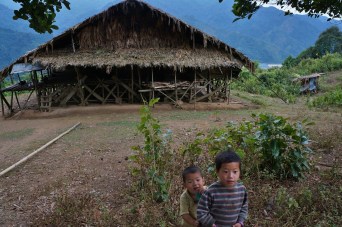
A house in the upstream of Subansiri River  Source: http://cooperfreeman.blogspot.in/2012/12/the-wild-east-epic.html
A house in the upstream of Subansiri River
Source: http://cooperfreeman.blogspot.in/2012/12/the-wild-east-epic.html

No mention of Social impacts Major limitation of the study has been absolutely no discussion on the severe social impacts due to cumulative forest felling, flux of population, submergence, livelihoods like riparian farming and fishing, etc. Though this has been pointed out by the TAC in its meeting and field visit, the report does not reflect this.

Some key Impacts Some of the impacts highlighted by the study based on incomplete information about HEPs are:

Þ    The length of the river Subansiri is 375 km up to its outfall in the Brahamaputra River. Approximately 212.51 km total length of Subansiri will be affected due to only 8 of the proposed 19 HEPs in Subansiri River basin.

Þ    Total area brought under submergence for dam and other project requirements is approx. 10, 032 ha of eight proposed HEPs. The extent of loss of forest in rest of the 9 projects is not available.

Þ    62 species belonging to Mammals (out of 105 reported species), 50 Aves (out of 175 reported species) and 2 amphibians (out of 6 reported species) in Subansiri Basin are listed in Schedules of Wildlife Protection Act, 1972 (as amended till date).

Þ    99 species belonging to Mammals (out of 105 reported species), 57 species belonging to Aves (out of 175 reported species), 1 Reptilian (out of 19 reported species), 2 Amphibians (out of 6 reported species), 28 fishes (out of 32 reported species), 25 species belonging to Odonata of Insecta fauna group (out of 28 reported species) are reported to be assessed as per IUCN’s threatened categories.

Even this incomplete and partial list of impacts should give an idea of the massive impacts that are in store for the basin.

Cumulative impacts NOT ASSESSED Specifically, some of the cumulative impacts that the report has not assessed at all or not adequately include:

1. Cumulative impact of blasting of so many tunnels on various aspects as also blasting for other project components.

2. Cumulative impact of mining of various materials required for the projects (sand, boulders, coarse and fine granules, etc.)

3. Cumulative impact of muck dumping into rivers (the normal practice of project developers) and also of also muck dumping done properly, if at all.

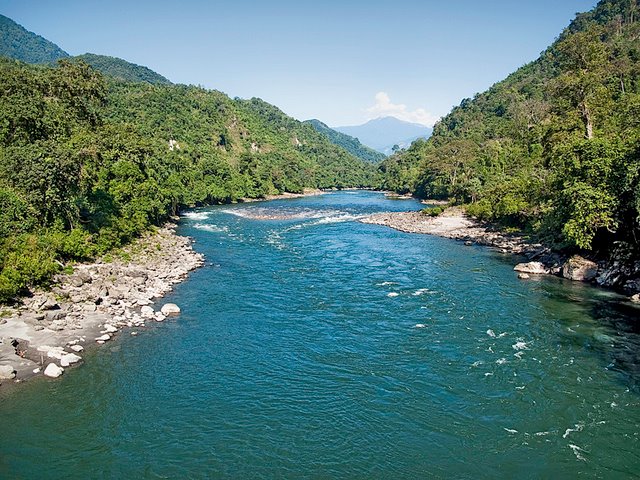
Subansiri River in the Upper Reaches  Source: Lovely Arunachal
Subansiri River in the Upper Reaches
Source: Lovely Arunachal

4. Changes in sedimentation at various points within project, at various points within a day, season, year, over the years and cumulatively across the basin and impacts thereof.

5. Cumulative impact on aquatic and terrestrial flora and fauna across the basin due to all the proposed projects.

6. Cumulative impact of the projects on disaster potential in the river basin, due to construction and also operation at various stages, say on landslides, flash floods, etc.

7. Cumulative dam safety issue due to cascade of projects.

8. Cumulative change in flood characteristics of the river due to so many projects.

9. Cumulative impacts due to peaking power generation due to so many projects.

10. Cumulative sociological impact of so many projects on local communities and society.

11. Cumulative impact on hydrological flows, at various points within project, at various points within a day, season, year, over the years and cumulatively across the basin and impacts thereof. This will include impacts on various hydrological elements including springs, tributaries, groundwater aquifers, etc. This will include accessing documents to see what the situation BEFORE project and would be after. The report has failed to do ALL THIS.

12. Impact of silt laden water into the river channel downstream from the dam, and how this gets accumulated across the non-monsoon months and what happens to it. This again needs to be assessed singly and cumulatively for all projects.

13. Impact of release of silt free water into the river downstream from the power house and impact thereof on the geo morphology, erosion, stability of structures etc, singly and cumulatively.

14. Impact on Green House Gas emissions, project wise and cumulatively. No attempt is made for this.

15. Impact of differential water flow downstream from power house in non-monsoon months, with sudden release of heavy flows during peaking/ power generation hours and no releases during other times.

16. Cumulative impact of all the project components (dam, tunnels, blasting, power house, muck dumping, mining, road building, township building, deforestation, transmission lines, etc.,) for a project and then adding for various projects. Same should also be done for the periods during construction, operation and decommissioning phases of the projects.

17. Cumulative impact of deforestation due to various projects.

18. Cumulative impact of non compliance of the environment norms, laws, Environment clearance and forest clearance conditions and environment management plans. Such an assessment should also have analysed the quality of EIA report done for the Subansiri Lower hydropower project.

Wrong, misleading statements in Report There are a very large number of wrong and misleading statements in the report. Below we have given some, along with comment on each of them, this list is only for illustrative purposes.

Sr No

Statement in CIA

Comment

1 “During the monsoon period there will be significant discharge in Brahmaputra River. The peaking discharge of these hydroelectric projects which are quite less in comparison to Brahmaputra discharge will hardly have any impact on Brahmaputra.” This is a misleading statement. It also needs to be assessed what will be the impact on specific stretches of Subansiri river. Secondly, the projects are not likely to operate in peaking mode in monsoon.
2 “However, some impact in form of flow regulation can be expected during the non-monsoon peaking from these projects.” This is not correct statement as the impact of non-monsoon peaking is likely to be of many different kinds, besides “flow regulation” as the document describes.
3 “Further, during the non-monsoon period the peaking discharge release of the projects in upper reaches of Subansiri basin will be utilized by the project at lower reaches of the basin and net peaking discharge from the lower most project of the basin in general will be the governing one for any impact study.” This is again wrong. What about the impact of such peaking on rivers between the projects?
4 “The construction of the proposed cascade development of HEPs in Subansiri basin will reduce water flow, especially during dry months, in the intervening stretch between the Head Race Tunnel (HRT) site and the discharge point of Tail Race Tunnel (TRT).” This statement seems to indicate that the consultants have poor knowledge or understanding of the functioning of the hydropower projects. HRT is not one location, it is a length. So it does not make sense to say “between HRT and the discharge point of TRT”.
5 “For mature fish, upstream migration would not be feasible. This is going to be the major adverse impact of the project. Therefore, provision of fish ladder can be made in the proposed dams.” This is simplistic statement without considering the height of the various dams (124 m high Nalo HEP dam, 237 m high Upper Subansiri HEP dam, 222 m high Middle Subansiri HEP dam), feasibility of fish ladders what can be optimum design, for which fish species, etc.
6 “…water release in lean season for fishes may be kept between 10-15% for migration and sustaining ecological functions except Hiya and Nyepin HEP. Therefore, it is suggested that the minimum 20% water flow in lean season may be maintained at Hiya and Nyepin HEP for fish migration.” This conclusion seems unfounded, the water release suggested is even lower than the minimum norms that EAC of MoEF follows.

Viability not assessed The report concludes: “The next steps include overall assessment of the impacts on account of hydropower development in the basin, which will be described in draft final report.”

One of the key objective of the Cumulative Impact assessment is to assess how many of the planned projects are viable considering the impacts, hydrology, geology, forests, biodiversity, carrying capacity and society. The consultants have not even applied their mind to key objective in this study. They seem to assume that all the proposed projects can and should come up and are all viable. It seems the consultant has not understood the basic objectives of CIA. The least the consultant could have said is that further projects should not be taken up for consideration till all the information is available and full and proper Cumulative impact assessment is done.

The consultants have also not looked at the need for free flowing stretches of rivers between the projects.

Section on Environmental Flows (Chapter 4 and 9): The section on Environmental flows is one of the weakest and most problematic sections of the report, despite the fact that the Executive summary talks about it as being one of the most crucial aspects.

The study does not use any globally accepted methodology for calculating eflows, but uses HEC RAS model, without any justification. The study has not been able to do even a literature review of methodologies of eflows used in India and concludes that “No information/criteria are available for India regarding requirement of minimum flow from various angles such as ecology, environment, human needs such as washing and bathing, fisheries etc.”

This is unacceptable as EAC itself has been recommending Building Block Methodology for calculating eflows which has been used (very faultily, but nonetheless) by basin studies even like Lohit, on which this study is supposedly based. EAC has also been following certain norms about E flow stipulations. CWC itself has said that minimum 20% flow is required in all seasons in all rivers. BK Chaturvedi committee has recently stipulated 50% e-flows in lean season and 30% in monsoon on daily changing basis.

The assumption of the study in its chapter on Environmental Flows that ‘most critical reach is till the time first tributary meets the river” is completely wrong. The study should concentrate at releasing optimum eflows from the barrage, without considering tributary contribution as an excuse.

First step of any robust eflows exercise is to set objectives. But the study does not even refer to this and generates huge tables for water depths, flow velocity, etc., for releases ranging from 10% lean season flow to 100% lean season flow.

After this extensive analysis without any objective setting, the study, without any justification (the justification for snow trout used is extremely flawed. Trouts migrate twice in a year and when they migrate in post monsoon months, the depth and velocity needed is much higher than the recommended 10% lean season flow) recommends “In view of the above-said modeling results, water release in lean season for fishes maybe kept between 10-15% for migration and sustaining ecological functions except Hiya and Nyepin HEP. Therefore, it is suggested that the minimum 20-25% water flow in lean season may be maintained at all HEP for fish migration and ecological balance.”

The study does not recommend any monsoon flows. Neither does it study impact of hydro peaking on downstream ecosystems.

Shockingly, the study does not even stick with this 20-25% lean season flow recommendation (20-25% of what? Average lean season flow? Three consecutive leanest months? The study does not explain this). In fact in Chapter 9 on Environmental Flows, the final recommendation is: “Therefore, it is suggested that the minimum 20-25% water flow in lean season may be maintained at Hiya and Nyepin  HEP or all other locations for fish migration.” (emphasis added)

So it is unclear if the study recommends 20-25% lean season flows or 10-15% lean season flows. This is a very flawed approach to a critical topic like eflows.

The study keeps mentioning ‘minimum flows’ nomenclature, which shows the flawed understanding of the consultants about e-flows.

The entire eflows section has to be reworked, objectives have to be set, methodology like Building Block Methodology has to be used with wide participation, including from Assam. Such exercises have been performed in the past and members of the current EAC like Dr. K.D. Joshi from CIFRI have been a part of this. In this case, EAC cannot accept flawed eflows studies like this. (DR. K D. Joshi has been a part of a study done by WWF to arrive at eflows through BBM methodology for Ganga in Allahabad during Kumbh: Environmental Flows for Kumbh 2013 at Triveni Sangam, Allahabad and has been a co author of this report)

Chocolate Mahseer in Subansiri  Source: http://www.flickr.com/photos/8355947@N05/7501485268/
Chocolate Mahseer in Subansiri
Source: http://www.flickr.com/photos/8355947@N05/7501485268/

Mockery of rich Subansiri Fisheries Subansiri has some of the richest riverine fisheries in India. The river has over 171 fish species, including some species new to science, and forms an important component of livelihood and nutritional security in the downstream stretches in Assam.

But the study makes a mockery of this saying that the livelihoods dependence on fisheries is negligible. The entire Chapter on Fisheries needs to be reworked to include impacts on fisheries in the downstream upto Majuli Islands in Assam at least.

No mention of National Aquatic Animal! Subansiri is one of the only tributaries of Brahmaputra with a resident population of the endangered Gangetic Dolphin, which is also the National aquatic animal of India (Baruah et al, 2012, Grave Danger for the Ganges Dolphin (Platanista ganegtica) in the Subansiri River due to large Hydroelectric Projecthttp://link.springer.com/article/10.1007/s10669-011-9375-0#).

Shockingly, the Basin Study does not even mention Gangetic Dolphin once in the entire study, let alone making recommendations to protect this specie!

Gangetic Dolphin is important not only from the ecological perspective, but also socio cultural perspective. Many fisher folk in Assam co-fish with the Gangetic River Dolphin. These intricate socio ecological links do not find any mention in the Basin study, which is unacceptable.

Agitation Against Lower Subansiri Dam in Assam Source: SANDRP
Agitation Against Lower Subansiri Dam in Assam
Source: SANDRP

Lessons from Lower Subansiri Project not learnt A massive agitation is ongoing in Assam against the under construction 2000 MW Subansiri Lower HEP. The people had to resort to this agitation since the Lower Subansiri HEP was going ahead without studying or resolving basic downstream, flood and safety issues. The work on the project has been stopped since December 2011, for 22 months now. In the meantime several committee have been set up, several changes in the project has been accepted. However, looking at this shoddy CIA, it seems no lessons have been learnt from this ongoing episode. This study does not even acknowledge the reality of this agitation and the issues that the agitation has thrown up. There is no reflection of the issues here in this study that is agitating the people who are stood up against the Lower Subansiri HEP. The same people will also face adverse impacts of the large number of additional projects planned in the Subansiri basin. If the issues raised by these agitating people are not resolved in credible way, the events now unfolding in Assam will continue to plague the other planned projects too.

Conclusion From the above it is clear that this is far from satisfactory report. The report has not done proper cumulative assessment on most aspects. It has not even used information available in public domain on a number of projects. It does not seem to the aware of the history of the environmental mis-governance in the SubansiriBasin as narrated in brief in Annexure 1. For most projects basic information is lacking. Considering the track record of Central Water Commission functioning as lobby FOR big dams, such a study should have never been given to CWC. One of the reasons the study was assigned by the EAC to the Central Water Commission was that the CWC is supposed to have expertise in hydrological issues, and also can take care of the interstate issues. However, the study has NOT been done by CWC, but by consultants hired by CWC, so CWC seems to have no role in this except hiring consultant. So the basic purpose of giving the study to CWC by EAC has not been served. Secondly the choice of consultants done by the CWC seems to be improper. Hence we have a shoddy piece of work. This study cannot be useful as CIA and it may be better for EAC to ask MoEF for a more appropriate body to do such a study. In any case, the current study is not of acceptable quality.

South Asia Network on Dams, Rivers & People (https://sandrp.in/https://sandrp.wordpress.com/)

ANNEXURE 1

Set Conditions to be waived Later – The MoEF way of Environmental Governance

In 2002, the 2,000 MW Lower Subansiri hydroelectric project on the Assam-Arunachal Pradesh border came for approval to the Standing Committee of the Indian Board for Wildlife (now called the National Board for Wildlife) as a part of the Tale Valley Sanctuary in AP was getting submerged in the project. The total area to be impacted was 3,739.9 ha which also included notified reserved forests in Arunachal Pradesh and Assam.  The Standing Committee observed that important wildlife habitats and species well beyond the Tale Valley Sanctuary, both in the upstream and downstream areas, would be affected (e.g. a crucial elephant corridor, Gangetic river dolphins) and that the Environmental Impact Assessment studies were of a very poor quality. However, despite serious objections raised by non-official members including Bittu Sahgal, Editor, Sanctuary, Valmik Thapar, M.K. Ranjitsinh and the BNHS, the Ministry of Environment & Forests (MoEF) bulldozed the clearance through in a May 2003 meeting of the IBWL Standing Committee. Thus a project, which did not deserve to receive clearance, was pushed through with certain stringent conditions imposed (Neeraj Vagholikar, Sanctuary Asia, April 2009).
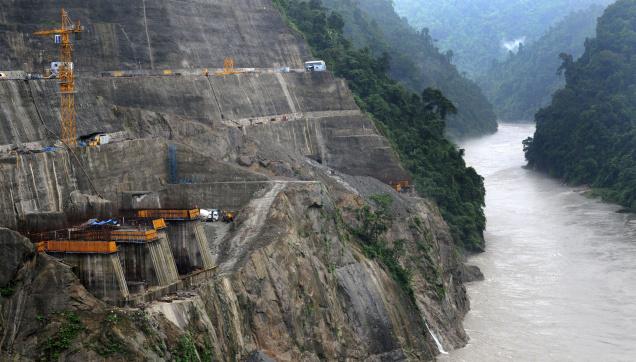
Lower Subansiri HEP Source: The Hindu
Lower Subansiri Dam
Source: The Hindu

The EC given to the project was challenged in Supreme Court (SC) by Dr L.M Nath, a former member of the Indian Board for Wildlife. Nath pleaded, these pristine rich and dense forests classified as tropical moist evergreen forest, are among the finest in the country. Further the surveys conducted by the Botanical Survey of India and the Zoological Survey of India were found to be extremely poor quality. The Application mentions that the Additional DG of Forests (Wildlife) was of the view that the survey reports of the BSI and ZSI reports were not acceptable to him because these organisations had merely spent five days in the field and produced a report of no significance.

The SC gave its final verdict on 19-4-2004, in which the Court upheld the EC given by MoEF to NHPC but with direction to fulfill some important conditions. Out these conditions there were two conditions which were very significant – “The Reserve Forest area that forms part of the catchment of the Lower Subansri including the reservoir should be declared as a National Park/ Sanctuary. NHPC will provide funds for the survey and demarcation of the same.”, and “There would be no construction of dam upstream of the Subansri River in future.” These conditions were also mentioned in the original EC given to the project in 2003.

In May 2005, two years after the EC was given the Arunachal Pradesh govt and NHPC approached the SC to waive or modify the above two conditions. The state government calimed that following these conditions would imply loss of opportunity to develop 16 mega dams in the upstream of Lower Subansiri (this including 1,600 MW Middle Subansiri and 2,000 MW Upper Subansiri to be developed by NHPC). The SC sent it back to National Board for Wildlife to review the conditions.

The petition was done strategically. “The strategy of the dam proponents is simple. They raised no objection to the terms until the construction of the Lower Subansiri project had proceeded beyond a point when it could have been cancelled. Armed with this fait accompli, they asked for a review of the clauses on the very basis on which the original clearance – laid down by members who were subsequently dropped from the wildlife board – was granted.”[ii]

Then nonofficial members of NBWL expressed their dissent to the proposal. In a May 2008 communication to the Chairman of the NBWL Standing Committee, member Dr. Bibhab Talukdar observed: “If the Standing Committee agrees to waive the conditions, we would be setting a dangerous precedent and sending a wrong signal regarding the credibility of decision-making by us. This would mean that projects impacting rich wildlife habitats can receive clearances based on stringent conditions, only to be up for review later. Such an approach is undesirable both from a perspective of good governance as well as the long-term interest of wildlife in the country.”

Dr. Asad Rahmani of the BNHS, who was part of a sub-committee of the NBWL Standing Committee conducting a site visit to the project area, stated in his report: “Under no circumstances should new projects be allowed in the Subansiri river basin until an advance cumulative assessment of proposed projects and a carrying capacity study of the Subansiri river basin are completed.”

In the December 12 2008 meeting of NBWL Standing Committee, even after these dissenting opinions from nonofficial members MoEF managed to do a dilution of the above two conditions. Assam that time was witnessing a major protest concerning the downstream impacts of Lower Subansiri HEP but it was not even consulted. Shockingly the “no dam upstream” condition was removed and it was decided that “any proposal in the upstream of the SubansiriRiver would be considered independently on its merit by the Standing Committee as and when submitted by the proponents”.

Now the Arunachal Pradesh government needs to declare a smaller area of 168 sq. km. as a sanctuary and “make serious efforts” to bring an additional 332 sq. km. reserved forest under the category of Conservation Reserve (CR) in consultation with the MoEF. The latter part of the condition (declaration of CR) is non-enforceable because of the choice of words. Even the demand to at least conduct an advanced cumulative impact assessment of proposed projects and a carrying capacity study of the Subansiri river basin has been ignored[iii].

As Bittu Sahgal, Editor, Sanctuary Asia says, “The Lower Subansiri is one such, where the PMO has placed a very dubious role in forcing clearances, agreeing to clearance conditions and then starting the project, only to loosen the environmental conditions. In this whole scam the Zoological Survey of India and the Botanical Survey of India have been co-conspirators that have suppressed the ecological value of the forests to facilitate the building of the dam, which will drown pristine elephant, tiger and clouded leopard forests and cause havoc downstream as well.”

The above sequence of events are very pertinent to remember as we see the Subansiri basin study.

END NOTES:


[i] Website says: “More than 200 successful environmental Impact Assessment Clearance from Ministry of Environment & Forests, Government of India for Industry, Infrastructure & Construction projects” Sounds strange from an EIA consultant.

[iii] For more details please see – “Forest Case Update”, Issue 1, June 2004 and “The Subansiri Subversion” by Neeraj Vagholikar published in Sanctuary Asia, April 2009 issue

Environment Impact Assessment · Expert Appraisal Committee · Ministry of Environment and Forests · Western Ghats

Huge Impacts, but no assessment? Groups urge MoEF to correct its blunder on Yettinahole

Yettinahole Diversion Project is being planned in the Western Ghats and Eastern Plains of Karnataka, by the Karnataka Neeravari Nigam Limited (KNNL) purportedly as a drinking water supply scheme to supply 24 TMC water to Kolar and Chikkaballapur Districts. The scheme involves 8 dams in Western Ghat forests, 250 kms long canals, 80 and 50 kms long raising mains, a reservoir that will submerge 1200 hectares of land and 2 villages.  A closer look at the Project Report of the scheme indicates that of the 24 TMC to be diverted, assured drinking water to Kolar and Chikkabalapur is just 2.81 TMC! Rest is planned to be allocated for uses like river and tank rejuvenation, irrigation, industries, urban supply etc.

DSC03697
Gundia River, formed of headwaters of Yettinahole, Kerihole, Hongadhalla and Kadumanehole which will be diverted for the Yettinahole Diversion Project Photo: SANDRP

The Project has escaped appraisal by the Expert Appraisal Committee of the MoEF, claiming that it is a drinking water scheme ( as per the EIA Notification 2006, Drinking Water Supply Schemes are exempt from Appraisal and Environmental Clearance process.)

But analysis of the Project report indicates a different picture.

More than 14 individuals, mainly from Karnataka have written to the Union Environment Minister, Secretary, MoEF and Director, Impact Assessment, River Valley Projects Division to appraise the Yettinahole Diversion Scheme entirely. Signatories include Dr. Ullas Karanth, former non-official member of the Forest Advisory Committee, MoEF, Praveen Bhargava from Wildlife First, Dr. T.V. Ramchandra from Indian Institute of Sciences, noted rainwater harvesting expert Vishwanath Srikataiah, Niren Jain of Kudremukh Wildlife Foundation, amongst others. While the signatories support long term and sustainable solutions to legitimate drinking water demands of drought affected regions in Karnataka, as the letter clarifies, Yettinahole Diversion Project does not seem to be an answer to that.


To,

Smt. Jayanthi Natarajan,

Union Minister of State (IC) of Environment and Forests,

Paryavaran Bhawan, Lodhi Road, New Delhi, jayanthi.n@sansad.nic.in


Dr V Rajagopalan,

Secretary,

Union Ministry of Environment and Forests, New Delhi, vrg.iyer@nic.in


Maninder Singh

Joint Secretary,

Union Ministry of Environment and Forests, New Delhi, jsicmoef@nic.in

Mr. B. B. Barman

Director (IA) River Valley Projects,

Union Ministry of Environment and Forests, New Delhi, bbbdx.dy@gmail.com


Subject: Appeal for fresh Appraisal of the Yettinahole Diversion Project in Karnataka and withdrawal of the Letter/NOC which has been issued by the MoEF on the basis on inaccurate/insufficient information.

Respected Madame and Sirs,

In the 63rd meeting of the EAC for River Valley and Hydropower projects, the committee considered Yettinahole Diversion Project by Karnataka Neeravari Nigam Limited, Government of Karnataka (Agenda Item: 2.11 (b) “Clarification on Drinking Water Supply Scheme to Tumkur, Bangalore (Rural), Kolar & Chikaballapur Districts by M/s. Karnataka Neeravari Nigam Ltd, Government of Karnataka for applicability of EIA Notification, 2006.)

The EAC concluded (emphasis added): “In view of the above, the EAC expressed its inability to consider the project for the purpose of TOR/EIA/EMP etc as this does not fall within the preview and mandate of the  EAC although, there appear to be  some environmental and R&R issues involved which may be appropriately addressed. Outcome of the WGEEP report may also have to be factored. The drinking water schemes, in fact, do not attract the provisions of EIA Notification, 2006 and its subsequent amendment, 2009… The project neither proposes any hydro-electric power generation component nor comprises of any irrigation component and thus has no command area.”

The EAC also recommended: “The Ministry of Environment & Forests may write to Karnataka Neeravari Nigam Ltd (KNNL), Government of Karnataka that the instant project does not attract the provisions of EIA Notification, 2006 and its subsequent amendment, 2009.” We understand the MoEF sent a letter to KNNL on these lines.

This recommendation of the EAC and MoEF decision are both incorrect. Looking at the facts mentioned below, the scheme is Category A project and needs to be appraised by the EAC not only because it falls under the purview of the EIA Notification 2006, but also due to   serious ecological and social impacts. This letter is based on a site visit to the region, discussions with local communities, perusal of the Project Report of the scheme as well as the minutes of 63rd EAC Meeting.

EAC considered the project only on the basis of the proponent’s statements, without studying the Project Report.

An analysis of the Project Report (Version June 2012, prior to EAC Meeting) it is clear that:

1. Irrigation Component: The project aims to supply water to 337 minor irrigation tanks and Zilla Parishad Tanks in Kolar and Chikkaballapur. The command areas of these 337 minor irrigation tanks, as mentioned in the Project Report (Voulme I, Annex 3) come to 29,182 hectares. This is higher than command area of 10,000 hectares; hence this is a Category A project which comes under the purview of EIA Notification 2006 and will have to be considered for Environmental Clearance by Expert Appraisal Committee of the MoEF.

2. Hydropower Generation: The Project Report claims that it can generate 125-150 MW of power through gravity canals. Location details are also made available in the Project erport (Page 59, Volume I). As this is higher than 25 MW, the project comes under the purview of EIA Notification 2006 and will have to be considered for Environmental Clearance by the Expert Appraisal Committee of the MoEF.

Thus, the Project comes under the purview of EIA Notification 2006 and should be considered by the EAC, urgently taking back any letter sent to Karnataka Government to the effect that the project does not require an EC as per EIA notification 2006.

In addition to technicalities about qualifying under the EIA Notification 2006, the project has severe socio ecological impact, which cannot be sidelined by the EAC and the MoEF.

  1. Majority of the project falls in Ecologically Sensitive Zone I as per the WGEEP, where any large infrastructure project is banned. In addition, WGEEP bans any inter-basin transfer of water. MoEF has as yet not decided on WGEEP recommendations. In the absence of this, the MoEF cannot provide any letter to the state about not requiring an Environmental Clearance. MoEF will need to consider the WGEEP Report while making its recommendations, as also directed by NGT, which MoEF has not done.
  2. The project plans to divert 24.01 TMC water from 4 streams in Western Ghats, without making any study of eflows for the downstream Eco Sensitive Zone.
  3. The project does not divulge forest land required. Only by estimating heads under ‘cutting thick forests’ in its estimates, it will require 107.27 hectares land with thick forest cover only for laying raising mains. The Hon’ble Supreme Court has formulated Guidelines in the Lafarge Judgment which mandate that projects that require both forest and environment clearance must first secure forest clearance. This has not been complied with.
  4. Gravity Canal from Harvanahalli (Sakaleshpur) to Tumkur will require a minmum of 400 hectares land
  5. Reservoir at Devarnyadurga will require 1200 hectares of land, including 50% forest land and will submerge at least 2 villages.

Though the project claims to be a scheme for drinking water of Kolar and Chikkaballapur Districts, actual dedicated drinking water allocation of these districts is only 2.81 TMC of the 24.01 TMC diverted which works out to less than 10%. Rest will go for irrigation, river rejuvenation, urban areas, industrial areas, etc. Signatories support long term and sustainable solutions to drinking water crisis. While provision of drinking water to the said districts is a legitimate necessity that we do not object to, what we are questioning is the justification of this ill conceived project whose cost-benefit analysis is extremely skewed and the ecological and social impacts are horrendous.

Alternative and feasible proposals that will provide the 2.81 TMC feet of water for the said districts have, in our considered view, not been explored. Furthermore, the feasibility of large-scale land acquisition required for the project must be considered in the context of the amendments to the Land Acquisition Bill that has just been passed by Parliament.

Considering all these serious issues, the EAC’s appraisal of this project has been incorrect technically as well as wrong on facts and law.

We urgently request the MoEF to:

1.  Withdraw any letter/NOC etc., that it may have sent to Karnataka Government in this regard as the current decision of the EAC and MoEF  may not stand the test of legal scrutiny and may lead to some wholly un-necessary litigation.

2. Direct the State of Karnataka to present a detailed project report that includes the plans for phase II and III that are sure to follow.

3. Ensure that the EAC considers the DPR and appraises  project for Environmental Clearance in its entirety.

Looking forward to your response and appropriate action to points raised above.


Thanking you,


Yours Sincerely,

Niren Jain, Kudremukh Wildlife Foundation, Mangalore, Karnataka (kudremukh.wildlife@gmail.com)

Dr. Ullas Karanth, Director, Centre for Wildlife Studies, Bangalore

Praveen Bhargav, Trustee, Wildlife First, Bangalore

Kishore Kumar Hongadhalla, Malanada Janapara Horata Samiti, Sakaleshpura, Karnataka

Panduranga Hegde, Parisara Sanmrakshana Kendra, Appiko Movement, Sirisi, Karnataka

Dr. T.V. Ramachandra, Energy and Wetlands Group, Centre for Ecological Sciences, Indian Institute of Science, Bangalore, Karnataka

Vishwanath Srikantaiah, Water and Rainwater Harvesting Expert, Bangalore, Karnataka)

Dr. Jagdish Krishnaswamy, Eco-hydrologist, Bangalore, Karnataka

Dr. Shriniwas Badiger, Water and Irrigation Expert, Bangalore, Karnataka

Dr. Bhaskar Acharya, Bangalore, Karnataka

Dr. Sharad Lele, Atree, Bangalore, Karnataka

Nachiket Kelkar, Wildlife researcher, Bangalore, Karnataka

Vidyadhar Atkore, Fisheries Scientist, Bangalore Karnataka

Neeti Mahesh, Mahseer Trust, Karnataka

Parineeta Dandekar (parineeta.dandekar@gmail.com,09860030742), andHimanshu Thakkar (ht.sandrp@gmail.com, 09968242798) South Asia Network on Dams, Rivers and People, Delhi and Pune


Environment Impact Assessment · Western Ghats

No Chief Minister Sir, we are not doing social/ecological assessment of large dam projects

Maharashtra’s Chief Minister Prithviraj Chavan was the Chief Guest for one day symposium regarding water management in Maharashtra organised by the Gokhale Institute of Politics and Economics in Pune on the 2nd of July 2013.

In his address, the CM raised a number of important topics about water management in Maharashtra. Some of his thoughts were encouraging. He talked about the problems and expense of large irrigation projects, their underperformance and underlined the need for decentralised water management systems. He mentioned that the 2000 crores spent on tankers and animal shelters during 2013 drought was an avoidable expense, if we had developed decentralised water sources. He highlighted the problems of water regulatory authorities like MWRRA. He also mentioned that improper dam operation is a reason behind many disasters like the floods in Surat in 2006 due to Ukai Dam, Sangli floods due to mismanagement of Almatti Dam and stressed that Maharashtra should be concerned about this.

Significantly, he mentioned that while we are assessing the economic costs and efficiency of large dams, we are not looking at their social and ecological and that such assessments should take place. He also said that there should be an in-depth study on the ecological costs of these projects. This is a very welcome statement.

In reality, there has been a huge gap on what he said and what is happening on the ground.

The most blatant example of this is the Kalu Dam where work has stopped currently due to a stay order by the Hon. Bombay High Court. This dam is coming up in the Murbad block of Thane District and falls entirely in the tribal sub plan area and ecologically sensitive region of the Western Ghats. It is set to submerge 1000 hectares of Western Ghats forests and will affect more than 18000 primarily tribal population. The dam, being built by the Konkan Irrigation Development Corporation (KIDC,) has not done any Social Impact Assessment as per the National Rehabilitation Policy. Nor has it undertaken an Environmental Impact Assessment or Cumulative Impacts Assessment of its impact on the Forests. The individual and community Forest Rights have not been settled, in violation of the Forest Rights Act, 2006. Despite all this, the construction started illegally, without a Forest Clearance and is halted only because of a petition filed in the High Court by Shramik Mukti Sangathana.

Illegal Work on Kalu Dam Site by FA Constructions Photo: SANDRP, May 2011

The Forest Clearance of this dam was rightfully rejected in 2012 by the Forest Advisory Committee (FAC) of the Ministry of Environment and Forests (MoEF). But exactly a year later the Forest Advisory Committee went back on its decision and gave Forest Clearance to this project unjustifiably.

One of the important reasons as, stated by the FAC in in its minutes is that

“(The FAC) also noted that Hon’ble Chief Minister of Maharshtra has specifically requested for a review of the decision of the Forest Advisory Committee” (FAC Minutes 3-4th April 2013)

How is it that the CM actually pushed for a Forest Clearance which would destroy over one lakh trees in Western Ghats, without any studies or options assessment?

When we asked this to the CM after this meeting, he replied that there is no law which says that EIA study for a drinking water supply dam is needed. While this is true and attributed to the erroneous omission in the EIA notification 2006, there is no law which says that such studies should not be conducted! Especially for a dam which is going to submerge 1000 hectares of forests and affect 18000 tribals! A Chief Minister with vision would in fact ask for such studies suo motto.

Dams around Mumbai which are mainly for drinking and industrial water supply can together submerge more than 6000 hectares of Forest. Even the State Forest Department under the Chief Minister himself has said that EIA of Kalu Dam is necessary. Chief Conservator of Forests, Central Circle has said that Cumulative impact Assessment of Dams coming up around Mumbai is necessary.

In this scenario, rather than urgently demanding for such a study the CM has in fact pressurised the FAC into giving a Forest Clearance to Kalu Project, WITHOUT any assessments.

Forests in Tansa Wildlife Sanctuary. 750 hectares of these primer forests will be submerged for the Gargai Dam. Photo: SANDRP

During his speech, the CM said how important afforestation is. He said that he has asked all departments to undertake afforestation. “The issue is so important that even tanker water should be given for afforestation”. When afforestation is so important, why are we submerging last remaining forests of  Western Ghats without any studies?

Misrepresentation of Western Ghats Expert Ecology Panel (WGEEP) Report: The CM also said that WGEEP Report has banned all development from Gujarat to Kerala and that the on-going laterite stone mining in Sindhudurga-Ratnagiri districts  is a result of WGEEP which will hamper development in these places. It has laid a blanket ban on development.

CM seems to be entirely misinformed on this count. Firstly the laterite stone mining ban has nothing to do with WGEEP Report, but is in place due to a Supreme Court Order. This point has been reiterated several times and it is surprising to see the CM still claiming this. Secondly the WGEEP has not banned developmental activities, but has said that local communities should be in the driving seat while taking decisions affecting their regions. This is also upheld by several laws including the Forest Rights Act. So CMs statement about the WGEEP is clearly ill informed.

It was great to see the CM mention Climate Change, its impacts, need for advanced weather monitoring, etc. It was also good to hear from him about ecological importance for rivers and their flow. It will be good if environmental flows are released from dams of Maharashtra, as also upheld by the Krishna Water Disputes Tribunal. This is currently not happening.

The CM seems to have progressive opinions about water and natural resource management. Hence, we are sure that the CM will demand for an Environment Impact Assessment, Social Impact Assessment and Cumulative Impact Assessment of dams coming up around Mumbai, especially Kalu Dam and will take a critical look at dams coming up across Western Ghats in Konkan being undertaken by KIDC, breaking laws like Forest Conservation Act, Forest Rights Act, Environment Protection Act, National Rehabilitation Policy with impunity. In fact he should see that KIDC and contractors which started work illegally are brought to the books.

We hope that the CM walks his talk about decentralised water management and valuing ecology.

-Parineeta Dandekar and Himanshu Thakkar, SANDRP

Indavi Tulpule, Shramik Mukti Sangathana

Suhas Kolhekar, Convener, NAPM Maharashtra

Cumulative Impact Assessment · Dams · Environment Impact Assessment · Hydropower · Ministry of Environment and Forests · Western Ghats

Comments on HLWG Report submitted to Ministry of Environment and Forests

This post is based on a submission made by SANDRP and our colleagues on the HLWG Report on Western Ghats. 20th May 2013 is the last date to submit comments on this. Comments need to be sent to: amit.love@nic.in. We request groups and individuals to make as many submissions as possible.

Comments on HLWG Report with a focus on Water issues

Date: May 20, 2013

To,


Mrs. Jayanthi Natarajan

Union Minister of State (IC)

Ministry of Environment and Forests

Government of India

Email: mosefgoi@nic.in, jayanthi.n@sansad.nic.in


Dr. V Rajagopalan

Secretary

Ministry of Environment and Forests

Government of India

Email: envisect@nic.in


Dr. Amit Love,

Deputy Director,

Ministry of Environment and Forests

Email: amit.love@nic.in


Dear Mrs. Jayanthi Natarajan and Dr. Rajagopalan,


SUB: Comments on the High Level Working Group Report with respect to water sector

This is in response to announcement posted on MoEF website about submitting comments on the HLWG report under the Chairpersonship of Dr. Kasturirangan. These comments mainly deal with water in Western Ghats: One of the most critical issues for Western Ghats States.

A lady collecting drinking water from a sacred grove in Western Ghats Photo: SANDRP

Unfortunately, we have to note that recommendations of the HLWG Committee in response to WGEEP Report as well as some of HLWGs omissions and commissions are detrimental to the well-being of rivers, wetlands and dependent communities in the Western Ghats and hence, for related sectors like ecology, water supply, irrigation, hydropower, etc. This is elucidated in the following points:

  1. HLWG does not comment on any other issue related to water except hydropower:

While the Gujarat, Maharashtra, Goa, Karnataka, Kerala and Tamilnadu are facing multiple issues with respect to rivers, drinking water, irrigation, loss of biodiversity and livelihoods, dam-induced displacement, etc., the only issue HLWG report has commented upon is Hydropower. The WGEEP report has dealt with a number of issues related to the water sector from democratic community driven bottom up governance, watershed development, opposition to large dams in ESZ I and II, drinking water, fisheries, etc. However, the HLWG does not comment on any of these recommendations of the WGEEP, nor does it offer its own position on these. This is a serious lacuna in the HLWG Report.

In the absence of such recommendations, we request that MoEF adheres to WGEEP recommendations.

Fishing in Vashishthi Estuary, Western Ghats. Photo: SANDRP
  1. HLWGs recommendations about Hydropower are ad hoc, unscientific and misleading
  1. HLWG claims that all Hydropower is “renewable and clean.”

This is a completely incorrect statement and it’s surprising to see that it comes from HLWG. The world over, the myth of Hydropower as clean source of energy has been busted.[1],[2] Hydropower projects have huge impacts on environment, ecology, forests, rivers, biodiversity and livelihood security of the people. Studies have proved that methane emissions from reservoirs formed by hydropower dams in tropical countries can have significant global warming potential, methane being about 21 times more potent global warming gas than CO2. Dams emit methane at every draw down.[3] With tropical forests in the Western Ghats (WG) under submergence and otherwise destruction by such projects, this threat is even more serious. Already WG has some of the biggest hydropower plants in the country including the Koyna, Bhandardara, Ghatghat HEPs and three Tata HEPs in Maharashtra, Linganmakki, Gerisouppa, Bhadra, Tungabhadra, Upper Tunga, Talakalale, Kabini, Harangi, Chakra, Supa, Varahi, HEPs in Karnataka, Idukki, ldamalayar, Lower Periyar, Poringalkuttu, Sholayar HEPs in Kerala and Bhavani HEPs in Tamil Nadu. All these projects have not only contributed to greenhouse gas emissions, but have also adversely affected communities, forests, rivers and ecosystems in Western Ghats. There are numerous pending cases of rehabilitation from these dams (for example Koyna in Maharashtra) till date involving tens of thousands of people and communities in many areas are still suffering from erratic water releases from these projects (downstream communities near Jog Falls d/s Linganmakki).

Hydropower dams in WG are in many cases transferring water across the basin for power generation, making it unavailable of the original basin and its inhabitants (For example:  Interbasin transfers from Koyna and Tata Hydropower dams in Maharashtra). Every hydropower project has finite life. Thus, for the basin dwellers and everyone else, Hydropower not much renewable either.

 HLWG is not justified in giving a ‘clean and renewable’ certificate to hydropower.

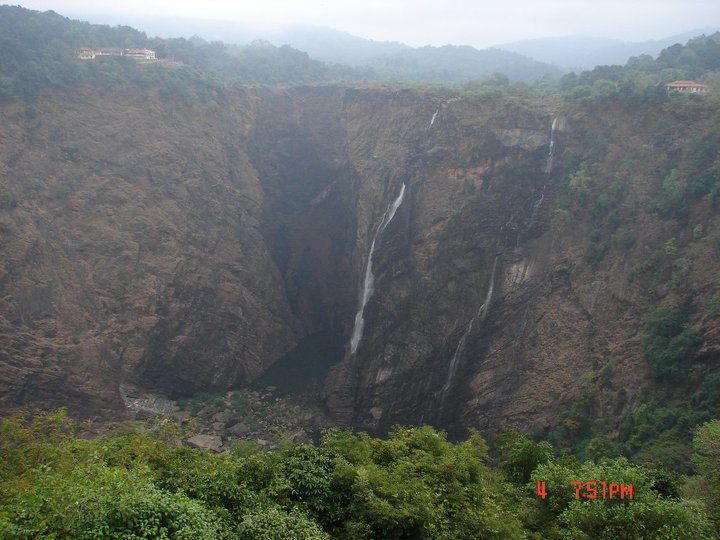
Jog Falls on Sharavathy: Dried and diverted by the Linganmakki HEP in Karnataka Western Ghats. Photo: SANDRP


  1. HLWG allows Hydropower projects in ESAs while not looking at performance of existing projects

While the WGEEP did not allow large dams and hydropower projects in ESZ I and II, HLWG has allowed hydropower projects in its demarcated ESAs. This is unacceptable. Western Ghats are already ravaged by dams and at least the areas of high biodiversity value should now be protected from the same onslaught. But the HLWG has rejected WGEEP recommendations about this. While doing so, they have not looked at the performance of the existing HEPs in WG. SANDRP has been studying performance of HEPS in India for some time now based on generation data from Central Electricity Authority. The performance of existing hydropower plants in WG is dismal as can be seen below:

  • In Koyna Basin, the per MW generation in 2010-11 has dropped by a huge 56.79% from the highest per MW generation achieved in the year 1994-95.[4]
  • In Kali Nadi projects, the per MW generation has dropped by 46.65% from the highest per MW generation achieved in 1994-95[5]
  • In Sharavathi Basin projects, per MW generation in 2010-11 has dropped by 37.60% from the highest per MW generation achieved in the year 1994-95[6]
  • Same situation is true for most other hydropower projects.
  • Most of these projects are performing far below the level at which the projects were given techno-economic clearances.
  • There is no assessment as to how much of the generation from such hydropower projects is during peaking hours. Nor is there any attempt at optimising the peaking power from these projects.

It is clear that there is huge scope to make the existing projects more efficient, rather than destroying ESAs in WG with more projects.

We request that in line with WGEEP report, large dams should not be permitted in ESAs of Western Ghats.

  1. Recommendation about mitigating impacts of Hydropower are extremely weak
  • The HLWG has recommended 30 % of lean season flow as the minimum flow throughout the year as a conditionality for allowing hydro power projects in the ESA. This is contradictory to the recommendation for ecological flows by the HLWG.  Ecological flows means trying to mimic the natural flow regime in the river as far as possible and that would include arriving at different seasonal flows based on studies and consultation with the river communities and other stakeholders, using the Building Block Methodology which even the Inter Ministerial Group on Ganga Basin has said is the most appropriate for India. Moreover, the IMG has recommended 50% releases in lean season flows, applicable for all existing projects. MoEF should accept these norms immediately for all existing projects.

The MoEF should be recommending ecological flows / environmental flows as in the WGEEP report and not minimum environmental flows and this should be determined through holistic methodologies like Building Block Methodology and local participation.

  • The HLWG recommendation of 3 km minimum distance between dams is totally ad hoc, arbitrary and hence unacceptable. Firstly, the HLWG should have mentioned min 3 km of flowing river between projects. The minimum distance is river specific and would depend upon a basin level study of the river including the altitudinal profile of the river, the riparian forest status, the aquatic habitats and biodiversity, the present dependability and many such criteria. More significantly, the cascade hydropower dam menace which is destroying rives in Himalayas need not be replicated in western ghats. We would like to reiterate that no large dams should be allowed in the ESA of WG.

The MoEF should recommend for arriving at river specific studies while accepting 5 km of free flowing river between projects as minimum distance of free flowing river between projects. The best case is not to allow any further large dams in Western Ghats.


No flows in Sharavathy downstream Linganmakki  Dam and Jog Falls. Photo: SANDRP
No flows in Sharavathy downstream Linganmakki Dam and Jog Falls. Photo: SANDRP


  1. The HLWG does not stress the need for Environmental Clearance for Mini hydel Projects

Hydro projects less than 25 MW are currently exempt from Environmental Clearance due to a dangerous omission in the EIA Notification 2006. WG is currently facing a severe threat due to a flood of these unplanned cascades of Mini Hydel Projects. Ecosystems and communities in rivers like Netravathi, Kumaradhara, Krishna and Cauvery are facing impacts of these projects, many of which are fraudulent.[7] Netravathi has more than 44 mini hydel projects planned and under operation. Kerala has plans to set up  around 100 mini Hydel projects on its rivers. The threat of these projects on river systems in Western Ghats is so high that in March 2013, the Karnataka High Court, has banned any new mini hydel projects in Karnataka Western Ghats[8].

WGEEP had recommended no mini hydel projects in ESZ I and II. HLWG has not done this. While the HLWG makes a rather vague statementThere is a need to redesign and reevaluate small hydropower projects – below 25 mw as these often have limited impact on energy generation and can lead to huge impacts on ecology’, it has not recommended that these projects should need an EIA and EC process, like it has said for Wind Energy. This is a very serious omission. SANDRP and many organizations have written about this to the MoEF several times.

The MoEF should amend the EIA Notification 2006 and include all hydel projects above 1 MW in its purview.


Pristine Forests set for submergence under the 24 MW Kukke Mini hydel Plant in Dakshin Kannada, Karnataka. Photo: SANDRP
  1. The HLWG does not stress the need of Environmental Clearance (EC) for Drinking Water and Industrial supply dams

HLWG has not looked at water as a sector, but has only confined itself to hydropower. This has resulted in several loopholes. Many dams are being constructed in Western Ghats for Drinking Water and Industrial water supply. These are also exempt from EC process as per the EIA Notification 2006. Dams like Kalu, Shai, Balganga, Khargihill, Pinjal, Gargai are set to submerge more than 6000 hectares of forest in ESAs and Protected Areas in Northern Western Ghats in Maharashtra.

WGEEP Report had recommended no large dams in ESZ I and II, but the HLWG does not talk about these dams at all. Their impacts on WG forests and communities are entirely ignored. This is another serious lapse of the HLWG report.

The MOEF should amend the EIA Notification 2006 to include all large dams, irrespective of the purpose, including drinking and industrial water supply dams in its purview. No large dams should be planned in ESA of Western Ghats.


Ravines of Vaitarna already submerged by the Middle Vaitarna Dam near Mumbai Photo: SANDRP
  1. HLWG does not recommend eflows from existing projects

Several hundreds of Irrigation, water supply, hydropower dams have transformed the nature of rivers and dependent communities in Western Ghats. While the WGEEP Report mentioned maintaining eflows from existing projects, the HLWG does not make any recommendation for eflows from existing projects.

Hydropower projects in Karnataka like Kali, Linganmakki have affected communities and ecosystems in the region, have driven some species to extinction. There is an urgent need to restore eflows in all WG rivers.

The MoEF should recommend that eflows should be assessed with holistic and participatory methodology like BBM and recommend e-flows for all dammed rivers in Western Ghats with time limit of one year.

  1. HLWG does not apply its mind to dam decommissioning

The HLWG has chosen to ignore the recommendations on dam decommissioning. While the states have rejected the recommendation the MoP (Ministry of Power) and Central Electricity Authority has noted that dam decommissioning in a phased manner is worth considering.

There are several irrigation and hydropower dams in the Western Ghats which are severely underperforming or incomplete after two decades, or more than 100 years old, and/or unsafe. For example, several experts have opined than large irrigation projects in Konkan region of Maharashtra are severely underutilized. Tillari Interstate Project between Maharshatra and Goa which has come up affecting a wildlife corridor and which has still not rehabilitated its affected population, has a created irrigation potential of 7,295 hectares in Maharashtra of which farmers are utilizing just 162 hectares, according to the Govt Of Maharashtra’s 2012 White Paper on Irrigation Projects in Maharashtra. This underlines the redundancy of large irrigation projects in the WG.

The HLWG had an opportunity to relook at such projects, which it has not done. The HLWG could have noted that the state governments and the MoEF and MoP should start the process of evolving parameters / criteria towards the process of dam decommissioning.

The MoEF may please recommend the same.

Leaking Khadkhad dam Mahrashtra Western Ghats Photo: Pune Mirror


  1. HLWG does not recommend free flowing rivers for WG

Rivers in Western Ghats are repositories of biological, ecological and cultural diversity. Rivers in WG harbor high endemism and diversity in freshwater fish. They also house several Sacred groves at river origins, river fish sanctuaries, etc., protecting rivers and fish. The freshwater biodiversity remains the most fragmented among all biodiversity and HLWG has taken no note of this state and further risks that freshwater biodiversity faces. The WGEEP had wisely followed a graded approach in tune with the ecological connectivity of river ecosystems. ln the HLWG approach, stretches of rivers would flow out of the natural landscape into the cultural landscape which is open to indiscriminate development and the chance for their restoration or protection would be completely lost out. A river cannot be protected in pieces like this.

Looking at the pressures from dams and water abstractions, there in an urgent need to conserve ecologically, culturally and socially important rivers in their free-flowing condition. This approach is well accepted globally and several countries have created specific legislations for protecting free flowing rivers[9]. It seems that the IMG Committee on Upper Ganga, in which Ms. Sunita Narain (Member of Kasturirangan Committee), was also a member has recommended that some six tributaries of Upper Ganga basin should be kept in pristine state. While rejecting WGEEPs recommendation about dam decommissioning or dam free rivers in the ESZs, HLWG has not recommended keeping even a single river in Western Ghats in its free flowing condition.

MoEF should identify ecologically, culturally and socially important rivers, based on community and ecological knowledge and conserve Heritage Rivers of Western Ghats in their free flowing condition for the current and future generations.


Seetha Nadi, free flowing river in Karnataka Western Ghats. Photo: SANDRP
  1. HLWG allows Inter basin transfers in Western Ghats, without any justification or studies

The HLWG has agreed to inter basin transfers toeing the claims of some of the states. There are ample instances of failed interstate – inter basin transfers in the Western Ghats rivers which have turned into permanent scenes of conflicts like the famous Mullaperiyar,  Parambikulam Aliyar, Siruvani interstate inter basin transfers between Kerala and Tamil Nadu. The HLWG while acknowledging the need for ‘ecological flows assessment’ in rivers has failed to note that in all these inter basin transfers, the river / tributary has been completely diverted and has lost its ‘ecological flows’. The HLWG could have recommended a cumulative impact assessment of the existing inter basin transfers which would reveal the ground reality.

HLWG seems to have accepted the contention of states like Maharashtra: “This (stopping IBT) would be a problem, they explained, as many regions of the Western Ghats lie in the rain shadow area and need water to be diverted for irrigation and drinking.”

Reality is that, ALL the interbasin transfers happening in Maharashtra currently (through Koyna and Tata Hydro power projects, an amount more than 4 Billion Cubic Meters Annually) are transferring water FROM the rain shadow area of Krishna and Bhima basins TO water surplus regions in Konkan. If HLWG was concerned about water supply for rain shadow regions, it would have at least recommended that this transfer from deficit area to high rainfall area be immediately reviewed and reversed in a time bound manner. It has chosen not to, showing its complete ignorance of ground reality or its completely pro government and pro vested interests bias.

The MoEF should retain the recommendation for no more inter basin transfers as in the WGEEP report and ask for immediate review of transfer of water from deficit basins to high rainfall areas. 


  1. HLWG allows hydro projects in first and second order streams

The HLWG has not said no to hydro power projects in first and second order streams in ESA. Meanwhile the MoP, CEA and WAPCOS all agree that hydro power projects should not be permitted in these highly ecologically sensitive areas which are the ‘origin’ of Western Ghats Rivers.

The MoEF should retain the recommendation for no run of the river schemes in first and second order streams as in the WGEEP report.

  1. HLWG offers no comments of on several water sector recommendations of WGEEP which have been supported by State Governments

Kerala and Maharashtra have accepted many of the recommendations of the WGEEP in water sector (page 14 section 2.3 – point 9) like catchment area treatment plan, protection of high altitude valley swamps, water conservation measures, rehabilitation of mined areas, improved river flows etc. It is surprising to note that the HLWG is silent on these very important measures and has not even endorsed these acceptable recommendations which can significantly contribute towards improving water availability in the Western Ghats.

The MoEF should follow these recommendations of the WGEEP.

  1. HLWG takes an extremely biased stand about Athirappilly and Gundia Hydropower projects, rejected by the WGEEP

The WGEEP had categorically stated that the Athirappilly and Gundia Hydropower project should not come up in Western Ghats, looking at their huge impacts on biodiversity, several studies by local organisations and local opposition. However, ignoring all these, the HLWG has taken a very pro project stand on these projects, stating that they can be considered with some vaguely due process, which the state government would be happy to show they have followed it on paper. This is entirely unacceptable.

The MoEF should not allow Athirappilly and Gundia HEPs looking their impact on ecology and communities and in face of the strong local opposition that they are facing.

DSC02831
Athirappilly Waterfalls on the Chalakudy River Photo; SANDRP

The WGEEP process and report initiated a robust discussion about the paradigm of development and conservation in Western Ghats. Water and Rivers is a cross cutting issue connecting ecosystems and communities, rural areas and urban centers, providing goods and services and supporting freshwater biodiversity, which is most threatened currently.

A proactive position on conserving rivers in Western Ghats will go a long way in protecting and conserving myriad livelihoods and ecosystems that thus depend of them.

We hope the MoEF considers the recommendations made above about the WGEEP and HLWG Reports and helps conserving rivers of the Western Ghats for people and ecosystems urgently. The HLWG Report cannot be accepted the way it stands presently. As a step in this direction, we also suggest that WGEEP should get a formal chance to respond to the points raised about it in the HLWG.

Thanking You,


Yours Sincerely,

Himanshu Thakkar, Parineeta Dandekar, South Asia Network on Dams, Rivers and People, New Delhi and Pune (ht.sandrp@gmail.com , parineeta.dandekar@gmail.com)

Dr. Latha Anantha, River Research Centre, Thrissur, Kerala (rrckerala@gmail.com)

Shripad Dharmadhikary, Manthan Adhyayan Kendra, Pune, Maharashtra (manthan.shripad@gmail.com)

Dr. T.V. Ramchandra, Energy & Wetlands Research Group, Centre for Ecological Sciences, IISc, Bangalore (cestvr@ces.iisc.ernet.in)

Janak Daftari, jalbirdari, Mumbai, Maharashtra (daffy@jalsangrah.org)

Sujit Patwardhan, Parisar, Pune, Maharashtra (patwardhan.sujit@gmail.com)

Dr. Nilesh Heda, Samvardhan, Vidarbha, Maharashtra (nilheda@gmail.com)

Nisarg Prakash, Nature Conservation Foundation and Nityata Foundation, Bangalore, Karnataka (nisargprakash@gmail.com)

Mrinalinee Vanarase, Iora Consultants, Pune, Maharashtra (ioraespune@gmail.com)

Shankar Pujari, President, Nivara Bandhkam Kamgar Sangh, Sangli, Maharashtra (shankarpujari16@gmail.com)

Damodar Pujari, SANDRP, Pune, Maharashtra (damodar.sandrp@gmail.com)

Saili Palande-Datar, Kalpavriksha, Pune, Maharashtra

Following Members from Energy and Wetlands Research Group, Centre for ecological Science, Indian Institute of Sciences: 

  • Dr. M.D. Subash Chandran
  • Dr. Prakash Mesta
  • Dr. Uttam Kumar
  • G R Rao
  • Mahima Bhat
  • Vishnu Mukri
  • Sreekanth Naik
  • Balachandran C
  • Boominathan M
  • Bharath H Aithal
  • Bharath Settur
  • Vinay S
  • Ganesh Hegde
  • Anindita Dasgupta
  • Arun D T
  • Vishnu Bajpai
  • Gouri Kulkarni
  • Sudarshan Bhat
  • Durga Madhab Mahapatra
  • Ashwath Naik
  • Sowmya Rao
  • Shwetmala


Dams · Environment Impact Assessment · Hydropower · International Water Issues

Damocracy: “The world is killing its rivers!!”

http://damocracy.org/?portfolio=damocracy-the-movie

A fantastic documentary shattering the myths of Large Dams as sources of clean energy, Damocracy takes a documentary to the next level. It talks about two dams, separated by thousands of kilometers, united by people’s struggle against destructive and illegal large dams. It traces the story of the Bel Monte Dam on Xingu River in the Amazon Basin of Brazil and the Ilisu Dam on the Tigris River in Turkey.amazon

It takes us through a maze of lies, government repression, plight of communities, strengths and struggles of local communities against these projects which have gone on for decades. While Bel Monte Dam threatens over indigenous tribes and native fish in Brazil, Ilusu Dam, under construction even without an EIA will submerge 300 archeological sites including eth entire city of Hasankeyf.

Dr. Philip Fearnside talks about the popular jingle of Hydropower being ‘clean, green source of energy’. He says “People have heard this myth so many times, that they believe it, because they’ve never heard anything else.” He talks about the impact of Methane on global warming, which is many times more than carbon di oxide.

Damocracy_6-1024x576

The film ends with a diverse group of dam activists from all corners of the world actually dismantling a wall built across the Xingu… working together in the scorching Amazon sun to undo work of machines for months. In the end, the XIngu flows again..though symbolic, it a powerful message.

In the words of one of the elated activists seeing the river flow finally “If a small united group could do this, imagine what a united world can do against monster dams.”

An inspiring fim in many ways. A must watch for sure.

more on the campaign: http://damocracy.org/

Cumulative Impact Assessment · Environment Impact Assessment · Expert Appraisal Committee · Forest Advisory Committee · Hydropower · International Water Issues · Ministry of Environment and Forests · Western Ghats

Dams, Rivers and People Feb-March 2013 Edition

How is the 2012-13 drought worse than the one in 1972?

The present drought in Maharashtra is dubbed as being worse than the one in 1972. This article conclusively proves that these critical conditions are not due to the rainfall, but due to poor water management decisions. The rainfall in 2011-12 has been more than 1971-72 in most of the worst drought-affected districts.  Mismanagement of water in the dams, and irrational promotion of water-intensive sugarcane, unjustifiable west ward water diversions for hydro power generation have all led to the dearth of water to a much larger extent than the quantum of rainfall.

sugar farmers

Maharashtra’s sugar shackles

Maharashtra has 209 sugar factories, the highest in any state in India. most of them in worst drought-affected districts. Of its 30 cabinet Ministers, 13 either own sugar factories or have considerable shares in them. This article examines the impact of this hegemony on the state’s farmers and it’s water.

Free flow after dam removal

Decommission dams as an Environmental Priority!

Some of the oldest dams in the world exist in India with around 100 large dams are more than 100 years old. These are increasingly unsafe. MoEF needs to consider dam decommissioning as a viable option for restoring the ecology of rivers

Our missing dams

How much do we know of our dams and rivers?

This article analyses the National Register of Large Dams. It is a disturbing situation that the agencies that are responsible for our large dams do not even know for majority of our large dams the names of the rivers on which they are located!

Gharial on the river bank

Vertebrates of Chambal

National Chambal Santuary is one of the very few protected river sanctuaries in India.This article describes a project to provide a peer-reviewed and  open-access compilation of vertebrate fauna of the Chambal River basin, which highlights the regions ecological significance as also the threats it faces

Protesting against dams

Journey from Cooperation to Conflict

This article discusses the various conflicts developing in the Indian Sub-continent. International, inter-state, and inter-sectoral conflicts are discussed. The article also discusses the steps that need to be taken to achieve greater water cooperation across the world

Ujani Dam

Will water released from Ujani help Solapur?

The HC order to release water from upstream dams to  Ujani dam for mitigating drought in Solapur is examined. Unfortunately, the Maharashtra water resources department is unable to curb unathorised water use, let alone promote equitable usage of water from canals, dams and rivers

Related News: 

Impact of nearly 100 mini hydel projects on Bangalore’s Water Supply: SANDRP Report

No New Mini hydel Projects in Karnataka Western Ghats!       

Bhutan on a Hydropower Spree

Water Privatisation is not for India

Rivers changing course in Arunachal

One All verdict for India Pakistan in Kishenganga Arbitration

Bring back our Yamuna! 

Huge Anti Dam Protests in Tawang, Arunachal Pradesh headed by monks   

Traditional Fisherfolk evicted from Loktak in blatant disregard to human rights as well as law

India Water Week 2013: MoWR again working as a big dam lobby?

Forest Advisory Committee reconsidering clearance for Kalu Dam again!

Hydropower at the cost of Drinking water?

Good News. HC stays a sugar factory that was coming up (again) in drought affected Solapur District 

Debatable Dam in the Western Ghats

How the World Bank undermines its own development goals

Cumulative Impact Assessment · Environment Impact Assessment · Forest Advisory Committee · Ministry of Environment and Forests · Western Ghats

Kalu Dam in Western Ghats: FAC goes back on its word without any justification

Through an unfortunate and short sighted decision, the Forest Advisory Committee of the Ministry of Environment and Forests has gone back on its decision of rejecting Forest Clearance to Kalu Dam that it took on 2nd April 2012. It reconsidered the project and in its last meeting on 3rd-4th April 2013, and has actually recommended the Kalu Dam project for FC, involving 1000 hecatres of Forests in the Western Ghats. It has done this when all the illegalities and irregularities from the proponent still stand today, entirely unaddressed.

We have sent a submission condemning this decision on behalf of Shramik Mukti Sangathana as well as villagers to be affected by Kalu Dam to the Forest Advisory Committee and Minister of Env and Forests Ms. Jayanthi Natarajan. (see below)
You can support the communities and Forests in Kalu by sending similar letters to MoEF Minister and Forest Advisory Commitee.

Illegal Work on Kalu Dam Site by FA Constructions Photo: SANDRP, May 2011


To,

Ms. Jayanthi Natarajan,

Minister of State (IC) for Environment and Forests,

Ministry of Environment and Forests, New Delhi


Subject: Request not to grant Forest Clearance to Kalu Dam in Maharashtra due to several procedural and legal irregularities on the part of the Project Proponent and also the Forest Advisory Committee.


Respected Madame Minister,

This is to express our utter shock and dismay at FAC’s decision of recommending Forest Clearance to Kalu Dam falling in Western Ghats area in Murbad, Thane District, Maharashtra as seen in the minutes of the FAC meeting of April 3-4, 2013.

Just one year ago on the 2nd of April 2012, the Forest Advisory Committee had rejected this proposal, raising substantial points against the proposal and closed the file. This was a respite for the communities facing displacement, community groups working on the issue, for the Western Ghats ecology and the forests. We had then thanked FAC for this decision of April 2012.

On 4th of April 2013, the same Forest Advisory Committee (now with a changed constitution) went back on its decision and recommended Forest Clearance (FC) to Kalu Dam even when nothing has changed on ground and all of the objections based on which FC was rejected in the first place still stand todayThe Project Proponent (PP): KIDC, Maharashtra Water Resource Department, has not been able to respond in credible way to any of the points raised by the FAC, Chief Conservator of Forests (Central), State Forest Department, affected villagers or civil society organisations.

We strongly condemn this decision by the FAC of recommending Forest Clearance for diverting nearly 1000 hectares of Forests in the Western Ghats. We urge you (i) not to recommend FC for Kalu Dam; (ii) request you to take steps to make Forest Advisory Committee more transparent, responsive and accountable to issues of communities and forests; specifically, all the documents from the project proponent, including all the annexures of the Form A and gram sabha resolutions for the projects on FAC agenda must be on FAC website at least ten days in advance as per CIC orders and as also assured by you in public; (iii) We also urge you to direct action against those responsible for illegal construction of the Kalu dam as noted by the FAC minutes; (iv) urge you ask FAC to hence forth recommend strict action against such violations.

 Major issues about recommending FC to Kalu Dam:

Non-transparent decision making in violation of CIC Orders: None of the documents submitted by the project proponent about the Kalu Project were available in full with all the annexures on the MoEF website even a week before FAC meeting on the 3rd and 4th of April. This is a blatant violation of the CIC orders and we had pointed this out to the FAC through our letter dated March 25, 2013, but the FAC chose to ignore this. As a Minister, you had taken a strong stand against this and had said in October 2012 “These actions and decisions of the officials are unacceptable to me. The forthcoming meeting of the FAC will be postponed, and I shall resolve these (violation of CIC orders and non-compliance of FRA) issues.”[1]

Considering that the lives and livelihoods of about 18000 people will be affected by this project, and when they have the first and foremost right to have all the information on decision making around this project, such irresponsibility on the part of FAC is unacceptable and it is also bad in law. Petition against Kalu Dam is in the High Court of Bombay currently and this point will be raised there.

Complete reliance on Project Proponent’s (PP) claims While recommending FC, the FAC has relied entirely on claims of the proponent, without checking the veracity of the claims or applying its mind. FAC has not even mentioned the numerous submissions made by communities and community-based organisations raising pertinent points against PP’s claims. The FAC needed to keep in mind that the same proponent has gone against its word many times earlier and each time, it has been pointed out to the FAC. It has wilfully violated the Forest Act by starting construction of the project in the absence of FC when the project is to submerge nearly 1000 hectares of land in a biodiversity hotspot, it has gone against its written word when it said that ‘no new project will be required for Mumbai until 2031”, in the process of seeking Stage I Forest Clearance for Shai Project, barely 20 kilometres from Kalu Project.

But the FAC, instead of taking any strict action against the proponent in this regard, has simply accepted its claims, which are again misleading and false.

Grounds for rejection of Kalu Project in 2nd April 2012 by FAC: The FAC minutes state:

·                    Submergence of 18 villages and their connectivity,

·                    Initiation of construction without Forest Clearance,

·                    Breach of commitment given by the Project Proponent during Stage I clearance of Shai Dam,

·                    Location of the dam within 7 kms of Protected Area

·                    Location of the project in eco sensitive Western Ghats

·         Non-furnishing of:  Rehabilitation Plan, Environment Impact Assessment report, Technical Report on Wildlife Status, Gram Sabha resolutions about compliance of Forest Rights Act


NONE of the issues stated above are resolved through the PP’s responses as clarified below:


·                    No Gram Sabha Resolutions Passed supporting the project:  Misleading the Forest Advisory Committee:  PP has claimed that it has secured Gram Sabha Resolutions from 8 villages out of the 11 villages that will be fully or partially submerged by the dam. In fact, Shramik Mukti Sangathana has letters from 10 Gram Panchayats out of these 11 that they have not issued any such resolutions at any stage. The last resolution in this regard that they passed was AGAINST the project. These were sent to the FAC on 16.11.11.

If the Project Proponent has the resolutions as claimed, why have they not put these up on the FAC website with the necessary documentation from the PP?

Why did the FAC not see the need to ascertain this even when it was pointed out by us in our letter dated 29.10.12 and again in 25.03.13 that no such resolutions exist?

·                    Clear violation of the Forest Conservation Act (1980): The proponent accepts that it violated the Forest Conservation Act (1980) by starting work before an FC, but states that it stopped AFTER High Court Orders. High Court Orders were in response of a PIL filed by Shramik Mukti Sangathana against the illegal nature of the work. So, stopping AFTER HC orders is no justification for committing the illegality. Before the High Court orders, Shramik Mukti Sangathana had written several letters about this violation to the Collector, Chief Secretary and Forest Department and had also served a notice to the PP. It did not stop work then.


Considering this, the Forest Advisory Committee ought to have penalised the project proponent for violation of Forest Conservation Act (1980), not recommend the same project for clearance.This only gives out a signal that no action will be taken by the MoEF even after it knows that violation of Forest Act is happening, that too by a state agency.

·                    Continued violation of the Forest Rights Act (2006) It has been pointed out several times to the FAC that Kalu Project is violating the Forest Rights Act (2006) as community and individual claims are yet to be settled. The Forest Rights Act was passed to safeguard historical injustice on Forest-dependent communities, but the FAC itself is encouraging the PP to violate FRA, PESA, Rehabilitation Policy and Forest Conservation Act. You, as a Minister, had reasserted MoEF’s commitment to implementation of Forest Rights Act.

·                    No Rehabilitation Plan has been submitted at the time of recommending Forest Clearance There is no such plan available in public domain, nor has there been any participatory process of approval of the plan with the affected people. A claim of a rehabilitation package of Rs 68.75 Crore does not constitute a Rehabilitation Plan. This point was raised several times by community organisations, State Forest Department, Chief Conservator of Forests as well as the FAC.  Villages to be affected by Kalu Dam fall in Tribal Subplan and attract PESA. Without any legally mandatory process, just the claim of rehabilitation package of Rs 68.75 crore seems good enough for FAC. It was clearly wrong on the part of the FAC to recommend FC based on such claims.

·                    Konkan Irrigation Development Corporations letter that “it is not necessary to construct any new water source till 2031”:  This was submitted to the MoEF while seeking Stage I Forest Clearance for Shai Dam, less than  25 kms from proposed Kalu dam in 2010-11. FAC recommended Stage I Clearance to Shai Dam based on that assurance. In less than 3 years, the proponent feels that Shai dam, whose clearance was obtained on such a claim, will not be sufficient till 2031. This is unjustifiable and tantamount to misleading the FAC with false assurances.

·                    No Environment Impact Assessment (EIA) Conducted The Kalu Dam falls in ecologically sensitive Western Ghats. The Western Ghats Expert Ecology Panel had categorised the region in ESZ I where no large dams should be permitted. Even as per the Kasturirangan Committee Report, more than 5 villages affected by Kalu Dam are falling in the ESA.

The State forest Department, Chief Conservator of Forests (Central), community groups have all urged that EIA as well as a Cumulative Impact Assessment of the Project has to be done before granting Forest Clearance. In fact, this was one of the conditions laid by the State Forest Department. Looking at the ecologically sensitive location of Kalu Dam and submergence of nearly 1000 hectares of Western Ghats Forest Land, this was a reasonable expectation.

Despite these clear conditions, the PP argues that EIA is not required. And despite this, the FAC recommends FC to this project!

In this context, Section 2.3 (ii) of FCA (1980) read, “Notwithstanding the above, if in the opinion of the Ministry or the Advisory Committee, any proposal should be examined from the environmental angle, it may be required that the project proponent refer the case to the Environment Wing of the MOEF.” So irrespective of the requirement of EIA notification, the FAC has been provided powers to refer to an such project to the environment wing of MoEF or EAC for examination of the project from the environment angle, but FAC failed to do this just under the claim of the PP that EIA is not required under EIA notification.

FAC recommendation that Cumulative Impact Assessment has to be undertaken for drinking water projects around Mumbai is welcome but again, it could have been done before considering this project for clearance and not after recommending clearance. Similarly their recommendation to the MoEF to amend the EIA notification to ensure that such dams are included for environmental impact assessment is welcome, but they could have waited for MEF response rather than recommending Forest Clearance.

In this regard we urge you: (i) immediately change the EIA notification to include Kalu and all such large dams under the ambit of the EIA notification, irrespective of the purpose of the project; (ii) Direct specifically that Kalu Dam require EIA and Env clearance, using the above mentioned part of the Forest Conservation Act, 1980 and EPA, 1986; (iii) Order a cumulative impact assessment of all the projects in the western ghats region around Kalu dam, as recommended by FAC and (iv) direct that FC for Kalu will NOT be considered till all these requirements are fulfilled.

·                    Forest Conservation Act requires Gram Sabha clearance Moreover, section 2.1(vii)(4) of the Forest Conservation Act, 1980 clearly states: “Therefore, whenever any proposal for diversion of forest land is  submitted,  it should be accompanied by a resolution of the ‘Aam Sabha’ of Gram Panchayat/Local Body of the area endorsing the proposal that the project is in the interest of people living in and around the proposed forest land except in cases wherever consent of the local people in one form or  another has been obtained by the State or the project proponents and the same is indicated in the proposal explicitly.  However, it would be required where the project activity on forest land is affecting quality of life of the people residing in nearby areas of the site of diversion; like mining projects, displacement of people in submergence area, etc.” This provision is particularly applicable to a project like Kalu that has not had EIA or public hearing as stated in the same section in FCA, 1980. Recommending FC for Kalu Dam project without fulfilling this requirement is clearly a violation of the FCA, 1980 by the FAC.

We urge you to direct the project proponent to get gram sabha resolutions on the lines mentioned above in FCA Section 2.1(vii)(4) and direct FAC consider the project only after these have been received.

·                    Distance from Protected Area: The submergence of the project is less than 10 kms from Kalsubai Sanctuary. Considering the fact that no EIA is conducted, no report on Wildlife Status exists, this makes ecological impacts of Kalu Dam on Western Ghats ecosystem even more serious. Considering all these issues, FC should have been rejected on this ground alone. In fact the PP goes ahead to say: “No rare or endangered flora or fauna has been reported from this site” How can this be stated when no EIA has been conducted and no wildlife report exists?

·                    The PP states that only “44566” and “44611” that is ‘only’  89177 tress will be felled during and the rest ‘may be’ saved. Ninety thousand trees in Western Ghats is a huge number. But it seems FAC does not see any objection in this. The claim that the rest of the 60 000 trees can be saved is of doubtful credibility. Similarly the claim in the FAC meeting minutes that “No rare or endangered species of flora and fauna has been reported in the area” is also without any credible basis.


·                    We would like to reiterate that no options assessment about water supply options to Mumbai has been done. No consideration of rainwater harvesting, using saline water for some uses, grey water recycling, demand management, water use efficiency, and conjunctive groundwater use has been done. The FAC minutes notes this, but from the minutes it seems it has not applied its mind to these issues and recommended FC as a matter of blind support for the project. The mention of the letter from the Chief Minister in the minutes only adds to the suspicion that the FAC has cleared the project without looking into merits of the issue.

·                    Contradictions in FAC conditions? The FAC has recommended FC to the project, with some additional conditions, one of the additional conditions states: “The User agency will abide by all conditions by Regional Office, Bhopal and State Government during inspection of the project.” So the PP has to adhere to all the conditions imposed by the Regional Office, Bhopal and the State forest Department while inspecting the project.

One of the conditions imposed by the Regional office, Bhopal included: “…the State Govt. may be directed to stop all the construction related activities till all the legal formalities and forest, wildlife and environment related studies are completed and a well-considered decision regarding forest diversion is taken based on proper scientific documentation and studies.”

We seem to be in a funny situation now. The FAC, while recommending FC, put a condition that says that decision of FC should not be taken without “proper scientific documentation and studies”, but FAC has done just that! In any case, one implication of this is that the project should not get even first stage FC without the studies recommended by Regional Office, Bhopal, including EIA has been done.

Similarly the State forest department too has asked for (i) Rehabilitation Plan (ii) EIA (iii) technical report from WII on impact of project on wildlife in and around the project area (iv) gram sabha resolutions from all affected villages under FRA. The project should not thus be given even stage I clearance without satisfaction of all these conditions.

Most of these issues have been brought to the attention of the FAC time and again by us, Shramik Mukti Sangathana and other community groups. However, the FAC still went ahead with the incomprehensible decision. Hence, we are writing to you with the hope that after looking at all the points raised above, you will definitely not recommended Forest Clearance to Kalu Dam. We also hope that MoEF will punish violators of FC and FRA Acts to send a strong signal and will take steps to make the present Forest Advisory Committee more transparent, accountable and responsive to issues ailing our forests and forest-dependent communities.

We will look forward to detailed response on this from you. Thanking you for your attention,

Yours Sincerely,


Indavi Tulpule: Shramik Mukti Sangathana, Murbad, Thane


Affected Villagers of the Kalu Dam:

Anil Kantaram Kawate: Parchonde (Upsarpanch)

Ganpat Deu Mengal: Zadghar (Gram Panchayat Member)

Navsu Shiva Wagh: Shisewadi

Mrs. Sonibai Shiva Wagh

Nama Shankar Shida: Banachi wadi

Maloji Alo Mengal: Bhoirwadi

 Mrs. Tulibai Wakh: Diwanpada

Bhagawan Bhala: Dighephal

Budjhaji Songwan: Wakalwadi

Anil Waman Wakh: Tejwadi  (Phangane)

Shivram Lakhu Hilam: Talegaon

Harbhau Raut: Kasole

Popatrao deshmukh: Jadai

Devram Darwade: Khutal

Ashok Pathare: Khutal

Tulshi Bhau Wagh: Zadghar

Moreshwar Bhala: Zadghar


Brian Lobo, Shramik Kashtakari Sanagthana: Dahanu

Surekha Dalawi, Shramik Kranti Sangathana: Raigad

                                                                                                                                                                                                Neema Pathak, Kalpavriksha: Pune 

Parineeta Dandekar, Himanshu Thakkar, South Asia Network on Dams and People: Pune and Delhi