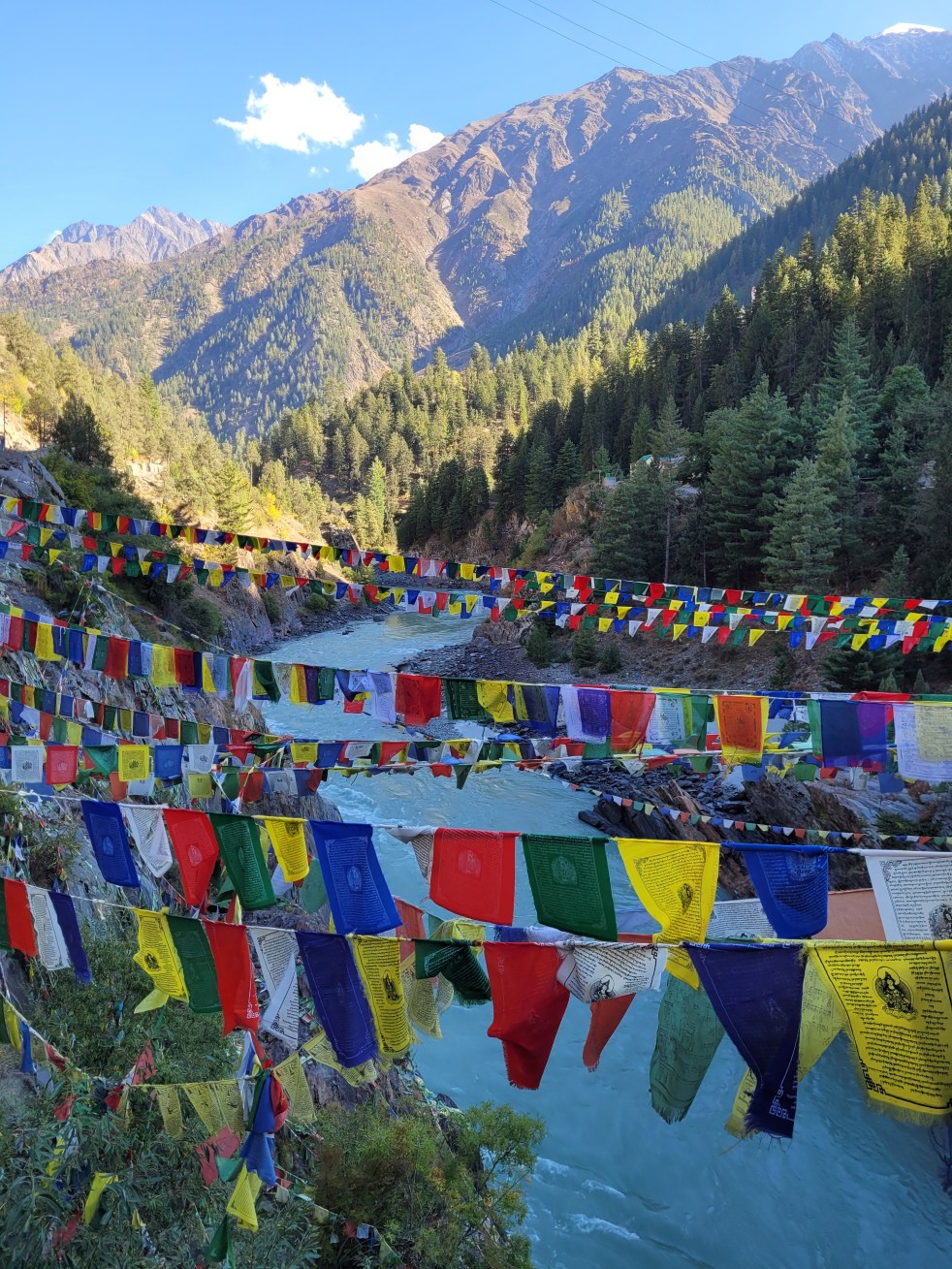
The current developments around Indus Waters Treaty are deeply troubling. Following the heinous attack on tourists in Pehelgam, India has announced that Indus Waters Treaty, the only water sharing mechanism between India and Pakistan put in place in 1960, has been put in abeyance.
Continue reading “Infrastructure Projects in Chenab Basin and Climate Change: Need to Exercise Caution”Category: Climate Change
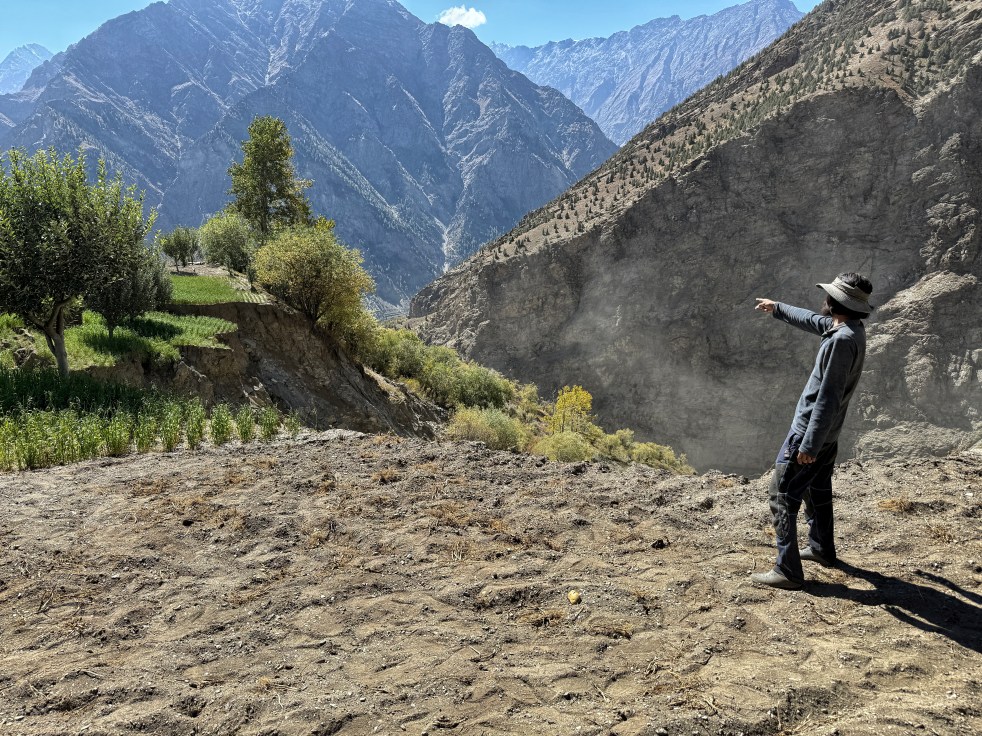
A Sinking Village & a Stream that Floods in the Sun: Climate Change, Jahlma Nallah and Lindur in Chenab Basin
At the village of Jasrath in Lahaul and Spiti, the River Chandrabhaga’s current is swift and strong like a rambunctious toddler. The river is new here, birthed just 16 kms upstream at the confluence of the Rivers Chandra and Bhaga. Chandrabhaga will be named as Chenab only after a journey of about 400 kms downstream. Chenab is one of the largest tributaries of the River Indus whose expansive basin feeds over 250 million people in the heart of Asia.
Lahaul and Spiti district in Himachal Pradesh is a cold desert with very little rain, but the narrow ribbons of land along the Chandrabhaga are emerald with willows, apple orchards and cultivated farms. This is precious land.
Continue reading “A Sinking Village & a Stream that Floods in the Sun: Climate Change, Jahlma Nallah and Lindur in Chenab Basin”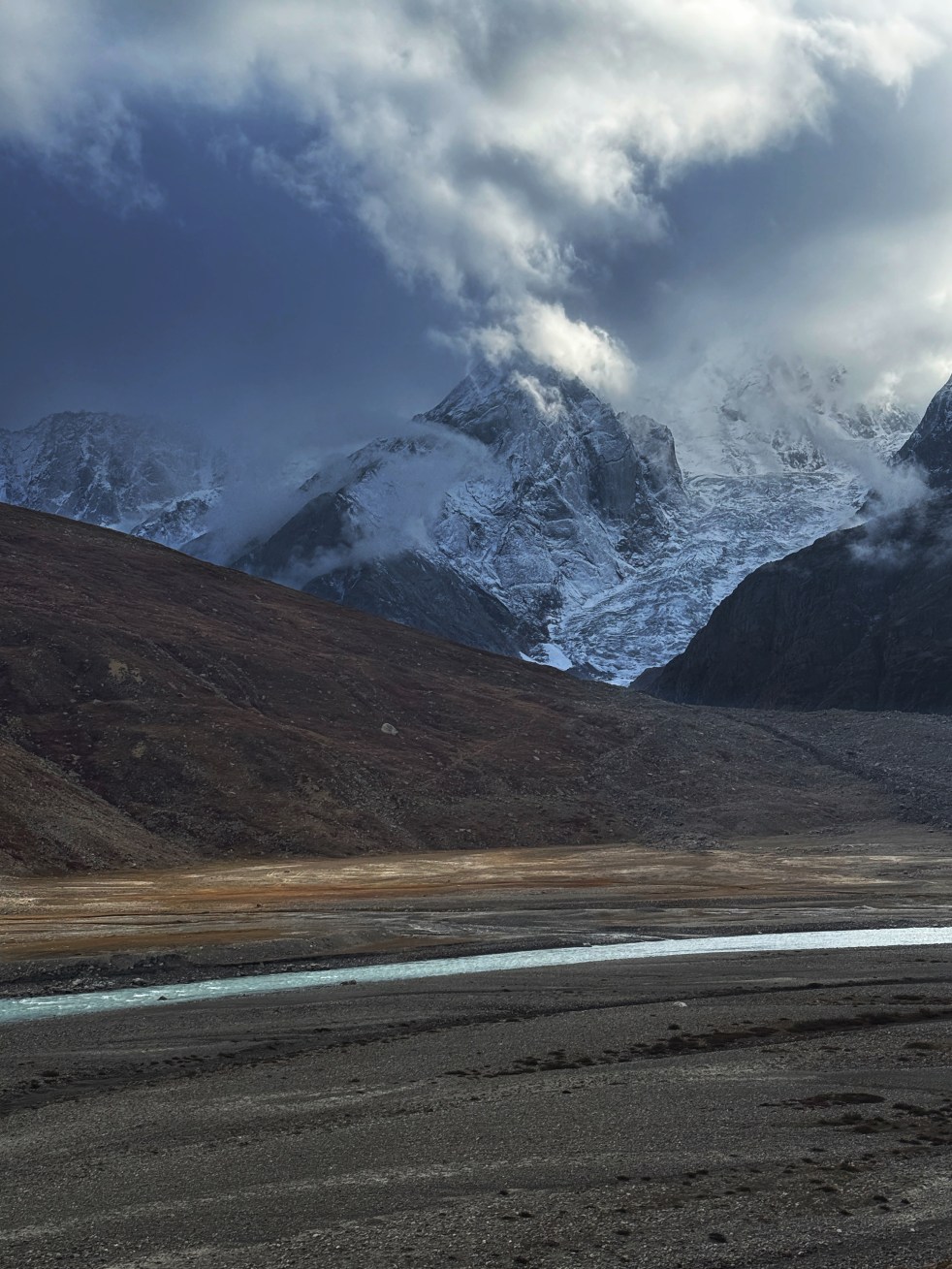
Hydropower-GLOF Nexus in Chenab Headwaters: Absence of credible studies and accountable governance
Increasing incidences of Glacial Lake Outburst Floods (GLOFs) are being experienced in the Indian Himalayas. One of the most notable examples of GLOF was the Chorabari Lake GLOF that occurred on 16th June 2013 in Kedarnath, Uttarakhand[1] which was triggered by heavy rainfall induced mass movements into the lake. The GLOF devastated villages of Kedarnath, Rambara, and Gaurikund. Around 6,000 people were officially killed, and a significant number of the deaths were linked to the GLOF. Countless bridges and roads were washed away, and about thirty hydropower plants were affected or completely devastated. Several Hydropower projects resulted in exponential losses to life and livelihoods. Whole of Uttarakhand was affected in the disaster, and a significant proportion of it was related with GLOF.
Continue reading “Hydropower-GLOF Nexus in Chenab Headwaters: Absence of credible studies and accountable governance”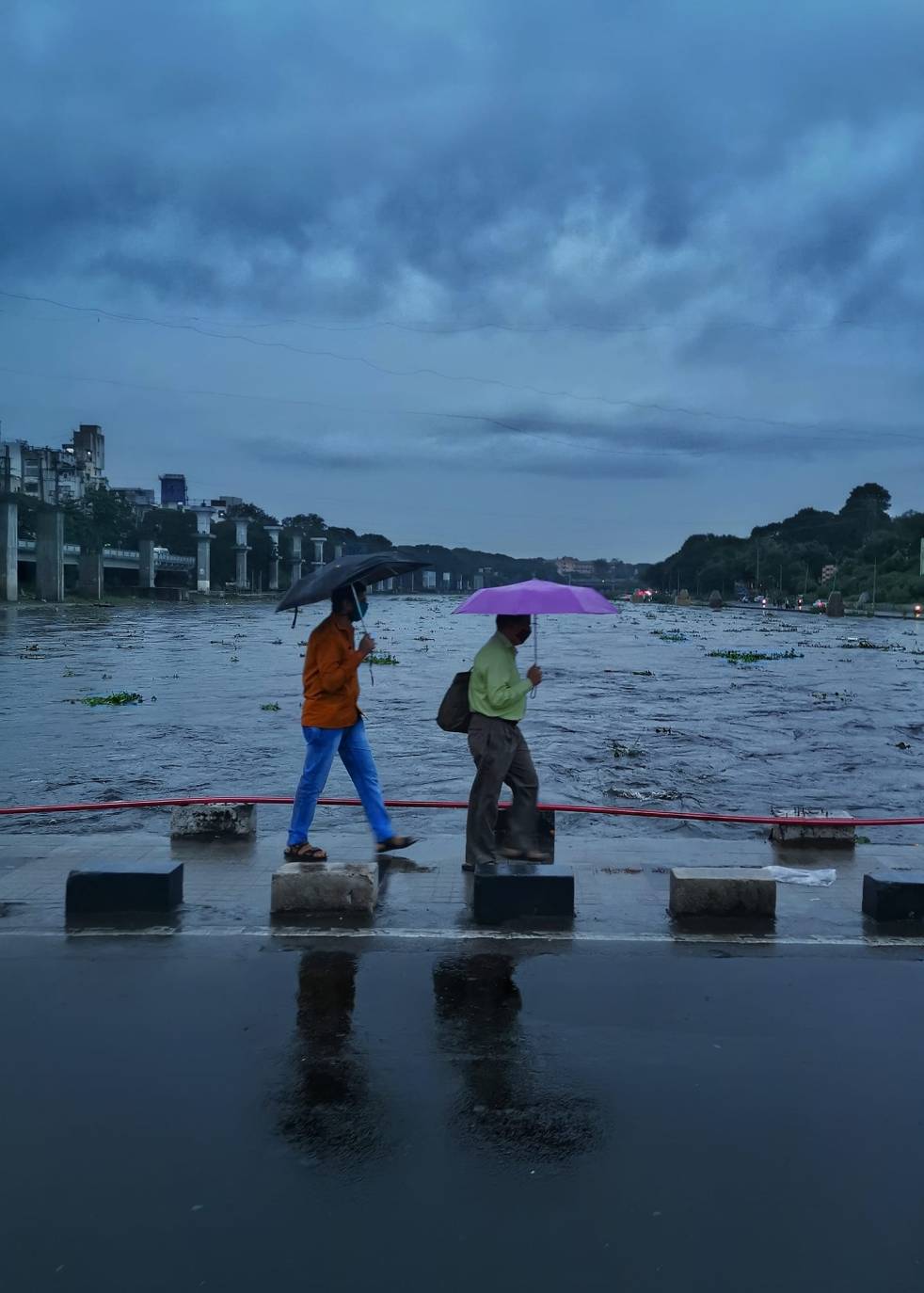
Flood Lines, Riverfront Development & Citizen Heroes: Story of Pune Floods
If a city deserved beautiful rivers only through the sheer will and efforts of its civil society, Pune would be a strong contender.
For decades Pune’s civil society has been remarkably active in protecting its rivers. Organizations like Gomukh, Parisar, Soppecom, ACWADAM, Vanrai, Jal Biradari, Ecological Society and newer, powerful people-led groups like Jeevit Nadi and Pune River Revival have put up studies, reports and protests at times. Experts, academics, musicians, poets, writers, historians, students have held the cause of Pune’s rivers high. At any given time, several public interest litigations are being fought by the weary yet hopeful groups, fueled by personal funds, time and passion.
Continue reading “Flood Lines, Riverfront Development & Citizen Heroes: Story of Pune Floods”
Conserving wetlands to realize global climate and biodiversity goals
Guest Article by Mridhu Tandon [i]
The Sudd wetland in the Nile basin is one of the world’s largest freshwater ecosystems. Nourished by the White Nile-a tributary of the Nile, Sudd is a mosaic of open water and submerged vegetation, seasonally inundated woodlands, rain-fed grasslands, and floodplain scrubland. An integral part of Africa’s largest intact savannahs-the Jonglei plains, Sudd supports the world’s second-largest mammal migration after Serengeti. An estimated 1.3 million antelope: white-eared kob, taing, and Mongalla gazelles move from Sudd every year to reach Ethiopia’s Gambella National Park. Sudd has been in the international news recently. Revival of the 40-year-old 240-mile Jonglei canal will divert the waters of the White Nile around the Sudd wetland and send it to Egypt. The canal will desiccate the wetland, and end seasonal flooding of the Jonglei grasslands. Why is it necessary to protect Sudd from drying up? Why has the subject received global attention? More generally, why protect wetlands at all?
Continue reading “Conserving wetlands to realize global climate and biodiversity goals”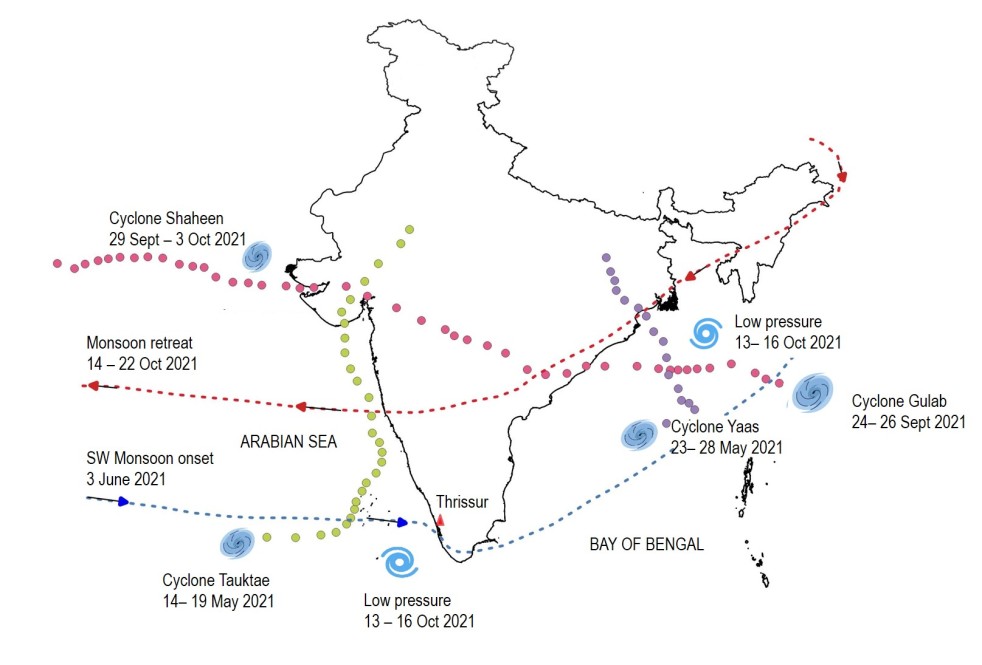
Paddy farming in times of climate change – field notes – A sequel
Guest Article by Dr. Sreeja KG and Dr. Madhusoodhanan CG
Climate change and its impacts in the tropics are changing the once familiar landscapes, once certain weather patterns, once secure living spaces beyond recognition. The disasters that can be as local as a tidal surge to national level episodes of cyclones, wildfires and massive floods are being managed in the same administrative mode as has been the practice during the more forgiving past: without training, without relevant real time information, without involvement of the communities and often merely with the strong will and dedication of the field staff and local volunteers. With events far in between, episodic and with time to recoup, we have been spared total and irrevocable breakdown of the system and society. But for how long?
Continue reading “Paddy farming in times of climate change – field notes – A sequel”
Don’t Use Climate Funds for Hydro Projects: 300 organisations from 69 countries to UN & govts at COP26
A landmark Global declaration titled “RIVERS FOR CLIMATE” was launched on Sept 21, 2021, endorsed already by 300 organisations from 69 countries calling on governments and leaders attending COP26 (Conference of Parties meeting 26) to protect river ecosystems and stop using scarce climate funds to finance false climate solutions such as hydropower. Representing the views of civil society, peoples movements, Indigenous Peoples’ organizations, scientists, and conservationists, the declaration called out the proliferation schemes being peddled under an erroneous pretense of sustainability.
“Hydropower is not clean energy. We’re at an unprecedented moment in history; facing the triple threats of a runaway climate crisis, large-scale biodiversity loss, and a global pandemic,” said Chris Wilke, Global Advocacy Manager for Waterkeeper Alliance. “We simply cannot waste time, funding, and scarce resources on false solutions that distract us from what is really needed to address the multiple crises we face.”
Continue reading “Don’t Use Climate Funds for Hydro Projects: 300 organisations from 69 countries to UN & govts at COP26”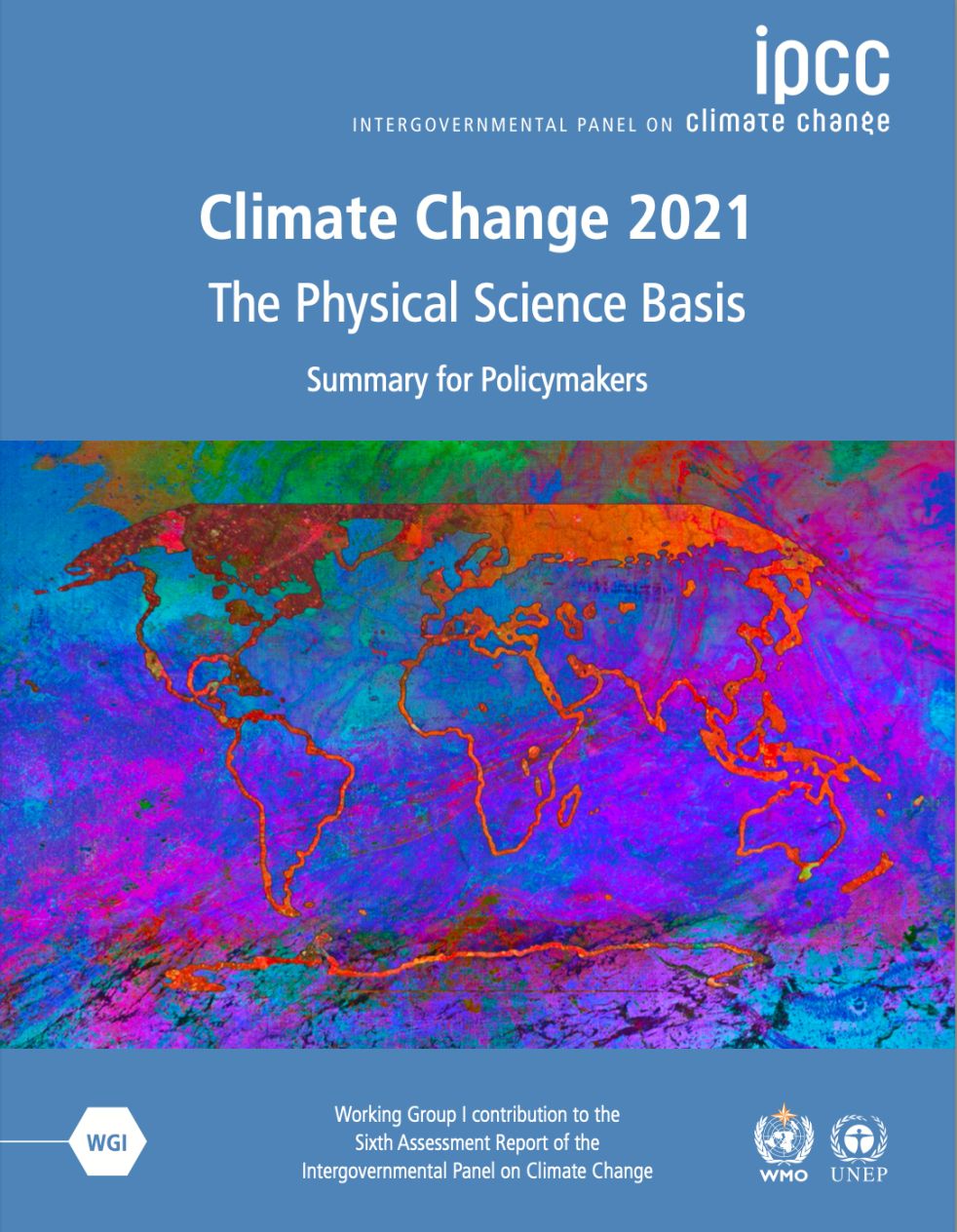
IPCC’s AR6: Synergy between Climate Change & Development Impacts
The UN’s climate science panel unveiled (part 1of) its Sixth Assessment Report (AR6) on Climate Change on Aug 9, 2021, the first since AR5 in 2014. This 3949 page report is called “The Physical Basis”. A 150 page Technical Summary and a 39 page Summary for Policy Makers has also been published, among other volumes. The World and Science has changed a lot in the intervening seven years. It provides projections for temperature and sea-level rises less than three months before the climate summit -Conference of Parties COP26- in Glasgow-Scotland. After two weeks of virtual negotiations, 195 nations (including India) approved the Intergovernmental Panel on Climate Change’s (IPCC) comprehensive assessment of past and future warming on Aug 6, 2021 in the form of a “Summary for Policy Makers” (SPM). The text, vetted and approved line by line, word by word, paints a grim picture of accelerating climate change and dire threats.[i]
Continue reading “IPCC’s AR6: Synergy between Climate Change & Development Impacts”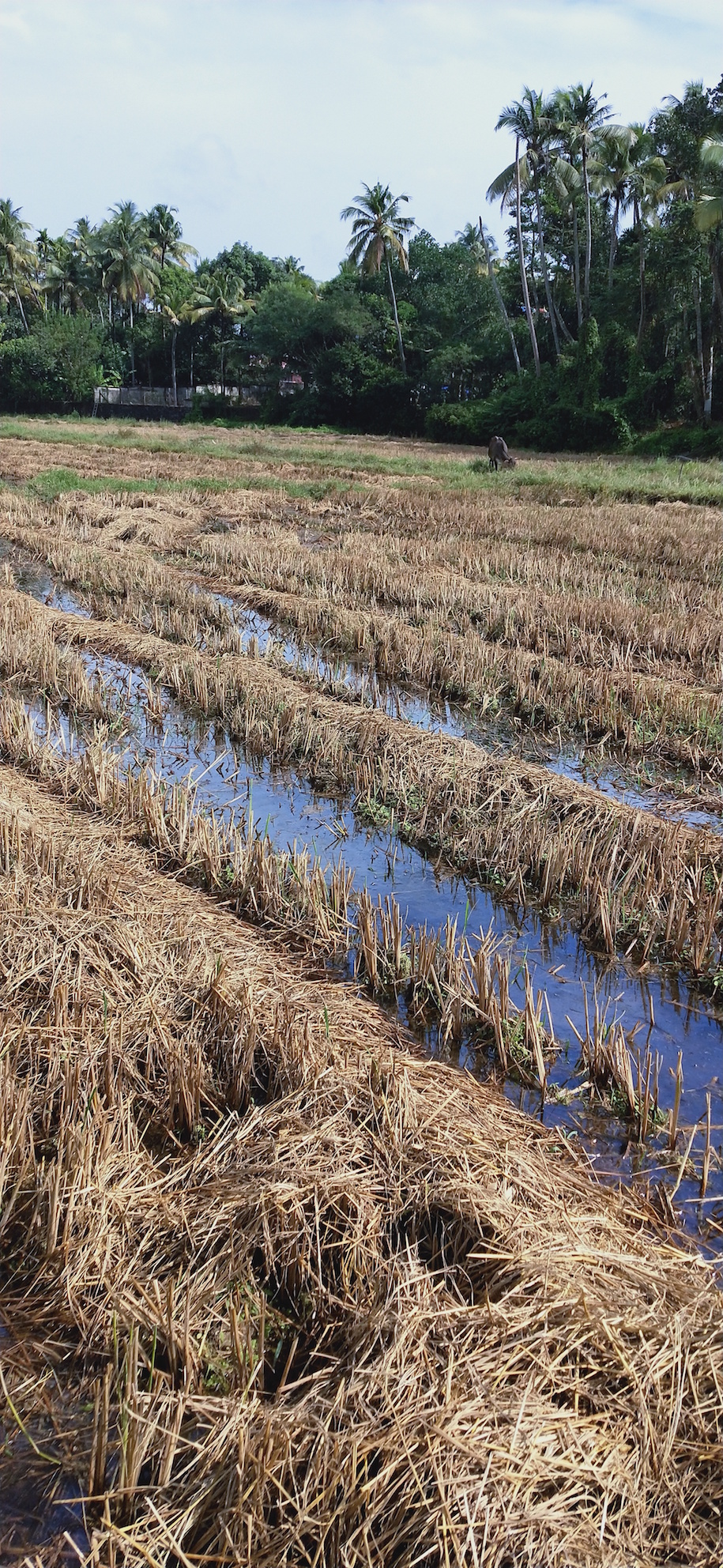
Paddy farming in times of climate change – field notes
Guest Article by Dr. Sreeja KG and Dr. Madhusoodhanan CG
January 6, 2021– An unexpected turn of the weather in the afternoon. Rain clouds gathered from the east and a sudden downpour that lasted through the evening. Heady smells of slaked earth and a welcome respite to the day’s heat. The joy of the surprise shower overshadowed by the worry of harvested paddy in gunny sacks stacked on the field bunds. The paddy which had dried to the satisfaction of the procurement agency’s rigorous moisture tests, is now again wet. Drying it will be an added, unforeseen expense.
Continue reading “Paddy farming in times of climate change – field notes”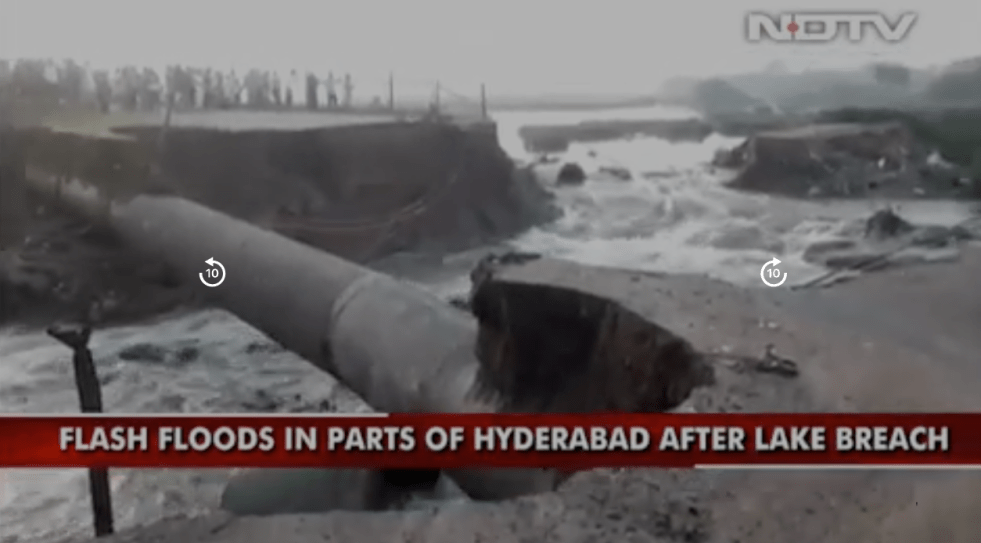
Krishna-Bhima basin floods in Oct 2020 breaks 56-year-old record
Krishna basin is again facing unprecedented floods, for the second straight year. Unprecedented is a bit of overused word these days, but consider the facts: At no less than ten locations, the Highest Flood Levels (HFL) ever recorded at those locations in the Krishna basin were surpassed (nine locations) or equaled (one location). Some of the HFLs surpassed this year were amazing 56, 51 and 44-year-old records! And imagine most of this happening in second half of Oct 2020, when South West monsoon is traditionally over by end of Sept! There is no doubt the floods were unprecedented.
Continue reading “Krishna-Bhima basin floods in Oct 2020 breaks 56-year-old record” SANDRP