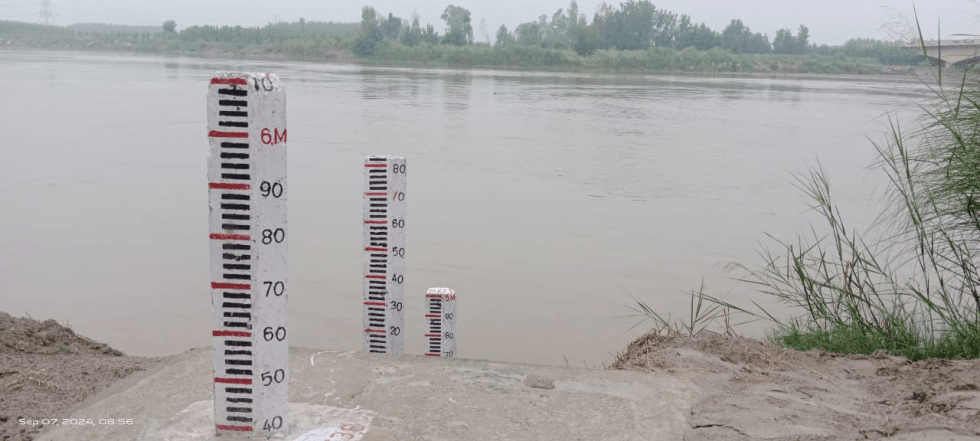
During southwest monsoon season 2024, SANDRP has tracked at least 64 flood forecast and flood monitoring sites where the respective rivers have crossed the highest flood levels (HFL). Here we present detailed analysis of these sites along with some key observations and other relevant information. SANDRP’s previous reports on the subject can be seen here: HFL breach incidents in 2018, 2019, 2020, May-Sept 2021, Oct.-Nov 2021, May-June 2022, July-October 2022, June-October 2023.
Continue reading “SW Monsoon 2024: Rivers Crossing Highest Flood Levels”Author: SANDRP
DRP 14×24: Big Dams, Long distance water will not solve Urban Water Crisis
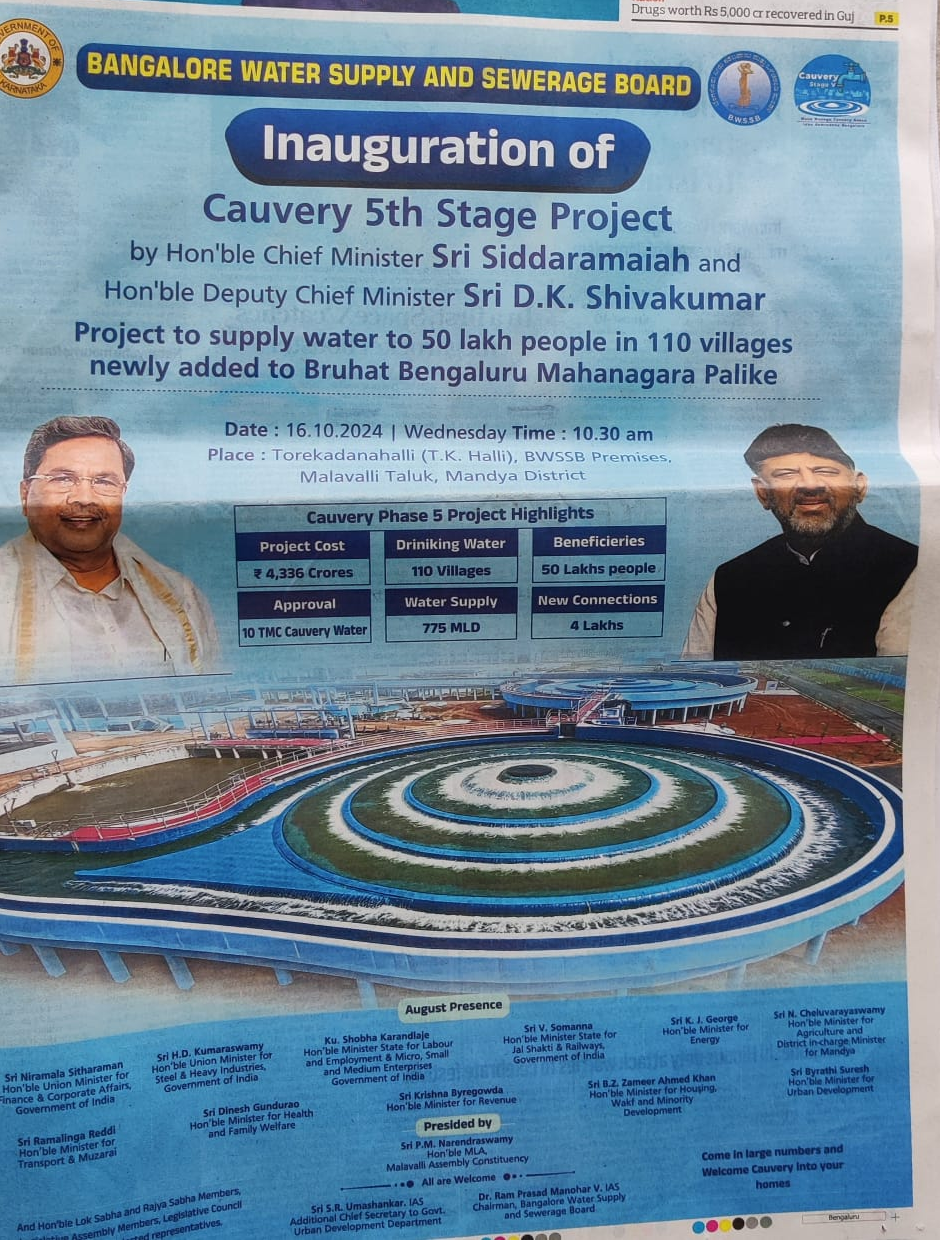
In a pointed article this week, Sachin Tiwale rightly writes that Mumbai does not need more dams, but needs to fix the distribution of more than enough water that it gets currently. Same is the case with highly capital and energy intensive 5th stage of Cauvery Water Supply being inaugurated on Oct 16 by the Karnataka Chief Minister and Deputy CM for Bangalore, advertised through full page advertisements today (Oct 14) in newspapers in Bangalore.
What the India’s cities need is to exhaust the potential of local water resources, including rain water, local water bodies including rivers, groundwater recharge, recycle and reuse of treated sewage and also demand side measures, including fixing the distribution and reducing transmission and distribution losses. All of this needs attention through a National Urban Water Policy that will also fix the Urban Water Governance.
Continue reading “DRP 14×24: Big Dams, Long distance water will not solve Urban Water Crisis”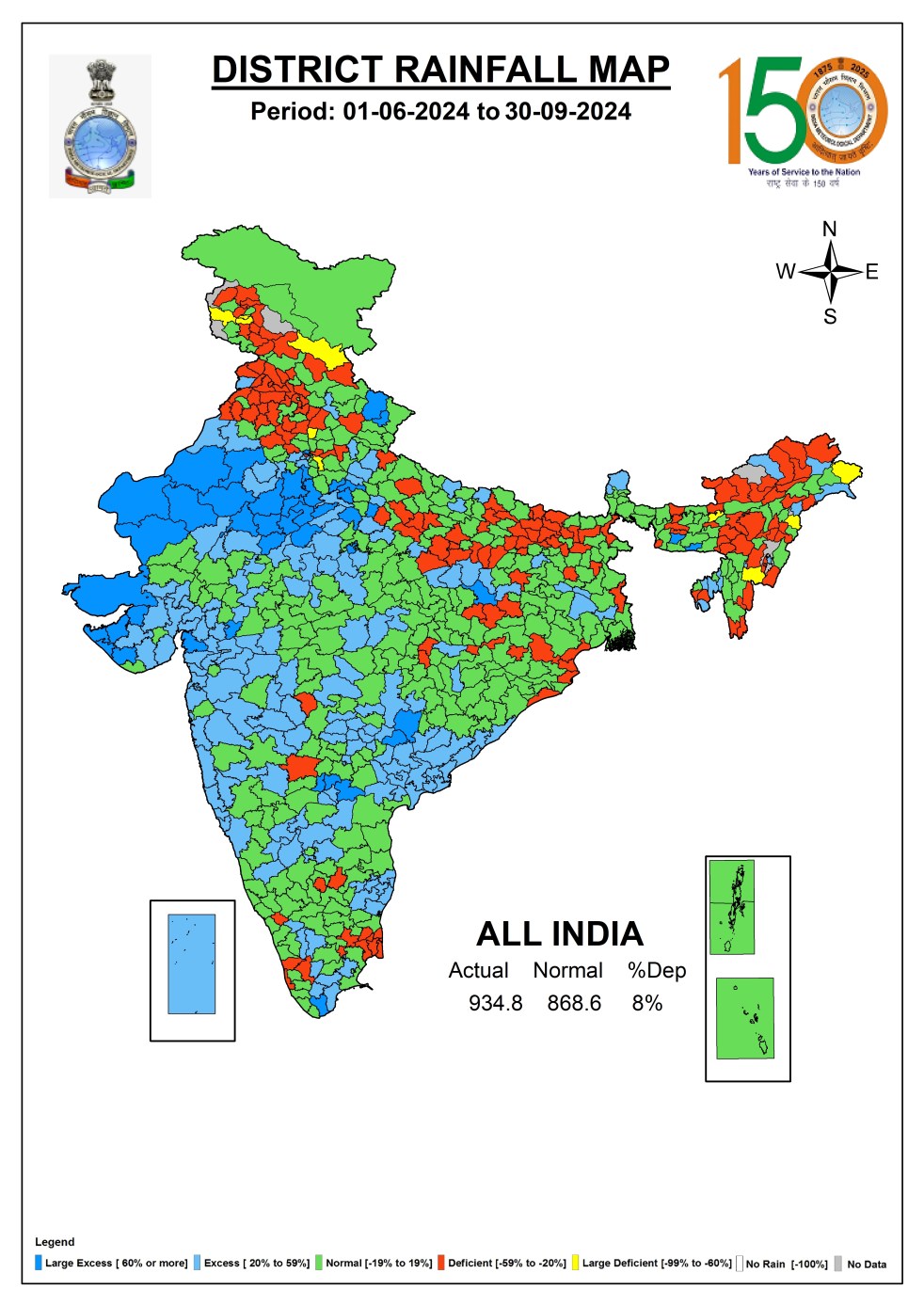
High Rainfall days in India’s districts in Sept 2024: Highest numbers in East India
An analysis of the daily district wise rainfall data from India Meteorological Department (IMD) for the month of September 2024, the last month of India’s South West Monsoon 2024 shows that there were 546 (406 in Sept 2023[i], 417 in Sept 2022[ii] and 489 in Sept 2021[iii]) instances when district rainfall of a day was above 50 mm. Such high rainfall instances included 438 (330, 365 and 374 in Sept 2023, Sept 2022 and 2021 respectively) instances in Sept 2024 when rainfall was 50-100 mm, 73 (64, 47 and 84 in Sept 2023, Sept 2022 and 2021 respectively) instances in Sept 2024 when it was 100-150 mm, 30 (10, 3 and 20 in Sept 2023, Sept 2022 and 2021 respectively) times in Sept 2024 when it was 150-200 mm and 5 (2, 2 and 11 in Sept 2023, Sept 2022 and 2021 respectively) instances in Sept 2024 when rainfall in a day was above 200 mm.
Continue reading “High Rainfall days in India’s districts in Sept 2024: Highest numbers in East India”
DRP 07×24: Global Dam Safety Challenge in Changing Climate
It is increasingly clear that Large Dams across the world are facing increasing challenge due to climate change. In recent years, we have already seen serious dam disasters in Australia, Brazil, Canada, India, Kenya, Libya, Nepal, Nigeria, Poland, Spain, Sudan and USA to name just a few.
All these are related to extreme rainfall events, which are going to only increase in intensity, frequency and spread. It is interesting that hydro industry platform has come out with this report highlighting this issue this week.
For a country like India, the third large dam builder in the world, this challenge is going to be even more daunting as we have been seeing the increasing number of dams related disasters in last few years. As we remember the Teesta 3 dam disaster a year ago, the nature and dimension of this challenge becomes even starker. This is also exemplified by the fact that the dam safety panel report about this disaster is not even out in public domain. And even now new theories are being proposed about what happened during the disaster.
Continue reading “DRP 07×24: Global Dam Safety Challenge in Changing Climate”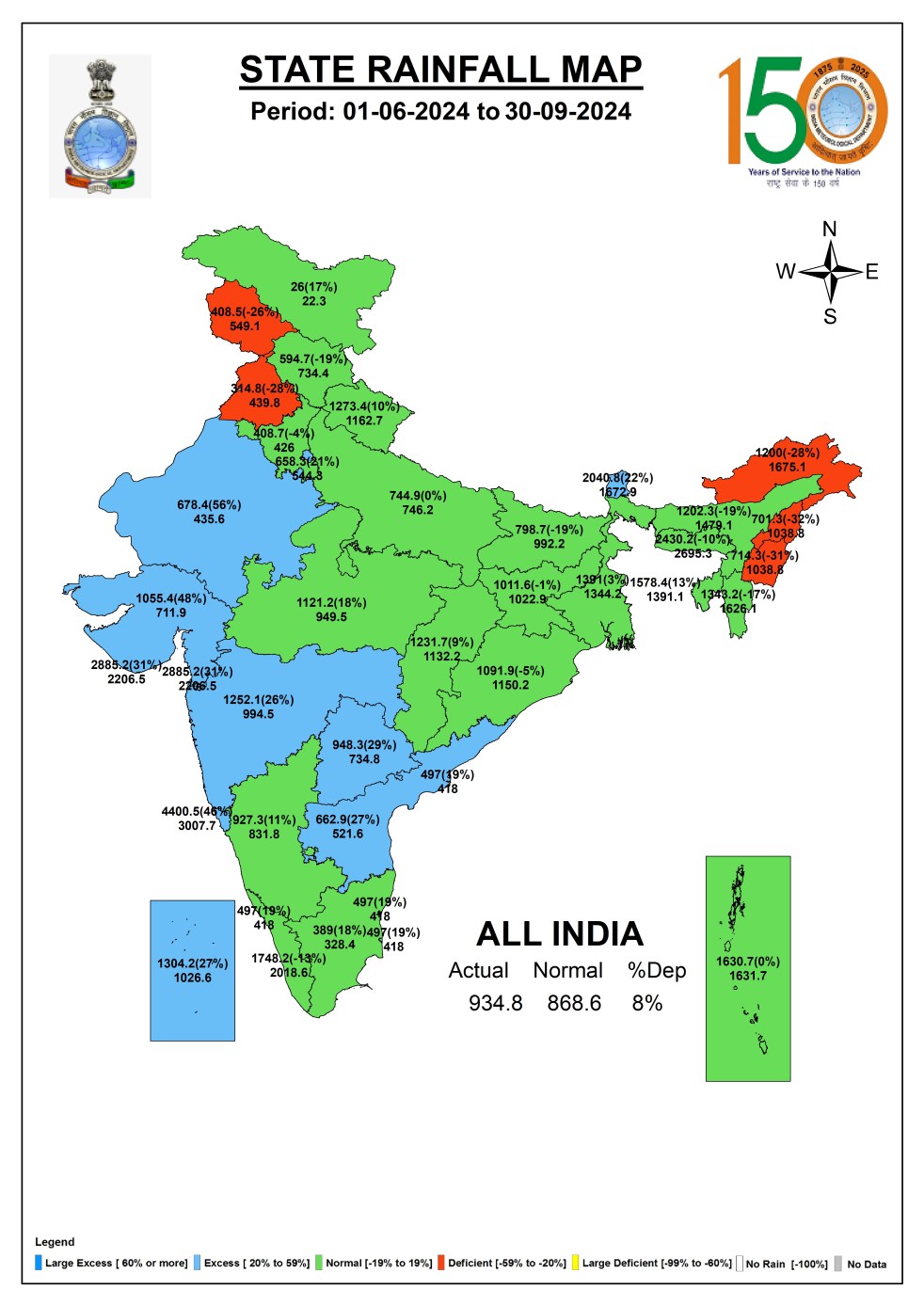
SW Monsoon 2024: District wise rainfall in India
In the just concluded South West Monsoon 2024, India received 934.8 mm (820 mm in SW Monsoon 2023, 925 mm in SW Monsoon 2022[i]) rainfall, about 107.6% (94.45 % in 2023, 106.5% in 2022) of the Normal SW Monsoon rainfall of 868.6 mm as per India Meteorological Department (IMD). This rainfall is categorised as above normal rainfall.
Continue reading “SW Monsoon 2024: District wise rainfall in India”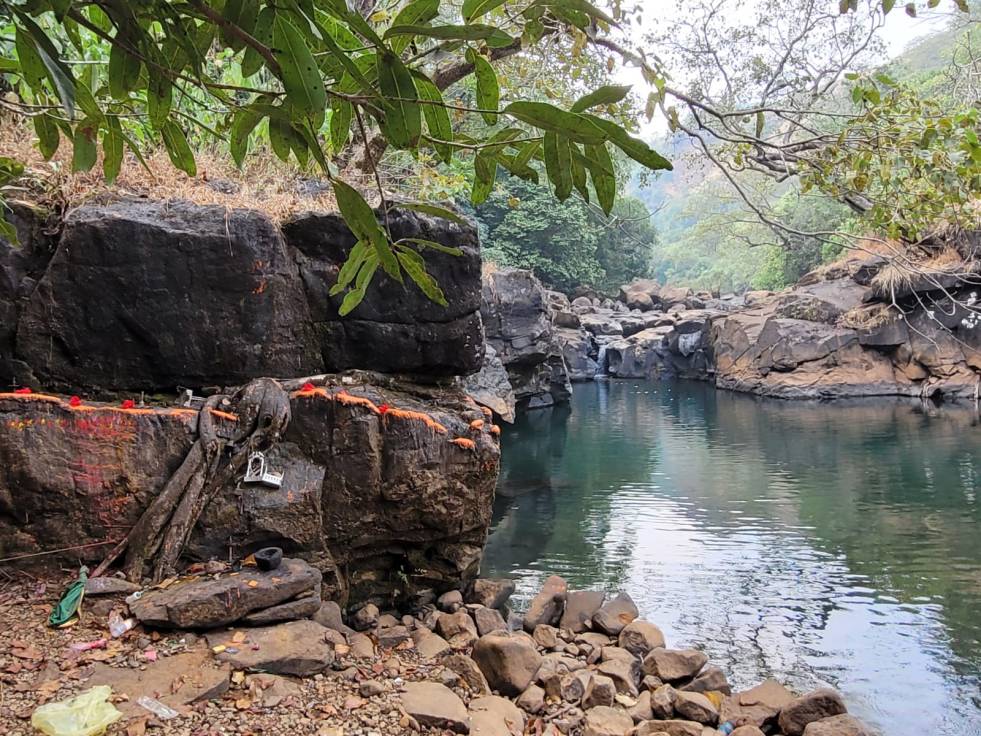 MoEF Committee Rejects the Adani Application and asks to apply afresh for Warasgaon-Warangi Project!
MoEF Committee Rejects the Adani Application and asks to apply afresh for Warasgaon-Warangi Project!
In a respite to forest dwelling communities, fragile biodiversity and community conservation areas in the Western Ghats, Expert Appraisal Committee (EAC) of the Union MoEF (Ministry of Environment and Forests) rejected Adani Energy’s application for 1500 MW Warasgaon-Warangi Pump Storage Project. The committee has asked the proponent to apply afresh for Stage I Clearance, adding several conditions to assessment.
Continue reading “MoEF Committee Rejects the Adani Application and asks to apply afresh for Warasgaon-Warangi Project!”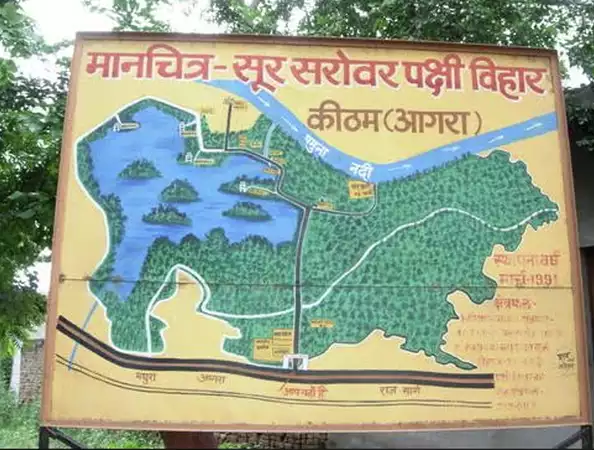
Yamuna Manthan 031024: Threatened River Wetlands
(Feature Image: Soor Sarovar Bird Sanctuary, along with the river Yamuna, is considered to be green lung of the Agra city. Source: ToI report Six-member committee to probe development of Agra Trade Centre in Soor Sarovar eco-zone. Nov. 01, 2018)
The waterbodies, lakes, wetlands in Yamuna basin continue to face damages and threats from many quarters, including concerned govt departments. In latest examples of this, there are reports of Uttar Pradesh govt’s plan to reduce the eco-sensitive zone (ESZ) of Keetham lake to zero. The wetlands also known as Sur Sarovar is a large ox bow lake formed by Yamuna River in Agra. It is a protected bird sanctuary and has been designated a Ramsar site in August 2020. In Sept. 2022, the Supreme Court had directed the govt to increase lake’s ESZ to 799 ha from 403 ha.
Similarly, the Uttar Pradesh govt departments have also been delaying process to notify Dhanauri wetlands as a Ramsar site in Greater Noida. The case is going on in NGT (National Green Tribunal) for the past many years. In the recent hearing held on Sept. 26, the NGT asked govt department to explain reasons behind delay in notifying the wetlands apart from directing it to remove water hyacinth chocking the wetlands. The next hearing will be held on Jan. 27, 2025.
Continue reading “Yamuna Manthan 031024: Threatened River Wetlands”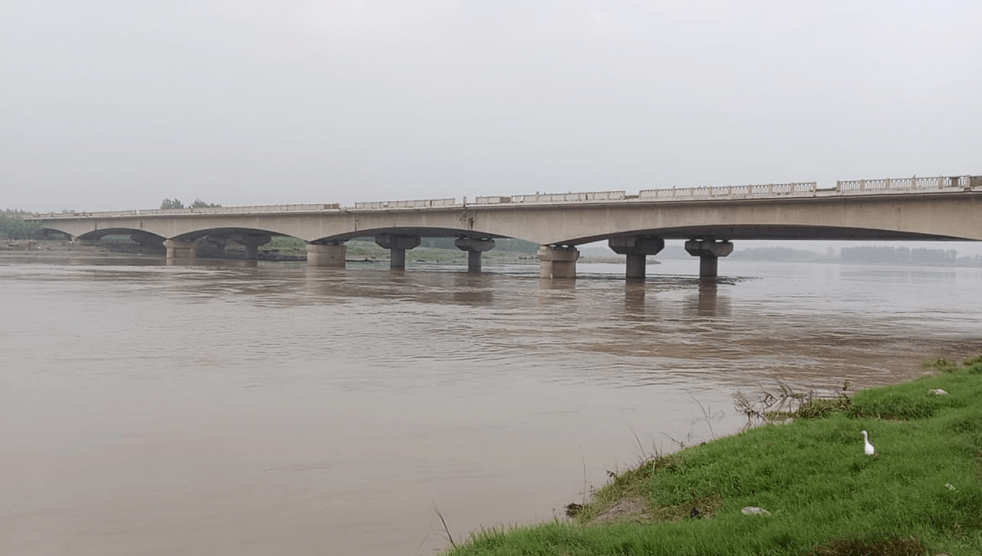
Yamuna SW Monsoon 2024: Upper Segment Misses Flood
(Feature Image: Yamuna river at Mawi site in Kairana, UP in Sept. 2024)
After remarkable deluge in 2023, the upper segment of Yamuna river has seen no significant flood spell all through the just concluded southwest monsoon 2024. This is unusual as the river generally witnesses at least a couple of low or medium flood spells in this segment every year.
However, this year the discharges from Hathnikund Barrage (HKB) in Haryana did not cross 1 lakh cusec figure even a single time. The peak discharge from the barrage was 87,017 cusecs at 06:00 hour on 26.09.2024.
Continue reading “Yamuna SW Monsoon 2024: Upper Segment Misses Flood “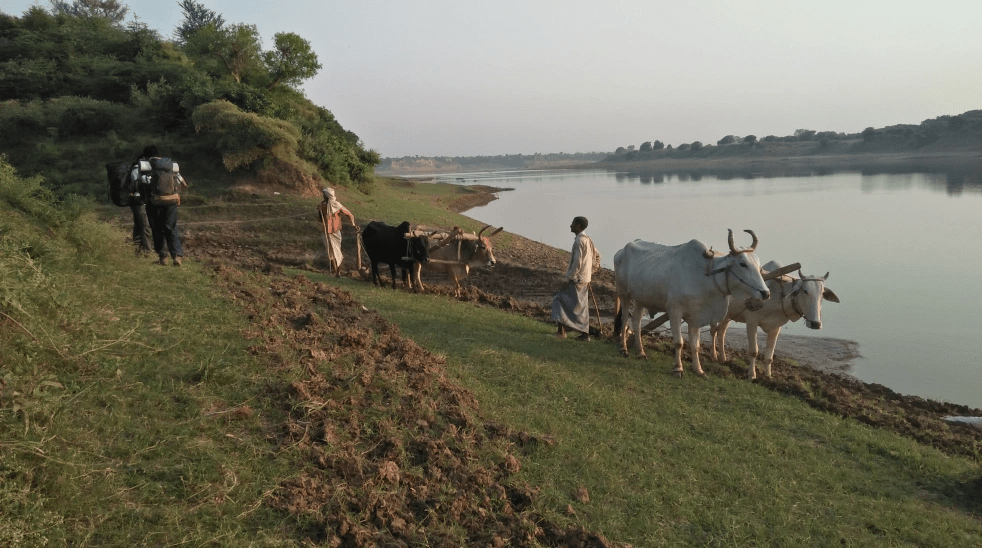
DRP 300924: Focus on River Studies
Rivers are the most important ecosystems (eco here includes ecology and economy) and yet possibly least studied entities. Some news below this week about some river studies brings the focus on need to take up many more river related studies.
Most important aspect of river related studies is the need for credible, independent studies, not influenced by the needs of the governments. Otherwise, the government is likely to not only influence the study, but also decide not to make it public as they did in case of the studies related to Joshimath town and role of Chamoli disaster.
Continue reading “DRP 300924: Focus on River Studies”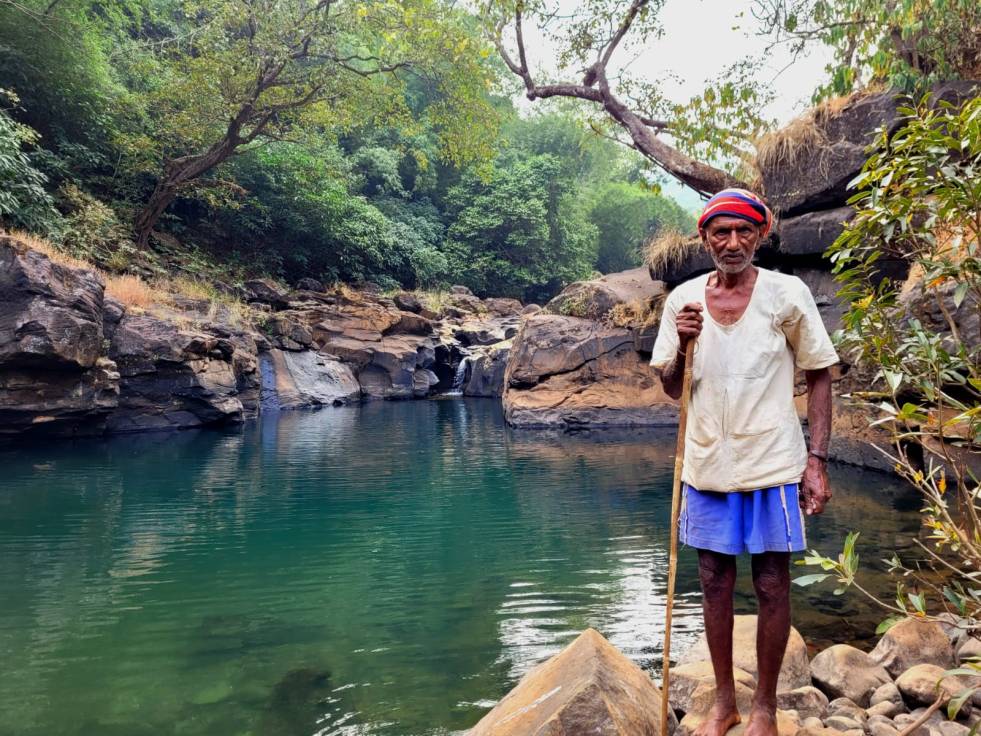
Adani Pump Storage Dams: Defiling sacred pools and fish sanctuaries in the Western Ghats
Adani Energy proposes to build two large dams in the heart of Western Ghats as a part of Warangi-Warasgaon Pumped Storage Project. One of the dams will be located in Tekpowale Village, about 65 kms from Pune.
I actually could not believe my eyes when I read the name Tekpowale.
Continue reading “Adani Pump Storage Dams: Defiling sacred pools and fish sanctuaries in the Western Ghats”
