Disasters · Floods · Gujarat

Will Cyclone VAYU bring floods in Saurashtra, Kutch and South Rajasthan?

The latest update from IMD[i] on Very Severe Cyclonic Storm VAYU (issued at 0700 hrs on June 13, 2019) does not provide any specific risk of floods in any region, nor does it mention any possibility of persistent rainfall leading to risk of floods.

Another IMD update at 1200 hours on June 13, 2019[ii] says large parts of coastal Saurashtra may experience winds of 160 kmph starting June 13 afternoon, but there is no mention of risk of floods. It does give heavy rainfall warning: “Widespread rainfall with heavy to very heavy falls at few places and extremely heavy falls at isolated places in the coastal districts of Saurashtra” till 0830 hrs on June 15, 2019, in RED colour, the highest risk colour code used by IMD. Further this warning adds: “Flooding of escape routes. Minor disruption of railways, overhead power lines and signalling systems.” Among action suggested it lists: “Inundation of low lying areas along the above mentioned coastal districts due to heavy rainfall and storm surge… Evacuation from low lying areas of the above mentioned Districts, coastal Hutment dwellers, urban slum dwellers and people staying in unsafe house to safer places.” The Ministry of Earth Sciences also sends out these releases through PIB Press Notes as IMD functions under MoES. Continue reading “Will Cyclone VAYU bring floods in Saurashtra, Kutch and South Rajasthan?”

Bhakra Dams

BBMB & Punjab ill prepared to use water flows to Bhakra dams in 2019 summer

It’s pretty unusual situation in Bhakra, Pong and Ranjit Sagar dams this summer. These reservoirs on Sutlej, Beas and Ravi rivers respectively, allocated to India under Indo-Pak Indus Waters Treaty, are releasing so much water this summer that a significant part of it is flowing into Pakistan, much against the proclamations of the Government. Continue reading “BBMB & Punjab ill prepared to use water flows to Bhakra dams in 2019 summer”

DRP News Bulletin

DRP: 10 June 2019: Some real solutions from Bihar, Punjab, Karnataka as Centre indulges in name plate change

(Feature image from Hindu file photo of a kalyani filled with weeds in the vicinity of Devanahalli Fort near Bengaluru.) 

Even as the Union government is AGAIN busy changing the name plate of Ministry of Water Resources, some real water solutions emerge from Bihar, Karnataka and Punjab.

Punjab Many takers for ‘Phagwara technique’ of paddy direct seeding Some farmers had experimented last year with a direct seeding technique of paddy, developed by a Phagwara-based farmer, which reduces water requirement by 90%. Seeing the results — low water usage and high yield — many more farmers have signed up for the same this year. As they require much less water for the first two to three weeks, these farmers have also managed to sow paddy much before the schedule fixed by the Punjab government.

Continue reading “DRP: 10 June 2019: Some real solutions from Bihar, Punjab, Karnataka as Centre indulges in name plate change”
DRP News Bulletin

DRP: 3 June 2019: Illegal Sand Mining Impacting Rivers, People & Infrastructure across India

Five months have passed of 2019. There is apparently no reduction in illegal sand mining activities which are continue to  ruin rivers, kill people and damage public infrastructure across the country.

In North India, the Ghaggar, Yamuna, Ken, Betwa and Chambal rivers have been severely affected. The Narmada, Krishan, Godavari and Cauvery are prominent rivers bearing the burnt of unsustainable extraction.

There are reports hinting that uncontrolled mining menace is also aggravating the drought situation. On one hand it is causing siltation of reservoirs thus reducing storage capacity while on the other it is inhibiting recharge of shallow aquifers supplying base flow to rivers during lean season. This is one of the main reasons many of perennial rivers like Cauvery, Narmada, Yamuna, Ken, Betwa and Godavari at many places are running dry this year.

Continue reading “DRP: 3 June 2019: Illegal Sand Mining Impacting Rivers, People & Infrastructure across India”
Ganga · Ramganga

Ramganga West – A Ganga Tributary or A Garbage River?

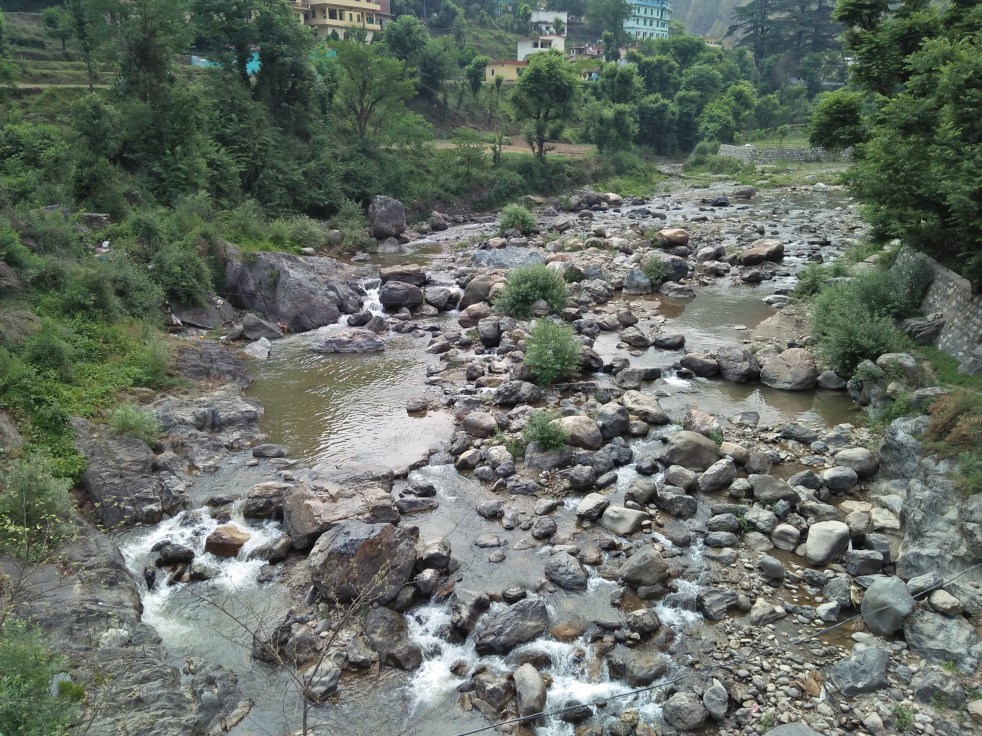
Ramganga (West) River originates from the western part of Dudhatoli reserve forest lying between Thailisain block in Pouri and Gairsain tehsil in Chamoli districts of Uttrakhand state. It is an important tributary of National River Gaga. The total length of the river is about 596 km. For first 200 km the river flows in Uttarakhand state and the remaining length falls in the state of Uttar Pradesh. Before it descends into plains, it is impounded by Kalagarh dam inside Jim Corbett National park.

Continue reading “Ramganga West – A Ganga Tributary or A Garbage River?”

Yamuna River

Perennially non functional Common Effluent Treatment Plants in Yamuna Basin

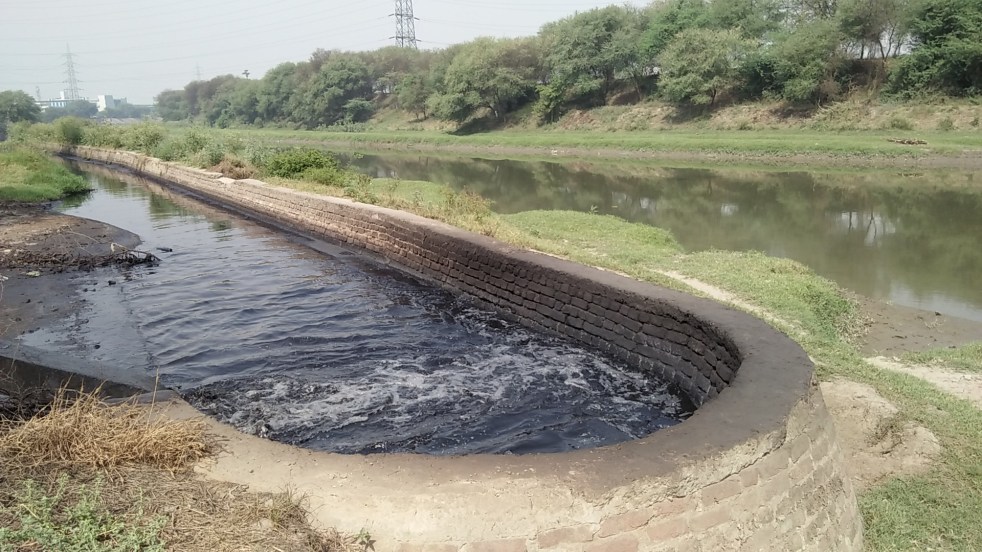
Chances are higher that you find a CETP malfunctioning on repeated visits for same commonly made lame excuses. (Feature image 4 MLD Kundli CETP discharging effluents without any treatment into drain number 6, while drain number 8 flowing next to it. Image taken on May 11, 2019 by author)

“Oh my God, its unbearable” was the first expression came out of my mouth instinctively and instantly, while standing at the outlet of Common Effluent Treatment Plant (CETP) in Sonipat District, Haryana. The plant was located in Kundli Industrial Area along DN (Drain Number) 8 at Delhi Haryana border. It was the morning of May 11, 2019 while observing status of DN 6, along with my friend Yayati Bhardwaj.

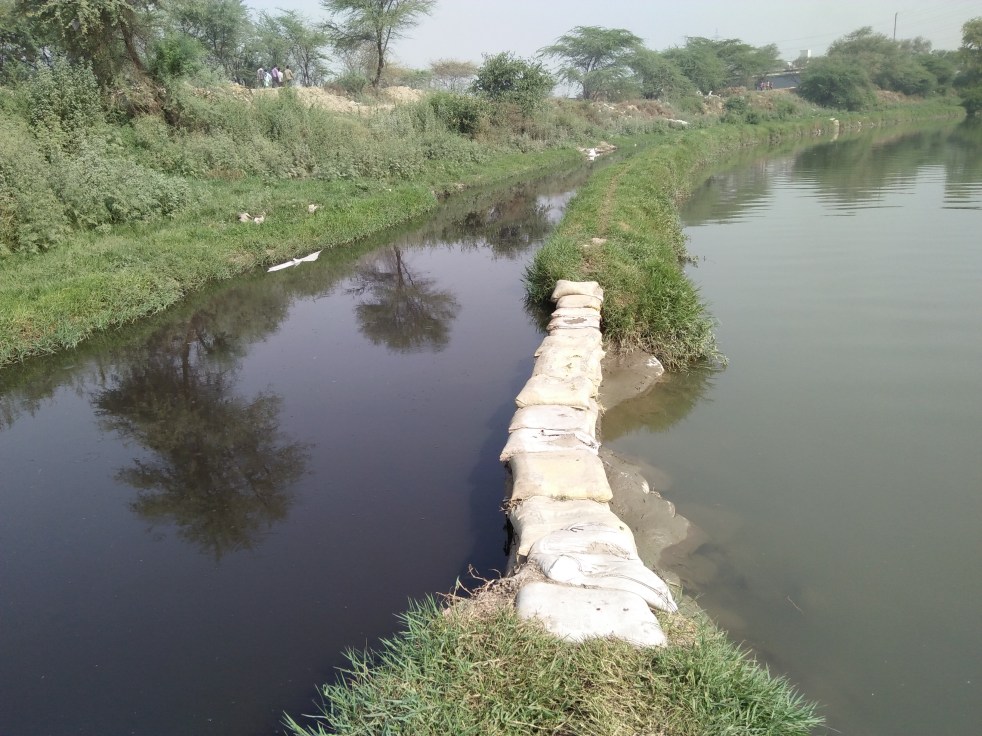
DN 6 carries industrial and domestic effluents from a large area of Panipat and Sonipat districts while DN 8 supplies potable water to Delhi via Yamuna river. Both drains run parallel for a length of 10 km and more than often intermix due to breaches and spill-overs. To know more about this, see: Delhi’s Drinking Water is 9 inch Wall away from Toxic Industrial Effluents & Sewage.

Continue reading “Perennially non functional Common Effluent Treatment Plants in Yamuna Basin”

DRP News Bulletin

DRP: 27 May 2019: Water Sector Agenda for the new Govt: ILR cannot be part of it

The new government at the centre, headed by Shri Narendra Modi, if we go by the signals so far, is likely to push the mega project agenda including Inter Linking of Rivers (ILR). It also seems that Gadkari may continue to be the Water Resources Minister, if we go by the statements and signals so far. Both these steps would be wrong. The PM has said he wants to provide piped drinking water to everyone in the country in his new term. Such one size fits all solutions are likely to create more problems than solutions, as we can see from the dumping of honey sucker tankers close to drinking water sources, thanks to building of crores of soak pit toilets.

If the government wanted to listen, this weekly bulletin (like any other week) from SANDRP provides enough food for thought. Very large part of India, including huge parts of big dam building states of Gujarat and Maharashtra are in grip of drought. Like they have been repeatedly over the last few years. ILR is an extension of the big dam agenda and no amount of false promises of Godavari water are going to fetch votes, as they did not for the BJP in current elections in Tamil Nadu or Andhra Pradesh. Similarly big hydro is no longer viable, and pushing them either in Ganga basin or in North East India will only invite dis-satisfaction, destruction and distress. Big dams are making the floods worse as Kerala example showed in Aug 2018, among many others. We can choose to close our eyes to these realities, but that wont change the realities.

Continue reading “DRP: 27 May 2019: Water Sector Agenda for the new Govt: ILR cannot be part of it”
Ganga · Rivers

Can a book tell History of Ganga?

Book Review: “Ganga: The Many Pasts of a River” by Sudipta Sen. Penguine Viking. 2019. PP 445 + (xvi)

Panditaraja Jagannath, Mughal court poet extraordinaire, a scholar of Linguistics, poetics, and philosophy, hounded by the Brahmin orthodoxy led by Hara Dikshita for marrying a Muslim woman, sought refuge on the steps of Banaras by the side of the Ganga. Forbidden to step into the water lest he pollute the river with his transgression, he was moved to compose his famous devotional eulogy of the Ganga, known as the Piyushalahari. As he composed each verse, legend has it, the river rose step by step, and at the end of his recitation sweeps him and his devoted wife away.”

This is one of the many fascinating stories that Sudipta Sen tells us in this remarkable book, a product of at least 12 years of labor of love. Continue reading “Can a book tell History of Ganga?”

DRP News Bulletin

DRP: 20 May 2019: This drought, Big Dams recognised as elephants by media

At least 40% of India is facing worst drought of 30-40 years as per various researchers. A very large part of that happening in areas that are focus of India’s dam building. These areas are facing drought in spite of so much dam building. But the official agencies never saw the link. Its heartening to see some media reports and edits have started recognising the elephant in the room. Hope this is change for the better and if the media continues to highlight the situation and linkages, may be, may be we will also see impact on the governments. A silver-lining as they say in otherwise dark situation.

Continue reading “DRP: 20 May 2019: This drought, Big Dams recognised as elephants by media”
Yamuna River

Delhi’s Drinking Water is 9 inch Wall away from Toxic Industrial Effluents & Sewage

Feature image showing drain number 6 with industrial pollution running along drain number 8 which carries raw water for potable water supply to Delhi. The over spill in drain number 6 is plugged with sand bags. Image by author, May 11, 2019 

Role of Drain Number 8

About 300 cusec of water is supplied to Delhi via Drain Number (DN) 8. The drain branches off from Western Yamuna Canal (WYC) near Garhi Bindroli village in Sonipat. The total length of the drain is about 25 km. It carries Delhi’s share of water and discharges it into River Yamuna at Palla, where the river enters Delhi territory.

The water then flows 21 km downstream up to Wazirabad barrage where it is treated at Wazirabad Treatment Plant (WTP).  This plant also supplies water to New Delhi Municipal Council (NDMC) areas which includes President House, Parliament areas among other prominent VIP residential units. 

Continue reading “Delhi’s Drinking Water is 9 inch Wall away from Toxic Industrial Effluents & Sewage”