Bihar · Rivers

Bringing Life back to Champa River

Guest Blog by Dr. Ruchi Shree (TMBU, Bhagalpur)

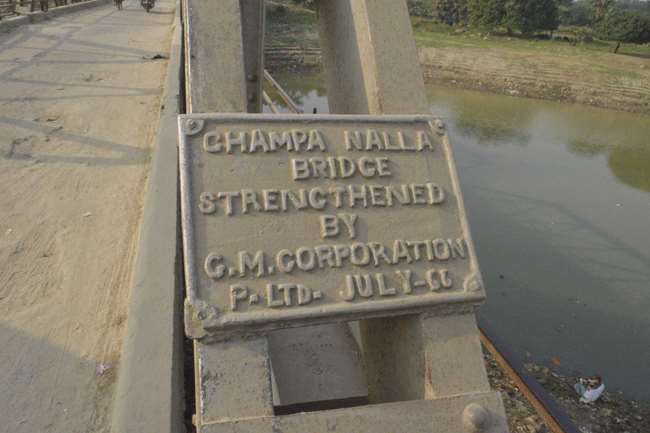
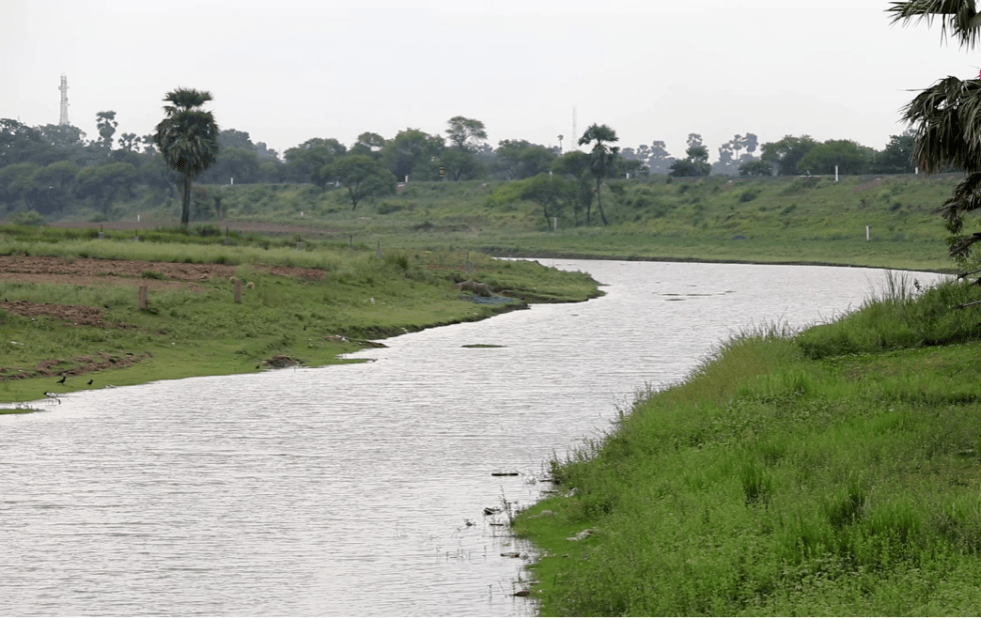
Is it merely a coincidence that I am writing this last segment of my three-part writing on Champa river when due to ongoing lockdown amid unprecedented COVID-19 pandemic, the rivers not only all over India but worldwide are said to have become cleaner. Many scholars and environmentalists are calling it a ‘boon in disguise’ and asking us to take it as an opportunity to re-engage with human being’s relationship with the surrounding nature. To quickly recap what I have already said in my previous writings that rivers are more than merely water-bodies and each river has not one but many stories around it. These stories are about how did they come into existence to what are their specific features and many more. (Photo above: Live History)

Continue reading “Bringing Life back to Champa River”

Dams · DRP News Bulletin

DRP: 20 April 2020: Solutions to Covid 19 & Climate change are same?

This proposition clearly sounds simplistic and seems devoid of science or logic. But the case studies of the epidemics since 1980 and loss of forests, biodiversity and sustainability shows that this is not to be dismissed that easily. In fact the following interview with Dr Aaron Bernstein makes a powerful case to show why this indeed has a lot of science and logic behind it. It also hence makes a case that yesterday (our “normal”), is no longer a good model for better tomorrow.

Continue reading “DRP: 20 April 2020: Solutions to Covid 19 & Climate change are same?”
Indian Meteorological Department · Monsoon

IMD’s 1st Long Range forecast for SW monsoon 2020

IMD’s 1st Long Range Forecast for SW Monsoon 2020 on Apr 15, 2020[i] says:

– Rainfall will be normal (100% of LPA: Long Period Average of 88 cm). IMD says Neutral El Nino Southern Oscillation prevails in Pacific Ocean and Neutral Indian Ocean Dipole conditions prevail in Indian Ocean, likely to remain throughout the monsoon as per most models, some indicate weak La Nina conditions in Pacific Ocean in second half of monsoon.

– FORECAST BASED ON MONSOON MISSION COUPLED FORECASTING MODEL There is high probability (70%) of monsoon rainfall being above average to excess (over 104% of normal)

– FORECAST BASED ON OPERATIONAL STATISTICAL ENSEMBLE FORECASTING SYSTEM: 9% probability of Deficient monsoon (Over 10% below normal); 20% probability of below normal (90-96% of normal) rainfall; 41% probability of normal monsoon (96-104% of normal rains); 21% probability of above normal (104-110% of LPA rains) and 9% probability of excess (over 110% of normal) rains.

Continue reading “IMD’s 1st Long Range forecast for SW monsoon 2020”

Dams · Sand Mining

J&K Riverbed Mining 2020: Rivers exposed to mechanized mining

Unsustainable, unscientific excavation of riverbed minerals has been having significant impact on river eco-system and riparian communities for past several years. Since 2016, to develop better understanding and highlight the problems SANDRP has been preparing state wise annual overview of riverbed minerals (RBM) mining activities. Having putting together year end round up for Gujarat, Maharashtra, Goa, Rajasthan, Madhya Pradesh, Punjab, Haryana states, this compilation attempts to cover prevailing situation in Jammu & Kashmir (J&K) over the last one year. The link of 15 overviews in 2018 can be see here.

Continue reading “J&K Riverbed Mining 2020: Rivers exposed to mechanized mining”

Dams · DRP News Bulletin

DRP: 13 April 2020: Check dams revival in Dakshina Kannada

Zilla man, students revive check dams For the first time in decades this February, Sundara Gowda, a 55-year-old farmer in the Dakshina Kannada district, doesn’t have to spend Rs 6,000 to mine water. In the past he has had to hire an earthmover to do the digging because the rivulet that runs by his farm would dry up. This year, to his surprise, the rivulet, a tributary of the Phalguni river, didn’t dry up. Miraculously, it had plenty of water. A check dam had been built upstream at Paldyaru.

The check dam was one of many such structures built by Paljal Dharanendra Kumar, a zilla parishad member from Venoor village, with the help of student volunteers. The check dams have resulted in water in the river rising six feet for a distance of 2.5 km. The river now has 90 million litres of water and rivulets which used to run dry have come back to life. Dharanendra and his student volunteers have been zealously building check dams, called kattas, from December to February. The dams have been built at absolutely no cost to the exchequer.  https://www.civilsocietyonline.com/environment/zilla-man-students-revive-check-dams/  (24 March 2020)

Continue reading “DRP: 13 April 2020: Check dams revival in Dakshina Kannada”
Bihar · Rivers

Champa’s Angpradesh to Champa Nala of Bhagalpur

                                                                                       Guest Blog by Dr. Ruchi Shree (TMBU, Bhagalpur)

The title of this paper is influenced by Anupam Mishra’s writing ‘Yamuna ki Dilli’[i] which narrates the significance of river for a city and how the equation between the two keeps changing along the passage of time. As mentioned in the previous part of the story, my writing is an attempt to explore the history of Bhagalpur around its one water body named Champa river. Continue reading “Champa’s Angpradesh to Champa Nala of Bhagalpur”

Dam Safety · Dams

Singrauli Fly Ash Dam Breach: Who regulates these dams in India?

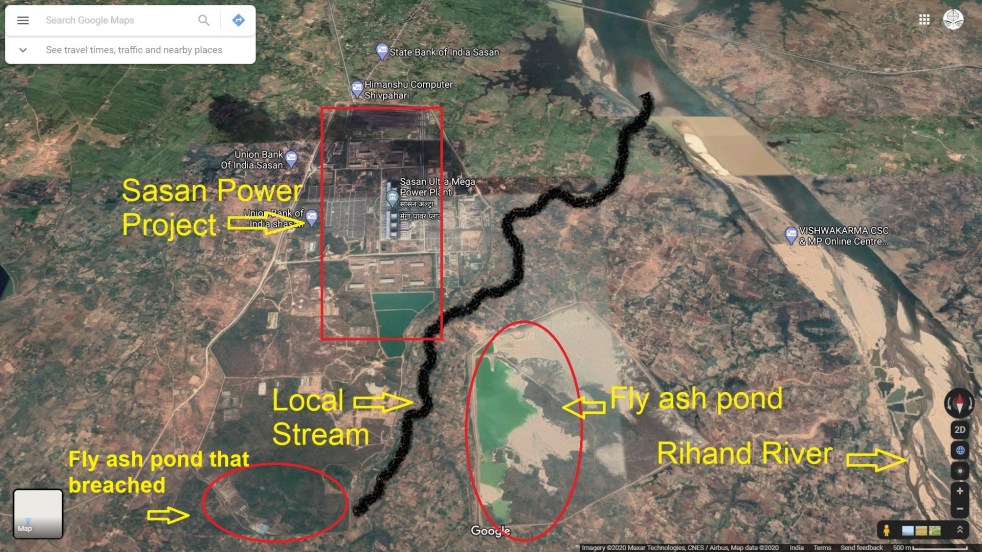
A fly ash Dam of Sasan Ultra Mega Power Project of Reliance Company has breached[i] in the evening of April 10, 2020, near village Harrahva in Singrauli district of Madhya Pradesh, killing six people and destroying downstream river and fields. Following the breach there was massive flash flood of coal ash mixed sludge reportedly affecting hundreds of villages and destroying crops on thousands of acres.

Of the six people feared to have been killed in the flash floods, dead bodies of two have been found in faraway areas, while four are still missing. Two women injured in the aftermath are reported to be in stable condition in local hospital. Reports also suggest that many people could be trapped in their homes because of the poisonous sludge.

Continue reading “Singrauli Fly Ash Dam Breach: Who regulates these dams in India?”

Dams · Rivers

Cleaner rivers in lockdown: Lessons we can learn

Within a week of 21-day long lockdown in India that started at midnight on March 24, 2020, several reports in print, electronic and social media have been doing rounds showing remarkable improvements in water quality in many rivers in the country. Most of these are on the basis of naked eye observations in the form of pictures and videos by people.

Some of the reports quote pollution control boards’ officials and experts with some analytical data. People generally believe that the shutting down of industrial units has led to reduction in discharge of industrial effluents in the rivers, breathing fresh life in pollution laden streams. It’s right that there is halt in industrial belts and there is less industrial pollution reaching the rivers. However there are other factors contributing to the change in the scenario. 

Continue reading “Cleaner rivers in lockdown: Lessons we can learn”

Climate Change · Dams · Environment · Fish · Fish Sanctuaries · Fish, Fisheries, Fisherfolk · Free flowing rivers

Photoblog: Mangroves of the Aghanashini: Linking the River, Land and the Sea

This photoblog by Abhay Kanvinde takes us to mangroves of Aghanashini River Estuary in Kumta Taluk of Uttar Kannada, Karnataka. This is a special place as Aghanashini is a free flowing river with good forest cover in its entire catchment. This means that the mangroves get unhindered supply of freshwater as well as nutrients from the riverine system. This has resulted in the highest area under mangroves in Honnavar Forest Division at 169.4 hectares. Forest Department has also planted about 6 sq. kms of mangroves here, which are thriving. Continue reading “Photoblog: Mangroves of the Aghanashini: Linking the River, Land and the Sea”

Betwa River

Photo blog: Walking Upstream the River-The Betwa and its people

Guest Blog by Mohit M Rao

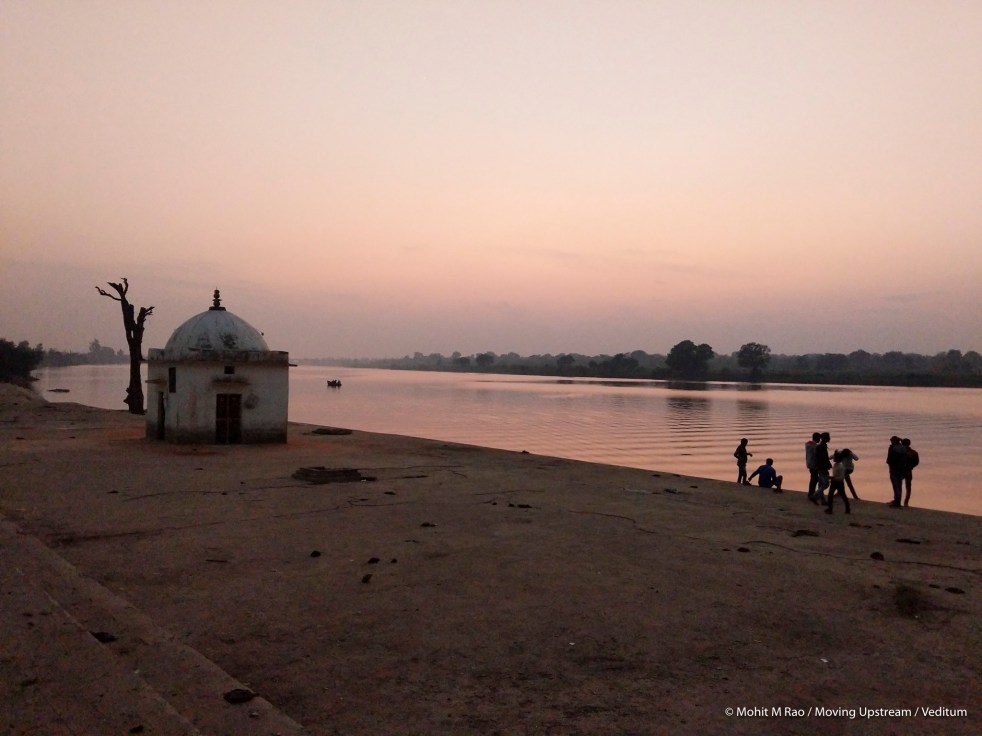
The impetuous flow of River Betwa is the lodestar for Astha Choudhary and Mohit M. Rao, who for the first 14 days of December 2019, walk from the historic city of Orccha to the confluence of Betwa and Bina rivers. The walk, as part of Veditum’s Moving Upstream fellowship, traverses through forests, endless fields of florescent-green wheat fields, overflowing streams and the rocky banks of the river. Fueling the 270-km journey is the kindness of villagers along the way.

The map below depicts the walking route, stretching to some 270-km, from Orccha to Padoccha in the South where the Betwa and Bina rivers converge. The 14 day journey saw us halt in the friendly homes of villagers or in temples or religious institutions for the night. Three major dams and two barrages were seen along the way. The photo story aims to encapsulate the landscape, its forests and the joys and concerns of the riparian communities for whom River Betwa is a lifeline. Continue reading “Photo blog: Walking Upstream the River-The Betwa and its people”