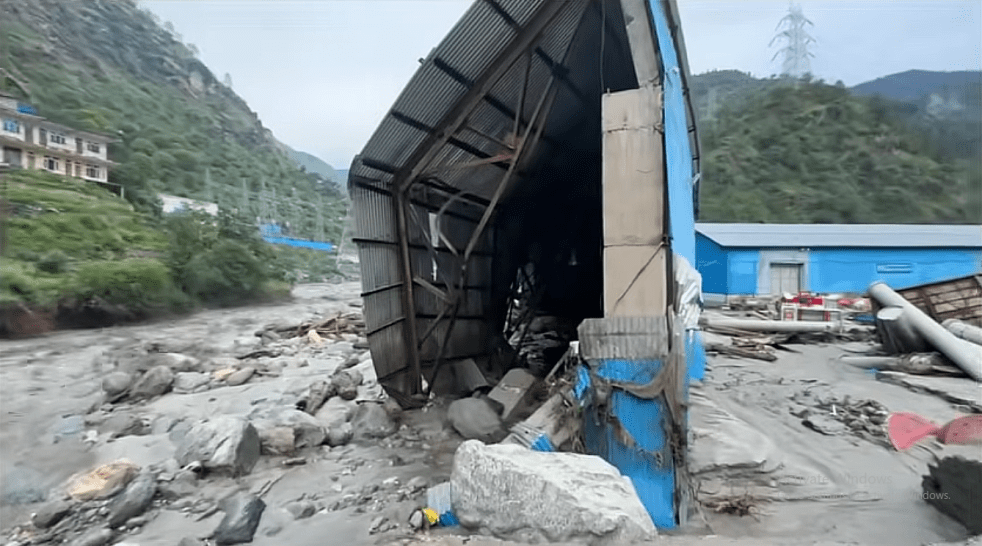
(Feature Image: Screen shot of remaining portion of washed away tin-shed of NHPC’s Parbati II HEP. Source: Anil Khatri Vlog)
In addition to severely damaging the Jiwa and Priyadarshini small hydro power projects, the ‘cloudburst’ induced flash floods on June 25, 2025 has also significantly affected the Parbati II & III projects in Sainj Valley of Kullu district in Himachal Pradesh.
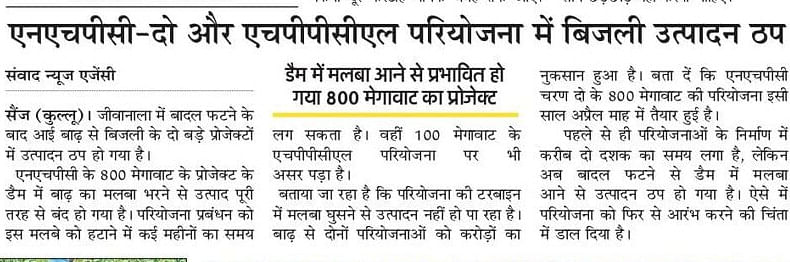
Parbati II HEP: The power generation at this NHPC has completely stopped and it is not certain when it will start operating again. The 800 MW Parbati Hydroelectric Project Phase II (PHEP-II) saw its entire powerhouse floor inundated with sludge, clogging draft tubes and disabling all four turbines. “Once the flow eases,” explains PHEP-II head Ranjeet Singh, “we’ll divert the Jivah nullah spill into a new alignment. Only then can we accurately assess the structural damage inside the powerhouse.” He cautions, however, that clearing compacted debris, much of it lodged beneath the turbines and draft tubes, could take time.

The deluge has severely damaged a tin-shed of Parbati II HEP and washed away project material along with some guns and ammunition of CISF security force accommodating the facility. A security personnel has also suffered some injuries in the incident. The flood also invaded NHPC’s E&M store, colony and dumped huge amounts of debris, wood logs and sludge in the project premises.
These ground videos report 1, 2 and a photo report show the destruction around the project sites. A half-buried fire brigade truck and damaged materials indicates the scale of the disaster. This video shows the floods invading the powerhouse premises of the Parbati II HEP.
According to Hari Ram Chaudharys a Sainj based journalist, the debris and muck has packed the ground floor of the powerhouse and water even reached the second floor of the building. He feels the restoration work can take at least half a year.
It is worth mentionig, in April 2025, the NHPC had started commercial operation of all 4 units of the project. The project has a long history of disaster, accidents and damage to local environment and people including during August 2023 floods when it was blamed for causing extensive damage in Sainj market area.
Parbati III HEP Dam: The 520 MW Parbati Project Phase III (PHEP-III) was similarly incapacitated—its trash racks buried beneath metres of debris, halting some 30 million units’ generation of electricity per day (combined generation from Ph II and III with. total capacity of 1320 MW). General Manager Prakash Chand Azad said, “With specialised equipment, we expect to restore at least two units within a short time. Full generation might take some more time, provided there are no further rain-triggered surges.”
The massive amount of debris, muck and wood logs have filled and choked the dam of PHEP III located just downstream. Reports mention heavy losses to NHPC. As per a report NHPC has suffered losses worth crores and clearing of the debris from Parbati III dam can take months.
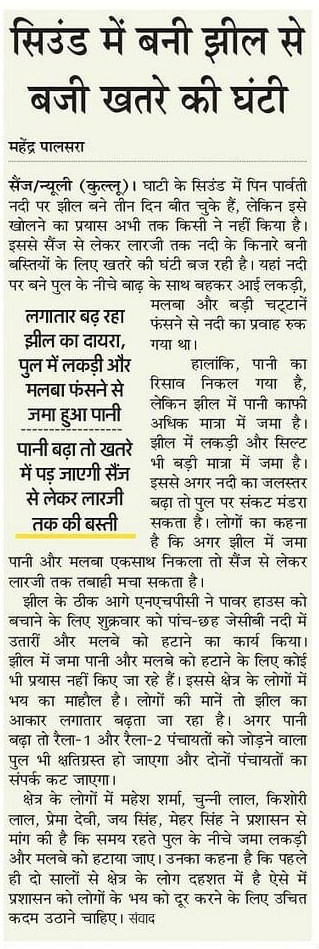
The disaster also created threats for the Siund road bridge. The full extent of damage to the NHPC projects and financial losses incurred are yet to be known as the company has so far made no public statement regarding this.
Creation of artificial lake: The debris, tree logs and muck struck at Siund bridge has created blockage for flood waters forming an artificial lake which with higher inflows and lower outflows is growing in size and has potential lake burst threats for downstream infrastructures mentions this report. Due to strong water currents machines could not be employed to clear the blockage but on June 28 NHPC has deployed nine CAT machines to clear the blockage.
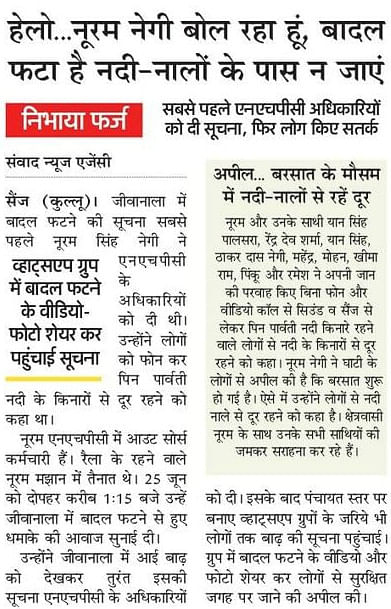
Questions over Disaster Management: As per a report the NHPC was alerted about the flash flood by an out-sourced worker Nooram Negi posted in Majhaan, about 10 km upstream near the Parbati II HEP tunnel outlet along Jiwa nullah. Negi shared the photos, videos of the ‘cloudburst’ in the whatsapp group around 01:15 PM on June 25, 2025 and even made phone calls to the officials. After this, the information was shared among local panchayat groups. This suggests that the NHPC has so far not installed any Early Warning System (EWS) upstream Jiwa nullah.
This also indicates that the State Disaster Management Authority (SDMA) has developed no sound disaster information sharing mechanism in the Sainj valley, despite the fact that the area has been witnessing disastrous flash floods for the past three years.
Similarly, this extreme weather event took place under orange alert by the weather department putting question marks on the forecast efficiency of the India Meteorological Department (IMD). Basically, IMD should have issued red alert for this scale of deluge. Further there is no data available in public domain on the actual rainfall recorded around the ‘cloudburst’ location in Sainj Valley. Also there are questions about the usefulness of the doppler radars in the state.
Despite repeated flood disasters, the Central Water Commission (CWC) has not installed any flood forecast site in the Bias river basin and no flood monitoring site in Sainj Valley.
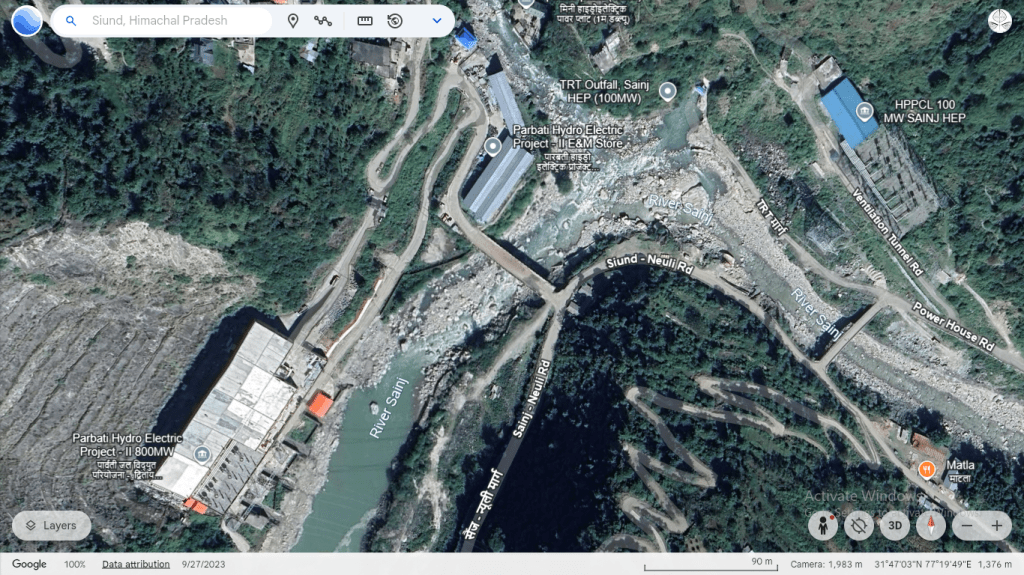
Moreover, the construction of tin-shed facilities next to Siund bridge has apparently reduced the flood carrying capacity of the Pin Parbati river.
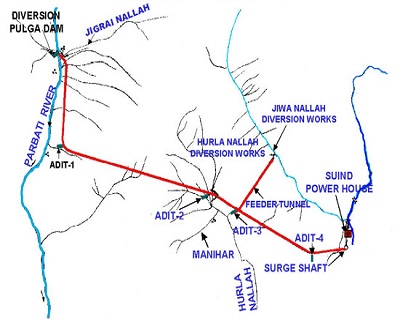
Questions over NHPC Project Muck Disposal: One of the most important questions is source of massive debris, wood logs and muck flown down in Jiwa nullah which has greatly increased the disaster impact of the flash flood. Concerned locals suspect that these materials could have been washed down from ‘dumpyards’ of the Parbati II tunnel construction activities. This video shows Pin Parbati packed with wood logs at Siund during June 25, 2025 floods.
“There was a cloudburst in Banjar valley causing flash floods in Jeebhi and Tirthan streams but the deluge did not carry such a massive amount of debris and tree logs”, says Guman Singh of Himalaya Niti Abhiyan (HNA). He feels that the trees cut in large numbers and huge amounts of debris created during construction of roads and Parbati II HEP tunnel works years back in Gadsa and Sainj valleys have possibly been flown downstream by the deluge now increasing disaster potential in downstream areas. “Why debris, muck and wood logs in such a huge volume are seen flooding Gadsa and Jiwa nullahs and not Jeebhi and Tirthan nullahs which also flow in the same region and witnessed similar scale cloudburst disaster on June 25”, he questions.
As per Hari Ram Chaudhary the Jiwa nullah has witnessed a devastating cloudburst on July 1, 2003 wiping out the Siund village but the amount of debris, muck and wood logs in a similar cloudburst event after 22 years is unforseen before.
These facts and questions urgently warrant an independent investigation into this Sainj Valley disaster. The available information also points strong fingers towards careless approach being followed in building of large infrastructural projects including hydro projects in disaster prone valleys. Union Ministry of Environment and Forests is also in the dock as it is supposed to monitor and ensure compliance with environment management plan of hydropower projects, including muck disposal plan. Similarly, the forest department is also answerable about the source of large quantity of timber and wood pieces that flowed down.
The episode again highlights that the hydro projects are multiplying the force of natural disasters and are also bearing the brunt of underestimating the increasing climatic disasters. But the real sufferers are the local people, rivers and environment and they are being made to pay a huge price for developmental decisions in which they have the least say or benefits.
SANDRP

 SANDRP