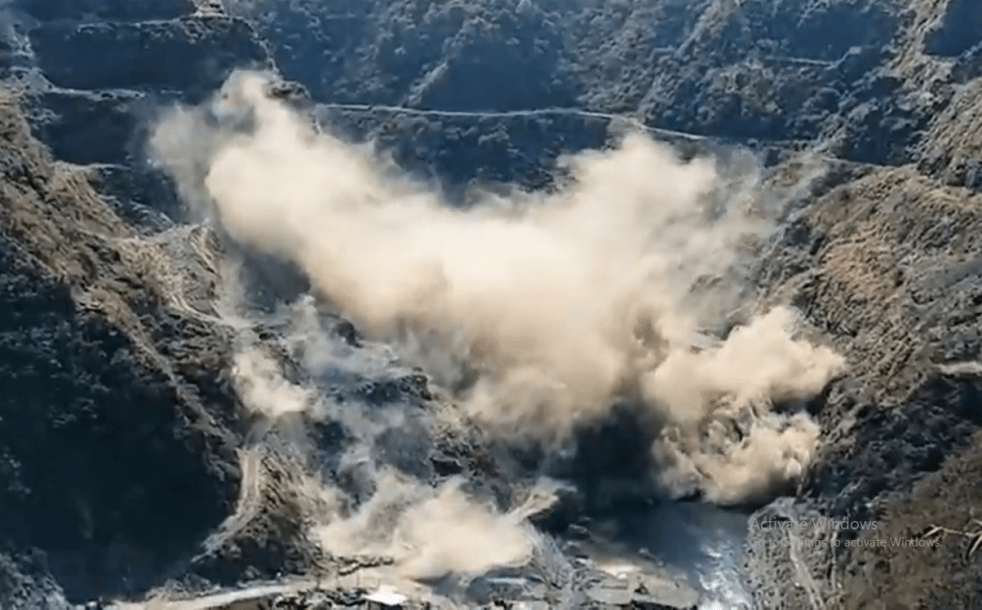
Feature Image: Screen grab of social media video shows scale of impact of heavy blasting work at Lakhwar dam on 07 April 2025)
A viral social media video media shows the frightened impact of a huge scale blasting work done for building the main structure of controversial Lakhawar dam on Yamuna river in Dehradun district, Uttarakhand. As per the locals, the blast took place in the morning hours of April 07, 2025, and caused shaking of hills to a large extent apart from blocking the flowing course of river with enormous debris for several hours forcing the project authority to employ heavy machines to clear the blockage.
The social media post shared with the video mentioned that the heavy blast scared the birds in the area and questioned how the company was allowed to destroy the entire hill environment. The heavy blast has indeed created havoc for the aquatic life in the river and downstream projects.
Fearing possible damage to their homes and lands, the terrified local villagers had to reportedly call the police. They alleged that to save the work cost the contractor was indulging of deep blast of 15 feet instead of permitted 5 feet depth. They anticipated heavy blasting would result in increased landslide during the coming monsoon which could possibly damage their homes and villages.
The incident once again shows the scale of violations of norms that unusually take place in Dam construction projects in absence of adequate monitoring by the CWC and MoEF. It must be mentioned that the dam project scrapped in 1980s is being pushed on the basis of outdated environmental and social impacts assessment.
Notably, such use of explosives is also illegal as per the stipulations of Uttarakhand’s DMMC (Disaster Mitigation and Management Centre) report after the Sept 2012 Ukhimath (Rudraprayag district) disaster that killed 69 people. DMMC has recommended that no explosives should be used for any development activity in Uttarakhand as this is likely to worsen the landslide potential of already landslide vulnerable state.
The area is climatically sensitive and geologically fragile. The hills around the dam site have already been facing recurring landslides. Only in August 2023, the entire village Jakhan in the area was damaged significantly by land subsidence forcing the relocation of its residents.
SANDRP has already raised concerns about the impact of the project. One of the main objectives behind the project is to provide potable water supply to Delhi which can be easily met by plugging leakages, harvesting rainwater, treating sewage adequately & utilizing treated sewage and protection of its own water sources including waterbodies, wetlands, lakes, ponds, bowlis etc. rather than pushing the destructive project.
DAMS & HEP POJECTS IN YAMUNA BASIN
Yamuna Manthan Dolphin survey rings alarm for Pachnad dam If it goes ahead, the project will certainly fragment the Yamuna river segment and will be detrimental for the survival of wildlife in Yamuna rivers around Pachnada. In light of the findings of dolphin survey report and given the ecological significance of Pachnada area, the EAC and the NBWL must reject the proposal, and the Centre and state government must explore better, cost-effective alternatives to meet the irrigational water needs. https://sandrp.in/2025/03/06/yamuna-manthan-060325-dolphin-survey-rings-alarm-for-pachnad-dam-project/ (06 Mar. 2025)
Uttar Pradesh During meeting held on March 12, 2025, the EAC has approved the Terms of References (ToR) for the Proposed Pachnad Major Irrigation Scheme (CCA : 24,328 Ha) in 24328 Ha located at village Sadhrapur, Sub-Dist and Dist Auraiya. https://parivesh.nic.in/utildoc/123163650_1742806696587.pdf
Madhya Pradesh Lokayukta booked 9 more in Kundaliya dam scam After an investigation into illegal payments related to the Kundaliya Dam project, the Ujjain Lokayukta registered a case against nine more public servants for corruption on Apr 4. The dam, built at a cost of Rs 5.85 crore on the Kalisindh River, required displacement of villagers in Bhandawad, Nalkheda. Despite the case being filed, no action was taken against accused public servants, allowing them to continue using government vehicles and potentially influence the investigation. https://www.freepressjournal.in/indore/madhya-pradesh-kundaliya-dam-project-scam-nine-more-booked-by-lokayukta (5 April 2025)
INTERLINKING OF YAMUNA RIVERS
Ken-Betwa Link Assessment of impacts The discussion for the third episode of The Green Mandate – Season 3 on ‘Assessing the River Interlinking Project’ focused on India’s Interlinking of Rivers Project (ILRP), on 20th February 2025 at India International Centre, New Delhi. The panel included Mr. Shashi Shekhar (ex-IAS and former Secretary at the Ministry of Water Resources), Mr. Jasbir Singh Chauhan (ex-IFS and former Principal Chief Conservator of Forests), and Mr. Himanshu Thakkar. The discussion was moderated by Mr. Debadityo Sinha (Senior Resident Fellow and Lead, Climate & Ecosystems at Vidhi Centre for Legal Policy). https://youtu.be/PfJFGzAPHcc
AND https://vidhilegalpolicy.in/videos/the-green-mandate-s3e3/ (25 March 2025) The project is based on the premise that Ken, the smaller of the two rivers, has surplus water that can be transferred to the bigger Betwa river. But the hydrological data that is claimed to support that premise is not in the public domain and has never been put to scrutiny by any independent, credible agency. Ground realities and available facts show that the hydrological basis of the project is a secret exercise in manipulation. (Himanshu Thakkar, SANDRP) https://www.tribuneindia.com/news/comment/ken-betwa-project-can-ravage-bundelkhand-353116/ (16 Jan. 2025)
ग्रामीणों ने बांध का काम बंद कराया ढ़ोडन, पलकोहा ,खरयानी मैनारी ,सुकवहा सहित आधा दर्जन गाँव के विस्तापित लोगो ने आज ढ़ोडन बांध का निर्माण काम रोककर विरोध किया और काम में लगे मजदूरों को धमका कर भगा दिया , ग्रामीणों ने कहा कि हमारी जमीनों का अधिग्रहण कर लिया और हमें मुआवजा भी नहीं दिया। नाराज ग्रामीणों ने निर्माण कार्य में लगी मशीनों मजदूरों एव कर्मचारियों को पन्ना टाइगर रिजर्व पंन्ना भुसोर बेरियर के बाहर खदेड़ दिया , ग्रामीणों ने चेतावनी दी कि यदि बिना मुआवजा दिए निर्माण कार्य चालू किया तो उग्र आंदोलन होगा। https://mpbreakingnews.in/madhya-pradesh/chhatarpur/ken-betwa-link-project-angry-villagers-protested-non-receipt-of-compensation-stopped-dam-work-11-744827 (03 April 2025)
YAMUNA WATER SHARING DISPUTES
Uttar Pradesh-Rajasthan आगरा का पानी राजस्थान द्वारा रोका गया दोनों नदियां, उटंगन और खारी, जो कभी आगरा जनपद के भूगर्भ जल के रिचार्ज का महत्वपूर्ण हिस्सा हुआ करती थीं, अब सूख चुकी हैं। इन नदियों का पानी राजस्थान द्वारा बिना उत्तर प्रदेश की सहमति के रोक लिया गया है, और इससे आगरा के कई हिस्सों में जल संकट की स्थिति गंभीर हो गई है। सिविल सोसायटी ऑफ आगरा और स्थानीय नागरिक संगठनों की ओर से यह मांग की जा रही है कि उत्तर प्रदेश सरकार को राजस्थान सरकार से इस मुद्दे पर सख्ती से वार्ता करनी चाहिए। स्थानीय नागरिकों और संगठनों ने यह भी आरोप लगाया कि सिंचाई विभाग और प्रशासन ने इस संकट को गंभीरता से नहीं लिया है, जबकि यह एक अंतरराज्यीय जल विवाद है। उन्होंने सुझाव दिया है कि राजस्थान सरकार से यह मामला उठाकर जल बंटवारे की नीति पर ध्यान केंद्रित किया जाना चाहिए, ताकि आगरा के लोगों को राहत मिल सके। https://agrabharat.com/state/uttar-pradesh/agra-water-and-water-stopped-by-rajasthan-raised-voice-on-serious-crisis/ (06 April 2025)
YAMUNA AS WATERWAYS
Delhi Questions over Yamuna ferry project Legal proceedings in November 2024 in the NGT have revealed the existence of an Environmental and Social Impact Assessment (ESIA) report for the earlier water taxi project, prepared by Ultra Tech Limited in 2018 which covers this stretch of the river too. However, this report has never been made public. Similarly, IWAI’s cost-benefit analysis remains undisclosed.
While IWAI has claimed to have obtained clearance from the DPCC, no official documents are accessible in the public domain so far. Transparency regarding such assessments is crucial for public scrutiny and establishing accountability. According to the same proceeding in the NGT, the Yamuna falls under the jurisdiction of the NMCG under the River Ganga Authorities Order, 2016. Any development on the river requires NMCG approval, yet there is no clarity on whether such a clearance has been sought. (Avli Verma, Manthan) https://www.hawapani.org/blogpost/yamuna_river_cruise (22 March 2025)
Water taxis soon on 4km stretch of river -The Centre in 2018 had announced a water taxi project on the Delhi stretch of the Yamuna. Initially, the project was proposed over a 16km stretch of the river, from Wazirabad to Fatehpur Jat. A year earlier, the NGT was approached for environmental clearance, but the green court referred the matter to a principal committee, and the panel in May 2017 said the project proponent needed to review the proposal, taking into account the environmental impact of the proposed activities in the drinking water reservoir.
The IWAI in Sept had floated a notice seeking an expression of interest (EOI) for the operation of a ferry service in an 8km loop between Sonia Vihar and Wazirabad barrage. The EOI had stated that initially two electric or solar hybrid boats would be procured – each with a seating capacity of 20-30 passengers. “The speed should be around 5 to 7 knots, with a maximum draft of 1.2 m,” the EOI had said. https://www.hindustantimes.com/cities/delhi-news/water-taxis-soon-on-4km-stretch-of-yamuna-in-delhi-101741629854119.html (11 Mar 2025)

SANDRP के भीम सिंह रावत ने बताया कि यमुना नौकायन के लिए जिस हिस्से का चयन किया गया है, वहां प्रवाह और गहराई की कमी है। दिल्ली में यमुना किनारे अब यही क्षेत्र बचा है जहां मानवीय गतिविधियां और नदी प्रदूषण अपेक्षाकृत कम है। ऐसे में यहां अनेक प्रकार के स्थानीय एवं माइग्रेटरी बर्ड्स भोजन एवं आश्रय के लिए आते हैं। ऐसे मं फेयरी सर्विस के इन पक्षियों पर काफी असर पड़ेगा। (अतः योजना शुरू करने से पहले एक वैज्ञानिक पर्यावरण प्रभाव मूल्यांकन किया जाना बहुत आवश्यक है जिसमें इस योजना की उपयोगिता और व्यावहारिकता के पहलुओं का भी निष्पक्ष अध्ययन होना चाहिए।) (NBT 11 March 2025)
River cruise will make city tourist-friendly: Sonowal Ironically the minister says that this initiative is a significant step toward making Delhi a more sustainable, eco-friendly and tourist-friendly city. It not only aids in restoring the river’s ecological balance but also improves connectivity, boosts tourism and creates economic opportunities. https://www.theweek.in/theweek/cover/2025/04/05/union-minister-of-ports-shipping-and-waterways-sarbananda-sonowal-interview.html (05 April 2025)
YAMUNA RIVERS
SANDRP Photo Blog Streams that feed river in Himalayas The sixth day of summer Navratri is believed to be the birthday of the river Yamuna, known as Yamuna Jayanti among devotees of the river.
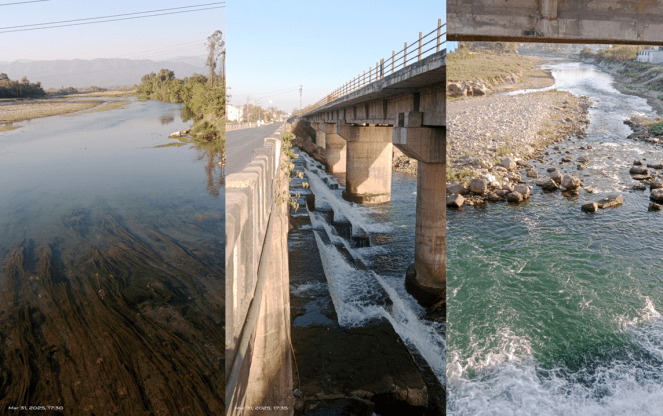
This year the day falls on April 04, 2025. Celebrating the day, we present a photo blog on springs, streams and major rivers feeding the Yamuna in its Himalayan segment. https://sandrp.in/2025/04/03/happy-birthday-yamuna-photo-blog-springs-streams-that-feed-it-in-the-himalayas/ (03 April 2025)
EDIT Rejuvenating the Yamuna A collaborative effort involving Delhi, Haryana and UP becomes central to any Yamuna revival plan. Two of the major tributaries that join the Yamuna in Delhi, Hindon on the eastern bank and the Sahibi (often referred to as the Najafgarh drain) on the west, originate in Haryana and UP respectively. These rivers are hugely polluted at their point of merger with the Yamuna. “Double-engine governments” in all three states and the Centre must work together to rejuvenate the Yamuna basin and ensure at least minimum e-flow in the river. Together with other conservation efforts, the Yamuna can surely be restored to the state of a living river. https://www.hindustantimes.com/editorials/rejuvenating-the-yamuna-101741877544040.html (13 Mar. 2025)
Book Review ‘Infertile’ lands in Chambal basin helped biodiversity flourish An excerpt from ‘Submerged Worlds and Other Amazing Stories Of India’s Mighty Rivers’, by Vaishali Shroff. https://scroll.in/article/1079994/for-children-how-infertile-lands-in-the-chambal-basin-helped-biodiversity-flourish (14 Mar. 2025)
Madhya Pradesh सिंध नदी सूखी एमपी के विदिशा जिले से निकलकर यूपी के जालौन में यमुना से मिलनेवाली सिंध नदी का यह बुरा हाल हुआ है। 470 किमी लंबे इलाके में बहने वाली यह नदी कई जगहों पर सूखकर गड्ढों में तब्दील हो गई है वहीं कुछ जगहों पर नदी पोखरनुमा बन गई है जहां बहुत कम पानी बचा है।
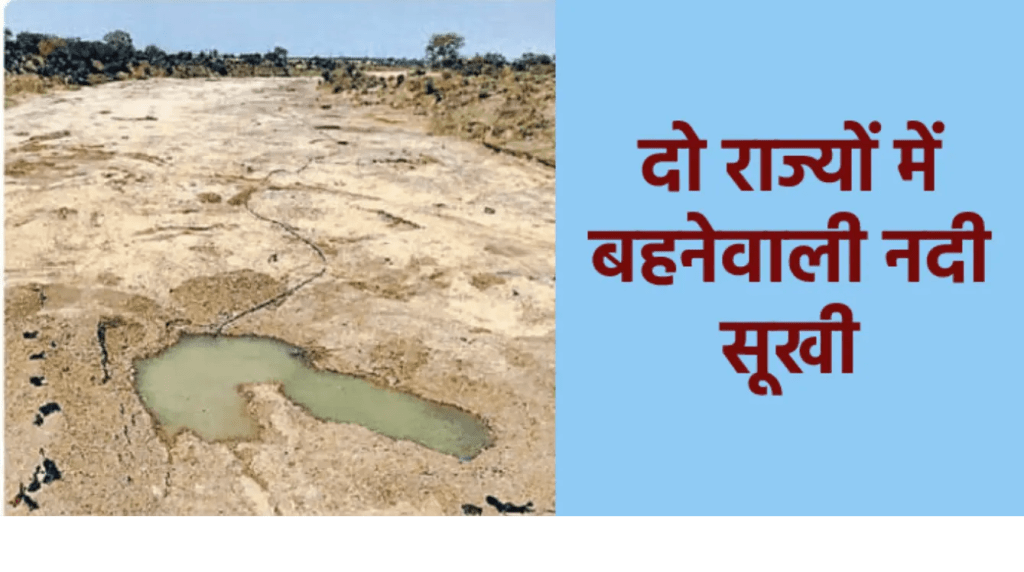
भीषण गर्मी के कारण मार्च में ही सिंध नदी के सूख जाने से कई गांवों में पीने के पानी का संकट गहरा गया है। यह नदी देश की सबसे साफ सुथरी नदियों में शामिल है, बहुतायत में अब भी लोग सिंध के पानी का उपयोग पीने के लिए करते हैं। https://www.patrika.com/bhopal-news/mp-sindh-river-drying-up-causing-havoc-in-470-km-long-area-19465407 (17 Mar. 2025)
बेतवा बचाने की हमारी मुहिम का असर! एनवायरमेंट स्टोरी की खबर ने सरकार को कार्रवाई के लिए मजबूर कर दिया! सीएम की नजर अब इस गंभीर मुद्दे पर है, और 8 मार्च 2025 को उच्च स्तरीय बैठक में बेतवा बचाने पर ठोस चर्चा हुई। https://www.youtube.com/watch?v=oSpZLXkhgu0 (8 March 2025)
Ujjain स्थायी कुंभ नगरी के लिए जमीन नहीं देना चाहते किसान -उज्जैन में सिंहस्थ कुंभ की 2378 हेक्टेयर जमीन पर स्थायी कुंभ नगरी बसाने को लेकर प्रशासन और सैकड़ों किसान आमने-सामने हो गए। मंगलवार (Mar 4) को किसानों ने इसके विरोध में रैली निकालकर प्रदर्शन करना चाहा। लेकिन पुलिस ने किसानों को रैली शुरू करने की इजाजत नहीं दी। इसके बाद किसानों और पुलिस में झड़प भी हो गई। किसानों ने लैंड पुलिंग (जमीन अधिग्रहण) स्कीम सहित कई मुद्दों को लेकर आपत्ति जताई है। -सीएम मोहन यादव ने सिंहस्थ 2028 को देखते हुए सिंहस्थ मेला क्षेत्र को विकसित करने का प्लान तैयार किया है। मध्यप्रदेश में इस तरह की यह पहली योजना है, जिस पर करीब 2000 करोड़ रुपए का खर्च आने का अनुमान है। https://www.bhaskar.com/local/mp/ujjain/news/clash-between-farmers-angry-with-permanent-kumbh-city-and-police-video-134592584.html (06 Mar. 2025)
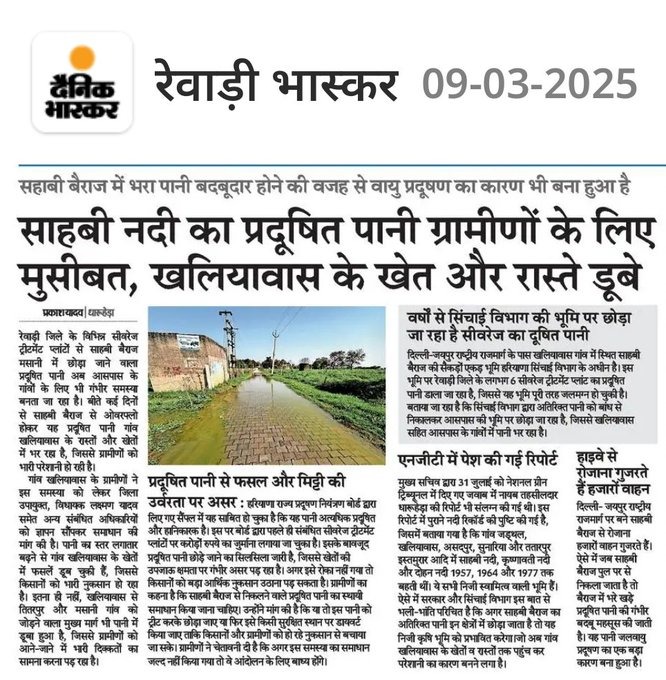
Haryana Masani dam on Sahibi river is releasing polluted water and affecting downstream villagers in Rewari. https://www.facebook.com/share/p/15ADNHYZLd/ (Dainik Bhaskar 9 Mar 2025)
Uttarakhand HC pulls up govt over encroachment on water bodies Coming down heavily on the state govt for not complying with its orders, the High Court on Mar 17 issued guidelines for action against encroachments on water bodies in Dehradun. The court was hearing three PILs that flagged encroachments on water bodies and drains in Rajpur, Doon Valley. One petitioner sought that the state declares the catchment areas of drains of Rispana and Bindal rivers as ‘no construction zones’. Another petition flagged private encroachments on a rivulet and prayed that encroachment on the seasonal streams in Sahastradhara should be stopped. https://indianexpress.com/article/india/question-of-survival-uttarakhand-high-court-pulls-up-state-over-encroachment-on-water-bodies-9904146/ (25 March 2025)
YAMUNA RIVERFRONT
Delhi Citizens Dialogue for the Rejuvenation of the River Yamuna Maintaining minimum river flow is critical as the river’s reduced flow during the dry season spirals the concentration of pollutants. The idea of riverfront development which concretizes the floodplains and permits construction at the edge of the main channel has to be avoided at all costs.
Maintaining a high level of ecological integrity of the river ecosystem has to be a critical part of the rejuvenation strategy. A concerted action needs to be taken at the national level to save river Yamuna. https://www.youtube.com/live/HIBTPT2n6wI (09 April 2025)
Upcoming riverfront Delhi will soon have a new riverfront on the western banks of the Yamuna, where the Millennium bus depot was built during the Commonwealth Games in 2010. The riverfront, the eleventh in floodplain restoration projects along the 22-km course of the Yamuna in the city, will have spacious plazas with landscaped lawns and a fountain as the centrepiece. The new riverfront will come up on a 45-hectare land between the railway overbridge and Meerut Expressway and is likely to be completed within a year. The land, taken for a bus depot, was returned to DDA by Delhi Transport Corporation last year.
“We conceived the restoration plan but the NGT had some concerns and we put it on hold. Now we have got NGT’s clearance and DDA has started work at the site,” said Saxena. He added that the new riverfront will have a shopping site, toilets, parking area, and topiary gardens. The place can also be used for big events by setting up a stage.
Ropeway project: The survey to create a cable-car facility across the Yamuna has begun and the survey agency will identify suitable sites for the installation of the ropeway system to carry passengers. “We conceived this project while exploring alternative modes of non-polluting public transport in the city. Work is underway and we expect to implement the project soon,” LG said. The cable cars will operate within fixed hours and will each carry around 50 passengers. DDA, which is in charge of the Yamuna floodplain, will locate the site of the ropeway in the vicinity of metro stations on either side of the river and will install the system without encroaching on or concretising the eco-sensitive floodplain, the LG’s office claimed. https://timesofindia.indiatimes.com/city/delhi/delhis-upcoming-riverfront-and-infrastructure-developments/articleshow/119988795.cms (04 April 2025)
Piazza, park to shopping centre near Sarai Kale Khan A central piazza, a topiary park, a local shopping centre along the lines of that in the Sunder Nursery, along with two parking areas and a river promenade will come up in 25 ha, sources said. Unlike the Sabarmati waterfront in Ahmedabad, it will not see any concrete or permanent construction. “Any concrete that exists at the site or remnants of the bus depot are being cleared. Only ecologically suitable materials will be used. We have seen success with these materials in the other sections of the floodplain,” said a senior government official. “All these projects were undertaken by the DDA and in none of these was any concrete used. The Baansera park, for example, has a café made of light-weight steel frame, bamboo and glass,” the official said.
“The project here will not use any glass either. The idea is to make it as eco-friendly as possible. While several parks alongside the river have come up already, the idea is to make the riverfront project the centerpiece of the entire project,” said an official. The buffer of vegetation between the edge of the river and the bund alongside the redeveloped parts will be riverine grasses suited to the area. Depressions will be made to store excess river water.

A former DDA official, who worked closely on the redevelopment projects in other sections of the floodplain, said the key is to remember that the Yamuna will flood every few years and to plan the projects accordingly. “Each section that has been redeveloped has been a learning experience. Soon after Asita East Park was opened to the public, we saw significant flooding in 2023. The area was under two metres of water. But we were very happy. This is why the floodplain exists, and this is why no permanent structure should be built on it. After the water receded, most of the plants and grasses survived. We also learnt that the ones that did not survive were not suitable for the area,” the official said.
Talking about the difference in riverfront projects in other parts of the country and in Delhi, the official said, “We have to remember that Yamuna is an alluvial river, which deposits a lot of silt and floods on a regular basis. These characteristics have to be kept in mind while planning any activity on its banks.” https://indianexpress.com/article/cities/delhi/piazza-and-park-to-shopping-centre-delhi-to-soon-get-its-riverfront-near-sarai-kale-khan-9915273/ (31 Mar 2025)
Sarai Kale Khan, Wazirabad to get a makeover soon Around a dozen spots along the 22-km-long stretch from the Wazirabad to the Okhla barrages will be turned into parks, ghats, cafes, and hike trails, becoming major tourist attractions. Five such public places have already been developed in the last two years and six more will be added to the list as part of the DDA’s plan in the next couple of years, it is reported.
The total area under redevelopment in this stretch spans 1,660 hectares. Out of this, 740 hectares have already been developed, including Asita East and West, Kalindi Aviral (which encompasses Baansera Park), Vasudev Ghat, Amrut Biodiversity Park, and Yamuna Vatika near Rajghat. Among the new projects, the riverfront near Sarai Kale Khan—developed on the site of the old Millennium Park Bus Depot—is expected to have the most public interaction.
Additionally, the national capital will soon see the Kalindi Biodiversity Park adjacent to the DND Flyway, the Mayur Nature Park near the Nizamuddin Bridge, and a new eco-tourism area near Rajghat. The DDA’s biggest challenge will be connecting all 11 projects through a network of walkways and cycle tracks.
The report cited a senior government official as saying the project is facing hurdles as many parts of Yamuna floodplains are encroached upon and also due to other existing projects coming in the way of linking all the riverfront which is the end goal. “For now, we aim to complete all 11 projects. The linkage will be planned after,” the official added. https://www.indiatvnews.com/news/india/shopping-center-walking-trails-yamuna-banks-at-sarai-kale-khan-wazirabad-in-delhi-set-for-major-makeover-details-2025-04-01-983349; https://www.outlooktraveller.com/whats-new/delhi-to-get-six-new-public-spaces-along-the-yamuna-river (01 April 2025)
DDA to develop largest park in Mayur Vihar An official said work has commenced on the Rs 136.8 crore Mayur Nature Park with completion scheduled for Oct 2026. The project site will be intersected by the Barapullah Phase III flyover construction and Delhi Metro’s Pink Line. “The project proposals were presented to the screening committee and then to LG VK Saxena on March 17,” said an official. “DDA will need three months to issue the tender drawings. This will be followed by the preparation of financial estimates and tendering. The work is to be completed by Oct next year. We are already carrying out horticulture work at the site.” https://timesofindia.indiatimes.com/city/delhi/what-yamunas-largest-park-may-look-like/articleshow/119314697.cms (22 March 2025) Entry zones planned to be located at the corner. Greenway zones with children’s play area, multipurpose spaces, restored depressions as well as depression basins/wetlands will line edges of the park. The greenway is planned as a strip along the roads and will be used for river-people’s connection. A floodplain forest with prominent tree plantations and nature trails, and a floodplain grassland with riverine grasses are planned. These projects are designed to ensure interaction between the river and people, ecosystem restoration and minimising the adverse impacts of anthropogenic activities, according to the official. Parking spaces are planned to be covered by solar panels. A part of the park area is also denotified (owned by private parties) and is, thus, not being developed by the DDA. https://indianexpress.com/article/cities/delhi/yamuna-riverbanks-to-soon-get-ddas-largest-park-here-are-the-details-9893629/ (19 Mar 2025) New plans support the design of walking paths, cycling paths, both dry and wet yoga meditational zones for the active living of people in the community. https://www.indiatoday.in/information/story/delhis-yamuna-riverbanks-to-host-ddas-largest-park-all-you-need-to-know-2695704-2025-03-19 (19 Mar 2025)
LG orders suspension of DDA staff over floodplain re-encroachment Taking stringent steps to control encroachment of DDA land on the Yamuna floodplain, lieutenant governor VK Saxena on Tuesday ordered the immediate suspension of field staff for the alarming re-encroachment of land near Pusta Road in Mayur Vihar Phase-I to NH-24. The suspended staff include the assistant and junior engineers responsible for the Mayur Nature Park project site, said officials.
LG has directed the vice-chairman of DDA to submit a detailed report on the inquiry and actions taken in response to these directives within seven days for review,” said an official. LG has directed DDA that similar stringent actions will be taken in case of any fresh encroachment or re-encroachment on its land, the statement added. The stretch from Mayur Vihar Phase-I to NH-24 is crucial for the restoration and rejuvenation of the Yamuna floodplain, where DDA is currently implementing the Mayur Nature Park project. https://timesofindia.indiatimes.com/city/delhi/lieutenant-governor-orders-suspension-of-delhi-development-authority-staff-over-re-encroachment-of-yamuna-floodplain/articleshow/120104557.cms (09 April 2025)
The Ghats: Sacred yet struggling to survive (HT Part 3) Experts stress that ghats remain the second-most prominent sources of pollutions for the Yamuna after drains. “Ideally, nothing, not even flowers, should be thrown into a river. Even though it decomposes, the process to decompose it increases the river’s biological oxygen demand. Efforts are needed at these ghats to create collection points where people can pray and throw these items there, instead of in the river. Once collected, these items can be reused or recycled, thus not hurting people’s sentiments either,” said Yamuna activist Pankaj Kumar. https://www.hindustantimes.com/india-news/the-ghats-of-delhi-sacred-yet-struggling-to-survive-101742320319954.html (19 March 2025)
Sabarmati RFD like makeover for Yamuna But downstream, the Sabarmati waters continue to be highly polluted (near Vasna) because of its unique problem. Sabarmati is a seasonal river, coming alive only during the monsoon. However, in something of a marvel, water from the Narmada River was released into the Sabarmati River through the Sardar Sarovar dam in 2002. The Gujarat government constructed check-dams to maintain water levels in the riverfront by using the Narmada Canal. (Bharti Misra Nath) https://www.ndtv.com/opinion/a-sabarmati-riverfront-like-makeover-for-yamuna-7580044 (28 Jan 2025)
Mathura Signature bridge, RFD planned Recently, on the initiative of Uttar Pradesh Braj Tirtha Vikas Parishad, the NHAI has approved the six-lane road plan to connect the Delhi-Agra NH to Yamuna Express near Vrindavan Cut in Jait. The Signature Bridge will be built on Yamuna, connecting the Vrindavan bypass. 21 meters wide, the bridge will be built with cables and boxes based on German technology. The UP Braj Tirtha Vikas Parishad has plans to enhance the endangered ghats of the Yamuna River located along the Vrindavan Parikrama Marg for devotees. The Jugal Ghat and Chir Ghat will be developed to reflect their ancient form. https://www.etvbharat.com/en/!state/mathura-to-get-german-technology-signature-bridge-across-yamuna-river-enn25040501196 (05 April 2025)
Prayagraj Riverfront, bird sanctuaries to boost tourism The tourism department has proposed an 8-km-long riverfront on the banks of Yamuna in Prayagraj as well as two new bird sanctuaries in Naini to give a boost to tourism prospects of the city that had generated a huge interest among visitors during the recently concluded Maha Kumbh. The department is busy preparing a DPR for the riverfront project. The plan includes connecting various locations like Boat Club, Mankameshwar ghat, Saraswati Park and Juna Akhara along Yamuna Bank Road while developing tourist amenities. The project will incorporate modifications as per NGT guidelines. https://timesofindia.indiatimes.com/city/allahabad/yamuna-riverfront-bird-sanctuaries-to-boost-prayagraj-tourism/articleshow/118793481.cms (8 Mar 2025)
YAMUNA FLOODPLAIN
Delhi Over 12 lakh sqm floodplain encroached: DDA to NGT The DDA has informed NGT through a report dated Apr 2 that over 12 lakh (12,34,981) square metres of the Yamuna floodplain, spanning a 22 km stretch from Wazirabad to Madanpur Khadar, are encroached upon. However, DDA said that it had reclaimed 1,459 acres in 2024 after removing various encroachments. The encroachments include jhuggis, govt offices, two towers near a CNG pump, temples, a gurdwara, masjid dargah peer residential areas, gaushalas, akharas, workshops, Ladakh Budh Vihar monastery market, and Nigam Bodh Ghat. NGT had previously pulled up DDA on Feb 6 for not complying with its 2019 order to clear encroachments, despite directives from the Delhi High Court and the Supreme Court. The tribunal also sought comprehensive details of encroachments across the 22km-Yamuna stretch. https://timesofindia.indiatimes.com/city/delhi/over-12-lakh-sq-metres-of-yamuna-floodplain-encroached-dda-informs-ngt/articleshow/119988807.cms (04 April 2025)
Floodplain in Palla (HT Part 1) Palla serves not only as the gateway for the river into the Capital, but also a key section from which Delhi extracts most of its drinking water. Experts say that tackling the discharge of effluents from Trunk Drain No. 8 will help in ensuring that this stretch remains clean. “This way, Palla can be made even better. Since there are no major drains in Delhi between Palla and Wazirabad, this drain in Haryana is the only contaminant source,” said Yamuna activist Bhim Singh Rawat, who is a member of SANDRP. Rawat adds that, as the city expands into colonies in outer Delhi, sewage from Burari and neighbouring areas also indirectly makes its way into the river between Palla and Wazirabad. “We also have extensive farming in this stretch so there are chemicals from agriculture contaminating the soil, which eventually enters the river water,” he said. https://www.hindustantimes.com/cities/delhi-news/delhi-the-first-untarnished-stretch-of-yamuna-101742149157255.html (17 March 2025)
Where Yamuna still has signs of life (HT Part 2) In the Yamuna’s 52km journey through Delhi, Wazirabad marks one of its most pivotal junctures. Here, the river retains a semblance of life, still waging a losing battle against the toxic load of sewage and industrial waste that will soon turn it into a lifeless drain. But this fragile balance is fleeting. Just a few hundred metres downstream, the river takes a catastrophic turn. The Najafgarh drain, merges with the Yamuna, unleashing an avalanche of sewage, industrial chemicals, and solid waste. Within minutes, the river’s blue morphs into a murky black, its oxygen levels plummeting to zero, rendering it incapable of supporting any form of life. https://www.hindustantimes.com/india-news/where-the-yamuna-still-has-signs-of-life-101742233361968.html (18 March 2025)
Jhuggi union moves HC to halt further demolition A slum dwellers’ representative body approached the division bench of the Delhi high court against a single-judge order refusing to halt further demolition of a slum cluster at Dhobi Ghat, Jamia Nagar, by the DDA. In its 35-page order, a bench of justice Dharmesh Sharma had dismissed the petition filed by the Manch in 2021 seeking directions to the DDA to halt the demolition (if any) and maintain the status quo, with a cost of ₹10,000 taking note of the fact that the site formed a part of ecologically sensitive Yamuna floodplains in Delhi and was a significant source of pollution to the river. In Sep 2020, the DDA demolished temporary structures. https://www.hindustantimes.com/cities/delhi-news/jhuggi-union-moves-delhi-hc-to-halt-further-demolition-at-dhobi-ghat-101741196827213.html (06 March 2025) Justice Dharmesh Sharma, while dealing with the petition by “Dhobi Ghat Jhuggi Adhikar Manch”, said the “so-called members” of the petitioner were not entitled to any compensation or rehabilitation as they were “rank tress-passers” who repeatedly returned to the site, which was acquired by DDA for developing a biodiversity park. “Since the subject site was acquired by the DDA for the channelisation and protection of the River Yamuna, the removal of the petitioner union from the subject site serves the greater public interest,” the court said in its verdict on March 3. https://www.hindustantimes.com/india-news/delhi-hc-junks-plea-against-slum-demolition-in-yamuna-floodplain-imposes-costs-101741175998828.html (05 March 2025)‘They’ve taken away our means to live’: Residents of Yamuna bank after bulldozer razes homes. https://indianexpress.com/article/cities/delhi/theyve-taken-away-our-means-to-live-residents-of-yamuna-bank-after-bulldozer-razes-homes-9871039/ (06 March 2025)
Noida 2nd Noida expressway along Yamuna Plans to build a second expressway between Noida and Greater Noida have firmed up after Noida Authority gave in-principle approval to the project at its board meeting last week after extensive discussions on its need, design and alignment. On the table now are two lines of action – either an eight-lane ground expressway or a six-lane elevated road that runs along Yamuna’s embankments between Okhla barrage (near Kalindi Kunj) and Yamuna Expressway. https://timesofindia.indiatimes.com/city/noida/second-noida-e-way-gets-green-light-to-be-built-along-yamuna/articleshow/119822102.cms (01 April 2025) “Once the DPR is finalised, we will decide whether to make a six-lane elevated road or an eight-lane road,” said Vijay Rawal, general manager of the Noida authority. The Noida authority had wanted to build a 35km elevated road along Yamuna, above the embankment road, and approached NHAI to fund the project but NHAI said it was not interested in the project, authority officials said. https://www.hindustantimes.com/cities/noida-news/noida-to-build-a-new-corridor-to-decongest-noida-greater-noida-expressway-101743445515628.html (31 March 2025)
Authority may take back 330 acres unused land from DND Noida Authority has decided to take back unused (Yamuna floodplain) land allotted to DND Flyway from Noida Toll Bridge Company Ltd (NTBCL), the concessionaire, after the Supreme Court in Dec last year ordered the road to remain toll-free. NTBCL has opposed the move, citing a 30-year contract signed in 1997. Noida had given 454 acres of land for DND, of which 330 acres lie unused. NTBCL built the 9.2km-long eight-lane flyway connecting Noida to Delhi’s Maharani Bagh, the now-defunct toll plaza and its office on 124 acres of allotted land. Currently, large chunks of land are still vacant on both sides of the Toll Plaza, which the Authority plans to reclaim. Parks, cow shelters, green belts and a cricket ground have come up on this prime land along the Delhi-Noida connector. https://timesofindia.indiatimes.com/city/noida/330-acres-unused-noida-may-take-back-land-from-dnd-concessionaire/articleshowprint/119129940.cms (18 Mar. 2025)
YAMUNA FLOWS
Delhi When flow becomes froth HT series on Yamuna issues (Part 5) Froth formation is a symptom that indicates the river in this stretch is effectively “dead”, say experts. Bhim Singh Rawat, an activist with the SANDRP said froth forms only when the river has a toxic mix of detergents, sewage and effluents. Rawat said while increasing the environmental flow of the river is a start, at least two decades have passed with inaction from authorities on sewage and effluents. “All sorts of pollutants continue to enter the river each day and this is not just within Delhi, but from neighbouring Haryana and Uttar Pradesh too. The quantum of sewage actually reaching the Yamuna is still unknown, as it is based on the drinking water figures for Delhi. However, it does not account for the illegal water supply in the Capital.”

Pankaj Kumar, another Yamuna activist, said several governments have come and gone, but promises remain on paper. “We have STPs, but they are not functioning as per the standards required and even the treated water being released from there is not clean. In addition to the water, sludge is being released into the river, which is a sign that these STPs are not functioning properly,” said Kumar. https://www.hindustantimes.com/india-news/last-straw-when-flow-becomes-froth-in-the-yamuna-in-delhi-101742577937726.html (21 March 2025)
A barrage of compromises fails the Yamuna (HT Part 4) The 1994 UYRB water-sharing pact faces renegotiation this year – making it a pivotal moment for the Yamuna in Delhi. Experts argue that the minimum of 10 cumecs currently allocated to Delhi is grossly insufficient, leaving the river dry and unable to flush out pollutants. “The same party governing five Yamuna basin states and the Centre is a golden opportunity for the BJP to keep Yamuna revival objectives at the forefront and initiate joint actions for reversing the degradation river has been undergoing for past many years,” said Yamuna activist Bhim Singh Rawat. Rawat, a member of the SANDRP, said the 1994 deal was particularly detrimental to Delhi.
UYRB’s problems extend to manpower also. Of the 58 permanent posts originally sanctioned for the board, only 22 remain. Of those, 17 have been “deemed abolished,” leaving it severely understaffed. Experts say that unless the board is empowered and actively enforces allocations, any renegotiation of the agreement will be meaningless. “Despite multiple committees recommending an increased e-flow, this was never implemented,” says Bhim Singh Rawat, a member of the SANDRP. “Now, the onus is once again on the UYRB to acknowledge the fallacy in the 1994 agreement and generate consensus among basin states to allow the river the share of water that was long overdue.” https://www.hindustantimes.com/cities/delhi-news/a-barrage-of-compromises-fail-the-yamuna-101742493659158.html (21 March 2025)
Uttar Pradesh Forest dept makes way for Adani project awaiting green nod Adani’s subsidiary, Mirzapur Thermal Energy (UP) Private Ltd (MTEPL), has gained access to its controversial power plant site through a forest department road – without obtaining the required forest clearance that would precede such arrangements. This was revealed in an affidavit submitted to the National Green Tribunal by the MoEFCC on March 20. https://www.newslaundry.com/2025/04/03/up-forest-dept-makes-way-for-adani-project-awaiting-green-nod (03 April 2025)
Haryana On March 22, Yamuna water flow dropped down to 1276 cusecs, out of 163 cusecs is going to Haryana, 751 cusecs to Delhi and 352 cusecs to downstream rivers, and none to UP. (24 March 2025)
YAMUNA FLOODS
SANDRP Blog July 2023 Flood: CWC report fails to explain unprecedented levels Although, almost 2 years have passed, the July 2023 flood mystery still requires an honest independent scientific investigation to decode the puzzle and recommend corrective measures. Under the current river and floodplain affairs and forecast services a similar or bigger flood disaster is round the corner for Delhi. https://sandrp.in/2025/04/10/cwc-report-on-july-2023-delhi-floods-fails-to-explain-unprecedented-flood-levels/ (10 April 2025)
‘In 2023, Delhi faced flood as floodgates were closed’: Verma “In 2023, Delhi faced a flood. Previously, all the floodgates were closed, but now they have been repaired and raised to prevent future flooding,” Verma said. “Our biggest commitment is to completely clean and restore the Yamuna. As of now, 1,300 metric tonnes of garbage have been removed in the last 10 days. The DDA will restore the riverbed and encroachments are being removed,” the minister said. https://timesofindia.indiatimes.com/city/delhi/in-2023-delhi-faced-flood-as-floodgates-were-closed-1300-tonnes-of-garbage-removed-from-yamuna-in-past-10-days-says-minister-parvesh-verma/articleshowprint/118728086.cms (05 Mar. 2025)
YAMUNA POLLUTION
Delhi Many pieces to Yamuna puzzle What the Yamuna in Delhi desperately needs, according to Himanshu Thakkar of SANDRP, is more water flowing into it. “For most of the year, the river during its Delhi stint just does not get enough water. The government has to ensure that enough freshwater flows into the Yamuna downstream from the Wazirabad barrage, where the river enters Delhi.”
Thakkar said the government would also have to ensure that all treated wastewater is reused and not pumped back into the river. He also called for rainwater harvesting and rejuvenation of local water bodies. These efforts, he said, would reduce the demand for fresh water from the Yamuna, leaving more water in it. “There are many pieces to the Yamuna puzzle. A basic requirement to have a holistic approach to cleaning the river is a Delhi water policy. It will take a comprehensive look at the situation and provide a road map to clean the river,” Thakkar said. https://frontline.thehindu.com/politics/yamuna-river-delhi-pollution-cleanup-efforts-history-politics-rekha-gupta-assembly-election/article69293696.ece (08 March 2025)
Can river be revived in 3 years? The answers aren’t that difficult – increase the river’s flow, stop sewage from entering the river, revive floodplains and wetlands, clean up Najafgarh drain on a war footing, and coordinate with Haryana and UP to plug sewage and effluents. But for three decades, this has proved to be an impossible job. Himanshu Thakkar, coordinator of SANDRP, said, “This is because no one ever addressed the governance problem. They kept spending on new infrastructure, committees, technology, etc, but refused to address the main issue. You need governance to ensure funds and efforts are directed at the right solution.” https://timesofindia.indiatimes.com/city/delhi/in-icu-since-1993-yamuna-still-died-in-delhi-can-it-be-revived-in-3-years/articleshow/118813181.cms (09 March 2025)
Dysfunctional STPs pose clean-up hurdle Bhim Singh Rawat of the SANDRP, said that the agencies are focusing on symptoms by clearing floating waste while neglecting the root cause. “For years, we have been hearing about STPs not meeting norms but no accountability is fixed. There is no monitoring mechanism which involves people and civil society and violations continue month after month without any repercussion,” he said. Rawat said the DJB estimates sewage generation without taking into account extracted groundwater. “The real quantum of sewage is much more; STPs are inadequate and underperforming and even the water that gets treated does not meet norms,” Rawat said, calling on the new government to focus on improving STP management. “Commercial use and ornamental plants which change the natural character of the river floodplain should be avoided,” he said. https://www.hindustantimes.com/cities/delhi-news/dysfunctional-delhi-stps-pose-yamuna-clean-up-hurdle-101741283470559.html (07 Mar. 2025)
Budget fails to raise hope Bhim Singh Rawat, Associate Coordinator at the SANDRP, described the new budget as offering no meaningful reforms, instead allocating more funds to activities that have failed in the past. “No clear timeline has been set, raising doubts about the government’s commitment to real change,” he said. Rawat also called for stronger political will, greater transparency, and meaningful public participation. He stressed the need for an urban water policy that includes rainwater harvesting, decentralised STPs, and conservation of water bodies. “There is neither funding nor a roadmap for ensuring environmental flow in the river,” he said. “With excessive water diversions, the Yamuna is turning into a seasonal river. Expanding Delhi’s water supply must not come at the cost of the river’s survival.” https://thepatriot.in/environment/experts-divided-over-govts-rs-500-crore-push-to-clean-yamuna-as-accountability-deadlines-remain-vague-68090 (03 April 2025)
River cleanup plan lacks vision According to Bhim Singh Rawat, Associate Coordinator of the SANDRP, the budget repeats previous measures to clean the Yamuna but fails to introduce new approaches. Rawat pointed out that while the budget allocates increasing funds for STPs, drain diversion, and sewer line expansion; these measures have not improved the river’s pollution levels. “Despite repeated failures, no accountability has been fixed, and river governance remains ignored,” he said. He emphasised that river cleaning requires coordinated efforts across multiple areas, including sewage and industrial waste management, stormwater and sewage separation, wetland protection, groundwater conservation, and better use of treated sewage. However, the budget does not propose an urban water policy to streamline these efforts. https://www.newindianexpress.com/cities/delhi/2025/Mar/27/yamuna-cleanup-plan-lacks-vision-experts (27 March 2025) Yamuna activist Bhim Singh Rawat, from the SANDRP, cautioned that the success of the budget’s ambitious plans hinges on effective implementation. “The budget missed a key aspect – on how this treated wastewater will be used. Also, while a lot of funds are being allocated for STPs and drains, these are promises even previous governments have made. Funds have never been an issue, but rather implementation on the ground,” Rawat said. https://www.hindustantimes.com/cities/delhi-news/budget-unveils-major-plans-to-infuse-life-into-the-yamuna-101742926540545.html (26 Sept. 2025) “Funds need to be set aside to improve the parameters of our existing STPs to the standards prescribed by the CPCB, while increasing their capacity too. Presently, a number of STPs are not meeting those standards, thus still polluting the river. This has been a longstanding demand of the Yamuna Action Plan,” said Yamuna activist Bhim Singh Rawat, who is also a member of the SANDRP. Rawat said if funds are set aside for riverfront development, it should be ensured the floodplain is not altered further, adding that connecting the major drains to STPs is another key agenda. “This includes connecting unauthorised colonies, a number of which are still reliant on septic tanks.” https://www.hindustantimes.com/latest-news/what-delhi-needs-from-its-budget-today-101742864613431.html; https://www.hindustantimes.com/latest-news/what-delhi-needs-from-its-budget-today-101742864613431.html; https://www.ndtvprofit.com/economy-finance/delhi-budget-government-to-spend-rs-1500-crore-to-clean-yamuna-river-improve-sewage-infra; https://www.jansatta.com/rajya/yamuna-cleaning-project-delhi-govt-2582-crore-sewage-treatment-yamuna-safai-mission/3886014/ (25 March 2025)
Faecal level 50 lakh, norm is 500 Bhim Singh Rawat of SANDRP, said the alarming situation of DO, BOD and FC at all eight monitoring sites clearly reveals that untreated effluents, both domestic and industrial, are being discharged in huge volumes into the Yamuna through drains all along the course of the river in the city. “Secondly, this indicates the existing STPs haven’t been functioning at prescribed norms. Thirdly, it reinforces the utmost requirement of adequate flows in the river to dilute the worsening pollution levels,” said Rawat.
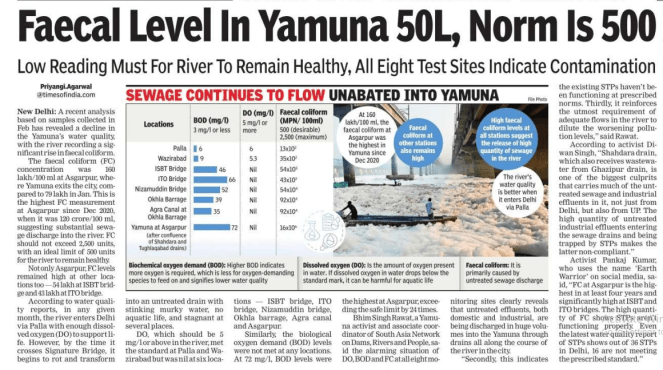
According to activist Diwan Singh, “Shahdara drain, which also receives wastewater from Ghazipur drain, is one of the biggest culprits that carries much of the untreated sewage and industrial effluents in it, not just from Delhi, but also from UP. The high quantity of untreated industrial effluents entering the sewage drains and being trapped by STPs makes the latter non-compliant.” Activist Pankaj Kumar, who uses the name ‘Earth Warrior’ on social media, said, “FC at Asgarpur is the highest in at least four years and significantly high at ISBT and ITO bridges. The high quantity of FC shows STPs aren’t functioning properly. Even the latest water quality report of STPs shows out of 36 STPs in Delhi, 16 are not meeting the prescribed standard.” https://timesofindia.indiatimes.com/city/delhi/faecal-level-in-yamuna-50l-norm-is-500/articleshow/118989346.cms (14 Mar. 2025) Experts say the latest data highlights that contamination from untreated sewage is still entering the river in large volumes. “It shows that both our STPs are not functioning adequately, and we also have a gap between the sewage generated and the sewage being treated. Until we tackle that, such a situation cannot be rectified,” said Bhim Singh Rawat, a Yamuna activist, and member of the SANDRP. Pankaj Kumar, another Yamuna activist who goes by the name ‘Earth Warrior’ on X, said data shows that authorities must trap and treat wastewater before it reaches the river. https://www.hindustantimes.com/cities/delhi-news/delhi-yamuna-water-worsens-faecal-coliform-6-400-times-safe-level-101741889009657.html (14 March 2025)
River can barely sustain life: Report A parliamentary panel on water resources, in its report tabled in Parliament on Mar 11, stated that the Yamuna river’s ability to sustain life has been found to be nearly nonexistent in the Delhi stretch. The report highlighted that 23 out of the 33 monitored sites, including six in the national capital, failed to meet basic water quality standards. https://www.newindianexpress.com/nation/2025/Mar/13/23-yamuna-sites-fail-quality-test-river-can-barely-sustain-life-in-delhi-parliamentary-panel-report (13 Mar. 2025) The NIH had recommended increasing the e-flow to 23 cumecs in the lean season, but the Haryana government had refused citing the 1994 inter-state water-sharing agreement which is to be reviewed after 2025. There was also no response by the Haryana Irrigation Department over the committee’s previous recommendation. As per the 1994 agreement, maintenance of e-flow of up to 10 cumecs was agreed upon. Therefore, the UYRB informed the committee that the issue could be considered for review post-2025. https://indianexpress.com/article/cities/delhi/yamuna-river-virtually-non-existent-parliamentary-panel-report-9886151/ (14 March 2025) The panel raised particular concerns over encroachment along the Yamuna floodplains. While Delhi and Haryana provided information on encroachments, Uttar Pradesh and Uttarakhand are yet to furnish complete details. The floodplain zone of the Yamuna in Uttar Pradesh remains undemarcated, despite its ecological importance in flood management. https://www.thehindu.com/news/cities/Delhi/pollution-parliamentary-panel-says-23-yamuna-sites-fail-water-quality-test/article69325080.ece (13 March 2025) The panel received responses from the irrigation department and the NMCG but got no response from the Delhi Jal Board within the stipulated time. It found that measures taken were grossly inadequate. https://www.hindustantimes.com/india-news/yamuna-virtually-dead-in-city-says-parliamentary-panel-report-101741800675365.html (13 March 2025) The committee also said that measures should be taken to discourage cremations on the banks of the river, and also states should be pushed to install electric or CNG facilities. It noted that there was no data on the extent of pollution in the river due to cremations carried out on its banks. https://theprint.in/india/governance/study-ecological-damage-to-yamuna-identify-polluter-industries-parliamentary-panel-tells-centre/2543618/ ; https://www.tribuneindia.com/news/delhi/yamunas-alarming-reality-its-capacity-to-sustain-life-almost-non-existent-in-delhi-says-parliamentary-panel/ (13 March. 2025)
यमुना की सफाई पड़ताल, STP कैसे कर रहे काम? नजफगढ़ नाले से ही यमुना 60 फीसदी प्रदूषित होती है. इस नाले में गिरने वाले सीवेज की सफाई के लिए 16 STP यानि सीवेज ट्रीटमेंट प्लांट लगे हैं, लेकिन NDTV की टीम ने 8 STP का जायजा लिया उसमें से महज एक STP ही जमीन पर बढ़िया काम करती मिली. https://ndtv.in/india/ndtv-exclusive-investigation-on-cleaning-the-yamuna-know-whether-stp-is-doing-its-job-well-8118963 (08 April 2025)
500 ‘illegal’ dyeing units drain groundwater, pollute Yamuna An estimated 500 or more ‘illegal’ dyeing units are operating across the national capital, consuming around 100 MLD of water and discharging untreated wastewater directly into Delhi’s drains, Patriot has learnt. Environmentalists claim these illegal operations are a major factor in the alarming depletion of the city’s groundwater. This massive water wastage occurs in a city where, every summer, residents queue for hours in the sweltering heat, waiting for water tankers to meet their basic needs. The yarn and textile processing industry—including bleaching, dyeing, printing, and coloring—is classified as a red-category industry, indicating the highest level of pollution. https://thepatriot.in/environment/500-illegal-dyeing-units-in-delhi-drain-groundwater-pollute-yamuna-66991 (10 March 2025)
यमुना में मिल रहा जहरीला पानी अवैध डाइंग यूनिट्स से निकलने वाला केमिकल युक्त पानी सीधे नालों के माध्यम से यमुना में मिल रहा है. इससे नदी का पानी जहरीला हो गया है और इकोसिस्टम को नुकसान पहुंच रहा है. सरकारी प्रयासों के बावजूद यमुना की सफाई में सफलता नहीं मिल पाई है. इस समस्या से निपटने के लिए सरकार और आम जनता को मिलकर प्रयास करने की आवश्यकता है.
https://www.youtube.com/watch?v=4JQwzzjgtis (21 March 2025)
Gurugram Unregulated jeans dyeing units threaten river’s health Between Haryana, Delhi and the Centre, all governed by BJP, it’s a triple-engine sarkar. Now, here’s something for all three to take note of, if BJP is serious about cleaning the Yamuna up in three years, as it promised in its Delhi election manifesto. Despite NGT underscoring the pollution problem illegal dyeing units in Haryana are precipitating for the Yamuna, these units function in the open, without any effluent management system or fear of crackdown. https://timesofindia.indiatimes.com/articleshowprint/119130292.cms (18 Mar. 2025)
Opinion What Delhi must do to rescue the river The river is intimately connected with the Capital’s water supply, sanitation, flooding, drainage, and transport networks. As such, several agencies dealing with environmental management and pollution control, land, water, flood control and drainage. power, irrigation, transport, and sewerage need to work together. To that end, the Unified Centre for Rejuvenation of River Yamuna (UCRRY) was notified in July 2015, under the chairmanship of the LG. AK Jain is former commissioner (planning), DDA. https://www.hindustantimes.com/opinion/what-delhi-must-do-to-rescue-the-yamuna-101741532499022.html (09 March 2025) Yamuna needs comprehensive cleansing of sewage and stronger water flow: Jeevesh Gupta. https://www.theweek.in/theweek/cover/2025/04/05/yamuna-needs-comprehensive-cleansing-of-sewage-and-stronger-water-flow.html (05 April 2025)
Govt mulls river cleaning board Delhi may soon get a separate body to take up Yamuna cleaning, which has been a bone of contention for years, within a stipulated period of time. It is learnt that the Rekha Gupta government will soon start working on modalities to set up the board to look after the ‘Yamuna cleaning project’ one of the major poll promises of the new dispensation to address issues causing pollution in the river. The ‘Yamuna cleaning board’ will have senior officials as its members and directors. https://www.newindianexpress.com/cities/delhi/2025/Mar/13/delhi-government-plans-dedicated-yamuna-cleaning-board-to-tackle-river-pollution (13 March 2025)
Cleaner river in 2-3 years: Sirsa It is a four-pronged approach. First, we will stop untreated sewage coming from Delhi and Haryana into the Yamuna and ensure it is treated at STPs. Secondly, we are working on increasing the level of dissolved oxygen in the river. Thirdly, efforts are being made to stop external waste (industrial effluents) from entering the river. It comes from two sources – Delhi and a small amount from Haryana. Haryana CM has ordered that this should not happen, and we are working on it in Delhi as well. Besides, we are starting work on developing the riverfront to make it a tourism hub. (Manjinder Singh Sirsa, Minister Environment, Industry, Food Supplies, Delhi Govt.) https://timesofindia.indiatimes.com/city/delhi/toi-exclusive-better-air-cleaner-yamuna-in-2-3-years-says-delhi-minister-manjinder-singh-sirsa/articleshow/119223649.cms (20 Mar 2025)
River to be guarded by Territorial Army “Delhi govt has requested Territorial Army to protect Yamuna,” Water minister Parvesh Verma said on Apr 4. “We don’t want to put fines but want to educate people that why they should not throw garbage in Yamuna or why they should save water,” he added. The proposal has been extensively discussed, and a formal request to the Territorial Army is expected soon. While speaking on the issue, a senior official from the Ministry of Defence also said, “An official communication regarding such is not known to us yet, but yes, if asked, Territorial Army’s arm, Ecological Task Force, is dedicated to such tasks and is capable of protecting the River Yamuna.” https://economictimes.indiatimes.com/news/india/river-yamuna-to-be-guarded-by-territorial-army-in-delhi/articleshow/119966706.cms (04 April 2025)
Govt may ban use of soaps, detergents in car washes “To enforce the ban, govt can seek the help of the municipal corporation,” Water Minister Pravesh Verma said. “Banning car-wash products is one of the plans we want to implement in the city.” The minister said that before executing the ban, an awareness campaign would be launched to make people aware about the consequences of using car-wash products. https://timesofindia.indiatimes.com/city/delhi/cleaning-up-yamuna-act-delhi-may-ban-use-of-soaps-detergents-in-car-washes/articleshow/119363056.cms (23 Mar 2025)
All drains in city to be connected to STPs All drains in the city will be connected to STPS with enhanced capacities to prevent untreated wastewater from flowing into the river. Minister Parvesh Verma said that common effluent treatment plants would also be constructed in industrial areas to deal with chemical waste. https://timesofindia.indiatimes.com/city/delhi/mission-yamuna-cleanup-all-drains-in-city-to-be-connected-to-sewage-treatment-plants/articleshow/118741253.cms (06 March 2025)
Haryana 105 illegal effluent discharge points identified in Panipat The state govt on March 27 said that 105 discharge points of untreated effluent flowing into drain number two in Panipat district have been identified. The govt said that 48 discharge points out of total 105 have been tapped by Panipat municipal corp, and that action against defaulters of remaining 57 discharge points is in process with SPCB for imposing environmental compensation. The govt informed the assembly that Panipat district has a total 444 water polluting industrial units and that all of them have their own ETPs and that two CETPs are also operational in the district for the treatment of industrial effluent. The govt stated that for the domestic effluent, 10 STPs are operational in the district. https://www.hindustantimes.com/cities/chandigarh-news/haryana-105-illegal-effluent-discharge-points-identified-in-panipat-101743104290194.html (28 March 2025)
Panipat’s untreated sewage crisis A survey conducted by the HSPCB has identified 47 locations where untreated sewage is being directly discharged into Drain-1, leading to pollution in the Yamuna. “During inspections, six tankers were caught dumping untreated industrial effluent into the drains and have been impounded,” said Bhupender Singh Chahal, Regional Officer (RO) of HSPCB. Additionally, 13 industrial units in Israna, Balana and Kurar were found operating without obtaining the necessary CTE and CTO from the pollution board. Notices have been issued to these units under the Water Act, Chahal said.
The MC has so far managed to tap only five out of the 47 discharge points. The Yamuna enters Panipat from Rana Majra village and flows through 33 km of the district before entering Sonepat. The city’s STPs have a total capacity of 168.8 MLD, while the total sewage discharge is just over 100 MLD — well within the STP capacity. However, a report by the HSPCB reveals that only 70.5 MLD of sewage is reaching the STPs, while the remaining 31% is being directly discharged into Drain-1. This includes 11.5 MLD from urban areas and 20.11 MLD from rural areas, making it a major source of pollution in the Yamuna. https://www.tribuneindia.com/news/haryana/panipats-untreated-sewage-crisis-47-discharge-points-identified-13-industrial-units-served-notices/ (29 March 2025)
Polluted water flows into river from UP, Delhi & HR: Minister Haryana Environment Minister Rao Narbir Singh said polluted water flows into the Yamuna from Uttar Pradesh, Delhi, and Haryana, which runs into the Gurgaon canal downstream of the Okhla barrage in the Capital. Citing the specific efforts made in Haryana so far, the minister stated, “1239 MLD sewage is generated in 34 towns having outfall in river Yamuna. 89 STPs of 1526 MLD capacity have been set up. Out of 89 STPs, 65 STPs of 987 MLD have been constructed during the last 10 years. 3 New STPs of 29 MLD capacity are being installed, and 13 old STPs of 150.6 MLD are being upgraded to meet stringent standards fixed by the SPCB. The three Pond Systems have been set up with 84 MLD capacity in 211 villages and work of 6 MLD in 13 villages is under progress”.
“17 CETP of 184.5 MLD capacity have been installed to treat the industrial effluent for industries situated in Industrial Areas. Out of 17 CETPs, 10 CETPs of 98.5 MLD have been constructed during the last 10 years. The industrial effluent from standalone industries is being treated by the industries themselves through their ETPs. 8 CETPs of capacity 146 MLD have been proposed”. “HSPCB has levied Environment Compensation of approximately Rs. 295 cr. on 974 industries/units during the years 2022 to 2025. HSPCB is conducting water sampling of the Gurugram Canal on a regular basis. The results of the analysis for the year 2023-24 show that the BOD in Gurugram Canal water has been in the range of 20 to 27 mg/l”. https://indianexpress.com/article/cities/chandigarh/polluted-water-river-yamuna-up-delhi-haryana-environment-minister-9911214/ (28 March 2025) As per the written statement of the govt, 1,239 MLD sewage is generated in 34 towns having outfall in river Yamuna and that 89 STPs of 1,526 MLD capacity have been setup. Out of 89 STPs, 65 STPs of 987 MLD were constructed in last 10 years. Three new STPs of 29 MLD capacity are being installed and 13 old STPs of 150 MLD are being upgraded to meet stringent standards fixed by HSPCB. 17 CETP of 184 MLD capacity have been installed to treat the industrial effluent. Out of 17 CETPs, 10 CETPs of 98 MLD capacity have been constructed during last 10 years. https://www.hindustantimes.com/cities/chandigarh-news/toxic-effluent-from-yamuna-polluting-gurugram-canal-affecting-flora-and-fauna-says-haryana-govt-101743193723855.html (29 Mar 2025)
CM directs DCs to prevent pollution Chairing the 56th meeting of the Haryana State Drought Relief and Flood Control Board, the CM reiterated the state’s commitment to permanently clean the Yamuna. He instructed the DCs of Panipat, Sonepat, Palwal, and Yamunanagar to establish STPs to stop the discharge of untreated sewage into the river. Additionally, he called for a review of the functioning of the six STPs at Masani Barrage in Rewari and ensured their proper maintenance. https://www.tribuneindia.com/news/haryana/cm-directs-dcs-to-prevent-yamuna-pollution-boost-flood-control-steps (16 March 2025) An official spokesperson said during the meeting Haryana State Drought Relief and Flood Control Board considered and approved 352 schemes amounting to ₹658 crore for flood control in the state. The chief minister directed to immediately take up the short-term schemes as well as procurement of pumps and ensure their timely completion before June 30. https://www.hindustantimes.com/cities/chandigarh-news/no-sewage-water-to-be-discharged-in-yamuna-haryana-cm-101742063792130.html (16 Mar 2025)
YAMUNA BIODIVERSITY
Rajasthan -NGT to consider the issue of crocodile deaths in Chandraloi River (a tributary of Chambal) due to river pollution. Earlier, the NGT had constituted a joint committee to investigate the matter. The report submitted on Feb 24 confirmed the deaths of at least 4 crocodiles & highlighted the presence of untreated sewage, industrial effluents and pesticide contamination in the river. https://www.barandbench.com/columns/environmental-law-tracker-february-2025 (19 Mar 2025)
Report Dolphins in troubled water River cruise tourism, which has picked up in India in the past decade, has further threatened their habitat. Dozens of cruise trips operate on both the Ganges and Brahmaputra rivers. “There’s no doubt that disturbances from cruises will gravely impact the dolphins, which are sensitive to noise,” conservationist Ravindra Kumar Sinha told The Guardian newspaper. Mr Sinha believes that increased vessel traffic could push Gangetic dolphins towards extinction, much like it did to Baiji dolphins in China’s Yangtze river. http://bbc.com/news/articles/cg70pprzegyo (6 April 2025)
YAMUNA FISH, FISHERFOLKS
Delhi Disappearing fishermen Through the 80s and 90s and also the early 2000s, hundreds of fishermen migrated to Delhi, mainly from the east – West Bengal, Bihar and parts of Uttar Pradesh – to seek a livelihood from the Yamuna. They were drawn by the success of those who came before them and assured that the capital’s appetite for fresh fish would only grow as it expanded.
-Upstream is where they made their home, in huts along the banks of Wazirabad, Jagatpur, Sonia Vihar and Burari. The initial years were promising, and this part of the river was anyway in better health than the one downstream, flowing past ITO and Okhla. In the last 15 years, things went downhill with pollutants, mainly coliform, choking the river.
-Every year, Delhi govt renews fishing licences in March. “I pay Rs 350 annually for the licence, but even that feels like a lot,” said Baidyanath. As of Dec 2024, there were 3,346 registered fishermen in Delhi. But the actual number casting nets is much lower. https://timesofindia.indiatimes.com/city/noida/how-yamuna-is-turning-fishermen-into-daily-wagers-car-washers-dog-walkers/articleshowprint/119055012.cms (16 Mar. 2025)
YAMUNA HISTORY, CULTURE
Report A walk through the gates of Old Delhi Perhaps no other landmarks were as affected as the river gates of Shahjahanabad when the Yamuna changed its course. Delhi’s river gates facilitated commerce and activity around the Yamuna and led to the rise of markets near the bank, like Daryaganj. The name “Daryaganj” – literally, a market by the river – suggests that it was once a hub for trade that came to Delhi through the Yamuna, which flowed just below the city walls on the east. The former course of Yamuna can be easily traced, now forming a wide floodplain along Mahatma Gandhi Road. The other “ghat” gates – Nigambodh Gate, Raj Ghat Gate and Kela Ghat Gate – that doubled as security and sites of funeral rituals for Hindu residents, have blended in with the Inner Ring Road. https://scroll.in/article/1079945/in-photos-a-walk-through-the-gates-of-old-delhi (16 Mar. 2025)
The River & the City The concluding part of this series looks at how, for Delhi, the Yamuna has always been more than just a river. It is the city’s lifeblood, woven into its history, geography, culture, and even language. It has witnessed empires rise and fall, nurtured civilizations, and inspired poets and artists for centuries. Such is the relationship of the river with the city that even when it has disappeared, turned filthy black, become a victim of political slugfest and unfulfilled electoral promises, it remains an integral part of the city, its people and its lexicon. (Somya Lakhani) https://www.hindustantimes.com/india-news/delhi-the-river-and-the-city-101742754159307.html (24 March 2025)
Report Decoding history, myth & politics Despite the tales, myths and grandeur, Yamuna is now often synonymous with pollution and filth. Also known as Kali Nadi (dark river) or Kalindi, in reference to Goddess Kali, its current state reflects the very colour it is named after owing to decades of pollution. And here, it also imbibes a political colour.
Strangely, the river’s decay in Delhi began when it became the source of drinking water with the setting up of the water pumping station after which piped water began to be supplied to Shahjahanabad. “And by the 1890s, the British also introduced the sewage system in Shahjahanabad, after which sewage began to flow into the Yamuna,” says Hashmi. So, the water is pumped out from one side and sewage dumped into it on the other, what does it leave the river of? (Shubhangi Shah) https://www.theweek.in/theweek/cover/2025/04/05/yamuna-river-cleaning-project-explained.html (05 April 2025)
What residents feel about river For farmers, boatmen and several others who live along the Yamuna, the river, despite being highly polluted, remains their lifeline. With the river being front and centre in the recent Delhi polls, and promises being made to clean it up, The Indian Express speaks to the inhabitants of the riverbanks on what it means to them. https://indianexpress.com/article/cities/delhi/we-eat-earn-and-live-because-of-the-river-from-palla-to-okhla-what-delhis-residents-feel-about-the-yamuna-9915264/ (31 March 2025)
Photo blog: A frothing river “The water stinks, but what option do we have?” “Everyone here is present out of compulsion. We see the foam too but the ponds [set up by the Delhi administration] are very far away. How do we get there in time for sunrise with all the offerings?” she asks. “Kahan hai wo pond? Humko to nahi dikhta, pond dhoondhe ya kaam pe jaye [Where are those ponds the government talks about? We don’t see any ponds. Should we go and find the pond or go to work?],” Bachha Devi asks about the 1,000 artificial ponds said to have been created by the Delhi govt. https://ruralindiaonline.org/article/the-foaming-yamuna-perilous-piety (23 March 2025)
Mathura Where Yamuna becomes a goddess While rivers in India are sacred, especially for the Hindus, the significance of the Yamuna in Mathura feels magnified. Here, it ceases to be a holy river or just a river used as a garbage dump but assumes a character of its own. Here, the Yamuna becomes a daughter, sister, wife and mother, as women often do. Here, the river becomes a ‘she’. Sitting on the step of a ghat, Laljibhai Shastri, a spiritual storyteller, talks fondly of the holy river. “She is a mother, but she is also a maharani (queen). Even Radha couldn’t earn the title. Yamuna is one of Krishna’s wives,” he says. (Shubhangi Shah) https://www.theweek.in/theweek/cover/2025/04/05/in-mathura-the-yamuna-becomes-a-goddess-revered-as-one-of-lord-krishnas-wives.html (5 Apr 2025)
Agra Yamuna takes on many avatars This is Bateshwar, a sleepy town in rural Agra, where a record 101 Shiva temples, of which 42 still stand, dot the bank of Yamuna, all in one line.The temples are said to be 400 years old and were built by King Badan Singh of the Bhadawar dynasty, who shifted his capital from Mai to Bateshwar. Goswami, meanwhile, points out the temples’ ceilings with stunning frescos painted with traditional vegetable paints. Some even carry the Mughal-style fresco, and some temples have mosque-style domes and minarets. “Bateshwar is also the only place where the river flows backward,” says Goswami. Not only Hindus, but this temple town is also revered by Jains, too, as it is where Bhagwan Shri Neminath, the 22nd Teerthankar of Jains, was born. (Shubhangi Shah) https://www.theweek.in/theweek/cover/2025/04/05/in-agra-the-yamuna-takes-on-many-avatars-historical-cultural-religious-and-political.html (5 Apr 2025)
MINING IN YAMUNA RIVERS
Delhi Illegal sand mining continues unchecked, damage Yamuna Bhim Singh Rawat (SANDRP) described riverbed mining as one of the least understood factors behind the degradation of India’s river ecosystems. He explained that riverbed minerals, including sand, sediments, pebbles, gravels, and boulders, are integral to a river’s ecosystem.
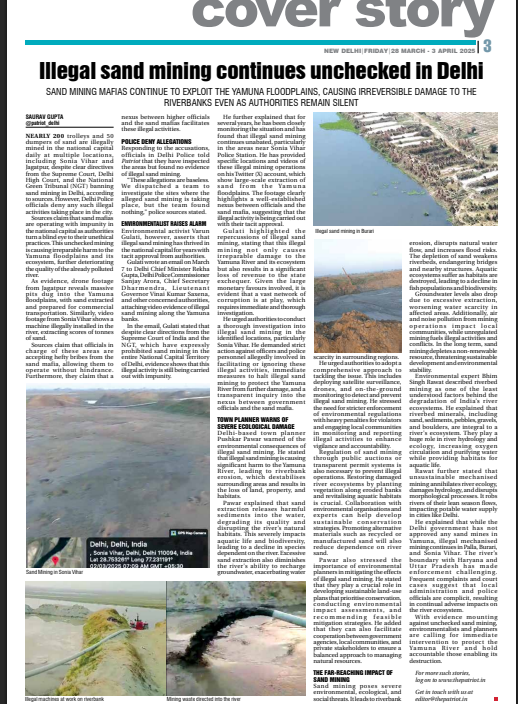
They play a huge role in river hydrology and ecology, increasing oxygen circulation and purifying water while providing habitats for aquatic life. Rawat further stated that unsustainable mechanised mining annihilates river ecology, damages hydrology, and disrupts morphological processes. It robs rivers of their lean season flows, impacting potable water supply in cities like Delhi. https://thepatriot.in/reports/delhi-illegal-sand-mining-continues-unchecked-damage-yamuna-67904 (28 March 2025)
Himachal Pradesh Pollution, mining threaten Yamuna’s survival Once a thriving water body, the Yamuna at Paonta Sahib’s Yamuna Ghat has now been reduced to a mere stream, alarming environmentalists, religious institutions and local communities. The primary reasons behind this crisis include the excessive diversion of Yamuna’s water for hydropower generation and irrigation, unchecked industrial and domestic pollution and large-scale illegal mining activities along the riverbed.
Illegal mining has emerged as one of the biggest threats to the Yamuna’s survival in the Paonta Sahib region. Sand and gravel extraction, often carried out without proper environmental regulations, has severely impacted the river’s ecosystem. Large-scale mechanised mining has altered the natural flow of the river, eroded its banks, and disrupted the aquatic habitat. The excessive removal of riverbed material reduces the water-holding capacity of the Yamuna, further exacerbating the already critical water scarcity. Additionally, deep mining pits create stagnant water pools, which lead to water contamination and pose serious risks to aquatic life. https://www.tribuneindia.com/news/himachal/pollution-mining-neglect-threaten-yamunas-survival/ (10 March 2025)
The CM said that the govt was ready to make amendments to the policy & raise the income from mining from current Rs 400 cr to Rs 1,000 cr. https://www.tribuneindia.com/news/himachal/will-amend-mining-policy-to-plug-loopholes-check-revenue-loss-cm/ (28 March 2025)
Uttarakhand Ex-CM raises illegal riverbed mining issue in Lok Sabha A two-minute speech by BJP MP Trivendra Singh Rawat in the Lok Sabha on Mar 27 sent the state govt into a tizzy after he said that illegal mining was rampant at night in Uttarakhand. Speaking in the House, Rawat, the MP from Haridwar, said he wanted to flag a “concerning issue” from his home state. “In Uttarakhand’s Dehradun, Haridwar, Udham Singh Nagar, and Nainital, illegal mining is getting rampant at night. This is not only a threat to law and order and ecology but also the safety of common people. Despite orders from the state and central governments, we are witnessing a mining mafia transporting materials in trucks at night. This is affecting the roads, bridges, and other facilities,” he said. https://indianexpress.com/article/india/uttarakhand-lok-sabha-speech-bjp-bjp-mp-trivendra-singh-rawat-9911233/; https://www.bhaskar.com/local/uttarakhand/dehradun/news/trivendra-rawat-raised-the-issue-of-illegal-mining-in-parliament-134724802.html (28 March 2025)
Rajasthan Illegal excavation of sand continues at Bisalpur Dam Despite the apex court’s order on Feb 25, which did not extend the stay on NGT order that barred sand excavation from the dam, the state govt has seemingly turned a blind eye to the ongoing illegal operations. The Supreme Court, on May 24 last year, initially granted a stay on the NGT order that stopped sand excavation at the dam without obtaining prior environmental clearance. However, in subsequent hearings on July 16 and Nov 5, the apex court did not extend the stay on NGT order. https://timesofindia.indiatimes.com/city/jaipur/illegal-excavation-of-sand-continues-at-bisalpur-dam-despite-sc-ngt-orders/articleshow/118811515.cms (09 March 2025)
HC cracks down as mafia operations surge The High Court has granted the Central Bureau of Investigation (CBI) full authority to probe illegal sand mining and related mafia activities. It has also stated that the CBI may seek assistance from the Central Reserve Police Force (CRPF) or other states if necessary, News18 Hindi reported. The court has made it clear that the CBI has complete autonomy in investigating cases related to illegal sand mining. It has also directed state agencies to cooperate fully with the probe. https://www.cnbctv18.com/india/illegal-sand-mining-in-rajasthan-booming-mafia-presence-24-deaths-10000-cases-in-five-years-red-clay-mining-19575180.htm (18 Mar 2025)
Can’t probe sand mining due to resource constraint: CBI Expressing concern over the Central Investigation Bureau’s inability to probe the cases of illegal sand and gravel mining citing resource constraints, the high court has asked CBI director Praveen Sood to appear before it. The high court noted on March 4 that “such limitations were unexpected from India’s premier investigating agency,” and directed Sood to appear either in person or through video conferencing when the case comes up for hearing on March 17. In April 2024, the high court had directed the CBI to investigate illegal sand mining on the state’s Chambal and Banas riverbeds. The directive came in the case of one Shahrukh, who is accused of transporting 40 metric tonnes of sand in a dumper without a valid permit. The court asked the agency to investigate other sand mafias of the state too. Following that order, a case was registered by the central agency. https://thewire.in/law/unexpected-rajasthan-hc-cbi-director-praveen-sood-illegal-mining/ (5 Mar 2025)
MLAs walk out of Assembly over illegal sand mining Congress MLAs walked out of the Assembly on Mar 18 after an uproar over their demand for a reply on the illegal mining of bajri – a type of mixed sand used in construction. Leader of Opposition Tika Ram Jully raised the issue through an adjournment motion during Zero Hour and targeted the state govt. The Congress lawmakers demanded an answer from the state govt and had a confrontation with the ruling paty’s MLAs, before they walked out. https://theprint.in/india/congress-mlas-walk-out-of-rajasthan-assembly-over-illegal-sand-mining/2554681/ (19 March 2025)
Madhya Pradesh Sand mafia attack forest team A case of sand mafia’s audacity has surfaced from Ambah on Friday (March 21), where the miscreants attacked a forest department team and fled with a seized tractor. The incident took place when forest officials stopped a tractor-trolley filled with sand from the Chambal River near Bareh. The mafia members first threw a motorcycle in front of the tractor to stop it. Then, they attacked the forest team and took back the seized vehicle.
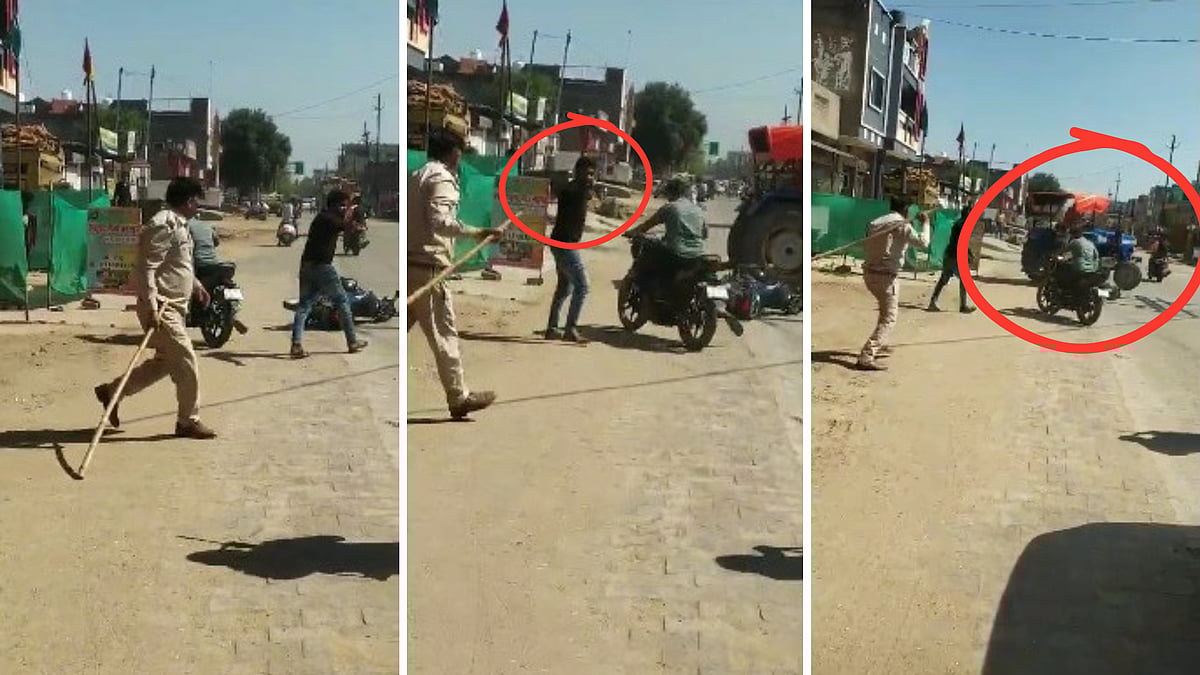
When the forest team took out their batons, one of the attackers warned, “If you hit us, we will shoot you.” After that, they forcefully took back the seized tractor and fled. SDO Bhura Gaikwad of the Forest Department confirmed that the team had captured photos and videos of the incident. A complaint has been filed at Ambah police station, and further investigation is underway. https://www.freepressjournal.in/bhopal/mp-shocker-sand-mafia-members-attack-forest-team-flees-with-seized-tractor-in-morena (21 March 2025) मुरैना में वनकर्मियों पर रेत माफिया का हमला:बाइक गिराकर ट्रैक्टर रुकवाया और छुड़ाकर ले गए; https://www.bhaskar.com/local/mp/morena/ambah/news/mafia-attack-during-forest-department-operation-134680694.html ; https://www.bhaskar.com/local/mp/morena/ambah/video/mafia-attack-during-forest-department-operation-134680694.html (21 March 2025) मुरैना में अपराधियों ने 24 घंटे के अंदर वन विभाग पर दो बार हमला करने की जानकारी सामने आई है। एक बार माफिया वन अमले से ट्रैक्टर छुड़ाकर ले गए वहीं दूसरे मामले में माफिया अवैध पत्थरों से भरी ट्रैक्टर-ट्रॉली को जबरन छुड़ा लिया। बताया जा रहा है कि, पुलिस को पहले से सूचना देने के बावजूद समय पर कोई कार्रवाई नहीं की गई। https://www.swadeshnews.in/state/madhya-pradesh/forest-department-attacked-twice-in-morena-within-24-hours-no-action-despite-informing-the-police-946311 (22 March 2025)
“No sand-mafia, only pet-mafia”: Minister Farmer Welfare & Agriculture Minister Edal Singh Kanshana on Mar 21 said, “the law will take its course” against those who attacked forest employees trying to stop illegal sand mining in Morena dist, where unidentified persons allegedly took away a seized tractor by force & threatened govt officials. He referred to them as “pet (stomach) mafia”-people working to feed themselves.
Reacting to ‘Pet (Stomach) Mafia’ remark, Deputy Leader of Opposition Hemant Katare said, “I support the minister’s statement because he has admitted that unemployment is at its peak in Madhya Pradesh, forcing people into crimes for survival. The govt has failed to provide employment, which is why such incidents are happening. The minister has put his own govt in the dock,” Katare said. https://www.aninews.in/news/national/politics/no-sand-mafia-only-peit-mafia-mp-minister-on-morena-sand-mining-incident20250321194931/ (21 Mar 2025)
Minister’s son accused of links to illegal sand mining The forest department in Morena has seized a truck carrying illegally mined sand from the Chambal river late on Thursday (March 27) night. During questioning, the driver alleged that the vehicle was bound for the Mungawali plant of Banku Kansana, son of MP agriculture minister Aidal Singh Kansana. The driver, identified as Deewan, claimed he had been transporting sand to the minister’s son’s plant for more than eight days, earning Rs 1,000 per day. The dumper, with “A Kansana” painted on its body, allegedly belongs to the minister’s son. He further alleged that multiple trucks and dumpers were engaged in similar illegal mining activities, with the sand being used for road construction. https://timesofindia.indiatimes.com/city/bhopal/ministers-son-accused-of-links-to-illegal-sand-mining/articleshow/119671267.cms (29 March 2025)
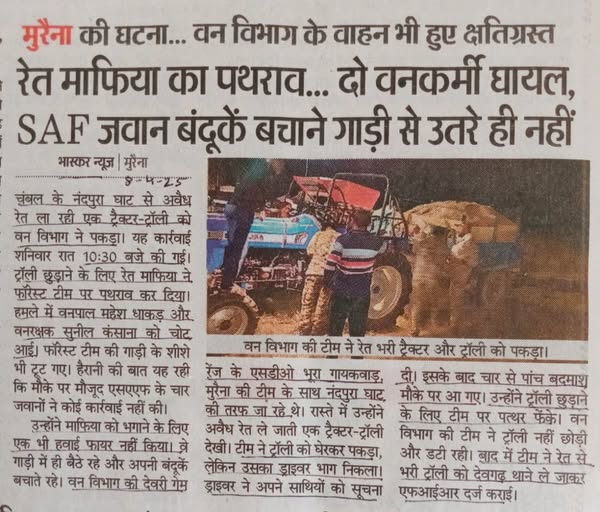
Terror being spread by armed sand mafia in Morena. https://www.facebook.com/share/p/1KQ9TwBa5C/ (DB 09 April 2025)
Uttar Pradesh बाँदा मे इस वक्त दो दर्जन मौरम खदानों पर सफेदपोश ठेकेदारों और नेताओं का पट्टा है। हर मौरम खदान पर पर्यावरण जल-वायु एनओसी समेत खनिज लीज शर्तों व यूपी खनिज एक्ट नियमों की खुलेआम अनदेखी है। मौरम पट्टेधारक ने अवैध खनन की खबरों को रोकने के लिए मीडिया को महीना फिक्स कर रखा है। वहीं खान अधिकारी से ब्यूरोक्रेसी तक सिस्टम सेट है। गाहेबगाहे अवैध खनन की खबरें अखबारों और सोशल मीडिया का हिस्सा बनी तो गले तक रुपया भर दिया जाता है। अथवा फौरी कार्यवाही पर जुर्माना होता है लेकिन मौरम माफिया पर एफआईआर और ब्लैकलिस्ट का एक्शन अपवाद की बात है। https://soochanasansar.in/two-dozen-gravel-mines-are-heavily-owned-by-contractors-journalists-and-the-dhritarashtra-government-then-who-will-take-action-in-banda-district-illegal-sand-mining-ken-river-bundelakhnd-rigion/ (24 March 2025) जांच कार्यवाही से बचने के लिए लाल बालू के लुटेरों ने वैध पट्टे की आड़ मे सरकार को राजस्व क्षति दी। वहीं किसानों की ज़मीन से मौरम निकासी की गई। 3 मीटर से ज्यादा गहराई का मानक ताक पर रखकर मनमानी से अवैध खनन किया गया है। साक्ष्य मिटाने को 10 पोकलैंड लगाकर आनन फानन मे तालाब जैसे बड़े गड्ढो को भरा गया। मौके पर शिकायत कर्ता ऊषा निषाद ने वीडियोग्राफी करके खुलासा कर दिया। यह सबकुछ सोशल मीडिया पर वायरल हुआ व सूचना संसार ने प्रसारित किया था। उधर ऊषा निषाद ने जानकारी के लिए आला अफसरों को व्हाट्सएप पर भेजा था। https://soochanasansar.in/banda-dm-j-reebha-took-action-on-moram-block-sandi-77-contractor-himanshu-meenas-disciple-azhar-is-tensed-dm-formed-investigation-team/ (29 March 2025) – बीते 29 मार्च को जिलाधिकारी के द्वारा इस खंड की जांच के बाद मिले निर्देश ताक पर है। वहीं सरकारी प्रेस विज्ञप्ति पर उक्त कृत्य के संबंध मे नोटिस प्रचलन की बात अभी तक धरातल पर मुकम्मल नही है। – खदान संचालक तमाम जांच और जुर्माना कार्यवाही को ठेंगा दिखाकर ग्राम सभा व किसानों की ज़मीन से खनन करता है। – एसडीएम पैलानी ने 9 अप्रैल को जांच की लेकिन मौके पर खनन करती मिली पोकलैंड सीज नही हुई। गहराई देखकर हतप्रभ हुए एसडीएम साहब !!! https://soochanasansar.in/on-wednesday-april-9-sdm-palani-and-co-sadar-inspected-the-spot-at-moram-block-sandi-77-in-the-evening-but-the-pokland-was-not-seized/ (10 April 2025)
Haryana No mining in Aravallis till Aug 7, NGT tells govt The NGT has issued a show-cause notice to the state govt and the MoEF for allegedly allowing mining on ‘protected’ forest area in the Aravallis. The tribunal also directed the state government to ensure no mining or stone crushing-related activity was carried out in the area till August 7. An NGT bench headed by chairperson Justice Prakash Shrivastava issued the notice on a plea filed by residents of Rajawas, a village located in the Aravallis in Mahendergarh district. The bench has asked the petitioners to explain within four weeks how 25 per cent of the protected forest land was auctioned to stone crushing units.
The petitioners had claimed that the Haryana Government had auctioned one-fourth of the 506.33 acres of the protected forestland for mining and stone crushing activities thereby endangering the fragile ecosystem of the area. The 506.33-acre patch of the land at Rajawas village was notified as a protected forest as a part of afforestation measures being undertaken in compensation for diversion of forestland for non-forest purposes in the Great Nicobar Island. https://www.tribuneindia.com/news/haryana/no-mining-in-aravallis-till-aug-7-ngt-tells-haryana/ (10 April 2025) Meanwhile, experts question how a public hearing for mining in the area was scheduled when Haryana has not applied for FCA. “Rajawas village comes under Section 4 of the Punjab Land Preservation Act (PLPA) 1900 and is now a protected forest. Any forest area cannot be converted for non-forest activities. The mining department has not applied for FCA and thus cannot carry out a public hearing in this matter. The said area was always Aravalis and thus, with or without protected forest status, FCA is required. That is not just village land, but it comes under PLPA as well,” former conservator of forest (south Haryana) RP Balwan said. https://timesofindia.indiatimes.com/city/gurgaon/ngt-curbs-must-to-prevent-illegal-mining-in-aravali-land-protected-under-nicobar-swap/articleshow/120137046.cms (10 April 2025) The auction is linked to the establishment of a large infrastructure project that is causing significant forest loss on Nicobar Island, with compensation planned by designating 24,535 hectares (Ha) of land as forest in Haryana’s Aravalli range. Additionally, a portion of the designated forest areas, specifically 204 hectares, has been officially recognised as ‘Protected Forest’ in Rajawas village. However, the ministry has auctioned off one-fourth of this designated forest area for mining and stone crushing. https://www.newindianexpress.com/nation/2025/Apr/10/how-forest-land-diverted-for-mining-in-aravallis-asks-ngt (10 April 2025)
YAMUNA WETLANDS, LAKES
Ajmer Will the encroachments in Anasagar lake in Ajmer be removed? As far as wetlands protection in India is concerned, the events here have a mix of tragedy, comedy, tragicomedy, among other genres. It will be interesting to see where this sequence of events ends. The apex court has now asked the state to submit detailed plan in the next hearing on April 7. One hopes the state submits a sincere plan to remove the encroachments from Anasagar lake at the earliest, in addition to other compensatory plans. According to one report, the state government has started removal of encroachments since March 10 2025. This is welcome development. https://sandrp.in/2025/03/24/drp-nb-240325-will-the-encroachments-in-anasagar-lake-in-ajmer-be-removed/ (24 March 2025)
SC reviews admin’s proposal for new wetlands The Ajmer district collector on Apr 5 submitted an additional affidavit to the Supreme Court, detailing plans to create two new wetlands within the city limits. The submission was made during proceedings related to the Anasagar Lake matter, where the court had previously instructed local officials to remove the Seven Wonders replicas and the food court near the water body. The court will examine the new wetland proposal on April 7, alongside assessing existing structures’ compliance with environmental guidelines and previous tribunal decisions. https://timesofindia.indiatimes.com/city/jaipur/sc-reviews-ajmer-admns-proposal-for-new-wetlands/articleshow/120024247.cms (06 April 2025)
GB Nagar Efforts on to reclaim all wetlands, Admin tells NGT During a previous hearing, the NGT had directed the administration to provide precise details on 1,018 wetlands, including their geo-coordinates, extent of encroachments, legal proceedings, and restoration efforts. Additionally, it ordered an assessment of other wetlands listed in the Wetland Atlas but not part of the 1,018 identified sites. A survey in Sadar tehsil identified 245 ponds, of which 48 were found to be encroached upon by illegal road constructions, religious structures, private dwellings, and boundary walls.
Dadri tehsil reported a total of 480 ponds, of which 453 have already been restored. However, 27 ponds continue to suffer from unauthorised residential and commercial encroachments, some of which are over three decades old. In Jewar, 293 ponds were found with 264 of them successfully restored. The remaining 29 ponds face substantial encroachments, including agricultural expansions and infrastructure development. Similar reports have been sought from Noida, Greater Noida and Yamuna Expressway authorities. The matter will be next heard on July 17, 2025. https://www.hindustantimes.com/cities/noida-news/efforts-on-to-reclaim-all-wetlands-gb-nagar-admin-tells-ngt-101742406425080.html (20 March 2025)
Gurugram Decline in birds in Basai wetlands Experts said the lack of any legal protection for Basai, including a ‘wetland’ status, made it easy to bulldoze it. In 2017, the Delhi Bird Foundation approached the NGT against the construction of the STP and with the demand to declare the area a wetland, but MCG, in its response, said that Basai was just a “piece of barren land where a few birds occasionally roost…” The case concluded with NGT asking the petitioners to approach Haryana govt with the demand.
“Basai couldn’t be saved till now because it is not a recognised wetland. The absence of legal safeguards leaves our natural habitats vulnerable. Without legal protection, we risk losing not only the diverse species but also the delicate balance that sustains our planet,” said environmentalist Vaishali Rana. https://timesofindia.indiatimes.com/city/gurgaon/flamingos-to-highrises-greens-flag-dwindling-bird-count-at-basai-wetland-call-for-quick-action/articleshow/119440667.cms (25 Mar 2025)
City loses 5 waterbodies to encroachments Five ponds, which were supposed to be restored under an initiative by MCG and GMDA, have been overrun by a former councillor’s office, construction waste, housing plots and temples – highlighting a pattern of disregard for environmental laws despite rules that prohibit such activities. According to MCG’s response to a RTI query filed by activist Vaishali Rana last year, ponds in Sector 50 township Nirvana Country, Badshapur, Kadarpur and Gwalpahari have been encroached on. https://timesofindia.indiatimes.com/city/gurgaon/office-to-hsg-plots-flood-prone-city-loses-5-waterbodies-to-encroachments/articleshow/119769383.cms (31 March 2025)
Delhi State responsible for wetlands’ maintenance: MoEF The reply dated April 02, from the ministry came after the tribunal in 2024 took suo motu cognizance of a Sept 2024 TOI report titled “NHAI has made highway at protected pond site in Delhi: Activists”. The article pointed out that NHAI built Urban Extension Road-II over the pond in Goyla Khurd village, situated in Delhi’s south-west district. The pond was among the list of over 1,000 ponds meant to be protected. he ministry said it identified over 2.3 lakh wetlands nationwide in 2021, and their safeguarding falls with the respective state govt, which in this instance, is the Delhi govt. Earlier this year, the DPCC and Delhi state wetland authority held DDA answerable for handing over a listed pond to NHAI, over which a highway was constructed, impacting the water body. https://timesofindia.indiatimes.com/city/delhi/state-responsible-for-wetlands-maintenance-environment-ministry-to-tribunal-on-goyla-khurd-pond/articleshow/119984288.cms (4 April 2025)
NGT directs DDA, MCD resolve dispute “The issue of maintenance of the pond cannot be kept pending on account of any dispute between the DDA and MCD without action to clean it,” said an NGT bench headed by justice Prakash Shrivastava in its March 24 order. The DPCC has been instructed to inspect the pond within six weeks and submit a water sample report. https://www.hindustantimes.com/cities/delhi-news/ngtdirects-dda-mcd-to-resolve-dispute-clean-south-west-delhi-pond-101743444615221.html (31 March 2025)
Report Only 102 of over 200k wetlands notified in country Of the country’s estimated over 200,000 wetlands, only 102 have been notified and even these are concentrated in three states and one Union territory, data from the environment ministry has revealed. While Rajasthan has notified 75 wetlands & Goa 25, both Uttar Pradesh & Chandigarh have notified one each, the ministry’s data, shared in response to an RTI and available on ministry’s Wetlands of India Portal, showed. (Jayashree Nandi) https://www.hindustantimes.com/india-news/only-102-of-over-200k-wetlands-notified-in-country-shows-data-101742787471339.html (24 March 2025)
GROUNDWATER IN YAMUNA BASIN
Delhi 22,000 illegal borewells identified: DJB tells NGT In a report dated March 19, DJB told the tribunal that illegal borewells were to be sealed by the district magistrates, and that it was pursuing the matter with the officials. Of the 22,010 illegal borewells, the highest number — 9,128 — was found in north-west Delhi, followed by south-west Delhi that had 6,926 illegal borewells. The lowest number was in New Delhi: 85.
The report said DJB had received 2,610 applications for NOCs for borewells. Of these, 1,119 applications were granted NOC, and 900 were rejected, while the remaining are being processed. The report said the highest number of borewells to get NOCs — 455 — were in south-west Delhi, followed by 384 in New Delhi. The DPCC has told NGT that it has transferred Rs 19.62 crore, including the environment compensation received for illegal borewells, to the divisional commissioner for revival of water bodies. https://timesofindia.indiatimes.com/city/delhi/22000-illegal-borewells-identified-more-than-13000-of-them-sealed-djb-tells-ngt/articleshow/119351950.cms (22 March 2025)
Haryana GW crisis worsened by subsidised tubewell irrigation Failure of government policies meant to aid farmers seems to be making the situation worse. Subsidised electricity, poor distribution of canal water, and lack of funding for micro-irrigation means groundwater levels continue to drop as farmers drench fields in groundwater that is running out fast. Districts where subsidised electricity used for agriculture is the highest are among the most water-stressed, and also among the top 10 districts growing paddy and wheat, our analysis shows. If water use is not regulated, the state could soon run out of groundwater to meet the basic needs of the farmers. https://www.indiaspend.com/earthcheckindia/haryanas-groundwater-crisis-worsened-by-subsidised-tubewell-irrigation-945451 (15 Mar. 2025)
Tanks battle polluted groundwater In Haryana, groundwater pollution has led people to build underground tanks that are fed by expensive water tank services whose costs escalate in summer. Ashok Kumar talks to residents to understand the extent of the problem, and to government officials, who claim that piped water supply has solved the issue.
“Farmlands are irrigated with water from the PAP. As the area falls under fertile land catehory, no land owner is given permission to set up a poultry farm as it will affect environment. A poultry farm will needs at least one lakh litres of water per day. Also, the farm will attract house flies. For these reasons, we are objecting to setting up the poultry farm,” said Velu Mandrachalam, district secretary of Tamilaga Vivasayigal Sangam, Coimbatore. https://www.thehindu.com/news/national/haryana/tanks-battle-polluted-groundwater/article69409464.ece (04 April 2025)
State claims 85% water conservation goals Haryana claims to have achieved 85% of its target by saving 5.8 billion cubic meters (BCM) of water from March 2023 till Feb 2025, according to an estimate by the Haryana Water Resources Authority (HWRA). Officials said this was done by reusing treated wastewater, promoting efficient cultivation methods, encouraging crop diversification, adopting micro-irrigation techniques and enhancing groundwater recharge. The state aims to save 6.9 BCM by the end of March 2025. Haryana recorded an 11% increase in groundwater recharge from 2023 to 2024, as reported by the CGWB. For 2025-26, the state has planned to dig up 244 water bodies over 1,185 acres, with storage capacity of 12,000 million litres of water. Haryana aims to reuse 50% of treated wastewater by March 2025 and take this up to 100% by Dec 2028. https://timesofindia.indiatimes.com/city/gurgaon/crop-diversification-to-reuse-haryana-meets-85-water-conservation-goals/articleshowprint/118846299.cms (10 Mar. 2025)
Catch the Rain-2025 launched The campaign was inaugurated by Union Jal Shakti minister CR Patil, and CM Nayab Singh Saini at Tau Devi Lal Stadium. As part of the campaign launch, several water conservation projects were inaugurated across Haryana. Additionally, the foundation stone for 400 artificial groundwater recharge structures was laid, aimed at restoring depleting groundwater levels. In Ferozepur Jhirka, ranneywell-based water supply projects were inaugurated in 52 villages and five dhanis. Similarly, in Pataudi assembly constituency, 24 villages and nine dhanis saw the launch of canal-based drinking water supply projects.
To enhance irrigation efficiency, Solar Power Integrated Micro Irrigation Projects were inaugurated in Devdhar and Begumpur villages of Yamunanagar, Julani Khera of Kaithal, Pahari of Bhiwani, Akoli and Mandlana of Mahendragarh. In a development aimed at resolving Haryana’s water concerns, Union minister of Jal Shakti, CR Patil, announced that a meeting with the CMs of the concerned states will soon be held to ensure that Haryana receives its rightful share of water. https://www.hindustantimes.com/cities/chandigarh-news/jal-shakti-abhiyan-catch-the-rain-2025-launched-from-haryana-on-world-water-day-101742671206971.html (23 March 2025)
We must address groundwater depletion As the state aspires to become a major industrial and economic hub, ensuring water security must be a priority (Rao Inderjit Singh) https://indianexpress.com/article/opinion/columns/haryanas-groundwater-depletion-crises-9899930/ (23 March 2025)
Prayagraj City exploits GW In Prayagraj, groundwater exploitation in urban areas has surpassed 100%, placing the city in the ‘over-exploited’ category. In Chaka and Sahaso development blocks, groundwater usage is assessed between 90% and 100% of the recharge, marking them as ‘critical.’ The remaining eight blocks, where 70% to 90% of recharged water is consumed annually, are classified as ‘semi-critical.’ At present, only 285 residents and commercial building owners, including businessmen and industrialists, have installed rainwater harvesting systems in the district. https://www.hindustantimes.com/cities/others/prayagraj-faces-groundwater-crisis-city-over-exploited-two-blocks-critical-101742756500743.html (24 March 2025)
URBAN WATER
Delhi Illegal water mafia draining Yamuna While Delhi Jal Board said it was not involved in any water exaction in the Mayur Vihar area, clearly indicating that the operations witnessed by TOI was illegal, the exploitation of the Yamuna groundwater is criminal in the background of the capital’s sinking water table.The following morning, TOI revisited the site.
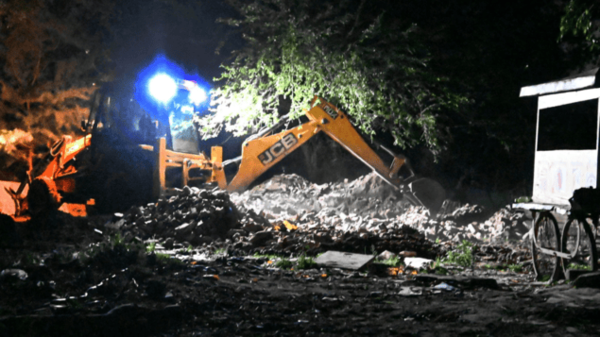
Daylight showed evidence of the clandestine activity of the previous night. The register keeper slumbered beside a submersible switchboard. A generator, pipes, electrical cables and distribution pipes in the open from the trees. https://timesofindia.indiatimes.com/city/delhi/illegal-water-mafia-draining-yamuna-fueling-delhis-water-crisis/articleshow/119895404.cms (02 April 2025)
SC panel clears underground reservoirs in ridge The central empowered committee of Supreme Court has given approval to Delhi Jal Board for use of an area of 1,580 square metres of geomorphological ridge for the construction of an underground reservoir in New Rajinder Nagar. The project will involve the felling of 40 trees and transplantation of 20 trees. The committee has also given the nod to DJB to use parts of the ridge for replacement of pipelines inside a DDA park in place of existing pipelines in Naraina Vihar as well as the construction of the Naraina underground reservoir. However, the apex court will give final permission for the project, which aims to improve water supply in the command area of the Chandrawal water treatment plant. The Ridge Management Board approved the project in April 2024. DJB said that due to the aged condition of the existing pipelines, their replacement had been proposed. https://timesofindia.indiatimes.com/city/delhi/sc-panel-nod-to-underground-reservoirs-construction-in-ridge-area/articleshow/119910085.cms (2 Apr 2025)
Govt mulls pipeline to solve water supply issues The DJB is working on a plan for laying an 11-kilometre pipeline to address the occasional disruption of water supply in Delhi due to a rise in the Yamuna’s ammonia levels, officials said on Friday (April 04). Work on details and cost estimates of the project, estimated to cost Rs 300 crore, is underway. The proposed pipeline will stretch from the Haiderpur water treatment plan (WTP) to the Waziarabad barrage, they said. The pipeline is planned to supply raw water, if required, to reduce ammonia levels in the Wazirabad pond. This will also help in situations when it is required to completely avoid drawing raw water from Wazirabad, a senior DJB official said.
“According to the plan, a 2,400-millimetre diameter pipeline will be laid from the DJB’s Haiderpur WTP, which gets its raw water from the carrier line channel (CLC), also known as Munak canal, that runs from Karnal in Haryana to Haiderpur. This line provides around 680 cusecs of raw water to several other WTPs,” he said. The proposed project will be under the Centre’s Atal Mission for Rejuvenation and Urban Transformation (AMRUT) scheme. It is likely to be completed in two years, the officials said. https://theprint.in/india/delhi-govt-mulls-pipeline-to-solve-water-supply-issues-stemming-from-high-ammonia-levels-in-yamuna/2578610/ (04 April 2025)
High ammonia again, may hit water supply The elevated ammonia levels, stemming from industrial operations upstream in Haryana, may disrupt the water distribution in the city. However, the supply wasn’t affected on Wednesday (March 05), officials said.
-“The level of ammonia had shot up for some time, but it is now largely on declining trends. There was no issue in terms of water production as we get additional water from Munak Canal to dilute it at Wazirabad,” said an official on the condition of anonymity. Since last year, DJB has expressed concerns about Haryana releasing water containing excessive ammonia into the Yamuna. The planned ammonia treatment facility at Wazirabad, due for completion by 2023, still remains unbuilt. https://timesofindia.indiatimes.com/city/delhi/ammonia-up-in-river-again-water-supply-not-hit-as-yet/articleshowprint/118741874.cms (06 Mar. 2025)
Report Creating urban biodiversity parks from degraded lands Delhi hosts seven biodiversity parks, which were restored from degraded lands to serve as urban forests, providing ecological benefits. Initiatives such as converting mining pits into orchid and butterfly conservatories showcase successful habitat restoration, supporting native flora and fauna, including endangered species. Experts advocate treating biodiversity parks as essential green infrastructure in city planning, aligning with global and national environmental commitments. (Nidhi Jamwal) https://india.mongabay.com/2025/03/new-delhi-invests-in-natural-capital-through-biodiversity-parks/ (06 March 2025)
Noida Too costly, can’t use treated water: NTPC to NGT The National Thermal Power Corporation (NTPC) in Dadri has informed the NGT that using treated water from Noida Authority’s STP is not feasible, citing financial, technical, and operational challenges. A private agency conducted a feasibility study on behalf of NTPC on March 11, which revealed that the project required a capital investment of Rs 1,398 crore and an annual operational expenditure of Rs 129 crore. NTPC said these costs rendered the project economically unviable.
It cited the need to lay pipelines through densely populated urban zones, increased energy consumption for pumping, and strict environmental regulations. NTPC further noted that even with tertiary treatment, the quality of the treated water might not meet operational requirements of the power plant, potentially affecting maintenance and daily operations. Consequently, NTPC said, the project’s cost and technical complexities outweighed the anticipated benefits, making large-scale adoption of STP water at Dadri unviable in its present form. https://timesofindia.indiatimes.com/city/noida/too-costly-cant-use-noidas-treated-water-ntpc-to-ngt/articleshow/119055083.cms (16 March 2025)
Gurugram Residents protest against sewage charges According to residents, they have been charged for sewage services from the day their domestic water connections were activated, even though no sewage infrastructure has been developed in the area.
Due to the lack of a proper sewage disposal system, societies in these sectors are being forced to spend significant amounts on managing and discharging excess treated wastewater. Many residential communities are hiring private tankers to transport treated water, further increasing financial strain. https://www.hindustantimes.com/cities/others/residents-of-new-gurugram-protest-against-sewage-charges-seek-waiver-from-gmda-101742493603348.html (21 Mar 2025)
मसूरी यमुना पंपिंग योजना की मुख्य पाइल लाइन फटी पहाड़ों की रानी मसूरी में मंगलवार 25 मार्च को हजारों लीटर पानी बर्बाद हो गया. मसूरी यमुना पंपिंग योजना की मुख्य पाइल लाइन फटने से पूरा इलाका जलमग्न हो गया. जानकारी के मुताबिक कैंपटी रोड पर होटल वाइल्ड फ्लावर के समीप सड़क के नीचे जा रही पेयजल लाइन का ज्वाइंट खुल गया, जिससे सड़क का एक भाग क्षतिग्रस्त हो गया और पानी का तेज प्रेशर से क्षेत्र जलमग्न हो गया. इसके अलावा पानी के तेज बहाव से पहाड़ी से मलबा मुख्य सड़क पर आकर एकत्रित हो गया, जिससे मुख्य सड़क दोनों ओर से बाधित हो गई थी. इस कारण सड़क के दोनों ओर वाहनों का लंबा जाम लग गया था. https://www.etvbharat.com/hi/!state/main-pipeline-of-mussoorie-yamuna-pumping-scheme-burst-uttarakhand-news-uts25032507407 (25 March 2025) मसूरी में 144 करोड़ रुपए की मसूरी यमुना पेयजल पंपिंग योजना के तहत किए गए कार्यों की पोल खुलती हुए नजर आ रही है. https://www.abplive.com/states/up-uk/mussoorie-drinking-water-pipeline-valve-burst-thousands-of-liters-of-water-was-wasted-ann-2720954 (22 June 2024) लोगों ने मांग की है कि मसूरी यमुना पेयजल पंपिंग योजना के तहत किए गए कार्यों की उच्च स्तरीय जांच की जाए और मसूरी के सभी क्षेत्रों में पेयजल की सप्लाई को सुनिश्चित किया जाए. https://www.etvbharat.com/hi/!state/thousands-of-liters-of-water-wasted-due-to-bursting-of-pipeline-valve-at-gandhi-chowk-in-mussoorie-uts24062203859 (22 June 2024) In Mussoorie, pipelines were damaged due to landslides at Jincy village and as a result water supply has been affected. https://timesofindia.indiatimes.com/videos/toi-original/mussoorie-pipelines-damaged-due-to-landslides-at-jincy-village-water-supply-affected/videoshow/84951699.cms (01 Aug. 2021)
Report Challenges to treated water reuse India’s institutional framework for wastewater reuse is fragmented, with responsibilities divided across multiple national, state and local agencies. This leads to weak coordination, poor enforcement and limited financial incentives.
One of the critical gaps in wastewater reuse is the absence of clear, sector-specific standards for wastewater quality. For example, there are no unified benchmarks for treated water use in agriculture, industry, or urban landscaping, leaving industries and urban local bodies (ULB) without clear guidelines on how to safely and effectively repurpose treated water.
A state-level analysis of policies reveals that only 11 out of 28 states have established wastewater reuse policies. While a few states have developed robust frameworks, the majority lack well-defined action plans, funding strategies and monitoring mechanisms to effectively implement wastewater reuse initiatives. https://www.downtoearth.org.in/water/policy-and-governance-roadblocks-are-the-biggest-challenges-to-treated-water-reuse (11 Mar. 2025)
RELEVANT REPORTS
Study Deciphering CO2 fluxes & interactions in Ganga Basin Abstract: The present insights are instrumental in comprehending the potential of CO2 emissions in the Ganga River and facilitating riverine restoration and management. Our findings underscore the significance of incorporating South Asian rivers in the evaluation of the global carbon budget. https://www.sciencedirect.com/science/article/abs/pii/S0013935124008065 (11 July 2025)
Benefits of more room for rivers Abstract: Here we synthesize the ecological benefits of allowing rivers more room to move. We emphasize how the physical and ecological processes of unconfined river channels interact to provide the foundations for ecosystem resilience through spatiotemporal variability in multiple dimensions, including hydrologic and meta-ecosystem connectivity. More informed and sustainable decision-making that involves trade-offs between river ecology and engineering will be aided by elucidating these connections. Giving rivers more room to move can represent a mutually beneficial solution for both the freshwater biodiversity crisis and flood hazard management as climate-driven extremes escalate. https://www.nature.com/articles/s44221-025-00403-0 (21 March 2025)
New Impact of Big dams: Increased oxygen intake in rivers New research published this week reveals a startling change: the oxygen levels in inland waters have been dramatically reducing since 1900, due to human activities including big dams and pollution. This condition leads to dead fish, collapsing food chains and reducing water quality, among other impacts. https://sandrp.in/2025/04/07/drp-nb-070425-new-impact-of-big-dams-increased-oxygen-intake-in-inland-waters/ (07 April 2025)
Mumbai Does city need Gargai Dam? Our study has earlier showed that Mumbai does not need any additional dam including Gargai if it utilizes available local resources including rainfall, reuse of treated sewage, desalinization, demand side management, groundwater recharge, among other cost effective and less destructive options. The CM of his government has not bothered to respond to these concerns or options. In fact, when our study was published, even government officials in Mumbai supported our conclusions. https://sandrp.in/2025/03/31/drp-nb-310325-does-mumbai-need-gargai-dam/ (31 Mar 2025)
Tirupur PM lauds Veerapandi CETP Spread across 11.58 acres the Veerapandi CETP in Tirupur has been operating for 25 years. P Gandhirajan, managing director of CETP, told TOI that the plant was one of the largest textiles CETPs in Asia, with an installed capacity of 12 MLD and was established in 1999 by a group of 75 dyeing units in the Veerapandi cluster. According to him, each member unit invested in the project based on their effluent discharge level. The plant initially treated wastewater using lime and ferrous sulphate, before discharging it into the Noyyal river. However, in 2005, following a directive from the Madras high court, the plant implemented a zero liquid discharge system, which includes pre-treatment, reverse osmosis and evaporators to ensure complete wastewater recycling. https://timesofindia.indiatimes.com/city/coimbatore/modi-lauds-veerapandi-common-effluent-treatment-plant-in-tirupur/articleshow/119771322.cms (31 March 2025)
Report Role of sediments in river hydrology Human activities on rivers such as the construction of dams and barrages, sand mining, hampers the flow of sediments, which affects the rivers’ energy and flow, and consequently its floodplain.
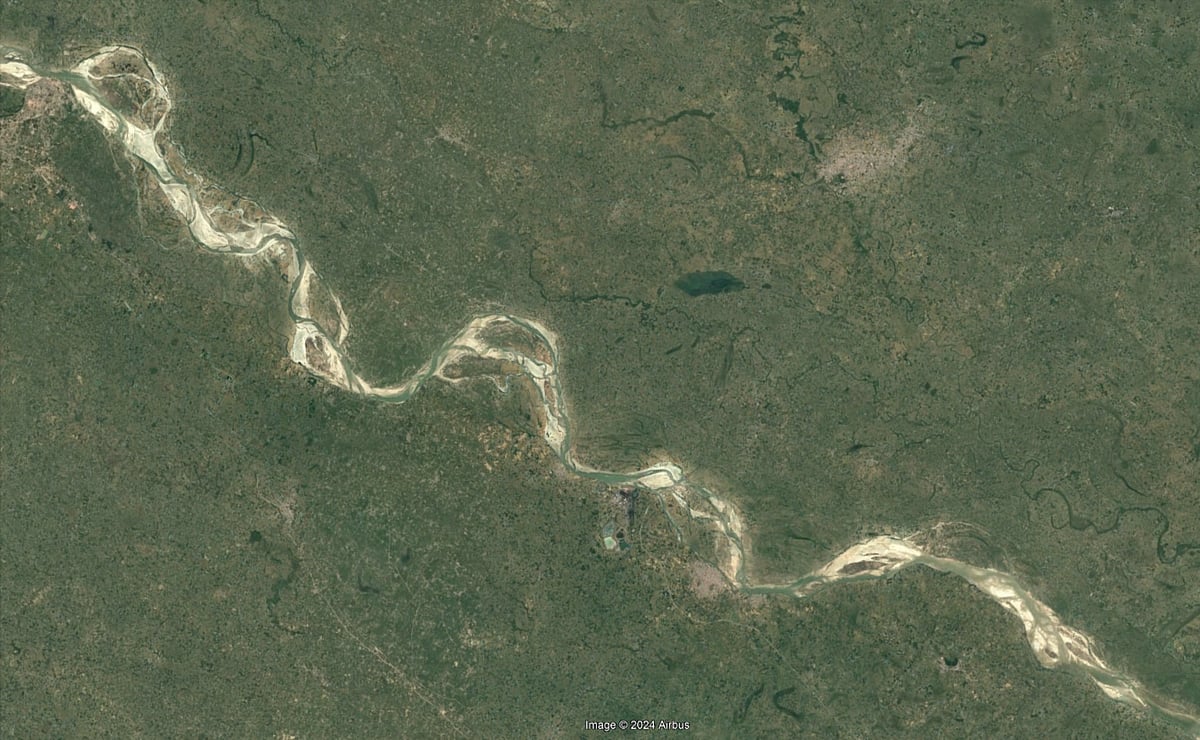
https://www.indiawaterportal.org/environment/ecology/muddy-waters-the-role-of-sediments-in-river-hydrology (11 Mar. 2025)
Compiled by Bhim Singh Rawat (bhim.sandrp@gmail.com)
Also see: Yamuna Manthan 06 March 2025 and Yamuna Manthan 05 Feb. 2025
Follow us on: www.facebook.com/sandrp.in; https://twitter.com/Indian_Rivers
In memory of Late Manoj Mishra, Convenor of Yamuna Jiye Abhiyan, SANDRP is publishing monthly Yamuna Manthan from Feb 2024. It’s a compilation of developments related to Yamuna River. This is 15th such monthly report in the series, and we will try to release same updates in the first week of every month. The main purpose of the exercise is to monitor, document and research all the issues affecting the Yamuna rivers and riverine people so that all concerned may get updated information on ground realities of the river and its people. All are requested to read, share and give suggestions to improve it.

 SANDRP