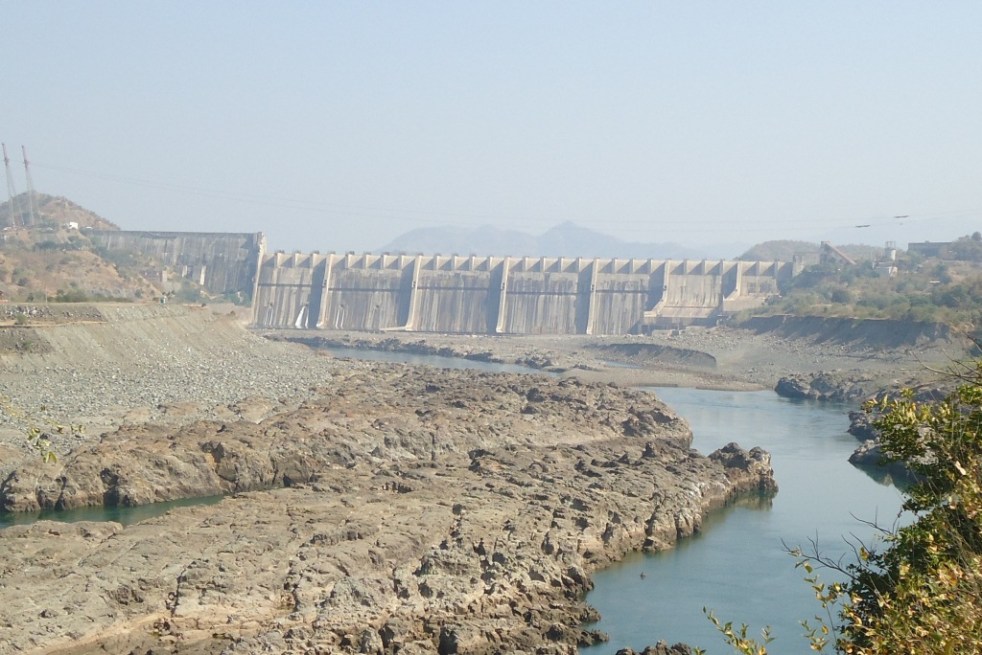
A report this week quotes a Govt of Gujarat (GOG) insider saying that GOG is giving 16.7% of SSP (Sardar Sarovar Project) water for industries (with more in pipeline) against planned allocation of just 2% (0.2 Million Acre Feet or MAF). Similarly, against planned allocation of zero for Urban areas in Ahmedabad, Gandhinagar, Vadodara, Kheda and Bharuch, most large urban areas are getting Narmada water. However, the insider says, the area irrigated by the SSP is only 33% of the targeted area, with largest water quantities going to already irrigated central Gujarat. Similarly, with the Narmada Water Disputes Tribunal (NWDT) asked Gujarat to provide water for the SSP Downstream areas from its allocated share, but Gujarat keeps claiming it has no water for this and asks other states to provide water for the downstream areas from common pool. It seems the worst fears of the project critiques are coming true. The insider has in fact characterized this state of affairs as water anarchy in Gujarat.
In scathing criticism of the government, the insider also said that for two decades Gujarat has NOT been releasing the annual figures of area irrigated in different taluka/s districts using Narmada waters, nor about the water allocated for different sectors like irrigation, industries, urban and rural areas in different regions including Central Gujarat, Kutch, Saurashtra and North Gujarat. Possibly they do not even have those credible figures if they are using only satellite data to claim that 12 lakh ha is irrigated from Narmada waters, since satellite imagery would not tell what the source of irrigation.
If Gujarat govt has any credible counter to these charges, it should promptly release figures of area irrigated & Narmada water use in different districts for each season and year and also Narmada water allocated each year since inception to different sectors and regions and districts. Gujarat govt should also start required water released from the dam for the SSP downstream areas.
Sardar Sarovar Project 16.7% of Narmada water going to industry, 33% of targeted area irrigated: Govt insider When he (a Gujarat Govt insider) regretted that, for the last two decades, the Gujarat government has not been publishing figures on how much water is going to which sector of the state, nor is there any authentic data on the area being irrigated with Narmada waters, I queried him: How much of Narmada water does he estimate is going to industry right now?
“It is very difficult to say because of a lack of data, but according to the figures floating around in the corridors of power, 1.5 MAF of water out of 9 MAF is currently going to the state’s industry,” this insider told me. This means that, already, a whopping 16.7% of the water is going to industry! And with Gujarat emerging as India’s “primary semiconductor center,” a water intensive sector, with major investments being attracted by policy support, this percentage is likely to increase.
And why is the industry getting so much water? I asked this insider. “This is primarily because the pressure from agriculture for Narmada water has not increased, as out of about 18 lakh hectares (ha) that were supposed to be irrigated, only about one-third of the area is actually being irrigated via Narmada canal waters.”
The insider asserted, “If you ask the officials overseeing the Narmada project, they would say that 12 lakh ha have come under irrigation. However, this figure is based on satellite imagery, which does not distinguish between different sources of water. The blue spots do not necessarily indicate Narmada-based water. My information suggests that the actual irrigated area is just about 6 lakh ha.”
Calling this a result of “water anarchy” in water management, he noted that the Gujarat government’s decision to lay down pipelines to ensure that farms receive Narmada water in lieu of minor and sub-minor canals has “failed” despite huge expenditures towards this end.
“Most of the pipelines face multiple problems. They are blocked by silt in many places, and nobody is there to clean them. In other places, they have not been laid down properly, so water does not flow naturally through them. There are also spots where power is required to lift the water, and this too is not working,” the insider said, adding, “As a result, in various places, farmers simply lift water from the Narmada canal by sinking tubewell pumps.” https://www.counterview.net/2025/01/gujarats-water-anarchy-167-of-narmada.html (29 Jan 2025)
HYDRO POWER PROJECTS
Sikkim ACT condemns fresh EC to damaged Teesta III HEP The Affected Citizen of Teesta, condemns the clearance of Ministry of Environment, Forest and Climate Change (MoEFCC), India to amend the Environment Clearance for the project on 10 January 2025 for rebuilding the 1200 MW Teesta III dam project. It is shocking to know that height of the dam for Teesta stage Ill is increased by double earlier it was 60-metre-high rockfill concrete dam and now environment ministry panel has cleared a proposal to build a new 118.64-m-high concrete gravity dam in its place, this without a fresh public hearing and even as the design aspects of the dam are yet to be approved, with plans to expand the capacity of the dam and spillways to impound and channel more waters volumes.
The MoEFCC clearance for rebuilding the dam is an insensitivity to the multiple disasters associated with dam building. The Teesta III dam disaster of 4 October 2023 is a direct outcome of ignoring the warnings by environmentalist and communities of the high fragility and seismicity of Himalayan geology in Sikkim. Gyatsho Tongden Lepcha, General Secretary, ACT, Sikkim. https://www.sikkimexpress.com/news-details/act-condemns-approval-for-new-teesta-iii-dam (31 Jan. 2025)
‘Cancel hasty EC for new Teesta III HEP’ People in Sikkim are opposing the EAC clearance to Teesta III without fresh EIA, Public hearing or appraisal. They are demanding immediate cancellation of EAC approval. https://m.sikkimexpress.com/article/cancel-hasty-clearance-for-new-teesta-iii-dam-state-bjp/95962 (28 Jan. 2025) After strong criticism from the BJP-Sikkim unit and Citizen Action Party-Sikkim, the Sikkim Democratic Front (SDF) has also voiced concerns over the recent approval granted by the EAC for the reconstruction of the 1,200 MW Teesta-III HEP in Mangan district. In a video statement released on Wednesday, SDF spokesperson Rikzing Norbu Dorjee Bhutia criticised the state government for not conducting a public hearing before granting approval. https://northeastlivetv.com/topnews/after-bjp-cap-opposition-sdf-voices-discontent-over-eacs-approval-for-reconstruction-of-teesta-iii-dam/ (30 Jan. 2025)
2023 GLOF: Drivers, causes & impacts of a multihazard cascade Abstract On 3 October 2023, a multihazard cascade in the Sikkim Himalaya, India, was triggered by 14.7 million m3 of frozen lateral moraine collapsing into South Lhonak Lake, generating an ~20 m tsunami-like impact wave, breaching the moraine, and draining ~50 million m3 of water. The ensuing Glacial Lake Outburst Flood (GLOF) eroded ~270 million m3 of sediment, which overwhelmed infrastructure, including hydropower installations along the Teesta River. The physical scale and human and economic impact of this event prompts urgent reflection on the role of climate change and human activities in exacerbating such disasters. Insights into multihazard evolution are pivotal for informing policy development, enhancing Early Warning Systems (EWS), and spurring paradigm shifts in GLOF risk management strategies in the Himalaya and other mountain environments. https://www.science.org/doi/10.1126/science.ads2659 (30 Jan. 2025)
Collapse of giant mass of glacial debris, not cloudburst, triggered disaster Crucially, the study found no evidence of a “triggering cloudburst event” in the vicinity of the lake. The Sikkim government had told the National Green Tribunal last year that a cloudburst had possibly preceded the glacial lake outburst flood (GLOF). The investigation into the causes, dynamics and consequences of the GLOF was carried out by a team of 34 experts from nine countries and was led by Ashim Sattar, assistant professor, School of Earth, Ocean and Climate Sciences at the Indian Institute of Technology, Bhubaneswar.
The moraine — formed by glaciers over several years — was found to be unstable for years preceding the event. It showed a maximum displacement of 15 metres per year between 2016 and 2023, the study revealed. The area around the glacial lake was also found to be unstable, owing to thawing of permafrost, or frozen ground, likely due to climate change.
“The GLOF peak discharge vastly exceeds meteorological flood magnitudes, suggesting that it is a rare event in the historical context of this region, equivalent to a return period exceeding 200 years,” the note by authors stated. “South Lhonak lake remains highly susceptible to future GLOF events. The northern lateral moraine still has a large and rapidly deforming zone despite the October 3, 2023, failure,” the note added, pointing to the continuing hazard posed by the glacial lake.
The team of experts used seismic signal data, satellite imagery and modelling techniques to back-calculate the GLOF’s movement and validated it using ground information available with the Indo-Tibetan Border Police (ITBP) and Sikkim State Disaster Management Authority. The reconstruction showed that the moraine collapsed at 10.12 pm on October 3. At around 10.30 pm, the flood water reached an Indo-Tibetan Border Police camp, 7.12 km downstream, which was consistent with ITBP’s information. As the lake’s natural dam burst, its level dropped 28 meters.
The reconstruction showed that at 12:30 am, October 4, the flood waters reached the 1,200 MW Chungthang hydropower dam — this was in line with the reported time of 12.35 pm. The study also quantified the enormous amounts of sediment eroded by the GLOF — about 270 million cubic meters. The sediment and boulders were deposited downstream causing immense devastation and damage. Satellite-imagery based mapping also identified 45 landslides caused by the GLOF along the Teesta valley. https://indianexpress.com/article/india/sikkim-flood-2023-cloudburst-debris-glof-9809030/ (31 Jan. 2025)
GLOF risks from HEPs, caution comes after nod to resume Teesta III Days after an environment ministry expert panel gave its conditional nod to resume construction of Sikkim’s 1,200 MW Teesta III hydroelectric project, a study published in the international journal ‘Science’ has warned that the increasing number of such projects near glacier lakes in the Himalayas amplifies GLOF risks.
Findings of the study, jointly carried out by 34 scientists and researchers from nine countries, show that the surroundings of South Lhonak Lake, located in the Upper Teesta basin, have been unstable for a long time and remain “highly susceptible” to future GLOF events. “The modified slope geometry following the 2023 collapse, particularly at the moraine crest, increased the likelihood of further failures,” said the study on the ‘Sikkim flood of Oct 2023’. The team of researchers, led by an IIT Bhubaneswar scientist Ashim Sattar, used high resolution satellite imagery and modelling techniques to investigate the intricate cause of the extreme event.
Citing the study, the other co-author Kristen L Cook from the University Grenoble Alpes in France, highlighted the possibility of “more GLOF in future years” in the Himalayan region. “It is critical that we use the findings from our study to better anticipate the full chain of GLOF hazards, including the compounding effects of landslides and sediment mobilisation on the flood and its impacts,” said Cook. The study also reveals the role of a low-pressure system (LPS) that made its way from the Bay of Bengal towards Sikkim and brought heavy rainfall along the Teesta valley. Since it intensifies the impacts of the flood cascade especially in West Bengal and Bangladesh, the paper highlights the critical need for monitoring LPS activity and its role in flood cascades in the Himalaya and its foothills. “As we work to reduce the risks of GLOFs in the Himalayas, it is clear that we need a multi-faceted approach, including early warning systems, strengthened regulatory frameworks, a paradigm shift in GLOF modelling approaches, and robust preparation programmes and community education,” said Sattar. https://timesofindia.indiatimes.com/india/study-warns-of-glacial-outburst-risks-from-hydropower-projects-in-himalayas-caution-comes-after-nod-to-resume-teesta-iii/articleshowprint/117753719.cms (31 Jan. 2025)
2023 GLOF driven by glacial melt & permafrost thaw Climate change played a key role in the “catastrophic” 2023 floods in the Himalayan state of Sikkim in India, a new study says. “There are many, many factors that came together here,” the study’s lead author tells Carbon Brief, but the “main driver” was the destabilising effect caused by thawing permafrost. The research also finds that the South Lhonak lake has been expanding for decades, due to meltwater from the glacier above, with its area growing 12-fold between 1975 and 2023. The paper concludes that the GLOF highlights the “complex interactions” between climate change, glacier mass loss and human infrastructure in mountainous regions.
As the GLOF travelled, it set off 45 secondary landslides, many of them deep-seated and up to 150 metres in depth, with impacts not just in Sikkim, but also in neighbouring West Bengal and Bangladesh. In all, the flood cascade damaged 25,900 buildings, 31 major bridges and flooded 276km2 of agricultural land. The most heavily inundated zone was in Bangladesh 300km away, where intense cyclonic rainfall – initially attributed as a main GLOF driver – exacerbated flooding.
Dr Jakob Steiner, a geoscientist at the University of Graz and a member of the Himalayan University Consortium, who was not involved in the study, says the assessment captures the “cascading” impacts of GLOFs and their interaction with other complex, climatic factors in great detail: “Even if the glacial lake releases relatively less water, it can trigger other movements downstream and that can have far-reaching consequences, even for hydropower plants miles away from any lakes. So the message [of the study] is that you’re not safe anywhere and, hopefully, that’s a message that policymakers will get. Institutionally, however, we are not yet prepared to receive that kind of message.” The authors say the final “trigger” was the intense rainfall that hit Sikkim on 3-4 October. Though the rainfall was “typical” for the region and season, the authors say that it “saturated the soil and increased the vulnerability of slopes to failure”.
Meanwhile, geoscientist Steiner says it is critical that the key role played by infrastructure development in damage caused by GLOFs is not downplayed – noting that a failure to do so risks “absolv[ing] local institutions of their responsibility”. He concludes: “As scientists, we find it important to show that climate change is involved, but we have to be aware that the science we create is very, very political… [A] big part of the disaster is not climate change; it’s institutional failures, it’s infrastructural failures. “If nobody takes the responsibility and everyone just says: ‘it’s my neighbour and not me’, then we are truly in deep shit. Maybe we already are.” https://www.carbonbrief.org/catastrophic-2023-lake-outburst-in-india-driven-by-glacial-melt-and-permafrost-thaw/ (30 Jan. 2025)
EDIT Safety first On October 2023, a glacial flood ravaged four districts of Sikkim, killing more than 40 people and washing away a 60-metre-high dam of the Teesta III hydel power project. Less than 15 months later, the environment ministry’s expert appraisal committee (EAC) has cleared a proposal to construct a 118-metre high dam in its place. The panel’s decision raises questions because the design of the new structure has not been cleared by the Central Water Commission, the Geological Survey and Central Soil and Materials Research Station. A public hearing has not been held to make sure the project addresses the concerns of local people. It’s particularly disquieting that the EAC has allowed the dam’s construction before its own safety-related questions were addressed. As reported by this newspaper, the EAC was not convinced of the structure’s ability to withstand the force of flood waters. The project does not seem to have adequately factored in threats from overflowing glacial lakes.
Infrastructure projects in the mountains — dams, bridges, buildings, highways — must be subjected to stringent safety measures. The bar must be set particularly high for structures close to rivers or other water bodies. As the 2023 flood underlined, dams are the first to be hit when glacial lakes overflow. A growing body of scholarship shows that climate change-driven ice mass loss is exacerbating the threat of glacial lake floods. The environment ministry must, therefore, not be hasty in going ahead with its committee’s latest recommendation on Teesta III. No effort must be spared to ensure that the disaster of 2023 is not repeated. https://indianexpress.com/article/opinion/editorials/express-view-on-teesta-dam-safety-first-9802508/ (28 Jan. 2025)
Tread carefully This EDIT in the Hindustan Times on EAC approval for Teesta-3 reconstruction is less clear, except last two lines: “However, given recent experiences, the (hydropower projects in the Himalayas) projects needs to be reassessed. When it comes to public safety and protecting the environment, there should be no talk of trade-offs.” https://www.hindustantimes.com/editorials/tread-carefully-on-the-himalayas-101737989517582.html (27 Jan. 2025)
Arunachal Pradesh Megadam disrupts flow of water & money The NHPC and government of India have largely neglected to recognize the diverse ways that residents like Bimal and Ratan practice living off or with the river. In a Memorandum of Agreement signed between the government of Arunachal Pradesh and the NHPC, the NHPC acknowledged that people living upstream would be impacted by the dam and agreed to provide relief benefits to local communities. However, as far as I am aware, they have yet to publicly acknowledge how the change in the river’s flow will negatively impact the livelihoods of those downstream. Instead, the NHPC and Indian government have insisted on taking a utilitarian, technological approach to the waters of the Subansiri. This ignores the social, economic, and cultural meanings that downstream people like Bimal and Ratan associate with the life-giving river. https://www.sapiens.org/culture/india-hydropower-dam-impacts-river-communities/ (30 Jan 2025)
Lower Subansiri HEP Erection of spillway radial gates complete The erection of Spillway Radial Gate S-4 at the 2000MW Subansiri Lower hydroelectric project was completed on 29 January 2025, India’s NHPC Ltd has announced. All 9 gates have now been erected. https://www.waterpowermagazine.com/news/erection-of-spillway-radial-gates-complete-at-subansiri-lower-project/ (30 Jan. 2025)
Himachal Pradesh Leopard enters HEP site A leopard has been found in the under construction 70 MW Dhaulasindh HEP in Hamirpur district. The project site is surrounded by dense forest. Why was the project given clearance in such an area? https://www.thehindu.com/news/national/himachal-pradesh/leopard-enters-power-project-site-in-himachals-hamirpur/article69153863.ece (29 Jan. 2025) https://www.amarujala.com/himachal-pradesh/hamirpur-hp/leopard-seen-near-dhaula-siddh-hydroelectric-project-hamirpur-hp-news-c-94-1-hmp1005-146936-2025-01-30 (30 Jan. 2025)
Jammu & Kashmir Hydro power generation drops by 80 per cent A top official from JKSPDC informed the news agency KNO that “From Kashmir power plants, we have a power generation capacity of around 250 MW out of which currently, we are producing only around 60 MW power.” “In view of low water availability, we are able to produce only 40 MW of power from lower Jhelum in the night hours and 5 MW during the other hours and 15 MW at Kangan,” the official said.
The official further said that from the power plants in Kangan, water was available for only one machine which has a power producing capacity of 150 Mw. As of now we are able to produce only around 15 MW of power from Kangan.” “As of now we are reserving the water to generate power during the peak hours. This is the routine power generation but in upcoming month, we are expecting increase in power generation,” he said.
There is a total power generation capacity of around 1200 Mw from the power projects of J&K and 2250 Mw from NHPC. Pertinently, J&K was facing power generation shortage of nearly 80 % in November and December months. From across the regions, PDD was generating only 200-260 Mw of power from all power projects in J&K. https://thekashmiriyat.co.uk/dark-days-ahead-as-power-generation-drops-by-80-per-cent-in-jammu-kashmir/ (01 Feb. 2025)
Geomorphological features of glaciers in Kashmir Valley. https://www.youtube.com/watch?v=zuhDmMFp1ao (29 Jan. 2025)
Ramban landslide caused by natural geological conditions, rainfall: WIHG The three-member team of scientists from WIHG Dehradun conducted a detailed investigation of the area after receiving a notice from the NGT in November 2024. In their report submitted to the NGT on Jan. 27, 2025, WIHG experts attributed the landslide to the weak geological structure of the terrain. According to the report, the landslide occurred at the footwalls of the Murree Thrust, where the rocks are highly sheared and fractured, making them fragile and prone to collapse. The team found that the slope in Pernote consists of alternating layers of mudstone, siltstone, and sandstone. Among these, mudstone is particularly soft and easily breaks apart, increasing the risk of landslides, the team claimed. The researchers also noted that the slope in this region is steep to very steep, making it highly vulnerable. They explained that the prolonged rainfall before the disaster acted as the triggering factor.
To prevent future landslides, the WIHG team has recommended several measures. The primary step, they suggested, is dewatering the affected slopes and diverting water away from the landslide-prone areas, as water is the main cause of slope instability. The scientists have also proposed drainage work for both surface and sub-surface water. They emphasized the importance of afforestation on barren slopes, recommending the plantation of fast-growing deep-rooted trees such as eucalyptus, alder, and willow. This, they believed, will help hold the loose soil together and prevent further erosion. https://www.dailyexcelsior.com/inherent-geological-condition-of-terrain-prolonged-rainfall-caused-ramban-landslide-wadia-institute/ (03 Feb. 2025)
27 जनवरी, 2025 को एनजीटी के समक्ष वाडिया इंस्टीट्यूट ऑफ हिमालयन जियोलॉजी द्वारा रिपोर्ट प्रस्तुत गई है। लेख में यह भी कहा गया है कि जम्मू-कश्मीर के संवेदनशील क्षेत्रों में सड़क विस्तार और सुरंग निर्माण जैसी बड़ी निर्माण परियोजनाएं समस्या का कारण बन रही हैं। https://hindi.downtoearth.org.in/natural-disasters/why-did-the-landslide-happen-in-ramban-wadia-institute-of-himalayan-geology-suggested-measures-to-prevent-it (30 Jan. 2025)
Karnataka KPCL set to replace turbine runner at Linganamakki hydel unit Tenders have now been floated for the Rs 10 Cr runner of the turbine in one of the two 27.5 MW units of the Linganamakki powerhouse in Sagar taluk of the Shivmogga district,for the first time since its inception in 1980. The runner was damaged about ten months ago, since when no power has been generated from this unit. After issuing the work order, it will take six months to commission the unit. https://www.deccanherald.com/india/karnataka/kpcl-set-to-replace-turbine-runner-at-linganamakki-hydel-unit-3379189 (30 Jan. 2025)
DAMS
Study Dams, development & disposability: Eco-anxiety, precarity & submerging voices Abstract: The construction of large dams in India has faced criticism for its neo-colonial and capitalist practices. This highlights the importance of accountability, the consequences of development discourse, and the tangible impacts on the lives of those affected by dams, development initiatives, displacement, and denial of compensation. The pursuit of large-scale construction projects frequently promotes a conspicuous consumerist perspective, disregarding both marginalised groups and the ethics of sustainable development. The absence of ethical considerations such as empathy, inclusion, and egalitarian ideology in the development narrative often leads to the devaluation of certain lives while prioritising the safety and security of others. Within this particular setting, it is important to recognise the trajectories of those whose lives are considered disposable. In this context, the article scrutinizes Na. D’souza’s novella Dweepa, delving into the experiences of individuals who have faced eco- anxiety, precariousness, and vulnerability, ultimately culminating in their tragic demise due to the construction of the Linganamakki dam over the Sharavathi river. (BY: Goutam Karmakar, Department of English, School of Humanities, University of Hyderabad & Faculty of Arts and Design, Durban University of Technology, Durban, South Africa. goutamkrmkr@gmail.com) https://www.nature.com/articles/s41599-024-04294-6 (10 Jan. 2025)
Polavaram Project Administrative sanction given for ₹990-cr new diaphragm wall The Government of Andhra Pradesh on Jan 29 accorded administrative approval for ₹990 cr for a new diaphragm wall through the entire length of the Earth-cum-Rock Fill (ECRF) dam (Gap-II) of the Polavaram project. With the construction of the new diaphragm wall, the quantity of work would increase to 63,656 square metres, and the estimated amount for the new diaphragm wall was ₹990 cr as per the existing contract agreement rates. The original quantity was 29,585 square metres, and the new diaphragm wall would be constructed in two parts — Part A costing ₹675.98 crore and Part B ₹314.02 crore. https://www.thehindu.com/news/national/andhra-pradesh/polavaram-project-administrative-sanction-given-for-990-crore-new-diaphragm-wall/article69159777.ece (30 Jan. 2025)
Kaleshwaram Project Design Flaws Exposed in Kaleshwaram Barrages The rush for constructing the three Kaleshwaram project barrages and getting it into operational mode by the then BRS government appears to have resulted in cutting of corners in both investigations and designing of the barrages. All three barrages — at Medigadda, Annaram and Sundilla —followed similar design principles provided by the Central Designs Organisation (CDO) of the irrigation department, and were inaugurated in 2019, three years after contracts were signed for their construction. All developed problems including leaks, seepages, forming of cavities under their foundations, and in the case of Medigadda, partial sinking of Block 7 of the barrage resulting in serious cracks in some of the piers of the block.
According to a report by IIT Roorkee which reviewed the designs of the Medigadda barrage, several shortcuts appear to have been taken in designing, and some design calculations left much to be desired. The IIT report said that “in none of the runs of the model study, velocities were measured downstream of the gates. Apart from it, what were the flow conditions on downstream of gates including stilling basin and further downstream are not mentioned in the report at all.” The report also found that the designed thickness of the launching apron as 1 metre downstream and varying thickness 1.2 metres to 1.6 metres upstream were not adequate. https://www.deccanchronicle.com/southern-states/telangana/design-flaws-exposed-in-kaleshwaram-barrages-iit-report-1857355 (29 Jan. 2025)
Telangana Safety ‘dam’ned in irrigation projects The Mallannasagar reservoir, built as part of the Kaleshwaram Lift Irrigation Scheme, and flagged for its location over a geological fault, does not have any equipment to monitor seismicity. And neither do the Medigadda, Annaram, and Sundilla barrages. And where the equipment does exist, it does not work as in the case of Nagarjunasagar, Sriram Sagar, Sripada Yellampalli projects, to name a few.
Many of these dams also do not have operation and maintenance manuals, the list of which includes the likes of Nagarjunasagar, SRSP, Singur, Jurala, Lower and Upper Manair dams, Kaddem, Osmansagar and Himayatsagar reservoirs. With respect to instrumentation, many of the 174 dams do not have instruments to measure even water levels, seepages or leakages, or uplift and pore pressure measuring devices, which are among the instruments that the SDSO lists in its report in the section ‘Status of Instrumentation of Dam’. These include the popular with tourists Pakhal, Laknavaram, Ramappa lakes, Osmansagar and Himayatsagar reservoirs. Incidentally, many of the reservoirs formed by these dams are being sought to be developed as tourist destinations by the government.
According to the SDSO report, these three Kalleshwarm Project barrages also do not have instrumentation to measure seepage and leakages, two problems that were repeatedly witnessed at these barrages ever since they were inaugurated in June 2019. A 94-page ‘2023-24 annual report’, prepared by the State Dam Safety Organization (SDSO) of the irrigation department, and submitted to the special chief secretary, revenue (disaster management) on Jan 18 2025, reads like a list of small and big disasters that could be waiting to strike the 174 specified dams – small, medium, and major – as required to be listed under the provisions of the Dam Safety Act of 2021.
Among the other issues mentioned in the report is that Nagarjunasagar dam has instrumentation to measure uplift and pore pressure monitoring but this equipment is not active. Same is the case with equipment related to crack and joint movement, and stress and strain measuring of the structure.
Finding place in the report is a long list of dams that have no instrumentation of any kind – at least from the ones evaluated by the SDSO for the 174 dams are three drinking water sources for Hyderabad city – Manjira, Osmansagar, and Himayatsagar. https://www.deccanchronicle.com/southern-states/telangana/safety-damned-in-telangana-irrigation-projects-1857068 (27 Jan. 2025)
Govt initiates dam safety checks for 174 projects Following damages and breaches in irrigation projects like Peddavagu and Palair Reservoir during the last monsoon, the Telangana State Dam Safety Authority (SDSA) has decided to implement safety measures for all 60 major and medium irrigation projects before the coming summer. The state govt will also conduct a thorough safety check of all 174 irrigation projects, including major, medium, and minor, over the next two years. In its recent meeting, the SDSA emphasised assessing seepage issues, bund strengths, and concerns like jungle growth and encroachments. Officials said that Peddavagu on Godavari river had floodgates that could not be opened during the monsoon, and encroachments and bushes on the weir caused breaches, potentially threatening nearby villages.
To ensure proper maintenance, the irrigation department has assigned chief engineers, superintending engineers, and executive engineers as ‘owners’ of the projects, holding them responsible for the operation and safety of the dams. “The identification of operation and maintenance works will be completed by March, with estimations and tenders to follow. These works will be carried out from April to June,” said G Anil Kumar, engineer-in-chief of irrigation department, who also heads the SDSA. https://timesofindia.indiatimes.com/city/hyderabad/t-initiates-dam-safety-checks-for-174-projects/articleshowprint/117611715.cms (28 Jan. 2025)
Mullaperiyar Dam Safety concerns resemble cartoon character: SC The Supreme Court has remarked that the safety concerns surrounding the Mullaperiyar Dam resemble a cartoon character who lives in fear of the sky falling on his head. The apex court compared the situation to the character Vitalstatistix from the French cartoon series ‘Asterix and Obelix’. The bench, comprising Justices Hrishikesh Roy and SVN Bhatti, while considering a group of petitions about safety of the Dam. The bench has referred the matter to a three judge bench who may take up the matter on Feb 19. Some of the matters are before another bench and it is expected that all the matters will be transferred to the three judge bench.
The Mullaperiyar Dam is one of the six oldest dams in the world, four of them are undergoing decommissioning. https://keralakaumudi.com/en/news/news.php (29 Jan. 2025)
INTERLINKING OF RIVERS
Ken-Betwa Linking इसे विडंबना ही कहेंगे कि कभी बिजली नहीं देखने वाला यह गाँव, अब देश के कई ज़िलों को रोशन करने के लिए डूबने जा रहा है. https://www.bbc.com/hindi/articles/c4gzmzk9rn3o (27 Jan 2025)
INTERSTATE WATER DISPUTES
Godavari Water Disputes Telangana weighing mega options to counter Andhra’s Godavari-Banakacherla link project -Telangana irrigation officials are currently deliberating on whether to propose a new lift irrigation scheme on the Godavari river or enhance the existing lift irrigation projects, including the Kaleshwaram Lift Irrigation Scheme. The brainstorming is in response to the Godavari-Banakacherla project proposed by Andhra CM N Chandrababu Naidu, which has raised concerns among Telangana‘s irrigation authorities.
Despite Telangana’s appeal to the Ministry of Jal Shakti to halt approvals for project detrimental to its interests, Andhra Pradesh remained steadfast in its plans, reportedly with tacit approval and assurances of central funds. Andhra Pradesh is working on finalising the DPR and making budgetary allocations for the Rs 80,112-crore multi-stage lift irrigation project, which aims to lift 2 TMC flood water daily. https://telanganatoday.com/telangana-weighing-mega-options-to-counter-andhra-pradeshs-godavari-banakacherla-link-project (26 Jan. 2025)
URBAN RIVERS
Mula-Mutha; Pune Residents is resisting present RFD plans On February 9, citizens and organisations under the umbrella of Pune River Revival organised a Chipko March under the tagline “Save Trees, Save Rivers”. It will start at the Kalmadi High School and culminate at the Ram Mula Confluence in Baner. “The reason for the march is that the RFD work from Wakad to Sangvi has started. Currently, the work is going on on the PCMC side. On the PMC side, thousands of trees, like the Indian willow, have been tagged. We will walk to the Ram-Mula confluence and hug the trees that have been tagged. That is why we are calling this the Chipko march. These are old-growth heritage trees, some of which are 100-200 years old,” says Prajakta Mahajan, a member of Pune River Revival.
“We have been told that the trees have been marked for a survey, but what is the survey for? The survey is for the RFD that is going on and involves the construction of a promenade, among others,” she adds. She says that a letter will be sent to the Prime Minister’s Office after the march. The aim of the march, she added, was not to oppose the RFD entirely but to convince civic bodies to implement it in an “eco-friendly, sustainable manner”. “Alternative designs for the project are already with the PMC,” she said. https://indianexpress.com/article/cities/pune/chipko-march-notifying-guardian-minister-resisting-rfd-plans-9810364/ (31 Jan. 2025)
Residents protest tree cutting for RFD in Aundh-Baner Citizens of Aundh-Baner have strongly opposed the ongoing tree cutting and landfilling activities in the Mula and Ram riverbeds under the Riverfront Development Project. During a Mohalla Committee meeting, residents submitted a formal protest letter to Assistant Commissioner Girish Dapkekar. PMC has marked over 5,000 trees for removal in the Aundh-Baner-Balewadi area, sparking concerns among environmental activists. The affected region hosts rare native tree species and serves as a habitat for migratory birds, including some internationally migrating species. Despite this ecological significance, authorities plan to proceed with large-scale deforestation. https://www.mypunepulse.com/pune-residents-protest-against-tree-cutting-for-riverfront-project-in-aundh-baner/ (31 Jan. 2025)
Chennai Plea to save Kosasthalaiyar river.

Buddha Dariya; Ludhiana On R-Day, activists hold dharna over water pollution Activists from various organisations staged a dharna at Dr BR Ambedkar Chowk on Republic Day, protesting the state government’s failure to prevent water pollution in the Sutlej River caused by the polluted Buddha Nala in Ludhiana. The protesters highlighted that Dr BR Ambedkar, through the Constitution, granted fundamental rights to citizens, but both state and central governments have failed to provide clean drinking water. They pointed out that contaminated water, laced with harmful chemicals from Ludhiana’s Buddha Nala, has been causing serious health issues, including cancer and skin diseases, yet the government has not taken effective action. https://www.tribuneindia.com/news/punjab/on-r-day-activists-hold-dharna-over-water-pollution/ (08 Jan. 2025)
Ghaggar; Chandigarh River water not suitable for bathing: NGT panel Ghaggar water is not suitable for bathing even before and after the point where the Sukhna Choe merges into it in Zirakpur. A joint committee constituted by the NGT has found that the river water contained from two to three times the prescribed limit of BOD, making it unfit for outdoor bathing.
Members of the committee (or nominated members in absence of joint committee members) and representatives of the departments concerned carried out a survey and collected samples from Sukhna Choe on December 5 and 6 last year to identify the polluting sources. According to a representative of the Panchkula Metropolitan Development Authority (PMDA), a local drain carrying untreated domestic sewage from the Panchkula areas, namely Rajiv Colony, Indira Colony and Budanpur village, falls into the Sukhna Choe. The committee had taken samples from the Panchkula drain at the Vikas Nagar bridge.
The committee suggested the Municipal Corporation of Chandigarh should ensure regular cleaning of drains, The UT Administration along with the MC should install iron nets at all culvert points where roads are crossing the drain to prevent people from throwing solid waste in it. The Punjab Pollution Control Board should issue directions to the Municipal Council, Zirakpur, to take corrective measures in a time-bound manner to ensure operation and maintenance of STP so that there was no disposal of untreated effluent into the Ghaggar.The Panchkula MC should ensure operation of the STPs that lead effluent into Sukhna Choe through drains. https://www.tribuneindia.com/news/chandigarh/ghaggar-water-not-suitable-for-bathing-says-ngt-panel/ (29 Jan. 2025)
RIVERS
Report In 14 SPCBs, only 167 posts filled out of total 2,228 -Reflecting tardy progress on compliance of NGT order to fill up vacant posts across pollution control boards in the country by April end, only 167 posts out of 2,228 vacancies have been filled so far in 12 states and two union territories. The CPCB, the country’s top pollution control watchdog, submitted this information to the NGT on Friday (Jan. 24). Based on affidavits submitted to the NGT last year, out of 11,562 sanctioned posts, 5,671 or 49.04 per cent, were reported to be vacant in 28 states and 8 union territories.
-The CPCB had not received progress reports on filling the remaining 3,443 vacancies from 16 SPCBs and 6 PCCs of union territories, the CPCB’s affidavit stated. Pollution control boards cited delays due to reasons ranging from unavailability of candidates from feeder cadres in other state departments, backlog in filling reserved quota posts, conduct of recruitment exams and vacancies which were under process due to promotions. https://indianexpress.com/article/india/in-14-pollution-control-boards-only-167-posts-filled-out-of-total-2228-9801046/ (27 Jan. 2025)
Tamil Nadu SC orders strict action against all tanneries polluting Palar The Supreme Court on Jan 30 issued a series of stringent directives to address the severe environmental degradation caused by tannery industries in Tamil Nadu’s Vellore district, ordering that the state must recover from industries responsible for discharging untreated effluents into the Palar River the cost of ecological restoration and compensation for affected communities. The top court highlighted the catastrophic impact on water bodies, groundwater and agricultural lands, which has led to economic hardship for farmers and posed significant public health risks. A bench comprising justices JB Pardiwala and R Mahadevan described the environmental damage as “ecocide”, “irreversible”, highlighting the catastrophic impact on water bodies, groundwater and agricultural lands, which has led to economic hardship for farmers and posed significant public health risks. It directed that compliance reports be submitted every four months and made it clear that failure to comply would result in severe consequences.
– To ensure a thorough assessment of the ecological damage and the implementation of corrective measures, the court ordered the state, in consultation with the central government, to constitute a high-level committee within four weeks. This committee, to be chaired by a retired high court judge, would include secretaries from relevant Union and state government departments, environmental experts, representatives from affected communities, and other stakeholders. The court mandated that the committee conduct an environmental audit and oversee the implementation of measures aimed at reversing the damage.
– The court ordered the state government to implement a long-term restoration plan for the Palar River, which would involve the removal of pollutants, ensuring adequate water flow, and executing a sustainable conservation strategy, besides an environment audit of all the rivers in Tamil Nadu. Additionally, the court directed regular inspections of tannery industries in Vellore to assess compliance with environmental laws and instructed the authorities to publish reports disclosing all material findings. It stressed that industries must be verified for their location and proximity to restricted zones.
– The Thursday ruling is a continuation of the 1996 landmark judgment by the Supreme Court in Vellore Citizens Welfare Forum Vs Union of India, which was the first to acknowledge the “polluter pays” principle in India, as laid down in the Indian Council for Enviro-Legal Action case. That case led to the creation of the Loss of Ecology (Prevention and Payment of Compensation) Authority, which assessed compensation for victims of pollution and worked towards ecological restoration of the Palar River. In its 2001 award, the authority identified 29,193 affected individuals and families and assessed damages at ₹26.82 crore for pollution between August 2, 1991, and December 31, 1998. The authority had also made it clear that polluting industries remained liable for compensation beyond 1998 until the environment was fully restored. The orders on award were assailed before the Madras high court, ultimately landing before the Supreme Court. https://www.hindustantimes.com/india-news/sc-orders-strict-action-against-all-tanneries-polluting-palar-river-101738264149256.html (31 Jan. 2025)
Goa Sal river from lifeline to lifeless The Sal River’s story is one of tragedy and hope. While its waters may now flow sluggishly under the weight of pollutants, the determination to revive it burns brightly. The collective will of the government, local communities, and environmentalists holds the key to breathing life back into this vital artery of Goa’s ecological and cultural heritage.
– Spanning 35 kilometres, flowing gracefully from Verna to Betul, River Sal is Goa’s third-longest river. Originating as a humble stream near the ancient Mahalsa Temple in Verna, it gathers strength as it meanders downhill, forming its main channel amidst the lush paddy fields between Arossim and Cansaulim.
– This once-vital lifeline of Salcete now teeters on the brink of extinction, its vibrant flow reduced to a mournful trickle in some parts. Over the past 12 years, no sincere effort has been made to cleanse its tarnished reputation as Goa’s most polluted river or to restore its lost dignity. The current state of the Sal River is grave, particularly from Nuvem to Mobor, where untreated sewage is relentlessly funneled into the drains that feed into its waters. Adding to its plight, the riverbanks have silted up in several areas, choking its natural flow. https://www.heraldgoa.in/review/river-sal-from-lifeline-to-lifeless-a-grave-warning-for-goas-future/418598 (26 Jan. 2025)
Jammu & Kashmir Bacterial contamination in springs across Ganderbal, Srinagar A recent water quality assessment has revealed alarming contamination in multiple natural springs across Ganderbal and Srinagar, with bacteriological tests confirming them as unfit for human consumption. Following a large-scale sampling drive conducted by the Jal Shakti Department, 37 out of 40 tested springs were found contaminated, prompting authorities to issue a public advisory. Residents have been urged to refrain from consuming water from these sources and instead rely on tap water until further notice. https://thekashmiriyat.co.uk/bacterial-contamination-in-springs-across-ganderbal-and-srinagar-list-from-ganderbal-here/ (31 Jan. 2025)
Water shortages, contaminated springs The region’s lifeline—its water bodies, glaciers, and springs—is drying up. Experts warn that the declining snowfall will have far-reaching consequences. “In the past, snowfall acted as a reservoir, releasing water gradually into the streams, lakes, and underground sources during summer,” says Dr. Rafiq Ahmed, an environmental scientist. “Now, with erratic precipitation patterns, water availability is becoming highly unreliable.”
The Jal Shakti Department has already issued advisories urging people to cut down on water usage. This has serious implications for agriculture, electricity generation, and daily life. The region relies on snowfall to sustain its rivers, which in turn power hydroelectric projects. “Last year, we saw frequent electricity cuts because water levels in dams were low,” says an official from the Power Development Department. “This year, if the trend continues, we will be forced to ration power even more.” https://thekashmiriyat.co.uk/kashmirs-fragile-future-water-shortages-contaminated-springs-and-the-collapse-of-agriculture/ (01 Feb. 2025)
Punjab Greens to promote clean rivers with boat ride Environmentalists in Punjab have announced plans to celebrate World Wetlands Day on February 2 at Harike Wetlands with a Beda Yatra or boat ride and a nature walk. Covering an area of approximately 41,000 hectares, Harike Wetlands stretches across the borders of the Ferozepur and Tarn Taran districts of Punjab. The largest wetland in Northern India, it is situated alongside the Sutlej and Beas rivers in Punjab.
– “We are excited to announce a special celebration of nature at Harike Pattan, featuring a serene boat ride and bird-watching experience. Located at the confluence of the Sutlej and Beas rivers, Harike is a haven for wildlife. This event offers an opportunity to witness the incredible diversity of migratory birds, including Siberian cranes, bar-headed geese, northern shovelers, and other remarkable species that travel thousands of kilometres in the winter,” Dr Sunny Sandhu from NGO Bhoomitra said. https://indianexpress.com/article/cities/chandigarh/world-wetlands-day-punjab-beda-yatra-9805918/ (29 Jan. 2025)
GANGA Uttar Pradesh ONGC to drill 3km deep next to river Ganga By the second week of February, Oil and Natural Gas Corporation (ONGC) will kick start exploratory drilling for hydrocarbons next to river Ganga in Ballia district. Under the OALP-VI block (open acreage licensing policy) for one well, the ONGC will spend around Rs 85 crore. The oil and gas explorer public undertaking has already got environmental clearance for 302.57 sq km of area. The license of exploration in the block is valid till April 2026.
The well is supposed to be drilled between NH-31 and river Ganga in Sagarpali village, which is adjacent to Vaina Rattu Chak, home of Chittu Pandey, the Indian freedom struggle leader who led the Quit India movement in Ballia. “After the open bidding, the Ministry of Petroleum & Natural Gas (MoPNG) and its nodal agency Directorate General of Hydrocarbons (DGH) awarded the block to ONGC. Our job is to drill a well and find whether it is hydrocarbon or not. If we indeed find hydrocarbons, then whether it’s in oil form or gas. We will drill 3000 meter deep for the probe,” said a senior official of ONGC while speaking to TOI.
A team of 52 personnel will be deployed at the onland rig, who will use 25 cubic meters (m3) (25,000 liters) of water daily including 20 liters for drilling activities. During drilling, the rig will generate around 6-8 m3 per day of wastewater in the form of residual mud and drill cuts which contain clay, sand and other material. “The mobile effluent treatment plant (ETP) will treat six KLD (6000 kilo liters per day) of wastewater. ETP has a capacity of 30 KLD. The rig will also have a septic tank and soak pit for 3 KLD domestic wastewater,” added the official source. In return for the drill operation, the ONGC is expected to support three local government run schools and install 50 solar street light poles for Rs 16.50 lakh. https://timesofindia.indiatimes.com/city/lucknow/ongc-to-drill-3-km-deep-next-to-river-ganga-in-ballia-to-explore-hydrocarbon/articleshow/117764309.cms (31 Jan. 2025)
YAMUNA Delhi Political pow-wow is mere poll posturing “Yamuna water coming from Haryana is laced with pollutants such as ammonia. The issue has been discussed in the high court and the Supreme Court too. Haryana is supposed to send clean water. In fact, pollutants come from Uttar Pradesh too,” Himanshu Thakkar of the South Asia Network on Dams, Rivers and People (SANDRP) told The Telegraph. Have any of the political parties put the required effort to clean the Yamuna? Thakkar replied in the negative. “BJP, Congress or AAP, no one has a good track record,” he said. “They are not addressing the problem. In India most rivers are interstate and so these mismanagement of rivers and blame game for competitive populism comes up during polls. But the Centre is the biggest culprit. They have spent thousands of crores on the Ganga but look at the condition.” https://www.telegraphindia.com/india/dont-drink-the-water-why-political-pow-wow-over-the-yamuna-is-mere-political-posturing/cid/2080747 (31 Jan 2025)
Slugfest shines spotlight on a key river pollutants Data and records from state agencies suggest that though Haryana does release water laden with ammonia into Delhi to an extent, this is largely due to systemic chinks in the region’s drainage networks and not a deliberate ploy. Experts and officials underscored that ammonia spikes (where its concentration crosses 1 part per million, or ppm) in Delhi’s water are regular and cyclical – the city has between 15 and 22 such episodes every year. Ammonia levels usually rise between December and March, when the river’s flow begins to slow down after the monsoon’s effects begin to recede.
Data from the DJB quality control department at Wazirabad shows that ammonia levels in the river between December 2024 and January 2025 have been above 3ppm on 39 of 58 days. hese periodic spikes have long been a point of contention between the Delhi and Haryana governments. DJB argues that Haryana allows pollutants, including ammonia-based chemicals, dyes, chlorides and untreated chemicals to flow into the river from the Panipat industrial drain, 60km upstream of Palla on Delhi’s northern periphery, where the river enters the city. DJB has also blamed the state for allowing industrial waste to mix into the water in Sonepat, where two canals carrying freshwater and industrial waste run parallel to each other.
Industrial units in Haryana play their part in sullying the Yamuna’s waters, Delhi does far worse. Several experts have called the stretch of the Yamuna through Delhi a “dead river”. Bhim Singh Rawat, member of the South Asia Network on Dams, Rivers and People (SANDRP), said the frequent ammonia spikes in the river were on account of untreated effluents finding their way downstream from Haryana to Wazirabad. “We know of drain number six in Sonepat and drain number two in Panipat, which frequently bring untreated effluents into the Yamuna. This leads to a spike in the ammonia content and the only solution is to crackdown on the source of these effluents.,” he said.
Referring to the Yamuna in Delhi as a “dead” river, Rawat said DO levels turning nil was a clear indicator of that. “It shows no aquatic life can survive this stretch of the river and the solution remains simple. One, to trap sewage and connect them to sewage treatment plants. Secondly, the environmental or e-flow of the river needs to be increased. With increased flow, pollutants will naturally be flushed out to a large extent,” he said. https://www.hindustantimes.com/cities/delhi-news/slugfest-shines-spotlight-on-a-key-water-pollutant-in-yamuna-101738090677290.html (29 Jan. 2025)
Politics over pollution Bhim Singh Rawat, SANDRP, said, “The year 2025 is extremely crucial for Yamuna and it’s revival. In 1994, the upper Yamuna basin river board was formed. It advocated division of water between the states. That order is scheduled for review in 2025. That agreement has a huge role to play as far as the Yamuna problem in Delhi is concerned since the share of water for river Yamuna got restricted.”
A river without its flow is not a river. It can’t clean itself, rejuvenate itself. Even the river basins are seeing constructions, encroachments. You have made the river linear, restricted its flow by making so many bridges. You have made a total human control system. You have 25 bridges on the river. Five are under construction. So, after every 500-600 metre, you have a bridge. So you have kind of straight jacketed the river. Its linear connectivity, its vertical connectivity, they are finishing everything,” he added. He also pointed out how everyone, whether it’s the Centre or the Delhi government, talks about cleaning the Yamuna but no one focuses on increasing its flow. https://www.news18.com/india/yamuna-will-be-clean-in-a-month-if-what-environmentalists-say-on-delhis-water-politics-9208072.html (31 Jan. 2025) Bhim Singh Rawat, SANDRP and Pankaj Kumar talking to video report by CNN News 18 on reasons behind present water crisis in Delhi due to rising pollution levels in Yamuna river. https://www.youtube.com/watch?v=StjHcf9FwYk (29 Jan. 2025) Bhim Singh Rawat, SANDRP, on Jan. 29 explaining reasons behind Yamuna pollution in Delhi to Rahul Gandhi leader of opposion. https://www.youtube.com/watch?v=x0Aw5Xn2_HA (30 Jan. 2025)
इस सबके बीच बड़ा सवाल यही है कि क्या वाकई यमुना के पानी में कोई ‘जहर’ है? यमुना का उच्च अमोनिया वाला पानी आखिर कितना खतरनाक हो सकता है? और क्या वाकई अमोनिया के चलते दिल्ली में पानी की कमी हो सकती है? https://www.youtube.com/watch?v=WgqrEoe_r-8 (01 Feb. 2025)

HC warns DJB of contempt action High Court has warned Delhi Jal Board (DJB) to get its act together on STPs or face contempt of court action. The court was reviewing steps taken to improve STP’s working to combat heavy pollution in the river. It also put Delhi State Industrial and Infrastructure Development Corporation (DSIDC) on notice, seeking details about the status of effluent treatment plants operated by it to treat industrial waste that enters Yamuna. A special bench of Justices Prathiba M Singh and Manmeet PS Arora in an order passed on Jan 28 termed the delay by DJB in installing flow meters and sensors at all of its 37 STPs “completely not acceptable” when the high court had last year made it “categorical and clear” that all 37 STPs should have the devices installed at the point of discharge.
DJB informed the court that of 37 STPs, flow meters were installed only at the effluent outlets of 22 STPs, while for 4 more STPs, installation is expected by March 2025. When the court questioned the DJB official about the delay, he said estimates were being prepared and the meters would be installed in 11 STPs by June. The court cautioned that it was holding back from punishing the DJB official for now but if the meters were not installed in a month, it won’t “hesitate in taking strict and stern action in accordance with the law, both under the Contempt of Courts Act and any other law applicable to ensure that the directions of the court are properly complied with.” https://timesofindia.indiatimes.com/city/delhi/flow-meters-sensors-not-in-all-stps-hc-warns-djb-of-contempt-action/articleshow/117701980.cms (29 Jan. 2025)
Study Microplastics found in GW, river, soil Micro plastics have been found in groundwater (in almost all 11 districts of Delhi), Yamuna and soil samples as per interim report (for premonsoon samples) of a TERI study commissioned in Feb 2024 by Delhi Govt. The final report will be submitted later this year. A study in 2017 found microplastics in Delhi’s tap water. As of now there is no standards or safe limit related to micro plastics. The report is not yet in public domain. https://www.thehindu.com/news/cities/Delhi/study-finds-microplastics-in-delhis-groundwater/article69165906.ece (01 Feb. 2025)
RIVERS BIODIVERSITY
Jammu & Kashmir Rare Eurasian Otter makes a comeback The Wildlife Department has reported fresh photographic evidence of a group of Eurasian Otters in Gurez valley of north Kashmir’s Bandipora district. Once considered nearly extinct, the recent sightings of Otter, indicates a healthy aquatic ecosystem in the Gurez valley. The Wildlife authorities in the district told Greater Kashmir that the Eurasian Otters were present in the Gurez valley, but were rarely spotted on camera. Tanveer Ahmad Lone, a wildlife official said the Otters were spotted in the centrally located tehsil of Dawar in Gurez valley on the banks of Kishanganga river at least two days back.

The presence of Otter species in the Gurez valley was documented by the researchers for the first time in August 2023 near Tarbal which is close to LoC. During the study sixty camera traps were set up, six among them near riverine areas. The set up was established to study elusive Musk Deer. However, one camera trap recorded an Eurasian Otter on August 6, 2023 at 2 am. Later it was not spotted due to various reasons, until recently.
Intesar Suhail, Wildlife Warden, North Kashmir said, “It is not the first but one of the rare sightings of the Otter.” He also referred to the first sightings of Otters in Gurez in August, 2023. He said during the last three years, Otters have been spotted at different places in Kashmir including Herpora wildlife sanctuary. The official said sightings have started to happen from the last two to three years. The officer said three decades ago, the species was present in the valley in abundance and was commonly sighted but in subsequent days it was rarely spotted. https://www.greaterkashmir.com/kashmir/rare-eurasian-otter-makes-a-comeback-to-kashmir/ (30 Jan. 2025)
SAND MINING
Madhya Pradesh Sand mafias attack officials in Bhind Sand mafias allegedly attacked a team of the Mining Department in Bhind district during inspection on Friday (Jan. 31). According to information, the incident took place in Umri police station limits of Bhind district on Thursday (Jan. 30) night. During the inspection, the team stopped a tractor trolley loaded with sand and started to interrogate the driver. Upon learning about the intervention, members of the sand mafia arrived at the scene in their vehicles. In an effort to free the vehicle, they attacked the Mining Department team by pelting stones. However, the police reached the stop immediately and took the matter under control. Fortunately, no casualties were reported at the scene. As the police arrived, the accused fled the scene and are absconding at present. The police have now launched an investigation into the incident. https://www.freepressjournal.in/bhopal/mp-sand-mafias-attack-mining-dept-officials-during-inspection-in-bhind (31 Jan. 2025) भिंड जिले से एक बड़ी खबर है.यहां के कलेक्टर संजीव श्रीवास्तव की गाड़ी पर हमला हुआ है. रेत माफियाओं ने उन पर हमला किया है. इसमें वे बाल-बाल बच गए हैं. दरअसल कलेक्टर संजीव श्रीवास्तव को लंबे समय से सूचना मिल रही थी कि रेत की अवैध तस्करी हो रही है. इसे पकड़ने के लिए उन्होंने खुद बीड़ा उठाया. गुरुवार (Jan. 30) की देर रात को सूचना मिलने के बाद वे स्थानीय युवकों के साथ निजी गाड़ी में बैठकर कार्रवाई के लिए गए थे. कलेक्टर ने रेत से भरे एक ट्रैक्टर को भी पकड़ा था. कलेक्टर को बचाने के लिए उनके सुरक्षाकर्मी ने किए 4 से 5 राउंड फायर किए. https://mpcg.ndtv.in/madhya-pradesh-news/bhind-collector-sanjeev-shrivastava-sand-mafias-attacked-vehicle-7601533 (31 Jan. 2025)
Maharashtra Govt seeks suggestions until Feb 7 on draft policy The Maharashtra govt on Friday (Jan. 31) announced designated sources for sand excavation while inviting public objections and suggestions on its new sand extraction policy until February 7. The proposed framework seeks to tackle longstanding issues in sand mining, including illegal excavation, supply shortages, and ecological damage, while balancing the demands of construction and infrastructure development.
The policy, which identifies seven key focus areas, aims to streamline the sand distribution process by learning from previous models, such as depot-based and auction-based systems, both of which faced logistical hurdles in past years. During 2023-24, the govt introduced the depot-based system to ensure regulated sand supply, but operational inefficiencies prompted a reassessment. Now, the state intends to refine the allocation mechanisms, ensuring fair distribution while maintaining strict environmental safeguards.
A major highlight of the proposed policy is its strong push toward artificial sand usage in public infrastructure projects. Recognising the dwindling availability of natural sand and its ecological significance, the govt has directed the public works department (PWD) and water resources department (WRD) to mandate the use of artificial sand in all upcoming construction works. Over the next three years, the state aims to completely transition to artificial sand, reaching 100% implementation by 2028.
Additionally, large-scale mining operations generating overburden sand and minor minerals will be required to integrate these materials into the supply chain, reducing dependency on riverbed mining. The policy also introduces new regulations on inter-state sand transportation, aimed at preventing illegal exports and controlling cross-border trade. https://timesofindia.indiatimes.com/city/nagpur/state-unveils-draft-sand-mining-policy-seeks-public-suggestions-until-feb-7/articleshow/117801945.cms (01 Feb. 2025)
Telangana Activists demand action against dand mafia The illegal sand trade continues unchecked in Mahabubnagar, with the sand mafia allegedly operating in collusion with local police, revenue, and mining officials. Despite repeated complaints and directives from higher authorities, the mafia is freely supplying sand at exorbitant prices, looting the government’s valuable resources and causing significant revenue loss to the exchequer.
Social activist Diddi Praveen Kumar, who has been persistently raising concerns about this issue, has accused the administration of failing to take concrete measures to curb the illegal sand trade. According to him, while senior officials, including the Mahabubnagar SP and District Collector, have issued multiple orders to regulate sand supply, lower-cadre police and revenue officials only act temporarily. After a brief crackdown, the illegal sand business resumes as usual, creating a cycle of corruption and exploitation. https://www.thehansindia.com/telangana/unabated-illegal-sand-supply-in-mahabubnagar-activists-demand-strict-action-against-sand-mafia-941770 (02 Feb. 2025)
Uttarakhand SC refuses to lift ban on mining The Supreme Court has declined to stay the Uttarakhand HC ban order dated Jan 6 on soapstone mining in Bageshwar district, saying the situation was shocking and asked the mining companies to approach the HC. Strangely, Uttarakhand govt offered to HC to compensate the affected villages from public funds, but HC refused, saying the 160 mining companies in question have to compensate the villages from their funds. https://www.hindustantimes.com/india-news/sc-refuses-to-lift-ban-on-mining-in-uttarakhand-district-101738264445239.html (31 Jan. 2025)
WETLANDS, LAKES, WATER BODIES
SANDRP Blogs Rewalsar lake: Where faiths, ecosystems & communities meet The gem of Beas basin area in Mandi district of Himachal Pradesh is a tiny lake and wetland complex with an area of barely 2.6 hectares. Rewalsar Lake, located at an elevation of 1360 meters, about 24 kms from Mandi, has a shoreline of less than one kilometer. And yet, this emerald lake has been held sacred by three major religions of Asia: Hindu, Buddhists and Sikhs. It is also designated as a “Wetland of National Importance” by the Government of India. Today, although cultural syncretism flourishes, the ecology of the lake is in peril. On the occasion of World Wetlands day, this is the story of Rewalsar, a natural lake in Beas Basin, bringing three religions together, full of fascinating stories from Parineeta Dandekhar and photos by Abhay Kanvinde. https://sandrp.in/2025/02/02/rewalsar-lake-where-faiths-ecosystems-and-communities-meet/ (02 Feb. 2025)
SANDRP Overview WWD 2025: Govts projects, apathy damaging Ramsar wetlands Amid the thrust to increase the number, several existing or even recently declared Ramsar wetlands across the country have been facing multiple threats mainly due to governmental projects and constant negligence from the concerned authorities as can be seen from the reports from 2024 in this annual overview. Due to abject failure of govts, the various judicial bodies including High Courts, NGT benches and even Supreme Court have been dealing with a number of pleas seeking to safeguard and ensure proper management of Ramsar Wetlands in India. https://sandrp.in/2025/02/01/world-wetlands-day-2025-govts-projects-apathy-damaging-ramsar-wetlands/ (01 Feb. 2025)
WWD 2025: Failing to protect wetlands for common future While we celebrate World’s Wetlands Day 2025 with theme of “Protecting Wetlands for Our Common Future”, the top ten reports from 2024 show that the plight of wetlands in India remains miserable making the future of the waterbodies and dependent people uncertain. While govts continue to be lethargic in identifying and notifying the wetlands in the country, the govts initiated developmental plans, projects are further making them vulnerable to extinction. Amid this the threats from encroachment, siltation, pollution and climate change are only increasing. https://sandrp.in/2025/02/02/wwd-2025-failing-to-protect-wetlands-for-common-future/ (2 Feb 2025)
WWD 2025: More judicial decisions, less actions by govts In third part of annual overview, we compile top ten judicial decisions taken during 2024 by various courts regarding protection and conservation wetlands in India. https://sandrp.in/2025/02/02/world-wetlands-day-2025-more-judicial-decisions-less-actions-by-govts/ (02 Feb. 2025)
WWD 2025: Top Ten Positive Actions & Reports Marking the World Wetlands Day 2025, this article carries top ten positive reports from 2024 on protection and conservation of wetlands in India. The overview highlights some remarkable steps taken by individuals, community groups, governments for restoration of wetlands, lakes, waterbodies and mangroves in the country during the past year. https://sandrp.in/2025/02/03/world-wetlands-day-2025-top-ten-positive-actions-reports/ (03 Feb. 2025)
Bihar Charting the decline of Kabartal wetland The study employed an integrated approach, utilising LANDSAT data, statistical tools, and field analyses to examine the changes in land use and land cover (LULC), vegetation indices, soil and water quality, and the correlation between core and buffer zones of the wetland.
The study identified agriculture and urbanisation as the primary drivers of wetland degradation. Agricultural expansion, particularly into wetland areas, has led to increased runoff of fertilisers and pesticides, introducing high concentrations of nitrate and phosphate into the ecosystem. This nutrient loading promotes eutrophication, resulting in oxygen depletion and affecting aquatic life.
Encroachment by built-up areas has altered natural hydrological patterns and reduced water retention capacity. Urban sprawl and infrastructural development have contributed to habitat fragmentation, reducing biodiversity and ecological balance. Groundwater extraction for irrigation purposes further exacerbates the water deficit in the wetland, particularly during the pre-monsoon season. https://www.indiawaterportal.org/rivers-and-lakes/charting-the-decline-of-kabartal-wetlandv (26 Jan. 2025)
Odisha Hirakud juggles between human needs & environment protection Hirakud Reservoir, one of India’s largest man-made wetlands and a recently designated Ramsar site, stands between conservation success and mounting environmental challenges. Serious challenges threaten this ecological haven. Industrial fly ash from nearby factories and agricultural pesticides are polluting the reservoir’s waters. “Plastic pollution is a major concern,” says Ranjan Panda, known as the Water Man of Odisha. “Tourists litter picnic spots, affecting the reservoir’s beauty and ecosystem,” he said. nter-state water disputes add another layer of complexity. The reservoir’s water level depends on Chhattisgarh’s Kalma barrage, and polluted water released upstream affects Hirakud’s ecosystem. “The conflict between Odisha and Chhattisgarh over water release needs urgent resolution,” Panda emphasizes.
The reservoir also supports over 7,000 fishermen’s livelihoods, but the impact of cage culture fishing on water quality remains understudied. Experts stress the need for comprehensive research to address these emerging challenges and maintain Hirakud’s ecological balance. As this vital wetland faces mounting pressures, the success of conservation efforts will depend on balancing human needs with environmental protection, making Hirakud a test case for sustainable wetland management in India. https://timesofindia.indiatimes.com/city/bhubaneswar/hirakud-juggles-between-human-needs-environment-protection/articleshow/117839727.cms (1 Feb 2025)
Punjab Migratory bird numbers falling amid rising pollution in Ramsar wetlands The major threats to wetlands, in general, are due to man-made factors, leading to habitat degradation and declining biodiversity. In Punjab, industrial waste discharge from factories near Harike, Ropar, and Kanjli wetlands contaminates water bodies. Illegal sand mining in riverbeds further disrupts water retention and aquatic life. Pesticides and fertilisers used in agricultural fields near wetlands also affect wildlife. In Ludhiana, the polluted Budha Nallah’s water is discharged into the Sutlej river, eventually reaching the Harike Wetlands. The negative impact of climate change and rising temperatures is also being felt. https://indianexpress.com/article/explained/everyday-explainers/world-wetlands-day-threats-punjab-conservation-9813737/ (02 Feb. 2025)
Himachal Pradesh Neglect ruins tourism infra at Pong Wetland The neglect of tourism infrastructure at Pong Wetland has highlighted serious lapses in maintenance and management by the concerned authorities. While new initiatives like the Wildlife Interpretation Centre are commendable, restoring and maintaining existing facilities is crucial to attracting tourists and promoting eco-tourism in the region. https://www.tribuneindia.com/news/himachal/paradise-lost-neglect-ruins-tourism-infra-at-pong-wetland/ (03 Feb. 2025)
Gujarat Govt says state has 21% of country’s wetland area The state govt said on Saturday that Gujarat has 21% of the wetland area of the country, the highest among all states. It also said that of the total 115 important national wetlands of the country, eight are in Gujarat. World Wetlands Day is observed on Feb 2. Quoting observations of the Space Applications Centre (SAC) of Indian Space Research Organisation (Isro), the state govt said that Gujarat’s wetlands cover 3.5 million hectares, which accounts for 17.8% of the state’s geographical area. “Isro’s satellite-based observation of Indian wetlands indicates that Gujarat has a total of 17,613 wetlands, spanning over 3,499,429 hectares. These include inland natural wetlands, inland man-made wetlands, coastal man-made wetlands and coastal natural wetlands,” the govt statement said. https://timesofindia.indiatimes.com/city/ahmedabad/gujarat-has-21-of-countrys-wetland-area-state-govt/articleshow/117865838.cms (03 Feb. 2025)
Andhra Pradesh Govt urged to protect wetlands in Srikakulam district Environmental Protection Association president Y. Krishnamurthy urged the government to take more steps for the protection of wetlands in Srikakulam district and other parts of the State as they will ensure an ecological balance. Along with Green Climate Team founder J.V. Ratnam, Jana Sena Party (JSP) State secretary Valisetty Satyanarayana, he participated in the ‘Swamp Conservation Day’ observed at Sompeta in Srikakulam district on Sunday (Feb. 02). Speaking on the occasion, he said that effective implementation of the Biodiversity Act-2002 will prevent encroachments of water bodies. Mr. Ratnam urged the youngsters to understand the importance of nature protection. The Environmental Protection Association had played a vital role in stopping the destruction of wetlands when a thermal power plant was proposed near Sompeta 15 years ago, he added. https://www.thehindu.com/news/national/andhra-pradesh/government-urged-to-protect-wetlands-in-srikakulam-district/article69172770.ece (02 Feb. 2025)
Assam Two interconnected wetlands in the 1,300 sq. km Kaziranga National Park and Tiger Reserve have recorded more birds than many Ramsar sites in India, the latest waterbird census has noted. A total of 1,12,062 water and migratory birds belonging to 124 species were recorded across the tiger reserve over two days. https://www.thehindu.com/news/national/assam/two-kaziranga-wetlands-yield-more-birds-than-many-ramsar-sites-in-india/article69172919.ece (03 Feb. 2025)
MoEF 4 more Ramsar wetlands in India Ahead of the World Wetlands Day on Sunday (Feb. 02), four more wetlands have got an international tag of Ramsar Convention sites, taking the total number of such globally recognised wetlands in the country to 89. The four new sites in the list are: Sakkarakottai Bird Sanctuary and Therthangal Bird Sanctuary in Tamil Nadu; Khecheopalri wetland in Sikkim, and Udhwa Lake in Jharkhand. Of the 89 Ramsar sites, Tamil Nadu has become the state with the maximum number of such Ramsar sites (20) in India. Sikkim and Jharkhand have added their first Ramsar sites with the new additions in the list. https://timesofindia.indiatimes.com/india/4-more-wetlands-in-india-get-ramsar-tag-jharkhand-and-sikkim-get-their-first-ones-in-the-list/articleshow/117798408.cms (31 Jan. 2025)
Report ‘Don’t just chase numbers but invest in conserving and managing’ Declaring a wetland as a Ramsar site and fixating over the number of Ramsar sites in India is not the ideal way to conserve the country’s wetlands, member of Parliament and former Union environment minister Jairam Ramesh said on World Wetlands Day (February 2, 2025). Instead, the emphasis should be on quality, scientific underpinning and local involvement as well as stewardship, said Ramesh. He was speaking at an event organised by non-profit Wetlands International South Asia at the India International Centre in the national capital on the occasion of World Wetlands Day.
Having said that, Ramesh pointed out that he had seen wetlands, including some very important ones across the country, under grave threat. He cited the examples of Deepor Beel in Guwahati, Assam, Chilika lake in Odisha, Kolleru lake in Andhra Pradesh, the SACON campus in Coimbatore, and Kolkata. According to the former minister, four grave and pressing threats face Indian wetlands. The single biggest threat is from effluents and sewage, both industrial and human, flowing into wetlands. They are also under severe pressure from local municipalities. https://www.downtoearth.org.in/water/dont-chase-numbers-on-ramsar-sites-advises-former-environment-minister-jairam-ramesh-at-world-wetlands-day-2025-event (02 Feb. 2025)
Opinion Need for dedicated & broad-based national wetlands inventory program Wetlands inventory should take an interdisciplinary approach – and involve, at the very least, ecologists and wetlands practitioners along with GIS and remote sensing specialists. It is essential to factor in the needs and perspectives of the state wetland authorities and field managers regarding the kind of data that is needed to support wetland conservation actions. India can also play a strategic role in handholding national wetland inventories in other countries in the South Asia region. The experiences of designing and implementing the national wetlands inventory programme would be valuable for other Ramsar Convention contracting parties attempting to set up similar programmes. (Ritesh Kumar) https://www.downtoearth.org.in/water/theres-a-pressing-need-for-a-dedicated-and-broad-based-national-wetlands-inventory-programme ; https://india.mongabay.com/2025/01/commentary-india-needs-a-dedicated-national-wetland-inventory-programme/ (31 Jan. 2025)
WATER OPTIONS
Tamil Nadu RWH initiative launched to tackle water scarcity Kattakada assembly constituency has started a rainwater harvesting initiative under the Jal Samriddhi project to tackle water scarcity. The campaign, which commenced on Sunday (Feb. 02), which also happens to be World Wetlands Day and will continue until World Water Day on March 22. The campaign focuses on constructing rain pits in house yards, public spaces, schools, roadsides, and farmlands. Each pit — one metre long, 50cm wide, and 40cm deep — can store 200 litres of rainwater. With 100 pits, up to 20,000 litres can be collected, potentially reaching 2 million litres over 100 rainy days annually.
Various community groups, including Kudumbashree members, neighbourhood groups, students, and local officials, will take part in the campaign. The initiative comes in response to declining groundwater levels across 12 block panchayats in the district, with many reaching semi-critical levels. However, Nemom block, which includes Kattakada, has successfully improved groundwater availability through Jal Samriddhi project. According to 2013 Central Ground Water Authority data, groundwater depletion in the region, which fell to 73.41% earlier, improved to 69.30% due to the project. https://timesofindia.indiatimes.com/city/thiruvananthapuram/rainwater-harvesting-initiative-launched-to-tackle-water-scarcity/articleshow/117866094.cms (03 Feb. 2025)
Jharkhand Giridih saves its village ponds Ponds of Giridih had remained stagnant until last year, until a grant from NITI Aayog helped revive them. For the first time in about 25 years, the old pond of Govindatand was renovated. “Our committee ensured that the repair was successful. Water-holding capacity has increased following the removal of accumulated silt. However, the pond’s eastern end sees erosion. If a retaining wall is built around the pond, water loss and the resultant soil erosion can be stopped. The village has one more pond, so we are also seeking funds for renovating it,” says Govindatand pani panchayat samiti secretary Muralidhar Verma (52).
The pond renovation came about after NITI Aayog proposed to different districts to work in different areas such as education, health, water bodies and livelihood.”NITI Aayog had sent a proposal to many districts, including ours, to do some unique work. We chose to work in the area of water conservation,” Aszadullah, project coordinator, District Mineral Foundation Trust, Giridih, tells 101Reporters. Similarly, Bokaro, Garhwa and Palamu districts chose to work on its water bodies.
“As per the NITI Aayog proposal, we had to implement 67 modules [a water conservation unit] on old ponds in the district to increase their holding capacity. With the implementation of one module, 10,000 cubic meters of water can be stored in ponds. In some cases, we implemented two modules in one pond and three modules in different blocks. In all, 57 ponds were renovated, of which 52 were in 2023 and five in 2024,” notes Aszadullah. After this work, the water bodies in the district could store 67 crore litres of rainwater, benefiting 1,17,625 people, he adds. https://101reporters.com/article/environment/Giridih_saves_its_village_ponds_with_NITI_Aayogs_help (7 Jan 2025)
GROUNDWATER
SANDRP Overview GW 2024: Increasing impacts of climate change Several studies and reports published during 2024 have underlined the rising adverse impacts of changing climate on groundwater resources in India and globally in multiple ways which will continue to accelerate in future. Climate change and human activities have also extensively been impacting recharge, discharge, flow, storage and distribution of groundwater system. https://sandrp.in/2025/01/27/groundwater-2024-increasing-impacts-of-climate-change/ (27 Jan 2025)
GW 2024: Increasing Contamination: Tip of a Toxic-berg? This annual overview compiles the top ten reports showing the rising contamination of groundwater resources in India during 2024. It includes some shocking facts from Punjab, Himachal Pradesh, Haryana, Gujarat, Telangana, Kerala, Ladakh, Assam, Chhattisgarh, Karnataka and W Bengal, in addition to reports from CGWB (Central Ground Water Board) a Parliamentary Committee. The contaminants reported in groundwater include nitrates, fluorides, arsenic, uranium, heavy metals (Chromium, cadmium, nickel, manganese, selenium, among others), Iron, salinity, among others. https://sandrp.in/2025/01/30/groundwater-2024-increasing-contamination-tip-of-a-toxic-berg/ (30 Jan. 2025)
Uttar Pradesh On the brink of a groundwater crisis Uttar Pradesh is India’s largest extractor of groundwater, driven by farming practices that heavily strain its resources. A six-month analysis and investigation of groundwater data reveal how water-thirsty crops, unregulated borewells, and a lack of policy enforcement are pushing the state toward a dire water scarcity. (Varsha Singh) https://www.downtoearth.org.in/water/water-guzzling-crops-push-uttar-pradesh-to-the-brink-of-a-groundwater-crisis (29 Jan. 2025)
Ladakh GW recharge dips by 22%, extraction rates improve: CGWB report According to the report released by Central Ground Water Board (CGWB) on 31 December 2024, annual groundwater recharge in Ladakh has decreased from 0.09 bcm in 2023 to 0.07 bcm in 2024, indicating a reduction of 0.02 bcm. This represents a decline of approximately 22.22% compared to the previous year. This reduction reflects challenges in natural recharge processes, likely influenced by factors such as reduced snowfall, changing precipitation patterns, or altered hydrological conditions in the region.
Despite this, groundwater extraction decreased by 33% (from 0.03 bcm to 0.02 bcm), lowering the Stage of Extraction from 37.05% to 30.93%, signaling progress in conservation efforts. Of the 18 blocks across Leh and Kargil districts, 17 are now categorised as “safe” for groundwater use. Only Diskit block in Leh is labeled “semi-critical”, requiring urgent monitoring. In addition, 90.65% (873 sq km) of Ladakh’s recharge-worthy areas fall under “safe” zones, with just 9.35% (90 sq km) deemed “semi-critical.”
Erratic weather could worsen recharge rates, necessitating artificial recharge projects and rainwater harvesting, many experts fear. A Jal Shakti official while talking about the report said Ladakh’s groundwater situation leans toward cautious optimism: the dip in recharge underscores the urgency of adaptive measures. For the UT where water scarcity threatens local livelihoods and tourism, balancing conservation with demand is a critical challenge, he said. https://www.greaterkashmir.com/front-page-2/ladakhs-groundwater-recharge-dips-by-22-extraction-rates-improve-cgwb-report/ (30 Jan. 2025)
URBAN LAKES, WETLANDS
Opinion Unban wetlands facing threat from urbanisation, sewage, microplastics –In addition to these challenges, changes in precipitation patterns and the increase in drought frequency due to climate change are disrupting wetland ecosystems. Alterations in river flows and evaporation rates can destabilise hydrological cycles, leading to habitat degradation. An IIT Indore study on Thane Creek, Kolleru Lake, Pallikaranai Marsh Reserve Forest, and Tampara Lake, published in 2024, indicates a high risk from extreme precipitation events. Wetlands in southern, central, and eastern India are particularly susceptible to recurring droughts, which historically occurred every four years to five years but may intensify and become more frequent due to climate change.
-Accelerated sea-level rise is also expected to cause shifts in species composition, reduced wetland productivity, and loss of ecosystem functions. A recent study by the Center for Study of Science, Technology and Policy also highlights the increase in inundation risk due to sea-level rise in coastal cities by the end of the century, which could cause saltwater intrusion, leading to the degradation of urban wetlands.
-Protecting and restoring wetlands remains a challenge, mainly due to a lack of awareness about the importance of wetlands, conflicting demands for land use, insufficient monitoring systems and weak legal frameworks. This underscores the need for integrated approach, innovative strategies, long-term planning, effective policies and strict laws to protect these systems.
-A critical step forward would be a detailed study analysis of biodiversity and ecosystem services to highlight the unique values of lesser-known wetlands. This should be complemented with creating awareness about traditional wetland activity cycles. Such efforts could lead to their being included in conservation lists, ensuring that they are protected and able to access resources for sustainable management. (Pradeep M S & Dr Anushiya J) https://scroll.in/article/1078643/urbanisation-sewage-microplastics-why-many-indian-wetlands-are-under-threat (02 Feb. 2025)
High cost of lost urban wetlands But wetlands are more than just places of beauty and retreat; they are nature’s silent superheroes. Despite their critical role, urban wetlands are being treated as “wastelands.” They have been drained, built over, or simply ignored. Years of neglect, climate change, clogged drains, misuse as dumping grounds for waste, and unchecked urban sprawl have taken their toll. The stories of lost wetlands only surface when disasters strike.
-Cities are economic powerhouses, but when floods or water scarcity shut down businesses, GDP takes a hit. In 2022, Bengaluru suffered a loss of Rs 2.25 billion due to flooding, and in 2024, the government allocated Rs 5.56 billion to deal with water shortages. The real estate sector registered a decline in housing sales.
-Understanding and valuing wetlands through the lens of ecosystem services is a critical step in their preservation. A study by the IISc estimated the net present value of total ecosystem supply value (the sum of provisioning, regulating, and cultural services) of wetlands at Rs 7,321 billion in Karnataka.
-A lack of clarity among administrators and ground staff regarding the definition of wetlands complicates their identification, demarcation, and conservation. This confusion was evident in the case of Futala Lake, Nagpur, where an urban local body undertook construction, considering it an artificial lake. Overlapping jurisdiction between multiple government agencies further hampers effective management, leaving them vulnerable to encroachment.
-Wetlands also support marginalised and peri-urban communities to meet their daily needs and impact them the hardest when neglected. Addressing this requires a collective and honest effort. Wetlands are crucial Nature-based Solutions (NbS), forming the backbone of our existing blue infrastructure. Restoring wetlands requires placing them at the core of land use planning and shifting the perception from wastelands to valuable ecosystems. (Venkatesh Raghavendra & Neha Lakhwan) https://www.deccanherald.com/opinion/flooded-streets-dry-taps-the-high-cost-of-lost-wetlands-3385908 (03 Feb. 2025)
Bhopal Indore, Udaipur get wetland city accreditation, Bhopal misses -Bhopal, the third city which was nominated along with Indore and Udaipur by India for being considered in the august list, however missed out to be accredited by the Committee. The state capital missed the opportunity of getting accreditation amid certain concerns expressed by citizen groups over possible damage to ecological character of Bhoj wetland in the city. The concerned citizens had last year reported the matter to the Convention secretariat, flagging how a certain proposed road project cutting through the catchment area of the Bhoj wetland may not only threaten the lifeline of Bhopal but also the wildlife and the other water bodies. https://timesofindia.indiatimes.com/india/indore-and-udaipur-become-the-first-two-indian-cities-to-join-the-global-list-of-wetland-accredited-cities/articleshowprint/117558751.cms (26 Jan 2025)
Mumbai Greens form silent human chain to protect Nerul’s DPS Flamingo Lake On the occasion of World Wetlands Day on Sunday (Feb. 02), environmental activists formed a silent human chain around the 30-acre DPS Flamingo Lake in Nerul to advocate for its designation as a conservation reserve. Former Airoli MLA Sandeep Naik also participated in the initiative and pledged to raise the issue in appropriate forums. “I cannot be a silent spectator to this destruction of the environment,” he said.
Participants displayed placards with messages like ‘Wetlands Are Not Wastelands’; ‘Don’t Kill Nature’s Beauty’; ‘Save Flamingo Homes – Our Wetlands’; ‘Protect Nature – It Will Protect You’; ‘Don’t Turn Pink Lake Into Red’; and ‘Flamingos Homeless in Flamingo City’. Environmental groups plan to meet forest minister Ganesh Naik, who last year visited the lake and raised his voice against the blockage of the entry points of tidal water, to discuss preserving DPS Flamingo Lake as part of the city’s biodiversity. https://timesofindia.indiatimes.com/city/mumbai/greens-form-silent-human-chain-to-protect-neruls-dps-flamingo-lake/articleshow/117866602.cms (03 Feb. 2025)
Govt probes DPS Flamingo Lake destruction CM has ordered an urgent probe into the destruction of DPS Flamingo Lake, a critical wetland in Navi Mumbai, following alarming reports from environmental activists. The directive comes amid growing concerns over the lake’s deteriorating condition, which threatens the region’s delicate biodiversity. The City and Industrial Development Corporation (CIDCO) and the Navi Mumbai Municipal Corporation (NMMC) have been instructed to investigate the situation and submit a report within 15 days. The DPS Flamingo Lake, once a thriving habitat for migratory flamingos, is now facing severe ecological distress. According to BN Kumar, director of the NatConnect Foundation, the intertidal water flow to the wetland has been blocked for months, leading to stagnant water conditions. This disruption has rendered the lake unsuitable for flamingos, whose seasonal visits have dwindled alarmingly. https://urbanacres.in/maharashtra-govt-probes-dps-flamingo-lake-destruction-amid-environmental-concerns/ (01 Feb. 2025)
Biodiversity survey with environmentalists & local authorities on Feb 1 The Kharghar Wetlands & Hills, in collaboration with environmentalists & local authorities, will conduct a biodiversity survey on February 1, 2025, ahead of World Wetlands Day, which is observed globally on February 2. The theme for this year, “Protecting Wetlands for Our Common Future,” aims to raise awareness about the vital role wetlands play in ecological balance & biodiversity conservation. https://www.freepressjournal.in/mumbai/kharghar-wetlands-hills-to-conduct-biodiversity-survey-with-environmentalists-local-authorities-on-feb-1 (29 Jan. 2025)
URBAN WATER
Bengaluru GW crisis deepens with 100% extraction Bengaluru’s reliance on groundwater has reached a critical stage, with both Urban and Rural districts recording a staggering 100 per cent extraction rate in 2024, according to the Central Groundwater Board’s latest report. Data from the Karnataka Groundwater Directorate confirms that the city’s reserves have been in the “over-exploited” category for several years, the report further added. The state’s dependency on groundwater has been steadily rising, with extraction levels increasing from 66.3 per cent in 2023 to 68.4 per cent in 2024. https://www.hindustantimes.com/cities/bengaluru-news/bengalurus-groundwater-crisis-deepens-with-100-extraction-in-urban-and-rural-districts-report-101738569820241.html (03 Feb. 2025)
Chennai Half-a-century-old sewer infra may get makeover soon The Chennai Metropolitan Water Supply and Sewerage Board (CMWSSB) had hired Sai Consultants to study the city’s sewer infrastructure, which were constructed over 50 years ago. The consultant found challenges in the sewage infrastructure network, such as low-capacity sewage pumping stations and mixing of stormwater in sewage lines. It has recommended replacing old pipelines with new ones to increase capacity and building new sewage pumping stations to cater to the projected population in 2060, according to the report.
-When the sewer upgradation project’s DPR is finalised, Chennai Metrowater will call for external funding. The project, which is estimated at Rs 4,000 crore, is planned to be completed within three years, officials told The Hindu. https://www.dtnext.in/amp/news/chennai/chennais-half-a-century-old-sewer-infrastructure-may-get-makeover-soon-820762 (27 Jan. 2025)
Pune Khadakwasla dam water deemed unfit for drinking The increasing number of Guillain-Barré Syndrome (GBS) cases in the city has raised concerns about the potential link to contaminated water, with 80% of patients being found in areas along Sinhagad Road. The laboratory identified E. coli and coliform bacteria in water from Khadakwasla Dam, Sinhagad Road, and Pimpri-Chinchwad, both of which are commonly found in the feces of warm-blooded animals. This suggests that the water sources have been contaminated by animal waste, making it dangerous for human consumption. https://www.mypunepulse.com/khadakwasla-water-deemed-unfit-for-drinking-after-health-lab-tests-reveal-contamination/ (30 Jan. 2025)
Panchkula 2 lakh MT of waste still lying at Panchkula Sec 23 dumpyard This was revealed during a meeting of the MC’s sanitation and legacy waste management committee, held under the chairmanship of Mayor Kulbhushan Goyal. “At the Sector 23 dumping ground, 3.52 lakh MT of 3.72 lakh MT of waste from previously issued tenders has been cleared. An additional 18,000 tonnes of waste is being processed by Pooja Consultation Company. After this, around 2 lakh MT of waste will be left at the ground level, for which a new tender will be issued,” said officials.
Residents affected by the Sector 23 dumping site lamented that the work is progressing slowly and the remaining waste should be cleared by the existing firm to save time. “Floating a new tender for the same job will waste another four to six months in the tendering process alone. The work should be completed by the existing agency with approval. Otherwise, we will keep waiting for this dump to be cleared, and it will delay the exercise further,” said Nitesh Mittal, convener, Sangram Jhuriwala Dumping Ground. Highlighting the issues faced by people, the activist said, “Due to this waste site, tubewells failed here. Water coming from the tubewell had excess chlorine content than required. It will have long-term damage on our health. Whenever there is rain or wind, a foul smell emanates from here and stays for several days.” https://timesofindia.indiatimes.com/city/chandigarh/2-lakh-mt-of-waste-still-lying-at-panchkula-sec-23-dumpyard/articleshow/117706514.cms (30 Jan. 2025)
Noida Ganga water supply for housing societies soon The Noida authority is likely to start supplying the Ganga water into dozens of housing societies soon as it has laid the pipeline required for the project, officials said. These societies, located in Sector 128, 129, 130, 131, 132, 134 and 135 among others, fall between the Yamuna, and Noida Expressways depending upon the ground water for drinking water needs as yet. “As the testing of the newly laid water pipeline has been completed, we are likely to start the Ganga water supply in these areas by February 15, 2025,” said Lokesh M, CEO, Noida authority. The authority approved ₹4.95 crore budget for this line in its recent board meeting for completion of this project. “After the success of this project, the authority will work on another crucial line that will ensure the Ganga water supply to another residential cluster of newly built group housing in Sector 151 and 150 along Noida Expressway,” he added.
As per the Noida authority, the city needs 400 MLD water to meet the water needs out of which 240 MLD water is delivered by Upper Ganga canal and rest is procured from the underground resources. The authority’s water works department has laid 5.50 km long pipeline from sector 69 UGR (under ground reservoir) to sector 137 and 132 so that the Ganga water can be delivered in these housing societies and plotted areas. According to the authority’s water department their 5 out of 11 Ranney wells are completely shut. And 126 tubewells out of 431 are not functional due to some technical issues. As a result the supply of groundwater is also gets affected during the festival season troubling residents. However the authority has planned to repair these 5 Ranney wells so that the water supply remains smooth even when the Ganga water supply is disrupted in November or December, when the Upper Ganga canal is de-silted annually, said officials.
Gautam Budh Nagar district development residents’ welfare association, a citizens group chairman NP Singh said, “The Noida authority should also work on rainwater conservation during the rainy season so that we can store and recycle this water for drinking purposes. By doing this we can stop extracting the groundwater for drinking purposes. We have suggested that the authority must use only Ganga water and the stored rainwater through better management without exploiting the precious ground water that needs to be conserved.” https://www.hindustantimes.com/cities/noida-news/noidaganga-water-supply-for-housing-societies-soon-101738523432706.html (03 Feb. 2025)
WATER POLLUTION
Tamil Nadu Vengaivayal water contamination case: Special court adjourns plea The special court for trial of cases under the SC/ST (PoA) Act on Saturday (Feb. 01) adjourned the hearing on a petition challenging the CB-CID’s chargesheet in the Vengaivayal water contamination case until February 3. The chargesheet submitted last month by the CB-CID to the special court in the December 2022 case held three residents responsible for mixing faecal matter in the village overhead tank supplying potable water to the locality. Meanwhile, the protest by a section of residents of Vengaivayal against the CB-CID charge sheet, which was suspended for two days over the death of an elderly woman villager, resumed on Saturday (Feb. 01). https://www.newindianexpress.com/states/tamil-nadu/2025/Feb/02/vengaivayal-water-contamination-case-special-court-adjourns-plea-against-cb-cid-chargesheet-to-february-3 (02 Feb. 2025)
AGRICULTURE
Punjab Ropar, soil has hazardous substances: IIT High levels of hazardous substances were found in soil samples collected from cultivated and undisturbed lands in Ropar district as part of a study conducted by experts from Indian Institute of Technology (IIT), Ropar. The study analysed 20 soil samples in Ropar in 2024. The samples were evenly split between undisturbed land untouched by human activity for over a decade and cultivated land actively farmed for rice, wheat, maize, and mustard. The undisturbed land showed higher concentrations of hazardous substances, while the cultivated land exhibited elevated potassium levels due to intensive agricultural practices, including the high use of fertilisers and pesticides.
Additionally, undisturbed land was found to have nearly double the uranium and thorium ratios compared to cultivated land, reflecting higher uranium and thorium levels, but lower potassium content. Key radionuclides, such as thorium, were identified as the primary contributors to radiological health risks. The study emphasised the need for urgent mitigation strategies, including soil remediation, access restrictions, and stricter environmental regulations, to safeguard public health. Experts warned that elevated gamma radiation doses posed a significant health hazard if left unaddressed, potentially causing impacts on local population.. https://timesofindia.indiatimes.com/city/chandigarh/in-punjabs-ropar-soil-has-hazardous-substances-and-poses-serious-health-risks-says-iit/articleshow/117866395.cms (03 Feb. 2025)
MONSOON
All India Weather you tube channel. https://www.youtube.com/watch?v=we3OUbkMeHs (02 Feb. 225)
FLOOD
Study Database for flood events enhanced with catchment attributes Abstract: This first-of-its-kind flood events database called INDOFLOODS is developed using a unique approach of combining long-term station discharge observations with official flooding thresholds for warning and danger water level. Flooding information includes start and end time, peak flood level and discharge and its date of occurrence, flood volume, event duration, time to peak, and recession time. Along with metadata such as upstream catchment area, coordinates, shapefiles, river and tributary names, the database is augmented with large number of geomorphological, climatological, event-scale precipitation, landcover, soil, lithology, and anthropogenic characteristics derived at the catchment scale.
– Preliminary data analysis based on envelope curves shows that the magnitude of extreme floods in India is higher than those reported in the United States. While every dataset has limitations, this collation of flooding events with a plethora of causative hydrogeomorphic factors in a standardized format will be a major asset for the community and serve as an example for how inconsistent data records in developing countries can be turned into useful flood event databases for data-driven studies. This large sample database is expected to cater to a wide range of applications advancing flood research and management, such as trend analysis, hazard and severity assessment, calibration and validation of hydrological and hydraulic models, and developing new metrics for impact assessment. https://journals.ametsoc.org/view/journals/bams/aop/BAMS-D-24-0008.1/BAMS-D-24-0008.1.xml (28 Jan. 2025)
Report Kolkata among 9 cities at risk of getting flooded by 2100 Kolkata is among nine cities at risk of flooding by 2100 due to rising sea levels from climate change. Experts warn that global warming will increase extreme weather events, resulting in more frequent and intense floods. https://www.livemint.com/science/kolkata-among-9-cities-at-risk-of-getting-flooded-by-2100-heres-why-11738500395455.html (02 Feb. 2025)
DISASTERS
Study Financial impact of disasters on Indian states A recent study conducted by researchers at the IIT Bombay analyzed the financial impact of floods and cyclones across 25 states in India. The study, which covers a span of 23 years (1995–2018), highlights how the damage caused by these natural disasters severely affects the states’ budgets on an annual basis. The research also offers solutions for better disaster preparedness and economic protection, providing a roadmap to help mitigate the financial repercussions of such crises. Published in the International Journal of Disaster Risk Reduction, the study titled, ‘The impact of floods and cyclones on fiscal arrangements in India: An empirical investigation at the sub-national level’ is conducted by Nandini Suresh, a research scholar with the Center for Climate Studies, IIT Bombay, Professor Trupti Mishra & Prof. D. Parthasarathy of IIT Bombay. https://www.thehindu.com/sci-tech/energy-and-environment/iit-bombay-study-reveals-financial-impact-of-disasters-on-indian-states-calls-for-stronger-preparedness-and-climate-resilience/article69160200.ece (31 Jan. 2025)
SOUTH ASIA
India-China Risks of ambitious dam project ON CHINA’S PLAN OF 60K MW GREAT BAND HEP: Over 600 flash flood incidents have been reported in the basin since 1980, with more than 15 influencing factors identified in the river system (https://www.nature.com/articles/s41598-024-84655-y). The potential for flash floods remains a serious concern due to the basin’s complex geomorphology and climatic variability. Although flash floods are less frequent in the lower reaches of the river, their occurrence cannot be discounted. The area’s seismic activity is particularly alarming, with the past year alone recording 130 earthquakes of magnitudes 4 and above. This sustained seismic activity presents a continuous threat, particularly at the proposed site, which is categorized as having high landslide susceptibility. The recent 7.1-magnitude earthquake in Shigatse Tingri caused structural deformations in nearby dams and infrastructure, further emphasizing the precariousness of the area.
– This combination of engineering challenges, the basin’s susceptibility to multiple disasters — including landslides, earthquakes, and flash floods — and the geopolitical implications raises profound questions about the project’s long-term safety, viability, and regional impact.
– The precipitation data available in the open domain indicates that the river stretch after the “U Bend” receives substantial rainfall just before entering Arunachal. According to a World Bank report, the Tibetan Plateau averages 734 millimeters (mm) of annual precipitation, while the Yarlung Tsangpo region sees up to 2,000 mm. Precipitation increases significantly in the eastern Himalayas, ranging from 1,000-4,000 mm, and peaks in the Brahmaputra floodplains, with 3,500-4,000 mm annually. The Jamuna floodplains in Bangladesh receive between 1,500 and 3,000 mm.
– The contribution of the Yarlung Tsangpo to the Brahmaputra remains contentious due to inconsistent and often outdated data. Reliable assessments require updated ground measurements of tributaries and year-round monitoring of water flows to account for seasonal variations. Downstream countries like India face challenges in acquiring accurate data due to limited access to upstream hydrological information. While geospatial tools especially remote sensing offer valuable insights into precipitation and river runoff, they fall short in providing the level of accuracy achievable through detailed on-ground measurements.
– China’s reluctance to share consistent hydrological data has compounded these challenges, particularly amid recent geopolitical tensions. The suspension of data-sharing agreements and the failure to renew critical Memorandums of Understanding highlight a troubling lack of transparency. As a result, downstream nations must rely on open-source models and datasets, which reveal anomalies in river flow patterns in the Yarlung Tsangpo basin for 2024. Data from the Australian National University’s 25-year remote sensing archive shows unprecedented highs in some areas and record lows in others, indicating potential stress on the Yarlung Tsangpo-Brahmaputra system from both climate change and upstream infrastructure development.
– The Yarlung Tsangpo basin encompasses over six distinct sub-climatic zones, as classified by the Köppen Climate Classification (1908–2016). While much of the basin experiences a cold, dry mountain climate, the eastern section, beyond the Great U Bend, transitions into a warm, humid tropical monsoon climate characterized by significant rainfall. These climatic variations, coupled with the effects of climate change, are likely to have profound impacts on water flow into downstream regions. In the Tibetan Plateau, climate change is expected to alter water availability across these zones, influencing the quality, quantity, flow rate, and seasonal patterns of water reaching downstream areas in India. The tributaries of the Yarlung Tsangpo, originating from snow-covered high mountains, are primarily snow-fed. Rising temperatures and retreating glaciers threaten to disrupt the volume and flow patterns of the river, posing challenges for water availability downstream. https://thediplomat.com/2025/01/y-nithiyanandam-on-the-risks-of-chinas-ambitious-yarlung-tsangpo-project/ (27 Jan. 2025)
Bangladesh Riverine and Climate Discourses in Chars of Bangladesh: A Conversation with Naveeda Khan Professor and Chair of the Department of Anthropology at Johns Hopkins University and author of River Life and the Upspring of Nature (2022). https://www.youtube.com/watch?v=ykRHat_lXhM&t=135s (30 Jan. 2025)
THE REST OF THE WORLD
London Rewilding Rivers Project More than 27km of river in London has been improved since 2000, with 17.5km enhanced in the last six years alone. Projects include re-landscaping, removing culverts (concrete channels), creating new reed beds, planting up water margins and engaging the local community. Reintroducing a more natural system that creates space for increased water flow means less flooding and reduces the pressure on London’s struggling drainage system. Improvements like installing reed beds not only create new habitats for wildlife but help to trap pollutants before they flow downstream.
Removing barriers and concrete channels and creating beautiful new wetland areas brings rivers back into the heart of communities; makes them more biodiverse and improves the well-being levels of people who visit them. Those living near the river restoration projects across London report a better community spirit as the amount of shared space, and opportunities for volunteering and community action, have increased. https://www.thames21.org.uk/joinacampaign/londonriversweek2023/rewilding-londons-rivers/
SANDRP
Also see: DRP 27 Jan. 2025 & DRP 20 Jan. 2025
Follow us on: www.facebook.com/sandrp.in; https://twitter.com/Indian_Rivers

 SANDRP