
(Feature Image: Flowless Yamuna downstream Vyasi HEP, Dehradun in June 2023. Bhim Singh Rawat/SANDRP)
In a welcome move, the Parliamentary Committee report on Yamuna River has suggested at least 23 cumecs (Cubic Meters for Second) water needs to be released from Hathnikund barrage at least in nine non monsoon months from Oct to June as per the recommendation of the National Institute of Hydrology, a govt of India body. The report has said that almost no water is being released for the river from the Wazirabad barrage in Delhi.
The 10 cumecs water now being released (how regularly even this is being released is also a question) is inadequate as most of it evaporates or percolates soon after it is released. The committee has asked the Union Jal Shakti Minister to take urgent steps in this direction. In fact, the committee should have given a time limit for this. We hope these urgent steps will be taken soon.
Water being released by Haryana at Hathnikund ‘inadequate’: Panel On lack of environmental flows in river: In its report on “Review of Upper Yamuna River Cleaning Projects up to Delhi and River Bed Management in Delhi”, the standing committee on Water Resources said, “The Committee are of the opinion that 10 cumecs of flow being released by the State of Haryana at Hathnikund during lean season is inadequate, most of which evaporates or percolates before it reaches Wazirabad during the lean season. In fact, there is almost nil environmental flow available at the downstream of Wazirabad Barrage during most of the period i.e. 9 out of 12 months in a year. Environmental flow is only available during monsoon of 3 months i.e., July-September.”
The committee asked the Department of Water Resources, River Development & Ganga Rejuvenation, which comes under the Ministry of Jal Shakti, to make concerted efforts to evolve consensus among the Yamuna basin states to maintain e-flow of 23 cumecs in the lean season as recommended by the NIH.
On ITO barrage issue: On the differences between Delhi and Haryana on the ITO barrage, the report said, “The Committee feel that this issue needs to be sorted out as early as possible for ensuring the safe operation of the barrage so that the State of Delhi does not again become victim of flooding as witnessed in Jul 2023.” https://indianexpress.com/article/cities/delhi/water-being-released-by-haryana-at-hathnikund-inadequate-panel-9147720/ (07 Feb. 2024)
Explore possibility of establishing fund for Yamuna river On river cleaning projects: The Standing Committee highlighted that the projects particularly in Delhi and Uttar Pradesh need to be executed in a fast track manner so as to avoid cost and time overrun. It hoped the department will make concerted endeavours to overcome all issues/obstacles for speedy completion of these projects.
As on August 31, 2023, a total of 34 STP projects have been sanctioned under the Namami Gange programme for Yamuna river and its tributaries. Out of these 34 projects, one project is in Himachal Pradesh and two are in Haryana, and these projects have been completed in both the states. However, in Delhi, out of 11 sanctioned projects for creation of 1268 MLD capacity, only six have been completed resulting in creation of 704 MLD capacity. Similarly, in Uttar Pradesh, out of 20 projects sanctioned for creation of 694.09 MLD capacity, only six projects have been completed resulting in creation of 130.25 MLD.
On formation of district Yamuna committee: The committee further noted that as on date a total of 139 District Ganga Committees (DGCs) have been formed. However, no State Yamuna Committees/District Yamuna Committees have so far been set up on the lines of District Ganga Committees, it pointed out. Considering the significant role played by the DGCs by monitoring the work of local authorities on various parameters of river cleaning, the committee urged upon the Department to take necessary measures for setting up of Yamuna Committees/District Yamuna Committees.
On Clean Yamuna Fund: Further, the committee observed that there is no proposal for setting up Clean Yamuna Fund (CYF) on the lines of Clean Ganga Fund (CGF). The committee whole-heartedly appreciates the concept of CGF and desires that the department should explore the possibility of establishing the same fund for Yamuna river, which is the important tributary of Ganga river so that the work relating to cleaning the river may not be halted for want of funds, the report said. The panel sought to be apprised of the steps taken by the department in this regard within three months from presentation of this report. https://www.hindustantimes.com/environment/explore-possibility-of-establishing-fund-for-yamuna-river-parliamentary-panel-101707220318887.html (06 Jan. 2024)
On frothing in river near Okhla: “The committee is of the opinion that a long lasting solution for prevention of froth and foam formation in river Yamuna is complete treatment of sewage by Delhi, Haryana and Uttar Pradesh which is being discharged through various drains into river Yamuna,” it said. The committee reiterated its previous recommendations for enhancing the sewage treatment capacity of STPs by upgrading their technologies and connecting all the industrial clusters to common effluent treatment plants.
Further, the committee flagged that foam formation in Yamuna in Delhi, particularly at the downstream of Okhla barrage near Kalindi Kunj, occurs particularly when the gates of Okhla barrage are opened and water is released through energy dissipating arrangements which creates churning and formation of froth. Providing a gentle slope at the Okhla barrage for smooth flow may help in avoiding turbulence at the downstream, it said.
On Floodplain Encroachment: On the issue of encroachment of floodplains or wetland area along Yamuna, the committee said only two states -Delhi and Haryana – have furnished the required information. Yamuna basin states such as Uttarakhand, Himachal Pradesh, Uttar Pradesh and Rajasthan should also send the relevant information, it recommended. It also asked to be apprised of the measures taken by them for removing those encroachments within three months of the release of the report.
On impact of groundwater extraction: The panel said pumping of groundwater by borewells in floodplains is one of the reasons due to which rivers get dry during lean season. Given that the agriculture sector requires a lot of water, the committee recommended that farmers use micro and drip irrigation techniques, suitable pattern of cropping, water budgeting at micro-levels and water-shed management in the command area of Yamuna. It also underlined the urgent need for storage of monsoon water as well as rain water harvesting to meet the increasing water needs in the Yamuna basin.
On sand mining: The panel said excessive sand mining leads to riverbed alteration, affecting the course of the river and causing bank erosion, and suggested necessary steps to be taken to collate the information regarding sand mining from all the Yamuna basin states and prevent illegal sand mining in the floodplains of river Yamuna. It also recommended setting up of a portal where all the relevant information like river sand mining, floodplain/wetland encroachment, dumping of waste into the rivers may be furnished by the concerned states in a time-bound manner on a periodic basis. https://www.ndtv.com/india-news/yamuna-needs-complete-sewage-treatment-to-prevent-foam-parliamentary-panel-5006834 (06 Feb. 2024)
On debris dumping in floodplain: Noting that dumping of waste into Yamuna has not only impacted its ecological flow but also disfigured the beautiful landscapes around the river sites, the panel asked the department of water resources to prepare guidelines/ rules to prevent such acts. “Violation of these rules should attract penal provisions in order to avoid waste dumping in the rivers including Yamuna,” said the panel, chaired by BJP Lok Sabha member Parbatbhai Savabhai Patel.
On heavy metals pollution: During review of the river Yamuna cleaning project, the panel took into account the excessive presence of heavy metals like lead, copper, zinc, nickel, cadmium and chromium in the riverbed, and also asked to explore ways including providing financial assistance to the states to establish electric and CNG furnaces in crematoriums along the river to reduce pollution in Yamuna. “Besides, the department with the concerned Yamuna basin states need to find ways to discourage rituals on the pyres built on the banks of Yamuna and if possible shift the cremation sites away from the immediate periphery of the banks of Yamuna in order to prevent contamination of river water,” it said.
On July 2023 Delhi Flood: In view of huge flooding in Delhi in Jul 2023, the committee undertook a field visit to the ITO barrage and noted that the main cause of non-functioning of these gates is “heavy silting in and around the gates and poor maintenance of hydro-mechanical equipment”. Flagging its concerns, the panel urged the department to mediate in the matter (between Delhi and Haryana) and play the role of an “honest broker” in resolving this contentious issue by pro-actively engaging all stakeholders. https://timesofindia.indiatimes.com/city/delhi/dumping-of-waste-in-rivers-panel-wants-penal-provisions/articleshow/107473066.cms (07 Feb. 2024)
HYDRO POWER PROJECTS
Sikkim CM seeks Rs 20K cr for Teesta river restoration CM Prem Singh Golay calls for the central government’s assistance, seeking Rs. 20,000 crores for the restoration of the Teesta River bank following the GLOF. Golay, distributing relief materials to victims, highlights the damages incurred, with a detailed assessment report submitted to the central government. The restoration funds cover both government and private property damages. The CM also outlines plans for reconstructing damaged homes, providing compensation, and initiating housing schemes for affected residents. https://economictimes.indiatimes.com/news/india/sikkim-cm-seeks-rs-20000-cr-for-teesta-river-bank-restoration-after-glacial-lake-outburst-flood/articleshow/107435456.cms (5 Feb 2024)
Govt to sell stake in power project The state govt has decided to sell a substantial stake in the Sikkim Power Investment Cooperation (SPIL) to M/s. Greenko Energies Private Ltd (GEPL). The decision, made by the Cabinet on Feb 2, 2024, involves the transfer of a significant 60.08 per cent stake of SPIL, along with its subsidiary Sikkim Power Valley Transmission Limited, to GEPL with immediate effect. The decision has drawn sharp criticism from various quarters, with accusations of undue favoritism and a lack of transparency in the process. Key irregularities have been highlighted in the process, including the absence of an open tender process, bypassing of technical and financial evaluations, and a lack of clarity regarding the govt’s share of the project’s returns. Questions have also been raised about the handling of the insurance claim for the project, which was fully insured. https://www.indiatodayne.in/sikkim/story/bjp-sikkim-condemns-skm-governments-decision-to-sell-stake-in-power-project-866942-2024-02-08 (08 Feb. 2024)
Arunachal Pradesh Etalin HEP-affected people demand compensation The Project Affected People Forum (PAPF) of the 3,097 MW Etalin Hydroelectric Power (HEP) Corporation Limited on Friday (Feb. 09) submitted a charter of demands to the project head of the Satluj Jal Vidyut Nigam (SJVN) Limited “to safeguard the provisions to the PAFs on priority basis without any intention to alienate others.” The PAPF also reiterated “implementation of the 37-point charter of demands officially recognised during the public hearing held on 14.12.2014 at Etalin at any cost by the project proponent, ie, SJVN Ltd.” https://arunachaltimes.in/index.php/2024/02/10/etalin-hep-affected-people-demand-compensation/ (10 Feb. 2024)
Himachal Pradesh Less water release from Pandoh dam affecting aquatic life BBMB’s Pandoh dam is releasing less than required water into downstream Beas river. The environmentalists alleged that during winter every year, dam authorities at Pandoh reduce release of water in Beas drastically, which adversely impacted aquatic culture as well as the environment. Narender Saini, president of Dev Bhumi Paryavaran Rakshak Manch, alleged that it was observed that every year during winter dam authorities at Pandoh release water less than 15 per cent. It is mandatory for the dam authorities to release 15 per cent water from Pandoh dam into Beas to avoid harm to environment as well as to aquatic culture. “When we complain against the dam authorities to the district administration and SPCB, they release adequate water in Beas. But after some time, they reduce the release of water drastically,” he said.
“We request the state government and the SPCB to ask the dam authorities across the state to install equipment to monitor the release of water from dams into rivers on a regular basis. This will play a crucial role in checking this practice of dam authorities,” he pointed out. “Since January 22, less water has been released from Pandoh Dam. We request Deputy Commissioner Apoorv Devgan to look into the matter and direct the dam authorities at Pandoh to release 15 per cent water into Beas regularly,” he said. https://www.tribuneindia.com/news/himachal/less-water-release-from-dam-in-beas-irks-green-activists-588837 (09 Feb. 2024)
Uttarakhand Leakages in NHPC power channel एनएचपीसी की पावर चैनल में सैलानीगोठ नई बस्ती के पास 31 जनवरी 2024 को अचानक आठ जगह पर रिसाव हो गया। रिसाव का पानी गांव के मार्ग तक आ गया। इससे क्षेत्र के लोग भयभीत हो गए और उन्होंने तत्काल इसकी सूचना एनएचपीसी को दी। अधिकारियों ने मौका मुआयना कर पावर चैनल नहर का लेवल कम कराया और सुरक्षा के उपाय शुरू किए। शाम तक रिसाव नियंत्रण में था। एनएचपीसी प्रशासन पावर चैनल से हो रहे रिसाव की जांच को गोताखोर बुलाए गए हैं। बनबसा एनएचपीसी की पावर चैनल पूर्व में भी कई बार क्षतिग्रस्त हो चुकी है। 20 जनवरी 2006 में पैकेज फोर में ग्राम फागपुर की ओर पानी का रिसाव हुआ था। इसके बाद फिर 30 जनवरी को पैकेज फोर में ही दूसरी जगह रिसाव हुआ। फिर 14 मार्च 2006 को पावर चैनल में रिसाव हुआ। बार-बार होने वाले रिसाव को बंद करने को लेकर 25 जनवरी 2008 में रिसाव वाले करीब 400 मीटर क्षेत्र में इटली निर्मित जीओ मेंबरेन शीट बिछाने का कार्य किया गया। करीब 40 दिनों तक बनबसा स्थित टनकपुर पावर स्टेशन का बिजली उत्पादन ठप रहा था। मार्च 2008 के बाद से एनएचपीसी की पावर चैनल में बुधवार 31 जनवरी 2024 को 16 वर्ष बाद रिसाव हुआ है। https://www.amarujala.com/uttarakhand/champawat/leakage-at-eight-places-in-nhpcs-power-channel-villagers-scared-tanakpur-news-c-243-1-shld1007-101945-2024-01-31 (31 Jan. 2024)
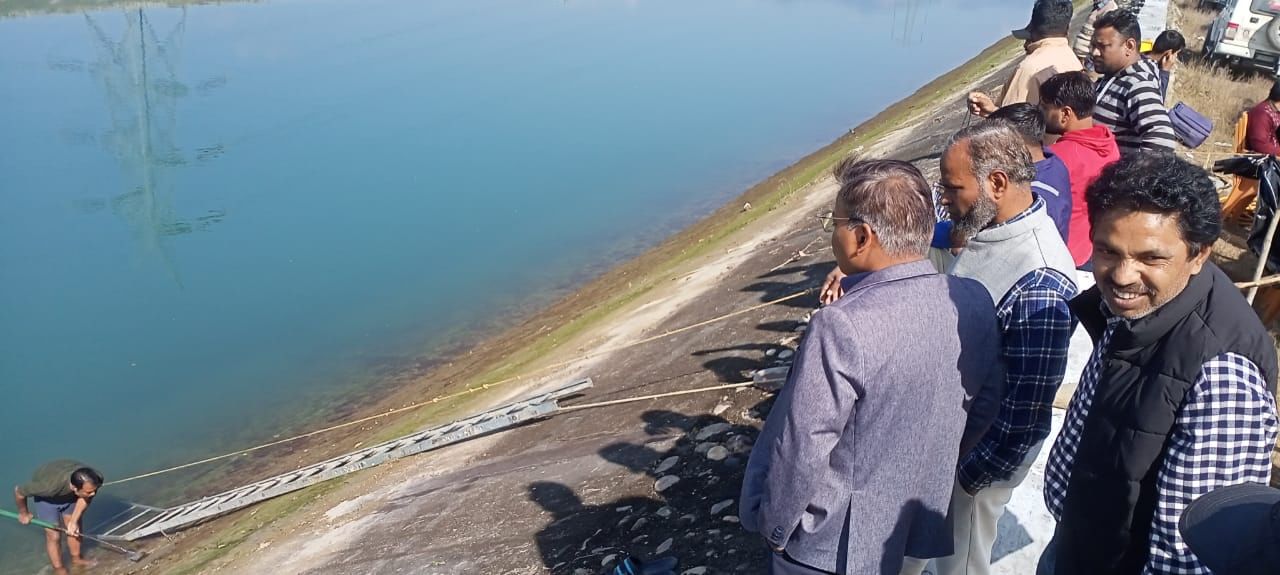
एनएचपीसी की पावर चैनल में सैलानीगोठ नई बस्ती के पास रिसाव होने के मामले में तीसरे दिन चैनल में क्रेक मिला है। एनएचपीसी के महाप्रबंधक राजिल व्यास टीम के साथ रिसाव की जांच में सुबह से ही जुटे रहे। महाप्रबंधक ने बताया कि क्रेक की तात्कालिक फिलिंग कर मरम्मत करा दी है। अब पानी छोड़कर जांच कराई जा रही है। इस बीच पावर हाउस में एक टरबाइन से बिजली उत्पादन भी जारी रहा। https://www.amarujala.com/uttarakhand/champawat/crack-found-in-power-channel-team-engaged-in-repair-tanakpur-news-c-243-1-shld1007-101967-2024-02-02 (02 Feb. 2024)
Maharashtra Govt gave early permissions for Rs 19K cr Adani PSPs Environmental ministry officials selectively interpreted the law to give preliminary approvals to three big (pump storage) hydropower projects planned by an Adani group company in ‘ecologically sensitive’ forests of the Western Ghats where such large-scale projects are prohibited, according to govt documents and expert assessments. Adani’s own environment evaluation warns of significant damage to forests during construction. The approvals open the path for two more Adani projects in the same region. https://article-14.com/post/how-modi-govt-gave-early-permissions-for-rs-19-000-cr-adani-energy-projects-in-india-s-oldest-forests-65c2f9af90fad (07 Feb. 2024)
Report Highlights of CERC’s draft tariff regulations Initiating the regulatory process for tariff determination for the next control period, apex regulator, Central Electricity Regulatory Commission (CERC), recently issued the draft tariff regulations for the period April 1, 2024, to March 31, 2029. These norms will apply to all thermal and hydropower generation projects and transmission lines regulated by the CERC.
A key highlight of the draft notification is the regulated return on equity (RoE) for thermal plants and run-of-the-river hydro plants, which remains unchanged at 15.5 per cent. However, the RoE for transmission assets has been proposed to be reduced from 15.5 per cent to 15 per cent. Meanwhile, for pumped hydro storage and run-of-the-river with pondage projects, the draft notification increased the RoE from 16.5 per cent to 17 per cent.
Additionally, thermal assets will receive a peak-period incentive income of 75 paise per kWh, compared to the previous rate of 65 paise per kWh. For now, CERC is seeking views from stakeholders regarding the proposed regulations, and the final regulations are expected to be ready by March 2024, upon hearing from the stakeholders. https://powerline.net.in/2024/02/05/roe-adjustments-key-highlights-of-cercs-draft-tariff-regulations/ (05 Feb. 2024)
DAMS
Kaleshwaram Project HC to govt: Can’t spare sitting judge for probe The Telangana high court has rejected the Congress govt’s request to allocate a sitting judge to probe the alleged irregularities in Kaleshwaram Lift Irrigation Scheme (KLIS) of the previous BRS govt. Now, the state govt has no option but to either order a probe by a retired judge or write to the Central Bureau of Investigation (CBI) to investigate the alleged corruption in the Rs 1 lakh crore irrigation project.
The HC said its hands were tied and turned down the state’s plea citing Supreme Court guidelines that no sitting judge be assigned to states for a judicial inquiry commission in view of huge pendency in courts.
– The state govt has currently pressed the state vigilance and enforcement wing to probe the sinking of piers of Medigadda and alleged inferior quality of work. The govt is planning to table the preliminary inquiry report by the vigilance wing in the assembly in the upcoming budget session. Apart from Medigadda, there were similar problems of leaks and design issues in Sundilla and Annaram barrages too. But the vigilance probe has been confined to Medigadda for now. The vigilance wing’s preliminary probe has hinted at lapses in execution of work by project contractor L&T and also irrigation officials, sources said. Both L&T and irrigation departments have been blaming each other. The department has reportedly served a notice on irrigation engineer-in-chief of Ramagundam, Venkateshwarlu, regarding various issues such as multiple completion certificates given to L&T, defect liability before completing the project etc. https://timesofindia.indiatimes.com/city/hyderabad/t-hc-to-govt-cant-spare-sitting-judge-for-kaleshwaram-probe/articleshow/107472276.cms (07 Feb. 2024)
No water but cost around Rs 18K cr annually Telangana has to shell out approximately Rs 18,000 crore annually to repay the loans taken to fund the Kaleshwaram project even as it is not getting any benefit from it since Oct 2023. The state government had set up a Special Purpose Vehicle (SPV) — Kaleshwaram Irrigation Project Corporation Limited (KIPCL) — which raised loans to the tune of Rs 87,449.15 crore from a consortium of banks and financial institutions. The loan amount, which includes the principal and interest, has to be repaid annually over the next 12 years as per the repayment schedule specified in the respective loan agreements. https://theprint.in/india/governance/a-white-elephant-no-water-from-kaleshwaram-but-project-costs-telangana-around-rs-18000-cr-annually/1951074/ (09 Feb. 2024)
Medigadda saga raises more doubts It is learnt that the (L&T) company wrote twice to the irrigation department, once in May, and again in June 2023, asking for formally concluding the O&M contract. But as was with other issues at Medigadda with respect to reports of structural damages since 2019, there was no movement on this front from the irrigation department, sources said. Asked if once the O&M responsibility already being mentioned in the original overall contract necessitated a separate contract, an irrigation engineer well-versed with the goings-on at the three Kaleshwaram barrages said if the irrigation department felt no additional contract was required for Medigadda, then the same logic should have been extended to Sundilla and Annaram barrages.
Incidentally, the irrigation department is learnt to have entered into O&M contracts with Navayuga Engineering Company Ltd, which built the Sundilla Barrage, and Afcons Infrastructure, which built the Annaram Barrage only in July of 2023. https://www.deccanchronicle.com/nation/in-other-news/medigadda-saga-raises-more-doubts-about-brss-intentions-881498 (08 Feb. 2024)
BRS govt ignored repeated warnings Inquiries revealed that as far back as November 2019, L&T informed the irrigation department of damage in the downstream apron and cement concrete blocks placed to act as flood force dissipators, among other damages, at Medigadda. The events that unfolded after the 2019 floods in Godavari and Pranahita not only wreaked havoc on Medigadda, but also left its upstream Sundilla and Annaram barrages tottering. While the Medigadda Barrage was built by L&T, the one at Sundilla was built by Navayuga Engineering Company Ltd., and the Annaram one by Afcons Infrastructure.
The construction company also made it clear on May 18, 2020, to the department that these damages were due to “the high shooting velocity” of water released from the barrage’s gates during the flood period, and asked the department for re-modelling studies, revised designs and drawings to bring the barrage back into a ‘safe condition’. Before the communication from L&T, following the 2019 events, engineers from the irrigation department and the design team from its Central Designs Organization that provided the engineering drawings for the construction of the barrage, along with specialists from Central Water and Power Research Station in Pune visited Medigadda in January 2020 to take stock of the damages and decided to take further action.
A follow-up meeting that also saw specialists from Telangana State Engineering Research Laboratories join irrigation, CWPRS, and L&T representatives, saw the CDO being told to re-conduct modelling studies with various options for reducing the shooting velocity of water. However, there was no further development in this regard.
Adding to the story of neglect is an internal department report by Prof. Rama Raju, a former irrigation engineer-in-chief, who, after visiting the barrage in April 2022, made it clear that because of the damages, the joints between the apron (the area where the released water first hits) and the foundation built on secant piles, has become vulnerable. Further, the department was asked to prepare an operation manual for all three barrages as they were built using the same designs provided by the Central Design Organization, run by the department. According to sources, no such manual was either prepared or if prepared, not passed on to the contractors. All of this was to prevent further damages to Medigadda and other barrages in the 2022-23 flood season.
As heavy floods unfolded in 2022 — though claimed as unprecedented by the BRS government — they proved fatal to Medigadda and revealed the true cost of the lackadaisical attitude or deliberate ignorance of loud and repeated warning bells by the Chandrashekar Rao-led government. After disaster hit Medigadda, it was again Prof. Rama Raju, at a meeting in the irrigation department on October 27, 2023, who declared that the barrage was designed to withstand a surface velocity of water of up to 6 metres per second. He also reportedly drove a nail into the much-flaunted design of the whole project, declaring that at multiple barrages on the river — Sundialla and Annaram — the rate of flow rose to 15-16 metres per second. The three flood seasons before the Medigadda disaster saw water speed reach 22 metres per second, something the barrage was not designed to cope with.
Expert sources in irrigation technicalities and design said that the factor of multiple barrages and releases from which, during floods, would drive the flow speed higher was something no one who claims expertise in planning and design of irrigation projects would ever agree to in the first place. The BRS government, soon after a portion of Medigadda sank, had claimed that L&T would be held responsible for the repairs and the cost of repairs, but the company, while promising to assist in these works, made it clear to the then government that it cannot be held liable for the same.
The L&T company is learnt to have written multiple times to the BRS government about the problems emerging at Medigadda since the 2019 floods, and the action that needed to be taken, but that their efforts failed as the irrigation department chose not to respond to the concerns, or seeking fresh designs to arrest the damage, and so on.
Although the BRS government tried to float a narrative that L&T would be responsible not just for the repairs but also would foot the cost of the repairs, facts point that this line adopted by BRS will not likely stand legal scrutiny as the company pointed out in multiple letters to the irrigation department of the goings-on and sought inputs but these never came, as well as making it clear that the department had also issued it a completion certificate with an effective date of June 29, 2020. It was reliably learnt that L&T, on various occasions, wrote to the department, including letters on May 18, 2020, May 17, 2023, and June 16, 2023, on these issues and that as a responsible contractor, it was willing to execute the works needed at a rate to be agreed upon. Sources said that the real problems at Medigadda, may not be those created or contributed to by L&T but design and design assumptions of the barrage by the irrigation department, inappropriate foundation designs, serious lapses in monitoring and maintenance, and not taking up of remedial measures since Chandrashekar Rao inaugurated the barrage in 2019. https://www.deccanchronicle.com/nation/politics/medigadda-fiasco-irrigation-minister-kcr-ignored-repeated-warnings-881416 (07 Feb. 2024)
Medigadda mess: Damages noticed in 2019 The sinking of the piers of the Medigadda barrage in Oct 2023 did not happen overnight. The damages were noticed in Nov 2019 itself, five months after inauguration of the Kaleshwaram Lift Irrigation Scheme (KLIS) in June 2019.
The contractor alerted the irrigation department about the displacement and settlement of CC blocks due to ‘shooting velocities’ (velocity of water released) in Nov 2019 and wrote a letter in May 2020 asking the govt to take the damages seriously due to safety reasons and get a proper study done. Officials of Central Water and Power Research Station (CPWRS), Pune, also confirmed the problems with the three barrages in Jan and Feb 2020.
The project contractor asked the irrigation department to give them revised designs and drawings to take up protective measures but it responded only in April-May 2022. The designs for Medigadda barrage – in focus after the sinking of its piers – and other barrages were prepared by the Central Design Organisation (CDO) of the state’s irrigation department. Model tests were conducted by Telangana State Engineering Research Laboratories (TSERL) after joint inspection by a team of senior irrigation department officials in Nov 2022.
In May 2023, L&T again reminded irrigation department that no solutions were provided for corrective measures. L&T had reportedly informed the govt that they were only an ‘item rate’ contractor where they execute works as per designs and drawings provided by the irrigation department. Sources said the problems arose due to the faulty design prepared by the irrigation department.
“As per the norms, the barrage should have been designed to handle around 22 metres per second velocity to the downstream, but it was designed for only six to eight metres per second. This led to the CC blocks and wearing coat getting washed away,” sources said.
L&T reportedly informed govt that ‘defect liability’ clause did not apply to them as the project was completed and handed over in 2020. The two-year defect liability period ended in Feb 2022.
Regular pre-monsoon and post-monsoon maintenance checks and works could not be conducted at barrage either by the contractor or the irrigation department as the barrage upstream remained filled with water ever since it became operational in June-July 2019. Tests cannot be carried out until the barrage is emptied.
Meanwhile, the irrigation department alleged that L&T did not respond to multiple letters since Nov 2019 or take up repair works. They said L&T did not remove the cofferdam after project completion and also that multiple completion certificates were given to L&T.
When contacted, an L&T spokesperson said: “We completely deny the allegations that we did not cooperate with the department. We have kept the govt informed about the damages right from the time it occurred in 2019. We have not received any response from govt on any of the issues raised till date. The additional amount was paid to us due to the additional works, which were not part of the scope of the work (awarded).” https://timesofindia.indiatimes.com/city/hyderabad/medigadda-mess-was-waiting-to-happen-damages-noticed-in-2019/articleshow/107396201.cms (04 Feb. 2024)
Gross dereliction of duties: V&E on Medigadda Bringing to light “the absolute dereliction of duties”, the V&E report submitted to the state government on Wednesday says that after the inauguration of the Medigadda barrage on June 19, 2019, there was not one instance of operation and maintenance exercise being carried out by the contracting agency or the department. The V&E report also observed that the Irrigation officials did not maintain any records in respect of operation and maintenance as per the Dam Safety Act, 2021 and failed to follow their own guidelines.
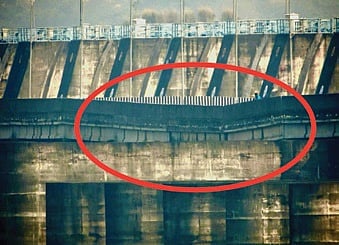
The V&E advised the government to establish an expert committee to determine the causes of failures, as the “examination of project designs, drawings, geological investigations and the structural integrity of all RCC elements is essential”. The V&E requested budgetary funds and the hiring of two engineers and two chartered accountants on contract basis to support further inquiry. https://www.newindianexpress.com/states/telangana/2024/Feb/09/gross-dereliction-of-duties-vigilance-on-medigadda (09 Feb. 2024)
‘Medigadda project exceeds it’s contract value by 133%’ The V&E wing report on Medigadda barrage works revealed that cost escalation had exceeded 133 per cent over the contract value. In initial agreement entered with L&T and PES joint venture, the contractual agreement value of Medigadda project was 1,849 crore, whereas final contractual value was Rs 4,321 crore. L&T-PES JV was the lowest bidder. The irrigation department entered into an agreement in 2016 with L&T-PES JV for a contract value of 1,849 crore.
The executive engineer, division No.1, Mahadevpur, issued a substantial construction completion certificate in Sept 2019. On request of L&T-PES JV in Oct 2020, the EE issued a ‘completion certificate’ in March 2021. But, the engineer-in-chief issued extension of agreement time up to March 2022. Further, the EE recommended two more bills for 280 crore.
V&E report further said: “There are several deviations from agreement conditions. Issuance of the substantial completion certificate to the agency done on Septmber 10, 2019, by declaring that the construction was completed in accordance with agreement conditions. There was issuance of the completion certificate to the agency again on March 15, 2021, when whole of the work was not completed.”
Releasing of performance securities to the tune of Rs 159 crore without considering the notices issued by the engineer-in-charge was also cited by the report. “As reported by the ENC, Kaleshwaram project, Ramagundam, the defect liability period commenced on Feb 29, 2020, for releasing the bank guarantees which contradicted the above completion certificates,” it added. https://timesofindia.indiatimes.com/city/hyderabad/medigadda-project-exceeds-its-contract-value-by-133/articleshow/107540241.cms (09 Feb. 2024)
Who built the barrage A V&E report submitted to the state government on Wednesday (Feb. 7) said that there are serious allegations that Block Nos 6, 7 and 8 were constructed by the sub-contracting agency and not by L&T. The V&E department will get detailed information by verifying the accounts and payment process.
– The V&E found that the Irrigation department failed to carry out the work as per the specified sequential manner. It observed as per the measurement books and other connected records pertaining to block-7, that the raft and secant piles were not laid in a specified sequential manner. Many deviation approvals were issued, which were not supported by any inspection notes of higher authorities, the report said.
– It said that the connection between cutoff walls and raft has to be cast scrupulously as per the approved drawings. After inspection of the site and observing the damages, it was evident that the connection between cutoff walls and raft might have not been cast as per the drawings and primary piles might have been damaged during the casting of secondary secant piles which might have caused undermining. As per the physical cracks observed from pier No 16 to 21 of block-7, there might have been shear failure of the raft due to the escape of raft supporting material, the report said. https://www.newindianexpress.com/states/telangana/2024/Feb/09/who-constructed-the-barrage (09 Feb. 2024)
Confusion over completion date deepens Citing reports published about the ongoing V&E probe in newspapers recently, the ENC (General) wrote that the ENC Ramagundam had informed the head office (ENC-General) on November 11, 2020, that the agency had completed all the work including additional components for the successful operation of the barrage and that the defect liability period had commenced from February 29, 2020, seeking the release of bank guarantees furnished by the agency.
The ENC (General) pointed out that the Executive Engineer (Irrigation Division No.1) had issued notice to the agency on the balance work components through a letter on February 17, 2021, on the other hand. Contrary to the notice served by EE (ID-1), the other EE and SE had issued a Completion Certificate to the agency stating that the agency had completed execution, inauguration and commissioning of the barrage as per the scope of the agreement on March 15, 2021. https://www.thehindu.com/news/national/telangana/confusion-over-medigadda-barrage-completion-date-deepens-in-ongoing-probe/article67814288.ece (05 Feb. 2024)
1 ENC sacked, another told to quit The state govt on Feb 7 2024 sacked engineer-in-chief (ENC), Ramagundam circle, K Venkateshwarlu and asked another ENC, irrigation department, C Muralidhar to resign immediately. “Both ENCs were reappointed after their retirement. Govt decided to discontinue their services. Muralidhar has been told to resign and another was dismissed from the post,” irrigation minister N Uttam Kumar Reddy said. Muralidhar had continued in government service for 10 years after his retirement, while Venkateshwarlu retired in March 2020, and was reappointed. https://timesofindia.indiatimes.com/city/hyderabad/kaleshwaram-lapses-1-enc-sacked-another-told-to-quit/articleshow/107510947.cms (08 Feb. 2024)
Heads roll over Engineer-in-chief C. Muralidhar was instructed to resign from his position, while Kaleshwaram project in-charge ENC C. Venkateswara Rao was terminated from service. The minister’s actions have sent shockwaves throughout the department, with speculation rife that more heads may roll in the near future. The government’s decision comes on the heels of a report from the Vigilance & Enforcement Wing, which probed the Medigadda disaster. https://www.deccanchronicle.com/nation/heads-roll-over-medigadda-fiasco-881427 (7 Feb 2024)
Polavaram Project Notice on coffer dam damage The high court on Feb 7 2024 issued notices to the state and Union governments in the PIL filed challenging the inaction of the state and Union governments in taking up restoration works of coffer dam in Polavaram project. The petition also sought to recover the damages from those responsible for damage to the coffer dam. https://timesofindia.indiatimes.com/city/vijayawada/high-court-notice-on-coffer-dam-damage-in-polavaram-project-vijayawada/articleshow/107509358.cms (08 Feb. 2024) Further hearing in the case was posted to four weeks. V Rameshchandra Varma, an advocate from Amalapuram, sought action against the officials who permitted the construction of the diaphragm wall before the completion of upper coffer dam. Appearing for the petitioner, advocate M Rama Rao said as per the AP Reorganisation Act, Polavaram is a national project. Lack of proper planning has resulted in damage to the diaphragm wall incurring a loss of Rs 700 crore to exchequer, he added. https://www.newindianexpress.com/states/andhra-pradesh/2024/Feb/08/file-counters-on-polavaram-status-andhra-pradesh-high-court (08 Feb. 2024)
Sardar Sarovar Project Narmada water destroying salt pans in LRK Agariyas (salt pan workers) cultivating salt in the Little Rann of Kutch bordering Halvad in Morbi district have alleged that Narmada water flowing from canals of Sardar Sarovar Narmada Nigam Limited (SSNNL) is flooding their salt pans, threatening to destroy salt that will soon be ready for harvest. On the floor of the Assembly, the state government conceded on Feb 6 2024 that some Narmada water does make its way to the Little Rann of Kutch and that it will take appropriate action. n a written reply to a question asked by Congress MLA Dinesh Thakor, Minister of State for Salt Industries, Jagdish Panchal, said: “Water is not directly flowed to from Narmada canal to Little Rann of Kutch. But in emergency, escapes of canal are operated and water is discharged in streams, rivulets and rivers. Some of these streams, rivulets and rivers tail into the Little Rann of Kutch hence, water some time does end up in Little Rann of Kutch.”
– Agariyas said their salt pans abutting Ajitgadh, Mangadh, Tikar, Jogad and Kidi villages, among others, have been flooded by Narmada water streaming down from SSNNL’s Maliya branch canal to Little Rann of Kutch through local rivers and rivulets. Suresh Raghavji, an Agariya from Tikar, said that Narmada water started flooding Little Rann of Kutch around a month ago. “The damage is on a very large scale,” he added.
– Harinesh Pandya, president of NGO Agariya Hit Rakshak Manch said the state will have to find a long-term solution. “Narmada dam project is worth Rs 90,000 crore and still, so much water is going waste in Surendranagar and Morbi even as farmers of Kutch are waiting for their share. This waste has to stop, not to protect the livelihood of agariyas and farmers but to also prevent damage that freshwater can do to desert ecology,” he added. Pandya said Narmada water has flooded an Little Rann of Kutch tract around 40 km long and seven km across Surendranagar and Morbi. “There is similar flooding at Santalpur in Patan and Rapar in Kutch but there have been no complaints, as the forest department. https://indianexpress.com/article/cities/ahmedabad/narmada-water-destroying-salt-pans-in-little-rann-of-kutch-say-agariyas-9149932/ (08 Feb. 2024)
GSHRC issues notices over LRK flooding The Gujarat State Human Rights Commission (GSHRC) has taken note of the flooding in the Little Rann of Kutch and issued notices to the district collectors of Surendranagar, Morbi and Kutch. This flooding of the arid region, usually dry for eight months, has raised concerns of environmental destruction and potential human rights violations of those living in the area. The notice was issued after a complaint by Harinesh Pandya
The notices, issued on Jan 23 this year, under Sections 12 and 18 of the State Human Rights Protection Rules 1993, call for replies from the district magistrates by Feb 12 on how Narmada water was allowed to flow into the Rann, causing widespread inundation for over two months. “Villagers near Kharagodha, Zinzuwada, Halvad Rann and Santalpur Rann report seeing the Rann transformed into a river. Water has gone 40km inside, submerging vast tracts of land,” said social activist Pankti Jog. https://timesofindia.indiatimes.com/city/ahmedabad/gshrc-notices-flooding-in-little-rann-of-kutch/articleshow/107308370.cms (01 Feb. 2024)
Huge allocation for SoU, none for compensation Presenting the state Budget last Friday (February 2 2024), Gujarat Finance Minister Kanubhai Desai announced allocation of Rs 475 Cr for tourism projects around statue of Unity, but none for the compensation for tribals whose land was acquired for the project. PM had promised jobs to be land losers while inaugurating the project in 2018, but that remains a distant dream. https://thefederal.com/category/states/west/gujarat/huge-allocation-for-statue-of-unity-tourism-in-gujarat-budget-none-for-compensation-109203 (07 Feb. 2024)
5,700 km long project canals yet to be constricted: CM “Narmada Canals with a cumulative length of 5,724.41 km are yet to be built. Although the main canal has been completed, 0.64 km of branch canals, 157.39 km of distributaries, 1,006.02 km of minor canals and 4,560.36 km of sub-minor canals are yet to be constructed as on December 31, 2023,” CM and irrigation minister Bhupendra Patel said in his written reply. In 2023, canals having cumulative length of 251.23 kilometres were constructed, including 0.29 km of branch canals, 14.29 km of distributaries, 64.82 km of minor canals and 171.83 km of sub-minor canals, he added. https://theprint.in/india/narmada-canals-with-cumulative-length-of-5700-km-yet-to-be-constricted-says-gujarat-cm/1959898/ (09 Feb. 2024)
INTERLINKING OF RIVERS
Ken-Betwa Linking नाहक का नदी जोड़ विकास के नाम पर की जाने वाली विनाश की ताजी जिद का नया कारनामा अब नदी-जोड़ है। इससे बुंदेलखंड से प्रवाहित केन नदी को बेतवा से जोड़ने के मंसूबे बांधे जाने लगे हैं, भले ही उससे आर्थिक, सामाजिक, पर्यावरण आदि के गहरे संकट क्यों ना खड़े हो जाएं। क्या है, नदी-जोड़ का यह तमाशा? https://www.spsmedia.in/land-forest-and-water/ken-betwa-link-project-river-linking-of-nahak/ (08 Feb. 2024)
INTERSTATE WATER DISPUTES
Cauvery Water Disputes CWC is better placed to decide on Mekedatu & Vennar projects: CWMA Cauvery Water Management Authority (CWMA) chairman S.K. Haldar on Feb 6 2024 defended the Authority’s decision to refer back the Vennar sub-basin improvement project along with the Mekedatu balancing reservoir project to the Central Water Commission (CWC) for further action. Mr. Haldar said that the move was based on a decision taken at one of the previous meetings of the Authority [held in Dec 2022] that “as a matter of principle,” both the Vennar and Mekedatu projects or any other project would be treated “on the same footing.” Besides, the CWC, with its multi-disciplinary machinery, was well equipped to examine any irrigation project from all angles. https://www.thehindu.com/news/national/tamil-nadu/cwc-is-better-placed-to-decide-on-mekedatu-and-vennar-projects-says-cwma-chairman/article67818713.ece (6 Feb 2024)
Members of Thamizhaga Cauvery Farmers Association set fire to a copy of the ‘meeting minutes’ of the CWMA outside the collectorate on Feb 5. The protest was against the proposal of CWMA members to examine the Mekedatu project and report to the Central Water Commission (CWC). https://www.newindianexpress.com/states/tamil-nadu/2024/Feb/06/tamil-nadu-cwma-minutes-copy-burned-over-mekedatu-project (05 Feb. 2024)
Water levels in Cauvery basin dams deplete alarmingly The state received 38% deficit north-east Monsoon showers from October to December (including 31% deficit rainfall in south interior Karnataka, 1% excess in Mysuru and 15% deficit in the Malnad area, 10% deficit rainfall in Kodagu, in the Cauvery basin). Karnataka received 25% deficit south-west monsoon rain from June to September. https://www.deccanherald.com/india/karnataka/water-levels-in-cauvery-basin-dams-deplete-alarmingly-2879432 (05 Feb. 2024)
Krishna Water Disputes AP to depute 75 Officers to KRMB This is to take care of the operation and maintenance of the 15 outlets from both Nagarjunasagar and Srisailam projects. The Union Jal Shakthi ministry called a meeting for Feb 16 in New Delhi, where both AP and TS have to submit their list of officers deputed for KRMB for this purpose. Each AE from the AP side will work for eight hours. Three AEs would cover 24 hours a day on a shift basis while one AE will be posted as stand-by.
Similarly, the Telangana govt is also set to depute an equal number of officials to take care of the 15 outlets. As per an understanding, a team of three officers – one each from AP, TS, and KRMB – will be on duty for a shift of eight hours for each outlet. Officers from the water resources department and APGenco being deputed to KRMB would work under the control of KRMB. However, their wages will be paid by the AP government, it is learnt.
https://www.deccanchronicle.com/nation/current-affairs/ap-to-depute-75-officers-to-krmb-for-irrigation-projects-881408 (07 Feb. 2024)
URBAN RIVERS
Pune Invasive species of plants & organisms dominate rivers Experts have suggested that multiple invasive species of organisms including fish and invertebrates introduced through aquarium trade have now completely challenged the native pool of organisms in the Mula-Mutha, Indrayani and Pavana rivers of the city. According to biologists, many organisms have been introduced through aquarium trade where snails and exotic fishes end up being introduced into the river due to multiple reasons (e.g. a simple flush down the toilet).
In a study published in 2021, researchers found these snails in abundance through the urbanised stretches of Mula-Mutha, Indrayani and Pavana rivers. Akash Bagade, a co-author in the paper, said, “This is mainly because the snails feed on organic waste, which are very nutrient-rich, present in the polluted waters. These invasive snail species multiply indefinitely and are more tolerant to pollution compared to native species.” The biologists suggested in the competition for food and space against these invasive species of organisms, the native species fail to thrive. “The only way to tackle this problem is by active removal of such organisms wherever possible combined with effective pollution management. It is hard to completely eliminate these species once introduced, but ways can be devised to control their numbers along with reintroduction strategies for native species,” said Padhye. https://timesofindia.indiatimes.com/city/pune/invasive-species-of-plants-organisms-dominate-rivers/articleshow/107411429.cms (05 Feb. 2024)
Mutha Mosquito menace grips Kharadi, Keshavnagar, Mundhwa In the residential areas of Kharadi, Keshavnagar, and Mundhwa, residents who invested in dream homes are grappling with an unexpected adversary – mosquitoes. The picturesque view from their high-rise balconies is overshadowed by the constant buzz of these tiny intruders, leaving residents frustrated and confined within their homes. The mosquito onslaught is attributed to the increased water table in the Mula-Mutha River, creating a breeding ground for swarms of mosquitoes. The water hyacinth along the riverbanks, from Mundhwa Bridge to Kharadi Village, has proliferated, exacerbating the mosquito problem.
While the PMC has initiated the removal of water hyacinth, the delayed action has left residents grappling with a mosquito infestation. The situation is particularly dire along the riverbed, impacting various establishments, including skyscrapers, IT park premises, schools, sports stadiums, old age homes, crematoriums, and the local villages. Despite investments in luxurious flats, residents find themselves unable to enjoy their balconies, and even the society gardens have become off limits for children. The cause of this mosquito menace traces back to ongoing projects in the Mula-Mutha riverbed, where a small dam and a water treatment plant are located. The slowing water flow due to these projects has led to water accumulation, providing an ideal environment for mosquitoes to breed. https://www.punekarnews.in/pune-mosquito-menace-grips-kharadi-keshavnagar-and-mundhwa-residents-demand-urgent-action/ (09 Feb. 2024)
Several videos have surfaced on social media capturing an unusual phenomenon – dubbed as ”mosquito tornado”, swirling over Pune’s Mutha river. The videos, captured in the Mundhwa, Keshavnagar, and Kharadi areas of the city, showcase a towering mass of mosquitoes taking over the skies. https://www.ndtv.com/video/news/news/swarm-of-mosquitoes-form-tornado-over-pune-river-760732 (11 Feb. 2024)
Indrayani Toxic foam covers surface of sacred river In recent months, concerns about pollution in the Indrayani River have been raised by citizens, prompting several discussions in government circles. However, concrete measures to address the issue were yet to materialize. Despite orders from various political leaders, the pollution levels seem to be escalating, evident in the visibly contaminated river. Citizens have frequently voiced their concerns, indicating the threat to thousands living along the banks of the river.
During the pilgrimage season, especially during events like Ashadi Ekadashi, lakhs of Warkaris gather in Alandi to take a holy dip in the Indrayani River. Unfortunately, the same water, considered sacred by pilgrims, has become a cause for waterborne diseases among both pilgrims and locals. The MPCB has also received several complaints and raised objections against numerous companies in the area. While legal actions have been initiated against some companies, the pollution levels have not significantly decreased.
In response to the worsening situation, Devendra Fadnavis has now issued direct orders for immediate action. Furthermore, he announced a substantial financial commitment of ₹5 crores for the establishment and improvement of facilities for approximately 500 students residing in the Warkari Shikshan Sanstha’s ‘Bankatswami Sadan.’ https://www.mypunepulse.com/alarming-sight-in-pune-toxic-foam-covers-surface-of-sacred-indrayani-river-in-alandi/ (11 Feb. 2024)
Mithi; Mumbai BMC invites tender for cleaning, beautification work The BMC has invited a tender for water quality improvement, beautification and flood relief mitigation of the Mithi River between Kurla and Mahim causeway. The work will be completed in 36 months excluding the monsoon, after the work order is issued. While the last date for submission of tender is February 22, 2024. The work on the other four parts is underway. This is the final part of the Mithi river cleaning project,” the official added. Meanwhile, in a civic budget speech, civic chief I S Chahal had mentioned the stage 3 project work on Mithi worth Rs 3,067 crore with 10 years of operation and maintenance.
The first time such a tender was invited was in October 2022, which was later scrapped. In October 2022, the tender invited was worth Rs 2,100 crore. BMC had planned to improve the water quality of Mithi River along with the beautification of the riverbank and flood mitigation in four stages. Under the third stage, BMC will divert the sewage network—which is currently discharging into the river—to the municipal sewage network. It also planned to develop an 8.5-km long promenade along the river with a cycle track. In this stage, BMC will develop and beautify the riverfront from Kurla CST to Mahim Creek. https://www.mid-day.com/mumbai/mumbai-news/article/mumbai-you-can-take-a-walk-around-mithi-in-four-years-23333836 (07 Feb. 2024)
Phase 3 tunnel excavation work starts Under Mithi river rejuvenation project, BMC has undertaken work of excavation of a 2.60 diameter tunnel from Bapat nalah, Safed bridge to Dharavi STP. 168 MLD polluted water goes from Bapat nalah to Safed bridge nalah to Mithi river. Now this water will be brought to the STP through tunnels and after treatment, water will be released in a creek near Mahim natural udyan.
According to BMC, a 6.70 km long tunnel is being constructed below 15 meters under the Mumbai Sewerage Project. This is the smallest tunnel of India whose width is 2.60 diameter and outside width is 3.20 meter. The work has been going on from October 01, 2021 and it will be over by September 30, 2025. As on today 3.56 km work out of 6.70 km has been finished. BMC has claimed that 64 percent work of tunnel is completed. The project is being constructed in 3 phases. First tunnel was completed on June 13, 2023 at Kurla Udyan. Second tunnelling work is completed on February 07, 2024. Now, third tunnelling work will begin soon. The total water carrying capacity of tunnel is 400 million litres. The tunnel has been planned to keeping in mind till the year 2051. https://www.freepressjournal.in/mumbai/mumbai-bmc-completes-phase-3-tunnel-excavation-in-mithi-river-rejuvenation-project (08 Feb. 2024)
RIVERS
SANDRP Blog Story of Godavari and Vaitarna’s Origin Parineeta Dandekar Most Indian languages have a saying which goes something like, “Do not go looking for a river’s origin or a Rishi’s lineage”. I thought this was because these stories become increasingly eclectic and frankly scandalizing as we trace them!
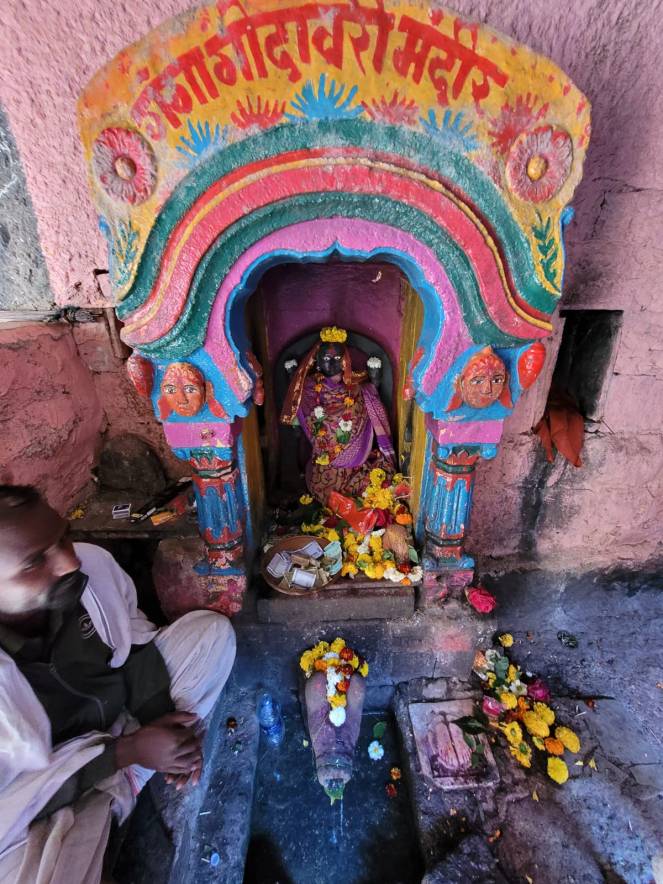
But while looking for Godavari’s origin, I realized that it can be much simpler than that (or much complicated). It is indeed very difficult to decide on a river’s source. https://sandrp.in/2024/02/12/%E0%A4%89%E0%A4%97%E0%A4%AE-story-of-godavari-and-vaitarnas-origin/ (12 Feb. 2024)
Study Nitrogen pollution to triple scarcity in river sub-basins worldwide A recent study, published on February 6, 2024 in Nature Communications highlighted that an additional 40 million sqkm of river basin area and three billion more people may face water scarcity in 2050 than previously estimated. A significant factor contributing to this crisis is nitrogen pollution in rivers, a concern that emerged in 2010 and is anticipated to persist until 2050, the findings showed. The global impact of future nitrogen pollution is alarming, with the number of sub-basins experiencing water scarcity expected to triple.
Comparing the clean-water scarcity assessment to the traditional water scarcity assessment based solely on quantity, the number of sub-basins facing severe scarcity doubled in 2010 and is projected to potentially triple by 2050. Water pollution, particularly nitrogen pollution, played a significant role in aggravating water scarcity in 2,000 sub-basins worldwide.
In 2010, 984 sub-basins were deemed water scarce based on quantity alone, while 2,517 sub-basins faced scarcity due to both quantity and quality. This number is anticipated to increase to 3,061 sub-basins in the worst-case scenario in 2050, as outlined in the study. This alarming projection indicates a more than doubling of the global area and population affected by severe water scarcity. When considering only water quantity, the study estimated that 45 per cent of the global population lived in areas with severe water scarcity in 2010. However, when water quality is factored in, this estimate rose to 80%. https://www.downtoearth.org.in/news/water/clean-water-crisis-nitrogen-pollution-to-triple-scarcity-in-river-sub-basins-worldwide-94356 (8 Feb 2024)
AP stares at water pollution, nitrate contamination A recent study conducted by a group of researchers from the IIT, Gandhinagar, and the Helmholtz Centre for Environmental Research, Germany, has found Andhra Pradesh accumulates a surplus of 14.75 crore kilograms of nitrogen and 20 crore kilograms of phosphorus annually. The study indicated a graywater equivalent of 378.8 billion cubic meters per year for nitrogen and phosphorus combined for these two major crops – rice and wheat. The weight of this environmental impact predominantly falls on Haryana, Punjab, Chhattisgarh, and Andhra Pradesh, which collectively bear 73.2% of the total graywater footprint.
The researchers’ team, Shekhar Sharan Goyal, Raviraj Dave, Rohini Kumar, and Udit Bhatia, said that while an insufficient nutrient level will diminish crop productivity, excessive amounts can lead to severe environmental issues such as groundwater contamination, soil acidification, and the release of greenhouse gases into the atmosphere. “We evaluated the surplus of nutrients due to the cumulative trade of rice and wheat in which Punjab, Haryana, Chhattisgarh, and Andhra Pradesh were the main retainers. Furthermore, we found that Tamil Nadu, Maharashtra, Uttar Pradesh, and Karnataka accounted for the introduction of 61 crore kilograms nitrogen per year and 20 crore kilograms of phosphorus nutrient load through interstate crop trading in producing states,” said Shekhar Sharan, Raviraj, Rohini, and Udit. https://timesofindia.indiatimes.com/city/visakhapatnam/ap-water-pollution-and-nitrate-contamination-study/articleshow/107245737.cms (30 Jan. 2024)
BRAHMAPUTRA $200 million loan to tackle flood and erosion risk The Govt of India and the Asian Development Bank (ADB) today signed a $200 million loan to strengthen flood and riverbank erosion risk management along the 650 kilometres (km) long main stem of the Brahmaputra river in Assam. The project builds on the ADB-financed Assam Integrated Flood and Riverbank Erosion Risk Management Investment Programme implemented during 2010–2020, and similar investments in Bangladesh.
– The project interventions include stabilising 60 km of riverbanks, installing 32 km of pro-siltation measures, and building 4 km of climate-resilient flood embankments in five high-priority districts (Dibrugarh, Goalpara, Kamrup Rural, Morigaon, and Tinsukia). These will result in securing living spaces, supporting livelihoods, creating employment opportunities, and ultimately enhancing the navigability of the river. It will advance the institutional capacity in flood forecasting and warning systems, modern surveys, erosion and embankment breach modeling, asset management, flood risk mapping, land use planning, and pilot nature-based solutions and the graduation approach.
– The Flood and River Erosion Management Agency of Assam will lead, manage, and coordinate the project activities. The Water Resources Department of the Government of Assam will implement the works and the Assam Agroforestry Development Board will use nature-based solutions. The Brahmaputra Board, the Assam State Disaster Management Authority, and the Assam Inland Water Transport Development Society will be partner agencies. https://www.pib.gov.in/PressReleseDetail.aspx?PRID=2004722 (09 Feb 2024)
Manipur Fuel leak raises concerns over water contamination Heavy fuel from a defunct power station flowed into streams on January 10 in Kangpokpi district. The stream was the only water source for the villagers of Kanto Sabal who used it for both agrarian and domestic activities. “First our water supply was cut off in May due to the ongoing ethnic conflict and now with the oil spill, the last resort for our 110 odd households has also been cut off,” said Lourembam. Since the villages are now experiencing water scarcity, the state administration has resorted to ad hoc measures to alleviate the problem, sending water tankers to fill two of the only three existing small public tanks, while a borewell is also being dug. The village is a “buffer zone in ongoing ethnic conflict and one of the tanks is located at the periphery and it is quite risky even to try to put water from there,” adds Laishram.
Meanwhile, Usham Sanatampak, a farmer from the neighbouring village of Khurkhul, whose three hectares of paddy field was used for diverting the spill, has submitted an application to the district commissioner asking for relief. “I understand that the government and the locals were compelled to act swiftly and divert the oil, but the government should also provide some sort of relief or compensation until I can use my field for agriculture,” he added. Ram Wangkheirakpam, Imphal-based environmental activist points out, “The oil spill not only reveals the state’s lack of preparedness to intervene scientifically in such incidents from the beginning but also serves as a medium to underscore the precarious lives that rural Manipur faces due to water scarcity.” https://india.mongabay.com/2024/02/heavy-fuel-leakage-in-kanto-sabal-brings-to-fore-the-precarious-rural-lives-in-manipur/ (06 Feb. 2024)
Yet another oil spill reported Violence-hit Manipur reported another oil spill incident from the Iril river at Dolaithabi Dam under Sagolmang Police Station in Imphal East District on Wednesday (Feb. 07), the first being the heavy fuel leakage from Leimakhong Power Station, Imphal West District on January 10. The villagers of Litanpokpi Mairelpat near Dolaithabi Dam came across an oil like substance floating on the Iril River which runs through the village in the morning. The black colour substance looks like charcoal powder. It has no odour, and looks soluble and non-toxic. However, experts said laboratory test will give the final confirmation. https://ukhrultimes.com/yet-another-oil-spill-reported-in-manipur/ (07 Feb. 2024)
An officer said the black substance appeared concentrated at a specific portion of the Iril river. Initial testing indicated all parameters were within permissible limits for untreated water. Further testing in an advanced laboratory, however, will be done, the PHED said. The authorities have asked villagers living near the dam and the affected river to stay vigilant and report any suspicious incident. Iril river’s catchment area comprises the hill ranges of Saikul in the neighbouring Kangpokpi district.
The oil leak from a heavy-fuel power plant in Leimakhong on January 10 had affected streams in Kanto Sabal and Sekmai villages in Imphal West district. The police are investigating the cause of the oil leak. The Governor had also formed a committee to look into how the leak happened. Publicly available information, however, had raised questions as to the location of the heavy-fuel power plant and its distance to the river, raising concerns over possible sabotage. https://www.ndtv.com/india-news/another-manipur-river-iril-turel-contaminated-with-oil-like-substance-dolaithabi-dam-gates-shut-5014569 (08 Feb. 2024)
Tamil Nadu WRD ignoring restoration of rivers: Residents The Water Resources Department (WRD) on Friday (Feb. 09) laid the foundation stone for construction of a check dam across Porkuni river in Ladapuram of the district. The structure, to be constructed at a cost of Rs 1.76 crore, is the latest in a series of new check dams being built across rivers in the district. The WRD had also laid the foundation for separate check dams across the Marudaiyaru in Vilamuthur and the Vedhanadhi in Anukkur on February 5 and February 7 respectively. The check dams will be constructed at a cost of Rs 3.09 crore and Rs 3.43 crore respectively.
However, pointing to the state the rivers are in due to “lack of maintenance”, locals criticise the WRD for instead prioritising construction of new check dams.Over the years, seemai karuvelam (Prosopis juliflora) growth has reduced the width of several rivers and obstructed water flow. Rivers even appear to have gone missing in some places due to the weed overgrowth, complain locals. Mentioning the branches of these rivers and small streams in need of restoration, they add that the situation is similar with all the 73 lakes under the WRD, where damaged canals and sluices awaiting repairs worsen the situation.
“Desilting works are pending and despite multiple requests for restoration of rivers, officials say they have no funds. What is the use of building check dams without properly restoring waterbodies,” S Ragavan, a resident, said. “Why not allocate funds to completely rehabilitate the rivers?” he added. Further, pointing to the dam under construction across the Marudaiyaru at a cost of Rs 149.4 crore in Kottarai for the past seven years, he asked, “Why is the WRD still delaying the project?” “WRD has planned a new check dam in Vilamathur for a short stretch at a high estimate. But there is already a regulator across the river in the village, 800 metres away from the proposed check dam. While a check dam is to store enough water and increase the groundwater level, we do not know how much water can be stored in an 800-metre area.” He also wondered whether the check dams required the allocated funds. https://www.newindianexpress.com/states/tamil-nadu/2024/Feb/10/tamil-nadu-wrd-focusing-on-check-dams-ignoring-restoration-of-rivers-say-perambalur-residents (10 Feb. 2024)
GANGA Varanasi Urban body folds up Tent City Varanasi Urban body has decided not to set up Tent City in the Ganga river bed this year after last year it was exposed that the project does not have environment clearance. PM inaugurated it in Jan 2023. Before this Rs. 11 crore Ganga canal project was washed away by the floods there. The administration is planning these projects against experts advise and after removing the only fresh water turtle sanctuarythere. https://www.thehindu.com/news/national/other-states/accused-of-flouting-norms-varanasi-urban-body-folds-up-tent-city-for-now/article67815491.ece (06 Feb. 2024)
वाराणसी: विरोध के बीच असि नदी की कराई गई नापी नेशनल ग्रीन ट्रिब्यूनल की सख्ती के बाद असि नदी के संरक्षण को लेकर नगर निगम व जिला प्रशासन सचेत हो गया है। सोमवार को स्थानीय लोगों के विरोध के बावजूद नदी की नापी कराई गई। कंचनपुर समेत आसपास के इलाके में नापी के दौरान अवैध निर्माण चिह्नित किया गया है। यदि अतिक्रमणकारियों ने इसे स्वतः नहीं हटाया तो नगर निगम प्रशासन ध्वस्त कराएगा। https://livevns.news/Top-Headlines/varanasi-illegal-encroachment-to-be-demolished-after/cid13503899.htm (05 Feb. 2024)
Prayagraj NGT panel to find sewage generation, treatment The NGT was hearing a matter regarding the availability of clean water during the 2024-25 Kumbh Mela in Prayagraj in the face of the discharge of sewage in the Ganga and Yamuna rivers. A bench of NGT Chairperson Justice Prakash Shrivastava said according to the NMCG’s report, the estimated sewage generation is 500 MLD against which the capacity of the existing STPs is 340 MLD, but their capacities are being expanded to treat up to 533 MLD of sewage. The bench took note of the submissions of the Pryagraj Mela Pradhikaran, which said treated water (of around 67.82 MLD) is being discharged in the Ganga and Yamuna, in compliance with the notified standards for the bathing of pilgrims.
It directed the committee to find the gap between the daily generation of sewage and its treatment in Prayagraj, along with the steps needed to bridge it. The report has to be submitted a week before the next date of hearing, the tribunal said. “NMCG and Kumbh Mela Adhikari will also file the report placing on record the existing water quality of the rivers Ganga and Yamuna and their efforts to maintain the water quality to be fit for bathing,” it said. The matter has been listed on March 13 for further proceedings. https://www.dailypioneer.com/2024/top-stories/kumbh-mela-2024-25–ngt-forms-panel-to-find-about-sewage-generation–treatment-in-ganga–yamuna.html (9 Feb. 2024)
Status of pollution in Ganga & Yamuna: About 402.67 MLD of industrial effluents by 3,186 grossly polluting industries (GPI) are discharged into rivers Ganga and Yamuna, Ashwini Kumar Choubey, minister of state for the MoEF, told the Lok Sabha. About 249.31 MLD is discharged into the Ganga and 153.36 MLD into the Yamuna.
An assessment of GPIs in seven states found 1,229 such industries in Ganga and 1,957 in Yamuna. These GPIs located in Uttar Pradesh, Uttarakhand, Bihar, Jharkhand, West Bengal, Delhi and Haryana have the potential to discharge into the two rivers and their tributaries.
Further, about 3,558.5 MLD of sewage is generated from 105 Ganga front towns located in five states — Uttarakhand, Uttar Pradesh, Bihar, Jharkhand and West Bengal. Sewage treatment plans with a capacity of 2,561.7 MLD, or about 72 per cent of the generation, have been set up, the minister said. https://www.downtoearth.org.in/news/governance/as-told-to-parliament-february-5-2024-over-400-mld-industrial-effluents-discharged-into-ganga-and-yamuna-daily-94296 (06 Feb. 2024)
Report Quiet flows the river of divine credentials Saryu, a tributary of the Ganga & flowing through Ayodhya, has mythological and ecological importance. It is believed that Lord Ram took ‘samadhi’ (deep meditation) at Saryu’s Guptar Ghat. The river originates from a cavity in the mountains of Uttarakhand and this point is known as Sarmul (‘Sar’ means river and ‘mool’ origin), located at Saudhar, in Bageshwar district’s Kapkot tehsil, where several streams of water flow through the mountains. Sarmul-Saudhar is about 65km away from Kailash Mansarovar. The river is believed to have originated from Mansorovar, at least 6,000 feet above the point of Saryu’s origin in Uttarakhand. Saryu means perennial river that flows forever. The river is called Saryu only in Ayodhya and after merging with Kali river from Nepal at Pithoragarh in Uttarakhand, it is called Sharda. In Lakhimpur, the river is called Ghaghra. The river finally drains into the Ganga in Saran district of Bihar.
– “In mythology, the river is mentioned as Vashishth-Putri (daughter of sage Vashishth) and ashram of Muni Vashishth is in Bageshwar,” said Lok Bharti’s organisational secretary, Brijendra Pal Singh. One mythological account says King Vaivasvat Manu, ancestor of Lord Ram, shot an arrow during a yajna and it hit the Mansarovar lake and a river originated from there and since arrow in Sanskrit is called ‘shar’, the river was named Sharyu, said Singh, adding, “The river traced the course of the arrow back to Ayodhya.
– In 2020, UP cabinet approved a proposal to rename Ghaghra as Saryu and it was sent to the Centre for consideration. The proposal was to rename Ghaghra as Saryu in its stretch from Chandapur Katauli village in Gonda’s Paska Sankoor area to Rewalganj in Bihar.
– In July-August 2022, state government took up restoration of smaller rivers in the state. Three tributaries of Saryu, Kuwano, Tedhi and Chhoti Saryu were also covered under the project. Professor Venkatesh Dutta, member of the river restoration committee of UP, said, “Saryu is comparatively a clean and healthy river, as it hardly has any industrial discharge. The river also has no major township along it.” https://timesofindia.indiatimes.com/india/quiet-flows-the-river-of-divine-credentials/articleshow/107441288.cms (06 Feb. 2024)
SANDRP Blog यमुना मंथन 06 फरवरी 2024: नदी संरक्षण, पुनरुत्थान के अपर्याप्त प्रयास 06 फरवरी 2024 को संसद में पेश संसदीय समिति रिपोर्ट में यमुना नदी को प्रभावित करने वाले कई मुद्दों की जमीनी स्थिति को विस्तार से प्रस्तुत किया गया है और इनके निराकरण के लिए सम्बंधित विभागों, सरकारों को कई सिफारिशें की हैं। मोटे तौर पर, रिपोर्ट में पाया गया है कि हरियाणा के हथिनी कुंड बैराज के नीचे की ओर यमुना नदी में अपर्याप्त प्रवाह है और इसे 10 क्यूमेक्स से बढ़ाकर 23 क्यूमेक्स करने की आवश्यकता है। रिपोर्ट में नदी सफाई परियोजनाओं की धीमी गति और यमुना नदी के पानी की गुणवत्ता में कोई महत्वपूर्ण सुधार नहीं होने पर भी प्रकाश डाला गया है ।
रिपोर्ट में जुलाई 2023 की बाढ़ के दौरान आईटीओ बैराज दिल्ली के संचालन में समन्वय की कमी, दिल्ली में बाढ़ क्षेत्र में अतिक्रमण और मलबा डंप करने पर चिंता जताई गई है। इसमें यह भी पाया गया है कि नदी क्षेत्र अत्यधिक भूजल दोहन और रेत खनन से नदी पर हरियाणा, उत्तर प्रदेश और दिल्ली में प्रतिकूल प्रभाव पड़ रहा है। गौरतलब है कि संसदीय समिति की रिपोर्ट में चर्चा किए गए अधिकांश मुद्दे सालों से सरकारों के संज्ञान में है फिर भी अब तक इनके समाधान के लिए कोई उल्लेखनीय कदम नहीं उठाए गए हैं। ऐसे में यह देखना होगा कि इस रिपोर्ट की सिफारिशों पर सम्बंधित सरकारें एवं विभाग कितनी सजगता और गंभीरता से कार्य करते हैं। https://shorturl.at/yDFJ4 (07 Feb. 2024)
Delhi Another railway bridge to link Delhi, Gzb A railway bridge commonly called Loha Pul, will be built near Pragati Power Station to facilitate train operations between Delhi and Ghaziabad via Anand Vihar. When completed, this would be the fourth railway bridge across the Yamuna. The length of the new bridge will be about 600 metres. Work has been allotted, Prem Shankar Jha, executive adviser to the divisional railway manager, said, “Construction work will start soon”. The target is to finish the bridge in the next one year. The construction will cost approximately Rs 218 crore. There is work going on to finish another bridge parallel to the Loha Pul. This bridge has missed several deadlines and is now in its last leg of construction work.
There are 25 bridges either operational or under construction in the 22 km stretch of the Yamuna in Delhi. Metro has four operational bridges and one under-construction structure. The RRTS has one bridge under construction. The railway has two operational structures and one under-construction bridge. Apart from this, there are 16 road bridges. The Old Yamuna Bridge on the Delhi-Shahdara section was constructed in 1867. The bridge has outlived its lifespan and the plan to construct a new bridge was approved in 1997-98 and the work was started in 2003. https://timesofindia.indiatimes.com/city/delhi/another-railway-bridge-to-link-delhi-gzb/articleshow/107473119.cms (07 Feb. 2024)
RIVERS BIODIVERSITY
Commentary India needs to step up its fight against invasive fishes Projects like river linking and dam constructions, ambitious in their aim to meet the country’s water needs, potentially pave the way for unwanted consequences. The connectivity among major rivers and reservoirs, while promising for water management, could end up in catastrophe by facilitating biological invasions. Similarly, the promotion of exotic fish species and restocking fish ponds with exotic fingerlings need reconsideration. Instead, a shift towards the promotion of native fish species could prove more beneficial. This not only enhances fish productivity but also contributes to conserving biodiversity and increasing nutritional diversity.

Addressing the complex challenge of aquatic invasion requires a combination of strategies. This includes the development of specialized tools, extensive research, investments in capacity building and grassroots training, as well as widespread awareness and education initiatives for the stakeholders and public. Achieving success in this attempt relies on collaborative efforts where harmonious and like-minded parties come together, pooling their resources and expertise. https://india.mongabay.com/2024/02/commentary-india-needs-to-step-up-its-fight-against-invasive-fishes/ (05 Feb. 2024)
FISH, FISHERIES, FISHERFOLKS
Maharashtra Fishermen go to NGT for scrapping of Jayakwadi floating solar plant The fishermen had earlier approached the Aurangabad bench of the Bombay high court with a similar plea, but the court had asked them to seek remedy from the Green Court first. Another leader of fishermen, Sambhaji Shingare, said that the Paithan MIDC police have started issuing prohibitory notices to fishermen to deter them from staging the agitation on February 7. “Many of us will meet our watery grave during ‘Jal Samadhi’ agitation. The government is anyway snatching our livelihood and therefore it should allow us to die without using any pressure tactic,” he said.
Fishermen have also refuted claims of the authorities that talks were held to discuss the apprehensions of locals about the ill-effects of the project. Forest department authorities said that the project is still in conceptual stage. “The project has not received an official go-ahead from the forest department. Only a preliminary survey was allowed to assess the depth of dam water,” a senior official said. Fishermen claimed that a station, as part of the floating solar power plant, is being set up at Mauje Katpur in Paithan taluka of Chhatrapati Sambhajinagar district and a feasibility survey is also slated to commence soon. https://timesofindia.indiatimes.com/city/aurangabad/fishermen-knock-on-ngt-doors-for-scrapping-of-jayakwadi-plant/articleshow/107444111.cms (06 Feb. 2024)
Fisherfolks from Ahmednagar and Chhatrapati Sambhajinagar on Feb 7 gathered in large numbers to protest against the construction of the floating solar project at Jayakwadi Dam. https://www.latestly.com/socially/india/news/floating-solar-project-at-jayakwadi-dam-fisherfolks-from-ahmednagar-and-chhatrapati-sambhajinagar-hold-protests-against-the-construction-of-proposed-solar-project-in-maharashtras-ahmednagar-watch-5743229.html (7 Feb 2024)
Meghalaya Preserving aquatic treasures: A vital imperative The initiatives undertaken by the State’s Fisheries Department resulted in identifying and proclaiming over 70 fish sanctuaries over the years. However, while the declaration of sanctuaries is a relatively straightforward task, the most pivotal and challenging aspect is in consistently and effectively maintaining these sanctuaries. This entails a multifaceted approach that integrates scientific rigour, community involvement, and adaptive management strategies ranging from regular monitoring of water quality, habitat conditions, and fish populations to the enforcement of sustainable fishing practices and the prevention of illegal activities within these designated areas to ensure that these sanctuaries fulfil their intended purpose of safeguarding aquatic ecosystems and sustaining the diverse array of fish species within them.
Additionally, effective sanctuary management empowers communities to transform them into appealing tourist destinations, serving as a consistent source of revenue for the local community. Complexities arise from the dynamic nature of aquatic ecosystems, where external factors such as climate change, pollution, and habitat degradation pose continuous challenges. Therefore, the Fisheries Department, in collaboration with environmental agencies and local communities, must institute robust management plans. These plans should not only address immediate concerns but also incorporate adaptive strategies that respond to evolving environmental conditions and emerging threats as discussed above. https://theshillongtimes.com/2024/02/09/preserving-meghalayas-aquatic-treasures-a-vital-imperative/ (09 Feb. 2024)
Manipur ‘Will remove Loktak Lake from Montreux record’ Loktak Development Authority (LDA) chairman Asnikumar Moirangthem has assured to work for the welfare of fish workers of Loktak while also committing to remove Loktak from the Montreux record. He made the statement during the International Day of Wetland observed by the All Loktak Areas Fishers Union Manipur (ALLAFUM) and Champu Khangpok Floating Village Welfare Committee at the Champu Khangpok Floating Elementary School on February 2. Montreux Record is a register of wetland sites on the Ramsar list that are threatened by technological developments, pollution, or human interference. It is worth noting that this year saw the participation of Loktak Development Authority (LDA) and the Bishnupur District Administration. https://www.ifp.co.in/manipur/will-remove-loktak-lake-from-montreux-record (04 Feb. 2024)
Andhra Pradesh A catch in aquaculture success story There is water everywhere, as far as the eye can see — in the fields, in the sea, in the canals and in the ponds. Yet, people here, at Antarvedi of Dr. B.R. Ambedkar Konaseema district, depend on tankers for drinking water. The region is lush with greenery, but here and there, the sight of dying coconut and palm trees, both inland and on the coast, is a warning sign. Conversations with people living in the composite districts of Krishna, East Godavari, West Godavari in Andhra Pradesh, reveal that the groundwater is contaminated with harmful chemicals, leading to skin allergies and loss of agricultural crops. The reason for this ill-health, of both land and locals, is high aquacultural activity. https://www.thehindu.com/news/national/andhra-pradesh/a-catch-in-aps-aquaculture-success-story/article67776563.ece (26 Jan. 2024)
UN Report: Small-scale fishers and fish workers are still often marginalized or ignored by governments, says Michael Fakhri, Special Rapporteur on the right to food. Small-scale fishers and fish workers are still often marginalized or ignored by governments, international organizations and businesses when environmental and commercial plans are devised & implemented. https://www.icsf.net/newss/world-news-small-scale-fishers-and-fish-workers-are-still-often-marginalized-or-ignored-by-governments-says-michael-fakhri-special-rapporteur-on-the-right-to-food/
SAND MINING
Andhra Pradesh Sand mining turns Krishna a death trap A stretch of Krishna river at Yanamalakuduru on city outskirts has become a death trap. Altogether, 11 students died at this particular place within last one year. Illegal sand mining is allegedly claiming the lives of youth who venture into the river for swimming. Sand mining is rampant in these areas. Miners are using earth movers and digging deep holes on the riverbed to excavate sand. Failing to asses the depth of the water, youth venture into the river and get drowned. Five school students residing at Darsipeta area drowned in the river on December 16,2023 and within fifty days three intermediate students drowned at the same spot on January 28,2024. Parents of the deceased along with Left parties staged a protest demanding action against illegal sand mining. https://timesofindia.indiatimes.com/city/vijayawada/sand-mining-turns-river-stretch-a-death-trap/articleshow/107443219.cms (06 Feb. 2024)
Rajasthan BJP worker hurt in sand mining mafia attack in Bhilwara A BJP worker identified as Raju Daroga sustained serious injuries in an alleged attack by sand mining mafia in Suras village in Mandal police station area in Bhilwara district on Saturday (Feb. 03). The assailants, riding on a motorcycle, reportedly fired upon Daroga around 1:30pm from a distance of 10 meters, leaving him critically wounded. The bullet struck Daroga directly between the nose and eyes, lodging itself in the cervical spine. Nearby field workers rushed to the scene upon hearing the gunfire. They swiftly transported Daroga to Bhilwara hospital, from where he was subsequently referred to Udaipur for further medical attention. This incident follows another shooting just ten days prior, when an e-mitra operator was targeted at Haripura Tiraha. https://timesofindia.indiatimes.com/city/jaipur/bjp-worker-hurt-in-sand-mining-mafia-attack-in-bhilwara/articleshow/107395053.cms (04 Feb. 2024)
Odisha No transportation of sand between 7 am and 9 pm: HC The ban was necessary for the safety of school going children and general public, it ruled. The petitioner Prasanta Kumar Das had sought intervention against illegal sand mining in mechanised manner on the river bed of Kathajodi near Cuttack. The authorities had allowed mechanised mining of sand by use of excavators on the basis of provision in serial 19 of the guideline, it was alleged.
The bench clarified that granting of permission for mechanised extraction of sand in a river bed to a lessee shall be subject to environmental clearance from the State Environmental Impact Assessment Authority (SEIAA) keeping in view the condition of river bed where manual extraction is not possible, Dalai said. The court also emphasised on the need for preservation of sand for future generation. https://www.newindianexpress.com/states/odisha/2024/Feb/07/no-transportation-of-sand-between-7-am-and-9-pm-orissa-high-court (07 Feb. 2024)
High Court Bans Quarrying By Using Machines Orissa High Court on Feb 6 imposed a ban on sand quarrying on riverbed by using machines and laid down several restrictions on the operation. The High Court made it clear that lifting of sand cannot be done using machines and said the order should be strictly enforced from Feb 7. Environmental clearance will have to be obtained in order to undertake quarrying of sand with the help of machines.
The Court specified that sand-laden vehicles will not be allowed to ply between 7 am and 9 pm. Stringent action will be taken against people found violating the prescribed norms while quarrying sand in Odisha. The HC issued the order while hearing of a petition filed against sand mining seeking the court’s intervention. It sought a ban on quarrying of sand in order to prevent pollution and loss of revenue.
The HC put a stay on the new guidelines issued on Dec 21, 2023, while hearing a PIL filed by social activist Prasanta Kumar Das for intervention against mechanised illegal sand mining on the bed of Kathajodi river near Cuttack. The High Court had on Nov 29, 2023, warned that it would initiate criminal proceedings against officials if they fail to stop facilitating proliferation of excess mining of sand by using excavators on Kathajodi river bed within a fortnight. https://odishabytes.com/sand-mining-in-odisha-high-court-bans-quarrying-by-using-machines/ (6 Feb. 2024)
HC stays govt’s guidelines for sand quarrying The division bench of Acting Chief Justice BR Sarangi and Justice MS Raman issued the stay order after the petitioner filed an affidavit stating notification of the guidelines by the Steel and Mines department on the same day had led to resumption of use of excavators for quarrying of sand on the river bed.
On Nov 29, 2023, the court had warned it would initiate criminal proceedings against officials if they do not stop facilitating proliferation of excess mining of sand by using excavators on Kathajodi river bed within a fortnight. Informing about compliance of the order, advocate general AK Parija had stated before the court on Dec 21 that 14 leases have been suspended by issuing show cause notices. Petitioner counsel SK Dalai pointed out that mining officer (Cuttack) had on the basis of the new regulation lifted suspension on 14 leases and allowed the lessees to use of excavators for mining of sand from the Kathajodi river bed. Taking note of it, the bench fixed Feb 1 for further consideration of the matter and stayed operation of the guidelines till then. The mining officer had allowed mechanised mining of sand on Kathajodi river on the basis of the section in the guidelines which prescribed standard environmental condition for sand mining, the petitioner alleged. https://www.newindianexpress.com/states/odisha/2024/Jan/11/hc-stays-govts-guidelines-for-sand-quarrying-2649930.html ; https://timesofindia.indiatimes.com/city/cuttack/orissa-hc-stays-government-guidelines-on-sand-mining/articleshow/106714049.cms (11 Jan. 2024)
‘False affidavit’: HC orders action against Cuttack collector The Orissa high court on Dec 2, 2023 termed the affidavit filed by former Cuttack Collector Bhabani Shankar Chayani on behalf of the State in the matter of alleged illegal sand mining as “false and frivolous”. “It is brought to our notice by the Bar that the situation and the ground reality are so alarming that the Cuttack city is filled up with pollution. If the affidavit by the then Collector (Chayani) – and the documents are examined, it would be made clear that a false and frivolous affidavit has been filed by the then Collector, Cuttack,” a bench of the acting chief justice BR Sarangi & justice Murahari Raman observed.
“Since such a false affidavit has been filed by such a responsible officer without visualising the ground reality, the court takes a very serious view of the matter. Therefore, criminal proceedings should be initiated against such persons, which would be a lesson for others,” the high court said in its order.
The affidavit by the IAS officer came after petitioner Prasanta Das filed a PIL alleging that due to illegal sand mining on the riverbed of Kathajodi, not only water pollution and air pollution are caused but also such activities of mining and transportation of sand cause health hazards. The petitioner also contended that the sand mining was being done in a mechanised manner, that violated the guidelines issued by the dept of revenue & disaster management. https://www.hindustantimes.com/cities/others/false-affidavit-on-sand-mining-orissa-hc-orders-action-against-chayani-101701588520344.html (03 Dec. 2023)
Meghalaya Rampant quarrying in Laitkroh threatens to dry up reservoir While the govt has publicly stated that it will create 100 water reservoirs across the state and would spend Rs 400 crore in for the purpose in next 3 years, the existing ones are slowly drying up due to rampant quarrying. One such reservoir called the Wahniangleng in the turnoff towards 12 Mer in Mylliem, which falls under Sohra constituency, is now under serious threat of going dry. The reservoir is fed by a catchment above which is accessible from Laitkroh village under Mawphlang constituency and is about 30 km from Shillong. It is important because it feeds the Greater Shillong Water Supply Scheme that feeds the whole of Shillong. The massive laying of pipes under the Jal Jeevan Mission would be self-defeating if the catchments and reservoirs dry up.
-In recent times a massive stone quarry has come up and the miners are blasting the mountain with dynamite which echo many miles away. It is learnt that the quarry is leased to a private person who supplies boulders to Bangladesh. Truckloads of boulders are transported to Bangladesh on a daily basis. Residents claim that the rivers that feed the Wahniangleng reservoir are already drying up. The reservoir actually feeds the Greater Shillong Water Supply System which in turn is the main provider of tap water to every household in Shillong.Meanwhile the people of Wahniangleng rued the fact that while the government has recently stated that it would create 100 water reservoirs and would spend Rs 400 crore in the next three years, the same government is unable to conserve even the existing natural reservoirs. https://theshillongtimes.com/2024/02/03/rampant-quarrying-in-laitkroh-threatens-to-dry-up-reservoir/ (03 Feb. 2024)
Telangana Govt to bring new sand policy soon Stating that the present sand policy in Telangana has become a scourge of corruption CM A. Revanth Reddy has announced that a new sand policy would be unveiled with the interests of the consumers in mind apart from generating revenue for the government. He asked the officials to study the sand policies adopted by Andhra Pradesh, Tamil Nadu, Karnataka and other states in the country. Revealing some information, the CM said that surprise inspections were already conducted in Nizamabad and Warangal with the transport department on February 3. During the inspections 83 sand lorries were checked and 22 lorries were found to be unauthorised. Four to five lorries were found transporting sand with the same permit and same number.
Mr. Reddy said the surprise inspection revealed 25% of the sand was being moved illegally and all these irregularities were taking place with the epicentre being Telangana State Mineral Development Corporation (TSMDC). Expressing his anger over the irregularities in sand quarrying and transportation, he directed the officials that they should be stopped within 48 hours and ordered the deployment of Vigilance and ACB teams to end the illegal mining and sales. “No one responsible should go scot-free and strict action should be initiated against those who are involved in illegal sand trade.” The CM also suggested using geo-tagging and GPRS to prevent illegal granite and mineral mining and smuggling. He also sought a detailed report on the pending cases related to granite as well as other quarries and the status of the cases before the agencies. https://www.thehindu.com/news/national/telangana/new-sand-policy-soon-says-revanth-reddy-as-25-of-sand-mined-illegally/article67828068.ece (09 Feb. 2024)
Madhya Pradesh Ruckus erupts in House over illegal sand mining in Gwalior Congress MLA from Dabra assembly seat Suresh Raje on Friday (Feb. 09) alleged that illegal sand mining activities are going on a large scale. He claimed that he has complained to local administration repeatedly and the only action that follows is confiscation of a tractor-trolley or a boat engaged in mining. Raje alleged that the govt’s reply said that Lidaurakhan mines are legally operational. “But in reality no one goes to that mine. Sand is not being picked-up from here. Instead it is being illegally mined from other places where there is no lease, no serial number. Apart from this, the minister’s reply said that Gajapur mine is legal. Again, no sand is being picked up from Gajapur.”
Raje claimed that it is not just a matter of illegal sand mining and loss of govt royalty. Heavy trucks that carry the illegally mines sand travels on roads that are constructed with crores of rupees. And roads are also being damaged by illegal mining activities. “Be it Puri road, Raipur road, Bhirmarana road, Devgarh Bharkari road or the Semiri-Sukhilyari road. Illegal mining activities should be stopped immediately,” he said. MoS Ahirwar claimed that in Gwalior 45 complaints were received and 28 cases were registered. He also explained that the state govt is installing 40 electronic barriers and cameras will be mounted to record every detail of illegal sand mining. \https://timesofindia.indiatimes.com/city/bhopal/opposition-creates-ruckus-in-house-over-illegal-sand-mining-in-gwalior/articleshow/107571819.cms (10 Feb. 2024)
Bihar ED attaches properties of MLC under PMLA Enforcement Directorate action on Tuesday (Feb. 06) attached MLC’s properties worth ₹26 crore belonging to a JD (U) party MLC Rada Charan Sah — popularly known as Radha Charan Seth under the Prevention of Money Laundering Act (PMLA) in an alleged sand mining scam. Mr. Seth, 67, has been in ED custody since September 2023. It was said that he had been allegedly involved in illegal sand mining in the State and had minted huge money.
“The illegal sale of sand and its mining were mainly controlled by a syndicate and Radha Charan Sah, being a syndicate member, generated huge proceeds of crime and these were layered and laundered with the assistance of his son Kanhaiya Sah”, the ED said in a statement. The agency was said to have accused Mr. Sah of using the proceeds of crime for the acquisition and development of a resort in Manali and construction of a school in Ghaziabad. https://www.thehindu.com/news/national/other-states/ed-attaches-properties-worth-crores-of-rupees-of-bihar-jdu-mlc-under-pmla/article67818053.ece (06 Feb. 2024)
After West Bengal, Jharkhand and Chhattisgarh, the Enforcement Directorate (ED) has turned its attention towards the mining mafia in Bihar, where large syndicates are allegedly involved in illegal sand mining, causing environmental degradation and huge losses to the state exchequer, people familiar with the developments said. The financial crimes probe agency last week attached properties belonging to several accused persons including a politician worth over ₹50 crore in two money laundering cases pertaining to illegal sand mining and sale. In the past eight months alone, ED has established that illegal sand mining has caused revenue loss worth ₹400 crore to the Bihar government.
“Broadsons has been involved in illegal sand mining and selling of sand without using the departmental prepaid transportation e-challan, issued by the mining authority, Bihar and has caused huge revenue loss to the extent of ₹161.15 crore to the government exchequer,” ED said in a statement on February 6 after attaching properties worth ₹26.19 croire belonging to Sah. ED’s probe revealed that the sale and mining of sand was mainly controlled by the syndicate, of which Sah is a member, and huge proceeds of crime were generated.
The second case pertains to a company, Aditya Multicom Private Limited, and its directors Jag Narayan Singh and Satish Kumar Singh. This money laundering case was registered by ED based on 24 FIRs filed by the Bihar Police. “It is alleged that Aditya Multicom has been involved in illegal sand mining and illegal sale of sand and has caused revenue loss to the extent of ₹249.63 crores (approx.) to the (Bihar) government exchequer,” ED said in a separate statement on February 6. Asserting that there are more instances of illegal mining cases in various states, the second officer cited above, who also requested anonymity, said “these syndicates have muscle and power”.
“They support the companies, which are front, to give security deposits in their bidding processes, etc. and get back their investments with windfall profits. The funds generated through illegal mining are either returned to the syndicates in cash or laundered by infusing into the dummy accounts of labourers and employees of the company. Then comes the expertise of chartered accountants, who help both companies and syndicates in managing their ill-gotten wealth,” this officer added. https://www.hindustantimes.com/india-news/after-bengal-jharkhand-chhattisgarh-ed-scanner-on-illegal-mining-in-bihar-101707661081701.html (11 Feb. 2024)
Punjab Sand prices shoot up as over 80% mines shut Of total 125 identified sand mines in Punjab, only 21 (15%) are functional, leading to shortage of the mineral in the state forcing the people to delay construction or buy the core building material at much higher rates. A majority of mines have been shut as the environmental clearance by the SEAA for their operations has lapsed on December 31 last year, people familiar with the development said. “It has been over a month that most of the mines which have abundant mineral (sand) have been closed as the environmental clearance has lapsed,” said an official of state water resources department.
Secretary, mines and geology, Gurkirat Kirpal Singh said: “We are hopeful to get environment clearances for about 40 excavation sites by the SEAA within next 10 days.” “It’s a time-consuming process to get (environment) clearance for a sand mine, which takes about one year. The (mining) department is trying to get provisional clearances at the earliest to run the mines,” he added. The AAP government had changed the system of environment clearances as during the previous governments, the contractors used to take the permissions in their name but now the department takes clearances and hands it over to the contractors. https://www.hindustantimes.com/cities/chandigarh-news/environmental-clearance-sand-prices-shoot-up-as-over-80-mines-shut-in-punjab-101706901127720.html (03 Feb. 2024)
Haryana यमुना नदी को निगलता माइनिंग माफिया संसदीय स्थायी समिति ने अपनी रिपोर्ट में हरियाणा के उन पांच जिलों में, जहां से होकर यमुना बहती है, पांच वर्षों में अवैध खनन के कुल 3,792 मामलों का चौंका देने वाला खुलासा किया गया है. यमुनानगर जिला, जिसमें नदी का लगभग 100 किमी का क्षेत्र है, चौंकाने वाले 2,599 मामलों के साथ सूची में पहले नंबर पर है, इसके बाद पांच वर्षों में पलवल में 559, सोनीपत में 281, करनाल में 202 और पानीपत में 151 मामले सामने आए हैं. जुर्माना लगाए जाने और वसूलने के आंकड़े से भी इस समस्या की गंभीरता स्पष्ट होती है. अकेले यमुनानगर में 21.22 करोड़ रुपये की सबसे अधिक वसूली हुई है. https://www.gaonsavera.com/yamuna-river-parliamentary-committee-illegal-mining-a-big-threat-to-yamuna/ (08 Feb. 2024)
Despite ban, illegal mining continues on Yamuna There has been a rise in the practice of illegal mining on the Yamuna riverbed here despite a ban imposed in many parts of the district. According to sources in the district administration, the prevalent unauthorised mining could be attributed to the alleged weak surveillance and monitoring system ensured by the department concerned. With several incidents being reported each month, a majority of these go unnoticed due to a poor vigil or the connections of the sand mafia, it is alleged.
Last year, the police had registered a total of 11 cases and arrested seven persons, while this year as many as four cases have been registered since January 1. However, sources claim that the actual number of cases of illegal mining in the past one year here could be at least 100, as only a few cases have been reported or registered. Besides, people involved in such unauthorised practices also often indulge in violent ways of resistance. Last week, two cops were attacked by a mob after a police team had attempted to impound a tractor trailer carrying illegally mined sand near Bamnikhera village. https://www.tribuneindia.com/news/haryana/despite-ban-illegal-mining-continues-on-yamuna-riverbed-589778 (12 Feb. 2024)
WETLANDS, LAKES, WATER BODIES
West Bengal NGT pulls up CS for failing to report on Santragachi Jheel pollution The NGT has asked the chief secretary of West Bengal to submit a fresh report on the current status of pollution control in the Santragachi Jheel, rebuking him for failing to provide “proper information” and in effect trashing an earlier state government report that included a plan to build an ecotourism hub around the lake. The fresh order, issued two days before a hearing scheduled on February 5, set a two-week deadline for submission of the report.
Santragachi Jheel in Howrah is a waterbody spread across 32 acres that is nationally known for attracting thousands of migratory birds, including rare varieties, every winter. The tribunal had ordered the setting up of a STP plant to stop contamination of the lake from nearby habitation in 2017. The order was issued in response to a petition filed by environmentalist Subhas Datta. But prolonged inaction over the issue by both state government agencies and the railways has prompted a fresh order from the bench of Justice B. Amit Sthalekar and expert member Arun Kumar Verma. The general manager of Southeast Railway has also been asked to inform in the next hearing, scheduled for March 18, about the status of land that the railways is scheduled to hand over to the state for setting up the STP to address the waterbody’s pollution.
The bench observed that “Chief Secretary has …completely failed in getting proper information from the Departments under him as also from the Railways” regarding the issue that has been dragging since NGT first passed an order in 2017. Status Report dated 03.02.2024 … is taken on record” and added that it “expected the affidavit of the Chief Secretary dated 03.02.2024 to give an updated status report as existing on the filing of the … affidavit”. The bench cited several examples to underline how the February 3 report was dated and directed the chief secretary “to file a fresh affidavit within two weeks…”. https://www.telegraphindia.com/my-kolkata/news/national-green-tribunal-bins-west-bengal-governments-proposal-of-making-santragachi-jheel-in-howrah-an-ecotourism-hub/cid/1999364 (09 Feb. 2024)
Tamil Nadu NGT seeks report on encroachments of waterbodies, wetlands NGT has sought a report from the Tamil Nadu chief secretary on district-wise encroachments on waterbodies, wetlands and river poramboke land. Following news paper reports concerning the same, Justices Pushpa Satyanarayan and Satyagopal Korlapati of the tribunal took up the matter suo motu. The tribunal has also sought a list of encroachments in the form of cultivation, temporary or permanent habitations and commercial buildings and a plan of action to evict them. It has sought a report on the number of waterbodies in Chennai, Tiruvallur, Chengalpattu and Kanchipuram that have been affected.
The NGT has sought details on extent of wetlands (natural and manmade) and rivers that have been allotted to government departments for the construction of commercial and residential buildings. The tribunal has directed the government to provide information on the extent of water storage capacity as per tank records and how much storage capacity is lost due to shrinkage of waterbodies. It has also sought details on schemes launched since 2015 for increasing the water-storing capacity in Chennai and its neighbourhood by new reservoirs, in-stream reservoirs and deepening of waterbodies.
The NGT also observed that the agencies responsible for protection and maintenance of the waterbodies and flood plains as well as those responsible for urban planning are found wanting. It also stated that the neglect and damage to natural resources continues unabated. “Shrinking of waterbodies, disappearance and disruption of inlet and outlet channels and damage to rivers and floodplains are rampant,” the tribunal said. https://www.thenewsminute.com/tamil-nadu/ngt-seeks-report-on-encroachments-of-waterbodies-wetlands-in-tamil-nadu (28 Jan. 2024)
Uttar Pradesh 15 km from Jewar airport, a wetland awaits protection Even as the Noida International Airport in Jewar is set to become operational by September, the eco-sensitive Dhanauri wetland site, located 15 km away, is yet to be granted protection. While granting environmental clearance to the proposed airport, the MoEF had laid down a specific condition that a “conservation plan for birds and fauna, in consultation with the WII, shall be submitted within six months from the grant of clearance and be implemented in letter and spirit”. However, the UP govt has yet to make a decision in this regard. In its affidavit submitted to the NGT on January 20, the Ministry said: “The respondent (MoEF) has not received any proposal along with requisite documents from the State Government of UP/UP State Wetland Authority for designating Dhanauri wetland as a Ramsar site till date.” The affidavit further said emails were sent to the state government on August 30, 2022, and October 17, 2023, to submit the documents.
In its report submitted to the NGT on January 19, the DFO of Gautam Buddha Nagar said it has written to YEIDA, the land-owning agency, to get the wetland area revised to 97.97 hectares as recorded in the inventory. The DFO also said acting on its letter, the SWA has written to the UP Ministry of Environment to clarify the position of the proponent department for declaring Dhanauri Wetland as a Ramsar site. When contacted, Dr Arun Vir Singh, YEIDA CEO, said, “When the master plan was made, the DFO was contacted at that time. They said there is about 55 hectares of wetland area. Now they are saying it is around 98 hectares. Plots have been allotted to people, how can they be returned? The authority will superimpose the map and will see the actual position on the ground.”
Incidentally, the NGT, in its November 20, 2023, order, had noted that the wetland area demarcated in the master plan appears to be lesser as compared to that in the wetlands inventory. Meanwhile, bird-watcher Anand Arya, who had filed a petition in the NGT seeking a stay on the construction till the wetland is granted protection, said: “It is complete bureaucratic apathy… You cannot change the wetland, it enjoys protection granted under a 2017 Supreme Court order…” https://indianexpress.com/article/cities/delhi/15-km-from-jewar-airport-a-wetland-awaits-protection-9144286/ (05 Feb. 2024)
Maharashtra Greens remind govt of bird sanctuary promise Even as the environment department is expected to convene a meeting to discuss the Panje (Uran) wetland issue as per high court’s order, green groups have reminded the State government about its own promise to have a bird sanctuary at the Uran wetland. The court had on January 24 directed the environment department’s principal secretary to hear out Cidco, Navi Mumbai Integrated Industrial Authority (NMIIA– formerly NMSEZ) and activist Nandakumar Pawar on the dispute over the 289 hectare wetland. The court also directed the government to decide on the issue within 12 weeks. https://timesofindia.indiatimes.com/city/navi-mumbai/greens-remind-government-of-bird-sanctuary-promise-in-navi-mumbai/articleshow/107593457.cms (11 Feb. 2024)
WATER OPTIONS
Hyderabad 5 parks selected to tackle urban flooding In novel initiative, five strategically selected parks in Hyderabad have been identified to be part of a pilot project that aims to conserve rainwater and find innovative solutions to the urban flooding problem. In collaboration with GHMC, the initiative is undertaken by The Rainwater Project and is expected to be completed by the end of March. Kakatiya Park in Habsiguda, KLN Yadav Park, Indira Park, GHMC Park in Sainikpuri, and Techno Park are the five chosen parks for the project where different interventions according to the terrain of the parks will be used to set up rainwater harvesting systems.
The Ministry of Housing and Urban Affairs (MoHUA) under AMRUT 2.0 rolled out a Shallow Aquifer Management (SAM) project with the National Institute of Urban Affairs. They selected 10 cities to fund new ways of tackling this long standing problem. Apart from the Rs 20 lakh sanctioned by MoHUA, Commissioner Ronald Rose has arranged for additional funds to enhance the efforts. A detailed project report has already been submitted by The Rainwater Project and work is underway. https://telanganatoday.com/hyderabad-parks-as-urban-flooding-solution (10 Feb. 2024)
Karnataka 55-year-old digs well to provide water for Anganwadi kids A 55-year-old woman from Ganesh Nagar in Sirsi, Uttara Kannada district, has taken it upon herself to dig a well to ensure a steady supply of water for the children attending the local Anganwadi. Gauri Nayka said she began the task of digging a 4-foot-wide well within the premises of the Anganwadi centre near her house around a week ago. Her goal is to complete the well within a month, ensuring a reliable water source for the community.
Explaining her motivation behind the initiative, Gauri shared that water scarcity in Ganesh Nagar prompted her to take action, particularly upon witnessing the plight of the Anganwadi children struggling for access to drinking water. Undeterred by the physical demands of the task, she has already dug two wells in 2017 and 2018, demonstrating her unwavering commitment to addressing the water crisis. https://www.hindustantimes.com/india-news/55yearold-digs-well-to-provide-water-for-anganwadi-kids-101707333213418.html (08 Feb. 2024)
GROUNDWATER
MoJS GW depletion reversed? Gajendra Singh Shekhawat Union Jal Shakti Minister says GW depletion in stressed blocks in India has reversed with about 10% of the stressed blocks seeing improvement. The minister provided no details to support this claim. https://www.tribuneindia.com/news/india/groundwater-depletion-reversed-situation-eases-in-stressed-blocks-588425 (08 Feb. 2024)
Parliamentary Committee Water in 19K villages contaminated A parliamentary committee report shows that there are over 19,000 villages in the country that have undrinkable water and the government failed to provide them temporary facilities such as tankers water. These habitations are affected by arsenic, fluoride, iron, salinity, nitrate and other heavy metals. However, the government successfully provided temporary measures to fluoride and arsenic-affected villages while water contaminated with iron, salinity, nitrate and other metals is almost ignored.
Most habitations’ drinking water sources are contaminated with iron and salinity. Assam (6,749) is at the top of the list followed by Odisha (1,118) with a number of villages where drinking water sources are affected by iron. The other states affected by iron contamination are Tripura (326), Uttar Pradesh (209), Bihar (66) and Kerala (58). Rajasthan topped the list of the largest number of habitations affected by nitrate and salinity. There are 8,840 villages affected by salinity and 436 villages affected by nitrate contamination in the state. The report shows that the government has only provided around 5% villages with temporary measures like tankers or setting up community water purification plants. https://www.newindianexpress.com/nation/2024/Feb/08/water-in-19k-villages-contaminated-only-5-have-temporary-steps-in-place (08 Feb. 2024)
Punjab HC issues notice on PIL challenging guidelines on GW extraction The Punjab and Haryana High Court on Tuesday (Feb. 06) issued notice to Punjab government on a public interest litigation (PIL) petition challenging guidelines issued in January 2023 on the extraction and conservation of groundwater in Punjab. A bench of Acting Chief Justice GS Sandhawalia and Justice Lapita Banerjee issued notice and listed the matter for hearing next on March 14. Lawyer Dhruv Chawla filed the petition challenging the effectiveness of the Punjab Groundwater Extraction and Conservation Directions of 2023, stating they fail to conserve water and violate the Punjab Water Resources Management and Regulation Act.
Notably, the Punjab Water Regulation & Development Authority (PWRDA) had initially issued draft guidelines in 2020. After considering public objections, it issued the final guidelines earlier this year, which have now been challenged by Lawyer Dhruv Chawla. His plea highlighted that the draft guidelines initially included provisions on water saving schemes to be implemented in agriculture, which were ultimately excluded from the final guidelines, instead burdening industries with hefty extraction charges without promoting water conservation. Chawla emphasized agriculture as the primary contributor to groundwater depletion, which the guidelines inadequately address. Accordingly, he has urged the Court to either withdraw or amend the guidelines to effectively tackle groundwater depletion, incorporating provisions for water conservation in agriculture and to conduct a comprehensive study on the issue. https://www.barandbench.com/news/punjab-and-haryana-high-court-issues-notice-punjab-pil-challenging-guidelines-groundwater-extraction (09 Feb. 2024)
URBAN WATER
Bengaluru No improvement in Yelle Mallappa Shetty lake Despite the NGT order issued in 2021 on Yele Mallappa Shetty Lake, there has been no change in the scene on the ground. Lake activists say that officials have not moved a finger towards restoring the lake’s glory. Spread over 490 acres, the lake is known to be Bengaluru’s first bird diversity hotspot but has become synonymous with negligent behaviour by its custodians. Due to the lack of fencing, apart from the sewage inflow, rampant encroachment and debris dumping has been happening at the lake buffer zone. Besides encroachment by layouts, residents and lake activists allege that lake premises are used to dump solid waste, medical waste, cattle carcasses and C&D waste.
The lake, currently with the minor irrigation department and BBMP, is the lowest in the HN valley series and sees an inflow of sewage and pollution from all the upper lakes. Even the minor irrigation department has taken up construction work for a pumping station inside the lake. In 2022, the state government had given a special grant of Rs 120 crore for the rejuvenation of two lakes— Madiwala and Yelle Mallapa Shetty Lake but still, officials have not been able to complete the basic task of fencing the lake which could effectively protect the lake from misuse. In 2021, the NGT, Southern Zone, Chennai, issued a judgement regarding Yelle Mallapa Shetty Lake stating no further construction can take place apart from the existing Pump House and public utilities.
However, officials were asked to ensure the free flow of water into the lake and the necessary vents for the purpose. BBMP was asked to complete the underground drainage system and provide necessary STPs, and complete work by December 2027. Action is to be taken against private parties involved in discharging untreated sewage into the lake. The revenue department was asked to conduct a survey and take necessary action within six months. The Pollution Control Board was also directed to take action against violations of SWM Rules 2016 and liquid waste management. Failure of action compelled the residents to file another case with NGT in 2023 and it’s still ongoing. However, activists fear that prolonged negligence could lead to it turning into a dead lake. https://bangaloremirror.indiatimes.com/bangalore/civic/ngt-order-whats-that-authorities-do-not-care/articleshow/107607106.cms (12 Feb. 2024)
Karnataka Residents want work on Varthur, Bellandur lakes to restart soon Restoration work at Varthur and Bellandur lakes has come to a standstill, claimed activists and residents. Varthur Lake, which saw a breach of the sewage diversion channel during rain, now has pollutants in the lake area. Residents want a commitment from the government that the water body will be restored soon.
Jagadish Reddy of Varthur Rising said Varthur tank was drained and 95 per cent of the silt was removed. In Bellandur Lake, 55 per cent of silt was removed, but work took a hit five months ago. In October last year, Varthur Lake suffered a breach and all work was wasted. “Had the authorities expedited work at Varthur Lake, by now wetland improvement could have begun. Despite the NGT setting a time-bound action plan for restoration of the two biggest water bodies of Bengaluru, the Bangalore Development Authority has failed,” he said.
“BDA could have taken up work as the monsoon failed. Since the new government had taken over and a new BDA chairman has just been appointed, we hope there will be progress in restoration works,” said Reddy. Residents said the government had proposed a 25 MLD-capacity STP, but work is yet to start. A temporary sewage diversion channel cannot be relied upon as it may suffer a breach again, they added. https://www.newindianexpress.com/states/karnataka/2024/Feb/05/karnataka-residents-want-work-on-varthur-bellandur-lakes-to-restart-soon (05 Feb. 2024)
Speed up work on STP at Bellandur Lake: Minister Forest, Environment and Ecology Minister Eshwar Khandre on Thursday told the environment department and wetland authority officials to write a letter to the Bangalore Development Authority, directing it to speed up work on construction of the STP at Bellandur Lake. Khandre also asked officials to seek an explanation for the delay, despite orders from the NGT and the timeline set. He noted that the NGT has penalised the state government for poor water quality and improper STPs, yet the exercise is not completed. The minister held a meeting with officials from the environment and forest departments and wetland conservation authority to take stock of wetlands, lakes and water bodies in the state.
Khandre said the agencies will be penalised if STP works for all water bodies are not completed within the stipulated time. He noted that there are over 16,700 wetland sites and lakes in the state, spread across 2.25 hectares, and most of them need immediate attention. He said they should be restored and protected and steps should be taken to have them declared protected wetland sites. He also directed officials to prepare a list of the identified wetlands and publish them on the government website for public knowledge. https://www.newindianexpress.com/states/karnataka/2024/Feb/09/speed-up-work-on-stp-at-bellandur-lake-minister-eshwar-khandre (09 Feb. 2024)
Doddakallasandra lake faces threat from burning garbage Doddakallasandra Lake, off Kanakapura Road, is suffering from burning piles of waste dumped by careless residents, construction contractors and industries. Spread over 21 acres, the lake rejuvenation work began in 2021 and painstaking efforts by some active residents turned it into a pleasant resting area for birds two years later. However, the consistent burning of garbage is undoing the turnaround. While the eastern side of the lake is a residential area, the western side is sparsely populated in comparison. “This makes it a perfect site for dumping waste,” said Raghavendra B Pachhapur, a resident and local activist. https://timesofindia.indiatimes.com/city/bengaluru/burning-garbage-threatens-doddakallasandra-lake-in-bengaluru/articleshow/107375167.cms (03 Feb. 2024)
Villagers reluctant to apply for Cauvery water connection Despite the Bangalore Water Supply and Sewerage Board’s (BWSSB) fervent promises to provide Cauvery water to the 110 villages by May, not many residents have opted to get the connection. Some residents have paid to get the connection as far back as in 2019, but many remain noncommittal, with sources revealing that only 1.5 lakh residents out of 3.5 lakh have opted for the water supply. Officials argue that it is too early for a mad rush to obtain the connection since they are yet to notify the supply in all areas, but sources confirm that people are not totally convinced they would get Cauvery water.
Residents who paid over Rs 50,000 for the water connection back in 2019 are waiting for the BWSSB to complete the project. After the board misses multiple deadlines, they want it to be transparent about the progress. “We have paid the amount they demanded and have been waiting for five years. Every time we ask about the progress or when they would finish the project, we get random dates,” said Kochu Sankar, a resident of Horamavu, who paid close to Rs 40,000 to get a connection in 2019. People pointed to the long delay as a reason for the lack of interest, saying that the BWSSB has lost credibility. Reminding the BWSSB that the city may grapple with an acute water crisis this summer, they want it to act responsibly and complete the project soon. https://www.deccanherald.com/india/karnataka/bengaluru/many-villagers-reluctant-to-apply-for-cauvery-water-connection-2883179 (07 Feb. 2024)
The BWSSB is planning to expand its network to ensure it utilises the share of Cauvery water allotted to the city completely. The board is working on a DPR for Cauvery Stage VI to get six more tmcft of water allotted to Bengaluru to the aforementioned areas. Right now, Bengaluru uses 19 tmcft of water, and with the completion of the Cauvery Stage V project, which is close to completion, it will use up a further 10 tmcft of the 35 tmcft allotted to the city. https://www.deccanherald.com/india/karnataka/bengaluru/bwssb-plans-to-expand-cauvery-water-network-to-city-outskirts-2887187 (09 Feb. 2024)
Chennai ‘Restore Kodungaiyur, Perungudi dump yards as wetlands’ The sprawling space of Kodungaiyur dump yard that stinks up the area was a lush green coastal wetland named Pulpannai some 30-35 years ago. With the bio-mining works in Perungudi dump yard, which was a part of the Pallikaranai Marshland, nearing completion, and residents in the south of the city demanding to leave the reclaimed land as marsh, Kodungaiyur residents also want Pulpannai to be restored to its original state – a wetland. TD Babu, a marine biologist and a member of the district green committee, confirmed that the land on which the Greater Chennai Corporation has been dumping garbage in Kodungaiyur for decades was indeed a coastal wetland. Perungudi landfill is spread over 225 acres on Pallikaranai marshland and had 30.62 lakh cubic meters of legacy waste before the commencement of biomining.
-Earlier, consultants appointed by the civic body to design the eco-park informed the participants that the eco-park will be created on 93 acres of Perungudi landfill at a Rs 185 crore. The public hearing meeting conducted by the Corporation on Perungudi eco-park was embarrassing for the civic body as none of the participants, who are mostly environmental activists and representatives of residents’ welfare associations, welcomed the eco-park project. All the participants who spoke at the meeting wanted to leave the marshland as it is – a marshland. “Trees cannot grow in marshland. How can we dig ponds inside a marshland? The project is more human-centric, not nature-centric,” TD Babu said.
The eco-park will have a knowledge centre, toilets, parking and bird watch towers, which will not be constructed using concrete. The park will also have 6 ponds with water holding capacity of 16.86 crore litres. Of the 93 acres, 62.40% of the land will have a green belt area while ponds will occupy 25.56% of the land. Only 12 will have built an area, as per the detailed project report. The consultants assured that creating the park is part of restoring the marshland as a green belt and ponds will rejuvenate the marsh over 10-15 years. However, Babu and S Mohan of Environmental Awareness and Protection Association appraised the consultants and civic officials that landfill can be bio-remediated only by using microbes. “Please include ecologists while drafting such proposals,” they said, and urged the civic body to hand over reclaimed land to the forest department and include it under Forest Act. https://www.dtnext.in/news/city/restore-kodungaiyur-perungudi-dump-yards-as-wetlands-765915 (06 Feb. 2024)
Perambalur Bio-mining over but MC still dumping garbage: Residents Close to a year has passed since Perambalur municipality reclaimed its dump yard at Neduvasal after completion of bio-mining work taken up at a cost of Rs 3.18 crore but garbage continues to be dumped on the premises, say locals. Worried that this would bring back issues like water and air pollution, they urge the civic body to put an immediate end to dumping garbage on reclaimed space.
Acting on demands, the municipality in 2019 handed over the contract for undertaking bio-mining at its 3.1-acre yard to a private firm. While the firm was supposed to clear 48,384 cubic metres of solid waste on the premises within a year, the project overshot its deadline by over three years before being completed in early 2023, official sources said. The municipality, however, continues to dump garbage in reclaimed space and sets it afire too, complain locals. K Subramaniyan, a resident of Neduvasal, said, “Officials said that following the bio-mining project, garbage would make way for saplings, and that no more waste will be dumped at the yard.
Garbage, however, continues to be dumped on the premises every day, without ever clearing it, leading to its accumulation by the day.” “We do not even know if bio-mining has even been completed at the yard,” he added. Pointing to a canal branching off River Marudaiyaru passing nearby, Subramaniyan said, “In 2021, heavy rains led garbage in the yard to enter the river through the canal. This caused various problems, including water pollution. The situation is likely to recur.” Another local, V Samson, said, “The continuous dumping of garbage gives away the authorities’ false promises. https://www.newindianexpress.com/states/tamil-nadu/2024/Feb/07/bio-mining-over-at-neduvasal-site-in-tn-but-municipality-still-dumping-garbage-say-perambalur-residents (07 Feb. 2024)
Coimbatore Man dies while cleaning septic tank A 37-year-old man asphyxiated to death allegedly while he tried to clean a septic tank at a private apartment on Kannabiran Mill Road near Sowripalayam around 3.30 pm on Thursday (Feb. 08). Two more workers suffered mild suffocation and were admitted in a private hospital in the city. The deceased was identified as M Mohanasundaralingam (37) of Thiyagi Sivaram Nagar in Sungam near Ramanathapuram. He owned a sewage suction truck and employed two workers. Police said he regularly cleaned septic tanks in the locality along with workers Guna and Ramu. https://www.newindianexpress.com/states/tamil-nadu/2024/Feb/09/man-dies-while-cleaning-septic-tank-in-coimbatore (09 Feb. 2024)
Delhi Water supply to be affected as pollution impact treatment plant There has been an alarming rise in the level of pollutants in the Yamuna at the Wazirabad pond, with ammonia concentration exceeding the permissible limit of 4.7 parts per million (ppm). This has resulted in the disruption of water production of the Water Treatment Plant (WTP) at Wazirabad, compromising its efficiency by approximately 30 per cent. Residents in the impacted areas have to brace for a period of low-pressure water supply until the situation improves. https://www.indiatoday.in/cities/delhi/story/water-crisis-looms-as-pollution-levels-in-yamuna-impact-wazirabad-treatment-plant-2498079-2024-02-06 (06 Feb. 2024)
JM/ RURAL WATER SUPPLY
Telangana Vigilance probe into Mission Bhagiratha The govt is likely to order a Vigilance probe into the alleged misappropriation of funds in Mission Bhagiratha, the piped drinking water scheme. CM A Revanth Reddy directed officials to conduct an inquiry in one village in each mandal. The government is of the view that the Mission Bhagiratha works were not up to the mark and the funds were misused. The government expressed suspicion that funds were misused, especially in intra-village works. The doubts are that around Rs 6,000 crore to Rs 7,000 crore of public money was misappropriated in MB works. The BRS government took up the MB works at an estimated cost of Rs 45,000 crore. https://www.newindianexpress.com/states/telangana/2024/Feb/08/telangana-to-order-vigilance-probe-into-mission-bhagiratha (08 Feb. 2024)
WATER
Water bill amendment act to decriminalise minor offences passed DILUTION OF WATER POLLUTION REGULATION RATHER THAN STRENGTHENING IT: The Rajya Sabha on Feb 6 2024 passed a Bill which seeks to decriminalise minor offences related to water pollution, enable the Centre to prescribe service conditions of chairpersons of SPCBs, and exempt certain categories of industrial plants from statutory restrictions. According to the Bill, the central government will be empowered to exempt certain categories of industrial plants from the application of section 25 relating to restriction on new outlets and new discharges. “This will reduce the duplication of surveillance and unnecessary burden on regulatory agencies,” Mr Yadav claimed.
– According to the proposed law, the central government will prescribe the manner of nomination of chairpersons of SPCBs. It also empowers the central government to issue guidelines on the matters relating to the grant, refusal or cancellation of consent by any state board for establishment of any industry, operation or process, or treatment and disposal system or bringing into use of new or altered outlets. Jawahar Sircar of the Trinamool Congress criticised the government over the bill, saying “this is just an act to legitimise offences.” This Bill also seeks to centralise all powers and is against the principle of federalism. https://www.ndtv.com/india-news/bill-to-amend-water-act-to-decriminalise-minor-offences-clears-rajya-sabha-5006047 (06 Feb. 2024) The Lok Sabha this week passed the Water (Prevention and Control of Pollution) Amendment Act, 2024. The legislation, which was introduced and passed in the Rajya Sabha on February 5, makes important changes to the Water (Prevention and Control of Pollution) Act, 1974. https://www.thehindu.com/sci-tech/energy-and-environment/what-are-the-changes-in-the-new-water-act/article67832268.ece (11 Feb. 2024)
Maharashtra Green light for Adani’s coal mine despite water fears The 3-million-ton-per-annum (MTPA) Gondkhairi coal project is proposed in Vidarbha, a drought-prone region in the state of Maharashtra, which is known for agricultural distress and a disproportionate number of suicides by farmers. According to data presented by Maharashtra government in the legislative assembly (lower house of elected representatives in the state) 2366 farmers committed suicide across the state in the first ten months (January-October) of the year 2023. The highest number of suicides were reported from the Vidarbha region with 257 farmers killing themselves in the Nagpur administrative division alone, within which the proposed coal project is located.
The mining lease of the Adani Group covers 862 hectares in an area where local communities are mostly dependent on agriculture. Of this lease area, 13.89 hectares are covered by water bodies such as lakes and reservoirs, of which there are at least eight in and around the mining lease. These meet many of the water needs of the farm-dependent population. The project proponent, the Adani Group subsidiary Adani Power Maharashtra Limited, has promised that, for the purposes of water conservation, it will not carry out underground mining directly beneath these bodies of water and has proposed a plan for rejuvenating them. However, local communities believe the network of natural underground aquifers will be degraded by mining, leading to further drying of the local environment and a reduction in agricultural productivity. https://www.adaniwatch.org/green_light_for_adani_s_gondkhairi_coal_mine_despite_water_fears (08 Feb. 2024)
Himachal Pradesh अली खड्ड में चल रहे निर्माण कार्य को लोगों ने रुकवाया सोलन-बिलासपुर सीमा पर त्रिवेणीघाट में अली खड्ड में चल रहे निर्माण कार्य को लोगों ने रुकवा दिया। लोगों ने आरोप लगाया कि उनकी बिना सहमति और नियमों को दरकिनार कर अली खड्ड से पानी उठाने की परियोजना बनाई जा रही है।
रविवार (Jan. 28) को अली खड्ड बचाओ संघर्ष समिति के पदाधिकारी और प्रभावित लोग निर्माण स्थल पहुंचे। उन्होंने चल रहे निर्माण कार्य को रुकवा दिया। मौके पर विभागीय अधिकारी भी पहुंचे उन्होंने लोगों को को समझने की कोशिश की लेकिन वे काम रूकवाने पर अड़े रहे। समिति ने बताया कि पानी की इस योजना सीमेंट कंपनी को फायदा पहुंचाने के लिए बिलासपुर-सोलन की सीमा पर नियमों को दरकिनार कर बनाया जा रहा है। संबंधित विभागों से इसके लिए कोई भी इजाजत नहीं ली गई थी। इस योजना के बनने के बाद बिलासपुर की करीब 50 पंचायतों में सिंचाई और पीने के पानी की परियोजनाओं पर सूखने का संकट पैदा हो जाएगा। हैरानी की बात है कि इस परियोजना के संबंध में कोई भी जानकारी सार्वजनिक तौर पर क्षेत्र के लोगों को आज दिन तक नहीं दी गई है और न ही सरकारी वेबसाइट के ऊपर इसकी कोई डिटेल उपलब्ध है। समिति ने कहा कि यदि भविष्य में दोबारा गैरकानूनी तरीके से यहां से पानी उठाने की कोशिश की जाएगी तो कानूनी तरीके से सभी संबंधित अधिकारियों के खिलाफ कार्रवाई अमल में लाई जाएगी। https://www.amarujala.com/himachal-pradesh/bilaspur/demand-not-to-stop-construction-work-near-water-source-bilaspur-news-c-92-1-ssml1001-112272-2024-01-28 (28 Jan. 2024)
बिलासपुर और सोलन की सीमा त्रिवेणीघाट में अली खड्ड पर बनाई जा रही पेयजल योजना के विरोध में ग्रामीणों और किसानों ने आंदोलन तेज कर दिया है। आंदोलन के 12वें दिन सैकड़ों की संख्या में महिलाएं और किसान धरना स्थल पर एकत्रित हुए। इस दौरान जल शक्ति विभाग के खिलाफ जमकर नारेबाजी की गई। वहीं, बिलासपुर के लोगों ने अर्की क्षेत्र के लोगों से बात भी की और अपनी चिंताओं से अवगत कराया। लोगों का कहना है गर्मियों के मौसम से इस खड्ड का जलस्तर मात्र डेढ इंच रह जाता है। यदि प्रतिदिन 10 लाख लीटर पानी उठाने वाले इस कीकर-नवगांव योजना को बनाया जाता है तो इस खड्ड पर पहले से चल रही 27 पेयजल योजनाएं प्रभावित होंगी। साथ ही किसानों को सिंचाई के लिए पानी तक नहीं मिल पाएगा और खेतीबाड़ी छोड़ने होगी। https://www.amarujala.com/video/himachal-pradesh/bilaspur/video-movement-intensifies-against-drinking-water-scheme-on-bilaspur-solan-border (05 Feb. 2024)
MONSOON 2024
Report What’s in store for the coming months From November to January, the temperature of the tropical Pacific Ocean where El Niño originates was 2 degrees Celsius warmer than normal, according to NOAA’s Climate Prediction center – a threshold that has only been breached six times on record. It means a very strong El Niño is ongoing. But this so-called super El Niño’s strength won’t last long – it has reached its peak strength and is headed on a downward trend, said Michelle L’Heureux, a climate scientist with the Climate Prediction Center. “We’re slightly past peak [strength] at this point,” L’Heureux said.
El Niño is expected to transition to a neutral phase during the spring, according to the Climate Prediction Center. This means sea surface temperatures across the equatorial Pacific are expected to return to near-normal levels in the coming months. But the center’s forecast goes even further, suggesting ocean temperatures may drop below normal later this year – signaling “increasing odds of La Niña,” the center said. https://edition.cnn.com/2024/02/07/weather/el-nino-super-winter-climate/index.html (07 Feb. 2024)
Weather scientists in India, tracking the developments closely, have said that La Nina conditions setting in by June-August could mean monsoon rains would be better this year than the last year. However, they also struck a word of caution citing the ‘spring predictability barrier’, considered a forecasting headache as weather models have a harder time making accurate forecasts. https://www.business-standard.com/amp/india-news/bountiful-monsoon-expected-in-india-as-el-nino-conditions-weaken-124021100359_1.html (11 Feb. 2024)
Southern districts experience record high temperature. https://timesofindia.indiatimes.com/city/mysuru/southern-dists-experience-record-high-temperature/articleshow/107509202.cms (08 Feb. 2024)
Himachal Pradesh The state has witnessed its driest January in 17 years, with a staggering 93 percent less cloud cover than the historical average for the month. According to the MeT Department, the state typically experiences 85.3 mm of rainfall during January, but this year, a mere 6.2 mm was recorded. This unprecedented weather phenomenon has not been witnessed since January 2007 when the state faced a rainfall deficit of 98.5 percent. The MeT Department has noted that if Tuesday (Jan. 30) and Wednesday (Jan. 31) had remained rain-free, Himachal Pradesh would have experienced its driest January in 124 years. The total rainfall deficit in the state, till the evening of January 30, stood at an alarming 99 percent below the normal average. https://thenewshimachal.com/2024/02/himachal-pradesh-experiences-historic-drought-break-as-january-rainfall-hits-17-year-low/ (01 Feb. 2024)
URBAN FLOODS
Delhi PWD notice to L&T over “design flaws” in Pragati Maidan tunnel The notice was issued on February 3, asking the company to respond within 15 days. The notice alleged that the project with time revealed “glaring infirmities that were not only technical in nature but were also design flaws”. “The most glaring as well as alarming issue was the accumulation of water across various locations in the tunnel/underpass.
“This issue, especially during the monsoon season, rendered the entire project non-operational for the general public and ultimately ended up causing far more blockages and congestion along the arterial roads of the entire New Delhi area which defeated the very purpose of this ambitious project,” the notice stated. The notice also underlined the fact that the entire design and execution of the project was under the control of L&T and no government agency had any role in it.
The PWD in the notice said the company’s “failure to act on the issues being faced by the general public and the resultant public safety hazard, is not only a dereliction of your duty/obligations towards the general public but also contravenes the terms of the agreement. https://www.ndtv.com/india-news/delhi-pwd-issues-notice-to-l-t-over-design-flaws-in-pragati-maidan-tunnel-5013899 (07 Feb. 2024)
The official said the tunnel is not safe for commuters at present and added it cannot be repaired without a major revamp. The Pragati Maidan tunnel was completed for ₹777 crore and was inaugurated by PM Modi in June 2022. Aimed to ease connectivity between central Delhi with eastern parts of the city and satellite towns of Noida and Ghaziabad, the tunnel is 1.3 km long and has five underpasses linking it to the Integrated Transit Corridor Project.
In 2023, the tunnel witnessed multiple closures due to waterlogging. The tunnel was flooded whenever the city received moderate to high rainfall, said another official. “While all underground tunnels develop minor leakages, this particular tunnel was not repaired by the maintaining authority (L&T) despite multiple communications to the company in the past two months,” The Hindu quoted the official as saying.
The PWD, in its notice, also said the firm failed to complete the construction of the tunnel on time. Though the project tender was floated in 2017 and was expected to be complete by 2019, it was inaugurated in 2022. The government body now says the maximum damage to the tunnel was caused due to defects in the design of Underpass No.5 near Bhairon Marg. In the notice, the PWD asked L&T to respond by February 18 as to why action should not be taken against it for financial and reputational losses.
The company is liable under civil as well as criminal laws for evading responsibility of repairing and maintaining a construction that was agreed upon to by the organization to have a design life of 100 years or more, said the report citing PWD notice. https://www.livemint.com/news/india/delhi-news-pragati-maidan-tunnel-unrepairable-needs-total-overhaul-says-pwd-11707304331470.html (07 Feb. 2024)
Despite remaining shut during monsoons due to incessant waterlogging, the underpass continues to experience seepage. Engineers select suitable support systems based on geological findings, integrating methods like rock bolts and tunnel lining. “The seepage issue in the Pragati Maidan tunnel highlights the lack of proper waterproofing measures during construction, leading to water leakage. Instances of water clogging in the 1.3 km drainage tunnel and the absence of saucer drains at crucial points underscore potential lapses in the implementation or design of drainage systems. Of particular concern are the cracks that have appeared in the tunnel within two years of its opening,” said Singh.
Experts now believe that a proper multi-team safety audit is required before any possible overhaul. Continuous water seepage can pose a catastrophic danger to any structure made of concrete and TMT bars, whether it’s a high-rise, flyover, or underpass. “A research team, including structural, civil, seismic, and geological experts, should thoroughly investigate the causes, considering factors like ground movement, water ingress, poor construction practices, excessive loads, settlement of surrounding structures, reinforcement corrosion, lack of maintenance, improper construction materials, or seismic activity. Analysing the rapid development of cracks will help pinpoint the specific reasons behind this structural issue,” he said. https://www.indiatoday.in/cities/delhi/story/pragati-maidan-tunnel-seepage-serious-design-flaws-delhi-pwd-notice-larsen-toubro-2498978-2024-02-07 (07 Feb. 2024)
ENERGY OPTIONS
Report Solar rooftop scheme is positive, but challenging More rooftop solar solutions are necessary in India as they “democratised” installations — currently the bulk of solar power is provided via large solar parks or commercial rooftop installations — but currently most States provided subsidised electricity to households and that potentially discouraged consumers from investing in solar, said Sumant Sinha, CEO, ReNew Power, among India’s leading renewable energy companies. “Between paying for it [solar] and getting it for free [grid electricity], consumers might think why should i pay for it?
Secondly you need to be able to sell that power to the grid when you are not at home. That means electricity distribution companies [discom] would now need an appropriate tariff at which they can buy it from you. Discoms have usually been shy to do that as [they think] that would make grid management whole lot harder. Mr. Sinha added that high air pollution, particularly as witnessed in north India, further reduced the availability of electricity via solar panels, thus skewing the financial returns on it. “So, we need significant subsidies to make it viable,” he added.
Currently household rooftops solar installations are only about a quarter of the nearly 12 GW (1 GW is 1000 megawatt) rooftop solar installations in India. About 6.7 lakh households are estimated to have rooftop solar installations — a far cry from the targeted 1 crore installations that Mr. Modi aspires to. https://www.thehindu.com/news/national/pms-solar-rooftop-scheme-is-positive-but-challenging-say-experts/article67822181.ece (07 Feb. 2024)
ENVIRONMENT GOVERNANCE
Supreme Court NGT must act with ‘Procedural Integrity’ These observations emerged while the Top Court was hearing two appeals challenging the green tribunal’s order. In the main order, the Tribunal had passed an ex-parte order against the appellants in suo-motu proceedings. Further, the payment of compensation was also directed. In the second order, the review petition filed by one of the appellants was dismissed. In review, the appellant had argued that an adverse order was passed without hearing him. Against this backdrop, the matter came before the Supreme Court. The Court noted that no notices were issued to the project proponents, and the tribunal did not find it necessary to verify the facts. “It is evident from the above that the Tribunal itself has noted that notices were not issued to the Project Proponents. The Tribunal, in fact, considers it unnecessary to hear the Project Proponent to verify the facts in issue.”
The Court also noted that the appellants did not have a full opportunity to contest the matter. Pertinently, when appeals were filed, the Top Court, through its order dated 04.03.2022, stayed the order passed by the Tribunal. Emphasizing two years have passed and the stay is still operating, the Court set aside the impugned orders. While doing so, the Court also remanded the matter back to the Tribunal. “Needless to say that the Tribunal shall hear the case, uninfluenced by the observations and conclusions drawn in the orders dated 31.08.2021 and 26.11.2021.,” the Court ordered. https://www.livelaw.in/supreme-court/supreme-court-criticises-ngts-trend-of-passing-ex-parte-orders-imposing-penalties-says-tribunal-must-act-with-procedural-integrity-248753 (07 Feb. 2024)
Report Centre permitted 43 projects in ESZs in the last 5 years The Centre received 53 proposals for projects in eco-sensitive zones in the last five years, of which 43 were granted environmental clearances, minister of state for environment Ashwini Kumar Choubey informed the Rajya Sabha. Eco-sensitive zones are those that fall within a 10-km radius of protected areas.
During the last five years, 689 project proposals for projects in protected areas were accorded permission by the Standing Committee of the NBWL, of which 231 were permitted last year, Choubey said. Experts believe it is imperative that we avoid and explore alternatives to projects that disrupt wildlife habitats and corridors. https://www.hindustantimes.com/india-news/centre-permitted-43-projects-in-eco-sensitive-zones-in-the-last-5-years-101707452227919.html (9 Feb 2024)
Kerala First time govt brings out ‘Environment Budget’ In a first, the Kerala government has introduced an Environment Budget as a separate document along with the State Budget. The Environment Budget was also tabled in the Assembly on Feb 5 alongside other Budget documents. The 59-page document highlights 81 schemes in 9 sectors and their Budget allocations in environment-related areas. The sectors selected for the first Environment Budget are agriculture, livestock, fisheries, forests and wildlife, environment, water resources, cooperation, soil survey, and the energy sector. The total outlay for environment-related schemes in the Budget allocations for these sectors is approximately ₹668.88 crore for 2024-25.
In a nutshell, environmental budgeting refers to the process of “evaluating environmental impacts of budgetary and fiscal policies and integrating environmental concerns into the policies and programmes of the State,” the document noted. In the coming years, the exercise will be extended to more departments, according to the govt. Mr. Balagopal expressed the hope that the separate Environment Budget would help in mainstreaming environmental awareness and aid the assessment of expenditure in environment-related areas. https://www.thehindu.com/news/national/kerala/kerala-budget-2024-25-kerala-brings-out-environment-budget-as-a-separate-document-for-the-first-time/article67814868.ece (5 Feb 2024)
CLIMATE CHANGE
Study Scientists declare HKH a biosphere on brink of ‘collapse’ Researchers at ICIMOD, which is hosting the meeting on Feb. 05, describe the speed and scale of losses in nature and habitat in the Hindu Kush Himalaya region, which stretches 3,500 km and spans eight countries — Afghanistan, Bangladesh, Bhutan, China, India, Myanmar, Nepal and Pakistan — as catastrophic. “It is almost too late,” ICIMOD Deputy Director General Izabella Koziell told delegates to the IPBES meeting.
“Four of the world’s 36 global biodiversity hotspots are in this region. Twelve of the global 200 ecoregions, 575 protected areas, 335 important bird areas — those figures speak for themselves. Yet we are in an accelerating crisis, despite the efforts of everyone here and many in the international community. Seventy per cent of the original biodiversity has been lost over the last century,” she said. “The declines in nature across this region are so advanced and accelerating so fast they now pose a threat to the lives of not just animal and plant life, but also human societies,” said IPBES author and ICIMOD Ecosystems Specialist Sunita Chaudhary. Around 241 million people live in the Hindu Kush Himalaya region, of whom 31 per cent are food insecure. https://indianexpress.com/article/world/climate-change/scientists-hindu-kush-himalaya-biosphere-brink-of-collapse-9145280/ (06 Feb. 2024)
SOUTH ASIA
India-Nepal Nepal earns Rs 12.40 billion from electricity exports Nepal sold electricity worth Rs 12.40 billion to India during mid-July and mid-January this year, which was 47.97 percent more than the figure in the same period last year. In 2022/23, Nepal earned Rs 10.42 billion from electricity exports. The electricity exports increased after Indian authority permitted Nepal to sell electricity in the day-ahead market of the Indian Energy Exchange (IEX). Nepal has been selling electricity produced from 14 hydropower projects in the IEX.
– Meanwhile, electricity imports from India declined 13 percent in the review period. According to the NRB, the NEA imported electricity worth Rs 2.73 billion in the first half of the current fiscal year, down from Rs 3.14 billion in the same period last year. Nepal imported electricity worth Rs 19.44 billion in the last fiscal year. https://myrepublica.nagariknetwork.com/news/nepal-earns-rs-12-40-billion-from-electricity-exports-in-peak-production-season-this-fy/ (09 Feb. 2024)
Bangladesh 120km Dhaka canals lost to urban greed Dhaka city has lost a combined length of 120km or 307 hectares of canals, which could have been waterways and vital drainage, due to encroachment, unplanned urbanisation and lack of maintenance by the authorities in the last 80 years.
A study by River and Delta Research Centre (RDRC) found that 95 canals have been completely lost or their lengths have been less than halved. The researchers compared the 1880-1940 land survey, officially known as the Cadastral Survey, and satellite images of 2022. According to the 1880-1940 survey, there were 54 major canals, 111 narrow canals, the old channel of the Buriganga, and nine lakes. Currently, there are 77 major canals, 31 narrow streams and several lakes in the two city corporations. Successive governments excavated 10 major canals and four new lakes in the city over the decades.
The study titled Atlas of Dhaka’s Canals, Channels and Lakes: Mapping Changes says Dhaka has 206km of watercourse, down from 326km mentioned in the Cadastral Survey. RDRC Chairman Mohammad Azaz said, “The city has been experiencing critical loss of water bodies due to rapid urbanisation and development.” During the Cadastral survey, canals and river channels occupied 565 hectares of land in the city. 55 percent is gone now. Of the 307 hectares lost, 33.75 percent is occupied by different structures, 18.92 percent farmland, 16.94 percent streets, and the rest have either been filled up or became wetlands with no water flow, says the report. https://www.thedailystar.net/environment/news/120km-dhaka-canals-lost-urban-greed-3540936 (11 Feb. 2024)
Sri Lanka Urban wetlands: Colombo’s green spaces enhance city life Interspersed amongst the city’s built environment sit 19 kilometers of wetlands. Colombo’s urban wetlands make the city livable. Every Colombo resident benefits directly or indirectly from various wetland services. Colombo was recognized in 2018 with Ramsar Wetland City Accreditation.
This distinction is given to cities that deliberately value and protect the wetlands upon which they are built and provides an opportunity for governments to further invest in policies and practices that restore and protect wetlands. This October, Sri Lanka must justify the renewal of Colombo’s Wetland City status. In the 6 years since its accreditation, how has Colombo integrated wetlands into the urban landscape to build a more resilient and livable city? https://www.iwmi.cgiar.org/2024/02/colombo-wetlands-and-the-built-environment/ (02 Feb. 2024)
THE REST OF THE WORLD
USA Record rains has not washed away water woes This is true for USA as well as India. “When we do get these storm events, they’re going to be bigger and flashier, and we need to be better prepared to capture that water,” said Karla Nemeth, director of the state’s Department of Water Resources. To confront the problem, California is exploring smarter ways to manage reservoir levels, husband precious snowpack and send more water from surface lakes and channels into sapped aquifers.
– Researchers and water managers have for years been studying whether they can hold more water in reservoirs by changing the rules that guide flood control releases. At one reservoir where they have tested a new strategy — using forecasts of precipitation and snowmelt to improve estimates of how much room in a reservoir is needed — they have managed to store as much as 19 percent more water by the end of the wet season, Kalansky said.
– With diminished snowpack and more intense yet brief storms, the difficult task of storing groundwater becomes even more important. Gov. Gavin Newsom (D) has a goal of increasing the amount of water the state sends back into aquifers by half a million acre feet. In places like the Westlands Water District, a Central Valley agricultural irrigation district that is the country’s largest, that was achieved through injection pumping into aquifers, Nemeth said. Communities also must add smaller green spaces to improve storage and prevent flooding by helping more water get into the ground, he said.
– Without that, some communities will struggle to cope as precipitation surges. In Orange County, Kennedy’s district has one of the country’s most advanced groundwater recharge systems, which pulls the Santa Ana River’s flows as well as recycled wastewater into large basins, where the water can then trickle into the aquifer below. The system has allowed Orange County to almost halve its dependence on water imported from the Colorado River and the northern part of the state, insulating residents from the shortages plaguing much of the drought-stricken West. https://www.washingtonpost.com/climate-environment/2024/02/06/california-drought-flooding-storms/ (06 Feb. 2024)
Los Angeles River threatens to overflow How the Los Angeles city is changing its relation with the river: The city’s relationship to the river changed when in 2010 the U.S. Environmental Protection Agency deemed the river navigable and subject to the protections of the Clean Water Act.
A year later, the Corps of Engineers began permitting kayaking along stretches north of downtown where the bottom is soft brown dirt instead of concrete. Habitat was restored and herons, egrets and other birds arrived to pick through grassy shallows shaded by willows and cottonwoods. Even in the verdant sections, there are of course reminders of city life such as tents, overturned grocery carts and litter.
In 2014, the Army Corps recommended approval of the city’s plan to widen the river, create wetlands and invite new commercial and residential development. Much of the proposal is still in the planning stages. https://apnews.com/article/california-storms-los-angeles-river-atmospheric-94e6ad39870432fedb5d0a2464ecc3c1 (06 Feb. 2024)
Megaflood hits the state The last such megaflood happened in 1861, inundating a 300 mile-long (483km) stretch of the Central Valley and large portions of modern-day Los Angeles with water. It could happen again, any time. And, the extremity of such a flood is increased by around 10% per 1C of global warming, because the warmer the planet the more capacity the atmosphere has to hold water vapour.
It’s difficult to quantify this kind of event, but one noticeable incident from 2023 that stands out is Tulare Lake, an ancient lake bed that was drained in the 1920s for agriculture. In March, the dry lake began to refill due to the atmospheric river storms that pummelled the state.
The state is beginning to experience what scientists are calling “hydroclimate whiplash” – essentially the climate veering wildly between extreme dryness, and extreme wetness. The swings of the pendulum will become greater as the climate warms, increasing these kinds of weather events – meaning Californians will need to adapt to both a drier, and wetter, world. https://www.bbc.com/future/article/20240207-climate-change-will-bring-a-megaflood-to-california (07 Feb. 2024)
SANDRP
Also see: DRP 05 Feb. 2024 & DRP 29 Jan. 2024
Follow us on: www.facebook.com/sandrp.in; https://twitter.com/Indian_Rivers

 SANDRP
One thought on “DRP 120224: Report of Parl Com on Yamuna wants 23 cumecs water in the river”