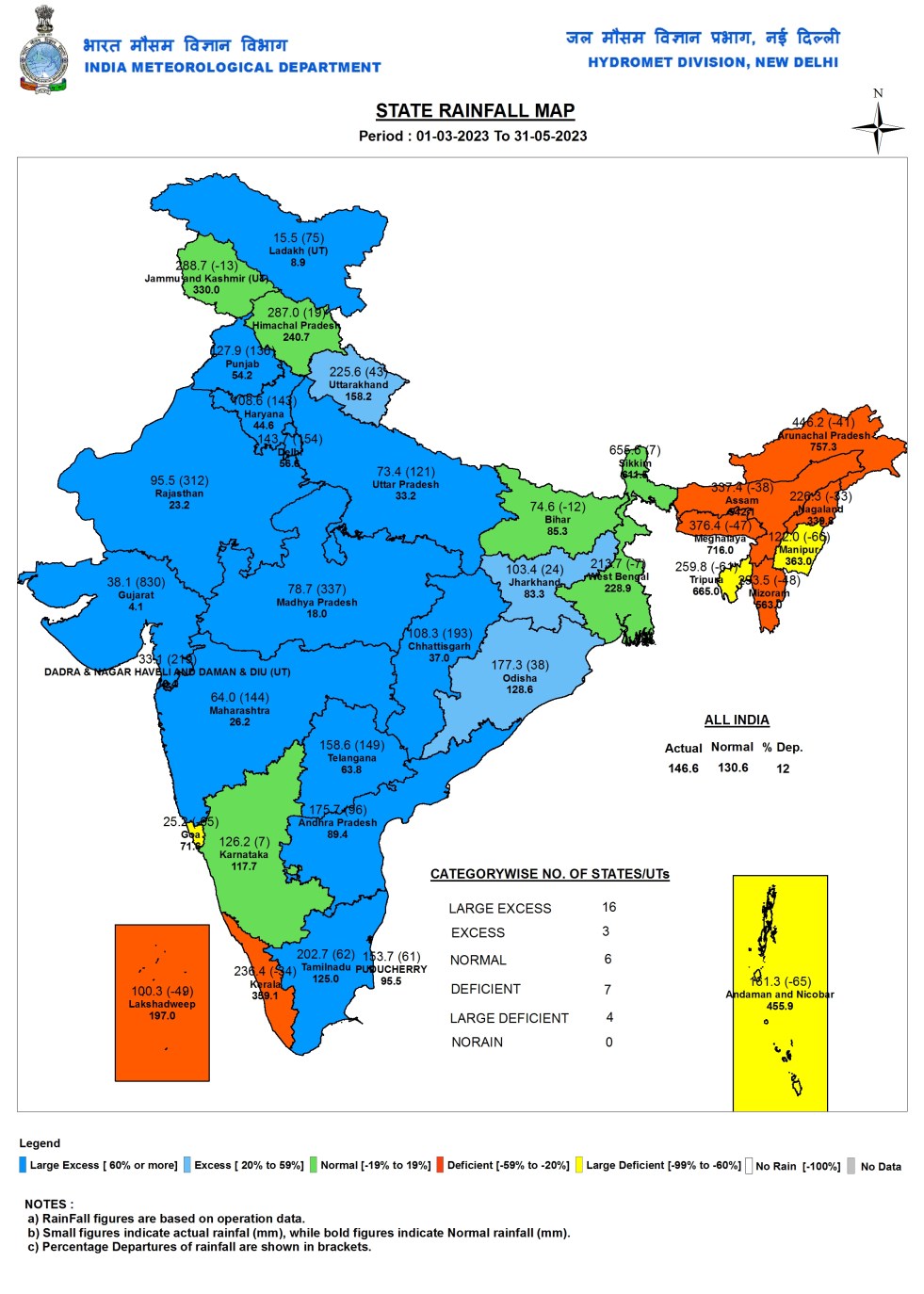
In the just concluded three month pre monsoon season (March 1 to May 31, 2023) India received 146.6 mm rainfall, 12% above the normal rainfall of 130.6 mm as per the India Meteorological Department (IMD). In 2020[i] , 2021[ii] and 2022[iii] India received 158.5 mm, 155.2 mm and 130.6 or 20% above normal, 18% above normal and 1% below rainfall respectively. So this year, India has received much higher pre monsoon season rainfall in 2023 compared to that in 2022, but lower than that in 2021 and 2020.
Month wise distribution However, when we look at the month-wise distribution of rainfall we find that in March 2022 there was 37.6 mm (8.9 and 16.7 mm in March 2022 and March 2021 respectively) or 26.8% above normal rainfall when normal rainfall was supposed to be 29.9 mm. In April 2022, the rainfall was 41.4 mm (38.3 and 31 mm in April 2022 and 2021 respectively), 5.3% above normal rainfall of 39.3 mm. The lion’s share of rainfall of the season was in May 2022, at 67.6 mm (83.4 and 107.5 mm respectively in May 2022 and 2021), or 10.1 % above the normal rain of 61.4 mm. So May 2023 rainfall was much below the rainfall in the same month in 2021 and 2022.
| Actual Rainfall, mm | Normal rainfall, mm | % departure | |
| March 2023 | 37.6 | 29.9 | 26.8 |
| April 2023 | 41.4 | 39.3 | 5.3 |
| May 2023 | 67.6 | 61.4 | 10.1 |
| Pre Monsoon 2023 | 146.6 | 130.6 | 12.3 |
The rainfall was above normal in all three pre monsoon months and thus was more evenly distributed than that was the case in 2021 or 2022. However, spatial distribution was not that even as we see below.
ALL INDIA State wise rainfall distribution As we can see the map of IMD showing state wise rainfall distribution during pre-monsoon season 2023, we see that Sixteen States (and Union Territories) had Large Excess (over 60% in excess of normal rainfall), Three States and UTs had Excess (20-59% above normal rainfall), six states had Normal (between 19% excess and 19% deficit compared to normal), seven states had Deficit (20 to 59% below normal rainfall), four states had Large Deficit (over 60% below normal) precipitation during the three month pre monsoon season in 2023.
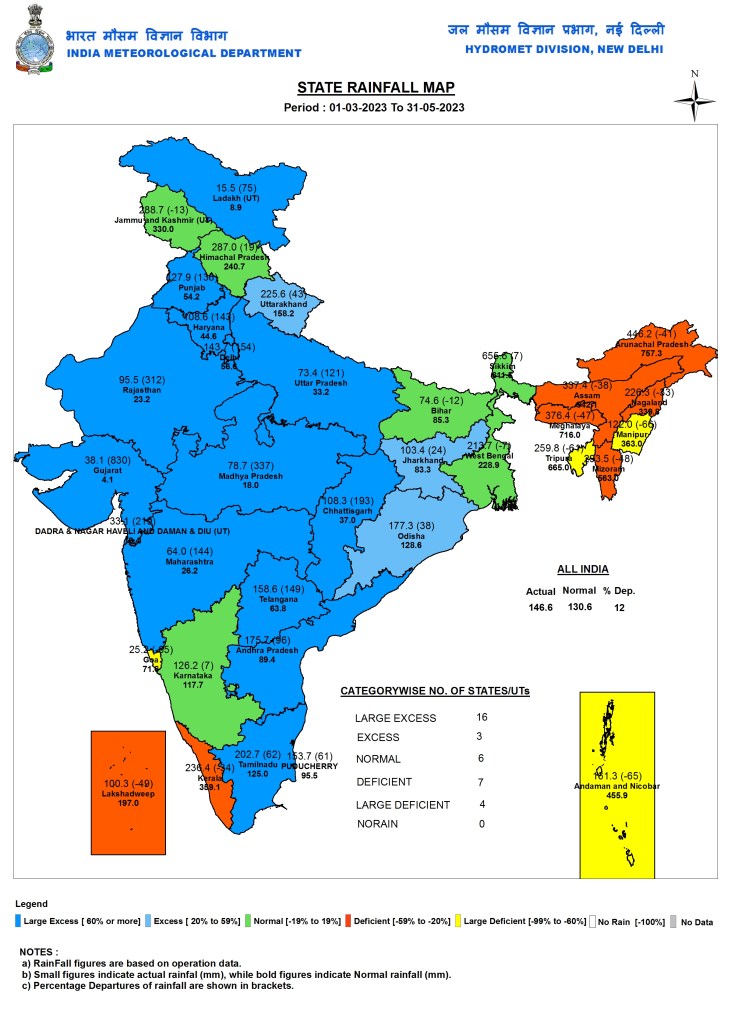
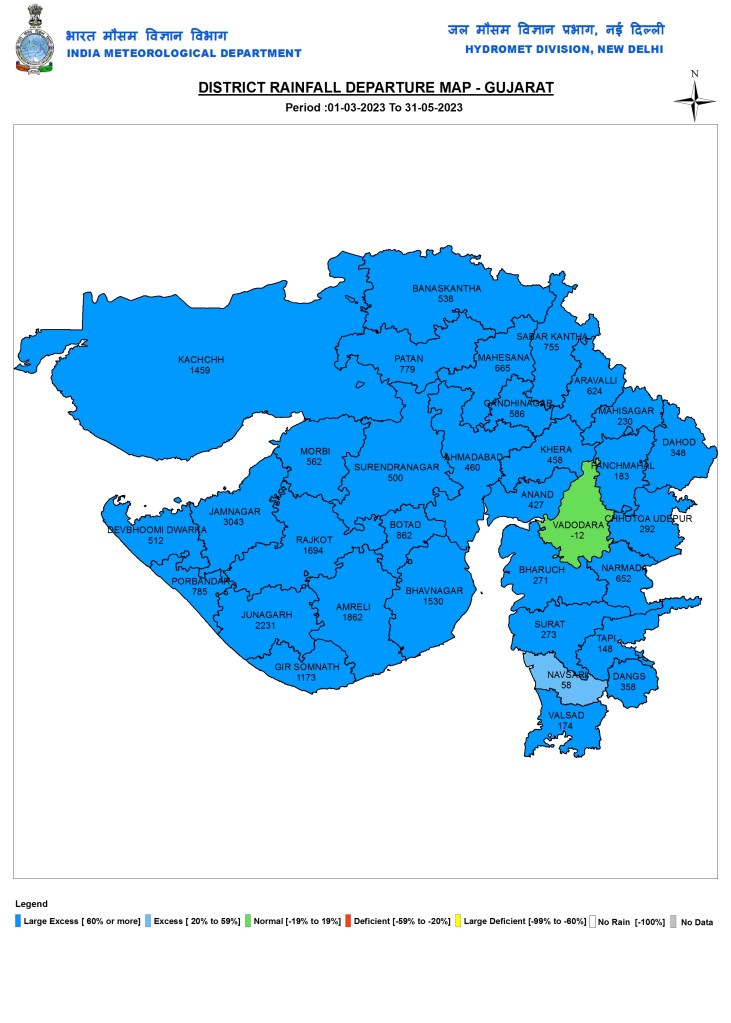
Meghalaya had the highest quantum of rainfall in this season at 655.6 mm, 7% above normal rainfall. However, highest surplus % of rainfall was recorded by Gujarat at 830% above rainfall of 38.1 mm compared to normal rainfall of 4.1 mm.
ALL INDIA Sub Division wise Rainfall distribution As can be seen from the IMD map below, out of 36 meteorological sub divisions of IMD, Seventeen had large Excess, Four had Excess, Seven had Normal, Six had deficit rainfall and two had large deficit rainfall in pre monsoon 2023 season.

Saurashtra recorded the highest surplus % rainfall at 1378% with rainfall of 45.8 mm compared to normal rainfall of 3.1 mm. Andaman and Nicobar recorded the highest deficit at 65% with 161.3 mm rainfall compared to even normal rainfall of 455.9 mm. With 446.2 mm rainfall, Arunachal Pradesh recorded the highest rainfall, which was 41% below normal.
ALL INDIA River Basin wise Rainfall Distribution As we have been highlighting for some years, IMD also provides River Basin wise rainfall distribution, though the quality of information provided by IMD in this case remains very poor.
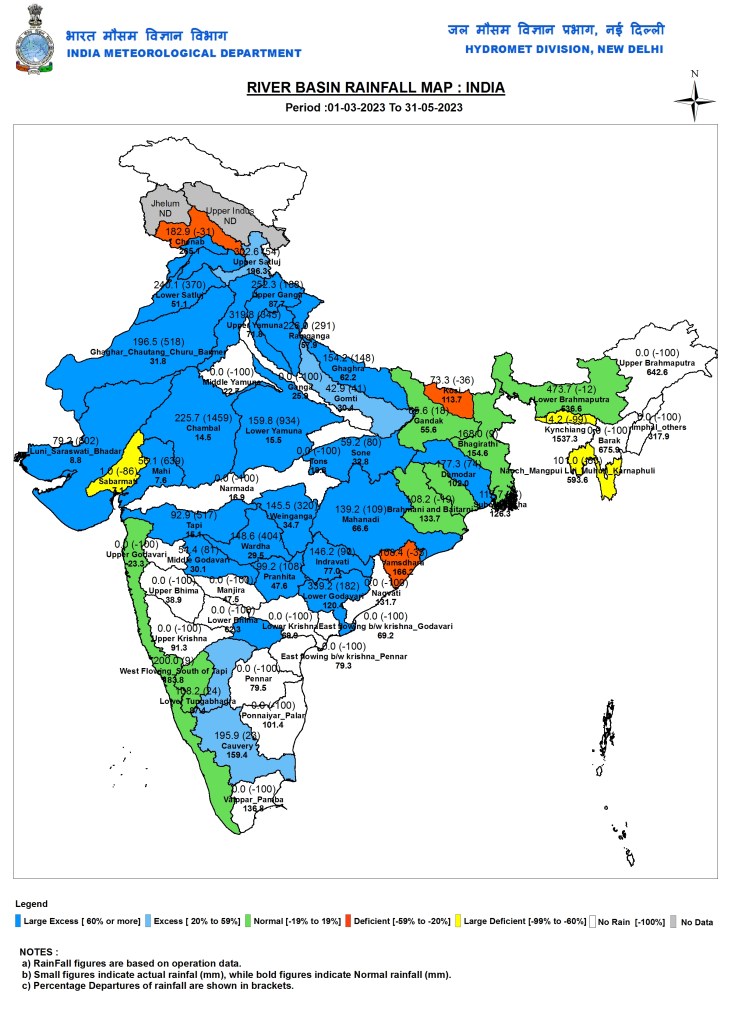
For Pre Monsoon 2023 season, as we can see from the IMD map, it is surprising that for a number of river basins, IMD has reported ZERO rainfall including: Narmada, Middle Yamuna, Ganga (main stem in the central UP), Sone, Upper Brahmaputra, Barak, Imphal and Others, Upper Godavari, Upper Krishna, Upper Bheema, Lower Bheema, Manjira, Lower Krishna, Pennar, East Flowing rivers between Krishna-Godavari, East Flowing rivers between Krishna and Pennar, Nagwati, Ponnaiyar-Palar, Kynchiang and Vaippar Pamba. This seems clearly unlikely to be true for most of these basins, this only means that the IMD has been callous in collecting, calculating and reporting information about rainfall in river basins. Even from its district wise rainfall figures in the districts of these river basins, one can see that the IMD saying that these river Basins has had ZERO rainfall is absurd.
Strangely, IMD continues to report, like last year, NO DATA for a number of basins like Jhelum and Upper Indus.
STATE WISE DISTRICT WISE RAINFALL: NORTH ZONE: Jammu & Kashmir
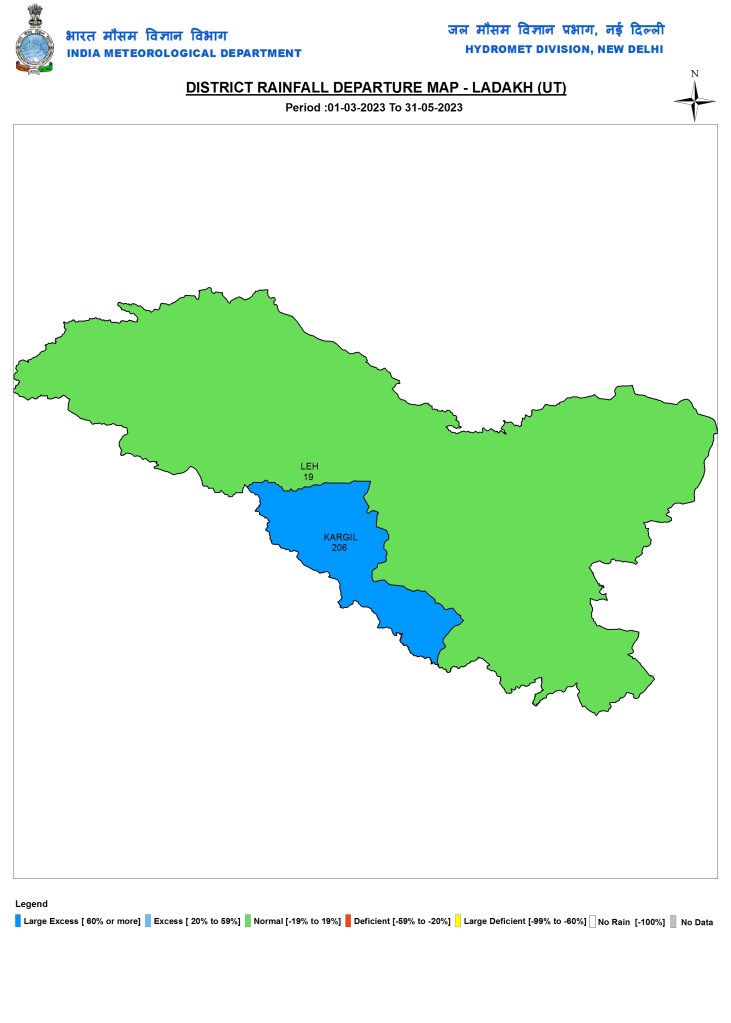
Ladakh
Punjab

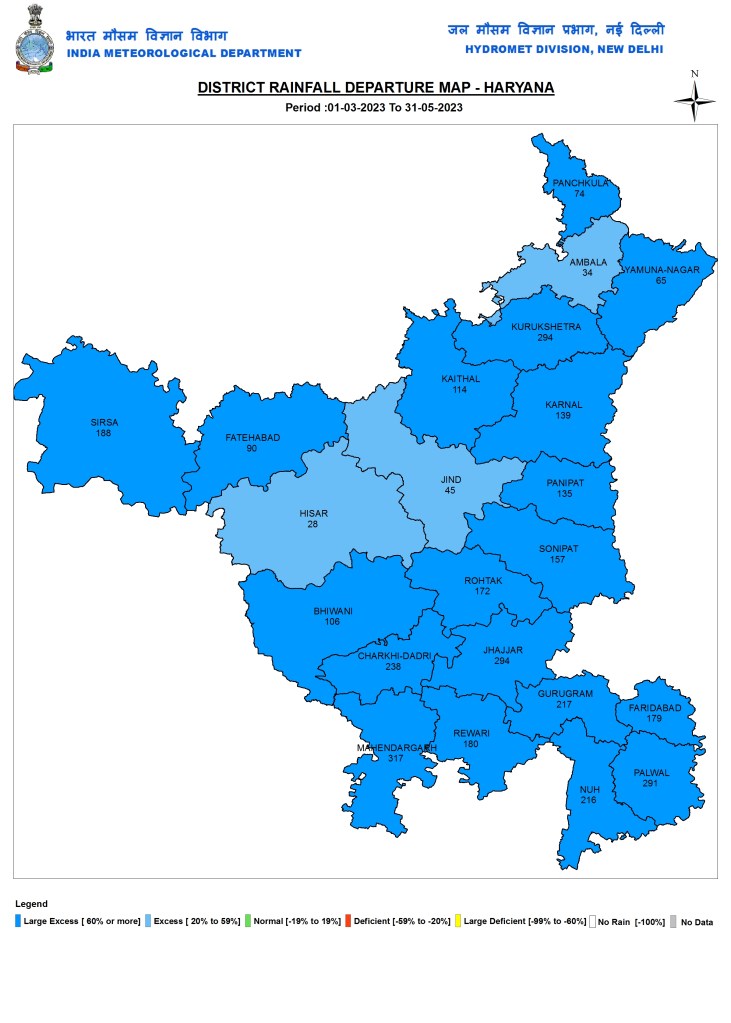
Haryana
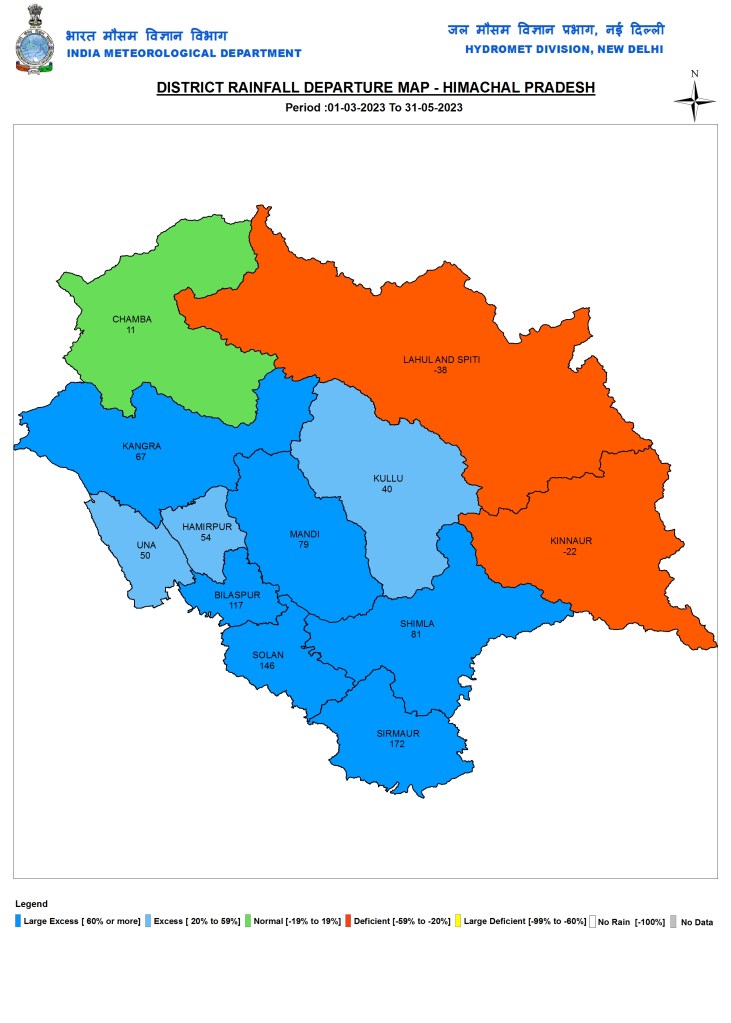
Himachal Pradesh
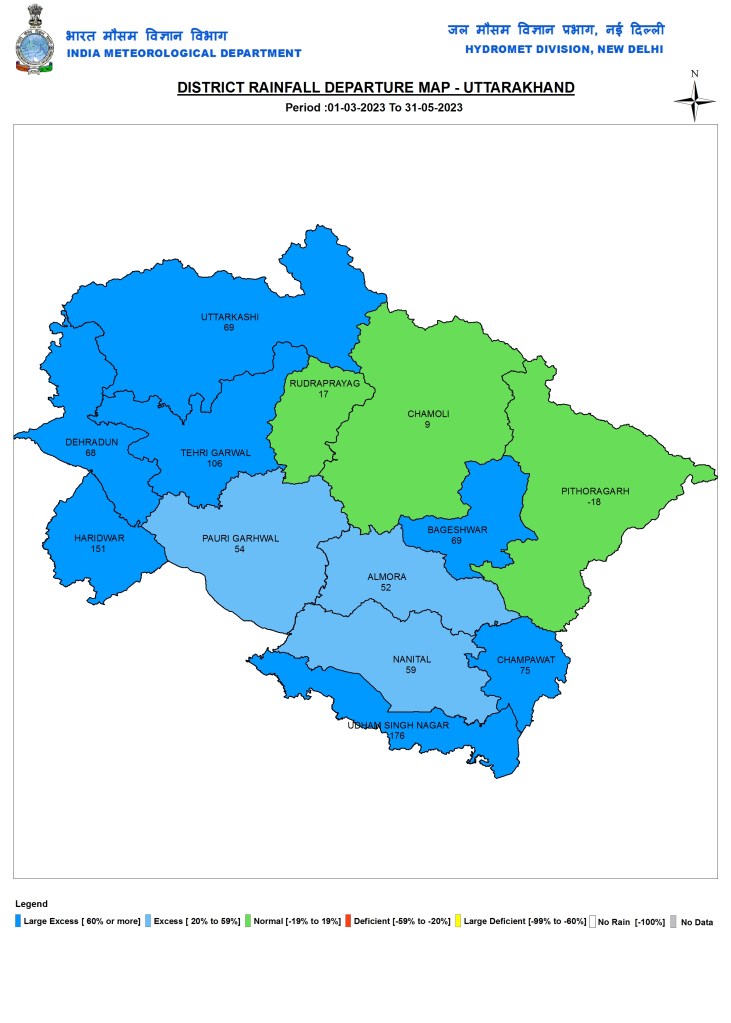
Uttarakhand
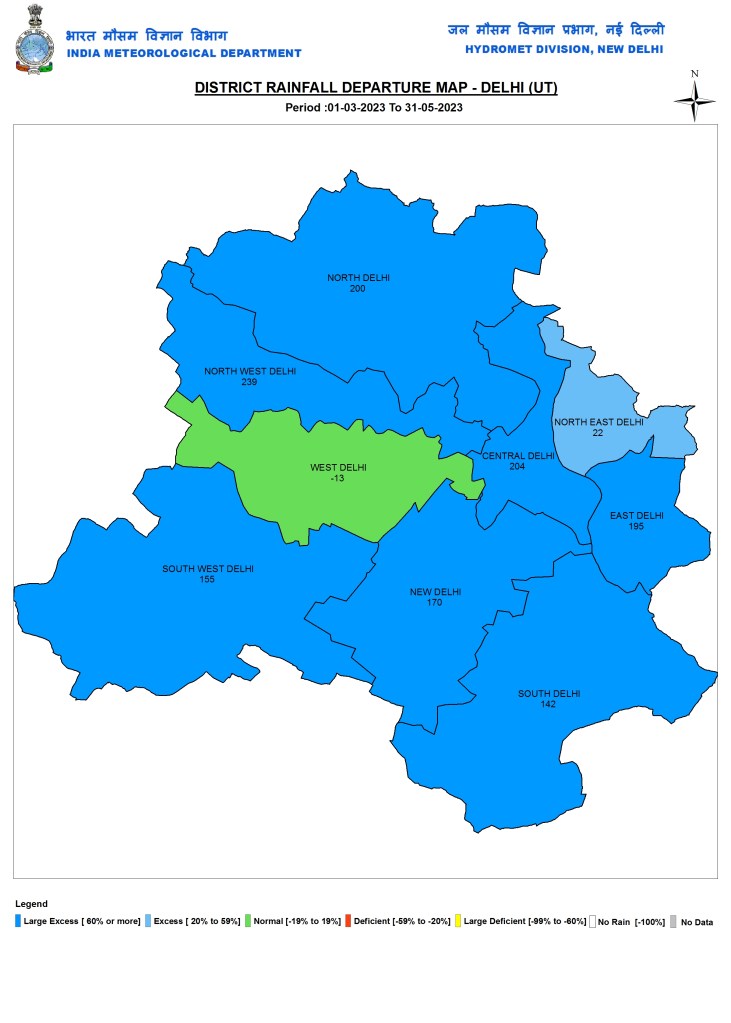
Delhi
EAST ZONE: Uttar Pradesh

Bihar

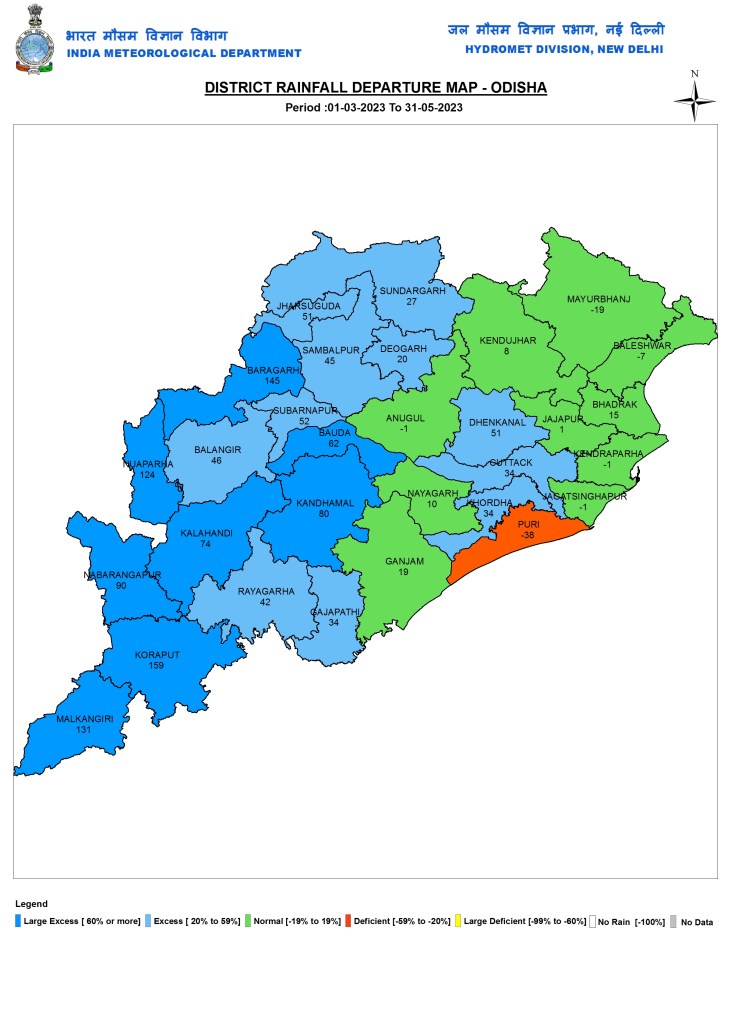
Odisha
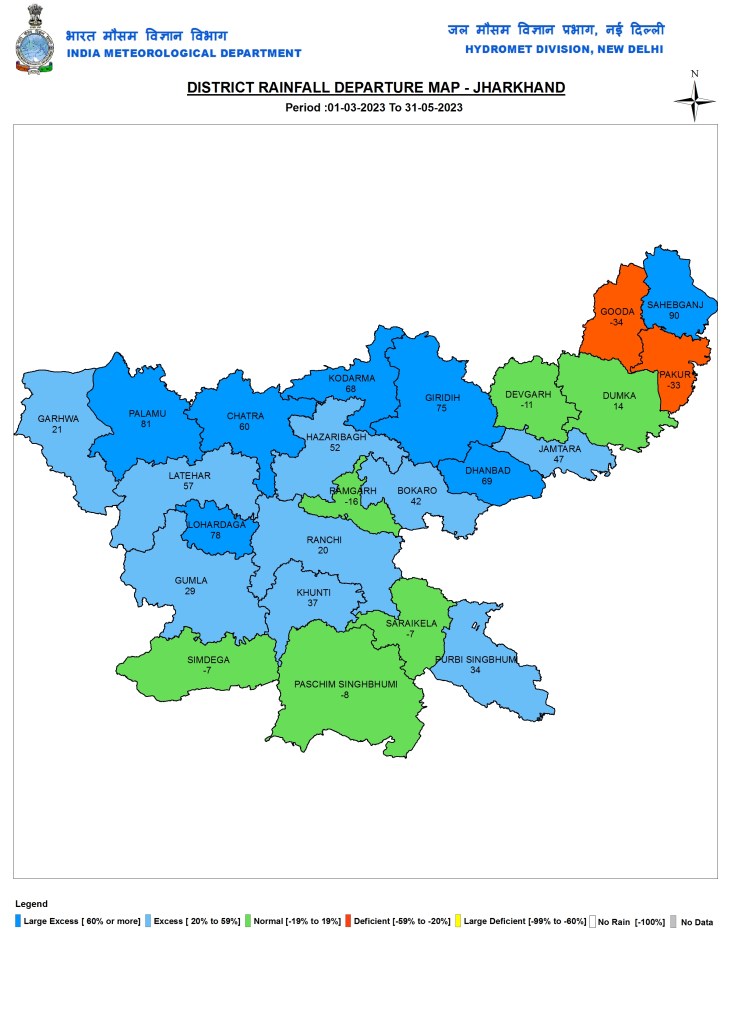
Jharkhand
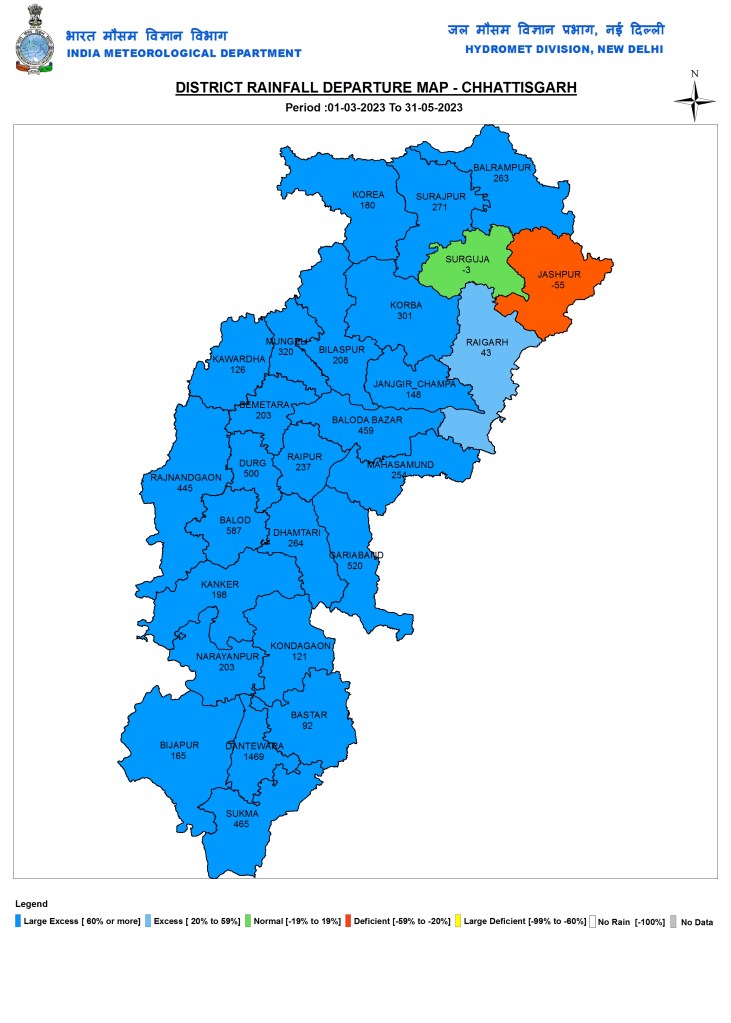
Chhattisgarh
West Bengal

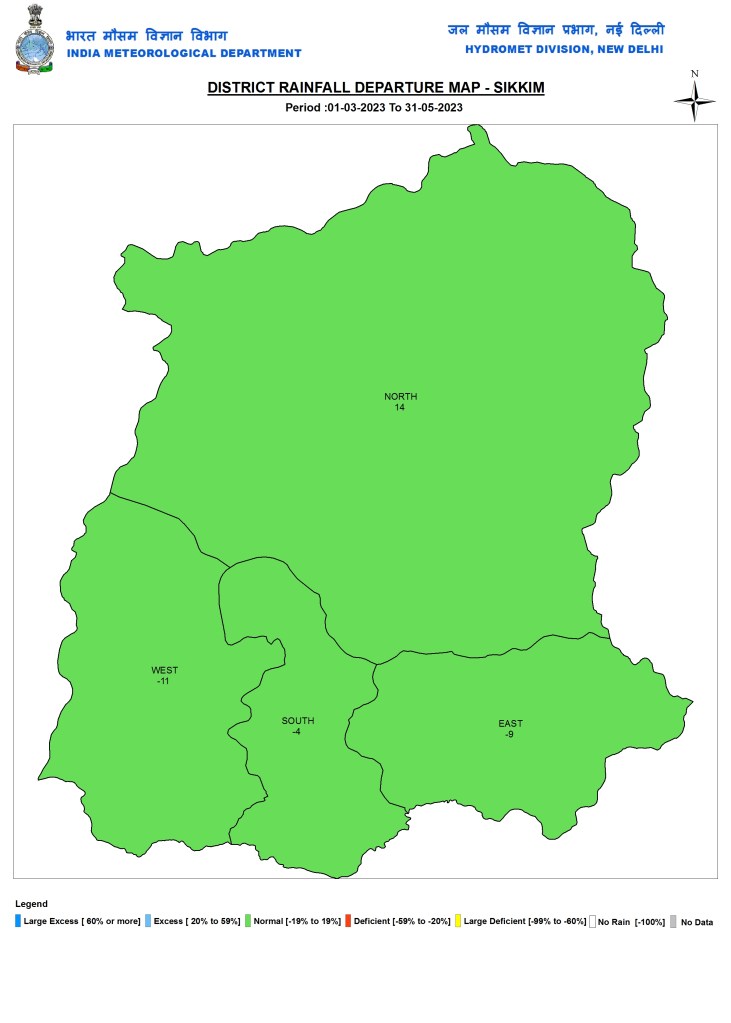
NORTH EAST INDIA: Sikkim
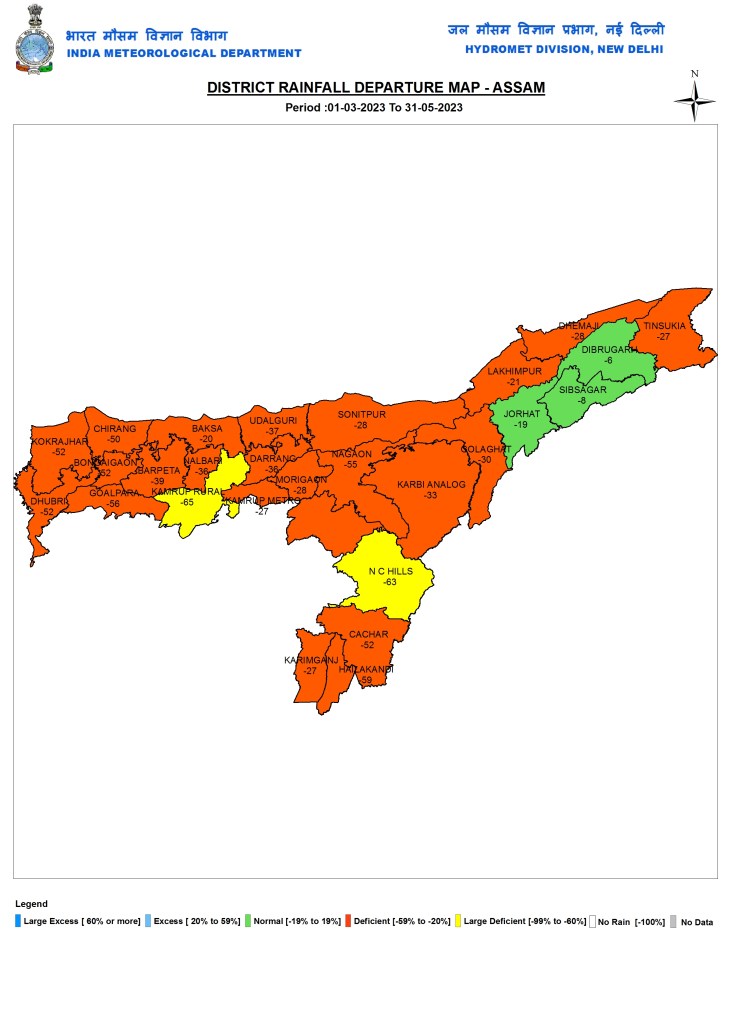
Assam
Arunachal Pradesh

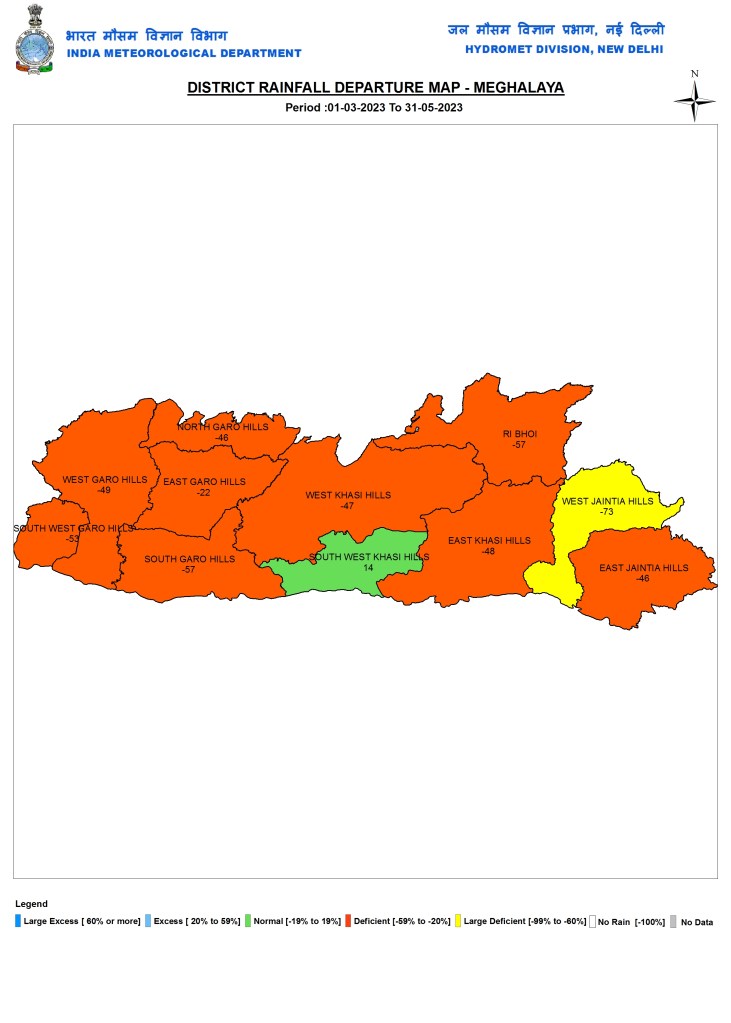
Meghalaya
Mizoram

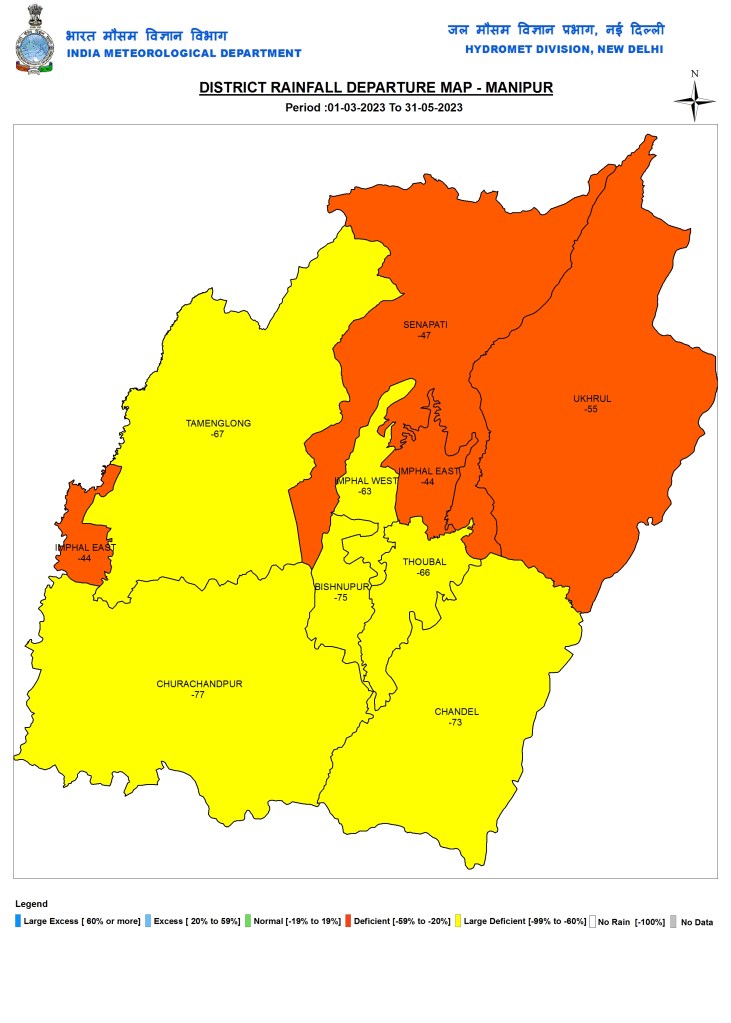
Manipur
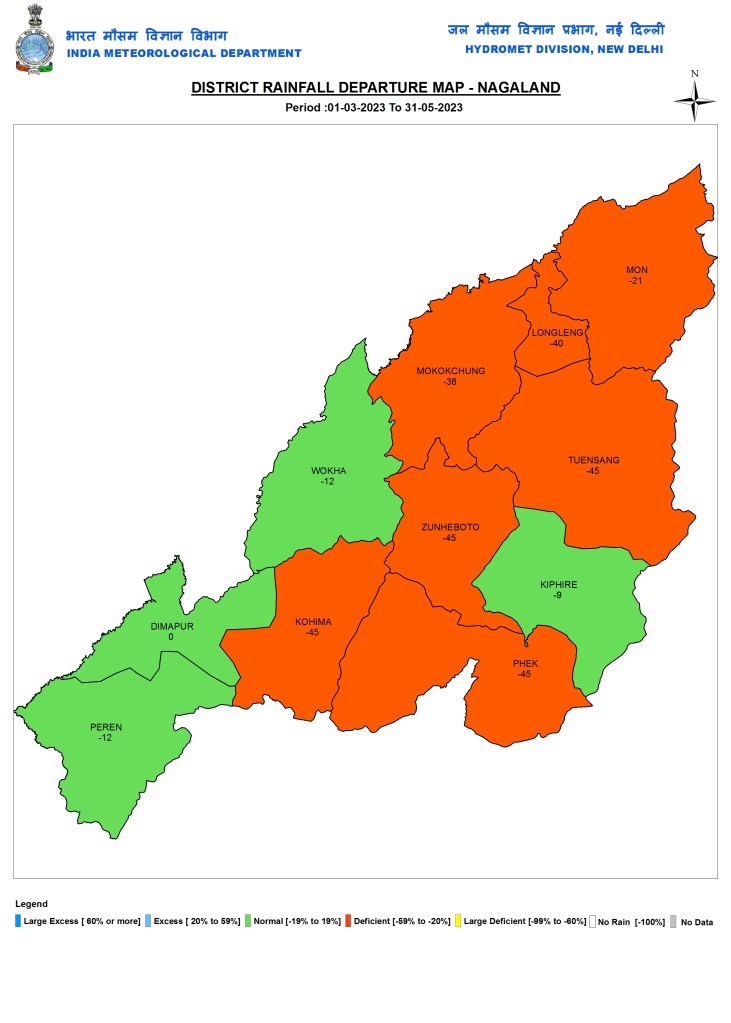
Nagaland
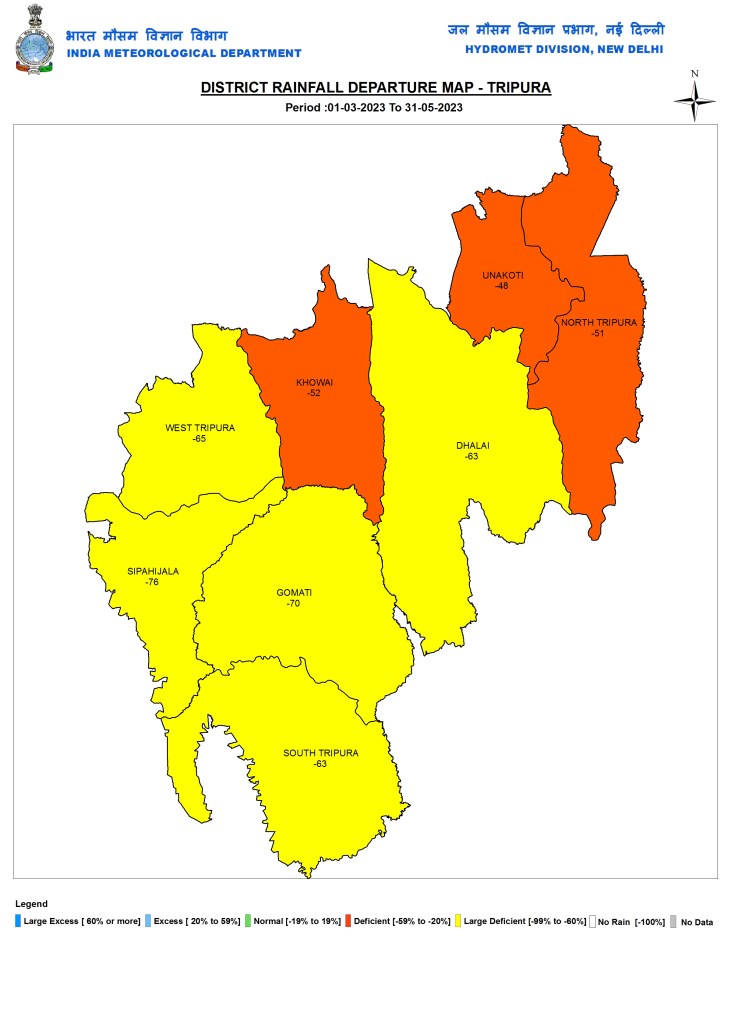
Tripura
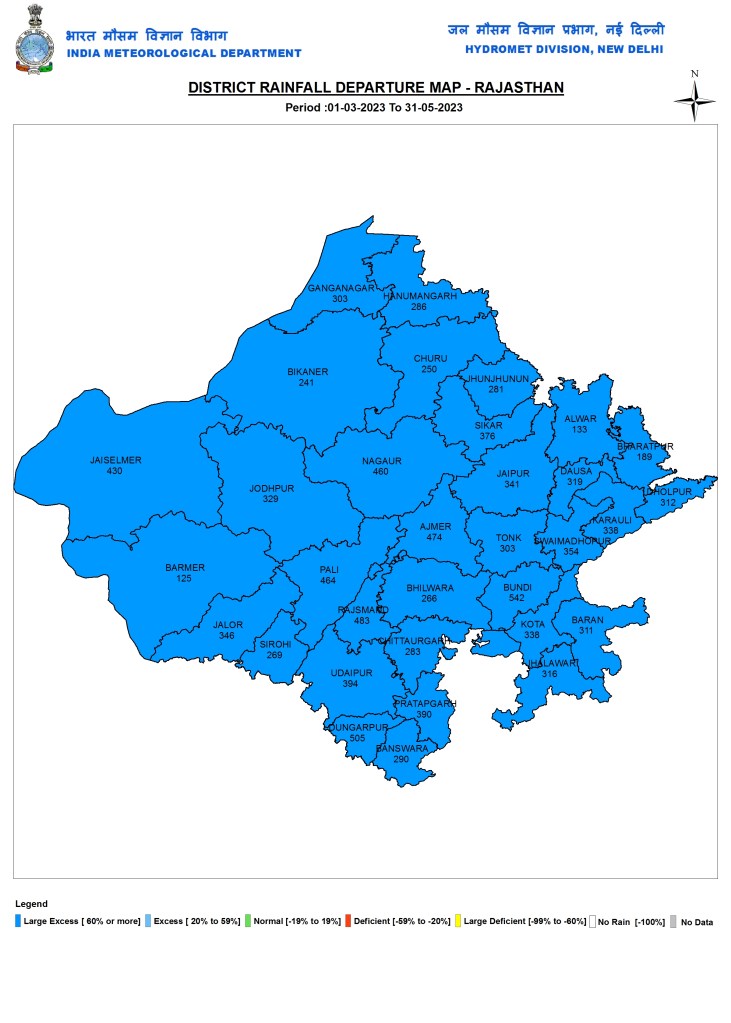
WEST INDIA: Rajasthan May 2023 rainfall in Rajasthan was second wettest in 123 years since the records are available from 1901. (https://www.tribuneindia.com/news/nation/rajasthan-sees-second-wettest-may-in-120-yrs-513141) The rainfall in May 2023 was 62.4 mm, the highest was in May 1917 when the rainfall was 71.9 mm. In a statement, the IMD said a record breaking rainfall of 72.8 mm in a day was observed in Bikaner on May 29. The previous highest rainfall observed in a day was 63.1 mm in 1999 in Bikaner. All 33 districts received large excess rainfall (departure plus 60 per cent or more).
The pre-monsoon season from March-May usually sees 23.2 millimetres of rainfall. This year, it was 312 per cent more than average. About 4.8 per cent of annual rainfall is recorded in the pre-monsoon season in Rajasthan in the pre-monsoon period. This year, the state saw 95.5 mm of rain to May 31, 2023 from March 1, 2023. May 2023 rainfall in Rajasthan is 458 per cent more than usual, with desert areas in the western part of the state receiving the maximum rainfall. (https://www.downtoearth.org.in/news/climate-change/climate-impact-rajasthan-s-pre-monsoon-rainfall-was-three-times-more-than-average-this-year-89773) Bikaner city broke all old records with 72.8 mm of rainfall on May 29, 2023. Bundi district received the highest amount of excess rainfall at 542 per cent, followed by Dungarpur district at 505 per cent excess rainfall.
Gujarat
Madhya Pradesh

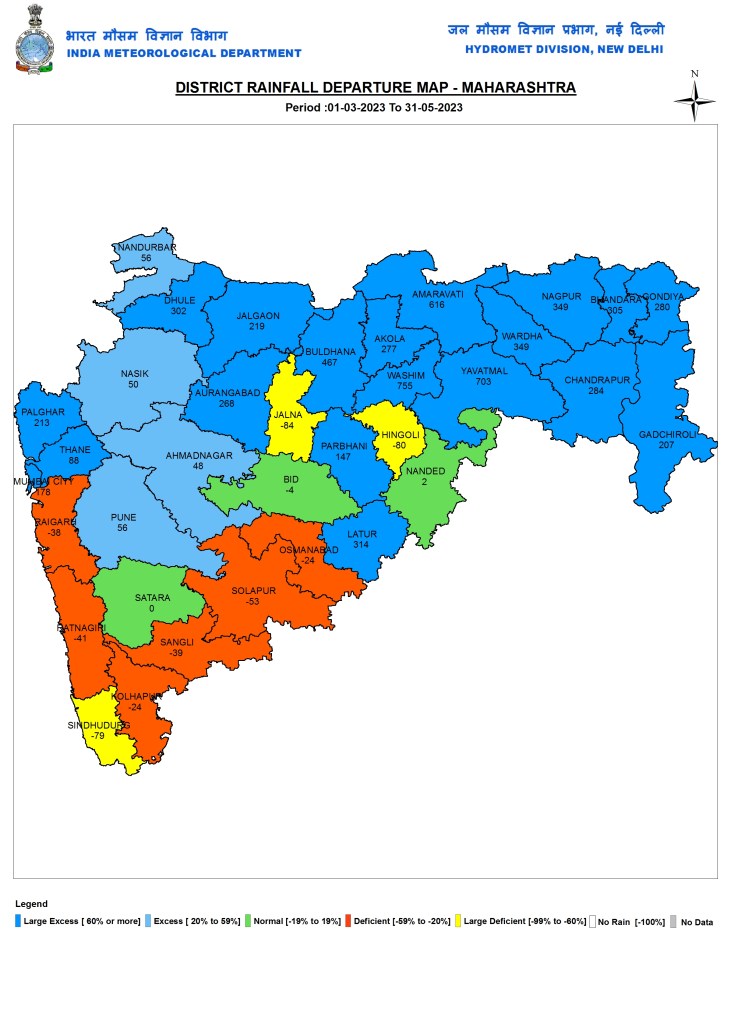
Maharashtra
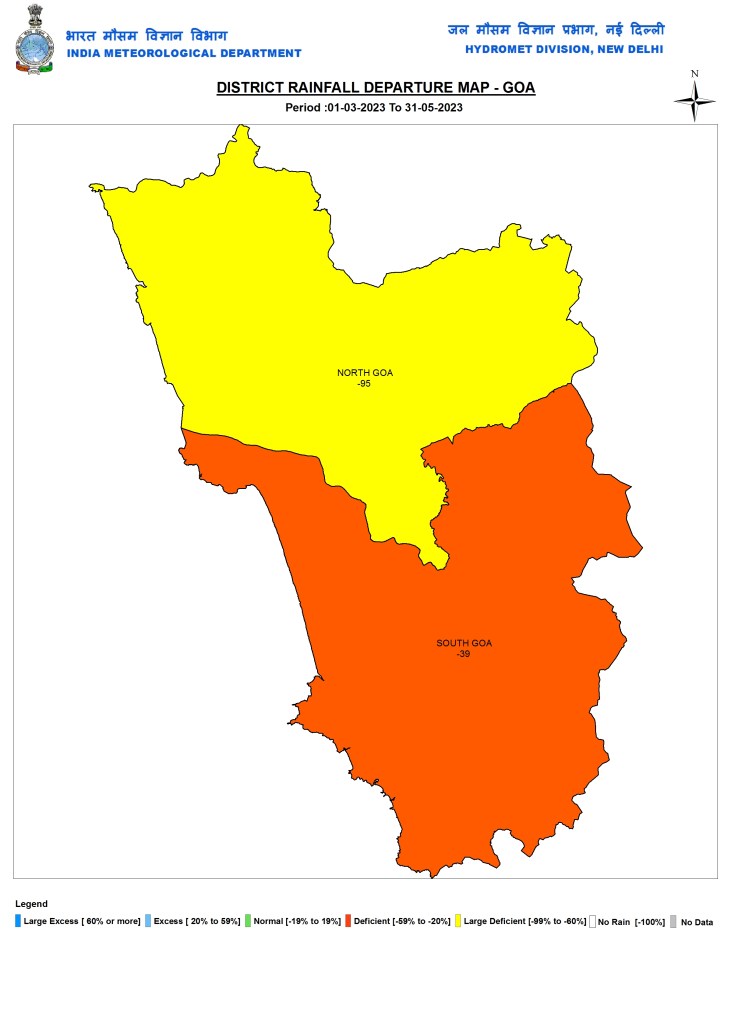
Goa
SOUTH INDIA: Andhra Pradesh

Telangana

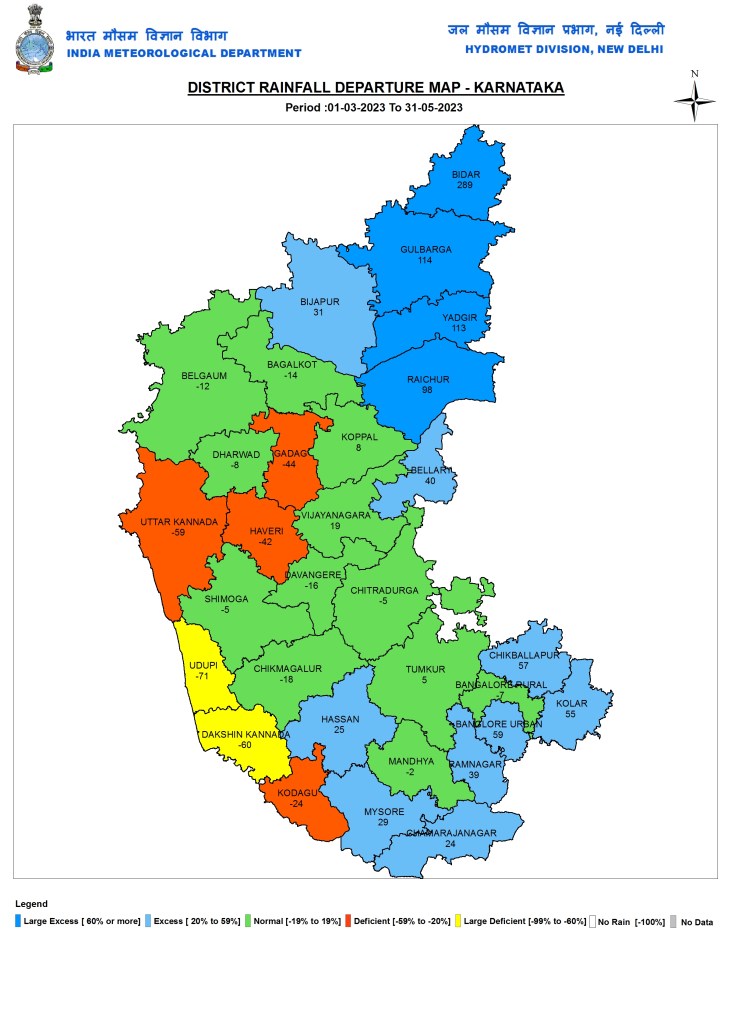
Karnataka Bengaluru, capital of Karnataka, saw the wettest May this year since 1957. (https://timesofindia.indiatimes.com/city/bengaluru/with-31cm-rainfall-bengaluru-saw-its-wettest-may-since-1957/articleshow/100663391.cms) The average rainfall for May in the city is 13cm. The previous wettest summer month in Bengaluru’s history was in May 1957, when the city had witnessed 28.7cm of rainfall.
According to KSNDMC report, only South and North Interior Karnataka regions received normal pre-monsoon showers. It was deficient in the Malnad and coastal districts of the state. South Interior Karnataka received 163 mm against a normal of 138 mm and North Interior Karnataka received 95 mm against a normal of 79 mm. Malnad received 128 mm rainfall against a normal of 163 mm, and coastal Karnataka districts received just 62 mm against a normal of 156 mm. (https://indianexpress.com/article/cities/bangalore/karnataka-heavy-rainfall-karnataka-8648109/lite/)
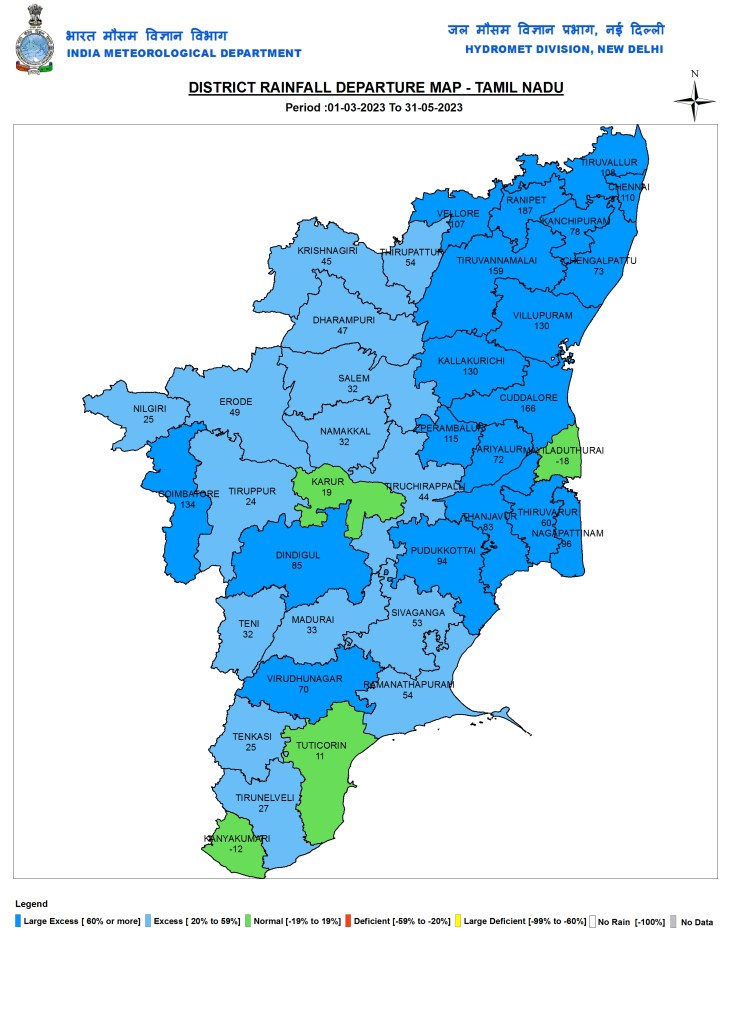
Tamil Nadu
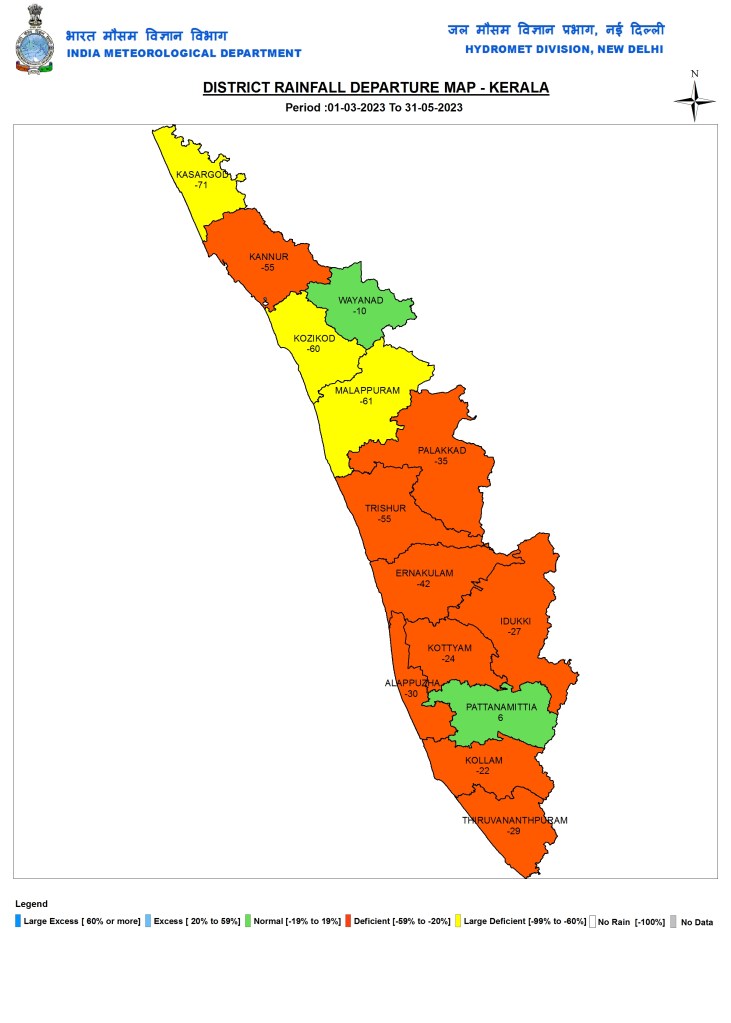
Kerala
SANDRP (ht.sandrp@gmail.com)
END NOTES:
[i] https://sandrp.in/2020/06/05/india-received-20-excess-rains-in-pre-monsoon-2020/
[ii] https://sandrp.in/2021/06/01/state-wise-rainfall-pre-monsoon-2021-season/
[iii] https://sandrp.in/2022/05/31/state-wise-rainfall-in-pre-monsoon-2022-season-in-india/

 SANDRP