Dams · DRP News Bulletin

DRP News Bulletin 15 October 2018: Reuters Corroborates that Dams Played Major Role in Kerala Floods

International news agency, after independent research, have corroborated what SANDRP has been saying: Mismanagement of dams played big role in worsening Kerala floods.

-“The release could have started earlier so that by Aug. 9 there would have been left-over capacities in the reservoirs to store the water,” said Biswajit Mukhopadhyay, director of water resources at U.S-based engineering firm IEA, who analysed some of the publicly available data at the request of Reuters.

– Still, dozens of flood victims interviewed by Reuters, who live in villages dotting the banks of Kerala’s biggest river, the ‎244 km Periyar, say they faced no floods despite torrential rain in late July and early August. All of them said waters only rose overnight on Aug. 15. That was when more intense rainfall forced KSEB to rapidly ramp-up releases of water from Idukki and Idamalayar reservoirs, which feed into the Periyar.

– Kerala’s revenue secretary and head of disaster management, P.H. Kurien, told Reuters he has twice written to KSEB requesting EAPs and has yet to receive them. KSEB’s Pillai said EAPs and dam operation manuals were still being prepared. CWC said it was working with Kerala’s government to speed this up. The Kerala Chief Minister’s office did not respond to requests for comment. https://widerimage.reuters.com/story/did-dams-make-indias-once-in-century-floods-worse  (11 Oct. 2018)

And this fantastic infographic: https://fingfx.thomsonreuters.com/gfx/rngs/INDIA-FLOOD/010080MF18N/index.html  (11 Oct. 2018)

Continue reading “DRP News Bulletin 15 October 2018: Reuters Corroborates that Dams Played Major Role in Kerala Floods”
Dams · Monsoon

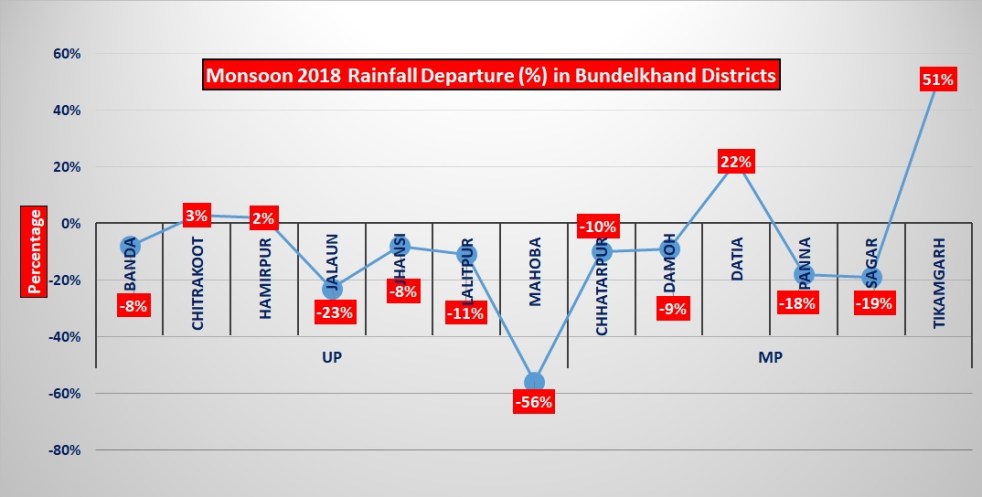
Bundelkhand: Overview of 2018 Monsoon

Bundelkhand is known as a drought prone region. It is comprised of 7 districts of Uttar Pradesh and 6 districts of Madhya Pradesh. Monsoon rains are crucial. However for past several years, the region has faced deficit rains leading to water scarcity particularly for agriculture related activities. Let us the situation of of Monsoon rain in Bundelkhand this year.

Bundelkhand is part of Lower Yamuna Basin, for which IMD provides rainfall figures in its river basin wise rainfall maps. This basin received 785.4 mm rainfall in 2018 monsoon, 9% below  normal rainfall of 863 mm for this sub basin. IMD needs to provide rainfall figures for each sub basins, including Ken, Betwa, Dhasan etc.

Continue reading “Bundelkhand: Overview of 2018 Monsoon”

Ganga

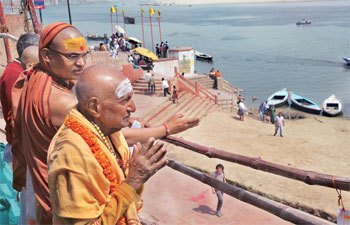
TRIBUTE TO LATE SWAMI SANAND WHO DIED FOR THE CAUSE OF GANGA RIVER

Its deeply saddening that just before 4 pm today (Oct 11, 2018), Prof G D Agarwal, now known as Swami Gyan Swarup Sanand, laid down his life for the cause of a rejuvenated Ganga. He was on FAST UNTO DEATH,  as he declared through his letter to the Prime Minister on Feb 24, 2018, four months before he was to launched his fast.  Continue reading “TRIBUTE TO LATE SWAMI SANAND WHO DIED FOR THE CAUSE OF GANGA RIVER”

Climate Change

IPCC report says deafening fire alarm is on, 1.5° C goal is improbable. But we are busy lighting new fires

The Intergovernmental Panel on Climate Change (IPCC) has released a special report[i] titled “GLOBAL WARMING OF 1.5° C”. In the official Press Release on Monday, Oct 8, 2018[ii] from Incheon, South Korea, IPCC said: “Limiting global warming to 1.5° C would require rapid, far reaching and unprecedented changes in all aspects of society, the IPCC said in a new assessment.” In reality, the world is experiencing much bigger impacts of 1°C rise than what IPCC projected and that would also be true for 1.5° C. Continue reading “IPCC report says deafening fire alarm is on, 1.5° C goal is improbable. But we are busy lighting new fires”

Dams · DRP News Bulletin

DRP News Bulletin 8 October 2018: “WELCOME CHANGE! Kerala Depletes Reservoir in Anticipation of Deluge from Cyclone”

In spite of all the protests against criticism of Floods worsened by Dams in Kerala in Aug, its refreshing that Kerala now accepts needs for better operation of dams with IMD red alert in three districts:

– Senior officers expressed confidence that the dams can contain the flood waters even if it rains continuously for four days. Better late than never, commented experts on the Kerala State Electricity Board’s (KSEB) decision to keep the water level low. “We’re prepared to face any eventuality. There won’t be any need to open the dam shutters even if it rains continuously for four days. We’re maintaining the water level low in major dams. The water level in Mattupatty dam is close to the full reservoir level and we’ve decided to release water from Thursday. The situation is under control and there’s no need to panic,” said KSEB chairman N S Pillai. Continue reading “DRP News Bulletin 8 October 2018: “WELCOME CHANGE! Kerala Depletes Reservoir in Anticipation of Deluge from Cyclone””

Dams · Free flowing rivers · Wild and Scenic Rivers Act

The Singing River: Story of America’s Largest Free-flowing river

As we approached a bridge on the rumbling green river, I concentrated all my senses to my ears. After all, we were about to cross the Singing River. Legend has it that a low humming sounds rise from the Pascagoula River[i], heard only by a few. Poignant stories of love and loss are interwoven into the sounds of the river. Continue reading “The Singing River: Story of America’s Largest Free-flowing river”

Char Dham Highway · Dams

Char Dham Highway Project: An overview

(Feature image Source Char Dham Road ProjectL Stairway to heaven or highway to hell by Siddharth Agarwal)

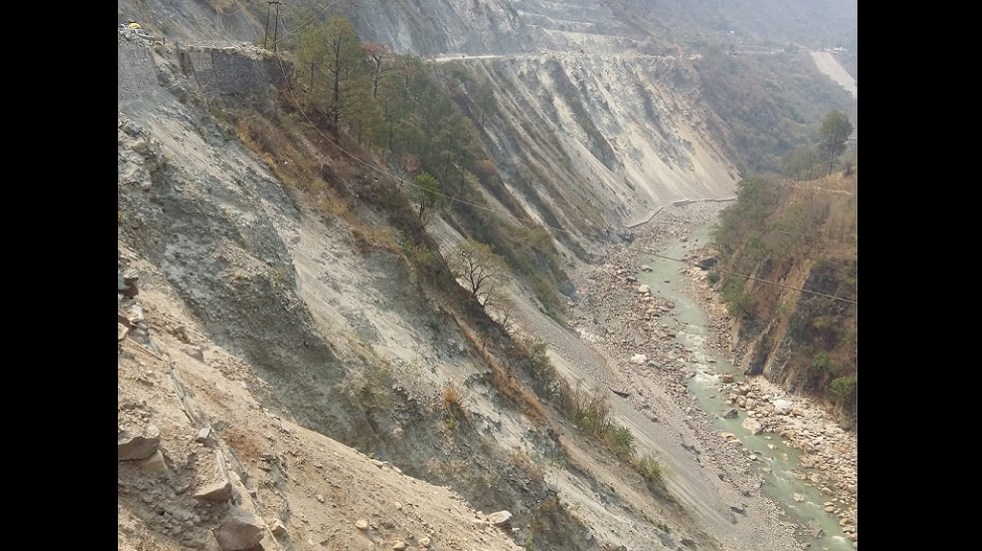
The Char Dham All Weather Road Project has been approved by National Green Tribunal (NGT) on September 26, 2018. The controversial project has evoked several environmental concerns right from the inception stage.

Almost more than one and half year into the unmindful implementation of the project, the risks and fears associated with the project are clearly visible throughout the construction route. In last few months, several independent reports have also raised serious concerns over the haphazard manner in which the project is being executed through sensitive hilly terrain.  Continue reading “Char Dham Highway Project: An overview”

Dam Induced Flood Disaster · Kerala

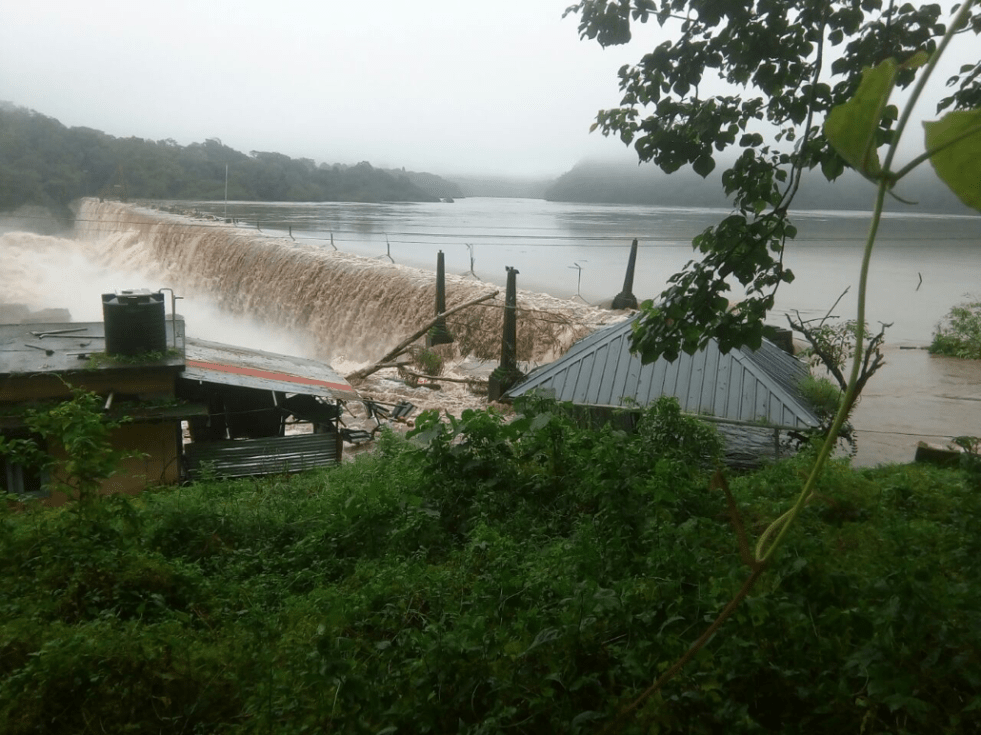
Role of dams in Kerala’s 2018 floods

ABSTRACT: Many independent observers have argued that dams have played a role in increasing the proportions of Kerala flood disaster during July-Aug 2018. This article shows that Kerala dams violated many basic norms and if operated prudently, could have helped. It shows how post dam floods are different than pre dam floods. It lists the steps that would help in future disasters involving dams. The lessons are useful for all large dams of India.

In theory, every dam can help moderate floods in the downstream areas, as long as and as much as the dam has space to store water. In fact, every action that helps to store, hold, recharge (to groundwater aquifer), delay flow of rainwater from the catchment to the river would help moderate flow and hence flood in the river. Our catchments are fast losing that capacity, with continued destruction of natural forests, wetlands, local water bodies and also soil’s capacity to hold water. Continue reading “Role of dams in Kerala’s 2018 floods”

Dams

CWC Flood Forecasting: Anomalies between Website and SOP Document

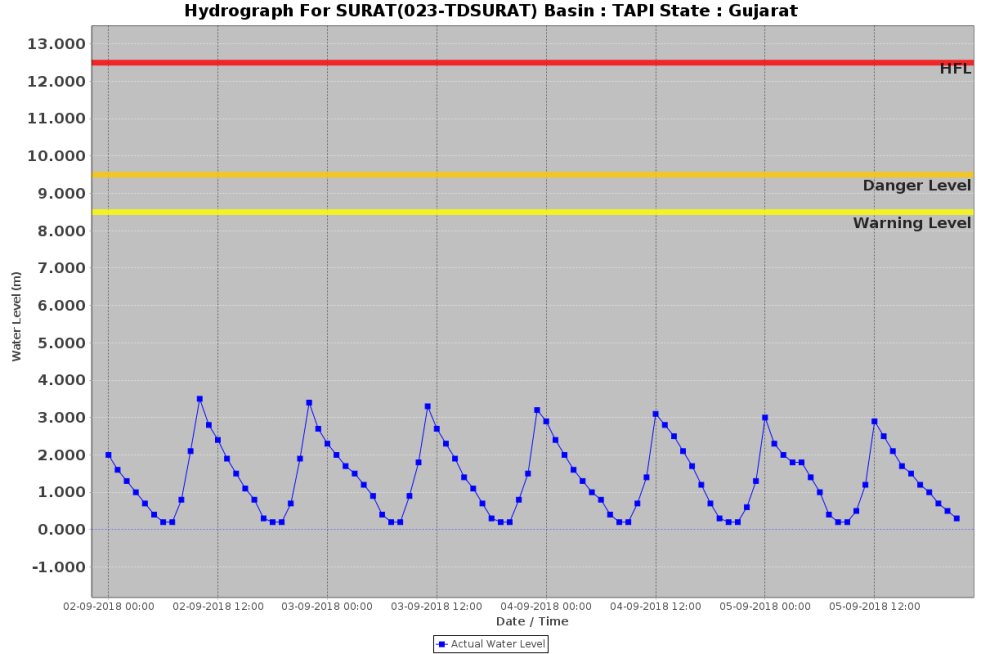
Central Water Commission (CWC) is the only agency in India doing flood forecasting, it becomes very important to understand what CWC does in this regard. The CWC flood forecasting website[i] is the main media through which CWC provides the flood forecasting. CWC has also published on its website, the document giving Standard Operating Procedure (SOP) for flood forecasting in 2018[ii]. The Home page of the CWC’s flood forecasting site says that CWC provides Level forecasting for 166 sites and Inflow forecasting for 60 sites. SOP document, however, gives these figures in Table 1, but in Table 2 (as also the full list given in Annexure 1.1 of SOP document), it gives state wise break up for 182 Level forecasting and 93 Inflow forecasting sites. So we can see anomalies in these two sources even about the number of forecasting sites.

Continue reading “CWC Flood Forecasting: Anomalies between Website and SOP Document”

Dams · DRP News Bulletin

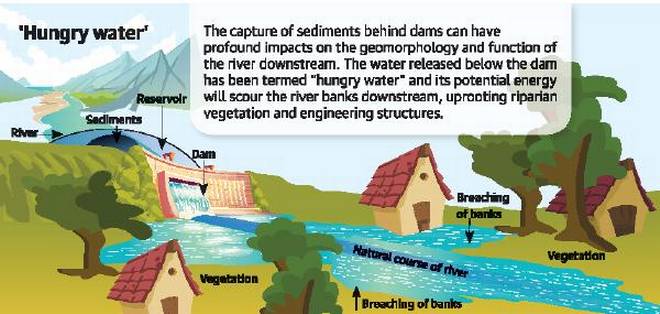
DRP News Bulletin 1 October 2018: Hungry Water Effect due to Dams & Unsustainable Sand Mining Worsened Kerala Floods

Dams and reservoirs make rivers sediment-starved and menacing manifold downstream. While heavy rainfall is also a key factor behind the floods, hungry water had a more pronounced effect, says D. Padmalal, Scientist and Head, Hydrological process group, National Centre for Earth Science Studies.

– “When the sediment transport is interrupted, the potential energy of the hungry water released from dams will scour the river banks downstream, uprooting trees or riparian vegetation and damaging bridges and other engineering structures,” explains Dr. Padmalal. Overloaded with silt and clay from the eroding river banks, the highly turbid and viscous water clogs drainage channels. Subsequent discharge of water from the dam will lead to inundation and waterlogging of large areas.

– Hungry water can also develop in high gradient river channels devoid of adequate quantity of sand and gravel, especially during periods of high rainfall. “Years of uncontrolled sand mining have left most of the rivers in Kerala depleted or exhausted of sand and gravel. This creates a situation similar to the release of hungry water from dams,” notes Dr. Padmalal. When the river channel has adequate supply of sand and gravel, the potential energy of the water is used to transport the mixture. The water does not scour the banks or turn muddy.

Continue reading “DRP News Bulletin 1 October 2018: Hungry Water Effect due to Dams & Unsustainable Sand Mining Worsened Kerala Floods”