
An active campaign has been going on for several months now to save the Pune Rivers from the so called “River Front Development” Project as can be seen the following stories of just last one month. The RFC supporters are also out to push multi crore project, as can be seen from the numerous stories being planted in the media on regular intervals. There is no doubt that the Pune Rivers will be destroyed and the city will face increasing flood disasters if the project goes ahead. One hopes the Civil Society campaign continues and judiciary steps in to stop this destruction at the earliest.
Continue reading “DRP 240521: Campaign to protect Pune Rivers”Tag: Yamuna

DRP 170521: Dead Bodies in Rivers & Civilization
The human dead bodies in the rivers and on the river banks are one of the many defining images of the Corona pandemic that India is in grip of currently. There is clearly complete failure of governments at several levels in this pandemic, starting from complete failure to have systems in place to ensure that the pandemic situation would not have become such a massive disaster. No explanation or accountability is likely to come our way from the governments. They are too busy suppressing the critical voices exposing the abject failure of the governments, building Central Vista project or harassing the elected governments ruled by other parties.
As one of the reports mentioned in this issue of weekly DRP Bulletin shows, similar scenes were seen also during the 1918-19 Spanish Flu pandemic in India. But we may remind our rulers and ourselves that a century latter our governance is supposed to have improved and the 1918-19 pandemic was several times much larger one. Moreover our governance today should be much better than the governance of the British Govt a century ago?
Continue reading “DRP 170521: Dead Bodies in Rivers & Civilization”
Yamuna Jayanti 2021: River needs flows; not dam, mining & pollution
Yamuna Jayanti the birthday of Yamuna river is celebrated every year on sixth day of summer Navratri. This year the day occurred on Sunday, April 18. On this occasion, Yamuna Nadi Mitra Mandlis [NMM (Friends of Yamuna River groups)] from all along the river through pics, videos share the latest updates on the issues affecting the river health and riverine community’s wellbeing. They also celebrate the river for its innumerable/ services and carry out activities to draw the attention of concerned governments and public at large towards gradual decline in river’s health.
This year due to Covid 19 pandemic and resultant restrictions, they could not organize public gatherings and undertake river related activities as usual, however they have shared some relevant pictures and videos depicting present status of River Yamuna which are presented here.
Continue reading “Yamuna Jayanti 2021: River needs flows; not dam, mining & pollution”
DRP 050421: Maan Dam affected get hope for justice: Salutes to NBA
A Supreme Court appointed Appeal Forum, appointed as per the SC order in 2012 has directed the Madhya Pradesh (MP) Govt to provide minimum 2 ha land to every displaced family as per the policy. This has raised hopes for just rehabilitation for the thousands of people displaced by the Maan dam in Dhar district of MP by the Narmada Valley Development Authority (NVDA). This is a major victory for the three decades long struggle of the affected people, led by the Narmada Bachao Andolan (NBA). The Forum has asked the govt to provide land to the affected in three months. The dam has been constructed on Maan river, a tributary of Narmada. One hopes the displaced get the justice soon as per the orders of the SC appointed appeal forum. Salutes to NBA for this. One hope the Supreme Court will ensure this happens in a just and expeditious way.
Continue reading “DRP 050421: Maan Dam affected get hope for justice: Salutes to NBA”
DRP 290321: Better options exist to resolve water scarcity
Even as a strong voice of dissent rises from Bundelkhand, Madhya Pradesh, Uttar Pradesh and elsewhere against the fresh push for destructive Ken Betwa Project, this week there is interesting news from across India that reinforces the message that real solutions to Bundelkhand water scarcity not only exist, but they are far less destructive, cheaper, faster and more sustainable even in climate change context. This includes the report from CSE about the success of MGNREGA (Mahatma Gandhi National Rural Employment Guarantee Authority) scheme as “the world’s largest climate change adaptation scheme” particularly for water havesting and water conservation. Similar stories also come from Bundelkhand and elsewhere.
If only the eyes, ears and minds of the decision makers were open and they had any fear of being held accountable for such mindless decisions.
Continue reading “DRP 290321: Better options exist to resolve water scarcity”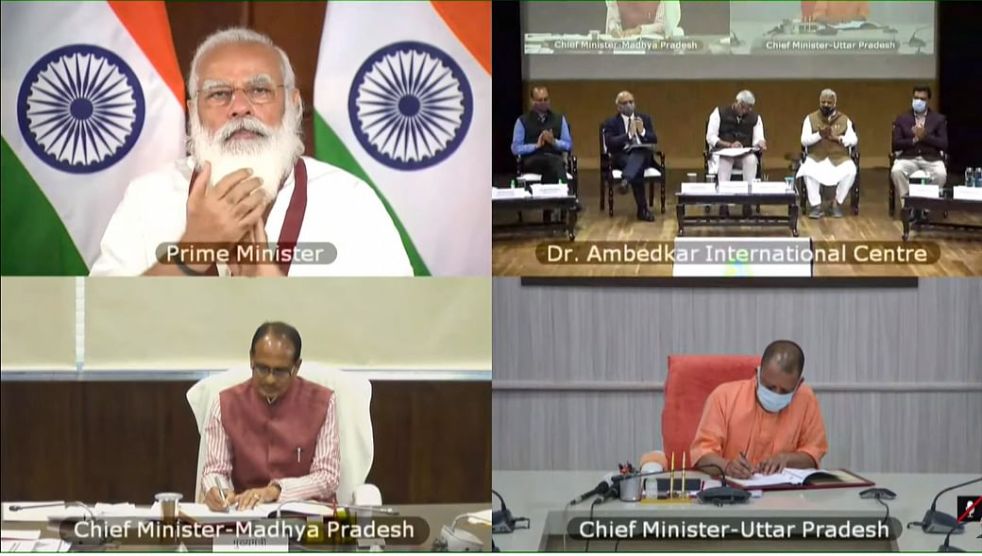
DRP 220321: PM presiding over proposal for destruction of 46 lakh trees, Bundelkhand & Panna Tiger Reserve on World Water Day?
There cannot possibly be any worse news on World Water Day for India than that the Prime Minister is presiding over the agreement between Uttar Pradesh and Madhya Pradesh Chief Ministers to destroy some 46 lakh trees, Panna Tiger Reserve, Ken River, Bundelkhand and also downstream Banda district. All to export water from Bundelkhand to Upper Betwa basin. All this in the name of pushing the mindless project called Ken Betwa River Link Project. Why is the government pushing this destructive project, a Rs 38 000 Crore proposition? The answer to that question is in that question: it is a Rs 38 000 Cr proposition!
There is still some hope though for the people of Panna, Banda and Bundelkhand if there is any respect for the law of the land. This is because the project does not have final forest clearance and the conditions of the stage I forest clearances are not implementable. The Wild Clearance of the project is challenged by the Central Empowered Committee of the Supreme Court, following a petition. The Environment Clearance to the project has also been challenged before the National Green Tribunal. Let us hope there is sufficient respect for the law of the land, to ensure that the project does not go ahead even with the agreement signed. But a key propriety question arises is, should the prime minister endorse a project that does not have all the statutory clearances and legal challenge to whose clearances are before the judiciary?
But the prime minister’s advocacy for rainwater harvesting on the same also loses a lot of its credibility, seeing that he is presiding over this destruction that goes totally against the central message of harvesting rain where it falls, when it falls.
Continue reading “DRP 220321: PM presiding over proposal for destruction of 46 lakh trees, Bundelkhand & Panna Tiger Reserve on World Water Day?”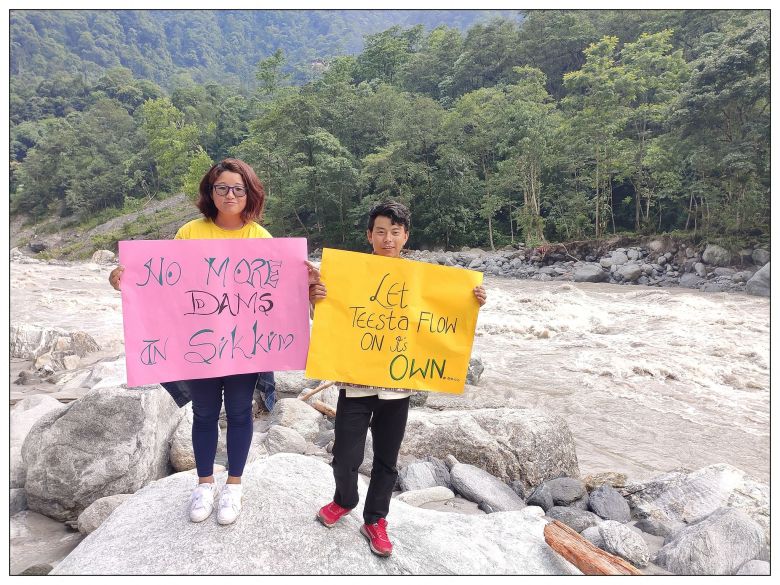
2021 International Day of Action for Rivers: Opposition against HEPs, dams in India
(Feature image source:-A Sikkim tribe trying to save ‘paradise’ from woes of development.)
March 14 is International Day of Action for Rivers, against destructive projects. The main objective is to ensure that the river people have their say in the decision-making processes which affect their rivers and related livelihoods sources and that the decisions are informed decisions.
Here we are bringing forth the struggles of riverine communities in India in past one year to make decision makers aware of their hardships and impacts of destructive hydro and dam projects on the riverine eco-system.
Continue reading “2021 International Day of Action for Rivers: Opposition against HEPs, dams in India”
DRP 080321: Will Madras HC action help save water bodies?
While on the face of it the Madras High Court order on March 2, 2021 that all district collectors of Tamil Nadu must upload by March 17, GPS/ satellite images of all the water bodies in their districts is not only welcome, it needs to be done in all the districts across India. This order is by the bench of Chief Justice Sanjib Banerjee and Justice Senthilkumar Ramamoorthy.
The same bench had earlier in January 2021 said, in response to a PIL that the government officials must have zero tolerance towards encroachment of waterbodies and ensure that every inch of such encroachment gets removed at the earliest by following the due process of law. The PIL had sought for removal of encroachments from a two-acre swamp at Arehalla in Ithalar, a village in Nilgiri hills.
While these are welcome, we hope these orders get implemented and provisions be made by the HC to ensure accountability of the DMs to ensure that all information is put out on the district water bodies website in form and manner that people understand as also in english and should be archived so that the information can be used in future. The information from the past should also be put up on such websites and a transparent, participatory monitoring of the water bodies be instituted for each district.
Continue reading “DRP 080321: Will Madras HC action help save water bodies?”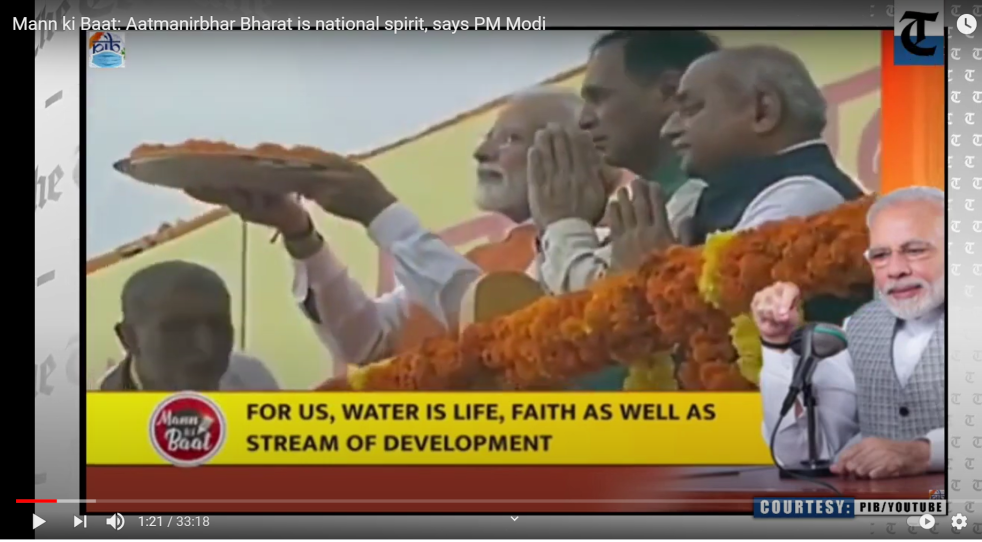
DRP 010321: Actions speak louder than words on PM’s appeal for water, river conservation
In his #MannKiBaat on Feb 28, 2021, India’s Prime Minister Shri Narendra Modi appealed to people to conserve our Rivers, Water, referring to Magh Purnima on Feb 27 2021 and Sant Ravi Das teachings. He also said that India’s traditions, festivals, scriptures, etc have so much place for rivers, also mentioning the Kumbh mela this year at Haridwar. He mentioned that a 100 day campaign will be launched soon by the Jal Shakti Ministry for rainwater harvesting. He gave several examples from across the country where individuals and groups have taken up such words.
All that sounds fine and welcome. But the trouble is that his all-powerful government is working consistently and with increasing intensity towards opposite direction. This very week his Power Minister expressed ignorance if hydropower projects have any environmental adverse impact, right in the face of destruction wrought by the hydropower projects in Chamoli disaster in Uttarakhand on Feb 7, 2021. Why is the Union Government still pushing hydropower projects which are no longer even economically viable, they never were environmentally sustainable or socially acceptable.
Continue reading “DRP 010321: Actions speak louder than words on PM’s appeal for water, river conservation”DRP 220221: Case against NTPC for criminal negligence in Tapovan Project?
Consider these facts: The NTPC, the project developer, failed to appraise that the 520 MW Tapovan Vishnugad Hydropower project, where maximum damage and deaths occurred in Chamoli Avalanche disaster that started on Feb 7, 2021 morning, is in Paraglacial influence zone. Such an appraisal would have meant a number of implications, including possibly a decision that the project is geologically unviable.
NTPC failed to take any action to save the workers even after it was known upto 10-20 minutes before the disaster struck. Something that Mangshri Devi could do to save about 25 lives, NTPC could not do.
The project had faced several disasters since 2008, but fails to put in early warning system in place. For several days post disaster, reports say that NTPC failed to share even the detailed map of the tunnel where over 30 workers were stuck. NTPC’s disaster management system showed no signs of existence throughout the disaster. Reports say that the barrage gates were closed, which if they were open, it may have helped the flow of the flood debris downstream, which in turn could have possibly meant more time and saving of more lives.
Continue reading “DRP 220221: Case against NTPC for criminal negligence in Tapovan Project?” SANDRP