Dams · DRP News Bulletin

DRP News Bulletin 3 Sept 2018: CHINA HAS STARTED DECOMMISSIONING DAMS

In a mountain village in southwest China’s Sichuan province, authorities have demolished seven small dam projects this year along a river to clear illegal developments in a new nature reserve. The demolition is part of a nationwide programme to close hundreds of tiny and often ramshackle dams and turbines and bring order to China’s massive hydropower sector after years of unconstrained construction.

The dams sat on an unnamed tributary of the fierce and flood-prone Dadu river, which feeds into the Yangtze, Asia’s largest and longest river, where the government says the “irregular development” of thousands of small hydropower projects has wrecked the ecology. But green groups say the campaign will not necessarily save the environment because it will not affect big state hydropower stations, which they say have caused the most damage.

On the 48 km Zhougong, authorities have already demolished small projects built in nature reserves or encroaching upon new “ecological red lines” drawn up to shield a quarter of China’s territory from development.

The government says small dams have disrupted the habitats and breeding patterns of many rare species of fish, although green groups argue the damage wrought by bigger dams is more severe, with entire towns and ecosystems submerged in water, which they say increases the risk of earthquakes, landslides and even climate change.

Continue reading “DRP News Bulletin 3 Sept 2018: CHINA HAS STARTED DECOMMISSIONING DAMS”

Dams · DRP News Bulletin

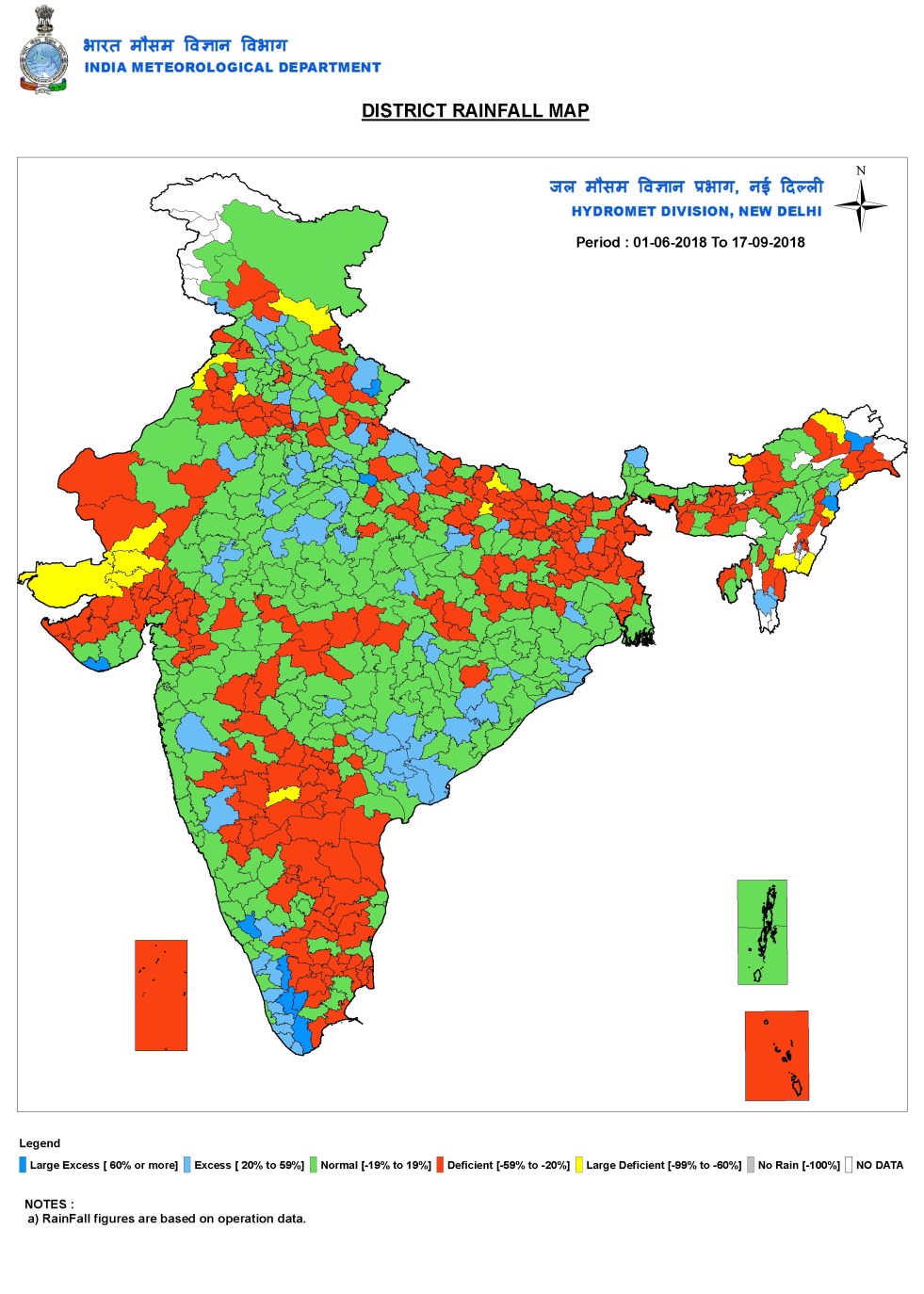
DRP News Bulletin 6 August 2018 (2018 is Deficient Monsoon for Lakhs of Farmers)

(Feature Image: IMD Sub-Division wise Weekly Rainfall Map 26 July – 1 Aug. 2018)

Amid news of monsoon being normal, farmers in several parts in the country have started facing irrigation water problems affecting sowing of Kharif crops. Apart from, insufficient rainfall, mismanagement of water resources is turning the situation grim for them.  

As per reports, water levels in Bhakra and Pong dams in Himachal has plunged to lowest in decades. As a result dam authority has issued advisory to lakhs of farmers in Haryana, Punjab and Rajasthan to use water judiciously. Some official also said that the beneficiary states lacks efficient water management practices which is making the situation tough for them.

The Sri Ram Sagar Project in Telangana has no irrigation water. As per state water minister, a Rs. 1100 crore work was going on to renovate the dam. Meanwhile farmers of about 24 villages have started protest demanding irrigation water form SRSP for their standing crops. Given the tense situation, the State Govt has deployed heavy police forces to control farmers agitation.

At the same time, farmers in North Gujarat farmers have lost 40% of sown crops particularly in Ahmedabad, Morbi and Surendranagar. Non availability of Narmada waters have added to the problems. It is worth to mention that mismanagement of water during past four months in Narmada dam by the authority, has worsened the plight of farmers. Meanwhile, there are reports of furious Surendranagar farmers themselves opening the dam gates going against authority.

Similarly, lack of rainfall in Beed district which is part of Marathwada in Maharashtra has affected the rural population badly. In fact, the rainfall situation in a fourth of India, including Bihar and Uttar Pradesh, was in stark contrast to the rest of the country. Overall, the southwest monsoon in 2018 was only 2 % below normal by July, 27.

The southwest monsoon in Bihar was almost 40 % below normal till July 27 and the state was set to be formally declared ‘drought-hit’. It is worth to mention that the monsoon scenario seems less than reassuring, based on Skymet latest forecast and reading between the lines of IMD Aug. 3, press release.

Continue reading “DRP News Bulletin 6 August 2018 (2018 is Deficient Monsoon for Lakhs of Farmers)”

Dams · DRP News Bulletin

DRP News Bulletin,16 July 2018: Dam Safety Is Needed, Can We Depend On CWC Engineers Alone?

India certainly urgently needs credible measures to achieve both structural and operational safety of dams. As the HINDUSTAN TIMES editorial emphasizes, we need much greater transparency, accountability and participation of independent, non government experts at every level of functioning of Dam Safety mechanism. Current Dam Safety Bill draft falls far short of that. This is also underscored by many of the news we bring in this July 16, 208 issue of DRP News Bulletin.

The Tamil  Nadu CAG report, as Indian Express reports, has clearly said that the Chennai floods  of Dec 2015 were majorly due to the wrong decision of dam operators to release 29000 cusecs of water for 21 hours, in violation of all safety norms, but no was punished for this wrong decision. The same has always been the case.

The Bulletin also brings the warning from, no less than Chief Minister of Assam to NEEPCO that if NEEPCO, the operator of the 405 MW Ranganadi Dam releases water from the dam without warning and when downstream areas are facing  floods, they will have to bear the losses people suffer. Continue reading “DRP News Bulletin,16 July 2018: Dam Safety Is Needed, Can We Depend On CWC Engineers Alone?”

Dams

Tamil Nadu Rivers Review 2017: Despite Drought; Diversion of Rivers’ Waters To Private Companies

This sixth compilation under Rivers Review series, presents situation of rivers in Tamil Nadu in the year 2017. 

Tamirabarani River Opposition grows against Tamirabarani water to soft drink units In March 2017, various citizen groups submitted petitions to Collector M. Karuankaran, opposing the decision to supply huge quantity of water from the Tamirabarani to beverage manufacturing units in Gangaikondan Industrial area. They also asked the State Government to cancel the agreement with the soft drink manufacturing units on supplying the river water and make sincere efforts to revive the river. http://www.thehindu.com/news/national/tamil-nadu/tamirabarani-protest-intensifies-tirunelveli/article17457199.ece (The Hindu, 13 March 2017)

Continue reading “Tamil Nadu Rivers Review 2017: Despite Drought; Diversion of Rivers’ Waters To Private Companies”

Dams

West India Rivers Review 2017: Governments, Industries Destroy Rivers

After review of North India and Maharashtra Rivers, SANDRP presents the development surrounding rivers in rest of West Zone: Gujarat, Goa, Madhya Pradesh and Rajasthan states in 2017.

Gujarat Rivers

Dams, industrial pollution killing State Rivers In MoEF report, Gujarat ranks 4th among top 5 states with highly polluted rivers. Sabarmati is among Gujarat’s 20 most polluted rivers including Narmada and Mahi. Over Rs 200 cr has been spent to curb pollution in Sabarmati & Mindola rivers. This fund is the highest amount ever spent outside the Ganga river conservation project on which Uttar Pradesh has spent Rs 917.24 crore, West Bengal Rs 411.26 crore and Bihar Rs 216.46 crore. As per activist, Rohit Prajapati, industrial effluents are being released in big rivers like Sabarmati, Mahi and Narmada without being treated and big dams have been built on big rivers due to which the rivers are drying up and vanishing as a result, the condition of rivers in Gujarat is going from bad to worse. https://timesofindia.indiatimes.com/city/ahmedabad/polluted-rivers-guj-ranks-4th/articleshow/62685910.cms (The Times of India, 29 Jan. 2017)

Continue reading “West India Rivers Review 2017: Governments, Industries Destroy Rivers”

Dams

Maharashtra Rivers Review 2017: Multi-colored Rivers!

About Rivers Pollution and Pollution Control Board

Highest number of polluted rivers Maharashtra state has 49 polluted river stretches, highest in the country, which including Mithi, Ulhas, Vaitarna, Godavari, Bhima, Krishna, Tapi, Kundalika, Panchganga, Mula-Mutha, Pelhar and Penganga. 3,000 MLD of untreated sewage and industrial effluents are discharged into the state’s water bodies daily. http://www.hindustantimes.com/mumbai-news/pollution-in-three-maharashtra-rivers-is-nine-times-permissible-limit/story-RCuTrl8zi8tmFoOvgKR2zI.html(Hindustan Times, 16 Nov. 2017) 

According to a report by Union Environment Ministry, Maharashtra generates about 8,143 Million Liter per Day (MLD) which is almost 13 per cent of the country’s sewage, butclaims to treats 5,160.36 MLD.In this way Maharashtra is releasing at least 3000 MLD untreated sewage in rivers, creeks and wetlands areas. http://www.hindustantimes.com/mumbai-news/834-factories-across-maharashtra-shut-down-in-2-years-for-causing-pollution-mpcb/story-MrmmXa9XH9Vdkzu2wKSdcL.html (Hindustan Times, 22 Dec 2017)

Continue reading “Maharashtra Rivers Review 2017: Multi-colored Rivers!”

Dams · DRP News Bulletin

DRP News Bulletin 26 February 2018 (Banda People Also Protest Against Ken Betwa Link)

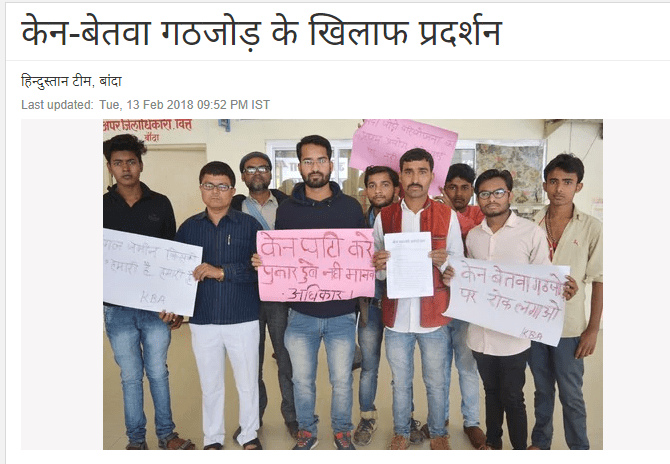
When Central Government is trying to push Ken Betwa link project terming it as beneficial for both Madhya Pradesh and Uttar Pradesh, local people of Banda are now also protesting against it, in addition to the people of Panna that are already opposing it. On Feb. 13, 2018, the Ken Bachao Samiti comprising of farmers, citizens and social workers in Banda sat on a Dharna before district magistrate office. The group have also sent a memorandum to the President of India, demanding immediate cancelling of the project. Raising serious concerns over environmental and social of the linking project, they asked demanded proper impact assessment and public consultation and said the project wont be allowed to go forward. Indeed, as they have said, there has been no downstream impact assessment and people of Banda are likely to loose their river.  https://www.livehindustan.com/uttar-pradesh/banda/story-demonstrate-against-ken-betwa-alliance-1800951.html (Hindustan Hindi,13 Feb. 2018) 

Continue reading “DRP News Bulletin 26 February 2018 (Banda People Also Protest Against Ken Betwa Link)”

Dams · DRP News Bulletin

DRP News Bulletin 12 February 2018 (With Innovative Ideas Hyderabad, Chennai & Delhi Are Reviving Its Wetlands)

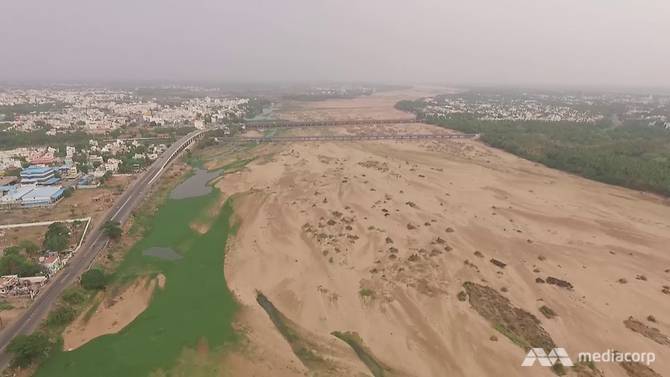
This week there are exemplary and encouraging wetlands revival stories from three metro cities of Chennai, Hyderabad and Delhi.  In the first example from Hyderabad, meticulously chosen plant species such as tulsi, aswagandha, citronella and hibiscus have been used to create an artificial island to clean Neknampur Lake. The treatment islands are composed of four layers of which the bamboo base keeps the entire structure afloat. Based on soil-less hydroponics, these floating treatment wetlands absorb excess nitrates, thereby reducing the chemical content of the lake water. Microorganisms present in the wetland break down organic matter while the root systems filter out pollutants and sediments. https://www.thenewsminute.com/article/3500-saplings-floating-islands-help-rejuvenate-hyd-neknampur-lake-75819 (The News Minute, 3 Feb. 2018)

Image by: Madhulika Choudhary

Similarly, Chennai-based Care Earth Trust along with the public works department (PWD) and the civic body has managed to restore three urban lakes. While many of the smaller wetlands have vanished over time, many mid-sized wetlands seem to have shrunk by almost 65 percent. Thanks to their joint effort, invasive hyacinth was removed from the Narayanapuram Lake in Pallikaranai, while sewer lines, which emptied into the Perungalathur Lake, have now been plugged. A detailed restoration proposal has been forwarded to the PWD regarding the Korattur-Madhavaram-Ambattur lakes. https://timesofindia.indiatimes.com/city/chennai/hyacinth-out-sewer-line-plugged-three-water-bodies-restored/articleshow/62748110.cms (The Times of India, 2 Feb. 2018)

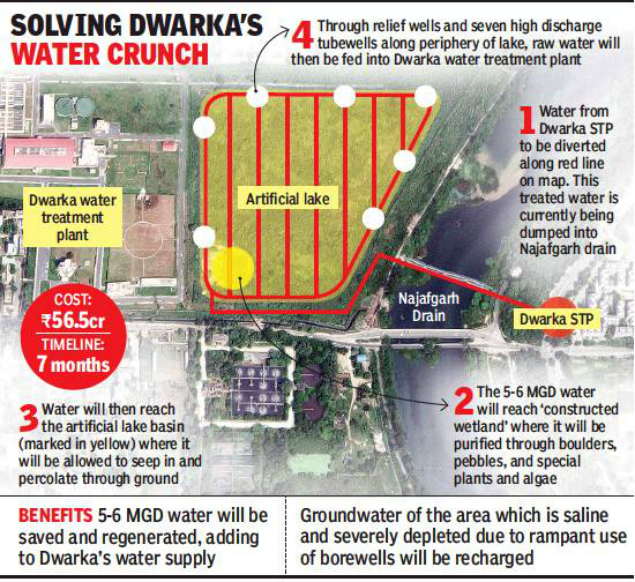
Meanwhile, Delhi Jal Board (DJB) has taken up interesting new project of creating an artificial lake in Dwarka. The project will supply water in sub-city and improve ground water level too. DJB has approved Rs. 56 crore for the project which will be completed in next seven months.  This would the first model project wherein a lake will be used to augment water supply. The special lake is being created next to the Dwarka water treatment plant (WTP) will have a sand bed to allow maximum percolation of water into the ground. It will have a capacity of 10 million gallons (MGD). The project is expected to add supply of 5-6 million gallons water to Dwarka every day.

Continue reading “DRP News Bulletin 12 February 2018 (With Innovative Ideas Hyderabad, Chennai & Delhi Are Reviving Its Wetlands)”

Dams · Wetlands

India Wetlands Review 2017: Important Court Orders

SUPREME COURT The Supreme Court of India is hearing a matter Writ Petition(s)(Civil) No(s). 230/2001 in which there have been several orders of consequence this year (e.g. 8 Feb 2017 & 16 Aug 2017) for protection of wetlands.  In spite of several directions for identification, preparation of brief documents, implementation of rules 4, notification of wetlands under the Wetlands Rules 2010, hardly any progress has happened.

Rule 4 of Wetlands Rules 2010 applicable to Wetlands of size ≥2.25 ha 

 “National Wetland Inventory & Assessment” was filed in SC. This Brochure indicates on page 11 that 2,01,503 wetlands have been mapped at 1:50,000 scale. All these wetlands have ‘an area of more than 2.25 hectares’. As a first step, the ‘Brief Documents’ with regard to these 2,01,503 wetlands should be obtained by the Union of India from the respective State Governments in terms of Rule 6 of the Wetlands (Conservation and management) Rules, 2010.

Continue reading “India Wetlands Review 2017: Important Court Orders”

Gujarat · Madhya Pradesh · Maharashtra · Narmada

Sardar Sarovar gate closure without resettlement or justification is a inhuman, unjust decision: Will SC intervene?

On June 17, 2017, a PIB Press Release from Union Ministry of Water Resources announced, “Narmada Control Authority (NCA) has cleared the final raising of Sardar Sarovar Dam (SSD) in Gujarat by lowering of gates and impounding of water in the reservoir upto its Full Reservoir Level (FRL) of EL 138.68 mts. The NCA which met here yesterday under the Chairmanship of Dr. Amarjit Singh, Secretary (WR, RD & GR) considered all aspects of environmental and Resettlement and Rehabilitation (R&R) issues.”

The gate closure will lead to submergence and displacement of lakhs of tribals and farmers of Gujarat, Madhya Pradesh and Maharashtra, without even proper resettlement as legally required. There is also no justification for the decision as the canal infrastructure necessary to use the additional water that the dam will store with increase in height from 121.92 mts to 138.68 mts is not even ready. Continue reading “Sardar Sarovar gate closure without resettlement or justification is a inhuman, unjust decision: Will SC intervene?”