Dams · DRP News Bulletin

DRP: 19 Sep 2016

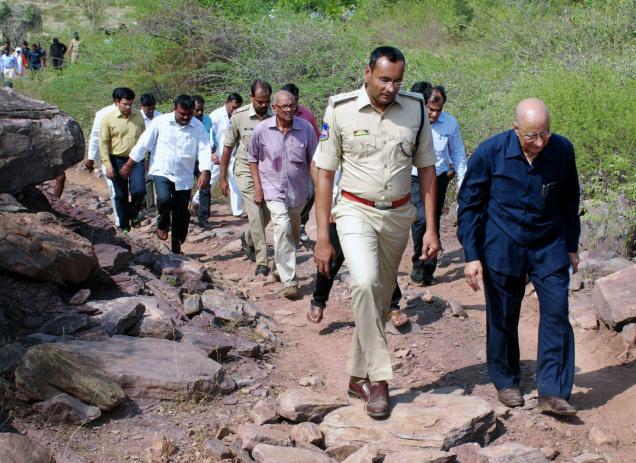
EAC Panel Visiting the site in Dec 2015

Centre EAC defers clearance to Yadadri Power project The Expert Appraisal Committee (EAC) under the Ministry of Environment has deferred its decision for granting environmental clearance for the 8,000 MW Yadadri Thermal Power Station in Telangana by TSGENCO due to a “lackadaisical” approach in preparing documentation. The EAC said the Environmental Impact Assessment (EIA) report was incomplete and there was lack of clarity on many issues raised by the Committee earlier. EAC on Thermal Power Companies has in its minutes meeting held on 29-30 2016 held the EIA consultants guilty of cut & paste jobs which can be found here.  At some places, it is mentioned that coal will be transported from two ports and in some other places, four ports are mentioned. Hence, complete and specific details regarding coal import ports and coal transportation routes were not given. Further it is also observed that two important sections of the EIA report- “risk assessment” and “disaster management plan”- are almost entirely generic and contain hardly any site or project specific aspects.

Continue reading “DRP: 19 Sep 2016”
Dams · DRP News Bulletin

DRP: 16 Aug 2016 (When shall We Start Respecting Our Rivers & Provide Space to Them)

In absence of clear and strict laws to define the rivers zone and demarcate flood plains, our rivers are increasingly becoming subject to exploitation. When the river spaces of our National River Ganga & Yamuna River which flow through National Capital are not well protected, then the plight of other rivers across country can be understood.

This week, there are two news reports which again are highlighting this cause. Interestingly in both cases, legal fight is going on in green tribunal which indirectly deals with the issue though with no success so far. In  fist case, NGT has directed Govt. of Uttarakhand to demarcate floodplains of Ganga river from its origin in Gomukh till Roorkee, a 65-km long stretch in the state. The tribunal has posted the matter for the next hearing on Oct 20 and asked the state government to submit its compliance report by then. The bench also sought a report on the total number of hotels on the 65-km stretch from the govt. The green panel allowed the state govt to take the help of Roorkee-based National Institute of Hydrology for identification of flood plains. Construction on flood plains and inside river zones is a sure invitation to disaster such as Kedar Nath Floods in 2013 when human made infrastructures erected very much inside river zones were raised down like sand dunes  by enraged rivers. It is sad and even more worrisome that we have learnt nothing from such events.  

In second incident Govt. of Uttar Pradesh has drawn green tribunal’s ire over constructions in floodplainsThe apex court for environmental issues, expressed its dissatisfaction over the manner in which State Govt filed its report on the distance of various real estate projects from the Yamuna flood plain zone in the city. Coming down heavily in the state govt and various Agra authorities, Agra Development Authority (ADA) & irrigation department, it stated that “authorities were expected to act fairly and judicially while complying with its directions.” The tribunal appointed registrar general Mukesh Kumar Gupta as local commissioner and asked him to file a correct position of flood plains and the distances of the various projects. Meanwhile,  ADA has been asked to produce the original records before the tribunal on the next date of hearing, Aug 19.

Floods & floodplains are integral part of a river eco-system. Both has essential role to play in smooth functioning of multiple ecological processes that takes place throughout  the journey of a river. It is abused of floodplains that our cities are facing flood threats. It is surprising to see how govts have so far failed in protection of flood plain.

With incidents of excess rainfall, cloud burst & land slides happening at increased frequency, it is time to define our river zone and flood plain clearly in the own interest of human being.

Continue reading “DRP: 16 Aug 2016 (When shall We Start Respecting Our Rivers & Provide Space to Them)”
Cumulative Impact Assessment · Dams · Ministry of Environment and Forests

Transparency in Environment Governance? Expert Meeting on River Projects does not have documents in open domain

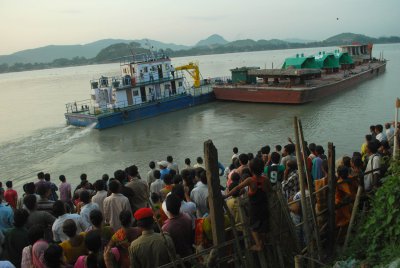
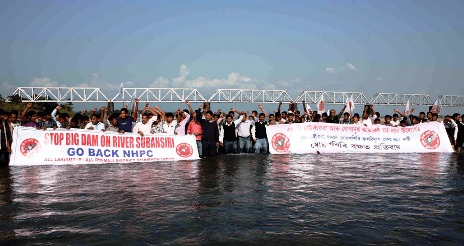
Above: Protest against Lower Subansiri Project in Assam. Basin Study of Lower Subansiri is also a part of intense debate in Assam. Now these studies are under wraps by the MoEF and CC

Non-transparent Environment Governance does not help anyone, neither is it legal. In the upcoming Expert Meeting of the MoEF and CC on River Valley Projects (read dams), documents pertaining to 6 of the 8 projects being considered are not available!

We have appealed to the new Minister to take swift action against this non-transparent and non-democratic governance in the MoEF and CC. Please feel free to send similar letters to the email addresses mentioned below. Continue reading “Transparency in Environment Governance? Expert Meeting on River Projects does not have documents in open domain”

Wetlands

Threats to East Kolkata Wetlands are threats to Kolkata: Majhi jo nau dubaaye…

Guest Blog by: Chicu Lokgariwar (chicu.l@gmail.com), Usha Dewani (usha.dewani7@gmail.com)

‘Majhi jo nau dubaaye, to usey kaun bachaaye’ laments a popular song[i]. It literally translates as: ‘If an oarsman sinks his boat, who can save it?’

This is a question that concerned citizens of Kolkata are asking themselves today in connection with the famed East Kolkata Wetlands. A notified Ramsar site, this extensive wetland spread over 12,500 Ha has been protected for decades by the communities who live within it and by The East Kolkata Wetlands (Conservation and Management) Act, 2006. Today, it is the Environment Minister of West Bengal who has taken it upon himself to destroy the wetlands. Continue reading “Threats to East Kolkata Wetlands are threats to Kolkata: Majhi jo nau dubaaye…”

Wetlands

Press Release: World Wetlands Day 2016: Complete Regulatory Vacuum around India’s Wetlands

No National or State Wetlands Authority

No Wetland Rules for 4 yrs

The recent Chennai Flood Disaster of Dec 2015 and the Jammu and Kashmir Flood disaster of Sept 2014 have underlined that Wetlands are important not only for biodiversity & livelihoods of millions, but they are an integral mechanism for flood control and regulation in Rural and Urban India.

India is losing Wetlands at an alarming rate, as much as 38% in a decade (1991-2001). However, for the past four years, there has been a complete regulatory vacuum around the country’s wetlands, despite the Notification of Wetlands (Conservation and Management) Rules with much fanfare in 2010. Continue reading “Press Release: World Wetlands Day 2016: Complete Regulatory Vacuum around India’s Wetlands”

Interlinking of RIvers

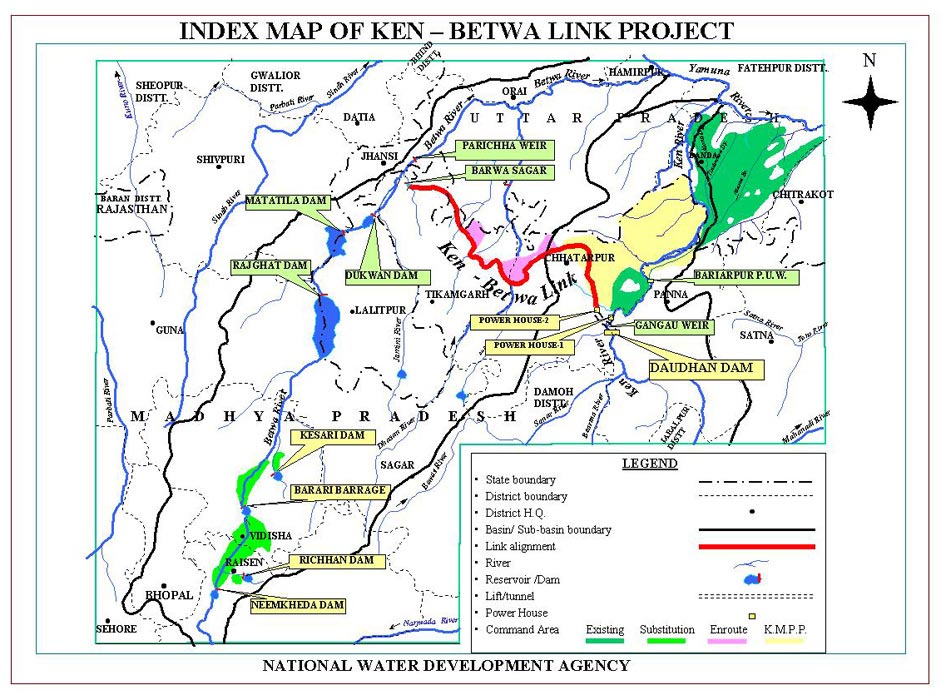
What ails DPR and EIA of Ken-Betwa Link Project: A Note for EAC of MoEF&CC

Above: Ken River in PTR – Glimpse of long deep gorge (Photo by RS Murthy, former Field Director of PTR)

Guest Blog by Hemendra Singh Panwar (Padma Bhushan, director of Project Tiger (1981-85 and first director of Wildlife Institute of India (1985-94)

My professional conscience impels me to make this submission, challenged as it is by the reliance on half-truths and misinformation by the Project proponents to justify environmental and wildlife clearances for Ken-Betwa River Linking Project (KBLP) from the State and Union governments.  Let me at the outset clarify that I am not and have never been an activist even to promote conservation, though I did strive my best to this end within the system.  I also have no phobia against dams and canals but do carry the conviction that ill-conceived such projects using wanton half-truths to present a mirage of unachievable benefits can but severely impact ecological and field conservation status while failing to deliver the claimed outcomes.
Continue reading “What ails DPR and EIA of Ken-Betwa Link Project: A Note for EAC of MoEF&CC”

Dams

Book Review: GREEN SIGNALS: In search of a Middle Ground

(GREEN SIGNALS: Ecology, Growth, and Democracy in India; Jairam Ramesh; Oxford University Press; 605 pages; Rs 850)

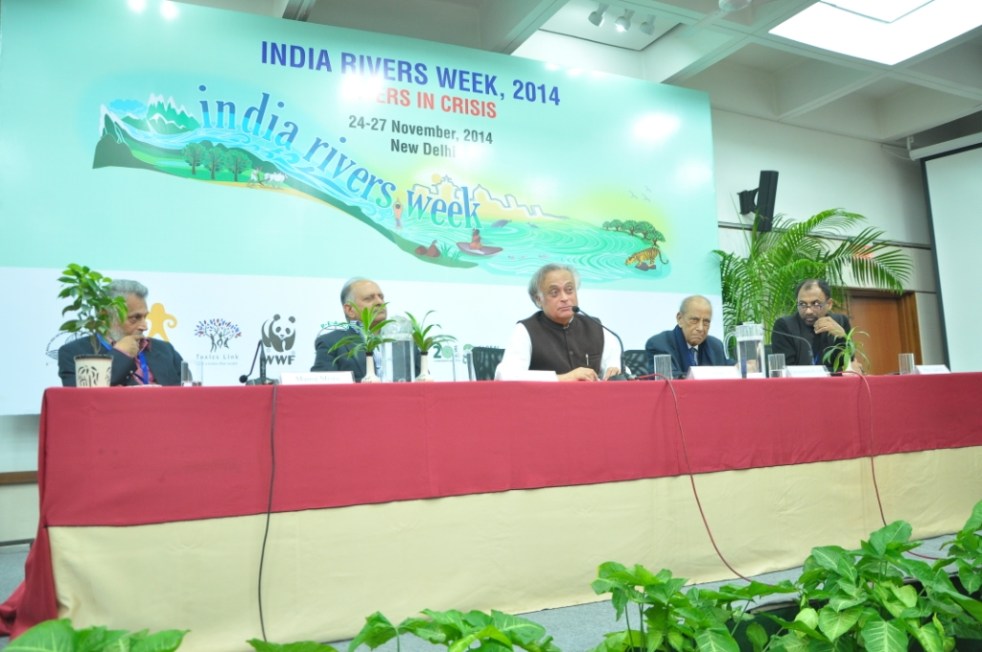
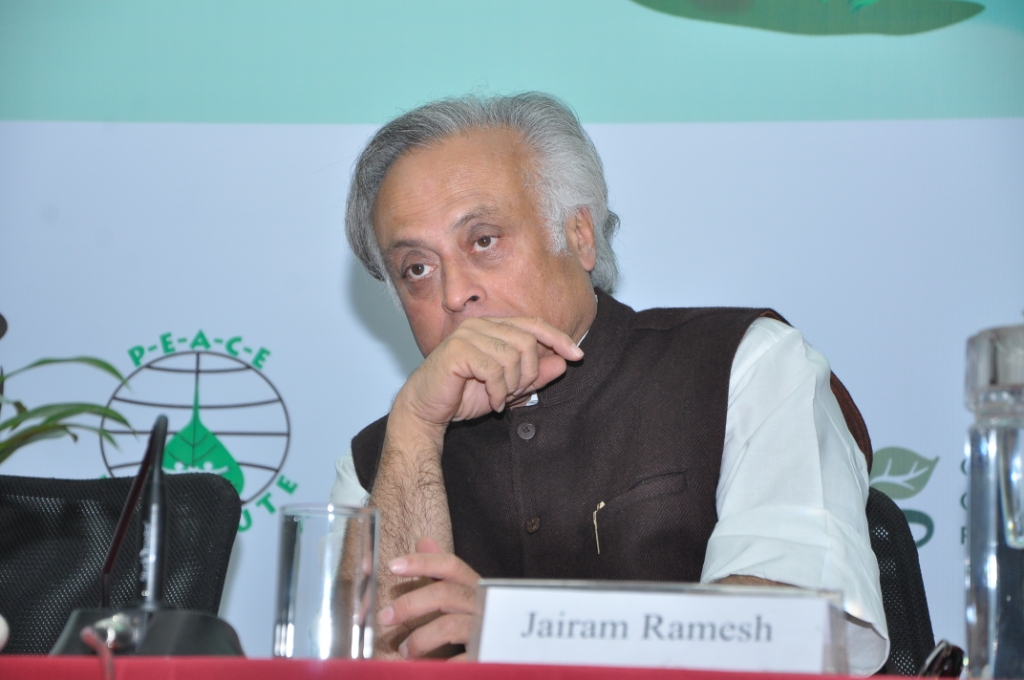
DSC_2382Jairam Ramesh (JR for short) is arguably, India’s best ever Environment Minister. His book Green Signals is essentially providing records and some explanations of his own actions during his 25 month tenure at Paryavaran Bhawan, the Ministry of Environment and Forests. JR in general laments the industry mindset on environment and says the NDA government’s attitude is dangerous. Grow now, pay later mindset won’t work in India. He says in India sustainability & ecological issues are not luxury but necessity & he tries to explain what they mean in the context of economic growth. Continue reading “Book Review: GREEN SIGNALS: In search of a Middle Ground”

Expert Appraisal Committee · River Valley Projects

Why the Decisions and minutes of the 86th meeting of EAC on River Valley Projects need to be reviewed

September 22, 2015

To

Chairman and Members,

Expert Appraisal Committee on River Valley Projects,

Ministry of Environment and Forests,

New Delhi

Respected Chairman and Members,

We have just seen the minutes of the 86th meeting (uploaded on Sept 14, 2015, but clearance letters in some cases have already been issued even before the EAC minutes are made public or the minutes are finalised at the next EAC meeting) of the Expert Appraisal Committee on River Valley Committee, held on Aug 24-25, 2015.

The minutes make a disturbing reading. The EAC seems to be bending every ecological norm, facts and even legal stipulations to push ahead with every project that the government wants them to clear. There seems to be no application of mind from the EAC on the proposals. The minutes are not even internally consistent. It is putting forward facts in misleading fashion to give a wrong picture. Continue reading “Why the Decisions and minutes of the 86th meeting of EAC on River Valley Projects need to be reviewed”

Interlinking of RIvers

Letter to MoEF Expert Appraisal Committee: Reject Ken Betwa Proposal

August 21, 2015

To:

Chairman and Members,

Expert Appraisal Committee on River Valley Projects,

Union Ministry of Environment and Forests,

New Delhi

Subject: Concerns about Ken Betwa River Link Proposal

Respected Chairman and Members,

The agenda for the Aug 24-25, 2015 meeting of EAC includes the proposal to consider Environment Clearance for the Ken Betwa River Link Project in Madhya Pradesh. In that context, we would like to raise following concerns: Continue reading “Letter to MoEF Expert Appraisal Committee: Reject Ken Betwa Proposal”

Ministry of Environment and Forests · Ministry of Water Resources

MoWR report on “Assessment of E-Flows” is welcome, needs urgent implementation

A three member committee set up by the Union Ministry of Water Resources, River Development and Ganga Rejuvenation (MoWR for short) has submitted a report in March 2015, which makes welcome recommendation on “Assessment of Environment Flows”. These recommendations on Environmental Flows (E-Flows) need to be implemented immediately for better health of our rivers. The committee members include Dr Vinod Tare of Indian Institute of Technology Consortium (IITC), senior officials of Union Ministry of Environment, Forests and Climate Change (MoEF for short, it was represented by Dr Shashi Shekhar, Special Secretary in MoEF) and MoWR (represented by Dr Amarjeet Singh, Additional Secretary, MoWR). Sushri Uma Bharti, Union Water Resources Minister[1] and even the recent meeting of National Ganga River Basin Authority (NGBRA) on March 26, 2015[2], headed by the Prime Minister referred to this committee. Continue reading “MoWR report on “Assessment of E-Flows” is welcome, needs urgent implementation”