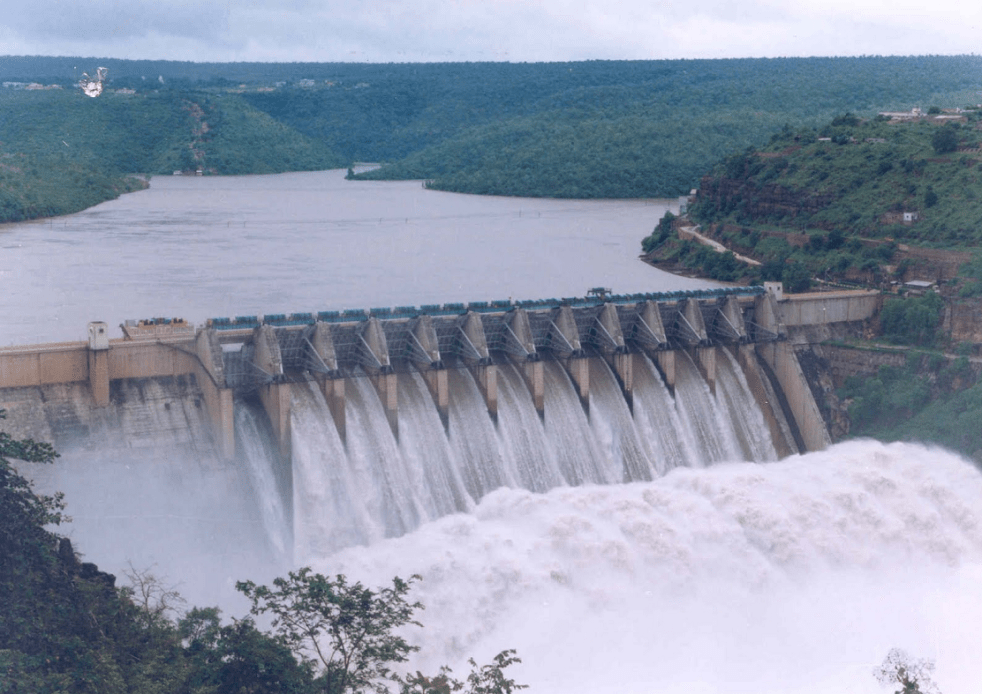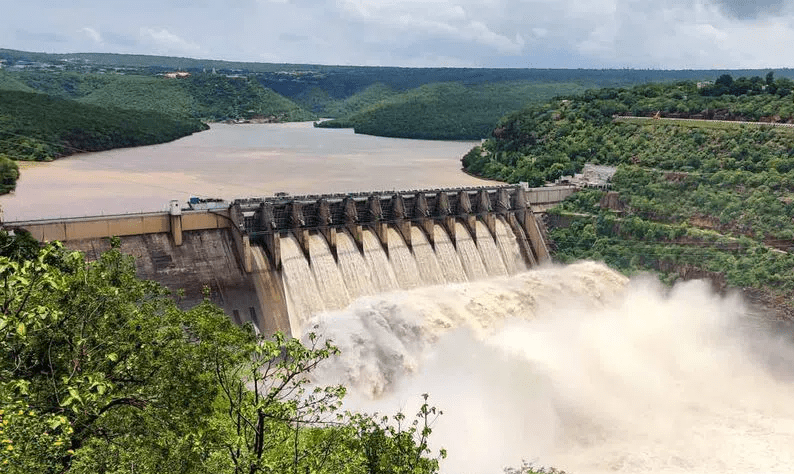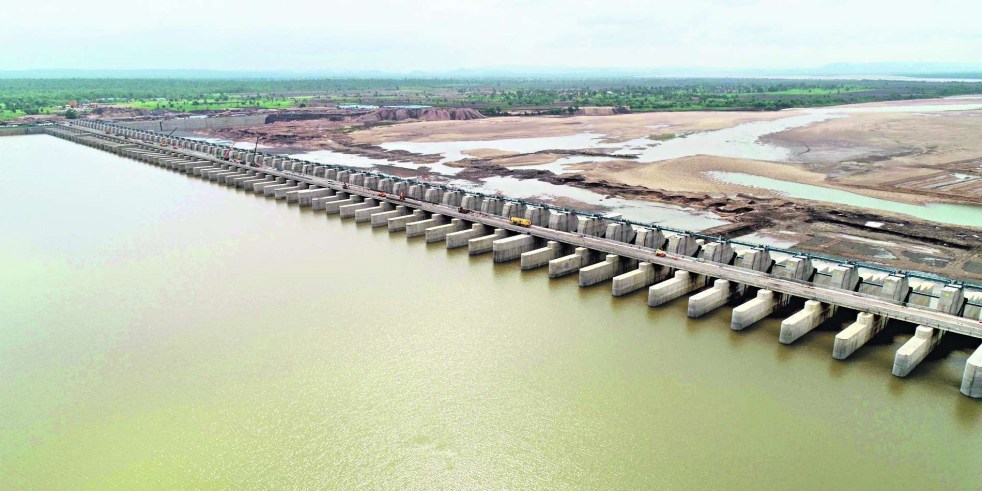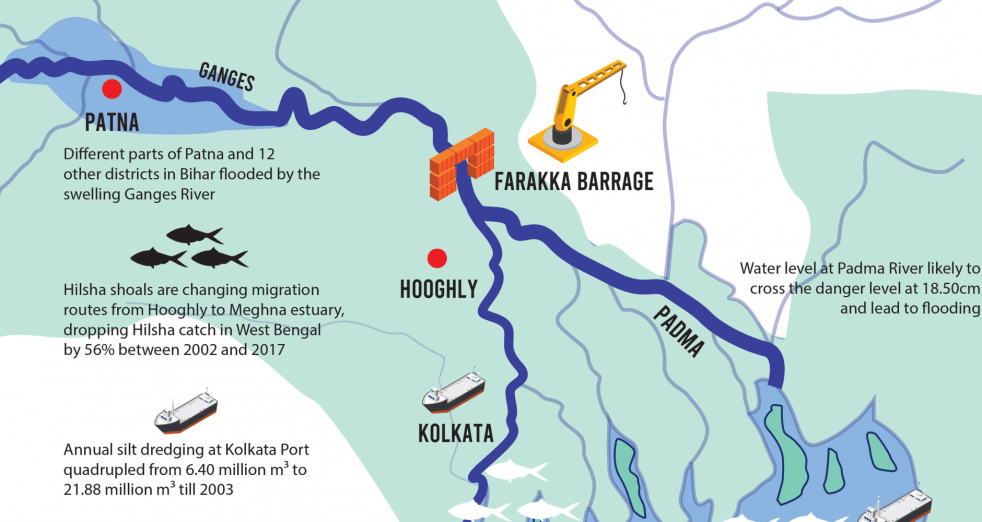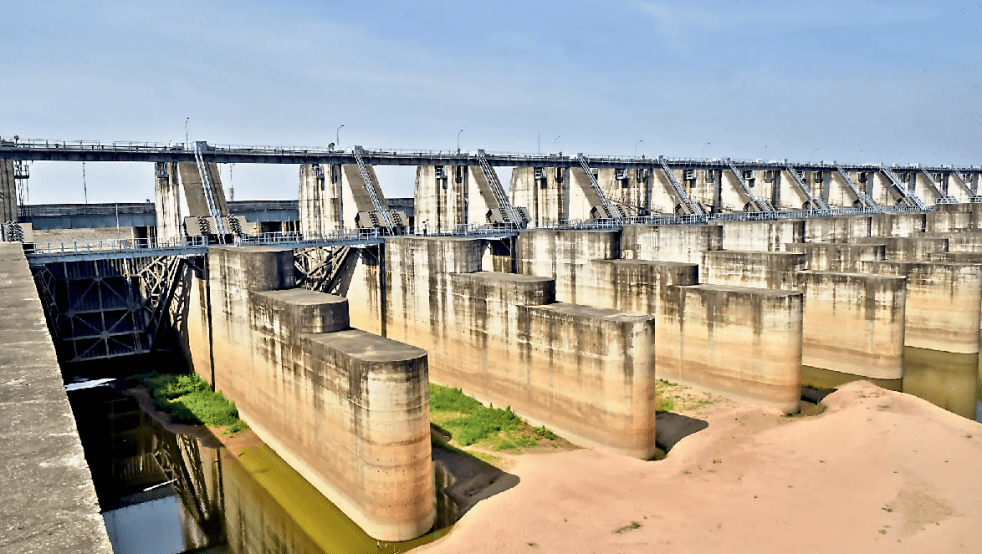
A series of moves by the current Central Government, along with some of the state governments since March 2021 have tried to orchestra a push for the Interlinking of Rivers (ILR) in a manner somewhat similar to what happened in 2002 under the previous BJP government led by Shri AB Vajpayee. The 2002 effort did not achieve much on ground and the initiatives two decade later are unlikely to achieve any progress either.
Continue reading “Ken Betwa Project shows why River Linking is non starter”Tag: Inter Linking of Rivers
DRP 14 Feb 2022: Wake up call: Chairman of Supreme Court HPC Chopra Resigns
(Feature Image: Pillars of elevated road eating into Ganga’s actual riverbed at Rishikesh. Bhim Singh Rawat/SANDRP, 08 Oct. 2021)
The resignation of Shri Ravi Chopra, chairman of the Supreme Court appointed High Powered Committed to report about the implications and dimensions of the Char Dham Highway in fragile Himalayan region is yet another wake up call for all concerned, including the Supreme Court. Chopra has said that following the Dec 14, 2021 order of the Supreme Court in the Char Dham case, the panel “has been shattered”. Chopra’s resignation letter dated Jan 27, 2022 has only now being made public. The order of Dec 14, 2021 was not only contrary to the order of Sept 8, 2020, but also limited the HPC’s role even in monitoring to less than 30% of the road, that too when the Ministry of Road Transport and Highways have consistently ignored the recommendations of the HPC. Will the resignation have any impact on the apex court of the project or the MoRTH?
Continue reading “DRP 14 Feb 2022: Wake up call: Chairman of Supreme Court HPC Chopra Resigns”DRP 201221: Judiciary fails the environment AGAIN
By allowing the Char Dham Highway to go ahead, putting aside all the environment, safety, disaster vulnerability and even norms and affidavits of the Ministry of Highways and the Defence Ministry, as well as the report of the expert panel set up by the apex court, the Judiciary has again failed the Environment, among other things. This is contrary to the generally held belief that Judiciary stands up for the cause of the environment. That belief has no real basis, as can be seen again. This is also failure of the governance, experts and environmental groups, besides also the failure of the media too.
Continue reading “DRP 201221: Judiciary fails the environment AGAIN”DRP 131221: Gargai Dam Scrapped; Wise Move by BMC to Go for Alternatives
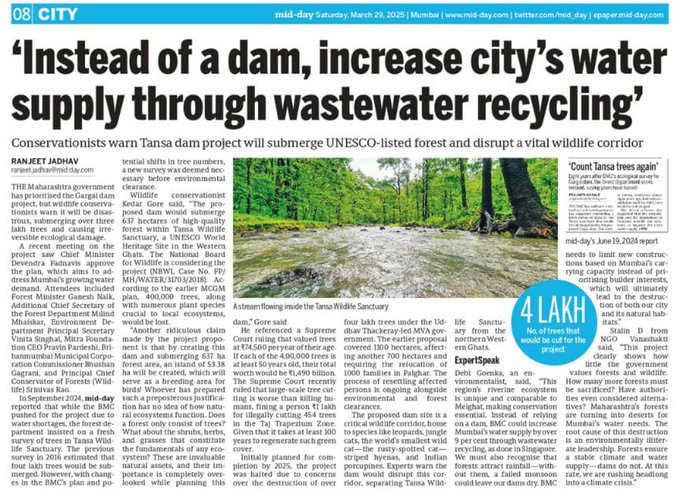
In a wise move, the Brihanmumbai Municipal Corporation (BMC) has cancelled Gargai dam project. In its January 2014, submission to Expert Appraisal Committee (EAC), SANDRP had highlighted the adverse impacts of this project on tribal people and Tansa Sanctuary stressing on alternatives including recycling of sewage and rain water harvesting. Finally, now the BMC has scrapped the unjustified project which would have caused felling of 4.5 lakh trees which BMC chief Iqbal Chahal rightly finds pointless in the wake of increasing climate change threats.
It is worth to mention that in February 2020 BMC was learnt reconsidering its Pinjal dam project and exploring other options including waste water recycling. Indeed the BMC is taking right steps. Dams are costly, destructive projects impacting rivers, forests and local people in multiple ways. The demand side management, efficient use of existing water supplies, rain water harvesting and recycling of waste water are among far better alternatives to meet urban water demands.
Continue reading “DRP 131221: Gargai Dam Scrapped; Wise Move by BMC to Go for Alternatives”DRP 011121: Why is Ganga not ENTHU about Ganga Utsav?
The Government of India, through the National Mission for Clean Ganga (NMCG) under the Union Ministry of Jal Shakti has announced the celebration of Ganga Utsav this year from Nov 1-3, 2021. The Ganga Utsav is supposed to mark the anniversary of announcement of River Ganga as the ‘National River’ i.e. 4th November, 2008. It is supposed to be celebrated not only in Ganga basin, but across the country as River Festival. There is little enthusiasm or even knowledge about this across the country or even in Ganga basin, though.
Ganga River itself continues to face the onslaughts all across the basin in the name of development, some noteworthy aspect of these include: pushing unviable hydropower project in the upstream; pushing disastrous projects like the Lakhwar Dam project and the Ken Betwa River Link project in the Ganga basin; construction of Char Dham and other highways without any assessment of impacts of the project on the river; construction of huge infrastructure along the river in the name of Ganga waterway, further impacting the river and its biodiversity, again without any impact assessment or participatory decision making; continuously increasing water extraction, diversion, use, pollution and dumping of solid wastes along the river; increasing and indiscriminate sand and boulder mining and quarrying from the river bed and floodplain, without any credible impact assessment; increasing encroachments into the river bed in the name of solid waste dumping, river front development, channelisation etc, in absence of any policy, rules or regulation about the space belonging to the river, to name a few. No wonder, the rivers in the Ganga basin has shown no enthusiasm for the Ganga Utsav!
Continue reading “DRP 011121: Why is Ganga not ENTHU about Ganga Utsav?”DRP 230821: World Water Week: 30 years long enough for stock taking?
This week (23-28 Aug 2021) it is Stockholm World Water Week (SWWW) with a 30 year history. The organisers say: “World Water Week 2021 is unlike any other week in our 30-year-old history.” But provide no clear reasons why they are saying that. Their possible explanation: “In 2021 people across the world are really beginning to understand the gravity of the situation we are facing – within a decade we must halve carbon emissions, restore the degraded natural world, and achieve the Sustainable Development Goals. This will require massive transformations of all sectors of society. World Water Week 2021 is entirely focused on the role of water for these transformations and on developing real solutions.” https://www.worldwaterweek.org/news/join-the-most-important-world-water-week-ever
Continue reading “DRP 230821: World Water Week: 30 years long enough for stock taking?”DRP 120721: Will Bhupender Yadav improve India’s Environment Governance?
It’s rather rare when some of the most well-known environmentalists of India, including Ritwick Dutta and Manoj Misra welcome the arrival of Bhupender Yadav as India’s new Environment Minister. The state of the environment governance under the outgoing minister, Prakash Javadekar has worsened so much, both in perception and substance, that possibly any change would look better. In fact Javadekar may be front runner for the label of India’s worst ever environment minister according to some analysts.
The environment appraisals, the constitution of committees including the various Expert Appraisal Committees, the Forest Advisory Committee and the Standing committee of National Board of Wildlife, the public hearings and consultation processes, the state of pollution and rivers, biodiversity, wetlands, floodplains, sand mining, to name just a few areas, were all seen going downhill on a steep slope during the Javadeker period. The monitoring and compliance remained non existent. Some would argue that was it much different before Javadekar. The point is Javadekar had no pretentions of trying to improve the environment governance. He was out to dilute every available norm and he seemed to have succeded significantly.
Even if Yadav were to genuinely wish to improve matters, how much will he be allowed to do, by the perceived imperatives of the economic fundamentalist agenda, the well-entrenched vested interests and the bureaucracy is a question that only time will tell, but there is little doubt that a lot can and needs to be done rather urgently and none of these perceived obstacles should come in the way if there is will. The climate change is making the improvement in environmental governance rather urgent.
Continue reading “DRP 120721: Will Bhupender Yadav improve India’s Environment Governance?”DRP 280621: Where is the impact of lessons of the water conservation efforts that PM praises, on his govt’s water projects & policies?
When the Prime Minister Shri Narendra Modi Mentioned some exemplary water conservation efforts in his Mann ki Baat on June 27, 2021, it was not for the first time he was doing it. These are certainly most welcome.
However, these mentions raise a number of questions. If the Prime Minister considers these local water options as exemplary, which they indeed are, where do we see the reflection of the lessons from such efforts in government programs and policies? In fact why there is no reflection of such lessons in what the government does in water sector? How can the government justify the destruction of Panna Tiger Reserve, over 9000 ha of forests, some 46 lakh trees, the catchment of Ken river and large part of Bundelkhand in the name of Ken Betwa Link Project, in the same Bundelkhand. How can his government justify the destructive projects like the Char Dham Highway, the big hydro projects and so on in the same Uttarakhand where Sachidanand Bharati (who was incidentally recipient of the Bhagirath Prayas Samman of India Rivers Week) works, whose efforts the PM praised? One hope the PM and his government will be awake to the implications and lessons of the works that PM praises.
Continue reading “DRP 280621: Where is the impact of lessons of the water conservation efforts that PM praises, on his govt’s water projects & policies?”DRP 070621: Local Water Options Stories from Five states
(Feature image A big main pond that has been constructed in the Phular village, Damoh. (Pic: Shahroz Afridi, News 18))
This week we would like to highlight some remarkable local water option stories from five states spread across India: Madhya Pradesh from Central India, Punjab from North India, Karnataka from South India, Rajasthan & Maharashtra from western India. These are stories just from this week among many others that show that local water options exist, they are the cheapest, sustainable, equitable, democratic and with least impacts and most appropriate in the climate change context. In a country like India where groundwater has been India’s water lifeline for over four decades now, these options are best suited for ensuring optimum recharge of groundwater aquifers at local level and sustaining those lifelines. Particularly when South West Monsoon is on our doorstep to gift its annual bounty to India. As UN starts the International Decade for Ecosystems Restoration with the theme of preventing, halting, reversing the degradation of ecosystems, these become even more important.
Continue reading “DRP 070621: Local Water Options Stories from Five states”DRP 190421: Hydro lobby at work, but it won’t help forget the WCD guidelines
The Hydropower lobby continues to push unsustainable, unviable, destructive hydropower projects. They want everyone to forget about the World Commission on Dams report and guidelines and the lobby keeps bringing out its own guidelines which has zero credibility. They are looking for new voices to sing their song, and have appointed Ashok Khosla, as the Chair of the Hydropower Sustainability Assessment Council but Ashok Khosla already stands discredited. He or his organisation is not known to be doing any credible work in the area of hydropower projects. He or his organisation Development Alternatives has never taken a stand on any public spirited campaign against destructive hydropower projects in India. So that voice is neither independent nor credible. So this new move by the hydro lobby is not going to help the cause of the lobby either in India or beyond. The write up below, as expected does not mention the WCD report or guidelines. Mr Khosla possibly does not even know about the existence of the WCD report or guidelines because he had no credible role to play there or in any hydropower related work in the past. The write up has loads of misleading and wrong statements too. But all these attempts are not going to help forget people about WCD guidelines as the only globally credible and accepted guidelines on dams and hydropower projects.
Continue reading “DRP 190421: Hydro lobby at work, but it won’t help forget the WCD guidelines”