The Dam Safety Panel from Union Ministry of Jal Shakti has submitted its report on Nov 1, 2023, which says the disaster at the Medigadda Dam occurred “due to a combination of issues involving planning, design, quality control and Operation and maintenance” of the Dam. The report concludes: “The barrage under the present condition is rendered useless until fully rehabilitated.”
Continue reading “Dam Safety Panel report of Medigadda Dam Disaster indicts Telangana, L&T and Dam Safety in India”Tag: Godavari
Rivers Crossing High Flood Levels In SW Monsoon 2023 in India
(Feature Image: Yamuna river near CWC flood monitoring site at Mawi in Kairana. SANDRP/June 2023)
SANDRP has compiled Highest Flood Level (HFL) breach incidents, which includes 2 incidents in June, 34 in July, 17 in August, 22 in September 2023. This report presents the final summary of all HFL breach incidents taking place during South West Monsoon season 2023. The PDF file has the details on all the HFL breach. Our previous reports on the subject can be seen here: HFL breach incidents in 2018, 2019, 2020, May-Sept 2021, Oct.-Nov 2021, May-June 2022 and July-October 2022. .
Continue reading “Rivers Crossing High Flood Levels In SW Monsoon 2023 in India”DRP NB 021023: Why this culture of opaque governance around Joshimath?
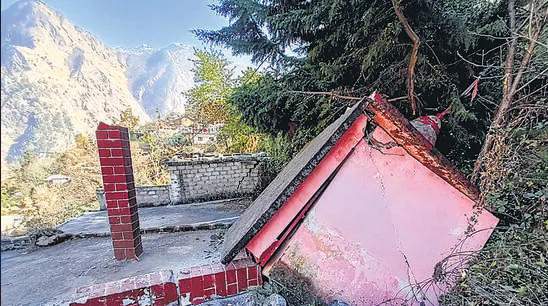
(Feature Image: A temple collapses after the gradual ‘sinking’ of Joshimath in Chamoli district, on Jan. 08, 2023. PTI/HT)
It is clear that the Union and the Uttarakhand government did not want the reports prepared by different national institutes related to Joshimath Sinking, to be made public and the state High Court had to order it to do so. The government’s view of the report is clear from that. It took the judiciary so many months to finally order the report to be made public. What is it that the government wanted to hide? Why? From whom? Why is there this culture of opaque governance even in disaster management related issues? Is it growth fundamentalism that is driving the government as the single most factor? Or is it the arrogance and adamant attitude of the governance, not wanting to consider any questions raised against their decisions? Why is there so little faith in the people, society and transparent, accountable governance? Why is the judiciary allowing such a culture to prevail generally?
These are some of the key questions that arise from this and other such episodes.
Continue reading “DRP NB 021023: Why this culture of opaque governance around Joshimath?”DRP NB 250923: World Rivers vs Indian Rivers on Rivers Day 2023
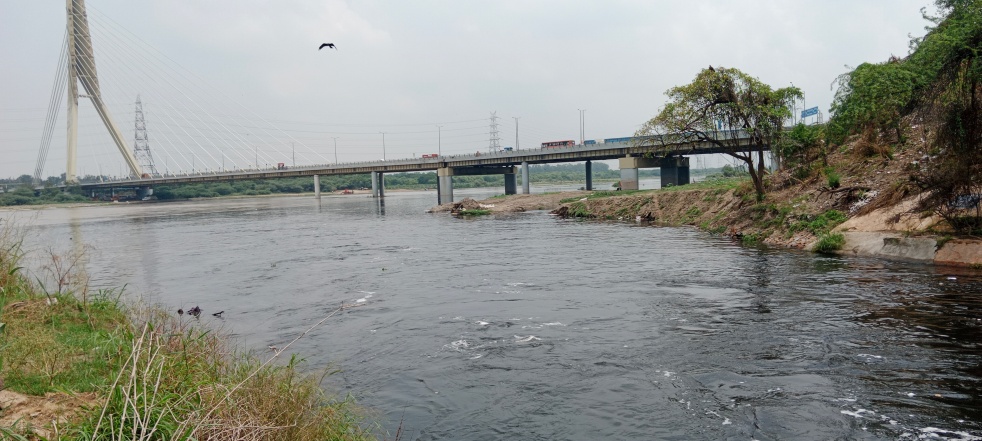
(Feature Image: Najafgarh drain loaded with polluted water joining River Yamuna downstream Wazirabad barrage in National Capital in June 2023: SANDRP)
Sept 24 is celebrated as the World Rivers day since 2005, the tradition started by river advocate Mark Angelo, who used to celebrate BC (British Columbia in Canada) Rivers day since 1980. There is some good news for rivers across the world in terms of decommissioning of dams, improving environment flows, movements to clean rivers, improve fish migration, protection of flood plains, room for the river, decommissioning of channelisation projects, among others.
Continue reading “DRP NB 250923: World Rivers vs Indian Rivers on Rivers Day 2023”Rivers Breaching Highest Flood Levels in July 2023
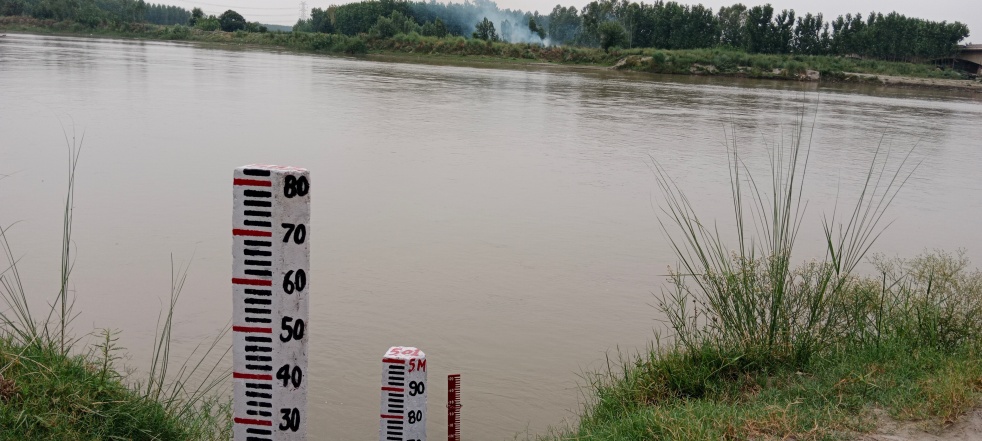
( Feature Image: CWC’s water level gauge set up along Yamuna river at Old Railway Bridge, Delhi. 28 June 2023/ SANDRP)
The analysis of hydrographs being published on Center Water Commission’s (CWC) Flood Forecasting website shows that the previous Highest Flood Levels (HFL) have been breached at least at 34 flood monitoring sites across the country in July 2023. The river basin wise details of all these sites are given in tables below.
Continue reading “Rivers Breaching Highest Flood Levels in July 2023”DRP NB 030723: Peak Hour Tariffs to be implemented from April 2024
(Feature Image: Vyasi HEP power station at Hathyari, Dehradun. SANDRP, June 2023)
This announcement by the government is indeed much belated but welcome step that India plans to increase peak hour power tariff compared to non-peak hour power tariff, beginning with commercial and industrial consumers from April 2024 a year later for others excluding agriculture consumers. The notification mentions it as daytime tariff (during solar hours) and night time power use, but this essentially also helps peak management.
This will not only put a premium on peak hour power consumption and hence generation, but also hopefully ensure that assessment of impacts of the peak hour power generation including at hydropower projects is done and done in a credible way, along with compensating those affected. It will also hopefully ensure that existing hydro capacity is used optimally for peak hour power generation before going for new hydro projects in the name of increasing peak our power generation.
One also hopes that it will lead to better peak hour power management and also considering all the options for such power generation rather than pushing hydro projects blindly in the name of peak hour power generation.
Continue reading “DRP NB 030723: Peak Hour Tariffs to be implemented from April 2024”DRP NB 120623: Tip of Karnataka irrigation scam?
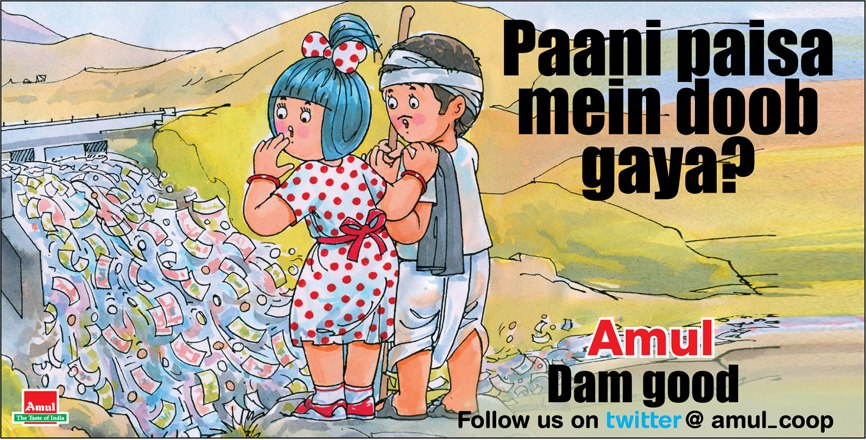
(Feature Image: A decade old Amul caricature on Rs. 70, 000 crore irrigation scam in Maharashtra.)
It’s not very frequent that irrigation scams come to light. Somewhat inadvertently, the Karnataka irrigation scam seems to be getting exposed when the newly elected state government stopped two irrigation projects in the constituency of the irrigation minister of the previous state government, the Gatti Basavanna Dam and the Ammajeshwari Lift Irrigation Project. In both cases, the department officials are saying that they prepared the project reports based on instructions from above. In both cases, the costs proposed at one stage were 3 to 9 times higher than the revised estimated cost.
One only hopes that the government, media and the judiciary will go to the bottom of these revelations and bring to light the full dimensions of what seems like a tip of the Karnataka Irrigation Scam. It is public knowledge that Karnataka has been spending tens of thousands of crores each of the last few years in the name of big irrigation or dam projects, without commensurate benefits.
Continue reading “DRP NB 120623: Tip of Karnataka irrigation scam?”DRP NB 170423:Forecast of Indian SW Monsoon & definition of normal monsoon
The India Meteorological Department (IMD) has on April 11, 2023 forecast that rainfall at national level in four months of June-Sept 2023 Southwest Monsoon will be 96% of Long Period Average (LPA). IMD considers Indian Monsoon rainfall as normal based on just one parameter of total rainfall in these four months at national level is between 96% and 104% of LPA, with model error of +/- 5%. This raises large number of questions as media has rightly raised post the IMD announcement.
Firstly, in a strange turn of events, on April 12, an update jointly by US weather agencies under the National Oceanic & Atmospheric Administration (NOAA), contradicted a number of assumptions of IMD the previous day, including the period when El Nino will become active and probability of it being a strong event, both of which have a strong bearing on the Indian Monsoon in an adverse way. So the first question that arises is, did the IMD not have the benefit of the observations on April 11 based on which NOAA made the forecast very next day? Or was it an attempt at providing an unjustified feel good monsoon forecast? This question arises as in the past too questions have been raised about such attempts by IMD. This question also becomes important as only a day or two before IMD’s forecast, private forecaster had predicted that monsoon rainfall is likely to be deficient and not normal.
Continue reading “DRP NB 170423:Forecast of Indian SW Monsoon & definition of normal monsoon”DRP NB 030423: IRENA confirms bleak future of Large Hydro globally
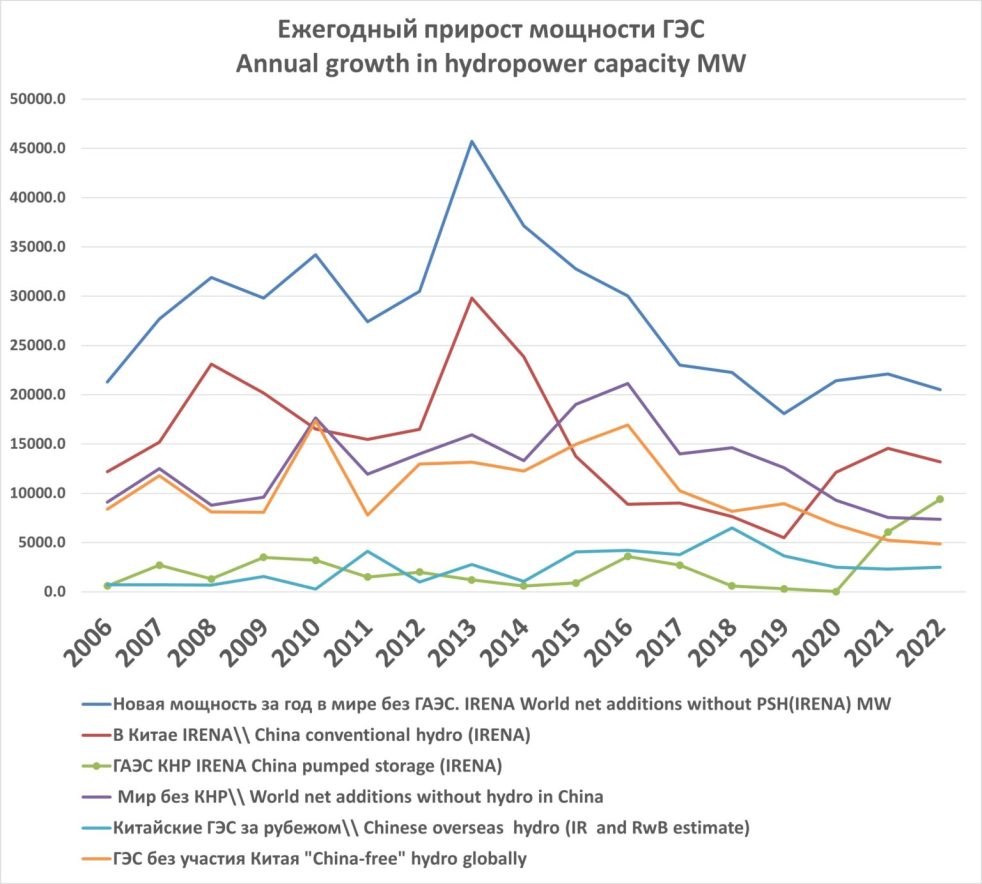
(Feature Image: Graph showing annual growth in hydro power capacity in MW. Source: Rivers Without Boundaries, April 01, 2023)
The annual Renewable Statistics 2023 report from IRENA (International Renewable Energy Agency) says that globally, only 1.6% was added to the hydropower capacity in 2022, that too two thirds in non-democratic China. The capacity added in rest of the world outside China in 2022 was 7.3 GW, lowest figure in last 15 years. Similarly 99% of additional capacity added in pump storage projects in 2022 was in China. The report from IRENA also says that 97% of hydropower finance comes from public or government sources and private sector seems to have little enthusiasm for this sector. The projections for future painted in the report is no better. This is broadly in line with our lead story in DRP News Bulletin last week (dated March 27 2023) painting bleak future of large hydropower projects.
Continue reading “DRP NB 030423: IRENA confirms bleak future of Large Hydro globally”Poster child for Interlinking follies: Damanganga-Vaitarna-Godavari project

Pictures above have been taken five days apart. One would think River Interlinking entails transferring water from the bountiful right to thirsty left. In case of Damanganga-Vaitarna-Godavari Link, it means the opposite: transferring water from dry Mokhada to the verdant Devnadi in Sinnar. Like many ILR projects, it highlights the farce that is “surplus” and “deficit” basins. More rainfall does not secure water access, nor does moderate rainfall negate it.
Continue reading “Poster child for Interlinking follies: Damanganga-Vaitarna-Godavari project”