Agriculture · Dams · Groundwater · Interlinking of RIvers · Krishna River · Maharashtra

Maharashtra’s Water Sector in 2015: Did anything change with the government?

Above: A huge protest march against water release to Marathwada Photo: Zee 24 Taas

In 2015, with the change in the ruling party after 15 long years, Maharashtra had a massive opportunity to break free from the crisis-ridden and scam-ridden image of its water sector. Water and dams have been central behind the embarrassing loss of Congress-NCP government in the 2014 Loksabha elections. But could the ruling BJP government actually deliver such a “Paradigm Shift” as it likes to call it? Is there light at the end of the tunnel for the state that is facing not only management scams, but repeated droughts and extreme weather events?

We try to review happenings around water, dams and rivers in Maharashtra for the past year 2015 and to look for a possible direction where the sector is heading, trying to fathom what it holds for the rivers and the people of the state. Continue reading “Maharashtra’s Water Sector in 2015: Did anything change with the government?”

Dams · DRP News Bulletin

DRP: 18 Jan. 2016 (MoEF Expert Committee on Dams continues to ignore democratic norms)

MoEF Expert Committee on Dams continues to ignore democratic norms  The minutes of the 90th meeting of the Expert Appraisal Committee on River Valley and Hydropower projects held on Dec 22-23, 2015, made available today (January 18, 2016, see: http://environmentclearance.nic.in/writereaddata/Form-1A/Minutes/0_0_11118122212121Minutes-90EAC.pdf), shows how the committee continues to ignore basic democratic norms. Here are some key issues about the minutes of this latest meeting:

Continue reading “DRP: 18 Jan. 2016 (MoEF Expert Committee on Dams continues to ignore democratic norms)”

Dams · Groundwater · Marathwada

Beautiful but Dry: Dug-Wells of Marathwada in the times of drought

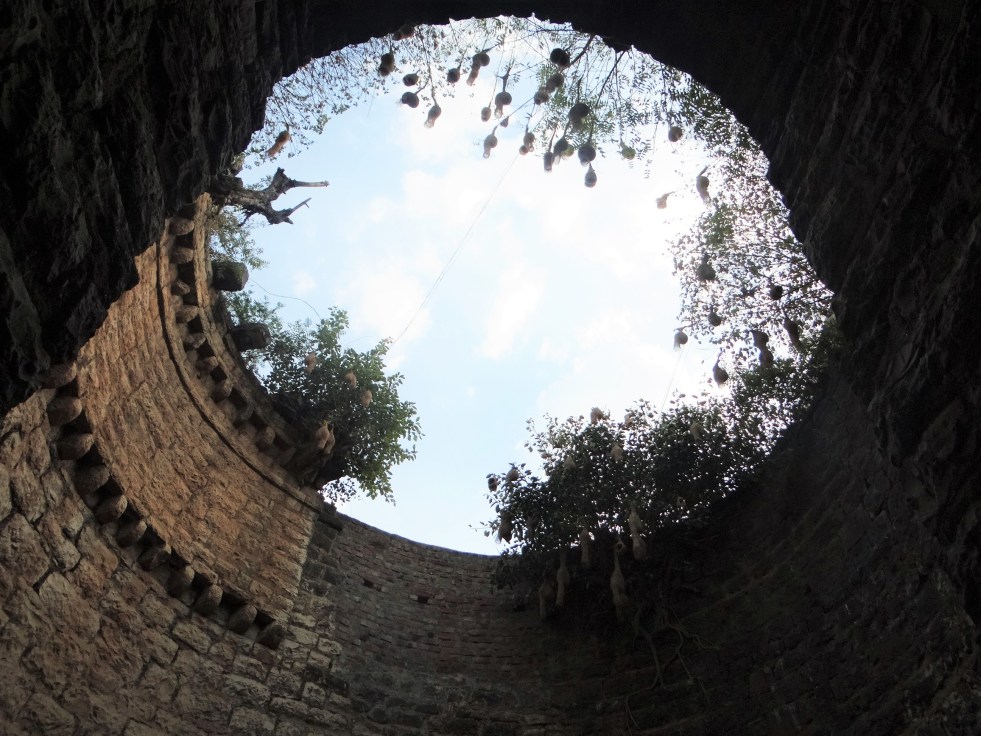
I was looking at a piece of blue sky, from the insides of a step-well. The well was stunning. Perfect. An example of appropriate technology which blended with its surroundings while enhancing it. “This is beautiful” I exclaimed as I climbed up, exhibiting all my city-bred exuberance. An old lady sunning herself next to the well looked at me with sad eyes.  “Yes. But a well is not a well without water. This well has not seen water for the past two years.” 

Wells in Marathwada, like the region itself, are beautiful and poignant. Marathwada’s dry wells are also a reminder of the mistakes we’ve committed, of how we’ve plundered with what we have or had. Continue reading “Beautiful but Dry: Dug-Wells of Marathwada in the times of drought”

Dams · Maharashtra

MWRRA orders release of less than 3 TMC water for Ujani Dam: Too Little, Too Late

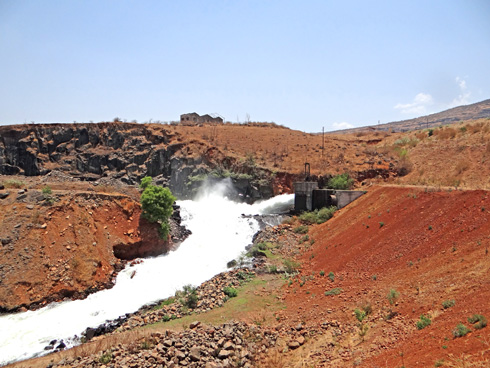
Above: Water released from Bhama Askhed Dam for Ujani Dam, April 2013  Photo:Author

Today (14th January 2016) Maharashtra’s Marathi AgroDaily announces[i]: “ 3 TMC Water will be released from Bhama Askhed and Chaskaman Dam for Ujani Dam from tomorrow, 15th January 2016. Looking at the opposition to this by farmers in Pune district, the release will happen under strict police protection. Electricity to farm pumps near the river will be disconnected for 7 days between 15th-22nd January to avoid water theft”.

Sounds a bit ominous, doesn’t it? Continue reading “MWRRA orders release of less than 3 TMC water for Ujani Dam: Too Little, Too Late”

Dams · DRP News Bulletin

DRP: 11 Jan. 2016 (Punjab Villagers oppose Dam on Ghaggar River)

86 Villages rise in protest against dam on Ghaggar  A dam is proposed to be constructed on the Ghaggar, near Banur, at a cost of Rs 75 crore. An agreement was signed between representatives of various villages located downstream and the Irrigation Department in 2006 promising 200 cusecsto irrigate fields in thesevillages. Villagers now fear that they will not get the promised 200 cusecs after the construction of the dam. Their claim is that the water flow in the river is much lower than 400 cusecs, as claimed by the irrigation department. The department, on the other hand, sticks to its stand that the water flow in the river is sufficient enough to feed the canal and the villages downstream. However, a perusal of the monthly average discharge data of the river for the past 10 years, defies the department’s claim. It revealed that the average yearly discharge barely crossed 400-cusec mark over the past 10 years, excluding the peak period (July to September). Interestingly NABARD and the State Irrigation department had separately conducted studies of the project well before giving it a green signal.

Continue reading “DRP: 11 Jan. 2016 (Punjab Villagers oppose Dam on Ghaggar River)”

Dams · DRP News Bulletin

DRP: 04 Jan. 2016 (Rivers are soul of India: PM Narendra Modi)

Rivers are soul of India: Prime Minister Narendra Modi  Excerpts From text of PM’s inaugural address at 103rd session of Indian Science Congress, Mysuru Rivers have played as important a role in human history as oceans. Civilisations have been nurtured by rivers. And, rivers will remain critical for our future. So, revival of rivers is an essential part of my commitment for a cleaner and healthier future for our society, economic opportunities for our people, and renewal of our heritage. We need regulations, policy, investments and management to achieve our objective. But, we will succeed only when we integrate technology, engineering and innovation into our efforts, not just to clean our rivers now but to keep them healthy in the future as well. For this, we also need scientific understanding of the impact of urbanisation, farming, industrialisation and groundwater use and contamination on the river eco-system. River is the soul of Nature. Their renewal must be an element of a larger effort to sustain Nature.

Continue reading “DRP: 04 Jan. 2016 (Rivers are soul of India: PM Narendra Modi)”

Dams

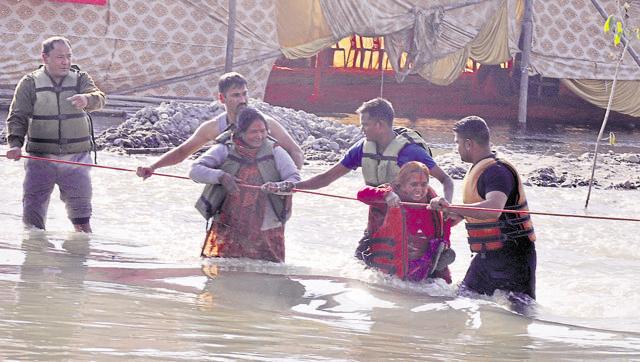
DRP: 21 Dec. 2015 (100 people have a narrow escape as Ganga level rises after sudden release from Tehri Dam)

100 people have a narrow escape as Ganga level rises after sudden release from Tehri Dam More than a 100 people who were attending a religious discourse had a narrow escape when the water level rose suddenly in the Ganga River in the temple town of Rishikesh. According to the police, the water level increased after Tehri Dam released water, a routine exercise that is done after informing officials concerned. CD Anthwal, circle officer Rishikesh told HT that the people attending the religious discourse were rescued with the help personnel of the Jal Police (water police).

Continue reading “DRP: 21 Dec. 2015 (100 people have a narrow escape as Ganga level rises after sudden release from Tehri Dam)”

Dams · DRP News Bulletin

DRP: 14 Dec. 2015 (Your City can be Next Chennai?)

Our cities with their high population density and poor civic standards are vulnerable to the domino effect that can be set off by freak weather it happened in Mumbai in 2005. Last year, it was Srinagar. Now it’s happening in Chennai. Could it happen to your city?

Judging by the burgeoning urban population, and the uncontrolled growth of urban centres that fail on every parameter including drainage and garbage disposal, most of our cities are disasters waiting to happen.

As per global standards cities across the world should prepare for a 100-year flood recurrence period. In other words, they have to be ready for a severe flood situation, even if it has one-in-100 chance of occurring. But our cities guardians overlook larger flood cycle as freak weather events.

That exactly is happening in IT corridor Hyderabad which is sitting on a plan that lacks a storm-water drainage system and ‪‎Navi Mumbai International Airport in Maharashtra which will be built on the flood plains of Ghadi and Ulwe rivers. Amaravati the state capital of Andhra Pradesh is also doing away its underground water channels which drain out flood waters during stresses.

Continue reading “DRP: 14 Dec. 2015 (Your City can be Next Chennai?)”

Dams

Dams, Rivers & People: 07 Dec. 2015 (Dams sap Earth’s water, release arsenic in groundwater & fuel Climate Change)

Two new studies show that dam not only significantly increase evapo-transpiration but also worsen arsenic problem in groundwater. In the first study done by Stockholm University in Sweden researchers found that dams and irrigation significantly increase evapotranspiration, an effect that increases the loss of freshwater to the atmosphere, thereby reducing the water available for humans, societies and ecosystems on land. The researchers have compiled and analyzed data from 1901 to 2008 for climate, hydrology and water use in one hundred large hydrological basins spread over the world. In the second study done by Stanford University in Cambodia, researchers concluded that hydrological development particularly dams are responsible for release of increased and unnatural amount of arsenic in Cambodia’s groundwater.

Continue reading “Dams, Rivers & People: 07 Dec. 2015 (Dams sap Earth’s water, release arsenic in groundwater & fuel Climate Change)”

Dams

DRP: 30 Nov. 2015 (Delhi does not need Renuka Dam, Sharda-Yamuna linking: Kapil Misra, Delhi Water Minister)

Kapil Misra

Speaking during India Rivers Day- 2015 Kapil Misra said that Delhi does not require any more water from external sources such as the Renuka Dam or Sharda Yamuna River link.  The minister also assured that the Yamuna’s water will be improved within three years to make it good enough to bathe in. He raised doubts over expensive sewerage projects and felt need building of smaller and decentralised sewerage management system. The India Rivers Day brought together several individuals and organisations who have been working on the issues of river conservation in the country.

Continue reading “DRP: 30 Nov. 2015 (Delhi does not need Renuka Dam, Sharda-Yamuna linking: Kapil Misra, Delhi Water Minister)”